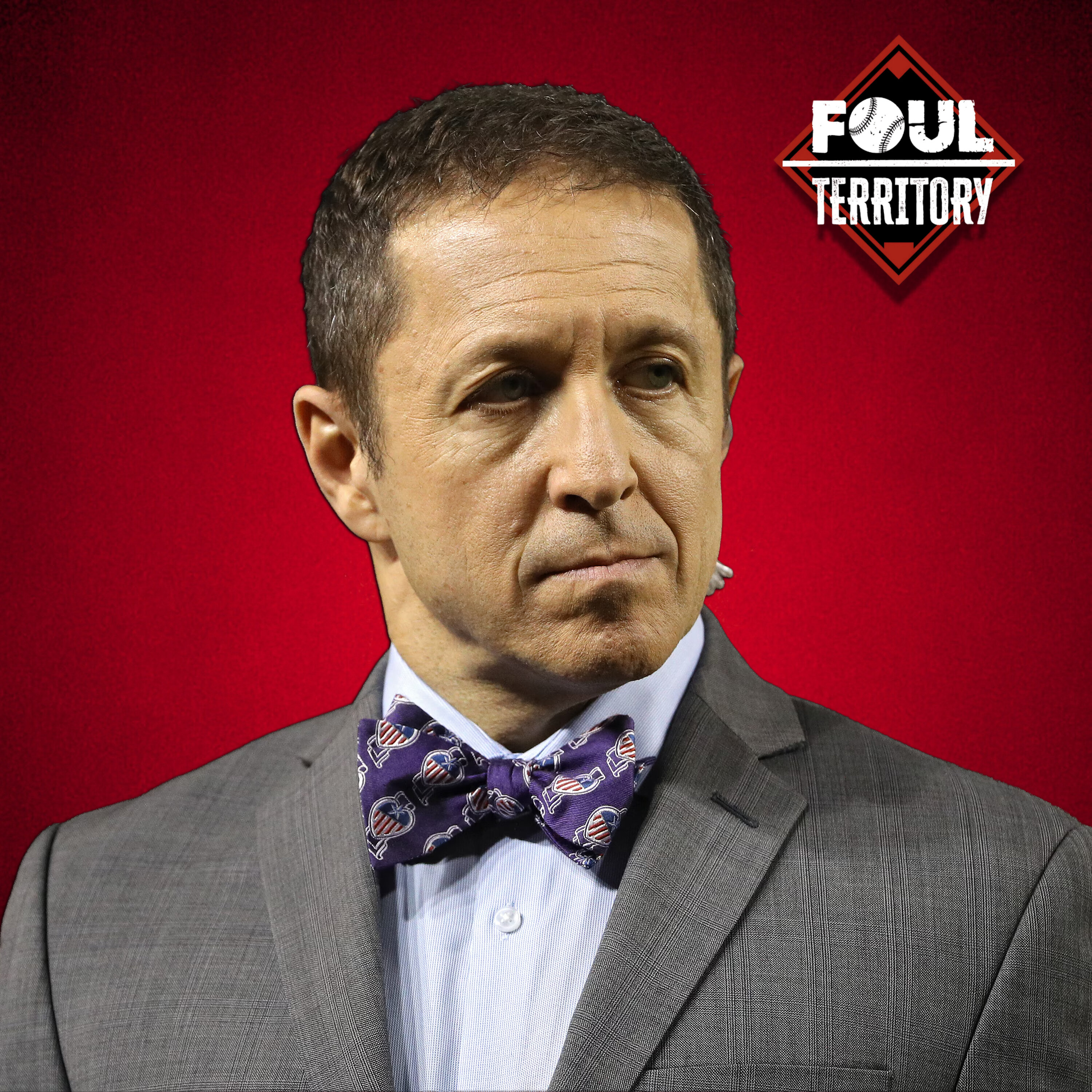
Ken Rosenthal's Inside Scoop: Trout’s epic week, Mets skid, Pads sale
FT Senior Insider Ken Rosenthal joins FT to update us on the sale of the Padres. He also breaks down Mike Trout’s unbelievable series against the Yankees, when we could expect Juan Soto back, what’s going on with the Mets, and why so many rookies are signing extensions.
Hosts: Kevin Pillar, Erik Kratz, Scott Braun
Coach Smarter, Connect Live, Replay the Action with GameChanger. Learn more at gc.com
See omnystudio.com/listener for privacy information.
2026-04-18
19 min
Transcript
Available Results
Generated results are saved to the knowledge database for reuse and search.
No generated results are available for this episode yet.
Extract Knowledge
Pick what you want extracted first. Model, scope, and chapter options appear after a template is selected.
Generated results for public episodes are saved to the knowledge database so they can be reused and searched later.
Transcript
00:00:05
Speaker 1: Yeah, this is the inside Scoop. It's presented by Game Changer. More on that coming up in a moment, but first let's get to Ken and talk about someone who kids look up to for a long time, and that's Mike Trott.

00:00:15
Speaker 2: I loved your column, Ken.

00:00:16
Speaker 1: Can you tell us about what you saw this week from Trout putting on a show?

00:00:20
Speaker 2: And also, so many people going, is Mike Trout back? He's always been amazing when he's on the field, right, And.

00:00:27
Speaker 3: That's the thing that sometimes people forget, especially maybe younger fans who weren't around when he was dominating the game. In the twenty tens. Column is basically about just that he is back and back in a big way and healthy and contributing like he has in the past when healthy. And the fun part of it for me, he was talking to Brady Anderson, the Angels new hitting coach, and he basically said, hey, man, just look at the top twenty and ops all time.

00:00:56
Speaker 4: You'll see his name right there with DiMaggio and mu zeal and all these guys.

00:01:00
Speaker 3: That's who he is, and yes, that's the player we saw again at Yankee Stadium this weekend. And the other thing about Trout.

00:01:08
Speaker 4: That is notable.

00:01:08
Speaker 3: I know a lot of fans and even people inside the game over the years have expressed frustration that he never wanted to leave Anaheim, and Kevin maybe you can speak to this. That is not an indication of any lack of competitiveness on his part.

00:01:24
Speaker 4: He is extremely competitive, extremely.

00:01:27
Speaker 3: Fiery in his approach and the way he goes about the game. It's just that he's been loyal to that franchise. So it's good for everyone to get a reminder again of just who this guy is. He's approaching his thirty fifth birthday and he is going quite strong.

00:01:45
Speaker 5: Yeah. I mean, I think we can sit here and people could talk about his lack of you know, competitiveness and not wanting to play in a winning organization, but I think he should be applauded for his loyalty, you know. And I'm an NBA fan and you see it all the time, and the NBA players, you know, want to team up so that they can create super teams. Mike has drafted developed by Anaheim, has always wanted to be there. He's always wanted to win there, you know, and unfortunately it hasn't happened. But you know, I think we should applaud him for his loyalty. And I guess my question to you is, you've been in the game a long time too. The show that Mike Trout and Aaron Judge put on collectively one of the greatest kind of back and forth duos you can remember in recent history.

00:02:29
Speaker 3: Yes, and it actually hearkens back to maguire so in ninety eight. And we all know now that we look at that a different way, but that was the kind of excitement that we saw back then. Back then, it was checking the box scores every day. It wasn't an Internet back then, and just wow, marveling at the fact that these two guys were one upping each other on almost a daily basis. That's kind of what this reminded me of, Kevin. And it was really cool just to see these two players on that stage, which is one of the biggest in the sport, kind of dueling each other with home runs. And obviously the Angels were off to a surprisingly good start, the Yankees not so much, and that was the backdrop to all this, But this was really a case of two superstars on display at their finest.

00:03:17
Speaker 6: Obviously, spring training it's always best shape of my life. The first time I saw Trout hit a homer, I think he hit it in Houston. I think it was his first homer this year. It looked like he had lost some weight. Is there was there talk around the clubhouse when you're talking different guys like it does look like something different or is it one of those things? Yeah, he hit a homer. Of course it looks different because he's out on the field.

00:03:39
Speaker 3: I don't know that physically he's all that much different. Maybe he did lose a little way. Eric actually haven't asked him that. I haven't seen him to ask him that, but certainly, again, the feeling always is when he's healthy, you're seeing something unbelievable. Now, over the last the previous five seasons, he actually has missed more games than he has played. So we haven't seen this guy except in flashes. And maybe this is just a flash, and who knows what his physical condition might be the rest of the way.

00:04:08
Speaker 4: But everyone can hope that it's good. And the other thing about Trout that I want to mention.

00:04:15
Speaker 3: The people who are closest to him, teammates like Kevin when he played with him, and others. They are the people who speak most highly of him, and I always I am struck by that, just talking to Brady Anderson and John Gibbons. Then there are two new coaches with the Angels this year, and Anderson said he's about as down to earth the superstar as you ever would meet. Actually, Gibbons said that, and Brady also spoke to Trout's humility and just the way he goes about it. And this is a guy who does not seek attention, has not obviously chosen to go to the big bright lights, signing big contracts with the Angels instead, but he is someone who in the game, and you heard Judges' comments this week too, he is revered and he's because he goes about it the right way.

00:05:03
Speaker 5: Yeah, I mean I could kind of speak on that when I you know, I signed there, you know, early in the season. I wasn't with him in spring training, and you just kind of never know how you're gonna kind of be received by a guy like Mike Trout. And he was nothing but you know, kind and gracious, and it was during a time of his injury and he just you know, opened up to me and asked me my opinion on certain things, and to your point, probably the most humble superstar i'd ever been around. You mentioned Brady Anderson though in your conversations with them at all, because you know, I've seen the video where he's kind of implemented that aeronauto stepped back a little bit. Had did he mention anything about some mechanical changes that maybe he implemented or are these things that might kind of implement it on his own?

00:05:43
Speaker 3: Yes, we did talk about that, and Anderson actually said that Trout started doing this toward the end of last year. And remember the end of last season, he was really good, and that's when he started the step back, which is kind of a counterintuitive thing. You're stepping back with your back foot. It doesn't seem to make sense, but it kind of enables him to load properly. And it wasn't something he started the season with, but he went back to it, I don't know, about a week or two ago, and for now he feels comfortable with that, and clearly it worked out pretty well for him at Yankee Stadium this week.

00:06:17
Speaker 2: Hey, last one on this ken.

00:06:19
Speaker 1: I mean, you go from people saying, uh, you know, Trout's cooked, you could never trade even a slice of that contract to where's he going just got to ask the classic question. If Trout does this for the entire first half of the season, do you ever think there's a world where the Angels tried to capitalize on trading him when his value is high and he could contribute to a contender. I'm going to preface this because Angels fans are going to lose their mind if history plays itself out like it has for the past decade and the Angels aren't good.

00:06:51
Speaker 3: Well, if he is this for the first half and their rotation remains what it is right now with some pretty impressive things going on, they're in contention and they're not trading Mike Trout, not even thinking about trading Mike Trout. And honestly, Scott, we can talk about this on shows like ours, and I can write about it, but I can't imagine anything changing because even if the Angels want to trade him, he has said repeatedly.

00:07:17
Speaker 4: He doesn't want to go, and I would think that that is the direction that this is going to end up in.

00:07:23
Speaker 3: If he's really good, they're probably pretty good, at least in wild card contention, and heck, in that division right now, Seattle is not what we thought, at least not yet, and it's more wide open than perhaps we all envisioned at the start of the season.

00:07:40
Speaker 6: All Right, a team that does want their superstar back on the field and won Soto. Is there anything in the timeline that we can glean from what we've been hearing about the fact that he's been running or I think he ran two days ago, and the Mets desire to not rush him back, but they don't score any runs without him, so they need him back.

00:08:02
Speaker 3: It sounds like next week for him, and that's if everything goes smoothly. Of course, I don't know that they're going to rush him, and I don't know that they're not going to rush him. And what I mean by that is they're gonna let him proceed on his own due time. And listen, if it takes one soda, three or four more days. This is a six month season. The Mets are not going to rush him back and say, oh my gosh, we need you right now. We saw last year they were the best team in baseball in early June and then things collapsed. Why can't they just do it the other way this time like they did in twenty twenty four, So there's no need to rush him back, even as bad as they look offensively, they need to get this right and they need to make sure he's okay before he gets back on the field.

00:08:43
Speaker 5: We all know New York can be a tough place to play. We know the media can be tough.

00:08:47
Speaker 2: There.

00:08:48
Speaker 5: Are they making a bigger deal out of what's going on in New York in terms of you know, the Francisco Lindor won soda stuff, and then maybe just talk about you've covered you know, Francisco and Lindor a long time. We're seeing a lot of uncharacteristic mistakes that he's been making. Do you chuck that up to maybe missing majority of spring training or is there something deeper there?

00:09:09
Speaker 4: Kevin?

00:09:09
Speaker 3: They lost or have lost H straight, and you lose H straight in any market, there's going to be heat. If you lose H straight in that market, there'll be more heat because there are, yes, more reporters and frankly more fans than in most markets. And that is the nature of playing for the New York Mets. Everyone knows it, and it shouldn't be a surprise to any of them. They're playing poorly, they're going to get ripped for it, and frankly, they've been pretty honest about it.

00:09:34
Speaker 4: With their own analysis of the situation. They're not happy.

00:09:38
Speaker 3: Carlos Mendoza the other night was as ticked off as he's probably been in a long time as Mets manager. As for Lindor, no one seems to have a good feel on what's going on here and whether it's as you said, Kevin missing spring training, or whether it's simply a mental slump, if you can call it that, or if something is going on behind the scenes that we don't know about that is somehow affecting him. This does happen with players all the time, and I frequently say on the show that it's difficult sometimes to assess these guys.

00:10:11
Speaker 4: Not to make excuses, but we don't.

00:10:13
Speaker 3: Always know what is going on behind the scenes, and like any of us, if you have, if you have some kind of issue personally or whatever.

00:10:22
Speaker 4: It might affect your job performance.

00:10:24
Speaker 3: So that said, he hasn't said anything, I haven't heard anything along those lines, And right now, all we can do is assess his play, which has not been Francisco Lindor like, and he does need to snap out of it for them to snap.

00:10:38
Speaker 4: Out of it.

00:10:39
Speaker 6: Yeah, physically, obviously, the stats are not there. But when you see those mental laughs as you just you question and you're like, Okay, you know they got they got to pick it up or they're gonna fall deep behind. My question to you, what is the latest news, gossip, tea whatever. The people are saying on the Padres potential sale that it could be massive amount of money that I didn't think the Padres would be sold for, especially since the match just got sold how many years ago for less than this.

00:11:11
Speaker 3: Well, there was news this morning, first reported by the Wall Street Journal, that a group led by jose Feliciano and his wife Kwanza Jones, has bought the team for three point nine billion dollars. Previous record, as you mentioned, Eric, was two point four billion. Now, the deal's not final yet and there's probably going to be some dots to be crossed in teas or whatever you want to call it. But at the same time, what is happening here is cosmic for the game. It's a huge thing, and with the Padres going for this amount, I am sure you're going to hear.

00:11:45
Speaker 4: Conflicting accounts of what this means.

00:11:48
Speaker 3: And we wrote about this, Dennis lenn and I a couple of weeks ago when we first heard that the team was going to go for three point five billion or above. Very few California teams have come for sale in recent years. There are a lot of wealthy people in California.

00:12:03
Speaker 4: So that in part is what has driven.

00:12:06
Speaker 3: The price to this level, the scarcity and the demand. That's simple economics. But if you are the players Association.

00:12:15
Speaker 2: And you're.

00:12:17
Speaker 3: About to engage in collective bargaining negotiations in which the owners want a salary cap in part to enhance their franchise values, you might say, franchise value is looking pretty good. San Diego Padres just sold for three point nine billion. They're a mid market team, They're not a large market team. And that's an argument too. So I see both sides of it. I see what I expect to be the league's point of view that this is an outlier, and I also see the player's point of view. If this is indeed what it becomes, hey tell us the sport is broken, not when this team is selling for three point nine billion. So not all situations are like we know, San Diego is not Cleveland, is not Minnesota, it's not Pittsburgh. San Diego is unique. They have built that franchise to the point where it is that attractive to buyers. But at the same time, the gap between what their soul and they will sell for and what the Mets soul for in the biggest market in the country not that long ago, Well that tells you something about the state of the sport. It's not a complete picture, but it's certainly a data point.

00:13:24
Speaker 1: Yeah, it's a great point. Ken, This part is true. I mean, we've talked about this. You know, leagues have caps for cost certainty that improves franchise values, just to give more context to fans. That's where owners say, hey, we need this too. We're not making as much or getting as much for our teams once we sell them. You see something like this pop up. And also, of course that is the primary purpose there. On the other side, if you want to improve say competitive balance, you could share the wealth and the team could still spend that much.

00:13:52
Speaker 2: You don't need these levers in place.

00:13:54
Speaker 1: So my question and point to you is we saw from Forbes and Sport about three point one bill so this obviously goes well above that mark. But even that mark, I think for Forbes was fifty nine percent year over year, and they're not including the scarcity, and oh California is going to be more sexy for people that are trying.

00:14:15
Speaker 2: To get something there.

00:14:16
Speaker 1: So point is, the valuations are soaring regardless, and the Padres are in, if not the smallest, one of the smallest TV markets with really nothing going there until they get their next deal. So when you add all of that up again, how healthy is the sport and how much could this lead to potentially even more of a debate and fighting leading into the CBA talks.

00:14:37
Speaker 3: Well, there's going to be a debate and there's going to be fighting, There's no question about that. That would be the case if the Padres did not sell for three point nine billion, and it is the case that they are selling for three point nine billion. Now the legal point out Twins didn't go for nearly this much when they were selling part of their team. I think the valuation was one point seven billion or so. And also this three point nine once you're reduced debt or take the debt off it, maybe it's three point four, I don't know, but it's still going to be a huge number or record number. And again the league is going to say this is not reflective of all of these small market franchises. This is a unique circumstance because of what I just described, the scarcity how much you buy that is basically in the eye of the beholder. But at the same time, this deal is also happening before the national TV deals are signed, before Rob Banford has implemented what he wants to do, which is make more of a national package with the local rights, and of course before the CBA is settled with or without a cap. People were willing to spend this much money for the padres with all of that uncertainty.

00:15:49
Speaker 4: That does tell you something.

00:15:50
Speaker 5: I'm sorry, Yeah, speaking of money, we're seeing a ton of rookie deals. Is this because we have a unique rookie class or is this kind of foreshadowing maybe something that could be happening, you know, with the lockout pending Kevin.

00:16:06
Speaker 3: In my view, it's simply because there are so many talented players that teams want to lock up and secure and get cost certainty over in what is currently an uncertain situation. I don't know that the CBA talks are driving this anymore than would be the case in a year when the CBA was not up. We've seen extensions for young players for quite some time now, Bobby with junior Julio Rodriguez. These are not unusual.

00:16:33
Speaker 4: It seems like there are more this year. I'm not even sure that's the case. I'd have to go back and really look at it. But it does reflect also the.

00:16:40
Speaker 3: Immense talent that these teams are developing and drafting with what they have in place.

00:16:48
Speaker 4: So what's interesting to me.

00:16:50
Speaker 3: Also here Pittsburgh, a small market team, did this with Connor Griffin. The Detroit Tigers, a mid market team, did it with Kevin McGonagall. Seattle, a revenue sharing recipient, if not a small market, did it as well with Colt Emerson. They've done it with Julio Rodriguez. There are ways for teams to lock up their young players if the players are willing to sign these kinds of deals, And these deals are getting richer and richer.

00:17:17
Speaker 4: So again, is.

00:17:19
Speaker 3: The glass half empty or is the glass half full? And it's going to depend on the side that you fall on.

00:17:25
Speaker 1: Here, Hey, last one for you, and I'm going to tie all of this together. Last, I would say major deal money wise that you'll see for a free agent is someone you reported on the other day and Lucas Gilito.

00:17:35
Speaker 2: I'm bringing it up here again.

00:17:36
Speaker 1: Because we talked about your story along with Patrick Mouoney and Tai Dave Sharma covering the Cubs and Padres as possible suitors. With this news coming out with the Padres, do you think there's a chance that the owner can make a splash here if the deal gets done and now actually approves whatever.

00:17:51
Speaker 2: We're just I made up the number the other day, ten mil five.

00:17:54
Speaker 1: It'll be five pro rated for a team that's the hottest in baseball right now, one eight in a row and lost one of their starters and Nick Pavetta for a while.

00:18:02
Speaker 3: All right, First of all, Scott, the deal for the Padres is not final yet, and then it needs to go through the approval process, so the owners won't be approved for.

00:18:10
Speaker 4: Probably several months.

00:18:12
Speaker 3: That said, if this does go through, let's say the deal is agreed upon and it certainly will give every indication of being approved.

00:18:21
Speaker 4: These things are rarely rejected.

00:18:23
Speaker 3: Then perhaps Jose Feliciano and his wife Kwanza Jones signal to the front office.

00:18:29
Speaker 4: Go ahead and do this. We're good, don't worry about it. Is that possible? Yes, it's possible. I don't know how realistic that.

00:18:36
Speaker 3: Is, and I don't know how willing the new ownership would be to act in any regard until everything is buttoned up. MLB might not want them to act in any regard until everything is buttoned up, but they can at least signal to the front office, go ahead, we'll be fine, we'll back it whatever. Again, I don't have total details and total knowledge of this, but that would be my assumption.

00:18:58
Speaker 1: It's just an assumption, Ken, Thank you appreciate it. Have a good weekend.

00:19:02
Speaker 2: Thanks guys,
Chapters
No chapters available.