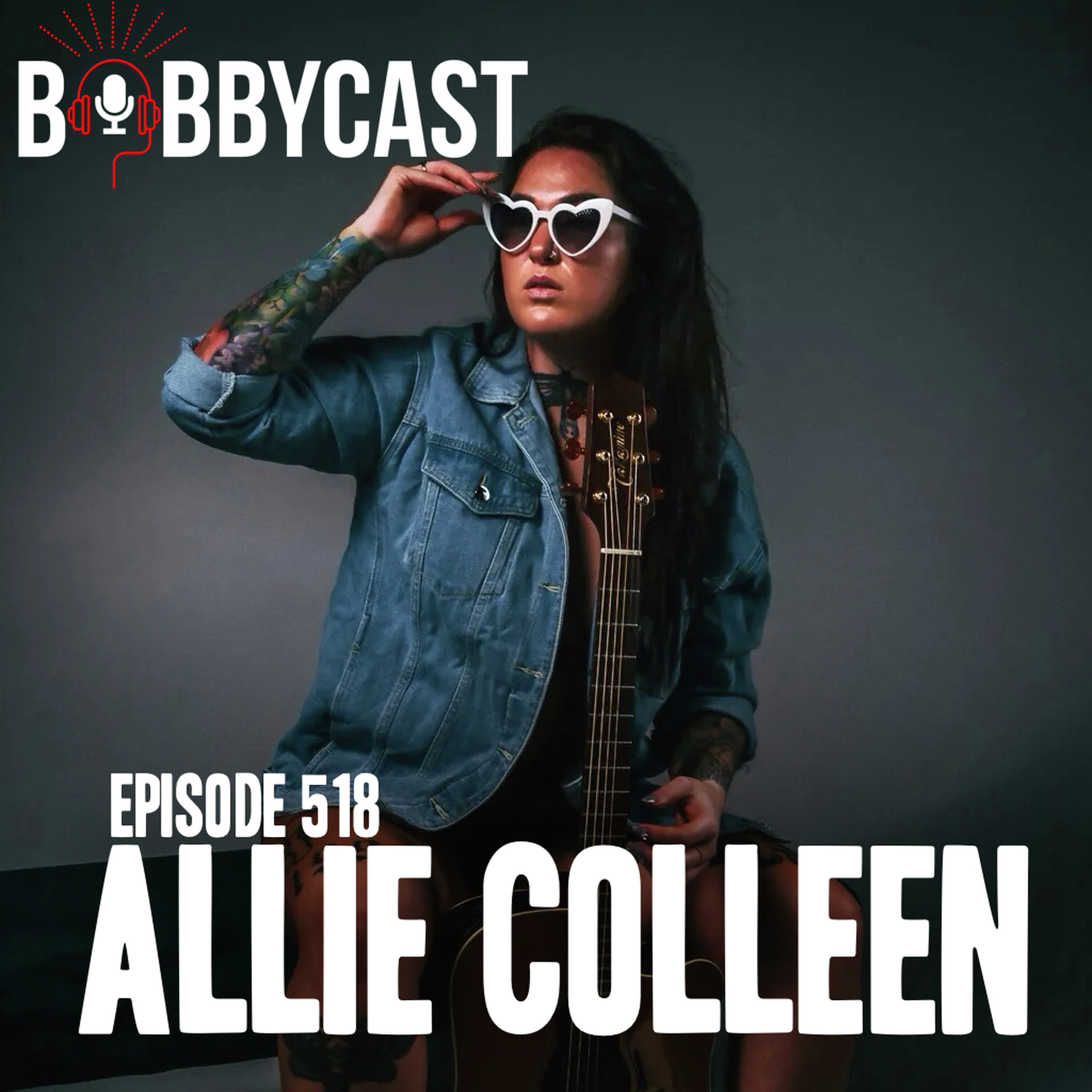
#518 - Allie Colleen Returns! Stories Behind her 30-plus Tattoos + On Wanting Her Dad to Just be ‘Dad’ + Why She Loves Working Out + Why Oklahoma Isn’t Home
On this episode of the BobbyCast, singer/songwriter Allie Colleen returns! Allie talked about the inspiration behind her 30+ tattoos, and whether or not a tattoo or writing a song is more personal for her. Plus, Allie discussed wanting her dad, Garth Brooks, to just be her dad and not try to navigate her music career. Bobby and Allie also talked about their love and hatred for working out, why Oklahoma isn't where she considers 'home', and much more!
Follow on Instagram: @TheBobbyCast
Follow on TikTok: @TheBobbyCast
Watch this Episode on Youtube
See omnystudio.com/listener for privacy information.
Available Results
Generated results are saved to the knowledge database for reuse and search.
Extract Knowledge
Pick what you want extracted first. Model, scope, and chapter options appear after a template is selected.
Transcript
00:00:06
Speaker 1: I think he's very, very hesitant to tell me anything about music, you know what I mean, because it just doesn't work the same as it did.

00:00:12
Speaker 2: I mean, you're talking about generations different.

00:00:14
Speaker 1: My dad hates social media and sometimes thought that maybe I shouldn't do social media like for myself, like the Preserve Alley.

00:00:20
Speaker 2: But I'm like, who else is going to do it?

00:00:22
Speaker 3: Man?

00:00:22
Speaker 2: Like I'm an independent artist.

00:00:25
Speaker 4: Episode five eighteen of The Bobby Cast with Ali Coleen. She just put out a new EP called Sincerely Rolling Stone, and I found because we've had her before and I've always tried to be sensitivebout the fact that she is her own artist. She's also Garth Brooks's daughter, and I never want to be like, hey, so Garth's daughter. And I felt like in the first time, we really didn't do that much at all till the end. But this time, so much of her music this time is about and you can correct me if I'm wrong here about how she balanced it deals lives with the fact that there's an expectation on her because she's Garth's daughter.

00:01:06
Speaker 3: Do you feel like that's accurate? Yeah, she got deep into it here, felt like therapy throughout.

00:01:10
Speaker 4: And I think it was because really a lot of her music this time is about those feelings that surround that, and we talked about it. Otherwise, I don't think I would have just canniballed into it. I would have definitely respected her as she is as her own artist. But I was grateful for her generosity in that area. Yeah, it was almost like he couldn't talk about the music without talking about that. Yeah, so know that, know that I would have for sure just been like, hey, let's talk about your music, because I definitely respect her as an artist and as a songwriter and just who she is as a person.

00:01:45
Speaker 3: So yeah, that's it. I just want to make sure we're all cool there.

00:01:49
Speaker 4: She's Garth's daughter, but she's also first and foremost Ali Coleen, her definite own person. She has a lot of tattoos. We talk about that. Her arms are and her even her legs are covered in art. I won't even say tattoos. It's like one big art project. She didn't sing a lot growing up, especially not in front of her family. I don't know if we talked about horses this.

00:02:10
Speaker 5: Time, I don't think so.

00:02:12
Speaker 4: Oh, well, a place in her house we talked about that's true. That's true, but she's big horse person, so we'll just get to it right now, Episode five eighteen Ali Coleen. Follow her on Instagram, Alikolen Music or check it out alikolen music dot com. I don't want to spoil anything, but when she's like people just expect me to play friends in little places, that was kind of funny.

00:02:35
Speaker 3: I here you go enjoy.

00:02:37
Speaker 4: Right before we went on, we were talking about exercising. I don't like going to the gym.

00:02:43
Speaker 3: I don't like exercising, but I think I six days a week probably What do you not like about it? Everything? I hate it? What do you like about it? Though? Because you get fired up you're like, I just like going, like, what is it about it?

00:02:59
Speaker 2: You still love it?

00:03:00
Speaker 1: I think it's it's a big control thing, right like, because I think there's a lot of stuff you doing here in your day that you don't want to do, and I get to choose to do this one. It's also like such a release. I'm an angry guy sometimes, you know what I mean, and I don't feel that way.

00:03:14
Speaker 2: When I get out of there.

00:03:15
Speaker 4: It's funny that that is because everybody has different ways to release, and I do have friends that are similar to you and they like to And I own a bunch of boxing gyms here in town for a long time, and so I liked it, but I never found my release in that, and like the exerting physically, I think mostly my release is like getting a burner account, so social media and going after people.

00:03:40
Speaker 3: That's my role.

00:03:40
Speaker 1: Do you link it to performing the gym? No, because like you don't ever stop performing.

00:03:45
Speaker 3: I hate the gym, though, Okay, let's break this up. I like I like where you're, where you're taking me.

00:03:50
Speaker 2: Yeah.

00:03:50
Speaker 4: I feel like my day is constantly creating content, regardless thinking of it talking about it.

00:03:57
Speaker 3: I got like five shows.

00:03:58
Speaker 4: If I'm touring a part of the year if I'm coming up, so that's always happening. I still hate the gym, even though I'm able to separate from it.

00:04:06
Speaker 3: I just hate.

00:04:07
Speaker 4: I like exercising. If there's a Okay, you put me here, I got it. I like competing. I like competing it's other people and beating other people because I'm so insecure that I have to beat people that stuff to feel good about myself. And so if my exercise comes from that, a plus, will do it all day. So beat Bobby but I don't like that because I can beat Bobby or I can lose to Bobby.

00:04:31
Speaker 3: Bobby.

00:04:31
Speaker 4: I can beat Bobby or I can lose to Bobby. By the way, Bobby wins, I don't like running. It's what I don't like running.

00:04:36
Speaker 2: On there's Bobby and there's the self.

00:04:38
Speaker 4: Yeah, but even if the self wins or if Bobby wins, either way, I still won.

00:04:43
Speaker 2: Oh, the self can lose to Bobby dog.

00:04:45
Speaker 4: Yeah, but that's okay because then Bobby's still one, one of the Bobby's one.

00:04:48
Speaker 2: Okay, all right, all right, all right, so.

00:04:50
Speaker 3: You liked you go, Okay, what do you do your box?

00:04:53
Speaker 1: You say, I go to hot box when I don't want to do anything, because then you show up and you're in a class and you have to and then the competition comes in and it's like, well, I'm gonna work harder than the dude next to me today, so that I do that. When I don't want to do something, I go to hot box because I know my weaknesses, and that is pushing myself.

00:05:09
Speaker 4: I don't want to My weakness is just getting up to go once I get in the car, if I go to the gym, or I'm good.

00:05:15
Speaker 3: It's just getting like put in my clothes on.

00:05:17
Speaker 2: When was the last time you bought a new gym outfit.

00:05:19
Speaker 3: Bobby, Oh no, never, not in forever. But I'm good though.

00:05:22
Speaker 1: I'm just telling you right now, I like a cutite by a new gym fit. I'm in the next day, I'm probably in that night.

00:05:28
Speaker 2: You know what I mean. I'm in the fit, I'm in the gym. I'm ready.

00:05:31
Speaker 4: I don't think I usually just cut out sleeves of old shirts and that's a new outfit for me.

00:05:36
Speaker 3: Though. Long as I cut sleeves out, I'm good.

00:05:39
Speaker 2: We could also debunk that if you wanted to, but we don't have to.

00:05:41
Speaker 3: I don't think so. I think that's a new shirt for me. My wife tells me all the time.

00:05:44
Speaker 4: She goes, I see you cut sleeves out of two more of your shirts I like to wear. I think that's one of my simple joys, wearing cutout shirts.

00:05:50
Speaker 2: Do you ever feel that way about your laces?

00:05:53
Speaker 4: So here's the thing about my laces. My laces are and we're look at us, Hey, look at us. Similar I liked where my lace is loose. If they're shoes that I know, I'm gonna do nothing athletic in and then I can slide on and off. Yeah, and then I have shoes that are very similar that the strings all pull them out, and I keep them tight just in case I have to, like run, if I'm getting robbed or something. I think that would be that reason. What is your lace theory? Because yours a loose as well.

00:06:25
Speaker 1: Mine are loose, but they're also the they can't be longer you go to step on them, you know what I mean.

00:06:33
Speaker 3: Yeah, but you got to make them so loose as they can't because if you made them the exact link they were, you would step on them like you've kept them loose to the front of the foot.

00:06:41
Speaker 4: Yes, yeah, yeah, I feel like these are my shoes, It says I. There's nothing I can do except work, and I love shoes. I didn't have a bunch shoes growing up as a kid, so now it's these are very expensive shoes. And I say that in the way if I had never had good shoes growing up, so now I buy expensive shoes.

00:06:54
Speaker 1: I played a show for a roofing company in Oklahoma, and it was the wife's birthday, and she gotten into a Louis Vuitton set.

00:07:01
Speaker 2: For her cow at that party of wait what.

00:07:04
Speaker 1: She got a louisiton like harness, like a whole set. Yeah, they made me think about it.

00:07:10
Speaker 3: They make Louis Biton harnesses, I don't.

00:07:12
Speaker 2: Think they do. I think they did, you know what I mean?

00:07:15
Speaker 3: For one, I think so? Yeah, so those are just listening.

00:07:18
Speaker 4: I have on a pair of air Max red Nike Louis Biton and I love them. And when I put these on, I know that I can't hop into a pickleball match.

00:07:29
Speaker 1: That seems more like a personal boundary for you than the shoe. But I think I will hurt.

00:07:34
Speaker 3: Really yeah, I have to tighten these way up. I can do. So what's your shoe deal?

00:07:37
Speaker 4: Because you you you have a pretty cool fashion since in general, why I love.

00:07:42
Speaker 2: Half and half. I always have.

00:07:43
Speaker 1: When I was probably in like eighth grade, my sister got a pair of kool Aids and she couldn't pick between the yellow pair and the green pears, so she bought both and she wore like the right and left shoe of both colors. And ever since then, I've been obsessed with half and half. So my laces are half and half for tour, I have a Timberlin and a black Timberlain. I always mix my converse half and half.

00:08:04
Speaker 3: That wouldn't work for me.

00:08:05
Speaker 4: I'm pretty colorblind in general, so I'd accidentally be normal.

00:08:11
Speaker 2: But you could tell the difference between a dark shoe and.

00:08:13
Speaker 3: A light shoe if it was black and white. Yeah, but blue and green? Now?

00:08:17
Speaker 2: Can you tell that my laces are different?

00:08:19
Speaker 3: I didn't notice that we were different until you said that.

00:08:21
Speaker 2: Interesting.

00:08:22
Speaker 1: I don't know too much about the whole color blind thing. It's certain colors for certain people.

00:08:27
Speaker 3: Right, all minds dark colors.

00:08:28
Speaker 4: After about a six on the scale, it's all black, maybe six point five.

00:08:33
Speaker 2: How do you pick the colors you like to wear?

00:08:36
Speaker 3: I love red. I weren't a lot of red today because you can see it, or I can see.

00:08:40
Speaker 4: Red a little darker. But yeah, I wear a lot of red or light colors. My wife helps me. When I was in high school and I would go I was in Key Club and which is Kwana's educating youth, and I would go speak and try to win scholarships. And so they let me because of my quote unquote disability. I don't say that now, but they let me take my friend with me to match clothes because I couldn't tell the difference.

00:09:00
Speaker 3: I really didn't need them, but.

00:09:01
Speaker 2: The camaraderie is kind of cool, but that's crazy.

00:09:03
Speaker 1: Yeah.

00:09:03
Speaker 4: No, I really didn't need them because I can just like now. A lot of my stuff's labeled as well. But I'm not blind, but my right eye doesn't work. I have eight percent vision of my right eye in general, so I should have a handicap sticker and I don't.

00:09:14
Speaker 2: And you still pickleball the hell out of it though.

00:09:16
Speaker 3: Imagine though I've had both eyes, how good I would be.

00:09:18
Speaker 2: I don't think anyone wants to.

00:09:19
Speaker 4: They shouldn't give me Unstoppable because I want a bronze medal with a one eye. Imagine I've had both eyes and if I have a silver? Do you play pickleball at all?

00:09:27
Speaker 2: I'm going to tell you no, but yes, I do play pickleball.

00:09:30
Speaker 1: Yeh.

00:09:31
Speaker 3: What do you do?

00:09:31
Speaker 4: So if you're going to work out, though, you say you go to you don't have say the name of the gym, but you go to like a I just go.

00:09:36
Speaker 2: To like local gym when I want to work out that has like free weights.

00:09:38
Speaker 4: I love lifting and you can make yourself work hard, yeah, because I can make myself work hard at work.

00:09:46
Speaker 3: It's hard for me.

00:09:46
Speaker 4: To just push myself physically to the point where it's uncomfortable, which I pay a trainer to do. But it's hard for me to push myself in that part of my life that I push myself so hard it makes me uncomfortable.

00:09:58
Speaker 3: But you can do that.

00:10:00
Speaker 1: Yeah, I feel like I perform for everybody else all the time, and the gym is the only place that I only perform for Ali.

00:10:07
Speaker 3: That's interesting.

00:10:08
Speaker 4: I feel like I don't want to perform anywhere else, and the gym's part of the place I don't want to perform.

00:10:12
Speaker 2: I can't relate to not wanting to perform.

00:10:14
Speaker 4: Yeah, I don't. I'm such an introvert when I'm not an extrovert, But.

00:10:19
Speaker 2: You don't perform for yourself at home.

00:10:21
Speaker 4: I perform for my dogs. I do bits all the time for my dogs and my wife. But she didn't really like to.

00:10:24
Speaker 2: Bitch, Oh the world's your dogs have seen?

00:10:26
Speaker 3: Yeah? Yeah, I do a lot of bits. But I'm very introverted.

00:10:30
Speaker 4: If I'm not on a lot of people will go if they'll send me a restaurant or something, and they won't come say hi, this is the annoying part about it. They won't come say hi, but then they'll tag me in something and be like, here's a total jerk.

00:10:41
Speaker 1: Yeah, I'll tell somebody later that you were like put off, but they didn't, and I was like.

00:10:44
Speaker 4: I never said anything to me, And I naturally am a quiet person that feels like nobody wants me in their space, so I don't get in their space.

00:10:53
Speaker 1: Well, the expectation for someone to expect you to come and create rapport just because you're in a room is crazy.

00:11:00
Speaker 2: You don't know they're there, and you don't care they're there.

00:11:02
Speaker 1: Respectfully, you're just at First Watch having some avocado toast, you know what I mean.

00:11:05
Speaker 2: That's crazy. You shouldn't have to set rapport with the entire room.

00:11:09
Speaker 3: Yes, and I agree.

00:11:10
Speaker 4: I also appreciate the fact that they think they know me well enough, because it's an odd relationship to have with that, because it does irritate me when people will say, man, he was a jerk er tagged me, Hey, you were such a jerk at this place, and I'm like, you never said hi to me. How am I supposed to react to somebody who doesn't come up and say hello.

00:11:28
Speaker 3: However, I think for me.

00:11:29
Speaker 4: The benefit of that is somebody feels like they know me well enough through what they've consumed from me that they feel I should be a certain way. And that's intimate in that content, you know, absorption from people. And I don't think it's fair, but I have found kind of a silver lining to that that people feel they know me well enough to get upset irrationally because it's not fair.

00:11:53
Speaker 2: It's not fair.

00:11:54
Speaker 3: It's not fair.

00:11:54
Speaker 2: It's not fair.

00:11:55
Speaker 1: I know that you're an introvert, so maybe you don't relate to this, or maybe you do. I I'm an introvert, so if I'm out in public, I've just already decided I'm ounta in public. How do you feel about people who are Like, if celebrities aren't going to be nice to you, they have no reason to go to a restaurant.

00:12:09
Speaker 2: I hate I feel like they should be able to go to a restaurant.

00:12:12
Speaker 4: There's only two rules that I give people that listen to me, and they don't have to listen to my rules. But if a celebrity is with a kid, or they have food in front of them in a public place, leave them alone. Other than that, they know what they've got themselves into and they've gone to public.

00:12:29
Speaker 3: Knowing that people will know them. Their job was to be known.

00:12:33
Speaker 4: Yeah, so if they have a kid with them, don't bother them, or if there's food in front of them, don't bother them.

00:12:39
Speaker 3: Other than that, they have the right to say no.

00:12:42
Speaker 4: As a celebrity, absolutely, they can absolutely be a jerk all they want, but you're in a public place to go up and say hi. And most times I have found that people enjoy when normal people come up and say they're a fan of them. That's kind of why they got into the business.

00:12:56
Speaker 2: Absolutely.

00:12:57
Speaker 4: Most times there's a rare exception of people who are jerks, but most people that create for public consumption enjoy it when the public comes up and says, I enjoy what you.

00:13:08
Speaker 3: Have put out. Yeah, but just.

00:13:10
Speaker 4: No kids and no food. Other than that, they're free game and I don't.

00:13:14
Speaker 2: The kids in the food thing is very cool to me.

00:13:16
Speaker 4: Why, Because you were the kid once I was the kid. I was thinking about you today leading into this for that exact reason. It's so funny that we ended up on this because I was thinking, man, I bet your relationship with fame is so weird because you probably just wanted to have parents.

00:13:33
Speaker 1: I just wanted to have parents, and I just wanted to have parents that could be parents too, you know, like, and that's always tough because you're, you know, considering this lifeline that isn't real. So who knows what we're talking about, you know what I mean? But I do wander sometimes what something would have been like if my dad was always just dad, if like that was his biggest thing, But that takes away eighty two percent of the human that man is, you know what I mean. He's a lot more than just a dad. So but I was the kid, and it was really tough. And I only found when we were eating. So I think it's really interesting you say that if you want to come up and say hi when we're shopping at the grocery store.

00:14:12
Speaker 2: It never bothered me, It really didn't.

00:14:14
Speaker 1: But there was something about when we're eating, and he is to stand up and make sure that he is not have food in his teeth and that he doesn't, you know what I mean, all the things that a human should be able to do when they're sitting and eating with their family.

00:14:25
Speaker 2: And that was always really tough.

00:14:27
Speaker 4: And I'm not going to compare my situation to yours in any way or my wife's.

00:14:30
Speaker 3: But so.

00:14:33
Speaker 4: When I got married, for my wife, the situation was a bit difficult in that I got to grow with whatever version of fame that I have, because I'm definitely not famous, but I am known in parts of the country and people do come up and say hello, and that's great. Ninety nine percent of the time, it really is. I got to grow with that, right, meaning I got to be in a small town, I got to syndicate myself.

00:15:00
Speaker 3: Have I did shows of one hundred people.

00:15:02
Speaker 2: Yeah, you got to evolve as you evolved.

00:15:04
Speaker 3: For sure. So I grew with it learned where my wife was kind of dunked into it and I would be like, Oh, it's okay, they're recording us from two tables over. It's not a big deal. But to her that was her starting point, so it was really weird.

00:15:18
Speaker 1: I can't imagine I feel that way about the TikTok and the viral thing with these artists right now.

00:15:25
Speaker 2: I think we've seen the last five years.

00:15:27
Speaker 1: The most mental effect on these new artists who haven't done anything, and then now they're on an opening tour or haven't done and it's like I can't imagine that. And I have a lot of stuff that I have a big chip on my shoulder about with having you know, famous parents and like living and growing up in that way that I do.

00:15:45
Speaker 2: But I can't imagine.

00:15:47
Speaker 1: Running into it at nineteen, you know what I mean, out of nowhere and like being viral overnight or running into it at twenty two out of nowhere.

00:15:55
Speaker 3: Like.

00:15:56
Speaker 2: So, I'm very grateful to have gotten.

00:15:58
Speaker 1: To see it on the spectrum that I saw it, and then now I've experienced it in my own way in such a totally different different spectrum than the way that my you know, I did as a child.

00:16:06
Speaker 3: But it's crazy that would I'll say relieve because I in a different way. I feel it too.

00:16:11
Speaker 4: It relieves a bit of resentment, Like you're able to see somebody else go into it differently and you're like, man, that would kind of suck.

00:16:20
Speaker 2: Perspectives.

00:16:22
Speaker 3: It is a tool, but you only get it through situations that you didn't ask for.

00:16:26
Speaker 2: Yeah, like patience, Like if you.

00:16:29
Speaker 4: Have perspective, it's because you've been through something it wasn't desirable. Yeah, yeah, what So we have kind of rules at the house.

00:16:40
Speaker 3: My wife's very private.

00:16:43
Speaker 4: And part of that too, is probably her getting dunked in it and me not understanding I needed to care more. I think I failed a bit early on because I didn't understand I needed to care more about that part of our life because I'd just been so public with everything and.

00:16:58
Speaker 3: She's very private.

00:17:00
Speaker 4: Was there a part of your life where you were just like I'm just and maybe it's not even it's in your name. I don't know what it is like that you were just like I need this for me because my life has been associated with Garth Brooks or country music or like, what did you keep to yourself that was so private or different?

00:17:22
Speaker 2: I'm still working really hard on that. I don't know. I really don't know.

00:17:27
Speaker 1: I've been in therapy for the last three years specifically for that, because, you know, growing up the way that I did, you were just privileged, you know what I mean, Like you just had everything that nobody else had, Like there couldn't have been anything wrong because we had so much.

00:17:41
Speaker 4: You know now, to be fair, what you're saying is just so I can speak between the words you're actually saying. You're saying you weren't allowed to feel like you down because you were so up.

00:17:51
Speaker 1: I didn't know that until I was an adult. But of course, like we had everything, and my parents came from respectfully nothing, you know, so I don't know that it even crossed maybe their brains that we could go without because we had everything, and so I didn't know. And when we talk about performing in the gym and all of those things, and like I mean, I had to learn at you know, a very young age that you didn't just get to be a wild kid in the grocery store because what you did was a reflection of Garth Brooks, you know what I mean. And like and we as a family, we love that name. We love the name of Tricia Yearwood. We love the name of Garth Brooks. Now, those those products are not my parents, you know what I mean. My bonus mom is my bonus mom, and my dad and my mom or my parents, and that's what they are. But there's also that thing of growing up where it's like man and anyone from who's like a really really small town also gets it to on that spectrum, like if you get in trouble at the bar, you know what I mean, when you're twenty one on your first time, like that is a reflection of your family in that small town, you know what I mean, And so think about that globally, it just seemed like everything we did so we had. We tried to get the best grades, and we tried to be the best athletes, and we tried to be the kindest people in town, you know what I mean, Like you just try and do all that thing, like what you're talking about earlier, just to negate any possible run.

00:19:11
Speaker 2: Ins with like being anything that's negative.

00:19:14
Speaker 1: And so as an adult, I'm twenty eight now and I'm really trying to figure out what Ali does for Ali.

00:19:20
Speaker 6: Let's take a quick pause for a message from our sponsor, and we're back on the Bobby Cast.

00:19:34
Speaker 3: Have you read and this is such a cliche book, But I say that because I just read it.

00:19:40
Speaker 4: I always felt it was cliche, so I never read it. I just read The Alchemist.

00:19:43
Speaker 2: I'm familiar with the title.

00:19:44
Speaker 4: Okay, me too, It's all I was familiar with it. And so the whole thing is about finding your personal legend. The whole book it's.

00:19:51
Speaker 2: Saying that to me, was the first your purpose? Oh oh, like your legacy?

00:19:54
Speaker 3: Yeah, Like why do you exist? Like what.

00:19:58
Speaker 4: Inside of you? What is your purpose? For being here, and I think my purpose was so attached to my career for so long. I give it only that's the only thing I really had control in though, because it's coming from how I grew up. I didn't have control. I didn't have any family.

00:20:16
Speaker 7: So children do not have agency. I okay, go ahead, Children do not have agency. I felt like I had to develop agency very early because you had to.

00:20:27
Speaker 3: Yes, yes, is.

00:20:30
Speaker 2: Not a fault. You under see what I'm saying.

00:20:32
Speaker 1: Like any child that had to establish their own agency before I mean, let's just say eighteen, because culturally that's that's what we do here. You know, at eighteen, you're out there and you're able to make your own decisions. You can mess up with the irs and go to jail, you can do all the things at eighteen.

00:20:49
Speaker 2: So anyone who has.

00:20:51
Speaker 1: To establish agency for them before that, that is something that you're going to have to go back through your entire life with your new beautiful on a lobe that you have now and reprogram all of those things. Children do not have agency. Children have freedom to be children. And that is not the case for I'm sure most most people. You know what I mean, Like we all have to do it, but you didn't have agency as a child.

00:21:17
Speaker 4: I would say, though, how I compare my childhood is I would compare it to yours in the parallel of you may have been given. You may have had the ability to not have to have agency for so long that it could have kept you from growing in certain ways.

00:21:33
Speaker 1: We didn't have agency because I think the biggest thing of agency is not having the freedom to be a child, not having the freedom to grow up and establish your own likes and dislikes, like your own.

00:21:43
Speaker 2: Fears and not fears.

00:21:44
Speaker 1: Instead you have like this lifeline that has thrown on to you that kind of takes away that agency. And so for you having to perform in such a way when you were younger, because you had to step in and fill fill roles that children should not have to fill, I think that affects the self the same way.

00:22:03
Speaker 4: But don't you think you had to step in and fill roles of the expectation that that you had put on yourself to be whomever everybody else thought you were?

00:22:10
Speaker 1: Absolutely my siblings and I had absolutely no agency to grow and to evolve at an appropriate pace, you know what I mean? Reflection, Yes, And so how are you encouraged to do that with the Alchemists.

00:22:23
Speaker 2: And where do you land at? Is there a landing point?

00:22:26
Speaker 4: I don't think there's a landing point ever, just in general anyway, Yeah, I don't hate that. I think the one thing I've learned is there really is no target ever. You just kind of aim toward a goal, and then at any time you want to modify that, you have the ability to modify that. My goals used to be A and B, and I've had a in therapy. I've had a real hard time with not feeling like a failure because I'm modifying a goal, because I feel like if I'm modifying a goal, I'm giving up.

00:22:53
Speaker 2: So how is purpose to find in the Alchemist.

00:22:56
Speaker 3: That it's okay to.

00:23:03
Speaker 4: Chase your sense of self even if it wasn't your sense of self even five minutes ago, that there there is no definitive sense of self. That a lot of the things that we prioritize and make extremely important, we're making important, making important for exterior for reasons that really don't matter to us, it.

00:23:29
Speaker 3: Matters to other people, and other people.

00:23:30
Speaker 4: Matter to us, and limiting that because it's never going to be gone. Yeah, and so yeah, I avoided that book forever and I read it and pretty freaking amazing.

00:23:42
Speaker 3: I get it.

00:23:43
Speaker 4: I get why people like talk about it so much. The same thing with the Four Agreements, Like I read that didn't want to fends like read it and for me that that the part of that book was don't nothing in business is personal, even if it is it's not.

00:23:58
Speaker 1: Well, those things make like push to make a decision that is bigger than the self. I think same thing with like pushing yourself to work out. It's like it's just pushing that bigger conversation. That's like, I don't know, it's hard, but I do like the I like the frustration you have with taking on new stuff that you know is gonna be helpful, but you also know that you have to evolve afterwards.

00:24:19
Speaker 3: I'm good with delayed gratification.

00:24:22
Speaker 4: I really am, because all my gratification has been extremely delayed, extremely.

00:24:27
Speaker 3: So yeah, I'm pretty good with delayed gratification. You have a lot of tattoos.

00:24:32
Speaker 1: I was just I was looking at this photograph before you came in here, and I was thinking about the ones that are not on this photograph.

00:24:38
Speaker 2: I like doing that every time I come to a room I'm like, what's new?

00:24:41
Speaker 3: What are you saying with all these tattoos?

00:24:45
Speaker 1: I think that they all say you know something different in their own way. I also don't find it to be too serious in the sense of I saw a woman when I was probably eight or nine that was just covered head to toe in tattoos, and I thought, what a Like, that's crazy. Like I just thought she was stunning, And I thought, I want to represent what I've learned and how I've evolved in a bunch of tiny little things that matter to me.

00:25:13
Speaker 2: And some of them are just cool.

00:25:14
Speaker 1: Man.

00:25:14
Speaker 2: Some of them I just think are cool, like my band aid, Are you joking?

00:25:19
Speaker 3: I think all of them are probably cool. And I guess so.

00:25:23
Speaker 4: I wonder if you were, in your mind required to live a certain way because of the expectation upon you, is this a way to say there is no expectation on me anymore?

00:25:37
Speaker 1: I think for me, it's just an outward thing of like, maybe that is one of the few things that I have done for myself. I have tattoos of myself. I have two tattoos of myself and where she was when she got them and who she is now, because I don't know who else is ever going to get an ally colleen leg sleeve.

00:25:57
Speaker 2: If there are a couple of people, I'd be pretty rad. I don't think there are. Anything is rarely just me, so I'll do it. But I just love it.

00:26:06
Speaker 1: But I've never thought about it as any kind of like negating what people expect me to look like.

00:26:14
Speaker 2: I've never talked. I've never taken it that way. I don't mean to put words in your mouth.

00:26:18
Speaker 3: No, I did take it as that.

00:26:20
Speaker 1: Yeah, I've had a lot of people ask me that and asked about, oh, well, so you have tattoos because your parents don't like tattoos orally the cases, And I'm like I it has never crossed my mind to ask my parents what they thought about my tattoos or my body.

00:26:34
Speaker 3: How many do you have?

00:26:35
Speaker 2: I don't know.

00:26:36
Speaker 1: I'm gonna I've passed with both of my arms being one whole piece.

00:26:40
Speaker 2: I know I've passed thirty.

00:26:44
Speaker 3: What was your first tattoo?

00:26:45
Speaker 2: My elephant?

00:26:47
Speaker 3: Which one on your leg?

00:26:49
Speaker 4: Yes, that's a odd place to get a first tattoo, right on your quad.

00:26:55
Speaker 1: I already had my I already had my sleeve planned out. But I I graduated. I was one of those really late summer birthdays or graduated like seventeen. So I knew I was going to be in Nashville when I was eighteen because I chose my university here, and so I already had Jay picked out. Jay Quarrels is my tattoo artists. I absolutely love him, and so I already had him picked out. So I just wanted something to get on my eighteenth birthday, and the elephant was a painting that I'd done, and so I wanted I wanted to do my own first tattoo like I wanted.

00:27:20
Speaker 2: To design it.

00:27:20
Speaker 3: Are they all personal?

00:27:23
Speaker 2: Not all of them? Most of them?

00:27:24
Speaker 1: Yes, some of them I genuinely think, just look absolutely cool, just swag.

00:27:29
Speaker 4: What's more personal a tattoo or a song that you've written, because I'm assuming not all songs are as personal as others.

00:27:35
Speaker 3: I mean there's a scale.

00:27:37
Speaker 2: There's absolutely a scale.

00:27:39
Speaker 1: I mean there's those songs that there's very few of these because I feel like as performers, you know, when something touches us that much, we kind of have that ego of thinking it can affect a lot of people. But if you ever meet songwriters who have songs that they've truly never played for anybody else.

00:27:52
Speaker 2: That I think is the most personal thing that you can that you can have.

00:27:56
Speaker 3: Do you have one of those? Two of those? Three of those?

00:27:57
Speaker 2: I only have one?

00:28:00
Speaker 1: Everything else I've always wanted to share in some capacity with somebody.

00:28:04
Speaker 3: Are you Are you making it precious? Or are you insecure?

00:28:07
Speaker 1: I think it's a shame thing, for sure, But I think it's one of the very few ways, like outlets, that I've learned to navigate shame with that I like. But it's also rooted in performing, which I'm trying to get away from. If I can turn my shame into something and I think it's beautiful and that someone could listen to it without arguing against it or negating its purpose, surely I did a good job.

00:28:29
Speaker 3: That's performing. Is the shame limiting itself as time goes by.

00:28:33
Speaker 4: In your dream scenario? Or are you always going to hold this song this precious?

00:28:41
Speaker 1: I think I'll hold it this precious until I don't have shame for what they like the song is about, you know what I mean, Like for shame for that memory, shame for that circumstance, shame for how I reacted or didn't react to that circumstance. I think that the shame will always be there. And then there's also that performing thing of like it's something that I don't want anyone's even positive affirmations about yet, you know, it's just a little personal world. I don't know, but I don't think I have any tattoos that I would feel as personal about to a song.

00:29:14
Speaker 3: Do you have any tattoos from songs?

00:29:16
Speaker 1: Like?

00:29:16
Speaker 4: Did you write a song ago? I'm gonna make this. This makes me feel a certain way, it's about a certain thing.

00:29:20
Speaker 2: Yeah.

00:29:21
Speaker 1: I have started my back recently, which is going to be over my lifetime. All lyrics of mine that I that like really mean something to me. So I have a song called Wildflower, and that chorus is the first lyrics that are on my back so far, because it's just one of the songs that I want to represent for the rest of my life and one of the songs that I wrote for me to represent for.

00:29:40
Speaker 2: The rest of my life.

00:29:41
Speaker 3: Are you ocd that the lyrics will have to be in the same font or same side, I don't know.

00:29:45
Speaker 2: I've already made it.

00:29:46
Speaker 1: I've made sure that they can all be like hodgepodged and like the margins are all different on all of them too, and the fonts different on all of them based off of like the character of the song, So the font should reflect the song, if that makes any kind of sense.

00:29:59
Speaker 3: How often do you write?

00:30:01
Speaker 1: I write in some capacity every day, whether it's like free writing, or whether it's actually putting melody to lyrics, or whether it's co writing or write every day?

00:30:10
Speaker 3: Are you a melody first or a concept lyric first?

00:30:13
Speaker 2: Always different?

00:30:15
Speaker 3: Generally fifty one percent of the time.

00:30:17
Speaker 2: Concept first.

00:30:20
Speaker 1: It's happening less and less as I get older that I just have a melody that I can't shake that I want to put it like a narrative to Usually it's trying to find the melody.

00:30:27
Speaker 2: That fits the narrative.

00:30:29
Speaker 3: Where's home?

00:30:33
Speaker 2: Somewhere where there's food? You know what I mean? I don't know.

00:30:37
Speaker 1: It's not Oklahoma. It's not here. I live here, I was raised in Oklahoma. I don't know where I'm gonna end up or where I want to spend my personal time.

00:30:47
Speaker 6: Uh.

00:30:49
Speaker 4: God knocks on the door and says, hey, take me to your home. Where do you take them?

00:30:54
Speaker 1: Take them to the barn. I have a barn at my house. It has the best acoustics on the planet.

00:31:00
Speaker 3: Why.

00:31:01
Speaker 1: I think it's because it's open. It's like concrete and wood, you know what I mean. It's nothing but refracturing sound. There's no sound proofing or absorbing or anything out there.

00:31:08
Speaker 3: But there must be a security there in that spot though, if you picked that, I.

00:31:13
Speaker 1: Think it's just where I'm always alone. You know, my house I've invited people into. My personal life is very small, so it's also very connected. I only have really like two best friends and people that I spend my time with, so it's all really connected. Family's weird, will always be weird, and I love them all so much. But the barn is the only place where it's ever just me. No one works in there with me, no one cleans it with me, no one takes care of the horses with me.

00:31:40
Speaker 2: That's just my place.

00:31:42
Speaker 3: So that is your security, I think so.

00:31:45
Speaker 4: And that barn probably allow me to put some words in your mouth and then you can take them out.

00:31:51
Speaker 3: That barn could probably exist in a.

00:31:53
Speaker 4: Few places if it needed to. Yeah, Like, it's not that literal place. It's what it stands for and what you can do in it. Yeah, So it's not Oklahoma, huh, No, When did that not?

00:32:05
Speaker 3: When was that not home?

00:32:06
Speaker 1: Oklahoma never felt like home. Oklahoma has always felt like an expectation and a weird thing. I have a song on this project that's called Oklahoma Mountains, and there are no mountains in Oklahoma.

00:32:20
Speaker 2: I'm sure you've been there. I'm sure you know.

00:32:21
Speaker 3: My wife's from there.

00:32:22
Speaker 1: Where they're along all right, Yeah, there's nothing. You get lost, you just look up.

00:32:25
Speaker 3: You're the one thing. They're great and loss. That's what I'll say about the people.

00:32:30
Speaker 1: The people in Oklahoma are incredible. Everyone in Oklahoma will agree with you. They're the best and the worst part. The people are are what it is. But Oklahoma Mountains is just they say, there's no mountains in Oklahoma. Why have I always had to climb? Oklahoma is just tough for me. It's tough on me. It's tough for me. I don't know, And that's probably an alley thing.

00:32:47
Speaker 3: Is that an expectation to being Guard's daughter thing?

00:32:50
Speaker 1: I don't know that it's so much an expectation as much as it's like a just like this really hard label that nobody will move.

00:32:59
Speaker 3: What's the label?

00:33:00
Speaker 1: Just being a product's daughter? Like there's not even an Alley in the title. If I feel like I feel like we've talked about this in the past grammar wise, my vendetta with Garth Brooks daughter Comma Ali Coleene Comma is really really great and works.

00:33:13
Speaker 2: Really hard on our own.

00:33:15
Speaker 1: That whole sentence is still wrong because I am an adjective of the noun.

00:33:19
Speaker 2: That's crazy, you know what I mean? Like I am a daughter.

00:33:23
Speaker 1: To a title that's that's crazy, because like he's a product, Like Garth Brooks is a product that has been molded and shaped and worked for, and I am a fan of it. I love what it represents, I love who it is, I love everything about it.

00:33:38
Speaker 2: But that's what it is. Like Garth Brooks is a product. Ali Coleen is a product.

00:33:42
Speaker 1: I've worked really hard on it, you know what I mean, on its shelving, on its packaging, on what it represents, on where it comes from, all of those things.

00:33:51
Speaker 2: But it doesn't have a by product. Do you under ste what I'm saying?

00:33:56
Speaker 1: Like, I'm not a byproduct of Garth Brooks. He's just my dad and we love each other. And then I went off and made a career for myself in music. You know what I mean? In in Oklahoma. You're just always a daughter. You're always someone who's probably never worked very hard for anything. You're always someone who probably has all of our finance taken care of. You're probably someone who dad sits in the meetings with you and make sure that you've become as successful.

00:34:20
Speaker 2: As you are.

00:34:21
Speaker 1: Like there's always some kind of byproduct of someone else's legacy, and that's not what I am.

00:34:27
Speaker 3: Do you think you have to work harder than the average hard worker to prove that you work hard? Yeah? Do you think it?

00:34:36
Speaker 4: I'm not saying is it realm saying? Do you think I do? I think it, yes, because.

00:34:42
Speaker 1: Because that has been the narrative that I've been told for as long as I can remember. I think I shared this with you last time my first spelling tests, made a hundred on it, did a great job, you know what I mean, crushed it.

00:34:56
Speaker 2: Kid next to me spelled beans wrong, be e in it. You know what I mean?

00:35:00
Speaker 1: Beans rock on, Dude, you are so close. I got a hundred on that spelling test because of who my dad.

00:35:06
Speaker 3: Is, which you know what I mean?

00:35:10
Speaker 1: Like just being told from the age that you were six from someone who you sit next to in class and do the same work with you, do the same things every day. I went home and practiced, you know what I mean. And that has been the case my entire life. Every soccer team I've ever made, every tryout I've ever had, every grade I've ever made, the car, I drive, the house, I have all of these things, you know, and.

00:35:34
Speaker 2: And everybody has their labels, everyone has their stuff.

00:35:36
Speaker 1: I'm not special. We all have our things. We have to get over. Those are just things that I'm really trying to get over.

00:35:43
Speaker 5: The Bobby Cast will be right back. This is the Bobby Cast.

00:35:56
Speaker 4: I want to make a comparison. It's not to your dad, and I hope the comparisons okay. And if it's not, then we'll just say it's not okay, and you can we'll talk about it.

00:36:06
Speaker 3: But uh Nicotine.

00:36:07
Speaker 4: The song it feels I won't say sounds like, but it feels like Ashley McBride type song.

00:36:15
Speaker 3: Because I love Ashley.

00:36:17
Speaker 2: I love Ashley.

00:36:18
Speaker 4: Ashley's from Arkansas, like I am small town in Arkansas, like we grew up in similar situations. So I love Ashley, and I say that in a very complimentary way. It feels like a story that she would tell how does that make you feel if I make a comparison to somebody else, because I don't think it's derivative of it at all, But I think that that is a skill that a few people have.

00:36:46
Speaker 1: I want to be Ashley McBride, So that makes me feel like the coolest kid on the planet. That I could even do something that Ashley would do. I think that's the coolest thing on the planet. But I've never once been told. I've never once been told when I do something that I'm really proud of that Ashton McBride made that happen for me, you know what I mean, Like it just never.

00:37:10
Speaker 3: I also wasn't saying ash mc may that happened for you. I'm saying it reminded me of that, right, But I'm.

00:37:14
Speaker 1: Just saying, like, being compared to another artist in that kind of way, in a songwriting way, absolutely an honor, especially one that I love. I'm like, I I did something she could do. That's that's an honor. Even if I've been and this doesn't happen often because we don't sound alike it all, but the very few times, like the first time that you watched me sing on YouTube and I did choose every woman, and you said, I can hear Garth's inflexions in her voice. I can hear that. That's one of the coolest compliments I've ever gotten in my life, Bobby, because I've always wondered if I could ever sound like him or like anything.

00:37:46
Speaker 2: Like that, because my siblings don't sing at all or do music.

00:37:48
Speaker 4: I would think would be the opposite. And actually I was a little ashamed that I had said.

00:37:51
Speaker 2: That, No, that's okay. I think that's cool.

00:37:54
Speaker 1: But at the time too, like you weren't saying, oh, she can sing because of who her dad is. You didn't do that thing of like genetics must be good. And then he punched me on the shoulder, you know what I mean. You just Ali was compared in that moment to a song or something of an artist that she loves, and I thought that was really really cool.

00:38:12
Speaker 4: I mean a tone and a texture, yeah, to me is what it was. More than Hey, she's his kid. Obviously she's gonna be able to do that exactly.

00:38:20
Speaker 1: And those are different, you know what I mean, Like, those things are different, and I can recognize that, Sony, anything that I would have to do with like music, I'm such an honor for But it's just like.

00:38:31
Speaker 2: If you told me.

00:38:34
Speaker 1: That little Bobby Bones was walking into the room, I would just think I would already have a lot of assumptions about little Bobby that I'll have to do with you, you know what I mean. There's nothing wrong with that. That's human nature. It makes sense. I'm just asking more so the industry to help me out, to not put me in that box to people that I'm not gonna fit in that box. They're not gonna like me in there, you know what I mean. I don't represent him at all. So it's just always been really tough when it's like Garth Brook's daughter Ali Coleen doing this, this this now all of a sudden, everyone thinks friends in the Places is gonna be in my set and it's not.

00:39:11
Speaker 4: It's I ever thought about that, the expectation they would have of you to play your dad's songs, Yeah, no way.

00:39:19
Speaker 2: M h everywhere I go.

00:39:21
Speaker 3: Yeah yeah, that would wear on me psychologically.

00:39:27
Speaker 1: It'd be like if people expect to you to do someone else's bits, Yeah, you know what I mean, Like it's like that, that's not even how that works. Like, no, that's always tough, Like when You've worked so hard on the products and like what it is, and I love my music. I'm not gonna lie to you, Bobby. I think I'm like one of the best. I love my music. I get so excited every time I write something new, and I get so excited and I love it. But you're not gonna feel that way if you think it's gonna sound like a Garth Brooks song.

00:39:54
Speaker 2: You know what I mean. And that's always the wall that I hit.

00:39:57
Speaker 1: I love representing my family and being a daughter and having the parents I have.

00:40:01
Speaker 3: I love them.

00:40:02
Speaker 2: I'm so proud of it.

00:40:04
Speaker 1: I just wish Ali Colin could also just stand on her own in a conversation, you know, without the legacy.

00:40:10
Speaker 4: Then I'm going to ask you a question that's going to be annoying. What does not the product? But what does your dad say about? How about how to approach that? About how to approach finding yourself away from the Garth Brooks product?

00:40:25
Speaker 3: And there are two different people. There's Garth Brooks, like you said, the product, and then there's your freaking dad who's been through it and knows a lot because he's been through it. What is his advice to you?

00:40:36
Speaker 2: My dad is man, and I might perceive it this way.

00:40:40
Speaker 1: So this entire conversation from this point on is how ALI perceives this.

00:40:43
Speaker 4: You can tell you made a lot of therapy because I say the same type of things you can tell with someone that did a lot of therapy.

00:40:47
Speaker 3: Yeah, go ahead.

00:40:48
Speaker 1: And I'm not trying to make a blanket statement about Garth Brooks, you guys. But how I perceive my relationship with my father is I think he's very very hesitant to tell me anything about music, you know what I mean, because it just doesn't work the same as it did. I mean, you're talking about generations different on like how he entered the scene, how I'm trying to enter the scene. My dad hates social media and sometimes thought that maybe I shouldn't do social media, like for myself, like for to preserve Alley.

00:41:14
Speaker 2: But I'm like, who else is going to do it?

00:41:15
Speaker 3: Man?

00:41:15
Speaker 1: Like I'm an independent artist. It's just me and Bev. That's it, just me and my manager.

00:41:20
Speaker 2: It's all we got.

00:41:21
Speaker 1: So my dad really stays away from that kind of stuff. And I don't ask too many questions either. Probably my dad and I have worked out since I was a kid, so maybe that's Also, I love the gym, but I've never.

00:41:31
Speaker 4: Red what about your dad? Not the guy that does music, but your dad. Let's say he didn't do music. You probably don't have advice for somebody doing music and how to differentiate themselves from A to B? Is is there not a separation of church and state.

00:41:45
Speaker 1: I have worked so hard in learning the difference between Ali Cooling and Ali and the way that I perceive my father is that he hasn't had that luxury. I don't know that my dad knows that there's a difference between Garth Brooks and Dad.

00:42:03
Speaker 3: That's fair.

00:42:04
Speaker 4: I struggle at times with knowing there's the difference between me, Bobby Estell and Bobby Bones, and I think the the I.

00:42:13
Speaker 1: Think I only know because I saw the two difference, you know what I mean? Because I didn't realize who Dad was until I was probably twelve or thirteen, because that was the age that I saw the Central Park footage and I thought, now, I get why they are grocery stores not that chill for us, you know, like I really didn't. I knew he was huge, I knew he was famous. I didn't know the capacity that it was global, you know what? I mean, like I really didn't understand that. So I saw two different things. And I mean you being entering to fame the way that you did, you didn't have anybody you know that you got to watch be two different things. So my perspective is just really weird.

00:42:52
Speaker 3: How do you write a song? You walk back into the barn.

00:42:55
Speaker 4: And you just sit down, and is it always there?

00:43:02
Speaker 2: It's always there. I've gotten to the point now on guitar where I'm starting to.

00:43:07
Speaker 1: Get better at it tour, because I used to if I didn't start the melding on the guitar, I was just screwed and was going to have to sing a song later for a guitar player in the sense of I'm very good at guitar, but I can't always find my key or my chords, like if I'm making something up. And now I've kind of gotten there, but now I just I just sit down, and I just I said down, and I'm grateful I have a skill and a craft that I've worked really hard at that I've met people that don't have the same outlet. And ever since I realized that, like it's not always normal for people to sit down and be able to write a song. I became really really grateful for that. And there is something about like surrendering to your craft, like no matter what it is, there's something about surrendering like to yourself and like your ability to do something. That's what songwriting feels.

00:43:51
Speaker 3: Like what's your live show like? Because I've seen you play, but it's always you've played our studio, you've played. I've not seen you out in the big yeah, Like what is it?

00:44:01
Speaker 1: My music is really big, it's really like sonically textured. I'm a big sensory person. I have a lot of sensory stuff and I love I just want my show to feel like a five Gum.

00:44:14
Speaker 2: Commercial, you know what I mean. I want there to be subs a five Gum commercial, you know, like five Gum it's like feature.

00:44:21
Speaker 1: Sensors and it's like someone laying on like a bow speaker that's the size of a football field and they're just like laying on it and like the gum. Yeah, yeah, so five Gum. I want my show to feel like a sensory experience like that. So we try and we do the whole heavy subs thing. My drummers are always much more rock oriented than country oriented, and it's just big and it's fun. And I do an acoustic set in the middle, which is very similar. It's like what I've gotten to do with you in the studio, and just to get to play my stuf acoustically for someone right in the middle of my set.

00:44:52
Speaker 2: But for the rest of the show, I don't hold a guitar or anything.

00:44:56
Speaker 1: I just went around and I find little girls in a crowd. Did I put a little faced hats on them?

00:45:02
Speaker 2: Later in the merch line?

00:45:03
Speaker 1: Really, m I keep eyelining on me all the time, and I'll give them a little horse shoes if.

00:45:06
Speaker 2: They want it.

00:45:07
Speaker 6: Let's take a quick pause for a message from our sponsor, and we're back on the Bobby Cast.

00:45:22
Speaker 3: What do you do before show? Any rituals?

00:45:24
Speaker 2: We have a pre show shot and a pre show prayer where we come together.

00:45:29
Speaker 1: As far as me personally, no, I we all still still kind of try and do everything and wear all the hats. So who knows how long sound check goes, you know, and how much time you have ready to get ready afterwards.

00:45:42
Speaker 2: So it's always kind of a scramble for me.

00:45:44
Speaker 3: Do you ever stumble into a song at sound check?

00:45:47
Speaker 2: I have not.

00:45:50
Speaker 3: It's completely different than you. But wolves if we're doing it.

00:45:53
Speaker 4: If I'm doing a comedy show and i'm testing, you know, we're checking guitars, I'll just say funny stuff overcords. And there have been a few times where we're like, oh, this is actually a good idea. Let's just sit with it and play it and kind of flesh it out. I think we did a song called It's so trivial compared to what you do. But we wrote a song called your Mama's House right, and Matt Stell, the artist, and myself were up there. We were playing a show in Atlanta, and we were just going back and forth but on stage together, and somebody made your mama joke and I was like, oh man, we should do that with a song. And so he started playing something and I think it was like, man.

00:46:30
Speaker 3: I really love your mama's house. You can always find me there when you're not around.

00:46:34
Speaker 4: It got a good laugh, but we sort of just balanced. He's going back and forth, back and forth, and there's not always time for that there.

00:46:40
Speaker 1: But oh, right with your band? No, okay, I don't write with my band. So I was wondering if maybe you don't.

00:46:46
Speaker 3: I don't have a band, Like I said, I'm not you, You're actually good. I fake being good.

00:46:52
Speaker 2: That's not fair.

00:46:53
Speaker 3: I have a partner in Eddie.

00:46:55
Speaker 4: We have a band. I have Brandon and Brandon who works with me as well. We'll send each other voice memos. We'll never be in the same room and I'll just be like, hey, what about this?

00:47:06
Speaker 3: That's what about this? And we'll go back and forth and almost write, like here's the idea.

00:47:11
Speaker 4: Is this funny? What if you did this? And eighty five percent of the song gets written like that.

00:47:16
Speaker 1: I want to learn how to not be a performer in the writing room. I'm not very good at that also too, Like usually like I have my own room and the word document. I'm like, if you guys go in there, I swear to God leave me alone. Okay, you can read out loud all these other things I'm putting on the main page.

00:47:32
Speaker 2: But my room's my room. Get out of here.

00:47:34
Speaker 1: And like, if I have a chorus idea, I'm gonna play you the entire chorus, you know what I mean. I'm gonna sit with it. I'm gonna write the whole thing, and I'm gonna ask you if.

00:47:40
Speaker 3: You like it.

00:47:40
Speaker 1: And I wish I could get a little more not performer y in like the writing room.

00:47:45
Speaker 3: What about the vulnerability of the writing room?

00:47:48
Speaker 2: I think it depends on who I'm writing with. I have some people that.

00:47:53
Speaker 1: I'll call them up and I'll be like, Hey, I am not mentally okay or healthy or well today. Can I come up and share with you what's going on and you kind of scribe it out for me, you know what I mean, and see if we can turn it into something. And I've gotten to a point where those co writers sometimes are like, Ali, yes, but if you get over here and you're really not okay, we're not going to romanticize this today, Like we're not going to take everything you're going through and turn it into something for you to sing later when like you still are in this and like that's very few people, but I have two or three, And that is the coolest thing on the planet to not only have someone to go to to talk about that stuff, but to have someone stop you from performing and go, hey, you're having a really hard time right now, and the song you're writing is not even like reflecting these characters in a true way, Like you're just you're taking something that really hard that's happening to you, and we're watching you turn it into something that is pretty and packaged and going to be.

00:48:48
Speaker 2: Consumed by people.

00:48:49
Speaker 1: And I feel like, this is what you're working really hard to not do, and that's really cool.

00:48:54
Speaker 2: And then I have other people where.

00:48:57
Speaker 1: You just get in there and you write the song and it's almost all for them, like as an artist or for somebody else. And I get to put on the songwriter hat that day and my job is to sit there and and mediate someone's feelings and to help them kind of put it into something which is always different. But the songwriting community in Nashville is so diverse and it's so different, and so each write is different. It's on way two, which I love with the ADHD brain of like not wanting to do the same thing ever again, you know, so you can always do something different with the co writers in Nashville.

00:49:29
Speaker 3: The EP, there's five songs on it. Why just five songs?

00:49:35
Speaker 1: These were the five that I didn't think anyone would ever relate to. These are the five that I didn't think were commercial. These are the five that Ali cared about, and she couldn't get past them, you know, I wasn't gonna go and release another single that I thought was super commercial when I had these five that I've sat on. Sincerely rolling Stone I've sat on since twenty twenty one, and I love that song, and these are the five that I just wanted to put out as a very sincere This is how like, this is what a reflection of Ali's world is right now, these songs.

00:50:04
Speaker 4: I have a question then, because the EPE is Sincerely rolling Stone, But isn't the song just called rolling Stone? Because now I'm confused, So.

00:50:08
Speaker 1: The song is called rolling Stone parentheses sincerely or sincerely Prince of rolling Stone, however you want to do it absolutely, you know, everyone asked about this. Our first album was the same way. The first album is called Stones prince Ss. I don't give a and people never know what the song title is, so I'm eclectic.

00:50:26
Speaker 4: Like the EP is Sincerely Camma Rollingly rolling Stone, but track one is rolling Stone prince ye sincerely yes.

00:50:33
Speaker 1: Because the song is the song is I want to be your Rock, and I'm sorry that I'm not Sincerely You're rolling Stone. So the EP is Sincerely rolling Stone because this is a sincere project from me, and the song is just called rolling Stone, because that's what people come up and request. They say, well, you play the rolling Stone song, so it's called rolling Stone.

00:50:53
Speaker 3: People were requesting it before we put out.

00:50:55
Speaker 2: I've been playing this live since twenty twenty one.

00:50:58
Speaker 4: And if people were requesting it then, I don't know why would you think that song would be the most non commercial or.

00:51:05
Speaker 3: No, probably lying to me, Bobby, here we go. Now we're getting to the trauma again. We're going back, probably lying to me. All five of these songs they're different.

00:51:19
Speaker 4: I mean even when listening because I tell you what, this was easy to listen to because it's only five. Sometimes people will be like, here's seventy three songs.

00:51:26
Speaker 3: I don't even listen to all of them.

00:51:27
Speaker 2: Yeah, put this in your notes. Bobby will listen to seventy three songs.

00:51:31
Speaker 3: I know that. But Bobby will be like, I didn't get a chance to hear them all. So but.

00:51:37
Speaker 4: These five songs, I mean, I don't know that they Now that you say how that project is what it means, it makes more sense then because they all five don't fit perfectly together. Is that insulting in anyway? Because I didn't feel like But now it makes sense. If that's why you pick the five?

00:51:55
Speaker 1: These are my five, you know what I mean? It's not this was not a rolled out out Do we have this song on it? Do we have one of these songs on it? Do we have one of these songs?

00:52:05
Speaker 4: Cause that's what I expect most of the time now whenever it's hey, we're releasing whatever the project is. We need a mid we need an up, we need it down, we need a set. You know, there were these roles that the song has to play. I didn't feel that this meant that criteria.

00:52:16
Speaker 2: Yeah, it doesn't have it at all.

00:52:18
Speaker 1: These are the five that meant the world to me that I wasn't sure if anyone else was going.

00:52:21
Speaker 2: To care about.

00:52:22
Speaker 1: And but my I have a really really amazing close following, like of like the followers that I have, Like I'm very close to my following. You have a really private fan club that like gets together for like Thanksgiving and like it's it's it's really special to me, and they the cool kids have been asking for these.

00:52:38
Speaker 2: Five songs for the last couple of years all the time.

00:52:41
Speaker 1: So I thought I'm going to put together since your project of Ali because the single world is always chasing you know what, represents me as a commercial artist, like it always has been, always will be.

00:52:51
Speaker 2: It's how it's structured to do that.

00:52:54
Speaker 1: And so if there was a single from this, it was Grass and the Grave, and we released that as a single before it came out. But yeah, they're not they're not supposed to go together. And then also Household Name was something that I was never gonna be too confident about releasing as a single because I didn't want all the attention to be on Household Name. I wanted to be a part of a project, and a sincere project did that. So Household Name made it on this one, which was one that I wasn't sure if I was ever going to share with anybody, And it's one of my favorite songs on there only because it's sonically achieves everything I've wanted to.

00:53:25
Speaker 2: It's like the.

00:53:26
Speaker 1: Thunder rolls of Amy Lee in Three Days Grace, which is like my favorite thing on the plane. Am Yes, Yeah, I listened to forty seven minutes of thunder pre roll to pick the probably second and a half of thunder that's in Household Name.

00:53:43
Speaker 2: I'm so proud of that.

00:53:44
Speaker 1: I picked under a pre roll just searching thunder sounds and just listening to everyone because I needed the perfect thunder crash, like I needed the perfect thunder that would have been in thunder Rolls but wasn't and would represent Allie and I picked it out. I was so proud of it. So I had a lot of fun creating this project. But it's not for I don't feel like it's for commercial listeners. I feel like it's for the people that care about Ali and represents exactly what our next chapter of music commercially is going to be.

00:54:16
Speaker 4: Then do this for me as we end, because I want to play on the National Accuntdown show Grass on the Grave, So I was like a good SoundBite, So just tell me what the song's about, so then I don't have to edit anything together.

00:54:27
Speaker 3: I can just play this clip. Of course, go ahead.

00:54:30
Speaker 1: Grass and the Grave is just a song for you to grieve all of your plants, whatever they are.

00:54:36
Speaker 2: For me, it was a relationship. It was an entire future. It was a marriage. For some people, it.

00:54:42
Speaker 1: Was a vacation in twenty twenty that they budgeted for three years that they never got to take. For some people with fertility. For some people, it's all of these different things. And Grass and the grave. It's just a real cool sonic song that isn't supposed to be too heavy, isn't supposed to be too hard. It just allows you three minutes of absolute frustration of what something was supposed to be. But you're still going to be okay because there's grass in the grave.

00:55:04
Speaker 3: You know that.

00:55:05
Speaker 4: Except you had no choice but to nail it because it's your story. You really couldn't have not nailed it.

00:55:10
Speaker 5: Yeah.

00:55:11
Speaker 2: Would you have been like, do it? Reframe it?

00:55:12
Speaker 3: Yeah, I'd give us a reframe? Yeah? Can you?

00:55:15
Speaker 2: Can you say it again? But better?

00:55:17
Speaker 3: You're extremely magnetic as a person.

00:55:21
Speaker 2: Are my magnets on the right side?

00:55:24
Speaker 3: Doesn't matter it does.

00:55:25
Speaker 2: One will push you away and one will drag in.

00:55:28
Speaker 3: Yeah, but what pushes someone away?

00:55:31
Speaker 2: Have you seen that? My therapist did that with me with magnets.

00:55:33
Speaker 4: Yeah, I just don't I temporarily would push someone away.

00:55:38
Speaker 3: I think we probably all are magnets. All change.

00:55:41
Speaker 4: Yeah, And I think I've been pushed away by certain magnets that later I've realized, Oh, I shouldn't have been pushed away at all. I should have actually, But that's what probably pushed me away was feeling so uncomfortable that I wanted to be drawn so.

00:55:52
Speaker 2: Quick give on polarities crazy.

00:55:55
Speaker 3: I've spent a lot of money in therapy.

00:55:57
Speaker 2: I haven't portocols completely.

00:55:59
Speaker 3: Free good for you and good for everybody.

00:56:02
Speaker 2: Who feel like it'd be free for you also, but yeah.

00:56:05
Speaker 3: I don't know. They think I'm an artist enough. And also I like my therapist to be really close to my house.

00:56:10
Speaker 4: So I actually I go to a My wife and I go to therapy every two weeks. We've been going since before we got well, I guess right when we got married.

00:56:18
Speaker 2: That's hot.

00:56:19
Speaker 4: It's awesome, except it's not like it's hard. Oh yeah, no, for sure, it's hot, but it has I think for me the.

00:56:26
Speaker 2: Part it is hot, and you can quote me on that.

00:56:30
Speaker 4: I don't know that I will, but I will say that it has allowed me to live in an uncomfortable moment with my wife. And I never really had a relationship that was intimate where it I just thought everything intimate had to be perfect.

00:56:51
Speaker 1: No feeling uncomfortable and feeling safe at the same time.

00:56:54
Speaker 4: That's crazy, and for me, that has been the most growth I've had is that it's okay for to be comfortable and uncomfortable and to live in it. Yeah, because that's what happens with normal humans. I didn't have normal human relationships, so I didn't know. I thought every time we fought, she hates me, it's over.

00:57:10
Speaker 1: No. The only time I could get you to talk about anything personal last time was if it was about you.

00:57:13
Speaker 2: And your dogs.

00:57:14
Speaker 4: That's about it. And now it's a bit different. Yeah, so we I've been able to grow in that a lot.

00:57:20
Speaker 3: And then my.

00:57:20
Speaker 4: Personal I go every other week to my own as well. He's a psychiatrist and he can give medicine. Hell yeah, and I took a bunch of OCD medicine. I was on for a long time because I sometimes I get way, way way obsessed with things.

00:57:31
Speaker 3: I like, thirty pounds. I need to help it all. Yeah, I put on thirty pounds.

00:57:35
Speaker 4: Well, I'm just like, I'd rather be focused and not I have to buy new clothes. I was having to buy pants, and I was like, what's happening right now? My wife was like, did you check your medicine?

00:57:43
Speaker 2: Scary?

00:57:44
Speaker 3: Yeah, it's scary. And the medicine is like you will gain three pounds a month or whatever it was, and I was like, how did I know this?

00:57:49
Speaker 2: So he's something else for you to be OCD about.

00:57:51
Speaker 4: That's great, exactly. Now I'm OCD about not being on OCD medicine. So yeah, it's been a big part of my life. I'm glad to hear that you're so open about it as well, because I think people need to hear people talking about the benefits of it and not the stigma of it.

00:58:05
Speaker 2: Oh, it's incredible. Yeah, it's absolutely so.

00:58:07
Speaker 4: I appreciate you being so open about it and talking about it than you and you got the good magnets. You're north, I'm south right now we're drawn. You're very magnetic. You guys can follow Ali. We put all of our information down Ali's information down below, and we talked about it before she got here, So nothing has changed since we spoke before Ali got here, at least I don't think so, right, Mike.

00:58:27
Speaker 3: I'll still clear.

00:58:29
Speaker 4: Ali great to see as always, and congratulations on the record. And now it all makes sense, but nothing ever makes fully sense. And if it does start to make sense, then you don't actually understand it.

00:58:41
Speaker 3: You can quote me on that.

00:58:42
Speaker 2: I probably will.

00:58:43
Speaker 4: No way you can remember that because I don't even rememb I just said, all right, that's it, Thank you

00:58:47
Speaker 5: Thanks for listening to a Bobby Cast production.