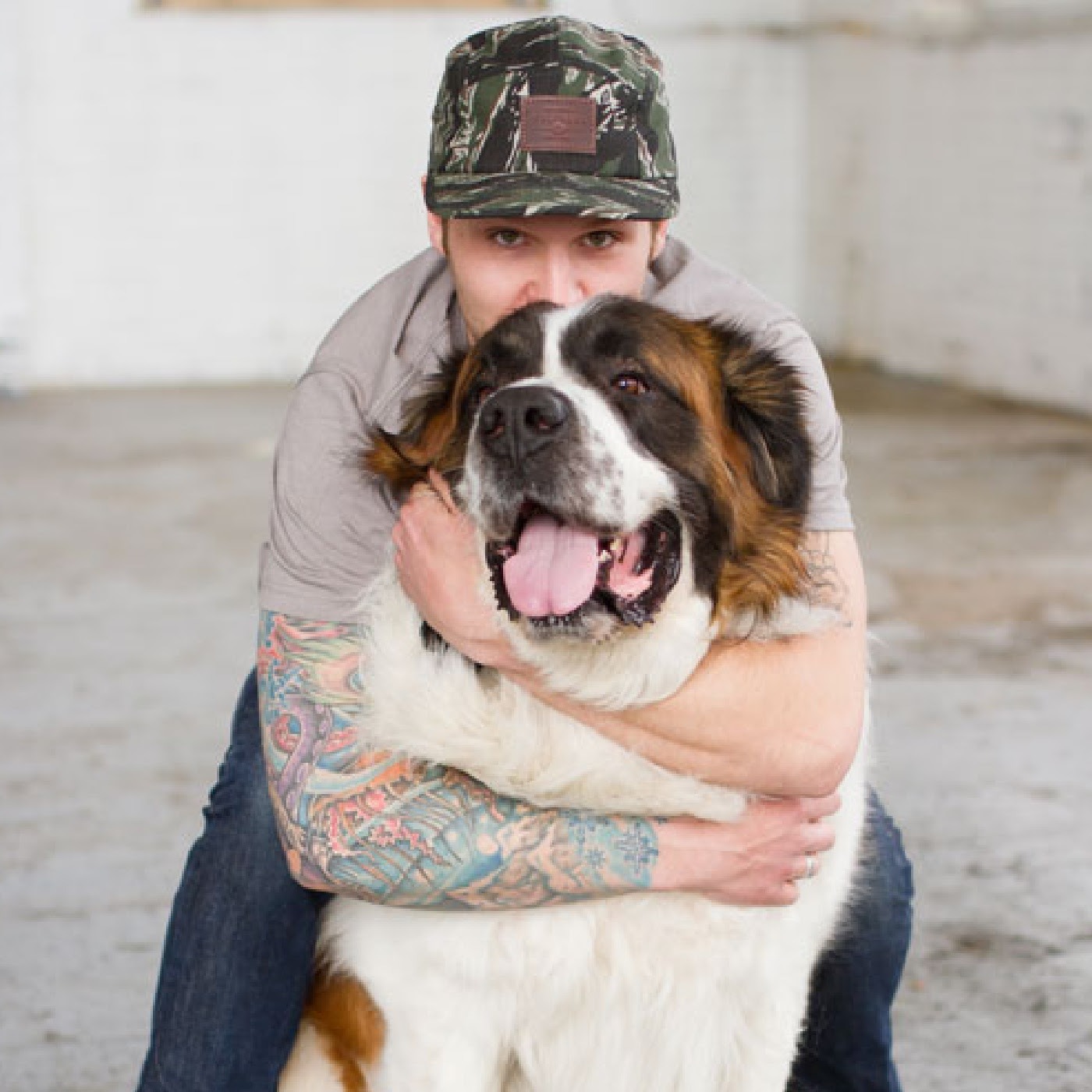
E329- Why Your Dog Ignores You on Walks — And How to Fix It Fast
Tom speaks with a dog owner who struggles with focus and engagement. Hope this helps!
All Tom’s Courses- www.tomdaviscourses.com
No Bad Dog Equipment & Merch! - www.buynobaddogs.com
Work with Tom! www.upstatecanine.com
Advertising Inquiries: https://redcircle.com/brands
Privacy & Opt-Out: https://redcircle.com/privacy
2025-12-03
53 min
Transcript
Available Results
Generated results are saved to the knowledge database for reuse and search.
No generated results are available for this episode yet.
Extract Knowledge
Pick what you want extracted first. Model, scope, and chapter options appear after a template is selected.
Generated results for public episodes are saved to the knowledge database so they can be reused and searched later.
Transcript
[SPEAKER_00]: I mean, my biggest issue would be I wanted to be walked on the street and she's like looking at me when there's another dog to get her attention.
[SPEAKER_00]: They're like, be able to break that reactivity, um.
[SPEAKER_00]: You know, I'm pretty good.
[SPEAKER_00]: I like cross the street.
[SPEAKER_00]: You know, I'm just, and but some people down there don't have their dogs on leash and they come running up and, you know,
[SPEAKER_00]: She's totally fine with people like people.
[SPEAKER_00]: She just wants to love what people love on her.
[SPEAKER_00]: Um, but it's just she's very curious about the other, yeah, I think not.
[SPEAKER_01]: The other thing is too is when there's off-leash dogs it creates this natural instinctual
[SPEAKER_01]: danger to some dogs, you know, they feel vulnerable because they're on leash and they're kind of stuck to a human and the other dogs are off leash.
[SPEAKER_01]: So it's kind of like fighting somebody with their hands tied behind your back.
[SPEAKER_01]: Now that they're fighting, but animals can become very vulnerable when there's a bunch of off leash dogs running around and they feel like they can't, you know, they're then doing this at the end of the leash and they're like, well, what do I do?
[SPEAKER_01]: You know,
[SPEAKER_01]: I've vulnerability thing is just an excitement thing too.
[SPEAKER_01]: You know, they're like, hey, they're playing and running around and having a great time off leash and I'm stuck to this four foot rope So there's a lot that goes into that, but I would say let's start with your your biggest frustration right now, which is engagement.
[SPEAKER_01]: So when your dog is not engaged with you, they're not looking at you.
[SPEAKER_01]: They're not paying attention to you.
[SPEAKER_01]: If you were to stop, they're going to keep going.
[SPEAKER_01]: I mean, those are tests that I like to run with my clients.
[SPEAKER_01]: I did it last night with a big German Shepherd.
[SPEAKER_01]: I really like to say, like, let's see if your dog knows that you're even there.
[SPEAKER_01]: Like really, go ahead walk, stop, go to the end of your leash.
[SPEAKER_01]: If your dog just keeps going, that's a clear sign of lack of engagement.
[SPEAKER_01]: So a good way to always gauge that is that exercise.
[SPEAKER_01]: You go out, you stop if your dog keeps going.
[SPEAKER_01]: That's nice.
[SPEAKER_01]: My suggestion is to start off with, so what equipment are you using right now, so I know?
[SPEAKER_00]: Well, she's just been walking when we go down the road here, has just been wearing a harness Okay, with that with the clip in the front because she doesn't seem to pull as much with that What what what commands do you have with her like what does she know well that you practice regularly?
[SPEAKER_00]: We've grant kids now, so she I'll tell a place and she runs over to her bed.
[SPEAKER_00]: I mean, Chloe comes she was really she was pretty good at that most of the time, but when she chooses not to walking commands.
[SPEAKER_00]: I haven't really you haven't really been using a verbal like walking command like heal.
[SPEAKER_00]: Okay, stop.
[SPEAKER_01]: Do you have a focus commanded all like hey, look at me?
[SPEAKER_00]: No.
[SPEAKER_01]: Okay.
[SPEAKER_00]: So I mean, sometimes I'll be like, no, or make a noise, but nothing that's been like set in.
[SPEAKER_01]: Sure.
[SPEAKER_01]: So you know, excuse me, think about that when you're.
[SPEAKER_01]: when you're going through life and any time you want your dog to do something but you haven't taught your dog how to do it it's it's going to be pretty difficult to accomplish that especially if it's something that's not natural like if a dog is something that's natural for a dog is a dog coming back to your putting their button the ground those are natural things you kind of holler at the dog you go the other direction they go I want to go with you too a lot of times or you hold a treat up in the air they're dog the dog sits because it's you know whatever so
[SPEAKER_01]: When you're doing, so think about it, two things, two big things here is you go out for a walk with your dog and you want the dog to do a very particular thing, but you haven't taught the dog the skill set to do it.
[SPEAKER_01]: So, there's step one.
[SPEAKER_01]: If you want your dog to look at you,
[SPEAKER_01]: There is particulars, right?
[SPEAKER_01]: If you actually want your dog to look right at you, that is something that I would encourage you to work on.
[SPEAKER_01]: Some dogs do it naturally, where they're just watching you.
[SPEAKER_01]: But the reason why most dogs will do that is
[SPEAKER_01]: for motivation and for for payments or for some sort of unlocking system right so so if you have like a working dog that loves to play tug or loves to play Frisbee or loves to throw the ball and you have it they will shark you and you know my dog and my my Dutch Shepherd will just sit there and just like sit there and bounce up and down until I throw something and she'll do it for an entire two two mile walk she doesn't care right
[SPEAKER_01]: But there's, and then my, my master will be, you know, tired and take an app after to my awalk and she's literally cardio in the whole time.
[SPEAKER_01]: So different dogs will do different things for different reasons, but I think at the end of the day, you have to always audit what you want your dog to do or in your case, I'm really, like, in your case, I'm really frustrated because my dog won't look at me or fill in the blank of the skill set.
[SPEAKER_01]: And then you have to audit and ask yourself, well, I've also never taught my dog how to do that.
[SPEAKER_01]: And so that's where you should pull the reins back a little bit and say, when I'm out for a walk, I want my dog to look at me.
[SPEAKER_01]: So inside the helm, I'm going to use my dog's motivation and I'm going to use positive reinforcement to teach the dog to look at me.
[SPEAKER_01]: And then I'm going to copy and paste that outside.
[SPEAKER_01]: that way you have a fair shot to start saying hey dog, this thing I'm frustrated with you that you're not doing, I'm going to teach you and then we're going to start doing it outside for short distances.
[SPEAKER_01]: So that way you can start teaching your dog what you wanted to do.
[SPEAKER_01]: It's really that simple.
[SPEAKER_01]: So you can get natural engagement in the dog looking at you with their eyes and paying attention to your body, but most often times it's two things.
[SPEAKER_01]: It's you teaching the dog
[SPEAKER_01]: If you don't pay attention to me, there's going to be consequences, and that sounds harsh, but it's not.
[SPEAKER_01]: All it really is is doing, like if you want your dog to engage with you, you have to give them a reason, too, because you are in competition with everything around you.
[SPEAKER_01]: Bird, squirrels, chipmunks, deer, turkeys, other dogs, cats, chipmunks.
[SPEAKER_01]: I mean, the list goes on and on.
[SPEAKER_01]: and depends on what kind of dog you have.
[SPEAKER_01]: It can get all the way up to the wind blowing.
[SPEAKER_01]: I mean, my my my master will be like, uh, the sun is at this is a big deal, you know.
[SPEAKER_01]: So so you have to really realize that when you go out, the reason why your dog is engaged with you is simply because you haven't given him or her a reason, too.
[SPEAKER_01]: And so Chloe's like, oh, look, piece of candy, piece of candy.
[SPEAKER_01]: There's all these smells.
[SPEAKER_01]: There's all these sense, but the other reality is, is when dogs don't look at the owners and engage with the owners and it feels like you're just hanging on to the leash.
[SPEAKER_01]: You also, it's just something that you haven't practiced, right?
[SPEAKER_01]: So if you don't have, like for an example, if you don't have a heel command,
[SPEAKER_01]: Which is walk at my heels and it could be many things it for me.
[SPEAKER_01]: It's just loosely walking like when I tell you to heal I don't want you to pull I don't want you to drag me.
[SPEAKER_01]: I don't want you to stay on me.
[SPEAKER_00]: We just haven't had a word to it We haven't put a word to it like we you know, I have done she looks at me.
[SPEAKER_00]: I'll treat like do it We do a lot of that but I haven't put a word to it But then there's also times where she just it that doesn't work that doesn't work like she just totally she just won't
[SPEAKER_00]: Well, we want to walk and she's like, I don't want any treats.
[SPEAKER_00]: I want to look over here.
[SPEAKER_00]: I want to look over here.
[SPEAKER_00]: So it's kind of, even though she does have that, I look at treat.
[SPEAKER_00]: I look at treat or whatever I, however, I reward her.
[SPEAKER_00]: But then it's the point where I don't know what to do when she just is, yeah.
[SPEAKER_00]: She's totally not there.
[SPEAKER_00]: Do you know what I mean?
[SPEAKER_00]: I do.
[SPEAKER_00]: I guess that's where my, that's, yeah.
[SPEAKER_00]: She's like, I don't even want to treat.
[SPEAKER_00]: I change the treat.
[SPEAKER_00]: I raise the level on the treat.
[SPEAKER_00]: I'll put fish in my big, I'll put, you know,
[SPEAKER_00]: And, and I've realized now I have to go out early before even feeder and that does help some, but there's just sometimes like, no, I don't care what you have.
[SPEAKER_00]: I'm everything else is much more exciting.
[SPEAKER_01]: Yeah, it's such a good, yeah, no, it's such a good discussion because this is where dog owners get really frustrated is let's say for an example.
[SPEAKER_01]: Just what you just said, Chloe's sitting there.
[SPEAKER_01]: You have food and she's like, oh, I'm interested in this.
[SPEAKER_01]: I like chicken.
[SPEAKER_01]: I like beef.
[SPEAKER_01]: I like the ball whatever motivation you have and then when you go outside
[SPEAKER_01]: you have all these comp- you have all this competition so this happens that this is where dog owners get lost a lot of times is they they have this what I call a one-dimensional relationship with their dog which means there's a one-way street so if you have what they're interested in if they're going to see what's going on with you right they're going to be checked in with you hey that sounds good that looks good
[SPEAKER_01]: But the reality of dog economics is when they go outside and they find something more valuable It has more currency, more meaning to them Then they are going to check out from you and then get into that which is what you're dealing with and so I always tell people you should never predicate your training or your relationship with your dog Off of one thing no matter if it's your punishing your dog all the time or you're rewarding your dog all the time
[SPEAKER_01]: The reality is, as dogs need that mix, because when you go outside and you say, for an example, you're inside with your dog, you have a piece of food in your treat pouch, you say, sit the dog sits because they're hungry and they like it and you pan.
[SPEAKER_01]: Break, they break out.
[SPEAKER_01]: You go outside and there's birds chirping and you've got a hound dog and you say, sit, they go, yeah, but look at this.
[SPEAKER_01]: Now you're not, you have no shot.
[SPEAKER_01]: So you may say, oh, I'm just going to try it again.
[SPEAKER_01]: I'm going to put the treat in front of the dog's face, but it doesn't give you that healthy.
[SPEAKER_01]: When I ask you to do a behavior, I would like you to do it just because I asked you to do it.
[SPEAKER_01]: So that's where the other side comes in, which is a correction or punishment.
[SPEAKER_01]: so you say sit the dog she goes oh I know it's sit is but I'm not going to do it because there's a fox so there's a deer or there's another dog around that's where you add a correction so then you start the dog starts going oh so i have to sit and if i don't listen to you there's accountability there's there's repercussions there's consequences
[SPEAKER_01]: And you're like, yeah.
[SPEAKER_01]: So then you have this really healthy reality of I ask you to sit the dog's like, okay, fine, I'll sit, but there's a squirrel there and I really don't want to sit, but I also, I want to get paid and I don't want to get punished, so I'm going to do it.
[SPEAKER_01]: But once you lean, your entire relationship and your training off of,
[SPEAKER_01]: If I do something for you, I get currency.
[SPEAKER_01]: That goes out the window when there's a higher currency around you, a full stop, you know what I mean?
[SPEAKER_01]: And that happens to so many of my clients.
[SPEAKER_01]: They say, yeah, my dog listens, like you said, when they're hungry and we're inside and they're engaged and it's beneficial to them.
[SPEAKER_01]: but the moment we go outside or there's the distraction my dog doesn't listen and that's because you have predicated all of your training you've taught your dog to follow the motivation like you've literally said hey if you want to do something here's a reward for it so then when you go outside they go well this is what I want I want the squirrel instead of you it's not even it we could argue that it's not even your dog making a bad decision or not listening to you we've literally wired the dog to chase motivation and work for what they want and
[SPEAKER_01]: Without disrupting, hey, if you don't do it, there's actually consequences, and that's where the in balance comes in and that Like I said the one-dimensional thing so when you're out with Chloe right now for an example Your whole relationship has to change and this is what that means.
[SPEAKER_01]: So Your relationship will start to become better once you start Really acclimating your dog to the realities of balance
[SPEAKER_01]: So what that means for you, for an example, like I just did a couple different stops and I'll Australia and I worked with some really reactive dogs as I do and and it's the same thing I used to work reactive dogs.
[SPEAKER_01]: It doesn't really matter where I am, but I always tell people,
[SPEAKER_01]: You're going to come in and work with me on leash reactivity or your dog not listening for an example with Chloe and what I'm going to audit and what I'm going to kind of put you through is a basic foundation test because if you don't have good foundation with your dog, you can't build anything else around it.
[SPEAKER_01]: So if you said, hey, I want Chloe to look at me when we're outside and there's off leash dogs or I want Chloe to look at me when my neighbor pulls up and they're trucker.
[SPEAKER_01]: I want Chloe to go into a down and stay there regardless of the neighbor and the truck and the lab and whatever, right?
[SPEAKER_01]: So here's what you have to do is really pull back the reins and and get back down to your basics and it really comes down to boundaries and it also comes down to the skill sets.
[SPEAKER_01]: So again,
[SPEAKER_01]: You say I want my dog to look at me and you do you do have a cue for it, but it's again It's predicated off of Food and noises and you should be more Direct with it.
[SPEAKER_01]: So instead of like clicking and snapping and saying hey look because you all right Like I can get any animal to basically look at me I can get a deer in the field to look at me if I click and snap, but they don't it's not like a cue that they're gonna follow every time, right?
[SPEAKER_01]: So
[SPEAKER_01]: That's what you should start doing.
[SPEAKER_01]: But going back to what I was saying about reactive dogs is you come to me with a reactive dog.
[SPEAKER_01]: And nine times out of ten, the reactivity is coming from a lack of foundation.
[SPEAKER_01]: The dog is insecure, the dog is confused.
[SPEAKER_01]: Depending on the breed, they may be protective, they may be bored, they may be excited.
[SPEAKER_01]: They may be want to go play, you know, to your point with Chloe's a little bit like I'm just going crazy here because there's a lost up going on So you really want to get back to the drawing board and start building some boundaries around your home and that means so the harness that you're using it and I'm a big fan of what works right like that's why I've leaned on just very us
[SPEAKER_01]: Um, I've leaned on very particular equipment over the years, because I've tried and erred these a lot a lot, right?
[SPEAKER_01]: I mean, and that's what I think anybody, any chef in the kitchen would do, any artist would do, anybody would do if they're like, this is what works over and over and over again.
[SPEAKER_01]: And so for me, it's, I've just learned that the harness, especially with it, you know, with Chloe, she's a strong dog to slow to the ground, you know, she's not, she's not
[SPEAKER_01]: dog.
[SPEAKER_01]: I mean, she's strong and she's not small.
[SPEAKER_01]: So my suggestion would be moving, you know, because you have that you have a lot of different things.
[SPEAKER_01]: It sounds like, but I would move back to the prong collar or the slip even and start working on your basic principles.
[SPEAKER_01]: And so let me explain what this means.
[SPEAKER_01]: So there's a micro and a macro that I talk about often with with dogs and so the so let's say you said Tom my dog doesn't look at me or Tom my dog reacts to other dogs when we're out for walk whatever I would say okay, I want you to go home.
[SPEAKER_01]: I want you to put your dog on a leash with whatever equipment that you're using and I want you to walk towards the door you go out of every time with your dog and I want you to stop.
[SPEAKER_01]: If they walk through that door without you, that's a good indicator.
[SPEAKER_01]: It's not a problem because you just haven't ever addressed it, but it's a good indicator that your dog is not engaged with you as much as they need to.
[SPEAKER_01]: So the very small principles.
[SPEAKER_01]: of you stop, you say stop, or you say ah, or you say no, and the dog was, and they just walked through the door.
[SPEAKER_01]: They're not necessarily misbehaving or doing something wrong or not listening, they just don't pay attention to you when you stop.
[SPEAKER_01]: And that's a good indicator to know that your dog is kind of on their own schedule.
[SPEAKER_01]: So, for an example, another thing that you can start doing right now after this call is, you can say, Chloe Sit.
[SPEAKER_01]: This is inside.
[SPEAKER_01]: You can say Chloe Sit.
[SPEAKER_01]: She puts her butt in the ground.
[SPEAKER_01]: You say Good Sit, and you wait typically five seconds.
[SPEAKER_01]: If she gets up, you put her back into a sit.
[SPEAKER_01]: And what you're doing is you're working on Sit and Break.
[SPEAKER_01]: So, again, dog owners who come in with severe reactivity, who have dogs who have a bite history.
[SPEAKER_01]: This is what I'll do.
[SPEAKER_01]: Put your dog into a sit and hold them accountable every time they get up.
[SPEAKER_01]: Two things happen is you teach them that when you say sit, it isn't just for a momentary second to get a piece of food and then back up Because a lot of times that's what we teach dogs and that's really not a sit You when you when we tell it like it's just same thing with kids like if you tell them to sit in a chair or tell them they're going to time out you tell them to whatever it's not For two seconds and they're back up.
[SPEAKER_01]: There's no utility to that.
[SPEAKER_01]: There's there's the purpose in that
[SPEAKER_01]: Sit there.
[SPEAKER_01]: That's why I go to the bathroom for a minute or whatever it is, right?
[SPEAKER_01]: So, but the other thing is and in my opinion the bigger thing the macro is you're starting to teach your dogs boundaries thresholds rules and you're starting to hold your dog accountable.
[SPEAKER_01]: So let's say Chloe Sit she puts her butt in the ground
[SPEAKER_01]: and then you hold it for two to five seconds.
[SPEAKER_01]: If she sits there well, you say good sit.
[SPEAKER_01]: Good.
[SPEAKER_01]: You could even pay her.
[SPEAKER_01]: Then what you do is you start adding in little tiny distractions, right?
[SPEAKER_01]: So maybe you take two steps forward.
[SPEAKER_01]: She goes, oh, I'm going with you.
[SPEAKER_01]: Nope, get it.
[SPEAKER_01]: And what you're working on is that threshold and that impulse control.
[SPEAKER_01]: And so if you can start doing this inside where she expects to get up because you moved or whatever, she's going to start.
[SPEAKER_01]: So what happens is she's looking for that she should be looking in listening for that break or release command from you exactly.
[SPEAKER_01]: So what that does is it takes the all of the focus and energy.
[SPEAKER_01]: So the engagement that you're looking for.
[SPEAKER_01]: You said I want better
[SPEAKER_01]: We have to give your dog a reason to pay attention to you.
[SPEAKER_01]: So a basic, basic, basic skill set that you can do.
[SPEAKER_01]: Anybody can do for the most part, put your dog into a sit, tell your dog to stay or tell your dog to sit if you're doing an implied sit, and you just start testing your dog.
[SPEAKER_01]: Throw a piece of food in the ground, throw their favorite ball in the ground.
[SPEAKER_01]: You walk away two steps, you have somebody come into the room.
[SPEAKER_01]: You have another dog walk by whatever it is and they go, oh, that's my queue and you go, no, it's not put your butt back down So two things.
[SPEAKER_01]: You correct your dog with your leash.
[SPEAKER_01]: So there's accountability for getting up So they go, oh, that was a mistake.
[SPEAKER_01]: That was uncomfortable I don't want to do that again.
[SPEAKER_01]: You go good.
[SPEAKER_01]: Don't But the other thing is is they start then looking at you for direction So they go, you know what I can't make decisions the way that I use to
[SPEAKER_01]: I need to ask for permission or I need the green light from the person in charge.
[SPEAKER_01]: That's what good leadership is across the board.
[SPEAKER_01]: Doesn't matter if you're bored in a fairy on a dock or you're getting on their plane or you're a student on an Ivy League school.
[SPEAKER_01]: The person that's teaching the class is the leader for a reason.
[SPEAKER_01]: And we all go, hey, can I?
[SPEAKER_01]: Is it okay if I can I board?
[SPEAKER_01]: Can I get on?
[SPEAKER_01]: Can I, you know, blah, blah, blah, blah, that creates that good leadership.
[SPEAKER_01]: If you don't supply that and it's a free for all, yeah, get on the plane when you want.
[SPEAKER_01]: Well, there's no sky bridge and then you fall on the ground or whatever, these are all issues.
[SPEAKER_01]: And so once you start giving your dog, you can get out of your sit when I tell you break, the dog is going to start looking at you like this.
[SPEAKER_01]: Can I, can I, can I please be excused now?
[SPEAKER_01]: Like it creates that, right?
[SPEAKER_01]: And so the other part of that is just making sure if you want your dog to look at you, you create a skill set or a cue for it.
[SPEAKER_01]: But overall, that relationship with the dog is, in my opinion, what you should be really working on.
[SPEAKER_01]: So don't dog owners have a tendency to, I call it the fix it, it's the fix it syndrome, right?
[SPEAKER_01]: Where they're like, my dog doesn't look at me and I want them to look at me.
[SPEAKER_01]: So my dog doesn't come back.
[SPEAKER_01]: Let's work on that.
[SPEAKER_01]: So you just have to build the skill sets.
[SPEAKER_01]: And that's one of the first things I ask you is like, Tom, I want my dogs to just pay attention and look at me when we're outside.
[SPEAKER_01]: And it's like, have you worked on a focus command?
[SPEAKER_01]: No.
[SPEAKER_01]: And that's part of that.
[SPEAKER_01]: So you can get it naturally by saying anything that you want.
[SPEAKER_01]: You may or may not be able to have it, you know, depending on what it is.
[SPEAKER_01]: But you still have to go through me.
[SPEAKER_01]: So you start off with the favorite ball and the toys and the thresholds at the door, getting out the car door.
[SPEAKER_01]: And the dog starts looking at you for that permission.
[SPEAKER_01]: Does it make sense?
[SPEAKER_01]: Yeah.
[SPEAKER_00]: Yes, definitely.
[SPEAKER_01]: So you start.
[SPEAKER_01]: You start there.
[SPEAKER_01]: Yeah.
[SPEAKER_00]: And we, I mean, we have had a lot of that.
[SPEAKER_00]: I guess I just, I just, there's just, I maybe it's the correction part that I'm not getting to when she doesn't, I've stopped maybe doing that.
[SPEAKER_00]: And now she's just like, oh, I can get away with it this time or, you know, I'm busy doing something and she's not paying so I don't, I just kind of ignore it that she's not it, you know, that she's not.
[SPEAKER_01]: wrist bonding to me and well that's huge that's like that's like putting speed signs speed limit signs all over town and people just being other that's actually optional that's top signs optional that red lights optional that that's that that 30 in a school zone is actually optional it's anarchy right if you if you say hey here's the rules here's the regulations
[SPEAKER_01]: to our home that we live in and you're an animal and I'm a human when I tell you to sit down, stay or come.
[SPEAKER_01]: Those are only optional.
[SPEAKER_01]: That's an issue.
[SPEAKER_00]: It was it was cold the other day when she wouldn't come in.
[SPEAKER_00]: I was out there with her and I'm like, finally, I'm like, fine, I'm going.
[SPEAKER_00]: I was like, but she won.
[SPEAKER_00]: Exactly.
[SPEAKER_00]: She did come eventually, but you know, she's like, okay, I don't want to come.
[SPEAKER_00]: I'm enjoying.
[SPEAKER_01]: So and the problem the problem with that is is there's two.
[SPEAKER_01]: There's two things when when a dog I always kind of giggle in my head when dog going to say this because it's just at the very least to me it's frustrating to you like you're like, oh, this is frustrating.
[SPEAKER_01]: You know, my dog won't come back, but there's two.
[SPEAKER_01]: There's two huge problems with that that I want you to be mindful of moving forward is, you know, we'll take that example of recall.
[SPEAKER_01]: So when you say, hey, Chloe, come and she goes, there's rabbit poop over here hold on the problem.
[SPEAKER_01]: The problem with that is is then she, two things.
[SPEAKER_01]: It's recall is a very, I take recall very seriously because it's life or death for your dog.
[SPEAKER_00]: Right.
[SPEAKER_00]: Right.
[SPEAKER_01]: Could be.
[SPEAKER_01]: And so, so there's that.
[SPEAKER_01]: And then the other thing is, again, it goes to your relationship.
[SPEAKER_01]: So again, think about, you're the leader, when we hear a leader, a lot of people think of like this, I call it like this BS, like Alpha, like you, you have to, your dog means permission to breathe.
[SPEAKER_01]: And it's like, that's crazy.
[SPEAKER_01]: No, being a good leader is the ability to make decisions for the animal that you care about because you're a human and they're an animal.
[SPEAKER_01]: And she's like, yeah, but there's rabbit poop over here, but, you know, she doesn't see the car, she doesn't see the coyote or she doesn't see another dog or whatever, or just, hey, it's freezing out, get your butt back in here.
[SPEAKER_01]: I don't want to get sick.
[SPEAKER_01]: When she says, I don't want to, it's not only potentially dangerous for her, but it's also, it also is extremely harmful to your relationship.
[SPEAKER_01]: because now she's going to hold on yeah hold on so again same thing with kids um hate get up as time for school uh uh and another hour please okay right same thing with my employee of 20 employees hey I need you to hear it nine they get there 10 30 yeah I was tired so okay so then I just keep getting rolled over on and rolled over on and then people wonder like why their dog doesn't listen to them like why their dog isn't obedient like the other day I had Lakota which she's a my Dutch shepherd she's nine years old
[SPEAKER_01]: She's Yoda.
[SPEAKER_01]: I mean she will do anything I say when I say with her without treats with her without equipment She's just an obedient dog and I was walking her off leash the other day and it was so funny I had this this older lady in my neighborhood was just she ran inside the get her husband She's like you got to come see that she's just walking off leash
[SPEAKER_01]: And she's like, how do you, she's like, and I just told her to heal.
[SPEAKER_01]: She was, you know, 15, 20 feet in front of me as I'm walking.
[SPEAKER_01]: And she just, because she's deserved it.
[SPEAKER_01]: She's earned it.
[SPEAKER_01]: She's, she's proven.
[SPEAKER_01]: She's never not done what I asked her to do in any circumstance.
[SPEAKER_01]: I've had off-leash dogs and I've had all these things happen to her and she's great.
[SPEAKER_01]: And so she said, how did she just, and I told her to come back and she came back and she was just blown away.
[SPEAKER_01]: And so my point is is when you get to a point with your dog that they've earned the ability to go off-leash and do that stuff, you can do that.
[SPEAKER_01]: So Chloe can go off-leash and stuff.
[SPEAKER_01]: There's
[SPEAKER_01]: is when you say, hey, okay, I want you to come back, she's not, it's, it's, again, it's optional.
[SPEAKER_01]: So let's get back to the original route to why this started is if you don't, if you don't hold your dog accountable, again, the stop signs and the red lights, you're making your relationship and your commands to her optional.
[SPEAKER_01]: And so that's, that's exactly what I'm saying is you need the same thing with the reactive dogs I work with.
[SPEAKER_01]: When we say leave it and they go, yeah, but
[SPEAKER_01]: No, leave it.
[SPEAKER_01]: I understand that there's another dog.
[SPEAKER_01]: And as dog trainers, as their behaviorist, as veterinarians, as dog owners, it doesn't matter who you are.
[SPEAKER_01]: We can't change the way dogs feel, sometimes we can.
[SPEAKER_01]: But a lot of times, we can't change the way dogs feel, and so we can definitely change the way that they act, the way that they behave.
[SPEAKER_01]: And that goes for really anything.
[SPEAKER_01]: Like, you sit down for a family event that you don't want to be at, but you're there.
[SPEAKER_01]: Whatever it is, like you can do something, you know, but you're like, I don't really like doing this, but I'll do it or waking up, like I woke up today and I worked out and I didn't really want to, but I knew I needed to, right.
[SPEAKER_01]: So there's all these different things.
[SPEAKER_01]: So it's the same thing with dogs.
[SPEAKER_01]: we we need to make sure or you need to make sure like when you say Chloe's sit you hold her accountable if she doesn't listen especially if she knows the behavior because then if you don't everything you ask her to do when it matters is optional and that's a huge huge problem and that's again the key I'm not exaggerating I have these reactive dogs come into my seminars and the first day all I work on is what I'm talking about with you
[SPEAKER_01]: the second day everybody's in group class sleeping and we very rarely even work on the leash reactivity because it goes away because the reason why the dogs became reactive in the first place is because the owners weren't a good leader and the dogs were vulnerable and confused and spiteful and malicious and there's all these different reasons but once you start saying hey I want you to do this and if you don't there's a accountability the dog straightens right out and they go okay got it no more pushing you around
[SPEAKER_01]: So it's really helpful.
[SPEAKER_01]: So my suggestion to you is let's say for engagement.
[SPEAKER_01]: There's another trick for engagement, but let me just reiterate everything so far.
[SPEAKER_01]: Put her on a leash.
[SPEAKER_01]: start asking her to sit.
[SPEAKER_01]: And if she goes, no, I don't want to where, hey, there's something distracting outside, correct her.
[SPEAKER_01]: And the reason why I said move to the slip or the prom collar or something else is because the harness, yeah, yeah, no, that's, I'm agreement there.
[SPEAKER_01]: Yeah, it doesn't, it just, the harness was built to help dogs, pull things safer, right?
[SPEAKER_01]: So it's not meant, it's meant for training.
[SPEAKER_01]: It's just not meant for a correction.
[SPEAKER_01]: It's not, like,
[SPEAKER_00]: I think I like it from myself because I can grab her and I can hold her, you know, if I needed to without, like, choked, like, choking if she's, you know, like I had her in the side of the road, sit and she sat, but I was able to hold her, not hold her back, but if you know, like, felt free for me.
[SPEAKER_01]: Yeah, and that's just holding on that's not training, right?
[SPEAKER_00]: Yeah, exactly.
[SPEAKER_01]: And listen, you got to do what you got to do.
[SPEAKER_01]: I'd like, I always tell people like, whatever works.
[SPEAKER_01]: Like, if you told me, that's fine.
[SPEAKER_01]: That's fine.
[SPEAKER_01]: I don't, it doesn't, it doesn't bother me.
[SPEAKER_00]: But, and no, it doesn't, it's no training.
[SPEAKER_00]: Yeah, there's no training with it.
[SPEAKER_01]: Yeah, so my suggestion for you would be to, you know, for an example, work on those little things, tell her to sit if she doesn't correction.
[SPEAKER_01]: The only thing I would say, the only caveat to that is it's just making sure that she understands the behavior, the amount of times in that same silly.
[SPEAKER_01]: Like, I sometimes people get offended when I say your dog doesn't know sit because they're like, of course they do, right?
[SPEAKER_01]: And I'm like, okay, put your hands behind your
[SPEAKER_01]: look forward and say Chloe sit without looking right at her without reaching for food without putting your hand up like this without asking her again and see what she does because that's because people you know again my dog for an example and that lady in my neighborhood she was blown away I'm like
[SPEAKER_01]: People when they see a train dog they go, oh my dogs, not actually trained.
[SPEAKER_01]: You know, it's a lot of people think like you're dog doing these These tricks, you know, for for a piece of beef liver is a train dog.
[SPEAKER_01]: I'm like, no, that's It's not that's not you know a train dog is they're off leash playing with other dogs or they're chasing a squirrel You say down on the dog puts on the brakes and slides all the way to the fence
[SPEAKER_01]: So anyway, so start working on that sort of thing, but again, just this little caveat is sometimes dogs don't understand the word sit, like so you say Chloe sit and you don't like do this or you don't have a piece of food and she's like, I don't know what this is.
[SPEAKER_01]: So you can work that out on your own accord.
[SPEAKER_01]: I just want to be mindful of that because sometimes when I get
[SPEAKER_01]: I don't know what that is and then I hold a piece of food over their head and they put their butt on the ground the owners have this False under it's like a facade of the dog knowing the behavior or the queue right sit right a lot of times Dogs actually don't know the word.
[SPEAKER_01]: They just know the lure and So when you correct a dog for not sitting without your You know circus that you have to do to get the dog actually to sit it's sometimes not fair because they're like I don't know what this is
[SPEAKER_01]: this sit thing without this and without that.
[SPEAKER_01]: So just be mindful of that.
[SPEAKER_01]: So anyway, tell your dog to sit if she doesn't correct or hold this sit and then work on your release command, which would be break or free or whatever you want to use.
[SPEAKER_01]: And you work through that for the next couple of days and do it with a bunch of different things.
[SPEAKER_01]: Do it with the down, you know, with recall it's the same thing.
[SPEAKER_01]: You'll just do a
[SPEAKER_01]: a long line like you just get her on a long line.
[SPEAKER_01]: So same thing you were just talking about Chloe come she was yeah hold on a second if unless you have a remote collar which is the only thing in the world that can hold your dog accountable off leash.
[SPEAKER_01]: If you don't have the remote collar you have to have the long line in the in the very beginning stages.
[SPEAKER_00]: Yes.
[SPEAKER_01]: Chloe come, she goes, no pull on, you correct her.
[SPEAKER_01]: So again, it's the same thing.
[SPEAKER_01]: We're not making commands optional because it's dangerous.
[SPEAKER_01]: But it also is, it could ruin your relationship faster than you could ever imagine.
[SPEAKER_01]: And it's not even like my agenda.
[SPEAKER_01]: It's literally, I've seen it over and over and over again.
[SPEAKER_01]: and then for the engagement there's a cool thing that a cool exercise that I call a tune up or a calibration.
[SPEAKER_01]: So what that means and what that is is you get it on the leash.
[SPEAKER_01]: Because here's the typical thing that dog owners will do.
[SPEAKER_01]: They put their dogs on leash.
[SPEAKER_01]: Depending on where you live, you get your jacket on, or if you live in Florida, you put your sandals on, whatever, right?
[SPEAKER_01]: You go outside, the dog just kind of goes out the front door and you let him pee and sniff and then you check your email and your text and I do that too.
[SPEAKER_01]: I just, I have the control when I need it, right?
[SPEAKER_01]: So I don't always make my dog sit and stay at the door, but I can if I need to, or if I want to,
[SPEAKER_01]: When my dogs, like last night I brought my dogs out, both my dogs off leash, but they're on e-colors and they're, I have flashlight sound and stuff and I would never, ever, ever do that unless I knew that I could control them, right?
[SPEAKER_01]: So my point is, you know, and I see this a little time to dog owners and I say stop talking to your dog and I'm like, that's only applicable to people who don't have healthy relationships with their dogs.
[SPEAKER_01]: So when I'm saying this,
[SPEAKER_01]: Things that you could be doing is you put you put your leash on the dog inside you go to the door You say stay you take two steps outside of the door your dog.
[SPEAKER_01]: I'm coming you go.
[SPEAKER_01]: Nope.
[SPEAKER_01]: I didn't say break Get back in there and then you literally walk back inside you do that that creates threshold what I guarantee
[SPEAKER_01]: what will happen if you start doing that and you can even do it a couple times break back in do it again she's going to look right at your face and go is it time can I go can I go so you immediately set the tone for her to do the thing that you wanted to do which is look right at your face and go can I get out now is this can is this okay and then you say break
[SPEAKER_01]: Then she's on a break, and so somebody, somebody, well, people ask me all the time, especially when I talk about this, is when you have a break or release command for your dog, you apply it whenever you want your dog to do whatever they want to do.
[SPEAKER_01]: 4.90% of my personal walk with my dogs, they're on a break.
[SPEAKER_01]: They're in front of me, they're sniffing.
[SPEAKER_01]: I don't care what they do.
[SPEAKER_01]: If I see another dog, they're back into a heel and then I pass because I can.
[SPEAKER_01]: In the preliminary stages that you're in with Chloe, you're going to be a lot more militant with that and you're going to be working on little spurts of heel and then a break.
[SPEAKER_01]: But your calibration and your tune-up is you go out
[SPEAKER_01]: After you let her get her sniffs in her pee out, what I like to do is a calibration.
[SPEAKER_01]: And so you literally just walk forward.
[SPEAKER_01]: So let's say she's on our left side.
[SPEAKER_01]: You walk forward with her.
[SPEAKER_01]: You turn and you go the other way and you say, Let's go.
[SPEAKER_01]: Or you say Chloe come like that.
[SPEAKER_00]: We were doing all that when we were in Florida and we'd go out.
[SPEAKER_00]: We'd go down the lane.
[SPEAKER_00]: She'd be paying attention to me.
[SPEAKER_00]: We'd turn.
[SPEAKER_00]: I'd walk.
[SPEAKER_00]: She would.
[SPEAKER_01]: Good.
[SPEAKER_01]: follow behind me to get so yeah and that's a good way to do it it's the same thing that you would do with the thresholds at the door it's the same principle you say you can't go through the door until I release you and if you do there's consequences and she goes okay I don't want to get in trouble I got to pay tension you so they're watching you like a hawk
[SPEAKER_01]: And they'll sit there and they'll kind of be like, can I go?
[SPEAKER_01]: Can I go?
[SPEAKER_01]: And then you see break and then they take off.
[SPEAKER_01]: So it's the same thing when you do your turns, as you say Chloe come and you turn and you turn and you turn.
[SPEAKER_01]: And what that does is if your body, and this is important for you to know,
[SPEAKER_01]: If your body turns and goes the other way and she's flying off the hinges and she's not paying attention, she gets corrected.
[SPEAKER_01]: You go the other way.
[SPEAKER_01]: She's like, what?
[SPEAKER_01]: You turn, she gets corrected.
[SPEAKER_01]: And eventually what she'll do is she'll go, I need to pay attention where your feet are going, I need to pay attention where your head, I need to pay attention to you.
[SPEAKER_01]: So then what happens?
[SPEAKER_01]: Almost usually after the fourth turn,
[SPEAKER_01]: the first two or three times you turn you correct you turn you correct you correct they just start staring right up at you and now you're walking and they're looking right like where are you going I don't understand we go on this walk every day I never I never look at you this is what we do and then you start laying the ground rules down and then every all of her attention starts shifting towards you so do that
[SPEAKER_01]: to get that engagement.
[SPEAKER_01]: And then the third piece to that is, is teaching her actually to look at you, which is a very easy concept.
[SPEAKER_01]: It's much
[SPEAKER_01]: much easier to do when they're in that adolescent learning sponge stage where they're just like you have food, I'll do anything for it, and then you start going sit down, heal, focus, whatever, and that's easier.
[SPEAKER_01]: So that's what you can do as you can say.
[SPEAKER_01]: I want my dog to look at me.
[SPEAKER_01]: And so, inside with, again, cable or whatever you're using for treats or food, you just start queuing it.
[SPEAKER_01]: So either a focus or a look or, you can say tomato, it doesn't matter.
[SPEAKER_01]: Just say something and then she looks up at you and then you pay her.
[SPEAKER_01]: She looks up at you and you pay her and you go, good look, good look and then you hold it.
[SPEAKER_01]: So then you start building now what we call the three D's in dog training, which is distance distraction and duration.
[SPEAKER_01]: So after she's looking up at you and she's staring at you what you want to do is just put it in motion so you just walk a couple steps and she looks at you and you pair good look walk a couple steps you look at you and pair excuse me and then the goal would be to get her to look at you in motion so when you're out for a walk and like I use this all the time with my master who tends to just be reactive to the wind because he's a really protective breed
[SPEAKER_01]: When I'm out with him, and he sees another dog or he sees whatever, I'll just say focus and he'll Look up at me and then I'll pay him and I'm walking and then a lot of times we can walk past distraction and he and again, it's a currency game.
[SPEAKER_01]: It's heat and this is the reality This is kind of like putting everything together for you.
[SPEAKER_01]: My dog is South African Master if he's one of the most protective dog breeds in the world.
[SPEAKER_01]: So his I literally got him
[SPEAKER_01]: I have two young kids, a travel the world, they're not always with me, my wife and kids are home.
[SPEAKER_01]: So I literally got him to be exactly what he's supposed to be.
[SPEAKER_00]: Protect it, exactly.
[SPEAKER_01]: Exactly.
[SPEAKER_01]: So I do not get frustrated or well, like sometimes I get frustrated, but I'm not confused and why he reacts, because I'm like, okay, so what I signed up for is he's really not a good pet.
[SPEAKER_01]: He should be doing what he's supposed to do.
[SPEAKER_01]: And in somebody's yard,
[SPEAKER_01]: Or land running around all day barking at everything.
[SPEAKER_01]: Yeah, yeah, barking at the crickets if they dare move.
[SPEAKER_01]: So my point is is when I'm out with him, depending on the distraction, right, it's going to be the same thing for Chloe.
[SPEAKER_01]: It's going to depend on
[SPEAKER_01]: You know what the distraction is rather or not.
[SPEAKER_01]: She's like, ah, I'll look at you for food instead.
[SPEAKER_01]: So I go out with him.
[SPEAKER_01]: I tell him to focus.
[SPEAKER_01]: He sees another dog and if he knows the dog and he's he's already checked their ID.
[SPEAKER_01]: He's like, yep.
[SPEAKER_01]: Pay me.
[SPEAKER_01]: I'm cool.
[SPEAKER_01]: If it's a new dog, maybe a dog walker came into the neighborhood or whatever.
[SPEAKER_01]: He's like, nah, nah, nah, nah, nah.
[SPEAKER_01]: So then so he knows focus.
[SPEAKER_01]: He knows heal and he knows he shouldn't lunge and he knows he shouldn't disengage.
[SPEAKER_01]: But instincts kick in and he goes, no, I got to go check this person's ID.
[SPEAKER_01]: That's where then I'll lean on the correction.
[SPEAKER_01]: I go, er, wrong, and I'll correct him with the prong collar.
[SPEAKER_01]: And that will keep him in place a lot of times.
[SPEAKER_01]: So I can't rely.
[SPEAKER_01]: My training is really good, but like my Dutch shepherd, I'm just giving you different genetics, just to paint a picture for you, like my Dutch shepherd, her genetics are completely different.
[SPEAKER_01]: She is, I will do anything for you, just say it and I'll do it.
[SPEAKER_01]: And if you have a ball or a Frisbee, it's great, it's gravy.
[SPEAKER_01]: That would be amazing if you could pay me with that, but I'll do it regardless because all I want to do is make you happy.
[SPEAKER_01]: All I want to do is work for you.
[SPEAKER_01]: So it's completely different with her.
[SPEAKER_01]: She has no disposition to do any of that stuff.
[SPEAKER_01]: So it's a different thing.
[SPEAKER_01]: So with Chloe, you do your engagement, you do your tune up.
[SPEAKER_01]: And I would suggest just making sure when you're out with her that you have the ability to hold her accountable when she decides to blow you off.
[SPEAKER_00]: OK, I have a question about that real quick.
[SPEAKER_00]: So if she, if it's seasoned the prawn collar, and I miss, because this is what happens.
[SPEAKER_00]: I'm not quick as quick as she is always.
[SPEAKER_00]: I miss the correction.
[SPEAKER_00]: And when I go to correct, she's already passed through now.
[SPEAKER_00]: She's at the polling stage of the prom collar.
[SPEAKER_00]: And that's when she doesn't care.
[SPEAKER_00]: So, and that's happened.
[SPEAKER_00]: That's why I didn't know if like the e-collar would be like, from my mind would be easier to get her back.
[SPEAKER_00]: Or like, what's the best thing to do if I'm that correction and now she's already pulled through it?
[SPEAKER_00]: Does that make sense?
[SPEAKER_00]: I mean, it's
[SPEAKER_01]: Because she doesn't care if I drop, you know, if I, that's, yeah, I got you, I got you, if I can, all right, so let me show you this, so this isn't a prom collar, but it has the same action.
[SPEAKER_01]: Okay.
[SPEAKER_01]: And this goes for really any color that has action.
[SPEAKER_01]: So this is just a martingale color to scan the still martingale, but see this action.
[SPEAKER_01]: This is the same triangle.
[SPEAKER_01]: You're going to have on your prong right here.
[SPEAKER_01]: So you have this triangle.
[SPEAKER_01]: So let's say so the idea to answer your question.
[SPEAKER_01]: The E color.
[SPEAKER_01]: if you push the button is equivalent and a lot of times just as useful as the prong collar correction.
[SPEAKER_01]: You know, so you might say, well, why doesn't everybody do the e-colour then?
[SPEAKER_01]: It's because it takes longer to do because you have to condition it.
[SPEAKER_00]: I mean, it takes longer to train.
[SPEAKER_01]: Correct.
[SPEAKER_00]: You mean, is that what you mean to get to that one?
[SPEAKER_01]: Yeah, it's exactly what I mean.
[SPEAKER_01]: So let's say this.
[SPEAKER_01]: So here's your action, right?
[SPEAKER_01]: This little triangle right here.
[SPEAKER_01]: Right.
[SPEAKER_01]: Once your dog goes, oops, there's a distraction.
[SPEAKER_01]: And now you're
[SPEAKER_00]: Mm-hmm.
[SPEAKER_01]: And this is the tricky thing.
[SPEAKER_01]: So what you have to do is you have to give her leash and then pop it back.
[SPEAKER_01]: So when you have a prom call, you have all these points of pressure coming up and that's what makes it a really safe collar to use because you're using one fourth of the physical pressure that you would on a harness or a flat collar or a slip collar and it works much better.
[SPEAKER_01]: So it's a best of both worlds.
[SPEAKER_01]: So let's say all these different points of pressure on a prong collar, you know, or all the way around here.
[SPEAKER_01]: So once the dog does this, that's all over.
[SPEAKER_01]: Because a lot of people think that the prongs is what makes the discomfort to the dog, and it's not the case.
[SPEAKER_01]: The dog, I've had many videos of giant dogs pulling all, you know, pulling 200 pounds through that.
[SPEAKER_01]: They don't give a crap.
[SPEAKER_01]: What they care about is this quick pop like this.
[SPEAKER_01]: Well, you know, be better at being on time, right?
[SPEAKER_01]: So if you see her, if you see her get alerted, or you see her get stimulated and you see her lock in, these are all signs.
[SPEAKER_01]: Like in my leash reactivity course, these I go over how to read these things and how to be on time.
[SPEAKER_01]: And so, you know, but once you get to a point where all of a sudden you turn a corner and there's a dog and she gets the end of the leash and now you're here.
[SPEAKER_01]: you have to give her leash, make it loose again, and then pop it up.
[SPEAKER_01]: And it takes time, it takes experience, and it takes practice.
[SPEAKER_01]: So it's easier said than done, but that's what you have to do.
[SPEAKER_00]: So my next question real quick, before we end is what your course is, which course would you recommend that I that I start with?
[SPEAKER_00]: I mean, would you recommend the the E
[SPEAKER_00]: Or is that something work through the other stuff first and then use that is and the other thing is we have quite a few different walkers a lot of times too because we travel so that's the whole I don't you know that's.
[SPEAKER_00]: That's I don't know what's easier for them.
[SPEAKER_00]: Yeah, once she's you know trained so that's the other thing my eight.
[SPEAKER_00]: Yeah, I I find a lot of consistency in our life.
[SPEAKER_00]: Yeah.
[SPEAKER_00]: Yeah.
[SPEAKER_00]: And that's not happening right now.
[SPEAKER_01]: That's okay.
[SPEAKER_01]: I think a lot of people are.
[SPEAKER_01]: Like that.
[SPEAKER_01]: I mean, you know, don't I wouldn't be too hard on yourself because that, you know, I think I mean, I can I definitely am I'm like that.
[SPEAKER_01]: I mean, there's many people, you know, there's aunts and uncles and brothers and sisters and me moths and peepas handle my dog all the time because we're always on the road as well.
[SPEAKER_01]: So I get it.
[SPEAKER_01]: I would say The I want you to look at it like this in my in my experience with the e-collar and all my years of using it and teaching it and educating it doing courses on it is the e-collar is a privilege
[SPEAKER_01]: It is the cream of the crop.
[SPEAKER_01]: It's the icing on the cake.
[SPEAKER_01]: It's the last step.
[SPEAKER_01]: Really, you know, so, so the remote collar reinforces and enforces preexisting behaviors and really just tightens everything up.
[SPEAKER_01]: So for example, hey, Chloe comes back when when called, but it's not consistent and also if she's into something or she's more distracted by something else, she's not going to come back, because the juice is worth the squeeze for her to just say, yeah, hold on mom, I got something going on over here.
[SPEAKER_01]: And the remote collar is the only thing in the world that can reach out at your using technology, you're using it a little computer to condition your dog.
[SPEAKER_01]: It's modern.
[SPEAKER_01]: Yeah.
[SPEAKER_01]: It's advanced.
[SPEAKER_01]: Not everybody does it like that.
[SPEAKER_01]: Not everybody teaches like that.
[SPEAKER_01]: It's just the way I've done it over the years.
[SPEAKER_01]: So, so the e-collar, I would say dog walkers and stuff aside.
[SPEAKER_01]: The dog knows, okay, it's just like having a student teacher or I'm sorry, a substitute teacher.
[SPEAKER_01]: The dog knows like this isn't, this is a fill in, this is a temp.
[SPEAKER_01]: I can get away with shit here.
[SPEAKER_01]: I mean, you would like to say, hey, dog walker pay attention.
[SPEAKER_01]: Do this, do that.
[SPEAKER_01]: But the reality is is,
[SPEAKER_01]: You know, it's not their dog, and not that they don't care, it's just, sometimes they don't have the skill sets or the time or the energy or the patience to train your dog, but that's a whole, I mean, it's a whole other story.
[SPEAKER_01]: Right.
[SPEAKER_01]: So, so the remote call, because you have so many acres.
[SPEAKER_01]: And she's gonna be off leash like that's gonna be the cream you go you put your you train your dog on the remote collar Which takes about a week.
[SPEAKER_01]: I have a remote collar course the intro how to introduce the E color to your dog I take a dog that doesn't I take a seven seven-month-old German Shepherd who doesn't know the remote collar at all
[SPEAKER_01]: And then by the end of the e-colour course, the dog is off leash running around recalling off of jupole dye literally, right.
[SPEAKER_01]: We had lunch.
[SPEAKER_01]: We were filming.
[SPEAKER_01]: I'm like, this is a good opportunity.
[SPEAKER_01]: So that, so you could take that course, but again, just the remote collar is really tuning up and tightening up everything.
[SPEAKER_01]: So you could teach new things with it.
[SPEAKER_01]: It's just, I don't, I don't really recommend it because it takes a lot of skill sets and experience to that.
[SPEAKER_00]: Yeah, I understand that.
[SPEAKER_00]: I wouldn't want to teach new things.
[SPEAKER_00]: It would be the matter of like she's not like she will come when she wants to come.
[SPEAKER_00]: It's just the matters like I mean if I'm walking down the street and not paying attention by clap, she'll look you know, so turn a look, but then she'll decide not you know, it's just like that doesn't always work.
[SPEAKER_00]: I get it.
[SPEAKER_00]: So that's.
[SPEAKER_01]: Yeah, so the e-colour would be great if you want to tune things up and really just you know, put the finishing touches on things and because you might because a lot of people say this I would love my I this many many different avenues people say but most oftentimes is I want my dog reliably to come back off leash.
[SPEAKER_01]: I love my dog.
[SPEAKER_01]: I care about my dog but I also understand that my dogs in animal and they have the most fun and they experience the most primal life being off leash running around chasing things and
[SPEAKER_01]: And whatever.
[SPEAKER_01]: And so once your dog's off leash, you have the ability to pick up a remote and touch your dog from sometimes a mile away, depending on what one you have.
[SPEAKER_01]: And that's a beautiful thing.
[SPEAKER_01]: But a lot of times, it also, for me, it really just closes the loop in the relationship, because you have those dogs who are
[SPEAKER_01]: You know, in the house and let's say somebody came over and expected or let's say, you know, nieces and nephews, whatever, people came over, grandkids, delivery drivers, whatever, and now they're in the house and, and Chloe's going crazy and excited or whatever, and you say Chloe go to your place.
[SPEAKER_01]: She's like, oh.
[SPEAKER_01]: Uh, what are you going to do about it?
[SPEAKER_01]: Great.
[SPEAKER_00]: I don't know.
[SPEAKER_01]: I don't know.
[SPEAKER_01]: So what happens is the beauty of the remote collar, which is, in my opinion, like a profound breakthrough in most relationships is closing that gap, where so many people say, my dog listens great on leash, my dog, and what it is is the dog listens when they know that you can hold them accountable.
[SPEAKER_01]: I mean, just like, it's just like kids, I mean, they push and they take advantage of you and they're smart.
[SPEAKER_01]: They know, what are you going to do about it?
[SPEAKER_01]: Because you're way over there and you're eating dinner and I'm going to, you know,
[SPEAKER_01]: So the remote collar, once the dog realizes that you can reach out and touch them.
[SPEAKER_01]: You know, let's say you have your prawn collar on your dog and you say come and they say no and you correct them and they can zip it back.
[SPEAKER_01]: Oh, sorry.
[SPEAKER_01]: Basically, you're taking your e-collar and you have the ability to do that correction from sitting on your front porch when you tell your dog to come.
[SPEAKER_01]: Same thing.
[SPEAKER_01]: What ends up happening is, is the dog realizes that they can't get away with the things that they think they can, anywhere.
[SPEAKER_01]: A trained dog on the remote collar,
[SPEAKER_01]: You really don't have to reach for your remote collar hardly ever again once they realize you have the ability to realize yeah right so so in the beginning you say place they go make me you you're sitting there greet in your family you reach down you correct your dog lays it to their place they go holy crap how'd you do that you just no leash not next to me.
[SPEAKER_01]: This is crazy
[SPEAKER_01]: and then they kind of just realized like there is no getting away with stuff anymore.
[SPEAKER_01]: It's like, again, when I was in Australia, they don't even like, in New York and a lot of places in the States, all the police officers who were enforcing the speed limit are all like sitting in the ravines and they're waiting to, you know, and they're going to write you a take.
[SPEAKER_01]: And I'll show you they don't even do that they just put cameras up and send you a bill if you go over the speed limit So everyone does the speed limit.
[SPEAKER_01]: It's actually it's crazy because I'm like we didn't see one Police on the on the highway and we drove a lot not one because all they do is they put up cameras and they so it's not even It's not even a thing like speeding isn't a thing there because you know here you get the speed the the Tector
[SPEAKER_01]: People are going 90 and a 65 because they don't see any cops.
[SPEAKER_01]: They're just taking advantage over and over again.
[SPEAKER_01]: But once you start saying, like, hey, go ahead.
[SPEAKER_01]: I can hold you accountable for anywhere now.
[SPEAKER_01]: Everything, all the behaviors change, same thing.
[SPEAKER_00]: Okay, okay, okay.
[SPEAKER_00]: So to recap, I'll work on some of the stuff just to re-
[SPEAKER_00]: make sure she's tune her up.
[SPEAKER_01]: Yeah, so and do your basics.
[SPEAKER_00]: Do your six.
[SPEAKER_01]: Yeah, do your so my kick starter course is great for that if you want homework.
[SPEAKER_01]: It goes over the five basic behaviors that all dogs should know but also how to hold them accountable.
[SPEAKER_01]: also thresholds.
[SPEAKER_01]: So you're going over your sit, your stay, you're going to do thresholds at the crate at the door in the car, getting out of the car, getting in the car, any eating dinner, anything that she wants to do, you need to, you need to make her ask for permission first, then you can really serve.
[SPEAKER_01]: work on your tune-ups when you go outside, first 10 minutes, just go back and forth, make sure she's paying attention to you, work on your heel command, which is loosely walking, work on your focus command, I have a video, I have a couple of videos on this on my YouTube as well for free, my puppy playlist, if you go to my puppy playlist on my channel, so go to my channel, find the playlist, you'll see like the puppy one, I did
[SPEAKER_01]: That would be helpful for you.
[SPEAKER_01]: Yeah, and then, and really just, you know, get back to the basics and start holding your dog accountable for things that you say so if you tell her to sit she goes not want to and you go on whatever or you just ask her again, not only is your dog not going to listen, but it's going to change your relationship because she knows that it's optional and that's a problem.
[SPEAKER_01]: Okay.
[SPEAKER_01]: Cool.
[SPEAKER_00]: Sounds good.
[SPEAKER_01]: All right, it was nice to meet you and good last meeting to good luck with everything.
[SPEAKER_00]: All right, thank you.
[SPEAKER_00]: I will jump on and get a few courses.
[SPEAKER_00]: Cool.
[SPEAKER_00]: Trader.
[SPEAKER_01]: Cool.
[SPEAKER_00]: Good luck.
[SPEAKER_00]: Good time.
[SPEAKER_00]: You're welcome.
[SPEAKER_00]: All right.
[SPEAKER_00]: Thank you.
Chapters
No chapters available.