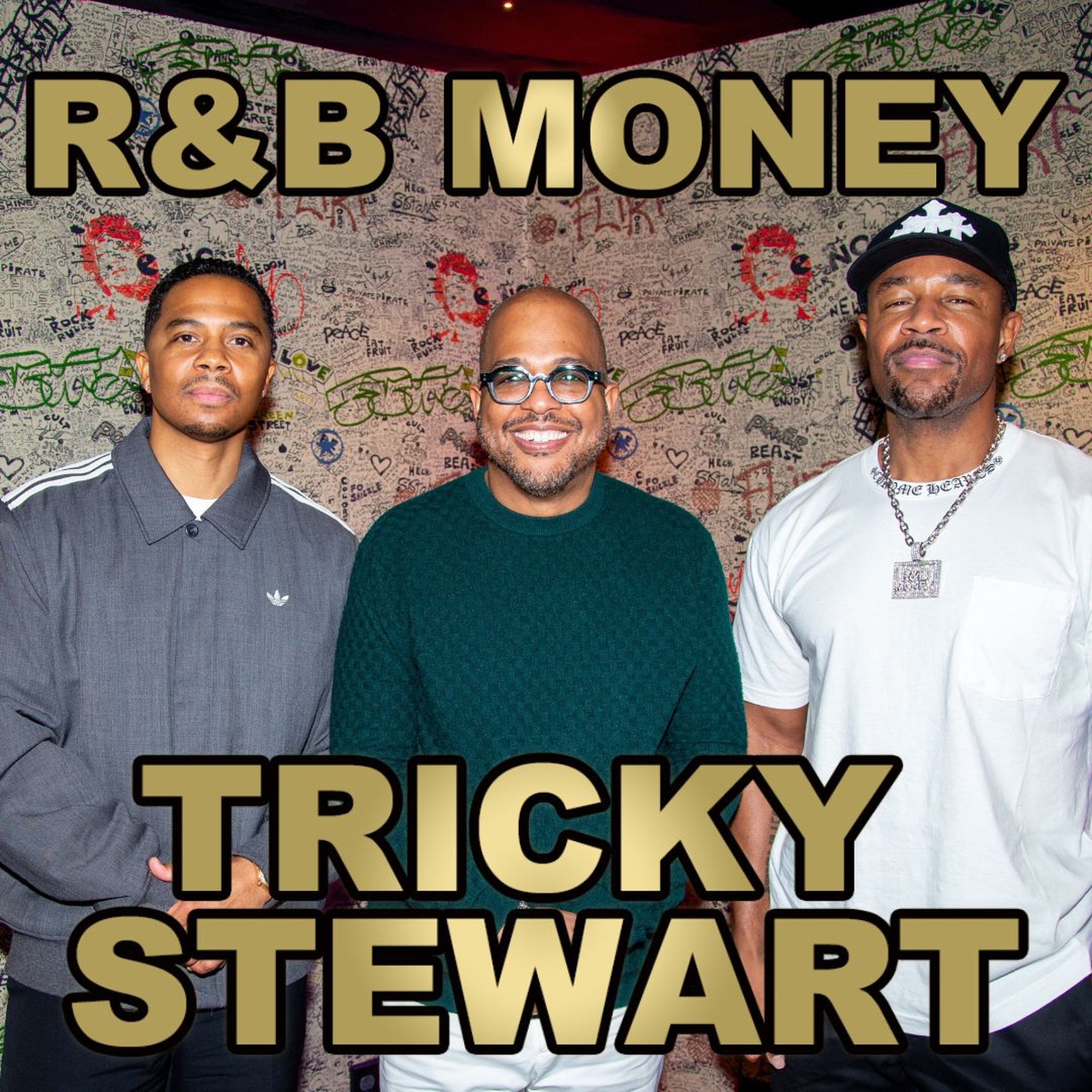
Tricky Stewart
Tricky Stewart—Grammy-winning producer, songwriter, and RedZone architect—joins Tank & J. Valentine to unpack how era-defining records get built. From the first chord choice to the final vocal comp, Tricky breaks down the decisions behind smashes like Rihanna’s “Umbrella,” Beyoncé’s “Single Ladies,” Mariah Carey’s “Touch My Body,” Justin Bieber’s “Baby,” and more. We talk chemistry with The-Dream, building the right room, protecting an artist’s identity, and why drums, melody, and story matter most.
See omnystudio.com/listener for privacy information.
Available Results
Generated results are saved to the knowledge database for reuse and search.
Extract Knowledge
Pick what you want extracted first. Model, scope, and chapter options appear after a template is selected.
Transcript
00:00:01
Speaker 1: R and B Money than take Valoti. We are the authorities all things R and B.

00:00:17
Speaker 2: Ladies and gentlemen.

00:00:18
Speaker 3: My name is Tank Valentine and this is the R and B Money Podcast.

00:00:23
Speaker 4: Come on the authorities. Oh no things, all things, whole things R and B.

00:00:30
Speaker 2: There's so many hits.

00:00:31
Speaker 4: Mm my god, my god, it's too many.

00:00:34
Speaker 3: Oh much success.

00:00:39
Speaker 2: Yeah yeah, yeah.

00:00:40
Speaker 3: The craftmanship and the skill that it takes to qualify for what to even be nominated to be in a whole of things.

00:00:55
Speaker 2: We know.

00:00:55
Speaker 3: I don't think everybody should be there. Everybody should what this man not only should he'd be in there. Yes, in there, gentlemen, Yeah, yes, thank you, Yes, that was amazing.

00:01:15
Speaker 5: Brother, welcome, thank you man, thank you all for having me.

00:01:18
Speaker 2: Listen.

00:01:18
Speaker 3: Man, I want to start there. I mean normally we go way back and then move up. Yes, we gotta start at the Hall of Fame because this is the first platform.

00:01:32
Speaker 2: Did you are gonna speak on?

00:01:35
Speaker 5: Speak on?

00:01:36
Speaker 2: Yeah? This is this day is very very special.

00:01:40
Speaker 6: You know, it's like it's not what it's like one of those things that you don't know that you you didn't you didn't think it was possible, but then it happens and You're just like, the nomination was gonna be incredible, just to be like, I've done something that quantifies being thought of this way, but to actually get in, to actually be first ballot was crazy. And I'm just like, I'm on cloud gazillion. Like everybody's like, you know, you're gonna celebrate to that, I'm like, this is I'm gonna celebrate this for the rest of my fucking life. Seriously, you're the rest of my life.

00:02:14
Speaker 3: So I've never I've never been called and nominated, So I just want to I just want to understand the process of it. Is it like the NFL Hall of Fame where you walk in and you walk into a house and somebody's like, hey man, and then one of your family members is there and they're like, hey.

00:02:31
Speaker 6: Man, absolutely, and that has that magnitude to it. And mine was done by none other than John Platt, the chairman.

00:02:40
Speaker 4: Oh so.

00:02:43
Speaker 2: You know to get that call, because what.

00:02:45
Speaker 6: Happens is, you know, John and I we've known each other for a long time, but we know each other as people, not as in the business. We don't have business relations like that. But the way that I could tell he was smiling, it was like they knew who to sin, like you know what I mean, they knew who to sin because he's so much about his artists, about publishing, about what he's put into the game. And so I know I always knew that he had respect for me. But whoever made the call to say John should be the person to make that call from me.

00:03:20
Speaker 2: That was it.

00:03:21
Speaker 6: And so we just we have that moment that is really really special and unique that I just feel like they whoever whoever came up with notifying him notifying me, kudos to them.

00:03:32
Speaker 4: When you get like a jacket, you like what they call it, a busk.

00:03:38
Speaker 3: It's just like when when they make it like this.

00:03:43
Speaker 2: I know, I know there's a museum.

00:03:45
Speaker 6: I'm not exactly sure what it's going to be, but the the ceremonies in June, June eleventh and New York, I believe it is. And so I remember going to this when Ralph Pierre, when I was signing a Pure Music it was there.

00:04:00
Speaker 5: And this is a major, major deal, you know, And this is not a lot.

00:04:04
Speaker 6: It's less than four hundred people in this club, right, and so this is a this is just something to be what you think of all the songwriters that people that write songs and to just get included in a nomination.

00:04:17
Speaker 5: It's just it's an unbelievable feeling. Dude, thank you, thank you.

00:04:23
Speaker 2: And she's amazing to see one of us. Yeah, you know what I'm saying.

00:04:26
Speaker 6: Like, man, Yeah, and it's you know, obviously, I think, you know, in the idea of getting things in an inclusive manner, like, there's definitely some I can feel that there's you know, with Jermaine going in recently, the Dallas going in, Rodney Jerkins was just acknowledging. It feels good to know that our music is reaching the masses, being accepted by the masses, and then you're being able to tell that there's a craftsman, there's a there's a craft that goes here. And so I look forward to I think there's a lot of people that are going to get in into this to the Hall of Fame. Now that the that it's a little bit more diverse, I.

00:05:05
Speaker 3: Think, yeah, I mean, I think, well, I don't know about a lot of people, but.

00:05:10
Speaker 2: I mean you.

00:05:12
Speaker 5: Would have to see some of the people who aren't on there.

00:05:14
Speaker 3: You know what I'm saying of people, You know what I'm saying, But I but I but as you say the word in inclusion, you know what I'm saying. I think there we we've come to a place to where the respect and the appreciation and the acknowledged acknowledgment of who we are and what we've done like this. It's a real thing. And we've fought for that for so long in so many different avenues of entertainment.

00:05:41
Speaker 6: Absolutely, and I think from my perspective, I could be completely wrong on this, but I think Nole Rogers being there as the chairman has a lot to do with it. Nile Rogers for in you know, overall context of our relationship and how that ties in when the catalog sales started going crazy and everybody started selling and we did our I did it my catalog deal. I did it with hypnosis, which was now Rogers and mercuriatis right, and so they are part of I believe in the sense of they started giving black music top dollar, right, top dollar, like people were not selling in distress, people were not selling because they were broke. There was you know, that was a kind of a vibe of why a lot of times black copyrights ended up in other people's hands. And this is what was the first time where they were coming around going these multiples. They we were getting paid with those songs actually meant to the generation having Beyonce cuts, Rihanna cuts, Justin Bieber cuts.

00:06:41
Speaker 2: It wasn't it was right. It had to be.

00:06:44
Speaker 6: They were paying for the songs of the generations like people paid for the rolling Stones, and they weren't making a differential between the artistry being And so I think that kind of influence has helped, you know, this whole, this moment that I'm going to be able to say became possible. It's just having someone that understood what I did, that came up and then ended up as as in that room as the chairman, so super excited and thank you to everybody that voted in there.

00:07:15
Speaker 2: Yeah that's incredible, bro. Yeah, is he like? Is he like? Is Big John like the.

00:07:25
Speaker 3: I mean, especially for all three of us in this room, we can speak to it. He's been important for all of us. Big John's Yoda's Big Yoda.

00:07:40
Speaker 4: Big John is Yoda.

00:07:41
Speaker 5: Bro that his influence is crazy.

00:07:44
Speaker 4: And his aura, Yes right, because he's such.

00:07:52
Speaker 3: He's such a good person in a business that is painted in such a dark way. Yep, Big John is a light and it's always been a light every single time I've met him, when I had no accolades at all, to maybe having a placement then getting some more things going in just throughout the process of my career personally, he's always been the same, gracious, an amazing guy to me.

00:08:22
Speaker 5: Absolutely well.

00:08:23
Speaker 6: Let me tell you one of the things that he's done with us that has just made it amazing is that one day a couple I don't even know, maybe seven years ago now, we were out here. I was out here during this time like Grammy week, and we were just talking. I was like, you said, John, you know, they're really pulling the investment out of Atlanta, Like you know, like it's like it's we're not a rap town.

00:08:45
Speaker 5: We got pop songs.

00:08:46
Speaker 6: I was like, this is the home of we Belong Together, an umbrella and fireworks and all these great songs.

00:08:51
Speaker 5: And I was like, we're not. We don't have anybody there.

00:08:54
Speaker 6: So the street influence is really like taking y'all think we can rap, and so I'm like, no, it's so John.

00:09:03
Speaker 5: John came.

00:09:03
Speaker 6: He came down there because you know, he has so much success early with Dallas and Jermaine in that region. He came down there, we walked the space and the place that people talk about red Zone that is now Sony Music Publishing in Atlanta.

00:09:18
Speaker 2: Oh wow.

00:09:19
Speaker 6: And so he's been down there planning seeds with songwriters, brought the investment back to Atlanta, uh, brought there and and at the same time put us in a position to be like, hey, we have a corporate we have a corporate relationship in Atlanta. These these are like huge things that you know, if not you, then who you know what I mean. And so John understands that responsibility. It's just been great to have those types of in these types of connections with him because it hasn't you know, I haven't you know, I've always been with the team that I've been with from a publishing standpoint, so our worlds don't cross, but that respect has always been mutual.

00:09:57
Speaker 2: Absolutely, that's I mean, bringing bringing industry. Yeah. Yeah.

00:10:03
Speaker 3: It's funny though, because he's like, yeah, you know, because it's it's.

00:10:07
Speaker 4: R and B and popular. Man, you did.

00:10:09
Speaker 2: Who that I'm going to say? You can't put j T money?

00:10:13
Speaker 4: Yes, yes, listen man, problem.

00:10:17
Speaker 2: That No, no, no, that was I was talking recently, of course.

00:10:21
Speaker 6: Yes, my first my first hit was who that Like, that was my major hit and I love that record, Thank you man. That was a man that was just the old days, just coming from the Strip club and having too much to drake.

00:10:35
Speaker 2: And that song was part of my show. Yeah.

00:10:39
Speaker 3: So when I used to have radio songs in my show who, that was one of the radio songs in my show.

00:10:45
Speaker 2: You know what's on that? So you have to.

00:10:47
Speaker 3: Program it programming and it just was what it was once you got there, no changing when.

00:10:51
Speaker 2: You turned crazy. You kill your boy. I read that today. I know you did that. Yes, you know that.

00:11:01
Speaker 4: You know that's dirty South than Yeah, yeah, he got he got dirty.

00:11:04
Speaker 2: Shout out to j.

00:11:06
Speaker 6: All of it, you know, and Dallas us to put that record off for me, him and Tony Mercedes. That was an independent record, like they put the money up and eventually put it out with a priority over at Capitol, but they started that whole thing independent. They would allow me to break Sole off of that. That's how Sole ended up becoming my first artist.

00:11:25
Speaker 2: Oh yeah, was your first artist.

00:11:27
Speaker 6: Yeah, that was the first thing that you know, I put out on my label, like with Gerald Busby and dream Works when they went over there to start and so yeah, and then.

00:11:35
Speaker 3: Listen, I've been around you but not been in front of you for so long. Yeah, because I remember all the dream Work stuff because I was at DreamWorks with Jason and Terry and with Dreno. Yeah, I'm there at DreamWorks every day, just walking around and just never ran into you.

00:11:58
Speaker 6: I'm never in the label. I'm always in the studio, okay. And it's one of the things that kind of works for me and it works against me. It's like I've been in a studio my whole life, but at the same time, I've always built my own studio, and so I don't have a lot of cross polonization with people just naturally of like, you know, I've always built a world. I've always been into world building and signing and finding and discovery, and so, you know, some of the time sometimes people think you don't know this person. I'll be like, you're not gonna believe this, but I don't. We've never met, and it's not it hasn't been intentional. But after making records for thirty years in rooms by yourself, you know, or just with a person or two, Because even as it pertains to like collaboration, I'm not like a two to three person like I'm a me and you like, you know, it's like it's always just been me and the other person, you know, or maybe just a third party. But it's always been a very intimate process for me being a creative because I don't know, it feels like it feels like a real thing when I'm in the room. So it's like it just feels It's always been a situation where I felt like I'm not giving this shit out to everybody. I honestly don't even like letting people watch me work, and you know, so that's kind of how that all started. And so I wish we knew each other, brother, because you're from Milwaukee. I've always rooted for you. I've always loved your records. There's records that you've made that I've studied, like just like that I deserve record in particular. I remember when I came out and I would just be in my hotel room. I would just get super hoth and just listen to that record about at least like thirty or forty times in a row before I would just go make a record, like you know what I mean, Just like that was just part of my process, like being in Las Vegas. When we live in Vegas, people talk about that era of trick and Dream and all that, like that was part of the process. Just smoking a lot in the bathroom because I love the way the reflections of music sounds and them big ass marble bathrooms. But that was that record in that time period. And also obviously you know that the remake that you did I Can't Make You Love Me, that's just like you know, those are those are just like you know, two of the I mean, I think those are two of the best records, you know, from my personal taste.

00:14:18
Speaker 3: Like well, we've been talking about it and going back and forth about it, and I feel like since I'm I'm part of your Hall of Fame career, and yes, it's time it's time to actually get on the books and have and have some Hall of Fame Tricky Stewart music in my repertoire.

00:14:39
Speaker 2: You understand what I'm saying.

00:14:41
Speaker 5: Yeah, it's time I called you.

00:14:43
Speaker 2: Remember, I know, I know it's I know it's gonna be expensive.

00:14:50
Speaker 3: If there's a you know, but it's no way, Let's do it, man, It's no way, It's time. It's no let's let's go. Let's let's go to early tricky. Yeah, let's get to Chicago. Let's go to Chicago, because let's go to where you you decided, Uh, this is what I'm going to do.

00:15:24
Speaker 6: When I decided what I was going to do, I was a football player, right like, and so I'm everything for the red zone. It's all football references. I play quarterback my whole life.

00:15:34
Speaker 2: You play quarterback, yeah, life.

00:15:36
Speaker 6: And so what ended up happening was I was getting recruited by like I got recruited to high school. It was starting to get to that point. It was freshman year. Everybody came back after freshman year. Everybody was six fourth, We was all the same height. Everybody was six three, six four. Everything changed, Yeah, And it was just one of those things that I was like, Okay, chances of me making it at quarterback, we're gonna be slim. I was probably good enough, you know, it would have been one of those things that they'd be like, we changed the position.

00:16:04
Speaker 5: I turned out a corner.

00:16:05
Speaker 6: I didn't want to do anything other than the quarterback, right And so it was just a very instant, instant change.

00:16:14
Speaker 5: And that led me to why I quit high school.

00:16:17
Speaker 2: That led me to.

00:16:17
Speaker 4: Quit quit high school, not just football.

00:16:20
Speaker 5: I quit high school in football simultaneously.

00:16:24
Speaker 2: Excuse me, h, I mean, just think about my parents, Like, how are you love?

00:16:32
Speaker 6: The thing is my brother, my brother Laney was had started like moving downtown records and doing records at night and writing commercials during the day and all that kind of stuff. So him and Kook had started like breaking out doing their thing, and so ultimately, I mean, I have to say, you know, as far as like quitting school in Chicago, that's not it's not a good thing. It's but it's not that uncommon because there's some very terrible things about going to school in Chicago that when I went to school, Like, for instance, your first period, you have to you had to go to swimming class. Right, if you could imagine your first you know, you're not gonna graduate unless you unless you unless you go to Now if you can imagine at six oh five in the morning when school would start for an athlete, that my first period would be me jumping in this pool after the thirty below or twenty below or ten below. But let's do this first hair all dried out for the rest of the day, looking crazy.

00:17:40
Speaker 5: So like I was like, as soon as it didn't make sense.

00:17:43
Speaker 6: As soon as the sacrifice, the juice wasn't gonna be worth the squeeze, I was gonna get out of there, and so well, not once football wasn't the carrot anymore. Yea, the music quickly because I grew up in church. My mom's a choir director, we like, I played drums in church. My whole family does music like and so I was just a round music in every possible way that you could think, from the Ohio players producing my mother and her and her sister's albums like at my house to just being at in sessions just you know, That's the way I grew up. And then between quir rehearsal and secular music, just kind of being integrated in both.

00:18:21
Speaker 2: And so when I found out.

00:18:24
Speaker 6: It wasn't gonna grow, it was like it was a race against time for me, right because I knew I had a extreme, extreme focus, right, like as a quarterback, like as an athlete, if you can imagine like somebody just having an extreme focus and just putting it on something else, like it was just it was just a was sure.

00:18:44
Speaker 5: I just transferred the thing.

00:18:47
Speaker 6: And so by the time I was sixteen and seventeen years old, Laney had things going on back and forth between Los Angeles and you know, coming out here working for Little Silas Junior, working on the early Chante More albums, working on Aaron Hall's album, you know, the record where that I Miss You and all that, Like I saw that was I saw those records happen like you know, that was the stuff I was coming out here for. And it's like during those days, in the early days, you know, once I finally got put on that, I got put on and I got my salary. Forty five dollars a week, come on, forty five ninety dollars every two weeks, one hundred and eighty dollars a month.

00:19:28
Speaker 2: That's what That's what it added up.

00:19:29
Speaker 3: You know.

00:19:30
Speaker 4: Yeah, listen, hey, I see you doing your numbers.

00:19:33
Speaker 7: Now.

00:19:33
Speaker 6: Now, hey, you didn't quit school too early because because there's a relative point too. It's like I remember Laney was coming out here to do a McDonald's commercial for BBD. This is when poison is out right, and so no, no, no, no, a guy. Yeah yeah, and so lady at this time is like twenty two and we're eight years apart.

00:19:56
Speaker 5: So whatever that is, you know, he's twenty three and.

00:19:59
Speaker 6: So ultimate I'm doing everything i can to not miss a session. I'm taking the train, everything like I'm I'm just making it happen. And I also want to say, during that time, it was tricky and suck. So I'm doing these things. And the other part that happened was me and my cousin we quit school together.

00:20:18
Speaker 3: Tricky in suck, like my you know what I'm saying by myself. Yeah, so I had like a partner. What's that accountability something like we quitting together? Yeah, I had a partner.

00:20:32
Speaker 6: No, it was actually, believe it or night, it was actually my mother and my brothers that took me out of school. I say that I quit, but I actually didn't quit. I got up to go to school one day and my mother was like, there's nothing else up.

00:20:42
Speaker 2: There for you.

00:20:44
Speaker 6: She's like, we took you to school. Yeah, She's like, we took you out of school.

00:20:48
Speaker 2: Wow.

00:20:48
Speaker 6: And so from that point on, I started going to the studio every single every single day. And it was about an hour away, you know, like in the cold, doing all that. But it's like they would pick me up eight o'clock. I was still a kid, so I didn't have the discipline or anything to really understand like getting up and being prepared. So I would literally just get in my in the back of the car like in a robe and just close, like you know, just completely dishovel, just trying to get there, but not really taking the I knew to get there, but I wasn't like professional in any sort of way. So I just started getting my ass to the studio and I realized that I loved it. It was something that I could do, like because I had just been around it so much, and I love music like I've just always loved music so much. And it's if it wasn't going to be football, it was gonna be this. And so now I've just dedicated my life to both equally, even though I don't play football. You would be surprised. People are surprised at how much that plays a part in mind in my brother's lives.

00:21:54
Speaker 2: Yeah read z, Yeah it makes sense. I did not prefet to get you said that. So now you're going back and forth to LA with Laney.

00:22:12
Speaker 6: I'm tagging along. I'm not going back and forth. I'm not necessarily being given the invite. I'm just not being told no, right like it's not it's not like I'm being invited.

00:22:22
Speaker 2: It's the crazy thing is the reason why.

00:22:25
Speaker 6: The reason why Mama said, the reason why I referenced that that amount of money is because I remember I had to go to my kitty, Jason Weaver's mom, and I was like, Jason Weaver, my cousin.

00:22:37
Speaker 3: Okay, yeah, who also negotiated to make sure her son? Yeah yeah, yeah, yeah, okay, this is okay. I love I love what these mothers are doing. Yeah, our mothers.

00:22:48
Speaker 6: Listen, our mother's kitty, mary Anne and Vivian, like Cooch's mom, Vivian rest Our soul Kitty and my mom kitty and the Heywoods, yeah, like giving something he can feel and all that. That's them with Aretha Franklin, all the Curtis Mayfield records, like all that stuff, like you know, you're not just flying, you're flying the friendly skies like Jason's moms. Yeah, like Coke is it my uncles and my cousin Throke, all those like spots, like we were heavy in jingles before jingles was the main business in Chicago. That's why, Like so, I mean, this story goes on and on and on, like.

00:23:25
Speaker 4: If they had the agencies in Chicago.

00:23:27
Speaker 5: Yeah, so the stories go on and on and on.

00:23:30
Speaker 6: But you know, the story of the record business starts with Laney and Mark and Judy and that team like really starting to get Laney's career. You know, we were all, you know, just trying to catch the wave like with Laney, because Laney was like Lady was like a phenom. Like you remember like when Brodney Jerkins came out. It was like that at that time.

00:23:57
Speaker 5: You know what I'm saying.

00:23:58
Speaker 3: You unders saying, I come from a kid group, right, and we were signing records, which Little Silas signed our deal. Okay, so we were waiting to get in with Laney Stewart at one point, you know what I mean when we you know what I mean, like the whole So all of this for me, I'm like I'm listening as you're talking. I'm like, yeah, yeah, Laney Stewart, Yeah Yeah, it's a lot.

00:24:19
Speaker 2: It's a lot to the story.

00:24:21
Speaker 6: And I've just been you know, I've been blessed to just keep keep moving, you know what I mean. It's it's a lot of crossroads and doing it for as long and as as much as it's changed. But you know, the love of it and the ability to focus. I think really just has made it where.

00:24:40
Speaker 2: You know.

00:24:40
Speaker 5: I was telling somebody I worked.

00:24:42
Speaker 2: With the other day.

00:24:42
Speaker 6: I can't remember who exactly, but I was just like, man, I feel like I have never made a record before. It's like I have that type of energy like and I don't know, I don't know where it came from.

00:24:51
Speaker 2: I didn't have it like that like eight years ago.

00:24:55
Speaker 6: But it's like I'm like, I feel like I haven't done this yet, Like you know what I mean. It's like I'm like, I'm capable after.

00:25:03
Speaker 3: Hit the Hall of Fame, after you hit the Hall of Fame, I'm capable of a run.

00:25:07
Speaker 5: I'm capable of I'm capable. I mean, I'm capable of a run.

00:25:11
Speaker 6: I feel I feel very good saying that, just because I know what I'm doing. I know what I'm working on, Like you know, it's been it's been. I mean we've been doing We've been doing stuff, you know what I mean. And it's like, you know, whether it's the stuff that I did on Money Longs last record, I think, really.

00:25:27
Speaker 3: Don't take me yeah, because we got to get to the first Yeah, yeah, take me from Okay, you you your Lady's Cotel.

00:25:37
Speaker 2: Yeah, you know you you're.

00:25:40
Speaker 3: Finding it, you're figuring it out, you know what I'm saying, working on your professionalism, your studio etiquette. All the coolsnted eighty a month and eighty a month. Yeah, when when does it become you where it's like, oh, it's time for me to either take the lead and whatever this is, or kind of step out on my own and do something.

00:26:09
Speaker 5: Oh well, let's see.

00:26:12
Speaker 2: I think.

00:26:15
Speaker 6: I think there was some There was some circumstances that led to that, like in the sense when we got out here to La, when we moved out here, like we had some deals fall through. And when I say we, I mean particularly Laney had some deals fall through. And there was there was some drama with a company that kind of had promised, you know something when we got here, and they kind of snatched the rug by the time we got here, and it was basically, you know, there's no cell phones or anything, and so we're moving across the country and they're like, I'm seventeen at this point. We got three U hauls in about ten cars of people coming and we get out here, the rug kind of gets pulled from under us, and so what ended up happening is it kind of got into a situation where it was like it went from we were all working too, we had to kind of figure it out. And so what ended up happening because when we left Chicago, ultimately it was a situation where we were all working for Laney still, but when we got out here, things kind of they changed. And so when they got here, that's when the birth of Tricky and sept happened. And that's when Judy and Mark really joined the team because we were all just kind of figuring it out. But Lady wasn't in a position with the thing that just that kind of kind of happened. He wasn't in a position to really take care of us the way that he was going to take care of us, you know, as if we had a studio. The studio situation that we had went away. He said, we had to figure out a studio, and that's how we ended up at back Room, and that's where the you know, some of that stuff starts with my relationship with Brian McKnight and Robin Think and all that kind of stuff, but it really started from the idea that when we got out here, it kind of had to grow up quickly. And you know it was it was rough. When I first got out here. It was you know, I went from like it wasn't that I was living good, but I was living protected.

00:28:19
Speaker 2: And then I just remember at one.

00:28:21
Speaker 6: Point, you know, I used to live up here on seventy five seventy thirty five Woodley with two prostitutes.

00:28:28
Speaker 5: You know, when I first got out here. You know what I mean, like you do.

00:28:31
Speaker 8: What you know, It's like I just yeah, yeah, you know that's you know, that's the take.

00:28:36
Speaker 2: You don't wait to change.

00:28:37
Speaker 7: Man.

00:28:38
Speaker 2: Well, no, I just lived there. That's what I'm saying.

00:28:41
Speaker 3: You know, we had to figure it out. That's what Tank said too. I just lived there.

00:28:48
Speaker 2: It was rough. It was rough.

00:28:50
Speaker 5: It was rough.

00:28:51
Speaker 4: I mean it's a different type of three company right there.

00:28:56
Speaker 2: But Sean was there too. You know that is a movie. Yeah, it was. It was a lot.

00:29:01
Speaker 6: And so you know what ended up happening is, you know, we were going through some rough patches. We had just signed our first deals. We had signed with Famous Music. I signed my first deal for I think I got fifteen come on fifteen k It was either ten or fifteen I had before I left. I cashed the whole check came out. Here, you're trying to get apartment at you seventeen years old. Each application is seventy five dollars. You don't have any like, and so I'm like, I'm up against the wall, Like as soon as I touched down their yeah and so, and then my dumbass is like thinks I'm a leader. So it's like the people that he couldn't take care of, or that we couldn't collectively be together, it's like I'm doing I'm still like I'm trying to be like him, you know what i mean. I'm still like that's how I grew up. Like Laney took care of shit, you know what I mean. Like he was He's the gatherer and the finder of the people, and he would put it together and he would take care of everything.

00:29:59
Speaker 5: So I'm like.

00:30:00
Speaker 6: Big brother, like, well he can't do it all, let me do something. And so it's like it's one of those things where the lifting is kind of going on and you figure it out. But there was some very crazy times during that period. And you know, we had just signed this deal and Mark called Laney and Laney call Famous Music at the time and was like yo. I know the guys just signed, but can they get an advance because now we got to buy equipment because now we don't have a studio, so we don't have equipment, so we have to buy equipment.

00:30:34
Speaker 5: So and back then equipment, you know, equipment ain't it.

00:30:39
Speaker 2: Ain't a laptop.

00:30:40
Speaker 6: It's thirty five hundred dollars per keyboard, per drum machine. So as soon as we get here, not only did I just sign a deal, but now I got to sign an extension for more years before I even started making records, just to guarantee it's just not gonna give you money within the within the you know what I'm saying. So the irony of the story of what Sony being my tenant right now is that in there, I left one letter in there. It's from Famous Music, and it says I'm sorry that our offer will not be enough. But that's Sony is the company that had me and my deal. That was like, you know, everybody's talking about hit Boy, like I had a hit Boy deal, you know, at one time, but I just never talked about it. But I was just I was I was at Famous Music to the to the point where nobody was there that was ever there. Besides, there was not one person there. And the one thing that they could decide on, no matter how many different change of errors, was is we not letting that nigga go?

00:31:41
Speaker 2: Period?

00:31:42
Speaker 5: But be you not going anywhere not in that deal.

00:31:46
Speaker 6: And it wasn't until they signed Eminem and Brian p came over there, and Brian Pastel came there and he was like, yeah, this isn't good.

00:31:54
Speaker 4: He gave me my first real money.

00:31:57
Speaker 6: And so but that's why I say, it's all is important to have inclusion, to have somebody that comes in, you know, to to somebody. It only takes one person into to just change one little thing. But they were gonna be content with over and over just letting me stay in a deal where I couldn't, like, you know, take care of myself, you know what I mean. And so but with all that we here, you know what I mean. But it's you know, those days are you know, it's funny that y'all bring that up because I don't even think about those days because it's like, you know, it's there's side effects from it, like I could play the hell out of ping pong, but it's because I'm a great I'm a great ping pong player because when I was living with the prostitutes, all we have with the ping pong table, and I became really good.

00:32:43
Speaker 4: At the work in a ping pong.

00:32:48
Speaker 2: So yeah, it's no lot.

00:32:52
Speaker 6: Yeah, it's side effects to it.

00:32:58
Speaker 1: You know.

00:33:02
Speaker 2: Then it is what it is.

00:33:03
Speaker 5: You want to talk about the story, that's the story.

00:33:04
Speaker 4: That's the story.

00:33:06
Speaker 3: So okay, so you're in LA You're getting your deals, you got your studio getting set up.

00:33:11
Speaker 4: How long does it take for you to get your first record?

00:33:14
Speaker 2: Though? What do you mean my first record?

00:33:18
Speaker 3: Place something that's like, okay, well it's making a turn for me.

00:33:23
Speaker 6: Well, I think the first turn because when we came out here, we were being first off, we had a studio in LA, I mean in Chicago. So Aaron Hall, Keith Washington, Chante Moore, all those artists, they were flying there.

00:33:38
Speaker 4: Okay, you know what I'm saying.

00:33:39
Speaker 6: So we weren't coming out here cold, you know what I'm saying. And if you remember, this is the Kissing You album, so this say so this is like serious production, Like so we're okay. Lake Laney's being looked at on from the top, top tier levels because that's Quincy Jones artists.

00:33:57
Speaker 2: You know what I'm saying.

00:33:58
Speaker 6: That's Quincy Jones, that's Jay Brown, that's those guys. That's Bennie Medina, that's Quest Records, right, and so that stuff's happening. We come out here, and so I got a little bit of stuff going on because I'm working through Laney.

00:34:11
Speaker 5: But I started working.

00:34:12
Speaker 6: The very first project that we did was a song that I had that I did with my cousin Jason Weaver called Be My Girl. Be My Girl, was cut by the very first person that ever put us on a plane to do a record for me personally, was a gentleman by the name of Darryl Sutton and Chris Stokes to work with immature, with the original immature, like you know what I mean, like the very first like I met markus. Yeah, eight years late, eight nine years old. I'm producing Marcus Houston's first album, and so that's how I.

00:34:48
Speaker 5: Know him and ray J and Brandy and all them.

00:34:52
Speaker 6: I've known them all since they were, like, you know, very young, and so that was the very first time. But I would say the most significan thing that happened was we had done remixes and things like that because Loul has started throwing us work. So we had started mixing, remixing La and Babyface records. We had remixed that Don't Be Afraid record off of the Juice sound track and all that for Aaron Hall. But then Louis was like, like, loul gave us a budget and these were back then it was all ends, Like we got a twenty three thousand dollars budget, which because it didn't really go by producer fees, it went by what the costs were and what the producer managed, what deal he cut, which was left was your feet and so depending on how much your guitar player was, how much the studio costs. So you were coming as the producer, you would come in and go, well, listen, how like what deal can I cut on the studio? You're cutting deals everywhere to walk in to ultimately go yeah. So but back then, the average producer fee was three thousand dollars pretty much across the board that you were bringing down, and then you had people that was getting like closer to seventy five hundred, you know, and so but the producer would get all the money and then make the deals with each background singer, each person. So twenty three thousand dollars gave us the most flexibility. We knew we were going to be able to make probably at least half of that at the time of what was happening. So that was probably like we were gonna pull down about twelve or thirteen thousand on a record that we did on Shante call Searching, and it was her very first there's the very first song on that album, Love Supreme, Like that is a very iconic album she had that loves taking over our record on there, like and so these are people in relationships and memories that like really just like changed the game in that sense of like, you know, Louel looking at us like that and being.

00:36:55
Speaker 2: Who he is in music.

00:36:57
Speaker 6: You know, that's Bell Bivdevou, that's La and Babyface, that's Jimmy jam and Terry Lewis, that's any Heartbreak, That's that's Bobby Brown. So for him to be looking at us at sixteen to seventeen years old and putting us on his very first artist was just like an anointing that we could never you know, could have never expected because there's levels to who you work for and I think, you know, part of my attraction for whatever reason, I think I just knew how to get with people and stick with them. I was just never one of those people that wanted to be all things to everybody, and Louis was just one of those people that put me in position, and he put me in position to meet la Yeah, and then those are like if you look at my career, that's who I worked for. But that's who I work for. And then there's all the low answllary things. But somehow this circle that you guys are talking about, you know, it's all it's all happened for me in the in the nineties, and you know, like I haven't. I haven't been turned out too much.

00:38:09
Speaker 3: So soon did you you get your own place or did you stay with it? You're crazy with them because I know what I was, what she was gonna do, You was gonna was just gonna expand it. Ah yeah, I mean yeah, no, No.

00:38:27
Speaker 6: That leads to the next part because we got away from them, and then the next thing I knew, we were living in over here in Burbank, where I had a one bedroom with thirteen roommates. What now you're living in a hostel. But now I think I'm building. I'm always building, so even though I don't have nothing, I've got I've always had something.

00:38:50
Speaker 5: I've always had a coordinator.

00:38:52
Speaker 6: I've always had an assistant, I've always had engineers, I've always had producer.

00:38:56
Speaker 4: It's the one bedroom you had an assistant.

00:38:58
Speaker 6: I always always we were always trying because of how our family does. Yes, that's what we knew. We knew that you need eighteen. Okay, we've never seen someone be successful and not build a team. So just because you don't have one doesn't mean you don't need one. So you have to find people.

00:39:19
Speaker 3: That you said all the time for the people that's listening, just because just because you.

00:39:23
Speaker 6: Don't have one doesn't mean you don't need one. One, And so you take the team at the level that you can play. It's not it's it's but yeah, I mean every level. Yes, there's teams on every look vision.

00:39:36
Speaker 2: Yeah.

00:39:37
Speaker 6: So I knew that, and so we you know, we were buying equipment, we were buying microphones. It wasn't like we were busy, like we getting ten for a remix, seventy five for this, Like we have money, but the keyboards are twenty eight hundred, thirty five hundred, forty six hundred, like and we're buying everything, every microphone, every know, like we're not buying anything but what you need you Yeah, and where you walk into the studio and we have racks in racks six feet tall of stuff. We don't have anything like and even like going back to red Zone, like red zone I had.

00:40:18
Speaker 2: I didn't have a place to live, but I had Red Zone.

00:40:20
Speaker 6: I got the we had the building before, we had before I really had, Like I didn't really start sleeping in beds and stuff until I was like twenty eight, twenty nine years old, like in the studio, the couch in the studio, like it's like, all right, let's let's get it. Like it was just an obsession of music, you know what I mean, It was just I don't know.

00:40:41
Speaker 4: That's why you're in the Hall of Fame, brother, this is why.

00:40:45
Speaker 3: And I love that that you're so open and honest with us to tell us that story, right, because I think sometimes people skip over that process of what it or what it took for you, right, And that's not saying what it takes for everyone, but what it took for you. And with someone, especially the younger generation, having an understanding of like listen, the sacrifices that this man made to get to this point.

00:41:10
Speaker 4: You saying I didn't sleep in a.

00:41:13
Speaker 3: Bed during my journey till twenty eight, right. And it's funny because I tell a story of when I first came to LA and I slept on the floor for nine months, right, And I thought nine months was a long time.

00:41:28
Speaker 4: You talk about nine years, you know, saying.

00:41:30
Speaker 2: When you had a couch, I sleep on the floor.

00:41:33
Speaker 4: Yeah, I was on the floor, doll.

00:41:34
Speaker 5: Yeah, I didn't have that. I had enough for it, but I just didn't have one.

00:41:37
Speaker 6: I couldn't buy two, so it one's gonna be one net and one net.

00:41:41
Speaker 5: You know, it was gonna be at the studio so I could sleep funt.

00:41:43
Speaker 3: But you were also hyper focused on on the main thing. Yeah, you were like, everything's going to go into this.

00:41:52
Speaker 2: Yeah for sure, me early, Like.

00:41:55
Speaker 3: I guess part of me being an artist too, you know what I mean. I was a writer and a producer of course, but I was able to reap different benefits early because I was an artist, right, That kind of could take me off path. I was only an artist to get off the floor. Yeah, well I wasn't even trying to be No artists I'm like, but wait, they'll give me a record do and I go get it bed?

00:42:21
Speaker 6: Yeah, well, I mean I started as an artist too. In a sense it's really funny. But what ended up happening is I don't know how you know if you know how, I know Tab and Sam Salter and Robin Thick. But it goes back to Little Solace again. He had a woman that worked for him. Her name was Madeline Randolph, his like right hand person. And so I was in a group called Flight with me and my cousins who were producers set and then two white guys that when I went to high school with we were like friends.

00:42:52
Speaker 2: YEA was calling me bad before colling me back.

00:42:54
Speaker 5: Well, this is how I ended up producing colored me back.

00:42:59
Speaker 6: And so what is happening is it's it's the economic boom of the interracial group. And it was it was, it was, it was that time. And so we met with Madeline Randolphin and she was like, yeah, y'all's group is kind of whack with the production is crazy, but I have this other group and.

00:43:25
Speaker 5: Y'all should produce them.

00:43:28
Speaker 6: And that other group was a group called Common Ground, and it was tabbed. Robin Thick is Sam Salter and another dude named Corey, I believe, and we look at I'm looking at them, and I'm like, but obviously Robin Thick is sing Sam Salter casing I was the lead singer of our group. So that'll let you know how much trouble we were in. Uh So, And so it wasn't a hard sell for me to give away my production.

00:43:55
Speaker 4: I didn't.

00:43:55
Speaker 5: I wasn't born with what you guys have.

00:43:58
Speaker 6: But with that being said, I'm looking at them because I'm into esthetics though, and I'm like, this motherfucker's six.

00:44:06
Speaker 2: Three, he's five six, he's black as hell. I'm like, this, what comes?

00:44:12
Speaker 7: What group is this?

00:44:14
Speaker 4: You know?

00:44:14
Speaker 3: Like?

00:44:14
Speaker 6: And so we end up going to the studio with them, made made some dope records over the weekend at that I mean, they gave us like a Friday, Saturday, Sunday, and we just hit it off really really well. Ended up becoming best friends, you know, Tavis still to this day. I mean we're still super locked in always like really real brothers. Robin think is the their dear friend, Like you know, every every time he touches down in Atlanta, he's gonna come through. We're gonna see each other. Yeah, you know, I mean you always see me when y' all on tour together. You know, I'm always there. But and obviously Sam rest in peace. You know, he's not here with us. And Sam is such a huge part of Red Zone and in the the story of the Tentacles of where everybody he comes from and what the thing was when we got to Atlanta was with Sam, because Sam is what.

00:45:08
Speaker 5: Opened the door to La as an artist.

00:45:11
Speaker 6: Yeah, and so Sam was the vehicle of the guy that wanted to build in la that had to rebuild in Atlanta, bringing the kid from Compton, you know, to Atlanta. And Sam was a very just beautiful person, beautiful spirit, super talented sing anybody. You know, no disrespected nobody, but not a lot of people had it like Sam. And that's just the truth of the matter. And he was such a he was a gracious vessel of people's first like you know what I mean, it's like my first executive productions, like Katie's first mixes, you know, first time doing strings, you know, like we all like JQ comes from here, like Zeke. This is how I all know them because these are the people that Sam brought as his attraction as an artist brought us so many people into into what we call red zones.

00:46:08
Speaker 3: Sam was the Sam was the first person to cut the first Underdog record.

00:46:13
Speaker 2: Which one was it you know that I don't like them girls? Wow, that was the first place that I actually cut it because it was my song.

00:46:20
Speaker 3: I wrote the record and he killed that cut it on, cut it on Sam first.

00:46:25
Speaker 2: That's crazy.

00:46:26
Speaker 3: It was started with Sam, which is and that's how I end up meeting him. I'm eighteen years old at the time, and I'm like, oh, yeah, I know him from the you know what I'm saying, from the record he had before, and I'm thinking, Okay, well, it's gonna be like my first because they were with that record, we knew it was going to be somebody single, you know what I mean, Like from the from the from the rip when we wrote the record, but like, this is going to be a single. So I'm like, okay, because I had had like two placements but they weren't singles.

00:46:53
Speaker 4: But I'm like, this is going to be a single, and it was.

00:46:56
Speaker 2: It was. Sam Salter was the first person to cut that record, sir.

00:46:59
Speaker 6: But that that's just indicative of that spirit that time. But you know, we It all spawned from that same circle. You see what I'm saying like, it's all that same circle. And how I even got to Atlanta was I was working with this group, Black Girl, that was down there in Atlanta. But they used to they used to sing backgrounds with the girl tyvee Urman used to sing backgrounds and demos for Lain Babyface, and they were working on stuff and I was working on They were coming out here working with with us. Because Alison from with RCA. I don't want to mess up her last name because I can't remember it, but she's remaining, so I don't want to put it out there wrong.

00:47:42
Speaker 5: But it's Alison.

00:47:44
Speaker 6: I just did the something we Could Fill record with Laney Lady just did that record with Aribine and Tamar and so we that same that's the same relationship. Long story short, That's how I met La. That's what really connected.

00:47:59
Speaker 2: It was the singer.

00:48:01
Speaker 6: It was her singing backgrounds and me producing her and her coming back on.

00:48:05
Speaker 2: It's these producers.

00:48:06
Speaker 6: In La that you got to meet l A and so La. It was like, all right, cool that comes out here, meets we meet. We meet at four Seasons on Donheeny.

00:48:17
Speaker 3: Of course, of course, that's where you meet l Yeah, this is a regular day.

00:48:27
Speaker 6: And I'm not brunch material. So so let me be clear. This meeting, this meeting happens in a car. This meeting happens in a car, and I we don't have the ability to record because recording is so expensive. Everything is three thousand a day getting a piece of tape, this five hundred or the four hundred a day. So we're singing every last record we got on the spot. Oh ship, hold on, here go on.

00:48:56
Speaker 2: What we got? All we got is this.

00:48:59
Speaker 4: Is how you playing your demo? You're the demo.

00:49:03
Speaker 6: We're walking around in LA We're singing our songs on the spot being shan like, this is how and so that led us. He was like, oh, y'all are crazy, And we ended up doing this song called Little Something on a group called Few Good Men. We go down there and I just fall in love with Atlanta. The studio, Bobby Brown studio is called Bostown Now, which is now, and we go down there cut this record that sounds like an absolute missile at the time, Like, you know, we're starting to we're starting to make better records at this point, but La, he just believed in us, like you know, he believed from the very beginning and to this day when people look at when they look at Sony, when they look at sessions, the stuff that I show online.

00:49:56
Speaker 5: The building.

00:49:58
Speaker 6: La got us that building to move to Atlanta in order to sign us.

00:50:06
Speaker 2: So the building came with it. It didn't.

00:50:08
Speaker 6: It didn't come with it because we wanted to we didn't want to be signed and Mark, Mark didn't want us to sign. So Mark at the time was just like and Mark was very young, so he's just going toe to toe and this is you know, this is like La has had one hundred hits. It's La and Babyface, right, but somehow he gets the audacity. He's just like, look, they don't want to be signed, but they do want to come to Atlanta. He's like, but if you give us the money, because La had offered us a bunch of like cars and a mansion and ship. And Mark was like, Nah, give us the money. We're gonna build a studio and we're gonna pay you back, but we're never going to be exclusive.

00:50:47
Speaker 2: We're never going to be exclusive.

00:50:48
Speaker 6: And what ended up happening was bright there like and and that single put that single negotiation from my management at that time changed everything. Not only I mean the biggest thing that I think it changed is that it allowed me to build a relationship with LA that was always built in business, real business, Like you know what I'm saying. Not oh, he took the cards and he took the house. No, it's like, no, they wanted they wanted that from the beginning. So from that point when we started, when he started giving it to us, we never had to look back and we never had to feel like we weren't in the ownership position ever again, you know what I mean, because someone had already given us ownership of whether it was buildings, publishing.

00:51:39
Speaker 5: You know.

00:51:39
Speaker 6: So we've after we got free from the original publishing, I've never like I haven't had to sign a publishing deal, you know, since that time, you know, from the standpoint of really understanding, really understanding, like, hey, I'm we're doing something that's unique, that special, And ultimately, I think it's that singular move that let me know because before that we were kind of I would say we were figuring it out, but it was that move right there in particular, I think let me know that I knew.

00:52:17
Speaker 5: And I know that I have the best manager in the world.

00:52:19
Speaker 2: And it wasn't that. He was my brother.

00:52:21
Speaker 5: And I was like, this shit is crazy, and that move.

00:52:25
Speaker 6: When you have equity, you build something, you buy something, right, Like the building is worth a lot of money. We didn't pay what it's worth, but it's like it's a you know that kind of thing can cement your life, you know, having an asset, you know, fifteen twenty thousand square foot asset can cement your life at nineteen years old.

00:52:46
Speaker 5: Like I've had that building.

00:52:47
Speaker 6: I've been in that building for thirty years, over thirty years, every record I've ever made.

00:52:53
Speaker 3: Like building now, yes it still is building, but now but Sony is ringing it.

00:52:57
Speaker 5: Sony's ringing five thousand, six thousand square feet up.

00:53:01
Speaker 4: We still got ten more thousands, yeah yeah yeah.

00:53:04
Speaker 5: And then the other you need.

00:53:05
Speaker 6: And left over square footage. And then the other part is sessions, sessions ATLNA And so that's what we do all our you know, all our music events and listening sessions.

00:53:17
Speaker 2: Crazy.

00:53:18
Speaker 3: We've never been there. Have you been there? I haven't been there. This is crazy, But they's gonna change all that.

00:53:23
Speaker 4: Today on today.

00:53:25
Speaker 2: Yeah, that's all the week.

00:53:28
Speaker 6: Yeah, there's no way that y'all should come to Atlanta and record any place else other.

00:53:32
Speaker 2: Than next week.

00:53:35
Speaker 3: But Jay, what are you doing here? What Tricky just saying. He's telling me to pick up a key man. He said, I got an extra thousand square foot and I can hang out here couch.

00:53:49
Speaker 4: I ain't getting no hotel. I'm not above I'm not a.

00:53:55
Speaker 2: Couch.

00:53:56
Speaker 5: It's a lot harder to get in nowadays. You won't be able to do that. But but but I put your name on the list.

00:54:06
Speaker 2: I gotta say.

00:54:06
Speaker 5: They don't.

00:54:07
Speaker 6: They don't play down there because honestly, we really just we specialize in privacy.

00:54:13
Speaker 2: Yeah, we specialize in privacy.

00:54:15
Speaker 6: Our clients do not want to be known, and we don't show you anything.

00:54:20
Speaker 2: I show you what I do.

00:54:21
Speaker 4: I won't be there, No, you'll you'll be there.

00:54:24
Speaker 5: It's just we won't be showing anything unless you want to be telling.

00:54:27
Speaker 4: The people that I'm not there. But I'm here, So I won't be there. Go ahead. Tank won't be there either.

00:54:32
Speaker 5: We keep it quiet.

00:54:35
Speaker 2: We won't beat it.

00:54:41
Speaker 4: He got the hooks on the hook he leave that first apartment. Yeah, we just it was just a.

00:54:49
Speaker 3: Great setup like that right there.

00:54:53
Speaker 2: It's as good whether it wasn't as great as you think. No, wasn't as great as you think.

00:54:59
Speaker 3: How do you get to how do you get to who that? How do you get to that record? Because I've hurt so many of your records?

00:55:09
Speaker 6: Yes, well you want to know the truth. I was frustrated. I was frustrated because I'm in Atlanta for time preference. All this story is great, but what's going on around me is what about your friends? It's Jermaine, It's Waterfall, It's it's the biggest record I've seen, and hearing things. The first night I get there, I hear it ain't no thing but a chicken way but Outcast stayed in the studio in LA's basement. That's how that's my introduction to Atlanta. And then you walk over here Dallas is working on what about your friends? And I don't know, just as a point of reference, I don't know when the last time you've listened to that song, But do yourself a favor and listen to that song, and remember that was my introduction to Atlanta. Okay and so and then then there's Jermaine. But I knew Jermaine because now criss crosses out before Jermaine left maybe before I came there. Jermaine and I had actually produced. We did a song with Criss Cross and Immature together on the Bay Based Kids soundtrack out Here, so I knew Jermaine. So when I got to Atlanta for the first time on my recruiting trip, because it used to be like college down there, Jermaine was the person that picked me up and like picked me up and took me to his to his studio which was at.

00:56:32
Speaker 5: His mom's house.

00:56:33
Speaker 6: And I'm just like, man, look at all these cars and motorcycles and stuff he got, and I'm just like, like, you know, I mean, like I said, and I'm coming from out here and it's Jermaine. And then I go to LA's house and Country Club of the South at the time.

00:56:47
Speaker 2: And it's like, oh, yeah.

00:56:49
Speaker 6: I'm moving right, like there's no there's no question. And so the frustration because I hadn't found a music identity because I'm from the Midwest, and I think it's an advantage, but it's also a disadvantage.

00:57:05
Speaker 4: Right, there's no defining sound, right, and so.

00:57:09
Speaker 6: I didn't have a defining sound. I knew how to make records, but I didn't have a defining sound and who that was made because I was like, man, this rap shit is easy. I could do rap in my sleep. And so one night I just came back to the studio and I was like, I'm gonna make some rap songs. That was the first one I made. It was a joke to start. It was me and my boy DeAndre Davis and Tad. We came back from the strip club. We was probably I think we were probably drinking or whatever. Brought a whole bunch of people back to the studio. I let everybody that was at the studio rap on the song. We came up with the hook me Dre Let's us on the hook. I let everybody that was at the studio get a verse. The song had fifteen verses on it. Jason Weaver was out the song, whoever was at the club, and I was like, okay, this is a this I don't know how it went from a joke to like and you start to resent it, like you know, you resent it because I'm not getting attention that I want for myself. Salter, I'm you know, I'm doing We're doing strings, We're doing Oregon's le, You're doing everything. But this song is making the people go crazy. But it's not JT Money and so Lee ain't on it yet.

00:58:25
Speaker 5: It's just people. But I got the hook, you know what I mean.

00:58:28
Speaker 6: I just got the hook, and so, you know, my mind is kind of you know, I don't I don't remember like super details, but I know that tab brought me sole okay, and Tony Mercedes had JT. Money, And I can't remember whose idea it was to get them involved or how it got involved. They got on the song, cut all the rest of them mess away, and then Tony Mercedes and Dallas heard the song, they got involved with the song.

00:59:00
Speaker 2: Yeah, well they got involved with.

00:59:02
Speaker 6: The song after the fact that I went everywhere making the rounds trying to get the song, trying to get somebody put the song out, and they was like you were shopping the record, but with them, they were like this shit is whack, Like you know what I mean. They didn't like it, and so nobody really liked it, and so it ended up in the independent space and it was just one of those things.

00:59:23
Speaker 2: I remember.

00:59:24
Speaker 5: The record came out in December and I didn't really know.

00:59:27
Speaker 6: How records work, but I hadn't you know, nothing was happening as far as I was concerned, Like I wasn't hear this in the club when I was going And next ding got knew that summer that thing just took a turn and that I had never felt anything like that from the standpoint of just like an impact record, and I realized I started to realize, like that was I guess when I realized that it's not about what I want, it's about it's about what the people want. And from that standpoint, I was that was the turning point I think in me really understanding how to make records differently, going from making music and writing songs and going through themotions but really looking for impact and so that really that's really changed my life because that's when I realized that, you know, people always think, oh, you got to have the money, you got to have the money. They didn't have the money. The Janet Jackson record and Buster rhymeins want to be record out with delight at the time as the producer, like making all those crazy records. They had the two million dollar video, they had. All that we med was that was a number one record on all four mets, that song of the Year, number one R and B, number two pop like you know what I mean like it and I was like oh, and that kind of became my seat my motivating factors, like if I have a hit record, is can it be number one on all the charts at the same time?

01:00:56
Speaker 5: And so every record that we've ever had.

01:00:58
Speaker 6: At Red Zone, I think what we do that's different than everybody is that even if it's breaking my soul, break my soul, one number one rap too, like it was the number one hip hop record, number one Dan's record, number one pop record, No One R and B record, Like if it whatever it was, what it's an umbrella, any record.

01:01:16
Speaker 3: Like oh we oh, break out this sham babe. If it's break my soul, if it's umbrella, if it's baby.

01:01:28
Speaker 6: Yeah, baby, The baby wasn't a hit though, What baby wasn't a hit?

01:01:33
Speaker 5: Baby became a hit?

01:01:34
Speaker 2: Okay?

01:01:34
Speaker 4: I about to say okay, became came a hit.

01:01:36
Speaker 2: Baby was a hit.

01:01:37
Speaker 6: Baby was a radio fail. It just so, it's so seventeen million or sixteen million however minute you know, but it never charted because there's no kid.

01:01:45
Speaker 4: Did you hear what you said or whatever? Sixteen seventy or whatever it.

01:01:49
Speaker 5: I don't know where it stopped.

01:01:51
Speaker 6: It hasn't, but I mean it because it's generational, like every kid finds it somehow, and so you know it's a hit now. It feels like a hit now, but very much not in the moment. Was not like some breakout.

01:02:04
Speaker 2: You mean in terms of chart position. It wasn't a hit.

01:02:07
Speaker 6: I don't I don't even know. Yeah, it didn't do nothing on the radio. You never heard baby on the radio.

01:02:13
Speaker 2: I just heard it so much. I don't know where I heard it.

01:02:16
Speaker 4: You heard and it's one of those records where you don't know where you heard it.

01:02:18
Speaker 6: But they don't play they have a rule they don't play kids on the radio.

01:02:22
Speaker 2: Impact record though about hit from Impact.

01:02:26
Speaker 5: Yeah, yeah, of course.

01:02:26
Speaker 6: But he wasn't coming from Disney to see all those other people breathing and all them they come from Disney. He just came out of nowhere, nowhere, nowhere. So adult radio wasn't you know. They were like, we're not playing this, and so it was. It was never on radio. It just kept growing. It was I mean, first record to a billion on YouTube, first one to two billion on YouTube, like it was breaking records. That's how I knew that YouTube wasn't where I want my records to be because there was no check that ever came with it.

01:02:54
Speaker 2: Hmm. That was early. Huh yeah.

01:02:57
Speaker 6: I figured that out because I was like, this is the YouTube, Like, this is the YouTube.

01:03:03
Speaker 2: I'll take.

01:03:04
Speaker 6: I'll take number seven, you know on radio on the chart over over a billion dreams over over having many billions.

01:03:14
Speaker 8: Wow, Blue Cantrail, Yeah, oh my god, yeah many a show.

01:03:28
Speaker 5: Yes, that was a single?

01:03:34
Speaker 2: Different, Yes, what made you go there? Once again?

01:03:40
Speaker 5: That's Tab. You know most people don't know.

01:03:42
Speaker 6: Like the relationship that I have with Tab is he finds stuff like it's the same person that brought me Frank Ocean. Like, you know, Blue was just a voice. She was a voice that that that that was incredible because she had jazz gospel, she had scats, she had power, she had falsetto, she had loaves, she had highs and she just knew how to work it all. And that whole situation happened. She was her sister, I believe it got in a car accident and she came to Atlanta because she was up from New Jersey and New York or something. And Tab and I think another guy that I work with named Javon Simms brought her in like my mind like on certain things, I just can't recall it that much. But I ended up with her. She came to the studio and I just fell in love with her voice, and we did this record called Till I'm Gone off of her first record, and we just spent We spent the next seven days. We spent the next seven days basically just making records. And by the time we got done, we had everything that's on the first album except for hit Him Up Style. I had just done who that of Dallas. He had just broke that record for me. I was like, I just signed an artist. I took her over there. He wrote hit Him Up Style?

01:05:09
Speaker 2: You know.

01:05:11
Speaker 6: That track is just yeah, super super super crazy like and I mean Dallas, that's you know, Dallas is a fool. That is a complete fool. You know, Dallas is the scariest, one of the scariest producers I've ever been around. You know, It's it's crazy that we are friends now, But I legit used to be like, you know, scared of him, Like producers used to be scary, you know what I mean, Like you know, you go see you go watch Rodney Jerkins work back in the day, you'll question your life period.

01:05:43
Speaker 5: Do we have the same job?

01:05:45
Speaker 4: Do we have to say?

01:05:47
Speaker 5: Are we?

01:05:47
Speaker 2: Are we fine? For the same thing?

01:05:49
Speaker 6: They'll change your life, And so I don't That's why I don't like to watch people work up close like that, because it could fuck you up watching, you know, Like I'm I'm I'm committed to getting it right. I don't get it right at first all the time, but I just want to win more than most people though, you know what I'm saying. But when you see somebody go from soup to nuts and like, you what the fuck just happened here? And like and I've witnessed that stuff, and I'll just be like, you know, I don't want to play that game, you know, Like you know, that's I think it's still it's still part of the reason why I think I'm not like the best collaborator, because I'm just seen shit that I'm like, I don't ever want to see that again because it's like it's intimidating. But with that being said, the blue stuff was just magic, you know, when it happened those types of things, when it happens, it happens quickly. And once again, at that time, LA was leaving le face. You just exitent new chairman that Arista Records, just taking Clive Davis's job. We just give just we had just done the No Scrubs record, because Shakespeare was our producer, Mark was managing him. He had just done the No Scrubs record, which Dallas was an executive producer of all those TLC records. So their synergy and friendship is building and projects.

01:07:14
Speaker 2: But we're just.

01:07:15
Speaker 6: Friends, like just exchanging songs back and forth to each other. And so we go to our friend La check this out, you know what I mean? And Blue Can Travel was his first signing. Uh okay, like I'm pretty sure in number one, pop, number one, R and B number one, everything across the world once again once again again, yeah, once again. And so you know that's the that's the you know, and I think that's something it's something in the water to that with, you know, like with or I should say, in our case, in the Red Clay. They taught us that Atlanta taught us that Jermaine taught us that like Jermaine influence on music.

01:07:58
Speaker 5: Let me know that all your.

01:08:01
Speaker 6: Records could be big, you know what I mean, Like regardless of what he did, like if he did a slow song, he would give you let's get married, and then he will give you a remix that would take over the world. Like you know what I mean, Like whatever the record was, It's like that was the expectation from Atlanta. Because we don't have no friends. We are outsiders. We don't have no checks. We have to write fuck it smashes to get in. We don't go up to it. We don't have no there's no voice to get a check.

01:08:28
Speaker 2: In Atlanta. All we got ist studios.

01:08:31
Speaker 6: This ain't Nashville, it ain't Miami, and it ain't La right, and it ain't New York. So all we have is the smash game.

01:08:38
Speaker 2: Right.

01:08:39
Speaker 6: That's how we became the reference CD to the most things that people are usually trying to chase. I believe, because we have to have we belong together, we have to have creep, we have to have girls running the world. You know what I'm saying, Love on top. That's the price of entry down there. And so when you don't have one, you just keep going until you get one. But I've never seen nobody not get one. They'll figure it out.

01:09:06
Speaker 2: A lot of his.

01:09:08
Speaker 3: Well, man, man, you just named some records that's my city.

01:09:16
Speaker 4: And you said you've been there, you said for thirty years.

01:09:18
Speaker 6: Now, I moved there in ninety five. You know, I've moved back and forth. I've never moved from Atlanta. But there's I believe there's always a time to be in La This is the entertainment capital, will and nothing you can do about that, you know, but there is a time to be here, and there's a time to go home. And I was out here and check some things off the boxes, you know. I wanted to get into movies and did burlesque and some stuff with Christina Aguilera and did to Think Like a Man and all those like film productions and score it and all that.

01:09:49
Speaker 5: And then it was time to.

01:09:51
Speaker 6: Figure out because I was losing my voice a little bit, like what do I sound like? You know, what do I sound like? And I had to go back to Atlanta to figure out what I sound like again?

01:10:00
Speaker 2: Gotcha?

01:10:01
Speaker 3: So while you're in Atlanta, is that when Tad brings you Frank Ocean or at this point he's not Frank Ocean yet.

01:10:10
Speaker 6: Yeah, he brought me him out here because I was at the Boom Boom Room. You know, I locked that place out for some time when we were really out here and was doing a bunch of stuff doing Mariah and some other stuff, and Mark and Tad brought him through because they wanted me to write with him, and I was working with Dream at the time. Then Dream what It seems very natural now, but at the time it was very hard to It was capturing his essence of his songs with making the artists feel like it is their song. But capturing the essence is a challenging job because his voice sits in the middle of people's voices. And so Frank had the same thing going on, and I was like, the hell, I I don't want to hear I don't want to spend this time I'm doing this because he had such a unique, amazing tone and perspective and everything. And ultimately I said, look, bro, in real life terms, I love what you do. These songs you just play me are incredible. But I was like, I got no interest in writing with you, but if you'll be an artist, then I'll be interested.

01:11:19
Speaker 4: So he didn't come to you as an artist purely as a songwriter.

01:11:22
Speaker 5: Yeah, he came as a songwriter.

01:11:24
Speaker 3: And you're like you, yeah, I'll do it if you're an artists. Yeah, and he was like, I'll do it.

01:11:30
Speaker 6: Yeah, Like he was like, I'll do it, and I mean we was in a doorway like like that over there, like this conversations happened in the doorway and he's like, I'll do it, and then like a couple of minutes go by and you know whatever, we're talking and he's like, the only thing is He's like, and you got to understand, I heard some smashes from this dude, like records that you would be like like Bruno Mar's level, right, because he's writing for other people. He's writing to win, like he's writing for the industry. He said, okay, I'll be an artist. But the only thing is I hate every song I've ever written, and meaning those weren't going to be his songs. And from that point, the birth of Frank Ocean, I think in his mind happened. And that sound that he created, that's his sound. Sound, that's his sound, right, and he created that like you know, you know that doesn't have a whole lot to do with me other than creating and fostering the right stewardship, if you will. I produced overcame this one of you know, the breakout single, you know you mean you need you still need the sauce of what you don't know? But ever since then and everything since then, it's pretty bit after Nostalgia Ultra, the original mixtape, Like we went crazy with that thing, just getting it to everybody. We like, we were passing out every CD. If I was on a flight with you, you were gonna get it. We were having listening party after.

01:13:01
Speaker 4: I forgot who gave me the CD, but I still have it somewhere.

01:13:04
Speaker 6: It was a girl, trust me, it was a girl. If you got a straight coace and CD, it came from a girl and she was back.

01:13:13
Speaker 2: You know I love that.

01:13:16
Speaker 3: Yeah, let's kip over that party. Yes, you know it's just my life. Yeah, amazing, Broy, amazing.

01:13:29
Speaker 2: Can we talk about the tricky and Dream? Yes? Yes, please? Yes, that is uh fucking magic. Yes, it's magic. How man?

01:13:45
Speaker 6: I think I think what it is right that makes us have a magic of real magic. I think we value two different things within the songwriting and production process, and I think the rub of our influences and the rub of our value what we value at our core creates next level shit. You know, Like Dream is very much into lyrics.

01:14:18
Speaker 2: Storytelling. He listens to country music.

01:14:21
Speaker 6: He listens to old music all the time, like oldest Redding and motown, and got a lot of crazy influences and I am a Quincy Jones, David Foster, Teddy Riley La and Babyface. Like marriage, the marriage of his ability to write songs, like really write and craft from a lyrical, lyrical connection mixed with somebody who's obsessed about finishing and about sonics and about how things get recorded. Like I'm like microphones, mike placement, all these things.

01:15:03
Speaker 4: I like all the stuff you were investing in.

01:15:05
Speaker 2: Yeah, all the.

01:15:06
Speaker 6: Stuff, Like that's why I have so many studios and stuff Like it's like that stuff matters. I believe that's why we've been successful. You can't polish a turn, obviously, but if we get what we want, If we get what we want, I don't want to get it all, you know the meaning. If we got the special song, I don't want it recorded on the wrong microphone because I'm just like, we're probably not going to win the Grammy because I know what they really based on. Like when you sit in those rooms and you play it and you're like, yeah, that sounds good relative to the sound that you've made. But now you're sitting in front of people like me, it's a recording academy, and you don't change the volume when you're listening to it, and your volume just went way down. So you think you don't know the difference between this mixed engineer and that mixed engineer. But when you sit in front of a room of people who really.

01:15:54
Speaker 4: Know, right, like, they're like, oh, that's where you are spinning.

01:16:01
Speaker 3: Super take notes please, and instead of saying they just hate because they love that one.

01:16:10
Speaker 5: They don't know.

01:16:11
Speaker 6: They don't know what they're You know, a lot of people want to granty. They just don't know it's the recording. They don't know what they're.

01:16:17
Speaker 4: Aad me, what is your recording sound like?

01:16:20
Speaker 6: It's not a it's not a it's not a popularity game. If it was a popularity game, Britney Spears will have them, right, you know, you know a lot of people that don't have.

01:16:29
Speaker 2: Yeah, yeah, no, for sure.

01:16:31
Speaker 6: It's a recording, you know, but when you look at who has them, they value it. But it's always a lot of the same people. Like if you look at somebody like salam Remi, you go back and go, well, the guy that did Lauren Hill is the same guy that did Amy Winehouse, Like, you know, the same guy Rick Rubin, the same guy that did the Dixie Chicks is the same guy that's doing y Z.

01:16:50
Speaker 2: They're valuating.

01:16:51
Speaker 6: Now there's people that's benefiting from things that That's why you have to have a team. You gotta have Like you may not know, Like ty Dollar Sign just came over me some records the other day.

01:17:01
Speaker 2: I was like, who recorded this? Because whoever did they get it?

01:17:05
Speaker 6: I'm like, this is meant to this, this is meant to be respected, you know, in a different way, and so you can hear it when people know what they're doing and you know, in a world where everyone can do it, Yes, you do have a really good relative sound to what it is that your ear is listening to. But when I have to compare you to the best of the best for recording, that's kind of what that That's where the rubber meets the road a little bit.

01:17:30
Speaker 3: What's your what's your first are you guys first hit together?

01:17:35
Speaker 2: And dream it was Umbrella?

01:17:38
Speaker 7: Right?

01:17:38
Speaker 4: Is that your first hit together?

01:17:40
Speaker 5: That's like one of the first runes we ever wrote together. We never really wrote like good.

01:17:46
Speaker 6: Lord I'm trying to think, Yeah it was Umbrella, right, Yeah, everything happened after Umbrella, like.

01:17:51
Speaker 4: But I didn't know that I had another record that.

01:17:54
Speaker 5: No, because what happened was when Dream was developed by like.

01:18:01
Speaker 6: Myself, like we all come from Laney, like that school of like teaching of the craft, right, and so Laney signed Dream to a publishing deal. Okay, and then they had stopped working together for a while, like they I mean, they had stopped working.

01:18:17
Speaker 5: Dream kind of went off on his own. They did an album.

01:18:21
Speaker 6: He was gone and done an album in Japan, and he came back and he's like, man, I want to play something. And he played me this album that he had done on Nivea, and I was like, man, this these songs are really good because I never really like was like tapped in because at the time that this time, Red Zone was pretty crazy because we had Rico Love and the Corner Boys in the back, we had p Magnet in my room, we had Esther Dean and the other one. We had Tyle Cruise, so I had like I had everybody there and Dream was like kind of like the new kid on the block.

01:18:55
Speaker 5: He wasn't like he's not the type to hang around.

01:18:58
Speaker 6: He's not a he wants to come in, he wants to do what he's gotta do, and he's gonna dip.

01:19:01
Speaker 5: Like he's not a he's not like a you.

01:19:04
Speaker 2: Know, a social butterfly.

01:19:06
Speaker 5: He's not a he just don't hang like that, like you know what I'm saying.

01:19:09
Speaker 6: And so he's always been like whether it's going to a movie or interested in something of the fashion, he's just interesting like that.

01:19:17
Speaker 5: Like you know, Dream does a lot.

01:19:18
Speaker 4: Of things, lived his life beyond music, Yeah.

01:19:21
Speaker 6: For sure, Like that's I think that's where a lot of the inspiration comes from. And so you know, there was a time and I was just kind of like I was making these incredible records and I had incredible writers around, and I was like, hey, guys, like because I started not getting placements, but this is this is the blessing in disguise, but because I now I'm starting to find my sound.

01:19:44
Speaker 5: But when you find a sound, sometimes they ain't no.

01:19:47
Speaker 6: Customers, right, And so I had like started making records that were hit records like who that like one of one type things, but like I had mastered the art bullshit R and B as a producer of getting cuts like you.

01:20:08
Speaker 5: Know what I'm saying.

01:20:08
Speaker 4: You know how to place records.

01:20:10
Speaker 6: Anybody could play some record if you go do what the people is looking for. But that's the difference between making hits and that. You can't be making something that sounds like something that somebody else did like And so your thought is gonna have to be an original one in order for you to make a name for yourself.

01:20:24
Speaker 2: But it might get dry.

01:20:25
Speaker 6: Yeah, it'll get dry, and if you're in it and long enough, it'll get dry several times. But all that just comes with it. But ultimately, when we were when we were like trying to find our niche or I was trying to get more songs that I could get money.

01:20:45
Speaker 5: For because I got overhead.

01:20:46
Speaker 6: I got it, but I'm getting incredible stuff and I got this incredible energy going on around, but I don't have the I'm not getting the cuts. Long story short, kind of ask people to start calling before they come. Everybody got offended pretty much like you know it was this is like around Christmas time, like everybody was like, Okay, cool, you're on.

01:21:08
Speaker 2: Some bullshit before you come call to the studio, Like you can't just pull up because people used to just be pulling.

01:21:14
Speaker 6: They would just pull up. This is before the gates and all that stuff, so they could just pull up. And ultimately we're writing songs, but I got artists in, but I'm not getting what I need. And so Dream was the only person that wasn't offended. He came and it was our very first time that we had ever been alone simultaneously while this is going on, because I had done the Britney Spears in the Zone album, where I was expected to have a lot of success because I was pretty much executive producer of it.

01:21:45
Speaker 5: And then we got a.

01:21:46
Speaker 6: Song from Bloodshey and a Front that I fought for to get on the album.

01:21:51
Speaker 5: But that song was toxic.

01:21:53
Speaker 6: Okay, toxic dorfs my whole Britney Spears life right, and so it's like that, like that was all the whole thing. So I had the first single with Brittany and Madonna that Kissed on American Music Bar. They're supposed to have all this hype, but this song comes out and steals the show. Long story short. Now, Dream is the person that comes to the studio and it's really one of the first times that we really got a chance to just be We're in the building alone and simultaneously because I'm not able to pay the engineers that are my top engineers because at this time, day rates is probably you know, twelve fifteen, sixteen hundred dollars a day for an engineer, and I, you know, I'm doing three sessions a day, right, like in three different rooms all the time. And so that's how Cook reinterrouced the picture. And so while Cook is coming back because Kook and I hadn't worked together since I had left California, Like Cook, these guys are killing me.

01:22:50
Speaker 5: Man, I need my family.

01:22:51
Speaker 6: I need somebody to come down here and record and help me put that and pull this together. And he came, and you know, and we spend time and we just kind of got back in our groove. And during this time, it's the Christmas time, it's very slow, nobody's in the building, and me and Cook are like hooking up the equipment. He's rewiring the room. Cooker is really like OCD with this kind of stuff. So he's wiring everything up, making sure it sounds great and all this stuff. He's like, man, you're messing. You're messing with this logic stuff at all. Man, Like you know, He's like, you know, I ain't messing with this, but you know, you know, this stuff is pretty cool. They got some cool loops. So we're putting up the the the equipment and everything right, and Dreams Dreams like can I come through? I'm like, yeah, come through, Dream comes through, and Cook, I don't know how this part happens, but we're trying to test the mic.

01:23:49
Speaker 5: We're trying to get the mic tested. I'm playing around with logic.

01:23:58
Speaker 6: Part and play like this, playing the bass on the left and Kok's got the loop. Mind you, I've never seen Dream record before. Never, I've only heard him record and at this time, back to these days, we we always used to sit down and write the lyrics, you know, Like so I knew that he was a ball of energy and always had things that sounded whatever. But most of the time, because like I said, his personality was like I did this, and he would leave me being this smart guy or Laney in certain cases, they're going back going now, let's get the writers.

01:24:35
Speaker 2: In here to put the words to the energy. Right.

01:24:37
Speaker 6: So this is one of the first time that I ever heard Dream write lyrics. We're testing the equipment right, we're recording straight down Coopcasse the loop, I'm playing the keys live and Dream is writing the song on the spot.

01:24:53
Speaker 2: That's the umbrella that everybody heard.

01:24:57
Speaker 4: That was the first thing, the pretty much freestyle that record.

01:25:01
Speaker 2: It.

01:25:01
Speaker 5: No, that's I thought that. I thought that. Okay, damn, I got me a lot emotional.

01:25:08
Speaker 2: Mm hm yes, sir, okay brother.

01:25:25
Speaker 6: So so it's the three of us in that room and that's what came out, and then the next day Suffocate and then the next day like it just yeah, like it just kept happening, and it like, I mean, we wrote, we used to write songs like every day, you know, and I think that one was just like what happened. And so ultimately after we write that song, because like I said, the part that's going on in the building is that now instead of it just being me, I have to I have other people in the building. I brought it in some other people and so to help me pay rent and keep up with stuff, so I've brought in Jazzy Fay.

01:26:19
Speaker 5: Jazzy Fay is in now, Ta is in Okay.

01:26:23
Speaker 6: Ta has a producer named Los Los Right, Jazzy, This is how Jess fine and Me and Jazzy do just fine. And Los does bed and all this is now, this is now everybody's coming back, but Dream and I We've kind of locked in, and I'm like, this dude is incredible. And so at that point, I was like, this has to kind of be about Dream, Like we had all these other writers and different things going on, and it all worked out.

01:26:52
Speaker 2: It's a beautiful story today.

01:26:54
Speaker 6: But the truth of the matter is we had to check in to Dream in a different way and that affected Yester Dean, you know, like, and that's how Esther and Polo became so locked in because.

01:27:07
Speaker 5: I'm like, I ain't this right here.

01:27:10
Speaker 3: I haven't seen this. I haven't seen what I'm doing every day now.

01:27:14
Speaker 6: Yeah, And so that just became the focal point for real and so ultimately, you know, we had this song. It was around this time we were cold as ice. Like I said, the Britney Spears thing is like being really held against me. That's like the pinnacle. Like if you don't get the hit with Brittany, it's like it's a it's a gift and a curse to good opportunities that are big, because if they don't work, it's like directing Spider Man, you know what I'm saying, like, and so it's like, so you're coming off of that thing, and ultimately, like I'm out. Now I'm have people. I'm having Jazz send the record, going sending us to Karen Clark.

01:28:06
Speaker 5: He's talking to markets, like, but whatever you.

01:28:07
Speaker 6: Do, don't tell La that Tricky produced it. I'm like, don't tell them that I did it, because La, you know, that's my friend. Like and I could say, like, La, I love you to death, but he's hot and cold. He likes hits and when he don't, and if you don't have them, it's like ultimately it's like it kind of goes away, you know. And not that, not the relationship, but the access, you know. And so at that point it was really about like him just hearing the song for the song and Jazz sent it, Mark sen it. They both sent it to Karen Quat. Karen was kind of going crazy over it, I believe, and then she played it for La. La loved it and and as they say, the rest is kind of history. And that led to us being able to you know, like I said, we were building insular. So now I got this amazing vocal producer and Coop and you know, and now the thing got smaller more yeah, and so now we're now we're ultimately like we're kind of giving the opportunity to however it ended up happening, Like people are hearing Bed right and Dreams voices on Bed and if you ever heard Dreams original version of Bed, it's just like the biggest smash ever, like No No shade to Jay Holliday, but it was just like a runaway train.

01:29:33
Speaker 2: Right, and it's like you just knew what that was.

01:29:36
Speaker 6: Yeah, it's probably like like the records that you had, like them girls, You're just like this somebody's single, right, you.

01:29:41
Speaker 2: Know what I mean?

01:29:42
Speaker 6: And so now it's like that's what led to Dream becoming an artist, because like I said, at this time, it's like there's not that many voices out there, so you're like, is this for Acon or who like.

01:30:00
Speaker 2: Voice?

01:30:00
Speaker 5: And so what we got? What we got to do?

01:30:02
Speaker 6: Love Hate that was kind of like I still can't get away from that album, bro.

01:30:08
Speaker 3: Love Hate is one of those albums man, where it don't matter if it's you and the homies, are you and your girl? This album plays through because you know, we all do music. There's certain alms where you're like yeah this, Me and my girl just ride to this. And if certain Robbins was like, yeah, me and the homies we ride this. Y'all covered ground. Love Hate is special, Bro. I just wanted to tell you that, thank you. When dream sits down with this, I'm gonna tell him that too. Love Hate, Bro is a generational album. I think so too, so please proceed. I had to tell you that.

01:30:53
Speaker 6: Yeah, I mean that album. That album changed our life. I think just making it led us to another level of creativity. You know it was it was basically just the four of us him, myself, Lows engineer named Tech that was the recording engineer, and then Dave Pincido and Jason. That's all the hands that touched that project. It was just it was magic. And then what people don't you know, I see people always want to segue their albums. Well, I don't think what people understand is that we created the album in the same session.

01:31:33
Speaker 2: You can't.

01:31:33
Speaker 6: You can't do it after the fact. The session was that long. We wrote the songs in order it could not be changed. What oh shit, we could not write it was one session, so every we were automating the key changes and everything like every aspect of that. And you know that's why I say Tech is a part is an important part of that because Tech was the most technical, smartest engineer that I thought I could get my hands on.

01:32:01
Speaker 2: That.

01:32:02
Speaker 6: Really, when I was like, we got to do something crazy, and I need somebody that's like next levelage, I didn't know what I didn't know what language I needed to speak, but I knew I needed somebody that had spent a lot of time messing with stuff, messing with stuff. I knew I wanted to mess with stuff, and that's what that's what led me Todave, Pinsido and Jason. It's like I knew, I knew who mixed, like what right?

01:32:26
Speaker 2: You know?

01:32:27
Speaker 6: I had been doing records and I knew I knew how to send a mix to one of the guys and get back a really good version when I got But I was looking for somebody and for people.

01:32:38
Speaker 2: To add layers.

01:32:42
Speaker 6: You did it, y'all did it, and so you know that was that one was amazing. That that's my I would say, that's my crown jewel of everything that I've done, as far as it's like being the most proud of as a as a whole album.

01:32:58
Speaker 2: Do you think I been part of us?

01:33:00
Speaker 3: Should say do you think and I know this is gonna be a tough question. I know it's gonna be a tough question, but do you think you get enough credit as an executive?

01:33:13
Speaker 5: I don't know.

01:33:14
Speaker 6: Uh, it's not credit as something that I really seek, you know, or.

01:33:20
Speaker 4: Just recognize that.

01:33:21
Speaker 6: But validation, I think is something that can happen without credit.

01:33:26
Speaker 2: Okay.

01:33:28
Speaker 5: Uh, sometimes I still feel invalidated.

01:33:31
Speaker 2: Okay.

01:33:32
Speaker 3: And I asked that because we're going down the line and you were a part of a lot of new artists becoming staples in icons and you know people that we look to. It's like, oh, this is amazing. Wait, it just keeps going back to Tricky Steward.

01:33:54
Speaker 4: Hey, it finds its way back.

01:33:56
Speaker 2: Yeah. I think breaking artists is difficult.

01:33:59
Speaker 7: Man.

01:34:00
Speaker 2: That's what I like to do.

01:34:01
Speaker 6: That's what I like to do, and it's been part of the I just think it's like, you know, I have two parts of the shit, Like I got the business shit.

01:34:08
Speaker 5: Mine, and I have the creative mind. I've always looked.

01:34:13
Speaker 6: At it like Towers Scott the skyline, like being part of Lehanna's skyline. There was no Baber before there was us. There was no Frank Ocean like dream like whatever. It is like like I didn't join the careers, I helped make them. And so it's like that I spend my time working with the artists that are developing because not that I want the credit. I do want the credit internally, okay, like because that's the way that I.

01:34:46
Speaker 5: Can challenge myself.

01:34:47
Speaker 6: I believe most can do a good job working on beyonce seventh album if you get the call. But to do what Rich Harrison did, I think it's completely different, and so shout out to Rich Harrison. And so I think to do that is where I like to live my life as a creative and if it doesn't, if it doesn't tie me all the way through. I haven't worked with Bieber since the very I did one time did Baby and Kook executive produced to his Christmas albums and we did all that and I haven't worked with him since. But I would rather be at that part of the story then be on the story right right now, even with whatever the latest single is that he's going to the Grammys fort like, I would rather have that moment and be connected to that mentally for me, Yeah, yeah, yeah, yeah, that I'm the reason that I'm part of the Eye of Discovery. I believe you have to know which one is right for you. You know, it's a lot of artists, and I try to pick the ones that are right for me and right for us.

01:36:00
Speaker 4: What I've done, You've done an amazing job, my brother.

01:36:03
Speaker 3: Thank you of picking and choosing because oh man, so many careers have been launched.

01:36:13
Speaker 6: It's my favorite part. That's the part that still has me like the most motivated. That's why I feel like if I was going in to work on you know, the same stuff or just like a continuation, that wouldn't that wouldn't have me with the mindset and the spirit that I have. But it's like, it's the relationships that I've had and you know, with Tyler and just going to Africa and find it, introducing her to believe and you know, just helping her find that sound and what her and Sammy Sosa and with Water turned into and that whole movement and really like Zeke put me in that play and he was like, look like, Zeke was like, I don't even know if I want you to produce this needs you to figure it out.

01:36:55
Speaker 2: Oh, just go to Africa.

01:36:57
Speaker 6: He's like, I got a house, I got all the dopest producers in Africa coming just figured out, just sort of like just figured it out. And I went over there and fell in love with her team, Collin from the African Agency and everybody, and you know, it's just we we figured it out. And as you can see, it's it's it's continuous. It's continuing to figure yourself out.

01:37:21
Speaker 5: And now they got it and they run.

01:37:22
Speaker 6: But but I still my part, you know. And I think also it's about mindset, right. You know, there's so many people that get bitter because they think just because you do something with somebody some one time, that you're supposed to cart it's not listen, just be do your part, do your part.

01:37:45
Speaker 5: I like development.

01:37:46
Speaker 6: I can't look at if I write umbrella, I can't be looking at you, going damn, she got an umbrella deal.

01:37:52
Speaker 5: She's you.

01:37:56
Speaker 2: Don't let people's money.

01:37:58
Speaker 5: Yeah, Like, man, like, what part? What part do you like?

01:38:01
Speaker 2: You don't even bring me what I like?

01:38:03
Speaker 4: I don't want any umbrella.

01:38:05
Speaker 2: Bring me like.

01:38:07
Speaker 5: I like the part.

01:38:08
Speaker 6: I like the part that we've played, you know, and I play it better by design as I get older, you know, Like I do realize that there's an opportunity, and I am going into the publishing game this year. You know, I had left publishing alone for a while, just because you know, at the end of the day, it's you're you're taking on people's lives, and I know how seriously I take that, and it's a focus, and I want to focus on having and create a place for people that need to be advocated for for somebody that's going to scream your name at the top of their lungs doesn't need anybody else's validation. I didn't need anybody's validation to tell me that the people that I picked were it. I just had to keep saying that they were, keep putting them in an environment to flourish. And I feel like I can do that better than anybody in the world. I don't know that I've let anybody know from an executive standpoint that that's what I want to do, but I think that's the next move for us, you know, is doing it for real, not just doing it because I'm a producer in a vehicle for it, but actually go you know what, I'm going to try to identify the next ones and don't give them the same personality that I have, which is insular behind the door, like you know not you know, these people like to collaborate, really help them get into the room that they really want to get into. Yes, And I think I have enough favor throughout the industry and relationships to give some people some advantages in that.

01:39:37
Speaker 2: Way so that they could be hot heard at the highest levels.

01:39:40
Speaker 6: And so in twenty twenty six and beyond, I think that's what myself, Mark and Judy will be doing in a real way.

01:39:47
Speaker 5: Because it has been by it has been a little bit.

01:39:50
Speaker 2: You know, you've announced it today.

01:39:52
Speaker 6: Yeah hear that, Yeah, yeah, hear this. It would be announced soon. But we're really we're really focused on it. We've changed our our company structure to get in position. You know, you have to you have to be in the positions that you have to be in. And so you know, I know I'm like behind the scenes, but as you know, if you guys watch my social media, doing a lot more socials like yeah, I'm you know, I'm coming out, you know, like I'm just you have to tell your story. It's like, you know, we'll all as great as the Songwriters Hall of Fame is in all that listen, we'll all be forgotten.

01:40:28
Speaker 2: Truthfully.

01:40:29
Speaker 6: You know, it's why I speak about Loui Silace so much, because you know, Louis has been largely has not been you talk about not being given credit. He has not been given the credit for any heartbreak and for Bobby Brown and for l A and Face and jam and Lewis and just all that whole m c A and Andre Herrel and those guys at m c A, the m c A that we know they now call universal, But it's really built off of the it was built off of the black music that came from seven seven seven Lincashire world right.

01:40:59
Speaker 3: Because let's be honest, Before Louile really got in position to do what loul ended up doing, it was you know throughout the industry called the Music Cemetery of America, Like that was like a term because when we did our deal there people are like, way, y'all signed to the Music Cemetery. Yep, Like no, no, no, no, Little Silace over there cracking he getting this thing going.

01:41:25
Speaker 2: And had their music.

01:41:27
Speaker 6: Joe put Jolie Wattley, Pebbles BBD, the things that you hear today when you hear poison, just know that that happened like that. Ain't some novelty record. They came, They came, they that record was made and he put it out. You know what I'm saying on a group that the world was not looking for no time.

01:41:46
Speaker 3: No, really by accident. That group is by accident. So you know you got it, you know that.

01:41:53
Speaker 2: And then that's why we.

01:41:54
Speaker 3: Have this platform though, right, so that we can we can't highlight sometimes the forgotten in this whole thing, right, but we haven't forgotten them, you know, they haven't had their chance where somebody put a spotlight on them. So you know, you coming here and being who you are and being able to say this and be able to talk about this and us to have these conversations is so important, bro. So we so we're glad that you're outside. Man, Why say you outside? But I'm not outside, I'm here.

01:42:25
Speaker 2: Yeah.

01:42:26
Speaker 4: But you know.

01:42:31
Speaker 3: One last thing, segment portion of what we do. We we we have something in common.

01:42:38
Speaker 4: What you'all got in common?

01:42:39
Speaker 2: Man? You know I am you know doctor.

01:42:42
Speaker 4: Here we go here we go and.

01:42:47
Speaker 3: A doctor her and give me money college of Art and Design. Yes, I just want to salute you for that, my brother. Uh, the time that you have put in the work that you have done, the art that you have.

01:43:01
Speaker 2: Created, has awarded you this doctorate. Yes, make super proudly, make.

01:43:10
Speaker 4: No mistake about it. You earned this.

01:43:14
Speaker 2: Are you talking to me as you're talking to him? Yes, Man Towers.

01:43:21
Speaker 4: Countless man hours.

01:43:23
Speaker 5: Absolutely, huh absolutely.

01:43:26
Speaker 2: On the count.

01:43:27
Speaker 4: Listen here helping a fellow drop out like me. Man, okay, all that's.

01:43:34
Speaker 6: Absolutely I'm doctor, mister my wife, mister my wife is making so funny because he's like, you got so many names.

01:43:43
Speaker 5: I don't know what.

01:43:47
Speaker 3: The doctor Tricky Steward ladies, and that's just a fellow doctor.

01:43:52
Speaker 4: I'm not going to a doctor named tricky.

01:43:54
Speaker 2: Man.

01:43:54
Speaker 3: When they tell you doctor Tricky, I be like, nope, I think he used to live in two proper to going to.

01:44:01
Speaker 7: The tricky I'm down the trigger.

01:44:05
Speaker 2: I was like, you might be up there, he might be onto something. I'm gonna go over there, and she was going on like that.

01:44:10
Speaker 4: You never know, you never know, it could get triggy.

01:44:13
Speaker 2: You could get tricky.

01:44:14
Speaker 4: You never know.

01:44:15
Speaker 5: Yohazy.

01:44:16
Speaker 4: I'm all right, all right, then go ahead, be talented, dog.

01:44:22
Speaker 2: Ship. This is great.

01:44:28
Speaker 9: Hold on, let me get my gotta hm, why are you looking at my cassio like that.

01:44:38
Speaker 2: Bro, come on, man, it's me, ain't you?

01:44:40
Speaker 3: This don't look like when I'm thirty eight dollars. Key Moore assists that Tricky was buying this. This is just to remind us of pumble beginnings.

01:44:51
Speaker 2: I'm just trying to get it the way we live. Yeah, yeah, yeah, out the park. What was that one hundred and eighty dollars a month?

01:44:57
Speaker 6: Were just trying to forty five dollars a week do what we can afford.

01:45:02
Speaker 3: Brother, Tricky Stewart, you have written and produced and and put together some orchestration orchestrated songs and music.

01:45:14
Speaker 2: History we all still know he'd be doing it that you have been inspired.

01:45:21
Speaker 3: Yeah, a lot of songs from the past president in the future. We want to know, come on week what those songs are. And here on the R and B Money podcast and our community, we like to call this what were you all the champ?

01:45:39
Speaker 2: That what we call it?

01:45:41
Speaker 7: Top five?

01:45:45
Speaker 2: Your top five? We want to.

01:45:49
Speaker 3: Top five your top five open peas.

01:46:00
Speaker 2: Wrote the songs?

01:46:04
Speaker 7: Where not?

01:46:06
Speaker 2: Are you.

01:46:08
Speaker 3: This true?

01:46:10
Speaker 7: He wants to know you? Yes, rah you uh oh wow wow?

01:46:49
Speaker 2: Your top five R and B singers?

01:46:55
Speaker 5: All right, now you know this R and B.

01:46:56
Speaker 2: Thing is subject to opinion. Something is your word?

01:47:01
Speaker 6: Yes, okay, my top five R and B singers in no particular order.

01:47:07
Speaker 5: I'm gonna have Stevie Wonder.

01:47:08
Speaker 2: On that list, on living in this guy himself.

01:47:11
Speaker 5: I'm gonna have Brian McKnight on that list.

01:47:13
Speaker 2: Come on, yes sir, yes sir.

01:47:16
Speaker 5: I'm gonna have el de Barge on that list. Charlie Wilson's on that.

01:47:21
Speaker 2: List, yes sir, yes, sir.

01:47:26
Speaker 5: And in their prime, I have Jojo and Casey.

01:47:31
Speaker 4: Say who yeah.

01:47:38
Speaker 3: Oh yeah, I say this all the time. There is no other Jojo in Casey. There is. There are people trying to be like there are people who sound a little bit like there is no other Jojo and Casey.

01:47:58
Speaker 2: Yeah.

01:47:59
Speaker 6: Nope, were talking R and B, R and B voices. Those those are some of the ones that popped off. I love I love a lot of people.

01:48:11
Speaker 3: You can try Joe to see harmonies, but they're not gonna be Joe to harmonies without Jojo and Casey.

01:48:20
Speaker 4: I mean, your list is technically technically six.

01:48:27
Speaker 3: Tried to put them as a group. They're attached that to hip. That's Casey Jojo. Okay, your top five R and B songs.

01:48:34
Speaker 5: Oh well, that's a little bit more complicated. Let me go, let me get.

01:48:48
Speaker 4: You can name one of yours too? Are five of yours? I mean you got it?

01:48:52
Speaker 7: Ain't.

01:48:56
Speaker 5: Let's go through the fire. Yes, yes, let's go Stevie Wonder. I'm drawing Blank.

01:49:07
Speaker 6: That's so, let's go Stevie Wonder. What's the song Joy? What's the title I'm drawing. I'm drawing a black man. I'm drawing to complete Blake. I don't have my phone on.

01:49:24
Speaker 2: We've been getting for and with joy, but not overjoyed. Yeah, look at me.

01:49:34
Speaker 6: Yeah, overjoyed by Stevie Wonder. I'm gonna go with come and talk to.

01:49:43
Speaker 3: Me, yeah yeah, yeah, original remix original Okay, okay, okay.

01:49:50
Speaker 4: It's not your list. But I'm asking him, bro.

01:49:54
Speaker 3: I know y'all both doctors, but come on, I'm talking to doctor Mster tricky right now.

01:49:59
Speaker 10: Man, Uh, I'm gonna have to say. I don't have to say, uh, this is a different type of ARB song, but I'm gonna have to go with uh, like man in the mirror, Like.

01:50:13
Speaker 2: What's different about it? It's just man.

01:50:17
Speaker 6: Yeah, but sometimes people like because even with Mike, like I didn't put him an ARMB singer, But Mike is like my favorite, Like you know what I'm saying. Like, but you know, people forget, they forget because of the career was so even though it was short, it was so long when people forget howe.

01:50:32
Speaker 5: How amazing his his vocals were.

01:50:36
Speaker 6: Absolutely how many have I done so far? I gotta go Purple Rain.

01:50:44
Speaker 2: Come on, come on, Purple Rain, Come on, Purple Rain.

01:50:50
Speaker 5: And then I'm gonna go Ronie by Brown.

01:51:01
Speaker 3: Life Changing Records one of my favorite all times.

01:51:12
Speaker 4: Come on, come on listen, come on doctor.

01:51:15
Speaker 2: If it isn't, I'm sorry, life Changing.

01:51:19
Speaker 6: I'm tripping.

01:51:22
Speaker 2: I'm tripping if it isn't.

01:51:24
Speaker 3: Love can be put in the R and B dictionaryas just so if you want to say what an R and B song is, play that record.

01:51:31
Speaker 2: An R and B up tempo record, just just.

01:51:38
Speaker 3: If someone has never heard R and B music, they should hear. If it isn't from production, everything, everything, prestige.

01:51:47
Speaker 6: Yes, yeah, that's my Listen, I'm sticking to it on five, but you know I can I can do five. No, But the truth is I can do five with everybody that I have respect for him, everybody off the list for sure, I have a top five for every single percenario because because there's just so many people who've done such great work and dedicated themselves to being amazing. I mean, you know, it's like if all I had, I could do just babyface and never never touch another person.

01:52:23
Speaker 3: Absolutely absolutely, Okay, let's make a vultron, doctor, Trickie Stewart. We're gonna make a vultron. We're gonna get the characteristics from any artists since the existence of time. No, you can get the vocal from performance style, styling, passion of the artist. And who's going to produce for this artist? What one vocal are you going to get for your super R.

01:52:47
Speaker 2: And B artists?

01:52:49
Speaker 3: Whitney mm hmmm, we're gonna We're gonna power global, massive, flat budded Whitney's voice. Yes, we don't start with the voice.

01:53:04
Speaker 2: The voice, Yeah, performance style on stage saying like Whitney and dancing.

01:53:15
Speaker 6: Okay, you're saying no, No, you're saying, build an artist. Yes, that's a cohesive artist, not like my favorite person.

01:53:23
Speaker 3: Like you're putting all the characteristics together, Okay, able to make your super R and B artists. So it's it's it's your it's your super R and B artist Like you're making like you playing two K and you're building your player.

01:53:36
Speaker 2: What character? This is the creative player. Okay, okay, okay, okay, let's strike that. What else we got next? You said, strike, Michael, No strike, We're gonna start over.

01:53:46
Speaker 5: We're gonna start over now that I know.

01:53:48
Speaker 6: Okay, I'm gonna start with Beyonce's voice. We'll start with Beyonce's voice.

01:54:00
Speaker 2: No argument. Why did that?

01:54:01
Speaker 5: Because just for me, the person has to like I like it on the stage.

01:54:06
Speaker 2: I get what you're doing. So with style.

01:54:11
Speaker 5: Performance style, Michael, Yeah.

01:54:20
Speaker 2: Okay hmm. Styling drip of the artist.

01:54:29
Speaker 5: Chris Brown mm hmm.

01:54:31
Speaker 2: Fly, young brother, stay fly. It's like internationally fly. Oh look, he's fly everywhere he goes. Everywhere he goes the passion of the artists. Who donna mean it? Prince mm hmmm.

01:54:50
Speaker 3: Yeah, you know it rained at the super Bowl for him, I supposed to. It's never rained ever at the super Bowl during the halftime show ever, But it rained.

01:55:00
Speaker 4: For him, for him, It didn't rain on him during Purple.

01:55:04
Speaker 2: It rained for I like the way you put that.

01:55:07
Speaker 6: And and he practiced in the rain for the moment, and he was ready for the moment.

01:55:14
Speaker 2: How about that Prince Prince, and who's producing this artist?

01:55:28
Speaker 6: I'm gonna go with timbling, Timbo to king, I'm gonna go with timbling, my favorite all.

01:55:36
Speaker 4: I wanted to be like aggressive, different, futuristic.

01:55:42
Speaker 5: I want to get paid exact side kick you.

01:55:50
Speaker 4: Yeah, yeah, I want to get paid. I want to get paid, Timple, gonna get.

01:55:55
Speaker 2: You paid paid. He's a monster my list. I love the way you curated that. Yeah, who you are? What else you got for him? Come on? Come on? What you got for him?

01:56:14
Speaker 4: Saying no nick to pay a saying no names?

01:56:16
Speaker 2: Ain't saying no names at Saying no names was what you did? Don't say? She said.

01:56:37
Speaker 3: So we had a very important part of the show, my brother, Will you tell us a story funny or fucked up? Are funny and fucked up? But the only rude to the game is you can't say no names.

01:56:54
Speaker 6: My story is gonna be so obvious because I have so few collaborators.

01:57:00
Speaker 2: Just case say today, let me see. I think.

01:57:10
Speaker 6: One of the craziest things I've ever really experienced was being with one of the biggest artists in the world and like, oh no, here it is.

01:57:28
Speaker 2: The story is, I'm.

01:57:32
Speaker 5: Working with one of the biggest artists in the world, and.

01:57:36
Speaker 6: At this time, when I fly into New York, I get car sick sometimes. So I opted to take to this artist session a layover from LA to New York. Like I stopped, and so something happened. The flate plane was late. Then the plane was late again. But at this time in my life, I used to sleep on the plane all the time. I don't do that anymore. But I was exhausted. I slept on the plane, got on the next plane, and we're super late. But I'm asleep, so I don't really know that we didn't take off, like we literally sat.

01:58:12
Speaker 4: On the I'm just you know, so.

01:58:19
Speaker 6: I'm landing in New York now, I think, but I didn't hear that we weren't landing in New York. So my phone's going off. They're like, where are you? Everybody's here, where are you. I'm like, I just landed, you know, I'm not in New York. I don't know where I landed. So so so I have to call back and I get like, so I have to call back and go You're not gonna believe us.

01:58:55
Speaker 2: But I got diverted to Buffalo.

01:58:57
Speaker 6: I'm not in New York, and so I was like, I don't know what I'm gonna be there. When I'm gonna be there, I get so, now another hour goes by. I get there, I get there, rush to the studio. When I get to the studio, when I say, everybody's there. This is one of the biggest artists. Yeah, and everybody who cares about this artist is there, and all the biggest the producers that there's a producer like producers there that are on fire. And I'm coming in late as like late as half hours late. And I went into the studio. I didn't even say hi, because it was just like the.

01:59:48
Speaker 5: Energy was so thick.

01:59:51
Speaker 6: And I went in the studio and I did one quick track like in about three minutes, and I did another track really really quickly.

02:00:05
Speaker 5: And that first track that I did came in.

02:00:10
Speaker 2: It changed everything.

02:00:11
Speaker 6: Because it was a song that everybody started waving their hand to eventually and they started going like this.

02:00:22
Speaker 3: Yeah, but one of the songs that got you to the Hall of Fame, and so saying is when you do this record with Tank, we need to make sure you get first.

02:00:36
Speaker 6: But when I tell you the energy was stick. I mean from the management label head, anybody that you can imagine is sitting there waiting.

02:00:51
Speaker 2: For me.

02:00:53
Speaker 5: Yeah, until the pressure's on, and to do this.

02:00:56
Speaker 6: In front of them, I mean I was just went. I went directly in the room and then hey man.

02:01:03
Speaker 4: And then that was we're going to think his name out.

02:01:05
Speaker 2: Yeah. You walked into the where they was set up and got the cooking.

02:01:12
Speaker 5: And I went in the other room. I went in the low room.

02:01:14
Speaker 3: Was like, you know what, I don't deserve to be bro, hold one, give me two minutes, guys.

02:01:18
Speaker 2: Yeah, actually, seriously, it was.

02:01:21
Speaker 6: It was the first one, you know, the first one was just to make sure you were sick.

02:01:27
Speaker 5: Hey, listen, it was game It was game time. I was going home, right, and I knew that.

02:01:34
Speaker 3: It was talking about you are sick, head. It was yeah, you're like, bro, you you're different, You're tricky, You're different.

02:01:48
Speaker 2: Bro. That was a lot. That was a lot.

02:01:50
Speaker 5: I've had some moments. That's a lot, but.

02:01:52
Speaker 2: You're different, Bro, that was a lot. I was about to throw up. You threw it. You threw it. Hit up. Bro.

02:02:05
Speaker 3: We are first of all glad that we were finally able to do this.

02:02:10
Speaker 2: I think the timing of it is just perfect. Man.

02:02:12
Speaker 3: You know, you're getting into this Hall of fame and being able to have that conversation here with us on Army money. It's just it's really dope, really awesome.

02:02:19
Speaker 2: Man. As you can tell, we are fans as well as peers, but you're you're you're one of them.

02:02:26
Speaker 3: Ones man, and so we we we respect you. We respect everything that you've accomplished, we respect all that you will continue to do. And this place is your place. Whatever you ever need from us, man, period.

02:02:40
Speaker 5: Thank you, brother.

02:02:41
Speaker 6: I appreciate and I appreciate you guys like creating this platform. It's important to get these stories out there.

02:02:48
Speaker 2: Man.

02:02:48
Speaker 6: You know, I don't like to talk, you know, I like to let the music do to talking. But at the same time, there is a time when you need to be heard in your own words. You know, I can't interpolate always through other people, and so you know I will One of the things I wanted to let you guys know too, I will be doing an album this year, my own album. Like it's the first time that I've ever like not singing, but just like doing you know how producers do your albums utilizing you know, and I would love to maybe do something with you, like it's just good.

02:03:18
Speaker 3: Maybe, you know, don't don't maybe.

02:03:23
Speaker 5: Check our check our text change.

02:03:25
Speaker 2: Yes, secure my slot. I'll see you. I'll see you on the sixteenth, all right. Yeah, you're performing down there on the fifteenth, Okay, at the arena. I'll be there. Yeah, I'll come down done. All right.

02:03:38
Speaker 3: You'll see a picture of us on Instagram because he's on the ground now, he's out.

02:03:42
Speaker 2: On the ground like this.

02:03:43
Speaker 6: Yeah, I'm outside so I can stay inside.

02:03:47
Speaker 2: Love that, ladies and gentlemen. My name is Tank.

02:03:49
Speaker 3: I'm J Valentine, and this is the R and B Money Podcast, the authority on all things R and B and the.

02:03:59
Speaker 7: Whole of than.

02:04:01
Speaker 2: Doctor Trickie Steward.

02:04:03
Speaker 5: Yes, sir, Yes, thank you.

02:04:08
Speaker 7: William