A Conversation About Tabernanthe iboga
Intro ends at 8:00. Reminder all episodes can be listened to ad-free by subscribing to the Crime Pays Patreon at :
https://www.patreon.com/CrimePaysButBotanyDoesnt
This 1 hour and 40 minute episode covers the ethnobotany, pharmacology, & phylogeny of this psychoactive, potentially-therapeutic member of the Apocynaceae which has recently gained attention for its efficacy treating addiction & PTSD.
https://www.patreon.com/CrimePaysButBotanyDoesnt
This 1 hour and 40 minute episode covers the ethnobotany, pharmacology, & phylogeny of this psychoactive, potentially-therapeutic member of the Apocynaceae which has recently gained attention for its efficacy treating addiction & PTSD.
2023-07-20
112 min
Transcript
Available Results
Generated results are saved to the knowledge database for reuse and search.
No generated results are available for this episode yet.
Extract Knowledge
Pick what you want extracted first. Model, scope, and chapter options appear after a template is selected.
Generated results for public episodes are saved to the knowledge database so they can be reused and searched later.
Transcript
Hey, let's going I Welcome to the Crampas of Botany doesn't podcast, I'm
gonna do an entirely separate podcast, just another one man ranth podcast, which
might annoy some of you. Not now, I'm gonna do it, but
I'm gonna do it later about Brazil because there was still a bunch of stuff
that I didn't cover, and you know, shit, man, I don't
know that last one was kind of disjointed. You know, I really regret
doing thirty minutes of hiking. I don't know what the funk I was thinking
mixing hiking, was trying to do a podcast. I'm all out of breath.
I sended like nine hundred meters in thirty minutes. Just you know,
you probably listened to it. It was kind of shit got interesting after about
thirty thirty five minutes. But there was so much good stuff about Brazil that
I just didn't didn't have time to cover or left out. So I'm gonna
try to do a more thorough maybe short, you know, half hour forty
minute the podcast about that. That said, I'm at the Klowee Native Plant
Conference right now. I had a nice panel discussion with the Kyle Liibarger from
Native Habitat Project and another gentleman and uh, we just we talked. It
was it was like kind of a weird We talked about it was a weird
time, and we talked about social media, uh and the role of social
media and spreading native plant awareness. But it was fun. It was a
fucking fun conversation. We got the bullshit, um and uh, yeah,
I don't know, it was. It was. The conference itself is pretty
cool. I've never been the Appalachia before, and I've never been the Smoky
Mountains. I went there yesterday, Uh with Lily. We were up and
uh we were looking at the plant called rugelia, some rare sinesioid composite,
and we were looking at all kinds of mushrooms and shit, and you know,
big big boulders of granite with these cool inclusions in them, you know,
like little rounded you know, basketball size rounded perfectly spherical cobbles, not
cobbles, but concretions, you know, embedded in this matrix of granite with
these very large grain sizes that you could see the little crystal cubes in the
granite and all kinds of cool likings and stuff. And you know, I've
never been I've never been to uh to this region of the country and especially
the mountains in this region of the country, and it's it is very pleasant.
It's um you know, human human civilizations turned into kind of the toilet.
A lot of dollar generals and vape shops and billboards and ship but that's
to be expected. This is America after all. But that said, um,
it's it's really cool habitat and I wish I had more time to explore.
And there's a bunch of cool people that came down from Ashville and even
just from Klowee itself who were fans of crime Pais got to shoot the ship
with them and talk plants and stuff. So um, yeah, it was
nice. It's been a nice, nice experience of far Anyway, today's podcast
is about a plant that I'm not really familiar with. Um, I've seen
it before. I knew a guy in California that had a plants growing.
They are illegal. It's a Schedule one drug. It's an aposta and a
seeds in the milkweed and oleander family. Milkweed is technically the Asclepia Dotty subfamily
used to be its own family of apostacy. Apostac I like the more I
like them, it's more appropriate to refer to it as the oleander family,
because oleanders a plant everyone knows it's deadly toxic. It's a horticultural atrocity,
probably very important where it's native. But you know, when you see it
planted by the tens of thousands along the freeway in California kind of makes you
want to puke. Or in Florida. I think they planted a lot in
Florida, you know. And then of course there's that myth about the boy
Scouts using oleander sticks as skewers for their hot dogs and everybody dice. You
know, it's a nice urban legend, whether it happened or not. Either
way, the family is, you know, pantropical and even in the temporal
latitudes of the African continent and North America and Europe as well. And of
course I think it's fucking where is a postin ac everywhere except that Arctica?
I don't know either way. Uh. Tabern at iiboga is a psychoactive plant
that is in this family. It's got opposite leaves, a glabrous uh not.
I normally think of it as a shrub, but I guess it can
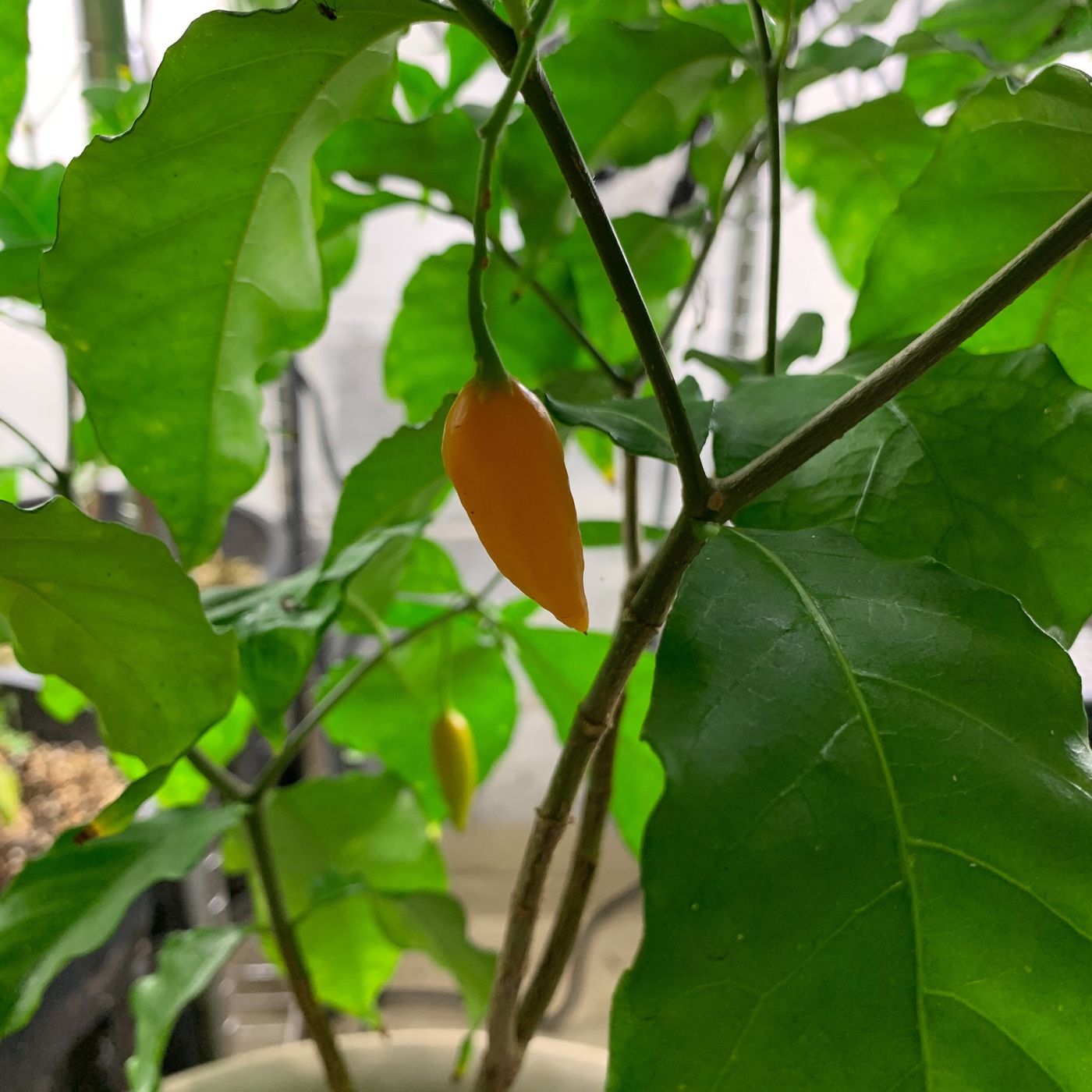
be a twenty to thirty foot tall tree, little orange fruits that look like
a have an arow pepper and um. It's been used primarily in clinical settings.
You know, this is not a recreational compound. This is a truly
medicinal I guess that word sounds kind of kind of cringe. It's a truly
clinical, clinically used psychedelic um. And so you know, it's it's not
something I would ever really consider taking, uh, but it's it's you know,
used. The main benefits are for PTSD and a lot of for a
lot of veterans, uh use it and doing wonders for them and have especially
heard it and then using the case of addicts specifically opioid addiction UM counseling having
hearing it used in that sense, uh, And it's got pretty good results.
But it can also be deadly poisonous too, because like many plants and
apostina seed's, uh, it's cardiotoxic, you know, just like milkweeds,
like at those cardiac glycosides and all their heart toxins in them. You know,
it's a chemical synapomorphy of of the family apostinacy Um. But that said,
there's you know, obviously ways around that, and I think you know,
there's the a few cases in the last fifty years of people dying either
have you know, they were they were predisposed to heart issues or you know,
had a harder rhythmi as, etc um. But obviously, you know,
if if it were legalized and used in a proper clinical setting with a
physician on site, those troubles could be avoided and people could be screened and
not even you know, not even admitted to programs like this. But it's
had such positive results for both sufferers of PTSD and addiction that it's generated a
lot of interest, especially in the last five or ten years, with the
quote unquote and this is another cringed term psychedelic renaissance. So that's what we
talk about today. And my guest has has had extensive experience with this compound
and has you know, seen it used clinically and knows quite a bit about
its application. So we're going to talk about that, and I hope you
get something out of it. M I mean, we talk about everything ethnobotany,
a little bit on the phylogeny, you know, what other plants in
the family it's related to MCLE compounds in this group of plants, not just
tabern anti ibogo, which is the genius and species, but related genera that
our sister to it, uh, you know, phylogenetically. And then we
talk about you know what a standard iboga trip is, like a flood dose,
what's called a meso dose, etc. And yeah, it's interesting.
I had no idea about a lot of this stuff, so it was really
good to have this conversation and learn a bit. And I hope you feel
the same way. So with that said, let's get straight to the fucking
podcast and see if you have. If you got any emails for me,
please keep me shut. Crime pays about and he doesn't email dot com and
don't be offended. It takes me a while to respond. But I just
got a tablet which I've been drawn on. It's got a keyboard on it
and I can attach two, so you know, I could take that on
the road with me and I don't have to be typing with my thumbs on
a smartphone. So I try to respond to emails within a week or two
of getting them. So, uh, maybe you just want to tell me
the fuck off to maybe not looking for response. That's fine, that's fair
game. Um yeah, and then I'll do Uh, I want to do
another podcast because there was just about Brazil and other recent travels, because there's
just been so much good ship to see. All right, well that's really
at this time. Enjoy the uh the roughly hour and fifty maybe hour and
forty five minute podcast. Uh. And if the ads are too painful,
you can always sign up for the Patreon and listener. That's all. I
gotta go fuck your somebody. Well, I'm gonna show you what it's like.
Or I'm abouna show you some bart in spect, you know, I
mean, I'll think they're shot. They've got nice shop, liberal Barris.
So they started tagging each other and Quash come out. You know, I've
seen a couple of night things in that room, and fourth get a bunch
of hippies to have each other to come a chore tarty to get you to
stop down thirty night for eight of these they're about to go bad, but
they're not hagging. Okay, welcome to the crime pays, But by me,
doesn't po cast or come with you from a motelrooman The Beautiful Force of
Appalachia surrounded by like five vape stores and a fucking Walmart and maybe a probably
quite a few dollar generals too. Anyway, I'm here with Michael Coyle.
Michael, would you go ahead and introduce yourself please? Yeah? Yeah,
So my name's Michael Coyle and I been trying to figure out how to introduce
myself here with Joey for the past a couple of minutes, and I think
the best way to describe myself would be, I'm an occupational therapy practitioner.
I've been working in neurological rehab, you know, people with strokes, traumatic
brain injuries, stuff like that, for the past ten years. Also been
working with caregivers of folks with neurodegenerative diseases, things like Parkinson's Alzheimer's, and
basically doing occupational therapy based rehab. So that's it's kind of my clinical background
there. UM and UH, I don't know. A few years ago,
when the uh sort of psychedelic renaissance for lack of a better term, started
getting going, UM, I noticed that there was a lot of convergence between
my amateur interests UH and my professional interests in rehab. When it came to
ethnobotany, psychedelic drugs, and the potential for new therapies that were coming out
of these these uh, these medicines and the and the plants that I had
been kind of studying, uh since the early two thousands, you know,
collecting different types of ethno charticles um and uh researching their use in their their
cultures of origin and uh in also just different ways that they were being used
in the world contemporary you know, in the contemporary world, and YadA,
YadA, YadA, all that stuff. So let's talk about because the psychedelic
renaissance. When I hear that right now, my bullshit radar with it so
fucking I've just dealt with so many vultures. And you know, having a
friend too that runs basically a payote sanctuary, he gets all these fucking nerds
hitting him up trying to collect plant. I mean, I was just talking
to him today and he's like flipping out. He's like, you know,
for someone from South Texas, he's got a really good bullshit radar. UM.
And you know, they're always the same. There are people that just
have these interests in the one plant, nothing else in the ecosystem, at
least with payote and other stuff. And it's like, it just that feeling
to me. It just it just makes me wary because I I feel like,
you know, they're they're like the online version of like you know,
like HEMP, CBD, like vape shops and shit. You know. So
it's it's a for me. It's always a problem, like trying to filter
out the people that are like legit scientists and have interest in this stuff versus
you know, just the normal vulture capitalism, entrepreneur, fucking personal injury attorney,
used car salesman people and there's a lot of that shit online. But
but um that said, with with this plan with tavern nathy Iboga, which
is what we're gonna be talking about today, which is a member of the
milkweed family, impost and as oleander family too, which is a deadly poisonous
a family known for chemicals and apomorphy's of cardiac glycosides and basically heart toxins.
Um I first became aware of it talking to a friend, uh number of
friends. I used to have a lot of friends who were junkies and uh,
you know, rehab junkies and and and I I like using that word.
I don't like dumb in the language down, it's chunky, it's what
the shit is. It's not a lot of people would self describe that way,
right. Yeah, and they say that. It's like with people in
alcoholic say, I'm a drunk. You know, it's been fucking sober twenty
years, still goes to meetings. Aye, I'm a I'm a drunk.
Still call it like that. I don't believe it's watered down bullshit, but
uh, you know. And that's when I first came came in contact with
Bogan. I came in contact but learned about it, someone explained to me.
And he's been clean off of heroin for seven teen years. He's one
of the few that was able to few friends of mine that didn't die from
it. Um and uh, he talked about May. It was ten years
ago. He talked about a lady he'd met who started running ebo and clinics
in Costa Rica. Yeah, it saved her and she wanted to save other
people, you know, or quote unquote saverers. Like nothing's a guarantee.
Like most things, it is nothing to guarantee. So I and I didn't
know this is before I was really into botany and too. Maybe it was
fifteen years ago. It was a long ass time ago, and he described
this as this kind of miracle drug, which of course is bullshit, but
that it Either way, it was obvious that this had a lot opportunity,
a lot of potential, and opportunity provided people opportunities to get clean of these
crippling addictions to these substances, especially opioids, which are notoriously hard, you
know, right up there with alcoholism, et cetera, and so um.
You know, I looked into it more and then now you know, having
you know, spent how are many years of my life into botany and becoming
familiar with plant families and all this stuff. Um, yeah, I'm aware
of it, you know. And I've seen plants that friends had in cultivation
before, and you know, generally unremarkable glabrous leaved tropical grows right on the
fucking equator and in equatorial Africa. Um, the opposite leaves glabrous you know,
little orange fruits or whatever. Um. But the root bark of this
is what contains this chem Yeah. The root bark is where there's the highest
concentration of ibogain and other eboga type alkaloids. Um. And really the other
eboga type alkaloids are part of the experience in no small part when somebody is
ingesting the root bark, whether it be traditionally or if somebody's using the root
bark and one of these um clinics or retreat centers, you know, Costa
Rica, Mexico, what have you. Um. So this is what the
cannabis bros call full spectrum, right, yeah, the full list of other
secondary metabolites of the plants producing, not just ibogain. Yeah, yeah,
I mean, you know, full spectrum. I mean there are all sorts
of um, not so scientifically merited terms that apply to landres you know,
terpene profiles and hum. Oh god. But the what's the one that pisses
off Hamilton, the entourage effects? I don't know. I just think here
are those things, and I'm like, oh, you don't know what the
fuck you're talking. Yeah, no, no, but but I think that
you know it is, you know, there is something to be rocked from
the interaction of the various alkaloids that are in for instance, tabernanthe root bark
um. The ingestion of pure alkaloidal ibogain and hydrochloride is very different than ingesting
the root bark. And of course there's a lot of variability uh in the
eboga shrubs the tabernanthe genus um. You know. One of the reasons why
there have been I think one of the reasons why there's there's been so many
different species that have been named that aren't really species within this genus is there's
there's a lot of variability in the morphology, you know, the way the
plants look, but also in the way that the plants create the phytochemistry.
Um, so you're gonna have lots of different ratios of ibogaine, ebogabine,
eboga, leine um, coren anthine, you know, all of these various
eboga alkaloids. We should mention too. Apg angiosperm philogeny group I think recognizes
two species, Elliptica and Iboga. Yeah. Yeah, and that makes a
lot of sense, um, given some of the spontaneous hybrids that can be
produced between these plants. Um. Uh, there's I mean we kind of
get get to the botany and you know it in a bit, but um,
yeah, these plants, uh um various forms. They will highbrid eyes
and they will create um, you know, stable or not so stable,
you know, new types. You know, fruit types that change when you,
for instance, cross a round fruit with a long fruit eboga. Um,
you'll get these uh some set of predictable fruit shapes that that you'll see.
But then there'll also be some really weird abern ones. So lots of
phenotypes can be produced by hybridizing them. Yeah, and people are really just
now starting to get into this. There's a guy out in Australia herbalistics Darren
figured his last name, but herbalistics. It's basically an ethnobotany nursery out in
Queensland, and he's been hybridizing all sorts of plants. But he's working on
hybridizing his round fruit and long fruit plants now. And it's legal. It's
legal in Australia, not to consume obviously, but to grow just like sampedro.
Right yeah yeah, the um yeah, I mean in terms of the
way that you know, laws are written around this plant. Uh, they're
they're very peculiar. They change, and that that's why you that's why there
are you know, clinics in Costa Rica, because the laws there are written
differently or non existent, so an unregulated market can pop up Australia. It's
not an unregulated market. It's just the plants themselves. It's not forbidden to
grow them, you know, as botanical specimens. Right, it'd be like
making it forbidden to grow oleander, which is deadly fucking poisonous. But in
some cases I wish it was illegal to grow oleanders, such a fucking horticultural
atrocity, especially in California. Yeah, but that said, it's not I
mean the potential uses of this plant, which I have absolutely no interest in
doing, but it sounds like it's very helpful to people. Is not just
for for addiction issues, but also for post traumatic stress. I know there
was like a there was something I think it was on Duncan Trustle podcast The
interviewed veteran and who would done instead I had changed his life? Yeah?
Yeah, I think Crossroads Ibogain clinic in Mexico both legal in Mexico too.
Yeah yeah, yeah, so that and actually a lot of the clinics that
are in Mexico are working pretty closely with researchers in the US and in Europe
and uh, you know, I'm Mexico City, Uh, to create really
good evidence based you know, research and approaches to using these compounds more safely,
and post traumatic stress disorder with veterans is one area that's that's being explored.
I think in fact, MAPS the Multidisciplinary Association for Psychedelic Studies, that
that's one of the things that's in their back pocket. Is you know,
they're they're fully focused right now on the MDMA Phase three stuff. Um,
that's not the only thing that they've been working on over the years. Ibogain
has been another projected. There's and and uh yeah, I heard I had
heard. Oh god, I can't remember name. I really liked the guy,
but anyway, the main guy behind MAPS, Yeah, i'd heard him
mentioned I BOGA stuff. I know some people are wary of them because they're
you know, they're trying to get corporate funding and whatever, but fuck whatever.
I mean, that's like your biggest beef with the issue. I mean,
in the society we live in, everything is so toxic and polluted commercially
anyway, it's like, oh, yeah, well, I mean, you're
gonna have to make a weird sausage in order to get MDMA legalized and used
as an FDA approved medicine. Yeah, and that's the thing. When I
did that podcast with Hamilton that's kind of the same thing he I think that's
his take on it too, is because it's so I mean, look,
man, we've had fifty plus years of this fucking failed drug war that's ruined
how many lives and given the police an impossible job and created like the richest
black market for criminals. I mean, that is a fucking if you're a
criminal man, that is the drug war. You are pro drug war,
you know, and you are, And that's a lot of I mean,
I think that's that's why. You know, when cannabis is gonna get legalized
in California, like all the people I knew growing weed in northern California were
against it. I was like, how to fuck are you against it?
Oh? You selfish cunts? That's why you're against it because you have money
to make, like you fucking you know. Oh yes, as soon as
it's a regulated market, I mean, it sped up by moneyed interests,
you know. And I think a lot of that with Payote too. I
mean, I think there's definitely a solid Native American claim to keep it out
of the hands of whitey for various reasons. Because I've know a lot of
corny as white people who are doing really lame whatever, but uh, well
intentioned but just kind of clueless. Um. And of course there'd be yeah,
the same like the CBD vape shop equivalent of psychedelic shit that would descend
on We've already got that with the ketamine clacks, right right. Um.
But but you know, but they say it's going to lead to extraction of
payote, which I think it would maybe in Texas. This is a whole
separate fucking things to be two minutes here. It's related to eyebo game though
in a boga because you have these two plants that are slow growing, that
have very rich history of cultural usage that is ensconced in the very fabric of
the culture, whether it be the bheety in Gabon or Native American groups that
have been using peyote um. And so they're understandably protective of them. Yeah,
oh, absolutely absolutely. And these are plants that you know, like
I said, they grow slowly. Uh, they are in ecosystems that are
being threatened by political instability or and or self Texas getting fucked into a coma.
It's not going to be there at least in self maybe in like the
Laredo area, but not in not where I'm living, right, Yeah.
Yeah, So these are I mean, these are two plants that you know,
disparate their botanical I mean, you know, they're nowhere near close to
each other botanically, but in terms of being threatened by the activity of humans
and being tied to very important cultures and spiritual movements that are part of the
identity of groups of people. Yeah, I mean there's a lot of I
think payotes should remain illegal in Texas because I know, I listen, man,
I know Texans, and I know the people down there are some of
these ranch owners that don't give a fuck about the plant, and if it
was decriminalized and made illegal there, they would just sell it, even if
it's going to the NAC Like fuck, you're still destroying the habitat. They'd
be digging plants up. But if you legalize it in stakes where it's not
even native and people can then grow it and plant it out, you know,
I don't know, that's what's your opinion on that. Yeah. My
opinion on that is, Okay, being illegal is the status quo, right,
and the status quo is not working, and by keeping it illegal,
by keeping Payote and eboga. You know, Tabernan make good point a Schedule
one it's still going extinct in Texas even though it's illegal, right, right?
And so who are the arbiters of enforcing you know, these Schedule one
drug laws? The DA? How much money does the DA have allocated to
ecological preservation? Absolutely? Fuck? They want it to go. So why
in the hell would you let the DA be in charge of keeping a sacred
plant legal? Right? And I think alive? Right? I think?
Well. The thing too that that really weirds me out about a lot of
claims around Payot two is the people, whether their native organizations or not,
who want it to remain illegal, also have a lot to gain by its
staying illegal, being they get to monopolize selling it and providing it, you
know, never mind the fact that no one seems to know what they're doing
except for a handful of people in terms of growing it in any sustainable amount,
which is the depressing thing to me. I'm like, well, if
a plant's going extinct and it's relatively easy to grow, but just slow growing,
why the fuck is there not a greenhouse growing twenty thousand of these fucking
things in southern California or Arizona because it's illegal for NACUS right right, because
because the scheduling of this plant, not just the compound that's in it,
but by making the actual organism illegal, that keeps conservation efforts from happening.
Just nuts and bolts. But at the same time, you've got these organizations
with these glitzy, fucking social media pages, and they've got all the virtue
signaling indigenous sovereignty and all this ship and they're not doing anything. Well it
looks good on paper, but they're not. They don't know how to.
I don't see where are the like the pictures of like thousands of seedlings being
replanted, where if they were to do that, they would be breaking federal
law publicly. And do you think that's actually occurring then and any significant quality,
because I haven't even heard it, like on the grapevine that there's actually
that's actually occurring. They're just not showing it, but they're still actually doing
it. Well, I mean yes, So, I mean I am I
know people that are doing I do too. I mean I'm only tangentially kind
of associated with us that are doing that, but I'm familiar with uh,
you know ICP who's the ICPA. Yeah, and the Benefit Honoring and some
of the groups that are affiliated with Native American Ceremonial Preservation. I don't work
closely with them, sort of failure, you know, by a distance,
and they're doing good work there. They are, you know, trying to
create environments locations where these medicines can be pretty I think even just creating noise
about it is good work. It is absolutely which they're certainly doing. But
I've been but then there's been fighting between the Navajo and the IPCI and them
being accused of working with these psychedelicum. I don't know. IPCI was started
by white dude. I didn't know that. I didn't either. It's anyway
what I think. Whatever, we're getting off track here, but it's just
it's still just interesting to me because I'm the main thing that I see is
the habitats getting destroyed, and I see that every time I'm out there.
I mean, I live forty minutes from where it grows, and no one's
really doing anything. I mean, you know people in Arizona that are trying
to do some work. They're growing a lot of seed, but it's not
needed there zone. I don't know what luck they're going to have when it's
back in the ground. Um, if the plants were not federally illegal,
then these groups that are perhaps you know, engaging in virtue signaling galore or
whatever it is they're doing, trying to create awareness of the need to solicit
donations, solicit donations, right, But if the plant itself were not federally
scheduled, then all of a sudden, a lot of that energy and effort
by those people or other people could go into growing these things from sea and
they can publicize the publicize that, get funding for it, the whole shebang,
you know, and and the reducing valid And that's why it makes That's
why it's curious to me that a lot of these groups want it to remain
illegal. Yeah, how does that benefit the plant? It doesn't. I've
never heard in an argument that makes any sense that that these plants are benefiting
from these they're clearly not. I see Peyotero's licensed Peyotero's harvesting plants that are
the size of a fucking quarter now, whereas twenty five years ago they were
harvesting plants that were the size of a grapefruit, Which leads when to think
they're just not they're not. I mean I've watched, I've been I've looked
at payotes and thelo cactus and other species that have been squashed with a fucking
bulldozer track. Like it's I've seen so many plants destroyed for the most ship
for brain reasons. Whether it's solar panels in a desert you know, on
virgin fucking thorn scrubland, or whether it's you know, Abbot's goofy ass wall
or whatever. You know, it's just it's it's criminal. It's like,
well, this is the twenty first century, why are we still doing this?
Like we knew this ship was bad in the seventies and eighties as a
culture where we failed so many different places. But I mean, what you're
describing, the onslaught of growth and development and the sort of molloc of human
movement into nature and just destroying it, that's that is that that is happening.
It has been happening, it will continue to happen. So but a
drug law, one way or the other is not going to change, right.
The drug law is not there. It's not an environmental law, it's
not the it's not for any of it. The drug law just keeps people
who are very interested and have the ability to conserve these species from being able
to do it right. And it's more red tape and bullshit. And so
the only people doing it now are underground and you know, and they're doing
it yeah right, I know everyone's got fucking payote plans. It seems like
is the situation with boga then where it's native similar is it illegal where it
grows native? What is the what is there A lot of sprawl and cultural
I would imagine it's agricultural sprawl. I don't know what. It's a different
situation to be sure. Um it Boga is considered, uh has a designation
of being a national cultural um. Uh, it's it's it's I forget the
exact wording for it. It's cherished, officially sanctioned, cherished and protected as
part of the cultural importance of gabon. That is a world away from Texas
peyote or it is it is, but um in terms of you know,
uh, it becomes it becomes a football for people in power because it is
another resource that can be poached and it can be exported to eager consumers in
the West and in Europe, um and as a result of that, you
know, the the native stands or the um or or the cultivated stands that
the people in Gabon have been uh you know, tending for their own ceremonial
and cultural use. They get pirated and so that represents you know, a
significant portion of the amount of the iboga root bark that makes its way to
consumers. But there's a lot of and this is kind of cool. I
don't know if you've seen these videos, but like the iboga planting and caretaking
at the Iboga Nursery from Iboga Ghana YouTube page. Yes, you could watch,
you could see these people are growing it. Yeah, well the guy
in Ghana. There are a couple different groups that do it. But but
in Ghana, UM, they're you know that that's not the native range for
aboga, right, but there's still I mean there's people growing it out,
I mean, regardless of mind making money on it. But still it's well
yeah, I mean, but they are also I mean yeah, they're I
think it's like Bulk African Trade is one of the companies that's doing that and
UM and they do, I mean, they're they're essentially creating an alternative UM
agricultural location for Iboga and Boa Conga um and they are connected to ibogain researchers.
Uh, there's a lab in in South Africa that creates GMP pharmacutical pharmaceutical
grade eyebo game. That's Is it illegal anywhere on the African continent you know?
Uh, to the best of my knowledge. Now, yeah, I
don't think it is. Um No, But but it's a resource. And
you know, in a place where you have a resource scarcity, a plant
that doesn't grow very fast and a huge demand a lot of the corruption.
You know, it's kind of like elephant tusks or or some other natural resource
that can be exploited, poached and sold. It becomes part of that that
that sort of black market commerce. That's why like this Ghana farm and other
things like that are so incredibly important. Imagine if there was, you know,
a preservation farm like the bulk African trade things. Just for a minute
to see if this is actually picks up utigra formation. I think you so
this is this is a guy thing. He's got a nice shirt on,
he's very compell he works out, this guy too. Yeah, and he's
standing in front of probably six hundred one gallon pots. If tabernathya boga.
They got a nice impromptu shade structure set up too, built out of palm
front. Yeah, if it's the same one I'm thinking of. They also
use Volacama africana as a shade plant growing up. That's so these are seedlings
and like giant dog dishes that they're transplanting. Yeah, yeah, so this
plant, I mean, let's talk about this, this plant about I mean
the it's habit it's general habit as a Oh that's cool. Damn. Oh.
Look they're using like it's like clay soil too. It's there's no prolite
in there, none of it's fancy stuff. The shit, No, it's
it transplants very easily. If you have a healthy seed you can get a
healthy seedling. If you have a healthy seedling, they transplant. But this
is a very humid climate. This is very humid at times above eighty degrees.
This is not a plant that's prone to drying out correct at all.
So it's I mean, you could tell it's got glabor sleeves. There's no
hair on it. It's not a very waxy plant. There are some pubescent
forms, but not many. Pewbusiness of course, would indicate adaptation to a
dryer climate, or at least the dryer, more dry Toolerafino type if it
had a few busence. But this is I mean, this is Actuatorial Africa.
This is a jungle plant. This is a generally understory plant or understory
plant, a megatherm, you know, understory plant, which megatherm, and
it likes it hot. It likes it hot. So it's not even about
frost tolerances. It's about it what temperature does the metabolism just stop and the
thing then becomes susceptible to fucking below fifty degrees twice fun guy, right,
So like below fifty it'll survive, but it's not gonna grow. It's just
gonna none. It becomes susceptible to other shit. It's like an AIDS patient
of a human kind of because if you want to think of it in terms
of like an immune system, right, yeah, it slows down to the
point where, um, like you say, you know, if some if
if an abo a plant is in a dormant stage, and for people outside
of its native range that grow it and let's say they need to move it
inside over the winter, that kind of becomes a de facto dormant period for
the plant. So these are so these are dried dormant plants too dry deciduous,
so they will drop their leaves and they're not dead, they're just dormant,
right, Like many plants in tropical it stresses them out. I mean
it really stresses them out. And so a plant that an aboga plant that
has some woody structure, so a couple of years old, a few years
old, that plant is much more likely to survive the cold dormant period.
You know, there aren't that many cold dormant periods or dried dormant periods in
Ghana or sorry, Gabon and every right, because it's not it's it's it's
on the equator. It's not really at the itcz where you know, like
where I just was in Brazil, you've got dry season. There's not really
a dry season here, but it can still go dormant. Yeah, So
there is a bit of a built in dormancy or a latency period that that
you can see with growers, you know in the US or other places where
um, it's not equatorial Africa, I mean it's um uh yeah, yeah,
but the plant needs to have some woody structure before it can survive that
stressed period. But if it has woody structures, if it's a couple of
years old, uh, it will go dry, dormant, just fine.
The woody structure of course, acting like a battery that it can just dive
back to. No stomata, no ability to transpire moisture. Correct, Maybe
there's some stomata in this then maybe I don't know. I don't know the
physiology of a lot of a tropical apostinaceous things. But uh, but either
way, so this is a and how big can this plant get? Uh,
you know, uh, upwards twenty five thirty feet? Oh wow,
so it's like a medium size small, small to medium sized tree. Yeah,
but you don't normally see that. That would be you know, an
upper range. And there's a lot of variability in the plants in terms of
you know, there's some that stay really small and shrubby. Uh, some
that get multi trunked, uh, some that tend to have a one principle
trunk structure. Uh. The ones that have um one principal trunk, they
will tend to get taller and form a you know, a canopy. It
around. In terms of phylogeny. Do you know what genus is sister to
it? Yeah, so um tabername montana, uh, sort of a pantropical
member of the same family. How do you spell that tabe? Oh yeah,
there you go, Tabername antana. Really that's sister to it. Yeah.
So in fact, there's there's uh, there's this botanical garden in the
DRC Congo Kisantu Botanical Garden where they have Um tabern at the elliptica and they
also have tabernetea boga and um. There was this this hybrid. A number
of hybrids were formed between those two, so you had these interspecies hybrids.
But they thought for a while and it still might be the case that one
of the tabername montanas that was near it also there was a cross genus across
genus, and so that would indicate that there's you know, genetic closeness between
there was hybridization between this genus and yeah. I don't know that they've done
actual analyzes of the genome for the plant, but the plant, you know
that the fruit morphology. Uh, there's there's reason to believe that Tabera tabername
montana crossed with the tabernanthe elliptic and wow, this is obviously a moth pollinated
flower, like a lot of apostinaceous stuff that the tabername montana. Yeah yeah,
look at that white flower with a big tube, probably amidst a scent
profile similar to a lot of moth pollinated stuff. A lot of moth pollinated
shit has that scent. I saw a platantha yesterday, that orchid it was
psychodes I think. In the Smoky Mountains, there were so many fucking people
there was insane. It felt like a fuck. That's why I don't go
to National Parks man. It's like, you know, you step off trail,
there's less of them. But uh but um, I'm all for it.
I'm getting outside, but fuck, I just wish there was more land
so it wasn't so dense and a few remaining crumbs of habitat left anyway,
But but it's I noticed the smell on that platantara too, was really it
was like all all moth pollinated flowers have this almost semi alcoholish scent to them.
It's really cool. The night the night blooming tobaccos, that turos bromanzi
is the fucking mande villas that we get which is this family of pasta and
ac um. That's cool man is uh is i boga moth pollinated. You
know, um, what if flowers look like they have that long tube.
They are much smaller than this pinwheel jasmine tabername montana type flowers, so same
structure, but imagine it shrunk down so so not as long as a too,
No, I mean it's it's less than a centimeter. Does anyone know
of what specifically pollinism? They're probably generalists or is people that grow them have
reported that they've seen wasps, bees various types pollinating them, yellow jackets,
things of that nature in terms of their their native range. I don't know
with without that long tube, which probably more of a generalist thing. Yeah,
because they can actually it's not a long tube, right, yeah,
but it's also a very narrow opening. Really Okay, the stamens are included,
like they're inside the Yeah. Yeah, I'm looking at the chemical profile
for this tabernae. It's like katharantine, core cora, narratine, drag amine,
I, bogamine, all these fucking alkaloids. It's insane. Voa christine
eyebo gain may occur in multiple multiple tabourname montana species, but no one really
Yeah, taber name Montana arborea in fact, is being looked at by groups
uh um that are trying to find alternative sources for ibogaine to tabernan thing.
So Taberna Montana arboreau in UH native to coastal Mexico, Vera Cruz. Yeah,
it has bacine, It has katharanthine. It has a number of the
alkaloids that through decarboxylation can be chemically converted very simple semisynthesis into the exact same
uh compounds that are in aboga, ibogain ebogaine have to be performed. How
does that happen? Pretty easily? Um so UM. There's this guy who's
kind of a pioneer uh with um ibogaine and eboga and boaconga extractions. His
name is Chris Jenks. Is actually one of the guys that kind of inspired
me to start doing my work with boa conga couple of years ago. UM.
But Chris Jenks UH and in the Global Eyebegame Therapy Alliance and some other
groups of folks have come up with pretty good and pretty simple protocols for the
extraction of alkaloids from Voaconga other plants that are in this family to get the
precursors for the eyebo gain type alcosum. And essentially they're they're structurally they're they're
all monopoint monoturpeine alkaloids. What does that mean? Basically the plant? You
know, lots of plants make tterpenes, right and so okay, metabolically and
enzymatically, what does the plant do with them? Lots of different things.
They turn in all sorts of different you know, compounds out of nitrogen here
at a functional group there um, the uh, the eboga alkaloids. Um,
they are technically they're tripped to means so that you know, they are
in the same general family as LSD and very generally you know, slocobin and
you know, but you know they they've got a benzine ring and an indole
ring. But the eboga alkaloids are much more complex and um as a result
of what the eboga plant and the voconga plant due to those terpenes that are
produced and you know, the different pathways that they go. So I could
get these family trees, these family trees so to speak of phytochemicals and the
eboga type plants, they do all sorts of crazy shit because they're incredibly complex
molecules. Crazy things to human physiology you're talking about are further really quick for
the plant. These probably evolved this antirevivory compounds or is there were protection against
out of my heat or out of my expertise, I really don't know.
I couldn't say fascinating stuff regardless though. Yeah, I mean, the whole
the whole family. Apostinacity is just a fucking chemical. It's crazy. I
mean, the stuff that this family produces, and it's everywhere. I mean,
it's it's pantropical. Oh yeah, um so, So one of the
compounds that's in that Taberna montana that we were just looking at, kathyranthine um.
It is also present in Cathyranthus rosa, Madagascar periwinkle. Okay, so
Madagascar pi, which my daughter was using because yes, Lukeima, she's doing
well right now. But yeah, best and Christine. Yes, So those
are similar but of a different type than the Eboga type alkaloids the Albergain type
alkaloids, but they all have this kind of same terpenoid monoterpenoid route um.
But then the enzymatic path pathways will create these different subfamilies that have different activities.
So you've got anti cancer, anti tumor. You have drugs that lots
of heart, lots of heart metasur because that's what this family makes. It
makes heart the chemicals that really affect the heart, right, but also that
regulate um, blood sugar, that regulate all sorts of metabolic processes um and
uh So anyway, so the Madagascar periwinkle, you know, creates all of
these anti cancer drugs and whatnot, but it also creates this precursor to ebogamine
catheranthins, a precursor to that and so um So we say precursor, we
mean it's like a step in terms of turning this component to the next one
direct correct. Yeah, there's there's a there's a little functional group. It's
it's a it's a carboxyl group that dangles off the end of the of the
molecule. So the same way NDA is a precursor to MDMA. Is that
correct? Or am I talking to my ass? I'm not a fucking chemist
that you're not talking out of your ass. I mean in terms of it
being a precursor, yes, in terms of what you do to the precursor
chemically a little different. Um, but you know, you're basically cleaving something
as opposed to adding something to me. Uh so, yeah, I mean,
it's one of the nice things about all of these plants that are available
that grow that are not iboga. There are so many Taberna montanas, Voa
Congas, catharanthus, different types of plants in this family that produce the ibogaine
skeleton. It's not ibogaine itself, but they have the ibogain skeleton, and
all you really have to do is extract it. Now, you've got to
separate that compound from all of the other molecules that are in it, which
are diverse and sundry, but it's not that hard to do it. UM
and then UM basically just yea for Voacangain, for instance, is a genus
correct bo Conga is a genus H. And then Voaconga africana is the species
that has been used but pharmaceutical industry for precursors for many many years, not
just for ibogain development, but all sorts of different drugs. But there's the
dominant alko lloyd in. Volacoa africana is a monotterpinoid alkaloid volacangine. And all
you have to do is when you isolate voacangine from the plant, is then
cleave off that little carboxyl method, you know, the carboxyl group from it,
and then you've got ibogaine. It's put it into a solution with some
potassium hydroxide and reflex it for about six hours. And is so tabername montana
and tabernathy and Voa congre I'm looking at a cladogram right here off phylogeny.
These are all is Vola congress sister at the tabernat So it's and then it's
not as closely. My understanding is it's not as close as tabername montana.
Okay, because this is saying otherwise. But this is just I don't know
if this is this might be something different, This might be like a chemical
cladogram. Okay. So we've we've talked about a number of things except the
history of illegality and also its effects you know, at various doses. Is
it's the plant that's used like is it used in mild doses as a tea
in peep by people in the area or yeah it is so um uh,
you know iboga is pretty well um woven throughout the culture of the whet tea
and other cultures in Central West Africa, and you know, kind of like
with cultures that use mesculine containing cacti, it's not always used in a very
large dose. In fact, it's very rare that it's used in a large
dose. Yeah. With I mean with peyote, there's people that give their
kids tea of it. I don't know how you get a kid to drink
that stuff. It's so bitter. But I mean it's you know, and
that's fine. It's generally a I mean, it's my understanding is that is
also the case with the ceremonial and traditional use of iboga. Right Unlike iboga,
though, mescalin is not really or payotes and that really toxic at all,
Like there's no right, yeah, I mean, you know, if
you get a whole bunch of isoquineline alkaloids into a child, you know,
sure that it could be a bad thing, but in small doses, no,
But there's there's similar dose responses to eboga as well. Um, you
know, so in terms of its traditional use, you know, it's not
something I've studied very closely, but just from what I have seen, what
I've heard, what I've read, um, it seems pretty clear that it
is used mostly in small to moderate amounts throughout the course of somebody's life.
And then the flood dose. I mean, they don't even call it a
flood dose. I mean that's a that's a Western term, right, um
or a description of something in a Western way. I mean, there are
um, you know, writes of passage that involve you know, larger doses,
but that seems to be the case with all you know, plant medicines
that have But there's a there's there's a ceremonial use around this too. There's
a whole ceremony associated with it being buried in the ground. I mean,
when when I did that podcast with Hamilton, he was talking about experiencing it
and witnessing it and having you know, he shared anecdotes of friends had beautiful
and all encompassing, multisensory ceremonial experience. So let's talk about that. Let's
talk about like a high dose of this. First of what is a high
dose too? I mean, well, I mean if in terms of actual
root bark, like say someone's how you know, over the course of a
couple of days. You know, many grams uh, you know, upwards
of announce could be consumed even more, you know, I've never so that's
like a niqual uh cap full of it or what way more than that?
I mean, you know, large scoops of the pulverized root bark from what
I can see. And it's only the root bark, It's not the pith.
It's not like the interior of the root bark is is shaved off and
then dried paul verized, And that's traditionally. My understanding is things that's what
it's given. I'm way more familiar with the non traditional use of it,
however, and so in terms of these western I mean like clinic clinical use
for addicts and PTSD, Yeah, yeah, I mean that tends to be
where the term flood doose comes in. And that could be hundreds of milligrams
of pure eyebo gain upwards of a full gram. So not root barker or
what is it? No, I mean, there's there are some clinics that
are using uh root bark. You would find root bark being used more at
ceremonial retreat centers, these other so these other cases are extractions they're extracting.
Well yeah, um and uh. It used to be that ibagain was extracted
from tabernanthe root bark. But because of the work of Chris Jenks and and
other you know, people who've pioneered looking at voaconga and other plants as the
source for the ibogain skeleton, now hopefully most I hear that it's most,
but I don't know if that's true. But but hopefully most of the pure
ibogain hydrochloride that's being given at these clinics is extracted as voacangine from Voaconga africana,
the plant converted into eyebogain and then is sent to the clinics to be
used. Does that make it safer and so all these other alkaloids that occur
in the route are not being used? See? Or does that alter the
effect at all? Or what? It definitely alters the effect. It's safer
in the sense that there's a known quantity of a drug that's being administered.
You know, with history of dose response curves that have been recorded, you
know, you kind of know physiologically what's going to happen when you have a
pure alkaloid as opposed to a full spectrum plant material that's being administered, right,
And of course there's you know, hypic differences too among individual plants in
terms of how less they produced, oh yeah yeah, but in terms of
other ways in the in the non traditional use of these medicines, ibogain in
particular, Um, there's a group ice Ears and also a group historically that's
been around called the Global Ibogaine Therapy Aligned. What is ice tears? How
do you spell it? I It's it's an acronym, I forget what for
ic E E R s M. They've given a lot of recommendations for cultural
and environmental preservation of of of plant medicines. Iowaka. So when did I
boga? When did it start? When did it pop up on the radar
of people in the United States? When we did pop up unfortunately, right
around the time that the Drug Enforcement Administration was was being created. Uh you
know, bet you know, when you know Nixon and the anti drug laws,
Uh, you know, or in nineteen seventy one, unfortunately ibogain came
across. Unfortunately, but I beg and was in the underground because of the
work of Howard Lotsof who uh kind of accidentally discovered the addiction mitigating qualities of
eible gain. So was it being used primarily in like a clinical sense or
was that time or was it being used recreationally. It was just a novelty.
It was something that a few people in New York had access to.
And from my understanding of it, this is sixties or yeah, middle late
sixties. And yeah, so Howard Lotsof he was. He was kind of
the the person who first brought these anti addictive properties of eible gain to light
Um and then became a researcher in and educator. And was he added himself
or what? Yeah, yeah, he was. And so he discovered that
on you know, he took a dose of Ibogainuh, had a very peculiar
experience, But then he was an active opioid addict at the time. UH.
And then when he came down from the ibogain experience, noticed that he
had no craving for heroin and I thought that was rather remarkable and then wanted
to explore that more. And so that's that's kind of how it got its
its beginning in western addiction treatment. Yeah, how do you spell this guy's
last name? L? O T S O f F. I think it's
one people want to read more about. In fact, so he wrote a
ton. He was he was a very prolific researcher, wrote a ton about
his discoveries. And right now the archives of his writings and research are at
Purdue University, and they are available for researchers to go back and look at,
and for for people who want to see the process of somebody discovering a
compound that had no usage in western medicine and then but also discovering an incredible
application for it and then devoting their lives to it. The archive of Howard
Lotsoft's papers holds incredible value for people who wanted so he so he started sharing
this with other addicts who wanted to get clean primarily, and it was just
that, I mean it was it was he sharing it with people who just
wanted like a crazy trip with hippies that just wanted I mean, was there,
you know, the recreational use, because it doesn't seem and I'm not
trying to knock it at all, but it doesn't seem you know, for
like recreational drug users, you know, who just want a crazy second trip.
It doesn't seem. It's like the go to. This seems like something
that you use in extreme cases, like when you've got a crippling heroin addiction
or you can't sleep at night from war trauma. In load to moderate doses,
it is very pleasant, But what's the load to moderate dose? So
some of the underground psychotherapists that we're working with MBMA for instance, uh Leo
zep, you know, the Secret Chief and a lot a lot of the
groups that kind of led to what MAPS is now today. Um, they
were using ibogain in doses one hundred and fifty two hundred milligram range if I
remember correctly, which is definitely a perceptible dose. It's not psychedelics like an
MDMA dose. Uh yeah, yeah, it's pretty close in terms of the
actual milligrams that were used and in it that because this is a known cardi
potential potentially dangerous psychedelic too, but at that dose it's not very dangerous.
Would you say, well, well, people using it in that dose,
we're not having cardiac issues. And this is pure ebo gain extracted ibogain or
room bark. This was uh, it's written about in that book The Secret
Chief, and it was pure eyebo gain that was extracted from iboga. I
believe that it's probably the only and they were using this in psychotherapy like the
same way people were using MDMA or yep UCB or anything. Well, yeah,
I don't think they were using two CB at least not um Leo Zef's
group. Um, but MDMA, MDA ibogain they were using me I think,
and that kind of does. How long would it lasts? I mean
six to eight hours longer? I mean, it still is a pretty long
half life. So ibogain itself does not have a really long half life.
It doesn't take long for it to be metabolized in the body, but it's
metabolized into another compound called nor ibogain, which is still active still yeah,
and has a very long half life. Um so uh you know, um,
with a flood dose, the palpable effects of nor ebugain last for thirty
six hours sometimes Jesus Christ, Yeah, depending upon how much has been redosed
by the individuals. And of course if that was clinically administered, you'd need
a specialist there, you need a EKG machine. Floods. I mean,
this is yeah, fuck around with this, This is a you do not
fuck around with it with a flood dose, right, not at all.
No, Um, you know the stuff they're writing about in the secret Chief
Leo Zess work, They were not doing flood doses. I mean, like
I said, it was one hundred and fifty ish milligrams, kind of like
a psycholytic dose. It had benefit for psychoanalysis, and so someone would of
course the psychologists or psychiatrists is sitting there sober and just seeing just talking this
person through, taking notes. Yeah. They did a lot of group therapy
too, Yeah, groups like a group and then there'd be someone heading the
group who's not on it, Yeah, or when everyone was familiar with it.
Sometimes it was the whole group. But in these doses, at least
with ibogain, you're not seeing the cardiac toxicity issues. You're not seeing the
cerebellar toxicity issues. You're not seeing people go in like having tremors, no
reported issues of cardio toxicity, no, none, none, acute cardio toxicity.
But that that changes when you get into flood dose, and it probably
changes if someone has a history of a rhythmia or other heard issues. Sure.
Yeah, So in terms of the clinical use of ibogain today, you
know, the popularized narrative is that it is an anti addiction drug that helps
people who have an addictions as bad as intravenous opiate use. Right well,
in terms of people who are going to have heard issues, people who are
intravenous drug users are very likely to have hard issues. Myocardial disease. Why
is that from just injecting drugs directly into your bloodstream? From bacterial contamination above
all of the above, Know, a guy who died from a fucking bacterial
infection from shooting heroin is fucking terrible. Man, It is a terrible I
have never had any compulsion to try it, and I don't just I don't
like opioids at all, even when they gave me like delauted from my shoulder,
which just made me al dope of you know. But the problem,
I mean, the problem is for some people it just feels like home.
Oh yeah, there's some people that are just I remember a friend once time
me you'd really like heroin, and I was like, I'm you know what,
I'm okay. It was like twenty years ago. I'm like, man,
fuck fuck off, you know, a good friend. But still,
I mean, there's some people that it really plugs in right, and it
and especially if there's a lot of dark shit in the world that you're dealing
with, and there's a lot of dark shit, especially in this country.
I don't have healthcare where people are you know, the fucking wages suck,
middle classes eroding. Yeah, you know, society can just feel like it's
full of assholes and just just totally you know, I mean, the personal
injury attorney and the fucking used car salesmen are so a good analogy for so
many traits. Yeah, but that, yeah, you're absolutely right, And
it feels isolating and alienating and depressing. And that is why many people who
suffer from substance use disorder, why they do it. It's because everything is
sick. Another friend too, Yeah, I mean, it's it's a cultural
stigmas. It doesn't take I mean I go to other countries and I despite
the flaws they have there, I don't see the level of sickness culturally that
we have in the United States. And this is a result of forty plus
fifty plus years of this ship at least, you know, that's a whole
other argument. But you know, but addiction in late stage capitalism or type
of I mean peas and carrots Man right right for real? Um, it's
yeah, it's like a dystopic sci fi novel. That's what the fucking that's
what we're living in now is like a dystopic sci fi novel. At least
the United States. Well, civilizations in decline historically have had issues with substance
use disorder. I remember listening to it talk that Terrence McKenna gave. It
was a recording of the talk that he was doing at the Esselent Institute back
in the eighties, and um, you know, he was talking about Mesopotamian
cultures that were in decline, and there were records that opium use skyrocketed in
cultures that were on the decline, that were falling apart. And I mean,
it makes sense, it makes perfect. It's if it's if I was
to write a book about what it would be like, that's what I would
have. That would be one of the things I've noted to include in the
story. And I was like mass mass escapism via narcotics. But I mean,
I you know, especially the ship with Fendille, I mean everywhere I
had a friend and another friend of mine died. He was a super talented
artist, and it's sad because he he'd messaged me he knew I was sober.
Need messaged me too months before he died too, and he was like,
I'm sober now I'm And I was like, oh God, are you
going to you work on the steps? Are you're going to the program?
No? And good luck man, And that's what I was thinking, you
know, I'm like, fuck, yeah, yeah, right, you know,
because this guy just he would just fucking drink. But he never did
heroin. He never did. He hated heroin, he hated you know,
but he would do blow every once in a while and he would drink like
hell and um and it was amazing too because he could still paint and draw
and it was super fun to hang out with, you know. Um,
it's a really good attitude. But then yeah, he just he did he
was fucking doing blow. I don't know. I don't know what happened.
He did blow one night and it had fan in it. A bunch of
people died in San Francisco that weekend and he was one of them. And
it was just such a mind fucking I'm like, God, this shit is
just everywhere. It's terrible, well it is, and it is cut into
so many different drugs of abuse. I mean when I mean when I was
working at the hospital, you know for the past ten years. You know,
a lot of my patients were there with brain injuries or other types of
injuries as a result of substance use. And um, you know we could
tell when you know, we get a rash of people in with overdoses,
but they were cocaine users, and um, you know, by the second
or third patient, we were like, oh, somebody's cutting the coke with
fentanyl or wait you so you you're saying you would see neurological traits among people
that were consistent with cocaine use or what consistent consistent with heavy cocaine use.
Oh yes, when a funk are people putting fentanyl? And why are people
putting downers in an upper well, because it's not a downer, it's it's
an opioid, and um right, I mean I wouldn't well, but specifically
so so, fentanyl is very good at creating eu fourient effect and then it
has a very short half life. But it just puts you to sleep,
doesn't it. I mean it makes you a fucking not have you doing coke
with it? You know? But also it has a very short half life.
So if somebody is looking to um, be a very productive drug dealer
with lots of return customers. Uh. And if cocaine's not doing it for
you, adding fentanyl to the cocaine, let's say it's not very good cocaine.
That so they're setting it in there for addictive qualities and euphoria effects and
just measuring it. Yeah. I mean, you've got people of various skill
sets who are that's a nice way to put it, like, got a
high school education at best. It's yeah. And when you got something where
like you know, the dose response curve is in the microgram range, you
know, and you got somebody who's a dumbast, So a highly potent synthetic
drug is just Jesus Christ. I mean yeah yeah, so um yeah,
I mean And in terms of kind of bring it back to Eybogain a little
bit here, yeah, Um. In terms of clinics now, addiction treatment
clinics that are using eyebo gain, Um, there are different protocols for dealing
with people who are fentanyl addicted versus heroin addicted or prescription pill addicted that are
non Fentanylum. And that has to do with you know, the just the
intensity of the drug, the short duration of the drug. I mean there
there has to be like a a process of weaning away before you can even
get to the eyebo game, you know. For safety for the individual,
it's it's it's a longer road to get clean, you know, for somebody
who's addicted defentanyl specifically, because the process of disentangling is so hard. Yeah,
so what so what what what are the processes then? For what's what's
the process for someone that you know says addicted the heroine or to opiates and
and wants to get clean and wants to go this route, I mean,
how would they Ideally they would be working with a mental health and addiction specialist
who um is able to do health screening. And are there clinics that offer
this in Costa Rica and Mexico. Well, yeah, this this is something
that let's say somebody who's traveling to Costa Rica Mexico, they would need to
initiate this for safety months in advance and wherever they live. So there's a
lot of intention Here's it's not just buy a plane ticket and go get fixed.
How do people find reputable clinics too? Well? Um, it's hard,
It's really hard. There are groups of academics that are currently doing studies
of the various clinics in Mexico and in Costa Rica. A friend of mine,
Raphael Lancy Lada, they are doing studies of abogin clinics in Mexico specifically,
and for this very reason. I mean looking at, Okay, what's
the safety, what's the efficacy, what are the processes from a from a
health public health point of view, who's doing it properly? And so these
studies are just really kind of starting. It's been a wild West, so
to speak. And Um, but the icars Ic e r S that website
gives a lot of very good recommendations for somebody who's trying to pick an ibogain
clinic, Like what do you need to be thinking about in terms of safety?
Do they have a physician on staff on site? Why are you going?
Is it for addiction treatment or is it for you know, psycho?
I think having a physician on site would be for an addiction really first,
Yeah, would be like first and foremost, you know, like, is
it like some backcountry clinic where they're just like, yeah, we'll strap you
down for two days and give you this stuff or is it you know,
you want people that really genuinely seem to give a fuck and want to help
and have probably done it themselves. And when it comes to Ibogain, you
know, I would say that more and more of these places are reputable.
I know that more and more of these places are doing the ethical thing in
terms of sourcing their eyebo gain from boaconga. Uh. You know, so
you kind of look at like the ethics as like a spectrum, right,
it's not just like the medical ethics, it's exceedingly important, but also the
sustainability ethics. Uh, because of a conga is more common and grows faster,
and more common grows faster. So it's like extracting from San Pedro versus
from Peyote for mescalin for like a mascalin. It's it's it's a similar,
similar comparison. It would be like if San Pedro produced large amounts of this
molecule that you could easily then convert into mescalind but San Pedro produces a ship
ton of escalind um. So very very similar a little bit. Yeah,
yeah, So so these clinics, so what what is the once you're admitted
and what is the process them, like, I mean, how long does
it take? Is it three? I would they tell you not the They
make sure that you haven't used in a while, They make sure that you
have to fast. I presume to say, you're how long can you expect
to be in there? How does how does it work? Yeah, so
responsible clinic that's that's behaving ethically and has their patient's best interest in mind,
they would do a screening process before the administration of the ibogain, So somebody
arrives there would be EKG at the very least, you know, hopefully someone
would be wearing a heart monitor for the duration of a twenty four hour period
or more, just to see if there are rhythmias that pop up that aren't
persistent, you know, but sort of like elusive um. And during that
time period, the person would be abstaining from the use of opiates under supervision
and they'd be tested to make sure at an ethically and safe, safely run
clinic. Yes, because if you're still using opiates while taking this, that
can lead to big issues. Absolutely. Yeah. I mean one of the
things that ibogain does is it changes the way that the receptors work. That
are receiving the opiates and so um, yeah, I mean a dose of
heroine that somebody is used to if they sneak off and take you know,
right before or after a long ibogaine session, those receptors and the physiological processes
that are going on, I mean, the body's reaction to that familiar dose
will be unfamiliar and deadly. So at all, it's basically like an overload.
Yeah. Yeah, so oding is a lot more likely if you're using
ibogaine at the same time you're using Yeah. And in fact, there's some
there's some shady shit that some some people who abuse use opiates will stretch their
heroine by adding ibogaine to it. This is not a common practice, Jesus
Christ. I've heard of it. Yeah, it's not common. This is
not something that because hybogaine is not cheap um or readily available. But um
yeah, I mean just to speak to the effect of Bible gain in terms
of the metabolism of opiates, Yeah, it changes it. Okay. So,
so someone's clean and they go in and they're they're admitted to this program,
and then what happens they're given a U a test dose. Um,
some people call it like an allergy test or basically just kind of under medical
supervision to see if a small dose a bible gain is well tolerated by the
patient. If it is, and if the patient seems like they're stable psychologically
and medically, um, they will then be administered a flood dose, which
a small dose I don't know specifically, it would probably be less than one
hundred and fifty milligrams that we're using in terms of psycho psychotherapy, okay,
um, and but but noticeable, you know, it would have to be
big enough to where some response occur. Yeah, um, and uh yeah,
and then and then the flood dose is administered after you know, the
patient seems stable. And how much is that? How much is a flood
dose of eyebo gain too? You know, it's it's it's usually done on
a milligrams per kilogram of body weight kind of thing. But you know,
uh, several hundred milligrams oh wow, yeah. Um, you know it's
uh, it takes a lot of the drug to have the full effects,
kind of like mescaline mescalind it takes a lot of mescaline to have a full
mescaline experience. Um, the same is true with with eyebo gain and so
then what what experiences are felt and how long does it last? Um,
So from one dose that's administered, um, it would be in the neighborhood
of you know, twelve you know, because of the nor eybergain is in
the system very very long time, twelve hours or more depending upon the person's
response to it or how large of a dose is administered. And the clinics
they're not readministered ring like in a ceremonial setting where it's continually ingested um and
uh um, and during that time period the effects are varied. Um.
It's not a classical psychedelic, So in terms of the way that a classical
psychedelic comes on, it's very different. Uh Ibogan has been called an oneirogenic,
something that brings about a dream like state, a waking dreamlike state,
um. Along with that. So that's the visionary component to it. It's
more of it, more of a dreamlike state close. Yeah, but waking
dreaming or what it's Yeah, it's it's it's it is like waking dreaming,
um, but not just like waking dreaming. Difficult to describe, but um,
that liminal space on you know that I know that when I'm falling asleep.
It takes me a long time to fall asleep, and I will be
in this sort of liminal space where I my eyes are closed, I'm starting
to think about stuff throughout my day, or stuff that's coming up the next
day, the usual worry cycle, whatever. But then something, some image
will pop up. It's very visual for me. It's usually like a human
face, but all of a sudden, some other part of my brain clicks
in. There is that. I've experienced that a lot too. It's like
this pre psychedelic Yeah, you know, a version of like right before you
fall asleep. Yeah, this thing that happens to your psyche it's really bizarre.
Yeah that whatever that thing is from my experience, that's what gets drawn
out and amplified with these So it's that experience like times ten or one hundred
and then yeah, drawn out over a long period of time. And during
that period of time, I mean, is what are people seeing? I
mean, what are anecdotes you've heard? I mean stories that are told like
they're like someone's replaying their life. Yeah, it's if it's a PTSD suffer,
I mean other things. Is it kind of like psilocybin where there's these
different it's not a directly clear message, but there's like a it's episodic.
You're visualizing for a story. Is there like a storyline or what. Yeah.
People that I have spoken with who've talked about it in detail describe it
as an episodic dreamlike state. And in terms of the content of those episodes,
a lot of it has to do with personal history, So events of
somebody's life unfolding, but unfolding in the presence of some a presence, something
that is there that is offering guidance and kindness. I heard one person describe
yeah, so I one person that I know described, well, there's the
spiritual aspect. I guess, yeah. Yeah. I spoke with somebody who
described all of the embarrassing or difficult or traumatic experiences of their life playing out
in these little episodes. And these were episodes in this person's life that caused
them a lot of strife and anxiety or worry. They caused a lot of
the mental health issues that were going on with them. But the kind and
loving presence that was there showing these episodes to the person the person's reliving these
episodes in the presence of this kind being that says, look, you need
to look at this. You have to re experience this traumatic thing from when
you were four years old and experience it in exquisite detail, like every sense
memory comes back that's associated with it. It's as if it's being relived,
but just for about fifteen twenty seconds. Just like in a dream. You
only need like a snippet of a dream to get an entire story, right,
it's all the hyperloaded stuff, the sense memories that get crystallized, and
it's all happening in this person's description and the presence of a kind and loving
being that is larger than any single human being. So it's a feeling that
this thing or this presence, this whatever is there without getting to woo.
It's like a yeah, it's a comforting, warm feeling to relive this dark
shit. Yeah, the dark shit is seen as it is, it is
experienced as it was, you know, but it's tolerable and something can be
learned anew from it because there is this comforting I don't want to say omnipotent,
but this this this comforting, reassuring presence that's bigger than any single person.
But in reliving these experiences, you're kind of offering a chance to rewire
your habitual response. Yeah, and the trauma and so that's maybe seems like
a source of the potential for PTSD. Yes, And in this person's experience,
it wasn't just that one traumatic episode. It's like, Okay, we've
done that one traumatic episode, now on to the next. It's just like
we're just gonna keep fucking going through these over hundreds of these experiences. But
in the presence and people are able to remember this stuff. Yeah, not
always. I mean it is not a lot of it. It is dream
like, you know, and we can't remember all of our dreams, but
but a lot of it comes back because the liminal spaces opened up. Um.
But one of the things that happens is when all these traumatic experiences play
out over and over again, but we're able to tolerate it because there's this
comforting presence there with us, or so it feels. So it feels patterns
start to emerge in the experiences, these things that are bigger than the experiences
themselves. It's like, oh, I kind of see a behavior pattern in
terms of my responses to these traumatic things. And so it's a way of
stepping away from them or seeing them as as distinct units that can be digested.
It's not just this traumatic, horrible thing that lingers and vibrates and keeps
fucking with your ability to live a life. It's okay. It's one little,
discreete thing offered to you with kindness and compassion. You experience it,
you see it, move on to the next one, and then the next
one. And then by having that juxtaposition of one experience next to another,
the patterns of behavioral response an emotional response kind of come to light, become
apparent to you, and you can analyze, and that's where the potential for
self insight comes from and maybe to learn something that's my understanding. Yeah,
which is kind of what MDMA does, but not I mean, it puts
you in that space where you can deal with negative shit if you choose to
think about it. But it doesn't show this stuff to you. It's not
like it's you can also just take MDMA and feel good and dance to fucking
music and whatever. I mean, it's yeah, you'd be hard pressed to
dance for hours. I focus is like, you're gonna deal with this shit.
Here's your fucking eight weeks of therapy in eight hours, or it sounds
like a year of therapy in eight hours. So there's there's potential here not
just for people with addiction issues, but with traumas of any kind. I
mean, people who've had fucked up childhoods or just yes, just anger issues
or whatever. I mean. It's and that is the idea behind a lot
of people who are trying to use these things therapeutically or get them approved by
the FDA or compounds LA. But with people that are just dealing it,
if it's not an addiction, does I mean, would you recommend the flood
those still it sounds so intense. I don't recommend ject shit to anybody,
or or do you see would you think a flood dose is applicable or is
it more just like the one fifty milligram group therapy setting might be well,
this is okay, So this is a good opportunity to bring up the mesodose
protocol. And so this group I see hears and some other researchers who are
looking at safer ways to use eyebogain have come up with dosing strategies that are
not the flood dose. And this takes more time, and which is good
when it comes to treating addictions is having more time to break patterns. But
administering a small dose something along the lines of one hundred and fifty milligram dose
and then a couple of days later a slightly larger dose, and then a
few days later a slightly larger dose. So that the because because the secondary
the metabolite is still secondary, the metabolite itself that your body produces, still
in your system is slowly building up. And this is a potential way around
the Cardio Texas city of it or that is correct. Yeah, And in
fact, there are a couple of studies that where they did cardiac monitoring of
people receiving this mesodose thing. Is study that was done in Spain. Um
and uh, no arrhythmias or QT interval prolongation was was noted with the mesodose
administration. So it's it's it's a safer way to do it. So the
main dose, how long does it last? You know, I'm both the
meso I guess we'll talk about them. What you're calling a mesodose. Yeah,
yeah, So with that um uh, the the aneurogenic or the dream
like effects from people that I've spoken with and some of the reports it's it's
a few hours, you know, four or five six hours UM. And
after that the the the secondary effects are not terribly acute. I mean,
when it's taken in the one hundred and fifty two hundred three your milligram range,
a lot of the cerebellar stuff, so there's like the ataxia and like
the tremors and all that stuff that that doesn't happen at that dose. What
is ataxia for people listening and the tremors? What are these physical effects?
Um? It would be like a it would be an involuntary tremor type spasm
movement basically a repetitive uh movement that's not voluntary. That could be seizing up
and nut moving, or it could be like a Parkinson's type tremlers. Sounds
kind of scary, and this is that this sometimes you get a flooddose,
as you're saying, pretty frequently, you like reliably. So like during a
flooddose, someone would be every that they laying down or what are they?
Yes, yes, you're not getting up and pacing around them. There's no
no I mean, if if somebody's getting up to go pee, uh,
if they can even realize that it's time to go pee. Uh, someone
is with them in a responsible setting. But no, with the flood dose,
you're not moving for a real long Well, when ceremonial settings like when
when the wheatly did it, I mean they would they fucking bury you,
right, or that's part of it that comes towards the end of the experience
of my understanding. Um. Some of the some of the first images that
I saw that got me interested in ibogain and aboga came from the book Plants
of the Gods. Richard Evan Schultz and Albert Hoffman also contributed to that book,
But they're essentially and Shulties maybe as I pronounced his last name, but
you know, sort of this overview of the ethnobotanical plants of the world,
Plants of the Gods. And there's a section on iboga in there. And
there are images really grainy black and white pictures of people participating in a wheety
ceremony under the influence of a large dose of ibogah, sitting down or lying
down with their head propped on a pillow up against a wall. People arranged
around a room. So the people who are on the eboga are feet towards
the center of the room and but prostrate I mean, you know, lying
down, not prostrate, but supine and um uh not moving uh and kind
of rigid looking because the ataxia is so strong with a flood dose to the
point of someone not being able to move. And there's someone I mean in
a ceremony, there's like someone leading the ceremony. I mean, oh yeah,
yeah, yeah, it's it's not just one pos not on my boga.
You know, I'm not a hyah. You know. The the episode
in Hamilton Morris's show did a really good job of of of showing one of
these music events ceremonies. Um. Again, I've never participated in them.
My understanding of them is through you know, stuff like that music. It's
a highly choreographed um ceremony and multi sensory. I mean a lot of it
looks like sensory processing stuff that I would do as an occupational therapist. I
mean, like um, which kind of brings me to those secondary effects of
eybogain. Actually it really quick though, but we'll bookmark this therapy. Don't
forget to get back to this, because I fucking will. But but h
so you're in your in your job as an occupational therapist. What are you
who are you dealing wh I mean, you're dealing with Alzheimer's patients, brain
injuries addicts. More recently, the main reason why people were in the hospital
was an acute brain injury, traumatic brain injury, stroke, lots of strokes
in different parts of the body, do different things. And you know,
my job was, I mean, the nuts and bolts of it was teaching
somebody who had a brain injury how to be able to wipe your butt again
and eat food and all that kind of stuff, the activities of daily living.
That's the stuff of occupational therapy. But there are techniques that are common
to physical therapy and occupational therapy that involve understanding and leveraging the neurological systems that
have been injured in order to bring function back, and so pulsing and vibratory
or electro stimulation of muscles that aren't working as a result of neurological damage,
these are all techniques that are used. So yeah, I mean, and
some people would have brain injuries as a result of acute drug intoxication. We
saw that with fentanyl, with certain types of hypocampal seizures that would occur as
r ugly. But yeah, yeah, so yeah, there's there's a lot
going on there with large doses of eboga or eyebo gain. You know,
somebody would be lying down because of the cerebellar effects, those the ataxia or
the movement type irregularities. And but as somebody is coming out of the eyebogain
experience, those those those things persist longer than the dream like state. And
so there are like these weird perceptual things that happen. And these are the
secondary effect secondary effects, yeah, after the main phase is over. Yeah,
and these are the effects that quite frankly, a lot of the drugs
that are in development in the pharmaceutical world are trying to get rid of.
They're trying to get rid of the cardiotoxic stuff. They're trying to get rid
of the cerebellar toxicity, the ataxi all that, the sensure potentials, which
makes sense, you know, makes it makes a lot of sense. The
problem is not all of these medicines make it through phase two because they're just
not as effective. That's not to say that they won't be um you know,
the abogue alkaloids hit lots of different receptors that do lots of different things.
There's a lot of room for drug exploration and novel compound exploration with this
class of drugs, and there's some companies that are doing some really cool stuff.
So but the secondary effects though, So I mean, what because you
still got these metabolites which are also active, which is you said nora ebo
game. So nora abogaine is the principal metabolite. Yeah, And so how
long are the secondary affects? I mean, you're not you're not clear to
go back to work obviously if you do, like a mesodose or especially a
floodos at what point? So so with a mesodose that was kind of the
point. So this one study, uh, this this woman mid forties trying
to kick she had kicked heroine with opiate replacement it's a box on or something
I think is methodone, and was doing the mesodos protocol to get off the
methadone, which I believe was in the scope of the study. Um,
pretty successful. But the idea was she didn't have to leave her life in
order to do this. She was living a productive and fulfilling life to work
doing her thing. She doesn't have to take a week off to go to
Mexico or whatever. Correct. Yeah, And so that was the whole point
of not the whole point, but that that was a big part of the
Mesodocene was like, Okay, is this a medicine that we can administer in
a different way in order to keep people living their lives? If if most
of what's going on in their life is productive and meaningful, and you don't
want to like take someone out of that, and you don't necessarily if somebody's
doing well aside from the fact that it is, want to get off the
subox zone and get off the methodone. Everything else is kind of falling into
place. But they want to get off that. That's probably I don't know,
but it doesn't seem like a good time to have like a life shattering
experience, all right. That might prevent more people from from doing it that
might otherwise be you know, as as as medicine, to think about these
things as medicines, particularly pharmaceuticals that are incorporated into evidence based approaches to medical
care, they have to be accessible, they have to be safe, they
have to be non jarring to people's lives. And that's I think a big
part of you know, pharmaceutical companies that are popping up that are trying to
explore non psychedelic psychedelics. It's for that reason. I mean, they're a
whole host of things that are beneficial from a psychedelic and yes, the insights
that come from the visionary experience, they are beneficial too, to some,
not to everybody. So what so, Okay, so we talk about this
case study, this woman that mesodo. Yeah, so she is coming into
a clinic getting cardiac monitoring, being administered the progressively larger but relatively small doses
of the mesodose protocol and you know, checking in seeing how she's doing,
and she again goes back to work the next day, two days, it
comes back gets you know, next dose progressively higher but not huge, and
there is a tapering of the methodone that's happening at the same time. And
again this is she's still actively getting methodone even though she's at a methodose or
what I do not know. I don't remember the exact dosing protocol of the
methodone. It is, it's described in the study. You know, it
might be worth while to put a link to it or something I don't,
okay, but the idea is that it is the mesodose. Is that protocol
happening over the course of a week. It's not interrupting her life to a
large degree, but she's still I mean, she's still getting administered this mesodoes
in a clinic and having psychedelic experiences obviously, I mean, you know,
on this, Yeah, in terms of phenomenology what she's reporting, I don't
recall there being a lot of description of that, you know, I don't
know, I don't know. I bow gain micro dosing in a patient with
bipolar depression, effects of load dose, ibogain and subjective moods thing. Oh,
there's quite a few papers on this, and this isn't even look at
ibogain and methadone withdrawal. Okay, what about uses for I mean PTSD and
things like that. I mean, there seems like there's obviously a lot of
potential from that too. I mean, not we've been talking about this just
in the context of addiction remedy, but yeah, it definitely seems like it
is applicable to post traumatic stress disorder, and particularly in some of the anecdotes
that I've heard. I mean, you know, the experience the phenomena that
happened in that dreamlike state. They deal directly with traumatic life experiences and but
dealing with them in ways that are manageable so that they don't retraumatize, which
is kind of the whole point of the MAPS MDMA protocol is, you know,
being able to access those traumatic events and but to be able to do
so in a way that it's not retraumatizing. And you're right, you're not
just then a fucking roller coaster reliving these terrible experiences, but you're kind of
detached in the right way where you can analyze them and gain something from them
with the properly trained therapists. So does that actually I mean does that actually
that's reported to happen on some of these methods, I mean, how does
it? Where does the detachment come from? So it's not you know,
there there haven't been enough studies of the mesodose to really go back and look
at the phenomena that that the patient experiences. My understanding is that most of
these were looking for cardio safe treatment, right methods and methods that didn't interrupt
somebody's life. So the idea behind them is to not create jarring experiences.
Although I got to say, all reports that I've heard of people who you
know of of that sort of dreamlike experience within the ibergain experience, it's not
traumatic. Hum, So you have ends, but it's not traumatic. You
haven't really heard any reports of like traumatizingly bad trips. In other words,
well, I don't know about that um or at least where nothing is gained
out of it or what I mean. This ship has got to be hard
to relive. So okay, So I have heard of directly heard from and
seeing more than one person who went to one of these clinics addicted to opiates.
Did the flood dose um came back? They were not actively using,
seemed like they were doing pretty darn well. But they did not then reconfigure
their lives, and so the very structure of their lives came back to their
addiction in full swing. You know, I hear a lot. So they
started using it and started using again. Yeah, I mean, heroin is
a powerful beast. It seems like, yeah, it's not there, it
seems like nothing whatever. Have one hundred and sent success right with right,
right, that's kind of to be expected. But I mean, in terms
of they you know, people who've gone through this and it's just been a
terrible experience for them while they were on it, like, not usually after.
Usually those terrible experiences as reported by the people who've had them, Uh,
they are co occurrences with some sort of physical thing that happens, you
know, like um, a cardiac event, right, Like they shouldn't have
been administered anyway, or they're absolutely freaked out by the cerebellar toxicity effects,
the tremors or the lock up right right, not which which could be traumatizing.
Yeah, not from the actual you know, waking dreaming or the psychedelic
effects necessarily. That's so subjective, right, Yeah, you know, So
what is your I mean, what is your hope? I mean, I
guess in wrapping this up, well, he was made illegal in nineteen sixty
seven, Jesus, that's earlier, man. Yeah, what is your h
I guess what's your what's your hope for for the potential of this to be
used for non addicts, for just just clinically, for people who've just had
PTSD, for people who've you know, we're molested as kid for instance,
or have been through really fucking intense life experiences. I hope it is made
more available in a safe and responsible way. UM, because it's very different
than other UM therapies or modalities or treatments, or it sounds like it's very
differ from others psychedelics too, very very different, very different. To call
it a psychedelic isn't even accurate. I don't think UM within the context of
a classic psychedelic experience. UM. You know, what are my hopes?
I hope one day it's it's legal to grow the plan and to create alternative
um UH pipelines for the production of ibogain UM. You know, A big
part of what I've been working on UM for the past couple of years is
UH you know, with it the Booboga group thing is kind of looking at
alternative plant sources to access the ibogain molecular skeleton so that UM the endangered populations
or don't have to be pirated and stolen and used by people who want to
have this experience. Are there still large plants and habits that or is it?
You know? Yes, UM, it's it. I mean it's cultivated,
widely cultivated, and we saw those pictures than Ghana of you know,
it's cultivation that cultivation method is not unique to that that place. I mean,
you know people throughout Gabon and other people who use you know, eboga
as part of their life, they cultivate it right um in terms of wild
plants, just like any other part of the ecosystem there, it's being destroyed
um so um, but it can be regrown, you know, particularly if
if if it's not if we're not prohibited from doing so. So what is
the current da I mean it seems like it's just a legal kind of just
archaically as part of this nineteen sixty seven drug a lot. It's one a
lot of bunches though. Yeah. So it's one of the few plants that's
specifically listed as a Schedule one substance. Um. You know, um the
capa edgeles plant cott plant right that is listed that species. It's weird too,
man, that's like a it's really bizarre. It's not a yeah,
it's like cava's legal, not cava. Oh I know, but I'm saying,
but cava's legal, which is a noticeable. I mean you can go
to cava bars and feel this noticeable effect. And then cod is like a
I mean I've head cot before, I didn't even really notice anything. It's
like it's a mild stimulant unless you chew it all day long, and then
you know it's uh, it's the botanical source of the cathinone, you know,
am femin like molecule. Yeah I didn't, I didn't really care for
it. But there's I mean there's people who perfectly they just have a growing
in their yard as a shrub. Yeah. Well, And and and in
terms of it being illegal immigrant populations, you know, people from you know,
Northeast Africa culturally have used cod and so conveniently, by having the favored
plant of a culture made illegal, it's easier for law enforcement to police that
culture. It's like Somali immigrants or yeah, yeah, Jesus, it's so
weird that all this stuff is. I mean, this this sweeping wall.
I don't even know the history of this law, but this sweeping nineteen sixty
seven law that just outlawed all this shit is part of, you know,
the culture war against the hippies. And it wasn't on a case by case
basis. It seems like the stuff was investigated at all. It was just
no, no, Now, it was not thoroughly investigated because a thorough investigation
would have shown that it did not have high abuse potential. So all this
stuff is still illegal fifty years later, sixty years later, without any real
It's an artifact of over policing. Do you think this will ever, I
mean, this law will ever get restended or dealt with in any kind of
way in this country. I mean, we're still probably a long way last,
yure, hope. I mean, I admire the work of the decriminalized
nature movement. I know that there are lots of different opinions about that group,
but the core of that, the idea that a plant or a fungus
should not be criminalized, that makes a hell of a lot of sense to
me. A refined molecule that you know, sure, maybe, but it
should be a it should be a public health issue, not criminal issue.
Yeah, it's insane. It seems really archaic that this stuff is still there.
Are there, But there's something There's a lot of people doing studies in
eyebol gain, there's renewed interest in it now, so that's maybe it'll be
on the horizon at some point. Oh, it's more than on the horizon.
There are emerging psychedelic medicine companies that are working with ebogain or variance to
eyebo gain, mind mead Attie Life Sciences, Gilgamesh Pharmaceuticals, among others that
are working with ebogain or variants of the eyebo gain structure in order to get
safer medicines that they can bring to market. I think they're mostly in phase
one. There is one called eighteen mc eighteen methoxy coronadyne that made it to
phase two of the FDA trial process. And what is that? That's an
analog of eibo gain. Yeah, it is, and but I don't think
it was shown to have the efficacy. I might be wrong about that,
but I think it stopped at phase two. All the other ones, the
best of my knowledge, they're like in phase one. But there's a lot
There are so many variants to the eyebogain molecule and that structure pharmacologically that I
mean, there's a lot of room to produce novel safer compounds for medical use.
And what's your opinion on that? I mean, before we wrap up,
I mean in terms of the pharmaceutical interest in these psychedelars, because it
seems there's so much negative publicity that on that Avenue, But then it's hard
to imagine it going forward any other way. I mean the alternative is,
you know, just underground community based therapy, psychedelic therapy. But the problem
with that is then who do you trust for a lot of these compounds?
Who do you trust as a chemist? There's no regulation of that, right,
I mean, what's Yeah, where does that go? It is such
a mixed bag. Um, you know. Oregon Yeah, you know,
kind of made a leap in this direction with decriminalization but also creating the selacidin
Therapy Board. It's actually a part of the Oregon State Board of Health.
But I don't think it's going anywhere because, um, for a lot of
reasons. But it's it's using a fungus, it's not using a pure compound,
right, It's you don't someone doesn't need to city the sense that they're
easy to grow. Yeah, And I don't. And and as as a
licensed healthcare professional, I wouldn't want to lose my license by um being involved
with something that's federally illegal, even though there's a state board devoted to studying
it or creating right if the legality is still up in the air federally And
yeah, da you know, if someone gets a hair up their ass,
it's just a gung hoo has a heart on for this stuff, you know,
And as a federal organization, they can then come after you. They
have every legal way to go after you, even though it's legal, you
know to the state. I mean, what does that mean. It just
creates a fucking you know. Yeah, the legal nightmare and then the peace
meal decriminalization and legalization process does not lead to best practices in the delivery of
healthcare. It just doesn't. At the same time, it's so hard for
me to imagine on a federal level people making this stuff legal because there's just
so much liability and people are so chicken shit, and culturally we're still so
backwards. I mean, it's just a law abortion, you know, like
what the fuck? Right? Yeah? Yeah, yeah. Having healthcare mitigated
by politicians is across the board a rescipe for horror. I mean, in
fact, the cannabis isn't even federally legal yet, like that should have been,
you know, one of the first things in the agenda of event anyone
really, I mean, not to mention the fucking quote unquote liberal yeah,
progressive candidate. It's so weird. Man. It's so hard to imagine anything
advancing positively in this country right now at all. Such a fucking like looking
for the virus game. Man, God, I'm still living in the US
in five years. What the fuck? Well, man, Michael, thanks
a lot for your time, because I had no clue about a lot of
this stuff, and I was really I mean, I knew what Eyebo gain
was, I knew what the plant was, but you know, uh yeah,
I just think it's such a it's still so in the dark. Well,
I mean with with Eyebo Gain and Neboga, we're all still learning.
Yeah, And but it's so different than other psychedelics. It's so different culturally,
It's very different botanically, horticulturally. There are so many things about it
that are unfamiliar to us. The way that we've been approaching plant medicines and
psychedelic medicines and the whole shit bang that um talking about it separately differently,
I think is good to get some clarity on it, yeah, yeah,
because there's not many resources in terms of learning about it. But I mean,
it seems especially for like the psychedelic bro culture, like the people that
you know, you go to their Instagram page, and it's just pictures of
like Tricho, Sirius or pot Year. They're fucking as much as I make
fun of that shit, I mean, it's it seems interesting if there was,
you know, if this was to become a plant that you know,
those kinds of people were then growing and trading and getting out there. That
is starting to happen a little bit. So it's because it seems like something
that could be grown in a large pot outside. You just got to take
it in. When it attempts to drop below fifty, which in some latitudes
is like eight months out of the year, it can't be grown outside.
But either way, there was a there was a guy that got in trouble
at the university in Ohio. Right was that where it was Ohio Universe?
I forget the fucking it was Ohio or Miami. It was Miami. It
was Miami. Yeah, I don't know. I forget the exact location,
damn it. I think it was. It was confusing. It was like
Miami University in Ohio. Yeah, No, I think they were growing it
in a botanical garden, right, you know, it was like in a
greenhouse at the University of botanical specimen and dude got fired, you know over
it. Jesus Christ. Yeah, okay, oh yeah it was in Ohio,
Miami University. There's a Miami University in Ohio. That doesn't make that's
fucking confusing. You know that they got a picture of the conservatory it was,
and it looks like a cool conservatory. Yeah, so where I wonder
where the guy got it and what is interested it was. It's kind of
cool. I mean the seeds were given as a gift. I read that
a long time ago, but I think the seeds were given as a gift.
They tried really hard to get it to grow. They finally got one
plant to grow and then lo and behold somebody, God of course it's Ohio.
They just backwards. I mean, fire the dude. That should have
just been a slap on the risk if anything, you know. Yeah,
I mean, obviously you can't grow an illegal plant at a university, but
fucking hey, I mean, you ken if you have you know, a
permit, you need to get a DA permit or something like the same thing
that people do with paodu. Yeah, that that research purposes. Yeah,
there's there's parody plants that were at at soul Russ. Yeah, you know,
I guess they had a they had a DA permit to grow those,
right, you need to prove that you're doing valid research and that it's and
keep them under lock and key three three forms of lock. And yeah,
yeah they could have done that there, but I wouldn't expect anyone in Ohio
to you know, have the guts to well. And also it's not grandfathered
in there. I mean, you know, if a university that's growing a
native plant to that region, you know that gets grandfathered in. But right,
you know, growing a plant from equatorial Africa right in Ohio or wherever
it is that you're doing, that's still so goofy. Oh no, it's
it's it's goofy. Just imagine some fucking jolly suited administration, you know,
administrator you know always kind of have those yeah, fucking hey man, Well,
I I well thanks a lot, this is it's been great. I
really appreciate your time. I'm sure other people too. Thanks man a right,
all right, thanks, all right, you have a good rest draft
and everybody go fuck you up. By
Chapters
No chapters available.