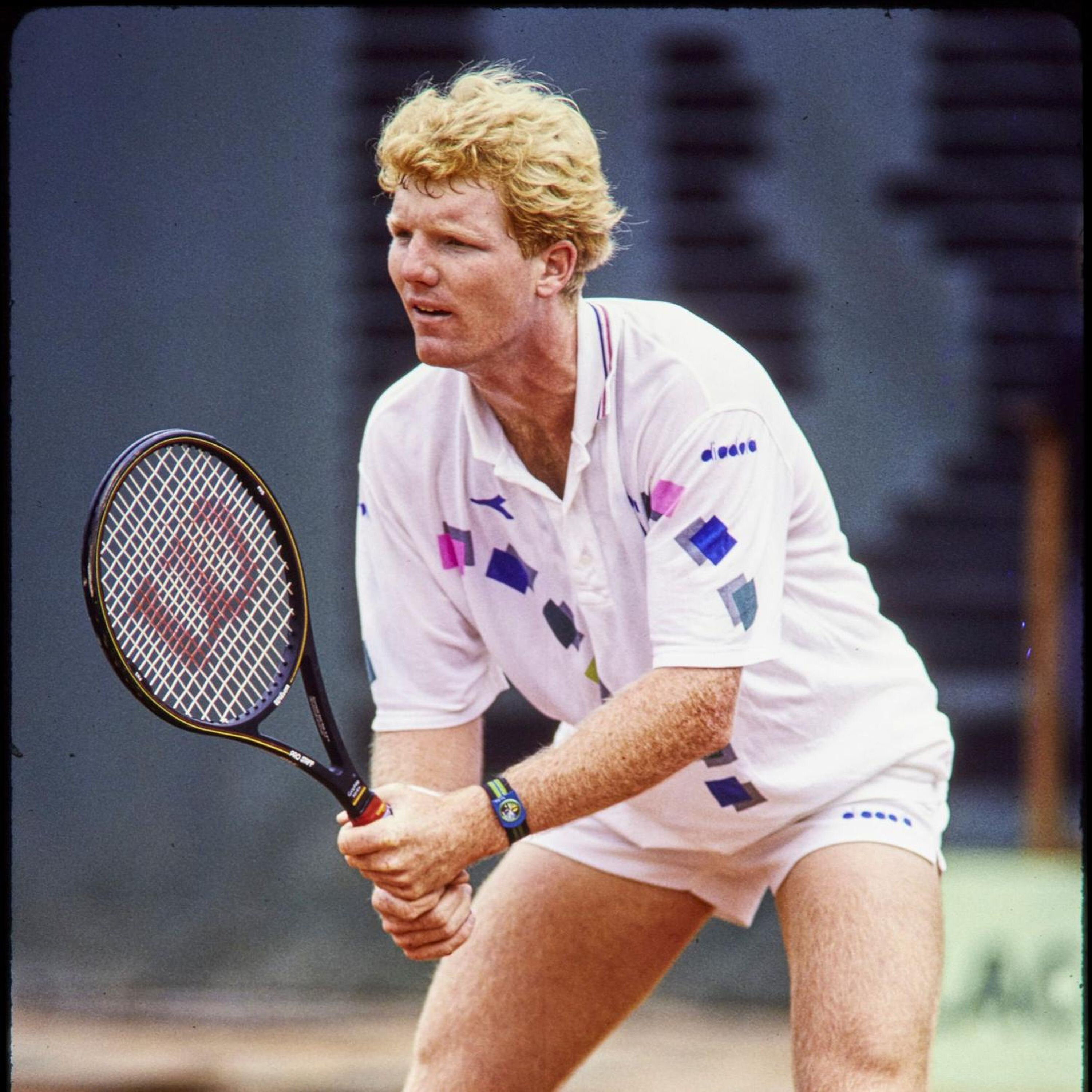
Jim Courier
The four-time Grand Slam champ, Davis Cup coach and tennis commentator talks about growing up—and fostering incredible rivalries—with Pete Sampras, Andre Agassi and which player of his era he’d love to spend time with on a deserted island.
Hosted on Acast. See acast.com/privacy for more information.
See omnystudio.com/listener for privacy information.
2019-08-09
42 min
Transcript
Available Results
Generated results are saved to the knowledge database for reuse and search.
No generated results are available for this episode yet.
Extract Knowledge
Pick what you want extracted first. Model, scope, and chapter options appear after a template is selected.
Generated results for public episodes are saved to the knowledge database so they can be reused and searched later.
Transcript
00:00:01
Speaker 1: We're going and I'm trying to problem solve with him, and Edward comes in strips naked, goes and takes a shower.

00:00:06
Speaker 2: I could not believe that.

00:00:18
Speaker 3: All right, Jim, First of all, thanks for joining me. Were actually believe it or not? In the Tennis Channel what do we call it? Both the booth? Oh my god, sorry, the Tennis Channel booth here in Washington where you were calling the city open.

00:00:32
Speaker 2: Here this is my office for the week.

00:00:35
Speaker 3: I know, yeah, yeah, pretty good. It's actually great too, because it's nice and quiet in here. Jim, I guess you know I want to go back to the start. We all do that, right. I want to know how you sort of got into tennis. I mean you're from Day City in Florida. How did you get involved in tennis?

00:00:51
Speaker 2: Three?

00:00:51
Speaker 1: Simply my parents when they got out of college. You know, tennis in the nineteen seventies was a big craze in America. It was a big celebrities were playing, you know, with Chrissy and Jimmy and Arthur Ash and Billy and that.

00:01:03
Speaker 2: You know.

00:01:03
Speaker 1: It was just a real popular thing for people to do socially. So that's what my parents did with their friends. They played a lot of mixed doubles and the public parks in Dade City where we lived, there was a tennis club there, but they we went to the public parks, so the high school and the community college and my sister and I my sister's two years older than I am, and we would play with each other a goo to the jungle gym, but eventually we'd want to do what our parents were doing. So that's how I got started playing tennis, is just simply seeing my parents do it. They were bead level tennis players, very good athletes, but not like proper tennis players that had played a long time. But we loved it as a family. We played a lot as a family. It was a good activity. It was among many sports that we played together. We're very outdoors family, so it was really organic. There was no plan or you know, idea that tennis professional was a proper path for a living. Frankly, we didn't even know about junior tournaments when we got started. It was just one of those really natural, fun discovery scenarios.

00:01:59
Speaker 3: For were you doing any other sports spots?

00:02:02
Speaker 1: I played organized baseball. My dad was a very good baseball player.

00:02:04
Speaker 3: He played Is that how you got back end.

00:02:06
Speaker 1: Yeah, yeah, so yeah, Unfortunately, I was a good baseball player and I had proper baseball technique, and unfortunately.

00:02:14
Speaker 3: So you left you when you play, it makes so much sense to me now.

00:02:17
Speaker 2: So I throw ridy and swing lefty, and so it was my brother.

00:02:20
Speaker 1: My brother played college baseball, my younger brother, and so unfortunately I decided when I was toggling at sort of seven and eight, toggling back between baseball season and tennis season and then back and forth to kind of cut out the middleman. So I didn't have to have two swings. I just kind of combined them. And that was a near fatal mistake.

00:02:40
Speaker 3: That's amazing. Yeah, oh well, I mean it's it's so interesting for me when I do these podcasts. I often, you know, get sort of a little bit of backstory. Some obviously I know you really well, but I never knew something like that now. So it's it's so fun for people to actually discover. Because it's also important for parents to understand it's not necessarily about sending them to, you know, in a cad me to begin, I think what you're saying is that, as I feel the same way growing up, you have to love the sport as a kid, and if you can instill that in your child just by being an example of the joy of playing tennis, I guess that's important.

00:03:12
Speaker 1: I think so many of us got into the sport because of our parents, because they.

00:03:15
Speaker 2: Were involved in it.

00:03:16
Speaker 3: My parents play tennis at all.

00:03:17
Speaker 2: So how did you get involved in it?

00:03:18
Speaker 3: Well, it's my older brother, but I think it's somebody and you know, your parents obviously can steer you in a certain way. But also from me being Australian, it was I was the same. I played tons of sports, so I just happened to be good at that one.

00:03:30
Speaker 2: Do you think that's healthier to play lots of sports?

00:03:32
Speaker 3: One hundred percent. I think it's really important for you, especially kids. Different hand eye coordination of sports, footwork sports. I mean, baseball is not exactly I wouldn't put that in a super athletic As far as.

00:03:42
Speaker 1: It's hand eye, it's it doesn't require any any kind of endurance.

00:03:45
Speaker 2: It just requires really good hand eye and speed to get around the bases.

00:03:48
Speaker 1: Yeah, I mean it does have some skill to it's just not quite as complete as something like basketball or tennis or soccer or something like that. But yeah, I played organized soccer for a couple of years too, and I loved coming up and playing at lots of different sports. I didn't specialize in tennis until I was thirteen, and that for me was the right fit. But I also have I leave room for other people's paths too, because our path isn't the only path, of course. And I see people like Andre and Pete and Michael my peer group that only played tennis. They didn't play other organized sports, and they came through and have had wonderful lives and careers too, and I don't know that they knew any different.

00:04:27
Speaker 2: Yeah, so it's you.

00:04:28
Speaker 3: Four are so different though when you think about your personality. So I think that's also get We'll get to them in a bit. Oh, but so you got, I guess you go from you know, kind of public public park playing tennis with your family to heading to the Bolitary Academy, which is certainly a whole different story, right, I mean that is organized tennis at its highest.

00:04:50
Speaker 1: Well, you know, I went to Hotman's first right and Largo, So Harry Hotman had an academy going over at Bardmore and which is a little closer to where I lived. It's about an hour away posed to voluntaries being an hour and a half. So that was the first academy that I went to, and I went over there, I gonna go on weekends and eventually did about a two month stint over there at one point, and then I had a scholarship. Harry was mister Robin was nice enough to offer one to us, and then they got rescinded, so I was back home and that's.

00:05:19
Speaker 3: Why did it get reined.

00:05:20
Speaker 2: I don't know, but in any case, one I know, did.

00:05:23
Speaker 3: You ever say you know what I ended up doing?

00:05:26
Speaker 2: I know, I just won't say on the podcast. I'll tell you offline. Oh that's fine, but you know some of the you know, some of the people involved not Australian.

00:05:36
Speaker 3: It's okay, I mean I I also have my story of one Australian Institute of Sport coach telling me that they weren't going to send me away because my my results didn't warrant them doing so and paying for it. And my answer to them was, well, f you, I'm going anywhere. I'm going to pay my own way. So, you know, I think it's important for people to actually hear that, even players as great as you ended up being are pretty much, you know, sometimes given the heisman, like the palm up, I'm saying you're not good enough.

00:06:06
Speaker 1: It's healthy actually in a way to not be For me, in a way, it was healthy to not be told that I was destined for greatness, even though I was one of the best players in the state of Florida and then the nation. One thing that was really eye opener for me, just as far as how life works, happened when I was twelve years old and I was getting a lot of pressure in Dade City where I lived to play the Little League All Star Baseball tournament, which where they put the best players together and we compete against other cities and states, and you know, it's a national competition, international actually, And so I didn't play the national juniors that year. And I had been a top tennis in tennis, so i'd been because they coincided in the summer, so I'd been a top ten junior in America in the twelve unders. This was my first year of four teams, and I was I didn't play, so my ranking dropped down to like eighty five in the country as a first year, which meant that Fila, who was giving me free clothes, said now we're not going to be free closed anymore.

00:07:00
Speaker 2: That was heartbreaking at.

00:07:00
Speaker 1: Twelve, Yeah, I know, heartbreaking brackets the rug pulled out from underneath you.

00:07:05
Speaker 2: So that gave me a little bit of an understanding.

00:07:07
Speaker 1: Of how the world works, that it's not all roses, and that was that was healthy for me. It didn't give me a chip on my shoulder, just made me realize that you have to work hard and you got to keep doing stuff if you want to keep getting stuff.

00:07:20
Speaker 3: Yeah, I think it's really important for everybody to here that not everything's that easy. And as you said, and you were a top junior, but also you decided to play a sport that you wanted to play at that time. Yeah, so I think that's important for parents to hear as well. You don't necessarily have to put if your kids want to do something else at that time, let them because they're twelve.

00:07:37
Speaker 2: Yeah, Like I only get to be a kid once.

00:07:39
Speaker 3: Exactly, So I'm glad that you said that. All right, So you know, you go through boltaries, it's kind of you know, it's a little cutthroat there. It's like, you know, it's mono Mano. It's like, who's the best, Who's getting Nick's attention, blah blah blah. It's pretty well documented that you know, you and Andre were there at the same time. How much did that influence you? Just getting better as well?

00:08:01
Speaker 2: Big time.

00:08:02
Speaker 1: So I'd gone back home from Hotman's where I was surrounded by great players that were better than me and older and all that stuff and pros practicing as well to being in Dade City and having to now drive thirty to forty five minutes after school both ways to find reasonable practice, and it was stressful on my parents, it was stressful on me, and I wasn't getting better, and I was working hard to get better, but I was getting passed by people. But somehow I conjured up a good result at the Orange Bowl, which was a pretty high profile it still is a high profile junior tennis tournament at the end of the year down in Miami, and I made the finals of the fourteen and unders somehow, some way, and that got Nick's attention, and that got me a scholarship offer to come down there, and that was a real fork in the road of my life. I don't know what would have happened had.

00:08:52
Speaker 2: I still stayed in Dade City and having to grind out practices.

00:08:56
Speaker 1: I don't know where I would have ended up, but I know that being in that environment, which is a professional environment with really big strivers, pros that are showing you how they're doing it best amateurs in the world, it was special for me to get a chance, and I chose to be there. I very much wanted to be there, which is the polar opposite of people like Andre. He wasn't the only one who was there against his will, and as a result, I really embraced everything that had offered and I ate it up and I got better in a hurry.

00:09:23
Speaker 2: Yeah.

00:09:24
Speaker 3: So when you won, you know, when you won at the French Open, you obviously had to play Andre. I mean, the chances of that happening, you know, looking at the next ten years was pretty obvious. I mean, you two were two of the greatest players at that time, so it wasn't that big of a deal that you played in the final. But it was also it was a little crazy because Nick had sort of taken over coaching Andrea and you were not part of the Boltary system at that point.

00:09:47
Speaker 1: Well it was actually, I mean Nick was I was using one of his coaches at the time of Sergio Cruz. So that was kind of the conflict for me. The emotional conflict for me was that Nick was still supporting me. I was still training at the but that was the fissure. Once he sat in Andrea's box and you know court won the bull ring the boxes right behind the player chairs. I mean you almost touch them, and.

00:10:09
Speaker 3: Nick's voice is very easy to recognize.

00:10:12
Speaker 1: Yeah, So that for me, I just did I couldn't fathom this, this guy who had done so much for me, giving me a scholarship, give me all these opportunities I was traveling with one of his coaches, that he was so visibly siding with Andrea, for me just didn't make sense.

00:10:26
Speaker 2: And of course I took it.

00:10:27
Speaker 1: Emotionally and I left virtually the next day and took his coach with me.

00:10:31
Speaker 2: Yeah.

00:10:31
Speaker 1: So, you know, I wasn't mature enough to understand the business decision that he was making there, which I can now understand and have full clarity on. Yeah, and we have no bone, We have no bad bones at all that kind, but you know we did. I certainly felt slighted at the time, but you know, he changed my life in a great way.

00:10:52
Speaker 3: So you were, I mean you were obviously known as one of the hardest workers on tour. You know when your first slam was the French Ship, right, do you do you remember that that match in that night?

00:11:03
Speaker 2: Oh yeah, it was awesome. Yeah, so good.

00:11:06
Speaker 1: I mean the match was really intense. It had a couple of rain delays. I got off to a very slow start, finished late, and then it's a blur.

00:11:14
Speaker 2: You know, you've won majors.

00:11:15
Speaker 1: You know how kind of it feels like you're in working in warp speed at the time, because there's just things that you have to do and your world is changing and you're not really sure why. I mean you kind of understand it, but not fully at that point.

00:11:30
Speaker 2: So it was great.

00:11:31
Speaker 1: You know, I'm out with my coach and my agent and you know, usta people were around.

00:11:36
Speaker 2: It was It was a blast.

00:11:37
Speaker 1: And you wake up the next day and all of a sudden, people at the Today Show and Good Morning America want to talk to you, which your which is an alien concept.

00:11:45
Speaker 2: Yeah, so it was. It was awesome. It was a lot. It was fun, it was scary, it was.

00:11:51
Speaker 3: Would you would you consider yourself at that time fairly shy or were.

00:11:55
Speaker 1: You because I left home at fourteen. You can't really be that shy. You've got to go fit for yourself in an environment where you're one of eight boys, teenage boys full of testosterone, staying in a small room, you shy is not going to cut it.

00:12:10
Speaker 3: Yeah, So do you think that that sort of helped you after that? Is that? Or I guess what the question is because I haven't gone through that of winning majors in singles and you wake up the next day and you sort of feel like, Okay, the target's now on me. Was that a different experience for you? Even though it was such a crazy time for American tennis as well, with a lot of spotlight and a lot of players, But you were the first I believed of that group to win a slam.

00:12:35
Speaker 1: Well that we'd had a couple of guys breakthrough earlier, so that the guys have sort of foamed the runway for me, if you will, with Michael and Pete had already had success at a high level. Ironically, Andre, who was you know, the best of us at the youngest age. You know, it took him a little bit longer to win majors. Of course, you would win eight and have an amazing career. But for me, it was I was really lucky in that. I think coming from a small town helped me process that because I went back to that small town and I went back and stayed at home at my parents' house for for like four or five days, and that was good for me to get sort of stabilized and to understand who my core group of people were, because because what changes you don't necessarily change inside. What changes is what's happening around you and how people are viewing you, and that can change a person in that environment if you allow it to.

00:13:25
Speaker 3: Yeah, And how many more friends you have all of a.

00:13:27
Speaker 1: Sudden yeah, And then realizing who is your friend and who isn't is really important. So that I had a good core group of people and some parents who were still raising my brother who's eleven years younger than me, so you know, there was They weren't at the tournaments with me every week, there was no pressure on that.

00:13:43
Speaker 2: They were living their lives.

00:13:44
Speaker 1: My dad was working, my brother's in school, my mom's taking care of them, so you know, it was I had a pretty for an abnormal period of my life. I had a lot of normality, which was great.

00:13:56
Speaker 3: So onto that rivalry with Andrea. And you know, it's funny, I was sitting here in Washington, I'm actually directly looking at you know, the champions here ninety five, Agassy ninety six, Chang ninety seven, chang Agacy. You know, you think about chang Agacy yourself, and of course Pete that period of time were you guys, were you guys friends or were you sort of like just you know, in a locker room together having to play against each other but knew each other from juniors?

00:14:27
Speaker 2: Well, it I think it moved around a little bit.

00:14:31
Speaker 1: I think that when we started off, Pete night would take it way back of Michael and I roomed together on Junior Davis Cup, so we traveled all summer as junior is, staying in the same hotel room.

00:14:41
Speaker 2: One year.

00:14:42
Speaker 1: Pete and I were doubles partners the first year that we were out on tour together until he won the US Open. We played a lot of doubles together and basically all the meals and practiced a ton together. Andre and I had spent the time at Voltari's and then we'd all end up playing Davis Cup together at various times throughout career, being an Olympics together and things like that. So you know, I don't think there was ever any any moments where anyone was remotely getting close to a fistfight.

00:15:09
Speaker 4: You know.

00:15:09
Speaker 1: I think we're all relatively respectful of each other and friendly and and you know for the most part, so no, I think it was. It was an amazing time and and of course there's tension when you're trying to compete for the same things and you're basically fighting for each other's lunch money in a way, although we were lucky enough to have plenty to offer thanks to Billy and you know, Arthur and all our forefathers and four mothers who paved the way for you and me to live this amazing life. But it's it's nice to look back now and to be able to talk to those guys now and through the lens.

00:15:41
Speaker 2: That we came through it together. Yeah, so it's it's been pretty special.

00:15:44
Speaker 3: If okay, pick one of those guys to go on a deserted island with and hang out with for a week.

00:15:50
Speaker 1: Well, Andre is probably the most He's the biggest seeker, I would say, So if you want to have conversations about lots of different topics. Andre is probably the broadest, and you know that as well.

00:16:04
Speaker 2: You spend time because you're obviously tight.

00:16:06
Speaker 1: With Steph, so you know, so for conversations, you know, Andrea is is awesome. I mean, you're not going to get nicer people than than Peter Michael.

00:16:15
Speaker 2: You're just not.

00:16:15
Speaker 1: I mean, they're just they're not gonna say anything bad about anyone. Pete, I mean, you know, he's got a sly sense of humor when he's in the locker room or at the golf club or whatever. And and Michael is just is kind and generous and thoughtful as you'll find. So it just depends on what mood I would be and is what am I looking for?

00:16:32
Speaker 3: True?

00:16:32
Speaker 1: You know, what do you want to have? You know, some raucous discussions you probably want to bring in double a.

00:16:37
Speaker 3: Yeah, yeah, I just want to know if you when you guys get into a conversation, who speaks the most because you're both so philosophical and really, I mean you really deep think it's the two of you.

00:16:48
Speaker 2: Well, well, thank you, I think no, I.

00:16:51
Speaker 3: Mean it's actually a compliment with that or not. I mean, I know you used to be giving you.

00:16:54
Speaker 2: Ship I am.

00:16:56
Speaker 3: We can say shit on you. It's a podcast. We drop fombs and all.

00:17:01
Speaker 2: Kinds of I'll try and keep it relatively clean.

00:17:05
Speaker 1: Look when I Andre and I don't speak that frequently, but when we do, I like to hear what he has to say. I like to I know what I'm thinking, I know what's in my head. So I'm trying to listen more and see what I can glean from him and figure out. Because he's he surrounds himself with some really interesting people, and he has a lot of different takes and interesting angles that that I like to hear, So I try and listen more than speak.

00:17:27
Speaker 2: There.

00:17:28
Speaker 3: Yeah, I think it's interesting that you particularly him, he got to that point as well right in his life, because he certainly wasn't like that early on. I want to go back to one match at the Strain Open, when Pete pute In that match, What goes through a player's mind, particularly you who knows Pete. This is an incredibly high stakes match and you see someone throw up. What was the first thought in your head?

00:17:50
Speaker 1: Well, I think he might be conflating two matches, right, Because Pete threw up against Karatia, he had the tears because the.

00:17:56
Speaker 3: Tears against you at the US AT Yeah, what was that moment?

00:18:01
Speaker 2: Like, Man, I've had players throw up.

00:18:03
Speaker 3: We had one the other day actually throw up. Guy had to default. But yeah, I'll show you the video. But yeah, that match against Pete when he was crying, he just lost his coach. I mean, it's a very strange moment for you, I'm sure because it was a hugely important match.

00:18:20
Speaker 1: It was, but we also knew what was going on off the court. Pete and I had been at dinner the night before together at a table with Tom and Tim Gullikson, who were at the time that we played the match the next night on a plane flying back home to Chicago to try and figure out exactly why Tim kept having these seizures and what.

00:18:39
Speaker 3: Was So you and Pete had dinner.

00:18:41
Speaker 2: Pete the night before your mess.

00:18:43
Speaker 1: Paul Annacone who was going to step in and take over for Timmy g In the meantime, we all with Ian Hamilton of Nike. We all went out together and you know, we went and visited brad Stein and I went and visited It was my coach there in Australia. We went and visited Tim at the hospital before they left like, we're close to bunch, you know, and of course we want to win the match. Of course, Pete and I know what's at stake, you know, of course we know all of this stuff. But we also knew that there was something bigger and more sinister in play, and that that was bringing a lot of darkness to the match.

00:19:15
Speaker 2: So he struggled.

00:19:17
Speaker 1: I mean, he was very clearly struggling with his emotions, which he'd already he's always bottled up prior to that point, and he just couldn't take it anymore. And the fans were trying to be supportive of it, and they sort of broke him down and he started crying, and it certainly became a memorable match. The level of tennis was excellent. I think it would have been memorable just on the tennis alone for me, but that just added a new element to it of awkwardness and darkness to it. And I remember after the match, I had a friend of mine who hadn't seen a lot of tennis, who was an entertainer who I got in tickets to the match. He was in town playing with his band, and he came into the locker room afterwards and Pete and I were both on training tables next to each other, like you do you know, and we're both cramping and we're both sort of just talking to each other, and he like, I went to dinner with him the next day. He goes, do you guys like do that? Do you talk to each other after matches like that? He's like, I couldn't pod.

00:20:13
Speaker 3: How do you do that? The entertainer was.

00:20:15
Speaker 1: Saying, how do Yeah, you had no concept of how combatants could actually then just go talk about it afterwards and be next to each other. And you know, if you're not from the world, it's just a very foreign concept because most team sports, obviously that doesn't happen in the tennis. Tennis is different, so you know, that's that's something that wait a.

00:20:32
Speaker 3: Second, lord, let me just stop you there, because tennis is different. But there are also times where there's been times where I know players would rather be on the other side of the world, the next to their opponent and not talk. So, yeah, we don't want to give everyone this rosie that everyone's everyone's like that. I would say a lost fair.

00:20:51
Speaker 1: I've seen a few people pinned up against the locker before. But yeah, I'm not throwing anyone under the bus mark Knolls.

00:20:57
Speaker 2: But you know, no, it is true.

00:21:00
Speaker 3: I mean it is an interesting dynamic that in the locker room, everyone's in the locker room, like literally. I think one of the funniest things for me is like US Open, you know, have the champions locker and you could have the entire locker room available, the entire locker room, and you have the two people in the final, and they have the lockers right next to one another, and they refuse to move during the tournament, so they're getting chowered and dressed within three feet of one another, and it's just like, can't change anything. Did you have any weird supersystems superstitions.

00:21:33
Speaker 2: Not really.

00:21:34
Speaker 3: I didn't have your ruffer.

00:21:36
Speaker 1: I had rituals like I wanted to, you know, ball when the deuce court, I'm taking the ball from the ball kid on that side and ad court the other side, just to expedit.

00:21:46
Speaker 2: But no, I.

00:21:46
Speaker 3: Wasn't expedite or it was like that was your thing.

00:21:49
Speaker 1: Well it was my thing, and I didn't like it when one of the ball kids didn't have the ball when I wanted them to. But you know, you use the other one. And if I lost the point I blamed it on the ball can I'm kidding, But you know, you just get used to things that I think the reason that I had the rituals, and I suspect it's the reason that you did, and we all have our little things on the court is because it makes us comfortable when we're traveling the world doing different things in different cities, that that's our home office and it makes us feel at home in a stressful environment. Yep.

00:22:30
Speaker 3: Okay. So you have this incredible rivalries and these amazing moments, and it was an incredible decade, particularly for American tennis. When you talk about you and Pete and Andre and Michael cut to you know, twenty years later and what we're seeing now with Roger and Ruffa and Novak mind blowing. Yeah, I mean, explain that because you were in the midst of such an incredible sort of decade there in the nineties, what are you seeing now?

00:22:55
Speaker 1: Well, first of all, they're just amazing athletes. The level of athleticism, their professionalism, their dedication, their understanding of scheduling. There's so much that they do right that leads them to the success. And they have a circumstance where the surfaces have become more homogenized, which allows them to play a similar style across all surfaces. And there are fewer surface specialists than there were back in the day. And I don't know if that's why they're more consistent. It might add something a very small piece of it, but they're far more consistent than any of the great players in my generation. You would see top players take early losses and it wouldn't blow your mind. Now if you see these guys lose early in a major, like when Stakowski beat's better or wimbled, and you're like, oh my god, the world's ending.

00:23:40
Speaker 2: You can't believe this is happening.

00:23:43
Speaker 1: But the thing that I think separates them from the other great players is their defensive capabilities, because most of the great players historically are offensive minded players.

00:23:56
Speaker 3: Pete had to serve in the forehand.

00:23:58
Speaker 1: Yeah, you know, you look at that that Pete, if he's having a good day, absolutely unbeatable.

00:24:04
Speaker 2: And he had more, far more good days and bad days. But on bad days he was vulnerable.

00:24:08
Speaker 1: And these guys, if they're having a bad offensive day, they just fall back and play defense. And they play such high percentage tennis. They know how to manage their games, and they've shrunk the bandwidth of their good and bad days to a point that it's almost a flat line. They just rarely had these days where I mean, I can think of Novak playing She'll simone in Australia making one hundred, literally one hundred unforced errors in a five set match, and he still won. He still managed to find his way through the worst day he's probably ever had in tennis that I've seen him, as far as that statistic goes by far, he still found a way to win.

00:24:46
Speaker 2: These guys are so.

00:24:47
Speaker 1: Good at managing all the elements that are in play, and they're playing with the margins are small, the games faster than it's ever been. There's less reaction time than we had in between shots, for sure. But they're awesome. They're amazing ambassadors, and it's just it just boggles the mind to think that we waited so long for someone to clip Emma's twelve Majors, and then's tennis, you know, and then Pete gets to fourteen and you're going walks off after he wins the open and you're like, well, that's never going to get beaten. And then there are three guys the same era. It's just it's amazing.

00:25:24
Speaker 3: I know this is an impossible thing to us, but I mean I'm going to be just because I'm well.

00:25:28
Speaker 2: The impossible burger seems like it doesn't work too but it does.

00:25:31
Speaker 3: Oh yeah, that's it's true. But I own that stock, so I'm happy with that. But tell me about if you had to sort of take a run at it right now, who do you think is going to have the most of those three?

00:25:44
Speaker 1: I mean, look, the easy money would be on the guy in the lead right now because you just don't know who's going to get injured. So you know, Roger are sitting at twenty, you know, right now, that's probably where the betting line should be just because of the injury factor. But I suspect that when it's all said and done, if injuries are not a huge part of the discussion going forward for Rafa and for Novak, that Novak's going to have the most.

00:26:09
Speaker 3: Yeah, I think that's the consensus for a lot of people. I agree with you with that injury thing. We can't ever understand or you know, look what happened to Novak for those couple of years, you know, with the elbow and you know Rafa with the knees. I think it's going to be an ongoing issue. And you know, look at what Roger did. You know we thought he was all done like five years ago at the back, So you never know. But I think the betting money would be if I had to.

00:26:31
Speaker 2: Put it on, that's for you to Novak to be.

00:26:34
Speaker 3: But I think the wimble To final actually was a precursor on why it was huge, because I think if Roger had got twenty one, that might have been close to being unsuppressible. But I don't know. I think now that Novak's the guy to beat.

00:26:48
Speaker 2: Yeah, we'll just think about it.

00:26:49
Speaker 1: I mean, he's five years younger than Roger, I believe something like that, and five or six, so he's got if he stays healthy, and he seems to be taking great care of his body, so he probably has another twenty Looks.

00:27:02
Speaker 2: At Major's, yeah, and that's funny.

00:27:04
Speaker 1: And he's great on all surfaces, so I think it's not unrealistic to think that he.

00:27:10
Speaker 2: Can win five more.

00:27:12
Speaker 3: So, you know, when you's.

00:27:13
Speaker 2: Saying that Roger doesn't win anymore, there's so many variables.

00:27:16
Speaker 3: Yeah, there's a lot of variables. But Rogers you know, not getting any younger. As they say, father time does catch him up to everybody undefeated speaking off at the time retirement back to you, what was the catalyst that you said, all right, Jim, it's time to hang it up. It was one specific how and how hard was it or how easy.

00:27:33
Speaker 2: Was so it was easy.

00:27:34
Speaker 1: It was one specific match I was playing. It was one specific tournament, I should say. I was playing in San Jose in February, you know, the indoor swing in the States after Australia, and I made it out to the semis and I played a young Ozzie, talented Ozzie Mark Philippoussis. Yeah, and uh and Flip and I are battling in the semi finals on a Saturday, and we've got a great crowd in the arena, and I lose a close match and I walk off the court and I just didn't feel the sting. And that's when I knew I needed to let someone who felt the sting take that spot. You know, I'd done everything that I could in my career to be ready to play every day, and for me not feeling what I needed to feel on the court, which was real, well, yeah, yeah, you got to feel something and not having that that pang of regret after the match, I just wanted to go home. And then when I wanted to go home, that's what I knew. I needed to stay there and find something else that made me want to leave.

00:28:36
Speaker 3: I think it's really important for people to understand what's the motivator. And some people have very different motivations just the injuries physically they can't do it sometimes. Look, I want to have especially with women, you know, I want to have a family, so and I'm not motivated anymore to do this. I'm not motivated to travel, be away from my family or you know yours is like you know, it didn't sting for me, And yeah, then you start go, why am I doing this anymore? Then being away from my family and putting myself through hell because you had you had a big easy play.

00:29:06
Speaker 1: Well, it's a big lift and I couldn't do it halfway. I just don't have that in my personality to mail it in. And I didn't think it was right to go out there and take a spot on tour if I wasn't impassioned, and and i'd also you're framming.

00:29:21
Speaker 3: Down one hundred and twenty Andy swinging easy points.

00:29:25
Speaker 1: No, there's that too, But even people who did that ended up finding that it was a lot, and that you know, Pete was able to win without having to really grind, and even for him, it just became a lot. And I get that, and I admire the players who have managed their schedules better than we have and are doing so many great things for themselves and especially for the sport. You know, having our stars stay in the sport so much longer now it's so valuable for tennis. Is it tougher on the younger players to break through, Absolutely, But for the long term and immediate health of the game, if you can have to say, hey, Coco, you don't Coca golf, you don't have to come out and grind right now. This doesn't have to be the apex of your career like Martina hingis.

00:30:08
Speaker 2: You have until I mean.

00:30:09
Speaker 1: Look at what Serena, Yeah, I mean mid late thirties, you can still be winning majors.

00:30:14
Speaker 3: If you said that to the kids now, they're like, there's no way I'm going to be playing in my thirties. I mean, because Serena and Venus both used to give me shit for still playing on the tour in my late thirties and I'm like, excuse me, hello, he's still playing. I think it's and it's about what you're talking about, if you still have the passion to put yourself through the grind and through the stress, because it's stress, and particular when you're a great player, the expectation is to always win. So if you can put yourself through that consistently and be okay with it, that means you still have the passion to play.

00:30:42
Speaker 1: Yeah, And I think one of the things that helps players keep that passion is taking good breaks and scheduling properly. And one of the reasons that I suspect Andre was able to play into his mid thirties at such a high level was that he took a lot of time off for various reasons during his twenties, and that gave him a second win to go something that's something that Michael and Pete and I didn't do. We just kept grinding, grinding, grinding, tournaments, exhibitions. You know, it was a neverending calendar and you know, knowing you can't go back in uncorked time. But if you knew, you know, seeing what players do today and be like, yeah, of course I'm going to take a month off after the US. So it's somewhere that after Australia, I'm not going to go to Dubai in Europe, I'm going to relax, rest and get another training block and be at home and be fresh and then go play.

00:31:32
Speaker 3: So you think it's a good thing that someone like Coco that the WTA has that age eligibility rule.

00:31:38
Speaker 2: Yeah.

00:31:38
Speaker 1: Look, I'm conflicted in a way because I do believe that. I don't believe in the rules in some of the team sports, where you like, if you're good enough to play in the NFL, you should be able to go play, especially a sport like that where the lifespan of those athletes are so small, and to give up some of your good years to play in college for free.

00:31:55
Speaker 2: I'm not a big fan of that.

00:31:57
Speaker 1: But I think guardrails are good and I don't think that was it fifteen. Eventually she's able to play, yeah, something along those lines. I think I'm learning about it through her success. I don't think that's a bad thing because she can also play exhibitions and World Team Tennis, and there are other ways for her to still get him peaked and get matches that are gonna make her better, but she should be and it's a good thing. Also in my opinion that she has the counsel of Tony Godsick and teammate who have managed Roger's career from a scheduling standpoint as well fantastically, and they can point to that, and that's a she is a great role model. And then she's on the inside for that. So I think it's I think it's fine.

00:32:37
Speaker 3: She's playing an exhibition actually with Ash Party in about a month prior to the US.

00:32:42
Speaker 2: Open, So yeah, yeah, Winston Salem.

00:32:43
Speaker 3: As So yeah, you're right. I mean she's still going to get exposure. You're still going to be playing great players. And I've always said, now tennis is not a sprint, it's a marathon. It used to be an owadays I'm more of a sprint. Sprint to thirty, hang on for a couple of years. Maybe now it's like no marathon through till about the thirties. And now with the money, people obviously that make you good living can certainly have a great team around them. Correct, just quickly, I want to get into your broadcasting, like how did that happen? I mean obviously you and I quite loquacious, so it's not exactly difficult to get into.

00:33:12
Speaker 1: But I don't think I was known as being that way when I came off tour, though, But it happened serendipitous, you.

00:33:18
Speaker 2: Know, I was. I had a pretty.

00:33:21
Speaker 1: A pretty chilly relationship with a lot of people in the media. Yeah, you know, because I got burned in some early stories and wasn't mature enough to sort of separate a couple of bad, bad eggs from the whole carton, so I could be a little tough in press conferences. Salty, yes, very salty, indeed sea salty, even sea salty. But so what happened was I retire at the same time that T and T Network in America got the rights for Wimbledon away from HBO, and they needed a team and they didn't have anyone, and people at IMG who were managing at the time, said, Hey, is this something you would be interested in doing. I said, yeah, I've been hanging out in Orlando for a few months. It's been fun, but yeah, I mean, it'd be nice to see some friends and I'll try it see if I like it. And it dawned on me that I didn't know anything about it, so I was very nervous going into it, and it dawned on me that I shouldn't be starting at Wimbledon.

00:34:16
Speaker 2: I should probably be.

00:34:17
Speaker 1: Starting at a very small tournament somewhere where no one's listening so I can learn how to do this. But I was lucky enough to be surrounded by some amazing people, both behind them in the truck and next to me in the seat. I got to work with Mary Carilla, I got to work with Marv Albert. We just had an amazing group of professionals. Ernie Johnson was our man on the desk, who's incredible.

00:34:39
Speaker 2: I mean, we were just the.

00:34:42
Speaker 1: It was a padded room for me, so I couldn't really hurt myself too badly. And it was an amazing start and an experience, and I've kind of just done it ever since.

00:34:50
Speaker 3: Tell people what it's like. Was your first I actually, to be honest with you, I did my very first broadcast when I was eighteen in Australia. Gary Wkinson, who was a great Australian broadcaster for many many years, jokingly said to me, what do you want to do when you're done? I said, Gary, I'm Wanta just starting my tennis career, like, don't throw me under the bus yet, and I said, I don't know, maybe when I'm done, i'd like to do what you do, kind of as a joke, and he said, well, why don't you come in and sit and do a match with me tomorrow, And you know, me being so stupidly naive and ballsy at the same time, I was like all right, And literally that was my first match. It was Nicole Pratt played Sabine Appleman's in Brisbane and my first thing was on camera, so so yeah, so well I didn't know any better, so I just sort of ran with it. And you know, I throughout my career actually spat it just like spits and spats did Eurosport, Australian TV, and then ESPN and then Tennis Channel and now you know, all over the place.

00:35:46
Speaker 1: So your first thing was an on camera. So my first thing was to interview my peers before the tournament. I had to do sit down interviews with Andre and Pete came over. They came over to my rental house. We sat there up over there. It was brutal. I was sweating bullets.

00:36:02
Speaker 2: It was awful.

00:36:03
Speaker 1: Did they but they were so kind of course, but actually ridiculous, kind of good.

00:36:09
Speaker 3: In some respects because at least you knew them. It wasn't like it wasn't like these superstars looking at you, going, who the hell are you? Dude?

00:36:16
Speaker 1: You they were going to take care of me, But we're all we're called all in on the joke, like how is this real?

00:36:22
Speaker 2: What are we doing here?

00:36:23
Speaker 3: At least you knew good questions to ask.

00:36:24
Speaker 2: And that I was terri I'm sure I was awful.

00:36:26
Speaker 3: No, I'm sure you were great. Promise last couple of questions. You know, you're busy and you got to go, and I really appreciate your time. But when you know, when you look at tennis now, I mean, and you're now in the broadcasting you're running the old.

00:36:45
Speaker 2: Farts the leg we called the Invesco series. But the series.

00:36:51
Speaker 3: Is that fun for you to to be around still and play and play these guys.

00:36:55
Speaker 1: I love the way that I'm I've figured out a way to to stay in the tennis world. That's and it's a great reason to stay in shape. When you know you've got to compete and it's going to be televised, it's sort of your ego sort of says, I better practice and I better stay with it, and I want the clothes to fit and all that stuff.

00:37:14
Speaker 3: Right, some a some hunt in the work, but a lot. I'm actually impressed with you, guys. How do you still do this?

00:37:22
Speaker 4: Yeah?

00:37:22
Speaker 1: It's fun. I mean I never even when I was tired of the grind. When I'd retired, I was still living in Orlando where I still have my house and still live, and Pete was training out of the same place. And Pete came back after like Miami and he needed someone to hit with and I was literally to stop.

00:37:38
Speaker 2: I even told anyone that I.

00:37:40
Speaker 1: Was retired, and yeah, so I went out and hit like two on ones with Pete all week. You know, it's not I never lost the love for actually hitting the tennis ball. It was just doing everything else and getting on the plane.

00:37:49
Speaker 3: Yeah.

00:37:49
Speaker 2: You know, it's a great line that the.

00:37:52
Speaker 1: Bass player from Zeezy Top says, they don't pay me to get on stage, they pay me to get on the bus.

00:37:57
Speaker 3: Yeah, exactly, It's so true. Yeah, it's a good way thinking about it. So are you going to get your kids in tennis or you just want to do whatever?

00:38:04
Speaker 1: I have a two and a half and four and a half year old boys, and they have their little rackets and we've got the phone balls, and we played tennis in the house because the phone balls are fine. And and my my four and a half is you know, takes a little semi private lessons with his best friend. So we get our club pro down in Orlando gives him a thirty minute lesson once a week when we're there.

00:38:25
Speaker 2: And he's good. He likes it and it's fun, and we don't do it too much, you know.

00:38:29
Speaker 1: I'm basically a wait for him to ask if he wants to play, and then that two and a half year old just follows him around and can can barely pick the racket up, so he drags it around.

00:38:37
Speaker 2: He's almost playing more golf with the tennis racket. Yeah, but it's it's great.

00:38:40
Speaker 3: It's just singing it.

00:38:42
Speaker 2: Yeah. Yeah.

00:38:43
Speaker 1: My wife played college tennis and she played the futures and challengers and stuff, so we're tennis family.

00:38:49
Speaker 3: Give her.

00:38:49
Speaker 1: Susanna's the best. She has far better technique than than I do.

00:38:54
Speaker 3: Maybe on the back end for too. Well, we're going to see that. I got to see that. Can talk with you up in New York I can hear you can do that. I need someone to play with.

00:39:03
Speaker 2: The Well, we'll be there for you.

00:39:05
Speaker 3: Yeah, yeah, God, there's so many questions I want to ask you, but we got to go. But I guess one question I want to know is there one match or one point where you were just like I just kind of even believe this is happening.

00:39:17
Speaker 1: One match at one point where I can't believe is yes, Yes, the first final I ever made. You always remember your first final right.

00:39:26
Speaker 2: On the A on the ATP. So the ATP I was playing in Basel.

00:39:32
Speaker 1: I was playing Stephan Edburg in the final, and at that time the final was best of five. It was two out of three until the final. So a couple of things that I can't believe. So there was also back then after the third set, there was a ten minute break in Madic. So we split the first two sets. He wins the third set and we go in and you can talk to your coach and all that.

00:39:53
Speaker 2: Yeah.

00:39:53
Speaker 1: So we go in and I'm with my coach, you know, the guy from Voltaris that I would leave with later. And we're going and I'm trying to problem solve with him, and Edward comes in strips naked, goes and takes a shower.

00:40:05
Speaker 2: I could not believe that. Can you imagine? Like he goes and takes a shower.

00:40:09
Speaker 1: Tony Pittgard, his coach, is just kind of sitting there so humming, and I'm like, this is great. I'm gonna win this four set. He's in there, combing his hair and putting on togo to an afterwards.

00:40:18
Speaker 3: I mean, he did look good.

00:40:19
Speaker 2: He looked great. Stefan still looks.

00:40:21
Speaker 3: Why he looks so good?

00:40:21
Speaker 2: He actually had a shower And I won the four set six O?

00:40:26
Speaker 3: No, come on?

00:40:27
Speaker 2: Yeah? Yeah, So I won the four set.

00:40:28
Speaker 1: Six O and then somehow I scrambled and scraped to a seven five and the fifth set win.

00:40:34
Speaker 2: But it was, I mean, the shower right, And I was like, who does this.

00:40:39
Speaker 3: People?

00:40:40
Speaker 2: I guess I was a nineteen year old kid. I was like, I got maybe this is what you're supposed to do. Maybe if I get here, I'll do this next time.

00:40:45
Speaker 3: Not when you won the set six love, You're like, hell, no, I'm not taking a shower forever ever between him? Really, did you never take a shower between even when rain delays?

00:40:54
Speaker 2: Sure? Sure?

00:40:55
Speaker 1: Yeah, yeah you didn't think not if you only have ten minutes. You're gonna blow five of it on a shower and change. I mean, I want to talk to my coach and I'll change a shirt. I mean, I like change my clothes, but I'm not getting a shower.

00:41:04
Speaker 3: It's hilarious. Yeah, sorry, Stefan shouldn't have taken a ship.

00:41:07
Speaker 2: I shouldn't have done that.

00:41:08
Speaker 1: But damn your hair, man, if I would never want a haified hair.

00:41:11
Speaker 3: Like yours, he still looks good.

00:41:12
Speaker 2: He's a handsome fellow.

00:41:13
Speaker 3: Yeah. Yeah, anyway, Jim, thanks so much. Carry carry on here in Washington and I'll see you continually on the road. And to people that don't know Jim, he is the real deal. He's a great guy. And I'm going to talk about you. I'm already embarrassing. I mean, you're already a rendit. We don't need to make you a red face.

00:41:34
Speaker 1: I got that too. They can't see the money that's coming under your table right now.

00:41:38
Speaker 3: Yeah, all right, all right, thanks Jimmy.

00:41:41
Speaker 4: And that's it for this episode of the Racket Magazine podcast. Thanks for listening. Our host is Renee Stubbs. Our co host and producer is me Caitlin Thompson. Music by internationally renowned DJ Stretch Armstrong thanks to Tim or Jerry and then the team at ACAST. Find us at racketmag dot com, slash podcast, and subscribe to us at any of your favorite podcatchers.
Chapters
No chapters available.