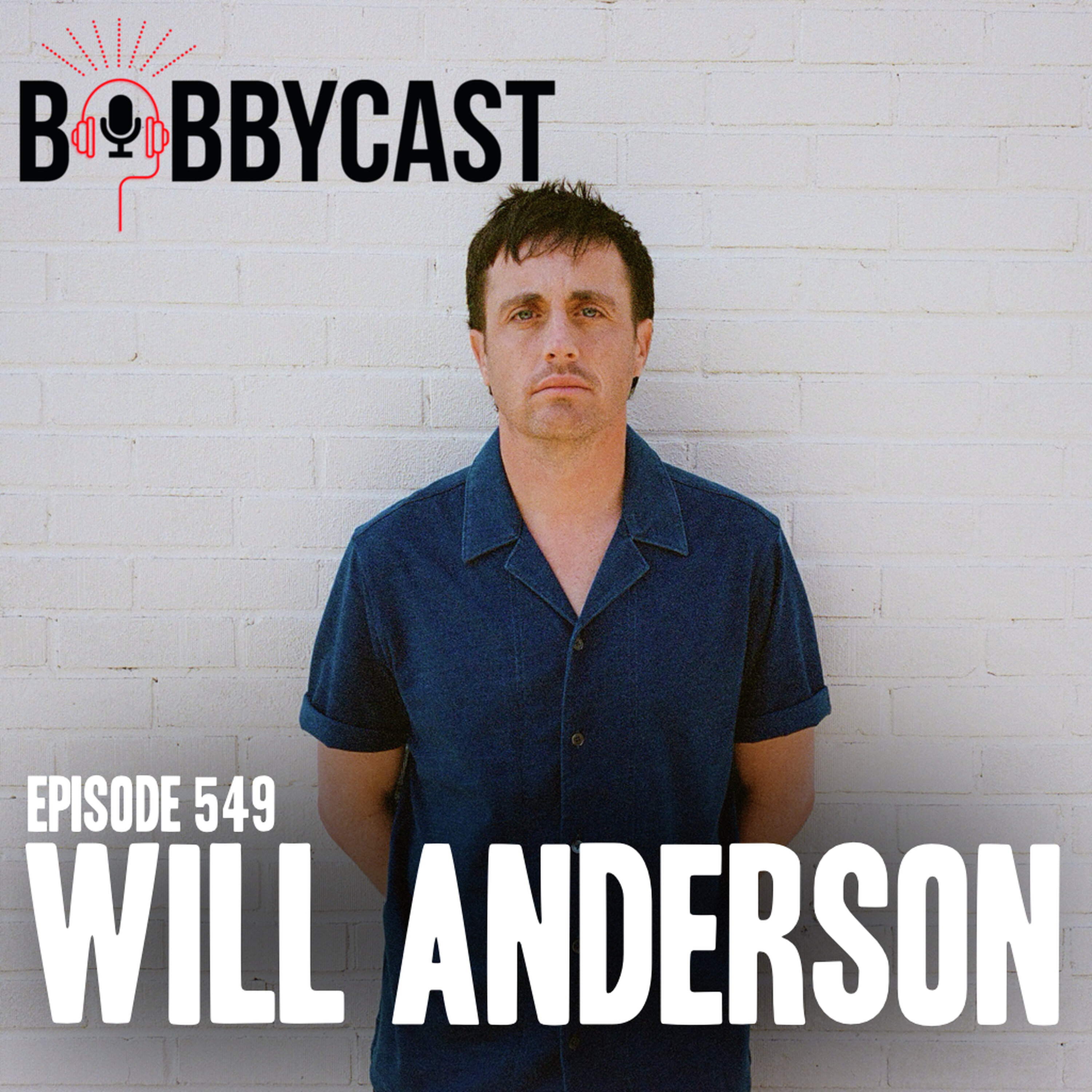
#549 - Will Anderson on Putting out a Book of Poems Written by His Late Wife + Bobby & Will Talk Politics: Why Education and Healthcare Should be Free + Origin of his Band Parachute and If They’ll Get Back Together + Difficulty of Dating Again after Losing His Wife
On this episode of the BobbyCast, Bobby talks with singer-songwriter Will Anderson about love, loss, and rebuilding a life in public. Will shares why he’s putting out a book of poems written by his late wife, how he’s preserving her voice on the page, and what navigating dating again has really been like. Bobby and Will also wade into politics—their case for free education and healthcare, the idea of an age limit for the presidency, and whether Bobby would ever actually run for office. Will takes us back to the origin of his band Parachute, the early grind, the breakout, and what it would take for them to get back together. It’s an honest, thoughtful conversation about grief, purpose, creativity—and what comes next.
Check out Will on TikTok HERE and Monday Music Club with Willy J HERE
Get tickets to see Will, a copy of his late wife's book of poems, and more HERE
Follow on Instagram: @TheBobbyCast
Follow on TikTok: @TheBobbyCast
Watch this Episode on Youtube
See omnystudio.com/listener for privacy information.
Available Results
Generated results are saved to the knowledge database for reuse and search.
Extract Knowledge
Pick what you want extracted first. Model, scope, and chapter options appear after a template is selected.
Transcript
00:00:02
Speaker 1: Welcome to episode five point nine with Will Anderson, who is the lead singer of a band I used to really like called Parachute. They're no longer together. He is a solo artist, and not only does he have music out now that's new, he has published a poetry book from his late wife who died tragically, and we talk about that a bit. So he's got a debut solo album called How Little Love Is, How Worth Everything, And it's basically a eulogy for his late wife.

00:00:33
Speaker 2: And she was a poet.

00:00:36
Speaker 1: And so we talk about a lot of music, and we talk about his wife and poetry. We talk about healthcare, we talk about a lot of things I didn't really expect. I also really enjoyed how this podcast started. I like to talk about things where it's just like me and somebody else talking about something instead of just going through like the chronicle events of their life, which we get to eventually anyway. But I really like this a lot. Again, I've been a fan of his music for a long time. He's got some shows coming up in November, these retimate shows where he also reads poems from his wife's poetry book. San Francisco, Los Angeles, Charlottesville, Chicago Will Anderson Music if you want to get tickets to that, and also you can see the book over there too. He's got two Instagram accounts, like his main account is will Anderson Music, but the one that I like is Monday Music Club with Willie J. Where he just talks about famous music stories and we talk about that. So that's a lot to say. I really enjoyed this podcast. I really enjoyed the hour plus I spent with will and maybe this is the first time you're hearing of him, so enjoy Will Anderson.

00:01:42
Speaker 2: Will good to meet you me. I've been a fan for a long time. Thank you man.

00:01:45
Speaker 3: I've obviously you're a legend. But the you know, I have a lot of friends who know you as well, so this is nice to finally get a chance to connect.

00:01:52
Speaker 1: Well, I don't know if that's good or bad, because you didn't say I have a lot of friends that say nice things about you. You said I have a lot of friends that have they all love it.

00:01:57
Speaker 3: Let's put it that way. Let's put it that way. Nothing but things to say.

00:02:01
Speaker 1: Uh yeah, I became a fan obviously, which probably most people did the Parashote days.

00:02:05
Speaker 3: Yeah, yeah, yea, yeah, yeah, throwback, man, it was is that throwback to me?

00:02:10
Speaker 2: It feels like it. I don't think it is. It's not that crazy.

00:02:12
Speaker 3: We finished in twenty nineteen, so it feels like but just thinking back to the early days when we were in high school, you know, it's like it's so funny now, like the other guys still live in our hometown. So when I go back, Like our old guitarist lives across the street from my parents, so he and I and I just remember like skateboarding out front with him, and it's just it's a weird vibe.

00:02:32
Speaker 2: But it's good. It's like everybody's still friends, which is nice.

00:02:35
Speaker 3: But it's just funny to think back, like riding in the van after class in high school, like going to a show in DC or something like that.

00:02:43
Speaker 2: Are they Charlottesville? Yeah? Yeah, yeah, Charlottesville Homo Dave Matthews band. Yeah, I'm familiar.

00:02:48
Speaker 1: My my manager who owns my management company lives corn Capshaw own.

00:02:55
Speaker 2: Yeah, still lives in Charlottesville. Oh yeah. I played that theater a couple.

00:02:58
Speaker 1: Of times and he was like, come play theater out. I like, Charlotteville. Do you ever get back?

00:03:03
Speaker 2: Yeah? I go back all the time.

00:03:04
Speaker 3: My parents are still there, my sister lives there now, so it's like, you know, and Korn was a legend like we used to uh you.

00:03:10
Speaker 2: Know, yeah Corny say Dave, corn put Dave.

00:03:14
Speaker 3: So so we in high school signed with or in college signed with Red Light.

00:03:18
Speaker 2: So we were that's who I am. Went him.

00:03:19
Speaker 3: Yeah, we were with him forever. And Korn was very uh kind to us, but you know how he is. He's like very like, nice job guys, you know, but you did a great job. Yeah, exactly, exactly. And I'd always try to bumm a ride on his private jet, but it never worked out. So we were always but he was always very nice and got us on Dave shows and you know, got us in bless.

00:03:38
Speaker 1: That's that story of how. And I think Korn was very instrumental. But I'm I'm a Dave fan, me too, and I would I would imagine because not only you musically and your sensibilities.

00:03:49
Speaker 2: And I think you can hear a bit of that, oh for sure. Yeah. I want to insult you by saying you can hear it if you don't feel like you can hear it, no, no, no, no no.

00:03:56
Speaker 3: I I freely admit, Dave was probably my number one. He's the reason we wanted to be a band when we were younger.

00:04:01
Speaker 1: So the idea that you just recorded shows and sent him out for free and like just had people record genius.

00:04:08
Speaker 2: Oh dude, he was.

00:04:09
Speaker 3: And to think back, like, you know, talking to some people I know who were like around during the time he was like coming up hearing the crazy stories about him playing you know, the tiny club and packing it out and the way they would just do that every week. It was really like we that's basically what our blueprint was was like, all right, we got to start selling out shows and in our hometown of Charlottesville and then red lightle notice us or whoever will notices and it worked, like that's how that's how it happened. But it was all because we would just study Dave Matthew's band and like, what did they do? That's what we want to do. We were way worse musicians, Like we were terrible, but we still took with their blueprint and made it our own.

00:04:46
Speaker 1: When Corn tells the cause, I've been with Qorn like ten years now, but when he tells the story about Dave, it was, you know, Corn had a couple of bars.

00:04:53
Speaker 2: Yeah, and he was like he was like the guy in our hometown.

00:04:57
Speaker 3: He was like the dude, like you know, the local kind of like yeah, Consigly area. Like he was like owned a bunch of you know, he was like the hustler. So you guys all went to high school together. Yeah. Yeah, went to middle school together too, So really yeah, our drummer was my first friend when I moved to Virginia. So and he and our keyboard players moms were college roommates, so like they like our brothers.

00:05:19
Speaker 2: Basically. Was that a California to Virginia move? Yeah?

00:05:22
Speaker 3: So my parents are from LA, and I went to UCLA and then met there and then up to Sacramento and then over to Virginia.

00:05:29
Speaker 1: So I was that a culture change at all for you? I feel like Sacramento is not LA. I've been to Sacramento, but yeah, yeah.

00:05:35
Speaker 3: Yeah, northern California is his own thing for sure. I think I was too young to really like notice, but I just remember the humidity was the first thing I noticed.

00:05:43
Speaker 2: I was like, this is not good. Were you a musical kid?

00:05:46
Speaker 3: Yeah, I was obsessed with music in general, but I played piano growing up and then like anybody who was a musician. I just wanted to talk to, you know, like if a guy played a guitar or something, I was like, what you know, to tell me more. And then there was a swim coach of mine who was in a band, and it was like he was the coolest student in the world.

00:06:05
Speaker 2: So your dad doctor, doctor, yeah, professor. Yeah. So with that, that's a job where you get a paycheck.

00:06:13
Speaker 3: Yeah yeah, yeah, I mean their stability, I know, it's I fantasize about that sometimes.

00:06:18
Speaker 1: And what you're doing is the opposite of anything creative. It's the opposite of stability.

00:06:22
Speaker 2: Yeah, for sure. What does your dad say to you when it's hey, I want to do music? He was I mean I think.

00:06:32
Speaker 3: My I think my parents were like, as long as you finish college, you're good. You can do whatever you want, you know. And I don't know why they had that in their head. This is also like early two thousands when that was still yeah yeah you had to yeah yeah, it was like that was the thing, and for them it was like as long as I did that, they were cool with whatever.

00:06:51
Speaker 2: So my mom was very nice. She let us practice for an hour a day after high school at the band.

00:06:56
Speaker 3: Yeah, so we'd skate for an hour and then for an hour she let us play music and then we had to stop. And thinking back, like that was an you know, an act of God because it was just we were so bad.

00:07:07
Speaker 2: But with her, it was she just I think she liked music a lot too.

00:07:11
Speaker 3: Like my parents were both big fans of music and concerts and going to live shows and listening to records and stuff, so to get to get you know, I think they were just stoked to have a kid who was who was into it, and I think they thought it was fun. And you know the rest of my siblings weren't really into music or anything like that, like one's a doctor, one's a computer programmer.

00:07:28
Speaker 1: They just had their own and that would be kind of where I would think everybody would fall yeah, yeah.

00:07:31
Speaker 2: Yeah yeah.

00:07:32
Speaker 3: And it was like my sister. My sister is like a doctor of theology. She's like the smartest person I know, and my brothers are too.

00:07:39
Speaker 2: I was not.

00:07:40
Speaker 3: I was like the least smart person in my family. So I think my path was not to be a doctor or a professor or something like that.

00:07:46
Speaker 1: It's interesting because I feel the same and I don't want to put words in your mouth when you said, you know, back then college it used to be you had to go to college.

00:07:54
Speaker 2: Yeah, it really was. I don't feel that way anymore.

00:07:56
Speaker 1: And I was the first person in my family to graduate high school, much less college.

00:07:59
Speaker 3: Yeah.

00:07:59
Speaker 2: Yeah, yeah, yeah, exactly, And I don't think that that's the case. I think for some it's.

00:08:04
Speaker 1: Awesome totally, and it shows that you have the ability to start and finish something, and for some it even shows that you have learned a specific set of skills. I have so many friends that finished that went to college and they have their degree and diploma and they needed that certificate to show they can finish it. Yeah, but there are a lot of other friends where they openly admit, like.

00:08:24
Speaker 2: I'm in debt. Yeah, and I don't really learn anything one hundred percent.

00:08:28
Speaker 3: With me, it was, you know, I majored in music, so it was actually really helpful for what I ended up doing for me personally.

00:08:36
Speaker 2: You know.

00:08:36
Speaker 3: And my parents were again, as long as you finish are good. I think it was just like a safety net thing where it was like in their mind it was like college degree equals job if all us fails, and then probably right on some level, but yeah, Now it's funny like as I meet younger kids in the music industry or whatever, like a lot of them never went and that's you know, I at this point, I don't even know if i'd recommend going it. You know, SAME's it's wild. It's like you really need it certain people, like you said, if you're pursuing certain things. Like my brother's a pediatrician, and you know, he had to do a lot of school, and that makes sense. But for someone like my other brother, John, who is a computer programmer, you know, an he works, he's a CTO of of a startup, and like he learned all that on his own. He had had nothing to do with his school. You know, he learned a lot of history which he can spout off. But I don't necessarily know if it was the best thing for him.

00:09:22
Speaker 2: Yeah, I feel like one education should be free. This agree.

00:09:25
Speaker 3: It isn't just me, okaya, Oh, I don't get me started.

00:09:27
Speaker 1: Yeah, I feel like healthcare and education should be free always. Like we are in the richest country in the world and the fact that people have to choose food or medicine really pisses me off.

00:09:39
Speaker 2: Yeah, because that happens a lot yeah.

00:09:41
Speaker 1: Second, a lot of people don't get an education that could need an education because education costs money. And there are a lot of people that we culture to think you have to get an education when you don't so, And.

00:09:51
Speaker 4: It's also like why why how can you how can you predicate things like you know, a steady job of the study income and benefits with healthcare, like you said, require them to go into debt that can't be forgiven.

00:10:05
Speaker 3: Basically, it's one of the few debts that you know, student loun debt is insane. And I know this because my late wife went to grad school and we were paying off for student you know, we were lucky enough that we were able to pay it off, but I knew at firsthand what kind of debt you can go into for that. But if you predicate it on them getting a job, and then you say, like to get a job, you have to go into debt to do it, but then to get to get health care you have.

00:10:25
Speaker 2: To have a job, it's like this whole cycle of anyway. I could go forever, No, and I would love to hear it forever.

00:10:30
Speaker 1: But I spent a lot of my life thinking about this, and I don't want to go into politics as a choice. But I feel like I come from a place with experiences, from a place that actually are relatable to real live humans.

00:10:40
Speaker 2: Again, I was a food stamp kid. Yeah, where are you from?

00:10:42
Speaker 1: Originally a small town in Arkansas called Mountain Pine, Okay, seven hundred people.

00:10:46
Speaker 2: I wa had a sawmill.

00:10:47
Speaker 1: It it was closed down so to disarray.

00:10:51
Speaker 4: Yeah.

00:10:51
Speaker 3: Yeah, that's like my mom. She was from a place called Woodrows, South Carolina. Yeah, similar vibes.

00:10:55
Speaker 1: Yeah, And you know, it is ingrained in us that you're not a success unless you go to college. And I feel like the culture of that message should be there are certain things that going to college is great for. Yeah, and if you want to go, it should be paid for, but not everybody should have the pressure to feel like if you don't go that you are not a success.

00:11:17
Speaker 2: And so yeah, I spent a lot of time just no.

00:11:21
Speaker 3: And it's funny my dad being a doctor, you know, his his perspective on things, and my brother Charles is I mean, it's it's almost criminal. How the one the one commodity, the one thing that people would essentially the way he puts it is this, there's no price you wouldn't pay in health care for your child, for your mother, for your sister, for your brother, to save them or to get them healthy or whatever you do. So to treat it like a normal capitalistic commodity where you're saying like, oh, there should be a price on this. There's a limit to what you're doing. I understand doctors need to be paid. I also underst and that they're expensive to come with it. But to then say like we're going to treat this like any other free economy where it's it's the market sets the price and all that stuff, it's impossible because we're not thinking rationally when it comes to healthcare.

00:12:11
Speaker 2: Same goes with education.

00:12:13
Speaker 3: If you're telling everybody the only way you can get a job and be successful is to get an education, people aren't sitting there way in the pros and cons of going They're just saying like, oh, I need to go do this debt and whatever.

00:12:24
Speaker 2: Be damned.

00:12:25
Speaker 3: You know, for us as Americans, it's crazy also to talk to our European friends, who you know, all that stuff is just it's just the way that their values and everything that they think about on a daily basis is completely reset in a different way. It's like it's like shifting the entire perspective this way just by making those things free. So again, I could go about this forever, but but I don't need to. I'll get two worked up.

00:12:46
Speaker 1: Well, And I think for me, having seen people go into complete and I want to like a second debt, even a bankruptcy because they got sick. Yeah, that should not happen in our customer.

00:13:00
Speaker 2: I shouln't happen anywhere.

00:13:01
Speaker 1: I know it should, and it doesn't happen in other places. It doesn't with what we'll call it socialized medicine. Yeah, and for someone to break a leg We're not even gonna say a cancer, but for someone to break a leg and have twenty thirty forty thousand dollars in medical bills that they have to pay because they don't have insurance, yeah, because they And then we just root this all the way back to what we're talking about. Oh yeah, like I feel, I don't know how I got started on this, but yeah, I would do hours.

00:13:26
Speaker 3: Because oh no, no, no, I said, this is what I think.

00:13:28
Speaker 2: About a lot.

00:13:29
Speaker 3: Oh and my yeah, and again coming from a family that has a couple, you know, people in medicine and a couple others that you know, I've I've had plenty of medical issues that have required a trip to the er and stuff, and you look at that and I'm lucky enough to.

00:13:42
Speaker 2: Be able to pay for it.

00:13:43
Speaker 3: But the panic that sets in when you see that number and you're like, oh my, even with insurance or with Obamacare, whatever it is, you know, it's it's yeah, it's wild. It's something that I think is inherently and I think the issue is that Americans don't realize how easy it would be to have that.

00:14:00
Speaker 2: Know, it wouldn't take much.

00:14:01
Speaker 1: Yeah, and I think we hear the propagandized version of the stories of well, if you get a cold you have to wait eleven hours in a hospital in Canada.

00:14:11
Speaker 2: That ain't really how it works.

00:14:12
Speaker 3: Oh my my, So I dated a girl from Canada and being in Toronto and seeing how she would go to the doctor. It's you know, yeah, there are times when something not very serious, You're like, hey, can you come in tomorrow?

00:14:27
Speaker 2: She's like yeah, sure, of course, you know, it's not that big a deal.

00:14:29
Speaker 3: But the moment something was serious, it was they got you in, you know, it just was. It's it's not rationed at all, it's just like prioritized, you know, and people are are I guess impatient or something. But it doesn't make any sense when you when you weigh the cost benefit analysis of waiting a day for you're saying like, oh, I have a weird rash, which makes sense. You can probably last a day without doing that verse saying like, oh my appendix burst.

00:14:52
Speaker 2: Then I think it doesn't you know.

00:14:56
Speaker 3: I guess it's an American mindset of like I want what I have right now, and I want I want it if I'm going to pay for it, I want it now with my text. But it's crazy because it would be cheaper just to have socialized medicine.

00:15:04
Speaker 1: I feel like the micro macro version of it, too, is going to the emergency room for us now, where if it is something bad, you get in right then mm hmm. And if it's not, if it's a broken foot, you may have to wait three hours. Yeah, because you're not going to die. Yeah.

00:15:18
Speaker 2: Yeah.

00:15:19
Speaker 1: I feel like that's the very small version of what other countries that have socialized medicine deal with. You go in and it's not so bad, Hey tomorrow, yeah, Wednesday, we know what it is. It's not documented yeah. And if it gets worse, we already know we have step one, yep. But if it's bad, you're in. Yeah, and we go. One of the things, my wife is pregnant. I've never had a kid before.

00:15:43
Speaker 2: Oh, congratulations, thank you very much. It's very very exciting. We yeah, yeah, how about that?

00:15:48
Speaker 3: It is It is until you think you start thinking about the hospital call.

00:15:51
Speaker 2: You know, you're sitting there.

00:15:52
Speaker 1: So that's where it starts to hit me, is that we I have great insurance and frankly, I have a lot of money now.

00:15:59
Speaker 2: Yeah I not.

00:16:00
Speaker 1: Yeah, yeah, And so I have this terrible new sense of guilt for the fact that we can go to all of these appointments. We can go early, we can go medium, we can go and and it's nothing to me.

00:16:13
Speaker 2: Yeahause. But then I think of all the people that do not have the access.

00:16:17
Speaker 1: Yeah, and I feel terribly guilty about it.

00:16:21
Speaker 3: Because do you think that comes from growing up where.

00:16:23
Speaker 2: It absolutely does?

00:16:24
Speaker 1: Yeah, absolutely, because we I didn't go to the doctor. I never went to the dentist till my twenties, didn't go to the doctor at all. Once I went, I had fallen off a house rupture of my spleen. Oh, my god, and that's exactly what it was. But we didn't go forever and they were like, oh you're about to die.

00:16:40
Speaker 2: Yeah, it to you.

00:16:41
Speaker 3: Wait three days and then you're like, all right, this is not getting anything.

00:16:44
Speaker 1: Almost drowned internally in my own blood because you didn't go to the doctor because you knew it could set.

00:16:49
Speaker 2: Your whole life back. Oh yeah, yeah, that's it.

00:16:51
Speaker 1: And so with her being pregnant now and I was going to the doctor, I have this great one. There is a sense of guilt, but there's a also like this realization, a rerealization of most people don't have access to this and it sucks its It pisses me off even I know. And that's the kind of thing that makes me want to do something greater. Because I do things, I give money whatever, lah la la, but it's like, do something greater to try to fundamentally change it. Yeah, oh yeah, something that's so fundamentally broken.

00:17:20
Speaker 2: And it's so it's.

00:17:23
Speaker 3: In a country like we're in, it it's almost criminal to have anybody doing what you know, what you're scared of somebody like we were talking about, was somebody not being able to Like my sister lived in Sweden, with her husband and her family for seven years. And when she got pregnant, she had of complications during her pregnancy, had.

00:17:42
Speaker 2: To stay in the hospital for a couple of days.

00:17:44
Speaker 3: And I remember it was, you know, two hundred extra dollars to have for those two extra days.

00:17:50
Speaker 2: And they they.

00:17:51
Speaker 3: Called, they brought her husband back in the room and like had him sign paper saying it was okay to pay an extra two hundred dollars, you know, for something like that. And I was and they're thinking, like two extra days in the hospital. In the United States, it's sixty grand easily. But you talked to again, you talked to my dad, who's a doctor who gets paid by this, you know, and he works for a university hospital. So this isn't like a for profit sort of thing. I mean, it is in its own way, but even he is talking about exactly what you're talking about, Like there's a fundamental change that has to happen, and it's a matter of how you do it, you know. And what's wild is people, you know, even a public option in terms of just saying like okay, you can have free but to be able to you can upgrade and have like your own personal, private insurance like they do in the UK or something. You know, it's not that crazy to think about in terms of the GDP, in terms of how much we spend on defense spending. It's there's a lot that could go into it that I think people don't even Like, you wouldn't even notice if you took two percent of the defense budget and put that towards health care, you would even wouldn't notice, You wouldn't care.

00:18:47
Speaker 2: And you said the perfect thing there, because.

00:18:50
Speaker 1: When people make the argument because it is such a polarized because it is created polarized, Yeah, it's.

00:18:57
Speaker 2: Either one or the other.

00:18:58
Speaker 1: Whenever they argue, yeah, it's so you want to remove the defense budget.

00:19:02
Speaker 3: Yeah, yeah, yeah, yeah, that's why we are superior.

00:19:06
Speaker 2: And then like it's either you have to be safe or you won't be Yes.

00:19:09
Speaker 1: When you can do one point three point seven percent, four points and it would change so many lives everything. But I think the problem, you know, one of the problems with the version of the country that we're in now is there's no room for evolution. It must be a revolution or nothing at all. Yeah, because evolving takes time, and time doesn't allow a politician to show that that they've created the growth because there is such a slow moving thing. If they can't show it, they're not going to get reelected. And the only job is to get re elected.

00:19:41
Speaker 2: And when you're when.

00:19:42
Speaker 3: You're a House representative getting re elected every two years, you're calling fundraisers every day you're sitting there. You know, basically every six months you have a referendum on yourself. It's like you have to show progress in some form or another or else. It's yeah, anyway, I could go off about the content.

00:19:58
Speaker 1: Yeah, me too, And I don't. And I think six years is a long time to be in. The only good thing about six years with the Senator is you can actually have something develop a little slower.

00:20:06
Speaker 3: You can take your time, you can do it. But I think there's a good middle ground. I think there should be age limits.

00:20:11
Speaker 1: You know, for sure, we could we could talk about my problem with the age. Let's do that for a second. I didn't realize you're a super bright guy. I figured you were because listening to your lyrics, I got lot I've got lots of music stuff you're talking about. But the age thing, to me is wild, because if we're going to have one on the underside you just naturally should have one on the older side. Yeah, let's say you can't be presidents with thirty five. Okay, well let's cap it out at seventy five. Whatever the number is. Let's just make it. Oh yeah, just do it, because we're as a voting public stupid, oh beyond. And I'm not even talking about just want tolected official like you're seeing now them float just famous people's names for House, for Senate, just to see how they poll, just because they're famous, and if they poll enough, they run them and win with no understanding or background in anything that would determine if they make a quality decision with their job.

00:21:01
Speaker 2: No.

00:21:01
Speaker 3: And also I think, you know, in an attention economy, with yeah, celebrity culture being what it is, I think you have really bright people who are I think in office right now. But I also think you have really it's just kind of people who have found their lane in terms of saying like this is my chance to be I think, obviously, you drink from the cup of power, you're obviously going to be intoxicated. But I also think that you know what a lot of people don't realize about a lot of political types. And I know this because my wife, my late wife, grew up in DC. She was in a high school with a lot of people who are now either in politics or on you know, TV, or you know, it's just you know, that Washington kind of.

00:21:37
Speaker 2: Area is very that And she was like, you don't understand.

00:21:40
Speaker 3: These These were all theater nerds who wanted to be stars and they realized that this was their ticket in And looking now, you say like, oh, that makes so much sense to me, because if you're somebody like me who enjoys being you know, the center of attention whatever. I'm an extrovert, you can call it.

00:21:56
Speaker 2: What you want.

00:21:57
Speaker 3: I like, I've found my lane music. I happened to have, you know, a modicum of talent that allowed.

00:22:03
Speaker 2: Me to do that.

00:22:04
Speaker 3: I love social media stuff, so I have a social media page as that do well. But if you're a guy who's just a failed theater kid, but all of a sudden you get attention by saying these incendiary things or figuring out like oh like if I run for office and I, you know, say these things, I'll get elected and then I suddenly have attention.

00:22:19
Speaker 2: I get to be on TV and all that stuff.

00:22:21
Speaker 3: Like I get why that would be oh, you're saying like, oh, I found it. You start to believe your own hype, You start to understand how it works, and you start to say like, oh, I I found my lane that I've always wanted since I was younger, and especially with you know, again, the media types are who are in the political scene, and a lot of the right wings sort of.

00:22:39
Speaker 2: And left me too, Like it's this idea of.

00:22:44
Speaker 3: Being sort of this this unrealized dream for attention inside of sort of being the star in a way, you know. And I think for them to find their lane in politics or in media, whatever it is, it's really done us a dis service as just the regular Americans, because now we're sitting here having to listen to these people who are so excited to be getting attention.

00:23:05
Speaker 2: They realize like, oh, there's a cycle. I do it too.

00:23:07
Speaker 3: Don't get me wrong, when I find something that works on TikTok. If I tell a music story in a certain way and it works and people respond to it, like I'm going to do more like that, you know, And I think what they've found here is is is just this, yeah, this ability to realize this unrealized dream that they've had since they're you know whatever in high school and they are these nerdy theater kids saying like I wanted to be a star, I wasn't able to in this lane, but this is my chance to be in front of people, to be in front of a camera, and in a way that I think is like you were saying, it's just if you're a politician and you don't really care about the people that you're representing your constituents, what incentive do you have at this point to care about them? You know you don't really it's just as long as you get enough attention, as long as you make you know, you raise enough money, and as long as you're in a safe district you're gonna be re elected.

00:23:52
Speaker 2: Doesn't really matter.

00:23:53
Speaker 3: So there's very few like checks in terms of somebody's attention being for the right reason. It's okay to like attention, but I think if you're going into office saying like you were saying, I just got to get re elected every two years, they're never going to have any sort of incentive to think about people, to think about, like how do I change things to make their lives better. They don't want to change anything. They want to keep it the way it is you know.

00:24:14
Speaker 5: Let's take a quick pause for a message from our sponsor and we're back on the Bobby Cast.

00:24:28
Speaker 1: Whenever I talk about running for office, which you should, by the way, well there's a whole story to that, but it's it's that's how to be a rock star now totally. That's this version of you want to be a rock star, go run for office, and the higher you go, the bigger the arena is. Yeah, I mean you want you want to be a state senator? Cool, you're playing a little small Yeah, yeah, you want to be a.

00:24:57
Speaker 2: In the Senate. It's freaking Madison square guard is. Yeah.

00:25:00
Speaker 3: It's remarkable how similar it is to sort of the the.

00:25:05
Speaker 2: You know, everything kind of funnels down until it.

00:25:06
Speaker 3: Gets the big stars up top, the Taylor Swift's, the weekends, the whoever, the adherance and to and in politics too, it's yeah, everything kind of funnels up. You're a local hero, you're suddenly a state hero. You're suddenly like you know, it's the.

00:25:19
Speaker 1: Same yeah at the beginning, you gathering grassroots support. So I had a flirtation with running for governor of Arkansas a few years ago, and the reason was, like I care, but I don't need the adulation because I get it.

00:25:39
Speaker 2: Yeah, yeah, you already have your own line and not like that. I understand it, like I get the adulation.

00:25:44
Speaker 1: Like if I want to go and tour doing stand up, I can tell it at theater relatively easy. I can do my radio show for millions of people. I have podcasts that do well, so I can get that. So I don't need that to do that job totally. And that is what a lot of that job is. And so that part it wasn't.

00:26:00
Speaker 2: A turn off.

00:26:01
Speaker 1: But I didn't need to leave this to get that. And I find that so many people were. That was a big reason they were pursuing it, which is what them. Yeah, yeah, and so I had they're basically headhunter companies that when they find somebody that they think would resonate, they approached them and say, would you consider running for a B or.

00:26:23
Speaker 2: C state Senate Senate House? For me, it was a governor.

00:26:27
Speaker 1: Yeah, they said, would you consider running for governor because you have a story that a lot of people in your state relate to. Grew up, I didn't have a dad, mom was a drug addict, died in their forties. Yeah, like bootstrapped it whatever that means, And you've kept the same consistent message.

00:26:46
Speaker 2: And I don't have any skeletons, Like I've written full books.

00:26:48
Speaker 1: My life's all out there, anything out there, any skeletons a public skeleton, And so it felt good to be asked that, Like I'm not gonna lie, Like there's there's a sense to somebody going I like you, like there's a there's a real positive.

00:27:04
Speaker 2: Feeling with them, and so I would My.

00:27:08
Speaker 1: Just general curiosity was what do you do, like except for going out and talking in these campaigns? Like what do you do all day as you're running? Like, oh, you've get on the phone. You just asked for money all the time all the time. I was like, wait, so like on mondays, No, Yeah, it's like every free minute you have, you're calling, calling, And I'm like, okay, so I'm going asking for money for all these people. Well, they're giving me this money, and I know what the answer is probably going to be, but I'm like, what, So they're giving me.

00:27:34
Speaker 2: This money, So what what do we do I owe them?

00:27:37
Speaker 3: Oh?

00:27:37
Speaker 2: Yeah, yeah, depending on how much they give you. Yeah.

00:27:40
Speaker 3: Yeah, there's basically a ledger and you keep the ledger and these people and remind you.

00:27:44
Speaker 1: Yeah, and so, and I knew, I knew that, we knew that, we all know that, but until you're actually told that by it is it is remarkable, completely different.

00:27:55
Speaker 2: I have friends who, you.

00:27:56
Speaker 3: Know, our our campaign managers for for a lot of great candidates across country from college. You know, a couple of my good friends who I was in an acapella group with. They run these amazing candidates. But it's it's it's crazy talking to them about it, because they'll say the exact same thing. They'll say, ninety percent of the candidate's time is money, five percent of it is talking directly to the constituents or whatever, making speeches and that kind of thing, and then five percent of it is meeting with donors, you know, and you sit there and you which is more asking for money exactly essentially is a different way. Yeah, and he was saying that for him, obviously, like the benefits out weigh because he gets to, you know, he's running people for.

00:28:34
Speaker 2: The right reasons.

00:28:34
Speaker 3: He's actually believes in these candidates that he's talking to and that he's working for. But in the end, you know, if you're someone like you who's got a lot going on, and you're sitting there saying, like, why would I give up all the rest of this exactly in order to ask people for money all day? You know, And that just seems again, the incentives for people running for office now are so skewed from what they were even thirty years ago, even twenty years ago before the Internet.

00:29:00
Speaker 2: It's really a thing.

00:29:01
Speaker 3: It's such a different idea of what it takes to be a politician now that it takes people like you, who would probably be a great candidate, you know, who probably would do more for the people of Arkansas than Sarah Huckabe Sanders is doing right now, if you think about, yeah, how many people like you have decided no way, I'm never going to do that, Like that makes no sense because of decisions like Citizens United, because of things like campaing finance law on the state level, like like, just think about how many amazing people are no longer running for office and never did in the first place, and how many great people who are probably the more you know, the people who are in it for the right reasons now, how many of those people are not quitting because, yeah, all this money that's flowing in in a way that like you said, isn't just money flowing in for the sake of money. This is stuff that's obviously like going to have a return when they it's into there intentional. But why wouldn't you do that as a company, you know, Like that's what I'm saying.

00:29:56
Speaker 1: I'm not even hating on the intentional money. But if I had the money and I had an intent, yeah, well it makes sense. The way the system set up now, it's like you can't necessarily fault somebody from being like, yeah, like I can, I can. I can buy my way into whatever decision I need to buy my way into. And the K Street lobbying stuff in DC that my friends work for, like, don't even get me started on that, because that alone is as corrupt as it gets without being officially corrupt. Yeah, yeah, okay, point because I'm so I rarely get to talk about this with my mother, who I think appreciates it. I think it's extremely hard to be sensible and caring and be a politician because when sensibility is the enemy because it doesn't get clicks or views or cares. Yeah, and in real life and in homes, it gets cares because it actually affects people. But sensibility is the enemy of attention. Secondly, whenever I was in my four month session of being a pro to would you want to do this? Yeah? And to be honest, the reason they approached me was Sarah Huckabee Sanders was running. In Their message to me was we need a quote rock start to run against a rock star because she's only famous, she's never been in political office.

00:31:14
Speaker 2: They're like, we need somebody she was literally the press secretary. Yeah she was, here's a media person.

00:31:18
Speaker 6: Like yeah, yeah.

00:31:19
Speaker 2: She was like, we need somebody that can match that.

00:31:23
Speaker 1: And so the difference was, like my career was crushing at the time, and so I said, okay, I said what's important to you? And I said two things I said with me growing up like I did, there is a cycle. There's a reason that poor people can't get out of the cycle because they can't eat. And if you can't eat, you can't think. And if you can't think, you can't get out. And that's the most basic. If you don't have food, nothing else matters. So it's food insecurity and it's education that those are the only two ways to break the cycle because everything else can come in and that's all great. Help and that's that's some salt and pepper on top, but that's not the meal.

00:32:02
Speaker 2: Yeah yeah, yeah. And so to the entre has to be if you're going to fix things, is you have got to have food. Yeah.

00:32:10
Speaker 1: There were so many people where I come from, even myself in parts of my life.

00:32:13
Speaker 2: When I didn't have three meals a day.

00:32:15
Speaker 1: And if you don't have that, nothing else matters because you can't focus on anything else. So I said, it's food and security, and it's education. And that's two things that aren't going to be a revolution. That's evolutionary type stuff that's going to take a while. Yes, And they said, we need you to think of more dynamic reasons that you want to run.

00:32:32
Speaker 2: Is that because you think that they wanted something catchy in.

00:32:34
Speaker 1: The moment exactly what it was there needed to be that firework that went off everybody look at this.

00:32:40
Speaker 2: Yeah, this is why you vote for this.

00:32:41
Speaker 1: Guy, because if I'm going, man, if people don't eat, they can't not it's not sexy. Yeah, And inevitably that's what turned me off to it, because the things that I cared about, that I think most people care about aren't the things that get you elected. And I feel like in the private sector, I can actually do more one hundred percent then at area.

00:33:01
Speaker 2: Oh yeah yeah.

00:33:02
Speaker 3: And if you think about you know, someone like Second Harvest here in Nashville, who do amazing work, who literally are are saving lives. It's like, I rarely get mad, but when I saw that they were losing funding for food banks because of dog or whatever you want to say, was cutting it off, I I for the one of the few. I mean I get mad a lot, don't get me wrong, but way too much. It was it was physically because I've done I've done stuff for them. I've done fundraising stuff like it's it's not much, but you know, like like I do what I can and volunteered and and they've been just they've done again amazing work in Middle Tennessee. And and to see to see people saying that that was oh inefficient spending what I gonna call it, it just made me.

00:33:46
Speaker 2: You know, It's one of those things where.

00:33:47
Speaker 3: You just get so mad because you're like, you're so out of touch with what really would change lives in a way that you're talking about, like actually make people's lives in apparently better on a real visceral level. It's like, Oh, you're so out of touch you don't even realize, like the most basic of it.

00:34:06
Speaker 2: Yeah, you're so out of touch. You don't know. People are hungry.

00:34:08
Speaker 3: Yeah, literally, they just can't get fat them.

00:34:09
Speaker 2: Ever been hungry? They might.

00:34:11
Speaker 1: People cannot be hungry, Yeah, they really can't. And it's like kids in school lunches. It's the same thing. It's like, my kid always has a lunch. Why can't they just have a lunch? It's they just do not understand.

00:34:22
Speaker 3: It comes down to empathy at that point, you're saying, you know, a lack of empathy and the ability to reason with looking from somebody else's respective, I think is a huge problem on certain levels. But I think especially on the political level, because so many of those politicians are not people like you who grew up poor, who grew up with food and security, or grew up with parents who didn't know how they're going to provide.

00:34:42
Speaker 2: For their kids. It's unbelievable how out of touch they are, you know.

00:34:46
Speaker 3: And even someone like me who didn't grow up poor, who had a family, who whose dad was a doctor, room was always able to put food on the table, Like I know, people in my daily life that weren't able to do it, or at the very least you can look from someone's perspective and say like, oh my god, like I'm going to try to imagine what that would be like that'd be I can't even imagine it at this point, you know. And so I just think that there's this huge disconnect. And again, I wish someone like you would have run. I wish some people more people like you would run. But again, the incentives are set up so that a the attention economy be the way that money's taken over politics. I just don't think there's any way for your average person, even who's wealthy and well off and who could fund their own campaign whatever, who's in it for the right reasons, would want to go do it. Like why on earth would you want to give up everything that you've done to go fight this battle for something that you don't necessarily believe.

00:35:36
Speaker 2: You know.

00:35:36
Speaker 3: It's like you can do way more on your own in the private sector or whatever you want to say, like through charity stuff for anything. But it's just such a shame. It really does make me. It just and if you talk to anybody who works in Washington, a lot of times they'll say, like, you know, it just is the way it is, and that's what sucks.

00:35:54
Speaker 1: Yeah, the way it is is what I agree. And I got Piston only cut PBS funding.

00:36:00
Speaker 3: Oh dude, I I I could. Again, it's somebody who's never not had cable WHO. That's the only channel they got to grow up on WHO on Saturday mornings. That was what we watched, you know, like that was that was it? And and I guess when you're yeah, yeah, anyway I could, I could talk about it.

00:36:17
Speaker 6: That's a whole other podcast. The Bobby Cast will be right back. This is the Bobby Cast.

00:36:34
Speaker 1: So I'm a parachute fan. Yeah, so to me, you're not new in my music world. Yeah, I was listening since I knew you were coming in. I spent a little more time with the new record, yeah, which I call because I know no titles, meaning the Red One because it's red.

00:36:48
Speaker 2: Yeah yeah, yeah that's fine, and everything's Weezer to me. Yeah, blue album, but everything the same way. Yeah, so the Red One.

00:36:54
Speaker 3: That is why I chose the primary colors because of Weezer. Really yeah yeah, we have the singles different colors exactly. Yeah, But it was like I just needed I like distinct sort of a color thing.

00:37:05
Speaker 1: Weezer.

00:37:06
Speaker 2: Yeah, all right, cool.

00:37:07
Speaker 3: I know my first concert ever was my first concert I went to on my own was Weezer in Philadelphia at TLA.

00:37:13
Speaker 2: I'm massive Weezer guy. That's why were my glasses like this? I love that?

00:37:16
Speaker 3: Yeah.

00:37:16
Speaker 2: Yeah. That Blue album was one of the first albums I ever like. No Skips album.

00:37:21
Speaker 3: No Doubt was the first album I ever bought blue albums on very shortly thereafter that Tragic Kingdom. Tragic Kingdom was the first album at the first time. Yeahh so, and they were like northern you know, they were southern California. They were just California, like La No Doubt and Cake, you know all those kind of dude.

00:37:37
Speaker 1: I'm the thing about Cake, I'm a massive Cake fan. And to see him sing now, have you seen him lately? No, it looks like Santa Claus. Really, it's crazy, sounds the same. But the weird thing about and because it's not happening with us, but it's happening.

00:37:51
Speaker 2: With other people.

00:37:51
Speaker 1: They're getting older. Yeah, with us, we're lucky. We haven't gotten a day older in twenty years.

00:37:55
Speaker 2: I said, I'll tell myself. But everybody's getting older.

00:37:58
Speaker 1: I was spending some time listen to the new record they can I have for a bit. I and I know, and we were talking about before he came in, like I understand what the record's about. Yeah, and I won't call it a concept album, but definitely a record for a reason.

00:38:13
Speaker 2: Yeah. Yeah, i'd say intention of that fair. Yeah, yeah, for sure. Your wife's voicemailing it. Oh that you got me.

00:38:20
Speaker 3: Thank you man, I I mean so she So I met my wife when I was in college and she was you know, I think she was eighteen nineteen at the time I was twenty one, and my favorite thing was just talking to her, like listening to her. I loved her voice. I love the way it sounded. And that voicemail I found about three months after she passed away. So she passed away November twenty twenty two, and I didn't even you know, I was in such a catatonic state after that that I didn't really think about like preserving stuff or you know, like, oh, I need to like wrap up her memories in a bow and like make sure.

00:38:58
Speaker 2: That I have them for future use.

00:38:59
Speaker 3: But that voicemail was something that I stumbled on about three months after she passed away in my like deleted folder.

00:39:06
Speaker 2: You know or whatever.

00:39:07
Speaker 3: Like it was like it was hidden in some way or I had saved it in a voice note or something like that.

00:39:12
Speaker 2: I don't exactly remember.

00:39:15
Speaker 3: And I found it and I played it and I just remember listening to it.

00:39:17
Speaker 2: Over and over again, like crying.

00:39:19
Speaker 3: It was just it was, and so I knew I wanted to preserve it. It felt like a very like important little time capsule of the time before she passed. And it was something that I didn't you know, I wasn't going into it being like I'm gonna make everybody cry with this voicemail because I didn't think anybody, you know, I thought it'd be like, oh, was a nice gesture.

00:39:37
Speaker 2: But I had a bunch of people, yes, say the same thing.

00:39:40
Speaker 3: It was like that hearing her voice just sort of talking about nothing was sort of the.

00:39:45
Speaker 1: It humanized it more than an already extremely human human story that I was listening to.

00:39:51
Speaker 2: Yeah, I love that, and.

00:39:53
Speaker 3: I think I think that's probably part of why I did it, too, is just sort of like wanting people to know Courtney on every level, you know, not just her poetry, which is, you know, the book that's coming out, or her talking about you know, reading her poetry, or the songs that I'm singing about her. But yeah, just kind of her and I on a daily level of just like loving to get a.

00:40:11
Speaker 2: Phone call from her about something she texted me.

00:40:14
Speaker 3: You know, it just seems Yeah, it seemed like the level of the story that I got to see every day that about her and how wonderful it was to get to live with her and be married to her and all that stuff. Talk about the book, Yeah, so she was So Courtney was the best poet. So Courtney was a poetry a professional poet, I guess you could call it. She wrote books, and she taught at Belmont and before that she taught at Lipscomb and she was a Stegner Fellow out at Stanford University, which is basically like Winnie A Grammy.

00:40:42
Speaker 2: She was much bigger in the poetry world.

00:40:44
Speaker 3: So she started writing poetry when we were in college at the University Virginia. And then yeah, she went to Columbia and got her MFA. Wrote poetry in New York City for forever, and then when we were married, she wrote it as well. And she put out one book when she was in right after grad school. But the thing about poetry is such a long tail career, unlike music, where you kind of the first ten years and you're going and then you're kind of as you get older. With poetry it's the opposite. It's you slowly build up your work and then as you get older, you usually get more famous and you get more recognition.

00:41:15
Speaker 2: And for her, she never got that chance.

00:41:19
Speaker 3: So this book was really my way of basically trying to help make her dream of being a poet that has a legacy and that you know, I just wanted people to remember her for what she loved doing.

00:41:32
Speaker 2: Which was writing poetry.

00:41:33
Speaker 3: And this book was basically like all her poems that I had found after she passed away. I digitized them all, found the stuff on her computer and then sent it off to a couple of friends of hers who are professional poets as well and teach at USC and they put together this book and they basically said, like, this is what we think it should be, and we took it to a couple presses and found a great publisher and it really is.

00:41:55
Speaker 2: Yeah, it's it's poetry.

00:41:57
Speaker 3: I think there are two types of poetry, this academic poetry, which is really opaque, hard to understand, what you and I probably think of when we think of snobby poetry. Then there's Instagram poetry, which I'm sure you've seen, is like, you know, very accessible, very simple, very easy to grasp very quickly. And I think there's obviously like poetry goes both ways. I think it's a lot of great stuff with both those. Courtney wanted to be and we always talked about this the middle ground between like people who loved instagram poetry but didn't know how to get into the next phase of more serious poetry. She was right there in the middle of that's She had such layered poetry that it was like, you can jump in on the surface level here, and the more you.

00:42:34
Speaker 2: Read this, the more you'll understand.

00:42:36
Speaker 3: It was respected by academics, but it was also super accessible to people like me who don't read poetry, who don't like poetry, who I frankly like can't stand it, but her stuff, it's like, oh, this is making me feel something.

00:42:47
Speaker 2: I don't know.

00:42:48
Speaker 3: Exactly why yet, but the more I read it, the more I can figure out how she did things, and the more layers and the more meaning that come behind it. And she was just truly, like I mean it, like the best poet that I knew, and I think a lot of her friends would, you know, especially after she passed away. I didn't know her reputation amongst poets her age, but it was kind of like, yeah, she was the best of us.

00:43:08
Speaker 2: You know.

00:43:09
Speaker 1: What did she write about and why did she write about it?

00:43:13
Speaker 3: She wrote about a lot about being a woman, a lot about girlhood and what that comes with, so you know, being a sister.

00:43:21
Speaker 2: She was one of four girls in her family.

00:43:24
Speaker 3: She grew up Catholic, so it was a lot about religion and wrestling with sort of what that means and a society that doesn't necessarily, you know, believe in those tenets in a way that I think, you know, she just struggled with empathy, with sympathy, with understanding what that you know, and how that rubs up against religion sometimes. She also just yeah, wrote about what it means to be a woman, wrote about it what it means to be a daughter, And for her, I think that was really important because growing up that informed her life a lot. She was homeschooled, she was you know, she was a ballerina, so she was just always around her sisters who were one was a professional ballerina. She could have gone professional, but she hurt her leg. Like all they did was hang out with each other. So it was a lot of just wrestling with what family means, what religion means, what being in a big city like New York City meant for her because that was the first time she lived in a place that was super diverse and super exciting, and you know, for her, it was just such a unmagical place that for a lot of her poems also revolved around that. So it was just a lot of wrestling with, yeah, what it means to be a woman in today's society and society including religion and places like.

00:44:32
Speaker 2: New York City. So what's the status of the book?

00:44:35
Speaker 3: So the book is out now, we're in the middle of promoting it right now, and it's just awesome. It's fun to see the reception it's getting and people kind of discovering our poems on TikTok and you know, like through interviews and all that stuff.

00:44:46
Speaker 2: It's great to see them discovering what I've already known.

00:44:50
Speaker 5: Let's take a quick pause for a message from our sponsor, and we're back on the Bobby cast.

00:45:05
Speaker 1: Whenever I wrote my first book, I had to write a bunch of stories that made me uncomfortable when I wrote them because it brought up a lot of Yeah, I can imagine difficult things, right, and then I would talk about them and I almost had to separate myself from the reality of it.

00:45:20
Speaker 2: Yeah, talking about Oh yeah, it's like disassociated almost. Yeah, would have to.

00:45:24
Speaker 1: And I was thinking about that when hour I was listening to your music. Do you play these songs?

00:45:29
Speaker 2: Not yet? Okay? That was my question, because there's it.

00:45:34
Speaker 1: Both are going to hit like there were there were be times where I was talking about something I would cry, and there will be times where it was like I want to and I hope this doesn't sound bad. I want this performance to be so good that it affects the people.

00:45:44
Speaker 2: But it's a performance. But I have to turn this on. Yes, it has to.

00:45:47
Speaker 1: Turn into performance mode for the message that I'm trying to get.

00:45:52
Speaker 3: It sounds callous on it? Does it sounds like you're like not emotional. It's like no, no, no, I just have to.

00:45:57
Speaker 1: I have to get through it, yes, to to be able to emote. Yeah, the message I won't received. Yes, it's otherwise I'm a bumbling, mombling mess.

00:46:06
Speaker 2: Yeah, and you really have to.

00:46:07
Speaker 3: So the first time I played a song in front of people was I was doing an interview, and you know, the office came in to watch, like you know, a lot of radio stations do this is with the newspaper. But I came in and I thought I was just playing to the camera like I do at home in front of for TikTok, and twenty people probably came in to watch. And I had never played these songs for anybody, and I was thrown completely thrown off about how much it threw me off. You know, I was like, what, Like, I've never had that sort of reaction singing songs. It made me realize, Oh, when I'm playing shows, I need to be prepared. I need to be ready, because it's a different ballgame when it's these kind of songs where you're saying, you know. I just didn't realize how emotional I was going to get, or or how much it would throw me off. Afterward, I think too, I had a really funky day after that because it was, oh, man, these.

00:47:00
Speaker 2: Songs mean a lot more to me in the moment.

00:47:02
Speaker 3: And I just had to figure out how to separate myself from that or be able to be prepared for that and be like ready for the reaction I'm going to have singing them and seeing people's reaction to it too, because I think that was also another thing was I'd never played them for people and had them you know, they were crying, and I was like, oh my gosh, like I've never had anybody do that at a show of ours, even Parachute, you know, we had sad songs, but.

00:47:21
Speaker 2: Not like that. So what about recording them?

00:47:23
Speaker 3: That was different though, because I was you know, I did it at my home studio, like everybody here in Nashville, Tennessee has a home studio, and I spent you know, a year basically on my own recording them. And I had friends come in and play some stuff if I needed to help playing stuff or singing or whatever.

00:47:39
Speaker 2: But for the most part, it was just me.

00:47:41
Speaker 3: And it was really such a cathartic process that I wasn't sitting there thinking it was emotional, for sure, but it was emotional in an internal way.

00:47:51
Speaker 2: That was so.

00:47:53
Speaker 3: You know, I didn't think that I was somebody who processed stuff through writing songs. I thought that was so corny when people would say that, but here I am definitely That's how I work. So working especially on the lyrics was a really I almost dreaded it because I knew what I was gonna have to dive into. But after you finish it, it's like, oh, I have organized thoughts now, like I can.

00:48:13
Speaker 2: I knew I could.

00:48:14
Speaker 3: Figure out what I was feeling a lot better through the lyrics and through the structure of a song than I could just sort of sitting around avoiding thinking about it all.

00:48:21
Speaker 2: So it actually really helped.

00:48:23
Speaker 3: And I also think that recording them by myself, it just felt like something I had to do, which again I've never really had before in my musical career where it was this sort of drive to.

00:48:31
Speaker 2: Be like this has to be finished.

00:48:33
Speaker 3: I have to do these songs, and I just I don't care if they come out or not, you know, in the big scene of things. I didn't necessarily think they would see the light of day because I didn't really have a platform and Parishute was done, and yeah, I really just thought like, like it was just weird. It was a weird feeling of like I just have to do this. I'm not thinking about the end game with all this at this point.

00:48:52
Speaker 1: Is there a different relationship with the recorded versions with time?

00:48:55
Speaker 2: Oh? Yeah, I to me, it's a time capsule.

00:48:59
Speaker 3: And I think the weirdest thing putting them out is the delay people are hearing them now, especially on places like TikTok and stuff, where I'm getting comments and messages being like are you okay? Is everything? Like if you need someone to talk to these strangers who are so kind about it, but I have to remember, and I felt bad.

00:49:15
Speaker 2: I was almost like, no, I'm okay, Like what do you mean?

00:49:17
Speaker 3: And I'm realizing, like, oh, they're on a two year delay here, or a year and a half delay whatever it is from when I wrote that song and the way I was feeling then, they're feeling that now. I've moved to a pase in the next phase of my life and I'm in a different place emotionally than I was, so looking back and hearing those songs, I can remember where I was when I wrote it and what it felt like, but I'm in a totally different place. So it is a little bit of a dichotomy with those and especially with seeing people's reaction to it now. It kind of feels like like oh yeah. I have to remember that. I have to remember how I felt in that moment versus being like, what are you talking about? Like, no, those are just songs. They weren't just songs at that point. You know, those were really big moments for me to finish a song like that.

00:49:55
Speaker 2: Every time I finished.

00:49:55
Speaker 3: It, it felt like again, it felt like the next step in my grief journey.

00:49:59
Speaker 1: I guess you could call it. We were talking about before you came into the tour. You're doing yeah, and you're playing and reading poetry.

00:50:06
Speaker 3: Yeah, so we're gonna do Yeah, it's like a poetry book reading kind of thing.

00:50:09
Speaker 2: Explain the show. It's gonna be cool.

00:50:10
Speaker 3: It's gonna be so we have a you know, essentially, we're gonna play the new album, acoustic, play some old Parachute songs, but yeah, we're gonna have some special guests come and read some of Courtney's poems, and I'm going to talk about them in a way that the way I did talk through them in my own head when I read them, and just sort of like figuring out with the audience sort of Courtney's journey through poetry by way of these poems. So for her, you know, I want this to be a celebration of her and.

00:50:37
Speaker 2: Her life and our story.

00:50:39
Speaker 3: And again, like her poetry was such a big part of her life that it would feel weird just to do an acoustic version and just sort of sell the book or something. So, yeah, we have special guests coming to read the poems. Then we're gonna talk about the poems, but not talk about them in a weird way. It's coming from somebody who doesn't like poetry, so it's kind of, hey, this is what you should look out for when you hear this poem. And I think it'll be cool to sort of see her prim talk about how these poems work, and then more importantly, just like, yeah, celebrate her life in a way that I think she would have been really excited to do if she had been here.

00:51:09
Speaker 1: When we're publishing that book, you know, I was writing a story and it was you talking about dating somebody after your wife had died, and that just feel all of that feels awkward.

00:51:19
Speaker 3: It is, Yeah, and I think you know that we were talking about earlier. She lived in Canada, and I think I think it was really lucky for.

00:51:26
Speaker 2: Me to meet her at the time.

00:51:27
Speaker 3: I did you know after everything that happened, and she was such an amazing person to me during that time. To have kind of by your side, I think sometimes I'm not woo woo at all, but I do think the universe sometimes puts people in your path that you know are meant to be there. And it didn't work out, but the one, you know, the wonderful thing was just like having somebody who understood me being married at some point and the loss of that and also being excited about this new relationship, like, you know, being able to hold those two things in the same I had a hard time doing it. To be somebody who's in a relationship with somebody having to do that, that's even harder, and it was, Yeah, it feels like it should be more awkward, but I think when you have somebody who was so gracious and kind and understanding of the situation I was in, and also like you know what comes with that, the trauma and the reactions I had and that kind of thing, Like it was a real blessing to have somebody like that in your corner, especially making the album and being able to you know, finishing the album, especially when they're around it just it just felt felt really I still look back on I feel really lucky to have met them. And it was also a good learning experience for me, being like, Okay, there's there's still a lot you got, you know before the next relationship that I think I need to work on with myself and understanding there's a lot of stuff that comes with a loss like that.

00:52:51
Speaker 2: You know.

00:52:51
Speaker 3: It's just it was not something I expected or was looking for at all.

00:52:55
Speaker 2: It wasn't like I was like, all right, I'm on the dating scene now.

00:52:57
Speaker 3: It really was a very fortuitous meeting of somebody and it just sort of fell into it where it was like this makes the most sense right now for me.

00:53:05
Speaker 2: How much of your life is music?

00:53:06
Speaker 1: Now?

00:53:07
Speaker 2: What else do you do?

00:53:08
Speaker 3: Yeah, so it's I'm like half and half between social media and music stuff, so with both, you know, so I have a social media page. Willie J went to three four, which is we call the Monday Music Club, which is basically just me telling rad music stories that you hear in the studio or kind of what people talk about when we're hanging out music to musician or you know, you go into a radio station, you hear somebody tell a cool story about somebody.

00:53:29
Speaker 2: Came in and then yeah, the other half is the music side.

00:53:32
Speaker 3: So it's it's really exciting that the social media bug kind of allows me to geek out about music still. So it's a really great way to and I get to work with cool brands and you know, it sounds so lame, but it is cool, like to get to to do stuff with with brands and make money from it and get to be get to make geeking out about music part of my job. And then the other half is getting to make music. So working with artists in town, film and TV stuff, and then.

00:53:55
Speaker 2: Obviously my own music as well. Can you give me a story a story? Yeah?

00:53:59
Speaker 3: Yeah, Oh dude, So there were okay, so there was a guitarist.

00:54:05
Speaker 2: Have you ever heard of the godmother of rock and roll? Na? My sister Rose out of Thorpe.

00:54:09
Speaker 3: She was the coolest music figure I've ever ever ever read about, ever heard about in my life.

00:54:14
Speaker 2: She was born in you know, she.

00:54:17
Speaker 3: Was born in the Jim Crow South, so she came up in the gospel community.

00:54:20
Speaker 2: So she was basically played guitar.

00:54:22
Speaker 3: She learned how to play guitar at six years old, and she was this little six year old prodigy. She would go around playing guitars in churches. Her mom was a singer. They eventually moved to Chicago start working at the jazz scene, and then finally she ends up. She married this preacher, divorced him because he was abused, like she was the coolest.

00:54:39
Speaker 2: Anyway, she moved to New York City.

00:54:41
Speaker 3: She starts cranking up her amp to ten, basically these two vamps that everyone was playing, but it was all jazz music at that point, these holidbody guitars. She was up on stage with the red SG which is a solid body guitar, so it sounds more distorted. And she would have these guitar battles at Apollo Theater where she would beat every single male guitar in the New York City area. And she would do it to entertain people because it was such a novelty act to have a woe up there ripping. And the way she would do it is she would crank the amp to ten to overdrive the tubes in the amp to give the first distorted sound and absolutely wail.

00:55:15
Speaker 2: And there's videos on.

00:55:16
Speaker 3: YouTube you can watch that are unbelievable of her absolutely shredding. She eventually falls a little bit out of favor. She was actually a lesbian, so she was in a relationship with a woman. Obviously you can't really be open about that kind of thing, but she was just a really interesting character. She was the first person to ever go number one on the secular charts with a gospel song. She eventually goes over to the UK to do a tour, kind of like a Hail Mary of sorts. She was sitting there on a train station playing a show because there weren't many venues in Manchester, UK that really could hold that many people, so other people on the other side of the train station.

00:55:53
Speaker 2: You can watch the show on YouTube.

00:55:55
Speaker 3: Her on the other side, she's playing guess who's in the audience the Rolling Stone and to this day those guys and the who, sorry a couple guys and who they say that sister was out of Tharp is one of their greatest influences of all time.

00:56:09
Speaker 2: So if you talk to who am I thinking of here, Mike Jagger, Keith Richard.

00:56:14
Speaker 3: Sorry, if you talk to Keith Richards, he'll still say Elvis Presley says, I ripped my vocal sound off.

00:56:19
Speaker 2: Sister was out of Tharp, Like everybody and their mother.

00:56:21
Speaker 3: Eric Clapton, The Birds, like guys who anybody who played electric guitar basically in the sixties and seventies, Paul McCartney, John Lennon, all those guys saw Sister was out of Tharp live at the Manchester train station and say like that directly influenced how they.

00:56:35
Speaker 2: Wanted to play blues and rock guitar. That's a great story.

00:56:38
Speaker 1: She's awesome, And that's all on Willie J Want two Day four Yeah, yeah.

00:56:41
Speaker 2: Yeah, stuff like that.

00:56:42
Speaker 3: So it's it's very like short minute min and a half stories like that.

00:56:45
Speaker 1: What was the first video that hit hard then that made you think, oh, I can do this.

00:56:49
Speaker 2: Yeah.

00:56:49
Speaker 3: So I initially did comedy things at the start of you know, I would just make fun of songs, and then a couple of those went viral, so I was like, okay, this is like building and then I did one about Toto.

00:57:01
Speaker 2: So they were Africa.

00:57:03
Speaker 3: Yeah, they were session musicians in La and they played on in nineteen eighty one, they played on Thriller and then won the Grammy for Album of the Year for the album that a Toto for that Africa was on. So they had the best year in pop music history. I said and that was a video that like started going and it was like, oh, I can do this now, this is great.

00:57:22
Speaker 2: You know, this is really I really want to do.

00:57:23
Speaker 1: Do you ever get frustrated when you have one that you think, man, this is an aw story beyond and then it does eleven hundred views.

00:57:29
Speaker 2: Oh my god, it pisses me off. Man, beyond it is? It is.

00:57:32
Speaker 3: I've gotten to the point now where it's kind of like the name of the game and you're like, maybe at another point you can repost it and it'll do fine. But it is funny things that I think will kill don't do anything, and then stuff that I'm like this isn't gonna do anything, all of a sudden go and you're like, oh, okay, I'll take that. Yeah.

00:57:47
Speaker 1: We Last week I went down to Austin. I did a theatre with Lionel Richie.

00:57:51
Speaker 3: Yeah, who's like. I was literally talking about it the other day with my mom. She was she saw an interview with him that she sent me about his he's putting out solo music, verse putting out music with a group, And it was so wise that I was just like like, literally calm me down.

00:58:06
Speaker 2: That day, I was like, all right, this is great, but anyway.

00:58:08
Speaker 1: Sorry, No, I loaded up like a really cool clip about him writing hello. Yeah, and I'll put up the most random like I'm talking about Benign.

00:58:17
Speaker 2: Yeah, yeah, yeah.

00:58:19
Speaker 1: Nothing, And it's like eight hundred thousand, one point two million. I'm like, yeah, I put up this thing about Lionel writing hello, and it was just such a random which.

00:58:27
Speaker 2: To me is the coolest thing in the world. Yeah.

00:58:29
Speaker 1: And he's like, honestly with my producer coming in and going hello, and he said that, and he goes like, that's funny melody to write that. So he's telling the story of one of the most famous songs of all time And like, I did nothing.

00:58:41
Speaker 3: That I didn't know what you and I would die to here, oh my god, I could have.

00:58:45
Speaker 1: I was like, no, no, I wanted to talk to everybody who swipe past it somehow get it like a line into them, and like you don't know what you swipe past, Like trust me, only this, this is the music history that you're missing here exactly.

00:58:55
Speaker 2: Yeah, I really have. And and the thing is.

00:58:57
Speaker 3: Like again, stuff that resonate with us as people who have been around musicians and stuff. Sometimes it doesn't work with you know, people who have no idea and they're just or it could just be like the opening sentence wasn't good enough for whatever it.

00:59:10
Speaker 1: Is, but yeah, or just the algorithm didn't want a generic white guy, yeah making it that day.

00:59:16
Speaker 3: Yeah, for some of us, it's very uh.

00:59:20
Speaker 1: Yeah, I'm the generic white guy, by the way, not Lionel. You're confused by the whole thing.

00:59:24
Speaker 2: It was me. I'm the generic white guy.

00:59:25
Speaker 3: Lionel can do anything at any time in a place, and I would watch it.

00:59:28
Speaker 2: So I you know.

00:59:30
Speaker 1: Was doing some social media videos and again one of my accounts.

00:59:36
Speaker 2: Is like the show. Yeah.

00:59:37
Speaker 1: Yeah, And it's super cool because in the past few months, Ringo Star has been over here.

00:59:42
Speaker 3: Yeah.

00:59:42
Speaker 2: John Fogerty has been over here.

00:59:44
Speaker 1: We did Dolly, we did Lionel Richie, and I'm just like, oh man, I'm gonna make a million dollars just from the.

00:59:50
Speaker 3: Clips, just from the cliffs YouTube shorts here.

00:59:53
Speaker 2: I call it, yes, let's go, and they do fine. Yeah, And I'm like, you guys, you suck everybody. Everybody you suck.

01:00:00
Speaker 3: The greatest day of my life. Talking to Ringo Star would be just another day on the internet, you know.

01:00:04
Speaker 1: I was talking to John Mayer once he's one of my favorite all times. Yeah, like solo artists probably John John Mayer, ben Folds, like those are.

01:00:12
Speaker 3: Dude, me too, those are my two. Ben Folds is the reason I write songs. He's this and John Mayer is the reason I wanted to like officially, was like when I was fifteen in her Room for Squares, I was like, that's it, That's all I ever want to do.

01:00:23
Speaker 1: John Mayer was the first writer to me ever wrote as me. Yeah, yeah, yeah, yeah, if that makes sense. No, that record changed my life. I was in the back. I remember where I was.

01:00:31
Speaker 3: I was in the back of my girlfriend in high school, fifteen years old, coming back from the lake. We had gone to the lake with her family for the day and her older sister was like, you got to hear this guy. She was down at Athens at University of Georgia and she played the Room for squares like initial room for squares before he you know, Unaware records or whatever, And same thing changed my life completely, Like that was it.

01:00:52
Speaker 2: That was that was game over.

01:00:53
Speaker 3: Yeah that and he says ben Folds is the reason he writes the way he does, which again the through line makes sense.

01:00:59
Speaker 1: So you know him and Clay from Zach Ground Band. They were the duo I know, which is crazy to me. So I was talking with John Eyra once and because we had a very brief relationship of being friends, we're not not friends anymore.

01:01:11
Speaker 2: Yeah, yeah, yeah.

01:01:12
Speaker 1: But there was a season where if I was in la he'd be like, hey, yeah, I'll come by or you know. But he came by kind of a last minute thing. He came in in the morning in Nashville and I was doing my radio show and he was like, Hey, I want to come by, and I'm like cool. So he came in and the interview is up, but it was very last minute, which is fine by me because I'm a big fan and I like John hard to talk to because.

01:01:34
Speaker 2: He's very cerebral, very cerebral.

01:01:37
Speaker 1: But I was like, hey, what, like what works? What doesn't work? Like what do you not like doing? He goes, you know what, what works the most that people resonate with is this stuff that I think doesn't matter. He was talking about waiting on the world to change. He was like, that song is just kind of like a down the middle throwaway, really, and he said that is the song that people like feel like speaks to them.

01:01:57
Speaker 2: He said, for something, this is his words.

01:01:59
Speaker 1: I'll paraphrase. First thing to move me. It's got to be new. I got to be pushing a boundary. He's like, a lot of people aren't at that boundary with you.

01:02:06
Speaker 2: Yeah, that's so interesting, Like you're with.

01:02:08
Speaker 1: You in that boundary because but other people aren't with you at that boundary.

01:02:11
Speaker 2: Yeah, they're catching up. Yeah, so it's you right in your most middle space.

01:02:15
Speaker 1: So funny, and I thought that was I still think about that because there are times where I do something and I'm like, oh, for me, like this is awesome, not that the quality of it's awesome, but like where I got and how I created it or how I felt.

01:02:28
Speaker 3: But everything every now and then, like for him, continuum, I think was him pushing the boundaries of what pop music and blues music could be together and finding it in the same equilibrium as the audience.

01:02:38
Speaker 2: Yeah.

01:02:39
Speaker 1: Yeah, the Ven diagram of that, all three of those things, audience, blues, pop, all just were one circle.

01:02:44
Speaker 2: It was it worked out perfectly.

01:02:46
Speaker 3: And then there's times on the internet when you and I post a video whatever it is, and that the Ven diagram matches up perfectly.

01:02:52
Speaker 2: Of what interests us the story and the audience at that point. Yeah, but sometimes those circles like.

01:02:56
Speaker 1: Couldn't be hard from each other then literally the solar system exactly. Well, look, I'm a I'm a big fan, so it was super cool for you to come over.

01:03:06
Speaker 2: You still play the parachute stuff.

01:03:08
Speaker 3: Yeah, so we'll be we'll be playing them at the shows and you do play like, Oh yeah, dude, I I love those songs.

01:03:14
Speaker 1: Man.

01:03:14
Speaker 3: Like, I'm not one of those people who we'll never get back together. We're not gonna be like those kind of emo bands now who are cash grabbing and running around, you know, which is great.

01:03:23
Speaker 2: I have more power to them. But we all have said the word never. Here's what I'm saying. We will. We're gonna we're gonna re release some vinyl, some records that never got to be on vinyl. I'm sure we.

01:03:34
Speaker 3: Will play a couple of reunion shows for fun, but we're not gonna get back in the scheme of like we're aware that, like we don't want to tour, Like none of us want a tour together.

01:03:45
Speaker 5: You know.

01:03:46
Speaker 3: Everybody has our own thing going, which is really cool, and it'd be fun to play together again.

01:03:50
Speaker 2: Like once or twice. But other than that, I don't.

01:03:52
Speaker 3: Think any of us have any desire to get back in the band and get on the road.

01:03:54
Speaker 1: Because there was a I don't know if you've heard of them, but there was a band called Hoody and the Blowfish. You said the same thing, and.

01:04:00
Speaker 2: It came back you know what, it came back around. Yeah, exactly.

01:04:03
Speaker 1: And we'll put all the information down on the notes. We were talking about the poetry book and your tour. We'll put all that down. That sounds great, and everybody, he's got your will Anderson music.

01:04:13
Speaker 2: Will Anderson music. And then Willy J one two three four it.

01:04:15
Speaker 1: Yeah, I need to go check out Willy Jay wanted to do it. Man, that's up my alley.

01:04:18
Speaker 2: We'll do it.

01:04:18
Speaker 1: Maybe I'll give it some likes, help the algorithm, you know. Please, good to meet you, man, you too, Thank you for

01:04:23
Speaker 5: Having me, Thanks for listening to a Bobby Cast production.