Pollination Systems & Bird Pollination with Jeff Ollerton
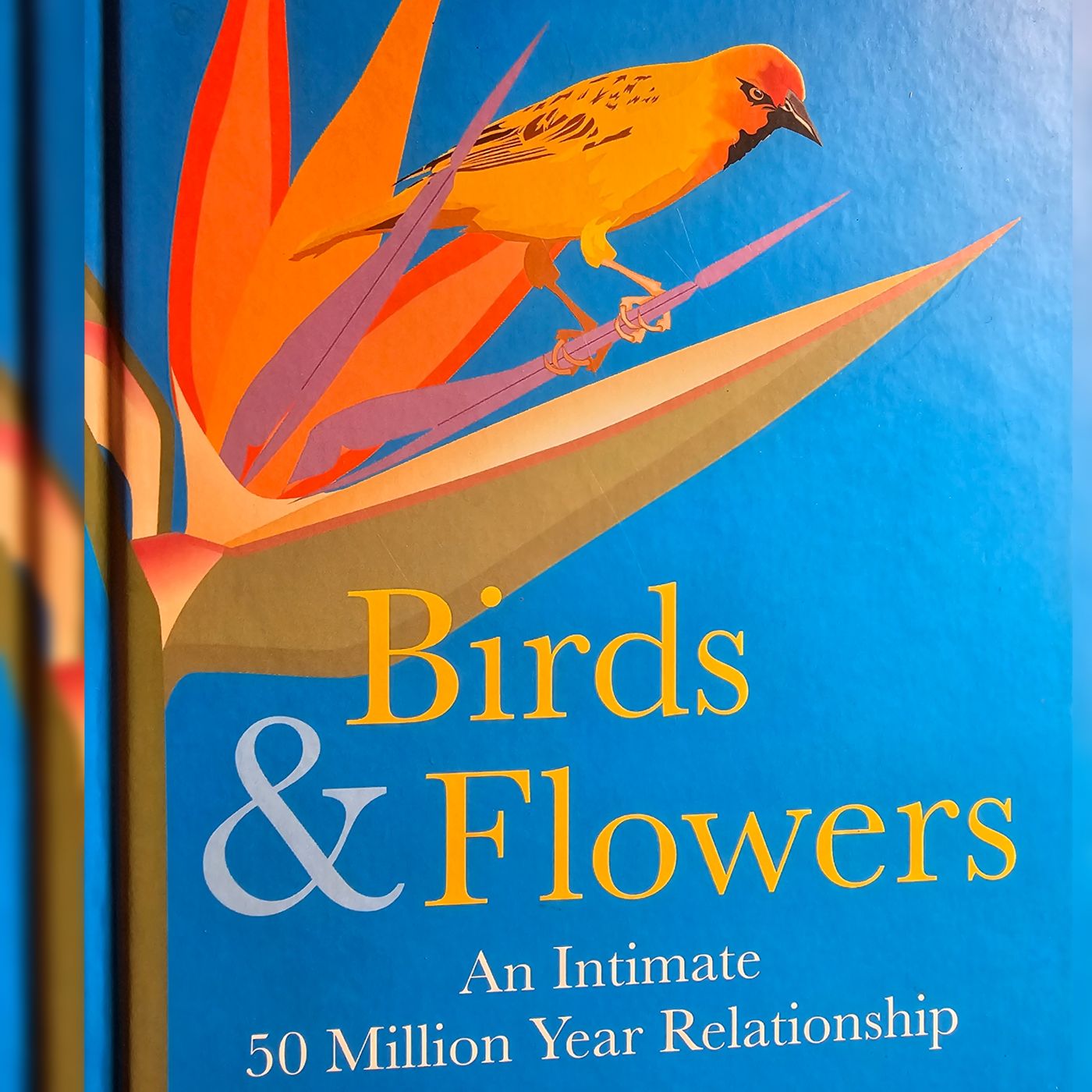
Jeff Ollerton is a pollination biologist and researcher based out of the EU and currently working in KunMing, Yunnan Province, China. He has written two excellent books - one entitled "Pollinators and Pollination" and another entitled "Birds and Flowers" about birds as pollinators. In this nearly two hour long conversation we talk about a variety of taxa as well as ecological phenomena. I am still kicking myself for forgetting to bring up the topic of the South African monocot genus Strelitzia (Order Zingiberales) which has a weighted-lever-mechanism that allows only birds to access the stamens.
2024-05-28
129 min
Transcript
Available Results
Generated results are saved to the knowledge database for reuse and search.
No generated results are available for this episode yet.
Extract Knowledge
Pick what you want extracted first. Model, scope, and chapter options appear after a template is selected.
Generated results for public episodes are saved to the knowledge database so they can be reused and searched later.
Transcript
Okay, welcome to another episode of The Crime Pays, But Bodany doesn't podcast.
Today, we have a very special guest. I'm very excited about this,
and he's actually in China right now, so there might be a little
bit of a delay. There might be a little bit of a lag in
the conversations. You're just gonna have to deal with that, but it might.
You know, normally I like conversations where people interject each other that way,
if I say something dumb, someone can cut me off before I go
too deep with it, go down a wormhole. But we're just not going
to have that that luxury todays anyway. My guest today is Jeff Ollerton,
who is a pollination biologist and researcher and basically studies pollination ecology, which is
something that I've become extremely interested in and it's gotten me into entomology and just
noticing all these little relationships that ten years ago I never would have paid attention
to. So, Jeff, how are you doing? Doing really well?
Joey, Real pleasure to be to be here with you. I'm a longtime
fan of the videos. I think anyone who brings botany to the mass has
got to be celebrated. So yeah, it's a real privilege. Thanks for
having me, well, thank you, yeah, thank you for coming on.
Yeah, man, I just you know, I've got a little bit
different of a demographic audience than most botany botany podcast I suppose, but I
think there's a little bit in there for everybody. So anyway, tell everybody
where you are right now. You are in Kunming, You're in u Nan,
that's right. I'm in Kunming, in Yunnan, in China, working
at the kun Ming Institute of Botany for three months. So I've got a
visiting professorship here and I'll be working here for three months this year and next
year and the year after that twenty twenty six, working with a great Chinese
pollination. The college is called doctor zonzing In. And we've got Brazilians over
here as well working with us too, So it's a it's a real international
science fest if you like. Yeah, no, it's great. It's great.
And Kunming Institute of Botany, I know you've spoken with Peter Bernhardt about
it. I mean, it's just it's an amazing center of research here.
A lot of taxonomic research, but you know, genomic research, a lot
of stuff around evolutionary biology, and you know, the pollination ecology is really
taken off here. Who funds it is it? Is it funded by the
government or is it private or what? So? Funding from different governmental levels.
Mostly it's it's yeah, So Kunming Institute of Botany is part of the
Chinese Academy of Sciences, so it's funded at that level. But also the
specific funding that brings me over here is from the Yunnan government, the province
of United That's so nice, yeah, because in the United States we're defunding
all this stuff. So yeah, exactly exactly, and China has long gone
the other way and has always seen the incredible value of botany, of plant
science and so on. Actually, the the Brazilian post docs who are over
here at the moment are being funded by Brazil, I think by their state
their state government might be might be South parallel, but you know Brazil,
you know, okay, it had a little bit of a blip recently,
but they seem to be back on track and they're willing to fund basic research
in botany. Ye when I was in men As, Jerias and we were
in real too, I mean, there's a guy, there's a wealth of
great botanists at the universities there. There's a lot of really cool people studying
really cool subjects. You know. Yeah, yeah, I had a sorry,
I had a real privilege of teaching a one week course on pollination ecology
back in twenty thirteen at University of Campenis and then did a bit of a
tour around giving lectures at universities and so on, and going to a symposium.
And the post grads there were just phenomenal, just so committed, so
tuned in to their subjects, and I think almost all are possibly all of
the postgrads who I worked with them now have now got permanent positions at Brazilian
university universities. They were just phenomenal. I don't want to get off track
here, but I got to ask, what is the opinion of the It's
the opinion among I mean among people, scientists and other countries. Are the
United States and the direction that we're headed. I mean, surely they hear
about this, like closing or bariums, defunding programs, you know, all
this stuff. I mean, without going into it too much, you know,
I don't want to be a drag, but what do you what do
you hear. I mean, it seems really silly, what's going on in
my country. There's a lot of that sort of stuff, which you know,
you talk to Chinese botanists, for example, and they just don't understand.
They say, why why is this happening? European scientists as well,
you know, just can't figure out. I mean, I mean, you
know, we can talk about cultural differences and so on, and you know,
the Chinese may say, you know, why are they doing this?
Is it something about the American culture? What is it that we don't Understanduropeans
who hopefully, you know, kind of culturally more similar to what's going on
in America, they don't understand it either. But then then again, you
know, it's not just an American phenomenon. You know, you probably know
what's happening at Q at the moment. They've got this idea to move the
herbarium collection out to a tank called Reading, which is what one hundred miles
away something like that from Q. That herbarium has been there for the best
part of two hundred years, and I mean it's a center of excellence for
taxonomy, it's part of Q Gardens, and yet what seems to be purely
for financial reasons. They want to move it out and put it in a
god forsaken industrial warehouse sight in Reading, and if you've ever been to Reading,
you probably what they're gonna do with the spot where the iberium is.
They're going to try like rent it out for corporate events and weddings or something
like. That's what would happened in America. They get rid of the irbarium
and they're like, sorry, we've got to make this a revenue stream.
We're going to rent it out for you know, TACKI corporate events and private
weddings. It could be that, or it could be for apartments, or
it could be you know, god knows what they'll there'll be money making behind
it. Uh you know, yeah, it's it's I think ultimately it's it's
all about the money. Yeah. Well, I think America leads the way
and creating a society of dummies. I think that. I think there's like
it. I think there's very there's a lot of intention behind it, because
I think that's what our economy is predicated on. Unfortunately. And meanwhile,
yeah, countries like China, I hear about the stuff they're doing over there,
and I'm like, Wow, they're they're funding these things. They're going
to have all these smart people, you know, and we're going to be
eating water Burger and driving everywhere and getting diabetes at age thirty five. So
anyway, all right, well, moving at the brighter subjects. I just
I could go on a rent. It's it's hard for me, but it's
you know, I just anyway, yeah, I know, so you actually
can I sorry, Joey, can I say just one other thing there?
I think you know, I was talking to somebody yesterday who uh has actually
worked at Q for for a long time, and we had a long conversation
about this, and actually, you know, one of the the big you
know, macro things that I think is driving this is the move towards seeing
botany as purely, purely through a molecular lens. So the idea that we
we don't actually need people to go out in the field and collect plants,
we don't actually need people to study specimens in a herbarium or a botanic garden.
We can do it all through through looking at DNA or an age you
know, mix proteo, mix all of these things. And it's in its
show so short sighted and that's where a lot of the lot of the funding
has gone. That's where a lot of the money is going. But it
is just incredibly short sighted. Yeah, it's a you can't study ecology through
DNA alone. I mean, you can't study the relationships that exist. You
can't study all these cool phenomena just by looking at DNA codes. I mean
it's you know, I've been hearing that for years, like four or five
years, all this focus on molecular versus on doing actual field work, and
I don't understand why. I mean, the field work is the fun part
of botany stud going out there to study and get dirty and get rained on
and get stung and get sunburnt and all that. That's the fun part of
who wants to spend their whole life in a lab. It's the nice part
is you get to spend some time in the lab and then you go out
and you get all messed up and come back with what you found, study
it. You know, where do you think that comes from? I think
part of it is is the fact that it's easier to attract money if you
got a bright, shiny new laboratory that you can show people around you.
You show a bunch of fundas, uh, you know, a wizzy new
DNA sequencing machine, and they go, Wow, fantastic that you show fundas
his Joey, he's just come back from the field. He smells like shit,
and he's got cactus spines in his ass. It doesn't have the same
kind of impact. I feel like you know me over We've never met in
person, but I feel like you know me. Cactus spines in his ass,
some blood on his yeah, yeah, yeah, man, I don't.
My friend Martin Grant has been saying that forever this focused on moleculary and
I think, yeah, it's for money making and and there's some you know,
if you decode life then you can figure out what to exploit from it.
Maybe or you can I don't know. Anyway, it sounds really boring
and that fun so well, okay, so but moving along. I want
to get into this because I I you know, it was Peter Bernard actually
was one of the main guys, and you because you know he's had us
on email chains forever. Uh looking who got me into looking deeper at all
this stuff? I mean, I especially you know he's done a lot of
work with orchids. He's always mentioned what elevation are you h and kunming.
There's a lot of orchid diversity there isn't there? Yeah, there is.
I think we're just under two thousand meters. Wow. Wow, I need
to work that out. And the feet. But it's yeah, it's like
sixty five sixty six hundred or seven thousand feet maybe, yeah, yeah,
something like that. It's it's high enough to you know, if you walk
up a steep slope, you can you can feel of the heaviness in your
in your chest. It's high enough for that. But but orchids, among
I mean of any flower type of orchids especially are the ones to really get
you looking deeper and being you know, realizing, Wow, there's a lot
of complexity here. This is a puzzle, you know, in the way
society used flowers historically has been there. They're pretty, and that doesn't mean
anything to me. I don't mean that doesn't mean anything. I think it.
I think a Chase Bank on fire is pretty. I think that guy
that paints Wells Fargo, you know, on paints canvases of Wells Fargo,
you know, on flames and a strip mall, I think that's a lot
of people wouldn't think that's attractive. Attract you know, attractiveness is just subjective.
What's interesting to me about flowers is what's you know, these the the
ecology, these evolutionary relationships that have existed for in some cases millions of years.
That that you know, the specialization, the specificity, the the fact
that there's orchids that mimic you know, orchandsperencis that mimic insect pheromones to get
you know, the male insects over there to pollinate them that they don't have
to produce nectar that entrepreneurs. There's so much there, it's crazy. And
I and when you look closely at some of these like I didn't even know.
I guess I did because I took a photo of it, but it
didn't really click with me. That you know, melianthus for in sense that
photo of mine you used in your your book, which I want to talk
to you about the birds and flowers but produced black nectar. You know,
I could tell they were bird pollinated, they were red, They've got the
the opening of the corolla is perfect for a bird to get its head in
there. But you know, when you look at these things, suddenly flowers
aren't just these these kind of corny ideas of beauty. They're these incredible evolutionary
puzzles where each one represents a different riddle, where it's like, what did
this evolve with? What pollinates it? If it's long, white tubular,
probably a moth. If it's white but not very tubular, probably a bat
you know, blooms at night. Uh, you know it's it's so it's
so wild, man, it's so cool? Is that? How did you
get into all this? Were you a botanist first? Were you a biologist
versus? Did you know you wanted to study pollination biology first? Or what?
Okay, there's a lot of questions in there you could you could answer
one or a few or whatever whatever you feel like. Where's a casual podcast,
that's it. Let's some pet of this. I mean, yeah,
obviously, I completely agree. I mean there is a surface beauty to the
flowers. But you know, frankly, even the ugly flowers, or the
flowers that most people would consider to be ugly, have a beauty. You
know, don't over intellectualizes, which you could say an intellectual beauty. Once
you really understand what what what the flowers are? How they have evolved how
they manipulate pollinators. That's one of the things that really really fascinates me.
Yeah, when when I was teaching at universities and teaching on field courses and
so on, one of the things I used to enjoy doing was was showing
students how just that, how, how how flowers can manipulate pollinated behavior,
but also pointing out that the flowers themselves show behavior. Plants have behavior,
yes, And for a lot of these students who have been very you know,
have been drawn to ecology or biology because they want to study monkeys or
birds or whales or sharks or whatever, suddenly to have their eyes opened about
how plants can can can have behavior, can do things which are in their
interest and not in the pollinators interest, you know, is mind opening for
some of these these students. And it's i it's a long standing debate about,
you know, whether plants really do have behavior. And I think for
a lot of zoologists they like to define behavior on animal terms. And if
you define behavior in animal terms, then by definition, plants and fungi don't
have behavior. But if you have a wider definition of what behavior is,
then yeah, there's no reason to say, the plumpstone. I'm glad you
mentioned behavior because that I think plants absolutely do have behavior. I mean,
that's something that I just I just started saying that. I mean, at
some court, at some point over the course the last four or five years,
I just started saying, how does it behave? You know, how
does it behave? In an ecosystem? How does this thing behave? And
I mentioned that in this book that I just finished putting together, which was
a total nightmare getting all this. It was really stressful. It was like
an emotionally traumatic experience. I'm sure you've written a few books. I'm sure
you know, but but I mentioned that in the book, like how does
it behave? You know, to to think of a plant behaving? Many
people don't because they think it's split second time. They think in meediate,
you know, in terms of immediate time, if you zoom out in terms
of you know, I guess like temporally too, think more long term instead
of you know, instant plant's not going to wave a little leaf at you,
you know, hi, not like that. It's like a plant.
The way it behaves in any system. It's relationship with pollinators, with fungi,
with microbes with dispersers all that it's it absolutely behaves. And there have
been so many minutes, so many moments when I've I've been in the field
looking at something or encountering a new plant and just perplexed by a flower and
then suddenly it clicks, or or pets perplexed by a trade about a plant,
and then suddenly it clicks, and I'm like, oh my god,
that's incredible, and that I get this shot of dopamine and serotonin, and
that's what keeps me coming back. Like you, you realize what it's doing,
you know, whether it's it's getting a moth to pollinator, or whether
it's like a cactus that stops producing a certain kind of spine at nine feet
like BROWNINGI it does, and because it evolved with herbivores eating on it and
herbivores can't reach over nine feet anyway, or whether you're You're New Zealand you
see all the heteroblasty among leaves, juvenile leaves and adult leaves, and you
know all this these traits occurring, and it just, man, it feels
so incredibly good. I don't know, I guess, like you, wow,
this is I'm putting it together. This is incredible. Yeah. Yeah,
yeah, no, it's a kind of a yeah, it's a it's
a drug for the soul in a sense. It does give you a just
a yeah. I don only get too hippy about it, but kind of
a connection. You can get a little it's fine, it's fine, we
do that here. Get loose, you know. Yeah, it's give you
a good example. For about oh got sixteen years, I think every year
I took a field course to Tenerif in the Canary Islands, which has got
the most fabulous endemic flora. It was the island that Charles Darwin really wanted
to visit when when he first set foot on the Beagle, set sail on
the Beagle and they weren't allowed to visit because of the outbreak of a cholera
back in Britain, have to quarantine the ship and so on. It's it's
a well known story, but in many ways the Canary Islands are a sort
of an Atlantic version of the Galapaicus Islands. You've got the same sort of
radiation of species within there, and so for you know, for about fifteen
sixteen years, I took a field course there every spring with some undergraduate students
and just introduced them to the flora and fauna of the islands. And one
of the plants that we studied there was a species of arisimum in brassicasi the
cabbage family, where the flowers open are very pure white on the first day,
and by the second day they've started to darken to a sort of a
light maaw of color, and by the time you get to sort of ten
days, these things are a vivid purple color. And you end up with
an inflorescence with maybe ten or twelve flowers on it, which from a distance
looks purple, and when you get in close you see white flower on the
top and the rest of them are purple. And so I got the students
to do things like measuring nectar in the flowers and looking at rates of bee
visitation to the flowers because it's bee pollinated. And what we found is that
when the flowers first open, the white flowers, they're full of nectar,
and then as the flowers get a little bit older, they gradually have less
and less nectar. So by the time the flowers are eight nine days old,
they've completely ceased to produce nectar. And what you find is that all
of the visits by the bees are to the white flowers because the bees learn
that that's where they can find the nectar. And of course, from the
plant point of view, that's a that's an advantage because they know they don't
want the plants don't want the bees to visit the old flowers that have already
been pollinated. They want them to visit the new flowers. So the plants
are manipulating the behavior of these bees. Pavlov's dog kind of associate of learning
thing going on here. But then we wondered, you, so, why
are they the plants keeping these purple flowers. And so we did a whole
set of experiments where we stripped off all of the purple flowers or you know,
made inflorescences of all white flowers. And what we found was that the
purple flowers are a long distance attraction to the to the bees. They see
them from a distance, and then when they come in then they focus on
the white flowers. It's like it's still serving a purpose. Exactly. Wow,
is echium is on the Canary Islands, right, isn't there? It
is? Yeah, yeah, there's been a radiation of echiums. So the
famous one is is Echium wild prettii, which they it's called Tower of Jewels,
which is this big monocarpic red flowered species which occurs just on I think
there's the main populations just on the top of ten a Reef. I think
there might be a population on one of the other islands. But yeah,
it's pretty much endemic. Now, that's that's absolutely spectacular. Tell people what
echiem is because I've only encountered it in California, where sometimes it's invasive.
But that's a hell of an invasive plant, I'll be honest. I mean,
even I see and I'm like Jesus Christ, these are cool, these
huge cones right of hundreds, if not thousands of flowers. It's in varagnasi,
so it's got this kind of like hispid, those stiff hairs. But
how many different species, I mean, it's just the when you say radiation.
How many species are the time on the Canary Islands. I think you're
probably talking twenty something like that, And each island seems to have its own
endemic species or a couple of endemic species, some of which are like these
kind of monocarpic you know, mass flaring things will grow for a couple of
years and then they'll fire off their inflorescence. Others are much more like you
know, what we might expect. In Europe we call them but blosses vipers,
but losses is the famous one in Britain, which are more smaller,
kind of more herbatious things. And then you've got others that are sort of
woody shrubs with sometimes monocarpy stems flowering stems on there. So it's yeah,
it's it's a it's a pretty cool genus. What is so what is your
I guess with all the all the cases you've studied, I mean, I
guess I want to talk about bird pollination too, But first I mean,
just in terms of extremely specialized relationships, what is one of your favorite to
highlight, you know, when you're explaining to people how cool and specific these
relationships can be between pollinators and plants. Yeah, so you mentioned or kids,
but you know, with all due respect to Peter, you know,
orchids, smoke kids. It's it's a it's a great it's a great family.
But there are so many people who who who've been studying studying or kids.
It's it's it's not a family that I've that I've really worked on.
I'm much more interested in family of possen ac and particularly the milkweeds within within
a poss and ace. Uh And you know, I know that when North
Americans hear the word milkweed, they think a sleepiers and they think monk applies
and so on. But actually that that subfamily of a possanace a Sclepio deidy,
which used to be family A Sclepia daisy, is worldwide, mainly centered
in in the tropics, but also in sort of dry subtropical areas, particularly
in Africa and uh uh and the Americas, and just has some absolutely fascinating,
highly specialized interactions but also a lot of very generalized interactions as well.
I mean, it's you know, sleepier is being being a good example.
So if I had to choose an example, I probably talk about Syrupeggia,
which there's at least one species that's commonly grown as a houseplant, Serrupeggia woody
I, sometimes called string of hearts or hearts on a on a vine,
which produces these these mottled, heart shaped, slightly succulent leaves, but also
these these really cool flask shaped flowers, and in fact, the name Cirrupeggia,
if I remember rightly, translates as wax fountain, and that's that's a
pretty apt name for for those flowers. And they have a trapping system for
the pollinators. They temporarily trap always very small flies, I mean a millimeters
two millimeters in length, within within the flowers and they trap them for twenty
four hours. The flies, can you know, hunter infinectar, deposit pollen
area that are on the mouth part, or pick up the pollen area that
are within the flower, and then they're released. And it's only in the
last few years that we've begun to realize just how complex the relationships are between
these flowers and those flies. And some of that work by a German woman
called Anne Marie Heyduk who's worked with some South African and some Chinese species,
and what she discovered was that the flowers she studied produce a scent which mimics
the smell that is given off by insects when they're being attacked by spiders.
Yeah, yeah, that's crazy. I just read at something that epipact does
with that to that's crazy. So how do these because I can see how
someone could go down a wormhole, you know, and you hear this with
that creationists they're like, oh, look the plant knows it's it's proof of
Well, no, it's not. Really. Turns out, these these chemical
compounds are kind of they're not that hard, you know, like the wiring
is kind of already there, like it's there. It's not that hard to
end up there through natural selection. Is that correct? Yeah, yeah,
yeah, that's that's correct. So, so you know, the the flowers
are attracting the flies, the group of flies called jackal flies, which would
normally be attracted to the the the struggling insects in a in a in a
spider's jaws, which which often you know, will produce fluids from the body,
and these jackal flies feed on those fluids. So the plants are effectively
they're mimicking the the the the the insect that's been caught by the by the
spider. I think, you know, the answer to to the creationist is
there is that again, it's about time scales. You know, we don't,
as we said earlier, with plant behavior, we don't have a good
understanding, a good feeling for the kinds of time scales that's involved here.
We can talk about a million years of evolution, ten million years of evolution,
but we can't. We don't feel that in our gut. You know.
We might, you know, halfway through the month, we might say,
okay, another two weeks before I get my next paycheck. We have
a feeling for that, but we don't have a failing for what are ten
thousand years is or a million years or a ten million years. We're unable
to zoom out. Yeah, We're unable to zoom out. And for me,
the comparison al Wes make is, look at what humans have done with
human selection, human breeding, whether it's dogs breeds, different breeds of dogs,
all the same species, Brassica called Robbie, you know, broccoli or
broccoli, cauliflower, all the same speed. She's of brassica, you know.
And now imagine that if humans can do that in ten thousand years,
imagine what the environment can do in millions. It's it's boom. It's easy
to think about it, but it takes out though, you know, yeah,
yeah, exactly just after I arrived here in Kunming, at the how
long have I been here? In five weeks? I had a two around
the seed bank here they've got an amazing seed banking facility and we had a
we had a two around and one of the things that they showed us was
this set of test tubes and four of them had soybean varieties in them,
and the fifth test tube had the wild progenitor of soybean in it. And
the wild seeds are absolutely tiny, you know, in comparison to to the
varieties that. Yeah, as you said, we've selected over centuries, possibly
possibly thousands of years. There's there's actually folk atograph. I took of that
set of test chibs on my website, on my blog on my website if
people want to, yeah, what is that, let's give a shout out
to that really quick. So if you go to www dot Jeff Ollerton dot
co dot uk and you'll see that the blog is highlighted on they have I've
got I'm doing a sort of a China is a diary at the moment,
and I think that particular blog post is like the second or third that I
put up there. But it's just and it is, you know, it's
I think I'll call it seeds have a power beyond their side, and it's
just, yeah, that the power of human selection that we can do over
the course of yeah, decades of centuries. Imagine what natural selection can do
over millions of years. Yeah yeah, Well I'm looking at you. I'm
looking at at your book, at this photo of these echia man, Jesus
Christ. So the Canary Islands are mostly volcanic, right, that's what it
looks like. Yeah, yeah, they're ovo coming here. I got these
cones. Yeah, they look like Hawaiian silver swords. They're just huge,
man, this red species. So okay, I just want to get let's
just talk about birds and pollinators really quick, our birds and flowers really quick,
because I we can go back. But that's something that I'm always always
emphasizing in videos. I mean, when you see a bird pollinated flower,
boom, it's so easy to figure out what it is, whether it's a
cactus or whether it's you know, melianthus, or whether it's you know,
a night shade or and lots of I mean I was just looking at photos
of dori Anthe's Palmerii, which is fucking amazing. This is you know you're
familiar with that probably right. It's a monocop from Australia that's bird pollinated.
Uh, I think if I saw a photo, I don't recognize the name.
If I saw a photograph of it, it's really obscure. I only
know it because I used to. I used to just lurk endlessly in the
UC Berkeley Botanic Garden, which it was like going to church or go like
three times a week, you know, And I would and I sometimes take
seeds from them, but then I what I would grow, I would give
back to them to selling their plant sales or whatever. So anyway, but
so I was there a lot, and it was it was instrumental in helping
me learn botany. And I always tell people lurk at the botanic garden you
want to learn bonny look at. And so that place I always hold that
up is like the the A plus standard of what a botanic garden should be,
you know, for science, not for you know, the lawn and
the nice place that it looks nice with one hundred one hundred individuals of the
same plant planted a neat uniform rows. Fuck all that. No, and
this is this is a specimen garden for science. And so they had a
dori Anthe's palmeri ized seedling plant there looks like a four mem or like in
agave gets huge seven foot tall rosette leaves and then it sends up this inflorescence,
this spiral with these huge red bird pollinated flowers. And I mean I
was looking at that yesterday. I would just go there and take photos of
everything. I was studying everything hands on. It was really great. And
uh and seeing that, I was like, oh, this is obviously bird
pollinated. I mean, this is I mean, I'm sure bees probably hit
it too, but this thing evolved with birds selecting for it. So I
guess let's talk about that for people. I mean birds, birds pollinators affect
the evolutionary trajectory of a plant species because they are selecting for it the same
way that humans do with our crops. Birds, for instance, select for
that the flowers that are more conspicuous to them and produce more nectar are the
ones that are going to get pollinated by them. And what I guess what
causes that? Like what causes a bird specially or a plant to to for
a bird to specialize on a plant more so than a bee? Like is
it elevational stuff? Like why are some plants more adapted to bird pollination than
insects? It's a really good question. And again there's a hell of a
tompock on that. I mean, well, I'm going to quote myself from
the book. Actually, there's there's a there might be two points in in
that book where I say something like it's often easy to tell that a that
a flower is bird pollinated, but you often can't say that it isn't bird
pollinated. And there's a really good example in there in one of the plates,
which is a cactus species from Argentina, which is studied by a colleague
of mine, Pablo Grastiage, which has got white tubular flowers, and it
looks you know, we're talking about here is pollination syndromes, and what it
looks like is that it you know, it ought to be moth pollinated.
But he spent hours and hours and seasons and seasons in the field studying this
thing and found no moth visits at all. What he found was visited by
by birds, by non non specialist birds. They weren't there weren't hummingbirds,
I think canagers. I remember, rightly, I haven't got the book in
front of it. Is this econapsis Luken that you're talking about Lucanther? Yeah,
yeah, the white the white flower Econopsis, and it's bird pollinated,
but it doesn't look as if if it is so. So you've got I
think you've got two things going on here. You've got you've got birds driving
flower you know, color size, morphology, nectar characteristics in a very kind
of obvious way. You read tubular flowers, and you know all of all
of this sort of stuff. But you've also got a bunch of flowers that
are using birds and exploiting birds, either either solely or you know, sometimes
together with things like these or butterflies, which don't conform to those sort of
syndromes. And that's one of the reasons why I wrote that. I wrote
the book to show that, you know, it's it's much more complex than
than perhaps a lot of the textbooks would would suggest. But also the range
of different birds that actually can act as pollinate, which you know, my
calculation in the book is something like seventy four of bird families across eleven different
orders of birds have either been confirmed or a suspective of being pollinators. And
so humming birds, you know, one family in one order, you know,
there's another seventy three families and another ten orders there. So it's much
more than just humming birds, and it's much more than just this these kind
of stereotypical flowers, and it's important for the birds. You know, obviously,
things like hummingbirds specialize on nectar, but they don't just eat nectar.
This is one of the great myths about hummingbirds that they only feed on nectar,
but actually humming birds will eat lots of insects, spiders, occasionally,
fruit juices and so on, and the invertebrates are a really important part of
their diet because you can't make bones and you can't make eggshells from nectar,
which is mainly sugar and water and a few amino acids, so they have
to have to have that. But then you've got a whole bunch of things,
like you know, New World warblers, which often migrate from from North
America down into central or northern South America, and when they're down there in
the in the tropics and subtropics that they're often feeding on flowers there just to
increase the amount of energy that they've got to make the return the return flight.
There's a there's a great citizen science project being run at the moment by
a woman called Carol and Coil where she's asking bird banders to swab the birds
as they're migrating northwards, to take the pollen offs and send it to her
so she can identify the flowers that are important for this migration. And that's
the other time to think go ahead, Sorry, no, no, was
say so. So part of it is about, you know, the way
in which the birds can dry. Floral evolution and the reason why flowers might
switch from insects to birds is a bit of a mystery, to be honest,
And that's one of the things, like I discussed in the book.
But the other, the other factor is that you know, even if the
birds are not pollinating the flowers, the flowers are incredibly important for those for
those birds. And you say this, you see the same thing with migratory
warblers and tits and so on in in Europe, which are going down into
into Africa feeding on flowers there and then coming back, often with the pollen
still on their bodies. Yeah, I was, I was going to say.
I mean, if if birds fly extremely long distances, much longer than
bees, and if they're bringing pollen with them, they can essentially be linking
you know, plant populations, whether the same species or just con genders,
you know, similar related enough species in a genus to be creating, you
know, either hybrids or just linking them, linking those populations, you know,
genetically, which is wild to think about. I mean, across mountain
ranges, whatever there was. When I used to live in Oakland, California,
I had a one of those carantho Forremacha hybrids. You know, it's
a hybrid between the caranthodendron which grows in the Wahakan cloud forest at like nine
thousand feet wonderful fucking tree, and a hybrid between that and then fermentto dendron,
the native California flannel bush and this thing. They grow fast, they
need full sun. They take over there. They're really it. They're a
hybrid tree. They're not natural, but they're an epic tree and a living
bird feeder. I mean, these these baseball sized flowers would fill with nectar.
And I had these California scrub jays, which are a hilarious bird.
They're corvids. They're super obnoxious in the most wonderful way. I can relate
to them and you can get them to feed. They take well to human
You can get them to eat peanuts out of your hand and stuff. And
I would do that and this thing would come to my window, my second
story window, every day, you know, letting me know. It was
there, very angrily demanding peanuts, and I give it peanuts. And it
had pollen all over its face from the the and that was what was cool
too, is the the I guess it was an andro forror. I'm not
sure what the I have to look up the technical turn. But on you
know front for Mancia and on these Carantha formacha flowers, it's like it looks
like a hand. It's like a fusion. It's a fusion of the sexual
parts. Andrew seem the guy that you see on the same structure, and
it looks like a hand and it's just perfect shape for a bird's head to
dust their head with pollen. And then the style is there too. And
so this thing would come to my it'd eat out of my hand. That
always had yellow pollen all over its head. It was hilarious. It's so
it was drinking this neck. Yeah, yeah, yeah, I'll have to
check that planet. I'm not familiar with that plant. I'll have to check
it. Out. But but but what you've ident to fight there actually is
one of the real contradictions in bird in bird pollination, and something that we
still don't understand. So yes, what you what you said earlier about birds
flying longer distances and linking together isolated populations of the same plant or possibly congenerates
con generics is absolutely right, and that's thought to be one of the advantages
of bird pollination. But at the same time, and there is there is
some evidence for that, there's genetic evidence for for that. But at the
same time, you've there's an argument that bird pollination increases the rate of speciation
amongst plants, particularly in the andes. So those those and those two statements
seem contradictory to me. You can't have it both ways, you can't.
You know. One of the one of the reasons we get increased rates of
speciation is because of genetic isolation, and isolation if you've got I got a
long distances, yeah, yeah, yeah, So I unpacked that a little
bit in the book. And and but basically I'm shugging my shouvelersn't waving my
hands and saying there's still a hell of lot we don't understand about what drives
birds as pollinators, you know, particuarly when you consider, you know,
the insects got there, you know, maybe one hundred eighty to one hundred
million years before the birds got got there. The subtitle to my book An
Intimate fifty million year Relationship refers to the fact that the earliest fossils that we
have which indicate perhaps bird pollination about fifty million years. Oh, you know,
chrise birds. I couldn't the dynostay it took the dinosaurs get knocked out
for the birds to really have their heyday. But what I want to know
is, God, the just the change in Earth's flora after the k T
extinction too is nice, you know, kind of first starting to drop out
talk to a guy that studied that. I mean, just pale o'banna's just
wild stuff. But the thing I want to know is what was going on?
You know, Like this is kind of I don't want to change the
topic too much, but I want to ask you. We'll come back,
like during the Jurassic like what was why did insect pollination not evolve at least
from what we know to such a large scale during the Jurassic because you look
at most conifers and things like that, their wind pollinated. Maybe there was,
maybe there was beetle pollination on psychads or psychad like plants like the Benetta
I always mess up that Benetta Tailey's or bennettailor whatever, you know, those
cyciclat what But what was what was going on? I mean, do you
know why why beatles were pollinating things or what was going on back then?
Well, if you look into the the the paleo ecological literature that's that's come
out in the last decade or a bit more, what we're seeing is whole
groups of insects which seem to have adaptations for nectar feeding, you know,
long long tubular mouthparts, but which belong to families and sometimes orders that are
that are now extinct or which are incredibly rare now and sometimes carrying pollend that
belonged to some of these extinct groups of gymnast ferms, things like psychedophytes and
Benetta tailies and so on. So actually, I think there's been a kind
of a shift in our understanding there that we now think that in fact,
most of those gymnast ferms were in fact insect pollinated and the evolution of wind
pollination is possibly a later development. I mean, the conifers themselves don't have
you know, the modern conifers, many of them don't have a deeper evolutionary
history, and so the wind pollination aspect of it. So my kind of
back of the envelope calculation, I think about forty percent of the extant gymnasperms
things like the psychads that you mentioned, but things like well, well witchier,
which I know you've you've seen in Namibia right right, yeah, yeah,
yeah, and things like a fedra as well. They are they are
all insect pollinated. So maybe forty percent of the extant sperms well witch here
is insect palinating. I thought there was still yesterday about that. Yeah,
you see insects crawling all over the if. I've seen it in Namibia as
well. You see insects there often. I mean, okay, it might
be ambophalous. So a combination of insect and wind pollination, which is much
more common than we than we previously realize. I assumed that things and well
witchia were pollinating it too, but then someone else said, now they're just
feeding on it. They just live and they were witchy of bugs, they
just you know, but if they've got to be exchanging power in a little
bit, if they're flying, because these things are mobbing up on these things,
you know, on the plants. Yeah, yeah, yeah, that's
right. And they move between the plants as as well. I've seen them
too, and there's a little bit a bit that's been published on them.
But yeah, I think there's there's very good evidence, substantial evidence that will
which is insect pollinated. But again, if you go back into the fossil
record, you know, all of these extinct groups, a lot of them
look as if they they're insect pollinated. So the you know, the evolution
of the flowering plants and the late Jurassic early Cretaceous, they were evolving within
a millieare of insect pollination that was already happening. They just happened to do
it better than any other groups. There were incredibly successful for a whole bunch
of reason. It's not just the insect pollination. But then certainly maybe you
know, eighteen million years years later, say about fifty million years ago,
suddenly some of these start switching over to bird pollination and probably back pollination or
at the same time that we don't have good fossil evidence for that. Do
you think, why did they just get bored with insects? You know,
well, I think for some of them, especially in the Andes, I
know, you know, at higher elevations, it seems like birds are certainly
more active in those chili temperatures than bees and maybe some flies, and so
maybe bird you know, that might be a reason why, I mean,
at least why you see it in the Andes. And there's so much freaking
humming bird diversity in the Andes. Man, it's wild. But and I
mean this is a worldwide thing obviously, like you see it everywhere. You
see bird pollination very common in South Africa and Australia. So what are they
going for? I mean, is there a change in the kind of nectar
that a bird would go for versus the kind of nectar that an insect would
go for? Certainly in the amount, right, but in the is it
starchy or is it a different kind of sugar and bird pollinated flowers or what?
It depends on the birds, and it depends on the flowers, and
it depends on the part of the world. It's it's kind of complex.
I mean, some of the archetypical bird pollinated flowers tend to have relatively large
volumes of nectar, as you suggest, but with relatively low sugar concentrations,
and that might be a strategy to dissuade bees from visiting. For example,
that bees tend to go for nectars with higher sugar concentrations, so the comparison
will be, you know, maybe something around ten to fifteen percent sugar in
the nectar for a bird pollinated plant versus thirty to forty four bee pollinated plant.
But there are exceptions to all of that, and the main thing is
is, you know, it's about the intake of energy per per unit time.
So if a humming bird can visit you know, ten very small flowers
in a minute and get the same amount of energy, then they come from
visiting one very large flower, I mean, and they often visit the ten
small flowers, and you know, you know yourself, humming birds will visit
pretty much anything, you know, including artificial humming bird leaders. There is
there is thought to be a switch in the types of sugars going from sucrose
dominated sugars through to hexo's sugar dominated sugar nectars from as you go from specialized
to more generalized bird pollinators. But again there are exceptions to all of just
a longer chaine sugar or something is like a more comp like sugar. No
no, no, you split sucrows into two hexos sugars, glucose and fructose.
So so it's yes, it's an endomatic reaction that that splits the sucrose
into into the two hexos sugars. But but you know, one of the
things we're doing here in yunan Is is looking at the range of of birds
which are visiting flowers in and around Kunming, in the urban center here and
also in the botanical garden, and we're finding that, you know, sunbirds
are visiting all kinds of different flowers that that you wouldn't necessarily expect them to
visit. But also there's a there's a group of birds called the white eyes
zosterops Is. The is the genus which again have a huge dependency on on
nectar, particularly in the winter here. So a lot of the plants winter
flowering cherries and so on that are being visited in that are flowering in the
winter are being visited by birds because it's an important source of energy for them.
In the winter, and without those flowers they probably wouldn't get through the
winter months. Yeah, the diversity of is nuts to. I mean there's
a there's a gave polyanthe flora, a little dwarf the gave that's hummingbird pollinated.
It makes these little pink and red flowers. There's you talk about PuYas
in the Andes. You know these Puya ramandi i, which I was able
to see they had that at UC Berkeley for I think they've still got one.
I don't know when it's gonna bloom. But Puya is especially kind of
nuts because this there's a clade in that genus, there's a subgenus or a
section or what, but a clade that's created its own little perches for birds
to pollinate them. I mean, it produces these sterile branches to the otherwise
fertile inflorescence. And these these sterile branches act like a perch for for birds
to hang out and stick their face and the flowers to pollinate them. It's
so cool to Puya calensis and Puya remandie and Puya what's the Birderoniana or or
Pestris whatever it's called. Now, So, did you have you seen those
studied them or yeah, yeah, I have been up in the Andes doing
some work quite a few years ago now and I did see pooyas up there
again. You know, it's one of these, uh the stereotypes of bird
pollination is that humming birds hover at flowers, whereas sunbirds and honey eaters and
other thing that's the flower visiting birds perch to visit the flowers. Well,
actually, humming birds, if they can perch, they will perch and feed
the flower. I mean you see you see it on neck on artificial nectar
feeders in the USA, if you if you give them the humming birds and
nectar feeder that has a perch on it, they will sit there and feed
the lazy little beast. Yeah relaxed, Yeah exactly, will yeah, exactly.
And actually there's there's a picture in one of the plates in my Birds
and Flowers book. I think it's one of the early ones of a humming
bird, high altitude humming bird in the Andes visiting a gentianella there and these
humming birds walk around between the flowers. Some work has been done by a
Danish colleague of mine. Yes, persone, these humming birds just walk between
the between the flowers, and that again that makes perfect sense because of the
high altitude, high elevation, should I say, you know, low oxygen
levels, it uses far less energy to walk. But the flip that's cool,
this is this is relatively low growing flora here. This is how high
up is this? This looks high elevation nothing here, I think it is.
I think it's yeah, I think it's kind of four thousand meters plers.
I mean it's it's so that's like thirteen five hundred feet fourteen thousand feet
maybe, yeah, Jesus Christ something like that. But the but the flip
side of that is that there are plants in Africa that are forcing humming birds
to hover. And we know that humming birds can hover quite effectively, at
least for short short periods. They're not as as good as hovering as hummingbirds,
but they will hova to visit some of those flowers. So again,
these stereotypes of what what we sort of expect from from flower visiting birds and
what we expect from flowers that are pollinated by birds, we're sort of exploding
that with with new research. There are surprises around every corner. So okay,
what's up with withks Because this is a cool genus for anybody who doesn't
know. Banks is a fucking epic genus in Proteaca, which is a relatively
old lineage of plants that's got that cold gondwan In affiliate. You know,
mostly Southern Hemisphere, South Africa, South America, A lot a lot of
diversity in Australia and maybe maybe it goes up into Australasia, but I don't
know. Anyway, it's a really cool family. I love it. It's
just so unique. A lot of the ones in Australia are fire adapted.
Banksia especially, you know, really diverse genus, really fucking just incredible inflorescences
and it produces these woody cones, these infractessences, a compound fruit that looks
like a woody cone. But I didn't know that some of them are bird
pollinated, and but it makes sense. It looks like this foot tall pom
pom that these birds are sticking their faces and what are they going for?
I mean, is are there that many Banksias that have adapted to bird pollination?
Yeah, yeah, there's quite there's quite a few that are bird pollinated,
and they're pollinated by various things. Honey eaters is one group that are
Banksier visitors, but also lots of of parrots and parakeet as well. And
one suggestion for I mean, you mentioned the woody cones of Banksia, but
if you hold a banks inflorescence in your hand, that the sexual parts are
really really stiff. In fact, pre colonial Aboriginal people, possibly post colonial
Aboriginal people see that you can use them as hair brushes. I was going
to say, like if they feel like like, you know, teeth of
a comb some of them, Yeah, yeah, yeah, exactly. And
and that stiffness and that robustness may well be an adaptation to the pollination by
by parrots in particular, this can be incredibly dis The fucking birds in Australia
got a lot of attitude. Man, there are some wild bastards down there.
Man, those cockatoos, they're the bin chickens too. Not to mention,
I know it's gonna do the plants, they rate garbage bins. But
still there's what about what do cockatoos do? Because those things, you know,
when I was in when I was in Tasmania, even when I was
in Western Australia, maybe that was a Western Austraia. The were coctile I
can remember anyway, but they were, they were everywhere. I mean,
these things are just making these incredible noises in the forest canopy and they're so
cool. What are they What is their interaction with any of the plants that
you know of? Yeah, yeah, they will visit banks heres, will
visit some of the some of the plants, some of the eucalyptus down there
as well that I think, if I think, I'm not saying they tend
to be more destructive on eucalyptus because the flowers a less robust, but certainly
on banks here they can they can move pollen around and really really effectively.
But they're also seed eaters as well. Of course. You know, if
you look at the beaks of the cocoa two and some of the other pirates
and parakeets, they're they're incredibly tough. You would not want to stick your
finger, Yeah, champ and open chomping, open guard plant material. Yeah
yeah yeah. But but they can be effective pollinators as as well. There's
a fantastic book, I don't know if you know it called Where Song Began
by an Australian bile just called called Tim Lowe, which is all about the
you know, the fact that the passer rhymes the songbird claye almost certainly evolved
originally in Australasia and then diversified out throughout throughout the world. And that's that
encompasses about sixty percent of the of the total current bird diversity, And Where
Songbird Began just just talks about that evolution, but also points out that birds
in Australia are much more aggress of, much more territorial, much more noisy
than birds in many other parts of parts of the world. And one of
the arguments is because of the low productivity of the soils in Australia, because
it's just an ancient continent, this has driven this this sort of territoriality,
this aggressiveness to defend these resources. It's a really really fascinating book Where song
Began. Yeah, yeah, I remember, I think I downloaded it in
PDF format a few years ago, and yeah, it was really cool.
I made it like thirty pages in and then I was I read I remember
reading on the plane back from there. It was really really cool stuff.
But Australia, I means so much. It seems like such a stressful place
in so many ways, and that's why you've gotten all this crazy stuff down
there. I mean, plants that have gimmicks to get around the low nutrient
soil. You know, lots of parasitism. You've got proteoid roots and prote
ac lots of micro rhizal stuff in the eucalyptus and martesi, lots of carnivorous
plants. It's just the and then yeah, the snake thing too. I
mean there there's been so much pressure on there it's nuts. And then you
go to New Zealand and it's like, you know, just mellow and birds,
but birds have directed the evolutionary trajectory of a lot of New Zealand plants
because there weren't any mammals except for best. Do you know much about you
know, birds and plants on New Zealand or what, Yeah, a little,
a little bit. I know. That's things like some of the ground
dwelling parate relatives Taca pose and so on, some of those probably acting as
acting as as bird as pollinators. But you've got things like white eyes as
well, species of honey eaters as well. I do talk about New Zealand
a little bit in the in the book Okay, do you think you know
about divaricating plants there? Right? What's your take? Do you think it
was a climate response? It was MOA's right, come on, you know
it was MOA's doing it. Yeah, almost certainly, Yeah, yeah,
yeah, almost certainly. I think you know, what we see now in
New Zealand is just a fraction of the of the diversity, of fraction of
the fascinatingly different ecology that was originally happening before before humans arrived. Yeah,
the moas and these giant eagles and so on must have been just an incredibly
stunning landscape there. God, that's that was one of the coolest things I've
seen. Talk about it. Oh wow, I get in a moment is
looking at these plants and being like, why the hell would anything grow like
this? Like why would you make branches that do this? Like why would
you make these zig zag with these long nodes between you know, long difference
between nodes and tiny leaves, fascicled leaves, and it's it's such an otherwise
mellow place to grow. It's a fucking temperate rainfalls, man, Like,
why would you do this unless there was a lot of pressure on you from
something, you know, what is that. It's so cool to see that
and be like, Okay, there was something here. I can see the
clues in like forty different unrelated plant species. It's fucking insane. Yeah,
and they're basically creating so this. Yeah. So this is one of the
things that again I emphasize in Birds and Flows, and I also talk about
the bit my previous book, Pollinators and Pollination that you know, when we
lose species, we don't just lose a taxon. We lose the interactions between
that taxon and other taxa. So in this case, we lose the interactions
between the moas and those plants. You know, for pollinator goes extinct,
Okay, that that species is going to extinct, we allso the interactions with
the other species have gone extinct as well. Are You're seeing this in Hawaii
at the moment, you know, where a whole family of fly visiting birds
has gone has gone extinct, but the flowers that they visited, many of
them are still are still extant, and in some cases the pollination has been
taken over by introduced birds. And I introduced being what family of birds went
extinct? And WHI I am not familiar. Uh, it's the I always
get these two mixed up. There's the honey eaters and the honey creepers,
uh in Hawaii. And yeah, and you know, I spent two years
writing this fucking book and I still get mixed up those two two groups.
My my wife is looking at me at the moment because I promised I wouldn't
swear on this podcast, but yeah, leave it to me. I tried.
I listened to of the last podcasts they did, and I was like,
God, I drive so many f bombs. I gotta stop, man,
you know. And I called my friend Christy. She's this She's a
you know, old the lady who grows a ton of cool plants, really
cool naturalist down here. Is like, man, I just did this podcast
with Earnest that curse too much. He's like, well, it's fucking easy
to do. And I'm like, god, you know, but yeah,
that's the last time I squear. But yeah, So it's one of the
I think it's I think it's the the Hawaiian honey eaters, which which are
not no, No, it's the Hawaiian honey creepers, which which went I'm
the Mahoed family. The entire family is now extinct. Yeah, honey eaters,
yeah, okay, that's the one. Honey eaters right, okay,
which were not honey eaters. They look a lot like honey eaters, but
but are not honey eaters at all. So the whole, the whole family
went extinct. And so we had we had species which went extinct when people
first arrived in in Hawaii and the the indigenous people there were hunting them mainly
for the feathers to create these incredible capes and headdressers and so on. And
then after you know, Captain Cook arrived and post colonial period more more of
them went extinct. Remember the last one when it extincts, I mean as
late as the nineteen eighties or nineteen nineties. That's that's real. Yeah,
yeah, yeah, And so you're left with all of these plants which which
no longer have their polemies. But you know, I'm making it sound really
really depressing, but actually the last chapter of Birds and Flowers it's called the
Restoration of Hope. I didn't want to leave the book on a downer because
there is, you know, some incredible restoration projects and species reintroduction projects happening
all over the world for birds, for reintroducing birds, storing habitats for them
as well, some plant reintroductions too, So there is at all sorts of
levels, you know, governmental level businesses, and some of this work local
NGOs, nongvernmental organizations and charities and individuals. I've got hope. Yeah,
I think I've got hope too because I think, especially I think the amount
of resurgence of people caring about this and just becoming naturalists. I don't even
really like that world. Just I don't know what you call it, just
people that appreciate life and have a reverence for life and see humanity's placed in
it, not as this dominator and conqueror and controller, but as a steward
and a part of this and having love for it. I see a lot
of people coming around, and how could they not because the world that we've
created, especially in the US, which is kind of like a third world
country with the Gucci belt. The world we've created is so depressing and just
fucked. I mean it's you know, where I live, It's like there's
streets with no sidewalks, you're stuck in a car, you're farmed as a
consumer. It's just lowest common denominator all the habitat's been destroyed. So people
are coming around and they realize, oh wow, this this stuff feels so
good to be around. It fills a hole within me, whereas all this
makes me feel terrible. So I have, you know, a long it's
a long project, but still I think it. You know, anyway,
I want to so with that the did you have some you want to say?
Yeah, I was so, I was gonna I was just going to
say. An interesting development in China in the last ten to twenty years has
been the increase in interest in bird watching, which was never a thing in
China, or at least it was a very niche thing. But now suddenly
all of the parks and public gardens that you see around around China are full
of people with big telephoto lenses or you know, binoculars and so on looking
for birds, photographing birds, taking an interest in them. And that's a
relatively recent development, and it's partly being driven by technology and social media and
so on, because people want to share their amazing photographs of the latest birds
that they've they've seen. But I think also it's it's generally part of a
sort of a broader reverence and interest in in nature, and that's that's got
to be a good thing. You know. The more people we get out
there looking at these things, it's going to be a good thing. Yeah,
this I mean to me, it's almost become my religion. This is
my thing. I mean, I'm not not so about it. I'm not,
you know, out there standing on a street corner with the sign telling
people who don't believe what I believe that they're going to hell. But maybe
I should. But you know, but it's almost like it's this is something
that you know, I'm I'm just thinking about at all moments of my day
and explaining to people and trying to get people excited about and because it's just
it's everything, you know, it's the it's the fabric of life around us.
It's so I mean, it's such a nice hand. We're part of
it, Like, yeah, we're part of it. We're not We're not
separate right at all? You know. And yeah, and if and it's
you know, it's it's like a house. You don't look after a house,
it'll fall around it will fall down around you. If we don't look
after nature, it'll it'll collapse. And it just feels so it just feels
so good too. I mean I literally get dopamine dopamine shots when I look
at native plant gardens or when I'm out in the field and I realize something,
you know, like what pollinates something, or why a plant evolved to
be a certain way, or how it's its seedlings are germinating half underground like
some of the cact i saw in Brazil and those sand habitats or whatever.
So cool. So okay, well, anyway, we'll get back to plants.
I what's up with lobilia because a lot of Lobilia species. First off,
Lobilia, which is in Companio lacy and the order of astoraelis the order
of sunflowers, So it's does its secondary pollen presentation. It's got kind of
a similar to sunflowers. It's got a fused anther tube with inward facing anthers
and the style comes out and pushes the pollen out, and then that style
later becomes facultative. It becomes fact female, so it's you know, they're
protandrus male first then becomes female. But Lobilia is all over the world.
I mean that lobilia is all over the world. Is that just because it's
got they've mostly got tiny seeds. I mean, you've got some in Kenya
that get ten feet tall. I saw fistulosa and Brazil fifteen feet tall,
fifteen foot tall. Abilia you get ones here in South Texas where I am
now that are eight inches tall. I mean, what the fuck, man,
It's crazy. And a lot of them are bird pollinated too, are
they not? Yeah? Yeah, some of the b pollination seems too to
be the dominant pollination system within within Lobelia's or lobillioid at least. But yeah,
certainly some of those are bird pollinated as well. Yeah, I think
seed size probably plays a plays a big role when when you have relatively small
seeds, they can get attached to bird feathers, bird feet and so on
and be moved moved around. I think there's a lot of mysteries in in
in dispersal of plants around the world. I mean, you know, we
there's this this this apparently native species of cactus which occurs in in Africa,
all of the East coast of Africa and on Madagascar, as well as a
ripsalas species. Yeah, I've seen it in South Africa. I've seen it
in Tanzania as well, which has you know, fleshy fruit and sticky seeds
and so the so the assumption is that at some point birds you came across
the Atlantic and ooped in in Africa and you end up with this this,
this cactus there. And I learned recently actually there's a Bromelia seat which is
thought to be native to to Africa as well. I appreciated that it was.
So there was something obviously probably making a transatlantic flight, and I thought,
Mypshire, Yeah at some point so again again yeah, yeah again.
It's about time scales, isn't it. You know, given enough time,
crazy things like this will will happen. M But but I guess I brought
up libilia because with the Hawaiian honey eaters they were I guess that was one
of their favorite plants. Was I know a lot I know Hawaiian, the
Hawaiian libilia is, it's like a famous clade, and a lot of them
were I guess pollinated by birds. And then a lot of the higher elevation
ones seemed to be pollinated by birds too, Like there's some of the really
weird ones in the equatorial high elevations. Do you know anything about those?
Like the Kenyon ones or yeah, there's there's someone man Kenya, isn't there
which a bird pollinated? I actually had an opportunity to see those at the
In August twenty twenty two. I was teaching on a field course in Keny
who had been run by the Tropical Biology Association, which is sort of a
European and African equivalent of the OTS organization with tropical studies, isn't it,
And they run these field courses in Africa, and the way it works with
the Tropical Biology Association is there are typically thirty students on a field course,
half of them are African, half of them are European. Europeans pay for
the full of amount. The Africans get adversaries for attending, and they're just
incredible. They're alsort of Masters of PhD level level students and they're just amazing
students. The year that I was teaching there in Kenya twenty twenty two,
there were four hundred applications for places from African students for fifteen place. I
mean, she's incredibly oversubscribed and such such keen students so good, wanting to
know more about their their own flora and fauna, so so I cut a
long story shoot. I talked on the course there for for a Kenya.
We've been there about a week and about a third of us on the field
course called covid Uh, and it just flowed us. We were so ill.
So I had a chance to kind of walk walk up part of Mount
Kenya to see these libelias in in man Kenya, and I just couldn't do
it physically. That would be right there and You're just like, yeah,
just let me die here. And so that was. But but yeah,
you've got these things there and which again pollinated by some odd groups of birds
which you know, not not the typical hummingbirds at all. So yeah,
surprises around every corner. Can we can we talk about math math pollination for
a minute? I mean, do you see do you where do you see
the most moth pollination in tropical areas or what is what are some of the
advantages of that? I mean, just bloom at Nike is too hot during
the day. I don't know if it's bloom at night because too hot during
the day. I think a lot of it is about a niche or should
I say niche differentiation, But where you've got high diversity of species within a
within a plant high diversity of plant species within a community. Plants evolved to
be different to their neighbors, and so so they evolve into different kind of
pollination niches, and moth pollination is part of that, but it seems to
be particularly common in some families. So so you know the dog bin and
milkweed family Apostle and Ac, which I've been studying for over thirty years now,
there's quite a high Yeah, a lot of moth pollinated speacies in there.
Actually we're in the botanic garden here in Kunming. We're looking at a
species of Ravulfia which is common in Asia, Ravulfia the ticolata, which has
a medicinal properties and has been widely using sort of traditional Indian medicine Chinese medicine
as well, which looks as if it ought to be moth pollinated, white
tubular flowers, lots of nectar, but that actually opens in the day on
the night, and they've got a very very slight scent, I mean it's
almost imperceptible. Somebody like I know you had Rob and the podcast a while
ago. Somebody like him with a very highly tuned nose could probably work out
what the scent is. Yeah, he like tells you that he breaks down
the chemical makeup of a cent. Oh my god, he's he's incredible.
But but this this flower looks like it should be moth pollinated. But we're
seeing bumble bees, endemic bumble beees visiting all the time. We have done
some night observations and we see moths flying around, but the moths are not
visiting the flowers. They're actually laying eggs on the inflorescences and with the caterpillars
eating the bloody flowers. So who knows what's going on there? Moth pollination
or the moths that do the pollinating tend to arrive in very specific kind of
time windows. So there may be you know, across the course of the
whole night, there may be half an hour, an hour a wave and
expect these moths to arrive and then they'll disappear for the rest of the night.
And they won't do it every night, They only do it on certain
nights and so and so, you know, studying moth pollination could be a
little bit frustrating, you know, Spacetually, you know you've given the moths
are nocturnal and most pollination ecologists U a diurnal and so sitting around waiting for
these things to all night, waiting for these things to visit be a little
bit frustrating. But when you've got camera traps and so on, it that
that, you know, talking about technology again, the camera traps make things
a little bit easier now. But but moth pollination is definitely under recorded in
everywhere in the world. I think a lot of pollination is totally under recorded.
I mean, you ask people, ask botanist, so that's some reacharch
researchers will pollinates these things are I look at that there's no one's gone out
there and studied it. I mean, especially where I live. I mean
I'm in a very understudied area. I mean lots of places in Texas are
not that well studied South Texas, especially West Texas. To you know,
no one, no one's we were doing. I was noticing things pollinating paote
in the field and other all the other cool cactus species that grow in here.
And I looked it up and there wasn't much online about any of it.
And we found these cool beetles in some of the flowers. There were
some of the of course cool solitary desert bees. You know, I know,
in really hot areas, beeflies actually do a lot of pollinating because they
are a lot more tolerant of heat. They've got a lot more heat tolerance
than some of the bees do, which was new to me. A friend
of mine studies beeflies at the Smithsonian. It's wild shit, but it's great.
That's what's crazy to me is that we so much is getting destroyed right
now and we haven't even figured out how all this stuff is connected, you
know, like as a species, we haven't. And you've still got people
at least in my country of course, who are like, why that's not
important? Why do you want to study that? Why do you want us
to go look at flowers? Why doesn't matter if this little insect pollinates this
thing. It's you know, because this is like this whole Jenga tower of
the ecosystem. You want to know what all the blocks do, especially while
you're in the process of removing it to build dollar general stores and office parks
and you know, agriculture, solar fields, whatever. Yeah, whatever it
does. Absolutely so. My first book, poll and Pollination, I made
a back of the envelope calculation based on a few different sources which suggest that
we have some kind of information, some kind of knowledge of the pollinators of
about ten percent of the flowering plants. And there's what three hundred and fifty
thousand species of flowering flaring plants so forth. Somewhere around thirty thirty five thousand
of those we know something about the pollinators, but that might be just lists
of the insects would visit the flowers. And I updated that in Birds and
Flowers and had some new information there and came to pretty much the same conclusion
there. So you know, we think we know a lot about pollinators,
about what is pollinating the flowering plants, but actually our knowledge is limited in
real terms. You know, ten percent of the flowering plants we have some
information for, but it's also biased. It's biased towards the big, showy,
you know, flowers where that are relatively easy to access there not you
know, big trees up in the canopy of rainforests. They're down below on
the forest floor, or they're in grasslands, and they're big and they're showy
and they attract their attention. So we have a limited knowledge of what's going
on there. Despite the fact that We've been studying this stuff for you know,
two hundred years or so. Yeah, yeah, yeah, So now
I want to ask you how did you get in to this? Like what
was your angle into becoming fascinated with because I think it's an immensely fascinating topic.
It took me a while to finally get hit over the head with him
and be like, oh, come on, look at this. This is
some incredible stuff that's going on right in front of you. You can observe
in your front yard, you know, if you plant the native plant garden.
I mean, I killed my lawn. It was the first thing I
did when I got the house I live in now, got ripped up all
the lawn before i'd even moved furniture in and just started planting stuff. And
now my yard is super diverse. I've got all these different species of insects,
lizards, birds, and I'll go out and I mean the insects I
see coming to my yard now, as some of the native plants I've got
here are so cool. I mean, I'm learning so much just by having
this here. What got you into it? Yeah, it's so so.
I was the archetypical kid who was always looking under rocks for spiders and beetles
and so on, or peering into rock pools looking for crabs and sea and
emony's and stuff. I grew up in the in the northeast of England,
tank called Sunderland, which is a sort of an industrial town. At one
point he was the biggest shipbuilding town in the world. And my family they
were all kind of in the shipbuilding industry, welders and riveters and so on
on on my mother's side, and they were all coal miners on my father's
side. My father was a coal miner for a for a while, and
so so the landscape that that I learned, my initial kind of natural history
was sort of post industrial. You know, weedy plant communities on post industrial
sites, which I know is something which which interests you, and these are
they I agree with you. These are fascinating places for plant diversity, both
native and non native. But there's also interesting geology there. You had,
you know, carboniferous coal shales and coal deposits being overlain by by Permian geology
there with with a huge Permian tropical reef system running through the area as well.
So I did a lot of fossil collecting, collecting there. But then
on these these sort of permian limestone you get limestone classland as well, which
is high high plant diversity. But then I also I also started growing you
know, cactiro and succulent So that's what got me interested in the milkweeds,
was growing the you know, the succulent stapelias and so on, and got
really fascinated with with those and gradually got kind of you know, turned onto
the botanical aspects. But then being at university after I finished my my b
SC, I was I had no idea what what to do. I knew
what I didn't want to do was to go out and get a real job.
I wanted to you know, hang around a bit longer, learn more,
do a PhD. And my honors thesis supervisor at at university guy called
Andrew Lack. He had some funding for a pH d and he suggested I
applied for it, and he had worked on plant pollinator interactions and that that
kind of turned me onto that. Interestingly, again, it's something I talk
about in the book. Andrew's father was a guy called David Lack, who
was a very very renowned ornithologist, and he was the first ornithologist to go
back to the Galapagos Islands after Darwin was there and study the finishers, and
he wrote a book all about this, and so Andrew was his son.
And Andrew were kind of moved more into botany a sense to get outside of
his father's father's shadow, but he still had an interest in birds, and
so it was it was a gift of a book all about Australian birds before
I went to Australian ninety three after I finished my PhD. It was that
which kind of turned me on to thinking about birds and also thinking about birds,
visiting visiting flowers. So you know, it's the usual sort of story
of having inspiring mentors and teachers who who turn you onto these these things.
Also a guy called called Nick Vasa who's an American pollination ofcologist. He and
his wife Mary Price, who were over in California for a while. They
know in in Arizona, but they've been incredibly influential in my, uh my
research trajectory, if you like. It's yeah, having people around you who
inspire you and who interest you and have you know, point you in certain
directions, that's what that's what turns you. I'm surprised No one had written
a book on this before though, because it's it's such a cool topic and
it's all over the world. I mean, it's a you know, people
who aren't really tuned into anything outside of just the human world. I mean,
Aladin and I even realize birds do a lot of pollination. They think
it's just bees, but it's you know, bees, flies, there's a
wealth of insects. But I mean, especially with the bird thing, I
mean, it's it's so cool, man, it's I mean, I've noticed
it everywhere now. You know, this thing is adapted to birds. The
size of this you look at like a schlumberger at cactus, one of those
quote unquote Christmas cactus that you can get at like a big box store,
you know, around Christmas time. It's boom when I think flowers, it's
perfect size, perfectly adapted for a bird. There's not be going in there.
You know. It's the same same thing with Martha. Someone's got to
write a book on math pollination. Now they haven't yet, you know,
let me, let me let me just write that. Damn seriously, man,
it's really cool. I got a question. I got a question.
Just go ahead. Let me let me just follow what you're going to say
that about. Why is why has nobody written a book about this? I
think part of it is because up until relatively recently, most times when you
say bird pollination, people say humming birds, and and there's a ghizillion books
on humming birds. It's been covered so many times. There are two books
on sunbirds, one which was written in the nineteenth century, one which was
written in the late nineties, early to early two thousands. There have been
no books about about honey eaters. So you know, when I talked to
my publisher about about what was going to what book I was going to do
to follow up pollinations and pollination, I pitched this idea of birds and flowers,
and it immediately immediately struck a chord with them, because you know,
it is such a such a gap, such an obvious thing to be to
be writing about. To look at this in its in its totality, and
yeah, I don't know why nobody did it before, but you know,
that's hopefully this is this is the start of a trend. Yeah, I
mean it's well, it just gets people paying more attention to the ecosystem and
that oh yeah, this is the thing, you know, this is there's
like, you know, all these these these links between different organisms that you
wouldn't think are that you know, closely related to having that much to do
with each other. But okay, unrelated to the I gotta I gotta ask
two things. Most of the UK geology is very old, sedimentary calcareous stuff.
I mean, is that true? I see wild, Yeah, it
varies. I mean then in the south you've got you know, cretaceous chalks
and limestones. Further north, you so you've got carboniferous coal shales, You've
got uhet them into Scotland and the Lake District and so on, you've got
granite as well. Actually, geologically it's very very diverse and a lot and
then you know you've got quaternary sediments and glacier landscapes as well overlying that.
So so actually geologically it's a very very complex and diverse country. When when
you consider it a you know, it's a relatively small country. There have
just been so many cool you know, biologists paleontologists that have come out of
there that that you know, talk about having a childhood, you know,
looking for fossils, messing around with these old old rocks and calcareous rocks and
you know that kind of thing. So I yes, it's not. But
there's not much volcanism though, right like there's I mean you've got there is.
Yeah. Yeah, up in Scotland there has been so Arthur's Seat in
Edinburgh and of fact, I think the castle as well are both on sort
of igneous grimit volcanic plugs, but but ancient ancient volcanoes. We haven't had
any vulcanism for a very long time. But that like rhyolight or basalts or
anything like that, where it's a good question. You're you're pushing at the
limits to my You've got to go to the UK. I got to go
to the UK. I get banned from the UK. I feel like there
was like the name of a punk bands, the lp of punk band.
But no, I'd love to go, man, I'd love to check out
q and and some of the fossil areas. God damn, damn fu.
Yeah, it would be most welcome. I'd I'd love to host you and
show you run the most welcome Yeah, I would. Yeah, they're you
know, America is you know, all going downhill? I think I don't
think there's any crawling out of this hole we're getting ourselves. So I want
to be too cynical, you know, just culturally and intellectually. It's not
going to be a very nice Hey, we don't have any healthcare in the
middle classes anyway. I really have a way of enlightening, uh the subject
matter. But okay, but moving on to the the piliads too, I
want to ask you about those. Are most of those the stapiliads, the
succulent milkweeds dominant, you know, the ones that are dominant, and the
African continent and uh madic gascar wherever are those? Mostly most of them are
fly pollen it, I mean, are the most Is that correct? There?
Most of them seem to be uh co evolving with flies of one sort
of another ponding, and I most them produce rancid smelling flowers, right,
Yeah, most of them produce either rancid smelling flowers or fermented flowers smelling flowers,
or you know, fermenting fruit and so on. And you assume that
maybe they're attracting attracting fruit flies for example. Yeah, it seems to be
the case. But again, you know that there's a small proportion of the
species that have actually been studied in the in the field weather pollenation bile which
has actually been studied in detail relatively small proportion. But you know, all
of these generous Stapelia, Juernia, Caralouma, Huodia, all of these you
know that we now should be inferially it's calling them all serrupedgia. Oh god,
really, well we're aware of So what is that one? Isn't it?
So these were split? I mean, is this a case of where
they're lumping because if they didn't lump, they'd have to create new genera that
would be more confusing or what? Yeah? Pretty much. So the genus
Cyupegia is not monophyletic, so these trap flowers seems to have seemed to have
evolved within this clade at least twice, maybe maybe three times. And then
intermingled with that, you've got another genus called Brachistelma, which is non succulent
and looks like a Syrupegia in terms of having you know, tubers or wiry
stems, but with open flowers, again mostly fly pollinated. And then you've
got Stapeliods, which are succulent and again which mostly have the open open flowers,
but some of them are kind of partial partial traps if but you've got
to treat the whole lot as a as a monophyletic clade. And Serupedgia is
the old old name for for that right, And so in theory it's it's
it's all ceru pedgia, which actually which actually turns it into an enormous genus.
Well, because because there are no good morphological characteristics that would you know,
separate out different types of Seripeggia, there's there's so there's two competing camps
here. There's some South African botanists who say you've got to call it all
ceripeggia. There's some German botanists who say, okay, serrapeger is paraphyletic,
but they refer to it as being taxonomically sound. We can say what a
what a serupedgi is? So I think that it's kind of a philosophical argument,
do you want your genera to be monophyletic or not? I see,
I'm a splitter, and I think that this is based in like archaic This
is based in archaic rules of nomenclature and human humans trying to wrap That's just
my opinion. I you know, feel free to agree with that. Of
course we don't. It's fine with me. But I'm just you know,
just because one genus is nested within another, you just split up the other
genus. It doesn't matter if they're not more. You can't tell apart morphologically.
To me, the answer of you know, using morphological figures, you
know, or despite huge morphological differences, still lumping them together anyway, because
that's what that doesn't make sense. It's just kind of like this or that
they're both the same thing. What matters is you've got the data that shows
you know the phylogeny. You can look at the cleatagram and be like,
okay, I understand what's going on. Like you know the cacti genus Pelacifhera
and Escobari and Coraphanta. Someone's trying to say, now, and I saw
the fire, I saw the phylogeny, and I get it. I understand
the phylogeny. That's what's important. You understand those relationships. But I'm not
going to start calling all these other genera pelacifer I mean, that's nuts to
me because they're so different and same thing with like, sorry, I'm not
trying to sound heated. I just get passionate about, you know, with
the primula and oh god, I can't remember the name anymore. It was,
you know, the the Shooting Stars, Doda Kathion, you know the
Doda kathy on our buzz pollinated premila is not that's a huge ecological niche that's
this huge thing. And now it's like, okay, we've got to call
them primila because they were nested within it. We just just split out the
other species of Primila and call them something different. Well, because we can't
tell them apart from this, yes, But conversely, you can tell these
apart, and you're lumping them together, you know, concealing a huge story.
The evolution of buzz pollination in this clay. That's nuts to me.
So I don't know. I think what matters to me is the phylogeny.
So I'm just going to start whenever I call it whatever, or whenever I'm
being a stubborn schmuck and you know, refusing to call it name, I'm
just going to have the little cladogram pulled up on my on so I can,
you know, or in a video so I can show people this is
what happened, and this is you know, because that's what matters. But
right, and you know, no, no, no, that's absolutely fine.
I don't have you know, a horse in this in this particular race.
It just you know, yeah, yeah. But but something which also
drove me, you know, so so prior to to South African botanist Peter
Brun's proposing that we all call them Serapeggia, what was happening was that every
three or four years, say, a new paper would come out which transferred
a whole bunch of Stapelias into a different genus, but the mad kind of
microgenera. And then two or three years later somebody else would come back and
would lump them back into the original And so it continued. And part of
it was, you know, part of it was coming up with new characters
that they thought really kind of represented this this particular group. But also part
of it was just fucking ego. You know, I said, I wasn't
gonna swear again, but no, it's good, it's good. Well,
there's a time to swear. It's now. It's good. It is Ego.
What their fucking name in parentheses after that ship it's fucking gross, it's
human ship it's it's monkey brain ship, you know, and so yeah,
and so it created incredible instability. But I know, I know, you
know a lot of people were unhappy about it all being syrupetia. But in
evolutionary terms, it makes sense, and actually it tells us something really interesting
about how these flowers have evolved. So what you've got is flowers evolving from
a sort of an open fly pollinated pollination system into these trap flowers. And
then the trap flower pollination system is lost and evolves into an open that's crazy,
crazy trap. Yeah, it's crazy. The same thing evolves twice on
it sounds like the fucking environment is selecting for this twice at two different points
in time, in two different populations. That's crazy. So for me,
the more I've gotten into all this stuff and traveled the world looking at it,
I don't trust morphogy anymore at all. I don't. I was like
to show me the DNA. I don't trust morphology. You think these things
are closely related, it could have. The story can always be more complex
than that, which I think is really cool. Yeah, yeah, no,
no, absolutely, And so actually we now know a lot about the
pollinators of Syrupegia within these different clades because of this trap flower mechanism. So
about almost twenty years ago now, it suddenly occurred to me that the Habarium
ACW Gardens had a big collection of Cirrupegia material. But I've been elected in
spirit in alcohol mixture of alcohol and formaldehyde, because they've got a huge spirit
collection. For three dimensionally complex flowers orchids are well represented there. Syrupedgia Aristolochia
as well, which is very much a sort of a parallel evolution with Syrupegia.
So I spent a couple of years every time I had some free time
going down to the Spirit collection at Queue, opening these flowers up, removing
the flies, and because they produced pollinaria in the pollen area persistently fit onto
the mouth parts, we could tell, you know, which flies were the
pollinators, which flies were not pollinating or didn't have evidence for pollinating, and
I'd send these flies off to specialists. Some of them turned out to be
new species, as you might expect, but gradually we built up a picture
of the diversity of flies which were pollinating these these flowers, and so I'd
have to look at the exactly ones. But I think again, you know,
ces Sense's strickt to is probably around two hundred species, and I think
we've we've got data on the pollinators about a third of those. But that
was only possible because of, you know, this peculiarity of the of the
pollination system and the fact that when botanists collect the flowers stick them into alcohol,
they're collecting the pollinators at the same time. That's so cool, that's
so to speaking of you know, Aristolochia too, what's up with I've noticed
this among fly pintid flowers. They've got this modeling like the speckling like Aristolochia
erect I've got in my backyard. It's got that that and you know,
and you'll see it on some aeroids. You'll see it on a lot of
plants. You see it. I see it in a lot of stapiliads,
that speckled polka dot, that purple polka dot against like a green backdrop,
or it's a burgundy polka at against the green or yellow backdrop. Why why,
what does that do to attract flies? And why do why are fly
pinted flowers doing that? Yeah, it's a it's a really good question.
You're right, it does turn up time and time again, and it seems
to be something which which turns the flies on there they respond to that.
I many years ago, not long after I arrived at University of Northampton when
it was based in twenty five years, I started I set up some experiments
in retrospect, some quite naive experiments where I printed out sheets of paper with
with artific effectively artificial flowers printed on them with different kinds of patterning of the
type that you described on there, and I put them into into cages and
put some some blowflies in with them to see what would what would happen and
what would they would visit. And all that happened was that the flies kind
of around at the top of the cages and refused to visit these artificial flies
in reprospect. It was a little bit naive, and I kind of abandoned
it after a while, but somebody should definitely be doing that kind of experiment
in the future to really kind of in a better way. It's kind of
mean. It's obviously a visual abuse. Yeah, but I wonder why that.
I wonder why that gets flies, you know why I get some hat
like why I get some what about it? Is it? What does it
resemblance it's some like resemblance to rotting meat or rotting you know, vegetable material
or something or what is it? You know, Yeah, it could be.
It could be you know, the sort of modeling that you might expect
to uh to to get on a on a yeah, a piece of piece
of rotten meat or whatever. But but it occurs in some that there's a
gone back with stapeliods. There's a there's a genus called Hounia, and within
Houornia there's a group called the lifeboy who, which are so called because they
have this raised annulus around the sexual parts of the of the flower, which
looks like a lifeboy. And yeah, and it's like a circular ring.
It's like a doughnut kind of Yeah. I wouldn't think it looks like a
lifeboy. I would think it looks like a puckering you know what. But
we won't even get into that. So that so that was the point I
was going to make. I think that that they're mimicking the assholes of dead
animals, because that's what vultures go for, that's what it flies and everything.
That's the first opening. That's the first opening into acas. Yeah,
yeah, exactly. And but but you know, I haven't looked at a
lot of assholes of dead animals, but I don't think you get that kind
of reticulation around that. But on these these uh these and raised annually,
you do get this, this kind of reticulations on some species at least.
So yeah, who knows. Yeah, that's cool you mentioned that because I
was like, I saw that. I'm like, that's a butthole, man,
that's a butthhole flower. Yeah, yeah, yeah, that's right.
I've got a blog post from a couple of years ago all about this called
flowers can be real assholes and it and it talks, and it talks about
the the un is also some of the air racing as well. There's a
thing which occurs in the Mediterranean called the dead horse arem, which looks like
the back end of it they're sticking. It smells like what do you know
what the species is? Can you remember the species name? Hor look it
up like the dead horse? You know you can't. I can't I enough
coffee this morning? Yeah, I forgot. It's morning there. It's like
nine pm. I gotta, I gotta, I got a ship. I
got a plant later too, we were dead horse, aerm lily. Oh
yeah, Helissa, Helissa Darross. Oh my god, what the hell is
this? This is grotesque? Oh my god. Yeah. And it's got
that speckling and that almost like broken blood vessels is what it looks like,
you know, like bruised skin. Oh, it's so disturbing. Jesus Christ,
it's hilarious. Hell hellico disiros helico disirosmi. This is so This is
a good question to ask creationists. You know, if God, if God
created all of this, why why did he or she create flowers that look
like the back end of the Yeah? Why is he making flowers look like
buttholes? You know you mister creationist, divine know pious man where you know,
that's kind of a kind of a hole in their theory. I guess
no pun intended. But anyway, give me one second, home, give
one minute, okay, starting again? Yet a stock tank is it's not
it's not full yet, Okay, it said to go check, but it
is. Man, It's like it's like it was forty degrees celsius here today.
I mean it's really yeah, it's like one hundred and five. Yeah,
it's crazy. It's you know, heat wave. That very unusual for
this time of year, for this long. It's it's only going to get
more of this. I mean, I feel like to me, temperatures like
this are just like long cold winters. It's the same thing. It's like
you can't you know, stuff just starts dying and you can't. You know,
you can only go outside at night safely. Sucks, but it's ditical
to function. I was so repulsed. I think it was yesterday of the
heat wave going on impossed India at the moment, and they're getting up close
to fifty fifty degrees. That's insanity, man, that's that's that's you're dead.
I mean, it's how the oil companies did such a good job of
fooling people that there's still some people that are just head in the sand about
it is insane. It just speaks to the power of the propaganda machine.
Trust the oil companies, not the scientists. You know, the scientists are
trying to screw you over. The oil companies have nothing to gain, they're
only alter anyway. Well, I wanted the SORR. I was going to
say, I don't know if you're aware, but the do you know about
the international Botanical Congress, which happens every six years and it attracts thousands of
botaners from from around the world. It's the last time it was It took
places in shen Zen in China six years ago. This actually no longer than
seven years ago, so we have the problems of the pandemic. This year
is in Madrid in July eye end of July, and the temperatures there are
predicted to be in the low forties. So we're going to have probably three
or four thousand botanists from around the world descending on the Drid and passing out
to the heat struggle. Yeah, that doesn't sound that sounds brutal, man.
That's you know, the higher latitude places are going to become refuges.
I feel like, you know, like it's Chicago, which growing up as
a little kid, that was our winters used to be nasty. They're not
even that bad anymore. Yeah, they're not. I mean, it's just
it's it's like kind of a bummer for people to live there. Like I
remember snowy winters. We don't doesn't get them that much anymore. But yeah,
man, anyway, well, I want to ask you one more question
and then I'll let you go because I know it's morning. You got the
whole day ahead of you. And uh, anyway, I'm going to bet
here in like two or three hours. But okay, a parsonaci and the
broader turned the recorder back on, by the way, Yeah yeah, yeah,
yeah, yeah, we're rolling. We're rolling. Oh yeah, that's
right. Okay, right, sorry, but a parsonacy the broader of Possanac.
Now the esclepiadoity it's you know, I've got like plant I've got I've
got Mandavilla lenuginosa in my yard, which is a native down here, really
cool moth pollinated flowers. They smell divine, They go off every night.
When you know this when you look at the floral parts and I dissected them
last year. What what's going on? I mean, rob rogosu Regoso had
mentioned. Rauso had mentioned that there's like a like a kind of like a
Chinese finger trap thing going on with some of these, with some of the
members of manda Villa, which is talk about a broad genus. But what
what exactly is is going on there with I mean, how does the moth
pollinate apostan ac Sensus stricto produces, doesn't produce pollennia like milkweed family subfamily does.
Right, it's just pollen. So how does how do you know you've
got this long moth proboscis going down? Their moths can smell really well,
they can. That's why all moth plate flowers have that really pleasant and strong
scent to them. Well, how does it, uh, what's going on
with the androwesem with the actual the stamens in there? How does it do
pollen exchange? Where does the pollen go? Is it just wrapped up in
the proboscis? Then when it flies off to another flower, what happens?
Yeah? So again itmost depends on on on the genus, but essentially what
the what the flower is doing. I think Rob's idea of being like a
finger trap is a really nice analogy because the the flowers are determining where,
uh, where where the press is going, and it guides it effectually guides
it into you know, the one hole within within the flower. And then
as the pro is withdrawn, it's the flowers sort of pushing the mouth parts
against a slightly different exit route, which scrapes off the pollen which is already
on the pro bosses onto onto the onto the stigma which you know, the
stigma is not on the top of the style, is kind of underneath the
style. It's really hard to explain which verbally without having a having a picture,
but the pollen gets scraped off sort of underneath on the underneath of the
stigma style, and then as the as the the proboss is withdrawn, it
picks up the pollen that's being produced and often kind of deposited on the stigma
head. So it's it's almost like the kind of a secondary pollen presentation there,
but it varies a lot between between genera. But one of the interesting
things with with some of these apostenoids is that they produce this sort of band
of sticky, almost kind of glutenous material which sticks onto the probossa the most
part of the pollinator, and then picks up the pollen on the way out,
so the pollen is effectively glued onto the onto the provossis. It's almost
like like, yeah, it's almost like an evolutionary step towards the you know,
the evolution of of pollen area. In some of the more derived slepiods,
and there's a group of of old world of possense called the peraploids,
so subfamily peraplakoid E used to be a family Peraplecace. But in those they're
produced, they produce these kind of spoon shaped translators which are sticky at one
end and they stick to to the insect sort of that are visiting, many
wasps and flies. The end, they have this kind of spoon with with
these they're not pollinear as such, but they compact with its contents of half
an anther basically which of the pollen sort of compressed together and stuck into the
spoon shaped structure at the end. So you can see these sort of evolutionary
steps throughout the family towards the evolution of true pollen area of the milk complex
milkweed flour avolve. That's so cool. So I mean you can see it's
like an intermediar. You can kind of see how it arose. I mean,
realistically, there was a fork in the road. One one lineage went
this way, the milkweed lineage, sleepy authority went the other way. But
that's so cool. I love this is what's the kind of thing I love?
Like it was Peter Burnard that got me into dissecting flowers and really looking
harder. I mean, he you know, he would just it was cool.
I mean it was a really cool thing for me to It made everything
I got, you know, I got to stop and look at everything,
like, why do the why does salvias have those weird lever mechanisms in the
in the in the stamens. It's you know, it's so cool. It's
a there's so much there's so much more there when you look closer. And
getting a macro lens was really helpful too, you know, so I can't
I'll see stuff on the macro lens. I don't even see with my eyes.
Yeah. Yeah, But but you know, we were looking at that
Rovolfia that I that I mentioned earlier on and also a really interesting Asian geners
Vilaris, which we we've been looking at in one of the in one of
the other parks here, which has much bigger flowers which are much easier to
to study. Uh. And the flowers smell of of boiled rice. It's
just interesting front and is called it the boiled rice plant. This this again
got to get robbout out here. Assume tell us what's what's in these uh?
These just like well, so this is the interesting question. We took
a lot of photographs of sunbirds visiting, and the sunbirds are definitely visiting the
flowers for a long time and taking a lot of nectar. But if you
look at the sort of the dimensions of the the beats and the tongues in
relation to the flowers, they're probably not the pollinators. But on one of
the flowers that we photographed, we found scales of what we think a hawk
moths, so we think it's probably hawk moths pollinated. But the flat the
flowers are being exploited by by sunbirds. But yeah, they're they're really really
complex flowers. But but you've got to understand the three dimensional structure and what's
happening in relation to the to the mouth part of the one nata to really
understand how these flowers function. It's difficult to appreciate from a herbarium sheet or
even from a from a photograph. You've you've really got to understand what's happening
there. Yeah, it's man, there's so much that especially with that scent
for a moth, like a weird that's a weird scent for a moth of
flowers yeah, but but but the scent is is really strong during the day
as well. Get other stuff too, probably that's weird. And there's a
couple of diurnal moths too, I know, right, I mean they're rare,
but oh yeah, yeah, there's that's quite know, there's I would
describe as rare that the dinal well not necessarily hawkmus, but but dinal moths
generally uncommon. There are also some nocturnal butterflies as well, and nocturnal bees
as well. So again you a lot of the generalizations about what we what
we think these groups are like, you know, we find exceptions. The
only maths I've seen out during the day where I lived there are those one
that you know, the Texas moth, wasp or wasp moth. It's like
a moth that is doing you know, Bayesian Baysian mimicry. It's like looking
like a wasp. It's got it's wild. When I first thought I thought
it was a wasp, I got closed and I was like, what the
fuck? That's so cool? Yeah, but is that one of the clear
wing moths they have clear wings rather than than scaly wind No, maybe I
don't. I'm not that familiar with moths, but I remember looking at looking
at this thing and just being it was wild. I mean it was like
yellow and or it's beautiful. It's a beautiful insect, but it was so
cool. Was Yeah, there's a whole family called clear wing moths, which
which I'll say have have clear wings like a hymenopteran rather than a lepidopterrine.
And many of these mimic hornets and wasps and so on. Yeah. Actually
a photographed one quite recently in a temple park in Yunan, which clearly is
mimicking the yellow legged hornet, which is this invasive hornet that's that's appeared in
Europe over the last five ten years, and it's just gradually spreading, spreading
north, and it's got the bee keepers into a panic because they think they're
going to eat all of the honey bees. And this moth is clearly mimicking
this yellow legged hornet. And what was crazy about it was I took a
photograph and then this thing took off and it buzzed just like a hornet,
which I have not noticed in any of the other clear clearing moths. That
was a real surprise, but it was definitely a moth. It was definitely
not a hornet. I found it. It's Horama Anthelon is the genius and
species. What's the family of clear winged moths. That's a really good question.
Google might be your friend on this one. It's not comment. You'll
have to, you know, google google planing moths and you'll find it.
But most many of them visit flowers and probably underappreciated as pollinators. Yeah,
math pollination is so cool. God, I'll find those guys hanging out during
the day too. They just lurk and you know, they lurk in a
plant, in the foliage of a plant, just hiding out, basically waiting,
waiting for the night. Such a cool, such a cool group of
insects. Well, I guess uh, I could talk to you for another
two hours, but I guess that's it. We've already done two hours.
So I really appreciate your time. Man, thank you so much. No,
you're most welcome. It's been a it's been a pleasure. It's always
it's always good to talk about this stuff with people who were enthusiastic. Yeah,
yeah, for sure. So let's talk about you because you've got two
books. It was funny I got I bought one of your books, and
then like six months later your publisher sent it to me and I was like,
oh shit, I didn't okay, cool, I was already on this.
This worked really nice. You got Pollinators and Pollination and Birds and Flowers
and both are excellent. Thank you, Thank you very much. I really
appreciate Yeah, and Pollination, Nature and Society. That was the first one,
twenty twenty one. It's funny. I've been working on that book for
I think two and a half years, and the deadline had just kind of
zoomed past with the publisher. And then my wife, who's a trained as
a therapist, and I was kind of given the practicing she writes about about
therapy, and so she got a publishing deal for her first book, and
suddenly, you know, the the the race was on who could finished her
book first, and she ended up writing writing her book in three os and
I've been working on this bloody thing for two and a half years, but
we ended up publishing it about the same at the same time. And then
Yeah, as sort of follow up to that, Birds and Flowers and Intimate
ffty million year relationship came came next to the same publisher It's a small British
publisher called Pelagic who do just some fantastic books natural history, science books,
conservation books and so on. It looks looks interesting, man. Yeah.
When I when I saw you were doing it, because I've known about this
birds and Flowers book for like a year maybe maybe a little, But when
I saw that, I was like, God, damn, that looks good.
I can't wait to you know, I's like bummed out. Didn't realize
it was. It wasn't out yet, you know, it was so is
this is this released yet or it's coming out or what? No. No,
it came out in February. Okay, and it's had it's had a
couple of reviews so far, but both have been very very positive reviews.
I know there's another couple in the pipeline, so it's it's some take of
work is starting to uh to spread there. And I hope it appeals to
you know, to birders, people who are interested in ornithology, but I
hope it also appeals to botanists as well. You know, crosses, crosses
that divide, and so often your people who are are interested in natural history,
they tend to get stuck in this kind of silo that they're they're interested
in botany or in insects, or they're interested in birds, or they're interested
in fish, for example. But you know, it's to me, it's
the interactions between the species, which is important as we've discussed everything, but
also you know, yeah, everything's connected, and you get a wider appreciation
of the group that you're interested in by thinking about those those interactions with the
with the other groups. So yeah, hopefully it'll have a cross tax on
appeal. I mean, it hit me. Yeah, it's sad now as
it does. Looks this is some good stuff I gotta get, you know,
I gotta get this. So well, man, thanks a lot for
coming on there, coming on here, and uh yeah, man, I
just uh, I'm sure. I'm sure I'll be emailing you here with the
next month or two or something to send you something. I mean, I'm
I'm going to Mexico, so I've got I've only got a few travels planned
this year because I've been working on two books of my own which have actually
been really kind of, like I said, emotionally traumatizic. I think the
one I just finished is gonna be really good whenever it comes out. But
but hopefully I'm going Writing books is hard work. It's really Yeah, I
enjoy it, but it's really really hard. With Peter was like Peter wrote
me, he was like, why don't you loosen up? It's supposed to
be fun. I'm like, fuck this man, this is this is like
a momentous task. It's like it's making me feel really weird emotionally, like
if I fail, if I don't get my ship together with this, or
I leave something out, I'm gonna be pissed off. And then just you
know, it's really I probably am looking at it the wrong way, but
but you know, yeah, I think you have to accept that any book
you write is going to have errors in it and is going to have things
that you you missed out. And so in both of my books, I
in the you know, the prepers of the introduction or the acknowledgement. Sometimes
I just say, look, if I've made a mistake, accept responsibility.
If I've left out your favorite story about birds and flowers or bee pollination or
whatever, I apologize. There's only so much you can do, and then
just just just just remind them of that. Charles Darwin misspelled the word species
in the first edition of origin species. That's hilarious. Yeah, that's that's
one of the ways you can tell a kind of first printing, first edition,
there's a misspelling of species. The things that I do that I'm most
proud of are things I did when I like didn't give a shit about I
wasn't thinking too hard about the end result and I just was having fun and
hyper focus doing something. You know, when you start giving too much of
a ship, at least for me, that's when I start sucking up.
So anyway, well all right, man, Well I can't I can't wait
to yeah, be sending you photos of cool pollination systems that I come across
in the future. Yeah. Anyway, man, Well thanks a lot,
and good yeah, good luck with the books. Yeah, yeah, man.
And I got to get out to Kunming. You're there for how much
longer? I'm here until but the twenty the eighteenth of July. I'm back
in the UK and then I head down to Madrid for this big botanical congress.
But I'm here next year and the year after for three months. Yeah.
Maybe next year I'll come out because Peter's been telling me, is you
got to get out there, You got to get out there. You got
to there's so much cool shit. There's so much good stuff to see in
document that's just incredible, you know, and it's it's you know, partly
it's about the plants and the landscapes and some incredible plant diversity, high levels
of endemism, but also culturally. I mean you go to the local markets,
the farmers markets and so on, and there are bags and bags of
dry flowers that are being used for teas. I came across dendrobium flowers yesterday,
which was a new one for me, which is being used to tease,
but various kind of milkweeds and so on that are being used for medicinal
purposes. I mean, the biodiversity within these these markets is just export is
it is there? Uh? It's no, it's variable. Okay, sorry,
we got yeah, we got caught off for like ten things. Okay,
So yeah, what is the what is the what's the gelgy there and
coming? You known? I'm ashamed to say I haven't looked at it in
as much detail as as I should have, but there's lots of very kind
of friable, what seemed to be metamorphic looks here. I know that there
are some I think Jurassic sedimentary depart it's in the area where they're pulling out
you know, cool new dinosaur species and bird species and so on. The
top soil here is is very thick, rich, red, presumably iron rich
top soil, which actually reminds me of parts of Africa and Australia I've been
too, you know, these really deep red red soils, but very very
thick in places, so I think that. Yeah, the geology is is
kind of is kind of complex deep river valleys as well, some of which
are dry river valley, some of which are wetter river valleys. You get
these kind of contrasting microclimates with it within there and again with very distinct distinct
florash. A lot of topography there, I mean there is. It is
very mountainous, Yeah it is. There really is, and still parks that
have that have barely been been explode in in you know, last hundred years
or so. So Yeah, yeah, fascinating, really fascinating. I'm gonna
go, I mean, I'm gonna I'm gonna look at the going next year
then and hopefully I'll come lurk with you or something. I don't know,
you'd be really welcome anyway. Man. Well, thanks so much again,
Jeff and uh yeah until next time, man, stay in touch. Yeah,
there's been a pleasure, joy all right, thanks again everybody else go you by
Chapters
No chapters available.