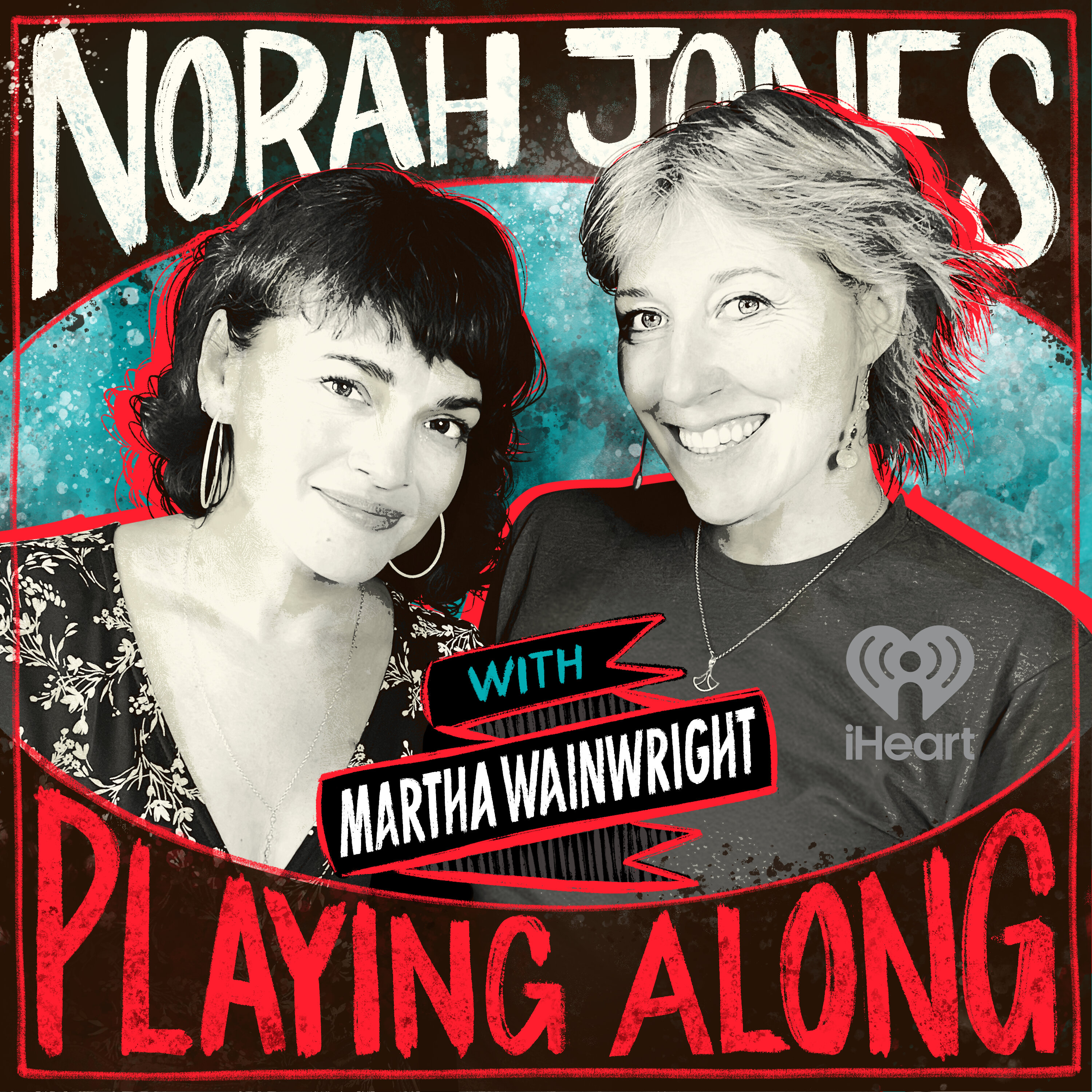
Martha Wainwright
Martha Wainwright stops by to talk with Norah about growing up in one of music’s storied families and carving out her own path as an artist. She reflects on the 20th anniversary of her debut album, and she and Norah explore songs old and new. Recorded 4/30/25.
See omnystudio.com/listener for privacy information.
2026-03-24
59 min
Transcript
Available Results
Generated results are saved to the knowledge database for reuse and search.
No generated results are available for this episode yet.
Extract Knowledge
Pick what you want extracted first. Model, scope, and chapter options appear after a template is selected.
Generated results for public episodes are saved to the knowledge database so they can be reused and searched later.
Transcript
00:00:00
Speaker 1: This episode is also available as video on YouTube.

00:00:03
Speaker 2: You can visit Nora Jones channel and be sure to subscribe while you're there.

00:00:07
Speaker 1: Hey, I'm Nora Jones and today I'm playing along with Martha Wainwright. I'm just playing long Wey, I'm just playing lone Wey.

00:00:25
Speaker 3: Hi.

00:00:26
Speaker 1: I'm Nora Jones. With me as always is Sarah Oda.

00:00:30
Speaker 4: As always, as always, we have an incredible episode. Today, we have singer, songwriter and somebody that I personally have been a fan of for a long time.

00:00:41
Speaker 2: Same Martha Wainwright.

00:00:43
Speaker 4: She is part of the legendary Wainwright mcgarigol music family. She has these deeply personal songs and a very unmistakable, unforgettable voice.

00:00:53
Speaker 2: Yeah.

00:00:54
Speaker 4: Last year, twenty twenty five marked the twentieth anniversary of her self titled debut album. So I've been a fan for twenty years.

00:01:01
Speaker 2: Yeah, me too.

00:01:02
Speaker 1: Those songs meant so much to me back in the living room days. Yeah remember those days.

00:01:06
Speaker 5: Yeah.

00:01:06
Speaker 2: Yeah, And they hit so hard.

00:01:08
Speaker 4: They were just kind of had this intensity that really like caught you in whatever moment in your life you were.

00:01:13
Speaker 6: You know.

00:01:13
Speaker 2: Yeah, her songs are her way of performing and.

00:01:16
Speaker 1: Her lyrics everything is just it just really punches you kind of right in the heart, the gut all over.

00:01:22
Speaker 6: Yeah.

00:01:23
Speaker 4: In this episode, you're going to hear about what it was like for her to grow up in a family of musicians. You're gonna hear a little bit about what she did with her time during the pandemic, and as always incredible duets in like a true intense Martha Wayine Wright style.

00:01:37
Speaker 1: She's one of my favorite singers. She's inble, she really is. Yeah, she's an incredible soul. It was really fun. So I hope you enjoyed this episode with our old pal Martha Wayne Wright. There is some spicy language in this episode, so listener discretion is advised. It's not that bad, but just so you know it's there. How long have we known each other? It's been at least twenty years?

00:02:09
Speaker 7: Oh no, at least.

00:02:10
Speaker 2: Because did we first meet through JC?

00:02:12
Speaker 1: I think so, yeah, and then yeah it was everywhere, yeah, just all all over and then.

00:02:17
Speaker 6: It was all over the place. And also a good friend in common Thomas Bartlett and you know, yeah, I remember you know stuffing that your your promo CDs.

00:02:29
Speaker 2: Yeah, because Shelle, of course at.

00:02:30
Speaker 6: Shell's do you even think about that? And there was on a table. It was like the promo for Blue Note, but it was like just I think there was just maybe four songs or I can't remember exactly, but she was we were doing, you know, crazy. It was really amazing, and it was amazing to be you know, present at that time. And but beyond that, you know, just clear on how amazing you were, but also how different you were than you know, like because I was doing a lot of shows on you know, lower side, and it was a lot of voice and guitar stuff and kind of singer songwriter stuff and then you know, what you were doing was different.

00:03:07
Speaker 2: Well I felt the same way about you.

00:03:09
Speaker 1: Oh really, yeah, I mean you know, I'm a huge fan from that record. Is it a self teller? Yeah, yea yeah, Martha. What year did that come out?

00:03:17
Speaker 6: Well, it came out and exactly twenty years ago, in twenty twenty five, but it felt like it came out like thirty years.

00:03:25
Speaker 2: Ago because you were singing those songs.

00:03:26
Speaker 6: Right, those songs, and it was kind of a long time in the making. It was almost like six or seven years of doing shows and making EPs and a cassette and trying to get signed and nobody was really signing. It was just kind of not certain for me. It was kind of I was a little bit all over the place. So I was singing those songs, and there were a couple of versions of some of those songs kind of kicking around from EPs and things. So when it finally did come out in two thousand and five, it was sort of like it was like having It was like taking a big.

00:04:00
Speaker 2: It was like having a baby.

00:04:01
Speaker 6: It was a there, new go.

00:04:04
Speaker 1: A really big baby, really really big baby.

00:04:10
Speaker 6: No.

00:04:10
Speaker 2: But I remember seeing you play.

00:04:12
Speaker 1: I mean, I'm pretty sure I saw you sing with JC doing one of those tribute shows somewhere, but it.

00:04:18
Speaker 2: Wasn't until I really heard your.

00:04:21
Speaker 1: Songs and saw you maybe at the living room or.

00:04:24
Speaker 2: Something, and I was just in love.

00:04:28
Speaker 6: Thank you.

00:04:28
Speaker 1: Yeah, and I love that album and I love those songs. Well, it was really I don't know if I've really ever told you this, because it's always kind of crazy when we see each other and then there's a show and sound check and your family.

00:04:41
Speaker 7: Yeah, you know, try try getting a word in. Oh my god, I know those guys. Yeah, I just stay and watch.

00:04:46
Speaker 2: I enjoy watching.

00:04:47
Speaker 1: But that album was a huge emotional sort of album.

00:04:54
Speaker 6: For me.

00:04:55
Speaker 1: And so when I was listening back to it to record that song a few months ago, and I like, it really took me back. Yeah, it was a really important album for me. So I don't know if I ever really told you.

00:05:07
Speaker 7: That, well, I well, thank you.

00:05:09
Speaker 6: And you know, I was so caught up and sometimes I'm still caught up in sort of the fact that it, you know, did my career like you know, kind of like not regrets, but sort of concern about you know, oh, maybe I should have done things differently and maybe I would have had more success.

00:05:28
Speaker 7: Or that that kind of.

00:05:30
Speaker 6: Overrides the fact that the record was actually pretty good and a lot of people really really appreciate it and really really loved it and I and the songs, and I was like, well, maybe that was the success of it. And I think it was more successful in many ways than I thought it was, because we were you know, when you're starting out, you're just you're you just want to be you know, famous, and you're like, well, why aren't I on that television show or why did not you know, why can't I, And so you're just sort of kind of comparing yourself. I was too all these different people around me, and I felt that I was underachieving, you know, and that that that was because of the record or because of who I was as a songwriter, wasn't quite good enough and all that stuff.

00:06:15
Speaker 7: And then but then you just.

00:06:18
Speaker 6: Start to as or at least I have, as I've gotten older, And now I'm singing those songs a lot because it's the twentieth anniversary, because these are pretty good songs and they are there lasting, and it was a great time and it was a great moment, and I did have a great career, you know, and I'm.

00:06:33
Speaker 7: Still doing this, you know, and I'm.

00:06:35
Speaker 6: Like, oh, actually, you know, maybe I was. I should have been more I guess, more proud of myself or more confident or something.

00:06:43
Speaker 1: Don't you wish you could just take those things off of your little baby self and just like relax.

00:06:50
Speaker 2: Yeah, fact, then.

00:06:51
Speaker 6: Yes I do, although I do think that, yes I do, because I think that my life would probably probably might have made some better choices. But at the same time, I don't really have any regrets in the sense that a lot of that insecurity and you know, not feeling good enough or not feeling pretty or not feeling all those things really did also feed the songs, and we're the kind of inspiration for the songs, and I think a lot of people identified with that or that was their way that was that was a way into the music too.

00:07:23
Speaker 2: So no, I know what you mean. You know that makes sense.

00:07:27
Speaker 1: Yeah, but it's one of my favorite albums from that era. It was like my favorite album for a long time, and it was just a huge part of my life.

00:07:36
Speaker 2: So you should be proud of it.

00:07:37
Speaker 7: Thank you very much.

00:07:39
Speaker 2: I'm proud of it. I'm proud of you.

00:07:41
Speaker 6: Thank you well. Thanks.

00:07:43
Speaker 1: But anyway, we've played a lot together, but I wanted to see if we should start with something we haven't played together.

00:07:50
Speaker 2: Okay, would that be fun?

00:07:51
Speaker 6: That would be fun.

00:07:52
Speaker 2: Okay, Love will be Reborn? Yeah, I love the song.

00:07:55
Speaker 6: Okay, good good, all right, show Yeah great.

00:08:07
Speaker 8: I cried really wanted you for us today and now we'll wipe it away before the daybreak.

00:08:19
Speaker 7: And there's love in every part of me.

00:08:22
Speaker 9: I know.

00:08:25
Speaker 10: But the kids fall deep into the snow.

00:08:32
Speaker 5: So when the spring comes.

00:08:34
Speaker 7: Out, we'll find it and.

00:08:38
Speaker 10: Lock my heart to wine day and Lord.

00:08:47
Speaker 5: Will be born. Hello, will be.

00:09:03
Speaker 9: Give me more?

00:09:09
Speaker 5: I take the throne and throw away the crowd hole.

00:09:15
Speaker 9: And we flowers in my head.

00:09:18
Speaker 5: For and the injustices I've heard. I will swallow.

00:09:27
Speaker 10: And reform the words to birds to undo the sorrow.

00:09:34
Speaker 11: Hello will be GiB.

00:09:46
Speaker 8: Oh, no, will be gambo?

00:10:01
Speaker 5: Can you hear my heart? It's kinding at your name?

00:10:07
Speaker 9: Can you hear my heart?

00:10:08
Speaker 5: It's dying? Your flame? Sis gone?

00:10:13
Speaker 9: It's no longer there?

00:10:19
Speaker 5: What's fun there? How are you wear? Hello?

00:10:27
Speaker 12: We'll be heaving, Ah, we'll be.

00:10:39
Speaker 6: We'll beable.

00:10:49
Speaker 5: From the roadstally a car normal, everyborne's son I'm trying to do from the flow shat.

00:11:05
Speaker 12: Ha.

00:11:05
Speaker 5: Going back to the new list, Hello, we'll be bey boy load, we'll be.

00:11:25
Speaker 7: Well people, A lord.

00:11:34
Speaker 9: Will be We'll be born?

00:11:43
Speaker 5: Oh, Lord will be, will be?

00:12:03
Speaker 2: That was great?

00:12:04
Speaker 7: Thank you.

00:12:05
Speaker 6: I you know I I wrote this song. I had made a record a few records ago, and it was like a classic Martha Waye Night record, like super autobiographical and really in your face, and those songs were kind of getting me in trouble with you know, with me, with with my ex husband or with whoever, you know what I mean, but specifically that and you just like I really need to start to become a more a songwriter who's more strategic, you know, and and writes from a different point of view. And I thought I should really write a song with somebody too, because that's really where a lot of successful songs come from, and I should really try this attempt a like trying to be more commercial. And so I contacted this friend of mine in England who writes a lot of songs with people, and I said, hey, let's let's try writing a song together. And he's like, yeah, no problem, you know.

00:13:02
Speaker 7: And then I.

00:13:04
Speaker 6: Went over to his house in London and.

00:13:08
Speaker 7: And we started playing.

00:13:09
Speaker 6: And he's really a really good musician, like yourself, and like really everything's very fast, firm and easy, and oh, let's go to be flat more not to and I was like completely intimidated, and I said, you know what, give me a little bit of time. Let me start something, you know, in my kind of quiet way, like make sure I have a couple of chords down, maybe like a line, maybe a.

00:13:28
Speaker 7: Melody, and come back.

00:13:29
Speaker 6: Go to the pub with your family with Sunday, go have Sunday dinner or whatever they call it, lunch, you know, Sunday busy lunch for four hours, and then come back. And he went to the pub and I hung out in his London apartment and I had tea and I took a bath and I tried on some of his wife's gloss and then I.

00:13:50
Speaker 2: Was like, okay, I better like get.

00:13:51
Speaker 6: On with working at this point and you better get going. And it was a really hard time in my life. I was really depressed and out and said I was newly separated and it was a tough, tough situation. And I picked up the guitar and this song just flew out of me, which it never does. And it's like and it's not that autobiographical, it isn't. It isn't, but it's more like imagery of like medieval and English imagery and sort of openness. And then and then he showed up and he's like ready to go, Like nope, I'm all done.

00:14:23
Speaker 7: Thanks so much.

00:14:24
Speaker 2: I was worth it.

00:14:25
Speaker 7: It was totally worth it, and it was so fun.

00:14:28
Speaker 6: And I showed him the song and he was like, yeah, you finished the song.

00:14:30
Speaker 7: I'm like, yep, bye, that's beautiful.

00:14:34
Speaker 2: That's perfect.

00:14:34
Speaker 1: Yeah, so worth the plane ticket exactly exactly. But it's funny because you say, like it just fell out and it's kind of imagery. But I found it super personal. When I was listening to it.

00:14:47
Speaker 6: What I will say about it is that, you know, it was very very hard time, and I was on the road a lot, and the kids were with their dad, and we were going through the pretty really difficult divorce.

00:15:03
Speaker 7: And I was, you know, I I lost a lot of weight.

00:15:06
Speaker 6: I looked great.

00:15:08
Speaker 2: I think I saw you in that period.

00:15:09
Speaker 6: You know, I was just montreal, you know, and I was really you know, freaked out and really kind of depressed, and and I was writing some trying to write songs, but every time I would pick up a guitar, it was just so depressing, and so nothing was really coming out. But then I found that that this song was so positive. I'm like, what does this leve will be?

00:15:33
Speaker 12: Like?

00:15:33
Speaker 6: Where am I coming up with this? And it was almost like it was sort of like a prayer or a mantra for that it's going to get It's going to be better. Yeah, it's going to be okay. That's how you know how it feels.

00:15:45
Speaker 7: So it felt good to sing it.

00:15:47
Speaker 1: But not like personal details, more just like going through something and I'm trying to move forward exactly.

00:15:53
Speaker 6: It's very it seemed really helpful to me.

00:15:55
Speaker 1: So I was like, oh god, no, it is positive, but it's also yeah, I want to hug you both things, and I also think that emotionally it got me first. But it's really interesting because the chord structure you may not have meant to do this, you may have I don't know, but you think.

00:16:15
Speaker 2: It's an A, but it's really an E.

00:16:18
Speaker 1: But it really feels like it's in A until the end, and then you're like, wait a second, which just happened?

00:16:22
Speaker 2: That tripped me out? Took me a minute.

00:16:24
Speaker 7: Yeah, there's a lot of.

00:16:27
Speaker 6: Mystery and the keys of my song sometimes because I because I was so.

00:16:33
Speaker 7: It's not self taught, but it was.

00:16:35
Speaker 6: Something where I didn't really follow the rules of music, and at the time it was it made my life harder not knowing music. But then I think sometimes it creates a kind of a weird mystery in some of the songs that I find kind of interesting now. But definitely it was not intentional and it's all kind of by half end stance.

00:16:59
Speaker 1: I think it's the best though, well, yeah, hopefully, I think so. I think when things are a little more thought out or contrived, it's yeah, you can tell.

00:17:09
Speaker 7: Yeah, or but but then when you see people who really.

00:17:12
Speaker 6: Know what the fuck they're doing. That's always like, Okay, that's really good too, yes, but like yourself, you know what you're doing.

00:17:20
Speaker 7: I mean that's nice.

00:17:20
Speaker 1: I mean I think it's better when they throw the rule book out though. Also, you know, and I think it's like language, you just learn it and then you don't have to think about it.

00:17:29
Speaker 6: Well, was interesting growing up with musicians and what I noticed with with with my just my immediate family, my two my two parents, and my my sibling and also some other half siblings who play music too, like my sister Lucy Wayne right roach. I was surprised at how different are understanding and how we grasp music is so different really, you know, like rufus. And I don't think I'm giving it a giving him why by saying this, you know, he'll sit down, he wakes up and sits down and he'll play something over and over and over, and it drives me crazy. I have to believe that. It is one of the reasons I left home. But you know, there was just this thing that he needs to do, the danky danky danky, you know, and it's just and you.

00:18:19
Speaker 7: Can hear and go on.

00:18:20
Speaker 6: It's like this big voice, and like, what it's such a different way, you know, whereas I'll sit in the guitar and I'll just kind of it'll all be about line by line of what is that line saying or what is that that you know so specific that way or trying. And you know, my mom was a great like yourself. She played really instinctively and naturally, and she was taught by by the nuns too, so she had it was all in there, you know. But she played with a lot of feeling and she could play different instruments. My dad, he just plays the guitar and he really specifically plays his own way. So it's just like, what is it? Isn't it interesting that we all had this totally different relationship with how to learn the instrument and how to play it.

00:19:04
Speaker 1: It is interesting because you all have played together in different scenarios, and you know, they talk about families having this thing when they sing together it's just a special thing, and you and Rufus have it to the nth degree. But I find you such different musicians individually, absolutely.

00:19:23
Speaker 2: Which is so interesting to me.

00:19:25
Speaker 1: How you come together when you do come together in those moments, it's like it's like divine.

00:19:30
Speaker 6: Well, I think I had to find my way, you know, in the sense of I had to be an an individual and a family of individuals too, because everybody was so kind of distinctive.

00:19:40
Speaker 1: And you're also the youngest, and I'm the youngest.

00:19:42
Speaker 2: That's the whole other thing.

00:19:43
Speaker 6: And so I was like, well, if they're doing if he's doing this, I'm going to take the guitar and go into my room and have this other approach, which you know, I mean, obviously it sounds a little bit more like my dad and that you can hear the mcgarigles in there as well, but you hear also many other influences of course too. But it was this of the only way that I can, you know, make it in any way is for it also to be distinctive, forced to be distinctive.

00:20:09
Speaker 1: Yeah, well you definitely are. I have always found you to be so unique, and you know, I don't know, I've always just loved what you do in that way. And but see, but being at so many of your family shows where you all come together, it's just such a such.

00:20:26
Speaker 2: A wild dynamic.

00:20:28
Speaker 1: Yeah, and it's so interesting how Yeah, it is a family full of individuals, and I had Rufus on the show, and he told me that, you know, you would sometimes, you know, everybody would be in the room playing, and everybody would be having a party in playing and you would just be upstairs by yourself. And and maybe you know came to it later, But did you actually come do it later?

00:20:49
Speaker 2: Were you just up there.

00:20:51
Speaker 1: Sort of doing your own thing with music? Did you ever reject it because you're the youngest in.

00:20:56
Speaker 2: This whole thing.

00:20:58
Speaker 6: I was doing it more secretly because I wanted to make sure that I could do something with it before presenting it. And I remember I presented two or three songs to Rufus and Kate. They were sitting together, your mother, Kate, Yes, sorry, my mom, Kate mcgarigl, and so she It's not that Rufus was like my father or anything, but they was sort of like presenting to your parents, you know, like you know.

00:21:23
Speaker 7: Because he was older, he was at a little older.

00:21:25
Speaker 6: And he had been playing music already and writing songs. And I was his backup singer for his first couple of records.

00:21:31
Speaker 7: And I didn't resent it.

00:21:32
Speaker 6: I kind of loved it because it was like really specific and he would give me these really kind of crazy beautiful parts, but he was he was forming me as a singer to suit his music. So I went into my room and would work on these songs, which would take while a while, and then I finally presented these two or three really finished songs, and I think that they were both he and my mom kind of surprised, like, oh, that's what you've been doing, you know, And they were kind of they had structure, and they had a you know, and they had a story to tell. And I think that, you know, my mom in particular was really you know, impressed, and and and she encouraged me. It was it felt like, you know, because he was a few years older than me, and he was so driven to do this, you know, it was the focus was on getting him signed. And that was fair because he was working really hard, and you know, my my thing was going to take a little a little bit longer. I was going to have to do my own road. I was going to have to take my own path. Maybe I should have been a folks singer and been more like my parents, and but I, you know, I was, I was a pain in the ass. I was. I was. I was also a little bit too rock and roll for my own good And I worked with Rick tard Off for a couple of years, who did Cyndi Lauper and Joan Osborne? And he really wanted to popify and he was so generous and I just kind of fucked it up right in a way. I just sort of like, I want to do my own thing. You know, it was gonna it was just gonna be a longer path.

00:23:04
Speaker 1: I get that career wise maybe, but I don't know if music wise you fucked it up.

00:23:08
Speaker 2: Do you feel like you fucked it up music musically? Well, you know what they did your own thing?

00:23:12
Speaker 6: Yeah, I did. I was I realized that I'm I really want to be a songwriter because with with you know, with Rick trut Off, he was he had worked collaborating song writing songs like for Cindy and John with like five other songwriters like those are They were crafting these songs that were potentially going to make millions, you know, and I guess I just wanted to do it my way, you know, And I felt like, no, this, I wrote the song, this is what it's going to be. And it just sort of it was a friendly clash, but it was sort of like, Okay, I can't. I'm not going to be the next whatever. I think that's great. Well, that's very respectable. It feels good now, definitely. You know at the time I worried about it, but it feels good now and I'm glad to still be playing shows. Yeah.

00:24:07
Speaker 1: Well the twentieth anniversary has on this song. That was when you asked me to take out extra thing, and I think I was pretty quick to reply.

00:24:16
Speaker 6: It was always so excited about this.

00:24:18
Speaker 1: Yeah, but I would have done any of the songs on that record because I loved it so much. But this song is just so emotional for me. Do you want to do it?

00:24:26
Speaker 6: Yes?

00:24:27
Speaker 7: I want you to do it?

00:24:28
Speaker 2: You want me to do you want to do it?

00:24:29
Speaker 7: I want to do it together, you know.

00:24:31
Speaker 2: Yeah, let's find a way to do it together. I just love this song so much.

00:24:37
Speaker 6: You can go right in.

00:24:41
Speaker 5: Summoke comes.

00:24:45
Speaker 11: Falls away, but the very next day it's see the snow comes to stay.

00:25:01
Speaker 12: And you too will go to slight the dog days.

00:25:05
Speaker 5: Do up one of my head, my gloves, my scarf to keep the cold.

00:25:17
Speaker 10: The boy, but Therono has.

00:25:22
Speaker 5: Clos scars for the hard just the cold woman the least it's frosted.

00:25:36
Speaker 8: Boy, don't forgive that I will always love you.

00:25:51
Speaker 10: Just a reminder that I help you pave your pathway.

00:26:00
Speaker 5: The folly cools loom to its snows, springy rains, summer comes, and your.

00:26:10
Speaker 13: Gold in my silly mine, I of God married to you, your cross town.

00:26:29
Speaker 5: Don't even have a clue.

00:26:32
Speaker 14: Are these imagies.

00:26:38
Speaker 3: That in ten years out right into you.

00:26:47
Speaker 15: And fall right back inside you? Don't get that A wheel always just a reminder help you pay your pathways.

00:27:16
Speaker 3: Folly cools, The winter snows, spring rains.

00:27:23
Speaker 5: Summer comes in. You don't forget that.

00:27:33
Speaker 15: I wel always just.

00:27:42
Speaker 13: A reminder, help you pay your pathways.

00:27:51
Speaker 3: Fall it cools some winters, snows, springy rains, summer comes, and new goals.

00:28:06
Speaker 5: When will we meet next time?

00:28:10
Speaker 3: When whereilly be.

00:28:15
Speaker 14: On a platform track in an old Moviecause time.

00:28:28
Speaker 3: Moves in circles and can leave you anywhere. Follied cools, The winter snows, spring in raids, summer comes, and.

00:28:47
Speaker 6: New beautiful thank you it is. It's so this is a really early song. So it's always a and I'm sure you had this too. It's a good feeling when some of those songs that you write when you're a kid.

00:29:15
Speaker 1: Just hold up, you know, yes, agreed, And kids are smart, kids are intuitive. Yeah, And I think sometimes it's funny as a songwriter, I feel like sometimes you go in different paths of trying to get an emotion, but really, when you're young, it's just so raw and exposed that you can't help it.

00:29:34
Speaker 3: Yeah.

00:29:35
Speaker 6: And then you know, this is about you know, leaving a boyfriend of a long time. Yeah, a long time being like two years.

00:29:43
Speaker 1: Right, Yeah, when you're young, that feels like eternity, like.

00:29:46
Speaker 7: You know, and so it has this kind of seriousness.

00:29:48
Speaker 6: But then of course, you know, you know, saying don't forget that I will always love you. You know, do you still love them?

00:29:54
Speaker 5: Yes?

00:29:55
Speaker 7: And now yes, and now it did for a long time.

00:30:01
Speaker 6: And you know, it's interesting the song actually was you know, I life really does imitate art, you know, And it was one of those relationships where you know, he was my boyfriend.

00:30:11
Speaker 7: Then we broke up, but then we just kept on.

00:30:13
Speaker 6: For years getting together anyways, just because we had a connection.

00:30:17
Speaker 7: Yeah, So that's what.

00:30:18
Speaker 6: And so that this song applied, and I don't know, maybe I should. I mean, I'm now happily coupled with somebody else, so I don't think I should call this person, no, yeah, to find out Yeah.

00:30:32
Speaker 2: No, that's cool.

00:30:33
Speaker 3: Though.

00:30:33
Speaker 1: I remember being on tour and listening to this album so much, and you know how when you're on tour you can be lonesome sometimes in your head. And this was the first, I feel like it was the first or second tour where iPods were a thing, so I could travel with all my music in a way that I could never before.

00:30:53
Speaker 2: And that was such a special year for me on tour listening to music.

00:30:57
Speaker 1: I was like immersed in music, whereas now I'm too distracted, even though I have it.

00:31:02
Speaker 6: All on it even there it's all on your phone.

00:31:04
Speaker 2: Well, there's too much.

00:31:05
Speaker 6: There's too much, and I just kind of want to go back to that.

00:31:07
Speaker 7: I like, yeah original, I have some Yeah, I have.

00:31:11
Speaker 6: I have a one an iPod that this great producer called Hal Wilner, who I'm oh, yeah, you know. He gave me of what we did a project of PF songs. He wanted me to learn a bunch of songs, which I did and I made a record with him, but he put like two hundred songs on an iPod for me. And I have that thing that's just like my favorite thing ever you have it.

00:31:36
Speaker 1: It's still plugs in, and we're still plugs in and work.

00:31:38
Speaker 6: That's great.

00:31:39
Speaker 2: Do you ever write in French?

00:31:40
Speaker 6: I've written a couple of songs in French, but I actually wrote a song in French on the piano. And and the only time I've ever written on the piano is when I write in French. Because I don't write songs in French and I don't play the piano, so I give myself a double.

00:31:53
Speaker 9: A double.

00:31:54
Speaker 6: You're just making it hard for yourself, just making it hard of myself.

00:31:57
Speaker 7: It sounds French. I sound like I'm in a Trench.

00:32:01
Speaker 6: It's too funny.

00:32:02
Speaker 1: Well, but why, I mean, you grew up in Montreal. Yeah, friend, you grew I mean we speak.

00:32:09
Speaker 6: We spoke English at home, but my French is pretty good. I went to I would go to school in French and speak. But I think it doesn't feel like like Well, I think songwriting is really easier in your first and your mother tongue, you know what I mean. And I think also it's French. It's so it's such a difficult language that you kind of wanted to you want to be kind of masterful with it. Yeah, although I would say that my I liked my my one song in French. I thought it was pretty good, Falaise de mas, which is cliffs of Pain. I love that rhymes.

00:32:41
Speaker 2: Well you get a whole new rhyme scheme.

00:32:43
Speaker 7: Yes, exactly exactly. It's it's fun.

00:32:45
Speaker 1: And I guess I thought in my mind, I thought it was more even with English for you growing up.

00:32:51
Speaker 6: But no, no, I mean the ideal is to speak both, you know, fluently, which I can, but one is always more mother tongue, you know, obviously.

00:33:02
Speaker 2: Yeah, and you're in Montreal now, I am.

00:33:05
Speaker 9: Yeah.

00:33:05
Speaker 10: Yeah.

00:33:06
Speaker 1: Is there a scene of music there that you're in or are you too busy.

00:33:10
Speaker 6: There's a scene?

00:33:11
Speaker 5: Well.

00:33:11
Speaker 6: I ran a club for a year as a small club, a little club called Ursa where I was. It was just it was kind of like the living room was the first one, and I would would book bands, and I mean I me and you know, also some people that I hired to help because it was a lot. But except me and my partner Nico, we totally did the place up. And I was at the beginning. I was there all the time, and you know, cooking food and serving food and cleaning the toilets, and mopping the food, doing it all. And then after I was like and and but the main thing that I did there is that that the pandemic hit after about a year after we opened, and that was really devastating.

00:33:56
Speaker 7: But I was also kind of like, I was really tired, as I kind of believed to be.

00:34:01
Speaker 6: Yeah, yeah, I needed a break. And all these kids parents, you know, there was nowhere for their kids to go in the summer because all the camps were closed. So I started a camp, my kids camp. We were mostly outside in the park because you know, because of COVID, but we were also inside sometimes and I would teach them music and then I would hire you know, some other people. I couldn't do it all day long, so they would do other things, go to the park and have some physical activities and do some you know, tied I do whatever, all sorts of things. But I would do in about two hours.

00:34:34
Speaker 7: Of music a day, and I really enjoyed it, and I've kept that going. I have a choir small children, really, oh the littles, the little ones.

00:34:42
Speaker 1: It's really hard to find that for kids because I grew up in a church choir, and I was trying to find a choir.

00:34:47
Speaker 2: For my kids.

00:34:47
Speaker 1: That was, you know, when they were under six and it was impossible to find.

00:34:52
Speaker 6: So the kids that I have are four and a half to they range four and a half to twelve.

00:34:59
Speaker 7: But you know, I'm not a choir master.

00:35:02
Speaker 6: So I I you know at all, but I know some songs and I like to sing, so I either use a guitar or else. I also have a friend of mine who was a worked as a piano player and a real choir who can really help with you know, do all the vocal exercizes and everything and have a seriousness to it. And then I can just sort of be like, let's do let's do David Bow whatever.

00:35:24
Speaker 1: Yeah, yeah, that's Brad. I wish I wish we were in the same city. I would listen.

00:35:31
Speaker 7: Yeah, I might need you to like take over on Mondays. Yeah, I would do it.

00:35:35
Speaker 1: I grew up in choir and I feel like it's a real thing that not everybody shares who sings, right, And did you sing in choirs or was it more of a family.

00:35:44
Speaker 6: Only at school?

00:35:45
Speaker 1: Yeah?

00:35:46
Speaker 6: But I think what I what it was that I was trying to get my kids to to sing, and so I started these choirs but now, like my eleven year old has absolutely zero interest, even though a bunch of his friends are and he's like, yeah, it's a nightmare to him.

00:36:01
Speaker 1: But do you think he's secretly writing songs in his room?

00:36:04
Speaker 6: M I guess you don't know.

00:36:07
Speaker 7: I don't know. Yeah, I don't know. Well I'll find out.

00:36:10
Speaker 1: Yeah, my kids are They might they pretend they're not interested either. Oh yeah, but maybe they're really maybe yeah, maybe they're really not.

00:36:18
Speaker 6: I can't tell either.

00:36:19
Speaker 2: I can't either. You want to do a song from your last album?

00:36:23
Speaker 1: Maybe?

00:36:24
Speaker 2: Yeah, Body and Soul.

00:36:25
Speaker 6: Oh yeah, let's do that.

00:36:27
Speaker 2: This is from it came out like last year.

00:36:30
Speaker 6: Yeah it can, okay, a little bit, a little bit before a few years ago. It takes me a while to put out records because because I tour a lot. But also you know, I always say, like twelve or plus Martha Way Night.

00:36:44
Speaker 7: Songs is a lot.

00:36:45
Speaker 6: We don't need that every year, like in the sense that they're very intense. You know, they're in intense songs.

00:36:50
Speaker 2: They are intense songs.

00:36:51
Speaker 1: Yeah, But do you feel like that's all you got is every few years a collection or do you have a lot of stuff that ends up not coming up.

00:36:59
Speaker 3: No, don't.

00:37:00
Speaker 6: I mean I have like bits that I that don't end up being worked on.

00:37:03
Speaker 7: But no, I don't.

00:37:04
Speaker 2: I don't.

00:37:04
Speaker 6: I don't have a good discipline. I don't write every day, so I don't have a stack of songs. But there maybe that's why some of them are kind of intense, because it seems like all that energy is going into one. Yeah. Do you sing every day only when working on the road, which I end up singing every day because I work a lot.

00:37:26
Speaker 2: Yeah, No, I mean when you're home not working. No, yeah, I mean either No, I don't.

00:37:30
Speaker 1: I wouldn't touch anything and I don't play an instrument either, And I feel I forget to sing.

00:37:35
Speaker 6: I feel really bad about and what I end up getting really and sie like I'm not touring and I'm just at home for several months, you know, taking care of the kids are and doing life stuff. Then I I start to get kind of like nervous, and then I realize, oh my god, I haven't I'm not practicing, I haven't been a song. I'm not saying I'm playing. So I say, Okay, this is crazy, and I I actually I because I have such a hard time I writing at home because then you're like looking at the piles of laundry or the females that need to get done or whatever. So I started renting a cabin and up in Woodstock just to kind of get away. And I'll go there for like three or four days.

00:38:17
Speaker 2: Oh that's cool.

00:38:18
Speaker 6: Just try and do like five six hours a day, just a guitar, like, no recording devices, like just to write and just pay yeah. Yeah, piece of pencil and pen. Wow, pencil and pen, pencil and paper and you know, voice memo if you be. But that's cool.

00:38:34
Speaker 2: It's good that you have that. It's sort of yeah, it's easy to forget. I forgot to sing to my children when they were little babies. My mom was like, what are you singing them to sleep? And I was like, I don't remember. I forgot to sing, and I'm so tired. I just I'm not singing.

00:38:49
Speaker 7: And I my kind of liked singing.

00:38:52
Speaker 6: He was okay with it. But my youngest I remember I was holding the baby in my arms, you know, and I'm like, you know, of like this looking down in the singing, you know, a little lullaby, humming something, and his little hand came up and put it on my.

00:39:07
Speaker 7: Mouth like shut, and I was like, okay, he's.

00:39:13
Speaker 2: A black cheep.

00:39:14
Speaker 6: Yeah, he's definitely not into his beautiful little hand coming towards him and right on my lips like stop message receieve.

00:39:23
Speaker 2: That's too funny.

00:39:24
Speaker 16: Yeah.

00:39:24
Speaker 1: Sometimes I'll sing around the house, maybe because I'm trying to learn something, because usually I don't, but and my kids will be like, mommy stops singing. I was like, man, fully, you knew exactly this should be cool for people.

00:39:39
Speaker 9: Some people pay me to do this.

00:39:42
Speaker 3: Damn it.

00:39:44
Speaker 6: Do you want to go camp?

00:39:46
Speaker 2: Do you want to go to camp?

00:39:47
Speaker 5: Now?

00:39:47
Speaker 2: They don't never want to go to camp.

00:39:50
Speaker 6: Oh my god, you're gonna have to send them to camp.

00:39:52
Speaker 7: Don't let mom work. You have to work at camp.

00:39:55
Speaker 2: I will sing.

00:39:59
Speaker 7: Got to tune this down?

00:40:00
Speaker 2: Oh do you use an open tuning on it?

00:40:02
Speaker 6: It's a kind of a fake open to me. Yeah, I turn.

00:40:05
Speaker 7: I dropped the E down to a D.

00:40:08
Speaker 6: That's an ease, go down to a D.

00:40:10
Speaker 16: Nice, Run into the chapel, Light up every candle.

00:40:43
Speaker 7: Oh, I've thought Monday's a saying God please?

00:40:49
Speaker 11: What can I do?

00:40:53
Speaker 10: Ninety seconds later, ends round my nicker. I'm playing aromantic. Your hander.

00:41:09
Speaker 9: What can I do.

00:41:17
Speaker 5: I'm gonna lead hood in the villa. I'm gonta lead, holding the villagical. They asked me if you cause the fall in sea, tell them my dream.

00:41:43
Speaker 2: You lie in.

00:41:49
Speaker 5: You're dying.

00:41:55
Speaker 7: I'm holding your head.

00:41:59
Speaker 5: But I want to let cool.

00:42:06
Speaker 11: Clay.

00:42:12
Speaker 5: I'm screaming man. My fingers are sniper. Yeah, yeah, yeah, yeah and yeah. I want to let go.

00:42:27
Speaker 7: From my variance.

00:42:39
Speaker 5: I'm on my valiant Cello.

00:42:46
Speaker 6: Dainty days later.

00:42:48
Speaker 5: Yeah, run into the chapel. Yeah, I cannot take the can I take the kid's shoes. I'm leaving the blue. I change my locks of change my boom.

00:43:17
Speaker 6: I'm leaving at a slow mood.

00:43:23
Speaker 5: I studied small again. I had another dream. Ok, s, we're touching. I'm touching you, you're touching me. I'm touching. I'm touching you. I'm touching you. I'm touching. Oh, I'm leading. I'm screaming head.

00:44:07
Speaker 16: Oh.

00:44:07
Speaker 6: My fingers are.

00:44:09
Speaker 5: Say yeah yeah, yeah, yeah, and yeah yeah yeah Oh.

00:44:13
Speaker 6: I want to let.

00:44:15
Speaker 5: Whoa whoa oh yeah my biens, yeah, myce don't fuck my gins. You can take my money, take my house, you can take my honey. You ain't an inch. Got some mighty punishment. I am so song song song, I got my back door funck with my kids.

00:44:49
Speaker 10: You can take my money, you can take on my house, you can take my honey.

00:44:54
Speaker 5: You ain't a inch, but mighty punishment. Whoa my audience, oh so so so so.

00:45:06
Speaker 3: So yeah, so.

00:45:34
Speaker 7: Yeah yeah, I mean, it's not easy song, but it's fun.

00:45:38
Speaker 2: It's not an easy song, but it's actually kind of a free song. It's very free, super free.

00:45:43
Speaker 14: It's hard.

00:45:44
Speaker 6: I was as I was going, I was like, oh, I definitely don't play these songs, especially that one, like they are exactly on the record, because it was really like a performance.

00:45:55
Speaker 2: It was yeah, yeah, it's definitely a performance.

00:45:58
Speaker 6: You can hear you know it was.

00:46:00
Speaker 5: Yeah.

00:46:01
Speaker 7: So it's more that kind of like will I.

00:46:02
Speaker 2: Think I found you? I think I found it. But what a great song? Thank you? Yeah, I love this one. It's a journey. It is a journey, it really is.

00:46:11
Speaker 6: It is a journey.

00:46:12
Speaker 2: And and I love the way it.

00:46:14
Speaker 1: Ends too, yes, exactly with my kids to take my money.

00:46:19
Speaker 2: I love that part.

00:46:19
Speaker 8: Yeah.

00:46:20
Speaker 6: Yeah, yeah, it's you know, it's it's personal song, but it's also a little bit on the extreme side. You know, I think you know, it's sort of references maybe some you know, aspects of abuse, you know, and I and so I don't I always worry that people think that I, you know, that I'm saying something, that I'm that I'm revealing something.

00:46:45
Speaker 7: But that's that's it's not exactly the case.

00:46:48
Speaker 6: But I did definitely, you know, I think all of us, not all of us, but sometimes I have had this feeling like maybe I was more of a victim than I really realized in some ways or something, you know, But then also trying to you know, don't do that, you know, like you know, take control of the situation.

00:47:13
Speaker 1: Yeah, you know, I think this is the time in our lives where we all are realizing that stuff, right, Yeah, yeah, especially raising kids and seeing things through different eyes, you know.

00:47:26
Speaker 2: Yeah.

00:47:26
Speaker 1: Well it's a deep song and it's it's intense, and I love it all good.

00:47:31
Speaker 2: I love it.

00:47:33
Speaker 1: I think it's funny what you said about Martha Wayne. Some right, songs are intense and you can only handle twelve every.

00:47:39
Speaker 6: Few yeah, exactly, these records like every year. You'd be like, I don't know about that.

00:47:44
Speaker 17: I don't know.

00:47:44
Speaker 2: It feels pretty good to hear it.

00:47:46
Speaker 7: Oh well, good, Well, thanks you know, and you know, I have to.

00:47:50
Speaker 6: I tour a lot and I play a lot because it's all these are kind of also songs that you go out to see live.

00:47:56
Speaker 2: Too, you know, very live songs.

00:47:58
Speaker 6: So it's not always like you know, they're not like tune it on in the radio and you have it in the background, you know what I mean. These are those kinds of albums where it is kind of a little bit more, you know, of an emotional journey and that that is really oftentimes like really, although I love recording, you know, and I have fun with it, but I really we get down to the to the to the nitty gritty when we're when when I'm on the road, and also it's fun just playing them on the guitar because they're all written this way. But oftentimes, you know, not often, but sometimes I have musicians and you know, on the records, there's backups and there's sounds and there's and it's fun and it's great, but I that's not how they are written, and it's certainly not always how they're performed.

00:48:41
Speaker 2: Do you do a lot of covers?

00:48:43
Speaker 6: I do, I doff, Yeah, I did the PF stuff. Right now, I'm working with with this woman named Karen Hopkins who used to run Bamka and she is a huge.

00:48:58
Speaker 7: Laura Niro fan.

00:48:59
Speaker 3: Oh I love.

00:49:00
Speaker 6: And she's been for ten years trying to get me to sing Laura Niro and I would we would be out in Montaka Rufus's house at dinner and she'd be like, Martha, you have to sing Laureniro and I would just kind of roll my eyes and get another like why can't she book me?

00:49:13
Speaker 7: Like you know, And she finally convinced me to.

00:49:21
Speaker 6: Do it after years of kind of badgering me about it, and I started listening to the music and it's really fucking hard.

00:49:29
Speaker 2: It's really hard, really hard.

00:49:30
Speaker 6: It's really hard to sing.

00:49:32
Speaker 7: I'm not playing the piano. I'm just singing.

00:49:35
Speaker 6: Thomas Bartlet's playing the piano, and we're trying to become one, you know, because the piano is such an important part of it. But that's really hard, and it's it's kicking me in the ass. So you doing like a whole show of all her We're doing ten songs. It's like, like Martha's songs, you don't.

00:49:51
Speaker 7: Want more than ten. I'm like, Oh, they're intense, and her vocal range is crazy.

00:50:00
Speaker 6: Some of them you just want to do exactly as she did them because you're like, how could you even do this differently? And then the other ones are like, let's let's change the feel on this a bit, but I'm going to need vocal rest. I got to need But that's gonna that's gonna be like a run, you know, which I'm also sometimes excited about. I played Vegas recently for the first time, and I was kind of like, I did not like Vegas per se, but I was like, you can kind of see why people could want to do like a nightly show. Yeah, you can just do it.

00:50:25
Speaker 2: You just do it, hit the tables out exactly. Yeah, that's that. I don't know if I could do that.

00:50:33
Speaker 7: But do you ever do runs like three nights.

00:50:35
Speaker 2: Or I mean, anytime I do a gig in New York.

00:50:38
Speaker 1: I used to do so many bars, you know, with all our mutuals and like, and I feel like now I'm I'm just tired every night, and when.

00:50:45
Speaker 2: I'm home, I just want to go to bed.

00:50:47
Speaker 1: Yeah, but then we're in New York City and I could have a gig every week maybe or a few nights a week, and then that just like gets me stressed, right right, but.

00:50:56
Speaker 2: Being on the road someday o, no, it makes it much. You're in that, thanks, so yeah. Do you do a lot of local gigs in Montreal?

00:51:04
Speaker 3: No?

00:51:04
Speaker 1: Never, right, no, yeah, okay, hell yeah, it's just like then you're actually feeding the kids dinner and having that exactly exactly instead of just being gig mode exactly.

00:51:14
Speaker 5: Yeah.

00:51:15
Speaker 1: Yeah, it's weird. It's a weird double life. Well, thanks for joining me. Yeah, thank you so much.

00:51:21
Speaker 2: Do you want to do one more song?

00:51:23
Speaker 3: Sure?

00:51:23
Speaker 1: Absolutely, we had talked about doing Talk to Me of Mendocino.

00:51:27
Speaker 6: Yes, oh my god, I'm gonna put this guitar dow.

00:51:29
Speaker 2: Yeah, okay, this is your mother's song, this is.

00:51:33
Speaker 7: This is my mom's song. But also you sang this song.

00:51:38
Speaker 6: Yeah when we did when when when my mom died fifteen years ago, Rufus and I did a couple of concerts and had the most incredible singers singing these incredible songs, and you sang this song, and it just it made it easier, you know, and to see her music go on and to have you seen it was just like really really really moving. So thank you for doing that.

00:52:11
Speaker 1: It's I mean, it's a beautiful song, and I was honored to be asked.

00:52:14
Speaker 2: I grew up with this son.

00:52:16
Speaker 1: Yeah, yeah, so I already loved it, yeah, before I met all of you, which is also special to me, and then getting to meet your mom at those few shows, you know, And she she told me she wished her name was.

00:52:33
Speaker 7: Noura, that's right, which was so cute.

00:52:36
Speaker 2: She grew up that way, so she.

00:52:38
Speaker 6: When she was she was a bit of a naughty child. I think they called it Saint Vita's dance. Sounds like she had eighty h J but they called it Saint Vita's dance and the nuns did, so she was she was a rascal or whatever. But she always wanted to be named Nora.

00:52:54
Speaker 7: Her name was Kate, and.

00:52:57
Speaker 6: My grandmother, her mom, Yeah, babe, say now if you are good, you can be Nora. So she had this alter ego where she was a good child, like a nice, sweet child, and then they would call her Nora.

00:53:10
Speaker 7: I'd be like, now we want.

00:53:11
Speaker 6: To talk to Nora, now, you know. And then that's how she was able to be Nora, that's by being good and Kate was bad. Her first some deep psychological and the emails was her was Nora Wanna Bay. She told me that, and that made me laugh so much. It was so sweet.

00:53:30
Speaker 2: Do you do her music?

00:53:31
Speaker 3: Ever?

00:53:32
Speaker 7: When you're I do nightly almost.

00:53:36
Speaker 6: It seems silly for me to be up on stage and not do a Kate Nana song because I can, you know, because they're just so great. Yeah, So I'm like, why wouldn't I? But it must be a nice connection, of course. Now she's just that's treat. It's a way to feel a little closer to her, but also to also.

00:53:55
Speaker 7: Just celebrate her, and then the two of them is beautiful.

00:54:18
Speaker 5: I bid farewell to the state of all.

00:54:22
Speaker 9: New York, my home away from home, the state of New York.

00:54:34
Speaker 5: I came late.

00:54:38
Speaker 18: When first I started and roaming, And the trees grew high in New York State.

00:54:50
Speaker 5: And they shine like gold, and A.

00:54:58
Speaker 2: Never had the blue news from when I came. But in New York State, I call him.

00:55:14
Speaker 5: Talk to me.

00:55:18
Speaker 13: Mensino, closing my eyes eye.

00:55:25
Speaker 19: The sea, musty wait, mustaye follow, won't you say?

00:55:38
Speaker 16: Come with me?

00:55:47
Speaker 17: And it's on the South Bendiana fly out, on the Western Place, rise up o Rockies and down into California.

00:56:06
Speaker 3: Out to Way.

00:56:08
Speaker 9: But the Rocks remain.

00:56:12
Speaker 5: Let the sun set on the ocean, I will watch it from show. Let the sunrise o The DWAs.

00:56:30
Speaker 20: I'll rise with it till I rise no more. Talk to me, Men's seal.

00:56:45
Speaker 5: Closing my.

00:56:48
Speaker 3: I the sea?

00:56:53
Speaker 5: Must I wait?

00:56:56
Speaker 19: Must I follow?

00:57:00
Speaker 5: Won't you say.

00:57:03
Speaker 16: Come with me?

00:57:07
Speaker 9: Won't you say.

00:57:10
Speaker 5: Come with me?

00:57:15
Speaker 9: You say.

00:57:17
Speaker 5: Come with me?

00:57:44
Speaker 6: Beautiful?

00:57:45
Speaker 1: I might have cried a little on the inside. God, good, love you very much. I love you too, and thank you so much. Yeah, I don't have you here again? Well, right back at you.

00:57:56
Speaker 5: Yay yay.

00:57:58
Speaker 2: Oh that was so nice, so nice to see her and sing with her. So amazing.

00:58:02
Speaker 1: Yeah, goose bumpy, Yeah, she's the best. If you want to know the songs we played in this episode, the first one was Love Will Be Reborn from the album Love Will Be Reborn in twenty twenty one. It's the second song, one of my personal faves, was Don't Forget from her album self titled Martha.

00:58:18
Speaker 2: Wainwright, which was released in two thousand and five.

00:58:21
Speaker 1: The third song is Body and Soul from lovell B We're Born as well twenty twenty one. The fourth song, another one of my favorite songs of all time, was Talk to Me of Mendocino, which was written by her mother Kate McGarrigle and released on Kate and Anna McGarrigle self titled album from nineteen seventy five. It was also recorded and released by Linda Ronstadt on Heartle Like a Wheel, which was released in nineteen seventy four. Special thanks to Martha Wainwright for joining us today and We'll be back next week with the War Entreaty. Nora Jones is playing along as a production of iHeart Podcasts. Visit Nora Jones channel and be sure to subscribe while you're there. I'm your host, Nora Jones. Recorded by Marinelli, mixed by Jamie Landry. Audio post production and mastering by Greg Tobler. Artwork by Eliza Frye. Photography by Shervin Linez. Produced by Norah Jones and Sarah Oda. Executive producers Aaron Wan Kaufman and Jordan Runtagg Marketing Lead Queen and Akey.

00:59:17
Speaker 2: Thanks a lot, See you later.
Chapters
No chapters available.