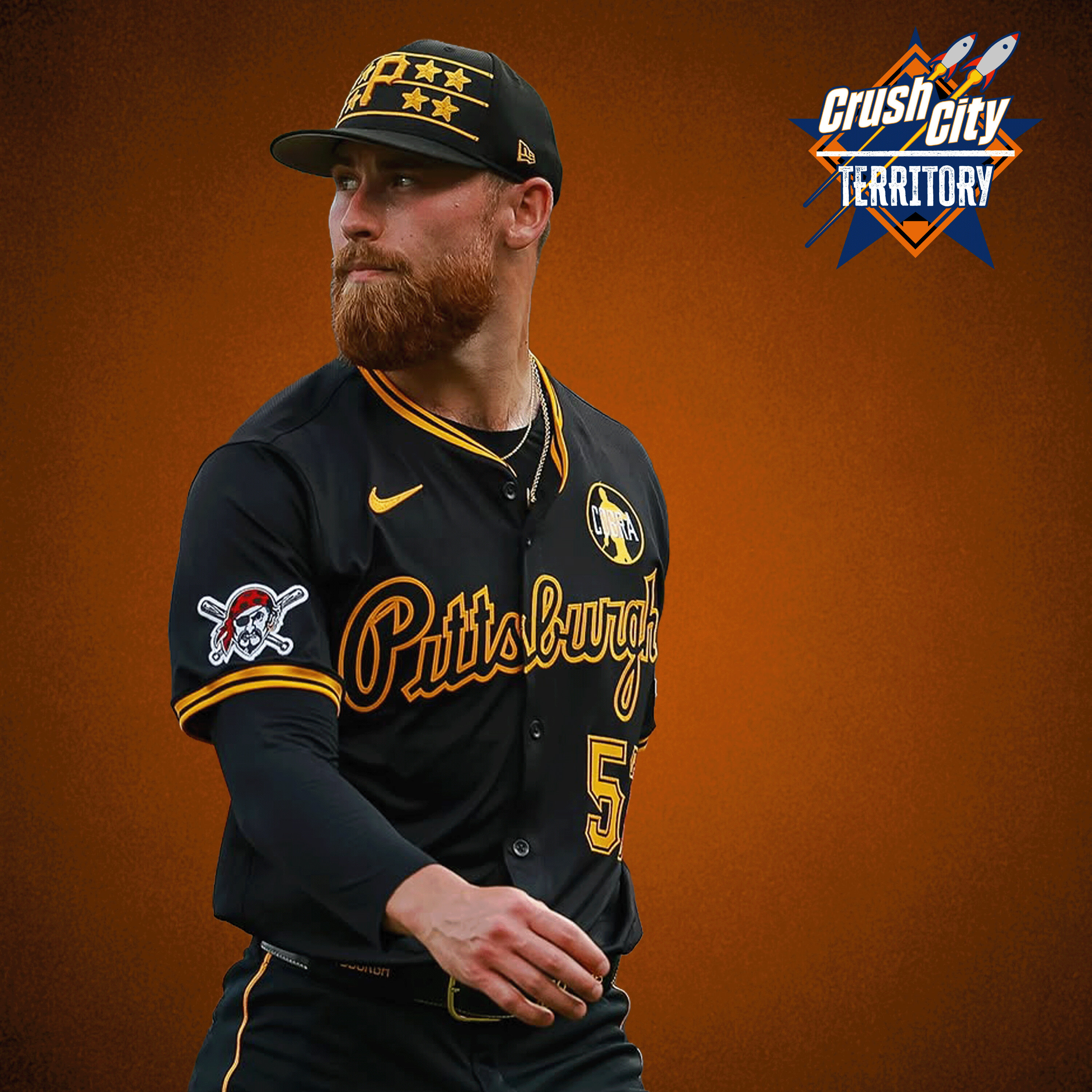
New Astros pitcher Mike Burrows joins Crush City Territory
After coming over to the Houston Astros from Pittsburgh via trade earlier this offseason, Mike Burrows joins Crush City Territory to discuss the trade.
Burrows also covers what he believes the team will help him unlock, his time spent with former Astros pitching coach Brent Strom and former teammate Paul Skenes while a member of the Pirates.
See omnystudio.com/listener for privacy information.
2026-01-05
28 min
Transcript
Available Results
Generated results are saved to the knowledge database for reuse and search.
No generated results are available for this episode yet.
Extract Knowledge
Pick what you want extracted first. Model, scope, and chapter options appear after a template is selected.
Generated results for public episodes are saved to the knowledge database so they can be reused and searched later.
Transcript
00:00:06
Speaker 1: What's up?

00:00:06
Speaker 2: Everybody?

00:00:07
Speaker 1: Welcome into another edition of Crush City Territory and share in the room, joined by Tyler Stafford and a very special guest, one of the very many new Astros pitchers acquired this offseason, Mike Burrows. Lucky enough to have him join us from Connecticut, where it is very cold, not as cold as it is, not as nothing you'll experience here in Houston as it's seventy degrees on this January day. Mike, how are you doing? What have the last few weeks been like? Is this kind of whirlwind has come to an end and you've been able to settle down a little bit and know what the future holds for you.

00:00:41
Speaker 3: Yeah, definitely a whirlwind of a day, but holidays rolled around, got time with family, and yeah, we're just kind of here now, so getting ready for spring training at a month left.

00:00:54
Speaker 4: There you go, What does it look like when when a trade goes through? I mean, what all is going through your head? Who's calling you? What? What does that look like for that first hour after you find out?

00:01:06
Speaker 3: Yeah, I found out through fantasy football group chat with a bunch of guys, so it's, uh, it was just kind of one of those you know, a little bit of a shock, don't know if it's true. You're looking at Twitter, and then agent calls says, sources are confirming it's true, and then you go through the whole medical review time period before you officially get called that it's uh that it's done.

00:01:30
Speaker 4: So you're in your fantasy football group chat is just going off of hey you got traded.

00:01:35
Speaker 2: Yeah, pretty much.

00:01:36
Speaker 3: It was just kind of like you know, Burrows of Houston, Houston question mark and.

00:01:42
Speaker 2: Yeah, that was I mean just it was such a random thing.

00:01:45
Speaker 3: I heard murmurs through you know, winter meetings, but those kind of settled down. All I'm thinking about is Christmas, getting Christmas shop and done, and just yeah, randomly get a text like that. It's just kind of like the start of my day. Pretty much.

00:02:01
Speaker 4: That's the first successful trade that I've seen go through in a fantasy football group chat. I can't get anybody to trade with me in my league, So congrats on that, thanks.

00:02:12
Speaker 2: Yeah.

00:02:12
Speaker 1: Is it a baseball fantasy league or is it a kind of guys from home fantasy league?

00:02:17
Speaker 2: It was it was guys that are in my agency.

00:02:21
Speaker 1: Okay, yeah, so they so they maybe they really had a kind of vested interest in what was going on, just knowing that they've probably been through too. I'm sure there's some guys in that group that had been traded to. Did you ask them for advice at all? Or was it just kind of more you know, you need to figure out if this is true first and foremost.

00:02:40
Speaker 2: No, no advice. I mean it's the same same game, just a new team.

00:02:44
Speaker 3: So I mean, I'm sure if I have questions, I got a lot of guys I could reach out to. But I think if I got questions, they'd probably just reach out to the new organization.

00:02:55
Speaker 1: There you go, speaking of that, since you have since like the Holladays have settled down and everything, how many people have you reached out to with the Astros? Who has reached out to you and kind of what have been your early impressions of what you've heard from either the pitching guys, either from maybe some of your new teammates, whether you've talked to Joe, kind of what have you heard from the Astros organization?

00:03:18
Speaker 3: Yeah, talk to Dana, Joe, Ethan, Josh, you know, as far as Josh and Ethan just.

00:03:27
Speaker 2: Kind of the pitching side.

00:03:28
Speaker 3: Talking about where I'm at, what I've been doing stuff like that, Dana and Joe. It's like just excited, excited to have me and you know, ready to go pitch in October. So that's kind of been where the conversations were and just kind of, you know, just exciting conversations, stuff that you want to hear, stuff that gets you going, gets you ready for the for twenty twenty six.

00:03:52
Speaker 4: You you know, grew up in the connecticutor you were committed to Yukon out of high school? Correct? Yeah, did you grow up Yukon fan? Was that a baseball team that you followed a lot?

00:04:04
Speaker 1: So?

00:04:05
Speaker 2: I actually I grew up watching Springer play, That's what I was gonna ask.

00:04:09
Speaker 3: Yeah, during those times, so those were very exciting years for the baseball program. I grew up a Yukon basketball fan, so yeah, I mean it was I was definitely a Yukon fan. I loved the conference that they were in at the time. Everything was South except for our home games, so when I was home, it was cold, it was it was you know, I was close to close to home, close enough for people to come watch. And then when who were not there, we're South.

00:04:36
Speaker 4: What what was Springer like in college out there? Just ripping dangers out there. What what that look like?

00:04:43
Speaker 3: Yeah, no, it was impressive. They had a really good team. I think Barnes was on that team. Nick im ed they had they had some dudes on that team. Yeah, it was, it was, it was. It was a really good team. So it was fun to watch, and yeah, it was. It was what made me kind of want to go there.

00:05:00
Speaker 2: It was years after that I committed. So, yeah, do.

00:05:05
Speaker 1: You have a core Yukon basketball memory from you from your childhood? And obviously they were They've been good forever, so I imagine had to see some some pretty iconic things as a Yukon basketball fan.

00:05:16
Speaker 2: Yeah, I mean I wouldn't. Yeah, I wasn't like a diehard.

00:05:19
Speaker 3: I went to some games, but Kemda's run with Yukon was like probably the most exciting for me. That's some of the stuff that I remember most. And then Shabaz coming in shortly after that and stuff like that.

00:05:30
Speaker 2: So yeah, I mean there's a lot of exciting moments.

00:05:33
Speaker 3: I love that they just went back to back, you know, yeah, just kind of more so like that's that's when I started really liking Yukon, or that's what dream me to Yukon was the basketball program I covered.

00:05:46
Speaker 4: I went to Texas A and M and worked at the newspaper there and I covered the women's basketball team, and every year, you know, for every women's basketball team at the time, it was just how long will the season last until you have to play the Yukon ladies, And so that was that was a lot of fun as well. So you got it. You got a lot of dominance over there.

00:06:07
Speaker 1: Yeah, so let's let's go through a little bit of kind of how your career has how your professional career has evolved a little bit. You know, you had TJ twenty three, correct, correct, Yeah, so last year was maybe your first like fully healthy year coming back off of Tommy John. How'd you feel last year and how do you feel like that? You know, everyone kind of looks at Tommy John. They put the twelve to fourteen the sixteen month timeline on it, and then I think there's this expectation. I don't know if it's from fans, I don't know if it's just from people that are conditioned to seeing twelve to sixteen months and then they just expect pitchers after that timeframe to be raring back, just as they were pre surgery. When I think we've all come to realize that that's not the case. You probably need, you know, another eight to ten months of just throwing of getting back into routine before you really feel like yourself. Did you have that? Is that kind of how it went for you? And kind of how was last season? Kind of being in that year out removed from TJ, how was that for you?

00:07:15
Speaker 2: Yeah, No, it's true.

00:07:17
Speaker 3: There's definitely a long period of time where you're not You're back, but you don't feel like yourself. So I think one of the harder parts was like coming off of TJ and going right into the second half of a season and just trying to figure it out and get back into get back into the swing of everything because you felt so far removed for so long, and you know, then you're just kind of back in it so quick. And then, I mean I really didn't feel like myself again until probably June of last year, and then things started to really kind of kind of roll and started to get some stuff back mechanically, started to feel like just normal again, like ill, and there was no stiffening in that area anymore.

00:08:04
Speaker 2: There was. It was just started to loosen up. Again, you started to really feel like yourself. And I think there's a lot of guys that feel that way that.

00:08:11
Speaker 3: Kind of go through the through that that second half of TJ because it's a lot such a long point to get back, but there's more that comes after that, just to get back to a normal state of where you were before.

00:08:24
Speaker 4: I think Astro's fans watched you get back to normal your your third start back. I think that was the game that you kind of figured it out. Five and a third, no run, six strikeouts. Is that is that when you were starting to feel kind of back to yourself.

00:08:39
Speaker 3: Yeah, I start, Yeah, I mean I started to feel better around that time, and that it took me.

00:08:46
Speaker 2: Two starts prior to get to that.

00:08:47
Speaker 3: I was I had to figure some things out in those first couple of starts. I kind of, you know, first one, you know, maybe maybe a little unlucky. Second one just kind of got carved in. So it was like I gotta figuregured it out. And I ended up figuring out that one against the Astros.

00:09:04
Speaker 4: Mm hmm, yeah, you go ahead, Taylor.

00:09:07
Speaker 1: Yeah, I said, you never know in this game with like butterfly effect, and you never know if like they were watching you that start and just like, oh, man, like this kid, like he's got something like we may need to keep our eyes on him as a as a trade target, as somebody that we'd want to maybe ask about after the season. So it's always funny to know how those things, how those things work. If whether you pitching well against the Astros in front of you. Dana was on that road trip. I remember you pitching it well in front of all those guys, and he was like, oh, like, let's let's keep our eye on him.

00:09:36
Speaker 2: Yeah, I don't know. Maybe.

00:09:39
Speaker 4: I mean the Astros also missed the playoffs by one game, so I think we can blame you personally for the Astros missing that.

00:09:49
Speaker 1: So last year your first full you debuted in twenty four through three innings in the big leagues. But so last year, for all intents and purposes, was your first almost full year in a big through about ninety ninety five innings. What was the biggest thing you took away from having as close to a full season as you've had in the big leagues? Just the level of competition, the adjustments that are made day in and day out from start to start. I guess what were some of the biggest things you took away from last year as your first real taste of big league life.

00:10:22
Speaker 3: Yeah, you know, bad ones come, you just need to pile up the good ones.

00:10:29
Speaker 2: Yeah, there were. There were definitely speed bumps.

00:10:31
Speaker 3: There are things that you know happened throughout it, But it was just kind of like staying level headed, moving through it, continuing figuring out why it went wrong, and realizing that pitchability was my best friend. Pitching off of fat, off my fastball, make sure the fastball is being located. Like it's really hard to walk into a start and just be like, this isn't here, So you need to have it. You need to have everything when you go out there, regardless of how you feel. So figuring out different ways to lock in certain things, you know, because there's some days where something doesn't feel right, but you know, what's my way of getting getting to a better spot with that pitch or or you know whatever it may be. The amount of deception that that plays into the pitching, as well as metrics and and even just pitching, there's just a lot that goes into it, more so than or more more than most people would think. So just making my way through the speed bumps and figuring out, you know, why the good ones were good and why the bad ones were bad.

00:11:35
Speaker 4: Looks like you added the sinker in July. Is that a pitch that you'd always had or did you learn that last year?

00:11:43
Speaker 3: I threw everything in high school, and then when I got into pro ball, I did the same thing.

00:11:48
Speaker 2: Covid hit and I just decided, let's work backwards.

00:11:51
Speaker 3: Let's make a couple of pitches really really good. Ran with a for scene with ride and uh, you know, a curb, and just kept adding from there year to year, and now we're back to adding the two scene back again, because I just think as a starter, I think most guys are going towards the two fastball approach, and you know, I figured, why don't why not try it? So I actually threw it against Arizona just as a let's just throw it, let's go, let's.

00:12:20
Speaker 2: Use in the game. What better opportunity than in games.

00:12:23
Speaker 3: So worked on a little bit up to that point, but just decided to throw it, like, you know, what's the worst that could happen? You know, it gets hit, Okay, It's just you know, using game I think was was the best thing for me, and just saying whatever, I don't need an offseason for it.

00:12:40
Speaker 1: Six scoreless innings of three hit ball against the Dbacks when you threw it, So I guess it worked out pretty good. Yeah, you will have a full off season to work on it this time around, because I'm sure you saw, and I'm sure Dana and Joe of and Ethan and Josh have maybe told you that, you know, Dana TODs on the media zoom call that they do want to increase your two or usage. He brought up Hunter Brown as as somebody that they have done this with. Obviously it worked very well for him, as we have seen the last year and a half. When you hear that, is that something that now going into catch play going into you know, as you start ramping up before you get to West Palm Beach, do you make a more concentrated effort to throw the sinker more or is it just you're gonna kind of do what you normally do and then get to camp and then maybe let the Astros guys kind of maybe give you a more detailed account of kind of how they want you.

00:13:32
Speaker 2: To do this a little bit of both.

00:13:35
Speaker 3: So, I mean, I'm throwing it the way I've been throwing it for you know, six months, seven months now, so I'm going to continue.

00:13:43
Speaker 2: To throw it that way.

00:13:44
Speaker 3: But if there's tweaks that need to be made during spring, maybe to the to the grip or maybe just a queue or a you know, a different type of feel for it, you know, I think it's going to be more minor adjustments than anything, you know, a major reworking of it. So you know, continue to throw it the way I do and let them make a slight adjustment on it maybe come spring.

00:14:07
Speaker 4: Have you always had the pitch ability that you have with the changeup, because I feel like a lot of times that's kind of the last pitch for pitchers to really figure out. It's a it's a really tough pitch to throw. You throw it a ton and have a lot of success with it. What you know, walk us through just that that pitch. What's the grip you're rolling with? Why? Why does it work so well for you?

00:14:30
Speaker 3: Yeah, it's a vulcan change. Back in twenty one, I was just throwing fastball, curveball, and I was doing well. I didn't feel like I need to throw another pitch. But you know, obviously come higher levels you're gonna need more pitches unless you just unless I want the reliever route, but I wanted to be a starter, so change up was the first thing I tried to add back. But I was just riding it. I was throwing it like a just a slow fast ball. So the vulcan helped me kill spin and kill vert and then just kind of ran with it from there. Just maybe slight adjustments, but ever since then, just throwing it both sides, both sides of the play, trying to throw it to both hitters, trying to, you know, just throw it in awkward situations, three two counts, brunners on bass, stuff like that.

00:15:25
Speaker 1: You don't see a ton of right on right change ups unless it's a really really good change up. I guess, winning your mind, did you get the confidence to be, like, you know what, this doesn't just need to be a pitch against lefties, Like I can go right on right, Like I feel enough confidence in this pitch and I can throw it in any count against any hit or no matter what side of the plate they're on.

00:15:44
Speaker 2: Yeah, I think it's just throwing it to righties, you know.

00:15:47
Speaker 3: I think probably credit to my catchers and pitching coaches back then just make me throw it in those situations against righty's and becoming comfortable with it.

00:16:00
Speaker 2: It's yeah, once I realized.

00:16:02
Speaker 3: Like I can get swinging miss on both sides with it, you know, that becomes a lot a lot more of a weapon rather than it being an exclusive lefty pitch or something like that.

00:16:12
Speaker 4: You struck out ninety seven guys last year. Do you know how many you got on the change up?

00:16:17
Speaker 1: Probably have fifty?

00:16:19
Speaker 4: Yeah, fifty strikeouts on the change up. I mean that's a that's a good pitch for sure.

00:16:25
Speaker 1: Yeah, we were just talking about, you know, implementing more the two seam, implementing more of the sinker. I'm sure as you looked at the results against your four seamer last year, probably not what you envision you. That's probably a pitch that it's probably some results you weren't a little bit better against the fourceamer. How much do you think introducing the two scene can help that? Just giving guys different they're not selling out for the riding fastball, like giving guys a different look. How much do you think that can make? Those two things can go hand in hand of maybe you adding the sinker and then the forour seamer getting some better results for you.

00:16:59
Speaker 3: Yeah, yeah, definitely, that's that was one of the bigger reasons to add it was because the four seam was just kind of I mean, it was getting smoked more times than not from from how it felt to me. You know, it's the big leagues, like these guys can hit, you know, they're they're really good players. So I think just adding that second shape with the fastball really helped them, you know, kind of be a little off balance going into an at bat rather than selling out to a heater and maybe a certain counter seeing that kind of spin and selling out to it. And so I mean, I think it definitely helps definitely with the rightis too. I think my righty splits have always been a little worse. That's why I added the slier. That's why I'm now adding the two seams to neutralized righties. Curveball change up has always been good to lefties for the most part.

00:17:49
Speaker 1: So it really does sound like we're retelling the Hunter Brown story from two years ago, because this was everything that was plaguing Hunter right like just right he's were killing him before. SEMO was not performing as it should and the and the all speed stuff was actually pretty good and all it took was just adding that one pitch and now he's kind of at the top of the sport. What I guess from Afar, I don't know how much you've gotten to watch him, but just what is it if you have gotten to watch him a little bit, what has it been like to maybe watch his resurgence, And how do you feel about now being on his team pitching behind him in a rotation?

00:18:25
Speaker 3: Yeah, No, it's definitely exciting to your point, like understanding that there's some similarities.

00:18:31
Speaker 2: I think there's a lot of things that I could learn just by talking to him.

00:18:34
Speaker 3: So you know, I'm definitely excited to be in the same rotationism and just kind of see what worked for him, what what you know made him excel especially last year. But you know, yeah, it's it's definitely a great opportunity to be with a guy like that, you know.

00:18:54
Speaker 1: Uh.

00:18:55
Speaker 4: I remember in a in a psychology class I took in college, they went over the most stressful things that can happen in life, and it was like, you know, relationship change, getting married, changing jobs, and moving uh, and I feel like you're just hitting them all and like in a month, how are you How are you managing all of all of these things all at once. It's a big year for you.

00:19:18
Speaker 2: Yeah, that's a big year.

00:19:20
Speaker 3: I mean, yeah, getting married. I don't feel like really changed much with me and my now wife. But it's you know, it's it's it's just a blessing really, It's it's something that you know, we talked about the the trade and stuff and you know, just going over like yeah, like God puts you an uncomfortable scenarios for a reason at times. So it's like it's it's a bit uncomfortable because I have to relearn a whole new organization. I have to get to meet new guys, and but that's also a blessing itself, to meet new guys and and start new with and fresh with the new organization, you know, because everything happens for a reason.

00:19:59
Speaker 2: So I just got I believe in that I.

00:20:01
Speaker 1: Could have probably looked this up beforehand, and I probably should have. But have you played with anyone that's in the Astros system or was it in the big league within the big leagues with them last year?

00:20:11
Speaker 2: I don't think so.

00:20:12
Speaker 1: Oh so you're you're coming in like completely brand new?

00:20:15
Speaker 2: Yeah?

00:20:16
Speaker 1: Right? Is that Is that daunting for you? Do you like it that way?

00:20:20
Speaker 2: No, it's I mean nothing to me.

00:20:23
Speaker 3: Maybe when I was younger it'd be a little more daunting, but I kind of found who I am by now twenty six and a little more comfortable with where I'm at, where I'm at in my career and you know, understanding who I am, and yeah, that's like, I'm not going to change who I am and walk in and meet everybody, and that's going to be that, you know, and figure out who everybody is, figure out how everything's operating there, and it shouldn't take too long.

00:20:49
Speaker 2: You know.

00:20:51
Speaker 1: I feel obligated to ask you this from a from an asher's perspective, because we can tie these two things in pretty UH seamlessly. But Brent Strom was on staff in Pittsburgh last season. Obviously Strom He's work in Houston has still is still resonating. Josh Miller is one of his UH proteges. Bill Murphy, the new pitching coach in Pittsburgh, one of UH Strami's proteges. Well, what was it like working with Strami? He's a he's a hoot man. I love talking to him. I love h I love being around Stroman. What was it like with him, maybe with some lessons you learned from from working with Brent Strong.

00:21:26
Speaker 3: Yeah, No, Strawmy is great. Strawmy held me a lot with uh with my delivery. I was kind of I was stepping a lot towards the left handed hitter early on in the air during spring training, and he was like very at him. He's like, dude, you need to step in line, like and everything's going to fix itself. You need to maybe even step a little crossfire. It's going to fix itself. And it took me a few months, but we eventually got there. And you know, just working with him, talking to him, going over going over video, just looking at stuff. But he, yeah, he was great. I love Strawmy strom He's a little more old school than a lot of these guys now, but you know that it's it's still timeless stuff, you know. And he helped me a lot with with with my throw and got me where I needed to be.

00:22:14
Speaker 4: Obviously, you know, every team goes into every season with expectations of success. You know, everybody starts oh and oh, and you've you've got the season in front of you. But I would imagine there's a little difference between you know, a Pirates team that's been rebuilding versus an Astros team that well now has missed the playoffs for the first time in about a decade. But you know, is there is there any difference in mentality of being on a team that has expectations of, you know, we expect to be in the playoffs, not just a hope to be there. Do you see yourself having any sort of difference in how you approach the game or how you approach you know, being on a team with with those expectations.

00:23:01
Speaker 2: I mean, I think I mean, if you talk to.

00:23:05
Speaker 3: The guys in Pittsburgh like we expected to win, you know, like that's that's what you that's what you go out there to do. So I mean it's just you know a matter of Okay, the results didn't happen, but you know, the mindset was still there, and I don't think anything like that will will change. It's definitely it's different in you know, maybe a fan base talking about their team or looking at their team like, you know, the Houston's gonna expect to make the playoffs fan base wise, and Pittsburgh might just be hopeful or something like that. But as far as the players go, we expected to win, we wanted to win, we were there to win, so you know, those results just didn't shake out. But I don't think, Yeah, I think the mindset's the same for a lot of players, regardless of you know, you know, looking at your record, and I don't think anybody's going out there just.

00:23:53
Speaker 2: Like, oh man, we're not going to win. But yeah, I don't think anything for me is going to change.

00:23:58
Speaker 1: Yeah, to put a on your Pittsburgh days. For those of us not blessed to have the sort of seat that you had to watch Paul Schemes every fifth day, can you just describe what it's like to watch him from the best seat in the house do what he does every fifth day.

00:24:17
Speaker 2: Yeah, that's special.

00:24:19
Speaker 3: I think what's better is the four days leading up to it, getting to see who he is before he gets to that fifth day. And everybody sees him on his fifth day, but there's four days leading up.

00:24:31
Speaker 2: Like he works very very hard.

00:24:32
Speaker 3: He's very routine based, and it's nothing that that shakes his routine. So it's like, I mean, that's that's how you get to that fifth day. That's how you dominate, is you know, making sure that you're hitting every step you need to get to that fifth day. But watching him pitch, it's yeah, specially he's really getting That's.

00:24:52
Speaker 1: The understatement of the century. As to kind of close it out here, Mike, we told you we'd keep you for about twenty minutes, and we're all over time. But to close it out a little bit, just as you do get ready to go to West Palm Beach and get to spring training. I guess what excites you the most about joining this ASTRAS organization? Joining the team, as Tyler said, is has a ton of expectations on it every year, you know, believes it is a championship contender every time it gets to West Palm Beach. What excites you the most about about this opportunity and what would you want fans to maybe know about you If this is the first time they're hearing your voice, seeing your face, what would you like them to know about what you're going to bring to this organization when you report in February.

00:25:37
Speaker 2: Yeah, I hope, you know. I just want to meet their expectations.

00:25:40
Speaker 3: I want to win with this team, and I'm just excited to be a part of it, you know, and go out there every fifth day and help a team win.

00:25:50
Speaker 4: I have a very important question, and it is what what is the beard routine? Because I've watched the Ashes for a long time and you're you're already on the Mount rush More up there with kaykel On on Astros beers. What is going on?

00:26:05
Speaker 2: Yeah?

00:26:06
Speaker 3: There really isn't I I'm trying to grow it out right now. I'm trying to get at a higher line. But I got a haircut tomorrow. You guys miss me, or you guys got me a day before I get this thing cut. I'm kind of shaggy right now, but there's there's nothing crazy to it. It's just like getting rid of, you know, loose hairs and keeping it, keeping it looking maintained.

00:26:28
Speaker 4: Look, I've also got the red going. But I can only handle this. It does not look nearly as good if I if I grow it out. So you got a lot to uh to uphold over here for sure, and the beer.

00:26:39
Speaker 2: Got expectations there.

00:26:40
Speaker 1: Yeah, you're already on a mount Rushmore of the Astros. No pressure, It's just it's you, Dallas Kyke and Evan Gaddis.

00:26:49
Speaker 4: I was gonna say Gaddis too. That's that's the third one I could think of.

00:26:52
Speaker 1: On a mount rushmore of beards. Mike, this was fun. We really appreciate you taking some time in the off season to to introduce yourself to the fan base, to talk to us and kind of break down what has been a hectic a couple of months for you. Hopefully January is a lot calmer. Hopefully you get to settle down a little bit before getting to West Palm Beach in February. So thank you. This was a lot of fun for everyone listening. If you'd like to, Mike or you on x so Instagram, want to plug your handle so the fans can follow you at all.

00:27:25
Speaker 2: I'm on Instagram Mike burrows with a zero as the O.

00:27:31
Speaker 1: Mike Burrows the zero AZEO on ig You can follow me on x at Chandler Underscore Room. You can follow Tyler at Tyler C. Stafford. Please, as always, rate and review us on Apple and Spotify. Please like this video if you're watching it on YouTube. It really really helps our algorithm, so please just hit the like button on YouTube. Subscribe to the YouTube channel so you can get notified anytime we post a new podcast or anytime we go live again. Mike, this was great. We really appreciate you taking some time in the off season to join us and will talk to you guys soon. Thanks for listening.

00:28:02
Speaker 4: Bye.
Chapters
No chapters available.