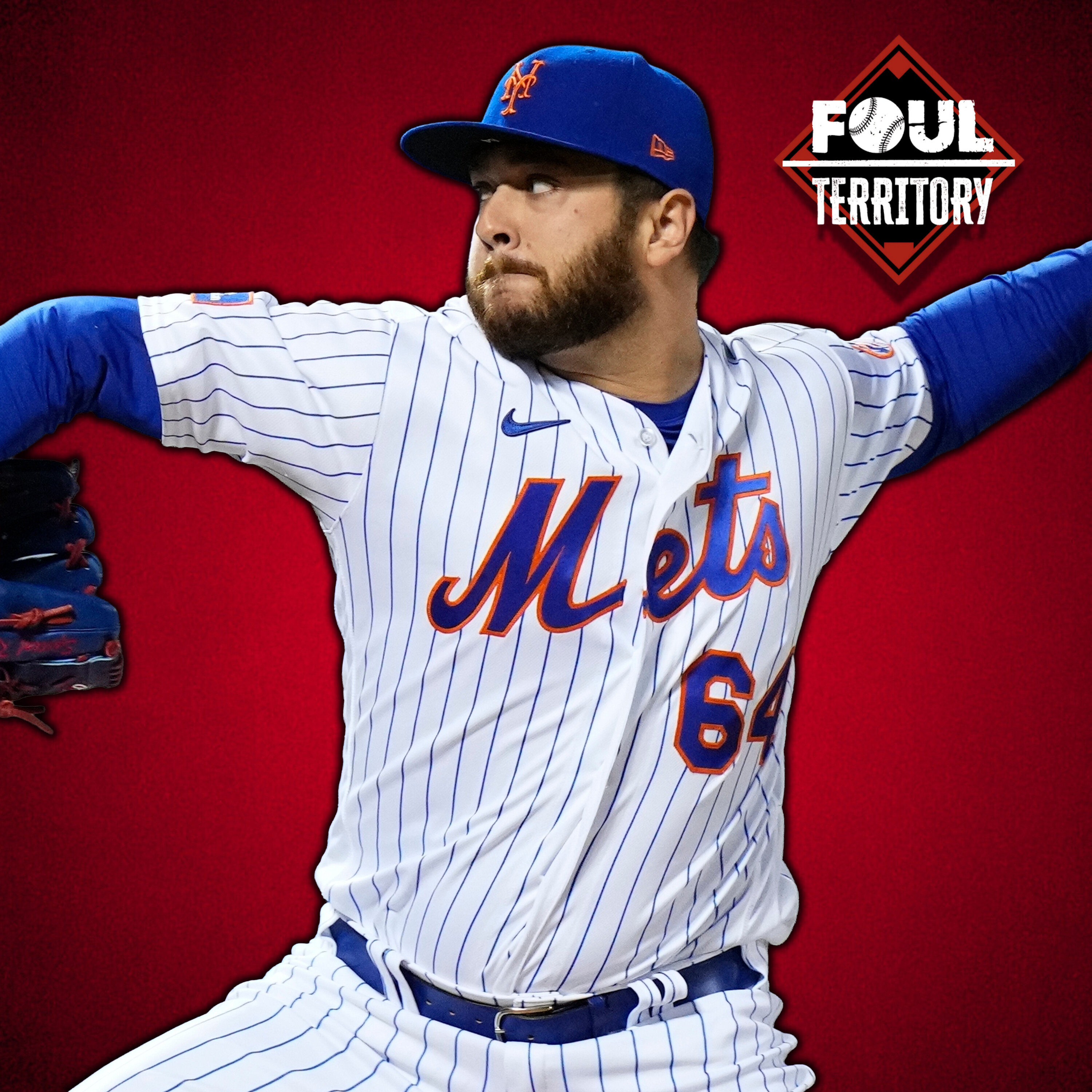
New White Sox P Anthony Kay: Back from Japan, Hyping Murakami
After signing a deal with the White Sox, Anthony Kay tells us how the process went down and what changes led to him becoming a star in Japan. Kay also hypes teammate Munetaka Murakami and drops thoughts on incoming talent Tatsuya Imai and Kazuma Okamoto.
Hosts: AJ Pierzynski, Erik Kratz, Scott Braun
Watch FT on YouTube Monday-Friday from 1-3pm ET
See omnystudio.com/listener for privacy information.
2026-01-11
18 min
Transcript
Available Results
Generated results are saved to the knowledge database for reuse and search.
No generated results are available for this episode yet.
Extract Knowledge
Pick what you want extracted first. Model, scope, and chapter options appear after a template is selected.
Generated results for public episodes are saved to the knowledge database so they can be reused and searched later.
Transcript
00:00:03
Speaker 1: New member of the Chicago White Sox, Anthony K joining us right now on Foul Territory. Anthony, Great to have you on the show. Congratulations on the off season contract.

00:00:10
Speaker 2: How you doing.

00:00:11
Speaker 1: Has the off season going for you now that you're joining up with the White Sox?

00:00:15
Speaker 3: Yeah, how's it going, guys? Thanks for having me. Everything's going good over here. Starting to ramp up a little bit and get going, and yeah, everything's been pretty good.

00:00:25
Speaker 1: I'll let you lay out your story first, Anthony. Can you explain to the fans what you've gone through in your journey through Major League Baseball and then overseas and back.

00:00:36
Speaker 3: Yeah, I mean I pretty much have gone through it all. You know, traded DFAD a bunch of times, released, and then went overseas for two years, so you know, I've pretty much seen it all at this point.

00:00:51
Speaker 2: What happened out there, I mean it.

00:00:55
Speaker 3: Was just a great experience. You know, the bass stars really true. Ge me great. They let me, you know, become a starter again and I kind of just you know, worked some things out. Uh, you know, kind of was able to stretch out again as a starter and you know, just kind of figured it out a little bit.

00:01:15
Speaker 4: We talk about we talk about guys. Oh, you go over there, you make a change, you get some new Mizuno cleats, you have a pause or all that stuff, hitters, pitchers, whatever it is. Before you were going over there, What did it look like, because we rarely talk about we to talk about the success. What did it look like for you at the end of twenty three? Like, are you like, you know, I want to be a starter? They see me as a reliever. What were teams telling you to ultimately make you say, I'm going over to Japan because that option is now open.

00:01:46
Speaker 3: Yeah, So twenty three I was that was like my first full year as being a reliever. But at the end of the year, I got dfaid and was a free agent, and I had a couple of minor league deals. There were a couple of teams that were gonna let me, you know, kind of work it out as a starter in Triple A. But you know, obviously I chose to go to Japan for you know, just a better opportunity compared to, you know, playing in the minor leagues.

00:02:14
Speaker 5: Anthony, let me be the first to welcome to the White Sox okay as a proud White Sox man. Welcome to the White Sox. What they do in Japan?

00:02:23
Speaker 2: What? What?

00:02:23
Speaker 5: What was the difference in Japan that you think unlocked your potential that people obviously thought was there. You were in the big leagues, you were up and down and teams kept giving you an opportunity. So what did they do in Japan then unlocked your potential?

00:02:39
Speaker 3: Yeah? For me, I kind of struggled a little bit when I first got over there. You know a lot of those guys were you know, they foul a lot of pitches off they're they're over there, you know, just trying to get pitch counts up a bunch, and you know, I was still kind of trying to pitch how I was in America, chasing strikeouts and you know, I like to a little bit more walks and and about halfway through my first year there, you know, I kind of did a little This was just checking everyone else out around the league and seeing how they were having success. And you know, those guys, you know, were throwing as hard as me. You know, I feel like some of them didn't have you know, as good as stuff as me. And I was just kind of wondering, you know, what the difference was, and I mean I just kind of came to the conclusion that, you know, I needed another pitch. So I had developed you know, the two seam sinker thing that I throw now, and I think that kind of, you know, changed everything. It helped me, you know, be more aggressive in the zone and you know, get a little bit more contact and go deeper into games.

00:03:47
Speaker 4: Did you have to do that on your own or was there or was there a coach, pitching coach somebody that helped you develop that over there?

00:03:55
Speaker 3: I think the the idea of it was kind of on my own, but they, you know, they have all the analytics and stuff over there also to kind of helped me, you know, work on it and get the shapes that I wanted.

00:04:09
Speaker 4: What are you going to miss the most about Japan? What are you because players always come over it's look, obviously you got to your big league deal. That's cool. You're back in the States, it's cooler. But what are you going to miss the most about your time there that if you had gone back you're like, ah.

00:04:22
Speaker 2: Yeah, this is nice.

00:04:24
Speaker 3: Uh. Probably the fans. I mean every single game over there is packed out. You know, they're doing all their chant their team chants and you know they're playing their instruments out in the outfield. I think you know that experience of the fans was just incredible.

00:04:43
Speaker 4: Then you signed with the White Sox. There's no fans with the White Sox. So sorry, sorry to be the first one. He hey J invited you or was the first one to welcome you, but there ain't no fans. So maybe you need to find a fan section. What would be your fans section called in Chicago.

00:05:02
Speaker 3: Oh that's a good question.

00:05:03
Speaker 2: I don't know.

00:05:03
Speaker 3: I think they got to come up with something. I feel like you can't create your own, right. I feel like, you know.

00:05:08
Speaker 4: Some guys do.

00:05:11
Speaker 5: Hold like a club our director, hold him, hold special, Okay, hold up, hold what listen Anthony as as Strong Island Natives and White Sox players, tell crats the fuck right off. Okay, because listen, we got us strong Island people. We got to stick together, right, us White Sox people, we got to stick together.

00:05:31
Speaker 2: Yeah.

00:05:31
Speaker 5: When Crafts played in Philly, there was no people cheering for him either. Okay, so he can fuck right off. Now what the stadium was, what I was there at twenty fifteen, There wasn't a fucking person in the stands, in Philly. I was they weren't there to watch Mickel Franco get hit act like he got hit in the head when he didn't. Okay, let's be on now. Stop. Okay, So, Anthony, you have a new teammate, mar Commy. Did you face him in Japan? Give us White Sox fans a scouting report on what we can expect, because there's gonna be fans there now because you have Anthony k pitching every fifth day and you have more comedy coming up there to hit a bombs at first base.

00:06:12
Speaker 3: Yeah, I mean, he's got probably the most power I've ever seen. I faced him a bunch my first year. I only got to face him one time this year because you know, he had an injury. But I mean, he's got so much power. Thankfully for me, I kept him in the yard a bunch. But you know, he's still I think, hit like four hundred off of me with a bunch of walks. So, I mean, I don't see. You know, a lot of people obviously were skeptical about, you know, what he can do and in the big leagues, But I don't see why, you know, his game won't translate to the big leagues.

00:06:49
Speaker 4: Okay, who had who hadn't the second one? You said he had the most power you've ever seen, So for people to like equate it to guys here in the big leagues who had the second most power.

00:07:03
Speaker 3: I mean, I didn't get to see any of Murakami's VP, but I'm assuming it's probably something similar. It could be something similar to like Vladdie. I mean, his power in Toronto was ridiculous to watch.

00:07:18
Speaker 2: That's Anthony.

00:07:19
Speaker 1: Why do you think teams weren't as interested in him as anticipated? Like, were you surprised when you saw the contract that he signed? I mean many of the public guesses were one hundred plus mil. And he's young, so he's gonna play on a two year contract. Hopefully for White Sox fans, they keep him and extend him. But otherwise he hits free agency again and you might see the dude hit thirty forty fifty home runs. But I get it they're swinging misconcerns. What do you think held teams back? And how do you think he's going to counter that? Like what is he going to have to do to not just prove himself, but to make sure that he can handle big league pitching, which is different from pitching in the MPB.

00:08:05
Speaker 3: Yeah, I think, you know, there were some concerns about him catching up the VLO. I mean, I don't think he had any problems against me with that, so I don't I don't see why it was a concern. But I mean I also thought em I was going to get a little bit more money too, So I think, you know, maybe there just weren't as many teams interested as they would have thought. But I mean, Yamamoto was special coming out. I think teams kind of are you know, people are kind of just overvalued how much they were going to get just because they were, you know, kind of assuming something like Yamamoto would happen.

00:08:43
Speaker 5: Yeah, well, what about the other guys it came over? Did you face them? Am I? You mentioned to my Hakamoto for the Blue Jays? Did you face him? Did you see my pitch? Give us a sketch? Because we don't know much about him, so you can watch tape, but you actually had been on the field in the stadium with a talking about these other guys come over.

00:09:03
Speaker 3: Imai was on the other side of the league, so we only get to face those guys once. He pitched against us one time, and I think he struck out like sixteen, so I mean obviously was super impressed with what he had. I mean, he's like anywhere from like ninety four to ninety six can run it up to like one hundred when he wants to. Uh, he's got like that backwards slider thing that some guys are starting to throw now. It's like a super unique pitch for him, and he had a lot of success with it in Japan, So I think, uh, I think he's gonna he's gonna be really good over here. Also, and then Okamoto too, I mean he's I feel like he's just like a more you know, polished Murrakami, Like he's got a lot of power. He's just you know, I feel like an older version of of what you're gonna get from Murakami.

00:09:56
Speaker 4: You're turning into a Japanese scout here, all right. All those guys, Kimoto, they came over, Emi came over, and your new teammate came over, more Commy came over. Who's the guy that impressed you the most? Over there? That people are like because as soon as these guys are done signing, they're signing periods over Ah, we.

00:10:15
Speaker 3: Kind of stop.

00:10:16
Speaker 4: But you played the entire season over there, and you're like, this guy's dangerous, that could bust onto the scene here.

00:10:26
Speaker 3: I mean mur Commy he had. I think he played like only like fifty games this year and hit like twenty five home runs. So I mean that stretch that he had this year was so impressive to watch. And I mean he's not hitting any cheap ones either. We had kind of like a little bit of a dead ball over there, so he wasn't getting cheated on any of those home runs.

00:10:49
Speaker 2: Anthony.

00:10:50
Speaker 1: I want to make sure our audience also knows how successful your run was.

00:10:53
Speaker 2: In twenty twenty five.

00:10:54
Speaker 1: I have you as second best RA among starting pitchers one seven forty RA, one hundred and fifty five innings, twenty two k rate. I mean, you dominated out there, and there were multiple reports that teams in Japan did not want to see you leave. So how difficult was that part of it? I mean there were reports that you had better money offers, but you wanted to get back to Major League Baseball. Can you take us through that decision process and how difficult it was to potentially turn down more money to return to the US.

00:11:28
Speaker 3: Yeah, I mean, I mean after the end of the day. You know, Japan's great. You know, my two years there were incredible, but at the end of the day, it's so far away, you know, just being away from my family for you know, a couple more years. I think, you know, me and my wife had to have like a legit heart to heart and you know, kind of figure out like what we truly wanted. And I think you know, we wanted to, you know, come back to the big leagues.

00:11:58
Speaker 5: Why not? I mean, let's it's got to be hard. I mean, I know people that have gone to Japan and there, some people love it, some people hate it, the food, the culture, But at the end of the day, everybody seems to want to come back.

00:12:09
Speaker 2: Yeah, if you're from here.

00:12:09
Speaker 5: From from here especially right, I mean, yeah, I don't know. But I want to ask you mentioned the balls. You say they're dead, but they're also sticky, right, how come MLB hasn't figured out a way to make a little bit of a tackier ball and dead or more dead or more alive, whatever you want to look at it. But how come MLB, you think, hasn't figured out a way to make a little bit of a sticky ball like these in Japan.

00:12:31
Speaker 3: Yeah, I don't know. I mean they they don't like rub up the balls or anything. Over there. They just take them out of the box and they're good to go. I think the balls are more consistent too. Over there. You know some of these balls that you get over here, like you just throw out immediately because they're just different. I think over there, you know, you just get a rid out of a box and it's good to go.

00:12:54
Speaker 4: Okay.

00:12:54
Speaker 5: So then when you go to Chicago, I don't know if you've met Rob Warren, the clubhouse guy, the home clubhouse guy yet, just tell him to tell Joey Mack, who's the umpire guy. Just when you're pitching, just.

00:13:05
Speaker 3: Do a little some some for me here a little.

00:13:08
Speaker 5: Bit, you know, like ye help me out here a little bit.

00:13:13
Speaker 3: Yeah, I mean you don't need any stick over there. I wouldn't hate a little extra help over here, for sure.

00:13:20
Speaker 5: I like it. I like it.

00:13:23
Speaker 4: They took they took away the spider tack. Since you've been gone, but no, actually you were still You're still able to use it. My thing is when you look at a guy like Cody Punks who came over from Korea. Korea is a worst league than Japan. When you see his contract and compared to yours? Is that tough? Is that something that you sit there and you go, how did he get that? How did I not? Should they be looking at results? Should they be looking at the metrics?

00:13:52
Speaker 2: Yeah?

00:13:52
Speaker 3: I mean, I mean I was. I was just a little little disappointed with seeing what he got compared to what I got. But I mean, I guess you know a lot of it over is looking at the metrics and stuff. And you know, I think he you know, added like a mile an hour to his fastball or something and added a splitter, So I mean they obviously were there was something that they liked, and you know, super happy for him because you know, he also played in Japan, so I got to meet him a little bit when we played him, and you know, good for him.

00:14:25
Speaker 1: Yeah, And it seems like things are changing with how teams are judging players and their performances overseas. You know, they're they're of course looking at stats, but I think Amaya is probably the example here. Just going back to him for a moment, based on his success and even what his repertoire looks like from the eye test, we thought he was going to get among almost everyone else one hundred mili plus and yet teams, you know, we're kind of judging certain pitches and trying to put him through what they think will convert to the major leagues.

00:14:57
Speaker 2: Is that.

00:14:58
Speaker 1: I know you don't necessarily know a ton of about that's not your job, but I'm sure that comes up in conversation right when you're talking to teams. Hey, this is how we see this particular pitch playing back in MLB again.

00:15:10
Speaker 3: Yeah, I feel like it was just super inconsistent with what you know, the teams were offering. Like it was just different for every guy. I feel like there's no way to like compare each guy to you know, what their deals are for whatever reason, I guess just different.

00:15:26
Speaker 2: Yeah.

00:15:28
Speaker 1: My last one for you, I mean, you did spend some time or a decent amount of time in the Blue Jays organization. I believe you're in the Stroman deal back in the day with the Mets. What was it like back then? And did you follow their run at all? I know the time change usually makes it kind of difficult, but did you follow their run at all? Being a part of that organization, you probably had some teammates from the miners that are on that team.

00:15:54
Speaker 2: Now that you were able to follow.

00:15:56
Speaker 3: Yeah, I mean in Japan they play pretty much every dog games, so you know, I was able to. I was able to watch all those games.

00:16:05
Speaker 2: You know.

00:16:05
Speaker 3: It was obviously there aren't too many guys that I overlapped with in the Blue Jays organization now, but obviously super happy for those guys to you know, get to where where they went, but unfortunately came up a little short. But it was it was fun to watch, and you know, I was really happy for all the guys that I knew.

00:16:23
Speaker 1: Well, Anthony, we're excited to see you back in Major League Baseball. And this guy will be watching every single pitch that you throw. I mean, he is obviously a pretty big deal out there, but he also doesn't really miss a pitch of white tax bawd.

00:16:36
Speaker 2: I think you're more excited for this season than you've been the.

00:16:39
Speaker 5: Long time, right, Oh, well for the last three obviously, yeah.

00:16:42
Speaker 2: Good, last five. You've got this guy will be watching.

00:16:46
Speaker 5: So you know, Long Island we stick together. Yeah, you don't know anything about was born.

00:16:50
Speaker 3: In many of us.

00:16:51
Speaker 2: Five minutes. It's step Steven Mattz Right, Matts is a Long.

00:16:57
Speaker 3: Island Matt Brown mm hmm.

00:17:08
Speaker 5: Was a famous one.

00:17:09
Speaker 1: Just so you know, Anthony, because I mean, unless you're watching the show every day, A J was born in Long Island in the Hampton's actually he's a baby.

00:17:18
Speaker 2: Yeah, and then when did you officially move out of island?

00:17:23
Speaker 5: We don't talk about the I'm not here to talk about the past. Not here to talk about the past. Okay, were you even one?

00:17:30
Speaker 2: Did you?

00:17:30
Speaker 5: I was like, when it does on my birth certificate, and well when I would go up to bad it would say where we're you know, from, it would say Bridgehampton, New York. Did you say Orlando, Florida? You're right, So there's.

00:17:45
Speaker 3: Not many of the story, so we got to accept you.

00:17:49
Speaker 5: That's right. I'm just I mean, I'm the second best person born in Bridgehampton player who's Carl?

00:17:56
Speaker 1: Oh yeah, he's probably spent more than two years there. Well, Anthony, it is fun talking to you. Welcome back to MLB and we'll see you in spring training.

00:18:08
Speaker 3: Thanks you, I see it.

00:18:11
Speaker 5: M
Chapters
No chapters available.