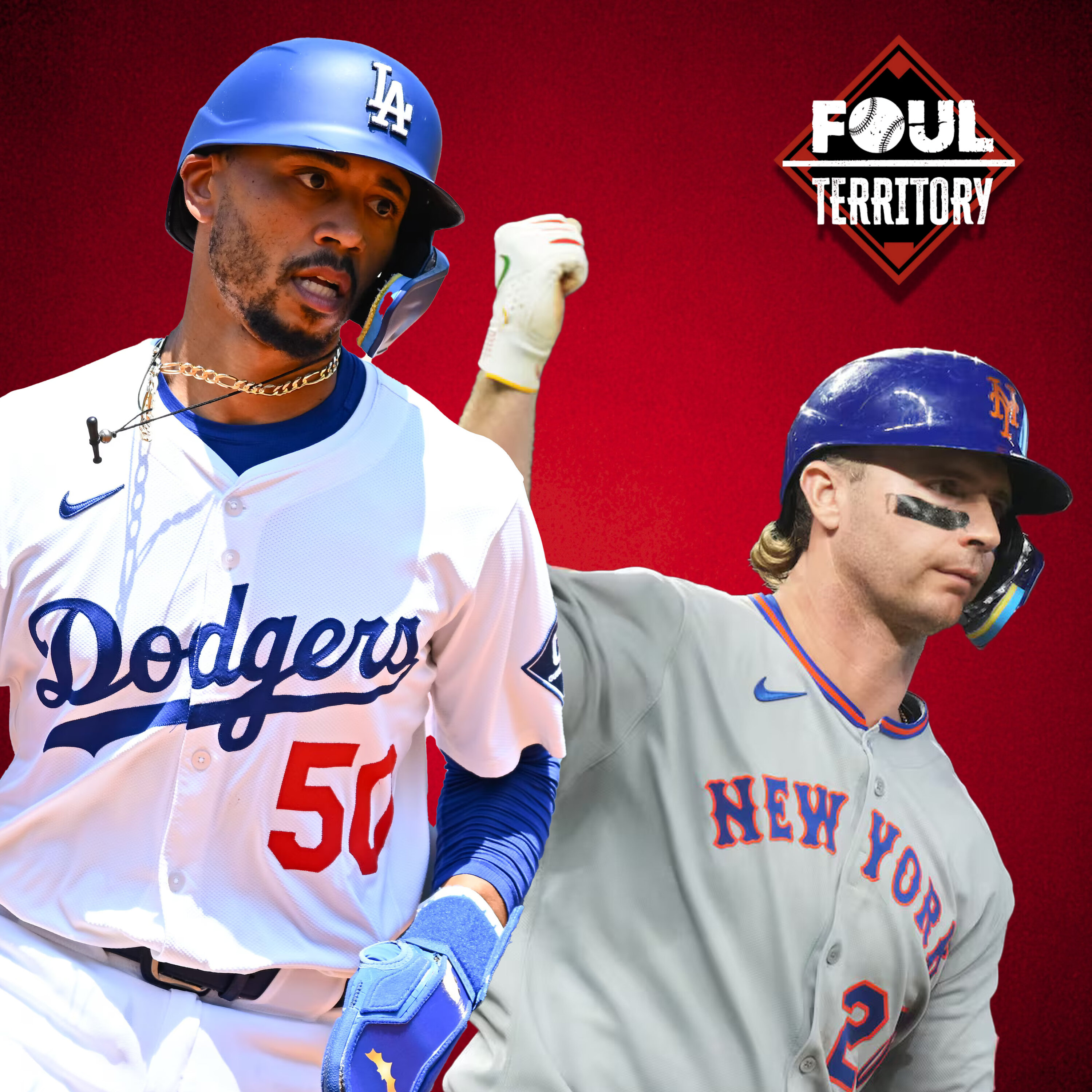
Zack Scott talks Manager carousel, Owner crapshoot theories, Opt-outs
Why are there SO many manager jobs open and not front office leader roles? Former MLB executive Zack Scott dives right in. We talk about the changing tide of ownership groups thinking the postseason is a crapshoot and dive into some specific big name player situations.
Get 20% off your first Slab Pack or card purchase by going to ArenaClub.com/FOUL and use code FOUL
(27:24) Has the excuse of ‘not having enough money’ run its course?
(29:06) Jed Hoyer has absolutely NO worries about the Cubs’ 2026 finances.
Hosts: Erik Kratz, AJ Pierzynski, Scott Braun
Foul Territory Presented by FOX One: Start your 7-day free trial today at FOXone.com
See omnystudio.com/listener for privacy information.
Available Results
Generated results are saved to the knowledge database for reuse and search.
Extract Knowledge
Pick what you want extracted first. Model, scope, and chapter options appear after a template is selected.
Transcript
00:00:02
Speaker 1: Zach Scott is here, a former MLB executive, and you know what, Zach, I'm gonna let you do the intro because you know, I see you on TV. You've got a lot of action going on. I love catching your tweets explaining more about the game. But how do you introduce yourself when you're at a function these days?

00:00:20
Speaker 2: Yeah, it's I definitely have been pursuing a lot of different paths, so you know, I focus right now on my business for Rings, which is evolving and has a lot of different paths. So it started as something where I consult for sports operations across all sports. I now do leadership executive coaching with individuals, launching some group programs for leadership for new and emerging leaders in sports and out of sports. And most recently, and what's been a lot of my focus lately has been I got into the representation side. I partner with a guy named Neil Glasberg who's been representing NHL coaches and executives for fifteen years very successfully, and he wanted to grow into the business the baseball side of things, because you know, as I've learned from talking to people, especially in other sports, executives and coaches are underrepresented, they don't have agents like they should in baseball, and so I think it's something Baseball has been behind in and I want to help. And I think I offer a different perspective than kind of someone from the typical player agent path because I've been in the front office. I've you know, if you're someone that's a candidate for one of these, you know, many managerial jobs I've I've interviewed over twenty people from managerial jobs design managerial processes. So I think I'm uniquely positioned to help people out to prepare for those things and hopefully get those opportunities, and similar with gms, I've probably helped people prepare for about a dozen interviews with different teams, and you know, most of the credit goes to them, but most of the people I helped over the years were either finalists or got those GM jobs. So I wanted to I'm always trying to help people in sports, especially, and that's one way that I think I can do it now with where it's kind of like a hybrid between an agent and an executive coach.

00:02:04
Speaker 3: All right, Well, that leads, you know perfectly to my question. First of all, of course, coaches and gms and everything are underrepresentative because Major League Baseball wants it that way because then they don't have to pay them as much as they should be worse. So of course guys are like, oh, I don't need an agent. If I get an agent, they might not hire me. Yeah, because teams listen. I don't know this, but I'm assuming teams have told guys before in the past if you hire an agent, you know, we might not do this because he's gonna ask for more. I mean, you know that firsthand. So I could be wrong on that, but I think that's probably happened to somebody in the past. But why you mentioned all the openings manager opening, manager opening, manager opening. There are hardly any GM openings. Did the owners not want to fire their GM? And how the heck did gms always sell their owners on oh, well, it's not my player. I need another five years. Oh wait, oh those four years but no, no, we have a new group coming I need to know or five more, Like how do gyms do it? I want to know because I know I'd love to be a gym. I can just keep selling an owner five more years, five more years, five more years, keep giving me a raise and keep doing whatever.

00:03:01
Speaker 2: Well, if you think about it, the GM is positioned better to have more interactions with the owner, right Like, that's the person the owner talks to the most. It's not the manager, it's not really anyone else in the organization. So you can that could lead to, you know, a negative relationship if you're not very good at your job as a GM. But you have so many opportunities. When I was with the Mets, I talked to Steve Cohen. Cohen almost every day, That's how he called me almost every morning before before you know, he needed to get to day trading on the market and so I knew that was how my day was going to start. So there were all these opportunities to have those conversations that managers just don't have. And you know, I do think though we've seen ten openings either in season or now at the end of the season, and that's a lot. I mean, that's I don't know if I can remember that many at one off season. But if you look at it, it's all if you look at it individually, it's like four of those guys walked away, well three of them walked away to maybe retire. One of them had health issues, two of them were GM and manager changes, so that six right there. So I think you're the ones that are really interesting are the ones that are based on performance. You know, you could say Buster Posey knew in a job, wasn't his manager that he hired, So I don't believe so it's, you know, he wants to have someone that's his guy and build that relationship. So that makes some sense. But Pittsburgh, Baltimore, Minnesota, obviously it's because they haven't performed, and I would think that, you know, it's probably not a good sign for some of those gms that it's typically the first domino to fall can be the manager. And I'll take Pittsburgh for example, because I worked with Ben Sherrington in the past, both in Boston and with Consulting in Pittsburgh, and you know, Ben someone that doesn't pass the buck generally. So I'm sure he did not want to make a change because he believes that, you know, he's very accountable and believes that, you know, if it doesn't work, then that's a big part of it is a failure on him, right that he hired this person and it's not working out. But he also recognizes sometimes it is time for a new voice. But then you see the president of the club come out and say, we got to make the playoffs next year. I mean, it almost came off as an ultimatum. So you know, unfortunately, like Ben maybe in the in the in the sites right, he may have a target on his back now that the manager's changing. So you know, I think it's all circumstantial. But yeah, you're right, it's a lot easier to put it on the manager, and I think oftentimes we see it that it's the manager first, and if you hire another person doesn't work out, all of a sudden, it becomes that bullseye on the GM's back.

00:05:24
Speaker 4: All right, all these managerial interviews, how are they differing from organization organization? You just said some teams underperformed, some teams are in a winning window. Now some teams probably don't really care if they ever win. From an ownership standpoint, how do these managerial openings, how do the interviews go and how do they differ?

00:05:47
Speaker 2: Well, you know, obviously I'm not inside the walls of all these interviews that go on, but I've been on the other side of them with not just it's been one organization that I was with with the Red Sox that we did all these different managerial hirings, but it was different. Gms often switch gms every four years, it seemed like, so I did get slightly different processes where they're valuing certain things, but it's a very intense process where there's a lot of questions. You typically have, you know, a lot a long script of questions that you want to ask in different areas and you just want to see, like what are their views, what is their vision for how they do things in certain ways, how do they want to build a staff, what kind of culture are they going to create in the clubhouse? How are they how do they think through things tactically? How do they use information in their process when they're making decisions, when they're making out the lineup? What tools do they want to help them make those decisions? What people do they want? In that conversation, you're really trying to gauge how this person would be in this role. It's just like any other job. What's their vision and how prepared are they are they showing you those traits that you want your managers and preparations a big one. I've done interviews where I was shocked at how unprepared certain candidates were for managerial interviews and clearly knew, like, this isn't going to go very far. You've got to be ready to have put a lot of thought into how you would be in that role, and how you'd run the clubhouse, how you'd want to do things, and what kind of support would you be looking for, and you know, what level of interaction is helpful to you from the front office, from your other coaches. I think it's a lot of those things that you want. I'm sure some gems go into it with, you know, preconceived notions about what they want out of their manager, and a lot of times I would recommend people just be themselves and do what they truly believe in. Is the candidate because and it may not be a fit and it's not a necessary, necessarily a personal thing with that candidate. It just might be we're not matching up, we're not aligned on kind of how we're viewing this role and how it would work on a day to day basis.

00:07:39
Speaker 3: Zach, I got to go back to what you said about the Pirates. Yes, they said they have to make the playoffs this year, but Ben Sherrington's been there for quite a while now, and he's been through different managers, and he's been through different waves of guys coming through, and I just wonder, you know, is he next like you said, I mean, because he he did have Shelton and now he's a Kelly, and I think he hired I don't know if he hired Shelton or whoever was before Shelton. He had too, so you know at what point And I'm not I'm just using ben Cherington because you brought him up, But how many managers do most gms and executives get before Hey, maybe you're the wrong person to choose this next guy in line?

00:08:19
Speaker 2: Yeah, I mean, I don't think there's a fact, you know, a hard and fast rule to that, but I think it's it's dependent on those conversations. You know what, what have you articulated that you believe will work both in the short and long term for your organization. And they're a team. Sure, they have financial constraints. I do think every team you know has constraints that they can embrace and realize. Okay, if we're going to have you know, if you're Tampa and Cleveland, you have the similar constraints where we're going to be really aggressive and churning our roster as the approach that like Tampa takes, for example. But there's different approaches to handling that navigating that world given those constraints. So I think it's up to you know, what you set is kind of how we're gonna do things, and then how you execute that in those conversations you're having with the owner for them to say I still believe in this person, that they're gonna come through, that they're learning from the things that worked and didn't work, that they're adaptable in trying to take a different approach to get to where we want to be. And so I think there's a lot of that. It's really about, you know, how things are going. Obviously we're a results driven world, and from our seats we're looking at from the outside looking in, you know, that's all we can judge. We don't know what conversations are going on, how someone goes about their work, and that's really for the people inside, like the owner, to judge is this gonna work? Do I believe in this person anymore going forward? And that's any GM. It's not specific to Ben. We're just using them as an example, but I think, yeah, they're not getting results. Why are they not getting results? Is it because decision makings poor? Is it because other things factoring in? Is it? Do they need more time?

00:09:49
Speaker 1: You know?

00:09:49
Speaker 2: They for the They've obviously produced a lot of really good pitching talent. I think for the first time in a while, they have really good position players in their minor leagues. But at some point you've got to see that turn into major league result. And you know, at this point for them, it's probably do well. Do we believe that we're positioned better to get those position players in the big leagues, have a more well rounded team and start really competing in that division.

00:10:13
Speaker 1: That's it. This week's Arena club Slam pack pull. We opened a Ruby. We went big. They're doing hundred fifty dollars pack.

00:10:20
Speaker 5: That was you know what the nerves got me. I think it was so exciting because the motion and waits about four or five seconds for the card to come up. Card that I got was over three hundred dollars a prospect from the Mariners, and for me, I love the card. I thought it was great. Guess what I sold it back? Yeah, and I got a little more money, and now I can go buy another one. You have to wait a couple of minutes afterwards. And this is the excitement, the whole thing. Put your money where your mouth is and have fun with Arena Club.

00:10:48
Speaker 1: You can see that big smile on todd Father's face. Lazarero Montes, who's supposed to be good. He's Baseball America top three, he's in the Mariners organization. But Todd Father sometimes thinks prospects or suspects going back to the well and we'll see what he gets next time. Use the code foul foul at arenaclub dot com slash foul if you want to get in on the first slap pack experience and get twenty percent off or twenty percent off your first card purchase.

00:11:13
Speaker 4: All right, I want to go to one of your tweets about Pete Alonzo. Very creative word word soup you gave us, but word salad. But you said, looks like it may be back with the Mets on a short term deal after he once again overplaced his hand in the market. Rinse and repeat, Alonzo, why do you think this will happened again? Because history says Boris has these guys that have done this, Blake Snow, Matt Chapman, and it's turned into a big deal, kind of a weird bigger deal, but eventually they get their cash. Why do you feel like it would be different for Pete?

00:11:54
Speaker 2: You know, obviously that's tongue in cheek with that whole tweet, but I do think there's a real risk mostly Scott Boris' clients of overplaying your hand because the formula with Scott is kind of always the same, right, It's it's asked for the moon, So you get people kind of off their maybe low ball vision of a player before they start really negotiating, and it works a lot at the aggregate level, right, the portfolio level portfolio of his players, right. So that's a good business model for me. He's been very successful, but in individual cases sometimes it doesn't fit. And I think with Pete in particular, he's in a better spot than he was a year ago in a lot of ways. Right, He had a much better year after showing two years of decline and people wondering is this going to be continuing? So he breaks that narrative, which is huge. He's you know, got a great career numbers, but he is a year older, he is in a position that, you know, for whatever reason, whether you agree with it or not, is valued differently. There. There isn't this long history, you know, Vla Guerrero just maybe changed that. I don't know. I think that that was a lot of you known circumstances that worked in his favor, especially with Toronto really struggling to get people to take their money and so probably to result it in an overpay for a great player but not aligned with any other comparable players in market. So I think, you know, it's a good market for him because there's not a lot of talent on the market. There are some high end guys, but it thins out pretty quickly. But on the other side of that coin is that means there aren't a lot of teams that have as many holes if their players aren't becoming free agents. So it only takes two or three, you know, it doesn't take much to get the bidding up there. I just think that there's a real risk that if there's not an adjustment made based on the last time you did it, and then you risk having the same outcome now, like you pointed out, sometimes Scott has made that adjustment. So I think you know, part of it was that's what they're saying, what's out their public It doesn't necessarily reflect how they're approaching it internally on Scott's side, so it could change. But I do think he's the type of player that fits into this demographic of he's probably a DH for the future because he's not getting any younger and he's already you know, people look at metrics today and they see that he's at the bottom of you know, first base metrics. He does some things well, but he's not that mobile. There's other things he doesn't do well, and I think that there's a real risk that he's limited. And we've never really, we rarely see a great market for dhs. But you know, maybe he is that exception. Maybe he is that JD. Martinez that we signed to a large deal back, you know, several years ago in Boston.

00:14:28
Speaker 3: So well, you mentioned Pete, but Alex Bragman did the same thing, right, Cody Bellinger has done the same thing for a couple of years as a GM and a front office person. Do you just say, man, if we can just keep signing these guys to one year deals, it's great for us. I know every agent wants multi year deals. But man, they're you know, just front office. You're just thinking, oh, we'll just keep doing this one year at a time, and if they keep opting they have a great year, good they opt out. We try again. If they don't have a great year, we'll keep them. Maybe we'll get a better year of the second year.

00:14:58
Speaker 2: Yeah, a lot of the you know, today's gms are very risk averse, and that is a you know, the biggest way to kind of paralyze your club is to give out too many long term, big, you know, top of the market deals. It is an auction in free agency. So generally by definition you're you're usually the highest bidder, which means relative to the rest of the industry, you're overvaluing the player, right, So if you do too many of those and really hurt your flexibility, that's really the only way a big market team can can paralyze themselves and put themselves in a bad position long term. So I think there's a lot of fear of that that a lot of general managers have. But the but the other side of it is if you don't bring in proven impact talent, you have another kind of risk. It maybe is more you know, something you can navigate more because it doesn't totally tye up your payroll, but it's still a risk that you're not good enough. So I could see teams taking a hybrid approach, like if I'm if I'm in you know, David Sterns's shoes, I'm looking at it as you know, maybe I go out and try to get you know, be aggressive early in the market and go get a first baseman that's a little better defender, a little bit more of a well rounded player, not the impact of Peter Alonzo offensively, and then I wait out Peed Alonzo and maybe he's in the mixed first base DH if the market comes back to us. Because that's the other thing with Scott is there's a timing issue a lot of the times. Unless it's like the Won Soto's of the world, the absolute top market that everyone's in, sometimes you have to wait a long time. We had to do that with Jad Martinez. We got aggressive with Mitch Moreland early on a good value deal and then focused our energy on Jad Martinez, which is risky that we put all our eggs in that one basket, but it ended up working out. We waited it out and we got it done.

00:16:32
Speaker 4: How our GM's going to handle this offseason knowing that most likely the lockout's coming. The lockout is looming, and teams don't know what contract statuses will look like. Are we going to see something on either end of the spectrum that's crazy because of this looming.

00:16:51
Speaker 2: Yeah? I think that you see, you know, the way most teams and whenever I've been involved with the team during a time of financial uncertainty, which is been COVID, which has been the economy of eight nine kind of taking a hit in you know, the overall economy and owners getting cautious, they almost always go to a place of caution, even a big market team like the Red Sox where it was we don't know are people going to go to baseball games now that the economy is so tough that we're going to bounce back from this? Are we going to bounce back from COVID or people are going to be comfortable when it's time to come back. Are we going to bounce back from a lockout? I think those are real questions. So they may be fine giving out one two year deals, but hard to project what a contract, how a contract that's longer than that's going to impact them financially when they don't know the financials. We see the same thing with the teams that are affected by the uncertainty of where their local TV revenues are coming from from the RSN, you know, bankruptcy issue that happened, those teams tend to pull back on spending. I think other teams should look at it as an opportunity if you have money that it's like, Okay, maybe the market's going to be a little suppressed and there's an opportunity for us to get some deals because we have the ability to take a little bit more financial risk. So I think that that's the way I would always look at it from a big market team. Was you know, eight or nine is a good example because in Boston, we just tightened up. We didn't want to spend. We were afraid of not knowing how the economy was going to respond. Once it bounced back, we overcorrected, but over spending on guys like Carl Crawford, Data and Gonzales, and then we put on ourselves in a bad spot. But that was because well, we haven't spent money in a couple of years. Now, let's be aggressive. If we instead had been more aggressive during that when the rest of the league was cautious. We may have gotten some good deals and then not been in a market where everyone was ready to spend their money because the economy did bounce back.

00:18:37
Speaker 1: It's funny players are gonna be like, I'll backload my contract if it's a seven year deal right now, no problem. Last one for you, Zach, So, I wanted to ask you about a question that revolves around postseason trends and specifically on the NLCS. It's a two parter, but it revolves around the Dodgers and the Brewers. One is your take on if the Dodgers beating the Brewers and maybe and winning the World Series actually affects how small market owners are pissed off and fight even more maybe for a salary cap, which is quite obvious that they want one. The second part is how big market teams take this postseason, and I'll use the Mets as an example. They have somewhat publicly stated they don't want to go after these big horse long term contracts for starters, and then, oh, look at what the Dodgers are doing. The Mets could have bought up a rotation quite like that. So your take on that series and how it permeates through the rest of the industry.

00:19:34
Speaker 2: Well, I definitely think the people that, you know, the owners of teams that already aren't happy with the way it works, this system and that's currently in place, and they tend to be mid low market teams. Of course they're going to use it. Right. If the Dodgers winn is like, see this is not sustainable, no one else has a chance. But meanwhile we see a lot of other teams that normally aren't there in these final four teams. So I definitely think that's a possibility that that's kind of making them feel stronger in their argument and they dig in further. But the Dodters, to me, the lesson is that they do a lot of things really well, and so like you could go out and just outspend everybody, but then the puzzle pieces don't fit well together. They do a good job like they do. You know, they sign someone like Mookie Bets, who's a very selfless guy who was very fortunate to get to be around him and hear him talk to other players about hitting, and he's someone that most superstars aren't willing to go back to a position that quite honestly, he moved off of because he had the yips and the minors, So that's pretty amazing that he could go back all these years later and start playing shortstop. And that kind of selflessness and team first mentality is what they have. And they're usually more fundamentally sound than a lot of other teams, so I think that's part of the lesson. Sure they spend a lot, but before they spend a lot, they were always contending for world championship teams. They do a lot of things well, that's why they're a model organization, and I think in the case of the Mets, yeah, they got to be careful the Mets. If they go crazy spending this offseason or not, they're still going to have a huge payroll next year. It's just you know, obviously the Sodo signing and Lindor contract and other things, so they're already before you sign anybody, pretty high up there and spending. So I don't think they'll ever be accused of not spending a lot. But you know, once you start, like I said, before, you start adding big contracts like a Wan Soto on top of the lind Or contract. As he's getting deeper into his thirties, you start compounding your risk. And so I'm sure, you know, David Strains, coming from a small mid market, small market team, really is very aware of that that there is some risk. It is how METS teams of the past got in trouble by, you know, spending high dollars in the day. You know, obviously Bobby Bunia is the one that was always brot up because he's still getting paid and then getting paralyzed and unable to kind of get out of that and then having a long cycle of losing, and that's what they want to avoid. They want to, you know, have sustainable success like everyone does and compete year after year. So it's a sweet spot that they're going to try to find. But they're going to spend money no matter what, because they're already there.

00:22:00
Speaker 1: This episode of Foul Territory is brought to you by Fox One. Fox one is now live stream all of your Fox favorites together in one place, from MLB postseason games to the NFL on Fox to Big Noon Saturdays with Fox One. You get it all live. Start your seven day free trial today. Offers are subject to change. Go to Fox one for complete terms and conditions. We have the website in the description of this episode, it's Fox one. It's streaming now for the baseball fans here on fteen. We know you love baseball. If you're listening to the show, you get LCS games right, and the entire World Series every year is on Fox. So if you don't have normal cable or you can't get the channel, Fox one is the solution for you. Now, the app that solves it all again. Go to Fox one and start a seven day free trial to see for yourself how money it is.

00:23:05
Speaker 3: All right, So what I've heard you say, Zach is owners are averse to risk, okay. And by the way, I if the Dodgers win, I think it's more of an indictment on the other teams that you need to spend to win. So I totally disagree with people saying, oh, c the end of baseball if the Dodgers win. No, the owners that don't want to spend they're going to use it because they don't want to spend their money and they're happy making the revenue sharing and the Pittsburgh's and we know the teams we don't need to go through in the Rays and those teams, Okay, But What I don't understand is, and you've been in the front office, why do owners talk themselves out of signing good players. There are plenty of good players that can help you win, and I feel like we hear more about, well, we don't want to do this because the fifth year might hurt us. Yeah, but we might win two World Series in those first four years. That's what the That's the way I think the Dodgers look at it, and even the Phillies, even though they haven't won. Certain teams they look at it and say, we could win. Some owners are more positive, like we can do this, and some owners are more, oh, well, man, I don't want to have to spend that money we might not win. Is there a different mindset for different owners and how they go about just saying like, screw it, I'm going for like the I'll use Washington.

00:24:08
Speaker 2: Right.

00:24:08
Speaker 3: The Learners were like, screw We're going all in, and they won and it made it all worth And now it suck because it was during COVID and they didn't get to celebrate and do a lot of the stuff. But they've said, oh, screw it, we're gonna win. Right. The Illa just tried in Detroit and it didn't work out. They got to the World Series, never won. But are there different owners that are just more like looking for reasons not the signed players.

00:24:27
Speaker 2: I think, like any human being, we tend to be wired towards the negative, thinking of the negative, what's the downside risk without giving enough weight on the upside, right, And so I think sometimes what you mentioned Detroit, you know, similar person and situation in Boston when we won in twenty eighteen, right Like, we had a great young core, so we decided to be really aggressive and spending to support that core so we could go for it. And on the other end of that, yeah, there's risk that you you know, maybe you go too far and you have to kind of wear it for a few years before you're back to where you want to be. It is art to sustain success beyond a five year window, it really is. So I think there's that part of it where you get reactionary depending on where you're at, and you get a little emotional. These guys you know, been around them, they can be emotional, even when some of them seem like they're not those types of people. So I think that's part of it. But I also think the changes to you know the rules that playoff, it's easier to get in the playoffs, like you can be close to a five hundred team and get in the playoffs. It almost creates, you know, with with parity or more opportunity, creates less urgency for people to go for it, whatever that may mean to different clubs, because we may be able to sneak in and then get hot and win a World Series. They almost some of these guys think it's almost very arbitrary who's winning. I think it's actually good for a team like the Dodgers to win. To say, no, it's not like you can build a better team if you start convincing yourself like, oh, it doesn't really matter. It's all kind of random, which I've heard on the record. Some owners say that John Henry said that not that long ago, and to me, it's like, well, that's that's not accurate, and that's not how we operated when we did win in Boston. So I do think when you start trying to water things down a little bit, you don't have kind of the super teams that that you may have had in the past during like Yankee Dynasties and other teams that were like really separating themselves from other other clubs. That's kind of what happens, is you get if you look at it's like, besides the Dodgers, there's you know, Toronto, Seattle teams we don't usually see. You know, Milwaukee's going deeper than they often do. So I think it's easy to look at that and say, look at those three teams and focus on and be like, oh, you know, we don't need to we don't need to to you know, go crazy. It's just kind of going to change all the time. Who's in there. So, you know, Texas and our Arizona being in the World Series a few years ago, a couple of years ago. I think that's. Unfortunately, what happens is it starts disincentivizing people being more aggressive.

00:26:51
Speaker 1: Spot on, great answer, really really on the same page on that one, Zach, Yeah, Oh it's a crap shot.

00:26:57
Speaker 5: Everything's crap.

00:26:58
Speaker 1: No, it's not. Come on, if you want the game every day, you know that's not true at all. And you can build for the regular season, build a little bit differently for the postseason with your plans, which I think the Dodgers do well. We can talk for hours. I know, you gotta jump we gotta jump, but great to have you on. We always enjoy this. Give Zach follow at Zack Scott Sports to see everything going on in his world. And I hope you get those salaries raised for the coaches and the gyms. I'm all about it. Thank you, Zach.

00:27:22
Speaker 2: That's right. Thanks guys, appreciate it.

00:27:24
Speaker 1: Hey, look at this tweet from Barry Bloom over at Sportco. He said, every team in baseball can afford to do this. Hell, the A's and Rays pockets seventy million in revenue sharing every season. He's talking about big signings. Most owners don't want to be competitive.

00:27:36
Speaker 3: Some do.

00:27:37
Speaker 1: When fans try to hold their feet to the fire and boycott games, they lose the team. Like Oakland, he's a senior writer over Asportico. They know what teams are making and they are holding them accountable. But it's not like anything necessarily happens. I know we talk about this a lot in the offseason, but it is a real thing.

00:27:57
Speaker 3: Let me ask you all this, when a team makes the playoffs, how much money do you think a team makes for a home game. I don't know. I've asked this, and it's not publicly. It's not given out to the public, right, which I don't understand. Why can't we find out We can find out how much revenue a team generates, but how can we not find out per game how much a team in the Major League Baseball max? I mean, I'm thinking it's got to be five to ten million at least, if not more. I mean, I'm just looking at ticket sales. I know what tickets cost, parking concessions. I mean, I'm just going low here. Let's say they make twenty million per playoff home game, So that means the Mariners this year have made they're going to make at least one hundred and fifty to one hundred million extra dollars because they made it to the second round.

00:28:42
Speaker 1: I'm just ty has a safe number, and we're going to go with that since they won't make it public. Twenty is a safe number. Just keep in mind that some of that goes to players, a chunk of that goes to the league and other owners and all that, Right, So there's some splitting that goes on. So let's say even that they pocket ten per playoff game. Because also there's merch that you can count. There's all kinds of things. Let's say it's ten per playoff game. It's a lot, a lot of money. Hey, Jed Hoyer spoke as he addressed the rest of the Cubs twenty twenty five, I'm confident we're gonna have enough money to field a good team. Talking about twenty twenty six. According to spot Track, Cubs total payroll allegation this season allocation was two eleven mil, tenth in baseball. We obviously get some fans aj that say we're a Cub hater show because you love them so much, and that is fair on your side. I actually think I give them a good chunk of credit, and I give Jed Hoyer credit this year for working with what he was given. But they're not operating like a big market team. They operate more like a bigger mid market team.

00:29:43
Speaker 3: No, they operate like a team that isn't the Cubs is what they operate like. And by the way, Han Perdido, Cub fans, Han Perdido, Okay, that's my new sling every time anyone pisses me off on Perdido. But here's my thing. You're the Cubs. You sell out every single game, you have your own TV network, you have the whole area around Wrigley that you own. You are making so much damn money, and then your GM has to come out and say, we hope we have the money to field a good team. What are you talking about? Well, this shouldn't even be a thing. Again, this goes back to my point. There's owners that want to win and there's owners that just want to cash checks. Right, the Rickets won twenty sixteen EMUs CATOOLI. Okay, if you don't know what that means, look it up cup fans because it because they had to take the sign down because it hurts your feelings too bad.

00:30:29
Speaker 4: Okay, but listen, they're.

00:30:31
Speaker 3: Making enough money they can spend whatever they want. They just don't want to because the Rickets they want to make money and they're making a killing