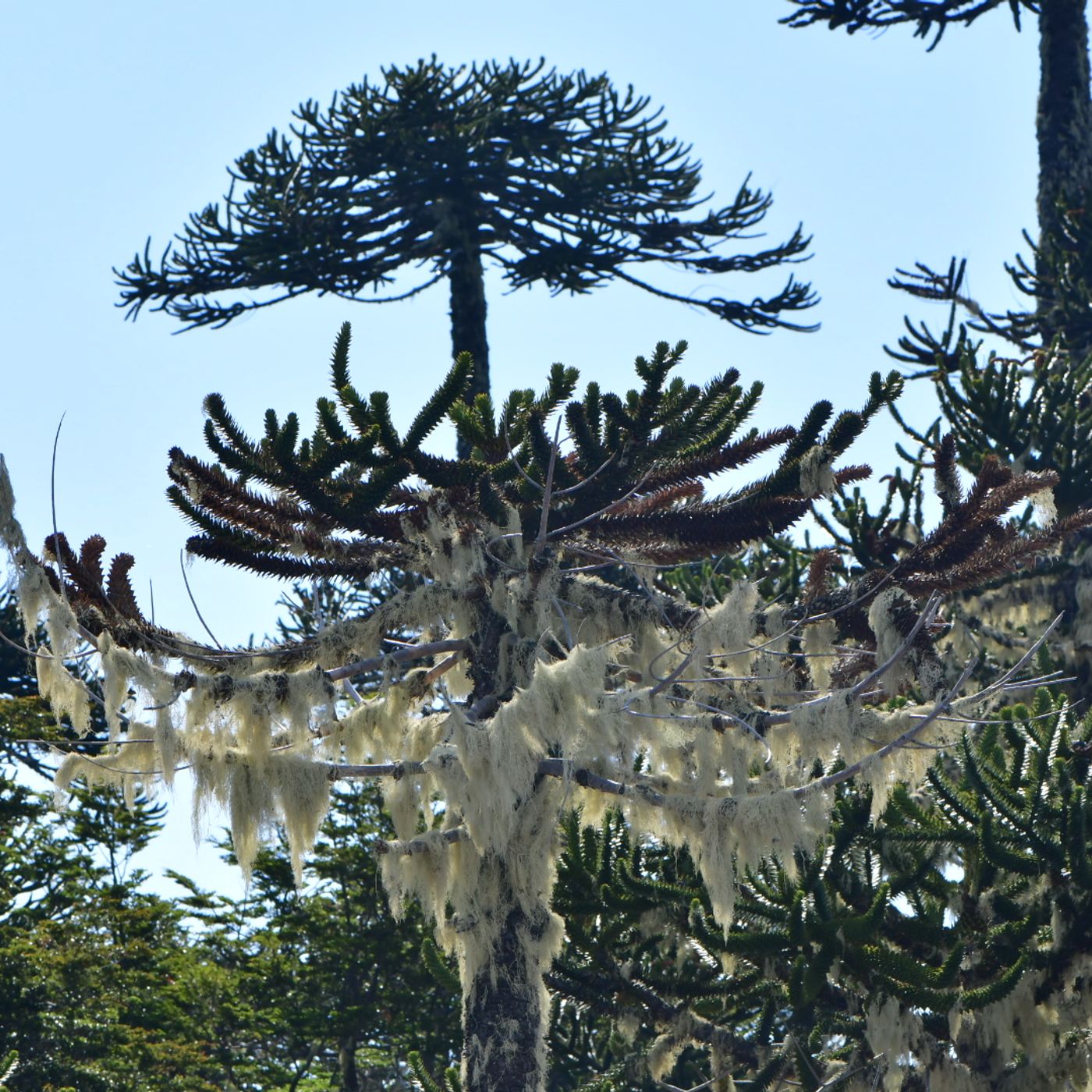
Araucaria Forests of Chile
Rants about the Araucaria forests of Nahuelbuta and Conguillo, Chile : Towering, 1200 year-old Araucaria araucana trees with an understory of Nothofagus pumilio, dombeyi and obliqua; thigmonastic, moving stamens in Loasa acanthifolia; Chusquea and new world bamboos; Mutisioid composites, biogeographyband plant distributions that are a result of both Gondwanan Breakup and amphitropical bird migration patterns, and more.
If the ads are bummin you out than stop whining and join the Patreon at https://www.patreon.com/c/CrimePaysButBotanyDoesnt where you'll have access to Ad-Free Podcast episodes, early screenings of videos and more.
If the ads are bummin you out than stop whining and join the Patreon at https://www.patreon.com/c/CrimePaysButBotanyDoesnt where you'll have access to Ad-Free Podcast episodes, early screenings of videos and more.
2025-01-24
87 min
Transcript
Available Results
Generated results are saved to the knowledge database for reuse and search.
No generated results are available for this episode yet.
Extract Knowledge
Pick what you want extracted first. Model, scope, and chapter options appear after a template is selected.
Generated results for public episodes are saved to the knowledge database so they can be reused and searched later.
Transcript
<v Speaker 1>May I have your attention. Please, the situation is dire.
<v Speaker 1>At this time services have been temporarily disabled due to
<v Speaker 1>cost cutting measures. Please remain calm and have a safe day.
<v Speaker 1>Thank you.
<v Speaker 2>I can don't.
<v Speaker 1>We landed at the UH landed at the Houston Airport
<v Speaker 1>yesterday at like six in the morning. It was like five.
<v Speaker 1>It was like five in the morning, and the whole
<v Speaker 1>airport was just waking up. And I made it through
<v Speaker 1>customs with all my shit, you know, I had to
<v Speaker 1>I had to get another I had to pay for
<v Speaker 1>an extra bag because I had a bunch of books.
<v Speaker 1>I bought a bunch of books. You know, I collect
<v Speaker 1>these book you have like a little personal library. You
<v Speaker 1>never know when you're gonna need it, especially for a
<v Speaker 1>botanical literature. You know, you might end up there's gonna
<v Speaker 1>be reference texts you might use, you know, when you
<v Speaker 1>go back to that place. Because I fully intend on
<v Speaker 1>doing this for the rest of my life, you know,
<v Speaker 1>until I run out of steam or die or uh,
<v Speaker 1>you know, get some sort of terminal illness, which hopefully
<v Speaker 1>doesn't happen. Knock on, knock on. Fiberboard. I'm cheap Chinese
<v Speaker 1>made fiberboard. Uh and uh maybe with a little bit
<v Speaker 1>of melomanie. And and so I had a who I
<v Speaker 1>was carrying a bunch of bunch of shit, like my
<v Speaker 1>broken luggage too, and uh and so they just it
<v Speaker 1>just kind of spits you out into the terminal e
<v Speaker 1>of the Houston Airport. I had to make a necting flat.
<v Speaker 1>I had like six hours to catch And I've quit coffee,
<v Speaker 1>which is nice, at least for the time being. I
<v Speaker 1>just you know, Yerba mates all they have they don't
<v Speaker 1>do coffee. America is the only place that really does coffee.
<v Speaker 1>Like it's coffee per se, you know. The rest it's
<v Speaker 1>it's all like espressos. I don't like it. And I
<v Speaker 1>was knew I had to quit coffee anyways because I
<v Speaker 1>do it too much. I just overdo it. So I was,
<v Speaker 1>I was, I've been using a mate, you know, with
<v Speaker 1>a little straw, just make a glass jar. I don't
<v Speaker 1>use that stupid gord thing. That's not enough. And and
<v Speaker 1>uh and I make it the night before and cool it.
<v Speaker 1>So that's been nice. I been like, I cool the
<v Speaker 1>mate and then drink it the next day a room
<v Speaker 1>temperature or chillier with the straw. And so I got
<v Speaker 1>spit out into terminally of the Houston Airport and the
<v Speaker 1>whole you know, there wasn't very packed yet, the whole
<v Speaker 1>airport was just waking up. And there's you know, there's
<v Speaker 1>been all this shit in the news. There's been this
<v Speaker 1>ship in the news about you know, Trump's first couple
<v Speaker 1>of days, and it just it just looks bad. You know,
<v Speaker 1>what's happened and Reagan two point zero and it's going
<v Speaker 1>to be a complete assault on everything that I care about,
<v Speaker 1>you know, in terms of you know, wild lands, rampant development, deregulation,
<v Speaker 1>et cetera. And it was just, you know, this like
<v Speaker 1>this feeling of darkness. And then even more funny, the
<v Speaker 1>alarm is going off in the Houston Airport the whole time.
<v Speaker 1>This is for like twenty minutes, and this this wing
<v Speaker 1>of the Houston Airport and surely you know, it was
<v Speaker 1>contracted out to some shitbag company that I don't know.
<v Speaker 1>They had an ai female voice, you know, coming out
<v Speaker 1>over the loud speaker. You could barely hear it. The
<v Speaker 1>alarm was loud, but you could barely hear the voice,
<v Speaker 1>and it just said thank you for visiting Houston Airport.
<v Speaker 1>A situation has been triggered, investigate. We are investigating this
<v Speaker 1>situation like some shit like that, like totally just like
<v Speaker 1>don't panic. We're investigating the situation. Everyone's just ignoring it.
<v Speaker 1>And the thing goes on for like twenty or thirty minutes,
<v Speaker 1>and it's you know, the airport feels like a fucking mall.
<v Speaker 1>It feels like a shopping mall. And I'm just hit
<v Speaker 1>with the stark reminder that I'm in one of the
<v Speaker 1>unhappiest First world countries in the world. Like the degree
<v Speaker 1>of human misery that's evident here and just anxiety and
<v Speaker 1>hatred and divisiveness is so it's so pungent. And then
<v Speaker 1>I look and there's you know, it's just people shuffling
<v Speaker 1>about the walking dead, very unhappy people obviously unhappier, stressed,
<v Speaker 1>you know, paying twenty dollars for a cinnabon, trying to
<v Speaker 1>satiate the spiritual pain and alienation while the fire alarm
<v Speaker 1>is intermittently blaring in this AI voice you know, comes
<v Speaker 1>with a loud speaker, you know, to offer this half
<v Speaker 1>assed reassurance and that the situation is being investigated. And
<v Speaker 1>the whole time, I'm thinking, like Jesus Christ, you were
<v Speaker 1>just hanging out with Gad like two days prior. You know,
<v Speaker 1>it's it's as far as you can conceive him or
<v Speaker 1>her or they done, whatever the fuck it is it.
<v Speaker 1>You know, I like looking at these beautiful mountains, these
<v Speaker 1>steep slopes of volcanic rock and uh, maybe some intrusive
<v Speaker 1>ignius as well, but the Andes, of course are all
<v Speaker 1>volcanic and uh, you know, these mountains that are just
<v Speaker 1>making their way to the sea, slowly coming down, you know,
<v Speaker 1>against all all the best efforts to maintain the roadway.
<v Speaker 1>But you'd you'd be driving down the road and you'd
<v Speaker 1>see a spot where like the guardrail had been completely
<v Speaker 1>taken out by a giant boulder. There's rock falls everywhere.
<v Speaker 1>They had that large cable netting that just looked like
<v Speaker 1>a sagging bag, you know, like because it was so
<v Speaker 1>filled with rock, talus and rubble. You know, the pielines
<v Speaker 1>that hold it had been drilled into the side of
<v Speaker 1>a mountain, but this sagging bag was just holding this
<v Speaker 1>this It almost looked like liquid, you know, because there
<v Speaker 1>was so much talus and some of the incredible plants there,
<v Speaker 1>like these lineages, you know, and you go high into
<v Speaker 1>the andes you can reach places where there's none of
<v Speaker 1>the pine plantations or the eucalyptus plantations that you know,
<v Speaker 1>horrifically dot so much of Chile south of Santiago. And
<v Speaker 1>I was like, this is so you know, it's just
<v Speaker 1>so fucking mind blowing, like to be hanging out with
<v Speaker 1>like these giant alersee trees, the few that are left
<v Speaker 1>in the Patagonian temperate rainforest, and now you're in the
<v Speaker 1>Houston Airport in this monstrosity, this fucking dystopia. Uh, the
<v Speaker 1>whole situation felt so unreal. I couldn't I couldn't help
<v Speaker 1>but laugh at it. You got, you're gonna have to
<v Speaker 1>have a sense of humor going through all this shit,
<v Speaker 1>you know, less pearl clutching and more sense of dark comedy.
<v Speaker 1>And then I started listening. I put on Dead Kennedy's
<v Speaker 1>The Frankin Christ album because it just was so fitting.
<v Speaker 1>There was a forgueret which song it was, but it's
<v Speaker 1>the one about but you know, Elvis becoming worshiped as
<v Speaker 1>a god and people drinking out of these you know,
<v Speaker 1>plastic Elvis toats. It's like this satirical song about this
<v Speaker 1>dark and dystopic nature of like first world consumerism. It
<v Speaker 1>was fucking hilarious. It was just and it made it that,
<v Speaker 1>you know, hearing that that kind of that's such a
<v Speaker 1>great album to Franken Christ the one with the guys
<v Speaker 1>with the fees's driving around in the little mini cards
<v Speaker 1>with the Feza I think the Shriners on the cover,
<v Speaker 1>the one that got them in trouble with Tipper Gore
<v Speaker 1>for the obscene hr Giger painting that came with the record.
<v Speaker 1>In the eighties, it was like a big deal, like
<v Speaker 1>jellab Afron, you know, and Iced Tea were both remember
<v Speaker 1>they had him on Oprah. You could I think you
<v Speaker 1>can watch the video, like a grainy video of it
<v Speaker 1>on YouTube. But that's what got them in trouble with
<v Speaker 1>the Parents Music Resource Center, the PMRC, the Tipper Gore
<v Speaker 1>and all the pro censorship of the late eighties early nineties.
<v Speaker 1>But the whole fucking album is just the gem. It's amazing.
<v Speaker 1>It was. It's too smart for being punk rock, which
<v Speaker 1>is what it is. I wouldn't even call it that.
<v Speaker 1>It's like it's like theatrical. It's like a dystopic musical
<v Speaker 1>theater almost. The lyrics are just yeah, they're their way,
<v Speaker 1>they'd fly over the heads of of most you know,
<v Speaker 1>people that might have gotten into the dead Kennedy's in
<v Speaker 1>the early part of their musical career anyway. So yeah,
<v Speaker 1>So I just got back from Chile and I've got
<v Speaker 1>a whole bunch of shit to go through, videos to edit,
<v Speaker 1>rbarium specimens to catalog and of course, remember anytime you're traveling,
<v Speaker 1>as long as the herbarium collections are not of endangered
<v Speaker 1>plants and they're adequately dried and pressed and you can't
<v Speaker 1>be they can't be propagated. They're completely legal, uh, to
<v Speaker 1>take with you as long as you declare them. But
<v Speaker 1>you've got to get You've got to declare them, and
<v Speaker 1>then you've got to be ready to explain to a
<v Speaker 1>customs official, many of whom no offense to them are
<v Speaker 1>not that smart and if probably no idea what inarbarium
<v Speaker 1>is or why you would be pressing these things any
<v Speaker 1>you've got to be able to explain to them where
<v Speaker 1>they're going and they're going to be cataloged and you
<v Speaker 1>know their scientific specimens. They can't be propagated, et cetera.
<v Speaker 1>So I've got a bunch of stuff to do, and
<v Speaker 1>then I'm head of the Ecuador in a week getting
<v Speaker 1>flown down there for some sort of it's a tour.
<v Speaker 1>It's a tour that that Alan Rockefeller and Mandy Cork
<v Speaker 1>put together for Mycena, which is like their tour thing.
<v Speaker 1>I don't know. They want to drag me along, so
<v Speaker 1>I don't know, you know, I don't know what. I
<v Speaker 1>don't know what's about. I just said, yes, it's it's
<v Speaker 1>for work. I'm going down there. But there's so much
<v Speaker 1>to talk about with with Chile and with basically you know.
<v Speaker 1>We landed in Santiago and then drove straight straight towards
<v Speaker 1>Valdivia and Porto mont which are in the southern half
<v Speaker 1>of the country, very high rainfall, upwards of six to
<v Speaker 1>nine feet of rain a year, if not more. Some
<v Speaker 1>areas of that Patagonian temperate rainforest get upwards of twenty
<v Speaker 1>feet of rainy year. These are very wet areas, and
<v Speaker 1>we were going down there because it was We went
<v Speaker 1>down there first just blazing by all this other shit
<v Speaker 1>because it was as hard as it was, because it
<v Speaker 1>was supposed to start raining there in a few days.
<v Speaker 1>This is like peak Chilean summer. It's mid January. Start
<v Speaker 1>ran in there in a few days, and so we
<v Speaker 1>figured we'd catched a few days of sunlight and then
<v Speaker 1>head back north and that that actually, that was a
<v Speaker 1>very good idea. I'm glad we did that. So we
<v Speaker 1>just just fucking blaze as far south as possible because
<v Speaker 1>closer to Santiago. Santiago, of course, being the first major city,
<v Speaker 1>the first major area to be settled in Chile, got
<v Speaker 1>destroyed very quickly. All the beautiful Chilean wine palms, Jubeat chilensis.
<v Speaker 1>That's what the Nacho was telling me that there was
<v Speaker 1>he I guess he found out old map from sixteen
<v Speaker 1>hundred when the Spanish first got there, and the map
<v Speaker 1>shows this drawing. You know, it's like a look like
<v Speaker 1>a like the it looks like the first Zelda game
<v Speaker 1>from the eighties. It's drawn like that, you know, like
<v Speaker 1>the map from the fucking uh yeah, everybody played Nintendo,
<v Speaker 1>didn't you? Maybe not? Now? Would you? Would your parents
<v Speaker 1>give you a slinky fucking glue to sniff? I don't
<v Speaker 1>know anyway, So it was a drawing that looked like
<v Speaker 1>that and showed these huge Jubeia chilensis Chilean wine palms there,
<v Speaker 1>which is our fucking enigmatic, uh, emblematic excuse me, emblematic
<v Speaker 1>trees of the region. They're gorgeous. They got a couple
<v Speaker 1>of uc b that's the first time I saw it.
<v Speaker 1>You see Botanic Gardens in Berkeley. They have a great
<v Speaker 1>Chilean collection. Actually a bunch of these plants. You'll you know,
<v Speaker 1>you'll know already if you go there. Kuilaja Sapan area,
<v Speaker 1>which is like the equivalent of the coast live oak.
<v Speaker 1>It's in the order for Bailey's. It's in the family
<v Speaker 1>Kila Hasey produces these beautiful fruits, these five carpoled fruits
<v Speaker 1>that have a bunch of tiny winged seeds inside. But uh,
<v Speaker 1>but you know, Santiago area was destroyed first to build
<v Speaker 1>a city. I guess there's a burgeoning native plant awareness there,
<v Speaker 1>which is cool. Met up with my friend Michel, who
<v Speaker 1>does Outlast Nativa, which is a cool He's got an
<v Speaker 1>Instagram page. He makes these guides for native plants there.
<v Speaker 1>And the last day I went to UH on Michel's suggestion,
<v Speaker 1>actually went to UH Libro Verde, which is a cool
<v Speaker 1>little bookstore, and and then there was another bookstore too.
<v Speaker 1>There's actually a bunch of shit in Libro Verde had
<v Speaker 1>a whole bunch of fucking books, great books, like more
<v Speaker 1>so than I saw in Brazil. Like Brazil, it seems,
<v Speaker 1>and I talked about this in the podcast with Nico
<v Speaker 1>very Brazil seems behind Chile in terms of the amount
<v Speaker 1>of popular consciousness that makes room for plants. You know
<v Speaker 1>that for native plants, you know, it's still stuck on it,
<v Speaker 1>like horticultural atrocity ship. The way that that all First
<v Speaker 1>World countries are kind of viewing plants for the first
<v Speaker 1>for the last you know, one hundred years, is like
<v Speaker 1>this this archaic uh, you know, ideas of beauty or crops,
<v Speaker 1>you know, anthropocentric uses that are totally disconnected from ecology
<v Speaker 1>evolution in place, right, like the fucking the European garden style.
<v Speaker 1>Everywhere I go in the world that ship, the same
<v Speaker 1>shit gets planted, the same garbage. But but Chile there's
<v Speaker 1>like a growing awareness for these native plants. And you
<v Speaker 1>see it in other places too, like New Zealand, where
<v Speaker 1>they've got you know, native plants of a place in
<v Speaker 1>the popular culture. There's art about them, and they're on
<v Speaker 1>the currency maybe whatever the fuck. So uh, you know,
<v Speaker 1>you want to spend too much time in Santiago. The
<v Speaker 1>thing that was nice about Santiago and we did. I
<v Speaker 1>filmed some you know in vas. I think one of
<v Speaker 1>my little you know, urban botany exploration things like I
<v Speaker 1>did on the train tracks in Oakland. The fucking La
<v Speaker 1>River wherever I did that. The last last day, me,
<v Speaker 1>Matt and Nacho went down into the river. You can
<v Speaker 1>climb down into the Mapocho River, and which is like
<v Speaker 1>the equivalent to the La River, but there's more water
<v Speaker 1>in it, and it's fed by glaciers and ice and
<v Speaker 1>snowmelt and a much higher mountain range that is right
<v Speaker 1>outside the city, you know, the Andes. And that river
<v Speaker 1>was flowing and it was filled with pink silt and
<v Speaker 1>pink sediment. I mean, it just looked like it was
<v Speaker 1>filled with volcanic sentment. Then looked like it was filled
<v Speaker 1>with human shit, which was nice, but it was certainly
<v Speaker 1>cluttered with It's a concreted up, you know river that
<v Speaker 1>runs through downtown Santiago, and there's graffiti all over the walls,
<v Speaker 1>and it's really nice. It's like, if you're a teenager,
<v Speaker 1>that's a great spot to hang out. Also if you're
<v Speaker 1>a bummy, that's a great spot to hang out. Some
<v Speaker 1>guy came out. He was living in a little shack
<v Speaker 1>and when we were climbing out of it, via this
<v Speaker 1>this sketchy pair of pants that's some like pair of
<v Speaker 1>jeans that someone had made a makeshift rope out of
<v Speaker 1>and dangled from the from the metal railing. As we
<v Speaker 1>were claiming out, this bummy came out and he was
<v Speaker 1>like holding a shank like a screwdriver. But he wasn't
<v Speaker 1>threatening at all. I think he just you know, know,
<v Speaker 1>he was just protecting himself. But certainly, you know, it
<v Speaker 1>was it gets a little weird there. You know, there's
<v Speaker 1>a fuck fucking decent amount of homelessness there too, nothing
<v Speaker 1>like the United States, but there's certainly, you know, people
<v Speaker 1>sleeping on the streets, human shit, et cetera. Just the
<v Speaker 1>I mean, it's the kind of you know, inequality and uh,
<v Speaker 1>you know, people falling through the nets you'd expect in
<v Speaker 1>any first world capitalist city. But the thing that was
<v Speaker 1>nice about Chile, all of Chile, was there were no billboards.
<v Speaker 1>Supposedly they're legal, but I didn't see any. And you
<v Speaker 1>don't realize how nice it feels, you know, until you
<v Speaker 1>haven't seen you know, shit eating grins of personal injury
<v Speaker 1>attorneys or stock photos of you know, the stock photos
<v Speaker 1>of smiling assholes that's used in selling consumer products, and
<v Speaker 1>all the garbage, the fucking bright colors, the the plastic signs,
<v Speaker 1>like there was none of that. There's no billboards in Chile.
<v Speaker 1>The billboards add such a dystopic effect. I don't know
<v Speaker 1>what it is.
<v Speaker 2>Man.
<v Speaker 1>It's like you go to Monterrey, Mexico, the billboards are
<v Speaker 1>fucking terrible, like horrible, and it's like all these like glitzy, pasty,
<v Speaker 1>too much makeup, smiling shit eating faces. It just feels
<v Speaker 1>like every nineteen eighties dystopic sci fi movie, like Total
<v Speaker 1>Recall and fucking Blade Runner, all this bleak shit. It's like, yeah,
<v Speaker 1>so you feel like those those kinds of movies. Whoever
<v Speaker 1>did the set design for those you got to give
<v Speaker 1>a shadow because they really nailed it. What it's gonna
<v Speaker 1>be like, you know, the most bottom of the brain stem,
<v Speaker 1>primal ape hoarding, greedy, materialistic impulses will be first in
<v Speaker 1>front and center, first and foremost in the coming dystopia,
<v Speaker 1>especially now that we're going through with Reagan two point zero.
<v Speaker 1>It's you know, it's it's so fucking funny how this happened.
<v Speaker 1>I mean, it's extremely dark too, but it's uh again.
<v Speaker 1>I can't help but partially blame the American left, the
<v Speaker 1>identitarians for what happened, you know, the academic left, the not,
<v Speaker 1>the not, the the work actual working class left, if
<v Speaker 1>there even is one anymore. It feels like the working
<v Speaker 1>class has mostly been captured by the right. This all
<v Speaker 1>I say about political shit. I'm not gonna I'm not
<v Speaker 1>gonna delve deeper. I know it's fucking irrelevant, and I
<v Speaker 1>know there's not many, but there might be a handful
<v Speaker 1>of conservative listeners. I don't want to piss them off
<v Speaker 1>too much, because at the end of the day, I
<v Speaker 1>don't give a fuck with someone believes or what they're
<v Speaker 1>what they're you know, they're with their m always as
<v Speaker 1>long as I don't have to hear about it, and
<v Speaker 1>we can agree to disagree and just focus on plants
<v Speaker 1>and science and fun shit whatever. But I will say this,
<v Speaker 1>having lived in an area in the Bay Area where
<v Speaker 1>the quote academic left, you know again, as opposed to
<v Speaker 1>the working classlet was largely in charge. I saw how divisive, mean,
<v Speaker 1>and frankly mentally fucking ill it can be when they're
<v Speaker 1>in charge. They literally drove people to the other side
<v Speaker 1>through constant lecturing, shaming, shit talking, you know, trying to
<v Speaker 1>reinforce ideologies through fear of ostracization and social shaming. Which
<v Speaker 1>is what that which is what they did, not all
<v Speaker 1>of them. There's a very general statement, so take it
<v Speaker 1>with a grain of salt. But it's not an effective tool.
<v Speaker 1>Shaming people into agreeing with you is not an effective tool,
<v Speaker 1>and just being a dick and professionally online is not
<v Speaker 1>an effective tool. It's sloppy, it's lazy, and it's kind
<v Speaker 1>of productive, and not to mention, you know, these bozos
<v Speaker 1>are all constantly fighting with each other anyway, and trying
<v Speaker 1>to cancel each other and get other people to dislike
<v Speaker 1>each other. You know, half of them spend more time
<v Speaker 1>attacking each other than they do the other side. I mean,
<v Speaker 1>this is what the left became the last ten or
<v Speaker 1>fifteen years. And so what happens, what is this? Trump
<v Speaker 1>is a fucking natural result of this, and they're still
<v Speaker 1>not going to get it. I don't have any faith
<v Speaker 1>that people are gonna come around and chill out and
<v Speaker 1>not get it. But like the amount of left became
<v Speaker 1>the party of the fucking school marm, of the tight
<v Speaker 1>ass of the people that tone police and condescent to people.
<v Speaker 1>You know, the left used to be the party of
<v Speaker 1>people that didn't give a fuck and were rowdy and
<v Speaker 1>had fun and whatever, and that they they're not anymore.
<v Speaker 1>They're like the stiff, poudy faced, fucking mean generally from
<v Speaker 1>a wealthy background. Generally not always, but generally it's you
<v Speaker 1>gotta have that tone of elitism there to pull this shit,
<v Speaker 1>you know, and just just really fucking you know, god like,
<v Speaker 1>just trying too hard, you know, and they're clueless, they
<v Speaker 1>don't get it. But now they're not, you know, now
<v Speaker 1>that the fucking right has been able to brand itself
<v Speaker 1>is the party of rebellion. I don't know how. I
<v Speaker 1>don't know how, you know, because everything they do is
<v Speaker 1>rooted in nineteen fifties, you know, archaic cultural bullshit, and
<v Speaker 1>their sense of humor is so fucking whack. But somehow
<v Speaker 1>they've been able to do it. They did, and the
<v Speaker 1>left enabled it, the modern American left. The left isn't
<v Speaker 1>like this in other places, and so this is what
<v Speaker 1>we get. And the modern American left isn't gonna get
<v Speaker 1>it either, they're not. They're not gonna change, they're not
<v Speaker 1>gonna come around. You know. I remember listening to people
<v Speaker 1>on some program. I think it was Pod Save America.
<v Speaker 1>I tuned in for a minute and they were like,
<v Speaker 1>we need a leftist Joe Rogan. I like, no, you're
<v Speaker 1>not gonna get one, because whoever, no one, no one
<v Speaker 1>could be like that. You know, you would never have
<v Speaker 1>a leftist Trump and that because they'd be afraid of
<v Speaker 1>getting canceled. That's what you need. You're right, you do,
<v Speaker 1>but you're never gonna get one because they afraid of
<v Speaker 1>getting canceled or saying the wrong thing, or being criticized
<v Speaker 1>to death or put through the fucking filter or nitpicked.
<v Speaker 1>Because that's what the modern American left us. Where did
<v Speaker 1>it come from? I don't know, but it seems to
<v Speaker 1>be last fifteen years. This is I don't know, is
<v Speaker 1>it the college kids take it over? College kids kind
<v Speaker 1>of live in a bubble. No offense to them, they
<v Speaker 1>live in a bubble. You get this way when you
<v Speaker 1>live in a bubble, When you live in an echo chamber,
<v Speaker 1>when you don't have to go wait for the fucking
<v Speaker 1>Western Avenue bus at two am, have a bad trip,
<v Speaker 1>eat some shit, you know, get punched in the face
<v Speaker 1>for mouth and off to somebody like happened to me
<v Speaker 1>when I was a kid, you know what I mean.
<v Speaker 1>I just I'm not going to get into it much longer.
<v Speaker 1>But I just I'm just sitting back and watching. It's
<v Speaker 1>like that George Carlin shit when he's like that that
<v Speaker 1>statement he said during his last few years before he croaked.
<v Speaker 1>He's like, I'm just here for the show now, you know,
<v Speaker 1>and I have no faith. It's like, anyway, all right, well,
<v Speaker 1>we're not going to get into it too much. I'll
<v Speaker 1>let that go. But uh, it is gonna be really bad.
<v Speaker 1>You know, it's gonna get bad. So you're gonna have
<v Speaker 1>to just find a way to cope, find a sense
<v Speaker 1>of humor, and stay offline unless you're researching stuff or
<v Speaker 1>trying to learn something, you know, go outside and focus
<v Speaker 1>on the fucking plants and the life forms. That's the
<v Speaker 1>antidote to all this shit, all this dark shit and
<v Speaker 1>the divisiveness and the infighting. But it was very nice
<v Speaker 1>to be out of it for two weeks. I will
<v Speaker 1>say that perfect welcome home. I wouldn't have had it
<v Speaker 1>any other way. Perfect welcome home. Though, coming home to
<v Speaker 1>the Euston Airport it was like a work of art.
<v Speaker 1>The fucking alarm in the background, the twenty dollars centabuns,
<v Speaker 1>the garbage food, the diabetic, angry, populous, pre diabetic. I
<v Speaker 1>don't want to assume anybody's medical status. They certainly looked
<v Speaker 1>unhealthy in every way physically, mentally, spiritually, and emotionally. That's
<v Speaker 1>us though, that's America right now. It doesn't matter what
<v Speaker 1>the political party you vote for or don't vote for,
<v Speaker 1>or whether you think you're an intersectional radical, or whether
<v Speaker 1>you think you're fucking you know, standing up against the
<v Speaker 1>woke mob. What you're all it's all part of the
<v Speaker 1>same disease. You're all a victim of the algorithm, and
<v Speaker 1>you're all very very unwell. So uh but I wasn't it.
<v Speaker 1>I didn't have to look at billboards for two weeks.
<v Speaker 1>It was fucking great that. Really the billboards really are
<v Speaker 1>like the turn on top of the ship heap is
<v Speaker 1>figuratively speaking, and not having to see them was so lovely. Okay,
<v Speaker 1>what was my favorite habitat down there that I got
<v Speaker 1>to see? I would have to see. I would have
<v Speaker 1>to say it was not well Buddha. How do you
<v Speaker 1>pronounce this? Not well, Buddha, Not well, Buddha, parka Nacio
<v Speaker 1>Now now well, Buddha. The Coastal Era carrier force in Chile,
<v Speaker 1>fucking incredible. That was my favorite spot by far. You
<v Speaker 1>had to drive through mile after mile, kaliometer after kilometer
<v Speaker 1>of pine and eucalyptus plantation to get there, all garbage
<v Speaker 1>that was incentivized by, of course, a nineteen seventy four
<v Speaker 1>law put in place by hashtag that asshole Pinochet, that
<v Speaker 1>pig dictator Pinochet, who killed thousands, who the United States
<v Speaker 1>helped install after they'd been trying to get rid of
<v Speaker 1>the democratically elected socialist Allende through nineteen seventy to nineteen
<v Speaker 1>seventy three. I think was finally when the coup happened.
<v Speaker 1>So there's some very interesting history podcasts about that. Pinochet
<v Speaker 1>was in power till nineteen ninety, never spent the day
<v Speaker 1>in jail. Hopefully someone goes and takes a shit on
<v Speaker 1>his grave, certainly worth doing. If you could send me
<v Speaker 1>a photo of a turd on a grave, preferably not
<v Speaker 1>up close. I don't want to see your shit, But
<v Speaker 1>if you could send me a picture of a turd
<v Speaker 1>from far back on his grave, or just dogshit. I'll
<v Speaker 1>send you some stickers. But anyway, now a Buddha is
<v Speaker 1>this incredible. I don't know how big it is. It
<v Speaker 1>didn't seem that big. It's oh, it's here right here.
<v Speaker 1>It's consisted of six thousand. It consists of six eight
<v Speaker 1>hundred and thirty two hect there. It's about twenty four
<v Speaker 1>square miles. Yeah, that's not big, and it's surrounded by
<v Speaker 1>pine plantation. But it was probably one of the most
<v Speaker 1>incredible places I'd been to, and if only for it
<v Speaker 1>was a really it wasn't a thick forest that was
<v Speaker 1>relatively open the way that the light came through. It
<v Speaker 1>was a beautiful day when we were there. It wasn't raining.
<v Speaker 1>We'd been at the montane population of Ericaria aericana and
<v Speaker 1>beautiful Jurassic trees the day before, and it was it
<v Speaker 1>was missing and fogging, and it's all very volcanic there.
<v Speaker 1>I think the substrate here at now Buddha was looked
<v Speaker 1>to be metamorphic. There's like a big rocky outcrop looks
<v Speaker 1>like a not a glade. It looks like more of
<v Speaker 1>like a granitic knob, metamorphous granitic knob you can walk
<v Speaker 1>out on and overlooks these forests that were surely much
<v Speaker 1>much more extensive prior to being destroyed for pine plantations.
<v Speaker 1>But the fucking they were just incredible. And some of
<v Speaker 1>the I saw in eric Carria that was eight feet
<v Speaker 1>wide at the base and eric Carria Erkana. Some of
<v Speaker 1>these things can live for fifteen hundred years. If you're
<v Speaker 1>not familiar with the tree, I suggest you look them
<v Speaker 1>up A R A U C A R I A.
<v Speaker 1>They look like mushrooms. When they're fully grown, they have
<v Speaker 1>you know, they when they're fully grown, they lack branching
<v Speaker 1>on the bottom ninety percent of the tree and just
<v Speaker 1>to retain the branches up top. Eric Carria, but williid
<v Speaker 1>does the same thing, which is in Queensland, Australia, eric
<v Speaker 1>Carria and Gustafolia, which seems to take better to cultivation,
<v Speaker 1>and it is from Brazil. Eric Carria and Gustafoia does
<v Speaker 1>the same thing that mushroom look, and they're they're old.
<v Speaker 1>These trees are revered too. You go through a couple
<v Speaker 1>of Mapouche towns, which is the one of the indigenous
<v Speaker 1>tribes down there. You go through these Mapouche. Try these
<v Speaker 1>Mapouche towns and the tree is everywhere. There's like, you know,
<v Speaker 1>sculptures of it, and the little all the little tourist
<v Speaker 1>shops and shit have Eric Carrier aer Kanda, you know,
<v Speaker 1>emblems and logos and ship really cool. I guess there's
<v Speaker 1>a flora of of the region two that one of
<v Speaker 1>the universities put out. I would have loved to buy it.
<v Speaker 1>I wasn't able to find it. Melipuco is near Congio
<v Speaker 1>National Park, which is in the UH Parknasil Congile, which
<v Speaker 1>is like the er Carria population in the mountains, which
<v Speaker 1>I guess was glaciated, and the Eric Carry is there,
<v Speaker 1>you know, recolonized that after the glaciers took off. But
<v Speaker 1>to the west across the valley. You know, think of
<v Speaker 1>Chile like California. It's this long strip. You got the
<v Speaker 1>coastal mountains, you got a valley in between, and then
<v Speaker 1>you got the and these or of Sierra Nevada equivalent
<v Speaker 1>California to the east, but you get this valley in between.
<v Speaker 1>So now now Albuddha is UH is the coastal the
<v Speaker 1>more like the coastal mountains still mountains, elevation there was
<v Speaker 1>like forty five hundred maybe five thousand feet in places,
<v Speaker 1>But that's the coastal range. Now a Buddha and then
<v Speaker 1>Kungio is further inland, and that's basically on volcanics, like
<v Speaker 1>very new volcanics, like nine thousand year old volcanics. You know,
<v Speaker 1>you see these these expanses of pummice. There was an
<v Speaker 1>area where it was just all fucking pummice beneath them,
<v Speaker 1>beneath these these trees and some of this, you know,
<v Speaker 1>these volcanics hadn't even been colonized by pioneer species of
<v Speaker 1>plants yet. There was a species of bacars that was everywhere.
<v Speaker 1>But and that was in Geo, in the volcanic area
<v Speaker 1>that was supposedly glaciated, and then where the erak carrias
<v Speaker 1>had to recolonize after the glaciers habsided. But now well Buddha,
<v Speaker 1>I mean, both places are amazing, But now well Buddha
<v Speaker 1>was this open canopy. There was na tho vegas there,
<v Speaker 1>There was a budleya globosa, this shrub BUDLEYA tons of
<v Speaker 1>mutissias there. It sounded like there were probably cicadas up
<v Speaker 1>in the trees. It was the na Tho vegas are everywhere,
<v Speaker 1>so you know, the southern beaches order Fagali, the same
<v Speaker 1>order as oaks, but they're in Nato Fagaesi. This is
<v Speaker 1>another Gondwanan plant family. This was a theme that we
<v Speaker 1>kept seeing everywhere was Gondwana relics of Gondwana. You know,
<v Speaker 1>plants genera, lineages, genera and families that you get in
<v Speaker 1>the southern hemisphere, in both southern Australasia, Australia and New Zealand,
<v Speaker 1>maybe New Caledonia, as well as in South America, far
<v Speaker 1>South America. And surely they all these things were growing
<v Speaker 1>on Antarctica before it started to freeze over thirty million
<v Speaker 1>years ago. And I think when did Antarctica fully freeze over,
<v Speaker 1>I think last five million years. I think there's not
<v Speaker 1>though vegas, pollen, microfossils up until two or three million
<v Speaker 1>years ago when it finally fucking iced over. But I'm
<v Speaker 1>sure it was a shitty and cold place to live
<v Speaker 1>for you know, ten to twenty million years before that.
<v Speaker 1>But these forests that at Nawa Buddha were just fucking incredible.
<v Speaker 1>I can't believe there's only twenty four square miles preserved.
<v Speaker 1>The rest is all just destroyed for shitty pine plantation,
<v Speaker 1>shitty radiot of pine and eucalyptus Eucalyptus globulus, which I mean,
<v Speaker 1>what do you do with that that shitty would eucalyptus
<v Speaker 1>is pine. You can build some track housing out of it.
<v Speaker 1>Maybe it'll last a few decades, forty fifty years at most.
<v Speaker 1>You treat it with some some anti fungal, you pressure
<v Speaker 1>treat it, maybe it'll last a little bit longer. I
<v Speaker 1>don't know. But you generally built shitty lumber. There's all
<v Speaker 1>the shitty home depot lumber, you know, like that. I
<v Speaker 1>wonder how much of the lumber that's building America's tract
<v Speaker 1>housing and cul de sac communities, you know, for for
<v Speaker 1>our unhappy populace. I wonder how much comes from Chile.
<v Speaker 1>But there's so much pine plantations down there. I mean,
<v Speaker 1>there's it's a surplus. There's far more than the market
<v Speaker 1>would demand. But uh, anyway, but this now, well, Buddha
<v Speaker 1>was just fucking something else.
<v Speaker 2>Man.
<v Speaker 1>It was incredible. It was such a rich forest, it
<v Speaker 1>was it felt so good to be there. The whole
<v Speaker 1>thing was alive. I'm sure on mushrooms it would feel incredible.
<v Speaker 1>There's beard liking draped on everything. The beard like in
<v Speaker 1>itself made the whole experience feel psychedelic. It wasn't a
<v Speaker 1>very dark forest. It was very open and lit up.
<v Speaker 1>Just the fucking gorgeous living piece of the fabric of
<v Speaker 1>the world. You know, it should be a fucking World
<v Speaker 1>Heritage Site if it's not already. And what was what
<v Speaker 1>I thought was really cool was that the the Eric
<v Speaker 1>Carrier there are so fucking big. I mean, they're just
<v Speaker 1>like these totem poles. The one that we saw it
<v Speaker 1>was a male because they're they're dioecious.
<v Speaker 2>Uh.
<v Speaker 1>The one that the largest one we saw, they got
<v Speaker 1>it staked out. You know, there's like a it's a
<v Speaker 1>they call it the Millinario. They got it staked out.
<v Speaker 2>Uh.
<v Speaker 1>And it's just like this eight foot wide totem pole
<v Speaker 1>looks like all elephant foot like at the at the
<v Speaker 1>base like the you know, like that wrinkly sagging bark
<v Speaker 1>really fun to drop. But and it's got really thick
<v Speaker 1>bark too. All these trees, these old bastards have really
<v Speaker 1>thick bark, like five inches like five inch plates. They
<v Speaker 1>look like tortoise shell plastrons. They're just these fucking huge plates,
<v Speaker 1>which I guess is for fire resistance. I thought it
<v Speaker 1>was just for cold because it's hard to imagine those
<v Speaker 1>forest burning, but apparently they do, or they did. But
<v Speaker 1>it's like this. You're at the base of this thing.
<v Speaker 1>It's eight feet across, it's got to be one thousand,
<v Speaker 1>maybe fifteen hundred years old. And then it's just a
<v Speaker 1>otem pole that just shoots up for one hundred and
<v Speaker 1>twenty feet one hundred and fifty feet maybe was it
<v Speaker 1>fifty meters forty meters and then all the leaves are
<v Speaker 1>at the top. Those those you know, whorls of very
<v Speaker 1>thick plastic like sharp green leaves are just world that
<v Speaker 1>are just world around. The stem are all the way
<v Speaker 1>at the top, you know, and the branches of course
<v Speaker 1>are produced in these worlds too. We could see old
<v Speaker 1>dead logs at the basis, some of these that had
<v Speaker 1>the world branching. All the bark was gone. But uh,
<v Speaker 1>just incredible fucking place. Man. Like, you're in a place
<v Speaker 1>like that and you just want to take it all in,
<v Speaker 1>you know. That's what I try to do. I want
<v Speaker 1>to take it all in. So I have an anecdote
<v Speaker 1>when I'm in a place like the fucking Houston Airport.
<v Speaker 1>Listening to the fire alarm at five in the morning,
<v Speaker 1>I'm watching people stuff their faces with twenty dollars cinnabuns
<v Speaker 1>to ease the pain of existence in that kind of world,
<v Speaker 1>you know, like, you know, you're in places like that
<v Speaker 1>so you can hold onto it, you know, and remember
<v Speaker 1>that those places exist. Well, you're also you know, trying
<v Speaker 1>to deal with the death cult. But but the the understory,
<v Speaker 1>the not the Vegas were all on the understory, Like
<v Speaker 1>the southern beaches were all on the understory, and it
<v Speaker 1>was like that in Congillo too. But we did see
<v Speaker 1>a massive uh pretty sure it was not the vegas DMBII.
<v Speaker 1>There was not the vegas. There's like four not the
<v Speaker 1>vegas species. In every somewhat intact force that you go
<v Speaker 1>to in Chile, they'll be maybe a pina. Maybe one
<v Speaker 1>of the coolest ones was Pumilio, which doesn't get that tall,
<v Speaker 1>but it's really beautiful leaves. Uh yeah, a glocca was
<v Speaker 1>another one, Obliqua. It was not the Vegas. Obliqua was
<v Speaker 1>the one that was in the eric eric Carria forest.
<v Speaker 1>But they're forming this understory. They're all cover everything's covered
<v Speaker 1>in this usnea beard like in the bark of the
<v Speaker 1>eric Carria is everything. The fucking birds sound incredible. It's
<v Speaker 1>just the whole like, the whole experience auditory, The whole
<v Speaker 1>sensory experience of that forest was incredible. Azara Microphila was
<v Speaker 1>another one. That's a Ozara a z a r A
<v Speaker 1>is a genus in the willow family Sla case. I'm
<v Speaker 1>sure the soil community was fucking incredible. There was duff
<v Speaker 1>all over the ground. Maytinis boaria was there as well.
<v Speaker 1>Meetinis boaria. I think that's the one. Matinis is in
<v Speaker 1>the genus celestrace. We get one in South Texas as well.
<v Speaker 1>It's a dwarf one that likes brackish near shore environments.
<v Speaker 1>But I think Matinus booria is supposedly an antidote against
<v Speaker 1>Lithrea costico, which is a poison oak relative. But instead
<v Speaker 1>of producing you rush you all, it produces a compound
<v Speaker 1>called litriol. I think uh or lithral lithriol. I forget
<v Speaker 1>I read a paper on it. But Maytinis is supposedly
<v Speaker 1>an antidote for the dermatitis caused by lithrea, and lithrea
<v Speaker 1>is like poison oak. It doesn't affect that everybody, but
<v Speaker 1>it affects a lot of people. But Lithrea was actually
<v Speaker 1>one of the cool volunteer pioneer species that we see
<v Speaker 1>saw growing along the the river, the Mapocho River, you know,
<v Speaker 1>which is in downtown Santiago. Like all of Santiago, is
<v Speaker 1>mostly invasives, but there's a couple like Vicelia constricta and
<v Speaker 1>that Metinis that are able to eke it out, you know,
<v Speaker 1>to just volunteer, but it's largely invasives. I saw a
<v Speaker 1>cool fidal lacca I think it was fidal Laca dioeca,
<v Speaker 1>which is a tree sized pokeweed. It's fucking crazy. It's
<v Speaker 1>from Argentina. It's not native to Chile, but they planted
<v Speaker 1>there is a street tree that was pretty cool to see.
<v Speaker 1>I mean, it's got poke weed fruits and flowers. It
<v Speaker 1>looks like a poke weed, except it's a fucking tree.
<v Speaker 1>Looks like a strangler fig to it. It's one of
<v Speaker 1>those they apparently grow very fast and they get those
<v Speaker 1>very ornate bases like the abase of one looked like
<v Speaker 1>an octopus. It just had these crazy flared buttress roots
<v Speaker 1>that spread out all over there. The shitty piss dampled concrete.
<v Speaker 1>But then then the next day, this is the next
<v Speaker 1>day after the river, I'm taking a break here. I'm
<v Speaker 1>talking about the coastal erik Carria Forest. I shouldn't say
<v Speaker 1>coastal because it's a coastal mountain range. The eric Carrier
<v Speaker 1>Forest is not coastal, But that was by far my
<v Speaker 1>favorite place to be there was There was does Mari
<v Speaker 1>metabolis in that forest as well, which is a cool
<v Speaker 1>tropical missiletoe with those hummingbird pollinated flowers related to tristrix.
<v Speaker 1>But anyway, the last day we were there, and before
<v Speaker 1>we flew out we had to catch a flight later
<v Speaker 1>that night, we drove out to the hills outside the
<v Speaker 1>mountains outside of Santiago. Just keep going east from Santiago
<v Speaker 1>onto the hills, drive past a bunch of garbage, bunch
<v Speaker 1>of you know, through a rich neighborhood. I fucking this,
<v Speaker 1>Like rich lady was coming down and her Mercedes or
<v Speaker 1>whatever almost hit me. We were parked on the side
<v Speaker 1>of the road taking photos of Trichosiris chiloensis and spinal leva,
<v Speaker 1>which is a mutisseoid composite that forms this kind of
<v Speaker 1>small tree, beautiful white undersize of the leaves looks fucking wild,
<v Speaker 1>and this rich lady rolls up on me and just
<v Speaker 1>like really aggressively, and I'm like, I didn't have time
<v Speaker 1>to get out of the road. You know, I could
<v Speaker 1>tell she was kind of irritated. I was in her
<v Speaker 1>way and we were parked on this narrow road on
<v Speaker 1>this sketchy mountain side, and so we're like face to face,
<v Speaker 1>like she rolls up and I'm like, could you just wait?
<v Speaker 1>And the lady spoke full English too, and she's you know,
<v Speaker 1>of course got the full fucking like passive aggressive. I
<v Speaker 1>just date a turd face and I wasn't being aggressed.
<v Speaker 1>She spoke like perfect English, but with like a fucking
<v Speaker 1>europe like British or Dutch accident. Oh god, she was awful.
<v Speaker 1>I was just like, I wasn't being a grid I
<v Speaker 1>was like, lady, you like rolled up on me. I
<v Speaker 1>didn't even have time. I was going to move the
<v Speaker 1>car for you so you could get by. You didn't
<v Speaker 1>have to almost hit the guardrail or whatever. It was funny,
<v Speaker 1>and she just kind of put the fucking look on
<v Speaker 1>her face. I was like, oh my god, you are
<v Speaker 1>like you belong in like a wealthy neighborhood in southern
<v Speaker 1>California saying the exact same thing to me, you know,
<v Speaker 1>something belittling and mean. But the last day we went
<v Speaker 1>there and that was cool. The elevations, like I think
<v Speaker 1>it was like five thousand feet. The anties are so
<v Speaker 1>steep because they're relatively new. It's like last twenty million years.
<v Speaker 1>They've been uplifted due to the Nasca plate diving beneath
<v Speaker 1>the continent, you know, ramming into the South American continent,
<v Speaker 1>also subducting beneath. The same thing that causes the volcanism
<v Speaker 1>also causes the uplift from that continental collision or excuse me,
<v Speaker 1>oceanic plate, the continental collision boundary kind of, I don't
<v Speaker 1>plate collision battery. But they're very steep. They're constantly fucking
<v Speaker 1>falling apart. I mean, it's like an incredibly steep mountain range.
<v Speaker 1>Nothing analogous in California except maybe Cone Peaked down in
<v Speaker 1>Big Sir, maybe some places in the Sierra Nevada where
<v Speaker 1>it's exceptionally steep. But the plant community there was cool.
<v Speaker 1>Was Vicelia Constricta. It was We saw gog Nadia folio Losa,
<v Speaker 1>another cool composite from gognatioidi another you know, distinct flower
<v Speaker 1>morphology florith morphology to the flowers that are in the
<v Speaker 1>capitulum the flower head of this member of Astaasi, and
<v Speaker 1>a lot of them are I think almost all of
<v Speaker 1>them are woody shrubs gock natti oidi. There was Trichocyrius chiluansis,
<v Speaker 1>which now that cactus nerds insisted should be called luco
<v Speaker 1>steel I haven't read the paper yet with tristrex all
<v Speaker 1>over it. There was poorly area there, which is basically
<v Speaker 1>a Chilean guyacon. It's in guyacum angusta folium, which we
<v Speaker 1>get here in Texas, which is Zygopalasi to Kreas family.
<v Speaker 1>There was uh uh, I think there was Kaleia up there, Dyscaria,
<v Speaker 1>you know, a handful of Lithrea costica, a handful of basically,
<v Speaker 1>oh yeah, Kaganekia, which is another All these sclerophyll you
<v Speaker 1>know generally waxy leaves or mildly hersuit leaves of a
<v Speaker 1>Mediterranean climate. You know evergreen, you know, the kid climbed
<v Speaker 1>California has many analogs to this, like foothills of of Montane, California.
<v Speaker 1>Really cool to see. There was a there's a part
<v Speaker 1>in a Jessica Gorovitch's Ecologia Plants book. I think it
<v Speaker 1>was that one. Maybe it's Raven's textbook Biology of Plants,
<v Speaker 1>where there's you know, they've got all the Mediterranean regions
<v Speaker 1>and analogs, like the different species but fulfilling the same
<v Speaker 1>ecological role and also displaying the same morphollow g two,
<v Speaker 1>you know, and as an adaptation to this to the
<v Speaker 1>Mediterranean the constraints the ecological and climatic constraints of a
<v Speaker 1>Mediterranean climate. But yeah, also in that habitat was a
<v Speaker 1>Desmia confusa. Edesmia is in Fabaesi. It's another big genus,
<v Speaker 1>lots of really sticky glandular members, a lot of sticky
<v Speaker 1>glandular species in that genus. And uh, but Confusa is
<v Speaker 1>basically a shrub with photosynthetic stems. They've all got the
<v Speaker 1>typical you know, it's it's subfamily Phaboid, so it's got
<v Speaker 1>you know, pea flowers, but they've got all the Adesmias
<v Speaker 1>have are generally pretty sticky, and they've got these fruits
<v Speaker 1>that it looks like a bean but it breaks up
<v Speaker 1>into segments, really beautiful fruits, really cool and in this
<v Speaker 1>aidesmia like so many they were incredibly hairy, like it
<v Speaker 1>looked like it had like the fucking fruit the bean
<v Speaker 1>fruit was wearing a tupe, like ridiculously hairy. That was
<v Speaker 1>up there Malae Serbia, which is a genus in passive
<v Speaker 1>Flora ace, which is pretty diverse in South America. Beautiful flowers. Again,
<v Speaker 1>very glandular, extremely glandular. Everything down there is it got sticky.
<v Speaker 1>You're gonna touch it, you're gonna get You're gonna touch
<v Speaker 1>the leaves, you're gonna get oily hands. It was I
<v Speaker 1>think it was Mala Serbia linear a folia. I was
<v Speaker 1>really stoked to see the spinal leva though, because that
<v Speaker 1>is a cool it's a fucking cool genus of asta Ace.
<v Speaker 1>And again it's like those hypo luca. It's not the
<v Speaker 1>species name. What was the species name on a spinal leva?
<v Speaker 1>Let me look it up really quick. I forget, let's
<v Speaker 1>see this really quick. Cold on God, there's so much
<v Speaker 1>great shit. Uh, spinal Leva elicifolia. Yeah. Oh, there was
<v Speaker 1>ariocice up there as well. I think it was grandiflora
<v Speaker 1>or Curvis spina. I don't know, but that's just the
<v Speaker 1>little little you know, globe shaped cact This gets the
<v Speaker 1>size of a football at most, probably less than that.
<v Speaker 1>But yeah, the spinal eva was wow because that was
<v Speaker 1>the one. I hadn't seen it. It's I got these
<v Speaker 1>tiny flowers with what is it? Is that mutissia I
<v Speaker 1>think it's a mutissioidy as well. But it's got those
<v Speaker 1>recurved lobes to the Yeah, it's Tribna Sauvier. It's a
<v Speaker 1>really cool one. It's got those recurved lobes to the floor.
<v Speaker 1>It's but man, yeah, like right right there. It was
<v Speaker 1>cool because you could see what probably grew a lot
<v Speaker 1>of that ship probably grew in Santiago before it got destroyed.
<v Speaker 1>And understanding what occurs in these places is key to
<v Speaker 1>understanding what uh you know, before before it was developed
<v Speaker 1>and you know, the human modern human civilization was barfed
<v Speaker 1>all over it. Understanding what was in these places is
<v Speaker 1>essential to understanding how to restore parts of it, or
<v Speaker 1>especially from any kind of native plant movements perspective. With
<v Speaker 1>the plant there instead, there was puya everywhere too, Puya alpestras,
<v Speaker 1>which if you don't know about puya ALPESTRASI man I
<v Speaker 1>gotta you know you gotta really come correct on that,
<v Speaker 1>because that's a fucking incredible plant, massive spiny bremeliad that
<v Speaker 1>forms these huge colonies and gets incredible flowers, you know,
<v Speaker 1>bright sapphire metallic flowers, and can form colonies like eight
<v Speaker 1>to ten feet across, you know, three to four meters across.
<v Speaker 1>All right, So we're gonna we're gonna move back to Uh.
<v Speaker 1>There was a brief stop with Santiago. East of the mountains.
<v Speaker 1>East of Santiago is the habitat there. We're gonna take
<v Speaker 1>a brief ad break and then come back to uh.
<v Speaker 1>We're gonna return to the lower the higher latitudes, excuse me,
<v Speaker 1>down by the eric Carria forest. You go, okay, So
<v Speaker 1>we're back. The latitude at Santiago is thirty three degrees
<v Speaker 1>south and the latitude of the eric Carria forest is
<v Speaker 1>a thirty seven degrees south roughly. And another plant that
<v Speaker 1>I saw down there in America Caria forces and in
<v Speaker 1>Nawa Buddha was was Loasa. I think it was a
<v Speaker 1>lot loasa, a canthifolia, which Jesus Christ the Loasa namesake
<v Speaker 1>of the family Lois Sace to velcro lef family of
<v Speaker 1>which in North America we mostly get the Menzilia and Nii.
<v Speaker 1>Menzilia is everywhere, but the you go down to South
<v Speaker 1>America and you start getting some of the Loasa's god
<v Speaker 1>there's like six or seven genera. The subfamily I think
<v Speaker 1>it's Lois Soudi is the subfamily. There's subfamily uh delineations
<v Speaker 1>for Lois sat they're not on Ininet. Anyway, you get
<v Speaker 1>a couple of these general Loasa Pinasa bloomin Bakia that's
<v Speaker 1>his stinger, Kayafra that's his stinger too. I haven't looked
<v Speaker 1>at a phylogeny of Lois Sace, but most of the
<v Speaker 1>stinging ones are in South America. In Texas we get
<v Speaker 1>Sevalia sinuata, which is a stinging one, beautiful flowers that
<v Speaker 1>I assume is probably somewhat related, somewhat close to the
<v Speaker 1>Loasas and the Chiopherus, but either way, these things have
<v Speaker 1>those keeled petals. Loasa has this for sure. Bluemenbaki I
<v Speaker 1>believe as well, and they have stigmo nastic statements, which
<v Speaker 1>means the stamens move, you know, which will happen through
<v Speaker 1>a prickly pear flower too. That genus Soapuncha has flowers
<v Speaker 1>with thigmo nastic statements stamens that move towards the center
<v Speaker 1>upon being triggered. What's interesting about Loasa is that I
<v Speaker 1>think they do it over. They do it over a
<v Speaker 1>number of days, and it takes I think, I think
<v Speaker 1>a few minutes to do it. It's not instant. But
<v Speaker 1>you know, anytime that one of these staminodes, which many
<v Speaker 1>members of lois Ac have as well, and their flowers
<v Speaker 1>basically fertile, are non fertile statements stamens that don't produce
<v Speaker 1>pollen in their anthers. Anytime these staminodes are triggered, and
<v Speaker 1>there's nectar at the base of some of these, At
<v Speaker 1>least in this Loasa there was. You could see it.
<v Speaker 1>You could see the glistening materially at the base of
<v Speaker 1>his staminode. Anytime that staminoda has touched the stamen moves
<v Speaker 1>towards the center. It takes a while, but it moves
<v Speaker 1>towards the center and it replenishes the pond. There was
<v Speaker 1>an interesting article in The New York Times about this
<v Speaker 1>from twenty nineteen. Yeah, the article if you're interested in
<v Speaker 1>reading it. If you can, you can go to archive
<v Speaker 1>dot pH. That's a website and then type in the
<v Speaker 1>link to the page and see an old one. But
<v Speaker 1>it's called watch a flower that seems to remember when
<v Speaker 1>pollinators will come calling. This is about a Peruvian genus.
<v Speaker 1>This is about a Nasa Poisoniana, but it looks almost
<v Speaker 1>identical to a Loasa flower, and it's closely related and
<v Speaker 1>it does the same thing, and they're both in subfamily Loa.
<v Speaker 1>Soity it's by Kara gi Emo the fuck just just
<v Speaker 1>look up Loasa pollination New York Times and it it's
<v Speaker 1>really interesting because it's it takes three or four minutes
<v Speaker 1>for this statement to move, but in this way, it's
<v Speaker 1>it to move to the center of the flower. But
<v Speaker 1>in this way it's constantly replenishing the pollen source. Thus,
<v Speaker 1>you know, instead of just wasting all the stamens on
<v Speaker 1>one bee, you know, it's it's they're keeping them, it's
<v Speaker 1>keeping them cupped and protected in these keeled pedals. They've
<v Speaker 1>got a little cup at the end.
<v Speaker 2>And uh.
<v Speaker 1>And then as it needs to be replenished in the flower,
<v Speaker 1>then the stamens move forward. Enormous adaptive benefit and being
<v Speaker 1>able to do that, and it's of course triggered by
<v Speaker 1>you know, a bee a pollinator rubbing around in the
<v Speaker 1>center of the flower. But a great number of these,
<v Speaker 1>uh members of lois soity do that. It's wild, man,
<v Speaker 1>It's it's so fucking cool to see and Loasa can't.
<v Speaker 1>The folia was probably a three to four foot tall herb.
<v Speaker 1>It felt maybe there's probably perennial roots down there, uh,
<v Speaker 1>but it was. It stood tall. It was in the
<v Speaker 1>shady forest of Natho Vegas, somewhat shady, wasn't super dark,
<v Speaker 1>not though Vegas and Erikarria forest, and it was readily abundant.
<v Speaker 1>It was everywhere. And then the fucking stinging to it,
<v Speaker 1>like those sting you, and it kind of itches afterwards.
<v Speaker 1>It's got those stinging hairs, those stinging tricombes. But in
<v Speaker 1>that in that whole subfamily, we saw Laasa Blumenbakia preate, Prietia, panassa,
<v Speaker 1>penitifida grauslater rita. The Loasa cantafolia had UV reflective pollen too,
<v Speaker 1>which was really cool. It fluoresced under UV light. Cei
<v Speaker 1>Scyphantis s see why Elegance had that too. These are
<v Speaker 1>ornate fucking flowers.
<v Speaker 2>Man.
<v Speaker 1>I can't like describe the morphology of these. It's so cool,
<v Speaker 1>I mean, and that's the way I look at all
<v Speaker 1>flowers is not from oh it's pretty, it's a beautiful flower,
<v Speaker 1>but rather from the mechanics and the complexity of flower morphology.
<v Speaker 1>It's fucking mind. Every flower is like a puzzle, you know,
<v Speaker 1>whether it's a Chlorea orchid that was a genus of
<v Speaker 1>orchid that we saw down there, again, very species rich.
<v Speaker 1>I don't believe Chlorea offers any reward to pollinators. I
<v Speaker 1>think it's sexual deception and it is somewhat closely related,
<v Speaker 1>probably via that Gondwanen distribution again to many of the
<v Speaker 1>orchid Doughty subfamily, that is, the terrestrial orchids in Australia,
<v Speaker 1>which of course have some fucking wild you know, the
<v Speaker 1>flying duck orchid, the hammer orchid, these orchids that do
<v Speaker 1>they take sexual deception through a whole other level by
<v Speaker 1>turning their labellum into mimics of female thinned wasps. Crazy shit.
<v Speaker 1>If you don't know, I mean, any anybody who's you know,
<v Speaker 1>dabbled in weird flowers or has an interest in plants
<v Speaker 1>there has seen a fucking of it Attinborough documentary. You know,
<v Speaker 1>probably knows about this. Edinburgh did do it. I believe
<v Speaker 1>he did do a piece on the flying duck orchid,
<v Speaker 1>the one that's the got the trigger, the hammer mechanism.
<v Speaker 1>There's quite a few in Australia that do that. But
<v Speaker 1>they mimic female wasps in shape with their labellum, and
<v Speaker 1>then they also actually produce the pheromones, the chemical signatures
<v Speaker 1>of these fucking wasps, which is wild man, it's it's
<v Speaker 1>you know anyway. Chlorea, I don't know, I don't. I
<v Speaker 1>don't know much about Cloria, which is the Chilean member
<v Speaker 1>of that subfamily book. The Cloreas do a sexual deception
<v Speaker 1>as well. They're not offering any reward, they're just duping insects.
<v Speaker 1>One of the species of Chlorea that we saw I
<v Speaker 1>noticed that had cali those little studs on the labellum,
<v Speaker 1>which is that's an indicator to me, okay, this thing
<v Speaker 1>is is tricking insects, you know, because those those calai,
<v Speaker 1>those studs especially seem they're darker color. They certainly you know,
<v Speaker 1>in all the not all, but a lot of the
<v Speaker 1>the Australian orchidody have that as well, like some of
<v Speaker 1>the Thelomitras and et cetera. They produce these I'm sorry,
<v Speaker 1>not Thelomitra. Thelomitra doesn't produce a notable labellum. Thelomitra's whole
<v Speaker 1>other they're fucking dope orchids. But they do it. They
<v Speaker 1>do it differently. Thinking of the genus Caledina produces those
<v Speaker 1>studs on the labellum, those calais they're called many many
<v Speaker 1>species of Caledina do and have that hinged labellum as well,
<v Speaker 1>and the Chlorea had that same thing. So these, yeah, definitely,
<v Speaker 1>you see that. That's a good indication. This thing is
<v Speaker 1>duping insects via deceit It's got this deceitful pollination strategies.
<v Speaker 1>And then on the other side of this valley, it's
<v Speaker 1>roughly the same latitude of thirty seven degrees latitude south
<v Speaker 1>in the montane eric Carria forest, the Andean eraic cort
<v Speaker 1>eric Carria forced by Melpuco Melipuco. Fuck, sorry if I'm
<v Speaker 1>mispronouncing that town. Wonderful little town right outside Kungeo National Park,
<v Speaker 1>that was where there was you know, eric carry is
<v Speaker 1>growing on these extremely steep slopes covered in fog. Wonderful
<v Speaker 1>day to be there. It was super misty. It pissed
<v Speaker 1>on us. It rained the whole day, and that was
<v Speaker 1>a fucking treat as well. It's all again the substrates,
<v Speaker 1>all pummics. It's super crunchy. Easily you could destroy a
<v Speaker 1>pair of boots there. But some of the same species,
<v Speaker 1>except I don't believe now a Buddha had Austrosedrius, which
<v Speaker 1>is looks like a Chilean incense cedar. If you're familiar
<v Speaker 1>with the incense cedars Calosedrius. The currents of California, Idaho, Washington, Oregon,
<v Speaker 1>et cetera has similar shaped cones to beautiful fucking trees
<v Speaker 1>get like, you know, seventy eighty feet tall, what is it,
<v Speaker 1>you know, almost thirty meters tall, and they grow in
<v Speaker 1>on these you know, steep rocky slopes or out of
<v Speaker 1>pure pummits like they were growing in Kongeo Premnopotus Andina
<v Speaker 1>was there as well, which is a potocarp that I
<v Speaker 1>think might produce edible not fruits. They look like it's
<v Speaker 1>like a it looks like a u. It looks like
<v Speaker 1>a torrea, which again to make an analogy to California,
<v Speaker 1>like the Torrea Californica. You would see it's got it's
<v Speaker 1>got a similar shaped cone. It's not a fruit, it's
<v Speaker 1>a cone. It looks like it'd be a droop or something,
<v Speaker 1>but it's a cone, and it's a similar size. And uh,
<v Speaker 1>Promnopotus and dina is a strictly Andean species. I believe.
<v Speaker 1>I don't think it grows. I keep miss I kept
<v Speaker 1>mistake in Saxagothia conspicua, which is a really cool looking
<v Speaker 1>potal carp that can get fucking massive in the Alersee
<v Speaker 1>forest down south in the Patagonian temperate rainforest, I kept
<v Speaker 1>thinking that was prenopotes before I had seen promnopoties, because
<v Speaker 1>you know some of those Saxagothias I'm used to seeing.
<v Speaker 1>Sathagothia conspicua in arboretums in botanic gardens is a small
<v Speaker 1>tree to ten or fifteen feet tall. I had no
<v Speaker 1>awareness that it could reach heights of like one hundred feet,
<v Speaker 1>you know, fucking seven feet across at the base. I
<v Speaker 1>didn't know it was it could be turned into this massive,
<v Speaker 1>long lived potocarp. Saxa Gothia, of course, doesn't even look
<v Speaker 1>like a potocarp. You know, potocarps normally have that epimadium
<v Speaker 1>and the bait berry, and they're the bird to sper
<v Speaker 1>Saxagothia produces what looks like a cone. It's all those
<v Speaker 1>inflated bracts, those inflated scale leaves. It kind of looks
<v Speaker 1>like a like a mini cone, and so you almost
<v Speaker 1>it'd be easy to mistake for not being a potocarp
<v Speaker 1>The bark looks very potocarpaceous though, looks like the bark
<v Speaker 1>of some of the other poto carps Potocarpaci of course,
<v Speaker 1>So that hemisphere conifer family they expect that early Jurassic,
<v Speaker 1>maybe Triassic. You get a few members in Mexico and
<v Speaker 1>it gets you into the North hemisphere a little bit,
<v Speaker 1>but it's mostly Southern hemisphere family, the critiums, the removes
<v Speaker 1>of New Zealand, the many fucking the strawberry pine, which
<v Speaker 1>of course is not a pine. It's just in Australia,
<v Speaker 1>in Tasmania, it's this creeping, really cool conifer that produces
<v Speaker 1>these epimdia, these swelling you know, swelling ovules because it's
<v Speaker 1>still a gymnal swim, still a nakead see that look
<v Speaker 1>like strawberries. You know, in Australia they use the word
<v Speaker 1>pine like Americans use the word cedar. There's no true
<v Speaker 1>cedars in North America, but everybody in the US calls
<v Speaker 1>you know, many of our conifers sears western cedar. Uh,
<v Speaker 1>you know thuya arbor, Thuyia occidentalis, they call arbavity or cedar.
<v Speaker 1>Every fucking juniper they see gets called the cedar. It's
<v Speaker 1>the same thing in Australia with the pines. There's no
<v Speaker 1>pines in the Southern hemisphere except they barely make it
<v Speaker 1>into the Southern Hemisphere except for one species. I think
<v Speaker 1>it's Pineus marquci and it makes it just over the
<v Speaker 1>equator in Indonesia. But in Australia, everything that's a conifer
<v Speaker 1>is called a pine. You know, the King Billy pine,
<v Speaker 1>the fucking the strawberry pine. Whatever. And it was in
<v Speaker 1>Congillo too that I saw solid Digo chillensis. There's a
<v Speaker 1>golden rod that's native to Chile. Apparently it made it
<v Speaker 1>down there at some point via bird migration. Lots of
<v Speaker 1>plants did this. If you look at a migration map again,
<v Speaker 1>you'll see And I realized this, I mean I kind
<v Speaker 1>of already knew it, but I realized that when I
<v Speaker 1>looked at up a migration map of migration pathways of birds,
<v Speaker 1>and saw that almost none of them go across the Atlantic.
<v Speaker 1>Certainly they don't at the lower or mid latitudes, and
<v Speaker 1>they're all primarily north to south. And so you got
<v Speaker 1>a lot of birds migrating from western North Americas following
<v Speaker 1>the coast, headed south to Chile, and apparently one of
<v Speaker 1>them brought a golden rod down there at some point
<v Speaker 1>in the last I don't know, uh fucking however, many
<v Speaker 1>millions of years, ten twenty million years. So it's a
<v Speaker 1>great place Chile was. It was great to see the
<v Speaker 1>biog geography of a lot of plants. You had lots
<v Speaker 1>of plants that came from you know, a Gondwanen distribution
<v Speaker 1>or illustrated showed that members of Proteace, a lot of
<v Speaker 1>the orchids, a lot of the conifers. Of course, Fitzroya
<v Speaker 1>Cooper Sodi's closest relative or that and Pilgero dendron. I
<v Speaker 1>think I think their closest relative is Diselma archery, which
<v Speaker 1>is in Tasmania. Another really cool member of the cypress
<v Speaker 1>and redwood family from Tasmania that grows in alpine Tasmania,
<v Speaker 1>which is not very high. It's like three thousand feet.
<v Speaker 1>You're already so high latitude you don't need to get
<v Speaker 1>much elevation to become alpine. But anyway, yeah, the prote ace,
<v Speaker 1>I haven't even gotten too yet. And both coxinem Coxinium.
<v Speaker 1>Holy shit, the firewheel, the Chilean firewheel tree. The Lomesia
<v Speaker 1>Lameysia farruginea hersuda or Thenada ohrides is another genus that
<v Speaker 1>we saw, just fucking wild shit man, all prote ac,
<v Speaker 1>all Gondwanan relics, you know, uh, a illustration of the
<v Speaker 1>plant distribution via tectonic breakup in long amounts of time.
<v Speaker 1>So there was the Gondwanan relics, or the distributions that
<v Speaker 1>occurred as a result of bird migration. We saw Facilia's
<v Speaker 1>down there, We saw the saladago. I mean, there were
<v Speaker 1>so many more genera that you know, you also get
<v Speaker 1>in California and the American West that were also done.
<v Speaker 1>They had different species down here in Chile. This is
<v Speaker 1>a reoccurring thing, you know, Okay, I know how this
<v Speaker 1>got here. This is probably via birds because this the
<v Speaker 1>rest of this lineage is in North America and western
<v Speaker 1>North America. You know, where you could see this now,
<v Speaker 1>this guy here. The rest of this lineage is in
<v Speaker 1>fucking Australia, and you know, relatives of this were probably
<v Speaker 1>growing on Antarctica, you know, thirty forty million years ago,
<v Speaker 1>et cetera. Cicernkium, which is iridacey is another one. There
<v Speaker 1>were plenty of Cicernkium members down there. There was eryth Ranth,
<v Speaker 1>the monkey flowers, huge genus erythrant and the Placus family
<v Speaker 1>is freimacy in the lamy Aleis order, the order of stages.
<v Speaker 1>Tons of diversity in western North America, especially California, and
<v Speaker 1>there's also tons of diversity in Erythranth, not the placius.
<v Speaker 1>In Chile, we kept seeing aerthranth Lutia. We saw smaller ones.
<v Speaker 1>We saw aerythranth niandina and our another red one that
<v Speaker 1>begins with the sea, which were fucking incredible because erythranth
<v Speaker 1>Lutia is just the yellow monkey flower, and there's you know,
<v Speaker 1>probably a million different ecotypes and possibly subspecies or lookalike species.
<v Speaker 1>But nian Dina is a is like a pink, pink
<v Speaker 1>and white speckled, you know, huge flower grows in wetter areas.
<v Speaker 1>I think it used to be offered in cultivation in
<v Speaker 1>the Bay Area. I think Annie's annuals used to sell that.
<v Speaker 1>And then aarth ranth was a cufea I think it
<v Speaker 1>was aerthranth cufea, aeryth ranth cupri excuse me, which is
<v Speaker 1>a bright red one. Was abundant in certain habitats too,
<v Speaker 1>like higher elevation volcanic soil habitats growing in creeks and shit,
<v Speaker 1>there was epilobium down there too. There was an onnathro
<v Speaker 1>which I couldn't tell if it was native or not.
<v Speaker 1>It looked native. You can generally tell what's native or
<v Speaker 1>invasive or get hints at it by seeing where it's
<v Speaker 1>growing and how it's behaving in an ecosystem. If it's
<v Speaker 1>near a road and it's forming monocultures, unchecked monoculture is
<v Speaker 1>probably invasive. If it's in a somewhat remote area and
<v Speaker 1>there's always there's always exceptions to this, and it's you know,
<v Speaker 1>there's not many, it's there's only it's scattered. It seems
<v Speaker 1>relatively kept in check. It's not taken off forming monocultures.
<v Speaker 1>It's probably a native. And we saw a couple of
<v Speaker 1>nathra that were like that. As well Epilobium definitely a
<v Speaker 1>native Epilobium, which is same family owner Gracie so at
<v Speaker 1>a lot of really cool to see all these all
<v Speaker 1>these different patterns of distribution and see you know, then
<v Speaker 1>think about, well, how many fucking millions of years has
<v Speaker 1>it been here, you know, and and what is it?
<v Speaker 1>What what cut branches on this phylogeny once existed that
<v Speaker 1>are now extinct? You know, what? What was there? How
<v Speaker 1>big was it? Like I think about that with the
<v Speaker 1>Fitzroya for us? You know what was fitz What were
<v Speaker 1>the intermediate forms of Fitzroya or any closely related members
<v Speaker 1>of this lineage that existed in this habitat in the
<v Speaker 1>last fifty or sixty million years? And how unchanged is
<v Speaker 1>Fitzroya compared with other species. There's a there's fossil Fitzroya,
<v Speaker 1>which is the Alerte tree, which I haven't even talked
<v Speaker 1>about this fucking habitat yet. It's so fucking cool. There's
<v Speaker 1>fossil fits if it's royal, A cute of folia from Tasmania,
<v Speaker 1>from Oligasine Tasmania, which is what was at thirty two
<v Speaker 1>million years I think is when the fossils were dated,
<v Speaker 1>so this thing was everywhere, and surely there's fossils on
<v Speaker 1>Antarctica beneath however, many fucking kilometers of ice. You know,
<v Speaker 1>the got to see Antarctica. That's another thing. If you know,
<v Speaker 1>I go to the Silurian when people ask me what
<v Speaker 1>time Perio would you go to to go fucking botanizer survey,
<v Speaker 1>go to Silurian, Devonian and then uh, and then certainly
<v Speaker 1>like Antarctica during the ECNE, I'm so curious what was
<v Speaker 1>growing there. It must have been fucking incredible forests down
<v Speaker 1>there of wild and just wild shit stuff that you know,
<v Speaker 1>you would probably be able to tell what it was
<v Speaker 1>or what it was related to, because there's modern day
<v Speaker 1>members that exist in both Far South America and Australasia.
<v Speaker 1>Osma Riza, which is apac is another Amphi tropical distribution,
<v Speaker 1>you know, both similar latitudes on opposite sides of the equator.
<v Speaker 1>Another thing that was and it's got those barbed fruits too,
<v Speaker 1>so that was probably brought down by birds in the
<v Speaker 1>last twenty million years. Riby's same thing, Riby's magellanicum, Riby's cuchulatum.
<v Speaker 1>There's like five different ribi's species that we kept seeing.
<v Speaker 1>The gooseberries ribies, of course, is super diverse in Western
<v Speaker 1>North America, though there is I think there's a species.
<v Speaker 1>I remember seeing a cool species up on top of
<v Speaker 1>a mountain in the Wivalon, which is just you know,
<v Speaker 1>if stones throw away from me here in South Texas.
<v Speaker 1>But they definitely don't like it super hot. They like
<v Speaker 1>it the Mediterranean climate. They don't like it super hot
<v Speaker 1>and humid like a Mediterranean climate or higher elevation. But god, yeah,
<v Speaker 1>the Congio National Park in these montane eracarria forces, these
<v Speaker 1>volcanic eracarria forces, was fucking wild man, because again it
<v Speaker 1>was it became a dominant tree. At the higher elevations.
<v Speaker 1>You hike up this what's basically a mini volcano, it's
<v Speaker 1>a crater. You hike up this this trail and the
<v Speaker 1>substrates sell pumis, and you're going through Natho Vegas and
<v Speaker 1>most of them don't get that big. These southern beaches
<v Speaker 1>don't get too big. And then there's a massive not
<v Speaker 1>though Vegas Dambii that we encountered and that was a
<v Speaker 1>fucking wonderful experience. And then there's chiskea everywhere too, And
<v Speaker 1>the higher you get and you start to get out
<v Speaker 1>of the noatho vegas zone, then the eraic carriers appear
<v Speaker 1>and there's just these monolithic beasts, these beautiful trees, and
<v Speaker 1>there's recruitment too, there's younger ones, and then the understory
<v Speaker 1>is mostly Chiskea, which is a New World bamboo genus.
<v Speaker 1>I didn't realize just how ubiquitous the genus Chiskeaya is.
<v Speaker 1>We saw it everywhere, was everywhere, and some of these
<v Speaker 1>things can take twenty or thirty years to flower, and
<v Speaker 1>then I think that when they once they flower, they die,
<v Speaker 1>like the whole colony dies, and it's sending up multiple
<v Speaker 1>new shoots of bambo I'd love to I'd love to
<v Speaker 1>get a Chiskeya research around a podcast and talk to
<v Speaker 1>them about it, because I'm sure you know bam bamboo soidi,
<v Speaker 1>the bamboo subfamily of the grass family originated in Southeast
<v Speaker 1>Asia or in Asia and the New World bamboos, which
<v Speaker 1>I think is three different clades. I'm not sure how
<v Speaker 1>many genera. You know, Giant cane, which we get in
<v Speaker 1>North in the United States, is a is technically a bamboo.
<v Speaker 1>It's in the bamboo Soidi subfamily, but it's part of
<v Speaker 1>this clade. But the Chiskeya are massive, they're they're so
<v Speaker 1>ecologically dombina, and I think most of the diversity in
<v Speaker 1>Chiskeaa evolved in the last eight to eleven million years,
<v Speaker 1>and then molecular clock dating pointed at roughly a twenty
<v Speaker 1>two million year old dispersal event of those that clade
<v Speaker 1>of New World bamboos to the Americas to the Neotropics
<v Speaker 1>in South America especially, which is where they're they're dominant.
<v Speaker 1>But hell at Chiskea is the point. There was fucking
<v Speaker 1>Chiskeaia everywhere. And again it was super foggy. These giant
<v Speaker 1>eraic carriers start appearing. And then you get out to
<v Speaker 1>this like overlook and you're looking out over this You
<v Speaker 1>couldn't see too far because it was we were basically
<v Speaker 1>in a cloud. It was raining that day. But you're
<v Speaker 1>looking out over this lake and there's these monstrous Eracaria trees.
<v Speaker 1>There's back risks, there was a there was a Fragaria there,
<v Speaker 1>there was a native strawberry Fragaria chillensis. Probably another you know,
<v Speaker 1>bird dispersed uh bird dispersal. But that was growing on these,
<v Speaker 1>so we gotta wear like five thousand feet elevation here.
<v Speaker 1>And there was Chlorea picky chin I think there. I
<v Speaker 1>think we even saw hydrangs through atafolia, which is the
<v Speaker 1>only species of Hydrangea I believe in uh in uh Chile,
<v Speaker 1>and it's a climber. It's got opposite leaves. They were
<v Speaker 1>all post flower when I saw it, so I didn't
<v Speaker 1>see any any flowers, but it's ubiquitous. Hydrangeous serratipholis ubiquitous
<v Speaker 1>grows in the you know, you'll see it in the
<v Speaker 1>in the temperate rainforest a little bit. You'll see it
<v Speaker 1>in the fucking you know, lower latitude areas and the
<v Speaker 1>montane with the sclerophyll forest, and it was here in
<v Speaker 1>the Ericarria forest as well. Backris saw a ship ton
<v Speaker 1>of backris Bacris linearis I think was the one. I
<v Speaker 1>don't know, it's so hard to say. I gotta get
<v Speaker 1>gustavohyding to go through these ideas and research it. There
<v Speaker 1>was Aristotelia chillensis, which produces edible fruit. It's called the
<v Speaker 1>Chilean wineberry.
<v Speaker 2>That was.
<v Speaker 1>That's another very common plant as well, and fucking delicious.
<v Speaker 1>It's an Lao Carpesi, which is order oxalid dais oxalid dailies,
<v Speaker 1>and it's almost it looks, you know, in leaf, it
<v Speaker 1>almost looks like it would be rosece, like it would
<v Speaker 1>be a prunus or something. But it's got kind of
<v Speaker 1>opposite leaves, kind of almost world leaves in some places.
<v Speaker 1>And that's the big throw off. Okay, this is not
<v Speaker 1>rose si, this is not a rose, but it's got
<v Speaker 1>that dentate margin on the leaf, kind of a one
<v Speaker 1>inch long pink petiole. And then the fucking berries are
<v Speaker 1>delicious and edible. Another cool genus that we saw was
<v Speaker 1>Archidaceophylum diacanthoides, which is basically a tree that's in the
<v Speaker 1>sunflower family Astoraci, but the barnadiesioid subfamily named after Barnadisia,
<v Speaker 1>which is the most basal subfamily of Astoraci, that lacks
<v Speaker 1>this like twenty one thousand base pair inversion in the DNA.
<v Speaker 1>I think it's in the chloroplast DNA that the entire
<v Speaker 1>rest of the species and Asteraci haven't. But the barnetiesioids
<v Speaker 1>look weird as hell already. I mean, they're, you know,
<v Speaker 1>very often they're spiny, chucky Raga Barnadisia dasiphylum. They're entirely
<v Speaker 1>new world. They have spines, they're armed, they've obviously evolved
<v Speaker 1>with their bivery, and they've got a specific type of
<v Speaker 1>tricombe as well, and often showy flowers, often hummingbird pollinated flowers.
<v Speaker 1>I don't think archidasa phylum has hummingbird pollinated flowers. But
<v Speaker 1>the species we were saying, it's still a tree that
<v Speaker 1>can get like two foot diameter breast height, you know,
<v Speaker 1>more than half a meter diameter breast type be sixty
<v Speaker 1>feet tall, twenty meters tall. Archidasaphylum diacanthoides was the one
<v Speaker 1>that we kept encountering, a very common one, alternate leaves,
<v Speaker 1>they're folded, they got a little point at the end,
<v Speaker 1>and the new growth is spiny. But there's an endangered species,
<v Speaker 1>Archidasaphylum excelsum, which is probably only endangered because it was
<v Speaker 1>a coastal species that occurred closer to Santiago, so all
<v Speaker 1>the fucking habitat, you know, got mrked one hundred two
<v Speaker 1>hundred years ago, and it's still extant. I think there's
<v Speaker 1>like eight populations, but it's it's almost critically endangered, highly
<v Speaker 1>protected I don't know if I think I think it's
<v Speaker 1>been hard to grow. I think it is not. I
<v Speaker 1>think there's not been a lot of success growing them
<v Speaker 1>because it's the seeds aren't often fertile.
<v Speaker 2>Uh.
<v Speaker 1>But god, I would have loved to see that tree.
<v Speaker 1>What a fucking cool one. Go more Tega is another
<v Speaker 1>cool tree I would have liked to see, But we
<v Speaker 1>didn't make it to the preserve where it grows. I
<v Speaker 1>guess it grows in this little preserve with this rare
<v Speaker 1>not though Vegas, not the Vegas Alissandriae or Alissandria, I think,
<v Speaker 1>which is entirely surrounded by pine plantations and garbage like
<v Speaker 1>pine forest. The funny thing about these pine forests too is,
<v Speaker 1>and this is what Nico talked about in the I
<v Speaker 1>think it was Nico told me about it. Maybe Nacho
<v Speaker 1>did too, but that these these pine plantations, like you,
<v Speaker 1>basically people don't want to live around them because it's
<v Speaker 1>such a fucking tinder box. They go up in flames
<v Speaker 1>so readily, actually in a Mediterranean climate where it doesn't
<v Speaker 1>rain during the summer and then if you get a
<v Speaker 1>big wind, and so people don't want to live around them. Understandably,
<v Speaker 1>so because it's just like living in a fucking bomb,
<v Speaker 1>So it renders the land unusable for all. But you know,
<v Speaker 1>selling this shitty, low quality lumber for the timber companies,
<v Speaker 1>and I think it's still incentivized. It's like seventy five
<v Speaker 1>percent government subsidy to plant these shitty useless pine plantations
<v Speaker 1>that destroy forests and you know, take space away from
<v Speaker 1>fucking wreck to soil, takes space away from native plants.
<v Speaker 1>It's like, they got to repeal it. I think they
<v Speaker 1>tried too. There was a ballot initiative maybe in twenty
<v Speaker 1>twenty three to repeal the forest law that subsidizes pine plantations,
<v Speaker 1>but it didn't make it through, so hopefully they'll try again.
<v Speaker 1>But anyway, yeah, so anyway, at this Congio National Park, Yeah,
<v Speaker 1>there was Promopotis and Dina Austro sedars to lensus rybis
<v Speaker 1>and then you could see them on the cliffs from
<v Speaker 1>far away, these massive era Carria forests which were just
<v Speaker 1>fucking unreal, just intoxicating. Diascoria was another one that we saw,
<v Speaker 1>Diascoria bryan a folia, a vine with these tiny tiny flowers.
<v Speaker 2>Uh.
<v Speaker 1>Diascorial's order of monocots. Uh diascoriacei, which I don't have much.
<v Speaker 1>What do we got, what do we got in the
<v Speaker 1>what do we got in North America? Dioscoria? I think
<v Speaker 1>there's only two or three that I've seen the y
<v Speaker 1>the yam family, diascoriac there's actually, I think correct that
<v Speaker 1>there's quite a few. There's almost ten, some of which
<v Speaker 1>are invasive. I remember seeing Diascoria of Alosa. I forget
<v Speaker 1>where where the fuck was that was that? In the
<v Speaker 1>south somewhere there's Diascoria bulbifra pentophile of florid Dana. Anyway,
<v Speaker 1>they're they're monocuts, you know, are vining monocots. Looks like
<v Speaker 1>almost like a kinder smile ax, a plant that I
<v Speaker 1>found exceptionally cool. Which there's another California member in the
<v Speaker 1>genus again. This ampatropical distribution was a dino Collon chilentz.
<v Speaker 1>It's this small herbaceous plant. It's a roset of leaves
<v Speaker 1>and then sends up escape. The leaves have a white
<v Speaker 1>abb acxial service. They got a white underside, which is
<v Speaker 1>quite beautiful, but you know, and they're covered in like
<v Speaker 1>an indumental little felt but the flowers are fucking wild.
<v Speaker 1>Especially considering that it's asta racy. They look like they
<v Speaker 1>look like nothing else. They look they're not showy, but
<v Speaker 1>they've got this marginal ring of akenes, you know, so
<v Speaker 1>the marginal florets in the capitula, the marginal flowers in
<v Speaker 1>the flower head, if you can even call it a
<v Speaker 1>flower head. It seems to like be lacking an involucar,
<v Speaker 1>you know, a ring of fieries altogether. They're probably there.
<v Speaker 1>They're just very vestigial, but it's got the These akenes
<v Speaker 1>are sticky and they'll stick to your pants. It's probably
<v Speaker 1>how I got done or got stuck in the plumage
<v Speaker 1>of a bird, or got taken up to California, maybe
<v Speaker 1>vice versa. Because it's mutissioid. It's the mutissioid subfamily for
<v Speaker 1>the namesake genus Muticia, which is most of Mutissioite is
<v Speaker 1>South American, and they're they're a fucking dope lineage of
<v Speaker 1>aster raceda. They look really weird. They got instead of
<v Speaker 1>having five lobed flora corollas, they've got two or three lobes,
<v Speaker 1>and they're bilaterally symmetrical and tend to have these like
<v Speaker 1>cool record like trixists in accordia are a mutissioid if
<v Speaker 1>you know those genera at all in Texas, California, et cetera.
<v Speaker 1>But Adino Colon has you know, staminate male floor. It's
<v Speaker 1>in the center. They've just got the anther tube and
<v Speaker 1>then a little you know style that pokes out. But
<v Speaker 1>I don't even think it forks because they're they're male only.
<v Speaker 1>And then the ring it doesn't look like it would
<v Speaker 1>be astracy at all. It looks like it would be
<v Speaker 1>apac or something. It's a really weird, uh, influorescent shape.
<v Speaker 1>It doesn't look like the standard ASTERRAI see flower head.
<v Speaker 1>The male floorits are tiny. They've got like this little
<v Speaker 1>white corolla and then the female florets are intensely glandular,
<v Speaker 1>you know, probably four times the size of the male florets,
<v Speaker 1>and just forming this little wagon wheel ring of a
<v Speaker 1>keynes around the center of the male floor its. It's
<v Speaker 1>it's again, really fucking cool. When you think about that
<v Speaker 1>it's an aster, You're like, what the fuck man, how
<v Speaker 1>did this happen? Oh, it does have fileries, very small,
<v Speaker 1>vestigial looking fileries. I have no idea what pollinates is
<v Speaker 1>if it's wind pollinated or what, probably small flies. But
<v Speaker 1>speaking of wind pollination, and I don't think this is
<v Speaker 1>wind pollinated, but I certainly did when I first encountered it.
<v Speaker 1>The genus Mesodendron from Meso dendracy, which is in Order Santalles.
<v Speaker 1>So it's a parasite. It's a it's a photosynthetic parasite.
<v Speaker 1>It's a hemiparasite. And you'll see them on nathol vegas
<v Speaker 1>all the time. But they're fucking weird as hell, and
<v Speaker 1>they're dioecious, and the male and female plants look very,
<v Speaker 1>very different. The females have these I guess they have
<v Speaker 1>wind dispersed fruits, but they have these little tassels that
<v Speaker 1>almost look like box cellder flowers. If you've ever seen
<v Speaker 1>the flowers on box cell, They're they're pendent, they're dangly,
<v Speaker 1>as you would expect the wind pollinated plant to be.
<v Speaker 1>But I guess in this case these tassels are for
<v Speaker 1>wind dispersal, and supposedly the flowers offer nectar. But I mean,
<v Speaker 1>I remember hitting a male in fluorescence and pollen coming
<v Speaker 1>off of it. It might have just been road dust,
<v Speaker 1>but that would be a lot of road dust, and
<v Speaker 1>it didn't really look like it. I'm wondering if there
<v Speaker 1>are any wind pollinated members of Mesodendron, But this is
<v Speaker 1>another genius with a lot of species in it, and
<v Speaker 1>they're all parasites, I think, mostly on not tho vegas.
<v Speaker 1>But it was cool because I've been seeing that family
<v Speaker 1>in the order Santaleles and the angiosperm phylogeny and had
<v Speaker 1>not encountered it until I saw it there, and the
<v Speaker 1>fact they're dioecious, and the male plant that looks so
<v Speaker 1>different from the female plants. They've got green stems, but
<v Speaker 1>they're there. They've got a juicy hostorial connection to their
<v Speaker 1>host plants, the natho vegas that they grow on. The
<v Speaker 1>first one we encountered, we saw outside of a Pilgero
<v Speaker 1>dendron bog Pilgero dendron, another antarctic conifer. Anyway, So the
<v Speaker 1>first at Kongio, we hiked up this mountain through this
<v Speaker 1>forest of erikarias and it was fucking intoxicating and wonderful.
<v Speaker 1>And then afterwards it it stopped raining. We drove out
<v Speaker 1>to this kind of volcanic flat that was entirely pumpused.
<v Speaker 1>It was these undulating hills of a recent volcanic flow
<v Speaker 1>dominated by Ricarria aericana, and it was had a small
<v Speaker 1>understory I think was not the Vegas pumilio, which doesn't
<v Speaker 1>get that big eight to ten feet. This is kind
<v Speaker 1>of a short not the Vegas. Everything is still covered
<v Speaker 1>in Usnia Barbada, that drape lichen, that draped lichen, the
<v Speaker 1>beautiful fucking green defining psychedelic dec core of these these forests,
<v Speaker 1>these this living fabric and so uh covering the the
<v Speaker 1>pummice though the substrate was a really cool moss in
<v Speaker 1>the genus Racometrium. I don't know what it was, but
<v Speaker 1>it's one of those mosses that you know, it's I
<v Speaker 1>think most of what we saw was alive because it
<v Speaker 1>was wet, But in some areas it looks like someone
<v Speaker 1>throughout an old, filthy shag carpeting and it's, you know,
<v Speaker 1>like you'd see in like a garbage pile somewhere. You know,
<v Speaker 1>if you've ever been through parts of Appalachia or northern
<v Speaker 1>California where you see some illegal dumping piles full of
<v Speaker 1>household goods, especially, you know, like someone renovated their trailers,
<v Speaker 1>some shit throughout a bunch of fucking I don't know,
<v Speaker 1>but it looks like, uh, it looks like a like
<v Speaker 1>a used carpet that's been thrown out all over the
<v Speaker 1>land here. But it's this really cool moss and it's dominant.
<v Speaker 1>It's obviously getting by just fine growing in the wet
<v Speaker 1>pummice here, you know, five thousand feet elevation in this
<v Speaker 1>open habitat, I mean, this is an open habitat, this
<v Speaker 1>Ericrria and not though Vegas Familia forest is open. It's
<v Speaker 1>not shady. It's very open. It's like my favorite kind
<v Speaker 1>of habitat. I don't like shit when it's super dark
<v Speaker 1>and shady, like the Redwood forest. I like it when
<v Speaker 1>it's kind of open. There's more lighting, it doesn't feel
<v Speaker 1>as like confining or dark, and there's more generally more
<v Speaker 1>diversity too. I remember there being a lot of diversity here,
<v Speaker 1>but there was this matted back ris everywhere as well.
<v Speaker 1>There was a lot of their fucking backrist was everywhere
<v Speaker 1>we went, man, I mean it's South America. Back rist
<v Speaker 1>is huge.
<v Speaker 2>There.
<v Speaker 1>There was anemone coming up too. I think it was
<v Speaker 1>done already. That's one of the first generally one of
<v Speaker 1>the first to bloom anemone multi feta, which is vernunculesi.
<v Speaker 1>There was saw a couple of Parizias purple flowered, generally
<v Speaker 1>purple or white flowered Mutissio composite. There was Calorizia print
<v Speaker 1>anthoides as well Mutissia the currants, orange flowers, Mutissius spinosa.
<v Speaker 1>The Mutissius are so fucking cool because they're like these vining,
<v Speaker 1>generally vining, coreaceous, holly like leaves, plastic feeling holly like leaves,
<v Speaker 1>often armed at least in leaf they've got, you know,
<v Speaker 1>not may may not have spines, but the leaves have
<v Speaker 1>very sharp teeth on them. There was a cool Euphorbia
<v Speaker 1>two I remember seeing, and Desmia Ribi's cuculatum just a
<v Speaker 1>fucking rich habit that tons of gul THEORYA Gultheria in
<v Speaker 1>the blueberry family. Rak Case was everywhere. We saw like
<v Speaker 1>probably seven or eight different kinds. Easy to see how
<v Speaker 1>that would be a bird dispersed genus. I think it's
<v Speaker 1>the only non epacrid of the Pacrid subfamily member of
<v Speaker 1>eric Case that's in uh. It's in Australia as well
<v Speaker 1>as Gultherius so Gultheria got around in the last thirty
<v Speaker 1>million years, easily got around. There's tons of gul Theia everywhere.
<v Speaker 1>What was the gulf, There was a Gultheria was at
<v Speaker 1>mersin Noidies. I saw at LOSAs Zuofras at Michiakon, Mexico,
<v Speaker 1>basically growing on like sulfuric soil, like really acidic volcanic soil.
<v Speaker 1>And it was the only plant growing in extremely close
<v Speaker 1>proximity to these fumaroles and hot springs in this geothermal
<v Speaker 1>area at the Losa Zoofras and beautiful Michia Khan And
<v Speaker 1>of course, I mean it wasn't the season, it was summer.
<v Speaker 1>But we saw a couple species of Citeria fungus too,
<v Speaker 1>that that edible, apricot looking fungus that creates little knots,
<v Speaker 1>little swellings, little gulls on the Notatho vegas trees. Cytheria
<v Speaker 1>is a fungus Cytheria excuse me c y t ta
<v Speaker 1>Ria that I also encountered in uh Tasmania and New
<v Speaker 1>Zealand because Noto Vegas is there as well. So Siitaria
<v Speaker 1>has been associated with not the vegas since the breakup
<v Speaker 1>of Gondwana. Quite likely, and there was probably tons of
<v Speaker 1>Cytaria fungus whose only known host plant is not the
<v Speaker 1>fagus species and the genus not the Vegas on Antarctica
<v Speaker 1>as well, and it's it looks like a little orange
<v Speaker 1>ball that's got these holes in it. There's these these
<v Speaker 1>these uh kind of kind of like like a round
<v Speaker 1>piece of Swiss cheese. Really interesting though. I found an
<v Speaker 1>old one. It was Citeria harry odii.
<v Speaker 2>Uh.
<v Speaker 1>You know, there's a multiple different species of Cytaria as well,
<v Speaker 1>but yeah, they create these these knots, these galls in
<v Speaker 1>the wood, and you could the mushrooms weren't out, but
<v Speaker 1>we kept seeing the Citaria galls in the wood. Of
<v Speaker 1>all the Noto Vegas species that we encounter, which was
<v Speaker 1>probably six or seven. Anyway, I got got so much
<v Speaker 1>more to talk about, but I'm gonna cut it close,
<v Speaker 1>and just was second part where I'll cover some of
<v Speaker 1>the closer foothill forests near Santiago. Indian foothill forests near Santiago,
<v Speaker 1>like where you see Gevwena avilana, which is prote ace.
<v Speaker 1>It's also called what is it Chilean hazel nut or
<v Speaker 1>Chilean something nut, I don't know it's edible. It's in
<v Speaker 1>the Macadamia tribe of prote ace. We'll get into the
<v Speaker 1>Alercee forests, including this really cool tarantula that grows down there,
<v Speaker 1>the Osla tarantula, which grows this is like fucking forty
<v Speaker 1>two degrees latitude south and these these somewhat chilly and
<v Speaker 1>very wet forests and these bogs. This this rare and
<v Speaker 1>endangered orange tarantula lives fucking wild. And then we'll get
<v Speaker 1>into some of the Andean stuff, including including the rosolate
<v Speaker 1>forum that so many different species converge upon, especially at
<v Speaker 1>high elevations in the dry andes where this, you know,
<v Speaker 1>like the rosolate violets like it's it's so wild to
<v Speaker 1>see this same forum appearing as a result of convergent
<v Speaker 1>evolution of selection by the environment in these habitats, by
<v Speaker 1>unrelated plant families. I mean, there's a member of solin
<v Speaker 1>Ac in the genus Comberra that does it too wild shit,
<v Speaker 1>such a wild form. You know, basically, take an elongated stem,
<v Speaker 1>put it an avice, squish it down to two inches tall,
<v Speaker 1>make the inner nodes between the nodes very very short
<v Speaker 1>to non existent, and you just give it this short
<v Speaker 1>squat rosolate form with these world leaves, because it grows
<v Speaker 1>in very cold, dry, windy places. Well, actually not, it
<v Speaker 1>gets hot there in the summer. It's fucking hot. They're
<v Speaker 1>growing on pumice, but they're probably buried under snow for
<v Speaker 1>length of the year as well. We'll talk about that,
<v Speaker 1>and it probably, I don't know, hopefully be two hours,
<v Speaker 1>three hours. I can't imagine it'll be any shorter. There's
<v Speaker 1>tons of shit to talk about, tons of plant diversity
<v Speaker 1>to cover in, a ton of cool ecological and evolution
<v Speaker 1>very phenomenon to explain, ponder about, and get into. So
<v Speaker 1>I'll cut it there for now, have a good rest
<v Speaker 1>of your day, go fuck yourself. By next podcast, it
<v Speaker 1>will be two hours and cover these three very distinct
<v Speaker 1>and cool habitats and biomes and all the cool species within.
<v Speaker 1>That's all I got
Chapters
No chapters available.