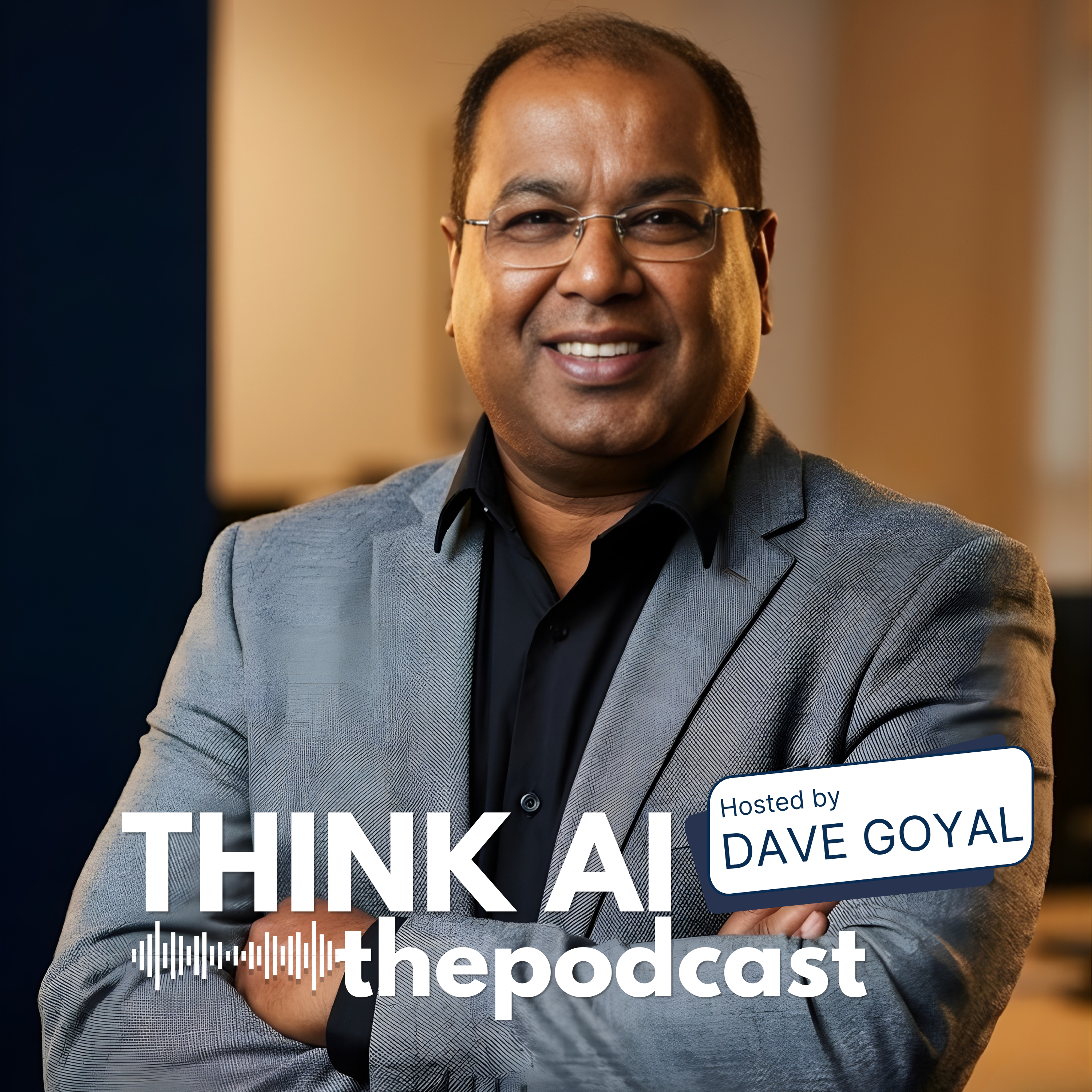
Compliance, Music & AI | Ep. 6 with Nilesh Maheshwari (Yuktra AI)
What do music and regulated manufacturing AI have in common? More than you'd think. Nilesh Maheshwari, founder of Emorphis, Emorphis Health, and Yuktra AI, joins Dave Goyal to unpack why the hardest places to deploy AI (pharma, healthcare, regulated plants) demand faithfulness over cleverness — and why structure and freedom aren't opposites.
In this episode:
00:00 Why a "knowledge thread" beats a database on the shop floor
04:17 The real pain signal that built Yuktra (hint: it wasn't "we want AI")
07:08 Guardrails for regulated AI — why clever LLMs are dangerous
10:34 The plant-worker pushback that killed fancy AI answers
13:23 Music, discipline, and how structure creates freedom
18:54 What most US founders get wrong building with India teams
21:07 Why there's no such thing as a "best product"
29:22 Curious, enthusiast, or skeptic? Nilesh's take on AI
If you lead a plant, hospital, lab, or any regulated environment and you're wondering where AI actually fits — this one's for you.
👉 Subscribe for more conversations on Data, AI, and the humans behind the systems.
💬 Drop a comment: Are you AI curious, enthusiast, or skeptic?
---
🔗 Links & Resources
- Yuktra AI: https://yuktra.ai
- Emorphis Health: https://emorphis.health
- Nilesh on LinkedIn: https://www.linkedin.com/in/nileshmaheshwari/
- Dave on LinkedIn: https://www.linkedin.com/in/davegoyal/
#ThinkAIPodcast #RegulatedAI #ManufacturingAI #PharmaAI #FounderConversations
Available Results
Generated results are saved to the knowledge database for reuse and search.
Extract Knowledge
Pick what you want extracted first. Model, scope, and chapter options appear after a template is selected.
Transcript
Dave Goyal: Today I'm joined by a guest who has spent 30 years building technology across four decades of paradigm shifts from microprocessor-based process control in the to mobile at impetus to Emorphis technology serving 1000 plus global clients and to Emorphis health and most recently, Yuktra AI, ⁓ operating system built for the hardest places to deploy AI. for regulated manufacturing, pharma and healthcare. Nilesh Maheshwari, he's the founder and CEO of Emorphis, founder of Emorphis Health and also the founder of Yuktra AI. He is in TIE Indore Board, State Council Member. He's a standard C8 and angel investor and a past ⁓ WBAF Senator India. And in full disclosure, He is one of my closest friends. We have known each other since college. We make music together and we've been sounding boards for each other, businesses for longer than of us can either want to admit. Today we are talking about Yuktra, which Nilesh is saying that it is born at the intersection of power of logic, the discipline of reasoning and the guiding thread. Welcome to the show, Nilesh.

Nilesh Maheshwari: Thank you, thank you Dave having me at your podcast. Really enjoying and I have your podcast and I am looking to great conversation. ⁓

Dave Goyal: Great. So let's just get started. So you Yuktra stands for Your Unified Knowledge Thread for Real-time Assistance. Before we get to the acronym, walk me through how you landed on the idea of a thread. Why it is a knowledge thread versus a database.

Nilesh Maheshwari: Okay, very, very interesting question. database stores information ⁓ and connects context. ⁓ And in plant, do not need isolated documents. ⁓ They need the like ⁓ SOP, ⁓ machine safety deviation risk, training need, next action. ⁓ So, real work the shop floor is sequential and contextual. ⁓ one answer leads to another. That is why thread felt more truthful than repository. And tells what exists. ⁓ A thread helps you correctly in the moment.

Dave Goyal: That's great. And I also see thread as a guiding metaphor, isn't it? It's not just a marketing copy word. What do you have to say on that?

Nilesh Maheshwari: No, no it is. Yes, it is. Yuktra's job is to become the stitched layer in real time.

Dave Goyal: Awesome. Yeah, I think we see the similar pattern in fabric engagement. Most of our clients have like eight systems, 10 systems, not a single source of truth. That's why the conversation about database versus a thread, which sounds pretty interesting because we are trying to create unified databases, a single version of truth versus Yuktra stands for a data thread, really not a database where you can do some realization from Yuktra from day one. So it's not just the data, but it's also the context of the data. Does this make sense? I think it is.

Nilesh Maheshwari: Yeah, Yes it is. ⁓

Dave Goyal: Okay, so I have the next question which is pretty interesting. You could have kept Emorphis horizontal and comfortable, right? We are talking about comfort zone. We will talk about it in a second what comfort zone means to each of us and doesn't mean anything to each of us. Instead you bet capital and time on Emorphis felt. We both are 54 years old and we are reinventing ourselves on each stage. And then again on Yuktra two of the hardest Vertical in tech so Emorphis health on one side, Yukta on another side, service industry, a product industry. What was the specific customer signal that you were looking at which made you bet on this solution or a product?

Nilesh Maheshwari: Okay. So, ⁓ do not choose these spaces because they are easy. We them because the pain was real, recurring and high consequence. ⁓ For health, ⁓ the was clear. Healthcare organizations were struggling not just with software development, ⁓ but work complexity, interoperability, compliance, patient impacting decisions. They need domain aware engineering, not generic software vendors. So that was one of the key reasons why we wanted to get into healthcare, emorphis health born from that particular pain point, we understood the real pain. for Yutra, the trigger was. different but equally sharp. In manufacturing specially regulated plants, knowledge was available on paper, in PDF, in people's head, ⁓ knowledge, trapped developmental silos. ⁓ The strongest ⁓ customer signal was not, we want ⁓ It was our team lose time every day searching, asking, escalating basic critical questions. Another signal was audit and compliance pressure. Plants are under rising pressure to be consistent, traceable, training ready, knowledge access on the floor is still weak. So are still struggling with their audit ⁓ pressure production, delivery with quality, etc. that's where Yuktra came into picture and that's where it was born. do not follow like the hype cycle, followed high workflows ⁓ where decision actually matters ⁓ and we can create a better impact. ⁓

Dave Goyal: Now that is awesome. And especially customer signals are always the loudest, right? Which market really understand and react it. And you picked up on those customer signals rather than the hype of AI. You are using AI as a platform, a tool to deliver where the customer signal saying that this is the problem area that you need to solve and you took an opportunity to solve it. That's Okay, so let's talk about logic and reasoning in regulated AI. Typically, regulated manufacturing is one of the hardest places to deploy AI. Now, auditors don't negotiate. 21 GMP, FDA, WHO, EMA, HICERT there so many compliance out there. ⁓ And ⁓ this the place where LLM wants to improvise, or you have to stop it. What did you put in the product to make sure it stays on the right side of the line? Meaning it stays compliant.

Nilesh Maheshwari: Very well articulated question, Dave, because is one of the biggest risk in this environment, where model sounds confident beyond the validated source material. ⁓ me give you a practical example when are talking about SOPs interpretation. An LLM may try to paraphrase, compress, or improve a procedural ⁓ instruction sound more natural.

Dave Goyal: Mm-hmm.

Nilesh Maheshwari: and in a regulated environment is dangerous. So, for example, a or line procedure has an ⁓ exact order, ⁓ timing and verification requirement, the model ⁓ creatively it in a way that changes meaning. that was one of the very big. risk when we are choosing an LLM ⁓ making sure that it is giving a right context the right answer. So, we have built ⁓ guardrails source bounding answers. Answers must be grounded ⁓ in content only. It should have a ⁓ strict traceability. it should distinguish between approved procedure and a general guidelines. So, when we are delivering any information it is tagged that it is from approved procedure or it is from a general guidelines. So, that the user get an information ⁓ this is something which is coming from a strict SOP and not a general guidelines. ⁓ they how to use it. In sensitive cases, it should refuse to infer. and there is the one important thing is that it is role-based context aware response design. So, everyone gets the answer from the document because it is ⁓ role-based. So, get answers from the document, they are authorized to get answers from. So, you would not get a free form answers. or if you get a free form answer it is tagged that it is from a general guidelines or an knowledge. So, ⁓ regulated brands the model does not get rewarded for being clever, it gets rewarded for being faithful.

Dave Goyal: Now that is awesome. And this is good for the listeners to hear most people think or would think that an LLM model is pretty generalized. It's a cookie cutter. It reads from off of the internet and provides you the answer. I think it's the model. It's how it's been designed, how it's been implemented and what ⁓ guardrails governance I would also add is being taken care. ⁓ once apply all those things to the right model or multi-model even, you're going to get an amazing AI or the solution which will consume AI. Correct?

Nilesh Maheshwari: Yes, yes, correct.

Dave Goyal: Okay, okay so that leads me to another question here which is walk me through one specific design decision in Yuktra that you made because a plant worker pushed back not roadmap item not a customer ask a real friction moment which changed the product so we're not talking about the product backlog here but really the real life pain points and the problems which you thought yeah this is the thing that i need to have it in Yuktra This is how it's gonna be solved, maybe with AI or without AI.

Nilesh Maheshwari: Ok so, ⁓ in a real plant and when we are dealing with plant workers, one real friction point was that workers do not want fancy AI answer, but on the floor long form responses create friction. They want exact next step and in a usable format. So the real pushback was do not give me paragraph. Tell me exactly what I need to do. Because earlier when we started, we started building something. It was very fancy, AI giving answers, et cetera. But when we... implemented in a real plant and the feedback, the first feedback we received was that we don't need these big answers. We need one, two, three. This is the step we have to do and that's it. Don't ⁓ many things which is not ⁓ because they don't have time to read so much of content. ⁓ thing is that It has to be real time usable, multilingual support, audio support, because they want while working, they want to ask question and they should get an answer where the AI or the system, Yuktra is speaking to them in their language. So that is one very important thing. And as we implemented it in geographies, ⁓ in India, there are so many different languages in workers operate. ⁓ So have to support multilingual. It should be to understand for the workers in their language. So even if it is writing a text ⁓ even if it is speaking in their language. So that was one of the ⁓ important things like the usefulness beats intelligence.

Dave Goyal: This is an awesome angle you're saying, and this is how I'm translating, which is not AI first, but worker first. So worker first using a tool to get the answers that he needs to solve his day-to-day problems, right? This is amazing. So let's talk about some of the personal things that shaped you and I both. have one commonality over so many others. ⁓ both came from music. You sing, I play, ⁓ sing a little bit. We've even made things together. Now music has logic, patterns, improvisation and a thread that it all together. And I'm very specific about the thread because it's connecting the dots and what you're trying to do at Yuktra as well. Does that lens show up in how you architect Yuktra or even run your teams at Emorphis and Emorphis Health? Or is that just something that we would like to believe?

Nilesh Maheshwari: Very, very interesting and relevant question because music, you know that music our heart and everything we do because that is part of our ⁓ to day life and the way we operate and the way we work ⁓ as an artist, so being a businessman is a different thing, but being an artist changes whole lot of your perspective. So Music you that structure and freedom are not opposite. The best improvisation happens inside discipline. in timing matters much as notes. ⁓ And in manufacturing, context as much as information. So, that is similar in Yuktra we use AI but inside a structured environment where context, rules, source fidelity matters. So, there is a kind of. melody, we see ⁓ in the way we deliver things. like music layering, melody, rhythm, harmony, texture and in Yuktra we think similar compliance, operation, training, safety, equipment, knowledge must work together not as an isolated piece. So it is all in cohesion everything of that is creating a very beautiful music ⁓ for the listener for the user for the plant workers and it should be a very rhythmic so that they can walk day to day in their plant life in their day to day working ⁓ ⁓ there is alignment, ⁓ responsiveness, people knowing when to lead and when to support. So ⁓ is how music is aligned. in even in the leadership as well. So we don't want noise, we want alignment, we want responsiveness, we want people to lead as well as to support. So also reinforces one important idea like reputation is not boring when it creates mastery. So that is true in music and in high quality operations as well.

Dave Goyal: Mm-hmm.

Nilesh Maheshwari: So yes, I do think music is part of the way I build good systems like good compositions, create clarity without killing expression. So music is and everything I do and you do. I know that you are great musician and we have been like in same journey, sitting together on the class bench, writing music, singing and all that. ⁓ So you definitely relate to this thought process very much.

Dave Goyal: No, you beautifully said it and that just prompted me to something. So, know, classical Indian classical music, especially it is not linear. It has several rules, context, ⁓ you know, timings, location, modality, mood, etc, etc. So there's a structure which is also loose. I compare this with the AI, which I'm thinking right now that AI also has similar things. You don't have predefined rules. You don't have, I mean you could, but that will be pretty limited. So you put rules where needed, but then you give the liberty to it so that it can come to the real life. Example, when we go and perform on a stage and things changes on the fly. You know, your mic is not working or there is a background noise or something and then you adapt to it. So no matter how much structure you put in place,

Nilesh Maheshwari: Sure. ⁓

Dave Goyal: And then you also react to the people who are listening. So the song you are singing or playing may not react to the audience. And same thing for AI has to do, know, a worker versus a manager versus ⁓ an executive. When they start communicating with AI, AI needs to take a different soul and identity and start reacting to what and how they are behaving. But you beautifully said, and love that connection on the music to AI, man. This is amazing. And this also prompts me for another question.

Nilesh Maheshwari: Thanks for asking that question. Thanks for asking that question because actually ⁓ like triggered some things in my mind and as well your mind as well because how we can connect music with everything and without realization we have been living that but when you ask the question it actually came up in a verbatim.

Dave Goyal: Yeah, there's a lot of common grounds and somehow we are subconsciously using that skill to build what we are building today. yeah, this conversation is extracting that thought out, which is pretty amazing. The other differentiation I see between you and me and a lot of founders here in US, generally speaking, what they get wrong about building with India teams. Now I'm switching gears more towards Emorphis health and Emorphis. So you build with India engineering teams, shipping to US regulated customers and you've been very successful. I see it. We work together on so many of these. Most US founders who try to do this, get it wrong and they get stuck in this compliance and or they get stuck in the cost. What do they miss that you did not?

Nilesh Maheshwari: See it is like would say we have done a co-development here ⁓ we have people on boarded ⁓ the regulated industry. ⁓ These are the people who have been there, done that, and they have been part of production, they have been part of quality assurance, they have been part of compliances, audits, etc. So these are the people who are guiding us in actually building and shaping this particular platform. we are not like ⁓ complete the product and then releasing it. We have been like it is a continuous development. We go and test with the customer, get early feedback and then keep on reinventing, keep on sharpening the product features as as removing whatever is unnecessary. So we have scrapped lot of features which we thought as engineers or as product owners are necessary. But when we are in the plant, we work with workers. We feel that. Some of the features are fancy item for them. It does not add more value, much value to them. So with them hand in hand made realize a lot of features which are not making sense. We remove them ⁓ and would say it is a co-development ⁓ exercise helped us in ⁓ delivering product, Yuktra and working with the ⁓ The plant owners, the plant workers, the QA managers, etc. has helped us in shaping this product.

Dave Goyal: Now that's awesome. And you know, this is one thing to pick up on is keeping it really lean and outcome driven rather than keeping it with lot of fluff and going into a cycle. So where needed, you put compliance in the right order and shape where needed, you'll speed up the development, the skills where needed and build a solution or a product which is cost efficient as well as really compliant and highly secured.

Nilesh Maheshwari: Yeah.

Dave Goyal: providing the right outcome and the right value.

Nilesh Maheshwari: Yeah, and one more thing I want to add. I want to add one more thing here that where people miss is that they want to create the best product having all the features in one go and they keep on developing, developing that product for long period of time when the while in that process, lot of relevance of that product gets lost. So you have to just get into the market faster, test it and

Dave Goyal: Mm-hmm.

Nilesh Maheshwari: This is a cycle. You have to keep on doing it rather than creating a one big fat best product. And there is nothing like a best product. It is a journey.

Dave Goyal: Yeah, no. Yeah, like you said, a basic mantra is I ship, then improve rather than keep improving and then ship the final, which will never be final in any case. But this is amazing. So I have a few surprise questions for you also. One is first move for the leaders. You've been leading so many ways right from your. job profile into eMorphis to eMorphis and now into Yuktra and then into different things like TIE board members some of those other amazing clothes that you What would you say to the leaders who has two angles? One is regulated. So regulated leaders, as you know, are always skeptic on technology, especially AI. They want to say, yeah, I want to do something with AI. But then they have two problems. One is I do not know where to start. Or second, I cannot trust on AI. What do you have to say to those leaders?

Nilesh Maheshwari: So one important thing is that AI is here to remain. So it is not a fad, it is something very real. and it has real advantage if people use it with caution, with pinch of salt because it is not going to solve each and every problem of yours. But Definitely it is going to solve a lot of your productivity problems, your automation, but you have to start doing it, experiencing it, experimenting with AI. So take small step, be open. It is not going to like, as it says, it is going to hack all the system. It is going to do havoc, et cetera, et cetera. You have to be very cautious as, as... It happens with every technology in past we have seen this is going to change everything and jobs will be lost or whatever. But this is definitely going to improve and for enterprises I am seeing so many use cases for manufacturing so many use cases where people can improve their productivity the response time to their customer. the quality of their product. AI is going to change the way you are doing business. So definitely you have to embrace this sooner or later. It is better to be sooner in adopting the technology and experimenting it. Start small.

Dave Goyal: Okay, no, that makes sense. a lot of times people think about a pilot ⁓ ⁓ I guess that could be a good way, either pilot or a POC, try it out rather than making an assumption on a technology and see what and what doesn't work. And then you can make a decision because every technology comes with its own baggage and comes with its own features. And then you need to find a right trade off and a balance by trying it out.

Nilesh Maheshwari: Yes.

Dave Goyal: Great. want to go back to our connections on music and college again. So we've been friends since college days. We make music. We still call each other when things are hard and not just on music, by the way, right? So we are sounding board outside your and outside my partners and companies. ⁓ And ⁓ know, could choose advisors. I could choose advisors or you could choose board members. How? ⁓ This is more personal, but I wanted to put you on spot on that. How this experience helped you. I can talk on my part later, but how this experience helped you out in what you're doing today and how you're progressing today. You know, a friend who's also having a commonality in music and being a sounding board. How that combination works out for you.

Nilesh Maheshwari: Absolutely. So, as it is always said that it is very lonely at the top ⁓ ⁓ are very ⁓ friends where you can open up, ⁓ you can talk your heart out and ⁓ you can share everything like business, problems with the business, everything. ⁓ when ⁓ is a commonality of music where ⁓ ⁓ something which is connected heart to heart. ⁓ very emotional connection between us. We go around 33, 35 years back in past when we were like in college. 18, 20 years of age and so and the friendship of that age is really very, very close to heart important for you and when you go that long and you are in common business, you have common problems. to address and to discuss. It is always a very, very good sounding board, very good friend, advisor to be on your side, to listen to your perspective, correct your course. ⁓ it is always very much valuable.

Dave Goyal: You know, that's amazing. And I could say that from my side as well, that ⁓ first of all, having a long term friendship and also being in a common thread like music, we have a similar thinking philosophy, but we are still different people, ⁓ deal things with differently. So when we are sounding both to each other, there is a different perspective comes through, right? From you and from me. That's one thing. But the second thing is a friend will not hold back.

Nilesh Maheshwari: Thank

Dave Goyal: because he will always think about the other friend's benefits more than thinking, how would I look? And that really helps to listen. Sometimes getting feedback is really hard from anyone. But once you hear it from a friend, you know it's coming from a good place. And when it's coming from a good place, you know where to make corrective actions. Not always you have to make it, but... it does give you a very good perspective on what to correct, why to correct and how it can take you further and you know a friend will always be more happy if the other person is growing faster than what it should be. So I want to take this platform and acknowledge that I've been getting some amazing feedback from you and I cannot forget and thank you enough for entire life and hopefully we can be the

Nilesh Maheshwari: Thanks.

Dave Goyal: sounding both to each other and continue to make a lot more music together.

Nilesh Maheshwari: Likewise, Dave, it is really, really amazing to be in that close. connection with you, with the emotional bond, we have been with each other in all ups and downs of our life, business, college days, building music together, singing on stage together. So it has a different feeling and bond. And thank you for being there. And always reach out to you whenever there is something I want to discuss. And always available, present, and present with a lot of new ideas, perspective. So we have corrected our course many times together. ⁓ So you, thank you for being there.

Dave Goyal: It's mutual and thank you again. ⁓ I just have one question for our audience that generally resonates well with them. So the whole point of building a ThinkAI podcast is to cover three types of people. One is AI curious, the other one who is AI enthusiast, and the third one, which is AI skeptic. Which one are you? While I know it's good for our audience to learn. who you are and why you are like that, ⁓ curious, enthusiast or skeptic or somewhere in between.

Nilesh Maheshwari: So I am AI enthusiast. I'm not skeptic about it. Being an engineer, being in the technology, I understand the pros and cons of AI. So I do not approach it with skepticism. I approach it from the ⁓ angle of possibilities. and opportunities and definitely I'm very excited to see how AI is going to shape everything whatever we do in our day to day life in our business the way we operate everything so I'm very enthusiastic about AI ⁓ Definitely I understand the nitty gritties behind the scenes things of AI so I have my own perspective about AI but huge possibility huge upside in everything we do but definitely everything comes with with with its downside so we have to be very like thoughtful about how we implement AI, thoughtful about how much we open up to AI, like opening up all your systems, your emails and everything. So you have to still have guardrails around what it can access and how it can access. But I'm very enthusiastic about AI.

Dave Goyal: That is great. Nilesh, thank you. Thank you so much for being on the show. That's Nilesh Maheshwari founder at Yuktra AI, Emorphis technologies and Emorphis health. Find yuktra at y-u-k-t-r-a dot a-i. I will put it on the caption and Emorphis health at Emorphis health. If you lead a plant, a hospital, a lab or any regulated environment, and if you're wondering, where AI fits, Nilesh is your friend. Start with the knowledge already logged into the walls that he has under Yuktra and this is where the thread starts. Thank you again.

Nilesh Maheshwari: Thank you, Dave. Thank you.