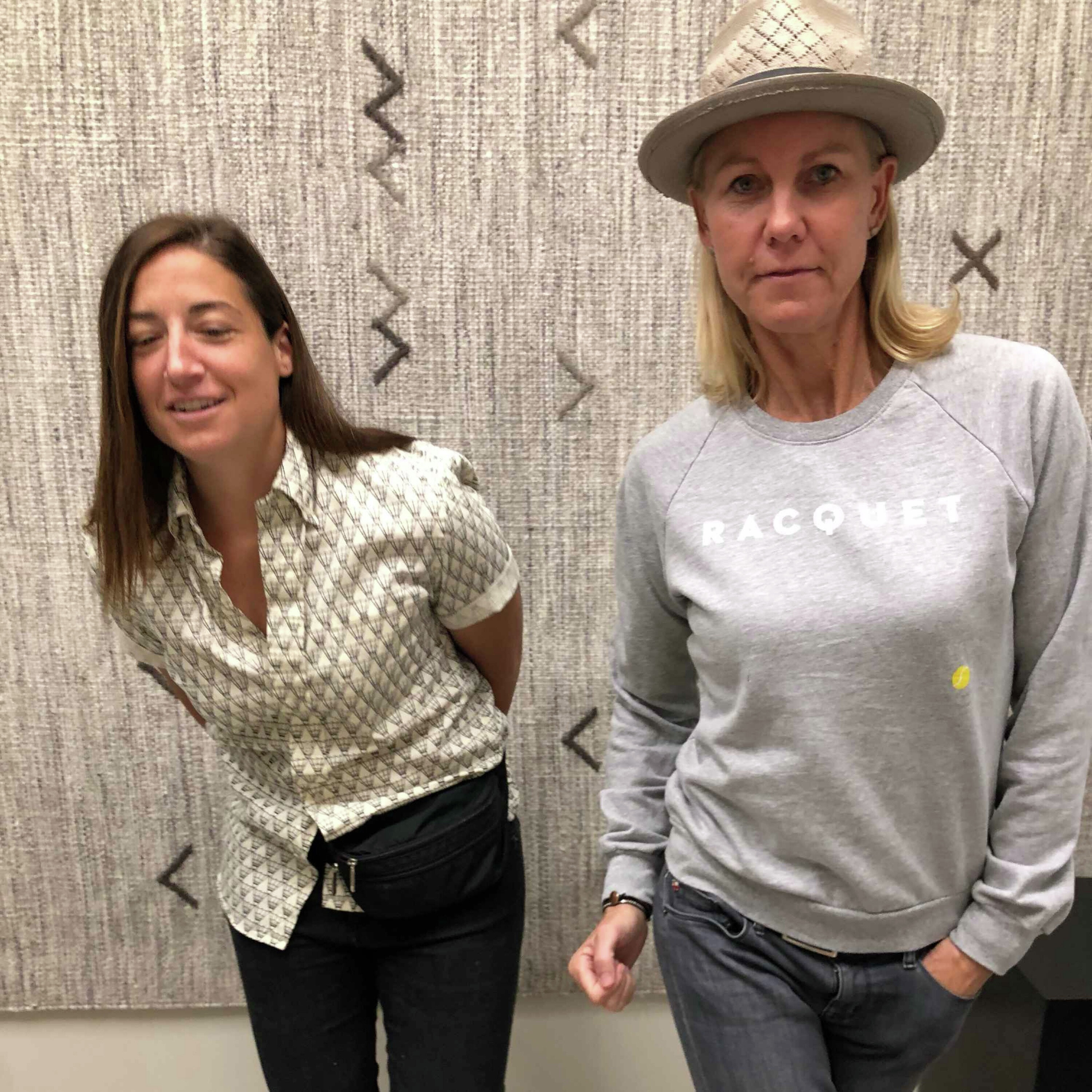
Daria Abramowicz
The secret weapon behind world No. 1 Iga Swiatek's dominance—her mental coach, who puts an emphasis on being a whole person with a happy and healthy relationship with tennis—joins Rennae to talk about her past as an elite athlete and how every person can learn from their work.
Hosted on Acast. See acast.com/privacy for more information.
See omnystudio.com/listener for privacy information.
2022-06-13
44 min
Transcript
Available Results
Generated results are saved to the knowledge database for reuse and search.
No generated results are available for this episode yet.
Extract Knowledge
Pick what you want extracted first. Model, scope, and chapter options appear after a template is selected.
Generated results for public episodes are saved to the knowledge database so they can be reused and searched later.
Transcript
00:00:10
Speaker 1: Hello, Renee.

00:00:11
Speaker 2: How has this British summer you've found you?

00:00:15
Speaker 3: Oh?

00:00:15
Speaker 4: Gooday, Well, the fine British summer hasn't quite found me yet. I was literally walking back from dinner tonight and I thought to myself, how do people live in this place? The weather here just sucks? What explains to me when you know, like when I'm in obviously, when I'm Australia, or if I'm in the US and there's a beautiful day right and you just see you just know the English tourists because they're the ones that have literally like third degree burns on them because they are so happy to finally see sun that they just lie there for hours or just walk around for hours because they never see the sun in this country. And I'm not kidding you. I've seen the sun very minimally since I've been here. So I don't want, you know, anyone from the UK to start like bagging me on Twitter. But you've got to admit the weather kind of sucks here, but the people are nice, so that's what makes up for it.

00:01:09
Speaker 2: I mean, I think, for whatever reason, every time I've ever been over for Wimbledon, it seems like the most amazing thing happens, and the weather's incredible and it's funny, and it stays nice until nine pm and there's like a tiny hint of it, like a little bit of crispness in the air.

00:01:26
Speaker 1: That's perfect.

00:01:27
Speaker 2: And so maybe it's just that the weather cooperates, it's for the fortnite, and then after that it doesn't because I've never experienced bad weather there during the summer.

00:01:39
Speaker 1: In the winter, foggy and gross and nobody likes it.

00:01:41
Speaker 4: When are you getting over here then, because you know, an h over here, because clearly you're now staying that every time you're over here the weather's good, So get your ass over here. And I know you're coming over because we're having a great Racket magazine event at Wimbledon. But I'm hoping I have heard that the weather is going to be fantastic this week, so hopefully fingers crossed happens good.

00:02:00
Speaker 2: Well, I'll get there for a middle weekend and I've already gotten DMS, and if you are lucky enough to be in my good graces, I will include you on the invitation, so you know, reach out if you are going to be there, and I'll make sure you get a spot. So let's get right to it. What an amazing interview you have this week. This is somebody we've wanted to talk to for a really long time. This is the number one player in the world, Fantec's friend and essentially mentalist. This woman is, by a lot of people's understanding, really truly responsible for a lot of the success that EGA has had as a person, not only a tennis player, but as a human being, really grappling with success and fame. What can you tell us about going into this conversation. I know you guys were trying to have it for quite a while. Yeah.

00:02:49
Speaker 5: So Daria Abramovich, who is Egish.

00:02:52
Speaker 4: John Tech's therapist, sports psychologist, whatever you want to call her, you know, was a very good sailor in her own right, growing up wanting to sort of go to the Olympics and all that sort of stuff, and a terrible injury happened to her when she was eighteen, and so she thought, you know, how do I stay in sports? And she went into psychology and got a master's degree in psychology and is now you know, is working with a number of sports athletes, not just Eager, but obviously her main focus now is on Eager because she's traveling a lot with Eager, but she has a number of people that work underneath her as well. So Daria is just a fantastic person. I've spent a lot of time talking to her through the years, and you know, one of the things that I really appreciate about Daria and Eager is that you know, they're willing to sort of be curious. And you'll hear that in the podcast about being curious and about wanting to know more information. And you know, the bottom line is, you know, her goal is to make and get Eager show on tech to be in the best mental place that she can be to play her tennis. And clearly she has done a fabulous job, along with obviously Thomas Wookearowski, who is her current coach, in getting her to be in a place in a space where she feels really comfortable, really good, and clearly the results are showing.

00:04:09
Speaker 2: One of the things that I like so much about this conversation is I feel like one of the things that you're so great about is using these conversations with these exceptional people who are in and around the tennis world to really kind of create lessons for all of us and I feel like that with Daria in particular is something that I'm listening for too, which is just this idea that you know, happiness, balance, preparation, but also being in sort of like a flow state is something that's accessible to everybody, you know.

00:04:40
Speaker 1: It's one of the reasons I like so much when we talk about doubles.

00:04:43
Speaker 2: Or legends or things about the game that feel like somebody else can sort of walk into, whether they're an elite athlete or not. And I think for me, I hope that everybody's seeing the results that EGA has seen in the last couple of years, and not only that sees how happy she is. And I'm thinking a lot about the couple of Grand Slam winners that we've had, especially on the women's tour, like you know, probably with the exception of Ash Barty, like not a lot of them have looked super pumped to be there. Maybe, And I think, you know, one of the things that I love so much about watching Ega is she just so clearly is enjoying herself and enjoying your time and seems to have the right perspective. And I have to I have to think that Daria is and this approach is a lot has a lot to do with that, Oh.

00:05:26
Speaker 4: One hundred percent, There's no doubt about it. And one of the things that we've talked to and she actually brings it up a few times in the podcast, but you know in talking to me, is that she even brings up when I say, one of the things that I am always very cognizant of with my players that I work with and even clearly myself as a player, is that you've got to have joy for what you do, and you have to have passion. But really the most important thing is if you don't have joy in your as you said, in your life, in your relationship, in your job, it's hard to imagine you'll have a tremendous amount of sets in whatever it is. So that's sort of like where we touch upon. Throughout the part. You know, you'll hear her talk about the importance of finding joy and what you do and you know, and always bringing it back to the human interaction being a good person. When's the losses don't define you, happiness to find you. Yeah, I think that's really important. It's very hard to get to that space, I have to tell you, as a professional tennis player, as a professional anybody who's in a highly strong environment. But I think she's helped Eager with finding that joy in what she does in an everyday way.

00:06:32
Speaker 2: Something truly for all of us. All Right, without further introduction, here is Renee's chat this week from Birmingham with Daria abrama.

00:06:41
Speaker 4: Bit Birmingham, Yes, did I say right Birmingham?

00:06:44
Speaker 5: Yep? You did?

00:06:46
Speaker 2: Practically British? All right, Well, hold on to your hats the UK. I'll be in you soon.

00:06:57
Speaker 4: I want to welcome Daria Abramovich. Did I get that name right?

00:07:00
Speaker 6: Perfect?

00:07:01
Speaker 5: All right?

00:07:02
Speaker 4: That's that's important because you know, Polish names are not easy to say.

00:07:05
Speaker 7: But I want to say thank you, Daria, say Tom Viktor.

00:07:10
Speaker 4: Yeah, Thomas, not bad, Daria, Thanks for joining me today. It's been quite the well let's say, three months, well almost two years really for you. But first of all, I want to introduce you. You, of course, are the sports psychologists or psychologists for Eager Shiantech, as well as many other great sports people over the last few years. But the first question I always ask people that come onto my podcast is why tennis?

00:07:41
Speaker 5: Right?

00:07:41
Speaker 4: But you are a whole different story. So first of all, a little bit about your background as a sports athlete before we get into what you're.

00:07:49
Speaker 6: Doing now, Oh, how much same do you have?

00:07:54
Speaker 5: Oh as long as you want.

00:07:57
Speaker 6: I I was.

00:07:58
Speaker 7: I was born at a in the small city in Poland, at the longest lake in Poland. And my first sport and my love of my life in sports is sailing. I was sailing since I was six and I had my own competitive path in sailing. I won't say career because well, I stopped when I was eighteen. I got injured. I fell from a trailer, broke my wrist. And then I thought I was eighteen, and I thought, maybe there is a way to you know, still be in sports after the twelve or so years, maybe like use this experience, do something about it. So a kind of a natural transition.

00:08:40
Speaker 6: At this time was to become a coach.

00:08:43
Speaker 7: So I was very young, I still was, you know, just before college. A lot of a lot of things happening.

00:08:51
Speaker 6: I was.

00:08:51
Speaker 7: I was coaching in sailing for ten years or so, and then figuring it out that maybe that there's something.

00:08:59
Speaker 6: More in sport.

00:09:00
Speaker 7: I felt that even when I was still sailing. And then I want to talk about sports a little bit differently. See this that I'm seeing kind of from different angles.

00:09:10
Speaker 6: I see it in a different way.

00:09:12
Speaker 7: And I decided to after studying sport, I decided to pursue psychology, and so here I am right now working as a sports and performance psychologist, but having this i'd say a lot of experience in many different roles in sport.

00:09:32
Speaker 5: Yeah, so.

00:09:34
Speaker 4: You know, it's I want to get into a little bit of your performance as a as a high level athlete, as a sailor, and then your injury comes.

00:09:45
Speaker 5: How did that.

00:09:47
Speaker 4: Past for you help you today understand the mindset of an athlete rather than sometimes sports athletes or sports psychologists really just study psychology and then they go into.

00:09:58
Speaker 5: The sports world. But you we're.

00:10:00
Speaker 4: In the sports world prior. How does that help you today?

00:10:04
Speaker 7: Yeah, I think it's it's it helps tremendously. It's just something that I think on many occasions makes me really reliable in my work. And I kind of, you know, see this when athlete or coach or a parent is actually approaching me and we're talking and someone says something to me, and I just say, I understand. In like ninety percent situations, I really understand because either I've been there, I saw this I've experienced it before, but it only and I think that the thing that I'm going to say right now is very important for any coach or parent, or psychologist or even athlete. The most important thing here is it's only a tool once you work through it. Because injury in sport, ending career in this in this way might be disturbing as well. So what I did, I went to a therapy first.

00:11:09
Speaker 6: And this is.

00:11:09
Speaker 7: Something that everyone who's working in sports should remember. That experience might be an asset only when it's a closed chapter for us, when it's you know, down deal.

00:11:25
Speaker 4: So you're saying that once you finished your career because of a severe injury, you had to get mental help for that to process the next life for you.

00:11:36
Speaker 7: More, I'd say I understood that if I want to be a good coach or later a good psychologist potentially and do ethically and professionally what I'm doing, it's necessary for me to be on the same page with all of my experiences, you know, to get them sorted out and to feel comfortable with my past and everything that has happened.

00:12:02
Speaker 6: And that's what I did basically.

00:12:04
Speaker 4: Yeah, so how did you therefore get involved with eager Shrian Tech and her coaching crew.

00:12:13
Speaker 5: How did that come about?

00:12:15
Speaker 7: Well, it was twenty nineteen, I think it was February or so, and one of the people who were at the time part of her management team approached me and told me that there's this athlete, displayer who saw was very challenging in terms of working with that. I remember this vividly, like this person said that she's tough, Like what doesn't mean that she's tough in terms of approaching her or something, But that was it, and I said, well immediately that of course I know who she is because I was following her career as one of very promising Polish athletes at the time, and I agreed. I flew to Budapest she was playing the tournament. She says nowadays, she says that she was surprised and glad that someone was willing to fly somewhere to meet her, and that's how it started.

00:13:17
Speaker 4: What surprised you immediately about her? Other than the fact that she was already grateful that you took the time to come and spend time with her, And how does that shape her as a person?

00:13:31
Speaker 7: Well, I'd say two things, and one i'd say from more like psychological perspectives. So I was impressed by how open minded and aware of what she wants she is in terms even of you know, including mental preparation. And she was immediately kind of curious, and in the following months she agreed with my philosophy in my approach to the of things that we could we could do together. And then as an athlete or a coach. I'll tell you this once I saw her for the first time in court, and I think you probably will agree with me on that, is that this fire impressed me that she has in her It's amazing. It was always and I still I love watch her on court.

00:14:22
Speaker 6: Still.

00:14:22
Speaker 4: Yeah, you know, as a psychologist, but also as a human being, is curiosity one of the most important things, certainly as a young player that you feel that they want to know more about how they can get better.

00:14:39
Speaker 7: Yeah, but I don't think that it's only for young players. I think it's for everyone, even you know, the great champions. If a great champion is still curious of what's going on and what might you know he or she might be doing differently or better or maybe something new, I think that's one of the best factors that you can have in sports.

00:15:00
Speaker 4: Is it important for you because one of the things that I talk about with my players that I coach is, you know, I often say to them, how are you feeling today? And you have to be honest with me because I can't help you if you're not honest with me. So is that one of the things that you are very adamant with IgA is tell me how you're feeling today for me to be able to help you. And also not only from a psychology standpoint, but from a coaching standpoint.

00:15:27
Speaker 7: First things first, you know are working with top sport nowadays. From my standpoint, it's a lot about building a relationship between coach and the player, physio and the player, psychologist, nutritionist, anyone who's involved with the process manager. And this is the part of building a relationship being you know, well curious in terms of being a coach or a psychologist of how.

00:15:53
Speaker 6: A player feels.

00:15:56
Speaker 7: But also I'm asking a lot of questions like what funny or what interesting happened to you today, what's the best thing that you've achieved today?

00:16:07
Speaker 6: Did you learn anything?

00:16:09
Speaker 7: This is something that happens, you know, for example, once the kid is the kid comes back from school and a parent that's how was school And the kid says good but okay, fine, But also this parent can ask a completely different question, did you learn anything new? What was the most interesting thing that happened to you today? And it makes and it just shifts conversation completely and something in something very similar happens in sports. I think it's a very fundamental part of building a healthy relationship and it really helps coaches, parents, sometimes psychologists or I don't know, managers to address expectations and needs players expectations and needs better.

00:16:55
Speaker 4: Yeah, what on tour in surprises you the most about a lot of the personalities that you see? And I know you you and I talk quite a bit, but you know, sometimes you'll just talk about certain other players and what you're seeing, what you're feeling, what's the what's the thing that surprises you the most out here on tour?

00:17:19
Speaker 7: Hmhmm.

00:17:21
Speaker 6: Stubbornness, I'd say.

00:17:24
Speaker 5: In what respect.

00:17:27
Speaker 7: In a different matter, it's it's not the same as grit and determination. I'd say being a little bit stubborn, as some is sometimes repeating the same patterns all the time and maybe not being so open minded to change some things or trying to be focused more on solving problems and not on the problem itself.

00:17:54
Speaker 8: So in in this area, I'd say.

00:18:12
Speaker 2: As anyone who's been following along this show knows, Renee and I both went pretty hard in the paint in March, not necessarily eating our best or living our post healthy balanced lives. That's why we were so excited when Sakara came our way offering to have us try out.

00:18:29
Speaker 1: One of their three day meals.

00:18:30
Speaker 2: These are nutrient dense meals, snacks and supplements that nourish your body.

00:18:35
Speaker 1: We're practicing some abundance.

00:18:36
Speaker 2: Mentality this year, and so Sicara joined us to sponsor the show for a couple of episodes and to help our listeners get the same experience. Skara is a wellness company anchored in food as medicine on a mission to nourish your body through.

00:18:50
Speaker 1: The power of plants.

00:18:51
Speaker 2: Right now, Sicara is offering our listeners twenty percent off their first order when they go to sicara dot com slash racket or enter the code racket at checkout. That's Sakara s a k A r A dot com slash racket to get twenty percent off your first quarterer.

00:19:08
Speaker 1: Sakara dot com slash racket.

00:19:27
Speaker 4: One of the things that I often talk about is that sometimes you know, as a coach, you work on backhands, fourhands, how to hit the.

00:19:33
Speaker 5: Serve, all this sort of stuff.

00:19:35
Speaker 4: But one thing that I can say now, as somebody's been coaching now for a bit, is that I work so much more on the mental side of it, almost as much as, if not more than the actual tennis side of it. So what would you tell a parent or a young kid who's coming up trying to be a good tennis player, Like, what would you tell them about, you know, the mind and how important that is to work on as a young kid.

00:20:01
Speaker 7: Probably the same thing that you're texting me from time to time. Enjoy fun, I was asked. I was asked the same question a couple of days ago during a conference and lecture with business High Performance Business, and that was the same question, what would you say these people or you know, at the at the end of the day, when they are so focused on their performance, And I'd say, enjoy find this.

00:20:26
Speaker 6: This is something that at the end of the.

00:20:28
Speaker 7: Day will help to to learn better, to create proper your patterns, better routines better, but also navigate through challenges and crisises potentially, because in high performance sports, this is something that that's a you know, this is a circle of life. It's just happened. It just happens sometimes, the crisis, the struggle, the challenge. So I'd say, yeah, find the joy.

00:20:55
Speaker 5: So how do you help Ega in that respect?

00:20:58
Speaker 4: Someone so young, someone with so much ex expectation on her shoulders. She had that tremendous win a few years ago winning the French what's the difference. What do you feel the difference is between her winning the French Open a couple of years ago and today.

00:21:12
Speaker 6: This is such a good question.

00:21:14
Speaker 7: We've been talking about it the other day, you know, and I myself, like personally, it makes me so happy, this one so proud because in twenty twenty we knew and we had this goal somewhere right a long term, that she's able to win this sort of tournament, the Grand Slam. But it still was surprising in many areas, right it was. Yeah, but this time it was all work, work, work, work, and just so you know, like everything, we tried to plan, accept, execute everything, and embrace it. And I sensed that we were we managed to do that, we were able to work through it. She was number one, she was clear favorite, She had a lot of pressure on her. There was a lot of things around and we were all as a team because that was tremendous team work here.

00:22:15
Speaker 6: We were able to do this.

00:22:17
Speaker 7: So it makes me really pride because I sense work through it, you know.

00:22:21
Speaker 5: Yeah, yeah, yeah.

00:22:22
Speaker 4: So the first time she won, obviously zero expectation. Crazy that she was able to win the French Open, you know, three years ago or two years ago, no crowd, right, very different sort of smaller crowd, mask wearing during the pandemic and this time.

00:22:36
Speaker 5: Wow, all the pressure.

00:22:38
Speaker 4: So what do you think she learned about herself then over these last you know, particularly three months, but really the last two weeks of winning the French because that was totally different.

00:22:49
Speaker 7: Well, definitely a lot about you know what Miikayla's cheffer in offenses, low expectations, high standards. So definitely that implementing this philosophy makes all the friends that being solowly focused on her strengths and and keeping high standards in a lot of areas that are crucial to maintain high performance. This is something that is that is the key. And also you know, during the tournament itself, I think it was more about recovery and keeping all the tanks filled up and their energy level on the proper level done then like practicing and doing other things.

00:23:33
Speaker 6: So basically there is that too.

00:23:36
Speaker 4: Yeah, yeah, I mean I wish I could bottle a lot of you know, the conversations that you and I have sometimes, and also you know, I hear from parents and I see how intense they are with their kids. How how do you think, you know, how why is eager able to at this age really sustain this now week in and week out? So so well, And I mean this is somebody who's talked about she can cry easily.

00:24:05
Speaker 7: She was.

00:24:05
Speaker 4: I mean I saw her the day that she knew that she was going to be number one in Miami. Remember she had that scared look on her face because it was like, well, this overwhelmingness.

00:24:14
Speaker 7: But because over a one hundred people are processed in Miami and since you know, you could you could feel it that the world is turning on its axis.

00:24:23
Speaker 6: It was.

00:24:24
Speaker 7: It was so surprising and so so weird at the time. So that's why she had this placet.

00:24:29
Speaker 5: So what was the first what was the most important?

00:24:31
Speaker 4: Do you feel the conversation that you had with her in those moments when you knew that was going to happen. What was super important for you to get across to her becoming number one?

00:24:41
Speaker 7: Yes, focusing again, being focused on the thing that we can control and she can control, so her performance, her recovery, being good to herself, being mindful, keeping things very simple, and you know she was she she actually said that publicly. She was she was so sad. She was so sorry for Ash at the beginning. That was her instant reaction.

00:25:06
Speaker 2: Uh.

00:25:06
Speaker 7: And a lot of conversation actually was about helping understand why Ash might made this decision because I don't I don't know write the details, but I remember you talked a little bit eager about it too, so it helped a lot. But we had a lot of conversations about that too, so she'd understand what happened, because Ega is this type of type of person who wants to understand.

00:25:33
Speaker 4: Yeah, yeah, curious again, right, yes, right, yeah, So where's the mindset? Well, before we get into the mindset, now, I want to know what one of your what's your favorite memory? I think probably about a week ago might have been one of your favorite memories. But what's one of the favorite memories that you have from your time with EGA that you sat back at night and went, I made a difference to life.

00:26:02
Speaker 7: There was this one practice in twenty twenty in Paris jan one second day I think, so like five days before the first match of the tournament, and there was this conversation. Obviously I won't say the details, but that was a mindstone for me and I and I have this in my mind and I'm getting to it many many times. I was so impressed. Also when I loved the moment last year. I think it was Indian Wells October tenth because it's my birthday and she decided to donate some money for mental health organizations. It's not like, you know, sports memory, but that's also one that it's important for me. And yeah, maybe even winning Rome this year for me because that was the tournament when she well, you know, was met with this incredible pressure being number one, being defending champion. You're like just walking through the tunnel, you know, and you saw this huge photo of you holding the trophy previous year. Enormous pressure a lot of Polish people, a lot of Polish fans understands. And then she still was able to deliver very good performance and again control the controllables. That was something that really will stick with me.

00:27:33
Speaker 6: For a long time.

00:27:35
Speaker 7: Yeah, there's a lot of these memories, you know. I think every single day we might make a difference if we tried to do our work just simply stick to it.

00:27:46
Speaker 4: So I was gonna ask you what you know to talk me through how you balance winning and losing?

00:27:54
Speaker 5: I mean, she hasn't lost for a long time.

00:27:56
Speaker 4: So you haven't actually deal with I mean I haven't had to deal with that for a long time, but clearly she's lost before. How does she accept that? And how do you, as a psychologist try and balance because you know how hard it is out here. I know how hard it is out here to balance the winning and losing.

00:28:16
Speaker 7: You know how it is when they think that they're as good as their last match, right, It was always so, even when I was a sailor, you know. And in saying there is completely different system with like points like places and winning losing. And when I was watching tennis as a teenager, I remember finals and the player who's actually losing the final, Like, what are the very first emotions that happened to be there? It's frustration and sadness, it's anger. Sometimes it's not thinking I'm second in the tournament. So basically, I mean, at the end of every single tournament, there is only one person who might be like fully happy and satisfied. And it's tough having so manys on tour every single year with this sense and this feeling, if you'll think about it from other sports perspective for example. So what I'm trying to do is to show this different perspective that the player is a human being, and the player doesn't mean that he or she is her performance winner or a loser. It just means that he or she won or lost a match, a tennis match that happened. That it happens that you know, he or she'll have like so many so many more in the season throughout the season. It might be a lesson or it might be a burden. It's just the matter of perception. So and the other thing that I really try to implement is to show that tennis it's just it doesn't disturb a life, a person's part of life, or sometimes it helps to run fun a little bit different adventurous life.

00:30:18
Speaker 4: Yeah, yeah, it's really hard. Obviously, I know how it feels. Because I did it for twenty two years. Is that you really feel like I loved the line that you said, you feel like as good as your last match and most of the time you're losing. You know, not everybody wins every week. You know, they're a very rare specimen. I mean, obviously IgA has had that enjoyment of not losing a match for a long time, but she will lose a match at some point. It's not letting it define you as a person, but it is so hard, and to pull people off the floor sometimes when they've lost a match is very different. You talked about in an interview the human anchor. Can you explain that to me and how important that is for a tennis fuyer or just anybody in general.

00:31:05
Speaker 7: Mm hmm Again Mikaila Schifferent. She says that an athlete shouldn't be a lonely person. That the being in sports and doing this it's so challenging.

00:31:14
Speaker 6: It's so hard.

00:31:15
Speaker 7: And with tennis I think, you know, constantly changing times obviously, I mean tour level right, constantly changing changing time, zones, surfaces, space, places, courts. It's so important from you know, our human point of view to to have the social support network that is able to anchor you, so you're able to have the score. The other metaphor that I was like using, you know, is once you have a tornado or cyclone, is that there is always the center of a tornado or a sitement that's there is very very it's very calm there. And having the score this home space inside everything.

00:32:00
Speaker 6: That might be like you know, there might be a whirl wind around you.

00:32:05
Speaker 7: It's something that just helps to be anchored. Yeah, this in this challenging world, they think, and it actually is connected not only to tennis, but also to other sports or other professions that we're doing in our lives.

00:32:24
Speaker 4: One thing about that, you know, I've spoken about you and I've spoken about it as also coaching and how important it is to have the right coaches around you, ones that are not negative, ones that are not abusive. We see it all the time on tour. We see negative, you know, people kind of screaming and yelling at their players. Something a little bit on Thomas and the difference that he's made with Eager and bringing his experience and how you guys work together and how that has helped Eager because you're saying you need an anchor. You need a good team, you need a positive team and one that you really.

00:32:56
Speaker 5: Feel safe with.

00:32:58
Speaker 4: So what was the difference between because she obviously worked a long time with Petro, who was a really lovely guy. But so where's the difference and what's been the difference with having Thomas with Kski?

00:33:09
Speaker 5: Oh?

00:33:09
Speaker 3: That was that was a good one, actually, I you know, I think all of us we embraced this, this experience.

00:33:22
Speaker 7: Really being really again curious and and open minded and Thomas with his enormous experience, uh, but also his his confidence and also he's uh very calm demeanor, you know, like he's so solid and he's he's giving a lot of a lot of sense of a lot of security and uh and an expert expertise. I think this is something that really, uh that that really resonates and and it's a very and it's a great value the team, not only EGA, but so for for a lot of us. And we were able to to start on a very good note with communication and work on our internal communication since day one and we talk a lot actually we I think that's something that is really also you know, extremely relevant in terms of creating healthy sports teams. So yeah, and I think that, and I think that Ega and Thomas they are or they are both like analytical, like very rational minds, and they are actually clicking pretty good on this human level.

00:34:38
Speaker 6: So yeah, that's it. There's that.

00:34:40
Speaker 4: I think what I hear in this is you, Thomas, of course, the physio, everybody in your team. The main goal is how do we make our player the happiest and best and take our own egos out of it.

00:34:55
Speaker 5: And I think that's very important for any team that's getting.

00:34:57
Speaker 4: Built around a really young, goods solid player, like someone like an ego. So many right, I mean, you know, just to bring up Emma Radicano for example, who won the US Open last year. You know, it's talk about a tornado. I mean, it's like a tornado all around. And I mean you and I see, you know a lot of dysfunction with these players of not having just a solid team all the time around them, and how important it is.

00:35:22
Speaker 5: It's super important.

00:35:25
Speaker 7: I think we can, you know, see in many sports how important the team is, even in a very individual or even solitary sports. I think drives to survive. You know, Formula one is a proper example. You could see in the background basically how a lot of people are operating behind the scenes to create the proper environment for a driver so he's able to like obviously optimize the potential in a stressful situation during the competition, during the race. And also in other sports alpine ski again, so many people around, you know, cycling, especially roadside. I think this is so interesting how individual sports becomes the team sport basically, and I do think that there is this tendency and we will observe in the following years, we will observe a little shift on how we will, you know, create sports teams. And I think tennis is a is a good example, and you know, yes, I mean we're trying to create the best possible environment for Ita so she's able to optimize again her performance and use her potential. But also we try to be aware that tour is long, that the career is a marathon, not a sprint, so we try to complimentarize. We try to close some drawers, open on other and sometimes shift some stuff and just have fun at the end of the day, because sport is challenging.

00:36:58
Speaker 6: Life might be tough.

00:37:00
Speaker 7: Even if you think that they're obviously there is a completely different reality out there when you see like outside of sports, but for them, for the players, for the coaches, for the teams, the sport is the most important thing that they have in their lives. So let's make it more enjoyable and fun.

00:37:17
Speaker 5: That's right.

00:37:18
Speaker 4: So how's the enjoyment and the fun going to go on the grass?

00:37:22
Speaker 1: I hope?

00:37:23
Speaker 7: I mean, you know, I'm so excited with Thomas's experience and everything that he'd experienced working with AGA, and he's excited. We're excited. I hope. It's so nice to have player, you know that happens to be number one in the world, and then being aware how much you can how much you can improve in so many areas.

00:37:48
Speaker 6: It's so exciting. I can't it.

00:37:52
Speaker 5: That's actually a great way of putting it.

00:37:53
Speaker 4: And that you know, as I've spoken about you and I have friends and eager and I and I've talked to Thomas, and one of the things that I said was, Wow, how awesome is that she hasn't lost a match in like four months, but yet she's got so many things she can improve on still as far as her game, you know, the serf, the volleys, and improvement moving into the net. So it's all an exciting period of her life. How do how do you keep her so grounded at this moment?

00:38:17
Speaker 7: Oh, she has this from her, you know she it's I think the thing that we don't talk enough about is you know, family environment. I think a Niga is so grounded because of her family. That's something that is absolutely, absolutely great. And also we talk a lot.

00:38:36
Speaker 4: We talk a lot about.

00:38:37
Speaker 7: In and not only Igaan and I, but also you know, with within.

00:38:41
Speaker 9: The team about you know, sometimes socialment, political matters, sometimes sports and what's happening in sports and other things.

00:38:51
Speaker 7: And as I said, IgA likes to know. She's curious, but also she has this approach when before she expresses her opinion, she wants to educate herself and she wants to understand. So she wants to know. That's why she is, you know, reads so much. That's why she's searching for the knowledge. And it's sometimes you know, challenging because you have to keep up with her. But I really happy and excited because that's that's how my mind works too, So we.

00:39:19
Speaker 6: Are able to discuss a lot of things.

00:39:22
Speaker 5: Do you keep her off social media?

00:39:24
Speaker 7: She? I actually am asked this question a lot, and I say, you know that we don't want to create this bubble or cloth our player in a golden cage. But I want her to be aware. So if she wants to be off social media because she feels, for example, that she's overwhelmed or.

00:39:49
Speaker 6: That she has too.

00:39:50
Speaker 7: Many factors and her nervous system is overloaded, then I can see that she's Yeah, I will say off social media. And that's something that you know, is my goal. I don't want to be the the you know, the person who says, now it's you have ten minutes and now you're off, because it just doesn't help us to help to teach and raise an awareness. This is actually the opposite.

00:40:19
Speaker 4: Yeah, So I guess how many calls have you had to help other people? I'm just curious, you know, do people make calls to you to want to help them. Not as far as tennis, because i'd imagine you're off limits for any other tennis player, but any other sports approach you.

00:40:33
Speaker 7: I actually work with a lot of different athletes. I mean about twenty or so, so there's a lot of them. But I run a team, you know, so I stopped counting the calls. But I have a team, and my team is awesome, and we try to deliver the best possible quality.

00:40:51
Speaker 4: So you're going to pass on your knowledge to all these parents today that hopefully listen to this podcast that it's very important to let your child have a world rounded life, but also listen to what they say to you and sometimes don't push them too hard.

00:41:07
Speaker 6: Yeah, be curious, have fun.

00:41:10
Speaker 5: Be curious and have fun.

00:41:11
Speaker 4: Well, you and I always have great conversations together, and I hope it continues for a long time. It's so great to see Eager doing what she's doing and the happiness of the team. And you're also so nice, you know, from top to bottom. I want to just end on a little story here that and I want to do this when I.

00:41:28
Speaker 5: Get Eager for the podcast.

00:41:30
Speaker 4: But I do want to tell people how nice she is because she she didn't lend them to me. She gave me some of her clay court shoes because I had to play in the old farts and she went into the locker room and cleaned them for me before she gave them to me. And I told you the story, and you said, that's who Eager is.

00:41:51
Speaker 6: That's who she is.

00:41:52
Speaker 5: Yeah, she's just a good kid.

00:41:55
Speaker 7: Yeah, thanks for saying that I'll tell you.

00:41:59
Speaker 4: Yeah, yeah, she was very concerned that there was smelly, but they weren't smelly.

00:42:04
Speaker 5: They were fine.

00:42:05
Speaker 4: I've been in many tennis shoes that have been smellier, So as far as I'm concerned, all I want is to make sure that the footwork from the shoes has passed through into my body because I have to play the legends at Wimbledon as well. So you know, maybe I'll come to her for some grass court shoes.

00:42:21
Speaker 7: I'll tell her to to take a prepare for her for you.

00:42:24
Speaker 4: Yeah, just make sure they're smelly. Make sure they're smelly, all right, Daria, thanks so much for joining me. Today has been really enjoyable. I could sit here and talk to you, you know, you and I could talk for hours and hours about the philosophies of the mind and tennis. But I do think over the last I would say, four or five years with you know, biance and rescue, you and yourself and a lot of players starting to talk about the importance because players don't talk about how much they talk to psychologists, and I think it's vital that they talk about it more because it will only help the younger generation get better, and also happier in their lives to find that.

00:43:01
Speaker 7: Joy. I think the change is here and I'm so happy to you know, have the opportunity to to speak myself too, So thank you for having me and hope.

00:43:12
Speaker 6: Please see you on the grass. See you in the next week or so.

00:43:17
Speaker 4: Yeah, well I won't tell we won't tell anybody where she's starting, but we'll just tell you she'll definitely be at Wimbledon, so I'll definitely see you there, my friend.

00:43:25
Speaker 6: Thank you so much.

00:43:27
Speaker 5: All right, you have a great day.

00:43:28
Speaker 4: Thanks, thank you, Bye bye bye.
Chapters
No chapters available.