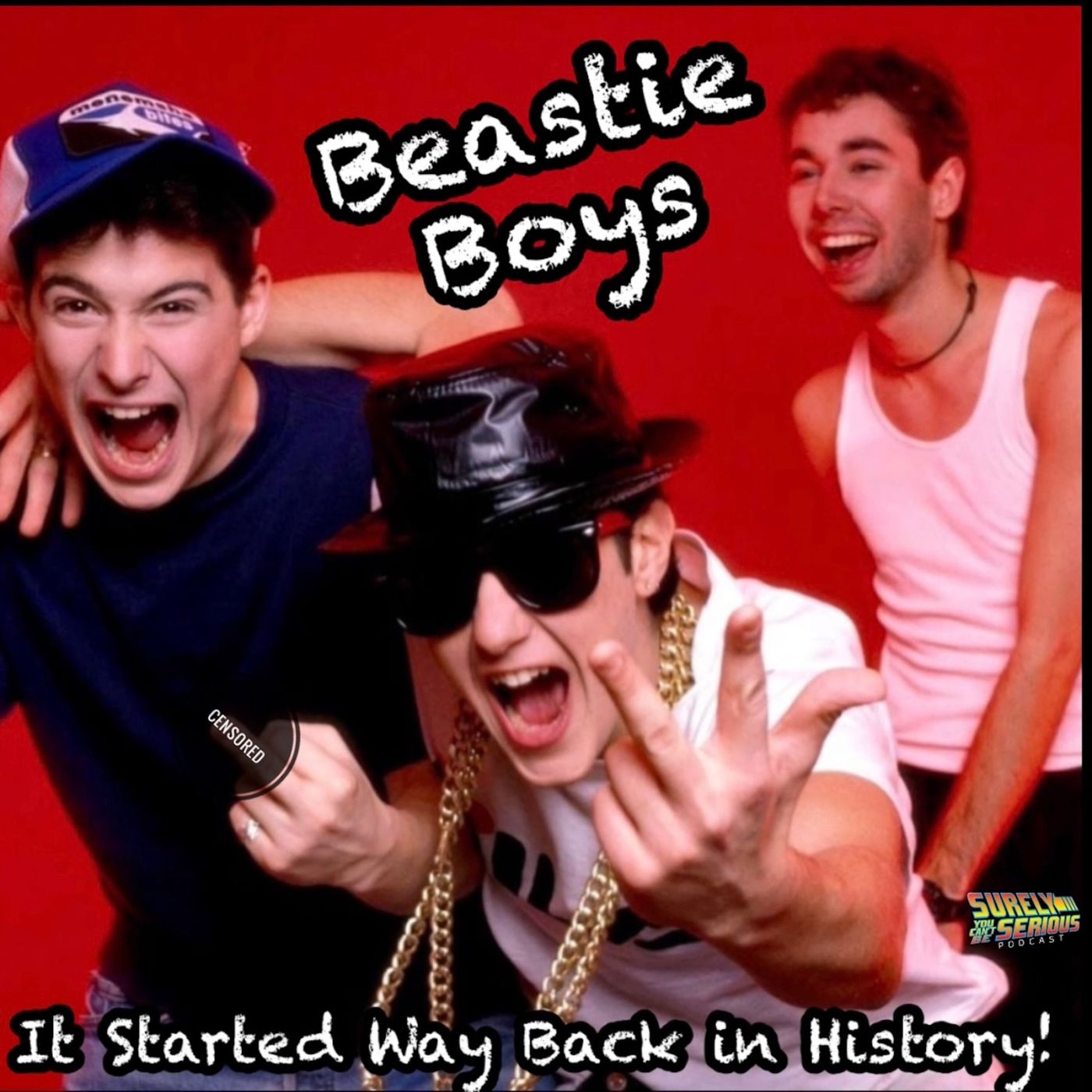
Beastie Boys Way Back in History (feat. DefDave)
In 1986, Hip-hop hit the mainstream. Two bands changed the face of music, Run DMC and the Beastie Boys. It started way back in history... but how? Join us and special guest, author David Wright, (aka DefDave) as we discuss the rise of the Beastie Boys from hardcore punk wannabes to hip-hop legends with the release of their debut album "Licensed to Ill" (35 years ago this week!)Over the next episodes we will discuss "Licenced to Ill" track by track and then the story of Run DMC and the release of their album "Raising Hell." How do these albums influence the History of Rap? Join us to find out ...and to determine which of these two amazing albums is the best.For books by David Wright, be sure to check out - galahadsdoom.com!Surely showcase guest: Cameron Eckert
2021-11-23
68 min
Transcript
Available Results
Generated results are saved to the knowledge database for reuse and search.
No generated results are available for this episode yet.
Extract Knowledge
Pick what you want extracted first. Model, scope, and chapter options appear after a template is selected.
Generated results for public episodes are saved to the knowledge database so they can be reused and searched later.
Transcript
<v Speaker 1>This is a podcast from Minute Media.
<v Speaker 2>Let's go doctor friend.
<v Speaker 1>Okay, I've I have prepared a special introduction just for
<v Speaker 1>this episode.
<v Speaker 2>Here goes well.
<v Speaker 3>He is a little story I like to tell about
<v Speaker 3>three both brothers. You know so well. It started today
<v Speaker 3>in history with Jay Coach. Start him off in the labs.
<v Speaker 1>Welcome everybody that surely you can't be serious podcast. We
<v Speaker 1>are diving deep into the world of hip hop eighties
<v Speaker 1>and we have with us a very special guest today,
<v Speaker 1>mister David Wright. How you doing, David?
<v Speaker 4>Very good? How are you doing?
<v Speaker 1>I'm doing great. David is a published author a award
<v Speaker 1>winning advertising video producer. He has got his third book
<v Speaker 1>coming out next year in March. You can get to
<v Speaker 1>the first two on his website.
<v Speaker 4>Tell us what that is, Dave galaheads doom dot com.
<v Speaker 5>My series is an epic medieval fantasy story along the
<v Speaker 5>lines of Lord of the Rings. A strong spiritual or
<v Speaker 5>a Christian theme to it.
<v Speaker 1>Awesome. That is awesome. So on that note Christian theme,
<v Speaker 1>I know that you had some concerns about what we're
<v Speaker 1>going to talk about today, because you are now deep
<v Speaker 1>into the church world and you're a little concerned about
<v Speaker 1>some of the topics and in going over this stuff,
<v Speaker 1>you know, Beastie boys have they've come around a bit.
<v Speaker 1>They were like, you know, hey, some of the stuff
<v Speaker 1>that we did when we were young was pretty stupid
<v Speaker 1>and pretty inappropriate and really just not okay. And they've
<v Speaker 1>owned it and they've said, but hey, you know, we
<v Speaker 1>grew up, right, and we all grew up. We all
<v Speaker 1>did stupid stuff when we were kids, and we kind
<v Speaker 1>of relished in that stupid stuff. That doesn't mean that
<v Speaker 1>we promote it. We wouldn't necessarily want our kids to
<v Speaker 1>do it, but it is kind of fun to go
<v Speaker 1>back and revisit that stuff a little bit.
<v Speaker 4>Exactly.
<v Speaker 2>That's right.
<v Speaker 6>I wouldn't not want any of my personal notes published.
<v Speaker 6>When I was in nineteen eighty six, right, yep.
<v Speaker 1>So we're covering today hip hop, which I got to
<v Speaker 1>say I'm familiar with. I was a big breakdancer circa SAD,
<v Speaker 1>so we're talking like eighty three, Yeah, I was. I
<v Speaker 1>was breakdancing to Thriller, so it had been eighty three
<v Speaker 1>eighty four. I caught breaking and breaking to Electric Boogoloo
<v Speaker 1>both the day that they came out. I had Grand
<v Speaker 1>Master Flash albums. I had the Sugar Hill Gang albums.
<v Speaker 1>I was I was, I had Houdini, I had run DMC.
<v Speaker 1>I had this stuff growing up.
<v Speaker 2>Tell us your name my break.
<v Speaker 1>Dancing name, dance. My breakdancing name was Doctor Fresh. Yeah,
<v Speaker 1>you can make this stuff up. I still use it.
<v Speaker 1>I still use it. Like if I go and do
<v Speaker 1>like trivia night at some restaurant or something, I put
<v Speaker 1>Doc Fresh in there as my trivia name.
<v Speaker 2>All right, Dave, you gotta tell us how you got deaf? Dave,
<v Speaker 2>what does that?
<v Speaker 4>Well?
<v Speaker 5>I can tell you that rap music in the eighties
<v Speaker 5>pretty much defined my persona in high school. I was
<v Speaker 5>a top forty kid, you know, in the first half
<v Speaker 5>of the eighties. So I was born in seventy one.
<v Speaker 5>I was about ten years old in eighty one. I
<v Speaker 5>started really discovering pop music. The earliest pop songs I
<v Speaker 5>remember is like Man Eater by Haul of Oates, It
<v Speaker 5>cuts like a knife and those kind of songs.
<v Speaker 4>I I am the thriller generation. I was in sixth grade.
<v Speaker 5>I was watching when the Motown twenty five special air
<v Speaker 5>the first time saw the Moonwalks on the head by
<v Speaker 5>the Moonwalk with the rest of America. My first concert
<v Speaker 5>ever I won a radio contest for free tickets to
<v Speaker 5>the Victory World Tour.
<v Speaker 4>To see that.
<v Speaker 2>Awesome.
<v Speaker 4>So I was a pop music kid.
<v Speaker 5>And then in the summer of nineteen eighty five, a
<v Speaker 5>friend of mine, one of my best friends in high school,
<v Speaker 5>lipped me the cassette to run DMC's King of Rock
<v Speaker 5>album in the summer of nineteen eighty five, and it
<v Speaker 5>did something to my brain, and I was the rap
<v Speaker 5>guy for the rest.
<v Speaker 4>Of the decade.
<v Speaker 5>I absolutely just became kind of nuts over run DMC
<v Speaker 5>and the BC Boys and Ello, Cool J and everybody
<v Speaker 5>that came out of the rest of the decades. So
<v Speaker 5>you had Eric B and Rock Him and Cool Mo
<v Speaker 5>D and publicanem Me. I was just absorbed all that stuff.
<v Speaker 5>I quit listening to the radio. It was all about rap.
<v Speaker 5>My name my name to this day, deaf Dave. That's
<v Speaker 5>my Twitter handle, deaf Dave. It comes straight from deaf jam.
<v Speaker 4>I mean it.
<v Speaker 5>All the autographs in my high school yearbook half of
<v Speaker 5>them say deaf Day.
<v Speaker 4>They don't evena have my real name on it.
<v Speaker 5>So according to legend, okay, according to legend, the way
<v Speaker 5>I got the.
<v Speaker 4>Name deaf Dave was that the the Holly Hills.
<v Speaker 5>Crew was sitting around a circle freestyling before home room,
<v Speaker 5>and I would jump up in and bust some rhymes,
<v Speaker 5>and I was so good that DJ Zeus declared me
<v Speaker 5>an official b boy and gave me the name Deaf Dave.
<v Speaker 4>According to a legend who.
<v Speaker 1>So Zeus handed him his name from Mount Olympus.
<v Speaker 5>So that's the story I went with. In reality, in
<v Speaker 5>the summer of eighty seven, I was going bowling with
<v Speaker 5>a couple of white friends and we needed to come
<v Speaker 5>up with the names for the scoring computer, and so
<v Speaker 5>we all came up with funny names, and I gave
<v Speaker 5>myself the name Deaf Dave in the scoring computer there
<v Speaker 5>the bowling alley.
<v Speaker 4>But the friends that I was with liked it. They
<v Speaker 4>repeated it.
<v Speaker 5>It stuck, it caught on, and I was already had
<v Speaker 5>the reputation as the rap guy, so that became my legacy.
<v Speaker 5>That's how people in high school still call me that,
<v Speaker 5>and I just embraced it.
<v Speaker 4>It's kind of my online name too.
<v Speaker 6>So you weren't handed a flaming pair of Adidas from
<v Speaker 6>Mount Olympus.
<v Speaker 4>Or anything, No afraid not.
<v Speaker 1>I'm still just kind of reveling in the fact that
<v Speaker 1>somewhere out there, somebody's got a yearbook that says death
<v Speaker 1>Dave signed your crack right in the crap. So we
<v Speaker 1>are here today to talk about two major albums that
<v Speaker 1>changed the face of music in the mid eighties.
<v Speaker 6>One Wait, Wait, wait, wait, change the face of music.
<v Speaker 1>Changed the face of music. Yes, sir, I think you're right.
<v Speaker 2>I think you're right.
<v Speaker 1>Keep going. So we are going to be talking about
<v Speaker 1>Run DMC raising hell, and we're going to be talking
<v Speaker 1>about Beastie Boys.
<v Speaker 2>Still there you go.
<v Speaker 1>So are you guys ready to jump in?
<v Speaker 6>Hey, I'm just along for the ride. I mean you,
<v Speaker 6>you guys are the experts. I took a rite turn
<v Speaker 6>into hair metals.
<v Speaker 4>So I'm sitting here.
<v Speaker 5>I'm in my fresh flight threads with my big Folkswagon
<v Speaker 5>medallion around my neck. Yes, meeting Colonel Sanders, drinking heinekebrew.
<v Speaker 4>I'm ready. I'm ready to dig into me like Ada.
<v Speaker 1>All right, I'll toast you with my brass monkey and
<v Speaker 1>we'll jump in. Okay. So the story that we're about
<v Speaker 1>to tell started way back in history in the late
<v Speaker 1>seventies Earlydies with three guys named Adam Horwitz, Mike Diamond,
<v Speaker 1>and Adam yack, Dave, give us what you got, man.
<v Speaker 4>Well, first of all, I'm gonna throw you for a loop.
<v Speaker 5>I'm gonna take this story all the way back to
<v Speaker 5>eighteen ninety because, as everybody knows, eighteen ninety was the
<v Speaker 5>year that Margaret Numberg was born. Margaret Numberg was a psychologist,
<v Speaker 5>an educator, an artist, and had learned some theories about
<v Speaker 5>child education over in Italy brought it back to America
<v Speaker 5>in nineteen fourteen, she opened the Walden School in Manhattan.
<v Speaker 4>Okay, so this is.
<v Speaker 5>The very first the progressive education model schools in America,
<v Speaker 5>which is basically, let the kids decide what they want
<v Speaker 5>to do, don't give them homework, don't give them rules,
<v Speaker 5>let them decide what they're interested in.
<v Speaker 4>Kids discovering their own way.
<v Speaker 5>But it appealed to the upper class and the well
<v Speaker 5>to do in Manhattan society. Forward that to the nineteen seventies.
<v Speaker 5>There's a kid going to school there named Jeremy Chattan.
<v Speaker 5>Now he had an older brother, and that older brother
<v Speaker 5>had a friend, and that friend had a younger brother.
<v Speaker 4>His name was Michael Diamond.
<v Speaker 5>And so Jeremy Chautan and Michael Diamond just kind of
<v Speaker 5>by default kind of became friends because they were around
<v Speaker 5>each other because.
<v Speaker 4>Their brothers were buddies.
<v Speaker 1>Yep. Yeah.
<v Speaker 5>Michael Diamond was somebody whose father was an art dealer
<v Speaker 5>and they put him in the Walden School and they
<v Speaker 5>were going to school together. Kind of separate from that,
<v Speaker 5>Jeremy was also friends with another Walden School classmate named
<v Speaker 5>John Barry. Now John Barry played guitar and Michael Diamond
<v Speaker 5>was starting to learn how to play drums.
<v Speaker 4>They were junior high. They were like seventh and eighth grade.
<v Speaker 1>Yeah, yeah, yeah.
<v Speaker 4>He said, I need to.
<v Speaker 5>Introduce my two buddies to each other. They don't know
<v Speaker 5>each other yet. One plays guitar, one plays drums. So
<v Speaker 5>it's like John, this is Mike, Mike this is John,
<v Speaker 5>and they started playing a little bit. So the earliest
<v Speaker 5>formation of the Beastie Boys began around nineteen seventy eight
<v Speaker 5>with John Barry and Michael Diamond playing together, and Jeremy
<v Speaker 5>Chataian was the one. Chatan was the one who got
<v Speaker 5>them together.
<v Speaker 2>I heard that they were introduced at a Joe Jackson concert.
<v Speaker 1>Yes, because that's the influence for the Beasti Boys is
<v Speaker 1>Joe Jackson.
<v Speaker 2>Joe Jackson, right, stepping out right.
<v Speaker 6>So Mike D and John Berry are at a Joe
<v Speaker 6>Jackson concert. This is the first time they've met, and
<v Speaker 6>John Barry is acting like a wild man, like he's
<v Speaker 6>going crazy, barely keeping his seat, and Mike D is like,
<v Speaker 6>who is this guy?
<v Speaker 2>This guy's crazy? This guy. I don't like this guy
<v Speaker 2>at all, Like this guy is not for me. But
<v Speaker 2>then they found out that they both liked punk music.
<v Speaker 1>Yeah, they both liked the clash.
<v Speaker 2>And so they kind of bonded over that.
<v Speaker 5>So one thing that was true about the late seventies
<v Speaker 5>in the early eighties New York club scene was there
<v Speaker 5>was a diversity in the music. Like if you went
<v Speaker 5>to a hardcore punk club, you were likely to hear
<v Speaker 5>soul or funk or even hip hop. And you go
<v Speaker 5>to any other dance club, they're gonna include punk in
<v Speaker 5>their playlist too. So they were exposed to a lot
<v Speaker 5>of different kinds of music. So it's not weird for
<v Speaker 5>me to hear that these two punk rockers met at
<v Speaker 5>a Joe Jackson concert. In nineteen seventy nine, there was
<v Speaker 5>a man by the name of Dave Parsons who lived
<v Speaker 5>in Boca Raton, Florida, and he started a fanzine for
<v Speaker 5>punk music.
<v Speaker 4>Called The Mouth of the Rat.
<v Speaker 5>During this time, he received a fan letter from a
<v Speaker 5>musician in New York in the punk scene name was
<v Speaker 5>Kate Shellenbach. Well, he moved to New York City in
<v Speaker 5>nineteen seventy nine, opened up his own record store, the
<v Speaker 5>Rat Cage or Rat Cage Records, and within three days
<v Speaker 5>of living in New York he met both Kate Shellenbach
<v Speaker 5>and John Barry at a club, and Kate Shellenback was
<v Speaker 5>someone who was bouncing around different bands playing drums.
<v Speaker 4>Mike and John.
<v Speaker 5>Are in a band called Band b E N and
<v Speaker 5>Kate Shellenback is in a band called bag Ladies.
<v Speaker 4>And it was at they were.
<v Speaker 5>All in one venue at the same spot one night,
<v Speaker 5>and they all kind of met each other, and the
<v Speaker 5>three of them decided they wanted to start a band.
<v Speaker 1>I think that they had known each other like at
<v Speaker 1>a younger age, but recognized each other and kind of
<v Speaker 1>renewed their friendship at that point.
<v Speaker 5>So they had a drummer, Mike already, but then Kate
<v Speaker 5>comes along as a drummer, so she becomes the percussionist
<v Speaker 5>and Mike remains a drummer.
<v Speaker 4>John is a guitarist.
<v Speaker 5>So Jeremy Chattan, the common friend who got them all
<v Speaker 5>together in the first place, decides he'll play bass. And
<v Speaker 5>so in the early months of nineteen eighty one, the
<v Speaker 5>very beginning of eighty one, they form a band and
<v Speaker 5>call themselves the Young Aborigines.
<v Speaker 1>There we go, yep.
<v Speaker 5>But eventually Mike Diamond took over as the lead singer
<v Speaker 5>and Kate became the drummer, and they played a grand
<v Speaker 5>total of two gigs in their entire existence, and both
<v Speaker 5>of them were on the same day in June of
<v Speaker 5>nineteenth eighty one.
<v Speaker 6>And the world famous song that the Young Aborigines came
<v Speaker 6>up with, right, This song was recorded on.
<v Speaker 2>June nineteenth, nineteen eighty one. The song is called Fosshole.
<v Speaker 6>You know that was on a regular rotation on my
<v Speaker 6>pop forty.
<v Speaker 5>Head as I understand that the entire the entirety of
<v Speaker 5>the lyrics of that song was Mike Diamond repeating the
<v Speaker 5>title over and over again at the top.
<v Speaker 1>Of his lungs.
<v Speaker 6>Sounds about right, yeah, yeah, some deep lyrics. Yeah, I mean,
<v Speaker 6>but we're talking.
<v Speaker 2>They're teenagers at this point.
<v Speaker 4>Oh yeah, they're early high school.
<v Speaker 5>Yes, yes, And it was during these months in eighty
<v Speaker 5>one leading up to that Fateful night June nineteenth, of
<v Speaker 5>the apex of the Young Aborigines career. That I do
<v Speaker 5>know that Michael Diamond did meet Adam Yawk at a
<v Speaker 5>Bad Brains performance, and they had kind of noticed each other,
<v Speaker 5>but they weren't saying anything to each other because the
<v Speaker 5>tough guys don't do that, right, and they decided that
<v Speaker 5>they were They were just gonna not like each other
<v Speaker 5>for a while, but eventually they found out that they
<v Speaker 5>were into the same stuff, of course. And after the
<v Speaker 5>Young Aborigines performed their two gigs on the same night,
<v Speaker 5>Jeremy Chattan had to leave for the summer, and when
<v Speaker 5>he left, Adam stepped in. Adam Yawk stepped in and
<v Speaker 5>became the new bassist. And at that point John Barry
<v Speaker 5>suggested they changed their name to the Beastie Boys.
<v Speaker 1>Boys Entering Anarchistic States towards Inner Excellence Boys.
<v Speaker 5>Well, and that's according to their legend. I think that
<v Speaker 5>came a few years later.
<v Speaker 2>I think you're right, Yeah, that was afterwards.
<v Speaker 1>That's a reverse antegram with thing.
<v Speaker 4>That was John Barry's idea.
<v Speaker 5>He came up with the name Beastie Boys, and their
<v Speaker 5>very first gig was on August fifth of eighty one
<v Speaker 5>at Adam Yawk's seventeenth birthday party at John Barry's Lost
<v Speaker 5>They just had a few friends over. It was not
<v Speaker 5>a paying gig, but they all got up on stage
<v Speaker 5>and the Beastie Boys performed for the first time.
<v Speaker 6>So that was Adam Yak's seventeenth birthday party. And I
<v Speaker 6>think he was a couple of years older than the
<v Speaker 6>other guys, the other people in the band, and so
<v Speaker 6>Mike Diamonds said that that was the first time he
<v Speaker 6>had ever been drunk, exactly right. Yeah, we've got some
<v Speaker 6>common interests and we've got a lot of lack of
<v Speaker 6>parental control.
<v Speaker 1>Here.
<v Speaker 5>One quick thing about Adam Yack is when he was
<v Speaker 5>in high school, he took an aptitude test. They did
<v Speaker 5>a career aptitude test for all the kids. He took
<v Speaker 5>his and the only the thing that his aptitude tests
<v Speaker 5>concluded was that he should never go into anything related
<v Speaker 5>to music.
<v Speaker 2>That's crazy.
<v Speaker 1>That's perfect.
<v Speaker 5>So after this night at first his birthday party at
<v Speaker 5>John Barry's Loft, they do get a paying gig opening
<v Speaker 5>for another band in November of eighty one, and then
<v Speaker 5>by December eleventh, they're opening for Bad Brains, which is
<v Speaker 5>a band that they There's a big name in the
<v Speaker 5>punk scene and they were big fans of it, so
<v Speaker 5>they were excited to play for Bad Brains. I don't
<v Speaker 5>know what happened that night, but whatever it was, they
<v Speaker 5>decided they were quitting. They decided it wasn't fun anymore.
<v Speaker 5>And the BC Boys broke up in December of nineteen
<v Speaker 5>eighty one.
<v Speaker 4>Wow after yes, absolutely, they were they were done.
<v Speaker 5>You know this is no one's got dreams of being
<v Speaker 5>rich and famous. It's just casual band. You're in and
<v Speaker 5>out of bands all the time. This one was over.
<v Speaker 5>But then Dave Parsons, the owner of rat Caage Records,
<v Speaker 5>had been at the party. He had told them at
<v Speaker 5>the time that he was thinking about launching his own
<v Speaker 5>recordly and so in December he came up to them
<v Speaker 5>and said, I'm ready to record with you guys. Why
<v Speaker 5>don't we put some of your material and record it.
<v Speaker 5>So the band had already broken up and they decided
<v Speaker 5>to reunite just to record at Dave Parson's new studio. Well,
<v Speaker 5>the studio was owed a lot of back rent and
<v Speaker 5>the landlord was threatening to take all their equipment in
<v Speaker 5>return for back pay and kick them out. And so
<v Speaker 5>they had to hurry up. They had two days to
<v Speaker 5>record only at night. They had to sneak in. They
<v Speaker 5>had two days to do an entire EP. They recorded
<v Speaker 5>an EP called pollywog Stu. Now, the way punk music
<v Speaker 5>was at the time is everything is very, very brief.
<v Speaker 5>These songs are less than two minutes long, I think,
<v Speaker 5>most of them. But they got in. They recorded with
<v Speaker 5>John Berry in the lineup. They did a hardcore punk
<v Speaker 5>EP called polywog Stu. But then they lost the equipment,
<v Speaker 5>they lost the studio. There was a guy there working
<v Speaker 5>as an engineering Scott Jarvis, who snuck away with a
<v Speaker 5>tape machine and he was able to mix what they
<v Speaker 5>had cut at home in his bedroom.
<v Speaker 4>And is only because.
<v Speaker 5>Of that guy that they were able to get this
<v Speaker 5>EP finished and released and get it out there.
<v Speaker 1>So what were the songs that were on pollywog Stiff?
<v Speaker 4>BC Revolution was one that was on there, uh huh.
<v Speaker 5>And also they're probably their most famous one because they
<v Speaker 5>kept it in their set for a long time was
<v Speaker 5>egg Raid on Mojo.
<v Speaker 1>Right, So egg Grade on Mojo was about a bouncer
<v Speaker 1>at one of the clubs.
<v Speaker 4>I can't understand a thing they say.
<v Speaker 1>So there was there was a bouncer at one of
<v Speaker 1>the clubs named Mojo, and he would never let them
<v Speaker 1>come into the club because they were kids and they
<v Speaker 1>were able to sneak into other places, but not the
<v Speaker 1>place they wanted to go. And so I don't think
<v Speaker 1>it ever happened. I think it was just a song
<v Speaker 1>about their dreams of getting a bunch of eggs and
<v Speaker 1>pelting Mojo with the eggs, and so that's that's what
<v Speaker 1>the egg raid on Mojo is all about.
<v Speaker 5>So after they recorded this and before it was released,
<v Speaker 5>they broke up again because they were already done. So
<v Speaker 5>they got together to do this recording and they were done.
<v Speaker 5>But what happened was there was somebody in the club
<v Speaker 5>scene that made the trip to LA and took a
<v Speaker 5>selection of songs from the New York scene and had
<v Speaker 5>them played on the radio in Los Angeles, and one
<v Speaker 5>of the songs from Polly wog Stew was performed in California,
<v Speaker 5>and so interest in the Beas Boys began to spark
<v Speaker 5>and began to grow, even though they were technically no
<v Speaker 5>longer together. Apparently from what I've read. Because they started
<v Speaker 5>to get interest, John Barry decided to quit the group.
<v Speaker 5>He didn't want it to get too serious. I guess,
<v Speaker 5>I don't know. He didn't maybe it was coming too professional.
<v Speaker 4>I don't know.
<v Speaker 1>He had some I think he had some substance abuse
<v Speaker 1>issues that he was dealing with as well. You know,
<v Speaker 1>a little bit of a drinker. I think there was
<v Speaker 1>probably some attitude issue as well.
<v Speaker 6>But yeah, alcohol plus punk rocker Eagles bad attitude tough
<v Speaker 6>to deal with.
<v Speaker 1>So they need a guitarist.
<v Speaker 5>Now, what do you know about another hardcore punk band
<v Speaker 5>called The Young and the Useless.
<v Speaker 1>That band had a guy in it named Adam Horowitz. Yep.
<v Speaker 5>When John Barry quit the Beastie Boys, it was only
<v Speaker 5>natural for Adam Horowitz to kind of step over and
<v Speaker 5>take over as the guitarist for the Beastie Boys.
<v Speaker 6>Dave I was telling thee before we started this, you know,
<v Speaker 6>I was like, I don't really think I'm a hip
<v Speaker 6>hop guy very much. But what I found out was
<v Speaker 6>I'm really not a hardcore punk guy.
<v Speaker 2>Yes, that is not my style.
<v Speaker 4>Very loud.
<v Speaker 5>The Young and the Useless did record their own EP,
<v Speaker 5>also on rat Cage Records. It was called real men
<v Speaker 5>don't floss, and it is just as much of a
<v Speaker 5>sonic assault as polywogs do. But anyway, by the time
<v Speaker 5>that was released, Adam Horowitz was with the Beastie Boys.
<v Speaker 5>I did find out a couple of interesting things about
<v Speaker 5>The Young and the Useless bandmates, their other lead singer,
<v Speaker 5>Dave Skilken.
<v Speaker 4>He died of a drug overdose in the early nine
<v Speaker 4>He was.
<v Speaker 1>A really close friend. When they first met him, they
<v Speaker 1>noticed him and they're like, here's this kid. You know,
<v Speaker 1>it's the middle of the school day and he's obviously
<v Speaker 1>skipping class and walking around with a synthesizer in his
<v Speaker 1>hand as like a mohawk carecut, and they're like, this
<v Speaker 1>kid looks cool. And they meet him. He's in sixth grade,
<v Speaker 1>eleven years old. They're like fifteen and he's eleven, and
<v Speaker 1>they're like, this dude's cool. We need to hang out
<v Speaker 1>with him. So yeah, Dave Skilkin was an interesting guy.
<v Speaker 1>I believe he's in the Fight for You rite video
<v Speaker 1>if I remember right.
<v Speaker 5>The other two guys in The Young and the Useless
<v Speaker 5>Arthur Africano. He would go on to be a cameraman
<v Speaker 5>working in Hollywood. He's worked camera for shows like Picket
<v Speaker 5>Fences and The Practice. So he went on and had
<v Speaker 5>a pretty solid career in television. He also shot a
<v Speaker 5>few of the beast Boys videos, such as Intergalactic in
<v Speaker 5>the nineties, and there was yet another Adam, Adam trez
<v Speaker 5>or Trezi, and he would go on to be an
<v Speaker 5>actor and he performed in thirty Rock and Law and
<v Speaker 5>Order and Sopranos and things like that. So the Young
<v Speaker 5>and the Useless they ended up being kind of significant,
<v Speaker 5>and Dave Parsons says they were better than the Beastie Boys,
<v Speaker 5>and in the world of hardcore punk, they were they
<v Speaker 5>had the potential to be huge, but it was a
<v Speaker 5>it was a case a bad time because by the
<v Speaker 5>time their EP came out and there was interest in them,
<v Speaker 5>they were kind of already losing their direction because Adam
<v Speaker 5>Horowitz was hanging out with the Beastie Boys.
<v Speaker 6>Okay, so about this time they recorded a song called
<v Speaker 6>Cookie Puss.
<v Speaker 1>So where does that come from?
<v Speaker 2>It comes from a ice cream commercial.
<v Speaker 1>Like they make an ice cream that's called the cookie Puss.
<v Speaker 2>Yeah, So like it's like a it's like an ice
<v Speaker 2>cream cake. So I watched this.
<v Speaker 6>Have you seen the commercials for this So Carnell ice
<v Speaker 6>Cream had a like an ice cream cake is really
<v Speaker 6>weird looking, so like the nose was like a laid
<v Speaker 6>down ice cream cone and it had a high pitched voice.
<v Speaker 2>It was like high, I'm cookie Buss and uhait, how
<v Speaker 2>did it go? Cookie Puss?
<v Speaker 6>And on on Saint Patrick's Day they would have oh,
<v Speaker 6>Cookie Puss or Cookie Opus COOKI.
<v Speaker 2>Opus out.
<v Speaker 4>Body get out.
<v Speaker 6>Adam Horovitz thought it would be hilarious to call the
<v Speaker 6>Carnival ice Cream and asked to speak with Cookie place
<v Speaker 6>and they recorded this prank call and then they just
<v Speaker 6>put it down on.
<v Speaker 2>A beat and it was just kind of this goofy
<v Speaker 2>song man.
<v Speaker 1>Cookie Puss there, Cookie Puss, I want to speak to
<v Speaker 1>Cookie quiss Man nobody here.
<v Speaker 6>But but it became popular.
<v Speaker 1>Yeah, they started playing it at clubs and then they
<v Speaker 1>go to they go to see a friend who's working
<v Speaker 1>at a studio and they find out that there's a
<v Speaker 1>talk show going on upstairs. It was a lesson on
<v Speaker 1>how to properly scratch like it had Yes, it had
<v Speaker 1>Africa Bambada and DJ Jazzy Jay I think was the
<v Speaker 1>other guy on there, and they were teaching these little
<v Speaker 1>you know white suburbanites how to properly scratch their records.
<v Speaker 1>And then all of a sudden, like there's a question
<v Speaker 1>from the audience and the host he goes back there
<v Speaker 1>and then Adam who it stands up and he's like, hey, yeah,
<v Speaker 1>have you heard this song called cookie Puss? And and
<v Speaker 1>Africa Bombarda was like, yeah, yeah, I've heard it.
<v Speaker 2>Yeah, I heard song, got a funk, I like it.
<v Speaker 7>Yeah, I was just wondering.
<v Speaker 4>There's a song I really like called cookie Puss by
<v Speaker 4>the Beastie Boys. I don't you ever heard of it?
<v Speaker 6>Yes, a Cookie Puss.
<v Speaker 7>I've gotten the record through the rock pool. It's tough.
<v Speaker 4>Yeah you like that?
<v Speaker 1>Why do you like that one?
<v Speaker 4>It's just a really funny song I heard on the
<v Speaker 4>radio scratching and work on it like that.
<v Speaker 7>It has a little bit scratching on it and is funky.
<v Speaker 1>And so now they're on like national television and the
<v Speaker 1>talk show and they've announced their album and it was
<v Speaker 1>all just them being goofy dumb kids.
<v Speaker 2>Brilliant marketing right there.
<v Speaker 5>Yeah, Well, what was interesting is that they were still
<v Speaker 5>a punk band. But Cookie Puss is not a punk
<v Speaker 5>track in right, It's got hip hop beats, and it's
<v Speaker 5>got hip hop effects, you know, scratching and things like
<v Speaker 5>that on it. You can't say they're really rapping on it,
<v Speaker 5>but it's definitely a hip hop arrangement. And it was
<v Speaker 5>the first time they had introduced anything like that to
<v Speaker 5>what they were doing, and it did take off, and
<v Speaker 5>it did gain attention, and it gained attention among the
<v Speaker 5>hip hop community, and there are a lot.
<v Speaker 1>Of it's important it's important to note that at this time,
<v Speaker 1>like this is when sucka MCS comes out, right, this
<v Speaker 1>is when run DMC becomes you know whatever boombox is
<v Speaker 1>playing in New York City, and so at that point
<v Speaker 1>they become rap devotes. Like they were emulating and trying
<v Speaker 1>to imitate everything that run DMC was doing, and they
<v Speaker 1>ended up getting a they were going to be in
<v Speaker 1>the Battle of the Bands. They were they were in
<v Speaker 1>a Battle of the Bands at Studio fifty four. The
<v Speaker 1>Studio fifty four. Yeah, so they've got this, they've got there.
<v Speaker 1>They're like, Okay, we've got the Battle of the Bands.
<v Speaker 1>Cookie Pusses are song, but we just recorded it. I've
<v Speaker 1>never done it live. We've got to have a DJ
<v Speaker 1>to do a live show. And somebody's like, you know
<v Speaker 1>who you should talk to. You should talk to my buddy, Rick,
<v Speaker 1>who's an NYU student, Rick Rubin, Rick freaking Rue, Rick
<v Speaker 1>freaking Rubin, who at this point was just a kid
<v Speaker 1>in a kid in college. Yeah, a weird kid in college,
<v Speaker 1>but go ahead. Yeah.
<v Speaker 5>So Rick Rubin at the time that I met him,
<v Speaker 5>was the social director for the student union at NYU,
<v Speaker 5>which probably means he was just a professional partier.
<v Speaker 4>Is going to be my guest.
<v Speaker 6>Excuse me, I'm out of toilet paper. Can you help
<v Speaker 6>me on with that?
<v Speaker 1>So it's interesting because Rick Rubin he was going to
<v Speaker 1>NYU with the intention of going to law school. And
<v Speaker 1>I've got more on that later, but he was going
<v Speaker 1>with the intention to go to law school. But he said,
<v Speaker 1>I never scheduled a class before three pm because I
<v Speaker 1>knew I wouldn't be awake before then. Because he was
<v Speaker 1>spending every night going out to the clubs where like
<v Speaker 1>all of the rap music was playing, and he had noticed,
<v Speaker 1>you know, he'd get excited about these albums and then
<v Speaker 1>you'd get the album and he'd be like, this doesn't
<v Speaker 1>sound like the live show, this doesn't sound the way
<v Speaker 1>that the club sounds. I want that sound, and that
<v Speaker 1>was kind of the impetus for him to decide, Hey,
<v Speaker 1>I want to do some DJing and ultimately want to
<v Speaker 1>do some producing.
<v Speaker 5>Here's the thing about Rick Rubin. He started out in punk.
<v Speaker 5>He was a punk rocker.
<v Speaker 4>Yeah.
<v Speaker 1>He backed a couple of bands, right, yeah, when he.
<v Speaker 4>Was in high school. His first band was called The Pricks.
<v Speaker 4>The Pricks now The Pricks never.
<v Speaker 5>Actually did The Pricks never really made it out of
<v Speaker 5>Long Island, except they had a gig one night at
<v Speaker 5>CBGB's Have you heard about this? So at their performance,
<v Speaker 5>a fight breaks out in the audience and the cops
<v Speaker 5>are coming in and shutting the place down during the fight,
<v Speaker 5>So the cops come right in and shut it down.
<v Speaker 5>As it turns out, even though the fight was real,
<v Speaker 5>they had friends of theirs as plants in the crowd
<v Speaker 5>to kind of get things started.
<v Speaker 4>They were the provocateurs. They made the fight happened.
<v Speaker 5>And get this, the cop that busted in to shut
<v Speaker 5>them all down, he happened to be right on the scene.
<v Speaker 5>He bust in the door and shuts the whole performance down.
<v Speaker 5>That was Rick Rubens's dad in a in a costume.
<v Speaker 2>Wow, that's brilliant.
<v Speaker 1>So it's all just a marketing set up.
<v Speaker 5>Yes, it's a way to get some notoriety and some
<v Speaker 5>some publicity. When he goes on to NYU, he forms
<v Speaker 5>a band called Hose. Hose was a hardcore punk band.
<v Speaker 5>But then by eighty three, what Rick was personally finding
<v Speaker 5>was that the punk scene seemed to kind of be
<v Speaker 5>dying off. And what he had discovered was the hip
<v Speaker 5>hop scene and the rap scene. And his mind was blown.
<v Speaker 5>And he was going to all these clubs and hearing
<v Speaker 5>all this pure hip hop, you know, in its earliest stages.
<v Speaker 5>He was hearing the innovators. He was He's there at
<v Speaker 5>ground zero for the birth of this whole scene. But
<v Speaker 5>what he realized was that there was a lot of
<v Speaker 5>similarity between rap from this era and punk because they
<v Speaker 5>both shared.
<v Speaker 4>The same outlaw kind of attitude.
<v Speaker 5>They both shared a like a low fi, do it
<v Speaker 5>yourself type of ethic to it. And I mean, honestly,
<v Speaker 5>you didn't need a lot of technical musical talent with that.
<v Speaker 5>Musical talent was not a barrier of entry into either
<v Speaker 5>one of these als.
<v Speaker 1>To this day, Rick Rubin will say he's not a musician,
<v Speaker 1>and he's also not particularly good with mix a mixing board.
<v Speaker 1>It's it's just not what he does. His expertise is
<v Speaker 1>figuring out what's going to be good music, like what
<v Speaker 1>people are going to.
<v Speaker 6>Like, Dave, what you said that that really blew my
<v Speaker 6>mind because to me, hardcore punk and rap have nothing
<v Speaker 6>in common.
<v Speaker 2>But then when I.
<v Speaker 6>Started watching these videos and doing research for this podcast,
<v Speaker 6>they do have some commonalities, you know, for them to
<v Speaker 6>pivot from that to this and it not being that
<v Speaker 6>is kind of interesting to me.
<v Speaker 4>Yeah.
<v Speaker 5>So there was also what I said before about there
<v Speaker 5>was this diversity of selection of music being played in
<v Speaker 5>these clubs, so kids were getting exposed to all kinds
<v Speaker 5>of stuff. It wasn't strictly what you might think in
<v Speaker 5>terms of genre and category. And Africa Bambada has said
<v Speaker 5>that the punk rockers were the very first white audience
<v Speaker 5>to accept what he was doing except that rap sound.
<v Speaker 5>So there was already before the Beac Boys came along,
<v Speaker 5>there was already kind of an organic connection happening in
<v Speaker 5>the clubs between punk rockers and wrap.
<v Speaker 1>Okay, guys, before we go any further, let's take a
<v Speaker 1>quick break and we are going to do the Shirley Showcase.
<v Speaker 1>We have a special guest this time.
<v Speaker 6>Yeah, we've got my buddy, Cameron Eckert. He was my
<v Speaker 6>college roommate, one of my best friends in the entire world.
<v Speaker 6>He decided to weigh in on our usual Illusion one
<v Speaker 6>and two versus Metallica's Black album kind of that run
<v Speaker 6>of ninety one albums that we did this summer.
<v Speaker 2>And here's what Cameron had to say.
<v Speaker 7>Hello, surely you can't be serious podcast. Hey, this is
<v Speaker 7>Cameron from Vancouver, Canada. Such a fan of you guys
<v Speaker 7>and your show from day one. And yes, that maybe
<v Speaker 7>because I knew it was coming, being a very good
<v Speaker 7>friend of Jason Colbyn, one of my college roommates. But
<v Speaker 7>you know what, I've loved it from day one. You
<v Speaker 7>guys are great together. You can tell that you are
<v Speaker 7>friends first and podcast co host second. I'm very honored
<v Speaker 7>that Jason asked me to send in a comment, and
<v Speaker 7>as a music fan and a hard rock music fan
<v Speaker 7>at that, I definitely had to choose Metallica Black versus
<v Speaker 7>Guns N' Roses use your Illusion.
<v Speaker 1>One and two.
<v Speaker 7>I am a bigger fan of hard rock than most
<v Speaker 7>of her genres. I steer clear from, However, some of
<v Speaker 7>the softer groups like Poison and Warrant, and yes, Jason
<v Speaker 7>bon Jovi huge fan of both Metallica and Guns N' Roses,
<v Speaker 7>though tend to like Guns N' Roses a little bit better. However,
<v Speaker 7>in the case of Black versus User Illusion one and two,
<v Speaker 7>I have to agree with d on this one. All
<v Speaker 7>in all, I like the Black album just that bit
<v Speaker 7>better than either Use Your Illusion one or two. I would, however,
<v Speaker 7>agree with you guys that Use Your Illusion two is
<v Speaker 7>the better of those two albums. I'll tell you though.
<v Speaker 7>For me, it's a very close race between all three
<v Speaker 7>of them one, A, B and C really, but if
<v Speaker 7>I'm walking out the door, I'm definitely going to skew
<v Speaker 7>towards Metallica Black. I became a huge Metallica fan probably
<v Speaker 7>off this album, which I know maybe sacrilege to the
<v Speaker 7>harder core Metallica fans is that tend to like their
<v Speaker 7>earlier harder core work. But I just found this album
<v Speaker 7>to be great and it made me actually go back
<v Speaker 7>and become a fan of Metallica's earlier work. So I've
<v Speaker 7>really appreciated that about the Black album. I did find
<v Speaker 7>that this release from thirty year anniversary of it, with
<v Speaker 7>all the different artists doing their takes on It was
<v Speaker 7>very cool to listen to. Obviously some good stuff in
<v Speaker 7>there and some not so good, but it was just
<v Speaker 7>interesting to see what kind of influence that album had
<v Speaker 7>on this generation, you know. And I think Guns probably
<v Speaker 7>had a big influence too, but their work seemed to
<v Speaker 7>spread over Appetite through Use Your Illusion one in two
<v Speaker 7>a little bit more. I liked Appetite a bit better
<v Speaker 7>than these albums, no matter what Axel thinks of them,
<v Speaker 7>and I don't know, I just I think I would
<v Speaker 7>take Appetite over Black, but against Use Your Illusion one
<v Speaker 7>and two, I'm still gonna stick with with the Black album.
<v Speaker 7>I do find it amusing that in this case, and
<v Speaker 7>in most of you guys's final judgments, no matter the topic,
<v Speaker 7>I tend to agree more with d than with Jason.
<v Speaker 7>It's funny because on the same age as Jason, and
<v Speaker 7>we kind of, you know, went through the formative.
<v Speaker 1>College years together.
<v Speaker 7>But I think I've evolved my tastes maybe a little
<v Speaker 7>bit more than Jason over the years. He's stayed with
<v Speaker 7>the pop culture of the eighties and nineties, and I've
<v Speaker 7>kept going forward, which may be why it's a little
<v Speaker 7>bit different, so maybe makes some sense. Anyway, guys, I
<v Speaker 7>just wanted to weigh in on that and wanted to
<v Speaker 7>tell you to keep up the great work. I look
<v Speaker 7>forward to seeing what of their music, movies, and other
<v Speaker 7>topics you guys cover in the future.
<v Speaker 1>Take care. Well, what can I say? I mean, I
<v Speaker 1>don't know about you know, evolution in the musical taste area.
<v Speaker 1>But right is right and Black Album is just the
<v Speaker 1>better album. That's just the way it is.
<v Speaker 2>It's a facks you know facts, right right? Cam?
<v Speaker 6>Thank you very much. These head is now humongous. I
<v Speaker 6>can't even fit in the room. Thank you for taking
<v Speaker 6>the time to weigh in. We do love all three
<v Speaker 6>of these albums, and I think all three of us
<v Speaker 6>agree that your Allusion too is the better.
<v Speaker 2>Guns N' Roses album.
<v Speaker 6>However, I can't really fault you for loving Metallica and
<v Speaker 6>the Black Album. So Cameron, thank you so much, Bro.
<v Speaker 6>We appreciate you.
<v Speaker 1>Thanks Cameron.
<v Speaker 5>By the time eighty three rolls around, Rick is just
<v Speaker 5>like all In. He's forgotten about punk. He's still a
<v Speaker 5>classic rock guy. He loves AC DC, led Zeppelin, Aerosmith.
<v Speaker 5>He's a big fan of those guys. But he is
<v Speaker 5>obsessed with what's happening, the innovation and creativity. He's hearing
<v Speaker 5>in the hip hop clubs and he's learning how to
<v Speaker 5>be a DJ and scratching and programming drum machine and
<v Speaker 5>all that kind of stuff, and he's all about it. Well,
<v Speaker 5>he finds a kindred spirit in Adam Horovitz. So what
<v Speaker 5>happens is you were saying, we pick up the story.
<v Speaker 5>The BC Boys are.
<v Speaker 4>A punk band.
<v Speaker 5>They're playing punk sets, but now they are expected to
<v Speaker 5>play cookie Puss and to truly be able to do
<v Speaker 5>that justice on stage, they got to have a DJ.
<v Speaker 5>So they found Rick Rubin. They were introduced to him.
<v Speaker 5>He went by the name DJ Double R. He would
<v Speaker 5>come on at the end of their set to DJ
<v Speaker 5>for them so they can start incorporating a little hip
<v Speaker 5>hop into their shows.
<v Speaker 1>Yeah, the show would start with punk music and end
<v Speaker 1>with hip hop music basically, right, that's right.
<v Speaker 6>Rick Rubin got the job kind of like the way
<v Speaker 6>David Lee Ro got the lead singer in Van Halen.
<v Speaker 1>Except instead of having a PA, he had a bubble machine.
<v Speaker 1>He had the mix, he had the bubble machine.
<v Speaker 2>The bubbles, the bubble.
<v Speaker 1>Machine is what led them. And there he's like he's
<v Speaker 1>got this awesome setup and he's got a bubble machine
<v Speaker 1>and they're like, wait, a bubble machine. Yeah, we got
<v Speaker 1>to get the guy with the bubble machine. When they
<v Speaker 1>met him, when they walk into his dorm room, like
<v Speaker 1>this can't be the hip hop DJ guy because he's
<v Speaker 1>got the beard and his hair's all scraggly, and he's
<v Speaker 1>got like these leather long gloves, like black leather gloves,
<v Speaker 1>and like this dude's weird. But he ends up being
<v Speaker 1>like a big brother to him, and his music knowledge
<v Speaker 1>and his determination to succeed is infectious.
<v Speaker 6>David Lee roth Rick Rubin both get the job because
<v Speaker 6>they happen to have a piece of equipment that's needed
<v Speaker 6>to get the job done.
<v Speaker 1>So just just to touch on it, since I mentioned
<v Speaker 1>the battle of the band Studio fifty four, they lost.
<v Speaker 5>Well, what happened was Rick continued to hang out with them,
<v Speaker 5>He befriended them, probably closer to Adam Horvitz than the others,
<v Speaker 5>but they were all spending a lot of time at
<v Speaker 5>his dorm room, so they His dormy has been described
<v Speaker 5>as like a bomb site. It's as slovenly as you
<v Speaker 5>can imagine, and just pro wrestling posters on the wall,
<v Speaker 5>pizza boxes stacked up in the corner, and just crates
<v Speaker 5>and crates of music from all different types of categories.
<v Speaker 5>To the course of nineteen eighty three, he's talking to
<v Speaker 5>the BC boys about how they need to corporate, they
<v Speaker 5>need to do more hip hop.
<v Speaker 6>It makes sense for them to kind of go down
<v Speaker 6>that hip hop route because cookie busses having success. Yeah,
<v Speaker 6>I mean, you'd want to chase that type of success.
<v Speaker 1>It's not like the hardcore punk was their dream. They
<v Speaker 1>were doing this for fun. I mean they were trying
<v Speaker 1>to have a good time and make each other laugh
<v Speaker 1>and be silly. And so for him to go, hey,
<v Speaker 1>you guys should focus more on hip hop unless's on
<v Speaker 1>punk rock, I don't see. It's not surprising to me.
<v Speaker 1>They're like, okay, whatever that works.
<v Speaker 2>Sure that worked. Mean, let's keep trying to do that.
<v Speaker 1>Yeah, yeah, yeah.
<v Speaker 5>So the guys were I don't know where Kate was.
<v Speaker 5>She was still in the band. They were still doing
<v Speaker 5>punk shows. The guys were hanging out in Rick's dorm
<v Speaker 5>room a lot every day, just going through his craze,
<v Speaker 5>just hanging out having fun. But they're still gigging as
<v Speaker 5>the Beastie Boys, and Rick is further exploring the rap
<v Speaker 5>scene and he eventually befriends a club DJ named Jazzy J.
<v Speaker 5>Jazzy J was on the air in New York and
<v Speaker 5>he was a member of Africa Bambada's Zulu Nation, which
<v Speaker 5>is just a big organization of rappers and hip hoppers
<v Speaker 5>that are all about world peace really and really trying
<v Speaker 5>to use music in a positive way to detert to
<v Speaker 5>steer people away from violence and things like that, and
<v Speaker 5>using music to kind of build culture and cultural bridges.
<v Speaker 4>And he got to know Jazzy J. And Jazzy Jay.
<v Speaker 5>And Rick Rubin got together and they produced a trap
<v Speaker 5>and they decided they wanted to try to release this
<v Speaker 5>as a song. So they went about trying to find
<v Speaker 5>someone to rap over this track, and they couldn't find
<v Speaker 5>a rapper. It took them like two years from the
<v Speaker 5>time they decided to get together to put the song out.
<v Speaker 2>I'm sitting right next to a rapper. Why did it
<v Speaker 2>take them so long there to come?
<v Speaker 4>Man? Come, I'm just saying they only knew about Doctor
<v Speaker 4>Fresh back then.
<v Speaker 1>I was like seven years old.
<v Speaker 5>Yeah, Doctor very Fresh. But anyway, the first choice they
<v Speaker 5>had for a rapper they wanted. Tool mo d Now
<v Speaker 5>was somebody that I recognize as a solo artist from
<v Speaker 5>them from the second half of the eighties, but at
<v Speaker 5>this time he was a member of a very significant
<v Speaker 5>group called the Treacherous Three. And they couldn't get Deep
<v Speaker 5>and they couldn't get uh Special K, which was another
<v Speaker 5>member of the Treacher's Three. Their record label wouldn't let
<v Speaker 5>them do it, so they turned to Special K's older brother.
<v Speaker 1>Te La Rock.
<v Speaker 5>Teela Rock became their artist and he came in and
<v Speaker 5>recorded the rap over the track that Rick Rubin and
<v Speaker 5>Jesse j had produced. And at the end of the song,
<v Speaker 5>they need some background vocals just doing nonsense stuff in
<v Speaker 5>the background. Those background vocals belong to Adam Horowitz, Adam
<v Speaker 5>Yak and Michael Dinald.
<v Speaker 2>Nice freaking awesome nice.
<v Speaker 1>So the song that they came up with is called
<v Speaker 1>It's Yours and it's really good. I mean, Rick had
<v Speaker 1>hit upon that formula that he was looking for trying
<v Speaker 1>to get the club sound onto a record. And one
<v Speaker 1>of the people who heard this track It's Yours, was
<v Speaker 1>a manager named Russell Simmons, and he was managing for
<v Speaker 1>his brother's group. Among others. His brother's name is Joe Simmons,
<v Speaker 1>but we know him by a different name.
<v Speaker 4>I'm the King. Oh Ron j Run.
<v Speaker 2>Was also going to get into the picture here.
<v Speaker 1>I've got a good story on that one, okay.
<v Speaker 5>But at this time, Russell Simmons is one of the
<v Speaker 5>biggest names in the business as a as an artist manager.
<v Speaker 5>He not only managed run DMC, which was the biggest act,
<v Speaker 5>he also manages a lot of other acts including Kudini
<v Speaker 5>and Doctor Jekyl and Mister Hyde, Curtis Blow and a
<v Speaker 5>few others.
<v Speaker 1>At the time, Yeah, when he finds out that it's
<v Speaker 1>some white NYU kid who's produced, it's yours, and that
<v Speaker 1>white NYU kid is like, hey, I want to meet
<v Speaker 1>you and I want to talk to you. They get
<v Speaker 1>together for lunch and Adam and Mike and Adam are
<v Speaker 1>all there, like at a different table, just kind of
<v Speaker 1>watching eagerly about what's going on, and basically he talks
<v Speaker 1>Russell Simmons into starting a record label, and Russell Simmons
<v Speaker 1>is like, man, I'm busier than I can be with
<v Speaker 1>managing these groups. I don't want to have to start
<v Speaker 1>something new. And Rick Rubin says, you don't have to
<v Speaker 1>do anything but be my partner. He goes without you.
<v Speaker 1>I'm just an NYU college student. With you, I've got
<v Speaker 1>a name. I will do all the work. You just
<v Speaker 1>be my partner name. And so Russell Simmons agrees to it,
<v Speaker 1>and that's how we come to the formation of deaf
<v Speaker 1>Jam Records.
<v Speaker 2>Wow.
<v Speaker 5>Yes, So when It's Yours was released, it was released
<v Speaker 5>with the name deaf Jam on it, but deaf Jam
<v Speaker 5>didn't actually exist as a company at that point.
<v Speaker 4>It was just a name and a logo that Rick
<v Speaker 4>Ruben had come up with.
<v Speaker 5>It had been it was actually released through a small
<v Speaker 5>local independent label, but it was a name that he
<v Speaker 5>already had and it already used unofficially. And then in
<v Speaker 5>the summer of nineteen eighty four, you got it exactly right.
<v Speaker 5>So he and Russell Simmons sat down and Russell went
<v Speaker 5>to his dorm room, well stepped through the mess and
<v Speaker 5>listened to the beats he had programmed, and he's he
<v Speaker 5>was blown away and said these were all hits in
<v Speaker 5>the making, And so they formed the record label and
<v Speaker 5>they officially became deaf Jam Records in the summer of
<v Speaker 5>nineteen eighty four.
<v Speaker 1>So, as you mentioned, they were spending a whole lot
<v Speaker 1>of time with Rick, and as that happened, they were
<v Speaker 1>in a whole lot less time with Kate Schellenbach, who
<v Speaker 1>was their drummer, and kind of that influence is what
<v Speaker 1>led to her being asked to leave the band. And
<v Speaker 1>I think they still even today feel bad about this.
<v Speaker 1>Now it ends up being kind of okay because she
<v Speaker 1>ends up being a drummer for a group called Luscious
<v Speaker 1>Jackson who ends up doing shows with them. But at
<v Speaker 1>the time they were just like, hey, we're a you know,
<v Speaker 1>we're a guy's band and we are a hip hop
<v Speaker 1>now band, and so we don't really want to have
<v Speaker 1>a girl drummer, and so they they kick Kate out.
<v Speaker 1>Now before that happens. Before that happens, they get to
<v Speaker 1>go to Russell Simmons office and they're thinking, because he's
<v Speaker 1>the because he's the manager of these group, huge groups,
<v Speaker 1>they think it's going to be this big, showy office
<v Speaker 1>and it's like two rooms, you know, it's like two
<v Speaker 1>small rooms even together. But when they go in, there
<v Speaker 1>is Curtis blow In talking to Russell, and he's not
<v Speaker 1>just talking to Russell Simmons, he is trying to learn
<v Speaker 1>how to break dance. So's there's another group called Full
<v Speaker 1>Force that's there with them, and they're like all around
<v Speaker 1>him as he's trying to do like headspins and stuff.
<v Speaker 1>And the Beastie Boys are like, you know, they've they've
<v Speaker 1>met some of their idols. Now, Curtis Blow is sitting
<v Speaker 1>here and I told I told, I told Jason. On
<v Speaker 1>the way over here. I was like, man, Curtis Blow
<v Speaker 1>is one of those albums that I've played all the time.
<v Speaker 1>He's like, I don't, I'm not familiar with that. I'm like, dude,
<v Speaker 1>it's basketball is my favorite sport. I like they wave
<v Speaker 1>the dribble up and down the court, just like I'm
<v Speaker 1>the King of the microphone. With Doctor j and Moses Malone,
<v Speaker 1>I like slam dunks. They take me to the My
<v Speaker 1>favorite play is.
<v Speaker 4>The l e oup.
<v Speaker 1>I like to figure go. I like to give in
<v Speaker 1>and go. It's basketball with mister Curtis Blue.
<v Speaker 3>They used to play it all the time when my
<v Speaker 3>brother would come out and it's basketball games.
<v Speaker 1>In high school, it was I was deep into it.
<v Speaker 1>I remember those lyrics from hearing them when I was
<v Speaker 1>seven eight years old. Doctor Jy and Moses Malone wow, Yep, yep,
<v Speaker 1>And they were at the end of the song there's
<v Speaker 1>like talk going on and they're like talking about, you know,
<v Speaker 1>the new Young Upstarts. The new Young Upstarts is Michael
<v Speaker 1>Jordan's new.
<v Speaker 2>Young Upstarts, Michael Jordan. That is awesome.
<v Speaker 1>Yeah.
<v Speaker 5>I got to tell you about a guy named Todd
<v Speaker 5>who was living in Queens during nineteen eighty four. He
<v Speaker 5>was down in his mother's basement with a drum machine
<v Speaker 5>and a turntable, cutting demos and sending them out to
<v Speaker 5>anybody he could find, Okay, and he sent to everybody,
<v Speaker 5>including when he got a hold of a copy of
<v Speaker 5>Tila Rocks It's Yours. Rick Rubin had put the address
<v Speaker 5>the business address, which was.
<v Speaker 4>Just his dorm room record, right.
<v Speaker 5>And so Todd sent a demo, took that address and
<v Speaker 5>sent a demo to that record company.
<v Speaker 4>Right. It was just Rick's dorm room, It's all it was.
<v Speaker 5>And that demo tape got thrown in a box which
<v Speaker 5>was probably buried under a bunch of other boxes, and
<v Speaker 5>it just all stacked up. All this stuff was coming in.
<v Speaker 5>Demo tapes were coming in. After Tela Rock's record was
<v Speaker 5>out and Rick Rubin wasn't bothering with any of it.
<v Speaker 5>But the BAC boys were hanging out in his dorm room,
<v Speaker 5>just killing time every day they anything else to do.
<v Speaker 5>And Adam Horoviz is just kind of thumbing through these
<v Speaker 5>demos and he listened to a little bit and if
<v Speaker 5>you found something.
<v Speaker 4>He liked, he'd tell Rick about it.
<v Speaker 5>Well, he put this one on called I Need a
<v Speaker 5>Beat from a guy named Ladies Love Cool James, and
<v Speaker 5>it was James Todd Smith who had fit this in
<v Speaker 5>and he's like, Rick, you might want to listen to this,
<v Speaker 5>and they were blown away by it. They bring in
<v Speaker 5>Todd Smith. He goes by the name ellll cool j
<v Speaker 5>And they're like, you've got to meet Russ. We want
<v Speaker 5>to produce a record. They had just formed deaf Jam Records.
<v Speaker 5>They hadn't put out a record yet. They were looking
<v Speaker 5>for the artists. They were looking for the song to
<v Speaker 5>launch their label. He says, you got to meet Russ.
<v Speaker 5>You got to meet Russ. They go in, they meet Russ.
<v Speaker 5>The Llo cool Jay's meeting Russ Simmons for the first
<v Speaker 5>time and Rick Ruben plays the tape and Russell Simmons.
<v Speaker 4>Is like, I hate it. I don't like.
<v Speaker 5>Wow, so young Todd, he's all disappointed and he's walking
<v Speaker 5>out kind of sad, and Rick Ruben comes up to
<v Speaker 5>him and says, don't listen to a word. He says,
<v Speaker 5>we're gonna recut this and he's gonna love it. So
<v Speaker 5>they get back in the studio with Adam Horovitz programming
<v Speaker 5>the drum beats. They recut I Need a Beat beat
<v Speaker 5>with Jesse Jay on the remix.
<v Speaker 4>They play it for Russ. They play that one for
<v Speaker 4>Russell Simmons. He's blown away.
<v Speaker 5>He loves it, and that launches Loo Cool Jay's career,
<v Speaker 5>and it launches Deaf Jam as a label, and I
<v Speaker 5>Need to Beat becomes their very first single.
<v Speaker 4>It came out in nineteen eighty four.
<v Speaker 1>Fantastic Wow.
<v Speaker 2>That's a good story man.
<v Speaker 1>Yeah.
<v Speaker 5>And then from pollywog Stew they had a British Airways
<v Speaker 5>commercial had lifted one of their songs, BC Revolution and
<v Speaker 5>placed it in their commercial that went global and went international.
<v Speaker 5>They did it without permission, and the BC boys decided
<v Speaker 5>they didn't like somebody sampling their music without perm and
<v Speaker 5>so early on this is the this is the John
<v Speaker 5>Barry lineup, the punk lineup with polywog Stew. They sue
<v Speaker 5>and they collect forty thousand dollars. It was the first
<v Speaker 5>money the BC boys ever made was off of this situation,
<v Speaker 5>and it was enough to get them out of their
<v Speaker 5>parents' house and they all got a place together.
<v Speaker 6>Yeah, forty dollars adjusted for inflation today is about one
<v Speaker 6>hundred grand.
<v Speaker 1>It's not a bad it's not a bad. Take.
<v Speaker 4>Well, they'll fast forward to three years.
<v Speaker 5>In nineteen eighty four, they put out rock Hard, which
<v Speaker 5>really sounds like a Rick Ruben record, and it sounds
<v Speaker 5>like the Beastie Boys.
<v Speaker 4>The DP.
<v Speaker 5>Count of this.
<v Speaker 4>This is the sound we will come to note. It's
<v Speaker 4>the three male Beastie.
<v Speaker 5>Boys rapping over a hip hop drum beat but with
<v Speaker 5>heavy rock and roll samples, and it's all built around
<v Speaker 5>back in Black by ac DC, and I think significantly
<v Speaker 5>they refer to themselves as King AD, Rock, Might D
<v Speaker 5>and MCA in the song, which is probably the first
<v Speaker 5>time they do that, and they're truly kind of embracing.
<v Speaker 4>Hip hop at this point.
<v Speaker 5>Small problem they sampled somebody else's music without their permission.
<v Speaker 5>Ac DC is like, who are these guys?
<v Speaker 4>No? Stop it right now.
<v Speaker 5>So even though it was technically deaf Jam's second release.
<v Speaker 5>They immediately had to recall it and it was no
<v Speaker 5>longer available, and it was a collector's item in a
<v Speaker 5>bootleg for a long time. It's still not available on Spotify,
<v Speaker 5>I've noticed, but I do know that at least in
<v Speaker 5>Europe it was cleared for release legally. In two thousand
<v Speaker 5>and seven. Ac DC gave them permission and you can
<v Speaker 5>find the song on YouTube. And I just heard it
<v Speaker 5>recently for the first time, and it's actually really good.
<v Speaker 1>They found their voice. They don't sound like some other band.
<v Speaker 1>They know they weren't. They're not imitating somebody else. They
<v Speaker 1>have their own unique sound.
<v Speaker 6>And that's hey little thing though. Here's a little thing
<v Speaker 6>I just put together on that. So they steal back
<v Speaker 6>in Black from ACDC, they wrap over it whatever, they
<v Speaker 6>sample it without permission. It turns out okay because in
<v Speaker 6>nineteen eighty six, guess who's in the Fight for Your
<v Speaker 6>Right video? But Langa, well Langa, I forgot about that.
<v Speaker 1>That's right.
<v Speaker 2>He was in there, the producer of acdc's Back in Black.
<v Speaker 1>I think Flee was in there too, if I remember right.
<v Speaker 1>Fleell cool Ja and with the sword and the girl
<v Speaker 1>who was like later on MTV News was in there
<v Speaker 1>as the young blonde you're.
<v Speaker 2>Blowing my stuff for fight for your right.
<v Speaker 1>Sorry, well, we will come back to that when we
<v Speaker 1>do our track to track.
<v Speaker 2>Okay, when when's Madonna?
<v Speaker 1>Get in here?
<v Speaker 2>M Madonna.
<v Speaker 1>I got a good story on Madonna. Can I tell
<v Speaker 1>my Madonna's story now?
<v Speaker 4>Yeah? Just real quick.
<v Speaker 5>When eighty four ended, that's when Kate Sellenbach was out
<v Speaker 5>and they truly just became straight up hip hop group
<v Speaker 5>with Rick Rubin still is their DJ. And we get
<v Speaker 5>into eighty five and that's Madonna.
<v Speaker 2>So what you got so Madonna is what what you would?
<v Speaker 1>Go ahead?
<v Speaker 2>No, please please finish that.
<v Speaker 1>So what Madonna wanted?
<v Speaker 4>What?
<v Speaker 1>What what Madonna wanted was an opening act for her
<v Speaker 1>first tour, her first tour, and so her manager, Freddy
<v Speaker 1>Demand calls up Russell Simmons and says, hey, we want
<v Speaker 1>to get run DMC as the opening act for Madonna
<v Speaker 1>on her first turn. Now this is Madonna at her Madonna.
<v Speaker 1>She's blown up at this point, right, And so Russell
<v Speaker 1>Simmons is like, no problem. Run DMC plays for twenty
<v Speaker 1>thousand dollars per show, and Freddie Demand's like, no, have
<v Speaker 1>a nice day. Click and they're done. And then he's
<v Speaker 1>a few minutes later, Russell Simmons gets a call again.
<v Speaker 1>It's Freddy Deman again. He's like, okay, hey, wait, what
<v Speaker 1>about the Fat Boys? Could you get the Fat Boy?
<v Speaker 1>And Russell Simmons is like, ah, man, the Fat Boys
<v Speaker 1>are busy. Russell Simmons didn't actually manage the Fat Boys
<v Speaker 1>ever at all. Wow, And he goes, but I tell
<v Speaker 1>you what I can get you the Beastie Boys for
<v Speaker 1>five hundred dollars per show. And so Freddie Deman was like,
<v Speaker 1>sounds great, let's do that. And so that is how
<v Speaker 1>the Beastie Boys became the opening act for Madonna on
<v Speaker 1>her very first tour.
<v Speaker 6>That is also how Adam Horovitz got to make out
<v Speaker 6>with Madonna backstage in the bathroom.
<v Speaker 1>It's nuts.
<v Speaker 2>I was talking to you guys. I'm like, you know,
<v Speaker 2>that's not.
<v Speaker 6>Exactly an exclusive club, probably, but that's a club that
<v Speaker 6>I still wanted to join in nineteen eighty six.
<v Speaker 1>Oh sure, yeah, and she's I mean, she's a little
<v Speaker 1>bit older than him. I guess, well, and that would
<v Speaker 1>have been some fun times bringing the heat back then. Yeah,
<v Speaker 1>she was y, not that he wasn't an attractive guy,
<v Speaker 1>but row I am.
<v Speaker 5>This was her first tour, so it was promoting both
<v Speaker 5>her debut Madonna album as well as her Like a
<v Speaker 5>Virgin album, so she was at the top of the game.
<v Speaker 5>So one of the biggest names in pop music and
<v Speaker 5>the beast Boys are coming out to open and nobody's
<v Speaker 5>heard of these people. And they embraced And this was
<v Speaker 5>quite intentional. Rick Rubin gave them this instruction. He was
<v Speaker 5>a pro wrestling fan. He said, nobody there knows you.
<v Speaker 5>They're gonna hate your stuff. Just embrace it, own that
<v Speaker 5>and be the heel like in pro wrestling terms. You
<v Speaker 5>just go out there and be the be like a
<v Speaker 5>bad guy wrestler and just make them hate you.
<v Speaker 1>They were, and so they decided to be memorable by
<v Speaker 1>being rude wrestling style, and so they would literally go
<v Speaker 1>out when the show was over. They they were just like,
<v Speaker 1>you all can just burn this place down now because
<v Speaker 1>there's never going to be a better show than us,
<v Speaker 1>and fu you mother efforts. Which if you're thinking about,
<v Speaker 1>you know, attendees at a Beastie Boys concert, okay, but
<v Speaker 1>think about who was listening to Madonna back in nineteen
<v Speaker 1>eighty four eighty five. These are little like priesteen girls. Yeah,
<v Speaker 1>these are these are like the girls who are our
<v Speaker 1>wife now, back when they were you know, ten and eleven.
<v Speaker 1>So they're cussing out little girls.
<v Speaker 4>Yeah.
<v Speaker 5>They purposely set out to get people to hate them,
<v Speaker 5>and they did, and they said that every night, ninety
<v Speaker 5>five percent of the crowd absolutely hated them, but with
<v Speaker 5>the other five percent, they built a fan base, and
<v Speaker 5>Madonna thought it was great. I mean, they absolutely did
<v Speaker 5>not take themselves seriously. The record would be playing, they're
<v Speaker 5>supposed to be lip syncing, they would completely ignore that
<v Speaker 5>and just like basically slam dance on stage and just
<v Speaker 5>laugh at it all.
<v Speaker 4>And they just didn't take it seriously.
<v Speaker 5>And they're kind of on stage persona of being these rude,
<v Speaker 5>crude frat boys that just party hard and didn't care
<v Speaker 5>about anything. That really came together on this like a
<v Speaker 5>virgin tour, and.
<v Speaker 6>That rude, crude frat boy attitude is basically full force
<v Speaker 6>on Licensed Hill. That's what you get for twelve songs
<v Speaker 6>or whatever. And people did embrace that.
<v Speaker 2>They liked it, yeah, literally.
<v Speaker 5>But it absolutely took rap out of the New York
<v Speaker 5>club scene and it was putting it in front of
<v Speaker 5>the nation.
<v Speaker 4>This is people's first exposure.
<v Speaker 5>Maybe it was not the best foot forward for rap,
<v Speaker 5>but it was significant in terms of getting some national exposure.
<v Speaker 5>But then just a couple months later, in October of
<v Speaker 5>nineteen eighty five, there was a movie that came out. Now,
<v Speaker 5>this movie was shot in April of eighty five. It
<v Speaker 5>was produced and starred Rick Rubin. It was produced and
<v Speaker 5>featured a cameo from Russell Simmons.
<v Speaker 4>It was called Crush Group.
<v Speaker 5>Now, this is coming after nineteen eighty four where there
<v Speaker 5>had been several breakdance movies, and so there were some
<v Speaker 5>low budget film studios that were looking to continue to
<v Speaker 5>capitalize on the hip hop market for these low rent movies,
<v Speaker 5>and they decided instead of breakdance, they needed to do rap.
<v Speaker 5>There was no bigger name in rap in nineteen eighty four,
<v Speaker 5>and they were looking to do this than Russell Simmons,
<v Speaker 5>and they basically approached him about doing take a fictionalized
<v Speaker 5>version of his story, his biography, and putting it in
<v Speaker 5>a movie, and so that's what you get. Crush Groove
<v Speaker 5>is kind of a synonym for def Jam and it
<v Speaker 5>was the name of the record label inside this movie.
<v Speaker 4>And this movie is great. I love it. It's cheesy,
<v Speaker 4>it's terrible acting, and it's low budget.
<v Speaker 1>But Underwood, you got Blair Underwood as the Russell Simmons
<v Speaker 1>character was like Russell Walker or something. Isn't that right?
<v Speaker 4>Yeah?
<v Speaker 1>Much. Blair Underwood is a much handsomer man than Russell
<v Speaker 1>Simmons is I would have Russell. I would have Blair
<v Speaker 1>Underwood play me, even though it looks they like but
<v Speaker 1>Russell Simmons look at this. I mean, he wanted to
<v Speaker 1>make a movie, but what his objective was was make
<v Speaker 1>it a show piece for all of the bands that
<v Speaker 1>he managed. And so you've got just a slew of
<v Speaker 1>these mid eighties rap hip hop bands that are appearing
<v Speaker 1>throughout the movie.
<v Speaker 5>Run dmc, Curtis Blow and Sheila e Or kind of
<v Speaker 5>kind of drive the story. The Fat Boys were added
<v Speaker 5>without Russell's knowledge, was shot separately and cut into the
<v Speaker 5>movie separately, and if you'll notice, their scenes never advanced
<v Speaker 5>the plot. So he was really upset to find out
<v Speaker 5>the Fat Boys were in his movie.
<v Speaker 4>But they were a big name and it drove the
<v Speaker 4>box office.
<v Speaker 5>The Ello Coool j mex A cameo appearance the Beastie
<v Speaker 5>Boys make a cameo appearance, and they performed a new
<v Speaker 5>song that they recorded in nineteen eighty five called She's
<v Speaker 5>On It conclude what was interesting at this point, def
<v Speaker 5>Jam only had a couple of singles out that they
<v Speaker 5>had two successful singles, They had I Need to Beat
<v Speaker 5>and Rock Hard, which had to be pulled for legal reasons.
<v Speaker 5>They had put out several other smaller records that hadn't
<v Speaker 5>done anything. They had yet to put out an album.
<v Speaker 5>Deaf Jam had not even put out an album as
<v Speaker 5>a company yet, and there was already a movie in
<v Speaker 5>theaters that was giving their story.
<v Speaker 1>That's crazy, that's impressive.
<v Speaker 4>So what happens here right at this time?
<v Speaker 5>This is critical right here, after the success of I
<v Speaker 5>Need to Beat and Rock Hard, it's enough success to
<v Speaker 5>garner interest from major record like and they end up
<v Speaker 5>signing a deal with Columbia for a distribution deal.
<v Speaker 4>So Deaf Jam has Columbia Records distributing for.
<v Speaker 5>Them, So this is give them a huge infusion of cash.
<v Speaker 1>This is the story that I was alluding to earlier.
<v Speaker 1>So Rick Rubin was supposed to be going to law
<v Speaker 1>school after NYU, right, that's what his parents are expecting.
<v Speaker 1>And so the way that he broke the news to
<v Speaker 1>his parents that he wasn't going to go to law
<v Speaker 1>school was that he sent them a picture of the
<v Speaker 1>check that he got from Capitol Records. It was for
<v Speaker 1>six hundred thousand dollars.
<v Speaker 6>Well, I'm giving you six hundred thousand reasons why I'm
<v Speaker 6>not going to law school.
<v Speaker 5>Well, that money was enough to move deaf Jam out
<v Speaker 5>of his dorm room and move him too a three
<v Speaker 5>story building which Russell Simmons had Rush Management, which was
<v Speaker 5>his artist management business, on the first floor. Deaf Jam
<v Speaker 5>Records was on the second floor, and Rick Rubin moved
<v Speaker 5>into the third floor. So that Columbia money allowed them
<v Speaker 5>to do that. But what it did was it set
<v Speaker 5>the stage for nineteen eighty six, and nineteen eighty six
<v Speaker 5>is the year where it really all started coming together.
<v Speaker 6>Hit it four and three.
<v Speaker 2>And two and one.
<v Speaker 1>Okay, So obviously you know they lost Kate Schallenbach. They've
<v Speaker 1>got DJ double R Rick Rubin as their DJ. But
<v Speaker 1>at some point that changes because I know that Doctor
<v Speaker 1>Dre No, not that Doctor Dre, the other one from
<v Speaker 1>MTV raps, that Doctor Dre. He was their DJ for
<v Speaker 1>a while and he was their DJ for the first
<v Speaker 1>part of the Raisin Hell to him right, But then
<v Speaker 1>how did it move from Rick Rubin to Doctor Dre Well, I.
<v Speaker 4>Would say fate intervened.
<v Speaker 5>It was during the madonnatur in the summer of eighty five,
<v Speaker 5>where Reuben was still on the road with them, and
<v Speaker 5>it was a part of the act. History was about
<v Speaker 5>to go a different way. This was going to be
<v Speaker 5>a four piece act with the DJ Double R as
<v Speaker 5>a part of the Beastie Boys.
<v Speaker 4>But after a couple of shows.
<v Speaker 5>He came down with an ear infection and the doctor
<v Speaker 5>told him that he couldn't fly while he's recovering from
<v Speaker 5>this ear issue, and so he went back to New York.
<v Speaker 5>The rest of the band didn't really know what had
<v Speaker 5>happened to him, They didn't know why that he had
<v Speaker 5>bounced out, but they did get Doctor Dre to step
<v Speaker 5>in and fill in as the DJ. So Doctor Dre
<v Speaker 5>serves as the DJ for the rest of their takes
<v Speaker 5>over as their DJ for their gigs that point forward
<v Speaker 5>in the middle of the madonnataur H. But the reason
<v Speaker 5>this is fate intervening is that this now freed Rick
<v Speaker 5>Rubin up to stay at the studio and to work
<v Speaker 5>on production, and to work on beats and sounds, and
<v Speaker 5>to develop them, help them develop the musical material that
<v Speaker 5>would be used on.
<v Speaker 4>License to Deal.
<v Speaker 5>And I can tell you this, the run DMC Raising
<v Speaker 5>Hell Tour had already started without the Beastie.
<v Speaker 4>Boys on it.
<v Speaker 5>The reason I know is that I attended a show
<v Speaker 5>in May of nineteen eighty six. They came to my
<v Speaker 5>hometown of Columbus, Georgia, and I saw Houdini and Ello
<v Speaker 5>Cooljay open for Run DMC, and they were playing material
<v Speaker 5>from their brand new Raising Hell album that I had
<v Speaker 5>not heard yet, and it was blowing me away. And
<v Speaker 5>the BC Boys were not a part of that show.
<v Speaker 5>What's happening was they were still in the studio working
<v Speaker 5>on the album. They were still putting their material together
<v Speaker 5>and having conducting their sessions. And it would be a
<v Speaker 5>little bit later in the year, not too much later.
<v Speaker 5>I didn't miss them by much apparently, but they would
<v Speaker 5>join the Raising Hell Tour during nineteen eighty six as
<v Speaker 5>an opening act, but their set consisted of only three songs.
<v Speaker 5>They sang Slow and Low, She's on It, and hold
<v Speaker 5>It Now, Hit It, and that's all they had every
<v Speaker 5>night they went out and did those three songs, and
<v Speaker 5>they were done.
<v Speaker 4>A couple of stories about.
<v Speaker 5>The Raising Hell tour. You know, these guys are brash,
<v Speaker 5>they're rude. They offend on purpose. They think it's funny
<v Speaker 5>when they can get a reaction out of people. And
<v Speaker 5>they're real tight with Russell Simmons and run DMC and
<v Speaker 5>the whole rap crowd. And they're accepted by the hip
<v Speaker 5>hop community, right.
<v Speaker 4>They're a part of it.
<v Speaker 5>That's important to know when you think about their acceptance
<v Speaker 5>and the reaction to their album.
<v Speaker 4>It's easy when it comes out, it's easy to think
<v Speaker 4>of them as a joke or parody. But the truth
<v Speaker 4>is they had credibility.
<v Speaker 5>They had pred they were legit, they were from the scene,
<v Speaker 5>they knew all this right people, They had the credibility.
<v Speaker 5>But this is nineteen eighty six and they were among friends.
<v Speaker 5>They wanted to offend people. They were using the N
<v Speaker 5>word on stage as a part of their routine, which
<v Speaker 5>sounds crazy in twenty twenty one, but back then, with
<v Speaker 5>the environment they were in, it was a part of
<v Speaker 5>what they did. Here's the problem. The Raising Hell to
<v Speaker 5>Her stopped at the Apollo Theater in the Harlem. They
<v Speaker 5>were doing a show and Russell Simmons is freaking out.
<v Speaker 5>He goes up to Doctor Dre, which is for the
<v Speaker 5>show starts and says, whatever you do, do not let
<v Speaker 5>them say that word. And Doctor Dre's like, what can
<v Speaker 5>I do? I'm just back here spinning records. I can't
<v Speaker 5>help what comes out of their mouths.
<v Speaker 4>Sure enough, they're in the middle of their show. They're gone.
<v Speaker 5>Ad Rock's up front with his hands in the air,
<v Speaker 5>getting the crowd going. The crowd's with them. He blurts
<v Speaker 5>it out. He throws it out there. Immediately you could
<v Speaker 5>hear a pin drop. Everybody's just staring at him. Oh
<v Speaker 5>my goodness. Ad Rock's got his hands in the air,
<v Speaker 5>so he realized he's lost the crowd and he's like,
<v Speaker 5>what am I gonna do? Mike d turns around at
<v Speaker 5>Doctor Dre. He's got fear in his eyes. He's looking
<v Speaker 5>at him on stage.
<v Speaker 4>Like what do we do? What do we do? And
<v Speaker 4>Doctor Dre's like, I don't know. Adam York and Mike
<v Speaker 4>d take off.
<v Speaker 5>They run off the stage and Horovitz looks around realizes
<v Speaker 5>he's by himself.
<v Speaker 2>Boom.
<v Speaker 4>He runs off the stage.
<v Speaker 5>The crowd is left staring at Doctor Dre like, well,
<v Speaker 5>who are you hanging out with these clowns?
<v Speaker 4>Right?
<v Speaker 6>And he.
<v Speaker 5>Goes backstage himself. The BC boys are gone. They're nowhere
<v Speaker 5>around the tour buses there, they're not there. They ran
<v Speaker 5>out the back door and got in a cabin. They
<v Speaker 5>were gone before Drey was even off the stage.
<v Speaker 2>That's awesome.
<v Speaker 5>I can also tell you that at another stop on
<v Speaker 5>the tour, they were in Miami and Doctor.
<v Speaker 4>Dre overslept and they left without him.
<v Speaker 2>He's still mad about that. I saw an interview. He's
<v Speaker 2>still mad about that.
<v Speaker 1>He fell asleep and like it was like the couch
<v Speaker 1>and the lobby of the hotel or something right, and
<v Speaker 1>he's like, just wake me up, leave me. Don't leave me, literally,
<v Speaker 1>don't leave me. And they left him anyway. And that
<v Speaker 1>is how DJ Hurricane became because he had been with
<v Speaker 1>run DMC before and Doctor Dre was like, screw you guys,
<v Speaker 1>I'm gonna go do your MTV wraps. I'm joking. Of
<v Speaker 1>course that wasn't until much later, but but yeah, that's
<v Speaker 1>how DJ Hurricane comes on. Now what else also happens
<v Speaker 1>in Miami? We talked about this when we did our
<v Speaker 1>Aerosmith episode. This is where Joe Perry and Steven Tyler
<v Speaker 1>come in and they do the performance of Walk This
<v Speaker 1>Way with Run DMC. Right. They're there to do just
<v Speaker 1>this one song, and so I think I think it
<v Speaker 1>was Run. I think it was No, Maybe it was No,
<v Speaker 1>it was jem Master Jay. Jem Master Jay goes, hey, Yuck,
<v Speaker 1>it'll be funny if you go out there and play
<v Speaker 1>bass with them, and so Yuck, who's mostly drunk at
<v Speaker 1>this time, goes out while Joe Perry and Steven Tyler
<v Speaker 1>are on stage performing Walk This Way with his bass,
<v Speaker 1>and they're like, who is this drunk kid out here?
<v Speaker 1>You know what is this? And he keeps trying to
<v Speaker 1>do the back to back with Joe Perry, and Joe
<v Speaker 1>Perry keeps like walking away from him, and so he
<v Speaker 1>ends up chasing him around the stage, walking backwards, trying
<v Speaker 1>to be cool with Aerosmith.
<v Speaker 5>The Raising Hell album did come out in May of
<v Speaker 5>eighty six. Walk This Way came out as a single
<v Speaker 5>in July of eighty six. So here we are winding
<v Speaker 5>down the year and this song has taken over, Right,
<v Speaker 5>we'll talk about it in the next episode, But Walk
<v Speaker 5>This Way was absolutely man in breaking Wrap through to
<v Speaker 5>a crossover audience and kind of setting the table for frankly,
<v Speaker 5>a white audience to embrace.
<v Speaker 4>This new music form.
<v Speaker 5>And so by the end of eighty six, the Beast
<v Speaker 5>Boys actually put out another single, Paul Revere is a
<v Speaker 5>single that comes out ahead of the release of the album.
<v Speaker 5>But on November fifteenth, License to Ill is released. So
<v Speaker 5>we're celebrating the thirty fifth anniversary of that album this week.
<v Speaker 4>As we speak.
<v Speaker 2>Today is Wednesday, November the seventeenth. Today that we're recording.
<v Speaker 2>Two days ago was the thirty fifth anniversary. It's incredible. Well,
<v Speaker 2>are we ready to dive in tack by track?
<v Speaker 4>Ready?
<v Speaker 1>All right, We're gonna jump in track by track. Now,
<v Speaker 1>keep in mind, these guys are real musicians. But they
<v Speaker 1>and I don't mean that hip hop isn't real music.
<v Speaker 1>But like they when they did their punk stuff, they
<v Speaker 1>played the drums, they played the guitar, they played the bass.
<v Speaker 1>They they were able to play those instruments. It's just
<v Speaker 1>not what they were doing. It wasn't there. But our
<v Speaker 1>friend Adam Yaq was a guy who was like he
<v Speaker 1>was special, like he you talked about how his profile
<v Speaker 1>said you should do anything except music. Don't do music.
<v Speaker 1>I think that must have been inspiration for him because
<v Speaker 1>he studied it. And so back before YouTube, back before Google,
<v Speaker 1>back before Wikipedia, he knew that Jimmy Hendrix and sly
<v Speaker 1>Stone were doing stuff with this idea of looping a track, right,
<v Speaker 1>and so what you know, people not nowaday today know
<v Speaker 1>what looping is, but back then, nobody really knew. So
<v Speaker 1>one day Mike d and Adam Horwitz come in and
<v Speaker 1>at this point, at this point, Yak is a superintendent
<v Speaker 1>of an apartment complex, like he's he's got a free
<v Speaker 1>place to say because he's going to be the superintendent,
<v Speaker 1>which means there were people who had like their toilet
<v Speaker 1>go bad, and Adam Yak was the one that came
<v Speaker 1>and fixed the toilet. And so they come in and
<v Speaker 1>he's got this reel to reel and he's got the
<v Speaker 1>tape going around one mic stand, going around another mic stand,
<v Speaker 1>going through a rocking chair and back in and the
<v Speaker 1>beat that's playing is from led Zeppelins when the levee
<v Speaker 1>breaks and it sounds like this.
<v Speaker 6>All right, So when we finally ready to go track
<v Speaker 6>by track through license till yes, yes, next week, next week,
<v Speaker 6>not today.
<v Speaker 2>Sorry, all right, Dave.
<v Speaker 6>We'll catch you next time and we'll do track by
<v Speaker 6>track through license till Hey.
<v Speaker 1>If you've been with us this long, be sure to
<v Speaker 1>hit that subscribe button, that follow button so that you
<v Speaker 1>catch our next episode next week, where we will go
<v Speaker 1>track by track through license to ill eat.
<v Speaker 4>Me Well, looking at Magucci, it's about that time.
<v Speaker 2>All right, Thanks a lot, Dave. We'll see you next time,
<v Speaker 2>all right.
<v Speaker 4>Thanks. Look my god that I'm more.
<v Speaker 2>Skilled, man.
<v Speaker 6>I love that.
<v Speaker 7>Steward h
Chapters
No chapters available.