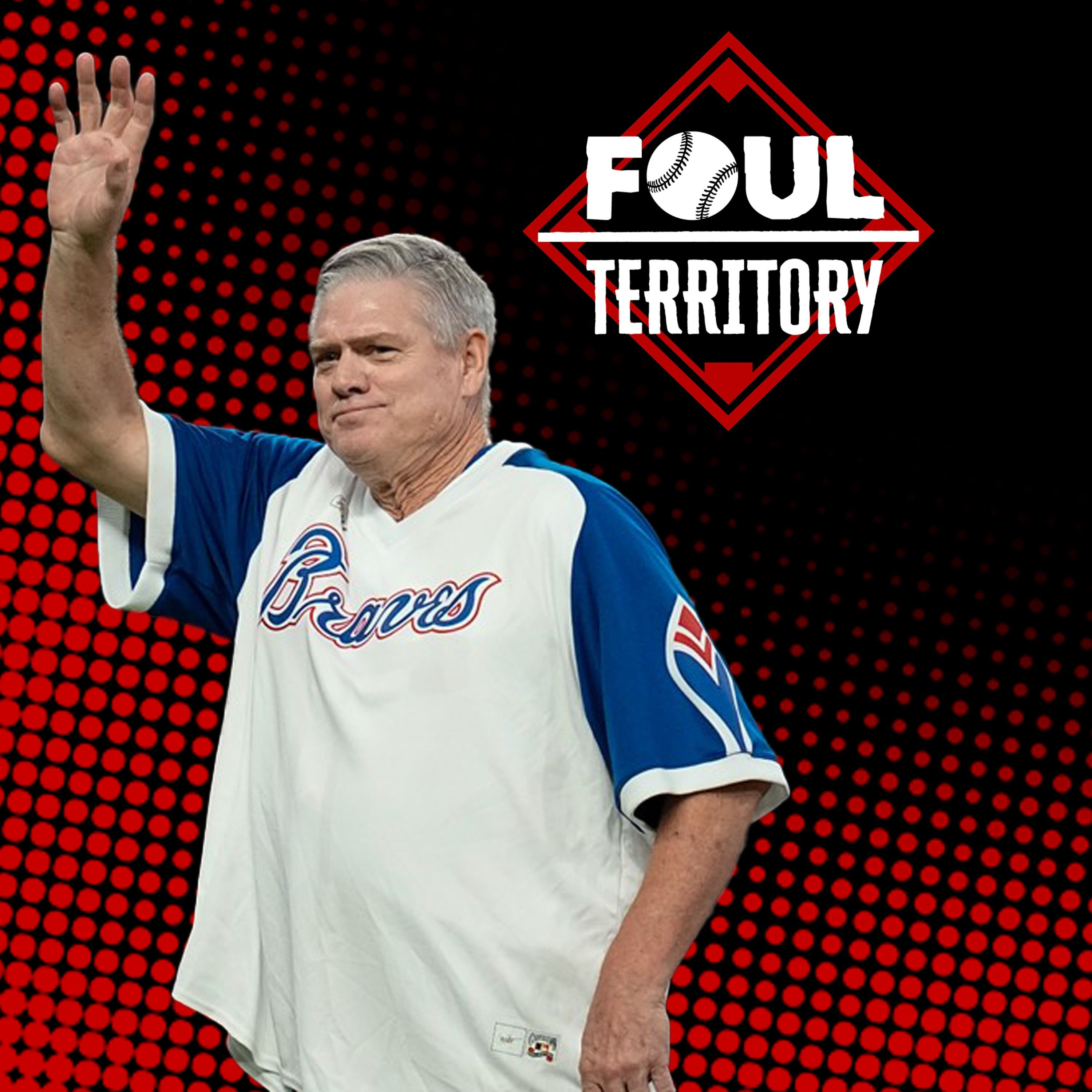
Dale Murphy on his HOF case, Glavine HBP, Utah MLB expansion efforts
2x NL MVP and Braves legend Dale Murphy joins FT in Atlanta to discuss his Hall of Fame chances. He also shares his thoughts on the Battery dominating the MLB biz world and how baseball has improved with each generation.
Start paying rent through Bilt and take advantage of your Neighborhood Benefits™ by going to joinbilt.com/FOUL
Why did Murph move away from catching? Plus, Dale rewinds to being in the first HR Derby in 1985 and also getting hit by Tom Glavine while on the Phillies.
We finish with Murph's bid for Salt Lake City to make the cut as an expansion team.
Hosts: AJ Pierzynski, Erik Kratz, Scott Braun
Get 20% off your first Slab Pack or card purchase by going to ArenaClub.com/FOUL and use code FOUL
See omnystudio.com/listener for privacy information.
Available Results
Generated results are saved to the knowledge database for reuse and search.
Extract Knowledge
Pick what you want extracted first. Model, scope, and chapter options appear after a template is selected.
Transcript
00:00:00
Speaker 1: One of the requirements of being in the Hall of Fame is you should think you belong. I think there's a spot there for me, but you know, I'm not with a first ballot guy.

00:00:08
Speaker 2: You know what I'm saying.

00:00:12
Speaker 3: Legendary Atlanta ball player, two time m v P, seven time All Star, a ton of Silver Slugger and Gold Glove awards as well.

00:00:20
Speaker 2: Dan Murphy joining us Dell, good to see you, thanks for saying by her. Yeah, thank you for having me. It's it's been a lot of fun.

00:00:27
Speaker 1: Just being here in Atlanta, you know, with the All Star Game's big celebration really of baseball, and so uh and I've seen some old teammates and some old guys I played against, and uh, the whole atmosphere.

00:00:37
Speaker 2: You know, it's always fun to be here. Thanks for having me on.

00:00:40
Speaker 4: You still could play. You look like you still can play. I mean you are in shape.

00:00:44
Speaker 1: Thank you, he says, Yeah, what was that you said? Get my megaphone hearing it's then you couldn't hear anything. Pop it out.

00:00:58
Speaker 2: That's true.

00:00:59
Speaker 1: I didn't get bood too much in Atlanta. Did happen in Philly? I had good experience in Philly. They love you, but they let you know if you need to pick your game up a little bit. But anyway, thank you A j I. I wish I could play. You know, there's not a day that doesn't go by. You know, I'm sure we're all the same. You wish you could put on that uniform and get out there. Miss it so much. I'm just gonna jump right in. How are you not in the Hall of Fame? Oh?

00:01:25
Speaker 2: Thank you serious? I'm serious? Like, how are you? We rattled off some of your accomplishments.

00:01:29
Speaker 1: Thank you?

00:01:30
Speaker 2: How are you not in the Hall of Fame?

00:01:31
Speaker 1: Well, you know, I knew when I retired, I had a lot of people very optimistic. But you know, in my heart, I knew it was going to take a while. You know, I knew it wasn't going to be smooth. But I was on the original ballot for fifteen years when it was fifteen years, and you know, I'm thankful the Hall of Fame recognized the guys in the seventies, eighties, and nineties.

00:01:54
Speaker 2: They've They've changed the voting.

00:01:56
Speaker 1: So I'm on that era committee, the modern Era, and I'm eligible game in December. I've been on it a couple of times, making a little progress, So I appreciate the support, and we'll see what happens. I got a shot.

00:02:10
Speaker 2: Do you want it like this?

00:02:11
Speaker 1: Like?

00:02:12
Speaker 5: Because I well, yeah, yeah.

00:02:15
Speaker 1: So yeah. I think I think people once said, you know, one of the requirements of being in the Hall of Fame is you should think you belong. I think there's a spot there for me, But you know, I'm not with a first ballot guy, you know what I'm saying.

00:02:29
Speaker 2: So yeah, I think there's a spot there for me.

00:02:32
Speaker 1: And uh, I mean, I'm I'm blessed in so many ways. It would be an incredible exciting feeling for me and Nancy and the kids and grandkids and but you know, I'm kind of philosophical about it. I would love that honor. That would be just it would blow me away if it happened.

00:02:51
Speaker 2: I have a question on this.

00:02:52
Speaker 3: So did you ever connect with a writer that didn't vote for you and be like just curious, why die fall shorty? Did you ever catch an article where they said, yeah, I'm not voting for him, he's on the cuss. But I'm gonna know. And here's why. There are some writers that are also just the super small ballot. They put one or people on there, they're in another category. But was there anything that stood out to you because you're looking at your career, your accolades, and you're like.

00:03:19
Speaker 1: What they think? The one thing people mentioned me and it is true, my last couple of years there was drop off.

00:03:25
Speaker 2: You know.

00:03:27
Speaker 1: The Hall of Fame typically likes to see, you know, a good steady, but you know I can't. There's no debating that. But that's all being a human.

00:03:38
Speaker 6: By the way, Yeah, get older and off sometimes, you know, you don't think, Hey, if I retired right now, I'd have a better shot at getting the big leagues instead of attacking on these you know what I mean.

00:03:50
Speaker 2: Yeah, I mean it's a Hall of Fame.

00:03:52
Speaker 1: Yeah, So you just play, you play, you let things happen. You know, I retired ninety three. I was I was ready to retire. But you know, like I say, I have a lot of people support me within the voters, and we'll see what happens. This new ballad has helped a lot of us guys that played predominantly in the eighties and I can't think of him now, but Lee Smith. I think Fred McGriff got in on this. Yeah, who should have been in Yeah before Harold bains Lee should have been you know Harold, and I think Alan Trammel, you know. So what I guess what I'm trying to say is I'm thankful Hall of Fame recognize that and change the voting a little bit, because remember what happened before you were all lumped in with veterans. There were two thousand of us. Now they've split it up into eras and they can kind of focus in.

00:04:44
Speaker 2: On what you did. So I'm thankful for that.

00:04:46
Speaker 1: I like that.

00:04:47
Speaker 3: What do you think of this whole area that they put together.

00:04:50
Speaker 2: This this battery and the thing the Braves did.

00:04:54
Speaker 1: As you guys know, there's been people from all over the world that's seen this is the model.

00:05:01
Speaker 2: What can I say except I've heard the word used earlier. Electric.

00:05:08
Speaker 1: That's right, it's so likely. I was here for the World Series in what was it, twenty one, Yeah, twenty one. There were fifty thousand people outside and of course forty five whatever is inside. I think they bumped it to forty seven. The whole thing, the energy created and just the the financial model. Another big stream of revenue around the stadium, which you know I played in an air with around stadium and ten thousand parking spaces around it. This is the model that people are trying to figure out that all the next stadiums and of every sport are going to be modeled on this, and and people if they don't have it, they're going to try to retrofit some kind of mixed use facility near near the ballpark.

00:05:57
Speaker 3: There are a lot of very jealous owners's the sport that we have heard from that are looking at this model and saying, not only is it beautiful and a great fan experience, it's a cash cow because you can own a small town that is dedicated to the sport.

00:06:13
Speaker 2: Right.

00:06:13
Speaker 1: And another little uh tidbit is is they don't have to share that revenue. Yes, everything inside the ballpark is shared and this is all Braves and Liberty media. So they need to pay you more. Yes me, yes, I keep telling people, you know, I played a day for half of what they're making.

00:06:36
Speaker 2: Of course half is twenty five million.

00:06:39
Speaker 3: But it's also fought for them to be in this spot.

00:06:43
Speaker 1: Well, no, it all, it all works together. They can afford to bump their payroll, which when they opened, you know, I don't. They're payrolls steadily gone up now liberty medias thoughts about luxury tax and things like that. But the point is it doesn't guarantee if you guys know, it doesn't guarantee you a World Series championship. But to be competitive, typically your salary structure needs to be near the top top ten. There's always some exceptions to that. But since the Braves have kind of created this thing, it all blends together to pursuing the best players that they can and given the people the product that they deserve. There's some other ball clubs I want to talk about that I'm not so sure how much they're investing in their players and the product they're put on the field.

00:07:32
Speaker 2: I'll just leave it at that. But the Braves are, you know.

00:07:35
Speaker 1: Doing it great. This is incredible. The old Battery Atlanta.

00:07:37
Speaker 4: And do you ever think when you're at the old launching pad that this is what the Braves would turn into? Because yeah, I mean, I told you the story I came up one time. I grew up a Braves fan. Yeah, And people that don't know this was Myah, you got him.

00:07:52
Speaker 1: I was with my son.

00:07:53
Speaker 2: We're in spring training Atlanta.

00:07:54
Speaker 4: He's on the field and my son's with me, and I was like, oh my gosh, and my son is like, dad, who is that?

00:08:01
Speaker 2: He was done? And I was like, that was like my favorite player growing up.

00:08:04
Speaker 4: So I got to meet down become friends with day and you know, and so like that was just like, wow, this is the guy I watched because you were If you don't remember, you were a catcher, yeah I was, and then you became a center fielder.

00:08:14
Speaker 2: I still want to catcher at hard aj. Yeah.

00:08:16
Speaker 4: You know what it was the story. You couldn't throw it to side, you kept waiting in center field.

00:08:20
Speaker 1: I ended up I had a little bit of throwing issue, but I ended up catching about eighty games in the big leagues, so I kind of got out of it. But it wasn't really we had We had Bruce Bennettt coming up, who was you know, much better. And then they moved me to first base just I was tall. I think I led the league in airs at first. He called me up in the fall of seventy nine before nineteen eighty. Uh, spring training, goes Murphy work, you know, come to spring train ready to play the outfield.

00:08:47
Speaker 2: I was like, do I have a choice.

00:08:49
Speaker 1: He's like a little long pause, he goes, no, not really man, you'd be ready to play the outfield. It saved my career, longevity, to my career, everything. So Bobby Cox, I always say, Bobby saved my career and I have my best years under Joe Toy and I'm very, very fortunate and very lucky. Scott.

00:09:10
Speaker 2: You have a Built Rewards card, right.

00:09:12
Speaker 3: I do CRATS. I pay a lot of money in rent, and now I get something for that. There's no cost to join, and just by paying rent, you unlock flexible points that can be transferred to your favorite hotels and airlines, a future rent payment, your next lift right, and much more. When you pay rent through Built, you unlock two powerful benefits. First, you earn one of the industry's most valuable points on rent every month, no matter where you live or where your landlord is, your rent now works for you. And you gain access to exclusive neighborhood benefits in your city. Built neighborhood benefits or things like extra points on dining out, complimentary post workout shakes, and much more unique experiences that only Built members can access. And when you're ready to travel, Built points can be converted to your favorite miles and hotel points around the world, meaning your rent can literally take you places. So if you're not earning points on rent, my question is what are you waiting for? Start paying rent through Built and take advantage of your neighborhood benefits by going to join built dot com slash foul that's j O I N B I l t dot com slash f o u L. Make sure to use our ur ls that they know we sent you.

00:10:11
Speaker 2: Just to see what you know.

00:10:14
Speaker 1: Guys played in the seventies and eighties and before things were small, everything was small. You know, this city was smaller. Uh, these these organizations of ball club has grown and grown grown. Did I ever see anything like this?

00:10:26
Speaker 2: I don't.

00:10:27
Speaker 1: I don't know if anybody did, except I do know that down at Turner Field, the Braves in the city were trying to negotiate something, trying to figure out how to do that down there, and it just didn't work out, so the Braves moved here.

00:10:39
Speaker 2: But uh, you know it.

00:10:42
Speaker 1: Uh, I'm just Nancy and I couldn't be more thankful to be blessed to play with the Braves organization and then be on TVs. The whole TBS thing was a remarkable thing as well as yeah, that was growing in Florida. We had the Braves. You didn't have the Rays.

00:10:58
Speaker 2: You don't have the Marlins. Yeah, I told you.

00:11:00
Speaker 1: Drove up.

00:11:00
Speaker 4: We drove up one fourth of July from Orlando. Get up here, get to the hotel. My parents didn't put the suitcases in the car.

00:11:07
Speaker 2: We had no clothes.

00:11:09
Speaker 1: We drove from.

00:11:10
Speaker 2: Orlando to Atlanta. Just did not in the game, did not. Yeah, I did not have the suitcase.

00:11:15
Speaker 1: Right.

00:11:16
Speaker 2: And then we come to the game. I think you guys were playing the Mets. You didn't come for that game? Did the one that? No, not the twenty inning game or where Gret Camp hit the whole because it was July fourth, Yeah it was. I think it was a different year, but it was after Yeah. So, but there was a fly ball in the ninth inning. I'll never forget.

00:11:31
Speaker 4: Mel Hall was in left field and he dropped it and you were standing right next to him, and they cost you guys again.

00:11:36
Speaker 2: And I was like, I'm like, well, they just let mine. I should have called.

00:11:40
Speaker 4: That was like six years old. You guys lost. I was like devastated. I was like, what are trip? We forgot our luggage and then they dropped the ball. I'm like, that's that's awesome. Yeah, we all got good memories.

00:11:55
Speaker 1: It's been fun to see guys I played with over the the alumni house and you know, just just thankful you just twenty five years ago, I was on a reary captain when it was last year at at Turner Field. So the time moving starts moving faster and very very lucky.

00:12:13
Speaker 5: Seven seven All Stars, right, yes, So do you to think about not showing up for one of them? Like you're like fifth or sixth one, You're like, well, I don't think I'm gonna go.

00:12:21
Speaker 1: Yeah, there's always kind of the players who have been part of but know that it's a drain. I mean, you're traveling, there's a lot of things you gotta do. And but I wouldn't have missed it for anything. You know, I only got into the playoffs once as a player, and so you know there's a similarity, not the same as the playoffs in the World Series, but you know there's a there's an excitement, and the crowd's different. You just feel it and and you know, I never thought about missing them. I was just just lucky to you know, be a part of it. Little tidbit I think I was in the first home run derby at an All Star games. Really well, maybe that's what people tell me. Nineteen eighty five in Minnesota, we're taking BP and they go, hey, you guys want to be in a home at derby. We're like, yeah, whatever, you know, and uh, we played American League against the National League. Played about three or four innings. I hit four. I think I don't even remember the format, but it was League against league. And people say that was the first of what started happening every All Star game. Now it's become I don't think the winner's got a million dollars in.

00:13:38
Speaker 2: What's the winner get million dollars? Million bucks? And I was like, that was like five years for you.

00:13:44
Speaker 1: Yeah, well playing and Nancy and I talked about it. Everybody asked us about the money players make. I've made top dollar back when I played, I made more money than Hank Aaron. I mean, you know, that's that's the way it so, Uh, we're just thankful. I think every generation kind of played when they were supposed to play.

00:14:07
Speaker 5: You know, did you feel like when you were making that much and you look at a guy like Hank Aaron, You're like uh, and then you're like talk like do you remember how that era talked, that era of players talked about how much money you were making.

00:14:21
Speaker 1: And then now.

00:14:22
Speaker 2: You're talking about the era. That is funny you say that.

00:14:25
Speaker 1: You know, you used to have a lot more old timers games in the eighties, and guys like Warren spawn and and Hank and guys would come into our clubhouse and they just thought the clubhouse was.

00:14:38
Speaker 2: Was way over the top illustrious.

00:14:40
Speaker 1: Like yes, And I'm talking about if you walked in the one here, that's what I mean. If I go into the one now, I'm gonna think the same time. I'm like, wait, they got chefs, they got a nap room. I may never get out of that dap room if I had one of those that was just on the training.

00:14:54
Speaker 2: Table, you know, taking a nat. So you know, like I.

00:14:59
Speaker 1: Say, every gener is is better. These are better athletes. These things these kids do. And and you know, I was at the draft last night for a while watching these high school kids, and it's a different it's a it's a different brand of baseball when you play that much as a kid and train you know, we were told not to lift weights too heavy because we'd get muscle bounds. I mean it was like, finally about mid eighties, they got no, we should start lifting weights.

00:15:31
Speaker 4: So I tell the story all the time. When I first came up with the Twins, we didn't have a strent coach or a weight room.

00:15:36
Speaker 2: I'll tell you, was like, do not touch a weight?

00:15:38
Speaker 1: Remember the Nautilus machine. Yeah, well we put some in our little lobby area of the We didn't have a weight room, but they stuck him in this little room and Phil Nekro said on it. He looked around, he goes, how do you turn this on? So we didn't even know what we were supposed to do with him, but you know, so I guess my point is this generation of all sports, you know, they train and they're taking you know, better care of themselves. They know understand diet and hydration. I mean, they know, they know stuff that we just you know, didn't think about the fields. Now, we did have that technology, you know, we did. I was in Fuller County Stadium one night. I looked down and I did a double take at the ground. It had been spray painted.

00:16:24
Speaker 2: It's just.

00:16:26
Speaker 1: It was dirt until you know, about fifteen minutes before the game and they spray painted it. So, uh, the technology the fields obviously, radar and track man and everything. It's completely different. But these athletes, they're they're incredible, all right.

00:16:42
Speaker 4: So I have to bring up some that people always I'm sure they've asked you a million times for another Braves Hall of Famer Tom Glavin once was given the order to hit you.

00:16:51
Speaker 2: Did you have you guys talked about it.

00:16:54
Speaker 4: Oh, yeah, it was Glad, Like I'm so sorry I had.

00:16:58
Speaker 2: It was luckily Glavin and throw hard.

00:17:01
Speaker 1: Yeah, particularly I think Glad wanted to hit me, but he didn't want to hurt me, I guess. So I'll try to not make a long story, but my first time back here as a Philly they had a thing for me, and it was kind of weird because I was in the Philly unifor you know, I wouldn't retired, but they wanted to have a thing my first day back. And we had a fight that night and uh with with Otis Nixon. Otis charged mound, you know, spiked spiked our picture. Well, we went back to play the Braves. I'll try to make this quick went back to play the Braids in Philly.

00:17:37
Speaker 2: And it was the last time.

00:17:38
Speaker 1: Remember we weren't in the same division. So we didn't play him that much. It was our last thing about the eighth inning of our last game of the series. Roger McDowell, who, interestingly enough, as you know, ended up being loved him. Yes, Roger hits Otis and Bobby, as Bobby would would do for out. He goes, we're hitting the next guy up. We're hitting the next guy up, and Glad walks down, looks at the line and he goes, Bobby, it's Murph.

00:18:09
Speaker 2: Bobby goes, I don't care who it is. I'm sure he might have said something else.

00:18:14
Speaker 1: We're hitt him. So Glam gets out there and I was like, oh my gosh. You know, it was just awkward. I'm like, I think he might throw at me, so, you know, I was kind of kind of hanging loose. And then he threw inside. They threw inside again, and the third time he tried, I was out of the batter spot. He's like, it was awkward. We talked after the game. He goes, where if I I go, hey, it's over. As one of those weird things that happens in baseball.

00:18:41
Speaker 4: That's like when Jim Tomy got hit by h a guy and then he had to charge the Mount and then they went to dinner because I think it was he was with Philly.

00:18:50
Speaker 2: It was Cormier the left hand. Yeah, I were friends.

00:18:54
Speaker 4: And he hits him and he charges them ount and then they go out to do they went to dinner after the game.

00:18:58
Speaker 2: It's like, hey, it happened on the field. Yeah, but that's funny.

00:19:03
Speaker 1: Yeah.

00:19:03
Speaker 2: So it was just one of those weird things just happened to be you.

00:19:06
Speaker 1: Yeah, and we weren't going to play them again that year.

00:19:09
Speaker 3: Yeah.

00:19:09
Speaker 1: And what happened was Roger didn't hit Otis till the eighth inning of the final game of that We were going to play him that year. It could have got resolved, but uh, the starter and and and what's so interesting too is Bobby hires Roger as this pitching coach a few years later and loved Roger.

00:19:28
Speaker 2: Yeah, I loved it.

00:19:30
Speaker 3: The way to buy, sell, or trade your cards is Arena Club. It is the top marketplace in the biz to get that done. And crats. We love the slab pack situation because rolling through a ton of cards, physically opening them, finding all kinds of commons that end up folded or in the garbage is old news. Why not get a slab pack and get a chance at a card where thousands of dollars.

00:19:54
Speaker 5: I was a common card. It's okay if you don't get me in your slab pack, because you put as little twenty five dollars into for a slab pack, and you could pull out something that's worth thousands of dollars and it's a keepsake that you get to like, wait, you know what, it might be worth us much today, but I get to watch the value grow.

00:20:16
Speaker 3: And right now, you can get twenty percent off your first slab pack or card purchase by going to arenaclub dot com slash foul and use the code foul. That's twenty percent off your first card purchase or slab pack at Arena club dot com slash foul code foul. All right, I got a fan question here super chat from Route Dale Murphy definitely Hall of Fame player. Question for dal Why did he retire at three hundred and ninety eight home runs?

00:20:41
Speaker 1: Well, yeah, I was done. I wasn't hitting that well. I was in Denver. I was in Denver before coors Field. It was mile High State of you know, mile High was about two forty to left, so short and I couldn't hit one out of there, you know, and so I'm kind of thinking, I don't think I could hit one out of anywhere. It's time. But I was heard.

00:21:10
Speaker 2: I mean, I wasn't totally hurt.

00:21:11
Speaker 1: The Rockies have me for a couple of months, and Don Baylor said, hey, wet, we're gonna move on.

00:21:17
Speaker 2: I was like, I'm ready to hang it up.

00:21:19
Speaker 1: And okay, I had playing and hanging sliders to hit in my years at playing, I missed.

00:21:25
Speaker 2: I should have well over four hundred, but that's like the nice even numbers.

00:21:30
Speaker 1: But that's.

00:21:32
Speaker 2: That's Fred stopped about four ninety three or something.

00:21:36
Speaker 1: Yeah, yeah, Freddy, I'm so happy to see him in Yeah, it's so excited for him.

00:21:41
Speaker 2: Yeah, me too. Are you two the nicest guys in the world, you and Fred?

00:21:45
Speaker 1: Uh, you know, I've been called a lot worse. I played in Chicago when the bleacher Bumps called me a lot Yeah, yeah, yeah, no, I appreciate that. I just you know, I'm I'm very I feel very lucky to play what I played, sport I loved and and you know, Mary and Nancy was the most important thing. She's kept me, uh focused on what's more important. We got great kids and grandkids, and you know, I'm just very, very lucky, and I try to remember to be respectful of people. I think. I think the challenge for players is you try to protect your privacy, especially when you're playing, and some people interpret that as being rude, you know, but you're trying You're trying to manage that notoriety at the same time. Is so I think, uh, you know, it's it's sometimes it gets out of balance a little bit, but I try to, you know, just remember that I'm I was lucky and not any different than anybody else.

00:22:49
Speaker 3: From a business perspective. So so it's a two parter. One can you tell us about the restaurant? Yeah, and then two are you part of a group that's trying to get a ballpark or a ball jub in Utah?

00:23:00
Speaker 2: Yeah? Okay, so the restaurant's good news, bad news?

00:23:05
Speaker 1: Okay. Uh, where we're at and we've had a lot of people during the All Star week over by the village. We're right over there at the village by the village, but that area is renovating. They're they're renovating, so they have to we have to close Oka and whether it'll be a year and a half.

00:23:23
Speaker 2: So by then, I you know, we've had a great experience over there.

00:23:26
Speaker 1: Okay, Murph's if.

00:23:28
Speaker 2: I could put a plug in, come on by. We're gonna be over until mid August.

00:23:31
Speaker 1: There you go. So that's where everyone to know. WoT right now? And I'm sorry and I one on youtah. Yeah yeah, I'm from Portland, Oregon. You know, I was part of their group, but but I live in salt Lake about eight months out of the year. I'm here about four and and they have a great group and uh, big league Utah where we're working every day.

00:23:54
Speaker 2: Great ownership group, the Miller.

00:23:56
Speaker 1: Family that owned the Jazz and they've owned the the Bee's Triple A team for twenty five years. Salt Lake has completely changed the last twenty five years. It's it's a great demographics, great ownership group.

00:24:11
Speaker 2: We're excited.

00:24:12
Speaker 1: Uh and we'll see when the commissioner and the players and owners get together and decide to expand. Sounds like Nashville is a good front runner, but they're gonna expand too.

00:24:22
Speaker 2: One's gonna be on the well yeah you best side of that.

00:24:26
Speaker 1: Ye gotta get you know, uh, different parts of the country. So we're We're definitely in the mix. I'm firstly very optimistic. Yeah, I think they have a good shot. Yes, Portland's trying to man. Portland has still got Yeah, Salt Lake City sounds like they have maybe a chance. Portland are the most active groups. I think Orlando started a group. Oh yeah, so we Yeah, you're on the west coast, yes, and there are Have you been working with that group?

00:24:54
Speaker 4: Yeah?

00:24:54
Speaker 1: I know that. Yes. Yeah.

00:24:56
Speaker 4: This is the difference in Orlando and what you guys want. You guys want to spansion team.

00:25:00
Speaker 1: Yeah.

00:25:00
Speaker 4: Yeah, Orlando doesn't want an expansion team. They want a team about an hour west.

00:25:06
Speaker 2: I've heard about that.

00:25:07
Speaker 1: Yeah, and I think that.

00:25:09
Speaker 5: Yeah.

00:25:10
Speaker 2: So Denton Pirates, Yes, the Brandenton Mara Marauders. I was gonna say the tarp.

00:25:15
Speaker 4: Lakeland Flying Tigers. Yes, but listen, I played in Salt Lake and Triple A.

00:25:19
Speaker 1: I love salt Well.

00:25:21
Speaker 4: You asked me all the time, what was your favorite city. I'm like, Salt Lake City is unbelievable.

00:25:25
Speaker 1: It is great, and I've I've lived there since I retired. Nancy and I had had our family here, all our kids were born here. But we love it out there. It's it's it's it's a great place and we're excited. They're they're every everywhere I go. People said, what what is going on? We're ready to go?

00:25:43
Speaker 2: So they got a lot of good things in their favor. Where would they put in the stadium? Downtown?

00:25:49
Speaker 1: There's a brand new airport, you know, it'd be right between downtown and the airport called the Power District that they got there.

00:25:57
Speaker 2: It's ready to go. It's actually shovel red. I mean they're ready to break ground.

00:26:02
Speaker 1: So they wouldn't have to do a fake shovel ground break. They do a real groundbreak. They would actually put ground. Yes, would you have a shovel yet? Well, I yes, I was at the Do I have a shovel to break ground? Yeah?

00:26:16
Speaker 2: They break around.

00:26:17
Speaker 1: Would you be one of the guys that they've already broken ground because actually they're going to develop that area anyway and save ten twelve acres for the ballpark.

00:26:25
Speaker 2: Awesome? Yes, we're rooting for you. Good luck. We'll keep you an eye on. Thank you, excited, optimistic, Well, thank you for stopping by me.

00:26:34
Speaker 1: Thanks guys, I loved it and it's always fun to talk baseball and have on the next couple of days. Thank you.

00:26:40
Speaker 3: Yeah, you too.