Ep 19: Figurative Counters: Stages of Counting Series Part 3
Making Number Sense Make Sense: A Math Podcast for Early Elementary Teachers
Register for the FREE Making Math Moments Virtual Summit 2023!
Get my complete counting stages presentation slides!
Any podcast episodes you want me to make? Let me know in this Google Form!
In this week's episode, we are continuing our deep dive into learning trajectories for counting and how to teach counting and develop counting skills for young students. Counting is an area where students need a lot of practice to really develop their number sense and ability to count accurately.
Today's focus is Figurative Counters. I’ll go over what a figureative counter is, what to look for, and give you some ideas of math centers and activities you can do to support students in this level of counting.
Helpful Links
Let's Connect!
Available Results
Generated results are saved to the knowledge database for reuse and search.
Extract Knowledge
Pick what you want extracted first. Model, scope, and chapter options appear after a template is selected.
Transcript
1
00:00:00,000 --> 00:00:05,040
Moving right along with our counting constructs, today's is figurative

2
00:00:05,040 --> 00:00:09,880
counting and this one can be a little bit tricky and is often called the

3
00:00:09,880 --> 00:00:20,960
forgotten construct. So I'm going to tell you all about it in today's episode.

4
00:00:20,960 --> 00:00:26,720
Hello and welcome to Making Number Sense Make Sense, a podcast for elementary

5
00:00:26,720 --> 00:00:30,440
teachers, specifically early elementary teachers, looking to really make an

6
00:00:30,440 --> 00:00:35,680
impact in the number sense of their students. We had talked about emergent

7
00:00:35,680 --> 00:00:42,120
counters, perceptual counters, and today's focus is figurative counters. Now this

8
00:00:42,120 --> 00:00:47,320
one can be tricky because it is very similar to perceptual counters, which is

9
00:00:47,320 --> 00:00:51,100
why it's usually called the forgotten construct because it's kind of in the

10
00:00:51,100 --> 00:00:56,560
middle and it's kind of tricky to get kids through this construct to the next

11
00:00:56,560 --> 00:01:00,440
one in a way that will help them in the future because we don't want to miss

12
00:01:00,440 --> 00:01:06,800
anything. So kids in this stage of counting will be able to count our

13
00:01:06,800 --> 00:01:10,760
create or keep in their head a collection of items, a relatively small

14
00:01:10,760 --> 00:01:14,760
collection of items, that is hidden that they can't actually see but they're

15
00:01:14,760 --> 00:01:19,520
gonna have to recreate it. So if I said there are seven counters here and then I

16
00:01:19,520 --> 00:01:24,400
covered them, they wouldn't necessarily be able to use that seven and count on.

17
00:01:24,400 --> 00:01:28,360
They would have to recreate the seven. So if I said there's seven and then three

18
00:01:28,360 --> 00:01:32,000
more over here, they'd have to start counting from one, one, two, three, four, five,

19
00:01:32,000 --> 00:01:37,480
six, seven, and then add on whatever number that you said. So it can seem redundant

20
00:01:37,480 --> 00:01:41,440
to grown-ups because counting on would be a more efficient strategy but they're

21
00:01:41,440 --> 00:01:45,800
not quite there yet and that's really what the focus is for a figurative

22
00:01:45,800 --> 00:01:49,600
counter, having them be able to keep numbers in their head and then use other

23
00:01:49,600 --> 00:01:54,020
numbers in relation to that number. My previous example was just one but they

24
00:01:54,020 --> 00:01:57,440
can even do that with two collections. So if I said there's seven here, covered it,

25
00:01:57,440 --> 00:02:01,640
and there's three here, covered it, and they're both covered, they can get, okay,

26
00:02:01,640 --> 00:02:06,000
seven and three, but they wouldn't start counting from seven or even from three.

27
00:02:06,000 --> 00:02:10,280
They wouldn't go seven, eight, nine, ten. They would start from one, one, two, three, four,

28
00:02:10,280 --> 00:02:14,400
five, six, seven, eight, nine, ten, and count that way. So what are you looking for in

29
00:02:14,400 --> 00:02:19,280
this kind of counter? You're looking for them to be able to count beyond ten to

30
00:02:19,280 --> 00:02:24,040
thirty or more. They will have one-to-one correspondence down. They can usually

31
00:02:24,040 --> 00:02:28,960
correct their errors or recognize their errors and self-correct if asked. They

32
00:02:28,960 --> 00:02:32,480
understand cardinality, that the last number you said is the number that they

33
00:02:32,480 --> 00:02:36,880
have. They can keep track of, like I said, screened or covered collections of

34
00:02:36,880 --> 00:02:40,320
counters even if they're in different arrangements. Their number writing, they

35
00:02:40,320 --> 00:02:43,900
have to at least 20. They're able to write bigger numbers in the number

36
00:02:43,900 --> 00:02:47,080
system or starting to get there. They can tell you the number after with a

37
00:02:47,080 --> 00:02:50,240
running start, but they might have to count up to get there. They might not be

38
00:02:50,240 --> 00:02:54,520
able to just tell you yet. They can count backwards from ten or from 20, but like I

39
00:02:54,520 --> 00:02:57,360
said, they're having trouble keeping that in their head, like manipulating that

40
00:02:57,360 --> 00:03:00,240
number in their head. They'll have to recreate it and make it real with their

41
00:03:00,240 --> 00:03:04,200
fingers or taps or whichever. In this stage of counting, how can you help them?

42
00:03:04,200 --> 00:03:08,080
You're gonna want to keep working on that number sequence, especially the tricky

43
00:03:08,080 --> 00:03:13,440
parts. You're gonna encourage centers or you want to start to use centers with

44
00:03:13,440 --> 00:03:18,760
them or small group instruction that really has them counting on and pushes

45
00:03:18,760 --> 00:03:22,640
them towards counting from one to counting on. They'll also start to

46
00:03:22,640 --> 00:03:27,640
recognize and understand common number relationships. So this would be

47
00:03:27,640 --> 00:03:32,960
decomposing numbers like decomposing ten, the friends of ten, but also other

48
00:03:32,960 --> 00:03:37,680
numbers too. Like know that seven is five and two, it's also four and three, but with

49
00:03:37,680 --> 00:03:41,400
every number so they can really start to see those relationships and really

50
00:03:41,400 --> 00:03:47,280
understand it. Because if they understand those tens, then they can apply it when

51
00:03:47,280 --> 00:03:52,280
the numbers are bigger. So if they knew that nine and one is ten and they have an

52
00:03:52,280 --> 00:03:57,120
understanding of that 90 is nine tens, that the numbers will still work the

53
00:03:57,120 --> 00:04:03,480
same way. So nine and one is ten, so 90 plus ten is 100. So they'll be able to

54
00:04:03,480 --> 00:04:07,960
make those connections and if they have a really good grasp on the numbers to ten,

55
00:04:07,960 --> 00:04:11,200
they'll be able to apply it to bigger numbers. So that's something else that

56
00:04:11,200 --> 00:04:14,800
you're really working on in this construct. Not to say that you wouldn't

57
00:04:14,800 --> 00:04:19,000
work on decomposing numbers in perceptual counters in the previous

58
00:04:19,000 --> 00:04:22,080
construct, they kind of work together because they definitely overlap and

59
00:04:22,080 --> 00:04:26,520
you'll see kids kind of showing different strategies at this point and

60
00:04:26,520 --> 00:04:29,680
really kind of bouncing back and forth. Another thing that will help kids in

61
00:04:29,680 --> 00:04:34,280
this construct is number talks with number strings to support counting on

62
00:04:34,280 --> 00:04:39,360
strategies. You might start with what's one plus two? Three. Then you might start

63
00:04:39,360 --> 00:04:43,920
with what is ten plus three? Then they might start to see ten and three is 13.

64
00:04:43,920 --> 00:04:47,680
If they know how the tens work, start to understand how the number system works,

65
00:04:47,680 --> 00:04:52,880
they'll be like, oh that's easy, ten and three is 13. And then if your next

66
00:04:52,880 --> 00:04:58,140
question is what is nine plus four, they might start to see that nine and ten are

67
00:04:58,140 --> 00:05:02,320
really close, similar to the problem that you just had. And some students might

68
00:05:02,320 --> 00:05:06,600
start to understand that you can take one of those numbers from the four away,

69
00:05:06,600 --> 00:05:12,280
add it to the nine to make ten, and ten and three is 13 that the answer is the

70
00:05:12,280 --> 00:05:16,280
same. So you're really wanting to encourage kids talking about numbers, how

71
00:05:16,280 --> 00:05:21,900
they relate to each other, and refining their strategies for efficient mental

72
00:05:21,900 --> 00:05:25,720
math and using numbers in that way in their head. So I talked about some things

73
00:05:25,720 --> 00:05:29,480
that you can work on, some things to keep in mind when you're working on centers,

74
00:05:29,480 --> 00:05:32,880
but I'm going to give you some more specific centers that you can do. One

75
00:05:32,880 --> 00:05:36,560
that's very popular for decomposing numbers is called shake and spill or

76
00:05:36,560 --> 00:05:42,200
toss the chips. So the way that that game works is that students have a certain

77
00:05:42,200 --> 00:05:45,760
number that they're working on the target number and the same number of

78
00:05:45,760 --> 00:05:49,440
double-sided counters. So if I'm working with the number six, I'd have six

79
00:05:49,440 --> 00:05:53,840
double-sided counters. And what they'll do is they'll shake it and then drop it

80
00:05:53,840 --> 00:05:58,560
gently, shake it gently, and then drop it and figure out how many are of one color,

81
00:05:58,560 --> 00:06:02,120
how many are of the other color, and write those numbers down. And since

82
00:06:02,120 --> 00:06:06,200
they're doing it over and over, they'll start to recognize the similar patterns.

83
00:06:06,200 --> 00:06:10,880
That three and three is six, that two and four is six, that one and five is six. If

84
00:06:10,880 --> 00:06:15,320
they continue working on that number and then once they're good with that number,

85
00:06:15,320 --> 00:06:19,400
they can move on to the next one. Another game they can play that will really

86
00:06:19,400 --> 00:06:23,240
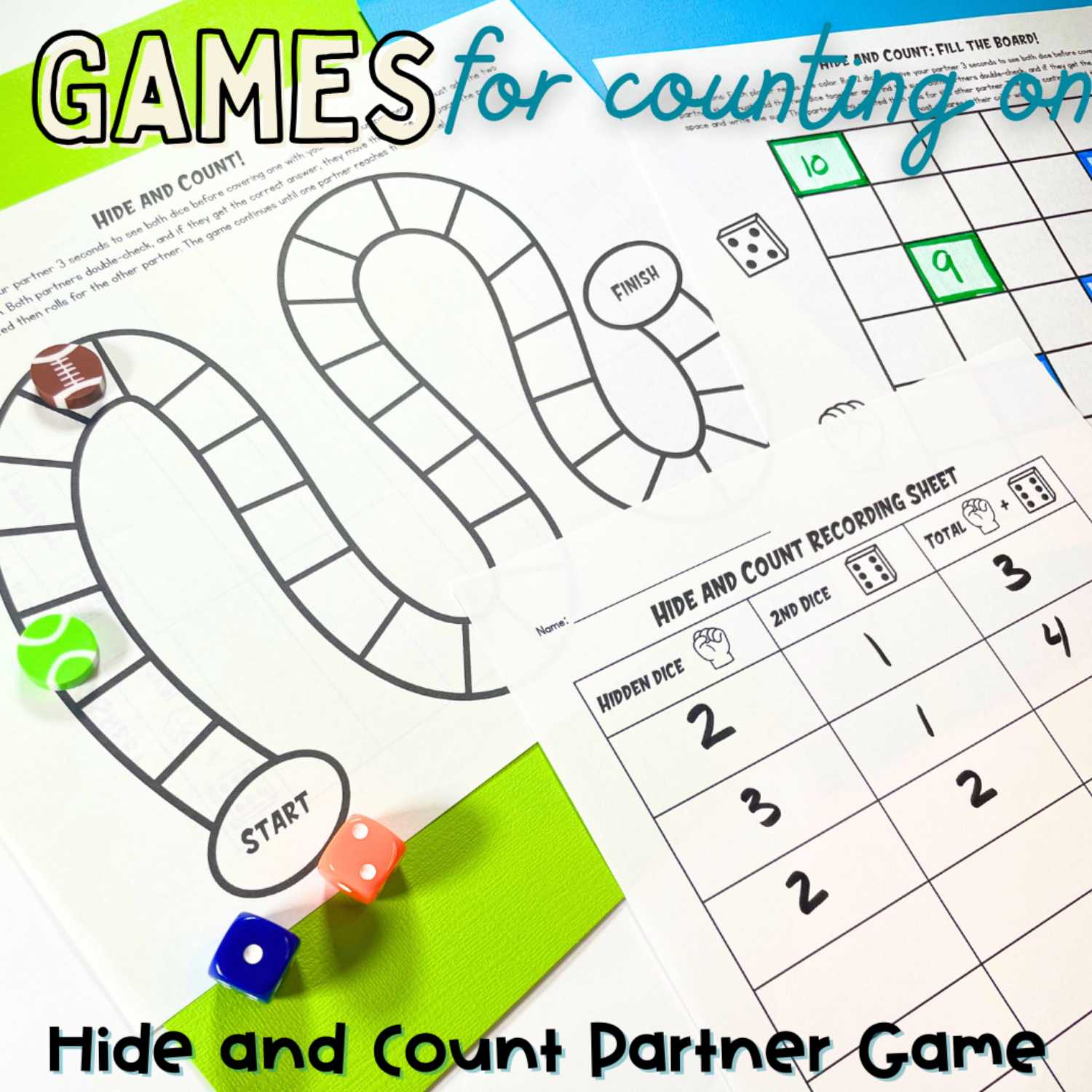
force them to keep numbers in their head is called hide and count. And this is a

87
00:06:23,240 --> 00:06:26,920
fun partner game. And the way that they play this game is they have their two

88
00:06:26,920 --> 00:06:33,040
dice and they'll, one partner will roll the dice and then give the student about

89
00:06:33,040 --> 00:06:37,200
three seconds to see what one of the dice is and then hide it with their hand. So

90
00:06:37,200 --> 00:06:40,640
hide it underneath their hands. The second player will have to then figure

91
00:06:40,640 --> 00:06:45,720
out, okay if I have how many are under the my partner's hand and how many are

92
00:06:45,720 --> 00:06:49,240
on this other dice, how many is it all together? So they'll have to really start

93
00:06:49,240 --> 00:06:53,360
counting on from the number that's hidden and add it to the other dice. So

94
00:06:53,360 --> 00:06:58,080
if I rolled two dice that were five and three and I covered the three, the kids

95
00:06:58,080 --> 00:07:02,040
would have to think about, okay there's three under there and then count on four,

96
00:07:02,040 --> 00:07:06,720
five, six, seven. And they can keep going with that game. I do find that sometimes

97
00:07:06,720 --> 00:07:10,160
with a game like that students will be like, okay I'm kind of done with it. So

98
00:07:10,160 --> 00:07:13,680
you can add a really simple game board. I'll have examples in the notes that you

99
00:07:13,680 --> 00:07:17,840
can see or a recording sheet so they can write down how many they rolled and then

100
00:07:17,840 --> 00:07:21,960
their partner gets a turn to hide the die and then go back and forth until one

101
00:07:21,960 --> 00:07:25,280
of them finishes their game board or finishes their recording sheet. And

102
00:07:25,280 --> 00:07:30,840
throughout all of your learning it's really helpful to include tasks that or

103
00:07:30,840 --> 00:07:35,420
rich thinking tasks that students can work on together to have more

104
00:07:35,420 --> 00:07:39,480
opportunities to discuss and figure out problems. So for example for a story

105
00:07:39,480 --> 00:07:45,040
problem, story problems are a great low floor high ceiling task especially for

106
00:07:45,040 --> 00:07:48,360
decomposing numbers because there are so many different answers and you can

107
00:07:48,360 --> 00:07:53,440
really modify the range to fit the needs of your students. So one story problem

108
00:07:53,440 --> 00:07:57,560
that you might give is that there's two soccer teams, the Red Foxes and the Green

109
00:07:57,560 --> 00:08:01,160
Frogs and they played in the championship and all together both teams

110
00:08:01,160 --> 00:08:05,640
scored eight goals. So then you have the question, well how many could have been

111
00:08:05,640 --> 00:08:10,200
scored by the Red Foxes? How many could have been scored by the Green Frogs? And

112
00:08:10,200 --> 00:08:13,960
that way they can think of all the number combinations and if you've been

113
00:08:13,960 --> 00:08:18,920
doing math centers that have a lot to do with decomposing numbers like shake and

114
00:08:18,920 --> 00:08:23,360
spell, like things like how many more, snap it and hide it, and they have

115
00:08:23,360 --> 00:08:27,400
opportunities to practice all of these different ways to decompose numbers and

116
00:08:27,400 --> 00:08:31,040
think about numbers, they'll be able to pull from that knowledge and those

117
00:08:31,040 --> 00:08:37,040
strategies to solve this problem. As a recap, students in this stage of counting

118
00:08:37,040 --> 00:08:43,160
figurative counters can count collections up to 30 or more, their

119
00:08:43,160 --> 00:08:46,840
number writing is coming along, their number sequence is coming along, but

120
00:08:46,840 --> 00:08:50,720
they're having trouble counting on and keeping numbers in their head in a way

121
00:08:50,720 --> 00:08:56,040
that they can easily manipulate to solve problems. For figurative counters, you're

122
00:08:56,040 --> 00:08:59,720
gonna want to work on decomposing numbers and number combinations. You're

123
00:08:59,720 --> 00:09:02,800
gonna want to keep practicing on number writing and it could be, it doesn't have

124
00:09:02,800 --> 00:09:06,440
to be worksheets, it could be you're doing this math station and part of it

125
00:09:06,440 --> 00:09:09,800
is recording the numbers that you're getting so that they still get that

126
00:09:09,800 --> 00:09:13,160
number writing practice but it's not just sitting there and copying numbers.

127
00:09:13,160 --> 00:09:16,360
And I say that because number writing can be something that is so tricky for

128
00:09:16,360 --> 00:09:21,120
the kids and it's really just need practice. Like for all of these counting

129
00:09:21,120 --> 00:09:27,000
stages, to help students move on to the next stage, yes you need you know centers

130
00:09:27,000 --> 00:09:30,000
and it's helpful if they're fun and engaging so they'll want to practice but

131
00:09:30,000 --> 00:09:35,760
they really need time and opportunity to create these understandings of what each

132
00:09:35,760 --> 00:09:40,580
number means and how each number relates to each other. So back to decomposing

133
00:09:40,580 --> 00:09:44,160
numbers, again I'll have all of these listed and you can check the blog post

134
00:09:44,160 --> 00:09:48,440
to see pictures of all of these games as well as games that will force them or

135
00:09:48,440 --> 00:09:54,160
encourage, I will say, encourage students to count on instead of counting from one.

136
00:09:54,160 --> 00:09:57,200
And if they do these games enough they'll start to see that counting from

137
00:09:57,200 --> 00:10:01,400
one is not an efficient strategy and kind of refine it on their own and that's

138
00:10:01,400 --> 00:10:04,800
why it's so helpful also to have kids talking to each other and talking with

139
00:10:04,800 --> 00:10:08,800
you because hearing different how different kids solve different problems

140
00:10:08,800 --> 00:10:12,920
can really help them grow their own understanding. Math talks, number talks,

141
00:10:12,920 --> 00:10:16,600
and opportunities to really discuss their thinking in a problem-solving

142
00:10:16,600 --> 00:10:21,880
situation in a low floor high ceiling rich math test situation will be very

143
00:10:21,880 --> 00:10:27,360
helpful for students in this stage. Get ready to move to the next one. As always

144
00:10:27,360 --> 00:10:31,740
make sure to follow the show. I would love it if you left a review and I have

145
00:10:31,740 --> 00:10:35,800
a Google form in the notes for anything you'd like me to talk about further or

146
00:10:35,800 --> 00:10:39,600
any topics that you would like me to discuss in general. Until then you'll

147
00:10:39,600 --> 00:11:02,840
hear me next time.