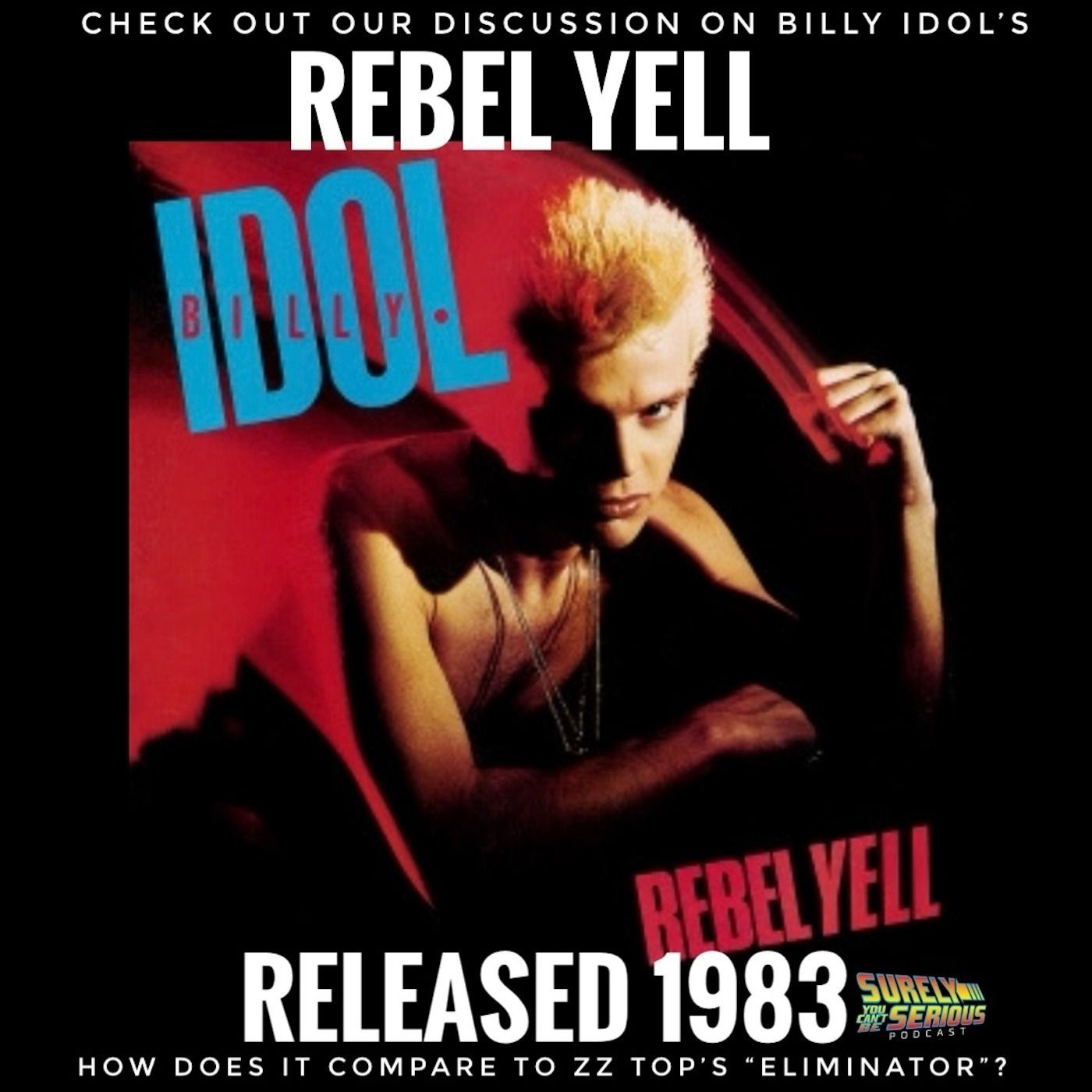
Billy Idol's "Rebel Yell" (1983): Track by Track
In November of 1983, former Generation X singer Billy Idol, along with guitarist Steve Stevens, made his stamp on pop culture and early MTV with his ultra catchy songs, his spikey bleach blonde hair with his iconic pop punk album, "Rebel Yell"From the rebellious spirit of the lyrics to the infectious energy of the music, we break down each track and the stories behind them. We also dive into the incredible decadent stories of a legendary rock star and the tragic accidents that nearly derailed him.Join us as we celebrate the raw power, rebellious spirit, and timeless appeal of Billy Idol's "Rebel Yell", then compare it to ZZ Top's "Eliminator" album. Get ready to crank up the volume and pump your fist!Join u on Patreon at: https://www.patreon.com/surelypodcast
2023-12-12
59 min
Transcript
Available Results
Generated results are saved to the knowledge database for reuse and search.
No generated results are available for this episode yet.
Extract Knowledge
Pick what you want extracted first. Model, scope, and chapter options appear after a template is selected.
Generated results for public episodes are saved to the knowledge database so they can be reused and searched later.
Transcript
<v Speaker 1>Hello, and welcome to the Surely You Can't Be Serious
<v Speaker 1>Podcast with Jason Colvin and James Steve Graves. This is
<v Speaker 1>Melissa Mingle, friend of the show and Patreon member. Quite
<v Speaker 1>certain that today, as always, they will give us a
<v Speaker 1>bit of a laugh and blow all minds. One quick
<v Speaker 1>secret not really British, but sometimes after I listen to
<v Speaker 1>the show, I feel like I could be Thanks guys.
<v Speaker 2>Hello everybody, and welcome back to the Surely you Can't
<v Speaker 2>Be Serious Podcast. And the music you are hearing might
<v Speaker 2>make you dance with yourself. You could be dancing with me,
<v Speaker 2>you could be dancing with Jason. But either way, as
<v Speaker 2>long as you're dancing, we've done our job here.
<v Speaker 3>That's right. I just want everybody to know it's a
<v Speaker 3>nice day to start again.
<v Speaker 2>Yeah, well, I'm starting with black leather. I went ahead
<v Speaker 2>and bleached my hair completely blonde, spiked it up, I
<v Speaker 2>grew the beard out for this easy top episode. I'm
<v Speaker 2>now full punk rock.
<v Speaker 3>I like the peroxide. You gotta go on it nice.
<v Speaker 3>Do you know that was accidental, by the way, Yeah,
<v Speaker 3>I did. Actually, yeah, you sent me that clip. I
<v Speaker 3>could not believe that they were gonna do blue. It
<v Speaker 3>was gonna be blue, right, you gotta bleach it all
<v Speaker 3>the way to add the blue coloring. And his girlfriend,
<v Speaker 3>whoever it was that was gonna do that for him,
<v Speaker 3>she bleached it white and then looked at her. Person's like,
<v Speaker 3>oh crap, I forgot the blue. I guess you'll just
<v Speaker 3>have to be white for a couple of days, and
<v Speaker 3>he's like, you know, what's kind of works. I kind
<v Speaker 3>of like it.
<v Speaker 2>Well, he went to band practice like he was. He
<v Speaker 2>had started with Generation X at that point and they
<v Speaker 2>had a different lead singer, and the lead singer immediately
<v Speaker 2>came over. He's like, you're not gonna leave it like that, right,
<v Speaker 2>your hair is He's like, no, it's gonna He's like really,
<v Speaker 2>because you can't leave it like that. He's like, no,
<v Speaker 2>I'm gonna He's like it's important they did not stay
<v Speaker 2>like that, and he's like, okay, I'll change it. But
<v Speaker 2>by the time the conversation was over, he was like,
<v Speaker 2>he's worried about me stealing the thunder. That's it, And
<v Speaker 2>sure enough he'd done did steal the thunder because he
<v Speaker 2>took over his lead singer not too long after that, like,
<v Speaker 2>I am changing this, no way, no how it provokes
<v Speaker 2>a reaction even by all of the radio stations of
<v Speaker 2>the early eighties. Sure.
<v Speaker 3>Sure, today we're covering Billy Idol and we're going through
<v Speaker 3>his second album, Rebel Yell.
<v Speaker 2>Okay, yeah, yeah, I love the yells. I love that
<v Speaker 2>he's got a great sneer and a great yell. So
<v Speaker 2>I'm excited to talk about this. This is one of
<v Speaker 2>those pivotal albums of my youth. Nineteen eighty three, big time,
<v Speaker 2>This was all over MTV. He was as much of
<v Speaker 2>an icon as the Zzy Top guys, I mean their
<v Speaker 2>beards and sunglasses. He had that kind of image logo
<v Speaker 2>just as much with his bleached spiked hair and his
<v Speaker 2>leather punk style.
<v Speaker 3>Let me ask you this, so we both agree that
<v Speaker 3>image for both of these groups that we're talking about
<v Speaker 3>last week this week was huge, especially on early MTV.
<v Speaker 3>So are they the same band without the image.
<v Speaker 2>In this time period in history, There's no way to say.
<v Speaker 2>Because image became synonymous with sound.
<v Speaker 3>It was everything.
<v Speaker 2>It was everything, And then in the nineteen eighties, with
<v Speaker 2>the birth of MTV, if you had an unimpressive image,
<v Speaker 2>you were not going to do as well, even if
<v Speaker 2>your music was better. Just ask John Oates. That's true,
<v Speaker 2>you know, I mean, that's just and he I can
<v Speaker 2>still remember the interview where he was complaining about it
<v Speaker 2>and Madonna was sitting next to him and she's like, listen,
<v Speaker 2>we put on stage shows. This has always been a
<v Speaker 2>visual medium as well as a sound medium. This is
<v Speaker 2>the way it is now. You need to just buck
<v Speaker 2>it up.
<v Speaker 3>It sure is. You know Nikki six talked about this
<v Speaker 3>when we did our Girls Girls Girls episode. There was
<v Speaker 3>a time period from about nineteen late nineteen eighty one,
<v Speaker 3>I would say until about eighty five eighty six when
<v Speaker 3>every kid in America listened to the exact saying, quote
<v Speaker 3>unquote radio station and that was MTV.
<v Speaker 2>Okay, before we get going on Rebel Yell, track by track,
<v Speaker 2>we are going to talk about our top three songs
<v Speaker 2>that are not on Rebel Yell. All right, yeah, yeah, okay,
<v Speaker 2>So we'll treat these like our top five episodes. Guys,
<v Speaker 2>if you haven't heard those episodes, there are some of
<v Speaker 2>our most fun episodes to do. But what the way
<v Speaker 2>we do it is we tease it up a little bit.
<v Speaker 2>See if we can get the other guy to guess
<v Speaker 2>what we're thinking. All right, and I can't wait, I'm
<v Speaker 2>starting this one. I'm not gonna let you steal the
<v Speaker 2>thunder from Okay you ready? Yeah, Okay. This video for
<v Speaker 2>this song was directed by David Fincher.
<v Speaker 3>I love that nugget. Let's punt that one down the
<v Speaker 3>road for a minute.
<v Speaker 2>I'm gonna keep going and you just tell me when
<v Speaker 2>it comes up because I don't have the Okay, So
<v Speaker 2>for the for the people out there who don't know yet.
<v Speaker 3>The clips from the movie Ford Fair Lane were.
<v Speaker 2>Used in this movie, but they didn't have any of
<v Speaker 2>Andrew dice Clay because he had been banned from MTVS.
<v Speaker 3>Right he had been.
<v Speaker 2>The young lady who appeared in this video was eighteen
<v Speaker 2>or nineteen, so you don't have to feel quite as
<v Speaker 2>bad about how you might have felt about her when
<v Speaker 2>you watch this video. Yeah, and the clips of Billie
<v Speaker 2>idol Well were all on picture frames from the waist
<v Speaker 2>up because he was still suffering the effects of the
<v Speaker 2>motorcycle accident he had.
<v Speaker 3>Had earlier that year, Shining from the waist up.
<v Speaker 2>The song, of course, is credit of love.
<v Speaker 3>Yeah.
<v Speaker 2>So this one came off the Charmed Life album in
<v Speaker 2>nineteen ninety. Man nineteen ninety I'm fifteen years old. I
<v Speaker 2>could not get enough of this video.
<v Speaker 3>This girl was basically my age and I was like, man,
<v Speaker 3>this girl is smoken hot yep. And I think it
<v Speaker 3>got an award at the MTV Music Awards, like Sexiest
<v Speaker 3>Video or something like that.
<v Speaker 2>It was the best Video from It was nominated for
<v Speaker 2>several things, one Best Video for Music from a Movie.
<v Speaker 2>But Billy Idol and the actress her last name is
<v Speaker 2>George Betsy George Betsy Lynn, George Betsy Lynn, George Betsy
<v Speaker 2>lynz God.
<v Speaker 3>She was in Point Break. She was a party girl,
<v Speaker 3>girl at party. Yeah.
<v Speaker 2>But they recreated the sexy scene for the MTV Video
<v Speaker 2>Music Awards.
<v Speaker 3>My number three go four all right, So this video
<v Speaker 3>has people slapping their butts to the beat. You have
<v Speaker 3>a bloody ring, and of course you have longtime girlfriend
<v Speaker 3>Perry Lister as the bride.
<v Speaker 2>Not only was Perry Lister the bride in this one,
<v Speaker 2>and not only was it really her finger actually getting cut,
<v Speaker 2>which they edited out of the MTV video because they
<v Speaker 2>didn't want to see that, but she also switched clothes
<v Speaker 2>and she was one of the black leather butt slappers.
<v Speaker 3>If you will. This of course is white wedding.
<v Speaker 4>You had a no s day or a wide wedding.
<v Speaker 4>It's a nicety to stop again.
<v Speaker 3>Okay, number two.
<v Speaker 2>Okay, this is the last one left for me because
<v Speaker 2>I had white wedding on my list as well.
<v Speaker 3>Let shoot.
<v Speaker 2>Okay, it's probably a foregone conclusion since we haven't mentioned
<v Speaker 2>it yet. But the idea for this video came about
<v Speaker 2>when Generation X was touring over in Japan and they
<v Speaker 2>saw some of the young residents of Tokyo at a
<v Speaker 2>disco dancing in front of mirrors, looking at mirrors.
<v Speaker 3>They were, in fact dancing with themselves. Got its.
<v Speaker 5>Sha dance little with my set, no one else.
<v Speaker 4>I'm a crowd. Well it's so long, I'm.
<v Speaker 3>Dance little with my set. Okay. My number two is different?
<v Speaker 3>Oh whoa we got yeah, we got we got one
<v Speaker 3>stray here. Now I will tell you this. This came
<v Speaker 3>out in nineteen eighty seven. I think it hit number
<v Speaker 3>one in nineteen eighty seven. Okay. It was played at
<v Speaker 3>all my junior high dances, right.
<v Speaker 2>Okay, So this is of course Mony Moony. You know
<v Speaker 2>why he Redidy Mooney?
<v Speaker 3>I do? I tell me that story. So when he
<v Speaker 3>was fifteen years old and he was losing his virginity
<v Speaker 3>to some unknown girl in the back of a warehouse.
<v Speaker 3>The song playing in the background was Mony Mooney by
<v Speaker 3>Tommy James and the Chardells in the charts, which, by
<v Speaker 3>the way, I don't know if you know this or
<v Speaker 3>not money money, you know what that is. When Tommy
<v Speaker 3>James wrote this song, he was driving past a billboard
<v Speaker 3>that said Mutual of New York. True story Wow, Mony
<v Speaker 3>Mony Wow. And then my number one, of course, is
<v Speaker 3>Creditle of Love.
<v Speaker 2>All right, you need to jump into the album track
<v Speaker 2>by track dive in. Okay, ladies and gentlemen, we were
<v Speaker 2>about to begin the story of young William Michael Albert Broad,
<v Speaker 2>a literature student studying at University at Sussex.
<v Speaker 3>His parents were devout Anglicans, you know, and a very
<v Speaker 3>nice British folk. I didn't know we're going to slip
<v Speaker 3>into the actions. I'm trying.
<v Speaker 2>But before we go into all of the historical details,
<v Speaker 2>let's just jump into the song. But normally we play
<v Speaker 2>a little bit and then we talk about it, but
<v Speaker 2>I got to say something on this one. Yeah, before
<v Speaker 2>the music starts here. This song began with the beat
<v Speaker 2>that a boom boom at the beginning, it didn't have
<v Speaker 2>that little intro though that Steve Stevens does, and the
<v Speaker 2>manager of the band said, we need to kind of
<v Speaker 2>give them a hey, here's what's coming feel And it's
<v Speaker 2>very small, but if you listen, it's just like the
<v Speaker 2>army is approaching, you know, here it comes.
<v Speaker 3>Get ready for it.
<v Speaker 6>Bu boom.
<v Speaker 3>That's my lip curls up just listening to this song.
<v Speaker 3>My fist goes up. I'm pumping, I'm jumping. This is
<v Speaker 3>an incredible song from the early eighties. Right here, this
<v Speaker 3>is iconic.
<v Speaker 2>You can't help but like start bobbing your head because
<v Speaker 2>this is an incredibly great intro to an incredibly great album.
<v Speaker 4>Ala Wore the Rabble.
<v Speaker 3>Okay, So before we get into the making of this song,
<v Speaker 3>Keith Force was the producer on this album. Yes, he's
<v Speaker 3>kind of like the third member of the band here
<v Speaker 3>hundred percent.
<v Speaker 2>We've talked about Keith Forcy several times now, big in
<v Speaker 2>the making of Top Gun soundtrack and also our Patreon
<v Speaker 2>episode that we had on Don't You Forget About Me.
<v Speaker 3>We got to talk a little bit about Keith Forcy.
<v Speaker 3>So Keith Forcy was Giorgio Moroder's drummer and if you
<v Speaker 3>remember he played drums and all the Donna summer stuff,
<v Speaker 3>all the disco stuff. He wrote the Irene Karra song
<v Speaker 3>for Flash Dance. Keith Forcy wanted Billy Idol to do
<v Speaker 3>Don't you Forget About Me because he had just produced
<v Speaker 3>his album a couple of years before me. By the way,
<v Speaker 3>do you remember who Keith Forcey's wife is? I've lost that,
<v Speaker 3>I don't remember. Okay, he married Karen Elaine Morton, who
<v Speaker 3>played Jenny in eight six seven, five three oh nine.
<v Speaker 2>Oh that's right, Okay, yes, that's right. Well Patreon episode.
<v Speaker 3>Another Patreon episode that we talked about, and.
<v Speaker 2>She's famous for being Playboy Playmate.
<v Speaker 3>With the Smallest Oops. Yep, that's a miss. July nineteen
<v Speaker 3>seventy eight.
<v Speaker 2>Yeah, guys, if you haven't checked out our Patreon page yet,
<v Speaker 2>we cover all kinds of one hit wonders there for
<v Speaker 2>our Patreon members. You can become a Patreon member and
<v Speaker 2>join our happy little community for as little as five
<v Speaker 2>bucks a month and get access to all of those
<v Speaker 2>episodes that we've done and all the ones that are
<v Speaker 2>coming up. And it is a great family that we
<v Speaker 2>are a part of. Those guys, we communicate with them
<v Speaker 2>all and it's just great fun to have our Patreon members.
<v Speaker 2>So if you're interested, go to patreon dot com, backslash
<v Speaker 2>Shirley podcast that's s U R E l Y podcast
<v Speaker 2>and join up, join the fun.
<v Speaker 3>Steve Stevens, who we haven't talked about yet, was the
<v Speaker 3>guitar player for Billy Idol they got together. He was
<v Speaker 3>a vital part of the success because he brought in
<v Speaker 3>that rocker edge to this pop punk thing that they
<v Speaker 3>had going on. They bring it all together. You have
<v Speaker 3>these wonderful punk rop pop songs. Okay, So here's the
<v Speaker 3>interesting thing about Rebel Yell. So Billy is over at
<v Speaker 3>Ronnie Wood's house, Ronnie Wood of the Rolling Stones, Yes,
<v Speaker 3>and it's his birthday party, and he's there with Mick
<v Speaker 3>Jagger and Keith Richards and they're all sharing swigs off
<v Speaker 3>of a bottle of Rebel Yell whiskey.
<v Speaker 2>That is where the name of the song and the
<v Speaker 2>album come from.
<v Speaker 3>So they had been working on this song, but they
<v Speaker 3>didn't have any lyrics. They're just working on the beat
<v Speaker 3>and working on music. And it came back the next
<v Speaker 3>day and ran into Steve Stevens. He's like a dude,
<v Speaker 3>I got the title. I got it, and Steve was like,
<v Speaker 3>what is it?
<v Speaker 6>What is it?
<v Speaker 3>He's like rebel yell, and they were like, oh yeah,
<v Speaker 3>it's perfect.
<v Speaker 2>It's a great one. It's perfect for the album. It's
<v Speaker 2>perfect for the song.
<v Speaker 3>Yeah.
<v Speaker 2>Apparently Billy Idol and Ronnie Wood became fast friends. Everybody
<v Speaker 2>liked to party hard at that time in history, and
<v Speaker 2>those were two party buddies, if you will. I think
<v Speaker 2>Ronnie Wood did like a port like he's a painter too,
<v Speaker 2>you know, he's not just a musician. Yeah, he had
<v Speaker 2>done a portrait of Billy Idol, because well, Billy's pretty man.
<v Speaker 3>He's a good looking dude, and from what I can tell,
<v Speaker 3>he seems like a really genuinely fun to hang out with. Yeah,
<v Speaker 3>you and I both agree. He's super smart, he's creative,
<v Speaker 3>he's funny, he's happy. Have you ever seen a punk
<v Speaker 3>guy more happy in your life? Okay, I don't know
<v Speaker 3>if you know this or not. Steve Stevens combined with
<v Speaker 3>Ronnie Wood created an album in the eighties. Oh yeah,
<v Speaker 3>that has never seen the light of day.
<v Speaker 2>Yeah, well, you never know, given what they were into
<v Speaker 2>in the eighties, whether that's a good thing or about right.
<v Speaker 2>So I loved just back to the song, listening to
<v Speaker 2>the intro guitar piece to the song. I love listening
<v Speaker 2>to Billy. Id'll talk about this because of course he
<v Speaker 2>didn't start with Steve Stevens. He had Tony James in
<v Speaker 2>Generation X, which I want to talk about here in
<v Speaker 2>a little bit, and then they split ways, and then
<v Speaker 2>ultimately he ended up with Steve Stevens, and then ultimately
<v Speaker 2>he and Steve split ways for.
<v Speaker 3>A while any long time. Yeah, And I.
<v Speaker 2>Love listening to Billy talk because you know, he talks
<v Speaker 2>about the other guitarists he had after Steve Stevens, and
<v Speaker 2>he's complimentary. He's like, they're they're very good, but right,
<v Speaker 2>Steve Stevens is a step above.
<v Speaker 3>We love the way he put it.
<v Speaker 2>He goes, if you listen to the beginning of Rebel Yell,
<v Speaker 2>it's just Steven a guitar, and any other time I
<v Speaker 2>have to perform that live, it has to be two guitarists,
<v Speaker 2>two guitars.
<v Speaker 3>Steve Stevens is like having two guitar players at once. Yeah.
<v Speaker 2>I mean he is an unsung hero in the rock
<v Speaker 2>god world.
<v Speaker 3>Yeah, for sure. We talked about Steve Stevens when we
<v Speaker 3>discussed Dirty Diana by Michael Jackson. We also talked about
<v Speaker 3>him in our Top Gun soundtrack episode YEP, where he
<v Speaker 3>plays the top Gun anthem once again. I mean, Georgi
<v Speaker 3>err Moroder has had his hands all over that album.
<v Speaker 3>He knows Keith Force, He Keith Force, he knows Steve Stevens,
<v Speaker 3>and you can see how that just slides right into place.
<v Speaker 3>Steve Stevens talks about how that beginning part of Rebel Yell.
<v Speaker 3>He says, I can go anywhere in the world. I
<v Speaker 3>play that little intro before the song even starts. People
<v Speaker 3>recognize it, and as an instrumentalist, it's like my proudest moment.
<v Speaker 2>It's awesome.
<v Speaker 3>This only reached number forty six on the Hot one hundred.
<v Speaker 2>Can't I can't believe what? Well again, though, when we
<v Speaker 2>keep going back and we look at these and I
<v Speaker 2>mean I realized that we just do it when the
<v Speaker 2>in like the top ten or whatever.
<v Speaker 3>Sure, but by way, wait, do you want the top
<v Speaker 3>forty five real quick? Do you have it? No? Okay?
<v Speaker 3>By the way, I was texting with Chris Webber the
<v Speaker 3>other day when we did our Zezy Top episode, and
<v Speaker 3>I said, give me all your love and only reached
<v Speaker 3>number forty five or whatever. He's like, I really thought
<v Speaker 3>you were gonna go through the top forty five. Sorry
<v Speaker 3>to disappoint you, Chris.
<v Speaker 2>But this time in history was the biggest, Like you
<v Speaker 2>had the best songs of all time. Yeah, right, I
<v Speaker 2>mean you've got you've got great stuff for the twentieth century,
<v Speaker 2>for sure, But I mean the amount of money that
<v Speaker 2>the record companies had at this point, the encyclopedic volumes
<v Speaker 2>that musicians had to pull from from the rock and
<v Speaker 2>roll catalog at this point, I mean, it results in
<v Speaker 2>some of the best music in all of history.
<v Speaker 6>Yeah.
<v Speaker 2>So yeah, okay, it only got forty six. Yeah, probably
<v Speaker 2>should have gotten higher. I bet if we looked at
<v Speaker 2>the other forty five, we're gonna go.
<v Speaker 3>Yeah.
<v Speaker 2>A lot of these are old and forgotten. Sure, and
<v Speaker 2>this one lasts.
<v Speaker 3>This one lasts, huge staple early MTV.
<v Speaker 2>We didn't talk about the video on this Oh yeah,
<v Speaker 2>so the video is like a live performance, right, And
<v Speaker 2>they got the director from the guy who did some
<v Speaker 2>of the Who videos. What they did was they put
<v Speaker 2>an ad in the paper in New York and they
<v Speaker 2>were like, hey, there's going to be a concert. If
<v Speaker 2>you're a Billy Idle fan. It's going to be a short,
<v Speaker 2>video produced thing, but come out. And so at that
<v Speaker 2>time in history, he wasn't the guy that he is now.
<v Speaker 2>He wasn't the icon. This is the album that broke
<v Speaker 2>him huge, right right, And so the people that showed
<v Speaker 2>up for that concert were the true Billy Idol fans,
<v Speaker 2>and they basically by being in that video, they set
<v Speaker 2>the stage for what Billy Idol fans should look like. Love,
<v Speaker 2>they set a style.
<v Speaker 3>Yes, so everybody else looking at the video goes, that's
<v Speaker 3>how those fans act, That's how those fans dress. And
<v Speaker 3>so places like Tulsa, Glahoma, we know, Okay, you have
<v Speaker 3>the lip and the fists and that's how you do it. Yeah.
<v Speaker 2>You listened to Adam Sandler, who of course put Billy
<v Speaker 2>Idol in one of.
<v Speaker 3>His movies, The Wedding is Heer.
<v Speaker 2>Yes, you listen to him, and he was like, yeah,
<v Speaker 2>I think like maybe one out of every thirty people
<v Speaker 2>at my high school had the Billie Idol fashion sense
<v Speaker 2>going on.
<v Speaker 3>Yeah, one more thing, rebel yell whiskey is no longer
<v Speaker 3>called rebel yell whiskey. To me, that's just insanity because
<v Speaker 3>you have somebody on the radio station every ten minutes
<v Speaker 3>singing a commercial for you. Yeah, exactly. They changed it
<v Speaker 3>to Rebel Whiskey because they wanted to back away from
<v Speaker 3>the Confederate thing. Okay, it seems like they dropped the
<v Speaker 3>wrong word. Was that they call it yell? I don't know,
<v Speaker 3>So there you go. Okay, moving on to the next song.
<v Speaker 3>The next song on the album is called Daytime Drama.
<v Speaker 2>All right, so this song has an awesome bassline.
<v Speaker 3>Yeah right, I mean, it is it is.
<v Speaker 2>It is a sweet little bassline and Steve Stevens totally.
<v Speaker 3>Stolen, I know, right, tell me about it. Yeah.
<v Speaker 2>So there's a song by the group Yes called Heart
<v Speaker 2>of the Sunrise, right, and it's got a it's got
<v Speaker 2>a bit of an intro to it, but then once
<v Speaker 2>you hear the bassline, once it comes in, you're like, oh, yep, same,
<v Speaker 2>same old baseline.
<v Speaker 3>I mean, if you're gonna steal from somebody, you might
<v Speaker 3>as well steal from the best, right.
<v Speaker 2>I mean, but seriously, think about this. You've got a
<v Speaker 2>pop producer, You've got a guy whose roots are in punk,
<v Speaker 2>but has you know he's got he's got a pretty
<v Speaker 2>big us A chategary I'll say this for Billy Idol.
<v Speaker 2>He is a very intelligent guy. Yeah, like I mean
<v Speaker 2>hedonistic and doing all the rock star stuff. But that's
<v Speaker 2>because that's what he decided he wanted to do and
<v Speaker 2>he did it. But he's a smart, smart guy. So
<v Speaker 2>his music catalog is much bigger than punk. But I'm
<v Speaker 2>a little surprised, and you got rocker.
<v Speaker 3>Of course.
<v Speaker 2>I love listening to Steve Stevens because he's I'm going
<v Speaker 2>to talk about it in a minute.
<v Speaker 3>He's listening for ENDMC back when they were first. I
<v Speaker 3>know it was the scene in New York City if
<v Speaker 3>they have just perked.
<v Speaker 2>Up, right, But then you pull from this progressive rock
<v Speaker 2>group like yes, a very unique sound and make it
<v Speaker 2>into a Billy Idol song.
<v Speaker 3>It's awesome. It's really cool. By the way, I've watched
<v Speaker 3>a whole bunch of videos on Billy Idol. Dude is
<v Speaker 3>always having a great time. He had drugs and girls
<v Speaker 3>and motorcycles. I mean, he had one horrible accident, which
<v Speaker 3>I'm sure we'll talk about, but Motley Crue Vince Neil
<v Speaker 3>killed a guy. You know, guns n' roses. You had
<v Speaker 3>people overdose and almost die, and you had people die,
<v Speaker 3>and you know, I had strokes and it had all
<v Speaker 3>these terrible things. Billy Idol is like the greatest endorsement
<v Speaker 3>for drugs I've ever seen in my life because he
<v Speaker 3>seems like he is having a ball. Yeah.
<v Speaker 2>He doesn't really apologize for it either. It was literally
<v Speaker 2>the beginning of his autobiography is just like, yeah, okay,
<v Speaker 2>so I was doing this drug called GHL or something.
<v Speaker 2>I don't remember what it was, but it was just like,
<v Speaker 2>it's a steroid that you can render you chromotose bad
<v Speaker 2>enough that your friends are going to be calling the
<v Speaker 2>morgue because they think you're dead.
<v Speaker 7>And he was laughing the whole time he was telling
<v Speaker 7>about it.
<v Speaker 3>It is great stuff. Hey, I got a nugget for you.
<v Speaker 3>I go ahead, I'm bursting at the seams. You ready
<v Speaker 3>for this? Yeah, So he's well known for During this time,
<v Speaker 3>it's an endless stream of motorcycles and girls and cocaine
<v Speaker 3>and ecstasy and heroin and quayludes and everything you can
<v Speaker 3>possibly think of. Right, So he moves into a bungalow
<v Speaker 3>at Hollywood's Chateau Merrimount. You know the story. No, and
<v Speaker 3>he was out of his mind on drugs and so
<v Speaker 3>he destroys this room. Well, here's police sirens, and he's
<v Speaker 3>like starts to panic. He's like, crap, they're coming for me.
<v Speaker 3>And he's standing there buck naked, waiting for them to
<v Speaker 3>kick in the front door, thinking they've had enough of
<v Speaker 3>this crazy rock star. They're coming to get me, throw
<v Speaker 3>me out on my butt, and I'm baar ass naked. Well,
<v Speaker 3>they run right past his door and he's like, huh,
<v Speaker 3>I wonder what they're doing. Turns out they were going
<v Speaker 3>just a few doors down where John Belushi was having
<v Speaker 3>his fatal overdose.
<v Speaker 2>Oh wow, that is the mind blowing fact of the episode, sir,
<v Speaker 2>Wow Wow.
<v Speaker 3>By the way Steve Stevens talks about I mean, he's
<v Speaker 3>well known. He does all these guitar effects in his songs,
<v Speaker 3>and he got it kind of from Jimmy Hendrix, right.
<v Speaker 2>Well, the idea, I mean, Jimmy Henders kind of invented
<v Speaker 2>a lot of sounds, but the idea was, if you're
<v Speaker 2>going to use an effect, use it go all the way, man,
<v Speaker 2>don't don't twiddle with it.
<v Speaker 3>Every time I hear Dirty Diana, I'm like, somebody is
<v Speaker 3>really tweaking that mixing board on that Yeah, Like Yep,
<v Speaker 3>I put in a guitar effect.
<v Speaker 2>You're going to know it.
<v Speaker 3>All right.
<v Speaker 2>Next track on the album Big One Eyes without a Face.
<v Speaker 3>Best song on the album. D I love this song.
<v Speaker 2>It is too beautiful and the title comes from a
<v Speaker 2>French horror movie. Yeah, okay, let's talk about the inception
<v Speaker 2>of the song.
<v Speaker 6>Yeah.
<v Speaker 2>Steve Stevens, as big of a rock god as he was,
<v Speaker 2>literally was living in his parents' basement when they were
<v Speaker 2>recording this stuff, right, Yeah, And he says, the only
<v Speaker 2>radio station that I could get down there was like
<v Speaker 2>the CBS mainstream radio station, which was just playing old
<v Speaker 2>fifties stuff. So I'm listening to all these do wop
<v Speaker 2>and other fifty style songs. But I'm thinking, oh, these
<v Speaker 2>are actually some kind of pretty cool little chord progressions.
<v Speaker 2>And so he one night, you know, listens to that,
<v Speaker 2>figures out a few of them, comes back in. He says,
<v Speaker 2>it's a simple song. So he took those chord progressions
<v Speaker 2>and he you know, augmented him a little bit mad,
<v Speaker 2>you know, made it a seven or a minor seven
<v Speaker 2>or something like that. And he said he's playing with
<v Speaker 2>it whenever Billy comes in, and he's like, let me
<v Speaker 2>see what you think of this, And he played it
<v Speaker 2>in such a way that he wasn't telling him that
<v Speaker 2>this is do wop music, you know sure? And Billy's like, oh,
<v Speaker 2>I like that. I Actually I've got something in my notebook.
<v Speaker 2>And Billy keeps a lyrics notebook with him and he's like,
<v Speaker 2>this is the music that needs to go behind this
<v Speaker 2>idea of eyes without a face from this movie that
<v Speaker 2>I've seen.
<v Speaker 3>Do you know the plot of this movie just in passing?
<v Speaker 2>I mean, there's a woman whose face is horribly damaged.
<v Speaker 2>That's part of what the plot line so here.
<v Speaker 3>It is there's a plastic surgeon and his daughter is
<v Speaker 3>horribly disfigured, and so the plastic surgeon murders people and
<v Speaker 3>like takes part of their face in order to try
<v Speaker 3>and reconstruct her face. But in the end, all she's
<v Speaker 3>left with originally is her eyes, and it's like this
<v Speaker 3>horrible Frankenstein type of thing. By the way, I called
<v Speaker 3>Melissa Mingle Perry Lister is singing background vocals on this song.
<v Speaker 3>That's her in the back.
<v Speaker 2>Billy Idol's girlfriend and baby Mama if we're if we're
<v Speaker 2>not keeping track.
<v Speaker 3>Here, yes, and Burless Dancer and she's the bride and
<v Speaker 3>white wedding and she's all over the place, but she
<v Speaker 3>is saying, le's us sans visage. You got that from
<v Speaker 3>Melissa Mingle? Ha I did I called?
<v Speaker 2>I did there any way we can get her to
<v Speaker 2>send in the sound clip on that one, because I'd
<v Speaker 2>like to hear her say it's.
<v Speaker 3>To her phonetically. I'm like, am I saying this right?
<v Speaker 3>And that is French for eyes without a face. That's
<v Speaker 3>awesome for you. I want to talk about the middle
<v Speaker 3>part of this song. So you have this beautiful ballad
<v Speaker 3>and then you have this really crunchy, heavy rock riff
<v Speaker 3>that comes in in the middle, and then you add rappit.
<v Speaker 3>So this part I think it makes another appearance in
<v Speaker 3>the top gun anthem. They have the same breakdown kind
<v Speaker 3>of it sounds very similar. And because they had gone
<v Speaker 3>to they had seen rundi em seeing concert, they had
<v Speaker 3>seen great master Flash, the Londie had done her thing.
<v Speaker 2>Let me give you the story on that. Okay, So
<v Speaker 2>Steve Stevens is in a guitar store, he's getting his
<v Speaker 2>he's getting his guitar fixed, and there's some other dude
<v Speaker 2>there playing guitar, and I mean Steve Stevens is who
<v Speaker 2>he is. But here's this guy. He's like, dang, this
<v Speaker 2>guy's good. He's really good, and so he goes and
<v Speaker 2>introduces himself. The guy's name is Eddie Martinez.
<v Speaker 6>Ok.
<v Speaker 2>Eddie Martinez played the guitar on virtually all of the
<v Speaker 2>run DMC songs before they pulled in the guy from Slayers.
<v Speaker 3>Right, Kerry King.
<v Speaker 2>Yes, So Eddie is kind of the guy that's like, hey,
<v Speaker 2>you should come see because he said back then, you know,
<v Speaker 2>I would go in and I'd see a show and
<v Speaker 2>it was the first time I was seeing turntables on
<v Speaker 2>the stage. But they still had a drum player, they
<v Speaker 2>still had a guitarist, and he was the guy who's
<v Speaker 2>playing guitar. He would go on, this is for you.
<v Speaker 2>He would go on to be the guitarist for the
<v Speaker 2>big Robert Palmer songs of the late eighties.
<v Speaker 3>Sweet Yes.
<v Speaker 2>But Steve Stephens said after he saw that first run
<v Speaker 2>DMC concert, he immediately bought tickets to the show the
<v Speaker 2>next night because he needed to come back and see him.
<v Speaker 2>He said, seeing those guys in the uniform of the
<v Speaker 2>leather that they had it was like seeing the Beatles
<v Speaker 2>for the first time.
<v Speaker 3>There you Go, Run DMC flashback to our Run DMC
<v Speaker 3>versus Beastie Boys episode we do a Deaf Dave. By
<v Speaker 3>the way, I've got a killer story for you, Okay,
<v Speaker 3>But before I get there, I have to tell you.
<v Speaker 3>This song reached number four in the Hot one hundred,
<v Speaker 3>and I told you last week that I thought Legs
<v Speaker 3>at number eight may have been on the best top
<v Speaker 3>ten of the eighties. Yeah, well, I changed my answer.
<v Speaker 3>Oh okay, I think we've got an improvement, but it's
<v Speaker 3>virtually the same. Tis like one week off. Okay. So
<v Speaker 3>here's the top ten on July fourteenth, nineteen eighty four,
<v Speaker 3>where everybody in the entire country is listening to the
<v Speaker 3>same radio station MTV. Here you Go. Number ten is Legs.
<v Speaker 3>Number nine is Hard of Rock and Roll by Huey Lewis,
<v Speaker 3>number eight Ghostbusters. Number seven almost Paradise by Mike Rino
<v Speaker 3>and Ann Wilson from Footloose. Number six is self Control
<v Speaker 3>by Laura Brannigan, which was a big song in nineteen
<v Speaker 3>eighty four.
<v Speaker 2>I have it downloaded. It's one of my favorites. I
<v Speaker 2>love Laura brand again, tell me more.
<v Speaker 3>Number five is The Reflex by Duran Durant, number four,
<v Speaker 3>Eyes Without a Face, number three jumped from My Love,
<v Speaker 3>number two Dancing in the Dark, and number one When
<v Speaker 3>Doves Cry.
<v Speaker 2>So, boys and girls, if you're listening with your parents
<v Speaker 2>right now, there was a time in history when the
<v Speaker 2>top ten albums and singles were not all by Taylor Swiftly.
<v Speaker 3>Don't get me started on that, Okay.
<v Speaker 2>I gotta talk talk a little bit about the music
<v Speaker 2>on this one, because it is such a beautiful song.
<v Speaker 2>If you look at the personnel on this one, they've
<v Speaker 2>got a different bass player. So Steve Webster was the
<v Speaker 2>guy that they typically used as the bass player. He
<v Speaker 2>was a bass player for Miles Davis who would be
<v Speaker 2>recording there, and they were recording at the Electric Lady
<v Speaker 2>Land studio, and so he was recording there as well.
<v Speaker 2>But for this one he wasn't. He just wasn't getting
<v Speaker 2>the right sound. And there was a guy named sal
<v Speaker 2>Quavis who had done he'd done some Broadway musical stuff,
<v Speaker 2>but he was just a different type of bass player,
<v Speaker 2>and they brought him in. He said he had big,
<v Speaker 2>old guy bass hung low and he had these big,
<v Speaker 2>old thick fingers and when he played it, they knew
<v Speaker 2>in the first two bars, this is our guy. So
<v Speaker 2>you've got a different sounding bass in this one. And
<v Speaker 2>then Steve Stevens said, and we felt like it still
<v Speaker 2>needed something else, And so you've got this. You've got
<v Speaker 2>a unique sounding.
<v Speaker 3>Guitar in here. It's actually a twelve string.
<v Speaker 2>But at the time, Steve Stevens didn't own a twelve string,
<v Speaker 2>so he had to get like a rented one that
<v Speaker 2>he said, the strings were all russ they were like
<v Speaker 2>two feet above the fret board. You know, I'm just
<v Speaker 2>playing this nasty old twelve string guitar, he goes, I've
<v Speaker 2>bought in one for myself.
<v Speaker 3>Since then I heard him talking about that. I'm like,
<v Speaker 3>Steve Steven's freaking rock icon had to rent a guitar
<v Speaker 3>to play on this song. Yeah, it's crazy. So Kathy
<v Speaker 3>and I were listening to Eyes without a Face the
<v Speaker 3>other day, the rap in the middle. She was like,
<v Speaker 3>what is he saying there about reading murder books and
<v Speaker 3>stuff like that, And I'm like, I have no idea.
<v Speaker 3>So we looked through the lyrics. Sure enough, it talks
<v Speaker 3>about reading murder books. Steve Stephens said that he basically
<v Speaker 3>just went right off the top of his head, wrapped
<v Speaker 3>out those lyrics just ad libd it. I'm like, what, Yeah,
<v Speaker 3>that's how Billy I had rolled man, So to me
<v Speaker 3>that it's amazing that he just rolled out those lyrics
<v Speaker 3>for a rap right kind of in the middle. I've
<v Speaker 3>got a great story for you on this Okay, yep.
<v Speaker 3>So the music video it's all smoke, machines and fire
<v Speaker 3>and you know, bright lights.
<v Speaker 2>And all this stuff.
<v Speaker 3>Do you know the story?
<v Speaker 2>No, keep going.
<v Speaker 3>Okay, you have this marathon three day shoot for this
<v Speaker 3>video and it's one of the iconic videos of the time.
<v Speaker 3>During this time, Billy Idol had stayed up three days. Well,
<v Speaker 3>his contacts fused to his eyeballs, Oh my gosh, and
<v Speaker 3>he had to go to the hospital. They actually had
<v Speaker 3>to remove his contact lenses from his eyes and he
<v Speaker 3>had three days where he had bandages over his eyes
<v Speaker 3>where he couldn't use his eyes. So essentially he had
<v Speaker 3>a face with no ice.
<v Speaker 2>Oh that was pretty bad.
<v Speaker 3>There you go. Okay, we done with that one. Yeah,
<v Speaker 3>we gotta keep rolling. We gotta keep rolling.
<v Speaker 8>Down the Blue Highway.
<v Speaker 2>Talk about bringing the pop to punk, baby, this is
<v Speaker 2>pop poppy, hobbity pop pop.
<v Speaker 3>Well, you get the Steve Stevens guitar in there. Eighties
<v Speaker 3>keys are really what kind of set it apart? Is
<v Speaker 3>that that pop feel.
<v Speaker 2>Yeah, this song is good. This is one of the
<v Speaker 2>better songs on the album for sure. Okay, it's not
<v Speaker 2>my personal favorite, but the solo at the end is amazing.
<v Speaker 6>Right, Ron.
<v Speaker 3>Billy Idol and Keith Forcey said, Steve, why don't you
<v Speaker 3>just close us out with a killer guitar solo? Yeah,
<v Speaker 3>go to town Man.
<v Speaker 2>And so, normally the way that it works when you're
<v Speaker 2>doing a recording, especially with a big guitar solo, is
<v Speaker 2>you're going to mic the amp, right, You're gonna you're
<v Speaker 2>gonna play through the amp, and you're putting a microphone
<v Speaker 2>in front of the amp to get the sound, because
<v Speaker 2>it's that that's the way the best sound is created.
<v Speaker 2>But for a lot of like demos and just basic recordings,
<v Speaker 2>you'll use a rock band box, which is basically you
<v Speaker 2>just plug straight in. You don't you're not going through
<v Speaker 2>the amp or whatever. Okay, And so he was just
<v Speaker 2>trying to kind of get an idea. He's kind of
<v Speaker 2>doing the Steve Luca Thar noodling at the end of
<v Speaker 2>the line of Richie song you know. So he just
<v Speaker 2>plays this rock and solo through this bandbox and he's
<v Speaker 2>happy with it, like he's good. But he's like, okay,
<v Speaker 2>so now that we've got it, let me plug the
<v Speaker 2>aamp in and I'll just replay it.
<v Speaker 3>And Billy Idol's like, fuck you will. That was perfect
<v Speaker 3>and we are not we are not changing it.
<v Speaker 2>So this awesome solo is like a base like it's
<v Speaker 2>a basic it's a we are plugged straight in. We
<v Speaker 2>are not using a mic damp. We are just using
<v Speaker 2>our basic thing, and it's still incredible. They use this
<v Speaker 2>solo when they perform it live. Typically we'll go into
<v Speaker 2>the top gun theme.
<v Speaker 3>I know that kills. I want to see that, you know,
<v Speaker 3>to go right from this song right into Maverick throwing
<v Speaker 3>Goose's dog tags into the the ocean.
<v Speaker 6>You know.
<v Speaker 2>So a lot of the songs on this well, I
<v Speaker 2>mean we've said it before, it's just three guys and
<v Speaker 2>none of those guys are drummers, right, yeah, And so
<v Speaker 2>some of the songs you pretty well just have the
<v Speaker 2>lend drum track and then you've got a live drummer
<v Speaker 2>that might play over it or something from time to time.
<v Speaker 2>With this one, They're like, we really need that live
<v Speaker 2>drummer sound. And they had several guys that they went
<v Speaker 2>through that they just couldn't find the right guy. And
<v Speaker 2>then it just so happened this band named Scandal was
<v Speaker 2>playing next door.
<v Speaker 3>Heck, yeah, Scandal the Warrior. Yeah.
<v Speaker 2>They hear those guys play and they're like, hey, who's
<v Speaker 2>playing the drums over there?
<v Speaker 3>Right?
<v Speaker 2>Who is that guy? Because he was loud and he
<v Speaker 2>was good, and once again brought him in. They said,
<v Speaker 2>play over this. They said two bars, we knew this
<v Speaker 2>is our guy had.
<v Speaker 3>Guy's name is Tommy Price. Tommy Price. This sounds a
<v Speaker 3>little repetitive for me. I like it, but we go
<v Speaker 3>through the blue highways, you know, several times.
<v Speaker 2>To me, this is like him trying to give a
<v Speaker 2>little bit of a departure from the punk stuff and
<v Speaker 2>speed stuff that had come before, which I think was
<v Speaker 2>probably good at the time, but I think probably hasn't
<v Speaker 2>aged as well as a lot of these other tracks.
<v Speaker 3>Sure this was added way late, and where they were
<v Speaker 3>working on this song, it's a small rehearsal studio. This
<v Speaker 3>guy held the elevator for him and when he got
<v Speaker 3>on the elevator, he looked over its Miles Davis.
<v Speaker 2>Yeah, hello sir, Hey.
<v Speaker 3>You're Miles Davis. Hit stop on your tape player, kick
<v Speaker 3>it out, flip it over. But before you do, d
<v Speaker 3>do you know that if you had the vinyl copy
<v Speaker 3>of this album, huh, side one was actually side three
<v Speaker 3>and side two was side four. Okay why I don't know? Okay,
<v Speaker 3>because you know Billy idol, that's why. All right, well,
<v Speaker 3>hit stop on your tape player, kick it out, flip
<v Speaker 3>it over, side four, and we started off with Flesh
<v Speaker 3>for Fantasy.
<v Speaker 4>Oh, there's a change way of fantasy.
<v Speaker 2>I love this song. I really really I love the
<v Speaker 2>cool intro. I mean, this is an obvious drum machine
<v Speaker 2>that we've got playing here, but then that cool slide.
<v Speaker 2>It's very Genesis sounding to me. Okay, I did it.
<v Speaker 3>I think this is great.
<v Speaker 2>Another song title that comes from an old movie. This
<v Speaker 2>is from an old nineteen forty three movie called Flesh
<v Speaker 2>and Fantasy, starring We're Gee Robinson and Barbara Stanwick. I
<v Speaker 2>think Edward G.
<v Speaker 3>Robinson. If you've ever watched Bugs Bunny, he's the gun
<v Speaker 3>yeahy man, Yeah.
<v Speaker 5>Yeah, crash posh.
<v Speaker 6>Rash.
<v Speaker 3>Here's a little trivia tidbit for you on this one.
<v Speaker 3>When he was recording the vocal for this, he was
<v Speaker 3>holding a copy of the book Venus in Furs. Okay, yeah,
<v Speaker 3>that's how the Velvet Underground got their name. Yeah, that's right.
<v Speaker 3>I know nothing about this book. But we talked about
<v Speaker 3>how Billy Iile's super intelligent. I mean he majored in literature. Yeah,
<v Speaker 3>so obviously a very well read guy. And he was
<v Speaker 3>reading Venus in Furs while he was recording.
<v Speaker 2>Well, and we haven't really talked about that, you know,
<v Speaker 2>like he's always he's for his whole life been the
<v Speaker 2>guy who's like breaking the rules, like kicked out of
<v Speaker 2>the boy Scouts for making out with a girl in
<v Speaker 2>front of the Scout troop.
<v Speaker 3>Sure, why not?
<v Speaker 2>Also a guy who, though he didn't wasn't a particularly
<v Speaker 2>admired student by his teachers, which is, by the way,
<v Speaker 2>where he.
<v Speaker 3>Got his name. And we got to talk about that.
<v Speaker 2>He the teacher wrote Billy is Idol id l E,
<v Speaker 2>so that kind of was a bit of an inspiration
<v Speaker 2>for him. But of course you've got the money python actor,
<v Speaker 2>Eric I that was a little too bit too close.
<v Speaker 2>But hey, if I want to be an idol, I
<v Speaker 2>might as well call myself an idol, and so that's
<v Speaker 2>that's where he got the name. And then of course
<v Speaker 2>he's gone. His dad was a salesman and kind of
<v Speaker 2>had his own company. They lived in the suburbs. Nice
<v Speaker 2>not for life, you know. Tony James, his guitarist, said
<v Speaker 2>the same thing. Were both kids who had a good
<v Speaker 2>life from the suburbs. She decided we wanted to be
<v Speaker 2>in a rock band. But he's up at university in
<v Speaker 2>Sussex and I think it's the drummer. The guy friend
<v Speaker 2>of his basically gets in tune with the punk scene
<v Speaker 2>and sends him this article and he says, I think
<v Speaker 2>this is it. I think this is the wave of
<v Speaker 2>the future, and Billy sees his opportunity to go this
<v Speaker 2>is how I can dive.
<v Speaker 3>Into my rock and roller dream. Yeah, he said that
<v Speaker 3>when he had the conversation with his dad that he
<v Speaker 3>was going to drop out of college and go be
<v Speaker 3>in a punk rock band. His dad never heard the
<v Speaker 3>term punk rock before. Yeah, that's how early on this was.
<v Speaker 3>It really was.
<v Speaker 2>And they I mean punk rock was more than.
<v Speaker 3>Just a sound. It was an attitude.
<v Speaker 2>It was a reaction, it was a rebellion. But what
<v Speaker 2>he wanted to do is absolutely what he did with it.
<v Speaker 2>He wanted to give it a more appealing sound and
<v Speaker 2>a more appealing look, So he had developed that punk style.
<v Speaker 2>But like the Police, he was like, I have guys
<v Speaker 2>who can play their instruments, and I am an intelligent
<v Speaker 2>enough guy to write lyrics that are meaningful beyond just
<v Speaker 2>you know, rebel against the man. And so that's how.
<v Speaker 2>And he also had a dance disability and a good look,
<v Speaker 2>which meant that you had girls showing up. So it
<v Speaker 2>was an entirely different feel. But can I tell this
<v Speaker 2>story now?
<v Speaker 3>Sure, go ahead. We're the gen X generation you and
<v Speaker 3>I yes, tell me.
<v Speaker 2>But for Billy Idol, we probably wouldn't have that name.
<v Speaker 3>He coined that name. No, okay, this is how it goes.
<v Speaker 2>This is this is such a weird kind of coincidence
<v Speaker 2>of events, right, Okay. So they're just starting the band
<v Speaker 2>and they're trying to figure out a name for a band,
<v Speaker 2>and there is a book came out in nineteen sixty four.
<v Speaker 2>The authors are a couple of journalists, one named Jane Deverson,
<v Speaker 2>the other one named Charles Hamblett, and the name of
<v Speaker 2>their book is called Generation X. And it was a
<v Speaker 2>bunch It was a series of interviews with like the
<v Speaker 2>Mad Generation, the really the Baby Boomers. This was a
<v Speaker 2>book about the Baby Boomers called they just called it
<v Speaker 2>Generation X. Okay, Well, as it turned out, Billy's mother
<v Speaker 2>bought a copy of that book. So as they've been
<v Speaker 2>going to band practice and such, they all the band
<v Speaker 2>members come back to Billy's house to grab a sandwich
<v Speaker 2>or whatever, and Tony James sees that book on the
<v Speaker 2>shelf and he's like, what about this? Why don't we
<v Speaker 2>use this as our name? Like perfect, So naming the
<v Speaker 2>band Generation X happened fifteen years or so before they
<v Speaker 2>started calling our actual generation gen X. But here's the
<v Speaker 2>rest of the story. The reason that we're called gen
<v Speaker 2>X is based on a book that came out called
<v Speaker 2>Generation X. Tales from an Accelerated Culture came out in
<v Speaker 2>nineteen ninety one, and the book was by a guy
<v Speaker 2>named Doug Copeland, and he specifically said Generation X. The
<v Speaker 2>name of his book is taken from the aim of
<v Speaker 2>Billy Idol's punk band of the late seventies.
<v Speaker 3>Stop it. That is a gold nugget, right there, man?
<v Speaker 2>Yeah, weird sequence of events.
<v Speaker 3>Yep, wow, Okay, so I want to drop this in
<v Speaker 3>really quick. I know, we're still talking about Flesh for Fantasy,
<v Speaker 3>which is the third single, and it reached number twenty
<v Speaker 3>nine on the Hot one hundred, so it's a modest hit. Yeah,
<v Speaker 3>you know. Billy Idol was also an actor. Oliver Stone
<v Speaker 3>wanted him to have a prominent part in the movie
<v Speaker 3>The Doors. Yeah, if you're familiar with the movie that
<v Speaker 3>it's the Michael Mattson part. Right, But he was in
<v Speaker 3>this horrible motorcycle accident, which I mean, I guess we
<v Speaker 3>might as well talk about right now. So after he
<v Speaker 3>had completed the Charmed Life album, which had Credit of
<v Speaker 3>Love on it, he went home. Everybody wanted to have
<v Speaker 3>a party, but he was all partied out, which is
<v Speaker 3>very odd for Billy Outel because he was always the
<v Speaker 3>life of the party right right, went home, took some
<v Speaker 3>sleeping pills, okay, because he had been doing so many drugs.
<v Speaker 3>He couldn't fall astole exactly, so it took some sleeping
<v Speaker 3>pills to counteract all the drugs that he did. Well,
<v Speaker 3>it's not working. So like a wise person, he decides,
<v Speaker 3>I'm gonna go ride my motorcycle.
<v Speaker 2>It's going back to the studio to listen to the album.
<v Speaker 3>He wanted to hear the completed album, yeah, which I
<v Speaker 3>can't blame him for that. But as he's going back
<v Speaker 3>to the studio, he gets drilled by.
<v Speaker 2>A car and runs a stop sign.
<v Speaker 3>He runs a stop sign and gets hammered by a
<v Speaker 3>car and breaks his leg in three places and his
<v Speaker 3>tibious sticking out of his skin. Yeah, they almost had
<v Speaker 3>to take his leg. Yeah, it was very, very close.
<v Speaker 2>I can't believe the doctor said this out loud, but
<v Speaker 2>they called him down. The specialist called him down, and
<v Speaker 2>he's like, why are you calling me down for this bum?
<v Speaker 3>Whoa?
<v Speaker 2>And they're like, sir, this is Billy Ida. He is
<v Speaker 2>one of the biggest rock music And he's like, oh
<v Speaker 2>all right, Well, like you're supposed to give better care
<v Speaker 2>to the rock musician.
<v Speaker 3>What wow.
<v Speaker 2>But yeah, I mean it was He spent a long
<v Speaker 2>time because it wasn't just the bones being broken.
<v Speaker 3>It was skin grafts. It was all.
<v Speaker 2>I mean, he was in serious danger of losing his leg.
<v Speaker 3>I saw the hole in his leg, like where the
<v Speaker 3>skin where the bone exited his body. It looked like
<v Speaker 3>like an alien egg, you know, the flowering open of that.
<v Speaker 3>It was.
<v Speaker 2>It was nasty, gross, nasty. Yeah, so he lost the
<v Speaker 2>ability to do the part in the movie. This is
<v Speaker 2>why you don't see the bottom half of him in
<v Speaker 2>Cradle of Love, right, And did you know this? He
<v Speaker 2>was supposed to be the T one thousand interminate.
<v Speaker 3>Hoping to drop that bomb on you. But I want
<v Speaker 3>to go to the Alternate Universe video store and rent
<v Speaker 3>Terminator two with Billy Idols the T one thousand. Yeah,
<v Speaker 3>Cameron wanted him for that part.
<v Speaker 2>But it came down to Cameron saying can you run
<v Speaker 2>and Billy going no, I can't. And I God bless
<v Speaker 2>him because when he said it, he goes But I mean, seriously,
<v Speaker 2>can you imagine the cold steel face of Robert Patrick.
<v Speaker 2>I couldn't have pulled that off, right, Like, it's better
<v Speaker 2>with him in it instead of me. So, even as
<v Speaker 2>you know he missed it. And crazy as he is,
<v Speaker 2>he's a man with some humility.
<v Speaker 3>I like it. He's great man. I love I love you.
<v Speaker 3>By the way, So somewhere between when Charmed Life had
<v Speaker 3>finished recording, flew to Bangkok. This is before the accident,
<v Speaker 3>So he was in Thailand for three weeks. Okay, so
<v Speaker 3>he's in Thailand for three weeks, and he said that
<v Speaker 3>in Thailand you go the pharmacy or whatever you want.
<v Speaker 3>There's no legality. I mean you, hey, I'll take three
<v Speaker 3>of those and six of those, and nine of those
<v Speaker 3>went one night in Bangkok. So he destroyed a hotel
<v Speaker 3>penthouse cost one hundred and forty thousand. And when a
<v Speaker 3>foreign dignitary came to you know, he was next in
<v Speaker 3>line for the vacancy that Billy Idol was exiting. They
<v Speaker 3>said you need to leave, and Billy I was like,
<v Speaker 3>I'm not leaving, and they said, yes you are. He's like, no,
<v Speaker 3>I'm not. So they called the army, and the army
<v Speaker 3>tied him up, dragged him and escorted him out of
<v Speaker 3>the country on a stretcher, tied him down, strapped him up,
<v Speaker 3>man drug him off. Hannibal Idol, if you will, I
<v Speaker 3>love it. I love it.
<v Speaker 2>So as they're putting together this song, it really has
<v Speaker 2>a very motown feel to it, like it's got a
<v Speaker 2>an R and B feel to it, and they were worried.
<v Speaker 2>They were like, this is not the punk or the
<v Speaker 2>rock or the pop or anything else. This is a
<v Speaker 2>different sound and I don't know that we can get
<v Speaker 2>away with it. And they said it was an A
<v Speaker 2>and R guy that came in, guy named Jeff Aldridge,
<v Speaker 2>and he said, let the song be what it is,
<v Speaker 2>and that's how they get this song. Steve Stevens, I
<v Speaker 2>haven't looked at the chords on this, but I'm Steve
<v Speaker 2>Stevens calls them very strange and complex chords. And if
<v Speaker 2>he's saying that, then they must be pretty really complex, right.
<v Speaker 2>But he said that Billy was able to find a
<v Speaker 2>melody in that and drive it through in an amazing
<v Speaker 2>way that he doesn't even understand. It is truly a
<v Speaker 2>beautiful sounding song. And then the effects that you get
<v Speaker 2>on this one. This comes from several different guys, but
<v Speaker 2>one of the key guys is Andy Summers from the Police.
<v Speaker 2>Andy Summers was doing these kind of ethereal effects on
<v Speaker 2>his stuff as well, and Steve Stevens said the song
<v Speaker 2>Driven to Tears had been a big influence on this one.
<v Speaker 2>He said he had seen Andy's playing it live so
<v Speaker 2>good bought a ticket to watch the show the next night.
<v Speaker 3>Wow, that's awesome. Okay, moving on next song on the album,
<v Speaker 3>the fourth single called catch My fallt.
<v Speaker 6>Uh huh, It's.
<v Speaker 3>Okay. This song was written by Billy Idol by himself,
<v Speaker 3>no Steve Stevens involved at all. Billy Idol wrote this
<v Speaker 3>song on acoustic guitar, brought it to the sessions and
<v Speaker 3>it is his lone credit.
<v Speaker 6>On this one.
<v Speaker 3>Yeah. I heard Steve Stephens say that this was like
<v Speaker 3>Roy Orbison, like Rob Thomas of Matchbox twenty. Yeah, this
<v Speaker 3>is one of his favorite Billy Idol songs.
<v Speaker 2>Wow, Okay, that's interesting, So there you go.
<v Speaker 3>All right, I like it. This is like the poppyist
<v Speaker 3>of the pop about that sweet sexy sax in this song.
<v Speaker 2>This song, this is how we make this a Christmas episode.
<v Speaker 3>Okay.
<v Speaker 2>The guy playing the saxophone on this one is a
<v Speaker 2>guy named Mars Rogers. He is a saxophonist for the
<v Speaker 2>Psychadelic First but he also played the saxophone phone on
<v Speaker 2>a very famous Christmas song by the Waitresses called Christmas Rapping.
<v Speaker 2>Merry Christmas, Everybody, Merry Christmas and God bless us everyone.
<v Speaker 6>Oh.
<v Speaker 3>My wife and I love this one. We seek it
<v Speaker 3>to it every time it comes out. We're like, Merry Christmas,
<v Speaker 3>Merry Christmas. Yeah, and that sacks is same played by
<v Speaker 3>the same guy who plays Sacks on Catch My Fall
<v Speaker 3>Love it nice connection to Christmas, right there. Yeah, okay.
<v Speaker 3>Next song on the album, This song is called crank Call.
<v Speaker 7>Call.
<v Speaker 3>This song is about crank calls, people making crank calls.
<v Speaker 3>This is a lost art for We don't have this
<v Speaker 3>anymore because of stupid caller.
<v Speaker 7>I D.
<v Speaker 3>You don't call places anymore. You just call. You remember
<v Speaker 3>calling like girls in your class and like waiting for
<v Speaker 3>them to answer and then like hanging up just to
<v Speaker 3>hear their voice. That was a little too nerdy for me. Yeah, yeah, sorry, buddy, Okay,
<v Speaker 3>that was just me.
<v Speaker 2>Got a big t Rex influence on this one.
<v Speaker 3>Yep. Yeah, they still play this live. It's a good song.
<v Speaker 6>I like it.
<v Speaker 3>It was fun, pretty eighties, pretty stuck in its time
<v Speaker 3>it is, but it's it's good it is. It's a
<v Speaker 3>good revisit of the eighties. I love it.
<v Speaker 2>And apparently Billy was still trying to sing the lead
<v Speaker 2>track on this one the night before they delivered the tapes.
<v Speaker 3>That is mind blowing. Like the record company's like, hey,
<v Speaker 3>this is due at eight am, and he's still working
<v Speaker 3>on vocals at nine thirty the night before. Yeah, or
<v Speaker 3>seven in the morning, exactly, that's right. Okay, So just
<v Speaker 3>real quick.
<v Speaker 2>We didn't really talk much about Generation X, right, but
<v Speaker 2>there's there's a bit of a history. They get together,
<v Speaker 2>they do Generation X, ultimately he splits off with them.
<v Speaker 2>Chrysalis actually says we're ending your contract at that record
<v Speaker 2>company Christmas, which is famous from Rhuey Lewis Lewis, but
<v Speaker 2>they said, Billy will keep you on as a solo artist. Then,
<v Speaker 2>of course he gets introduced to Steve Stevens and ultimately
<v Speaker 2>Keith Forcy. But before that, when he's just moved to
<v Speaker 2>New York, he is living in a rat and cockroach
<v Speaker 2>infested tenement with Harry Lister. His girlfriend like it's bad, right,
<v Speaker 2>and he's like, and I would just go out at
<v Speaker 2>night and try to soak in the scene. Now, before
<v Speaker 2>this had happened, he remember Dancing with Myself was a
<v Speaker 2>Generation X song.
<v Speaker 3>That blew me away. I did not remember that at all.
<v Speaker 2>Right, Well, so he's it didn't do anything as a
<v Speaker 2>single when the Generation X did it, even though it's
<v Speaker 2>a fantastic song, he didn't do anything, which is why
<v Speaker 2>they contract ended. And he's got no money. He's just
<v Speaker 2>going around walking around and literally after being there for
<v Speaker 2>six months in New York City, he walks into a
<v Speaker 2>disco and they start playing his song. They start playing
<v Speaker 2>Dancing with Myself, and he's like, and it's a twenty
<v Speaker 2>minute remix, and the crowd is going crazy.
<v Speaker 3>He said they were going bananas.
<v Speaker 2>Bananas, and so all of a sudden, that's it. That's
<v Speaker 2>the spark that he goes. And they says, how about.
<v Speaker 3>We do an EP?
<v Speaker 2>And the EP has Dancing with Myself, which they said
<v Speaker 2>they label it as a remix. Yeah, no, it's the
<v Speaker 2>same song, Like, there's there is no remixing to this.
<v Speaker 2>It is the same song, say, people argue with him.
<v Speaker 2>Oh yeah, He's like, guys, I know it was it's
<v Speaker 2>the same song. We didn't do it. It's the same song.
<v Speaker 2>And then the other side of that is Money Money,
<v Speaker 2>which when I heard that, I was like, whoa. I
<v Speaker 2>thought Mony Mooney was like a single from the late eighties, right, Well,
<v Speaker 2>it turns out they didn't do a lot back then,
<v Speaker 2>but then Money Mooney became big.
<v Speaker 3>Later on when they re released it as part of
<v Speaker 3>a new album. By the way, you talk about Perry Lister,
<v Speaker 3>they had kind of an open relationship. Would he would
<v Speaker 3>screw hundreds of girls? Yeah? She love how what she said.
<v Speaker 2>She's like, it's not as though I wasn't aware of
<v Speaker 2>the other women, but they just weren't in my face.
<v Speaker 3>Right well, And so that's interesting because the way she
<v Speaker 3>caught him having an affair. They had a son together,
<v Speaker 3>and they were out by the swimming pool and he's like,
<v Speaker 3>you know what, I'm gonna go check on our boy.
<v Speaker 3>And he goes in the other room and he calls
<v Speaker 3>his girlfriend and he forgets about the baby monitor. And
<v Speaker 3>when he comes out, he's like, she's stark, raving mad,
<v Speaker 3>and he's like, what just happened. There's no way she
<v Speaker 3>could have heard me. And she's like, you're baby monitor. Whoops.
<v Speaker 3>She took off after that. Yeah, he was like cracking
<v Speaker 3>up every time he told this story. He's like, a
<v Speaker 3>forgot about the stupid baby monitor.
<v Speaker 2>He is not apologetic about it at all.
<v Speaker 3>He is not.
<v Speaker 2>He's like, I mean, he will say he's in the wrong,
<v Speaker 2>but it's not like he's got remorse about it.
<v Speaker 3>Oh my gosh. He was like, you know, they were
<v Speaker 3>right to do it. I was terrible, but I didn't
<v Speaker 3>blame her at all for believing exactly.
<v Speaker 2>He ultimately moved from New York, where they were they
<v Speaker 2>were living like vampires, right, you know, sleep all day,
<v Speaker 2>up all night. Moved out to La to you know,
<v Speaker 2>get a little bit of a break. Well, right, come on, guys, you.
<v Speaker 3>Don't move to La to get a break for the right.
<v Speaker 2>Maybe you get a break from the drugs, but definitely
<v Speaker 2>not from the women.
<v Speaker 3>Right.
<v Speaker 2>He had an entirely separate house that he kept. He
<v Speaker 2>said there would just be especially after she left. It
<v Speaker 2>was orgies like of the Roman days of old, like
<v Speaker 2>playboy models, porn stars. Everybody comes out and just goes
<v Speaker 2>but naked.
<v Speaker 3>You know, we haven't really mentioned the name Heidi Flies yet. Okay,
<v Speaker 3>he was a client. He was one of those named
<v Speaker 3>in that little client thing.
<v Speaker 2>When you've got big, big rock musicians going. You had
<v Speaker 2>a little bit of an obsession with sex, and you
<v Speaker 2>know it's got to be bad.
<v Speaker 3>It's got to be bad. Yeah, Okay. Next song on
<v Speaker 3>the album is called Do Not Stand in the Shadows.
<v Speaker 3>So this is a good Flamenco sound.
<v Speaker 2>Steve Stevens is an incredible guitarist in so many different genres,
<v Speaker 2>and this is that flamenco sound. This is actually the
<v Speaker 2>first song that was written for the album.
<v Speaker 3>The Course is great on this one. This actually could
<v Speaker 3>have gone on the previous album. Yeah, I mean it
<v Speaker 3>was around for that long and they were like, hold
<v Speaker 3>off and keep it for the next one.
<v Speaker 2>It's a good link between the two albums. It's got
<v Speaker 2>a much faster beat to it. But my favorite part
<v Speaker 2>about this one is that Steve said, this is one
<v Speaker 2>of the rare songs that we did in the.
<v Speaker 6>Shadow Shadow.
<v Speaker 2>Because we just didn't really do songs in D because
<v Speaker 2>it's pretty high. And he goes, I don't know why
<v Speaker 2>we didn't think that we could just transpose it down
<v Speaker 2>to a different key, just change the key.
<v Speaker 3>I mean people do it all the time, you know,
<v Speaker 3>just change the key.
<v Speaker 2>For some reason that just never occurred to us. And
<v Speaker 2>he said, for this song, Billy's nuts are really clinched.
<v Speaker 3>Okay, next song, last song on the album is called
<v Speaker 3>the Dead next Door Watch this guy for reasons why
<v Speaker 3>our Sunday was Okay. I love this song. Top three
<v Speaker 3>songs on the album right here. Wow. I think it's
<v Speaker 3>so moody. It's antique hookie. It's kind of like the
<v Speaker 3>Chauffeur from the Durandaran album Rio we talked about. It
<v Speaker 3>feels like it needs to be in a John Hughesman.
<v Speaker 3>It does well.
<v Speaker 2>Part of the inspiration on this one was Steve Steven's
<v Speaker 2>love for Tangerine Dream, which we've talked about a few times. Okay,
<v Speaker 2>if you're not familiar, I mean, I love their stuff,
<v Speaker 2>but the most famous thing they have is the music
<v Speaker 2>that's behind the Risky Business Ltrain Moment, which is just
<v Speaker 2>I mean, the name of the song is sex un
<v Speaker 2>a Train, I think it's something like that, but it's
<v Speaker 2>very it's a very electronic sound. And so Steve had
<v Speaker 2>this effects box called a Lexicon PUM forty one, and
<v Speaker 2>when he would play, it would automatically, at its own pace,
<v Speaker 2>play the same note an octave higher and an octave lower,
<v Speaker 2>and that's this really cool guitar sound that you're getting.
<v Speaker 2>But you're really able to adjust the speed of how
<v Speaker 2>quickly the echo effect of those notes happened. So on
<v Speaker 2>this rare song, they couldn't put like a drum machine
<v Speaker 2>to it, and nobody really knew the sound as well
<v Speaker 2>as Steve did. So Steve is the one who's coming
<v Speaker 2>in with those little drum beats that pop in throughout
<v Speaker 2>the out the music of it. Yeah, great capper to
<v Speaker 2>the album. Yeah, It's a great way to exit an album.
<v Speaker 2>It's like a nice goodbye, so long farewell af we
<v Speaker 2>just sing.
<v Speaker 3>See you on Whiplash smile here in a few years. Right,
<v Speaker 3>all right, gee, that's gonna do it for Rebel Yell time.
<v Speaker 3>Now for final judgment, you want to go first?
<v Speaker 2>Yes, So for me at this time in history in
<v Speaker 2>nineteen eighty three, Billy Idol was more in my wheelhouse
<v Speaker 2>for sure, Like because he was in an MTV gym
<v Speaker 2>and because he had that kind of rocker look, I
<v Speaker 2>was more into him than I was in Diseasy Top
<v Speaker 2>and so that's that was a big influence on how
<v Speaker 2>I viewed these two albums. But ultimately, over time I
<v Speaker 2>became more familiar with the zzytops older music. Even the
<v Speaker 2>stuff after Eliminator was not really my cup of tea,
<v Speaker 2>but because I grew to love what they had so
<v Speaker 2>much before, and then was really listening to Eliminator with
<v Speaker 2>a whole new set of ears, going what are they
<v Speaker 2>doing here mixing the blues?
<v Speaker 3>Like how how effectively are they.
<v Speaker 2>Mixing the blues sound with that eighties synth sound that
<v Speaker 2>they were picking up from depeche Mode, And then just
<v Speaker 2>going which one do I just like sitting down and
<v Speaker 2>listening to more. I gotta say Eliminator wins out for
<v Speaker 2>me in this one. I think that they're big songs
<v Speaker 2>on Rebel Yell that are great and iconic, but I
<v Speaker 2>think they don't quite have the stay power that the
<v Speaker 2>songs on Eliminator have.
<v Speaker 3>And so for me, Bick is zz Top Okay, basically
<v Speaker 3>you're still in the words right out of my mouth.
<v Speaker 3>Billie Idol's style is look the sex drugs, rock and roll,
<v Speaker 3>hair metal feel to Billy Idol is more in my wheelhouse.
<v Speaker 3>I kind of felt like zz Top was like my
<v Speaker 3>dad's era and Billy Idol is kind of my era.
<v Speaker 3>But when you lay these tracks side by side, Eliminator
<v Speaker 3>is the better album. Although I love some of the
<v Speaker 3>songs off of Rebel Gal. Yeah, both of these albums
<v Speaker 3>are awesome, but for me, it's Eliminated.
<v Speaker 2>So coming into it before we before you listen to
<v Speaker 2>these two again for the first.
<v Speaker 3>Time, right, what were you thinking of Billy Idol all
<v Speaker 3>the way?
<v Speaker 6>Yeah?
<v Speaker 3>Our study on this has moved the needle for me
<v Speaker 3>to this is the top.
<v Speaker 8>Yeah.
<v Speaker 3>Well great, Well, we want to hear from you guys,
<v Speaker 3>which one is your favorite? What are your top three
<v Speaker 3>songs from each of one of these artists. We'd love
<v Speaker 3>to hear from you on that. The next week, we're
<v Speaker 3>doing the best of nineteen seventy eight.
<v Speaker 2>I cannot tell you how in love with this idea
<v Speaker 2>I am.
<v Speaker 3>I have obsessed over.
<v Speaker 2>I mean, I have a list that is fifty songs long,
<v Speaker 2>and I've eliminated entire albums because we talked about.
<v Speaker 3>Them for I know, right, fifty I gotta I gotta rate.
<v Speaker 2>It in from fifty down to five and two honorable mentions.
<v Speaker 2>I don't know how I'm gonna do it. Come back
<v Speaker 2>and next week if we can find us, by golly,
<v Speaker 2>we'll squeeze in the top five of nineteen ninety three
<v Speaker 2>as well this year before it's over.
<v Speaker 3>If we can't op nteen ninety three, see you guys
<v Speaker 3>next week. Thanks guys,
Chapters
No chapters available.