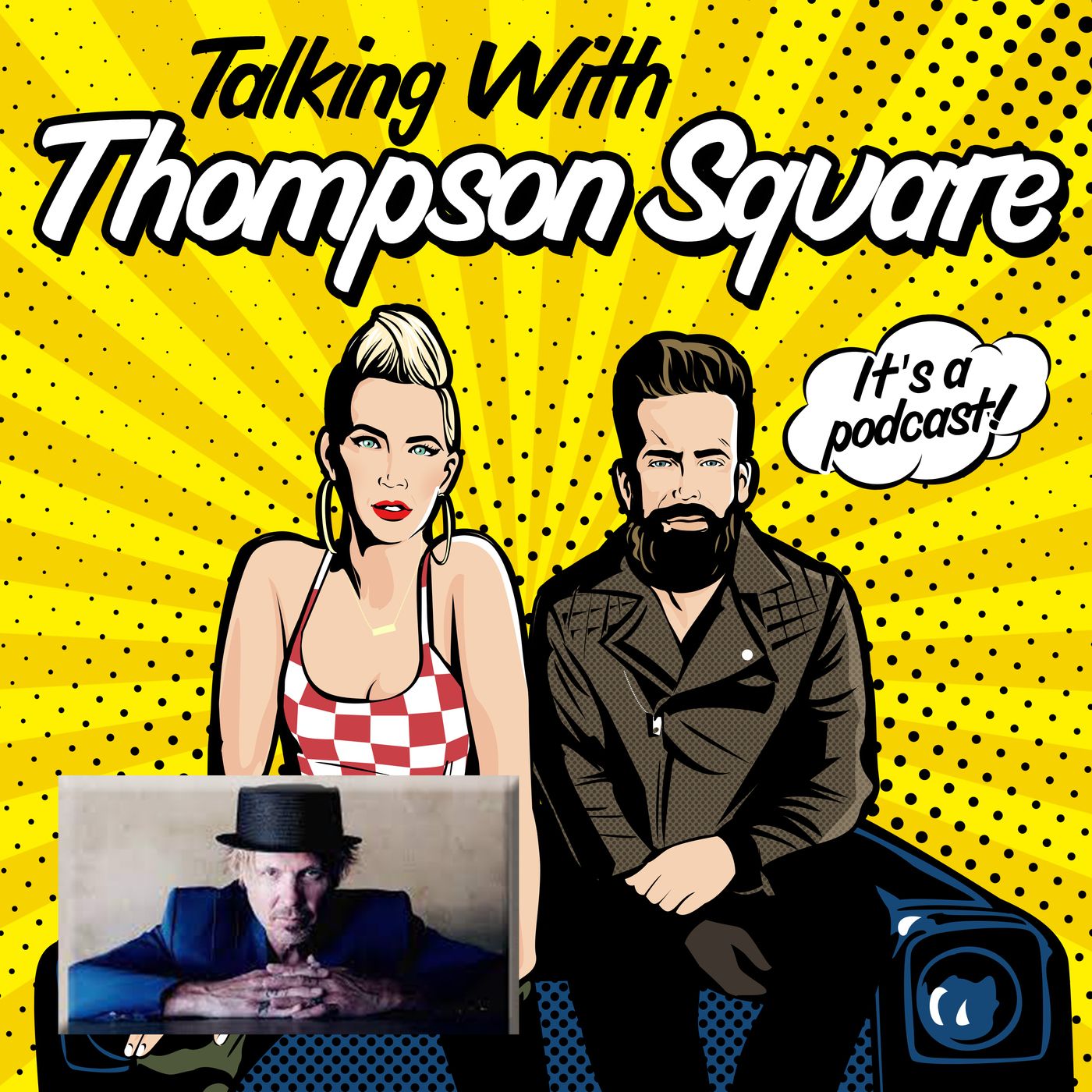
Talking with Jeffrey Steele About His Amazing Career That Most Musicians Only Dream About
Jeffrey Steele has lived a life most musicians only dreams of. He is one of the most talented, well versed, passionate and articulate guys in the music biz. His love for what he does and how he feels about the craft and our country is at the forefront of his compositions and we're all better for it. It was a great pleasure to have Jeffrey on this episode. I know you'll love it. See Privacy Policy at https://art19.com/privacy and California Privacy Notice at https://art19.com/privacy#do-not-sell-my-info.
2023-01-01
118 min
Transcript
Available Results
Generated results are saved to the knowledge database for reuse and search.
No generated results are available for this episode yet.
Extract Knowledge
Pick what you want extracted first. Model, scope, and chapter options appear after a template is selected.
Generated results for public episodes are saved to the knowledge database so they can be reused and searched later.
Transcript
<v Speaker 1>Standing by three two one, let's go.
<v Speaker 2>Here's talking with Thompson Square. It's a podcast. I don't
<v Speaker 2>know my I actree, I do.
<v Speaker 1>Like I ain't got a single thing to lose. Sometimes
<v Speaker 1>I'm my over standing me.
<v Speaker 2>I guess that's just the.
<v Speaker 1>Child boy and me. I got alive the most would
<v Speaker 1>love to have. But sometimes I still wake up fighting me.
<v Speaker 1>You're this road I'm heading down, don't be. I guess
<v Speaker 1>that that's just the col bull. You'd best around, the restlessness,
<v Speaker 1>the hardest stone sometimes.
<v Speaker 2>Get the things out down, the foods.
<v Speaker 1>Crowd that's never said, that's fine, the fist that's in the.
<v Speaker 2>Doing everyone else. I guess that's just the cow bully me.
<v Speaker 2>Oh yeah, Hey, this is Thompson Square talking with Thompson Square.
<v Speaker 2>It's the podcast. And that is the voice from our
<v Speaker 2>guest today, famous songwriter. Uh good buddy and just a
<v Speaker 2>just a great freaking American human being, Jeffrey Steele.
<v Speaker 1>How you doing, man, man? I am doing good, doing good.
<v Speaker 1>We we we all got through the stuffs, as it were,
<v Speaker 1>this this this holiday season. Yeah yeah, the whole the
<v Speaker 1>whole family came in for the holiday. We all got
<v Speaker 1>sick and oh god, and uh it was pretty it
<v Speaker 1>was pretty pretty, pretty rough, but we we all got
<v Speaker 1>through it. So we're on the back side now, feeling
<v Speaker 1>pretty good.
<v Speaker 3>So everybody got it, huh, everybody in the family, grandkids, kids, Well,
<v Speaker 3>we had all gotten together for my grandson's tenth birthday party,
<v Speaker 3>right and and one of the little ones was sick
<v Speaker 3>and and boom.
<v Speaker 2>So it's it's so crazy because we had all the
<v Speaker 2>family in as well, and my my niece's husband had
<v Speaker 2>it when he got here, evidently unbeknownst to us. Oh gosh,
<v Speaker 2>and uh yeah, so my niece got it, and I
<v Speaker 2>think their little boys okay, but Sean has got it
<v Speaker 2>now upstairs.
<v Speaker 1>So but she's just thinking about it.
<v Speaker 2>I appreciate it, man, she's uh, she's she's doing good.
<v Speaker 2>It's I mean, my my my bat about with it
<v Speaker 2>was very short lived and in uh you know, two
<v Speaker 2>or three days of dizzyness, and and that's kind of
<v Speaker 2>what she has right now. It's just it's very she's
<v Speaker 2>just like dizzy and kind of just kind of out.
<v Speaker 2>It's the weirdest thing, man, because it feels like nothing
<v Speaker 2>else I've ever had. It's like I had way worse.
<v Speaker 2>I've been way more sick, but it just you just
<v Speaker 2>feel just not there one hundred percent.
<v Speaker 1>It's just really really we we we all got pretty
<v Speaker 1>sick over here, but we uh, every Like for me,
<v Speaker 1>I had a different symptom every day.
<v Speaker 2>Really, it was the weirdest thing.
<v Speaker 1>It was the weirdest thing. Like one day, I, you know,
<v Speaker 1>had chills, one day I had a cough, one day
<v Speaker 1>I just my sinuses were completely backed up. One day
<v Speaker 1>I felt kind of good, and one day I had sweats,
<v Speaker 1>and one day you know what I mean. Like every
<v Speaker 1>day seemed to be like a different thing, and then
<v Speaker 1>at some point it just kind of got better. Yes, God,
<v Speaker 1>God only knows what they're doing to us.
<v Speaker 2>Hey, we're going to get into that. I promise you.
<v Speaker 1>Man.
<v Speaker 2>See I'm doing this. I'm hitting my new butt so
<v Speaker 2>I can cough. Yeah I'm not sure. Yeah, I supposedly
<v Speaker 2>you can't get it twice. That's what they say. So yeah,
<v Speaker 2>I'm not too uh, I'm not too worried about it. Again,
<v Speaker 2>but uh man, that first song I just played, there's
<v Speaker 2>there's so much that I want people to know about
<v Speaker 2>you and you and I actually don't know what you're
<v Speaker 2>that that well, we haven't been.
<v Speaker 1>Just we just known each other a long time. But
<v Speaker 1>we have known each other a few years, haven't we Yeah,
<v Speaker 1>but not intimately in the industry.
<v Speaker 2>We have not been intimate yet. No, I'm sure that's coming.
<v Speaker 2>Hey watch out. Uh that's all the time we have.
<v Speaker 2>But man, so this guy and I want to just
<v Speaker 2>really really briefly, like I love for you to just
<v Speaker 2>run us through like a synopsis of of how you
<v Speaker 2>got started. And I know everyone always asks you that question,
<v Speaker 2>but for me, I mean from from from from starting
<v Speaker 2>out in California to boy Howdy to move into Nashville
<v Speaker 2>and all the things in between. We can get through
<v Speaker 2>that pretty quick, you know. But you know, you know
<v Speaker 2>a lot of times, you know, people don't understand or
<v Speaker 2>they don't really realize who's behind the songs that they
<v Speaker 2>enjoyed the radio and they listen to the radio, and man,
<v Speaker 2>you've got a discography that I'm so pissed off about
<v Speaker 2>because it's I mean, you have more, You've written more
<v Speaker 2>hit songs, and I have friends in my contacts. It's
<v Speaker 2>it's kind of depressing when you think about it.
<v Speaker 1>But if I was a baseball player, though, you know,
<v Speaker 1>I'd have the batting average of a picture because you know,
<v Speaker 1>I've written like ten thousand songs and I have you know,
<v Speaker 1>had probably about one hundred of them have been singles.
<v Speaker 1>But but you know, that's a lot of a lot
<v Speaker 1>of strikeouts there too. But but that's the thing, like
<v Speaker 1>you're saying, back way before the boy Howdy days, I
<v Speaker 1>was back in the seventies, I was. I was a
<v Speaker 1>rock and roll kid that was grew up in Hollywood,
<v Speaker 1>you know it was, and was playing playing gigs on
<v Speaker 1>the Sunset Strip basically at all the rock clubs in
<v Speaker 1>a Zeppelin cover band. That was. That was my teenage
<v Speaker 1>years in Hollywood. And then you know, my dad keep
<v Speaker 1>being kept pounding over my head, you know, you need
<v Speaker 1>to listen to country music. And I said country music sucks, dad,
<v Speaker 1>and he no, man, it's it's the best man, Johnny Cash,
<v Speaker 1>Chris Christofferson, Merl Haggard, you got to listen to these
<v Speaker 1>songs you got, You've got to listen to it. And
<v Speaker 1>I just refuse. I'd be like, you know, I can't
<v Speaker 1>tell my friends I'm playing country music there. They're like
<v Speaker 1>to sell me. And then I got a gig. I
<v Speaker 1>got a gig playing in a cover band up in Bakersfield,
<v Speaker 1>you know about you know, one hundred and so miles
<v Speaker 1>from from La right, and uh, it was, it was
<v Speaker 1>I had to learn a bunch of Morole Haggard songs.
<v Speaker 1>I was playing bass, singing background vocals, and I fell
<v Speaker 1>in love. And then and then Honeysuckle Rose came out
<v Speaker 1>right Willie Nelson movie. And when I heard all those
<v Speaker 1>Christofferson songs in that movie, I just my dad was right,
<v Speaker 1>and I flipped out over the lyrics. But I had
<v Speaker 1>this thread of hardcore rock and roll in my background.
<v Speaker 1>You know, my brothers were in bands and I was
<v Speaker 1>chasing them, and you know, and and and like I said,
<v Speaker 1>playing playing the whiskey of Go Go and Gazari's on
<v Speaker 1>the strip and you know the Viper Room back in
<v Speaker 1>the day, you know, back back when, back when the police,
<v Speaker 1>before the police had a record deal. I have so
<v Speaker 1>many stories back in that day from going to see
<v Speaker 1>bands like the Pretenders, who were brand new at the time,
<v Speaker 1>and just that whole that whole era was insane musically.
<v Speaker 1>And so anyway, as I you know, figured out how
<v Speaker 1>much I loved country music, I kept going to Bakersfield more,
<v Speaker 1>you know, and then I was and then as you do.
<v Speaker 4>You want to create professional graphics for your business and
<v Speaker 4>social media without wasting time or overspending. Get three years
<v Speaker 4>of Canvapro for just one hundred and fifty nine dollars
<v Speaker 4>a five hundred and forty dollars value, and it includes
<v Speaker 4>a live canva an Ai workshop to help you design faster,
<v Speaker 4>create better content, and look professional online if you post
<v Speaker 4>for your business, brand or social media. This gives you
<v Speaker 4>the tools and training and one simple package. Spots are limited,
<v Speaker 4>and the offer in soon Secure your spot at design
<v Speaker 4>Faster now dot com. That's design Faster now dot com.
<v Speaker 1>You know, there's hockey talks all over LA. I mean
<v Speaker 1>it's like there's more Honckey Talks around La than there
<v Speaker 1>are in Tennessee, right, And I was playing all of
<v Speaker 1>them in all these pickup bands. And then it was
<v Speaker 1>it was in this time in Los Angeles when Dwight
<v Speaker 1>Yoakum was out there in the mid eighties and Dwight
<v Speaker 1>got hot man he and legitimately, as you know, everybody knows,
<v Speaker 1>he got hot in LA. And LA became a hotbed
<v Speaker 1>for roots music for bands like Los Lobo, you know,
<v Speaker 1>and and Dwight and and so and loosen to Williams
<v Speaker 1>and we were chasing everybody around. And so there was
<v Speaker 1>this really cool scene that developed out in La and
<v Speaker 1>I thought that was a part of At the Palomino
<v Speaker 1>Club in La, I was in the house band and
<v Speaker 1>we and it was guys like me and Buddy Miller
<v Speaker 1>and Billy Block and the guys from Boy Howdie and
<v Speaker 1>a bunch of other Jimmy Lauderdale, a bunch of musicians
<v Speaker 1>all trying to get seen. And then I played in
<v Speaker 1>the house band. And one night Tony Brown came in
<v Speaker 1>uh with doing a showcase for Patty Loveless, and I
<v Speaker 1>was in the house band. So we opened the show
<v Speaker 1>and I played I played this song of the guy.
<v Speaker 1>That band leader said, hey, play that song you wrote.
<v Speaker 1>So I played the song that I wrote, and Tony
<v Speaker 1>Brown cornered me backstage at the Palamino and said, what's
<v Speaker 1>the name of that song? And I told him. I
<v Speaker 1>said it's called Where Fools Are Kings? And he goes,
<v Speaker 1>I'm going to cut that song on Patty. I go,
<v Speaker 1>what do you mean you're gonna cut it? He goes,
<v Speaker 1>I'm gonna cut it on Patty. I didn't even know
<v Speaker 1>what he meant. Wow. And that's how dumb I was.
<v Speaker 1>And and then he handed up, he handed up cutting
<v Speaker 1>it on Steve Warner in nineteen eighty six. It was
<v Speaker 1>my first cut, and that kind of brought me back
<v Speaker 1>to Nashville. And then, of course when I came to Nashville,
<v Speaker 1>everybody was just throwing rocks at me, going, this guy's
<v Speaker 1>like a hardcore rocker. You know, he's got a C
<v Speaker 1>D c rips in his songs. And but that was
<v Speaker 1>my humble beginning of like you know, I played a
<v Speaker 1>zillion bars, and and everywhere I played back in those days,
<v Speaker 1>everybody loved the Rolling Stones, and everybody loved Charlie Daniels,
<v Speaker 1>and everybody loves led Zeppelin, Bob Seeger, and they love
<v Speaker 1>Merle Haggard. So that was my me. That was my
<v Speaker 1>stew that I was making my songs out. But that's
<v Speaker 1>when and when I came back to Nashville, you know,
<v Speaker 1>I did a few showcases here. But when I came
<v Speaker 1>back with Boy Howdie in the early nineties, I was
<v Speaker 1>writing songs for our album and I wrote the song
<v Speaker 1>sheet give Anything to Fall in Love, which became Boyouti's
<v Speaker 1>big hit, and I wrote it. I wrote it in Nashville,
<v Speaker 1>and that was my first song I wrote in Nashville.
<v Speaker 1>It was my last day here. It was the last
<v Speaker 1>thing I did. And then it ended up getting recorded
<v Speaker 1>by an R and B artist named Gerald Leavert who
<v Speaker 1>was the son of Eddie Lavert from the OJS. So
<v Speaker 1>it was a number one country and pop hit the
<v Speaker 1>same year. And I'm just kind of going what. I
<v Speaker 1>didn't know what was to think of anything. It just
<v Speaker 1>all came into my face. Wow, and so and so
<v Speaker 1>we kind of came back here and settled. So that's
<v Speaker 1>kind of how I got here. And and trust me, man,
<v Speaker 1>I was like a jingle singer, session singer, sometime part
<v Speaker 1>time bas session bass player of course, playing in all
<v Speaker 1>the clubs. I was making a really good living out
<v Speaker 1>in LA. I did not need a record deal and
<v Speaker 1>I didn't need any of that, but it just sounded
<v Speaker 1>fun and and so I, you know, I gave up
<v Speaker 1>a pretty good salary out in LA to get in
<v Speaker 1>the van with a pa, you know, the deal and
<v Speaker 1>start making five hundred a night, you know, yeah, and
<v Speaker 1>driving twenty hours to a gig, you know, and trying
<v Speaker 1>to break a hit single. So there you go. That's
<v Speaker 1>how I got to Nashville.
<v Speaker 2>Man, that's so crazy. And you know, I think that
<v Speaker 2>you were there in LA when all that stuff was
<v Speaker 2>going on.
<v Speaker 1>Man, I mean like it was amazing.
<v Speaker 2>You You've seen kind of the best of in my opinion,
<v Speaker 2>the best of LA and the best of Nashville.
<v Speaker 1>Yeah, in your life. Yeah. And the crazy thing was,
<v Speaker 1>there was a decision that I kind of I don't
<v Speaker 1>know if I was consciously making it or not, but
<v Speaker 1>like back in the seventies when I was playing on
<v Speaker 1>the Sunset Strip, you know, Van Halen was just about
<v Speaker 1>to release their first rest Shut Up Dude. So that, yeah,
<v Speaker 1>we were all around that. We were all around that
<v Speaker 1>and going on back in LA at that time in
<v Speaker 1>the late seventies, you know, mid seventies. And then because
<v Speaker 1>I was I was like a young teenage kid, really
<v Speaker 1>too young to be in the clubs. I had to
<v Speaker 1>get a note to go into the club and sing,
<v Speaker 1>you know. Anyway, So when the eighties came the big
<v Speaker 1>hair band movements, you know, Poison and Guns N' Roses,
<v Speaker 1>and it was like a decision. I was playing in
<v Speaker 1>all these original bands and trying to get a record deal.
<v Speaker 1>I had really long here and I was wearing a
<v Speaker 1>kimono and platform shoes and spandex, you know. And I
<v Speaker 1>did this. I did this one showcase and they made me,
<v Speaker 1>they made me wear I make up and for the
<v Speaker 1>showcase it was like this rock band and that was it.
<v Speaker 1>I was like, you know what, I'm not doing this
<v Speaker 1>ship And then the next night I was. I was
<v Speaker 1>literally playing in a band with Buddy Miller, the late
<v Speaker 1>uh David Linley on drums and Derf Morlock's on guitar.
<v Speaker 1>We had this really cool little four piece band, and
<v Speaker 1>I just started getting to this whole root scene that
<v Speaker 1>was happening, that was just starting to break with Dwight
<v Speaker 1>and you know, everybody was chasing Dwhite around back then.
<v Speaker 1>So uh, that was just a conscious I think it
<v Speaker 1>was a conscious movement, you know what I mean, Like
<v Speaker 1>you're so young, You're just kind of going, I ain't
<v Speaker 1>doing that. I don't want to do that. I'm not
<v Speaker 1>wearing makeup on my face. I love Queen, but I'm
<v Speaker 1>not doing that. Uh and so, but I was in
<v Speaker 1>influenced so heavily by that music of the seventies, so heavily.
<v Speaker 1>I mean, the theory of it, the structure of it,
<v Speaker 1>the wide openness of the lyrics, you know, how how
<v Speaker 1>they weren't as literal as country music. I was, you know,
<v Speaker 1>rock and roll, right, I mean, I mean, and as
<v Speaker 1>you know, I'm not I'm not patenting myself on the
<v Speaker 1>back and taking any credit. But country music became the
<v Speaker 1>seventies in two thousand. Yeah, it became seventies rock and roll.
<v Speaker 1>It really did. Yeah, And there were a few guys,
<v Speaker 1>there were a few guys that just kind of grew
<v Speaker 1>up in it. And and we were just the thing
<v Speaker 1>I always say, we were just having fun. We didn't
<v Speaker 1>give a shit about getting a song cut. We were
<v Speaker 1>we were just having fun, you know, just trying to
<v Speaker 1>write whatever we can come up with.
<v Speaker 2>Man, I think that trying to hit something, you know. Yeah, well,
<v Speaker 2>I think that's where it comes from too, though. Man,
<v Speaker 2>when you're not really chasing something, you're not saying I
<v Speaker 2>want to be like that, I want to be that.
<v Speaker 2>You're just having fun in doing your thing, being yourself,
<v Speaker 2>your most authentic self. I think that's when sometimes that
<v Speaker 2>magic happens. Man, when you're you know, but to think
<v Speaker 2>that you were that young and made the decision not
<v Speaker 2>to do the hair to do the hair band thing,
<v Speaker 2>It's really interesting because you know that everyone at that
<v Speaker 2>age is like, oh, man, I can make I could
<v Speaker 2>be super rich. If I'm doing this, I'm gonna I'm
<v Speaker 2>gonna look like Axl Rose or I want to you know,
<v Speaker 2>try to be like David Lee Roth or whatever else,
<v Speaker 2>you know, and to look at that and go, noah, man,
<v Speaker 2>this is not for me. That's that's well. They were
<v Speaker 2>pretty mature.
<v Speaker 1>There was there was a classical thing. I always I
<v Speaker 1>always tell this to my songwriting you know, my publishing songwriters,
<v Speaker 1>and then my teach a lot of classes too, and
<v Speaker 1>I always say, man, there was this moment where I
<v Speaker 1>was playing the Palomino and out in North Hollywood in
<v Speaker 1>the house band, and Christofferson came in one night, and
<v Speaker 1>you know, of course, my dad had always told me
<v Speaker 1>that he was the guy, you know, and that was
<v Speaker 1>the guy. Yeah, And as the years went by, I
<v Speaker 1>just fell in love with everything he did. And you know,
<v Speaker 1>so I'm in my early twenties and I just remember
<v Speaker 1>him him really beating me over the head about that.
<v Speaker 1>And so anyway, he was there and he sang a
<v Speaker 1>couple of songs and then he left, you know, to
<v Speaker 1>get the hell out of there. Through the back alley,
<v Speaker 1>and so I went to try to get some advice,
<v Speaker 1>you know, and I was like, Chris, you know, my
<v Speaker 1>name is Jeff Steele. I want to be a songwriter,
<v Speaker 1>and so what do I need to do? Man? What
<v Speaker 1>I need to do? He was getting into a He's
<v Speaker 1>getting into a limo with two chicks and a bottle
<v Speaker 1>of whiskey. And he looks at me kind of half cocked,
<v Speaker 1>and he goes, son, never do it for the money.
<v Speaker 1>And you know, he's getting into a limo with two
<v Speaker 1>chicks and a bottle of whiskey, and dude, key For
<v Speaker 1>twenty five years later, I'm Songwriter of the Year and
<v Speaker 1>he's the Icon of the Year at BMI that year.
<v Speaker 1>So we're both kind of on stage together and I
<v Speaker 1>get to see him again and I said, I said, dude,
<v Speaker 1>I got this great picture of me and him, just
<v Speaker 1>like in this belly laugh and that. I yeah, just
<v Speaker 1>the greatest picture. And I'm so proud of it. My
<v Speaker 1>dad would just freak, you know, if he was alive.
<v Speaker 1>But uh, but I said to him, man, remember.
<v Speaker 5>That time in the alley, right, you were with those
<v Speaker 5>two girls. He's like, no, no, I don't which night
<v Speaker 5>which Lima, which girls, I said, you.
<v Speaker 1>You told me and this and this is twenty five
<v Speaker 1>years later. He goes, you told me to never do
<v Speaker 1>it for the money. And he looks at me and
<v Speaker 1>he goes, did you I go, no, speak of that,
<v Speaker 1>a boy.
<v Speaker 2>That's awesome.
<v Speaker 1>Man. So you know, like stupid things like that, that
<v Speaker 1>that and life is so full circle like that, you know, like,
<v Speaker 1>but to get to that moment, to get to see
<v Speaker 1>him again and share that, because that was my journey.
<v Speaker 1>You know, you you start looking for those markers that
<v Speaker 1>you can. You can because I had you know you,
<v Speaker 1>I'm sure you're the same as men. I had no plan.
<v Speaker 1>I was just a freaking bass player, right and a
<v Speaker 1>singer who loved to play, loved to I just was
<v Speaker 1>having a ball. I was just having a great time.
<v Speaker 1>I didn't have a plan. I didn't have a five year,
<v Speaker 1>ten year plan. Man. I just wanted to make music.
<v Speaker 1>And if I if I to this day was a
<v Speaker 1>bass player in a club, I would be making you know,
<v Speaker 1>making a hundred bucks a night. I'd be completely satisfied.
<v Speaker 2>I totally get that. I totally agree.
<v Speaker 1>I've always been that guy. And of course, you know,
<v Speaker 1>you go through the phases and changes as your shit changes.
<v Speaker 1>But but but I've always tried to be that guy.
<v Speaker 1>I mean, I think that's me. I mean, you know,
<v Speaker 1>I've I've screwed up along the way, but but but
<v Speaker 1>pretty much maintained that principle of like, I'm just going
<v Speaker 1>to do what makes me happy. And it's really defined
<v Speaker 1>what I've done. Man. It's like, you know, a couple
<v Speaker 1>of years back, I, you know, had this song number
<v Speaker 1>one song for Eric Church that five years ago. When
<v Speaker 1>I wrote it, everybody said it would never get recorded
<v Speaker 1>because it was it was it was too mean, it
<v Speaker 1>was it was it was bad mouth and country music.
<v Speaker 1>And then five years later, the world's on fire and
<v Speaker 1>BLM and all this crap's going on, and he hears
<v Speaker 1>the song stick that in your country song and he
<v Speaker 1>records it. You know, but I I had written the
<v Speaker 1>song almost almost six years previous, during the Baltimore riots
<v Speaker 1>when Obama was the president, and and and you know,
<v Speaker 1>like my most recent I've had the Aaron Lewis am
<v Speaker 1>I the only one and have dude, I've never seen
<v Speaker 1>It's one of the biggest songs of the year this year,
<v Speaker 1>and it's not getting any promotion any press at all.
<v Speaker 1>And but but somehow it got through all the cancel
<v Speaker 1>culture and and you know, was a number one song.
<v Speaker 1>So but for me, and I hate saying that, chicks,
<v Speaker 1>I don't want to pack myself on the back, but
<v Speaker 1>just I'm trying to make a point that I kept
<v Speaker 1>doing it the way I heard it and the way
<v Speaker 1>I wanted to do it. I've always done that. I've
<v Speaker 1>never tried to write a song for anybody. I you know,
<v Speaker 1>when someone says, hey, Faith Hild needs a song, or
<v Speaker 1>Rascal Flats needs a song, I just try to write
<v Speaker 1>the song in the room that day, right, you know,
<v Speaker 1>I try my best. I mean, and you know, so
<v Speaker 1>that's what I've always tried to hold onto.
<v Speaker 2>Anyway, Well you can, yeah, you can pat yourself on
<v Speaker 2>the back then you deserve it. I mean I've been
<v Speaker 2>to your place. I've seen the plaques, and uh, you know,
<v Speaker 2>you don't. You don't get to where you are today
<v Speaker 2>without just being happy with what you're doing, because if
<v Speaker 2>that's a hell of a lot of work, man, that's
<v Speaker 2>a hell of a lot of work and the amount
<v Speaker 2>of success and even I mean I've known who you
<v Speaker 2>were ever since I moved here in nineteen ninety six,
<v Speaker 2>you know, and I was like, man, and you were
<v Speaker 2>on my list of Hey, I got to write with
<v Speaker 2>these dudes because I had I had some of the
<v Speaker 2>best advice I ever got from a songwriting standpoint with someone,
<v Speaker 2>and he said, write with people who are better than you.
<v Speaker 2>Always write with people who are better than you to
<v Speaker 2>elevate what you do. Because if you're writing with people,
<v Speaker 2>oh my gosh, if you're writing with people at your
<v Speaker 2>same level, a lot of times it might take you.
<v Speaker 2>I mean, you're gonna get better anyway as you do it,
<v Speaker 2>even by yourself. I mean, you keep writing songs by yourself,
<v Speaker 2>you're going to get better.
<v Speaker 1>Absolutely.
<v Speaker 2>But you get with the Jeffery Steele or or any
<v Speaker 2>of these other guys that have had tons of hits,
<v Speaker 2>they don't have hits. You guys don't have hits like
<v Speaker 2>you do. On accident. There's there's something there, there's a
<v Speaker 2>talent there.
<v Speaker 1>And and you got to remember you got to remember,
<v Speaker 1>I mean interrupt, but you got to remember too that
<v Speaker 1>that well for guys like me. There might be a
<v Speaker 1>few others. I don't know. I can't tell anybody else's story,
<v Speaker 1>but I had a good six year period where I
<v Speaker 1>would these songs were already written. Like I walk into
<v Speaker 1>a song meeting with an A and R guy Anthony Martin.
<v Speaker 1>I don't want to name names, but Anthony Martin was
<v Speaker 1>the guy, and and and I played them, played them Chrome,
<v Speaker 1>and I played them hell Yeah. And both of the
<v Speaker 1>songs have kind of talkie versus you know, rap, not rap,
<v Speaker 1>but kind of talking, you know. So he shuts them
<v Speaker 1>off like ten seconds in and he looks at me
<v Speaker 1>and he goes, man, I need my singer singing, not talking.
<v Speaker 1>You need to go listen to you need to go
<v Speaker 1>listen to the radio. And this is pre you know,
<v Speaker 1>this is a good four years out of the songs
<v Speaker 1>getting recorded. But I quickly learned, and I always tell
<v Speaker 1>the story, but I would go into the clubs that
<v Speaker 1>you know, I was playing all the bars, and I'd
<v Speaker 1>play the bars and chicks would freak out when they
<v Speaker 1>hear these songs. They would freak out because they had
<v Speaker 1>these rock riffs in them, you know, seventies rock rifts
<v Speaker 1>and stuff, and you know they're like throwback, but they
<v Speaker 1>were totally country lyrics, hardcore country lyrics. And I was like, man,
<v Speaker 1>the chicks love these songs. But the record companies freaking
<v Speaker 1>hate them, and the record companies keep telling me I'm way,
<v Speaker 1>and then Montgomery Gentry shows up.
<v Speaker 2>Yeah, and you know, there was no guys, there was
<v Speaker 2>no Rascal Flats.
<v Speaker 1>When I wrote These Days, they weren't they didn't have
<v Speaker 1>a record deal. So you know, I was I was
<v Speaker 1>turning into a song like these Days, which was kind
<v Speaker 1>of a you know, it was an ode to my
<v Speaker 1>growing up in LA and playing in the rock clubs
<v Speaker 1>and meeting my wife way back in the day, and
<v Speaker 1>and and it was just like this rambling you know,
<v Speaker 1>it wasn't it wasn't a traditional kind of verse chorse structure.
<v Speaker 1>So when I played it for people in the industry,
<v Speaker 1>they were just like, They're like, dude, this is like
<v Speaker 1>I don't know what this is. This is not country music.
<v Speaker 1>It sounds kind of country, but it's not. I said, no,
<v Speaker 1>it is. It is. It's gonna be It's gonna be
<v Speaker 1>the next wave.
<v Speaker 2>It is, I say, so, damn it.
<v Speaker 1>And they looked at me because they kept telling me
<v Speaker 1>that I needed to go listen to the radio more.
<v Speaker 1>And I would get to a point where I got
<v Speaker 1>so cocky. I said, man, I'm going to be the radio.
<v Speaker 1>You know, I would just get so pissed off and
<v Speaker 1>hearing that because because I knew when I played in
<v Speaker 1>the clubs that chicks would keep coming up and they'd
<v Speaker 1>want to hear them again. All the girls would go, Man,
<v Speaker 1>play that song again. And they didn't know the song.
<v Speaker 1>It was just they knew it for me, you know.
<v Speaker 1>So I just that was my research. I wasn't a
<v Speaker 1>business man, you know, I just was. I just I
<v Speaker 1>just did the research on the fly i could, and
<v Speaker 1>I'm a really good observer. I would always be one
<v Speaker 1>of these guys. That's why I'm a songwriter. I would
<v Speaker 1>step back and observe things and and just look at
<v Speaker 1>the situation and then I would write about it. So
<v Speaker 1>that was kind of my business sense. It's all I
<v Speaker 1>had was to step back and look at what I
<v Speaker 1>was doing versus what they were telling me. And what
<v Speaker 1>I was doing was not currently the thing, but it
<v Speaker 1>was working in those bars, it was working big time.
<v Speaker 1>So you know, I took that the heart and I
<v Speaker 1>just kept doing what I loved doing. Wow, And and
<v Speaker 1>that was my story, I guess.
<v Speaker 2>The business man. It's so funny that people at labels
<v Speaker 2>and publishing houses and stuff like that who'll give you
<v Speaker 2>advice on your songs and say, this is not country
<v Speaker 2>or whatever. Listen to the country or whatever. They've never
<v Speaker 2>created anything in their life, never created.
<v Speaker 1>It's like government. It's like government. The government's never run
<v Speaker 1>a business, you know, yet somehow they get to run
<v Speaker 1>everything everything. I love that line. I love that line
<v Speaker 1>that Elon Musk said about the government is able to
<v Speaker 1>do it has a monopoly on everything, and and it's
<v Speaker 1>and it's the only business that's able to kill people.
<v Speaker 2>Yeah legally, yeah, it's okay.
<v Speaker 1>And and and then that's the I kind of related
<v Speaker 1>to the government a little bit. That's why I brought
<v Speaker 1>that up.
<v Speaker 2>It always comes back together, especially right now. Man, oh god,
<v Speaker 2>but uh well, you know, so so after all that stuff,
<v Speaker 2>it seemed like this is the doors kind of flew open.
<v Speaker 2>And it's so funny to me, like, you know, when
<v Speaker 2>people say, you know, you're your songs aren't good enough,
<v Speaker 2>you're taking in these people who've never written their name,
<v Speaker 2>hardly know they're they're running publishing houses and pitching songs
<v Speaker 2>and the only songs that they know. And to the
<v Speaker 2>the the lay person out there, right now, you have
<v Speaker 2>publishing houses and they have just many of them have
<v Speaker 2>vast and vast amount of songs who've been written for
<v Speaker 2>years and years and sometimes even decades because they buy
<v Speaker 2>old catalogs. A catalog is a songwriter's body of work,
<v Speaker 2>and they buy these old catalogs, and you have a
<v Speaker 2>twenty five year old kid, twenty year old kid pitching
<v Speaker 2>the songs. And we found this out when we went
<v Speaker 2>in as Thompson Square to try to find songs for
<v Speaker 2>the first two albums, and I'm like, hey, man, can
<v Speaker 2>you you know, we're looking for something like, you know,
<v Speaker 2>like a skip you in kind of you know, this
<v Speaker 2>kind of thing, and they're like, they only know what
<v Speaker 2>was turned in the week before. They don't even know,
<v Speaker 2>you know. And we tried to get songs for Showing
<v Speaker 2>as a Super Country, a record that I produced on her,
<v Speaker 2>and that was just it was unnerving. So we just
<v Speaker 2>had to end up writing everything.
<v Speaker 1>But absolutely yeah, and you're better for it.
<v Speaker 2>Absolutely yeah. You know, it's like back, but it does.
<v Speaker 1>Speak to That's the big the big uh, the whole
<v Speaker 1>in that whole system is like there's there's so much
<v Speaker 1>catalog that there used to be publishers that would like, like,
<v Speaker 1>you know, one of my guys that worked for me,
<v Speaker 1>Steve Marklin over the years. He knew every song, Daryl Franklin,
<v Speaker 1>they knew every song right that that that whoever, whoever
<v Speaker 1>were the writers at their company, they knew that they
<v Speaker 1>knew the intimately every song in that.
<v Speaker 2>Catalog, just as it should be. Yeah, because I mean,
<v Speaker 2>that's what you're armed with. That's your ammos. I need
<v Speaker 2>a song that's about snow, and oh you would you?
<v Speaker 2>So and so wrote a song it's killer. He wrote
<v Speaker 2>it ten years ago, but it's ever been cut, you know,
<v Speaker 2>and you pull it out. Yeah, it's so crazy I
<v Speaker 2>find it.
<v Speaker 1>Yeah, I agree. I mean but but and of course
<v Speaker 1>now it's a whole different world now. Now it reminds
<v Speaker 1>me of being in Los Angeles now, just the whole process.
<v Speaker 1>You know, there's five six guys in a room. There's
<v Speaker 1>a there's a drum loop guy. There's a top a
<v Speaker 1>top line lyricist as they call him. That's what does
<v Speaker 1>that mean? What does that mean?
<v Speaker 2>What's the maximum writers you've ever written with?
<v Speaker 1>I mean, I've written in a room with five or
<v Speaker 1>six guys. But it was all my writers at my company.
<v Speaker 1>It was just having fun.
<v Speaker 2>Yeah, I want I don't.
<v Speaker 1>I won't go do those. I just yeah, I got
<v Speaker 1>you know, I'm not I'm not bad mounted and I'm
<v Speaker 1>not I'm not being a you know, crusty older guy.
<v Speaker 1>I just I'm tired of the algorithms though, Like you know,
<v Speaker 1>it's it's it's it's not just now, it's it's been
<v Speaker 1>in every era. But something hits a formula, hits man
<v Speaker 1>and then it just gets choked to death with everybody
<v Speaker 1>writing the same tempo, the same the same uh you know,
<v Speaker 1>drum beat, the same sort of lyric something about it
<v Speaker 1>drinking a shot of whiskey and taking a girl home basically.
<v Speaker 1>And I'm not putting that down. I mean, it's been
<v Speaker 1>in country music ever since country music began. But you
<v Speaker 1>know what I mean, there's it's it's in It's like,
<v Speaker 1>isn't anybody writing about the world right now like I
<v Speaker 1>was writing, you know, like like if you take the
<v Speaker 1>Aaron Lewis song, I'm writing about what's happening in the
<v Speaker 1>world right now, right or stick that in your country's honor.
<v Speaker 1>Even when I wrote my Town back in the day,
<v Speaker 1>I was writing about what was happening. It was right
<v Speaker 1>after nine to eleven, and I was writing about that,
<v Speaker 1>and not to say that you have to write about that,
<v Speaker 1>but I just missed that. There used to be a
<v Speaker 1>lot of current event and political writing in country music.
<v Speaker 1>It's always been in rock and roll, obviously with Dylan
<v Speaker 1>and Springsteen and all the others. But but you know,
<v Speaker 1>like Johnny Cash, if he didn't write it, he would
<v Speaker 1>always find stuff to say. And of course Merle Haggard
<v Speaker 1>was the the you know, the top of the mountain
<v Speaker 1>in terms of, you know, writing about current events back
<v Speaker 1>in the sixties and seventies. That to me, that's what
<v Speaker 1>music is supposed to be. It's supposed to reflect the times.
<v Speaker 1>And maybe that's what it is right now. People don't
<v Speaker 1>want to hear any of the bullshit that's going on
<v Speaker 1>right now. They just want they just want a song
<v Speaker 1>about getting a drink and taking a girl off. Well,
<v Speaker 1>they don't want to deal with it, man, So maybe
<v Speaker 1>that's it.
<v Speaker 2>Maybe see I disagree with you do, man, it's I think,
<v Speaker 2>am I The only one is the contrary to that
<v Speaker 2>statement you just made, because if not, the only one
<v Speaker 2>is about what the hell is going on right now?
<v Speaker 2>And it explodes no matter how much they try to
<v Speaker 2>squash it and the first time I heard it, I
<v Speaker 2>was like, dang, why didn't I write that? Because that's
<v Speaker 2>how we all feel, you know, That's how a lot
<v Speaker 2>always feel. And I think again that I think people
<v Speaker 2>feel like that even if they don't want to admit it,
<v Speaker 2>just in the landscape of what's going on, you know.
<v Speaker 1>So yeah, everybody, everybody's afraid to talk. But I I
<v Speaker 1>I've always been pretty outspoken to a fault, I guess.
<v Speaker 1>And you know, in terms of me trying to be
<v Speaker 1>an artist too, I'm notorious for I have shot myself
<v Speaker 1>in the foot about five times because I just wouldn't
<v Speaker 1>do what they told me to do. Yeah, I wouldn't
<v Speaker 1>put the wouldn't put the cowboy hat on, you know.
<v Speaker 1>I just I was like, I'm from Hollywood, dude, I'm
<v Speaker 1>not going to go out there in a cowboy hat.
<v Speaker 1>I'm not going to be I'm not going to do
<v Speaker 1>something that I'm not you know. So so you know,
<v Speaker 1>for me, I had to go down the weird road
<v Speaker 1>that I went down because I never would have found
<v Speaker 1>out what this music was, you know, I never would
<v Speaker 1>have found out what these songs were. I I I
<v Speaker 1>would have got caught up in the ego of trying
<v Speaker 1>to be that guy, you know, singing those hits on stage.
<v Speaker 1>And I know that would have I know I would
<v Speaker 1>have went that way. That's because I know that's in
<v Speaker 1>my nature to go that way. And I knew that
<v Speaker 1>I had my mom always told me to stay humble
<v Speaker 1>and and and I knew I had to go down
<v Speaker 1>a road that made me think more about what I
<v Speaker 1>was trying to say, because it was more important to
<v Speaker 1>me to get the song right than as much as
<v Speaker 1>I love to sing, and you know, I love to
<v Speaker 1>sing as much. As much as it I love to
<v Speaker 1>get out there and do that, it was more important
<v Speaker 1>to get the thing right, absolutely right, and and and
<v Speaker 1>for all time, you know, I wanted it to get it,
<v Speaker 1>you know, and you look at you know, you played
<v Speaker 1>that song Cowboy and Me just came out on that
<v Speaker 1>Yellowstone Show, a brand new version of tim recording. It's
<v Speaker 1>like just twenty years to the day that it was released,
<v Speaker 1>you know, so number one again, the number one again.
<v Speaker 1>And it's a testament to uh doing what you do,
<v Speaker 1>I mean, is the testament to that like real ship man,
<v Speaker 1>Like it's it's real, you know. And and yeah, and
<v Speaker 1>it was it was a real song. And it was
<v Speaker 1>a great day with Craig Wiseman and big Al Anderson.
<v Speaker 1>We had a big fight that day and over over
<v Speaker 1>the form of the song, the structure of the song.
<v Speaker 1>It was a big battle that I won and a
<v Speaker 1>confidence thing for me with Craig because Craig was really
<v Speaker 1>hot at the time in the nineties. Yeah, and I was.
<v Speaker 1>Craig would always give me shit because I had, like
<v Speaker 1>I had like eleven number two songs, never had a
<v Speaker 1>number one, and he would always call me number two.
<v Speaker 1>It would give me shit. And and and we got
<v Speaker 1>together that day and I had the idea and and
<v Speaker 1>of course Craig you know, just brought the you know
<v Speaker 1>genius to it once he heard it. And as we
<v Speaker 1>finished it, I kept saying, I kept saying, it needs
<v Speaker 1>to go to the bridge and then come back to
<v Speaker 1>the bridge. No, because we keep saying the title Cowboy.
<v Speaker 1>I mean, we need to we need to do a
<v Speaker 1>form that goes like this, right, So it gets to
<v Speaker 1>a peak in the solo, and then it hits the
<v Speaker 1>next bridge and then it comes back down for the end,
<v Speaker 1>as opposed to you know, a song doing this, it's
<v Speaker 1>doing this right, and it ends down here I was
<v Speaker 1>really fighting for that and more of an artistic approach
<v Speaker 1>obviously in terms of a commercial form, but I was
<v Speaker 1>fighting and fighting he goes. He goes, Man, you're gonna
<v Speaker 1>suck it up, You're gonna fuck it up. And we
<v Speaker 1>were just weird, bad And then when we recorded the
<v Speaker 1>work tape, it was like, wow, yeah, sound pretty cool.
<v Speaker 1>It was, and it was my first number one It
<v Speaker 1>was the number one party. Craig gave me a plaque
<v Speaker 1>that said follow Craig to the money.
<v Speaker 2>Of course, good man.
<v Speaker 1>Well, we would always. We would always, you know, mess
<v Speaker 1>with each other like that. So that was that was
<v Speaker 1>really and that's the thing I'm getting way off. That's
<v Speaker 1>the thing too, I miss from back in the day,
<v Speaker 1>Like when I was writing with guys like Craig or
<v Speaker 1>Chris Wallen or Anthony Smith or a big al whoever
<v Speaker 1>it was Tony Mullens. We we weren't we weren't trying
<v Speaker 1>to look at our phones and go, hey, look at
<v Speaker 1>this idea. You know, let's let's write this, you know,
<v Speaker 1>and and and encapsulate this. We were just like the
<v Speaker 1>method was so crazy because we were throwing darts at
<v Speaker 1>each other. We were literally throwing darts at each other's foreheads,
<v Speaker 1>trying to beat each other's lines. I think half the
<v Speaker 1>time we don't even know what we don't even know
<v Speaker 1>what the song was we were writing. We were just
<v Speaker 1>trying to outdo each other's lines. Does that make any sense?
<v Speaker 1>And like, like when I wrote Speed, I wrote a
<v Speaker 1>song called Speed with Chris Wallen and and and I
<v Speaker 1>don't even remember if I knew it was hit song
<v Speaker 1>idea or not. I just I remember that he had
<v Speaker 1>this line that was so fricking good. So I was
<v Speaker 1>trying to beat him, and so I beat him, and
<v Speaker 1>then he crushed me with another one, and I'm like,
<v Speaker 1>so I throw it. You know, we're just throwing darts
<v Speaker 1>back and forth. And two hours later we got this
<v Speaker 1>song and we don't even know what we got, and
<v Speaker 1>it's like, wow, this is pretty good, man.
<v Speaker 2>So it's so crazy, dude, It's that's so that's so
<v Speaker 2>incredibly different.
<v Speaker 1>And and and I think that's how it's how you
<v Speaker 1>chase it, you know, like in rock and roll, you
<v Speaker 1>don't you don't you know what I mean rock and roll?
<v Speaker 1>You just you wait for that weird little thing to
<v Speaker 1>come out of you, right, that becomes the becomes the
<v Speaker 1>hook of the song. It becomes the you know, it
<v Speaker 1>becomes I.
<v Speaker 2>Can't get no hey hey, And that's more important. That's more.
<v Speaker 2>That's that's to me, Like melody and hooks are way
<v Speaker 2>more important the lyrics many times when it comes to
<v Speaker 2>like songs and remember them and and stuff. But it's
<v Speaker 2>like you get into a room now and it is that.
<v Speaker 2>I mean, you started, you started beat at one twenty,
<v Speaker 2>you know, and you right about. I mean, every freaking
<v Speaker 2>song was about drinking. Every single girl I made her.
<v Speaker 1>In a bar and with something that drinking and we
<v Speaker 1>went real ball. It's got this algorithm thing that's really weird.
<v Speaker 1>It It freaks me out and I don't I don't,
<v Speaker 1>I don't hear melodies. But it's working and people love
<v Speaker 1>it and you know, and what am I doing?
<v Speaker 2>What are you going to do?
<v Speaker 1>God bless them. A quick story, A really really quick ancher.
<v Speaker 1>A buddy of mine, Read Nielsen, who's passed away now
<v Speaker 1>a great songwriter, singer, guy who struggled with cancer near
<v Speaker 1>the end of his life and lost his voice. Became
<v Speaker 1>a songwriter. You know, he used to sing with Vince Gill.
<v Speaker 1>He ended up writing songs for Vince like Eliza Jane
<v Speaker 1>and what cowgirls do. Great songwriter, great great thinker, and
<v Speaker 1>getting back to the what we're talking about a second
<v Speaker 1>ago about the rock and roll lyric we we. I
<v Speaker 1>came to him one day in Durango of Colorado, and
<v Speaker 1>I and and I was telling him about my telling
<v Speaker 1>him about my rental card trip from Albuquerque to Durango
<v Speaker 1>to get to this festival that we were both at.
<v Speaker 1>And I kept telling him, you know, every town I went,
<v Speaker 1>I drove through, I saw a pale blue water tower
<v Speaker 1>and a red rusty tractor for sale, and a and
<v Speaker 1>a white church every town I went to. And he's like, well, yeah, man,
<v Speaker 1>you're in America. I said, no, but it was just
<v Speaker 1>it was incredible. How I just it, like clockwork. I
<v Speaker 1>saw one. And then I started playing this riff and
<v Speaker 1>and we started writing my town, and we started writing
<v Speaker 1>about my rental car drive, and it became this, Uh,
<v Speaker 1>there's so much I can go into about how where
<v Speaker 1>the lyric came from. But at the end of the day,
<v Speaker 1>when we finished the chorus and we went into that
<v Speaker 1>non on no thing we did, we did the work tape,
<v Speaker 1>and I said, Okay, don't don't sing the don't sing
<v Speaker 1>the noan on our crap because that was just a
<v Speaker 1>that was just a filler to get it.
<v Speaker 2>He goes, no, no, no, no, no, it's great.
<v Speaker 1>You don't take that out. I'm like, what do you
<v Speaker 1>mean it sucks? You're not gonna put that's gonna it's
<v Speaker 1>going to cheapen the song. He goes, it's not going
<v Speaker 1>to cheapen the song. It's it's going to drive people
<v Speaker 1>to listen to the verse. He goes, he goes, the
<v Speaker 1>noan on Noah, it's going to be the catchy little
<v Speaker 1>thing that takes them back to the lyric. Yeah, that's
<v Speaker 1>all non on as all they're going to sing for
<v Speaker 1>about six months, right, and then they're going to go
<v Speaker 1>back and listen to the lyric and go whoa, because
<v Speaker 1>because it was a pretty heavy lyric. It was a
<v Speaker 1>really heavy lyric about life at the time, about the economy,
<v Speaker 1>about all things and and and so let you know
<v Speaker 1>what I mean. But Lesson learned about that that I
<v Speaker 1>always tell people too, Like the greatest, one of the
<v Speaker 1>greatest country songs ever written is Mama Tried. We all
<v Speaker 1>know that, right, but but what makes what makes Mama
<v Speaker 1>Tried such a great song. And you know everybody will
<v Speaker 1>have their answer. I go, no, here's what makes Mama
<v Speaker 1>Tried such a great song. You know, I spent twenty
<v Speaker 1>one in prison doing live about role. Right, h Mama tried,
<v Speaker 1>Mama tried, Mama tried. It's the third Mama tried that
<v Speaker 1>he makes the second half of the chorus. That makes
<v Speaker 1>that song a fifty year copyright. It's that, it's that
<v Speaker 1>little tiny piece. He didn't have to sing that again.
<v Speaker 1>He could have, he could have made up another half.
<v Speaker 2>Of verse right right.
<v Speaker 1>You know how it is when we're in the room
<v Speaker 1>like no, you're trying to balance out the chorus and
<v Speaker 1>make it, make it good, and you don't think to
<v Speaker 1>put in like this quirky little thing that But that's
<v Speaker 1>that's the thing, that's where, that's where it lives. And
<v Speaker 1>I always tell people men, that's what made that song
<v Speaker 1>still on the radio fifty sixty years later.
<v Speaker 2>When I heard Haggard the first time, I was at
<v Speaker 2>a party at a friend's house. His name was Dave
<v Speaker 2>Barnes and and him and Chris Bone were living together,
<v Speaker 2>and uh, I heard I heard Haggard basically for the
<v Speaker 2>first time. My dad liked country. He loved country music,
<v Speaker 2>you know, he listened to all the country. He didn't
<v Speaker 2>like anything else. Elvis. Elvis was number one, and then
<v Speaker 2>country music was everything else. And I heard the first
<v Speaker 2>time and I was just like, what in the hell
<v Speaker 2>is this? And uh, I think it was the album
<v Speaker 2>Big City, you know, and I was like, oh, dude,
<v Speaker 2>I just I went back into that catalog, that man's catalog,
<v Speaker 2>and just consumed myself. And this is one of my
<v Speaker 2>most prized possessions. Right here. This this, this poster right
<v Speaker 2>here is signed by Haggard. We did a tribute, a
<v Speaker 2>tribute record for him, and we sang two songs on it,
<v Speaker 2>and uh, I got to meet him before he passed away,
<v Speaker 2>and it was just so freaking cool man.
<v Speaker 1>To me.
<v Speaker 2>I got on the back of the bus with him,
<v Speaker 2>and you know, and he's such a little man, I
<v Speaker 2>mean he was. He was this tall. And we walked
<v Speaker 2>back in there and I and I I kind of
<v Speaker 2>slowly walked back in the back of the bus, you know,
<v Speaker 2>and he's sitting there with his Ostrich boots on and
<v Speaker 2>he had his hat on, and I looked at him.
<v Speaker 2>I'm just like, man, he's got this piercing blue eyes
<v Speaker 2>and a million wrinkles in his face, and I'm just like, man,
<v Speaker 2>those wrinkles have a story, you know, every one of those,
<v Speaker 2>you know. And I never I'll never forget this. I said, uh,
<v Speaker 2>because they were trying to get us to set up
<v Speaker 2>to write. And I said, if you don't mind me asking,
<v Speaker 2>what is your process?
<v Speaker 1>You know?
<v Speaker 2>And he said he looked at me just without even hesitation,
<v Speaker 2>and goes, I look at the grand condition and try
<v Speaker 2>to say something to surprise myself. Okay, all right, you know,
<v Speaker 2>and to digress a little bit with you on how
<v Speaker 2>you got started in music. You know, a lot of times,
<v Speaker 2>you know, songwriters and artists come from a musical background,
<v Speaker 2>musical families. My grandmother was a poet, she was a
<v Speaker 2>cookbook writer and all the things so she she had.
<v Speaker 2>That's the only the only thread that I can put
<v Speaker 2>together in my family tree where any of my talent
<v Speaker 2>came from, as far as my dad's tone death, my
<v Speaker 2>mom's singing in the church choir, you know. But but
<v Speaker 2>growing up, I mean, obviously you can't write songs like
<v Speaker 2>this unless you're a pretty smart guy. As far as
<v Speaker 2>that goes.
<v Speaker 1>I mean, what was.
<v Speaker 2>The antithesis of like when you were growing up. Were
<v Speaker 2>you around certain things in the home that made you
<v Speaker 2>gravitate towards music in the way that you did.
<v Speaker 1>Yeah, my my parents were very musical. My mom just
<v Speaker 1>passed away a couple of weeks right around Thanksgiving ninety
<v Speaker 1>nine and a half. And she was an amazing, amazing singer.
<v Speaker 1>She would never sing, but she was an amazing like
<v Speaker 1>you have to catch her singing, you know what I mean.
<v Speaker 1>She was very shy and she would never sing out
<v Speaker 1>lad but the boy, she had a voice. And my
<v Speaker 1>dad was a wannabe songwriter. Three chord guitar player. He
<v Speaker 1>he used to have you know where the a chord goes? Keeper,
<v Speaker 1>you know, he had he had he had two literally
<v Speaker 1>had two holes dug out from playing at a chord
<v Speaker 1>so hard and and he's still in that guitar. And
<v Speaker 1>he used to paint his song titles on his guitar
<v Speaker 1>with enameled model you know, Tester's model paint. And when
<v Speaker 1>he when we get from work, he'd point to one
<v Speaker 1>of his songs and he'd ask me which one I
<v Speaker 1>wanted to hear. As a man, I don't want to
<v Speaker 1>hear ane of him. I don't want to hear none
<v Speaker 1>of the dad Damn songs. Daddy he goes, come on, somebody,
<v Speaker 1>you want to hear it? He'd point to one to
<v Speaker 1>start playing. And he just loved to make up music.
<v Speaker 1>And me and my brothers had two older brothers and
<v Speaker 1>we had a band together as kids, and that was
<v Speaker 1>kind of my formative training, you know, and and that
<v Speaker 1>and again it was as a little kid. Uh, my
<v Speaker 1>parents had all these Elvis records in the house. I
<v Speaker 1>was born in sixty one, so like, you know, five
<v Speaker 1>six years old, the whole family would come over for
<v Speaker 1>Thanksgiving or whatever, and I'd be on a I'd be
<v Speaker 1>out in the living room and they put on an
<v Speaker 1>Elvis record and I'd be, you know, a lip syncing
<v Speaker 1>or so I'd be singing it, but I'd be kind
<v Speaker 1>of like dancing and doing the Elvis thing on on
<v Speaker 1>a you know, on the living room rug and entertaining everybody.
<v Speaker 1>And then that became, you know, singing in my brother's
<v Speaker 1>rock band when I was nine years old at the
<v Speaker 1>church dance right. And then as I peak and then
<v Speaker 1>became a young teenager, you know, I started meeting these
<v Speaker 1>musicians that were into some crazy music at the time,
<v Speaker 1>like Yes and Kansas and uh Emerson Lake and Palmer
<v Speaker 1>and and and they're into these odd time signatures. So
<v Speaker 1>I was one of these guys that never read music.
<v Speaker 1>But but by by by way of getting myself in
<v Speaker 1>these situations, I started learning the theory of how uh
<v Speaker 1>time signatures and chords went together, and how you could
<v Speaker 1>modulate and get back to the original key. I started
<v Speaker 1>learning this math without really knowing how to read music.
<v Speaker 1>I just I would teach myself on the piano or
<v Speaker 1>we had a piano in our garage, and uh, that
<v Speaker 1>was my thing too. I would come home from school
<v Speaker 1>and I would I would pound on the piano in
<v Speaker 1>the garage all day long. My brother, my brother had lessons.
<v Speaker 1>We couldn't afford lessons for everybody, so my brother got
<v Speaker 1>the lessons. So I would peek in and watch and
<v Speaker 1>see where he put his fingers.
<v Speaker 2>So yourself, then I would Yeah.
<v Speaker 1>Then I'd go in there and start making a sea chord.
<v Speaker 1>I didn't know it was a sea chord, but I
<v Speaker 1>started making stuff, and then I'd figure out the math.
<v Speaker 1>You know, C to FG whatever you know A minor,
<v Speaker 1>oh my god, you know six you know? And and
<v Speaker 1>and my mom, my mom would my mom would always say, man,
<v Speaker 1>don't you have anybody to go play with. I would
<v Speaker 1>sit in there all day and just pound on the
<v Speaker 1>piano and make stuff up, try to write my own
<v Speaker 1>Kansas Yes songs, you know, as a as a young
<v Speaker 1>you know, twelve thirteen, fourteen year old kid, I was
<v Speaker 1>like doing all this stuff on the piano and that
<v Speaker 1>was like my formative music around the house. And then
<v Speaker 1>at some point, you know, we had this family band
<v Speaker 1>and I just wanted to break free. And I told
<v Speaker 1>my dad masked, I don't want to be in this.
<v Speaker 1>I don't want my brother to get mad at me,
<v Speaker 1>but I just don't want to do this anymore. I
<v Speaker 1>want to I want to play in this band with
<v Speaker 1>my other friends in school, right, And my dad totally
<v Speaker 1>got it, and and uh and boy, it was it
<v Speaker 1>was kind of a rub. It was a rub my
<v Speaker 1>wife man with my with my brother, yeah, because he
<v Speaker 1>kind of he kind of went his way and I
<v Speaker 1>went mine and and then my brother had a rub
<v Speaker 1>with my dad. So so, uh, you know, I always
<v Speaker 1>tell the story. My dad was a you know, World
<v Speaker 1>War two paratrooper, my brother was a hippie in the sixties.
<v Speaker 2>It was, yeah, that's all the water man, and one
<v Speaker 2>day my dad.
<v Speaker 1>Threw him out of the house. He threw him through
<v Speaker 1>the fence to split real fence, and my brother left
<v Speaker 1>and he never came back, and so there was a
<v Speaker 1>lot of tension over the years from that era. It
<v Speaker 1>was the early seventies and I was starting to become
<v Speaker 1>a young teenager and I wanted to write my own
<v Speaker 1>I wanted to do my thing. I just knew I
<v Speaker 1>wanted to do my thing, and I wasn't being able
<v Speaker 1>to chase that, and so I just started doing it
<v Speaker 1>with my buddies, all my you know, my school buddies.
<v Speaker 1>I found a couple of guys to play with, and
<v Speaker 1>you know, that's kind of how my musical training got started.
<v Speaker 1>But my mom claimed My mom always claimed there was
<v Speaker 1>an Irish. My mom was part Irish. Her middle maiden
<v Speaker 1>name was Titchener, and she she had an uncle, a
<v Speaker 1>great great great uncle that was an Irish tenor was
<v Speaker 1>known all over Europe, one of the greatest singers in Europe.
<v Speaker 1>And I never saw any press clippings, but my mom
<v Speaker 1>could sing her ass off wow, And when every time
<v Speaker 1>she sang, I was like, oh my god, Mom, And
<v Speaker 1>she didn't want anybody here. It was the weirdest thing,
<v Speaker 1>but anyway, so that was kind of how I got going.
<v Speaker 1>And then of course I ended up in a three
<v Speaker 1>piece band in a van with a pa, driving all
<v Speaker 1>over the country and playing every night club in the
<v Speaker 1>nation twice, you know the deal, and started figuring out
<v Speaker 1>somehow what I.
<v Speaker 2>Was doing making memories.
<v Speaker 1>Man, I wish people would be doing that now. It
<v Speaker 1>just doesn't seem like it's the way to get there anymore.
<v Speaker 2>It's like TikTok and dude all the It's like Dave
<v Speaker 2>Grohl said in the documentary, it's like, man is getting
<v Speaker 2>the garage, getting the van, sucked for a long time,
<v Speaker 2>and get good, learn your instruments, learn how to write songs,
<v Speaker 2>do the thing, you know, and I just find it.
<v Speaker 2>It seems like everyone just there's many people like falling
<v Speaker 2>into this trap of you know, I'm gonna try to
<v Speaker 2>get TikTok famous, and isn't it I mean, it's it's
<v Speaker 2>a legit thing. I mean, I've be this approaching the
<v Speaker 2>day to write with this guy one absolutely and we
<v Speaker 2>wrote a song and you know, I don't get any
<v Speaker 2>of it, that part of it, but.
<v Speaker 1>It's, you know, it is what it's kind of like, yeah,
<v Speaker 1>it's kind of like insta fame, you know. It's like
<v Speaker 1>it's more about the fame part of it. It's more
<v Speaker 1>about people like you know, uh, seeing that little thirty
<v Speaker 1>second bit and and they're paying attention to it and
<v Speaker 1>they're liking it or they're doing whatever, and they're done
<v Speaker 1>and and yeah, but but it becomes like a trendy
<v Speaker 1>little thing somebody does, somebody does something funny clever or
<v Speaker 1>or has a message in a song, you know, you
<v Speaker 1>know what I mean, and it translates to fifty million
<v Speaker 1>people the next thing, you know, you're the biggest star.
<v Speaker 1>I mean, I'm generalizing here, and I'm not saying it's bad.
<v Speaker 1>I mean that's just where we are. That's where it is.
<v Speaker 1>I mean, that's where it's gotten to.
<v Speaker 2>I think it all always come back to real stuff, though, man.
<v Speaker 1>I just I think always means the most. It always
<v Speaker 1>means the most. You know, when people hear something real,
<v Speaker 1>they know it.
<v Speaker 2>The timeless stuff is not hit and missed. The timeless
<v Speaker 2>stuff is real, you know, And so forgive me if
<v Speaker 2>I missed misheard you whatever. But you said you lost
<v Speaker 2>your mom a few weeks ago.
<v Speaker 1>Yeah, right, right, around Thanksgiving she passed away. She was
<v Speaker 1>ninety nine and a half.
<v Speaker 2>But you know, it's awesome.
<v Speaker 1>I know, I had a lot more smiles because my
<v Speaker 1>mom lived a pretty long life and she was active,
<v Speaker 1>and she's pretty much active till the end. The last
<v Speaker 1>couple of years. She fell. You know, you always hear
<v Speaker 1>a story like that. But she fell and was in
<v Speaker 1>a wheelchair and I'd kind of slowed her down a lot.
<v Speaker 1>And it's the funniest story. She would she would tell
<v Speaker 1>me when I talked to her, you'd call her up
<v Speaker 1>from here, and especially during COVID, I didn't get to
<v Speaker 1>see her much, you know, and all that stuff going on,
<v Speaker 1>and I would say, hey, Mom, how's it going. She goes, well,
<v Speaker 1>I went to the doctor today. I said, what do
<v Speaker 1>you say. Well, he said, I'm probably gonna live into
<v Speaker 1>my hundreds. And I'm like, mom, that's fantastic, and she
<v Speaker 1>goes I fired his ass. My mom had a great
<v Speaker 1>sense of humor like that. Yeah.
<v Speaker 2>So I lost my mom three years ago, man, and it's, uh,
<v Speaker 2>that's the most devastating thing. Man. It's just, you know,
<v Speaker 2>it was weird.
<v Speaker 1>It was you.
<v Speaker 2>I remember that. I don't remember a whole lot of
<v Speaker 2>things like specific time, but I know where I was
<v Speaker 2>at what time it was my dad called, you know,
<v Speaker 2>and as you know, I and that and that kind
<v Speaker 2>of goes into songwriting as well, man, because it's because
<v Speaker 2>you know, we've all lost people that we've loved. You've
<v Speaker 2>had some terrible tragedy in your family, and uh, as
<v Speaker 2>a father, I can't imagine what that was like with
<v Speaker 2>your son, and how do you you know, with so
<v Speaker 2>I started writing the only way I could deal with it.
<v Speaker 2>And I still haven't a dealt with my mom. I
<v Speaker 2>keep writing about it, right, It's good after song after song,
<v Speaker 2>And how do you think that from a writing stand
<v Speaker 2>From a songwriter standpoint, how do you channel your personal
<v Speaker 2>tragedies in dealing with that stuff? It's almost like self
<v Speaker 2>medication with with writing about it. I mean, how do
<v Speaker 2>how do you how have you done that with with music?
<v Speaker 2>How has music played a role in your healing?
<v Speaker 1>It's been huge And I consider myself, you know, so
<v Speaker 1>blessed and grateful that I have a gift to do it,
<v Speaker 1>because I really don't know what. You know, we lost
<v Speaker 1>our son and it's been fifteen years this year, and
<v Speaker 1>it'll be actually January twenty eighth is the day, so
<v Speaker 1>it's coming up.
<v Speaker 2>Oh my god.
<v Speaker 1>So sorry, Well, I mean without without having that gift
<v Speaker 1>of music, you know that we get bestowed with. I
<v Speaker 1>don't know what I would have done. I was so
<v Speaker 1>I like I I think about other people in my family,
<v Speaker 1>like my wife or my kids, you know, and a
<v Speaker 1>couple of them are into music, but you know how
<v Speaker 1>they've had to deal with it. It's huge and it's
<v Speaker 1>and it's not it's not, it's not. Don't worry. And
<v Speaker 1>you know a few years are going to be better
<v Speaker 1>and you're going to be better. You never get better.
<v Speaker 1>You never get better, and you and you become a
<v Speaker 1>different person and you have to learn how to walk
<v Speaker 1>with it. That's that's the trick. You know, you're I believe,
<v Speaker 1>and I believe somehow, somehow, in some strange way, it's
<v Speaker 1>a blessing that that it's happened for a reason and
<v Speaker 1>you're now you're now given this thing where you can
<v Speaker 1>either you can either bow your brains out right from
<v Speaker 1>from grief or or or you can take the blessing
<v Speaker 1>from God and just go, Hey, man, my job now
<v Speaker 1>to do whatever I can do with what I've got
<v Speaker 1>to help people have gone through this, going through this,
<v Speaker 1>to write about it, to sing about it, not to
<v Speaker 1>be not to be like a billboard for it, but
<v Speaker 1>but not to be afraid to embrace it and bring
<v Speaker 1>it into my life. And you know, we started this
<v Speaker 1>amazing charity that's helped so many people. Now and then
<v Speaker 1>you know, you start to see this curve. Uh you know,
<v Speaker 1>you don't you get a smile back every now and then,
<v Speaker 1>but you always have a every day, I have a
<v Speaker 1>At some point we'll have some kind of flashback, some
<v Speaker 1>kind of memory. It could be a great one, it
<v Speaker 1>could be a scary one, it could be a bad one.
<v Speaker 1>But the smiles do come. But they're broken, you know,
<v Speaker 1>they're all broken, and they're they're glued together with glue,
<v Speaker 1>but their smiles, right, So you try, you try to
<v Speaker 1>bring that to the world. Man, You just try to
<v Speaker 1>bring that to everybody else, because man, you know as
<v Speaker 1>good as I do. Man, there is a lot of
<v Speaker 1>miserable lost souls out there in the world like I was,
<v Speaker 1>that just need somebody to smile at them. There there's
<v Speaker 1>a great there's a great cartoon, animated cartoon by Steve,
<v Speaker 1>a guy named Steve Kutz. Out there I'm spacing on
<v Speaker 1>the title of it right now. I'll look it up
<v Speaker 1>in a second, but but for your listeners, look up
<v Speaker 1>a guy named Steve Kutz. He's a British guy. He's
<v Speaker 1>got these cartoons he does that are kind of like,
<v Speaker 1>you know, just like snippets of what we've become and
<v Speaker 1>as a people, and it's just really eye opening. But
<v Speaker 1>any anyway, I'm getting off track. I've tried to use
<v Speaker 1>I've tried to use the tragedy in the most positive
<v Speaker 1>way that I can to help other people and to
<v Speaker 1>try to redefine me who I am, try to make
<v Speaker 1>me better. And then, you know, a couple of years ago,
<v Speaker 1>Casey Bether, you know, Casey's fellow songwriter, His son was
<v Speaker 1>murdered in this crazy barroom incident his home on Christmas
<v Speaker 1>making it was last year, actually was he was home
<v Speaker 1>on Christmas vacation and he got stabbed and murdered. And
<v Speaker 1>my first there's a crazy thing about life and faith
<v Speaker 1>and stuff. And uh, my first thought was, I, you know,
<v Speaker 1>I prayed to God about you know, how can I
<v Speaker 1>help Casey. I've I've been through this and here's a
<v Speaker 1>crazy backstory. My son died right across the street from
<v Speaker 1>Casey's property on an ATV. So the full circle of
<v Speaker 1>it was just blowing my mind. So I was like, man,
<v Speaker 1>I got to get in touch with Casey. I got
<v Speaker 1>to get in touch with Casey. And I prayed about
<v Speaker 1>it and prayed about it and and and the uh,
<v Speaker 1>the message I got back was walk back. I'm like,
<v Speaker 1>walk back? What does that mean? You know? Like, what
<v Speaker 1>is walk back mean? Walk back through my grief?
<v Speaker 2>No way, I'm not necessarily I'm not walking back.
<v Speaker 1>But truly I never did really grieve all the way
<v Speaker 1>from my son because I had so many things that
<v Speaker 1>were going on around it, that happened with my family,
<v Speaker 1>and all this crazy dynamic was going on. And I
<v Speaker 1>kept hearing his voice saying walk back. So I called Casey.
<v Speaker 1>You know, I got in touch with Casey and and
<v Speaker 1>I told him what I when I heard from God.
<v Speaker 1>You know, in case he's a very religious guy. And uh,
<v Speaker 1>I told him when I'd heard God told me to
<v Speaker 1>walk back and told me to get in touch with
<v Speaker 1>you and and and to heal, to heal, to start
<v Speaker 1>the healing process, I think. And and then Casey's first
<v Speaker 1>thing Casey said to me was, hey, man, when I
<v Speaker 1>saw you at my son's funeral and you had that
<v Speaker 1>big old smile on your face like you always do,
<v Speaker 1>he goes, I knew I was going to be better,
<v Speaker 1>he goes. I knew that day in that in that
<v Speaker 1>in that church that I was going to and I
<v Speaker 1>just started balling, you know, I just started balling. And
<v Speaker 1>and and he said, hey, man, and and and I
<v Speaker 1>carry that with me every day, and and and I
<v Speaker 1>carry that with me every day. And all of a sudden,
<v Speaker 1>Keith Man, all of this weight and shit and MoMA
<v Speaker 1>and fucked up shit in the world came off my shoulders.
<v Speaker 2>That's amazing.
<v Speaker 1>And God was saying, walk back, because case he's gonna
<v Speaker 1>heal you. Wow, he's just gone through this crazy ass
<v Speaker 1>thing that he's gonna He's gonna help heal you. And
<v Speaker 1>so everything I do now is I think there's a
<v Speaker 1>bigger picture to all of it. And there really is.
<v Speaker 1>There is. You know. I've started this text prayer group.
<v Speaker 1>We've got like ninety five guys from Nashville, all around
<v Speaker 1>the country really and we and we pray every night.
<v Speaker 1>We just pray for other people. We pray for our families,
<v Speaker 1>for our friends, for people that we know, are sick
<v Speaker 1>and it's just a little thing. It's just a little thing,
<v Speaker 1>and it's like, like, what's the big deal? But when
<v Speaker 1>you think about all the bad that goes on in
<v Speaker 1>the world and how easy it is for bad to
<v Speaker 1>manifest into awful, why not try to do a good
<v Speaker 1>thing and see if that good manifests into a little
<v Speaker 1>good thing too, you know, a bigger good thing. And
<v Speaker 1>so it's changed my whole perceptive of a perception of
<v Speaker 1>how I look at everything now. Just everything now. So
<v Speaker 1>so somehow there's a blessing in it. Man, that's all
<v Speaker 1>I can figure, you know.
<v Speaker 2>You know, I think the biggest thing I'll probably take
<v Speaker 2>away from today is just well, at two things. It
<v Speaker 2>never gets better. You become a different person. You learn
<v Speaker 2>how to walk with it. I think that's so true
<v Speaker 2>because when Seanna lost her dad, which was her heart
<v Speaker 2>and soul, she's never been the same, but she's had
<v Speaker 2>to learn how to walk with it. It hits her probably,
<v Speaker 2>I don't know, monthly, every few weeks, should just start
<v Speaker 2>crying in the car, or I'll do something, or I'll
<v Speaker 2>say something and it just hits her again. Or our
<v Speaker 2>son Cooper will say something about you know, Grandpa Mickey,
<v Speaker 2>or or he'll do something that kind of reminds her
<v Speaker 2>of him, and it's all it's all back again, you know.
<v Speaker 2>But the thing that that Casey said, you know, I
<v Speaker 2>looked at you and knew I would be better. So
<v Speaker 2>you were the future to what his press it was.
<v Speaker 2>And I think that's just freaking beautiful, man.
<v Speaker 1>I think it's amazing. And and I never, I never,
<v Speaker 1>it was a last thing I expected to hear, you know.
<v Speaker 1>I just expected to get a hug and go, hey, man,
<v Speaker 1>do you ever need me? You know, you know what
<v Speaker 1>I mean, just a typical response that you usually get
<v Speaker 1>when people are just don't know what to say, and
<v Speaker 1>you're and you know, you're going through hell. And and
<v Speaker 1>when he said that, man, it just and and and
<v Speaker 1>and going back to Shauna. When I lost I lost
<v Speaker 1>my dad in like eighty seven. He was pretty young,
<v Speaker 1>you know, he was in his sixties. He's my a
<v Speaker 1>a little bit older than I am now. And he
<v Speaker 1>was such a force. Like you know, I've told the
<v Speaker 1>story he fired me from. He had a machine shop.
<v Speaker 1>My real name is not Steel, It's a fabricated name. Uh,
<v Speaker 1>but my dad was in the steel business. My dad
<v Speaker 1>was a metal cutter. He cut on a brave of saws.
<v Speaker 1>He cut did cut off work for automotive and aircraft,
<v Speaker 1>like the basic grunt work before the parts got machine
<v Speaker 1>he would he would cut the basic stock. So he
<v Speaker 1>had this archaic machine shop in North Hollywood. We were
<v Speaker 1>very blue collar, you know, and my dad was a
<v Speaker 1>hard working son of a bitch, and and uh, I
<v Speaker 1>grew up in that shop. But at some point he
<v Speaker 1>fired me. I was like, you can't fire me, you
<v Speaker 1>know shit, And he goes, you need He's like, you
<v Speaker 1>need to go play the guitar. You're gonna cut your
<v Speaker 1>fingers off. But he knew he wanted to do it. Yeah,
<v Speaker 1>you know what I mean.
<v Speaker 2>That's awesome.
<v Speaker 1>So when when he passed away, boy talk about a
<v Speaker 1>defining moment. It took a while. It took a while,
<v Speaker 1>Like it was the same thing like you talk about Chaunta,
<v Speaker 1>like she'll just break down right, like I would do
<v Speaker 1>the same thing. I was just like, man, what am
<v Speaker 1>I gonna do? You know? My dad blah blah lahn.
<v Speaker 1>And then and then that thing happened. Where As I
<v Speaker 1>was figuring out my music and my thing, you know,
<v Speaker 1>I don't even know what that means because I wasn't
<v Speaker 1>consciously doing that, but that that was evolving. He started
<v Speaker 1>becoming the cunt tree music lyric thread in all of
<v Speaker 1>my ac DC ribs and all of my you know,
<v Speaker 1>all I was doing all these ribs and ship you know,
<v Speaker 1>and twin guitar Leonard skinnerd things and all these songs,
<v Speaker 1>and but he would become the thread of the lyric
<v Speaker 1>in everything I did. Like if you look at songs
<v Speaker 1>like my Town or something to be proud of, it's
<v Speaker 1>it's all about my dad. It's like everything I ever
<v Speaker 1>wrote was really about my dad, you know.
<v Speaker 2>Like that's what I was going to ask you too,
<v Speaker 2>is growing up in HOLLI would you wouldn't think you
<v Speaker 2>would have a live in a country style of life,
<v Speaker 2>a lifestyle to be able to write those things. And
<v Speaker 2>I was going to ask you that very thing. So
<v Speaker 2>I'm glad you mentioned then, because so your dad became
<v Speaker 2>we I.
<v Speaker 1>Mean, you know, you know the year we grew up
<v Speaker 1>in the San Fernanoa valley, which is just a big
<v Speaker 1>grid and and it was back in the sixties when
<v Speaker 1>it was brand new, you know, and and everybody was
<v Speaker 1>moving to the suburbs. But my dad. You know, he
<v Speaker 1>grew up in Duluth, Minnesota. He was he was one
<v Speaker 1>of like eight, you know, seven kids, and and uh
<v Speaker 1>grew up in the dust bowl. You know, my mys
<v Speaker 1>were born in the twenties, so they grew up in
<v Speaker 1>the dust bowl and the Depression, and my dad got
<v Speaker 1>drafted in the World War Two. You wonder why they
<v Speaker 1>call him the Greatest Generations. I mean, they went through
<v Speaker 1>three decades are the worst times in America, and then
<v Speaker 1>you know, I had to go had to give up
<v Speaker 1>their dreams and go fight and give up their life basically.
<v Speaker 1>So he when I started to realize that, and as
<v Speaker 1>I got as he passed away, I didn't know it
<v Speaker 1>when he was alive, but when he passed away, I
<v Speaker 1>realized what he had gone through, what he had given up.
<v Speaker 1>And I think that was a real, super defining moment
<v Speaker 1>for me. And I remember one night he fired me.
<v Speaker 1>I got so pissed at him. Man. I remember one
<v Speaker 1>night I think I might have been with I was
<v Speaker 1>like Rascal Flats or somebody. I was doing like one
<v Speaker 1>of those opening act things for him, you know, and
<v Speaker 1>there's like fifteen twenty thousand people out in the crowd,
<v Speaker 1>and I'm standing out there with just my guitar, and
<v Speaker 1>I'm just like look it up and going, wow, thank
<v Speaker 1>you dad, that's amazing. Like he knew it, knew like,
<v Speaker 1>go do it. I didn't get to do it, man,
<v Speaker 1>I had to give mine away. But that's a love
<v Speaker 1>to do it.
<v Speaker 2>That's the love of a father and a son, a
<v Speaker 2>father to his son, you know. And and you know
<v Speaker 2>that's how I look at Cooper. I mean, Cooper came
<v Speaker 2>down today, he sat down on the piano and I
<v Speaker 2>was trying to get prepared for this, and he started
<v Speaker 2>making noise on the piano. For an instant. I was like, hey.
<v Speaker 2>My inclination was, Hey, I'm trying to work right now
<v Speaker 2>because you need to go away. And I said hey,
<v Speaker 2>and he looked at me and stopped playing to go
<v Speaker 2>just keep playing. That sounds great, you know, just keep
<v Speaker 2>so he's wearing his fingers. And I didn't have that
<v Speaker 2>growing up. I mean, we had a piano in the
<v Speaker 2>house and my mom would play one day at a time,
<v Speaker 2>Sweet Jesus, you know, and she would play, you know, so,
<v Speaker 2>but it wasn't I don't know, it was kind of
<v Speaker 2>just a piece of furniture in the house, you know.
<v Speaker 2>So you know, with Cooper, he's he's grabbing on the
<v Speaker 2>harm and he's singing, and he's he's got this, he's
<v Speaker 2>got this musical gift. He's actually me and him are
<v Speaker 2>writing the songs of the day, you know, and he's like, Dad,
<v Speaker 2>can we write a song? Was like, hell, yeah, man,
<v Speaker 2>let's do it.
<v Speaker 1>You know.
<v Speaker 2>So I think from your father looking at you, going, man,
<v Speaker 2>I didn't get to do this, but I love my
<v Speaker 2>kid enough to say, don't chop your freaking hens off.
<v Speaker 2>You need to go play guitar. Because a lot of
<v Speaker 2>parents who have a dream and their kid has the
<v Speaker 2>same dream discourage it from a jealousy standpoint, or you're
<v Speaker 2>just gonna get hurt, or it's going to consume you.
<v Speaker 2>You're never gonna make it because it almost makes you
<v Speaker 2>feel better. Yeah, you're gonna fail. That happens. I think
<v Speaker 2>more than what you're.
<v Speaker 1>Dead, You're bound to fail. You're gonna hurt you, You're
<v Speaker 1>gonna you're gonna you need you need security, and you know,
<v Speaker 1>and then like you know, I like, losing my son
<v Speaker 1>taught me anything. There's no security in this world for anything.
<v Speaker 1>There's no security at all. And the best thing I
<v Speaker 1>like to tell people that I ever did was to
<v Speaker 1>go out and hang on a rope and and a
<v Speaker 1>million times. I mean I tell everybody you know, like
<v Speaker 1>that's where it lives, and and and and my for
<v Speaker 1>lack of a better metaphor, my Mount Everest whatever, my
<v Speaker 1>mount ever is the everst that I got to the
<v Speaker 1>top of. And my you know, it was built. It's
<v Speaker 1>built on a big pile of failure. It just says
<v Speaker 1>failure on it, and I'm standing up on top of
<v Speaker 1>it because that's what it is. It's all failure. It's
<v Speaker 1>all failure that gets us where we want to go.
<v Speaker 1>That's the only way we learn is failing. You know,
<v Speaker 1>you got to fail. And you know you can read
<v Speaker 1>books and you can how to it, and a lot
<v Speaker 1>of people do, like they even have. You know, you
<v Speaker 1>can graduate as a songwriter. Now, Belmont I went, I
<v Speaker 1>went and spoke of Belmont one time, and they said, Jeff,
<v Speaker 1>what advice would you give all these songwriters you know
<v Speaker 1>that blah blah blah. And I said, I said, quit
<v Speaker 1>school and get a gig at the bar.
<v Speaker 2>Yeah, start.
<v Speaker 1>Yeah, and start writing songs and have the time of
<v Speaker 1>your life, and and and and have the worst time
<v Speaker 1>in the life right, the experience times and the worst time.
<v Speaker 2>Yeah, he met those worst time. You know, there's a
<v Speaker 2>there's a haggard lyric that reminds me of that I've
<v Speaker 2>always loved man and uh, he says, uh, no amount
<v Speaker 2>of money could buy from me the memories that I
<v Speaker 2>had of then, But no amount of money could pay
<v Speaker 2>me to go back and live through it again. And
<v Speaker 2>I'm just like, it's I'm trying to think of the
<v Speaker 2>title of the song. I remember the lyric, but no
<v Speaker 2>amount of money you could buy from me the memories
<v Speaker 2>that I haven't then. It's so good. It's just so good.
<v Speaker 2>And that's and that's why he did so well.
<v Speaker 1>Man.
<v Speaker 2>He just think he took he took the world and
<v Speaker 2>just simplified it.
<v Speaker 1>You know, is he is he the greatest of all time? Yeah?
<v Speaker 1>I think he's the greatest of all time in any genre.
<v Speaker 1>I Mean, you could say there's so much more stuff
<v Speaker 1>that happened than other genres, but I will think that
<v Speaker 1>of reaching to the common man, I think he was
<v Speaker 1>the best that's ever been.
<v Speaker 2>No. I know, Dylan's is revered as the great American poet. Yeah,
<v Speaker 2>I think he is. I think he's a great American Poe.
<v Speaker 2>But I think Haggard for some reason I've got his
<v Speaker 2>just his entire discography.
<v Speaker 1>I mean, I know, Haggard simplified more. He simplified the
<v Speaker 1>story more to where you you felt like you were
<v Speaker 1>the guy in the story. Like with Dylan's stuff, it's
<v Speaker 1>more like a commonality of a people. I always got
<v Speaker 1>from Hagard that it was you, you were the guy
<v Speaker 1>he was talking about, you know what I mean, Like
<v Speaker 1>it was so much more personal to me.
<v Speaker 2>Well, Dylan had the thing where it was like the folk,
<v Speaker 2>the ambiguity of things.
<v Speaker 1>The little more esoteric, absolutely, and you just had that rock.
<v Speaker 2>And roll folk things where you could just kind of
<v Speaker 2>say whatever you wanted to say as long as it's
<v Speaker 2>tanning cool. It was right because people are still to
<v Speaker 2>this day trying to understand what the hell is he
<v Speaker 2>talking about, But they sing the songs because they're great,
<v Speaker 2>because they have something in there. Haggard, do you see
<v Speaker 2>the red, white and blue? I mean, yeah, just red,
<v Speaker 2>white and blue right down the middle. He's a train track.
<v Speaker 1>Yeah. And the cool thing about the cool thing about
<v Speaker 1>Dylan too, I think is that more than anybody else,
<v Speaker 1>whatever side of the fence, politically that he was on
<v Speaker 1>and more to the left obviously, but doesn't matter. Those
<v Speaker 1>songs were written in a way that they will reflect
<v Speaker 1>any future sort of flip in the politic, if conservatism
<v Speaker 1>becomes the next big thing, those songs will still apply
<v Speaker 1>to the message of the day, the times they are changing.
<v Speaker 1>They're still so universal they can apply to any kind
<v Speaker 1>of politic and that that's kind of the genius of him,
<v Speaker 1>is that. And that's the funny thing about songwriting. As
<v Speaker 1>a writer. You can say, hey, I'm writing it this way,
<v Speaker 1>but it might get interpreted that way. No, it is,
<v Speaker 1>it could go either way.
<v Speaker 2>And those are my favorite kind of songs man.
<v Speaker 1>That it did. Yeah, you know.
<v Speaker 2>Like we wrote If I Didn't Have You about her
<v Speaker 2>dad and it became a big love song, big number
<v Speaker 2>one for us. You know, when you look at we've
<v Speaker 2>been on here for a while, but I don't want
<v Speaker 2>to take up your.
<v Speaker 1>Home guy, fun that's great when you look at.
<v Speaker 2>You know, your dad sacrifice that he made moving from
<v Speaker 2>Duluthe and the steel and very American, and I look
<v Speaker 2>at my dad was in the army and he sold
<v Speaker 2>insurance and he did all every crappy job that he
<v Speaker 2>provided for us, He served the country and everything else.
<v Speaker 2>When you look at these this older generation and what
<v Speaker 2>they sacrifice and gave up to be so we could
<v Speaker 2>do what we wanted to do, and then you look
<v Speaker 2>at what's going on right now. I don't want to
<v Speaker 2>get too political today, but I know you're a very
<v Speaker 2>political man and and and I highly respect your opinion
<v Speaker 2>on matters. A lot of common sense and I think
<v Speaker 2>me and your beliefs and what's what's right and wrong.
<v Speaker 2>But in the state of where we're at right now,
<v Speaker 2>it's just this this songwriter guy from Bakersfield. Uh, where
<v Speaker 2>where do we go from here?
<v Speaker 1>Where do you?
<v Speaker 2>Where do you think? This is a really neat question.
<v Speaker 2>It's gonna take another hour to talk about it, but
<v Speaker 2>I just briefly want to just we've had conversations like
<v Speaker 2>this in private, in our songwriting sessions and stuff. You're
<v Speaker 2>writing the songs that are reflecting current day situations. I
<v Speaker 2>know you you you work with Candice, and you're around
<v Speaker 2>work a conservative entity, very outspoken. You're not shy about it,
<v Speaker 2>which highly respect because I think a lot of times
<v Speaker 2>I want to ask your opinion on this. You know,
<v Speaker 2>it's like Dolly Parton said that she never gets involved
<v Speaker 2>in politics because she's going to piss off half a crowd,
<v Speaker 2>so she just stays out of it. And I think
<v Speaker 2>that artists, you know, are discouraged to get into politics
<v Speaker 2>when it comes to tweeting and all these things, because
<v Speaker 2>I've tweeted a few things and just been completely lashed
<v Speaker 2>out at. But it seems like it's a different set
<v Speaker 2>of rules for both sides of the fence. And if
<v Speaker 2>you're kind of, you know, more on the right, you
<v Speaker 2>can kind of say what you want and no one
<v Speaker 2>really says anything from a social media standpoint, or no
<v Speaker 2>one tries to shut you down. But if you're leaning
<v Speaker 2>more to the left and you say anything at all,
<v Speaker 2>it just seems like it just gets shut down completely,
<v Speaker 2>just like a different set of rules. But you know,
<v Speaker 2>it's a I stay kind of pissed off all the
<v Speaker 2>time and I try to just not watch TV and
<v Speaker 2>I want to be involved, but you're like, you know,
<v Speaker 2>how old you get without trying to sacrifice your career
<v Speaker 2>and you're trying to you got a new record deal
<v Speaker 2>and new singles coming out and everything else. I mean,
<v Speaker 2>what's the balance of that for an artist these days?
<v Speaker 1>Well, I'm seeing it, uh all around me, so my buddies,
<v Speaker 1>and it's so sad. You know. I got one friend
<v Speaker 1>who they're not going to work his records if he
<v Speaker 1>doesn't get a vaccination. And I asked. The first thing
<v Speaker 1>that came to my head was, well, what are you
<v Speaker 1>going to do if you get the vaccination and they
<v Speaker 1>work the record but the song's not a hit. You
<v Speaker 1>can't you can't go back. And I'm not saying I
<v Speaker 1>don't care about the vacts. Whether who gets it or what,
<v Speaker 1>I don't know. But I'm just saying as a point,
<v Speaker 1>as an American, as a believer in freedom and free
<v Speaker 1>speech and all that, once you make that decision for
<v Speaker 1>your employer, if they fail on their end, you can't
<v Speaker 1>go unvaccinate yourself. So so so start so so step
<v Speaker 1>back and look at the big picture of that, you know.
<v Speaker 1>So there's a lot of that going around and and
<v Speaker 1>and and uh, I don't care, cut me off, shoot
<v Speaker 1>me down. I don't care. I think I wish that
<v Speaker 1>there's a lot of people out there I know that
<v Speaker 1>feel the way that we do. And we talk in
<v Speaker 1>the room sometimes and like you said, they're scared death.
<v Speaker 1>They're scared to death, to lose? What what do you
<v Speaker 1>What do you get though? What do you get though?
<v Speaker 1>If you get that success by playing it the way
<v Speaker 1>that it goes against all your principles? What do you
<v Speaker 1>get in your heart and soul for trading that off
<v Speaker 1>to get that success and selling out your values of
<v Speaker 1>what you truly believe in because you're worried about somebody
<v Speaker 1>canceling you out. Wouldn't you raither? Like I told my
<v Speaker 1>friend I'm name names, but I just told my buddies
<v Speaker 1>and said, hey, man, why don't you write a song
<v Speaker 1>in protest about it? Why don't you why don't you
<v Speaker 1>try to put something out? Oh, we can't do that.
<v Speaker 1>You know we can't. We can't get the juice behind
<v Speaker 1>it that the record company can put behind it. I said, well,
<v Speaker 1>then you've got to start. I mean, I really feel
<v Speaker 1>we're at a place where we've got to start figuring
<v Speaker 1>out what's more important and what this battle really is about.
<v Speaker 1>I mean, what is it really about? There's an old saying.
<v Speaker 1>I'll get to the dolly part and thing in a
<v Speaker 1>minute too, but there's an old saying. I wrote a
<v Speaker 1>song about it. You know, strong men make good times.
<v Speaker 1>Good times make weak men weak men make bad times.
<v Speaker 1>That's where we are now. And then the last part
<v Speaker 1>of that is, in bad times, take strong and it
<v Speaker 1>goes and it's a and it's a circle. And we're
<v Speaker 1>in that circle. We truly are in that circle right now.
<v Speaker 1>And we're in a place where the last couple of
<v Speaker 1>generations of kids is and has been brought up through
<v Speaker 1>a school system that has taught them other things. And
<v Speaker 1>and and we're being taught not to you know, discipline
<v Speaker 1>as well as love our kids. But our kids need
<v Speaker 1>to be disciplined and loved. They need both. And and
<v Speaker 1>we're being taught to let the kids have the main
<v Speaker 1>opinion in the house right and and drive and drive
<v Speaker 1>the drive the influence of the household decision. And we
<v Speaker 1>have a couple of generations of this now and we're
<v Speaker 1>seeing it. I mean, we're seeing we're seeing so much
<v Speaker 1>fear out there, so much fear out there. Yeah, and
<v Speaker 1>we're seeing a lot of people that we know. And
<v Speaker 1>here's the thing, there's only there's only a small percentage
<v Speaker 1>of these radical people that believe this stuff. I think
<v Speaker 1>the media is the media is you know, put an
<v Speaker 1>err into it. They're pumping the erranto it and they're
<v Speaker 1>maximizing it, and they're you know, they're making.
<v Speaker 2>All this and they're geniuses out of it, by the way,
<v Speaker 2>and they're.
<v Speaker 1>Geniuses, and they're geniuses. But we got it. We gotta
<v Speaker 1>we gotta just look at some and I hope you
<v Speaker 1>don't mind me. I don't mind saying this, but you know,
<v Speaker 1>we gotta look at like, here's what I tell you know.
<v Speaker 1>I had somebody bad mouth of me for the Aaron
<v Speaker 1>Lewis song. A lot of I don't believe that, yeah, yeah, right,
<v Speaker 1>But it was one of those times he posted something
<v Speaker 1>and I don't I don't participate in the whole deal
<v Speaker 1>social media. My daughter runs it. I don't really participate,
<v Speaker 1>but i'll you know, I'll read it and I'll look
<v Speaker 1>at it, and you know, she'll send me stuff, see
<v Speaker 1>if I like it and all that. So there was
<v Speaker 1>a comment you know from a marine about you know,
<v Speaker 1>Afghanistan vet about how you know it was it was
<v Speaker 1>a country built on the backs of slavery and you know,
<v Speaker 1>the whole sixteen nineteen whatever that thing is, that whole
<v Speaker 1>theory that that was the beginning of the country, and
<v Speaker 1>he used you you can't you can't sing songs like
<v Speaker 1>this and forget that we were built on the backs
<v Speaker 1>of And I was like, I was like, like you
<v Speaker 1>just like this, don't do it. And I called a buddy.
<v Speaker 1>I have a buddy that works at Brightbart News and
<v Speaker 1>he goes, d don't do it. Don't answer. But I
<v Speaker 1>had to answer because I had to answer the basic,
<v Speaker 1>that basic question. And here's the thing. Here's the thing. America,
<v Speaker 1>whatever flaws, whatever flaws, and there's a lot of them them.
<v Speaker 1>America is the only nation in the history of civilization
<v Speaker 1>that ever fought a war to free its slaves. In
<v Speaker 1>any other nation ruled by a kingdom, a czar, you
<v Speaker 1>know whatever, if you lose the war, you're the slave
<v Speaker 1>forever until you until you can find a way to
<v Speaker 1>beat them, you are the slave forever. And America is
<v Speaker 1>the only nation for all of it's wrongs. And then
<v Speaker 1>you know, yeah, but America moved west and they killed
<v Speaker 1>all the Indians and they and they dead. No, no, no,
<v Speaker 1>no no. A lot of people in with a lot
<v Speaker 1>of money back in the day built those wanted to
<v Speaker 1>build those railroads and expand out west. So they told
<v Speaker 1>Americans to go out there. You know what I mean.
<v Speaker 1>It always gets blamed on the the simple folks that
<v Speaker 1>just want to live their lives. Yeah, and you know
<v Speaker 1>there were tribes, there were tribes of Native Americans that
<v Speaker 1>were killing other tribes of Native Americans and taking them
<v Speaker 1>as as slaves long before. And if we if we
<v Speaker 1>didn't move west, Mexico would have moved north. The French
<v Speaker 1>would have taken Louisiana purchase territory and they would have
<v Speaker 1>moved or or if England, if we never fought the
<v Speaker 1>Revolutionary War, England would have moved east. Somebody. There's always
<v Speaker 1>going to be a power structure and and and the
<v Speaker 1>strongest nation has the responsibility of deciding if they're going
<v Speaker 1>to be if they're going to be you know, they're
<v Speaker 1>going to be main to people, or they're going to
<v Speaker 1>try to make something fair. And America tried to build
<v Speaker 1>something that allowed every man and woman with all of
<v Speaker 1>the flaws. I'm not saying there's no flaws, but allowed
<v Speaker 1>every man and woman to chase and be their own king,
<v Speaker 1>right to live their own life. It's never happened anywhere
<v Speaker 1>in the world. It's the most admired system in the world.
<v Speaker 1>It's flawed. Capitalism is so flawed, but there's nothing better
<v Speaker 1>than it. Look at any other system. Look at Venezuela.
<v Speaker 1>I mean, we watched Sean Penn talk up and down
<v Speaker 1>about how great you know, Venezuela was going to be
<v Speaker 1>with their new government. Look what happened. You know, they're broke.
<v Speaker 1>They're eating dogs and cats and rabbits. It's inevitable.
<v Speaker 2>And I think where we're at in the country, in
<v Speaker 2>a lot of ways, it's the best. It's the best,
<v Speaker 2>the most advanced socially than we've ever been. You know,
<v Speaker 2>the opportunities are there, but they're all all that stuff
<v Speaker 2>is being that's under a cloud of all this, you know,
<v Speaker 2>all being this, this group is all bad, and this
<v Speaker 2>group is all good, and this all this this, these
<v Speaker 2>people deserve this, and this person did this to that,
<v Speaker 2>And I'm like, man, you know it's like I look,
<v Speaker 2>I watched the TV. I see opportunity all over the
<v Speaker 2>place for all races.
<v Speaker 1>I mean I don't.
<v Speaker 2>I mean I see all I see all colors represented
<v Speaker 2>in a big, big, huge financially socially away. And I
<v Speaker 2>I've you know, we've we've done. We've traveled this country
<v Speaker 2>like you have, man, and every there's oppression in every
<v Speaker 2>single race and I see it every day. We see
<v Speaker 2>it all the time.
<v Speaker 1>Yeah, and racism is everywhere on all sides of the fence.
<v Speaker 1>You know, it's funny, it's it's it's a concoction.
<v Speaker 2>Well what's what's funny to me too, is like you know,
<v Speaker 2>someone asked me, you know, and we have to end racism,
<v Speaker 2>we have to end racism, And I was like, okay,
<v Speaker 2>well there's racism on both you know, obviously everyone there's
<v Speaker 2>there's no you can't point in the culture go they're
<v Speaker 2>not racist at all about anybody. Yeah, but you're never
<v Speaker 2>gonna you're never gonna end race. In my opinion, if
<v Speaker 2>you're a racist, you're a bad person and you're not
<v Speaker 2>going to change because someone goes, we're going to change
<v Speaker 2>this or we're going to kill this.
<v Speaker 1>You know.
<v Speaker 2>I think evolution softens that to a point.
<v Speaker 1>Uh.
<v Speaker 2>It changes people through generations and hopefully the parents aren't
<v Speaker 2>because I know parents are both sides man that that
<v Speaker 2>teach their kids. You don't like that white person, you
<v Speaker 2>don't like the black person that they teaching that. So
<v Speaker 2>that's that's the generational thing, and those things are taught.
<v Speaker 1>You know, it's there. But there's a great there's a
<v Speaker 1>great piece that Victor Davis Hansen did on Silicon Valley
<v Speaker 1>a couple of weeks ago. It's absolutely fantastic. He he
<v Speaker 1>talks about how the class structure of all that tech
<v Speaker 1>power has developed around the Silicon Valley area, and it's
<v Speaker 1>very much like the South was pre Civil War. And
<v Speaker 1>that's what we need to start looking at. We need
<v Speaker 1>start looking at the structure development of what like all
<v Speaker 1>these things are happening right now. There's more going on
<v Speaker 1>than just a virus in a vaccine or racism. There
<v Speaker 1>is a plan to you know, and I'm not warring
<v Speaker 1>a tinfoil hack. All you gotta do is step back.
<v Speaker 1>I mean, all you gotta do is step back and
<v Speaker 1>start really reading some stuff and looking at some really
<v Speaker 1>common sense, critical thinking stuff. What is going on out
<v Speaker 1>there right now? And but Victor David Hanson, if you
<v Speaker 1>look it up, it's probably on Instagram or something, but
<v Speaker 1>or YouTube or whatever. But he he compared the Silicon
<v Speaker 1>Valley structure of what's happening in the last you know,
<v Speaker 1>ten fifteen years with all the homeless people that are
<v Speaker 1>around Silicon Valley, the homeless people that are living at Google,
<v Speaker 1>while you know, there's all these millionaire, billionaire people inside
<v Speaker 1>the building. It's it's very akin to what was happening
<v Speaker 1>in the South with the really rich Dixiecrats who owned
<v Speaker 1>all the plantations right that were that were definitly lea
<v Speaker 1>pro slavery. But here's the thing, here's the thing since
<v Speaker 1>since that, even if you look at since the sixties,
<v Speaker 1>when when when President Johnson introduced a Great Society Act
<v Speaker 1>and ruined the Black family, sent them into the inner
<v Speaker 1>cities with abortion, drugs and welfare, and and that's that's
<v Speaker 1>without goes without saying it was the new plantation, but
<v Speaker 1>that that whole era was till now if you go
<v Speaker 1>and my point, my point being in this Victor Davis
<v Speaker 1>Canton bit, he's kind of expressing how the Silicon Valley
<v Speaker 1>and and the media is always putting down the South,
<v Speaker 1>as you know, the white trash, the real we got
<v Speaker 1>to fix this area. This is where it all happened.
<v Speaker 1>This is where Martin Luther King, this is where all
<v Speaker 1>the crap went down. It's like, you know what, dude,
<v Speaker 1>and he said it, he said it best. But he
<v Speaker 1>made the point. The people in the South, since all
<v Speaker 1>of that happened in the fifties and sixties have been
<v Speaker 1>integrated now for almost sixty years. Yeah, and people and
<v Speaker 1>you know, you know, like we know, we are in
<v Speaker 1>the South. Nobody gets along better than people do in
<v Speaker 1>the South of all colors. And they've had sixty years
<v Speaker 1>to get better at it. And now we're seeing the
<v Speaker 1>Silicon Valley thing where there's that same sort of class
<v Speaker 1>structure developing that pre Civil war, and it's like, wow,
<v Speaker 1>so what are we doing? What are we doing? There's
<v Speaker 1>a bigger picture to this. I'm not putting a tinfoil
<v Speaker 1>hat on it, but I'm just telling people you got
<v Speaker 1>to wake up. You got to wake up, and you
<v Speaker 1>got to start looking at the real truth that's out there,
<v Speaker 1>just simple truth. We're all going to die. First of all,
<v Speaker 1>we're all going to die. Global warming is the planet
<v Speaker 1>is not going to stop ever spinning. It's been spinning
<v Speaker 1>for billions of years. Unless something happens with the sun.
<v Speaker 1>Nothing's going to happen to this planet. We are leaving
<v Speaker 1>the planet. The planet's going nowhere. George Carlin said it
<v Speaker 1>a comedy bit years ago. But we have got to
<v Speaker 1>and I'm not telling everybody that they have to they
<v Speaker 1>have to change down Jesus, but you better figure out
<v Speaker 1>what your life is about, because whatever you believe in,
<v Speaker 1>you're leaving here. You came here to leave here, and
<v Speaker 1>whatever whatever that means, whatever that means to teach into
<v Speaker 1>a book, individual person, because I'm not gonna I'm not
<v Speaker 1>going to put my love of Jesus Christ on anybody
<v Speaker 1>and say hey, you have to I'm not gonna thump
<v Speaker 1>on anybody, but but I am going to say, you
<v Speaker 1>better have something figured.
<v Speaker 2>Out with what you whatever you do figure out, you
<v Speaker 2>need to be a peace with it.
<v Speaker 1>You know.
<v Speaker 2>It's funny that you say that because my dad, I
<v Speaker 2>was raised in this southern battist family and uh, he
<v Speaker 2>was a he's still I mean he's eighty six years old,
<v Speaker 2>still a missionary. I mean he's he talks to people
<v Speaker 2>and still I mean everywhere he goes, I mean he's
<v Speaker 2>passing out cars and he just a believer in Christ
<v Speaker 2>and and he's always spreading the word, you know. And
<v Speaker 2>he had this friend that they didn't believe in God,
<v Speaker 2>didn't believe in the afterlife, didn't believe in anything, I
<v Speaker 2>mean nothing, and he goes, mah, he goes, I don't
<v Speaker 2>know how you can believe in in this mysterious figure
<v Speaker 2>that's up in space, and you know, and then when
<v Speaker 2>you die, you're going to go to this place with
<v Speaker 2>streets of gold and this how do you do it?
<v Speaker 1>Is that? You know?
<v Speaker 2>And my dad he combatd that with this, and I
<v Speaker 2>always thought it was really cool. He's like, you know,
<v Speaker 2>if you're right, then we're all good. You know, we're
<v Speaker 2>all going to go into the ground, and that's going
<v Speaker 2>to be the end of it. If I'm right, you're
<v Speaker 2>not going to be so good. And I just thought
<v Speaker 2>that was brilliant. And uh, I think that atheist man
<v Speaker 2>turned to God a few years after that, you know.
<v Speaker 1>Oh my god. So anyone to hear you? Go ahead? Yes,
<v Speaker 1>I was going to say, you want to hear my
<v Speaker 1>weird You know, I'm very very into astronomy. I'm out
<v Speaker 1>and i'm out if it's a clear night, I've got
<v Speaker 1>my telescope out and I'm looking at the stars. Yeah,
<v Speaker 1>and it's one of my favorite things to do. And
<v Speaker 1>and you know, you sit there and you contemplate a
<v Speaker 1>lot and you think about a lot of things, you know,
<v Speaker 1>and that used to be the TV set up there.
<v Speaker 1>You know, everybody looked at the stars and they navigated
<v Speaker 1>with the stars, and the stars were everything, the heavens
<v Speaker 1>were everything, and we thought the world was flat until
<v Speaker 1>Galileo saw Jupiter in the sky and saw those four
<v Speaker 1>moons and they were going around. They kept they kept
<v Speaker 1>showing up in a different spot every night. He started thinking, man,
<v Speaker 1>maybe the world is round. And of course, you know,
<v Speaker 1>they threw him in jail for it. So we've always
<v Speaker 1>had these political sounds, right sounds. It's always and that
<v Speaker 1>was back in the fifteen it's not round. But if
<v Speaker 1>you think about it, whatever, whatever you believe in, and God,
<v Speaker 1>I wrote a song about this called what do you Believe?
<v Speaker 1>It's kind of based on this thought process that I have.
<v Speaker 1>Whatever you believe in, here's the thing. We're we're spinning
<v Speaker 1>around the Sun at sixty seven thousand miles an hour.
<v Speaker 1>We're spinning so fast we can't even feel it. We're
<v Speaker 1>spinning around on ourself eleven hundred miles an hour. And
<v Speaker 1>then we got a moon spinning around us. So we're
<v Speaker 1>spinning so fast we can't even feel it. We can
<v Speaker 1>see the trees blown, we can see the waves crashing.
<v Speaker 1>There's movement, you know. We're spinning around the fricking sun
<v Speaker 1>and all the planets are spinning around. They have their
<v Speaker 1>satellite spinning around, which creates the gravity. Right, So we're held,
<v Speaker 1>we're bound by this amazingly powerful gravity on this Earth
<v Speaker 1>in these bodies that we're basically renting. We don't get
<v Speaker 1>to keep these when we go. We're giving them up
<v Speaker 1>at the door, right right a second. We get a body,
<v Speaker 1>and we give it up when we go. And you know,
<v Speaker 1>and we and and and as as people, and especially
<v Speaker 1>in the Western world, we've made such a big thing
<v Speaker 1>about you know, getting botox injections and boobs and butts
<v Speaker 1>and making our bodies look great, you know, and they're
<v Speaker 1>going to be you know, there's gonna be some plastic
<v Speaker 1>in the ground when these people die. But but my
<v Speaker 1>point is, and then it's getting a little weird. But
<v Speaker 1>it's just like when I'm out there sitting out there
<v Speaker 1>contemplating all this stuff, and you think about its spinning around,
<v Speaker 1>and there's and there's universes everywhere, and there's galaxies everywhere.
<v Speaker 1>We know now from all these telescopes, this gravity is
<v Speaker 1>holding down our bodies, which contain our souls. Right, our
<v Speaker 1>souls are in these bodies. Without that gravity, we just float.
<v Speaker 1>There's something to that. There's something to that gravity and
<v Speaker 1>something about the only way to unleash our souls is
<v Speaker 1>when we die, our souls go and and we we know, yeah,
<v Speaker 1>and and and and with these brains that we have,
<v Speaker 1>our brains are as big as the universe ever expanding. Also,
<v Speaker 1>except they're going inward you know what I mean, They're
<v Speaker 1>going inwardly and as you know what I mean, Like
<v Speaker 1>our brains are like the universe. It's all like one thing.
<v Speaker 1>Like we're as human beings in these bodies. We have
<v Speaker 1>these souls that have these brains that are capable of
<v Speaker 1>I mean, our imagination. You say, imagination is not real,
<v Speaker 1>but our imagination has developed, the airplane has developed, the bonds.
<v Speaker 2>Imagination is unbelievable.
<v Speaker 1>Yeah, and and and it's it's everything, it's it's it's
<v Speaker 1>it's infinite, just like the universe. And and nobody ever
<v Speaker 1>talks about stuff like that. But you gotta, you gotta,
<v Speaker 1>you get to realize that that gravity is holding us
<v Speaker 1>down on this Earth, and at some point we expire,
<v Speaker 1>and that's the only way we get out of it,
<v Speaker 1>you know. And and and what what whether it's whether
<v Speaker 1>it's pearly gates or Golden Streets. I mean, obviously, those
<v Speaker 1>those metaphoric terms were back in the day when we
<v Speaker 1>thought the world was flat and bell was underneath us,
<v Speaker 1>and you know what I mean, So you got to
<v Speaker 1>you gotta take a little bit of that into consideration.
<v Speaker 1>And you know, and and they and and and they
<v Speaker 1>thought the North star, the north star was probably Jupiter
<v Speaker 1>up in the sky. It was a planet, you know,
<v Speaker 1>it wasn't even a star. But they couldn't have known
<v Speaker 1>that back then.
<v Speaker 2>But but.
<v Speaker 1>My point being is that we're going somewhere and however
<v Speaker 1>we tend, however we want to look at that somewhere,
<v Speaker 1>however that however that shapes our our our views, our beliefs,
<v Speaker 1>our politics. We got to stop with uh uh, well,
<v Speaker 1>I'm not sound like I'm Bible something, but we we
<v Speaker 1>got to stop chasing the humanism and and go after
<v Speaker 1>something more godly, whatever we believe that to be, but
<v Speaker 1>something bigger than we are. And that's why you can
<v Speaker 1>believe in something you can't see. I always tell people
<v Speaker 1>you have to believe it to see it, not see
<v Speaker 1>it to believe it. Right, you have to believe it
<v Speaker 1>to see it. And and and people make fun of
<v Speaker 1>it now it's like and that's but that's the politic
<v Speaker 1>right now, the idea and and and I'm going on
<v Speaker 1>and on here, but man, the idea, the idea right now, Keifer,
<v Speaker 1>And you know this as good as me. We we
<v Speaker 1>are country. This this amazing nation built on uh individuality
<v Speaker 1>and freedom and free speech and right to bear arms
<v Speaker 1>all that stuff. We're built on all these things. And
<v Speaker 1>we're hanging with like this dangling thread of a piece
<v Speaker 1>of paper built on on a on a This is
<v Speaker 1>what this is how I always describe it. It's like
<v Speaker 1>a like an upside down barstool. There's three there's three,
<v Speaker 1>you know, pieces of wood, and you've got morality on one,
<v Speaker 1>family on the other. And and you know what I mean, right,
<v Speaker 1>and and and and and and of course I'm talking
<v Speaker 1>about the Constitution. You've got God, family and morality on
<v Speaker 1>each one. So what has happened in the last sixty years,
<v Speaker 1>basically everybody that I truly believe it's at some point
<v Speaker 1>it's just it's good and evil. You can you can
<v Speaker 1>call it left and right, you can call it black
<v Speaker 1>and white racism, you can call it. At that point,
<v Speaker 1>it's good and evil and and and and and and
<v Speaker 1>and those was on the left for lack of a
<v Speaker 1>better way to describe it. And I'm not gonna blaming everybody,
<v Speaker 1>but but you know what I'm saying, this is not
<v Speaker 1>all that is left, is not all no, No, it's
<v Speaker 1>definitely a faction, and it's good and evil. It's patriots
<v Speaker 1>and traders, those three pieces of wood holding on, you know,
<v Speaker 1>that are balancing those three things. God, family and morality
<v Speaker 1>have been crushed. There's only one left now, and that's God.
<v Speaker 1>They've already got morality. They got it out all through
<v Speaker 1>the sixties and seventies, with with with the ever changing
<v Speaker 1>TV shows and music, and you know, we didn't know
<v Speaker 1>the difference. And you know, next thing, you know, all
<v Speaker 1>the things that are we considered bad are all good.
<v Speaker 1>They're all normal now, right, you know, it's it's normal
<v Speaker 1>to have eighty five different genders right now. Come on, right,
<v Speaker 1>you're a man or you're a woman, and that's it.
<v Speaker 1>And yeah, you got what are you doing? But it's true,
<v Speaker 1>But but but and and of course we've seen them
<v Speaker 1>through through. I wrote a song about this too, because
<v Speaker 1>it's all I'm really right about. But the morality's gone.
<v Speaker 1>The family was broken up in the sixties as much
<v Speaker 1>racism as there was in the thirties forties, you know,
<v Speaker 1>in that era, you know, in the Jim Crow era,
<v Speaker 1>it was very southern hierarchy KKK inspired democratic inspired racism,
<v Speaker 1>I might add, again pointing back to Victor Davis's bid.
<v Speaker 1>But when all that stuff was going on and we
<v Speaker 1>had all that segregation going on, there was a black
<v Speaker 1>middle class. There were black people going to college and
<v Speaker 1>getting degrees, becoming dennis and doctors and professional people, lawyers,
<v Speaker 1>and there was a lot of them. And there was
<v Speaker 1>a black family, and there was a black dad in
<v Speaker 1>the house, and there was there there was a structure.
<v Speaker 1>And when that Great Society Act came out after Kennedy's
<v Speaker 1>assassination with Lynda Johnson, moved all those people into the
<v Speaker 1>inner cities. Welfare, abortion, drugs, the culture.
<v Speaker 2>The disintegration of the family unit and the family's gone.
<v Speaker 1>And that's the morality part of it. And we are
<v Speaker 1>the family part of it. And we've seen the morality
<v Speaker 1>through Hollywood and movies and TV. And when we were
<v Speaker 1>all guilty, we all, we all we grew up in
<v Speaker 1>part of it, but we didn't know any better. But
<v Speaker 1>now what are we seeing now? We're seeing now. The
<v Speaker 1>last one is religion. And once they wipe God out
<v Speaker 1>of there, the Constitution's gone, because John Adams said the
<v Speaker 1>constitution only works if you have family, morality, and God. Well,
<v Speaker 1>don't work any other way, you know.
<v Speaker 2>And I looked at you know, I try. I don't
<v Speaker 2>claim to be extreme. I'm not extreme anything. I don't
<v Speaker 2>like politics. I don't like politicians. But I think over
<v Speaker 2>the last you know, ten years, I've become more educated
<v Speaker 2>in it. Not nearly to the level of what you
<v Speaker 2>are or some of my other friends, which I've learned
<v Speaker 2>a lot today. By the way, I appreciate that. I
<v Speaker 2>appreciate that, but you know, you zee them out. You
<v Speaker 2>take you know, you talk about the world and the
<v Speaker 2>Earth and the stars and stuff, and you take just
<v Speaker 2>to you know, I looked at a picture of the
<v Speaker 2>globe of the day and I was like, so we
<v Speaker 2>have this, this, this vast planet that when you zoom
<v Speaker 2>out you don't see anything except for this blue planet.
<v Speaker 2>And how can we assume, how can anyone assume that
<v Speaker 2>they know better than anybody else on this giant freaking
<v Speaker 2>planet spinning around the Earth. How can I tell you
<v Speaker 2>or you telling me what I should or shouldn't do.
<v Speaker 2>And I don't care if anything, because you still have
<v Speaker 2>slavery in many cultures right now. It's it's very very present,
<v Speaker 2>still going on, and and you have all this hate
<v Speaker 2>and everything else, but just the terry toiletism and just
<v Speaker 2>the you know, my way is better than your way
<v Speaker 2>on this big, huge planet spinning around. Who who can
<v Speaker 2>say that they have that figured out? And then you
<v Speaker 2>have our forefathers that put all this stuff together, geniuses,
<v Speaker 2>you know, and whether with flaws like you said, but
<v Speaker 2>they had all this figured out.
<v Speaker 1>And now you have.
<v Speaker 2>Some people, I'll just say, some people who think that
<v Speaker 2>they know better than our forefathers who put the whole
<v Speaker 2>thing together, that's with its flaws, has worked pretty damn
<v Speaker 2>good up to this point and continues to improve. And
<v Speaker 2>I think with just common sense and education and everything else,
<v Speaker 2>we as that people have evolved out of the archaic
<v Speaker 2>Stone Age kind of way of thinking of it's black
<v Speaker 2>against white or whatever else, because I you know, I
<v Speaker 2>grew up in an all white town. I mean there's
<v Speaker 2>no black people there, there's no Mesican people there, there's
<v Speaker 2>no color at all except for Caucasian. And it was
<v Speaker 2>it was like a Sea of Brookshields. Man, it was
<v Speaker 2>just like there was no one else there. But I
<v Speaker 2>was taught not to think that I was better than
<v Speaker 2>anybody else. I was taught that you're you're. You shouldn't
<v Speaker 2>base someone's worth on the color of their skin, even
<v Speaker 2>though I wasn't around anybody else except for people who
<v Speaker 2>look like me. So it's just really crazy to think
<v Speaker 2>that you know that someone knows, someone can really think
<v Speaker 2>that they know better than someone else. And then the
<v Speaker 2>contradictions that go along with it, and it's just the
<v Speaker 2>hypocrisy is what just really drives me crazy.
<v Speaker 1>But can I make a couple of points to that,
<v Speaker 1>like please, and especially when you talk about the ever
<v Speaker 1>expanding universes out there, and and and and the humanism
<v Speaker 1>of believe what we tell you. We know because we
<v Speaker 1>know science, we studied, we know, we know what's happening
<v Speaker 1>with the universe right now. It's just it's phenomenal to
<v Speaker 1>me when I when I hear people talk like that,
<v Speaker 1>and you think, like, yeah, you can tell me, you
<v Speaker 1>can tell me how all of this stuff is happening.
<v Speaker 1>You can tell me how all of it's expanding, and
<v Speaker 1>you can you can explain, and the black holes, and
<v Speaker 1>you talking about all this stuff that's out there and
<v Speaker 1>all this crazy stuff going on with the world, but
<v Speaker 1>you can't tell me why. Nobody's ever been able to
<v Speaker 1>tell me. Why, why why? Why are we even doing it?
<v Speaker 1>Why are we even here? Why are we Why are
<v Speaker 1>you and me? What? You know? What the hell are
<v Speaker 1>we even here for? Like, what the hell is there
<v Speaker 1>a thing like? Nobody can explain that. Nobody can explain that.
<v Speaker 1>And going back to the founding fathers, Man, the original
<v Speaker 1>rock stars, Man, the original you know, they were here,
<v Speaker 1>their families were here for more than five generations, you know,
<v Speaker 1>as as as caretakers of the land for England, and
<v Speaker 1>that particular generation of rock stars who were wearing wearing
<v Speaker 1>wigs by the way, tight tight stockings and buckle suit.
<v Speaker 1>They yeah, they were like, these guys were going, you
<v Speaker 1>know what, Yeah, we're gonna We're gonna have our own
<v Speaker 1>freaking country where every man can live, live and have
<v Speaker 1>and be his own king. Yeah he can. He can
<v Speaker 1>succeed or fail based on his own merits. And every
<v Speaker 1>man is equal. We're not all equally gifted in certain ways,
<v Speaker 1>but we're all equal as people, right right, and and
<v Speaker 1>and of course the left has turned all that thinking
<v Speaker 1>into like, you know, here, here's here's a here. Let
<v Speaker 1>me just put a couple of things out there. I
<v Speaker 1>just got to say this, with all of the stuff
<v Speaker 1>we're hearing about black lives matter and racism and that's
<v Speaker 1>on the right side, and conservatives are these complete we
<v Speaker 1>got racist KKK and the closet people. Can you believe
<v Speaker 1>that that that the organization that that most takes care
<v Speaker 1>of the uh races of color is still called the NAACP.
<v Speaker 1>It's still called the National Association for the Advancement of
<v Speaker 1>Colored People, which is what they call black people back
<v Speaker 1>in the thirties and forties when it started. It's so rare,
<v Speaker 1>it's so blatantly in your face, it's so blatantly in
<v Speaker 1>your face racist, and they know it, and they know it,
<v Speaker 1>and that's what I wish. I'm not trying to convert
<v Speaker 1>anybody into Christianity or into taking a red pill. I
<v Speaker 1>don't care what you do, but I just want you
<v Speaker 1>to step back and go, what is what is the
<v Speaker 1>end game here? There is an end game going on
<v Speaker 1>right now. There is an end game going on right now.
<v Speaker 1>I don't care what people say to me. There's an
<v Speaker 1>end game going on with this virus, with this racism,
<v Speaker 1>with this it's with the election, all of it, with
<v Speaker 1>January sixth, They're building this narrative and and trying to
<v Speaker 1>get us to a place where they can turn the
<v Speaker 1>corner and take take we take our freedoms away and
<v Speaker 1>globalize the country. And if you global not the country,
<v Speaker 1>the world, but if you globalize this, if you globalize
<v Speaker 1>this world, you will have no freedom. You just look
<v Speaker 1>at China, what China's done. You will have no freedoms.
<v Speaker 1>And that's where we end up.
<v Speaker 2>And well, and I'm not thinking the masses. Well, I mean,
<v Speaker 2>like you said, there's a small faction of people who
<v Speaker 2>really believe this stuff, like in their heart and soul.
<v Speaker 2>The rest of us don't. The rest of us don't.
<v Speaker 2>We don't care about that.
<v Speaker 1>You know.
<v Speaker 2>We just want to live our lives and be free
<v Speaker 2>and be able to make the decisions that we want
<v Speaker 2>to make. And you know, whatever we think is right
<v Speaker 2>for us, that's what we want to do. I mean,
<v Speaker 2>that's most people.
<v Speaker 1>And I think it's a genius. It's genius the way
<v Speaker 1>they I think they looked at what Hitler did. Who's
<v Speaker 1>ever behind all of this? I think they looked at
<v Speaker 1>what Hitler did and what meant he almost pulled this off.
<v Speaker 1>All he had to do is a virus is something
<v Speaker 1>to scare the crap out of people, to make them
<v Speaker 1>conform to anything that they wanted them to do. And
<v Speaker 1>that's that's basically where we are. I don't care what
<v Speaker 1>anybody says to me, and speaking to your last point
<v Speaker 1>of about about Dolly and saying, you know, like you
<v Speaker 1>don't want to upset you know, once, once you still
<v Speaker 1>your politics on your music, you kind of taint your music,
<v Speaker 1>right you were bringing that up in a way earlier,
<v Speaker 1>and you know, yeah, and and you look at people
<v Speaker 1>that have spoken politically in their music and maybe it
<v Speaker 1>doesn't affect them as much. But when you're just trying to,
<v Speaker 1>you know, put your you know, you're just trying to
<v Speaker 1>be the personality you are and make your living and
<v Speaker 1>and be out there. I just resign and I'm obviously
<v Speaker 1>nowhere you're the statue or somebody like that. I'm just
<v Speaker 1>a guy that writes songs and uh and and goes
<v Speaker 1>out and sings and does some shows around the country
<v Speaker 1>and the world and whenever I can, and I'm you know,
<v Speaker 1>I'm you know, you know, you know me and but
<v Speaker 1>at some point, I think our lives you get to
<v Speaker 1>this place where you have to make these conscious decisions
<v Speaker 1>about what you believe in and uh, and that may affect,
<v Speaker 1>that may taint the public perception of who you are
<v Speaker 1>and what you've done. And you know, I had people
<v Speaker 1>when I when I had the Eric Church song a
<v Speaker 1>couple of years ago to stick that new country song,
<v Speaker 1>people were saying, God, what is Steal so angry about?
<v Speaker 1>What is he? What is he? What is he putting
<v Speaker 1>down the industry for? Why is why is he talking
<v Speaker 1>about all this riots and all this stuff going on?
<v Speaker 1>And It's like, I'm just writing something that reflects what
<v Speaker 1>I'm seeing about beer?
<v Speaker 2>Why why is.
<v Speaker 1>He just talking about beer and whiskey like everybody? But
<v Speaker 1>but that's my point. That's where we We've come to
<v Speaker 1>this very unique, strange place, man, where everybody's afraid and
<v Speaker 1>and and one last thing, you know, you talk about
<v Speaker 1>the Second Amendment and everybody's going, you know what, do
<v Speaker 1>we need four hundred million guns for it? Because of
<v Speaker 1>what's happening right now? The founding fathers put that in there,
<v Speaker 1>not to protect your house, not to protect it's there
<v Speaker 1>for that reason, not to go out and hunt deer.
<v Speaker 1>It's to protect yourself from ranical government. We're the only
<v Speaker 1>nation that ever did that.
<v Speaker 2>Yep, we had to do it everything they.
<v Speaker 1>Can to get that amendment out of their red the
<v Speaker 1>they can just get that gun. I mean, look at
<v Speaker 1>Hong Kong. Hong Kong's fighting back against China with yellow
<v Speaker 1>umbrellas because they don't have any guns, and they're doing
<v Speaker 1>better than we are.
<v Speaker 2>Yeah, it's crazy, man, all.
<v Speaker 1>Right, I shut my mouth on it, but uh well.
<v Speaker 2>Listen now, I thoroughly enjoyed this and and man, so
<v Speaker 2>have I. Man, thank you, I really I really appreciate
<v Speaker 2>your education. And you're you know, it seems like you know,
<v Speaker 2>there's there's there's people who have opinions that are uninformed,
<v Speaker 2>and there's people who have opinions that are informed. You
<v Speaker 2>are the latter for sure. And uh I love talking.
<v Speaker 1>I don't and I don't claim to be right or
<v Speaker 1>or I just again, like the songwriting. I feel it.
<v Speaker 1>I didn't mean to cut you off. That's what I
<v Speaker 1>feel in my heart.
<v Speaker 2>It's what you feel.
<v Speaker 1>I see, it's what I observe like I do as
<v Speaker 1>a songwriter, right, And.
<v Speaker 2>That's your job, you know, and uh so I definitely
<v Speaker 2>appreciate that. And you know, we've written some songs here
<v Speaker 2>lately lately, and I really really have enjoyed. We wrote
<v Speaker 2>this a long time ago, came over to your house,
<v Speaker 2>wrote us on a long time ago, and then we
<v Speaker 2>never saw each other for like ten years, and then
<v Speaker 2>you know, we reconnected. And man, I've really been enjoying
<v Speaker 2>what we've been writing and getting the same room with you.
<v Speaker 2>And I really appreciate you.
<v Speaker 1>It's been so good to reconnect, buddy, with both you
<v Speaker 1>and and and uh and especially you know, there's always
<v Speaker 1>a reason for it, Like at this time in the world,
<v Speaker 1>people like minded, we got to start thinking a little
<v Speaker 1>bit more critically and importantly. I think it's I mean,
<v Speaker 1>I think this is the greatest time in the history
<v Speaker 1>of the world right now. I mean, I'm not I
<v Speaker 1>can't understated that enough. Like there has never been a
<v Speaker 1>time like this that that I've read about. I mean,
<v Speaker 1>and I've ever seen in my sixty years, I've never
<v Speaker 1>seen anything like this. I've never seen anything like this.
<v Speaker 2>That's all my dad said. He's eighty six, you know.
<v Speaker 2>And but I think I do think I love my country.
<v Speaker 2>I love what it stands for, and I hate to
<v Speaker 2>see it, the threads of it trying to be undone
<v Speaker 2>right now. And and no matter if you're on the
<v Speaker 2>left or right, I don't care. And like you said,
<v Speaker 2>I don't care if you get a vaccine, if you
<v Speaker 2>don't get a vaccine. But I don't want you to
<v Speaker 2>care if I care if I get it or not,
<v Speaker 2>or if I do this or not. I don't want
<v Speaker 2>you to care about me either. Don't tell me what
<v Speaker 2>I want to do or what I should do. That's
<v Speaker 2>what this country is about. But man, you know, I
<v Speaker 2>don't want to go. We could, we could go if
<v Speaker 2>I'm a tangent for hours and hours an hour, just
<v Speaker 2>tell me just one more thing, just one more thing.
<v Speaker 1>Well, because we talk about you know, trust the science,
<v Speaker 1>the science, the science, the science and science, and of
<v Speaker 1>course it keeps changing every day. We have never in
<v Speaker 1>the history again of our country, had a one guy
<v Speaker 1>who wasn't elected, he was appointed, right, one guy who's
<v Speaker 1>telling us what to do scientifically and medically. We've always
<v Speaker 1>had group of the best doctors and scientists who analyze,
<v Speaker 1>take the hypothesis. That's what science is. It's the study
<v Speaker 1>of all things that happen in the world that God created.
<v Speaker 1>That's what science is. That's what freaks me out. And nobody,
<v Speaker 1>nobody's thinking about that perspective. And we got one guy
<v Speaker 1>who's not even elected, he's been appointed. He's more powerful
<v Speaker 1>than the president right now, and he's telling us changing
<v Speaker 1>every day. And there's hole there as you know, there's
<v Speaker 1>whole showing up and all this stuff. And that's why
<v Speaker 1>I keep telling people, keep reading, turn turn networks off.
<v Speaker 1>It turned the obvious networks off, even Fox if you're
<v Speaker 1>a conservative, turn it off for a while, and start
<v Speaker 1>looking deeper, because the real journalists right now are normal people.
<v Speaker 1>They're there. You gotta you gotta rationally look at what
<v Speaker 1>is true.
<v Speaker 2>Man, Searching for the truth is hard to find right now.
<v Speaker 1>Well it up and it's the only truth. Because truth
<v Speaker 1>now and in the world is whatever side of the
<v Speaker 1>fence you're standing on, whatever you see, whatever I see,
<v Speaker 1>is the truth. We have to go high, we have
<v Speaker 1>to go higher for for one real truth in order
<v Speaker 1>because once we start believing in the human thing and
<v Speaker 1>the human the human way of like like like making
<v Speaker 1>that the god and the government the God, we are screwed.
<v Speaker 2>Screwed man, I hardly agree with you, man.
<v Speaker 1>And but China, China, North Korea, look at look at China,
<v Speaker 1>North Korea.
<v Speaker 2>It's it if you get to if you let it
<v Speaker 2>get to your head, I mean, it could drive you crazy.
<v Speaker 1>Man.
<v Speaker 2>I just I still believe that it's all going to
<v Speaker 2>work out in the end.
<v Speaker 1>I do too. I do think. It's just my thought
<v Speaker 1>to everybody is read as much as you can, you know,
<v Speaker 1>reasonably as you can. And and and look at we've
<v Speaker 1>never lived in a culture where where people are now
<v Speaker 1>getting canceled and taken off social media. And there was
<v Speaker 1>a law passed in twenty twelve that made that happen,
<v Speaker 1>to regulate the internet. And now they always they said
<v Speaker 1>it was going to be about other.
<v Speaker 2>Things, right, you know, bad things they always do.
<v Speaker 1>And yeah, but it's ended up being us that are
<v Speaker 1>getting canceled well and taken off.
<v Speaker 2>And I'll say this too, man, it's like you might
<v Speaker 2>not agree with my team or your team. It's almost like,
<v Speaker 2>right now, we're on two teams, and so your team.
<v Speaker 2>You have to root for your team, whether they're wrong
<v Speaker 2>or right on both sides. And it's like, but if
<v Speaker 2>you look at the grand scheme of things and go, Okay,
<v Speaker 2>why is one side being censored that always puts up
<v Speaker 2>a red flag to me, like because there's either a
<v Speaker 2>truth there or some common sense or that's what's really
<v Speaker 2>going on, and there's some other group that doesn't want
<v Speaker 2>anybody else to know about that exactly. And so when
<v Speaker 2>I see that, if I'm if I'm a leftist or
<v Speaker 2>a rightist or whatever as I am, you have to
<v Speaker 2>look at that and go there might be some validity
<v Speaker 2>to that side, because this side don't want me to
<v Speaker 2>see what's going on over there. They don't want to
<v Speaker 2>see behind door number two, you know. So you know,
<v Speaker 2>and I think I think we're seeing some of I
<v Speaker 2>think we're seeing some that we're on that team, that
<v Speaker 2>we're rooting for the team, whether they're right or wrong
<v Speaker 2>or not. Start to see a little bit of like, okay, man,
<v Speaker 2>we can't really that's not that's too.
<v Speaker 1>Far, you know. I hope, So, I hope, I hope
<v Speaker 1>we see more. Yeah, I hope we see more, because
<v Speaker 1>that that is the the truth of it is that
<v Speaker 1>once you start doing that, there's something wrong. There's some somebody,
<v Speaker 1>somebody is telling a really bad lie. Right, you know,
<v Speaker 1>the whole country, the whole country has always been prided
<v Speaker 1>and built on being able to say whatever. And and
<v Speaker 1>you know, if you're wrong about what you're saying, you're
<v Speaker 1>gonna get knocked down for it. But you can say
<v Speaker 1>whatever you want. That's that's the whole idea of the country.
<v Speaker 1>And man, it's not that it's not you know, they
<v Speaker 1>try to say, oh, you're nationalists, you're a racist. It
<v Speaker 1>doesn't have to be. It could be any color flag.
<v Speaker 2>It's when it doesn't matter.
<v Speaker 1>It's when it's when it's freedom and freedom of speech
<v Speaker 1>and all the things that are in that constitution. It
<v Speaker 1>doesn't matter what the flag is. The flag just represents
<v Speaker 1>what that means. And you know there's going to be
<v Speaker 1>a turn that this can't They're either going to pull
<v Speaker 1>this off or something's going to break here because you
<v Speaker 1>can't you can't just keep you can't just keep up
<v Speaker 1>like this. There's no way to keep this going without
<v Speaker 1>the cracks are going to start appearing in the armor
<v Speaker 1>because these lies, lies, It's it's like it's just unraveling.
<v Speaker 1>It's like the lies at some point they start to crack.
<v Speaker 1>You can't hold truth together with lies, and you can't
<v Speaker 1>just keep.
<v Speaker 2>Saying there's nothing to see here. There's nothing to see here. Yeah,
<v Speaker 2>we're all seeing it.
<v Speaker 1>But but they're definitely they they they they put a
<v Speaker 1>bunch of duct tape full of lies around this ball
<v Speaker 1>of truth. It's like, you can't do that, man, truth,
<v Speaker 1>the ugly truth. And this is the cool thing too
<v Speaker 1>that may will shut my mouth here. The truth is
<v Speaker 1>a very very ugly thing. When it's coming down on
<v Speaker 1>my lives, it's a dark it's like a big black cloud.
<v Speaker 1>God's going here. It comes, man, and it is ugly.
<v Speaker 1>But but once it splashes down, it's the cliche. It
<v Speaker 1>sets you free and it's beautiful and and and you
<v Speaker 1>can you can begin again, you know. And and uh,
<v Speaker 1>I think right now it's at that ugly stage where
<v Speaker 1>it's coming down and it looks like a bad storm.
<v Speaker 1>I think it's coming. I think it's coming. I think
<v Speaker 1>I think we're going to see. Uh. A lot of
<v Speaker 1>turn on how a lot of people feel, because a
<v Speaker 1>lot of people feel they're just like you said, they're
<v Speaker 1>afraid to speak up because they don't want to be canceled.
<v Speaker 1>They have a daye. They have a daye like you
<v Speaker 1>and me are you know, we get to make up music,
<v Speaker 1>and it's a whole different gig we have, but we
<v Speaker 1>still but we still live in that world. I mean,
<v Speaker 1>we got to go out and get our gigs and
<v Speaker 1>make our money too. And you know, I've just I've
<v Speaker 1>just gotten to a point where i am I'm I'm uh,
<v Speaker 1>I'm grateful for everything I got and I'm blessed, and
<v Speaker 1>I've been through hell and back and I'm still grateful
<v Speaker 1>and filled with joy that the world is a great
<v Speaker 1>place and we will be free again and well and
<v Speaker 1>all this stuff is going to end. I pray for
<v Speaker 1>it every day and I'm still grateful for it. As
<v Speaker 1>as as a pessimistic because I might sound I am
<v Speaker 1>I'm one of the most optimistic guys out there because
<v Speaker 1>I have certainly, as you know, and we all have.
<v Speaker 1>But we go through stuff that kind of defines us
<v Speaker 1>as what we're going to be with the rest of
<v Speaker 1>our lives. And that's what I'm just trying to do
<v Speaker 1>every day well the best I can, the best I can.
<v Speaker 2>And I think that those struggles and those strategies are
<v Speaker 2>good that it makes you, uh, not not calous in
<v Speaker 2>a bad way, but calous in a good way. I mean,
<v Speaker 2>I think you just go, I'm not. Life's too short
<v Speaker 2>for me to take this crap or believe this crap.
<v Speaker 2>Or I've got to speak out. And and you you, uh,
<v Speaker 2>you know, if you do speak out, you have to
<v Speaker 2>be sure and be okay with the with the repercussions.
<v Speaker 1>If you repercussions, and tell you as long as you
<v Speaker 1>have the facts, if you're putting the facts out there,
<v Speaker 1>it's the best you can do. And you got to
<v Speaker 1>know that it's all temporary, believe it or not. There
<v Speaker 1>was another time in history during Prohibition when the right
<v Speaker 1>was so pro religion and God that they were influencing
<v Speaker 1>the political system on the right. You couldn't get elected
<v Speaker 1>if you weren't behind them. So it's it's it's part
<v Speaker 1>of it is just the pendulum doing what the pendulum does.
<v Speaker 1>As Roger Miller said, you know, and and and it's
<v Speaker 1>gonna it's gonna swing back and forth. But but we're
<v Speaker 1>definitely seeing more manipulation of what that what the government
<v Speaker 1>is doing with that power. Now it's a different thing,
<v Speaker 1>but still this going back and forth. You know.
<v Speaker 2>Anyway, thank you man, Let's get back together write some
<v Speaker 2>more songs. And I really thoroughly enjoyed your time today
<v Speaker 2>and we're all snowed in. It was funny, like you're
<v Speaker 2>riding a bicycle in the snow podcast. But and I
<v Speaker 2>was like, yeah, let's do it tomorrow. So it was
<v Speaker 2>it was I don't know why you're riding two in
<v Speaker 2>the snow A you know, I had.
<v Speaker 1>To get out of the you know, we were cooped up.
<v Speaker 1>I told you at the beginning. We all got six
<v Speaker 1>so we were like, you know, you were fifteen days
<v Speaker 1>just here, you know. And so the second I started
<v Speaker 1>feeling better, I was like, man, I got to get
<v Speaker 1>out out of my bike. Of course. Of course it
<v Speaker 1>snows about eight inches.
<v Speaker 2>That's so funny. Man, Well, thank you brother so much. Man,
<v Speaker 2>it's good to see you.
<v Speaker 1>Man.
<v Speaker 2>We will talk to you soon. Brother.
<v Speaker 1>Thank you God blessing.
<v Speaker 2>Well that was not terrible.
<v Speaker 1>Man.
<v Speaker 2>I can't think Jeffrey Steel enough for being on the
<v Speaker 2>show today. And man, I hope you guys learned something.
<v Speaker 2>I know I did a lot of stuff to unpack
<v Speaker 2>the That guy is super super smart. He's very educated,
<v Speaker 2>very formed, very passionate about his country and about songwriting
<v Speaker 2>and family. And and now I look at people like
<v Speaker 2>that and just you have to have some admiration. You
<v Speaker 2>don't have to agree with him, but you have to
<v Speaker 2>have an admiration for him, because man, it's it's backed
<v Speaker 2>up by truth behind it, you know. They feel like
<v Speaker 2>it is their reality, you know, and it's just really
<v Speaker 2>really good to see. And uh, the guy's just he's
<v Speaker 2>in a great American dude, And I just really appreciate
<v Speaker 2>this time today. So you guys check out the Jeffrey
<v Speaker 2>Steele on all the social media outlets, on Spotify, et cetera,
<v Speaker 2>et cetera. One of the greatest songwriters this town has
<v Speaker 2>ever seen. And thank you so much for listening to
<v Speaker 2>another episode of Talking with Thompson Square. We'll see you
<v Speaker 2>next time. Everybody is that it's just the care
Chapters
No chapters available.