Guanajuato, Mexico Recap Part 2 - Floristic Affinities & Biogeography
Two hours of rants about wonderful plants in Central Mexico. A follow-up to the previous episode and a description of plant species, taxonomic affinities and habitats encountered in the mountains of Querétaro and Guanajuato States, Mexico. Also a brief gear list and explanation of the various tools used when botanizing desert mountains.
Why the genus Garrya (the silktassels) is so cool,
A new Astrolepis sp. (Undescribed)
Stevia pyrolifolia (Asteraceae) - it's waxy-as$ leaves at 10,000 feet
Dyscritothamnus filifolius (Asteraceae) and the limestone cliffs and sketchy roads it inhabits
Vallesia glabra (Apocynaceae)
Spondias purpurea (Anacardiaceae)
Strombocactus disciformis (Cactaceae)
Lophophora diffusa (Cactaceae)
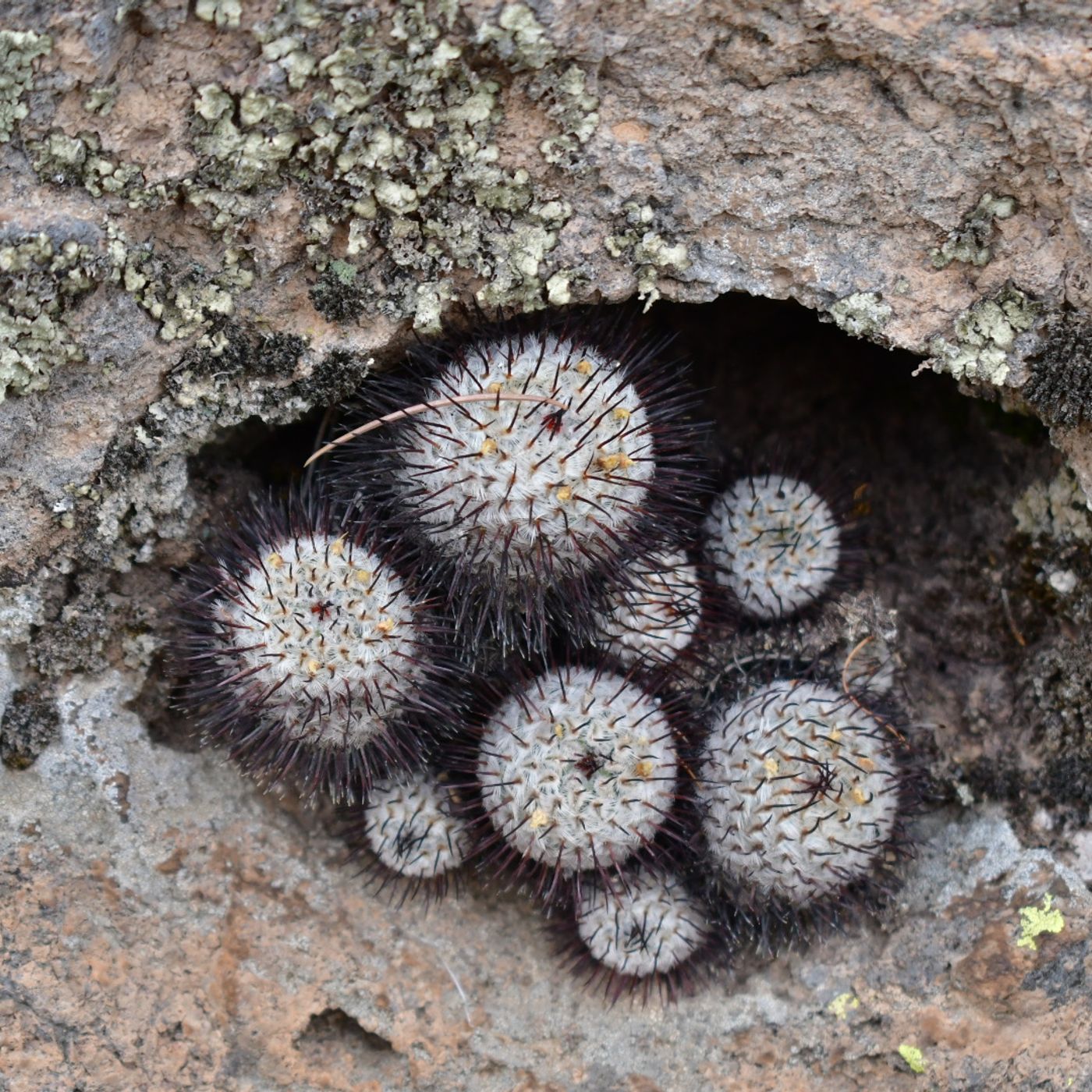
Mammillaria perezdelarosa ssp andersoniana
Arctostaphylos pungens (Ericaceae)
Comarostaphylis polifolia (Ericaceae)
and a ton more
Why the genus Garrya (the silktassels) is so cool,
A new Astrolepis sp. (Undescribed)
Stevia pyrolifolia (Asteraceae) - it's waxy-as$ leaves at 10,000 feet
Dyscritothamnus filifolius (Asteraceae) and the limestone cliffs and sketchy roads it inhabits
Vallesia glabra (Apocynaceae)
Spondias purpurea (Anacardiaceae)
Strombocactus disciformis (Cactaceae)
Lophophora diffusa (Cactaceae)
Mammillaria perezdelarosa ssp andersoniana
Arctostaphylos pungens (Ericaceae)
Comarostaphylis polifolia (Ericaceae)
and a ton more
2024-06-13
115 min
Transcript
Available Results
Generated results are saved to the knowledge database for reuse and search.
No generated results are available for this episode yet.
Extract Knowledge
Pick what you want extracted first. Model, scope, and chapter options appear after a template is selected.
Generated results for public episodes are saved to the knowledge database so they can be reused and searched later.
Transcript
Hello, and welcome to another episode of A crimepace A body doesn't podcasts.
This is a continuation from the one we did yesterday exploring habitats in Correcto and
Guanajuato. How do you say that, Guana Jiuato? What is that?
I don't understand? Well, how do you pronounce that? Guanajuado State,
Mexico credo and Guanaguado State. So when I last, when I left you,
if you listened to the last episode, if you actually made it through
a hour and forty minutes of it, which if you didn't, I don't
blame you. We were on top of this mountain at ten thy five hundred
feet with Nolina parviflora, this big collescent yucca looking thing almost looks like one
of those coalscon dasiliriums we say called lesson. We just mean it's got a
stem, it's got a big fucking trunk. Looks like Nolina palmer which you
see in the Kingston Range of the Mojave Desert, which is sem epic habitat,
I should say. And we were surrounded by just a little bit,
you know, one hundred two hundred feet down below that on this entire mountain
made of marble. We were surrounded by a gave Salmiana subspecies Crassus spina,
which is, you know, it's in a gave with like an eleven foot
diameter rosette leaf rosette. I mean this is a huge species. I mean
it's a It's a very variable species too. I think there's like three different
subspecies. It's one of the most commonly used gaves for tequila and mezcal production
because it produces such a giant heart, you know, just the center of
that. The plant basically looks like a giant pineapple when you cut the leaves
off. Once went to an agave distillery and Wahaka just because it was part
of this tour. I'd been botanizing and looking at mushrooms with Allen one year
in Wahaka and they dropped me off. I still had a day to kill,
so I wanted some thinking, like, you know, fucking twelve dollars
tour, even though I don't drink. And at the end of it,
they went to a bunch of At the end, they took us to this
a gave distillery and god, it was fucking cool to see. It was
like, you know, everyone was getting hammered and shit whatever. It was
kind of ob noxious. Booze makes people extremely annoying. But what was cool
was that just from an ethnic botanical perspective, it was cool to see how
a gave's or how a tequila is made, and how a gave has ground
up the whole process. They dig this big ass earthen pit. Looks like
a super large jacuzzi. You know, you could fit like twenty people in
there, but it's kind of like a cone shaped pit. They roast some
charcoal in there. Probably takes them a couple of days to roast this shit
down, get it nice and piping hot. Throw these huge, basically what
looked like fifty pound pineapples, which are the hearts of these at gaves that
they've cut the leaf blades off of, and they throw them into this pit
and roast them slowly in an earthen pit. And god, they're using like
access to chop these things up afterwards. I think they chop them up,
but they use access to chop these things up, and then they put them
on this matate it's like a giant stone disc and a fucking donkey pulls this
rolling wheel. If the wheel's attached to a wooden lag a pole, and
the donkey walks and circles around it. You know, it's kinda be hard
for the donkey. Hopefully they're paying him good. Hopefully they're compensating him.
That's gonna take a lot of carrots, sir, Okay, we're gonna get
fucking rock. I'll call we'll call it the labor relations Bore. I'll get
everybody down here. Make sure the donkey's getting paid. I hope he's a
happy donkey anyway, and he gets ample time off. Anyway, This donkey
pulls his fucking stone wheel, crushes the shit out of this And I was
smelling this stuff. It smells incredible. They roast it because that breaks the
sugar down, of course, which then makes it easier to turn into a
liquor. You know, so you can get hammered and not deal with your
feelings and become a little bit dumber with every passing hangover you accumulate over your
life, and you know, not pay attention to the things and thoughts you
should be feeling. I'm just kidding. I'm just kidding. We know alcohol's
harmless anyway, and so this donkey pulls this wooden there, this this wooden
pole which is attached to this grindings this large heavy wheel which you know,
juices the shit up. And I took a bite out of one of these
because I was looking at it and this guy saw it and he was like,
he's like come, you know, he's like eat it. And I
took a bite out of this chunk of a gave and it was the sweetest
thing I've ever tasted my life, Like sickeningly sweet almost. I got a
headache within like thirty seconds of consuming this thing from the sugar rush, you
know, because I found out by the twenty three and me thing, I
got that diabetes gene. So I got to be watching it stuff and I
can't ever stop exercising because then the diabetes will come on. Next thing,
you know, they're sawing off toes, you know, the fucking the moonlight
Man's coming from my toes. So anyway, but it was delicious and it
had this smoky flavor to it, and it was then I realized, oh,
wow, that makes sense, that's why they use agaves. And I've
talked about this in this podcast before, so forgive me if you've listened to
that episode. I think it was like a year or two ago. But
that's why they use gaves, and especially these large species, because they're just
basically solar panels that cook up carbohydrates and sugar over a span of twenty to
thirty years, which is about the length that some of them live for,
and then they use that huge store of sugar to send up this thirty foot
tall inflorescence, this flower spike, which just you know, is like a
fucking buffet for pollinators for upwards of a month or two. I mean,
it's so these things are so important ecologically, and their strategy is so important.
You know, their strategy is basically dependent on just flowering once and then
dying and they just they boom, They just give it this big burst and
it's the fucking talk of the town among the local insects and birds and bats
and whatever. And that ensures that it gets pollinated and it produces tons thousands
of seeds, like one of these agave samianas has to produce thousands of seeds
easily, easily, and they're those little black, flaky seeds that have fhitomelon
in them. They're black, you know, like a lot of members of
asparagales the order, whether it's yuccas or fucking amaryllids or onions or whatever,
they produce those little black flaky seeds. Think orchids are the only ones in
that order that don't orchids maybe something else. Anyway, The point is it
works for them. But because it's such a huge inflorescence, and because it's
taken them thirty years to cook up the energy photosynthesize the energy to do this,
they die shortly after. And so that's why gaves are monocarpic. But
again, some of them have evolved the ability to produce offsets. Such a
fucking fantastic genus and it was so cool to see these monster bastards that were
just these beautiful monster fucking I mean, I'm still high, just off the
dopamine from being in these habitats. This was such a fun, fucking incredible
habitat Qurcus crassifolia. I think Carcus crassipes was no Corcus polyanthos. Maybe let
me look that one up. Excuse me, sorry, Qurcus potasina, No,
maybe that was at a different spot. Anyway, I saw a lot
of fucking carcus, and you know, Mexico's the epicenter of oak diversity.
You've got this wide range of elevations between three thousand feet. Though I don't
think any oaks grow that low, except for maybe a handful. I think
Corcus brandigii and Baja and a few others. Anyway, most of them grow.
Most of Central Mexico is at five thousand feet or above. You're talking.
If you're at four thousand feet in Central Mexico at twenty degrees latitude,
you are fucking cooking, which is what was going on at the Strombocactus spot,
which I'll talk about later in this podcast. But anyway, this it
was this oaks. It was that astro Lipus species which I just talked to
doctor Michael Wyndham, who's the wizard of Kylan Tooiti, the really cool desert
fern family of the xerch fern family subfamily kyl A toiti, which is in
Putero deace, the family Pitterodacey, which is known for that pseudo dusium that
folded over a leaf margin that they get on their pinna, which are just
the little leaflets. And you know, he was on the podcast a year
or two ago talking about Duke. He works at Duke. Him and his
wife, they're like power couple. They work at Duke. We had him
on, we were talking about the herbarium closing, and then I did another
podcast with him about Kylan Todier. I reached out to him because this astrolepist
that I was talking about last episode of the podcast blew my mind so fucking
hard. It was just this god, this incredibly tomentose silvery, just gorgeous
fern growing out of marble, like the fucking marble is so you know,
the whole the town down below, I mentioned this too. Their economy was
based on marble, on elmar Mole. There were marble shops all throughout the
town. They had a big boulder, the sokol Ode, a central square
that was the size of a fucking Volkswagen bug that was made out of marble.
Beautiful town, like so many in these little towns in Mexico, and
the marble cobbles on the street were all polished from cars driving over them.
I mean, marble is central this town. Marble, of course, is
just cooked limestone. It's metamorphosed limestone. Okay, you change the crystal structure
when you subject sedimentary rock, whether it's sandstone or mudstone or limestone and subjected
to heat and pressure. When you cook it, it's more like a pressure
cooker because there's pressure too. Now I'm not sure what cooked the rock in
this area. Look cooked the limestone in this area. Most of Mexico has
limestone. A lot of Mexico's limestone's either limestone or volcanic, or some really
cool areas where you get metamorphic rocks. And those are the three major rock
types that that makes sense. But lots of volcanism. You got the trans
Mexican volcanic belt down there, caused by the Cocos Plate, the Oceanic Plate
to the southwest, it's subducting beneath the North American Plate. Where you get
it subduction zone, you of course get volcanism one hundred miles inland, fifty
miles inland, whatever. That's what story. What's going on with the Andes
too, with the Nasca Plate, and it was what was what's going on
with the Cascade volcanoes and the Wanda Fuca Plate. So you get the Cocoas
Plate going beneath Mexico, subducting beneath the Mexico causing all this volcanism. The
volcanism is generally younger, last thirty forty million years, maybe not even forty
million years. The limestone is all older. It's all Cretaceous, which is
roughly one twenty five to sixty six million years ago. Sixty six million years
ago is when a dinosaurs went out one at fateful day when ed Ukutan Peninsula
got slammed into by the big space rack rip and both the ammonites and the
ammonites and the dinosaurs were taken out, and probably a number of really cool
conifer lineages too, which then later made way for the way of angiosperms to
thrive and do their thing and get I mean, angil sperms had already evolved
sixty million years earlier, but now it was really time for them to fucking
shine. They took over, and the forest composition changed in much of South
America. All that is aside, though, and that doesn't have to do
with what we're talking about on this beautiful marble mountain here in Carretoro, Mexico,
where we saw this Astro libas species, and back to the Astra libis,
I sent pictures and you know, when I go out and take photos
of a plant, I take ten fucking photos. I used to only do
two or three. Then I had a really you know, intense mushroom trip
maybe was six years ago, and I caught myself taking fifty photos of the
same fucking thing, and I was forever changed. Just kidding, I mean,
I really was on mushrooms. But I don't think it was that that
made me take more photos. I think it was just realizing that I may
not be back to this area for a while, and I might be seeing
some things that are really cool and poorly documented, and so I take a
shit ton of photos. You know, I got like one hundred and twenty
eight gigabyte megabyte or one hundred and twenty eight gigabyte card excuse me, me
and my nikon at least. So anyway, I sent photos to doctor Michael
Wyndham Mike, and he responded that this thing was already on his radar.
It's probably a hybrid between Astrolepus obscura and possibly Astrolepis deltida. I didn't realize
there were at this time. There's really only six species of Astrolypis. There's
I mean, there's obviously a few more. Because this turned out to be
an undescribed species that he was already aware of. But you know, if
you look in the flora, I think there's only a few For those that
don't know. Astrolepis is one of the coolest genera of fern you'll ever come
across. It's again, it's kyl aanthoidi. It's not right up there with
Myriopterus Kylanthes, not the Lina or guy Racosma. These are all fucking great
species of fern. You get Merioptrus alabama nsis if you live in the East
coast. But again, it only occupies rocky sites because these are dry adapted
ferns. These are xeric ferns, so they thrive in drier sites. They
can just dive back to the route, dry completely out, come back to
life upon getting a little bit of moisture out west or in more drier habitats.
Uh. It is where you start getting more diversity. I remember,
I think I was in Oklahoma once on a rock out crop and saw Merioptress
alabamensis there. I also saw it in Virginia. It's a great fucking it's
a great fucking species. It's it's excellent. So go out if you live
in an area, find you know, if you live in an area in
the East Coast, feel bad for you, But no, you know,
no harm, no foul. Uh, you go go find like a rock
escarpment or I bet there's merioptress in New York State too. Maybe I don't
know, But go find a rocky microcycle, find a rocky area and see
if you can find merioptress. Alabamensas shit. You know what, I think.
I'm wrong. I'm looking at I don't think there is any in New
York State. Supposely there's an observation in Connecticut, and it's throughout Appalachia,
in West Virginia, Virginia, western Maryland, Pennsylvania, south central Pennsylvania,
et cetera. And then I think it touches southern Illinois. What the fuck?
There's some in Uh they got somebody Wisconsin, Dell's. I didn't know
it. I did not know that they got some just west of Madison.
There's a Mirria. There's a merioptrus west of Madison, Wisconsin. What the
fuck? So this is very cold talk. That's got to be alabamasis because
I think that's the most widespread species but to go try and get some No,
it's grassless merioptist grassless. No shit, that's a beautiful species. I
gotta go see that. Now, go get some find a sporre afill,
you know, because it being a fern, they find they got fertile France,
they got spore Layden Franz. And I go get a spore laden front.
You'll flip it over. You'll know it's got spores on it because it'll
have a little it'll have story around the marginal leaf, and it'll be the
leaf that looks different will be the odd man out. It's not a If
it's a leaf blade, then you got pin on either side of the rackets.
But that aside, we don't need to get into the nuances of ferm
morphology right now and the way you grow these things. I think there's some
guides online for the Caylanthoid ferns. That's the name of this group. C
H E I L A N T h O I D. You get some
sand, you slightly wet it, don't make it soaking. Throw it in
in the microwave and like a tupperware or a petrie dish, uh heat it
up at I don't know for how long, fuck thirty seconds minute. Maybe
pasteurize it. You're not You're not sterilizing, and pasteurize it. Scrape some
spore. You gotta let these to get the spore out of the story,
which are the clusters of sprani you gotta put in like a paper envelope.
I guess through that, and then use a razor blade to cut it up,
like you're cutting up some shitty blow. You know, all blow is
shitty, but I'm just saying, and uh. And then just sprinkle the
sprinkle the spores on the sand and you'll get the You'll get the gametophytes grow
and they look nothing like the sporophyte, which is the actual adult fern.
And I'm not sure how Mirianpterus is, but I've heard astro leapis. You
know. Martin Grantam was telling me he got you know, spore to he
germinated spores and got it to go to sporophyte. Forget what species. Mede
was into Jerema within like six weeks, which is incredible. And he gave
me an astra Lepis once too. I forget what it is. But these
fucking things, man, are just there are such a phenomenal fern species are
so cool. They're so cool. We get Astrolepis into Jerema down here in
South Texas growing out of little cracks and rocks. But you know, you
could do a little rock garden thing. You know, go get a boulder,
right, steal one from some corporate landscaping, you know, find a
friend that's got a fork lift, you know, give him a six pack
him lift up a fucking boulder for you to take it to your yard or
your apartment. Throw the boulder in the apartment, preferably close to a window,
and uh and so the little good meta fights in there. That's what
you do, you know. So anyway, this is a new species.
It's undescribed species, which makes sense because I was looking at it and I
was like, well, I guess if I go to the keys into Jerima,
because it's got heavy scales and you know, hairs on the ad,
a seal surface on the top side of the pinna, but of the leaf,
a little leaflet. But it doesn't fucking look like into Jerema, I
know, into Jerma. This thing is maybe it's just an ecotype. It
is indeed an ecotype. Remember, an ecotype is just a population of a
species. Well, it's more than an ecotype, but you know what I
mean. Ecotype is the population of a species that has been selected for according
to the aspects of its surrounding environment, whether that's pollinators or dispersers. Obviously
that's not the case in a fern because their spores are wind dispersed, but
and there don't produce flowers. But you know, it could be anything,
any facet of the local environment, climate, rainfall, geology, whatever.
This thing was growing on marble at ten five hundred feet elevation in the mountains
of fucking Mexico at twenty degrees latitude north. It had quite obviously been selected
for by some very specific, you know, aspects of the surrounding environment.
And so anyway, it was fucking it was really cool, uh to see
this and to learn that it was indeed a new species. I was right,
this thing was unique. God, the green tie is strong. I'm
drinking some fucking drinking some damn transmission fluid over here made this. Uh you
know, I mixed the dragon well up with the gunpowder green in a loose
leaf, little stainless steel kettle and uh just got a strainer in it and
then drink that. Mix it with water, make it strong as hell,
mix it with water. I don't think I mixed this with water. It's
a little too much anyway. So that's that whole mountain. Uh, that
astrolepis new speeds of astrolepis. There was Nolina parviflora there, which is like
a coallescent nolina that looks like a yucca. Uh. Where was the gave
samiana number of oaks. There was pink Guicula mornensis growing within the cracks of
not the cracks, but at the base of these boulders. On this this
what looked like a boulder pile covered in leaf stuff. There was Echavarius secunda.
We talked about. I talked about all this which you guys last episode.
There was a Stevia there that had incredibly waxy leaves. I mentioned that
when too was undescribed. I finally found out what species of Stevia it was,
and it was, uh stevie Stevia Pyrola folia, presumably after Pyrola,
which is in eric casey, which is a small little micro hizol. Well,
they're all micro hizel herb. Well, I think it's I think actually
there it's evergreen. Depends, but uh, you know, you can find
in coniferous forests. It associates with presumably with the ectomycro hizel fungi that associates
associates with a lot of the trees in a coniferous forest. Yeah, Pyrola
is a cool genus. It's it's got porci athers. You get Pyrola than
Tata Pyrola, Aphila, et cetera. And it's Pyrola in Monotrapoiti. Is
it in the ghost plant subfamily? Is like the one odd man out that's
not micoheterotrophic. Yes, it is. It's in subfamily Monotropoiti. I thought
I remembered seeing that. So not everything in mono Trapoiti, the ghost plant
subfamily of Eric Casey, the blueberry family is micoheterotrophic. Some are just well
maybe it is a little bit. I don't know. I don't know who
the fuck knows what's going on with the fungi here. But the leaves on
this thing are on the genus pyrole are incredibly beautiful. They got like a
mint green venationan to them, and then the rest of the tissue in the
leaf is like a darker green. I think one of the common names might
be evergreen really cool flowers to porsidal anthers. Not surprisingly, that whole group
is fucking amazing. Monotrapoiti that subfamily. But I suggest going to a naturalists
and looking at going to monotrip the clay typing that in the explorer bar and
then looking at all the cool species in it, and just you know,
just like you're looking through the catalog of life, you know, to choose
your own adventure book of what tax on you want to fawn over. Anyway,
that aside that Stevia apparently whoever named it thought it's leaves look like Pyrola,
and they kind of do, but more and more specifically, the leaves
were covered in this intense wax, no doubt a result of selection at ten
thousand and six hundred foot elevation where there's much less UV because there's are much
more UV because there's much less atmosphere to break up the incoming ultraviolet light.
So I presume it's you know, the wax, of course, is like
hair. It can serve multiple functions, but one of the prime functions that
wax on a leaf does is limit it mitigates moisture loss and also protects the
leaf tissue from light. Reflects a little bit of that light back all right,
leaves and stems, like in the case of copiapoa or many cool cacti,
the wax is just protecting the stem. But I was in love with
this thing, and I collected an herbarium voucher. So I'm gonna either as
session at a mobot or at the seel Ross or fuck, I don't know,
coco collect rbarium vouchers. You know, when you're going out botanizing,
even just for yourself, right, even if it's just in your own neighborhood
or whatever, it's nice. You can make some nice pressed plants. You
know they're important, and then you learn how to mount them and put a
little tag on them with the fucking coordinates and notes about the habitat and what
family it's in and what elevation and you know, all the interesting shit.
I like extensive herbarium tags. I don't like it when the tag is just
like you know where it was collected, and then you know it's like some
half as shit. I understand everybody's busy, but do it for saints,
okay, or just for yourself so that you start becoming more observant and paying
more attention to what's going on around you. And you know, as you
know, as the America continues to defund the shit out of science so that
we can waste more money on things like I don't know, obsolete fucking road
expansions and corporate welfare and that kind of thing. And let's uh take it
upon ourselves to be sure to collect the or burium vouchers and a session them
at your nearest university. And then it gives you a reason to go lurk
in the university or burying too. You learn a lot there this, of
course, assuming you have the fucking time to a lot of people, of
course don't. But you know, all the time you spend do playing video
games or you know, staring gatemouth into your phone, you could be doing
some other interesting stuff too. Uh So, anyway that brings me around.
I wanted to mention too, some of the for anybody listening who's interested,
the gear that I use, in case it'll be of any benefit to you.
I'll try to cover all the bases here. I start with, you
know, the bag I use if I'm going out, I use I used
to be. I was a fucking bike messenger twenty years ago. I liked
it because it had high turnover rate. I could work for two months quit.
You know, half the half the the employees that do most or use
I don't even think you can do anymore. What do you do? What
do you deliver? Bike messengers still exists? What do you delivered? Just
weed and food? I don't know anyway. I think the internet's mostly made
it obsolete. But back in the day it was a nice job. Half
the employment pool in that field was we're all alcoholics anyway, so they were
always quitting and leaving it whatever. It was a fun It was a fun
job, and so that, you know, the fluidity of the the labor
pool and that profession made it easy to quit. You could quit, you
know, work a job two or three months, then quit it. And
that was the best part about having a job is being able to quit it,
because it's not everyone's lucky enough to have a job that they enjoy the
shit out of and that enriches their life. In most cases, it's quite
the opposite. It's just like another form of school. And so, you
know, the best thing about having a job is being able to quit it.
You just use your job to fund to all the other things in your
life that you're truly passionate about. Uh. And that's what I did,
you know, when I worked for the fucking road and was learning botany.
But anyway, point was I when I was a bike messenger. I learned
to trust heavily in bike messenger bags. The best thing about them being that
they're waterproof. They're made out of this truck tart material, which yes,
can be heavy as fuck, but you also know your shit is not gonna
get wet. I remember biking down Fifth Avenue in New York City in a
fucking snowstorm once. That was like two thousand and five. What gud when
was that? Fuck? It was a while ago, and I was soaked
to the bone and freezing, and it was like the day before Christmas,
so people were just acting like assholes and uh, and everything in my bag
was completely dry. I biked from like fucking you know, ninety fifth Street
down to like the fucking Lower east Side or wherever it was soho wherever it
is, fucking I was bringing a bunch of like clothes to some fashion shoot,
and uh, everything in their stay completely so that, among many other
experiences, taught me that messenger bags are great. So I went and got
a a Chrome bag. Chrome is kind of a goofy fucking company. They're
expensive, They're a little overpriced. You can find other messenger bags that are
you know, that will suffice, that are probably half the price, but
you know, you want lots of pockets, and you just want to make
sure that truck tart material, it's like a thick vinyl material is on the
inside of the bag. So I use that. I'll bring an umbrella,
both for rain so I can continue filming, and an umbrella for sun as
well. That that last part really proved helpful at the Strombocack the spot,
because that sun was just punishing. Man. It was like the fucking air
wasn't even that hot compared to what I've been used to, but that sun
was just intense, and so I kept having to go take breaks under a
Vicellia tree until I realized maybe it was Prosopislava got it. Was one of
the native Misuit down there. Now now Tuma lava got it, whatever the
fuck, And then I realized, I, oh shit, I've got an
umbrella. I can just use that so I was holding the camera with one
hand, the umbrella with the other, and then carrying this background and then
for herbarium boucher specimens. It's always good to collect something so that if someone's
studying it later, they can use the DNA and you can access it later.
You don't just have photos. Whatever. I bring a I think it's
like a Strathmore sketchbook. It's like a seventeen by eleven sketch book. Maybe
it's a little bit bigger. Yeah, it's twelve by eighteen. It's a
twelve by eighteen Strathmore sketchbook. It's got like twenty four sheets in it.
You don't need a lot. You could probably stand to use more if you
want it. And then I will put newspaper in that. You know,
if you can find newspaper anymore, go to like a go get like what
I think. They still produce a lot of junk mail and fucking you know,
real estate catalogs or whatever it used to be. You could just go
to like a diner, like a twenty four hour you know, cozy corner
diner, and they'd have a little rack of the fucking newspaper from the Realist
whatever I don't think that they do that anymore, but either way, you
get some paper, put that in at put that in the the sketch pad.
The sketch pad is mainly just for structure to hold it up so that
the shit doesn't bend. Then I'll get a little roll of masking tape and
use that to hold things in place, because if you don't do that,
it'll be you know, it'll all get destroyed, it'll fall out, et
cetera. You could probably think of other variations on as too, maybe even
using envelopes whatever. I like the twelve y eighteen sketchbook because it's about the
size of a plant press, and I don't have to actually carry a plant
press out there. A plant press uses straps to hold everything down and prevent
it from falling out, and it applies pressure it keeps it flat. That's
ideal, but obviously it's a pain of the ass to bring out with you
unless you got a donkey. So I recommend you get a donkey, but
not everyone can, of course do it. If you do get a donkey,
put a little party head on it. Make sure it's you know,
fairly compensated. His days off et cetera. Anyway, So I get that
strapth More sketchbook, I throw that in there. I got a camera,
use a Nikon D seventy five hundred. I like the non I like the
on Pro models because the pro models don't have a built in flash, and
I need that built in flash because I'm shrinking the aperture down super small,
at least F twenty two or above, and then using a flash to compensate.
Because you're shrinking that aperture down, the hole that the light comes through
is so small. You got to compensate the light source. And then also
if you're shooting in the daytime and bright sunlight and using a flash, it's
gonna murk the quality of the photo. It's gonna come out kind of like
blasted and just shitty. So you've got to cover the subject that you're photographing,
either with your friend's shadow, your shadow by standing in front of the
sun between the subject and the sun the subject you're photographing, or you can
use that umbrella. You can also get like light diffusers, like a white
you know, like I kind of basically like a white umbrella, just something
to diffuse the light so it's not as harsh. You'll probably notice that like
taking photos in cloudy days, they always look better than in sunny days.
It's a bright sun, especially in deserts and arid areas and mountains and the
places I go. It makes super high contrasts. So I bring all that
shit out. I get like a twelve dollars diffuser that you know, looks
like one of those circular sunscreen things you put in the windshield. It's got
a wire frame around it that you can like fold up. You twist it
and fold it up, and I'll put that around the camber lens. Use
that to diffuse some of the light. Youet really nice light out of that.
But that's what I take when I'm going out doing bidany of course,
some water too. I'll generally bring some paper, seed packets. It's always
good to have paper with you too. There's a way you can just fold
little envelopes out of paper if you get the chance, like an eight and
a half by eleven sheet, hold it vertical, fold the bottom half up,
you know, so that the crease is horizontal, and then at the
top of that page you fold a little lip down. So you've got this
eight and a half by eleven sheet that's now folded in half with the top
has a little lip that's maybe half an inch, and then I'll have to
do a video on this. Sometimes you can fold that over, you flip,
then flip that over and like fold a little triangle and you're basically using
that lip that you just made to hold to hold the other piece doing some
more gami shit to hold the other triangular corner that you fold over. You
fold one corner over, then fold the other corner over. The corner that
you fold over has that little lip on it, and then you can use
the other side to tuck into that little lip that you created by folding the
top half inch down, et cetera. And so you got like this little
diamond shaped pocket. We could make your own seat envelopes, but or you
know, envelopes for parts of your barium specimen that fell off whatever. So
you got all that, and then you know, for for apps that I
use, because these are really important, I use that GPS status app by
mobi Wick. I forget what the fuck it's called. It's moby something.
If you go to like the Google Play Store, it's listed on there by
moby wiki. Some shit. I don't know it's like that. I know
it begins to the M and it's got a The icon is like yellow and
black that gives you elevation GPS, all that shit that's worth writing down wherever
you're someplace cool and notable and especially remote that you might not be be again.
I use uh, yeah, I use that elevation app. I got
like a meters to feet app. I use all this stuff. You know,
basically, any any information that you can think to use that's pertinent to
what you're doing is useful. I use like a my radar app too,
to see what the cloud cover is going to be like if there's an incoming
system. GPS locker app keeps keeps track of where I'm at so that my
GPS is always accurate. I use Strava the track myself so I don't get
lost if I'm off trail, which I usually am, uh, and so
that I can find my way back. I naturalist, of course, but
I obscure everything. You know, all this shit is important because this is
what's going to help you on the field. These conphones, man, some
of the things that I wonder, like people were collecting orbarium vouchers or botanizing
in remote places forty years ago. Like, God, what a pain in
the ass that must have been. You really had to be on top of
your shit, paper maps and just good sense of direction and keeping good notes
of where you were and where you turned whatever. I also use a tectonic
which excuse me, is lithospheric plates APP, because that's those are the maps.
I pay attention to bioregions and tectonic plates because tectonic plates especially can inform
you about a lot of the goings on, like why there's a mountain range
in a certain place in your region. You know, you look at the
pay attention to where the subduction zones are all that shit so and rocked app
ROCKD. That's always important for if you're curious about what the geology is or
what the age of the geology beneath your feet is. Rocked is good for
that. Now that just measures, That just tells you. And it depends
on where you are, depends on how good the data available to the makers
of the app has been. In the US, it's normally good. In
the Mexican in Mexico it's normally lousy because Mexico will just their geologic maps are
not as accurate as the US. It'll just have a broad area, you
know, with no variation in between. It'll say it's this age and blah
blah. It's just it's just much more broad and vague. But it just
pays attention to the rock that's at the surface, not you know, what
you're necessarily looking at on the side of a mountain, just what's exposed at
the surface. If there's like a deep gorge or a cliff for or full
cliff, it's not going to tell you what the rock is halfway down the
cliff that you can see from this road cut or this cliff face. So
you got to keep that in mind when you're using it. Let's see what
else do. There's an app called Windy that I sometimes use, which shows
you wind direction and speed. But again it's just the not necessarily which way
the clouds are moving, just the win and at the surface. At Earth's
surface, you know the clouds might be moving a different direction if they're high
up. Anyway, hopefully that helps you a little bit. So anyway,
moving on to the next habitat that that we lurked at. The next day,
we went to a spot that was in this canyon at in elevation.
We went, you know, down from ten thousand, six hundred feet to
this little canyon that was at and it was took a while to get there.
It was like a lot of curvy, winding roads along these sketchy cliff
faces, very precipitous steep one lane roads on these limestone cliff faces. And
some of the limestone here had beautiful contortions in it, like it had been
twisted and gnarled, which I haven't seen rock like that since, you know,
the Franciscan Formation in the Bay Area. Some of those you know red
shirt beds, those red biogenic silica beds, did you see you know,
near like Kirby Cove or in Marine or the road the Kirby Cove or some
other places like in the Oakland Foothills so or Oakland Hills, excuse me.
So it was it was really nice to see that. I mean, it
was just obvious of like these tortured rocks, these this uplift, this compaction,
convergent forces, et cetera. Whatever caused these mountains to go up.
The surrounding rock was all limestone. There was marbles, marble in places.
There was evidence that had been metamorphosed a little bit that had been cooked.
I still never found the source of the quote cooking where that metamorphic activity,
what generated that metamorphosis, Whether it was you know, nearby body of magma
that heated up, or whether that stuff got buried again or what. But
either way, some really cool rocks here and and at the base of this
canyon was a creek, and so it was. It was kind of lush.
There was some you know, there was people, little settlement, there
are people growing papayas, and new one for me that I saw on there
was Spondius purpurea, which is anacrdiace. It looked like a plum, It
tasted like a plum. It was a little bit bigger than a plum,
kind of acidic, mildly sweet, but pinnate leaves, which I mean obviously
to me it was not in rose ace. It wasn't a plum, So
I wondered, it's kind of that was I've never seen that before. Ciullo
is or cirouela whatever was that a common name? Jocote is another common name.
So anyway, I was trying to figure out what family was and turned
out, yeah, Anacardia a c which makes sense with the pinnate leaves.
And so you go through this little canyon, you walk along this road and
then you cross this little creek that's got There was some Montanoa growing in there,
which is a astor ace species. It's a kind of a large genus.
It's notable for having really cool palea reciptacular bracts that kind of you know,
are large. They kind of look like, you know, it makes
the whole flower head though, this whole daisy like flower head fall off and
kind of the pale are so big they kind of act like sails. And
you could see how it could help disperse it in a windstorm if this thing's
growing on a mountain on a mountain side, like some of them do at
higher elevations in places like Wahaka. But anyway, this was growing out of
the creek. It was Montanoa tomantosa. Another interesting plant that I saw on
there from a possanace tiers of a virgin, who was the common name tiers
of virgin anyway, uh Valisa Valisia glabora of postin aci, And it looked
like a cross between a willow and a potocarp. The fruits are these little
green They look like a tiny narrow bean held on a pedicel, like in
a kind of an inflated pedestal at the base, so it kind of makes
them look like a POTOCRPESI that cool family from Southern hemisphere, Jurassic age conifer
family. And then once the fruit's mature, they're no longer green. They
turn into these little white missletoe like they look like mistletoe berries like they're kind
of like this clear, translucent fluid. The whole fruit appears as white,
very obviously bird dispersed. I guess they're edible to people too, which surprised
me because I could tell this thing was in a possanace when I saw the
flower. The flowers are tiny. They're like half an inch long, white
tubular, five fused petals. Stamens are included inside this tiny white flower looks
like it's maybe pollinated by a small fly or a small moths. I mean,
anything that's gonna be able to stick. It's proboscis. It's a little
tube into that tiny white flower, but it's got This plant had alternate leaves,
I mean, everything else about it did not speak a postinace to me,
but It was certainly on my mind when I saw that flower. I
had to go look it up later, and so I just again, there's
another plant. I took like nine photos of habitat flower shots. Leaf shots
get good depth of field. Using the flesh and the small aperture, you
get that nice black background. I someone wrote me once like, how do
you just take all your pictures at night? I'm like, no, you
get that nice black background if you're if the what's in the background is kind
of dark, like if it's just dark out you're in the shade of a
tree, or it's a dark substrate or whatever, could even be asphalt on
a bright sunny day, and you're using a small aperture, and then you
use a flash and the light dissipates beyond a foot or two, so anything
that's beyond that it doesn't get lit up. It just comes out as black
and the subject gets illuminated, and you're again you're shooting like F twenty two.
I think I shot this at like F twenty nine. I'll shoot at
fucking F twenty nine if I need to, Whereas like your phone, your
cell phone normally shoots at like F one point eight to F five if it's
really sunny, it would be like F ten maybe something with like a fast
shutter speed. Anyway, but this was a really cool plant to see.
I was stoked about it. It was growing down the arroyos. It's obviously
heat toleranted. It can probably tolerate some drying out, because it wasn't growing
in this arroyo. This whole canyon Mouth or not Kenyon Mouth. The bottom
of this canyon was somewhat wide, but the actual creek itself was probably only
like twenty feet wide at most. There were some really cool fish species in
there too. I wondered if they were native or invasive. They looked I'm
assuming they were maybe native. They were tiny ones and then there were large
ones. I couldn't tell they were the same species or what. But now
I filmed that video at Caesar's house. You guy's conserving all those rare Mexican
rattlesnakes and trying to breed them for reintroduction. I just released that video today
and he had some cool fish in there too, and it's got me all
stoked. I'm paying attention to native fish species, especially in the deserts,
because you get intense speciation. Because these little ponds had been isolated for so
long or not for so long, but just you know they're they're so isolated.
I mean, it's deserts. These you know, you might get a
what was a larger lake that then dries up and you get these little lakes
then, and so you know, one species later species into six different you
get six different little lakes or ponds, and then you get six different species.
Then of course, since it's limestone, you get all, you know,
these cool fucking caves and little underground creeks and stuff, because limestone dissolves
so readily in acidic rain water. And then you get things like blind catfish,
like the blind catfish and del Rio, the infamous in Northern Mexico or
you know the blind Oh god, I always forget the name blind Mexican tetra
right, So anyway, but then you cross this little creek, you go
up this hill and and just right there it's just suddenly going from this rich,
lush little creek canyon bottom to just harsh desert. There was a guamu
chill everywhere, which is kind of like I think it's a sister genus to
Ebony, to Ebinopsius ebano Pittysillopium Pittysilobium dulce, which produces an edible fruit,
fleshy fruit. And there was just lufa for a diffusa. All over this
limestone slope that was composed of talus falling from the cliff faces above there was
pseudosmodingium. It was I think it was by ready eye. I've seen another
species of Pseudosmodingium. That whole genus is cool. It's tropical member of the
poison oak family, and it does indeed produce you russi all in it.
So I was sure not to fucking touch the thing. Won't make the same
mistake I made with Comocladia, the genus Comocladia, which I fondled so lovingly
in the Dominican Republic four short years ago, and then hit the go get
pregnance on my whole face blew up. It was actually pretty funny, and
I got like a crown, not not a crown, what's it called a
veneer? One of my teeth in the fucking two fell out that like that
cracked, and you know, it was a fucking sight for sore eyes.
Man. It was funny. But I was so stoked because I was in
the Dominican Republic looking at cool plants. I was in some cool cloud forest.
It was in twenty one, but yeah, man, I was like,
my whole face was puffed up and red and I lost the tooth and
shit and anyway, but it was nice because, yeah, I live on
the borders. You just crossed over in Mexico paying forty bucks to go,
you know, glue your toothback on. You know, fuck, what would
that cost here? Three hundred bucks or something. Anyway, moving right along,
So this whole slope was covered in these incredible plants, bursra, elephant
tree. I don't know what species it was. There was a Hectia species
that hectia was actually turned out to be something pretty cool. It was a
Hectia species I had not seen before. So Hectia, of course are like
they're like really spiny pineapples. They're Bromelia. It's trying to be a gaves,
right. A lot of them are fucking nightmares to encounter, physically beautiful,
to look at, nightmares to touch Hectia in Dickie. Dickie is in
the Northern Hemisphere. Hectya is in the Northern Hemisphere. Excuse me, Dikia
is in the southern hemisphere. You get Dickias in Brazil. Dikia and a
colerium. We're two of the really mean romelia. It's beautiful, beautiful rosettes,
beautiful rosette of these these basically you know, members of pineapple family bromeliac
that are adapted to xeric conditions. There's zero fyts. Anclerium and Dichia were
all over Brazil growing in the Campos rupestrees, the rocky habitats uh forming these
colonies. Hectia is just the northern hemisphere equivalent of that. And this was
Hectia. Excuse me ZAMUDIOI. Hectia I think has like eighty species in it.
It's mega diverse, hyperdiverse in Mexico. And remember seeing some really cool
ones. What the fuck was I in Puebla in twenty two. I think
some really cool ones that are still unidentified on I naturalist, but they're main
those little those little saw teeth that occur along the leaf blades will break off
in you will break it off in me jadgi and uh you know, then
you they pop out two weeks later with a little bit of puss and you're
good to go uh, and then they're cool. They're really cool when they
flower too. The flowers are tiny, they're not really notable, but you
know, it produces this big stalk that comes up. We get Hectia glamorada
here in South Texas, and Hecty glamorada is pretty common throughout Mexico. In
fact, we saw it in some of the places in Carretro. So there
was hectia just everywhere. There was either it was both Vicellia and Prosopis Vitchellia
shaft Nearai it might have been I think it was schaft ary one of them.
But espasically, these spiny legume trees, they're like misky lookalites. Then
you get Prosopis now nel Tuma uh levigata was everywhere. That was like the
common shape tree. Not everywhere. This is a barren environment. And then
there were these huge biznagas. That kind of cactus Pleatia canthus Mammalaria parkinsoniana was
abundant too, little hell rasor cactus with long, long white central spines like
two or three inches long, and then abundant tricomb's kind of creating a little
shade screen for itself. And then yeah, like I said, there was
a kind of cactus plate at Canthus and all in this gentle slope up to
this cliff face, and there was isolator serious du mortii. There two big
columnar cactus abundant, the thing I talked about last podcast. There was martillo
cactus geometrics ens, some of them looking exceptionally haggard, very skinny and drought
stressed. But the loaf offer the fusa was wild to look at. Man,
it was such a cool I'd never encountered that species before. You know,
it's it's so unique. It doesn't look I mean, it's easy to
pick out from Willmzi in the South Texas. One looks like a green donut
that someone you know left on, like the driver seated our car and then
accidentally sat on you know, forgot it was there. I went not to
go check something, came back, sat on it and squished it. And
it's got these just prominent tubercles. Doesn't really have lobes like well mz I
does. It looks like I mean, if it had spines, that would
almost look like a thilo cactus or a fucking oh not a mam. They're
not the tubercles aren't that pronounced, but sure is unique. And you know
each stem was producing multiple heads. So God, that thing's got to taste
so better too, because being a spineless cactus in this in this environment,
you know, you got to have something. If you don't have spines,
you've got to just have really terrible tasting alkaloids. I'd love to see an
alkaloid profile of Diffusa lafafer Diffusa. You know who's ever run that through HPLC.
I'd love to see see what's in there. And then the highlight of
this was Strombo cactus. This the formance, which is another tiny cactus golf
ball sized, is an adult with beautiful geometric patterning on it, these spiraling
tubercles and tuberculate rib and uh, just just growing ensconced in the limestone and
like a generally in a cliff, not cliff face, but like a rock
face either composed of talus or of like a giant boulder that fell down from
the cliffs above, and uh and just liking all over it. I mean,
really cool black light. It was black because it was dormant. I'd
love to see it when it's come, when it comes back to life,
when it's green and photosynthetic, but it was you know, all these all
the stromokacs I saw grew like this, like they all seem to you probably
germanate with this in this bed of lichen. It was remarkable to see.
I see that same thing with so many different cactus species. I saw it
with Mammalaria perez de la rosa uh Andersoniana subspecies Andersoniana later the next day,
just to just so cool. I mean, I love looking at those connections.
You know, rather than just hyper focusing on the one species, you
gotta look get everything. And that's what makes it so enriching to be here.
That's why I can come to a place like this, spend their spend
three hours there, not care about the fact that I'm almost gonna get heat
stroke and I'm sweating my ass off. I'm soaked in sweat. You know,
this little dinky umbrella is the only thing preventing me from keeling over.
It's the dry season. Everything else is not flowering. Well more, Chillia
mexicano was flowering. It's a little shrub in the kreosol family with broad leaves.
You'd never guess it was in the koreosol family, except for the pinnate
pinnate leaves, the you know opposite you know, kind of like a legium
thing, you know, little leaflets opposite each other. There was I think
there was Celaginella lepidophala too. There were a couple of different Silaginella species,
the spike mosses, which aren't a moss at all. They actually have a
vascular system, unlike moss. Celaganella is so fucking cool. You get Celaginella
lepid affla. You get in those rocky habitats and Appalachia, you get quite
a few different Silaginella species. They of course dry out completely and then just
come back to life when they get wet. Lepidophila is the cool one with
the rosette leaf, Selaginella lepidophala. But all this shit, I mean,
there was so much good shit here to look at. And then of course
this rock, this this calcareous sedimentary rock that had been tortured, and ah
man, it was just fucking and slightly metamorphosed. It was just a fucking
stunner. The whole habit that was just so cool. And this was the
drought season. Strombo cactus was flowering because the cact i can do that.
They little batteries, they've got the juice stored up. They can flower during
the dry season, which ensures that they're gonna get pollinated because not much else
is able to flower. But again, this should be the start of the
rainy season right now through October, and it's the rainy season in much of
Mexico, and then the winters are dry off in a long dry period,
and so that's why you get things that had you know, right, so
why things evolve and edge up a way to cope with the long dry season.
Not really a desert, because they get quite a bit of rain when
it does rain, you know, quite a bit. I mean obviously not
if you're living in the Pacific Northwest, it's not quite a bit. But
you know, I don't know what the average rainfall is for some of these
areas, but I think it can be quite a bit because it will rain
every afternoon, depending on what elevation you're at. But then you've got that
long dry season because even though it'll be winter and it'll be less daylight hours,
and say December or January, you're still at twenty degrees lat to north,
so it's still pretty fucking high. You're still in the tropics. Oh
yeah, Loaf Diffusa was flowering too. I forgot to mention that that was
great to see, not a pink flower like the peyote cactus of South Texas
and northern Mexico, but a white flower, white flower with a white stigma
and yellow stamens. And then some of the teeples had like a little green
striation in them, which was that was also pretty cool to see variation in
flower color. I wonder what Pollinasa's Probably a lot of the same pollinators the
pollinate peyote, probably some South hearry b and some fucking some of those that
act me out era beetles that are just feasting on pollen, but no doubt
they're surely coming into contact with the stigma and doing some pollination as well.
And so what else was it that spot some moll Punthius species kind of cactus,
plenty ofcanth this uh oh yeah. And the fucking composite that was growing
the member of Astaraci, the sunflower family, which is what I mean when
I say composite, because they have a composite flower head that was so predominant
in this habitat, especially along these sketchy, winding roads that I was fucking
so nervous, right because Marco was driving too, and he was so stoked
on the habit that and he's fucking looking I mean, he's rubbernecking like I
would be. But holy shit, I'm sitting there, you know, sandwich
between you know, the two old guys on either side, you know,
Marco's dad and Augie's dad, and I'm just like, holy fuck, this
man, please keep your eye on the road because it was such a narrow,
sketchy road and it is this crumbly limestone. It could easily have gone
off, you know. I'm sure, I'm sure one or two cars just
taking a spill in the last fifty years. And it's a long way to
the bottom, and it's a long way up to the top too. I
mean, these are monoliths of fucking limestone, of uplifted, cooked limestone,
and you're just driving on this sketchy little one lane road alongside of it en
route to the canyon. But this plant that was everywhere, and I kept
looking at it and being like, what the fuck? I thought it was
almost a Fendleerra, which is in Hydrangeac. There's a couple cool fendlera species
from gypsum outcrops and calcareous areas in the way Bolan. I thought it was
one of those. Just by looking at the leaves, I couldn't see any
flowers up close. It wasn't flowering anyway. They were just spent inflorescences.
It had these linear leaves, kind of wispy linear leaves, maybe two inches
long, chalky mint green color. It was a three or four foot tall
shrub. It was super dominant. It was everywhere, which made me,
you know, so amped to figure out what the fuck it was. And
I got up and was able to look at it. They're in a piss
stop, and UH realized it was a composite. It was astracies, And
then I had to go through and figure out what species it was. Turned
out to be Discreto feminists phili Folius, discreto thamous Philipoius. I think there's
only one other species in the genus. I'd love to be able to get
it flowering. It's looks beautiful when it flowers. It almost looks like puce
Ofphylum Shaddya, which is a composite that looks like a juniper that you get
in the Mojave Desert from southwestern Utah, because southwestern Utah is still the Mojave
Desert all the way to eastern southeastern California. Beautiful plant Pusiphylum shaddy I shoot
shots, pygmy cedar. They call it cedar. It's a cedar. No
cedar or no true cedars are native to North America, but uh whatever,
it's a common name, you know. North Americans say cedar. Australians say
pine. Everything's a pine that looks like a conifer down in Australia, but
there's no pines native to Australia and only one pine native to the Southern Hemisphere.
It grows somewhere in Indonesia anyway. I digress looks like a banger of
a plant when it's lit up. This was not lit up. It was
just hanging in there waiting for the rain growing on these probably very stressful completely
soil less limestone outcrops and rocky hillsides, and it is in let's I always
do this. It's always important to do with astracy because it's such a huge
family. It's like twenty eight thousand species, biggest plant family after the orchids,
you gotta go to the taxonomy chart on Wikipedia, and you pay attention
to all these subtaxa beneath subfamily, all these taxon levels like tribe, subtribe,
et cetera, beneath beneath the subfamily. So with the subfamily was asteroidy
one of the twelve or thirteen subfamilies of Astracy tribe, millary, subtribe,
discreto family, you know, so it's got its own little taxonomic classification or
you got sub Oh shit, Bebia is in subtribe discreto feminy, bebia Juncia,
the notorious bebia Juncia, fucking goofy name. I love it though.
It's a cool composite. Another desert composite from from Baja from like hard harsh
deserts in Baja California, bebia Juncia. So it's same subtribe. So these
things are all especially what's the Simafra. I don't know that one trite axe,
Oh god, it's in the trites related to Tritax, the notorious Tritax
procumbents, that fucking pain in the ass weed. And it's no offense to
it's supposedly native here, but it's intensely weedy all over the world. First
time I ever saw it was outside the Hong Kong Airport. I'm gonna mention
it as one of the ruderal plant species in my next book, just because
it's so good at getting around. I would love it if it didn't piss
me off so much and I didn't spend so much time removing it from my
little cactus beds. You know, where I got ober Agonia and and thelocactus,
et cetera. So, uh, then you get the Tetragonothica, which
is that's actually a really cool one. I had no idea that was,
uh, that was native to What the fuck that that was in this this
clade. This was in subtribe discrete Authenity Tetragonalthica rapanda, which grows in the
Texas sansche tech Tetragonalthica texts aena. You know, the more I look at
all these floristic affinities, these these evolutionary groups and realize, oh, they've
all got a certain biogeography to them. Most of them do. They occur
over a certain area, like arid and hot regions of North America. The
more I realize that these things have been evolving and spaciating, and their distributions
and ranges have been shifting back and forth over however, many millions of years,
and the more stupid it makes human beings luck with all their fucking geopolitical
boundaries and stupid bullshit, and are just we have shut we have such short
life spans, and we have such that causes us to have such short perspectives
on the world. All right, even if you're not a complete fucking mouth
breather and think the world has only been in existence for six thousand years,
I mean that takes us fucking really special kind of stupid to believe that,
or just complete complete illiteracy with reality. I guess you know, maybe what
you do if you believe that, you just hang out in side watch soap
operas all day, go to your job, get a little pet on the
head from your boss, drive home, watch some dumb shit on TV.
Pass ou't do it again. I don't know, no offense to anybody suffering
that slow death. But anyway, the more I look at all this,
you know, you realize what got me in a biogeography, You realize certain
evolutionary groups of plants are indeed restricted to certain continents or certain regions, or
they thrive in certain habitats, whatever, you know. And I remember when
I was first learning botany, I was so perplexed that why one genus could
be found on both sides of the Atlantic Ocean. And then with you know,
this is right, I was like learning by like the twenty ten,
right when PCR and molecular analysis and molecular sequencing was becoming more apparent. And
then of course, sure enough, many of these genera like Kupressus and Hespero
Cyprus, you know, got split up, like the genus Copressus got split
up. It turned out all the cypresses in North America were different from the
cypresses in Europe and Asia. No shit, the Atlantic Ocean's fucking big.
That's three thousand miles is a big barrier to gene flow, good cause for
isolation. So you know, obviously there was This is a different lineage,
probably still closely related, probably sister genera though don't quote me on it,
but it's had enough time for it to be for it to differ enough both
morphologically, which it does. I mean, I could tell the North American
cypresses from the European cypresses especially they've got different kind of leading numbers as well
as molecular molecular sinnapomorphies. You hold those those DNA barcodes up through each other
and uh, they don't match up that well, it's not actually how it
works, but that's a good metaphor. So anyway, that was again.
You know, a lot of plants that I that I know in South Texas
also occur down in Mexico and these regions where we were at these but higher
elevations, you know, I mean we were, like I said, we
were at like five thousand feet or above for most of the last week.
And I don't think a lot of people in the United States even know that.
There's a lot of shit. People in the US don't even know.
Like you don't have to be confined to a fucking automobile your whole life.
That's strictly a United States thing. So anyway, it's fucking bleak. So
uh yeah, I just learned something new too. Tetragonal thigue is in the
same subtribe as discretal famous discreto thamous is now my goddamn radar. I'm fucking
app to see it. Let's see what the range of it is. Yeah,
it's just the Discreto Thamnist Philifolius and discreto Theamnist Mirandi Mirandi, which is
also a montane desert composite. It seems like God, I fucking love deserts.
Only three or four observations on I naturalis, which someone took some really
good photos. Yeah, it's got broader leaves and it also waxy chalky shows
an adaptation to aridity and grows out of fucking rock faces, which is I'm
already turned on. I'm already I already want to know more, but I'm
have to go check out the screto Theamnist Mirandi. So anyway, it was
funny man at Yeah, that that Stevia that I saw, that waxy ass
Stevia. I collected a little about your specimen of uh. Only the only
person to have seen it before was Alan Rockefeller, and thank god he takes
I think he's got more observations on in at of plants than he does of
mushrooms. And him and Mandy Cork were just featured in the New York Times
an article they made the papers first secret, you're all doing all this sequence
and stuff. I don't know what they're doing over there, But go check
it out. What was the name of the damn article? Let me look
this up. Okay, there we go. I found the article. New
York Times wants me to buy a subscription. I'm not gonna do that.
Instead, I'm gonna go to archive dot pH and I'm gonna type in the
copy and paste the link and I'll get a free read of this this website
anyway, here it is. The mushroom hunters can't stop finding mysterious fungi.
For years, my colleges and hobbyists alike have been using DNA sequencing unforged FUNI.
If only plants were this easy to DNA sequence. They're not. Unfortunately,
they're kind of a pain in the ass. But someone out there is
going to do what Allan did with mushrooms, and they're not going to be
some college kid. No offense to the college kids, even though I have
talked to my fair share of shit. No, a lot of cool college
kids hashtag not all college kids. I just think it's fucking It can be
a little bubble sometimes, and it's undeniable that there's a link between class and
being in higher education for ten years. But I'm not saying you can't,
you know, you can't have your wits about you and still be in higher
education. But I'm just saying, anyway, someone's gonna do that with plants
and hopefully figure out a way to you know, sequence shit, collect collect
material and sequence plant material really easily comparatively speaking, relatively speaking, and be
able to do what Alan does you know? Sequence plants upload sequences, the
gen bank, know what gene regions to look at, chloroplast, mitochondrial,
nuclear, DNA, et cetera. But you know, right now, I
think plants the tissue. There's just there's so many other secondary metabolites and waxes
and compounds in there that can be it can make it kind of a pain
in the ass. But I don't know. Could someone set up a basement
lab to sequence sequence? Fun? Guy? You know you get a how
much? Is a how much? Just a PCR machine? Oh god?
Anyway, Yeah, cool article. So photographs by Rachel Bajewski, text by
Veronic Greenwood and check that out. Oh they think they got a nice photo
of Alan and Mandy in their their basement lab. Gotta ask him how I
always forget? He tells me how he gets his soda stream going without buying
a refills. He uses like a tank, a CO two tank. He
buys some a welding supply shop, and then a little valve so he can
refill his own soda stream. I need to figure out how to do that,
which I think is not that hard. I've just been lazy and have
not had time to look into it, along with the nine hundred other things
I try to do every day. God damn it, it's already fucking six
pm in the afternoon, speaking of which, then I get stressed out and
I get mad, you know. So anyway, I'll finish this up.
Then we're gonna I gotta go fucking edit videos and then uh and then hang
out, hang out with my daughter. So anyway, so more little the
story is always pay attention to elevation and latitude whenever you're traveling and doing botany.
Always keep notes, all right, put that shit in the eye naturalist
observation notes and discretothemis is a cool composite. So anyway, So next stop
on this little trip was another crusty a crusty and crispy hillside filled with the
hectiaglomorata and morlafofer the fusub populations as well as astrophytum or natum, which doesn't
look like an astrophytum at all. The only thing that gives it away is
being an astrophytum. Are those tricombs, These little bundles of tricombs that almost
look like scales or white dots on the epidermal tissue. Astrophytum is theorious.
Of course, star cactus sandalakgas has a bunch of them, or Natum's got
a few of them. But ornatum also has spines. So astrophytum has been
doing some weird shit evolutionarily. Everybody knows. Maybe astrophytum could put medoci formerly
digital stigma looked so fucking different and unique from astrophytom Census strict though that that
it was just you know, it wasn't thought to be related at all.
I mean, these tubercles have been elongated into what looked like octopus tentacles.
It's such a weird plant that it was only described twenty five years ago by
my guy, Carlos Velasco. And I forget the was it Paeder, I
forget the guy's name. I'm sorry, and I can't look it up right
now and all the time. But anyway, this whole, this whole habitat
was cool. Was everything was super drought stressed. Some of the non mescaline
containing peyotier, the fusa were dying back. They were sunburned. But it
also started to rain on us while we were there a little bit, which
was great, and it looked like it might have been just enough to soak
in a little bit, so hopefully those plants got some nourishment. There was
a punch of macrodaises there, which doesn't have spines, just those yellow glockids.
It's frequently sold, you know, cuttings of it are sold in like
the home despot garden section is like a little you know, window sill plant.
But the substrate here was like rocky calcareous. It was rocky and calcareous.
It was all limestone, maybe some calcareous sandstone and shale had kind of
a red color to it, maybe some iron oxidation from whatever environment that these
sediments were originally deposited in one hundred million fucking years ago. But then there
were areas where it was just kind of like this this silty mud, which
is not surprising because that's kind of what limestone does. It breaks down into
silty mud, into like a powdery clay, and so that of course is
a huge giveaway if you're looking at a soil profile, especially in an arid
climate, of what that soil came from. If it's like this powdery white
stuff or pottery and gray, it probably originated from limestone, from a calcareous
substrate. And it's especially probably got a little bit of salt in it too,
especially if you're in a desert, because the water just evaporates so fast.
The water reacts with the rocks, weathers them, brings in some of
that some of those minerals, and then the water evaporates and leaves the minerals
behind, and now you just got this calichi shit. It's like this,
you know, mineral deposits, but hard water basically same shit you see on
a spigot. If you live in a limestone air, If you live in
a limestone air like much of Texas is, you probably have hard water.
There's probably high mineral content in your water, which is you know, when
I was hanging out with those carnivorous plant nerds, that the carnivorous plant nursery
all fucking awesome people. I gotta send them all shirts do I have?
Like I told all the employees I was gonna send them shirts. I will
like seven or eight shirts. I just haven't been able to get around to
it. So if you listen to this, I'm sorry. I got you,
I promised to get you. Just give me some fucking time. Right.
The postage on that alone is going to be like fifty bucks, so
I'm probably gonna wait till I can drive it up next time. I stopped
by Carnivoro, but they told me to get a TDS meter total dissolved solids
meter, which you could buy an Amazon for fifteen bucks. I did it,
and I tested the water out of the spiggot where I live. It
was like five hundred and fifty parts per million, which is terrible, which
explains the terrible taste. And then I had this like I got an ro
unit like under my sink, like one of those. It's like a couple
hundred bucks, you know, because of water. I just I drink a
lot of water, make a lot of tea, a lot of mate hibiscus
tea, green tea, whatever. I can't be drinking that shit water all
the time. So and I tested that. It just uses these two prongs
to measure the current between these two metal prongs. You stick it in the
water, and it was like fifteen parts per million at the ro water the
drinking water out of the side spigot on the sink versus five fifty parts per
million out of the main spigot. Big difference. I'm a believer. And
so after that, we just lurked here for a while. It was a
beautiful spot, but uh, we were kind of getting rushed. And then
we went to and I was just following. I wasn't calling shots, I
wasn't making decisions. I was just a long for the ride. I got
invited. They were kind enough to invite me, so I went with.
And then next spot we went to. You know, I'm taking pictures of
rock outcrops and road cuts, so much good shit. Man, if it
thank god I wasn't in charge, because I would have stopped. I would
not have been able to see all this shit in one day. I would
have stopped too much. I moved way too slow. And so after that,
yeah, we stopped and we went to this A kind of cactus played
at Cantus spot. This old man runs this little like eco tour thing in
the back of his house. He's kind of a caretaker for this plot where
there's like three hundred and four hundred year old biz nagas nine foot tall.
It kind of cactus pladyacanthus, the Martillo cactus were looking stressed. There was
Pharo cactus led A spinus. There really broad, broad spined pharaoh cactus,
but of course it had those beautif full pink spines to a beautiful pink betl
ane pigments in the spines. There was Mammalaria elongatta, and that was cool
to see because that's common in cultivation. It's always cool to see the habitat
that these plants, you know, come from where they evolved. And so
Mamialary elongata longer longer central spines than radio spines, creates a little net over
its stem comes off like a golden color, kind of like a like a
urine gold color, and it's clumping multiple stems. Stino Sirius quasta kinda was
there too. Love this Steno sirius. Me and Marco ended up stopping at
a Steno Sirius carateraroensis individual that was just outside of town. One of the
times that we drove through and had fruit on it. We you know,
he fucking we went down into the wash, got a stick, found a
little spot where there was a fork in the branch, and he just like,
just like a natural, you know, just like a natural like you
was, you know, grew up in Wahaka and in a countryside of Wahaka
or something, was able to just pluck these fruits off. And that was
that's like a prized fucking you know food plant. Uh, those pataiahs,
those fruits are so good, tons of tiny little black seeds inside. So
Stino Sirius squas takana was also cool, but it doesn't get as big.
I had a much dif informed to it. The myrtillo cactus were so stressed.
That was so wild to me to see. And there were legumes everywhere,
these like humanous shrubs, probably mimosoids, of course, because that's what
most of them are, you know, as opposed to faboid e. It's
the mimosa subfamily mimo soidi of the Pa family. For BASI, most of
the really drought tolerant legumes tend to be mimosoids. So but they were everywhere,
but we couldn't I couldn't really tell what they were because they were all
leafless and drought deciduous and waiting for the rain. So these epic thunderstorms going
off too, like just coming in so but you don't know if it's going
to hit you or not. You can see it in the distance, you
don't know it's actually gonna come your way or not. Another cool thing that
I noticed, and this is forgive me, I forgot. I forgot this
at the Strombokeck. The spot was a kind of serious Penthalopis. But it
was a different subspecies and it looked way different than the ones that we get
in South Texas. So again you have this broad range throughout, you know,
this whole region of North America that of course disobeys any geopolitical boundaries of
course, because they're fucking stupid and people just made them up. And so
this was a different ecotype that is a subspecies that's much much broader. So
it was just I mean, there's so many cases like that, And you
can go from South Texas to Central Mexico, so many floristic affinities, so
many of the same plant plant species exist in completely different habitats in different elevations,
and then you go the same thing. You go to West Texas,
you see the same thing, right, slightly different ecotypes. That's you know,
no shit in its natural selection of play. They've been there for long
enough that the the lineage has been shaped and sculpted by the surrounding environment in
different aspects of the surrounding environment. But anyway, it was pretty pretty cool
to see. So anyway, Mammalaria magnum mamma was at this kind of serious
platycanthus spot just looked like little, a little spiny nest on the ground.
You could, you know, almost hiding all of its epidermal tissue buried,
you know, half subterranean too. How about that? I just popped a
little spine out of my thigh. I guess I've been carrying it around for
the past week and a half. So the next day and this was fucking
this was so fucking cool. We were in Guanajuato. We stayed in Guanajuada
City that night. Really cool city, very old, very beautiful, uh
just super rich, nice walk uble streets. Don't have to be trapped in
a fucking car, get to walk around just totally you know, everything a
city should be mentally stimulate, being walkable, rich, diverse, filled with
all kinds of different interesting things to occupy your time with. You know,
if you don't have to work, if you get like a day off,
you can just go fucking I mean, god, it was. Man,
that's like with New York City. But like, how many cities in the
United States can you do that? Not very many. You know, there's
good public transit, and it was just impractical to drive. The city is
so old, it's just completely impractical to drive. People do it. Of
course, Mexico City was like that too. I can't believe people drive in
Mexico City. It's a fucking nightmare. I mean, you end up taking
the same amount of time as you would to walk because there's so much traffic.
And of course the traffic makes everything smell like a parking garage, Like
the lower level of a parking garage is fucking brutal. God, I hate
to know how many years people are losing off their lives by breathing that air
every day. But anyway, gorgeous city, super old it was. You
know, it was a mining town in this the fucking Spanish and fifteen hundreds
and you know, just god, what a beautiful, beautiful city anyway,
So but I just looked there. So the next day, just me and
Gabrielle and Mark and everybody stay behind me, Gabrielle and a mirror. I
went out, drove to a mountain range to go look for this rare mammalaria
species. And I just wanted to botanize. I just I mean, we
were at eight thousand feet. I just wanted to see what was growing up
in these nice mountains. And these mountains looked like Chirikawa National Monument. It
was rhyolite, and for some reason, rhyolite, which is an extrusive igneous
rock. It's a volcanic rock, high silica, okay, and the spectrum
of extrusive igneous rocks, it's opposite basalts on the other side of the spectrum
from basalt. Basalt is a a maffic magma. It's got magnesium and iron
in it, and it's comparatively low in silica. Rhyolite is opposite, and
it's high silica, more high silica magma. And so when this is a
magma it blows up. It's more viscous. That silica makes it more like
a putty than a fluid. You see pictures of like Hawaiian volcanoes where they're
running, it's like a river of lava. That's not this stuff. That's
not rhyolite, that's basalt, that's a very fluid magma. It's that maffic
shit magnesium and iron fie being the symbol for iron. You know. Then
of course you go further down that way you get ultramafic, which is the
serpentine, the peridotite, the gabro et cetera. Serpentine's metamorphic gabbro is extrusive,
is it exactly? I have to look. Peridotite is intrusive. So
you know, anyway, we just quick geology rehash. You know, Extrusive
cools on the surface. Intrusive cools slowly underground. Right, Granite cool slowly
underground. Rhyolite cools quickly on the surface, same generally same chemical composition.
Though, oh yeah, gabro is intrusive. I think, what the fuck?
I don't know. Anyway, The point is this was the high silica
magma, very explosive. In the case of Cherchaiwa National Monument, it was
the Turkey Creek volcanic area, the Turkey Neck volcanic area. Don't get your
Turkey neck caught in the window of the car as you're rolling up the windows
to moon to moon the people at the fucking homemakers convention that I don't know
anyway. So, uh, Turkey Creek volcanic area. Is it Turkey Creek
the one in southeastern Arizona, I don't know anyway. It's a famous Miocene
or Late Oligasine volcanic explosion that caused these really cool uh. I guess the
common name form is hoodoos. But these really cool rock formations. And it's
just the way that the rhyolite weathers, you know, and the way that
it cools, and then those fractures as it cools and contracts, those fractures
later get exploited by weather and fra by rain and wind and frost, et
cetera. Freestylescles whatever and them to weather into these like towers. It's fucking
beautiful, really cool. We go hiking up there and I'm just stoe,
I'm stoked. I'm already. There's Arctostaphlos pungens, the really common manzanita all
over Mexico. There's camaro stapflus palafolia, which just has this beautiful form to
it and grows kind of like some of those weird new Caledonia plants or like
Brazilian sahato plants like monoculus and long branches and no leaves. It's a shrub
but like long branches, kind of like forking candelabras style, no leaves in
the bottom half of the plant. And because it's one of these our buttoid
eric Casey, eric Casey being the blueberry family and our Buttoid being the subfamily,
the madrone and manzanita subfamily, it's got this beautiful red bark just like
our beautists and like Manzanita aka Arcto Stafflos so it's got this beautiful red,
smooth bark. But it was so fucking dry, you know. They things
had flower probably in spring, and then it was so dry that the flowers
just aborted and they were still dried and crispy on the plant. There was
also Pinus embroidies there, which is a pinion pine and they're actually farming it
throughout the region, So they're farming a native plant. I guess some of
them are kind of cartel operated pine nut fields. Really they got really got
their hands and everything. You know, they're branching out into Etsy stores now,
the cartels are creating Etsy stores where you can go get your own hand
crafted you know, earrings and bracelets of different jewelry, et cetera. They
really, you know, they're got their hands in every market. So,
but Pinus embroidies is native here. It's kind of a small, well,
it's not a small pinion. There were some They don't grow straight up,
I'll tell you that. You know, they were at a certain They do
to a certain age, and then they kind of go all over the place
and have more of the form of an oak tree, kind of sprawling beautiful
pine. Nonetheless, and they've got really distincts pinion pine cones, which if
you've ever seen a pinion pine like Pinus monophile or Pinus edulus in the United
States, you know, these are like squat little cones loaded with delicious seeds
and you make some pesto. This plant probably had a relationship with birds,
you know, little jay's or corvatte is some kind that you know, would
collect the seeds and then stash them somewhere and forget where they stashed them,
and fucking then you get new trees popping up, but this ecosystem very obviously
looked stressed. Mexico's in a drought. Climate change is real and happening,
and so it was kind of you know, I was just thinking about all
this shit while I was walking up there is God, Like, what are
these mountains seen? You know, what are the people that used to live
here? Like? What things were here? You know at any point in
the last ten thousand years that are not here anymore, plants or animals,
it's that have gone extinct or there, you know, distribution has contracted due
to human activity whatever. On the way up, we saw Bishornia rigida,
which is you know Bishornia. It's got like a pink pink inflorescence, pink
flowers. This is it's the whole How many species of Bishornia are there?
Actually, let me look this up now there's quite a few. Uh it's
I only know it from cultivation. It used to get planted a lot in
the Bay Area. Not this species, but the genus. There's some really
beautiful ones. Maybe that was Bishornia yakoid's that I saw. I can't remember
that it was common in Bay Area cultivation, but it's got those pink inflorescences,
and even the peduncle is pink, so it was and a lot of
the species, so it's it's notable. You could see why it gets used
in horticulture. Family asparagacy, subfamily agavoid E. The agave subfamily used to
be agabac till apg fucked the asparagus family in the ass and created this really
confusing taxonomy, which I'll forever curse them for. But yeah, nine species
of Bishornia albiflora, Calcicola, Dubia rigidus A, tantry Analys, Tuba Flora
righty and yacoities and this was Rigida, so it was great to see that
man fucking beautiful plant. The fruits were even pink too, but it's kind
of scabbard leaves, but they weren't stiff like in a gave. They were
kind of like fibrous, you know, like uh like uh fuck? Why
am I like formium? Like the genus Formium, which is in New Zealand
and also gets used in California horticulture way too much. It was funny going
up the mountain too. We encountered this dude carrying a rifle walking down with
like ten dogs. He'd been up there hunting pigs, I guess, And
uh god, it was fucking hilarious. Man. The guy was super chill,
really friendly. I asked if he wanted water. He didn't. He
was all he was all prepped already. But he pulled these he found a
deer that was very obviously already dead. I mean, when he pulled these
deer legs out of his bag, could fucking he could knock a horse over
with the smell. But uh, you know, we stopped and shot the
ship for like five six minutes. But it was just funny when he had
like these ten really sweet dogs just like following him, just like walking through
the mountains, like you know, really remote area, and uh, it
was just just a funny fucking spot. It was cool. There was a
there was a dam at this spot, or there had been. It was
totally dry now, but at some point, probably in much wetter times,
they had been holding water back with, you know, with this this little
earth in this rock dam. Right where the dam was was Garia species.
Now this is cool to me because Garya. Again we're going with the you
know, knowing having an understanding of a genus or a evolutionary lineage, the
floristic affinities. Garya occurs both in the Sky Islands, the Dominican Republican the
cloud forests up there, where it's very wet and generally cool, and also
occurs in the San Francisco Bay area. It's a weird, long, long,
but it's a lonely branch on the angiosperm family tree. So if you
look at the angiosperm phylogeny jart, which you can get from plant gateway dot
com forward slash poster, which I suggest he gets a thirty eight megabyte PDF
file of the whole flowering plant family tree, gary Aales. The order comes
out next to Gentianales and a really weird order called Metheniusales. Metheniu sac is
the family in Metheniusales, which is I think mostly tropical genera. I think
there's like, I don't know, with ten ten to twelve genera in it.
You know, Apidites de Dendrobangia, like that one Pittosporopsis apparently it looks
like Pittosporum and some characteristic raffio stylus, et cetera. But you know this,
it's a really obscure family, mostly at the lower latitudes, and so
you've got Genti and Aalies, the Order of Gentian and the Order of Milkweed.
On one side of the order Gary a Lee's and gary a Lees only
can only has two families in it. And then on the other side of
gary A Lees you get medimittunius. Say, whatever the fuck it was,
I just said, m E T T E n U S I L E
S. I think I don't know. I'd have to go back and look
at it. But gary gary Aales only contains Yeah, those two, those
two families Ucomyac and gary Ac. Those are only two families in gary A
Lee. So this is a weird This is a really weird taxonomically at least
lineage. And you can tell it when you see a Garya. And I
always get stoked when I see one, because especially if they're outside of the
general range that I know them from, which is like West Texas to California,
so generally the arid western half of the country, only at higher elevations
or at sites that will get a little bit more moisture, though some of
them are very drought tolerant. They're known as colloquially as the silk tassels.
Like silk tassel bush is a very common plant and native plant horticulture in California
gets The inflorescence are these pendant hanging tassels, and the plants are dioecias,
so they're either male or female. Plant will only produce unisexual flowers, either
male flowers or female flowers. And the individual flowers are pretty unique too.
They generally have like four their four marists, so they got four petals or
peoples or whatever the fuck you want to call them. I've never even looked
at They're just one whirl. I can't remember offhand. I did actually look
because we saw a garious species that I was getting wonderful money shots of in
Baja when I was with Alan and Jordan four months ago. But anyway,
the one I saw in the Dominican Republic really blew my mind because it's so
disjunct from the distribution of the rest of the family, and it grows at
these higher elevations. God knows how to fuck it. God, they're probably
bird dispersal, maybe it was. Maybe the lineage is just extremely old and
back when the climate was different at lower elevations and there was more garia widespread.
But either way, it was cool to see this. This was Garia,
Ovada and it was there were only like three plants, maybe four or
five growing there, and they were very drought stressed. And same thing you
saw with the Kamaro staff lists just a borded flower. So anyway, the
order gary Alees, the order gary Alies, has two families in it yukoma
Ac and gary Ace. The genus Garya is the only genus in the order,
and it's native to North America. So far as I know. The
family yucomya Ac only is one species in it Ucomia oh modes that's used in
Chinese medicine, traditional Chinese medicine, and that's native to Asia. Excuse me,
Ucomia ol moities, but I'm sure it's been planted elsewhere. That's kind
of a pretty tree, almost looks like a hackberry, a little bit in
leaf. And then in order gary or in family gary Ac. Excuse me?
And why am I telling you all this? Because I want you to
pay attention. This is cool, This is cool shit to know that how
the distributions of these things shift back and forth over time, and you know
how these lineages have dispersed from their ancestor and Garya is such a cool I
mean, if you live in the Western United States, especially the lower latitudes
of the United States, the Western United States, Texas, Texas, New
Mexico, Arizona, even Oregon, California, and Nevada, you should know
this genus g A r r Ya. And so in the family gary Ace,
the only other genus is A Cuba, which I think has ten species
in it, and I think again they're all Asian. So like Alcuba Japonica
gets planted a lot in East Coast horticulture. I think it's fucking invasive in
some areas. There's like three species that are used in horticulture, and you'll
see them on a lot of Eastern United States gardens. So family gary a
c two genera order gary Ales, two families one of the other family,
and gary alees only has one species in it. And but yeah, so
that was fucking grow. There was a Garria here, which is not surprising.
There tend to be higher elevation sky island plants. In deserts we get
we forget the species we get in Texas we get Garyolendheimerai righty eye, gold
Manni I too. And then I think that's it. Just those three.
Damn, that's wild. I didn't realize that. Yeah, damn yeah.
Gold Manni has kind of a strictly West Texas distribution and also kind of stuck
at higher latitudes because these are not exceptionally drought tolerant plants. They're mountain plants,
but you can always tell opposite leaves and their stems kind of break into
segments, and then of course the inflorescences if you see one flower and are
pendent. So anyway, continuing on, there was Echavaria everywhere, which again
is it's like a summer rain version of a Dudley. It's a really cool
succulent in crass a lece uk, which is you know, primarily you got
the old world crass lacey, the New World crast lace. They all they
both look very distinct in flower as well as in leaf. This is the
New world crass lacey. Echavaria grab the pedulum pack of Phytum, Dudley,
all those genera. And so this we saw Ecaveria calderoni, which is a
calderonier Calderoni is actually I used to pronounced it, but really cool, cute,
little fucking you know, succulent leaf. Rosette with bright orange and red
inflorescences on it. There was also uh, what was it Echaveria. I
have thought the look this one up. But there were quite a few species,
and there was Mammalaria he lenses there too, growing ensconced in moss and
leaf stuff on top of a boulder. It's a cool little plant, you
know, these tiny you know, really easy to miss, just grown in
a moss bed. And that would be the theme for the rest of the
day, was just seeing cacti being you know, nurtured in these nests of
Selaginella. I think it was sar torri i. Another Selaginella species, the
spike moss that drought completely drought tolerant desiccation tolerant spike moss, which isn't a
moss. Mosses don't have vascular systems, they don't have plumbing. Celaginella does.
It's a lycophyte. And uh, and there was oaks all around.
It was Corcus podocina, Corcus jonesy eye, which was a beautiful fucking oak
species. But they again everything looked super stressed, h right now because it's
so fucking dry, and we saw clouds. We were hoping it would rain,
but it didn't. So we go up under this mountain hike around go
through there was a Nolina with cesspatifera there. It kind of looks like Nolina
Texina and like a bunch grass, but it's one of these asp asparagoid monocots
with a cool little inflorescence. There's like it's like basically right now we're like
Pinus symbroidies and oak woodland Quircus quirkus jonesy eye Woodland jonesy eye seemed to be
growing more in the arroyos. More it needed to need. It seemed to
need more moisture. And so then we came across as Zephyranthes to a rain
lily Amarillid deasy, the amaryllid family, or now I guess it's amarillad Doughty.
It's another subfamily of a sparagacy. But this thing, of course could
be blooming during such a drought time because it's got that bulb in the ground.
And you know, most of Amarilladacey Amarilla doughty are geophytes. So it
was going off, but there was just this thick stuff everywhere. It was
so important. It's acting like a sponge helping to hold moisture in I mean
it was dry as a fucking bone. Now, this thing had the consistency
of a dry sponge, but you could see how this helps retain moisture in
a very rocky environment where it's likely that water will just run off, and
indeed that's what it was doing. Throughout all of this habitat. There was
hectia, it seemed to be glomar. There a number of really cool uh
yuccas and agaves. There was a gave. Actually I don't think there was
yukka. There was a gave philifra forming these little colonies which supposedly someone saw
on my i at and comment that it was probably just the gave Salmiana.
But again one of these weird ecotypes doesn't get that big, because remember Salmiana
is this big fucking species. These were small basketball sized plants. At most.
It's a gave and just growing on this little rocky arroyo in this kind
of short pygmy forest of oaks and pines. There was also a Punthia robusta
that big hubcap size. The prickly paired of Clado's are like the size of
a fucking hubcap. Literally, I remember I planted some of those in the
illegal garden back in Oakland when I had that going before it got destroyed by
that. That the angry realtor, lady ha ha. And it's that was
again great to see it. And it's in its native habitat, big yellow
flowers on it when it goes off, thick blue waxy farina on it as
well. Bovardia turnifolia was there, hummingbird pollinated, red tubular flowered member of
the coffee family ruby ac and not surprising to see in a montane sky island
in western North America or in an arid climate. Excuse me, you know
these sky islands in a sea of desert. You can see the same thing
in southern Arizona. Bovardia turnifoia Ecavera agavoides too. What a fucking cool plant,
big ass succulent Ecavaria agavoides, because it looks like in a gave.
It's got these leaf rosettes of succulent leaves look like in a gave. But
again they're just growing in these these rock overhangs, just draped in Silaganella and
probably some other cool mosses, and just such fucking cool habitat God, you
know, the whole thing, this whole mat that hangs over these things like
a wreath, just acting like a sponge to help hold water when it does
get some rain. But again everything was super crispy. Now back growing back
down with the arc, the staphelos and the camaro staff list those are buttoid
Eric Casey, there was Mammalaria densist spina, which was again growing on like
the floor of this oak forest beneath this light canopy because most of the trees
were losing their leaves because they were so drought stressed. And Mammalaria densitt spina
looks like a little golden knob is the best. It looks like a golden
doorknob, like a big don't doorknob, you know, golden spined doorknob.
And then there was Stevia solicifolia everywhere to another fucking Stevia species with I only
found one or two flowering. You can tell when it's after a good rain.
That thing is probably everywhere, a really common plant, but it was
so dry, only found a few flowering. Upatory Joe pieweed drive of course
got those long ass styles in it. And then we got to this little
rock outcropping and we went up there and that was the target plant that we
had been looking to photograph and lurk on Mammalaria perez de la Rosa Andersoniana,
which is this cute little man. And the perplexing thing about this Mammalaria species
to me was that, you know, many Mammalaria species, well, all
mammalaria flower in a concentric ring around an apex. They don't flower out of
the directly out of the apex, the center of the plant of the cactus
of the which is just a green photosynthetic stem, a little battery right like
peyoti does peyoti and astrophytem they flower out of the center of the plant.
Mammalaria's flower in a ring around the center. And that's a diagnostic feature for
tona apart from genera like Coraphanta and Escobaria, which I will certainly not call
pellacifra because I think that's ridiculous. So no offense to the guy who wrote
the paper or anybody who follows that taxonomy. You're just you're just obscuring an
evolutionary story. That's not my style. So but most of those most Mammalaria
or many of them will produce these red chili pepper like fruits that are conspicuous
to birds, and that's how they get that's how they get dispersed with this
species. It like it flowers in a concentric ring, these little looks like
yellow or white flowers. The flowers were all closed up. We didn't find
any actively flowering. It was also kind of late, it was like five
PM when we got there. But once the flowers are done and then the
fruit's maturing, the ovary beneath that fruit doesn't pop out. It doesn't turn
red, and it stays green and it doesn't pop out. It stays ensconced
beneath these feather like plumose radial spines. You know, this species has central
black central central spines, black central spines with a little the kind of bend
a little bit. They don't have like a recurved fish hook. And then
the radial spines are like these plumos, very obviously acting as a shade screen
and possibly as camouflage too. That makes it just blend in with the white
shriveled dry celaginella because the spike moss is all white and it's kind of like
white and gray and maybe a little bit of yellow when it's in it's desiccated
state, when it's it's in its dry states. So and these things were
just abundant. They were every plant was growing with this spike moss. There
was also a kind of fossulo cactus, which I think, you know,
the taxonomy maybe used to be stenocactus, but now it's kind of fasulo cactus.
I don't know which taxonomy is older or which which is the correct one
now, And maybe I naturalists had not updated it, but I naturalists is
still call it a kind of fasulo cactus. Oh Cho Teranus, Oh Joe
Terranus, Ocho terin nos, however you want to, however you want to
call that. And that species too was growing in at least in this oak
woodland on the floor of this rocky flora, this oak and pine dwarf woodland
was growing in a wreath of this Selaginella selaginellus ar Torrie got it. Just
I fucking love seeing that these these floristic associations, these ecological associations, you
know, where they're both you could call mutualism. They're both helping each other
get by. It's probably not just one sided in a very stressful environment where
there's not a lot of moisture and it goes long periods of time without any
rain where it dries out. So it was the theme for the day was
cacti ensconced in little wreaths of spike moss. But this Mammalaria species was so
fucking cool. It was so great to see. I mean, I don't
normally get amped about mammalaria because there's so many of them, and a lot
of them are just like, ah, yeah, there you go. It's
a mammalaria. They're pretty I like them. They provide ecosystem services, fruit
for birds, often not in this case, but often flowers for pollinators.
But I was just kind of like, eh, but this species is unique.
It looks like a little hill raiser, like a little white plumos,
you know, feather cushion with these black spines popping out of it, and
they don't get very big like a golf ball. Is an old plant,
and there were little guys everywhere, but there was also obvious signs of poaching.
And that's what Gabriel and a mirror told me too, is when they
first came to that spot, there were so many more of them, and
then the poachers hit it, which is it could be locals who are getting
paid, or it could be you know, they sell these things at cactus
markets, or it could be a more targeted thing, like they're selling them
to some they're shipping them to someone overseas in the Czech Republic a lot of
check cactus poachers and no shit, or someone in Japan, you know,
a collector, the collector really great collection, got the fucking collected thing.
It's just so fucking nerdy man, like just put that ship in a botanic
garden, you know, Conservatix City, put it in a botanic garden,
grow the shit out of it. Whatever. But like the need to have
these things, like there's there was a new species of ubil mania that just
got described that grows in these sand habitats in Brazil. It just got described,
and it's already it's like on these someone was telling me who monitors these
these poaching uh, these these poaching websites and poached you know, all the
collector forums and whatever. There's already like these fucking nerds just but I gotta
go, I gotta go have it. I gotta go have this for a
collection. I need to have this for by collection. It's like they're with
anything. It's just fucking lame, you know, Like, what do you
what is they gonna do? It's like you're not even learning anything from a
united studyingness. You just want to own it. I rant about this all
the time. I know, you know, I know you're probably fucking tired
of it, but it's just so fucking whack. I only want to grow
shit that I can study. I want to grow a plant that mesmerizes me,
so I can see it throughout its life stages, see how it flowers,
how it disperses fruit, how it grows, what it responds to,
how versatile it is in you know, horticulture, how you know basically,
and a lot of these things are super good. They're gonna be they're gonna
be hard to grow, Like they're gonna poach these things and they're gonna kill
them. Like, how do you mimic eight thousand feet elevation at twenty degrees
latitude in a fucking greenhouse in Japan or in Czech Republic, or in fucking
wherever, Arizona, wherever these things end up? You know, And why
don't you just collect seed. If you're gonna do it, you know it,
Just collect seed, Like why the fuck? Now, that's so much
more fun to learn how to grow you want to just you know, man,
just these these mass poachings that go on, like market poaching, you
know, I don't know, you know, I'm just talking about like someone
oh it takes one or two. I'm talking about like just looting the hillside,
fucking nerds and some of the boxes that I've seen get intercepted by customers,
which then get shipped to sell sewel Ross University. I mean, these
fucking assholes take everything. They take so many plants, like I'll never forget
the box full of pellacifa or area of Carpus bravo annas that I saw just
ENTI huge plants, old growth plants that represent hundreds of years living in an
ecosystem, growing on a certain landscape. And now they're gone, and they're
just gonna get fucked. They're gonna slowly fucking die. And that's what happens
to most of them, you know. And that's part of the reason I'm
not a collector. I mean, there's many reasons I'm not. I think
it's fucking nerdy as hell, no offense. But also I don't want to
be responsible for killing shit. I don't want to have to worry about it.
I don't want to have to, you know. I want things that
I can study, things that are native, things I can put in the
ground, things I can you know, grow more of and then give to
people to put in native plant gardens. You know. I want to let
the plants use me to make more of them. And some of these plants
don't want you to do that. They want to be left the fuck alone.
They want to stay in their little fucking spike moss wreath nestled on a
fucking sketchy cliff face somewhere in Guanajuato. That's what they want. Somebody's all
right, So just fucking leave them be, or you know, or take
a couple seeds if you're gonna do any of that. Whatever. Man,
you know, it's just anyway, so, you know, but the whole
habitat, I mean, you're walking through this stuff and it's you get a
watch where you're stepping because they're everywhere, and they're you know, I went
up to go photograph. It's a kind of serious asipher that was flowering,
and you know, big orange flowering, a big green stigma, like all
the kind of serious and you couldn't even see the plant because it was nestled
in this spike moss on this fucking cliff face. And I'm just like going
up. I'm like, oh God, Jesus Christ, I'm like nervous,
I'm gonna fucking step on one of these mammalaria. I'm looking where, you
know, only just turn a step on bare rock. And there was Tilansia
er ubessens up there too, beautiful quote unquote airplant just growing on the on
the this overhang of of rhyolite, and one of the you know, one
of the talansis was actually stuck up against the cliff. I made a shitty
Instagram post about this, and I can't do Instagram much anymore. That this
short attention span shit, it's just not my style. I want to make
long form videos, put them on YouTube. That's a way to preserve the
habitat, show others the habitat. You know, I don't want to make
you know. And then it's it's it's up there for perpetuity, until you
know, we all get incinerated in a nuclear blast or a comet strikes or
YouTube fuck whatever until I get banned from YouTube whatever. You know, you
make this short form content, you make a you make a goofy fucking post
that doesn't educate anybody about anything in most cases, and then it gets forgotten
about three posts later. You know, by a generation. It's gott an
a tension span of all thirty seconds, you know, and then the fucking
social media companies are just using you to fucking help them sell advertising and stupid
shit that nobody needs to buy in the first place. Anyway, there's my
rant. But but I made a post about this telansia holding up. You
know, this telansia stuck to a fucking rock wall, because that's what they
do. The seeds get have the airplant seeds have these plumos appendages to them
that act as win dispersal mechanisms and also help them stick to services. Like
if you took a dandelion seed and wet it and stuck it to a rock
wall, same thing. It's all those hairs helped them stick to the rock
wall that germinates there. The roots that emerge act as facultative anchors. They're
drinking through their leaves with all those peltate tricoms like all Telansia do. Well,
maybe not all of them, but uh most And then because I think
some are tanks, like they just hold water in the leafro sets anyway.
Uh, and so it's stuck to this rock wall, and then a fucking
little cactus seed falls down once that plant is big enough, once the tulansi
is big enough, and then and then that seed germinates. Then you get
the cactus is now stuck to the rock wall too, maybe exploiting a crack,
and boom you get rock wall cacti. And it's fucking awesome. It's
so cool to see, and you just pray no fucking creep comes by,
creepy little nerd or some market poatry who doesn't give a shit about anything,
and he's gonna come by and pluck it off. So uh. In Tulansi
erubessence is a beautiful influorescence to pink. Inflorescence is obviously hummer pollinated, like
so many of them are. So I'm walking around this habitat and there's jet
trophied dio week everywhere too, which is another plant we get in South Texas,
but here, you know it grows at eighty feet elevation in Star County,
South Texas, and then it grows at eight thousand, two hundred feet
elevation in Guanajuato. I mean, it's all throughout Mexico. But these this
ecotype of Jotrophadaweko was huge, I mean really robust. You could tell there's
this giant bulb under there that sends up these leathery brown stems that get three
or four feet tall. It was a much larger, more robust ecotype.
So so yeah, man, I mean we just you know, it's one
of those habitats you want to just lurk and you want to take it all
in. You want to make sure you don't miss anything. It was cool
across this big canyon. On the opposite canyon wall, we saw these red
leaves everywhere, like big red. We couldn't tell what it was. Gabrielle
thought it wasn't a kind of serious at first. We get up close to
it on the way back and it ends up being Hucra mexicana and sacks of
frag gacy, which was fucking cool to see. Was super dry. The
leaves are normally green, but you know the dead leaves. In this case,
it was so drought stressed that dead leaves had turned red, obviously flushing
anthocyanins all the chlorophyll that just you know, died back in them are or
maybe I guess the anthocyans had just flushed. Don't quote me in it.
You may have just completely given you bad dope. But either way, bright
red leaves, the newer growth was still green, and the old leaves were
bright red and orange, beautiful hues of bright red and orange. But I
just prayed at area gets some fucking rain, man, because it was depressing
to see, and it is probably you know, five times more mesmerizing and
amazing when you see it in the rainy see after it's gotten a good rain.
It was just a fucking lit up. There were these really cool galls
that I saw, and the pinus symbroides too. They looked like these these
like you know, like the model atomic structure like they'd show you in like
high school chemistry. They kind of looked like that. They were. They
had these green tips. They were like conical shape, looked like little onions
all glued together at the base of the onion, like an onion that's got
already leafing out green, and so I don't know what the fuck it was.
It was some kind of wasp or beetle that obviously lays larvae in these
in the needles of Pinus sembroides, that pinion pine, and then it causes
these cool growth. But they were beautiful growths, beautiful gulls. Dasilarian perrianum
was another cool one, another so tall species that I had never seen before.
It's got the frayed tips, kind of like a glaucous blue color to
it. It's got little hooked teeth. Wasn't like Desilarian logisimum, which was
that colescent one I talked about last podcast that the era of Karpus coach of
Bianas spot. This is a just a straight terrestrial one. But it gets
these frayed leaf ends, and I don't know why it does it. I
don't know why the leaf ends fray like that, but it surely makes them
fucking look cool. They're like liciniate. So anyway, Yeah, so then
we just hiked back down as the sunset on our asses, and we were
all just kind of high from this habitat. Man, just just it was
so wonderful to be there, and you know, we were cracking jokes the
whole time and fucking you know, doing everything but lighting our farts on fire.
Right, It was just a fun just I learned so much. I
mean, you learn so much by going to habitat if you're paying attention and
asking the right questions and taking notes on everything and taking a shit ton of
photos, you know, And that's my special time out there. I go
there so that I don't fucking lose I don't lose my cool when I'm in
places like this, when I'm back in society around my fellow you know,
social primates, my bipedal social primates, who are you know, in denial
that they're actually animals and that they're part of this living biosphere. You know,
the animal that thinks it's not an animal that thinks it's too good to
be, an animal that thinks that it's for some reason, it's neurology is
not dictated by obsolete impulses and neurochemistry that are a result of natural selection over
the last however many million years. And you know, while it does have
the power to transcend those impulses and those maladaptive behaviors, and some of that
now obsolete primate neurochemistry. It doesn't take the opportunity, it doesn't choose it,
you know. And that's what culture. That's where culture comes in,
right, because we're fucking animals, but we have culture. We can transcend
it. We can be better, you know than just the barbaric, fucking
moron clubbing each other over dumb shit and invisible men in the sky and committing
countless atrocities. You know, I guess that mostly applies to the males,
just like it does with chimps. The males. I mean, everybody could
be a problem, but I you know, out of the bad shit comes
from the fucking males. It's just this. You look at other primates,
it starts to make sense. The monkey that thinks it's not a monkey anyway.
That sums up our our Mexico, our Correcto and Guanajuato roundup are synopsis
of all these cool habitats and plant communities. So the more orl less story
is, get yourself some good gear, pay attention to everything, take pictures
of everything and take notes, pay attention to elevation, latitude, all that
shit, and evolutionary lineage. That what's one of the best things about eye
naturalist is you can go to the taxonomy section and see what other shit the
plant you are looking at or that you're interested in or that you're fiending over
is related to. And that is so fucking important. I can't stress it
enough. What family, what order you because if you're asking those questions and
paying attention and remembering, you start to notice those shared traits that are you
know, you start to see the same things popping up in the same groups
of plants. So everything's important, you know, every fucking facet of these
places are important. They're all disappearing so goddamn quick before our eyes as we
take more for ourselves and leave so little for everything else. So uh,
anyway, God, I just get the fucking I haven't heard the eco fascist
thing lately, you know. I think it's well intentioned, but it's just
it's the perpetually online progressives just keep parroting the eco Actually, don't talk about
that, because if you mentioned that the biosphere is dying, it sounds a
lot like eco fascism and eugenics. God, shut the fuck off, Jesus
Christ. I can tell you're not actually individually thinking about this. You're just
parroting shit that you someone gave you a fucking a talking point and you're just
you're just repeating it because you think that's what it's good and you think that's
what's going to change the world. So oh, it's just fucking depressing.
But anyway, we talk about all that saw some beautiful shit, and there's
a lot more beautiful shit out there to see and you can go, uh
see a lot of it and learn about it, so even if it's just
in a fucking back alley in a dirty American city. So anyway, that's
all I got. Have a good rest of you to day. Go fuck yourself by
Chapters
No chapters available.