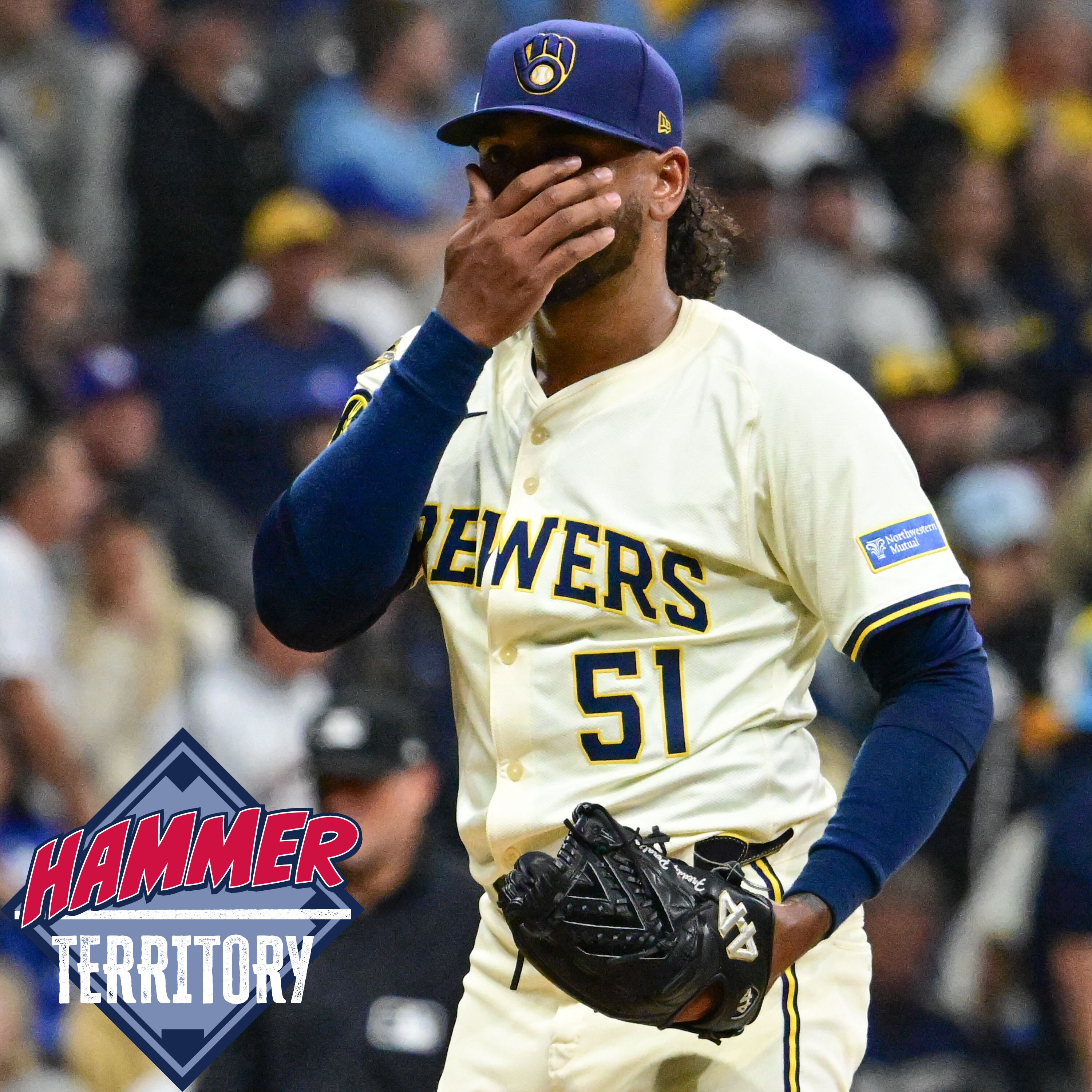
Could the Braves Trade for Freddy Peralta?
In Episode 318 of the Hammer Territory Podcast, Shawn Coleman and Stephen Tolbert discuss the Atlanta Braves having reported interest in trading for Milwaukee Brewers starting pitcher Freddy Peralta. Topics include his contract situation, what it might cost for Atlanta to acquire Peralta, his fit in Atlanta's rotation, and much more.
See omnystudio.com/listener for privacy information.
2026-01-06
37 min
Transcript
Available Results
Generated results are saved to the knowledge database for reuse and search.
No generated results are available for this episode yet.
Extract Knowledge
Pick what you want extracted first. Model, scope, and chapter options appear after a template is selected.
Generated results for public episodes are saved to the knowledge database so they can be reused and searched later.
Transcript
00:00:22
Speaker 1: Welcome one and all to the Hammer Territory Podcast. My name is Sean Coleman. I hope wherever you are and wherever you are listening, happy new year. Hope that your new year is getting off to a great start. If you were able to enjoy the Stranger Things finale, I hope that it lived up to your expectation. If you're a fan of someone that has either exited or is still in the college football playoff, hope that you were too disappointed. I mean, at least some of us don't support teams that lost. AnyWho on to bigger and better things when it comes to the braves and is always here to break them down with me, one of the best when it comes to breaking down the brains. A podcast partner, if he's still talking to me after that little quiff, Stephen, Hey, buddy, Hey, oh.

00:01:06
Speaker 2: Man, Yeah, I miss Tennessee's playoff game. How much I did? I didn't.

00:01:12
Speaker 1: I was glad they didn't. Yeah, but anyway, we go ahead.

00:01:14
Speaker 3: Price Yeah, So happy new Year. Obviously to everybody listening. It's belated at this point. It's January fifth or sixth, I don't know what it is. January sixth today, So.

00:01:26
Speaker 1: I don't happy David. I don't care if it's not Larry David approved. You could say happy New Year.

00:01:30
Speaker 2: Yeah, I think I think one week is fair.

00:01:32
Speaker 3: I think anytime in the first week of Jane I agree with Larry David, though after that it's it is well, you can't be it. Like Martin Luther King Day wishing people happy.

00:01:40
Speaker 1: He's still saying to Valentine state.

00:01:41
Speaker 2: It's fine. Yeah, well that's your you're you, Yeah, you're special.

00:01:45
Speaker 3: So so yeah, happy heard everybody. Twenty twenty six is here, twenty twenty five is gone.

00:01:51
Speaker 2: Thank god.

00:01:51
Speaker 3: If you're a Brace fan, it was a miserable year that we just went through. We do appreciate everybody that followed along all year, of course, but with a new year comes new hope, and for every team in baseball, you know, we're rapidly approaching spring training. I think pictures and catchers report in like five weeks if I counted right. So it's coming, it's coming quick. And I don't think the Braves are done yet. And we we've gotten a little bit of stuff to talk about. There's been some buzz about a specific guy that we're going to probably focus on today, but Yeah, spring training's coming and it can't come quick enough.

00:02:30
Speaker 1: Absolutely, And you know, with the fact that there's you know, hey, we've been through the winter meetings, we've been through the holidays. You know, there's a lot of activity that's happened so far this offseason, especially with the Braves. But the thing is is that some of the major players in free agency still are out there. I think we you know, if you were to take a poll of all the outlets that rank the top ten free agents, I think still you know, six to seven to eight of the top ten free agents are still left unsigned. We've talked quite a bit about the Braves. You know, we need you focusing on adding a starting pitcher and a difference making starting pitcher. We've talked at linked about the free agent option Duringer Swarez, rom Ervaldez, Zach Gallan, Chris Bassett, among others. Last week we talked about Totsuya eMate because the Braves were going a bit of an unusual route to potentially consider him. He wound up going to the Houston Astros. Well, now we have another pitcher that comes to mind, and again, is it a different avenue than going after one of the top tier free agent starters, and that is Brewers starting pitcher Freddy Peralta, who many teams have inquired about in recent weeks to potentially trade for Steven. When I mentioned the name Freddy Peralta, I don't think that this is a picture that that may get his just due. I don't think that he is a top you know, ten fifteen pitcher in the game necessarily, But if you look over the past three years, a lot like from er Valdez, just durable, consistently showing that he can be a front of the line starting pitcher. Maybe not necessarily a more of a two, but the durability, the consistency, and he's gotten better over the past three years as well. He's very attractive for teams that are looking to make a difference maker into the starting rotation. And there are a few, if any teams that are looking for that more than the Atlanta Braves.

00:04:14
Speaker 3: Yeah, so his name's been out there for most of the offseason. So the Brewers are the type of organization The Brewers are a lot with the Rays, a lot like the Athletics. They don't get the same kind of pub but they operate very similar in that when guys get to arbitration. It's kind of a clock that starts and that you know, we saw the same thing with Corbyn Burns. They get to a certain point, the Brewers are looking to move. They're looking to move, even if the Brewers are trying to win, and they're clearly are. The Brewers were one of the best teams in baseball last year. The way they operate financially, they can't allow guys this good to leave for nothing in free agency, so they try to get something for them, which is why the which is why Milwaukee is interested in moving them, because on the surface, it doesn't make a lot of sense for.

00:04:58
Speaker 2: A team that's trying to compete to trade a guy like this.

00:05:02
Speaker 3: I sat on Twitter a couple of days ago that I do want to make it clear that I don't think he's an ace, and people took that the wrong way. That's not an insult, like calling somebody more of like a two or three starter is not an insult. Being a number two or three starter. Major League Baseball is incredibly hard, and not a lot of guys would you put in that category like I would put Dylan Ceese or fran bar Valdez in that category. And you see what those guys get on the free agent market, So like that's not an insult. But you know, people are gonna look at the two seventy ear that he put up last year and think, well, this guy can this guy's the ace of his staff, and I don't think the peripherals support that. I think he's more of a two or three. He's got one year of team control left, So those things matter in terms of the price. But every single team in baseball would benefit from adding Freddy Peralta to their rotation.

00:06:00
Speaker 2: Every single team.

00:06:00
Speaker 3: There's not a single team in baseball that would not be better for having this guy.

00:06:07
Speaker 2: That leads to a couple of problems.

00:06:08
Speaker 3: One, every team in baseball is probably making calls to Milwaukee right now asking you know how much it's gonna cost. And two, because his salary is so cheap. Even like the dirt cheat teams, like the teams that are never in on free agents, can be in on a guy like Peralta because as long as you got a decent farm system, as long as you got the pieces Milwaukee wants, you can do anything you know you can. You're in the race versus free agents. Not every team is in the race, so it is a complicated deal. I haven't I don't know how much the Braves I know, I'm the brags definitely checked in. But when he gets to like farm system versus farm system, I don't know how they compete. I don't know what Milwaukee thinks, but it makes a lot of sense. And I don't want people to take that I called him because I said.

00:06:59
Speaker 2: He wasn't an A.

00:07:00
Speaker 3: I don't want people to freak out it like he's a really good picture. I think he's probably a two, maybe like a high end three, probably closer to it two, and he could help every team in baseball.

00:07:12
Speaker 1: I think a way to maybe put it that you know, maybe you know more accepted by some is I agree with you. He doesn't have the track record of an ACE correct. He is the track record more of a two or three, to be fair, though he did the the the actual counting stats last year yea three ACE level two point seven, OERA fifth and the Si Young race. You go to baseball savant, there's a lot of red there, a lot of red that you like to see. And the thing is is that at twenty nine he has progressively gotten better as well. But last year was a bit of an outlier, still worth just three point six F war. He's in that three four f war per year type range, and that again is more of a two or three, So I don't think it's insulting to call him a two or three at all. But unlike some other twos and threes, he's also got on his resume clearly an ACE level type year, which again makes him more attractive for the right reasons for Braves, but also every other team in baseball and the Brewers. The Brewers. We're gonna get into this in just a moment. The Brewers have been here before, right, like you said, this is how they operate. Just two years ago they had Corbyn Burns who won that I believe, the twenty twenty three a Scion award. He I believe he was a year removed from when I can't remember the exact offseasons whatever, but he was at proven as he had been a Scion winner, and they traded him with one year remaining of control to the Baltimoreials. The Brewers have done this before. They know how to get value out of these type of guys because they're a very smart organization. And this is how they operate. So the fact is is that while Freddy Ferrata is very attractive because of his durability, because of the fact that he you know, has shown he can continue to elevate his overall production, the fact that he's I'm an offer career year and you're dealing with the smart organization. Those two factors come into play, which makes it hard for the Braves, who may not necessarily have as much prospect depth, to make an attractive offer comfortably comfortably as other teams do.

00:09:18
Speaker 2: Yeah, and that's that's where it gets tricky, right.

00:09:23
Speaker 3: So again, par also signed this big extension, not big, it was a very small as a team. From the extension, I think it was like twenty twenty one or something like that. He's in the last year of this extension. It's one of these like Ozzie Albi's extensions where he's making like eight million bucks next year, which.

00:09:40
Speaker 1: Is just five years. Fifteen million was basically value.

00:09:44
Speaker 3: Yeah, with a couple of club options at the end, and this is the last club. It was basically the Aussie contract.

00:09:48
Speaker 1: Yeah, year total I think again, yeah, or seventy years.

00:09:53
Speaker 3: So that's the level of money he's making, which is not. I mean for a guy he's good as good as him as nothing.

00:10:00
Speaker 2: That's what I mean.

00:10:00
Speaker 3: Every team, in every single team in baseball. There's not a sing one thing that's happening right now with the CBA potentially the lockout happening next year. You're seeing a lot of teams, even the really cheap teams, spend money trying to compete. Everybody's trying to get out ahead of this CBA negotiation. You know, I think I think MLB send a letter out to all the owners, especially some of the cheaper ones, that said, hey, we got this negotiation coming up.

00:10:24
Speaker 2: It would help us a lot.

00:10:25
Speaker 3: If everybody spent some money this offseason. And so you're seeing the A's, you're seeing the Pirates, you're seeing the White Sox. You're seeing teams I don't normally do a lot actually make some moves this offseason. And the reason I bring that up is because damn near every team in baseball is trying to win right now. And we've heard this from other people where when when teams are talking to other teams about trades, those teams aren't looking for prospects, they're looking for like major league ready players. Because almost every team in baseball is trying to win right now. That's important because every team at baseball trying to win could use Freddy Parolta at eight million bucks.

00:11:03
Speaker 2: Eight million bucks is nothing. Every budget in.

00:11:06
Speaker 3: The sport could support that for a guy this good. So I would literally guess the Brewers have fielded calls from twenty nine teams about Peralta, and so you have to have the best offer out of all of those teams. And to do that with the braves current farm system just seems like it seems like a very low probability to me. Now, he's only got one year of team control left, so that's going to suppress his value. I do think he's more of a two to three than an ACE, But it only takes one team to disagree with me and offer the Brewers what they think ACE level A one year, You know, one year of an ACE level picture is worth, and it blows everybody else's offer out of the water. So it's just a really difficult guy to win a Nego. It's really difficult to win a bidding war for Peralta when he's so cheap that literally all twenty nine other teams can be involved in him.

00:12:07
Speaker 2: I think the Braves do have some interesting pieces. I think the Braves have some interesting.

00:12:11
Speaker 3: Major league ready pieces, like a Hurston Waldrop that the Brewers will be interested in. But again, are you willing to give up Hurston Waldroup for one year of Paroalta?

00:12:22
Speaker 2: Right? We can.

00:12:22
Speaker 3: I think we're going to talk about an extension, potential extension at some point in the show, but that would almost have to be like part of the deal is like, are you going to get an extension out of this guy? Because at one year, what are you willing to give up?

00:12:35
Speaker 2: Prospect wise?

00:12:36
Speaker 3: And that's you know, that's a that's a question every team has to answer. So it is a fascinating situation.

00:12:42
Speaker 1: Well, let's explore that question. Let's explore that question with some details of PI could hear in the background my two year old himself was getting excited about the thought of Freddy Parolta. Then was getting scared a bit, as will at what it might cost more on that than just a moment after a word from our partners. So Steven, might let's dive into it. You know, you know a fellow, you know, foul Territory member Ken Rosenthal, who obviously is one of the best in baseball history when it comes to covering the sport. He talked about Freddy Peralta at length on today's episode of A Fair Foul Territory, as well as his own show Fair Territory and from the Foul Territory Show. He brought up a very interesting comparison. Again, as I mentioned, the Brewers had been in this spot before. Just two years ago, they traded you know, their ace at the time, Corbyn Burns, to the Baltimore Orioles for a package that included dl Hall, who I believe was someone who had certainly been a top prospect in the Orioles organization. I think he may have been on a few top one hundred lists, but he also believe was beyond prospect status at the time he was traded. They traded him. They traded at the time number six prospect Joey or Tiz, who wound up being a you know, a pretty good get for their major league squad, and the number thirty four pick in the twenty four draft, a competitive balance pick. What does that look like for the Braves? Would that you know, basically equate to nowadays? If the Braves were to send a similar offer for Preddie Peralta, well, I think the d O Hall comparison that the Brave's equivalent of that would be hursted Waldrop. Now, if you were looking for the Brewers wanting to get another, you know, infielder that they potentially could see in the in the Major's new year or two, Alex Lodie, who we just picked in the Mob Draft would be in that draft or be in the trade as well. And then for us, it wouldn't be a competitive balance pick like we wouldn't trade the number twenty six pick. I don't think we can trade it, but it would be a lower level guy who would be the equivalent of maybe a late first second round pick. That would kind of be even if you don't think Peralta deserves to get as much for the Brewers as Burns did, that would be the type of offer that I think would put the Braves near the top what other teams can offer. And so when you start to look at it from that lens, when you start to look at what it potentially would cost, that gives you a better perspective of is it truly worth it?

00:14:55
Speaker 3: And remember when the Orioles made that deal for Burns. The Orioles are who the Burns or the Brewers traded Burns to. The Ools had the number one farm system in baseball back then. That's when they had all of these young kids coming up. Yeah, and so.

00:15:13
Speaker 2: The Braves do not.

00:15:15
Speaker 3: So even like some of their down lower prospects were probably would still have been much higher ranked in the Brave system. So there are there are one hundred percent going to be teams that can offer better packages than the Braves. The wild card is every single team views prospects differently, and Milwaukee just might like one of the Braves prospects better than they like some of the other. You know, That's that's kind of the that's kind of the equalizer that we don't really know is everybody views prospects differently. So I do think it's gonna cost a lot. I don't think it's gonna cost as.

00:15:53
Speaker 2: Much as Burns.

00:15:54
Speaker 3: I think Burns was more of an established ace. I mean again, he was coming off a cy Young, not maybe maybe not coming off I think it was one year removed from a cy Young, but it was like a seven war season that he put up like he was a bona fide number one Peralta. Again, I think, you know, he's more of a three three to four win guy, probably more of a three win guy, So I think he's more of a three starter or high or low and two starter. So I don't think he's gonna bring that much. But I think Corburn Burns was making like twenty five million bucks that season.

00:16:25
Speaker 1: He was making I believe he was making seventeen to eighteen.

00:16:27
Speaker 3: I believe eighteen, Okay, So the fact that Peralta is only making eight million bucks makes him more valuable in trade because every budget in the game can fit him in there. So I don't know, maybe he does, Maybe he does bring back something similar to Burns. I think I think I would still go on the under on that, but we'll see it only again because all twenty nine teams can be involved in this. It literally only takes one team to be like, no, this guy can be an ACR staff and he's only twenty nine and again it's one year, but you could probably yourself that you could work out an extension with him at some point. A lot of guys who get to this get this close to free agency, which is, you know, Peralta's one year removed from free agency.

00:17:11
Speaker 2: The twenty twenty six is his last year. Team control.

00:17:14
Speaker 3: A lot of guys like that don't sign extensions because they want to see what the open market's like. But pitchers are different because the injury risk is higher, the aging curve is much more aggressive, and so a lot of times they're open to extensions when other guys, maybe position players, wouldn't be. So if you're the team trading for him, you could tell yourself, I bet we could get.

00:17:32
Speaker 2: An extension worked out. Yeah, I kind of right.

00:17:37
Speaker 3: Well, I was gonna say, you kind of have to have, you know, if you've got to give up Hirston Waldrip and Alex Lodiz, like for one year of this guy, you kind of have to at least give yourself a window to work out an extension because it's a lot.

00:17:49
Speaker 2: That's a lot to give up for one year of a guy.

00:17:51
Speaker 3: Now, the Braves would be substantially better next year, but unless you have some sort of hopes of an extension, that one year becomes awfully.

00:17:59
Speaker 1: Costly, absolutely, and you kind of bring it to the point of comparing it to you know, signing one of the top free agent starters. You know, if you go out and you get a Valdez, you get a Swarz, you get it, Zach Gallan, we'll discuss Swarz and fromer Valdez. More than likely the total amount of contracts for those two guys, I imagine will probably wind up in the low nine figures, you know, probably somewhere in a one hundred and ten to one hundred and thirty million dollars range. I think Freddy Peralta may wind up there, maybe a little bit higher if you were to be an extension. So if you go out and you sign a fromer Valdez, you've sign a ranger Sworez. They're two to three years older than Valdez, so you may be paying for a little bit further into their careers. You also have to give up the draft pick, whereas if you go after Peralta, you're giving up obviously a bit more in a trade, but you're also getting a younger pitcher who may be at a bit maybe more in his peak than where Swarez and Valdez goes. So you can see it either way. One thing to take away from that is that the Braves have options that are out there. They're not desperate enough to where they have to absolutely go out and overpay for par Alta with the hope of an extension. They're not in that position, but if they were to go that route, you have the ability number one, to keep your pick. Obviously in this draft, which is considered to be a pretty strong draft, so you'll be able to replenish whatever you get up in trade. And then say, for instance, you weren't able to sign par Alta to an extension. I say this in quotations. You potentially could offer him a qualifying and offer a year from now, and you would get two high picks in the twenty seven draft. Now, you run a bit of risk because CBA negotiations may make it to where that's not the case. But the point that I'm getting at is is that the Brave ge. This gives the Braves options, right, they at least have options to explore, and they should look at all those options. But Stephen, something else that you brought to you know recently in the chat that we have with Hammer Territory that a thought was a great point. You get Paralta for eight million this year, but beyond this year, if you're sign him to an extension, you're probably gonna get him at twenty five to thirty million. Yeah, probably for a three to four win type player if you give up a Hurst and Waldrop. I'm not suggesting that Hirston has a very good chance of being at a Parolta level. But say Hurston Waldrip turns into a two to three you know, win per year pitcher, per year pitcher, his cost is pretty during valuable compared to what Freddy Peralta would cost. So I'm not meaning to be too far fetched with my optimism on Hurst and Waldrop. My point in mentioning all this is how much goes into just kind of, you know, considering options. The Braves have options, but that's I think the detail they're going into when it comes to considering what route to really go after to improve the rotation.

00:20:49
Speaker 2: Yeah, and listen to.

00:20:52
Speaker 3: The argument that if you trade for him, you get to keep your pick in the draft and then you can replenish whatever you traded in the draft coming up.

00:21:00
Speaker 2: Is a fair argument.

00:21:01
Speaker 3: Like, that's true, you have added to your pitching staff and not given up the pick, and whatever you give up you can now replenish.

00:21:08
Speaker 2: In the twenty twenty sixth draft.

00:21:11
Speaker 3: The two wild cards are one, how much is it gonna cost, what is the trade package?

00:21:16
Speaker 2: What?

00:21:17
Speaker 3: Like, there's not a single prospect in the Brave system that is untradeable to me, including Hurston Waldrip. I'm not as actually as high on Hurston as other people are. Like I would Tradehurston in a heartbeat on the right deal. But is one year of Paralta the right deal? And then the second wild card is is it only going to be one year or can you get an extension worked out? And how much is that extension going to be? All of that has to be factored into the equation of should we do this or should we not? So it makes a lot of sense. The Braves need pitching. I would love to get I mean, you know, par Alto is a level of I would put par Alta at the same level as like Ranger, Suarez and Framber. I think that's perfectly fair. Even if you want to say he's better than both of them, you.

00:22:01
Speaker 2: Ever want to say he's better than Cease, I don't. I don't know that.

00:22:04
Speaker 3: I would spend a lot of time arguing that maybe I would take Cease over Frambridge just I don't know I could. I could, I would probably have to look into that more. But like if Paralta was on the free agent market right now, he would get a contract comparable to those guys like easy because he's he's two years younger than most of them, so he would probably get more money actually, So that's the level of picture we're talking about. It just comes down to how much is how much does Milwaukee want? Milwaukee is an extremely smart organization, like they are one of the best run organizations in baseball and have been for multiple years now, So they don't you know, they're going to aggressively price Peralta because they know they're in the cat bird seat when he comes to the number of teams that are going to be interested, especially at eight million bucks, they cannot be overstated how big of a deal it is that he only makes eight million bucks next year, So Milwaukee's very smart.

00:23:01
Speaker 2: And how much is it going to cost? What is the trade package?

00:23:05
Speaker 3: And then is there a possibility for an extension? A lot of times teams will say, hey, I need a forty eight hour window to work out an extension and if I can get an extension done, then we'll say yes to the trade.

00:23:17
Speaker 2: And I can't, then we won't.

00:23:19
Speaker 3: That's happened before, and I can see that happening with this because one year is just tough. Now, they were able to trade Burns to the Orioles without an extension, so you know, it's not a guarantee, and Paralta has to be open to an extension like that's a big part of it. I don't think Burns was open to an extension. I think he was ready to get to the open market.

00:23:37
Speaker 2: So it all matters here.

00:23:39
Speaker 3: It makes sense for the Braves, but this is a tough one to get to the finish line.

00:23:44
Speaker 1: Yeah, and when we talk about the price for Paralta, I think Paralta is perfectly within his realm, especially he comes off you know, another potential top ten sim season, which he's perfectly capable of doing. Yeah, he's got the mindset he could put that together. That's one hundred and fifty plus million that he's probably looking for in extension. So all that all that to be considered. But I think that this opens up conversation to another important part when it comes to how the Braves are going to continue to construct a roster into the future. You know, I think that that's something that should also be discussed, and that is the fact that they just have not relied too much on trades over the past couple of years. More on that, especially from Stephen's perspective here in just a moment after another word from our partners. So, Stephen, Alex and Thopless. You know, one of the things that I was so excited about, you know, nearly a decade ago when he came to the Braves is that something that stood out during his time with Toronto is that he went after it if there was an opportunity to go get a talent, regardless of where they were really in their career, regardless of price tag, so on and so forth, regardless of if he hadn't for the short term or long term, he went and made it happen. He was before aj Preller, there was Alex and Thopoless, and Thoughtless wasn't to the level of Preller, but he he was that kind of gun slinging GM who would make the risky deal that others weren't make, would not make. But since he's gotten to Atlanta, that hasn't necessarily been the case. Now I will say this, when he does make a significant trade, he does typically very well. Look at the matt Olsen trade, you know, look at the Chris Sale trade. There have been some trades that have not worked out so well, like the Sean Murphy trade, the Wikian. I'm not bad Mouthew Murphy. It's just I think anybody would look three years into the trade and probably say it hasn't worked out as much as you might have liked. But the point is is that he still does make trade. But we are now more than two years since he made the von Grism for Chris Sale trade and it was absolutely a home run. He's made other deals obviously in that time. He's acquired PRIs Johnson, acquired Joe Jimenez, acquired Jorge Celaire the summer of twenty twenty four. But there hasn't been like there's no part of this roster at the moment that is a significant contributor that is going to be relied upon significantly in twenty twenty six that is been acquired by trade over the past two years other than Chris Sale. I bring that up to say this, that's pretty eye opening when you look at this roster, and I wonder if that's kind of a changing to the guard for Alex or if his time goes on, he may start to decide he needs to make some trades. What are you your perspectible on Matt then get into reasons why I think he may have to start going more of the trade route in the near future.

00:26:28
Speaker 3: Yeah, I mean the Braves don't have the best farm system. They do not, that's yeah, Like I know so Alex. I've heard Alex say a couple of times that there's we've never been told though, We've never been told that we don't have the prospects to get a deal done. We've had trades out there and they just haven't they have, you know, the other team hasn't accepted.

00:26:50
Speaker 2: And I do think that is true. And I know for a fact that it's true. I know multiple teams.

00:26:54
Speaker 3: Last year the Braves were interested in guys, and multiple teams last year wanted Drake Ball and the Braves just said no.

00:27:02
Speaker 1: They were high, high level guys.

00:27:04
Speaker 2: Yeah, exactly.

00:27:06
Speaker 3: The thing the Braves don't have is while the Braves usually have a guy like that, what the Braves don't have is the next group of players after that that make deals like this possible where you can still keep your best guy and still get deals done.

00:27:21
Speaker 2: And the example I've used in.

00:27:22
Speaker 3: The past is like Boston, Boston trading for Garrett Crochet but not having to give up either Roman Anthony or Marcella Meyer, right and or like their top five. Really, I mean, they kept most of their best prospects.

00:27:35
Speaker 2: That's what the Braves don't have.

00:27:36
Speaker 3: The Braves don't have the level of depth where they can go at and acquire impact talent and keep the best prospects for themselves. The Braves just they don't have that level of depth. They have very little top end depth, yes, and they have very little top in depth, especially in the high miners, which is again so many teams are trying to compete these days. They're not really looking for sixteen year olds, They're looking for twenty one year olds that are knocking on the door.

00:28:03
Speaker 2: So I do think that plays a role.

00:28:06
Speaker 3: You know, if we're being honest, it's been a tough team to try to add to the last eighteen months, So I think that plays a role. I mean, last year, if the Braves were better, I am guessing they would have added something decent.

00:28:19
Speaker 2: You know.

00:28:19
Speaker 3: The big shock last year was that they didn't sell off pieces, not that they didn't even acquire pieces. So I think it's you know, it's a little bit about everything, but I don't think he has any I don't think it's like he's against trading. I think it is it's just been a tougher environment, specifically for the Braves the last couple of years. But again, I don't think that's going to be the impediment for our trade with Praulta. It's going to be how many other teams are involved in this?

00:28:45
Speaker 1: Yeah, And I think the part that plays into it as well is that when you look at the strength of the Brave system, it is their pitching, right. You know, they're starting to get a little bit more depth in that top level because of their pitching. But the problem is is that they've also just had so many injuries that I don't blame Alex for being reluctant for not wanting to give up that pitching depth. Again, to your point, I think that he would give it up in the right deal, but it'd be hard to do. But even when you start to tap into that pitching depth, like you know a J. Smith Shaver who looked like he may be on the verge of a breakout year this year, he unfortunately undergoes Tommy John surgery. The other thing is is that the top flight prospects that they've had, you know, Strider and Michael Harris the seconds you know years ago, swelling Back and Baldwin the last two years. They needed those guys. Those guys have feel big needs for this team and they're a big part of the future. So that's why you don't trade them. So I certainly think that that plays a part into it, as well as your excellent point about, you know, the perspective of major league teams wanting more major league ready talent than you know, future talent. But the reason why I say that, why I don't think Alex says has has you know, become less inclined to trade or you know, you know, you know it has less of a desire to trade. Trades may become more of a focal point in the near future if things don't necessarily work out for this team. What I mean by that is is that we're we just did. Brad and Scott did a great episode on for instance, Ozzie Alby's and Michael Harris, you know, bouncing back, wanting to see Austin Riley bounce back, wanting to see Sean Murphy bounce back. We've got a lot of ifs, a lot of hope that these guys bounce back. What if they don't. What if they don't bounce back to the level that they once were, That kind of lowers you're ceiling a bit. The other factor of this team that needs to be considered age is getting up there, especially on the pitching side of things. Rice he Iglesias, Chris Sell, Robert Swarez. You've got some older guy Ronaldo Lopez. I know that he's not necessarily as old as those guys, but coming off an injury, you've got some guys Matt Olsen, you know, knock On Wood. I'm not wanting for him to fall off, but if you look at some comparables like Mark Tashera and others, it was their early thirties where they started to fall off a bit. The thing that I'm getting at is is that both age this team has gotten old quickly and also the fact that you've seen multiple years now where guys have not progressed as you had hoped. If those things don't bounce back or maintain where you hope they do, trades are gonna have to become your route of getting things done. You're going to have to take some risk. So that's why it's not necessarily needed right now. But a year from now, if we have another disappointing year, Yell will have a lot of money out the books. But I think also you've really got to start considering the trade route and where you might be reluctant to trade guys in the past, maybe you come a little bit more lenient on wanting to trade them now to really feel some needs where you need it.

00:31:39
Speaker 2: Yeah, no, certainly.

00:31:41
Speaker 3: I mean when you lock up this many pieces and then you have multiple you know, if we just if we play a hypothetical game where the Braves have a bad season in twenty twenty six, that'll have been multiple bad seasons in a row. When you have this many guys locked up and you have multiple bad season in row, then you got to start making changes.

00:31:58
Speaker 2: You got to start making moves.

00:31:59
Speaker 3: And again, when you have this many players locked up, usually that to be a trade.

00:32:03
Speaker 2: So one hundred percent.

00:32:04
Speaker 3: Is going to have to become a thing if the Braves don't find their way back to the playoffs in twenty twenty six.

00:32:09
Speaker 2: But I do want to make one last.

00:32:11
Speaker 3: Point, and I know we're about to get out of here, the Braves do need to find some sort of long term answer in the rotation because Chris Sales under his last year of team control. Ronaldo Lopez only has two more years of team control, and again he's dealing with all the injury stuff, and he might be a reliever. I'm still waiting to see Spencer Strider, who knows, who knows what? Spencer Stride, who knows in terms of health, and who knows in terms of production? With Spencer Strider like the one guy the Braves have that has some control and talent combined that you're decently sure out of Swollenbach, and even he's coming off a major elbow issue that he had last year. So the rotation does not have a lot of long term answers. So I have thought for a while, whether it's Framberg, whether it's trading for Peralta and locking much to an extension, it would help a lot for the Braves to have at least one legitimate long term answer in the rotation. Now with pitching, do you ever have any long term answers?

00:33:11
Speaker 2: It's a fair question.

00:33:13
Speaker 3: Maybe not, and there's some people who don't think so, like you never know what your rotation is gonna look like two years from now, and that's fair, and maybe it's best to keep everybody on two and three year deals and figure it out year to year. But the rotation does have a lot of long term questions and they do have some young players. Hurst and Waldrip could come up. He could have another good year and all of a sudden, HERSTL. Waldrip looks like a long term rotation piece. A J. Smithshaw for same thing, or pick one of your favorite young prospects that could.

00:33:42
Speaker 2: Come up and do that.

00:33:43
Speaker 3: But you know that's why, on top of I think the Braves need another picture because of depth, they do have a lot.

00:33:50
Speaker 2: They don't have a lot.

00:33:51
Speaker 3: Of long term answers there, and you know, Peralta could be that if you could get an extension done, but you gotta trade for him first, and you gotta win that. You gotta win that bidding war, and he's got to be open to an extension, which is not a given. And you know, I would not be surprised at all if he came out in his agent or he said no, we have no interest in an extension. We're gonna take this thing to free agencies.

00:34:13
Speaker 2: So it's a complicated deal. To get done.

00:34:16
Speaker 1: Now. The right side of this for the Braves is is that again I think that they have more pitching depth, more intriguing to quality prospect depth from the pitching side than they've had in many years. A Waldrop Jr. Ritchie Owen, Murphy did hear for Wintes, John Carloslora, There's several others out there on Murphy as well. That's great, but I don't think that you need to tell anybody close to the Braves who's been here for a while. It's great to have all that prospect depth. It definitely doesn't mean that it's going to lead to a long term healthy rotation. You just got to go back a decade with all the prospect depth that the Braves have and then you come to realize that we're the only guy out of that group that had more than one productive season for the Braves was Max Free.

00:35:05
Speaker 2: Yeah.

00:35:05
Speaker 1: So so pitching depth, again, it's a war of attrition. So it's great to have it, but more often than not, it's great to have it to where it gives you a better chance or one or two productive arms coming out of it than a whole staff. So yes, I definitely do think that there needs to be things that are kept in mind. I definitely don't think that a you know, big trade is absolutely needed, you know, to make this team a true contender. I think they can be a true contender as they are. But when you play that if game, the Braves have lost that game more often than they've wonted over the past two years. And that's why I'm saying all options being on the table may be more truth to that now than ever. So the options aren't there on the signing market. Brewers like what they see in the in the minor league system. Maybe Fredi peerol To makes sense. Maybe there's other options that could make sense as well. Alex has the ability, as we all know, to come out of left field. Perhaps there's a trade on the table that we don't know about yet, or player we're not really considering that can get the job done. The big thing, though we is is that the Braves again have a lot of different routes they can go, and even as we're getting closer to spring training, and only does that mean something could happen quickly, it means that plenty of options can happen. Where one door closes, another could open to get something done, stevened anything else from you as we wrap up this edition of the HAMMERD Territory Podcast.

00:36:21
Speaker 3: Now, just reiterating when I said at the beginning, spring training is coming quick. Now that we're on the other side of New Year's it's coming. As we get closer, we'll start doing you know, more preview stuff into the twenty twenty sixth season. We'll look at the roster we all, you know, we you typically wait until the roster is pretty much set to start doing that. At some point, we'll do a payroll show. Now that again most of the off season heavy lifting has been done, We're still gonna wait to see if there's one more, but we'll do a payroll show at some point, just to go over payroll. But yeah, the content rolls on in the twenty twenty six and we appreciate, you know, we so much appreciate this that you guys have shown.

00:37:01
Speaker 1: Us absolutely can that that cannot be stated enough. Of course, you can find Stephen Tolbert at b Underscore Outliers, myself at Stat's Sac, both of us. When it comes to coverage outside of the Braves, we'll certainly have plenty to talk about when it comes to basketball, both at the college and the professional level. Won't to dive too deep in that, but hey, watch watch those news outlets. Plenty of news to come along. But you, of course can find hamor Territory across all forms of social media. Far the Powell Territory family of podcasts. Until next time for the wonderful Stephen Tolbert. My name is Sean Coleman. We'll talk to you again soon here on the Hammer Territory podcast
Chapters
No chapters available.