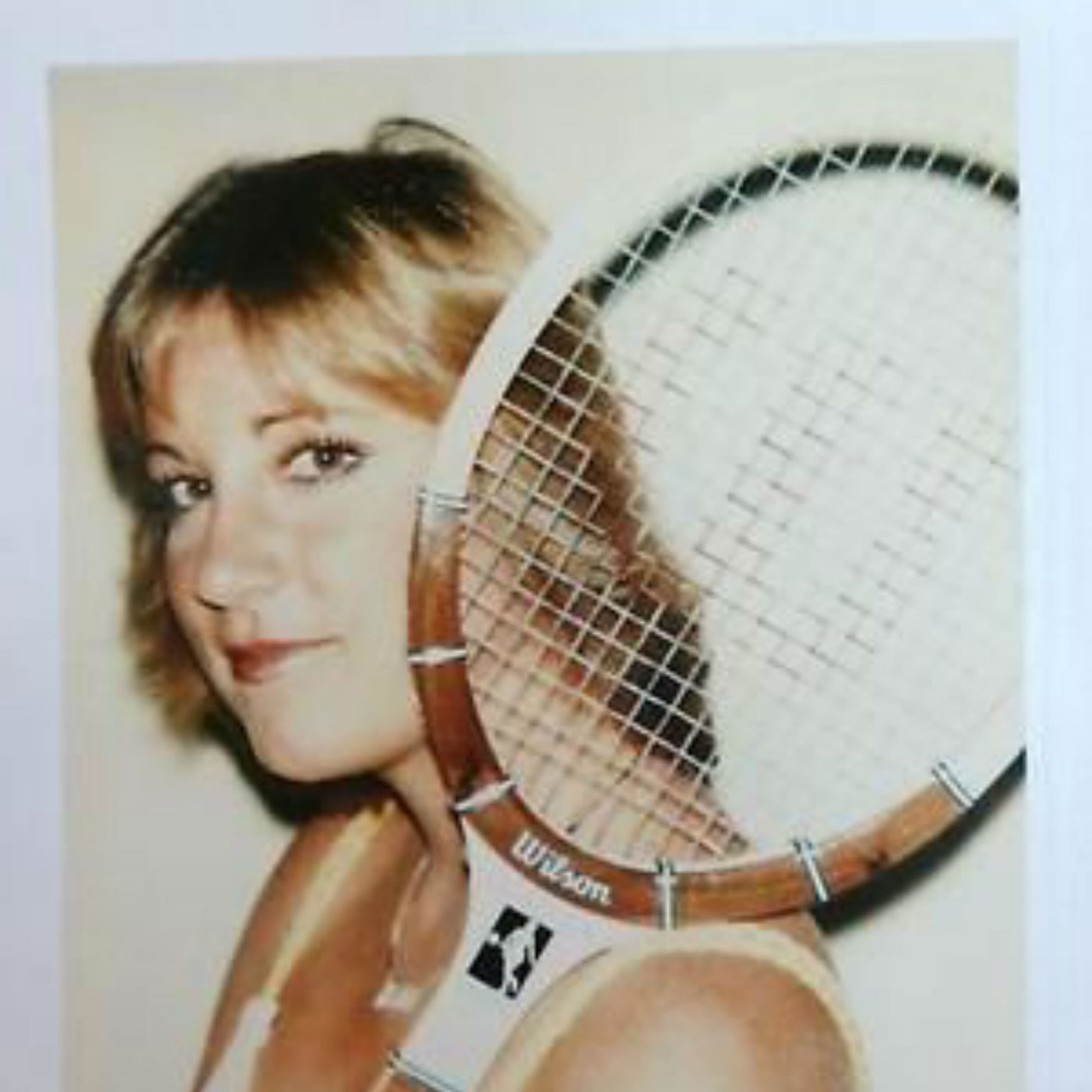
Chris Evert
Legendary player Chris Evert joins us to trade dating advice—date a nerd, she says—talk MeToo, and share what she learned from parenting three boys and beating the crap out of Billie Jean King. Plus, fashion correspondent Andrea Petkovic reports live from the streets of Paris.
Hosted on Acast. See acast.com/privacy for more information.
See omnystudio.com/listener for privacy information.
2018-06-06
49 min
Transcript
Available Results
Generated results are saved to the knowledge database for reuse and search.
No generated results are available for this episode yet.
Extract Knowledge
Pick what you want extracted first. Model, scope, and chapter options appear after a template is selected.
Generated results for public episodes are saved to the knowledge database so they can be reused and searched later.
Transcript
00:00:14
Speaker 1: Renee. It's our first podcast, very excited Racket Magazine. The podcast comes alive with a legendary first episode. Can I say legendary?

00:00:23
Speaker 2: Absolutely, can say legendary in every way it's gonna be awesome.

00:00:27
Speaker 1: We have on the show for our first episode, Chris evert.

00:00:30
Speaker 2: Let's get this right. Yeah, let's call it Chrissy because she likes to be called Chrissy.

00:00:34
Speaker 1: And it's familiar. We are now our friends. As you'll hear, the tone is, you know, relaxed. We get Chrissy on her front porch.

00:00:40
Speaker 2: In Bookeratos, yelling at her dogs, demanding that they go inside while she's sitting on her porch enjoying the Florida weather.

00:00:48
Speaker 1: Not bad, not bad, on the eve of the French Open.

00:00:51
Speaker 2: On the eve of the French before she goes over only in the second week, because the great champions only have to go over and commentate in the second week, as Chrissy does, and she'll be being on a plane and we're very thankful that she joined us before the tournament.

00:01:03
Speaker 1: So listen up for our episode with Chrissy, the first of our Recket Magazine podcast. We're grateful. She talks motherhood, me too, tennis rivalries.

00:01:13
Speaker 2: Dating and telling me how to get a date.

00:01:16
Speaker 1: We're gonna have to have her back as our dating correspondent.

00:01:19
Speaker 2: Yes, she may even go to Nashram with me.

00:01:21
Speaker 1: Amazing. All right, listen up, you'll love it.

00:01:22
Speaker 2: And also, Chrissy's going to tell us a little story when she absolutely smoked Billy Jean on clay. But guess what Billy mind from it? Came back a champion.

00:01:30
Speaker 1: That's what champions do. They just all right, listen to what this champion does on our episode.

00:01:41
Speaker 3: You know what, when she asked me to do something, Renee, it's like, I got to do it.

00:01:45
Speaker 4: I gotta do it, I gotta.

00:01:46
Speaker 1: Do You know, she'll be a total pain in the ass if you don't, right.

00:01:49
Speaker 3: Yeah, but she wants to get some racy comments from me, and I've got to be careful with her.

00:01:53
Speaker 1: Yeah. Well, it sounds like you know her very well.

00:01:55
Speaker 2: I promise you I'll be gentle.

00:01:57
Speaker 3: All right.

00:01:57
Speaker 2: Well, Chrissy, thanks so much of a joining. Now listen, you told me the other day that you were coming from your academy just special to do this for us. So I want to know how much actual time you spend at the academy.

00:02:10
Speaker 3: Well, first of all, thank you for asking me. I go to the academy every day. I mean, I mean when I'm home and I'm not away at Grand Slam tournaments. I go there at least four times a week in the mornings or in the afternoons, and and I hit with the kids.

00:02:26
Speaker 4: And it's it's really funny.

00:02:28
Speaker 3: We started this academy, the Evertons Academy, twenty four years ago. Oh Jesus, sorry, dogs.

00:02:34
Speaker 2: Is that your dog?

00:02:35
Speaker 3: Is that?

00:02:35
Speaker 2: Is it an iguana that it's racing after?

00:02:38
Speaker 3: Okay, so these dogs are out need to be inside if I'm going to be outside.

00:02:41
Speaker 1: Right, girls, unless they want to be a guest yest stars on the show.

00:02:45
Speaker 3: No they're not, they're not. So anyway, I have two dogs, and we started this academy, my brother John and I twenty four years ago. And at that point I was training or hitting with like the eighteen year olds, and now at twenty four years or guess what, I'm with the ten year old. But you know, the ten year olds these days are good. That's all I can say.

00:03:06
Speaker 4: Ten.

00:03:07
Speaker 2: I'm gotta tell you, whenever I hit with any of the kids, I'm like, listen, if you can set me up with a thirteen year olds. I'm good with that.

00:03:14
Speaker 3: Yeah, yeah, you're at the thirteen You're still up there. I'm at the tens and they look at me like I'm a cave woman or something like the dark age is because I still hit my flat four hands, and I still I drop shot. I drop shot them my lab I mean, I really.

00:03:29
Speaker 2: You toy with them.

00:03:30
Speaker 3: I absolutely toy with them, and they sort of have tear in their eyes when I approach the court when they know that I'm going to be hitting with them because they know that I'm just that's the way I'm going to play good.

00:03:42
Speaker 1: More of them should play like that. I think more of them should play with all the tools in the tool belt.

00:03:47
Speaker 3: Right. Well, we didn't have power in our day, but we certainly had the shots and we had finesse. And nowadays with this power game, you know, if more players would incorporate I think the touch shots, the finesse shots, I think it would definitely and hance their game.

00:04:01
Speaker 1: Listen, as a collegiate athlete, I've had the privilege of going out and hitting with Renee on the public tennis courts here in New York, and there's not a lack of power. I'll just say that, oh please.

00:04:12
Speaker 3: Yeah, but Renee wasn't in my era. Renee is a lot younger than how much that was not that much younger, a lot like maybe three or four years, but only three or four. Yea, your a lot and you were. I feel like power came into the game actually in my ear at the end of my career with Stephie and with Monica, and they really were the ones that started the power game. And then ever since then, it's it's really taken off and it's you know, really, it's been wonderful for me to see Christy.

00:04:38
Speaker 2: We're going to have Jason Biggs on our podcast and he comes down to play your charity event. You have so many great people to come and play your charity event. And one of the things I love about you so much is that you've given back so much to your community. How important is that do you think for the players now that are so well known to give back philanthropically to their communities.

00:04:59
Speaker 3: You know, I think it's really important. And I mean I started giving back after I retired, but a lot of these current players are giving back while they're playing, and I admire that. I mean, Roger Feeder travels over to Africa once a year and for his foundation. And I know a lot of the top players they can balance that, they can still do that. And you know, I think we all feel so fortunate that we're in a business that we love, we have a passion for, we make a lot of money, we travel the world, and you know, we're fortunate, and there are a lot of people in this world that aren't as fortunate, that haven't been given that deck of cards, you know. So I think it's our responsibility. I don't think it's like, well, makes you a good person. I think it's kind of our responsibility to give back to those less fortunate. And I'm proud of the fact that a lot of the active players do that. They don't wait till they retired, they do it right away.

00:05:52
Speaker 1: Well, Jason says, it's a fantastic event and he wants back. We made him commit on the air to coming back. So if you want him, we've got him.

00:05:58
Speaker 3: Okay, he's good, by the way, he's a good player. He's a very good player, and it's a lot of fun to play within Renee. You've been nice enough to come down to that event too.

00:06:07
Speaker 4: Every year.

00:06:08
Speaker 3: My Foundation, and my cause is the fight against drug abuse. And I think that's sort of a subject that has a taboo to it. It's not as kind of a sexy sort of charity, you know, it's one that people make bad choices, or people are born into an environment where they can't help themselves and they have very little choice. And you know, it's all about giving people second chance in life. So and I think everybody's affected by it. Everybody if they don't have somebody in their family, they know somebody who has been affected by drug abuse. And it's definitely, you know, an epidemic that needs to be addressed right now.

00:06:43
Speaker 1: Yeah, I mean our country has been waging a two three decade long war on drugs with nour success. And you know, there's an opioid crisis going on in the middle of the country. So it's relevant.

00:06:53
Speaker 4: Yeah, no, it is.

00:06:54
Speaker 3: And it's you're right, it's it's changed from you know that first it was you know, heroin, and then it was cocaine, and then it was marijuana, and now it's opioids and it's painkillers and it's really serious. And the prescription drugs epidemic is very serious, and you kind of wonder if doctors are just handing these out a little.

00:07:14
Speaker 4: Bit too freely.

00:07:15
Speaker 3: You know, it's very much like a mental mental illness, which also has a taboo.

00:07:19
Speaker 4: You know, these these causes that.

00:07:21
Speaker 3: Are uncomfortable and that have judgment tied to them are the ones that really need to get out there with and we need to feel compassion and understanding of these of these issues because they deserve it.

00:07:35
Speaker 1: Okay, So we're talking to you on the eve of the French and obviously everybody's been talking about the fact that raff and Adal is the king of clay. His win percentage is crazy high. But we've crunched some numbers and we wanted, since we knew we would be having you on the phone, to tell us how you think about the Moniker Queen of the Realms of Dirt, mother of Dragons. First of her name, Chris Evert, Queen of Clay.

00:08:00
Speaker 2: Yes, because Raphos we know is dominant on clay at ninety one point eight nine winning percentage. Chrissy, you still got him ninety four point five five. I mean, can I just I just want to wrap my brain around that for a second, that you, in all your three hundred and eighty two wins. You only lost twenty to twenty two times on clay.

00:08:25
Speaker 1: What the Chris?

00:08:27
Speaker 2: Yes, I don't know if it's possible to have that much patience, but clearly I was not a clay cry yes, tell me, okay, how and ye was that growing up in Florida on clay?

00:08:35
Speaker 1: Did that help?

00:08:36
Speaker 3: I will tell you there's a very simple explanation, because if I was like the greatest player ever in this era, I couldn't do it. It was for the simple reason when I came up in the seventies, all of the women, because the three Grand Slams were on grass, all of the women, nobody had groundstrokes. Everybody had served, everybody served volley, Margaret Court. Now think about it, marka Dean, Rosie, maryon Eiseel, everybody, Patty Hogan, all the Americans, all the Europeans. It was about Serve and BALI. And if I could get four or five great ground strokes in the court in the beginning, I think I'd beat Billie Jeane six Love sixty one when she was number one, When she was number one in the world.

00:09:20
Speaker 2: You know, that's how pissed was she? Come on, how pissed was.

00:09:27
Speaker 4: Well?

00:09:27
Speaker 3: She was competitive, so of course she was pissed, but she later on she actually won the French so she was She learned how to play on clay, and she was a great claycourt player.

00:09:37
Speaker 2: You obviously told her lesson of how to play a little bit better on clay.

00:09:40
Speaker 3: Yes, I think I was like fifteen or sixteen when I beat her that badly and then she went on, you know, then to win, but she died. You know what, maybe she like got really sort of inspired by on how to play on clay and she perfected her ground strokes. I remember she came.

00:09:57
Speaker 4: It's really interesting.

00:09:58
Speaker 3: When I was sixteen years o old, she flew down to Florida for a week before the French Open, and we practiced every day for four hours a day. And I wasn't even going to the French and she asked me if she could practice with me on clay. Cool and we trained every day for like four hours and she was hitting a hundred balls in a row in the court. And she went on that year to win the French Open, So she kind of, you know, I kind of take a little responsibility for that for that title.

00:10:27
Speaker 1: That's say you should count that year, right, Can we say that you should count that one.

00:10:31
Speaker 3: Ten on clay. But she helped me later on in the grass. You know, she practiced with me a lot in the grass courts, and she helped me to develop, you know, sort of a better grass court game. So you know, the players in those days helped each other, which is kind of unheard of in today's game.

00:10:49
Speaker 2: Well, that's actually kind of funny because we talk about Serena going on. She's like twenty three Grand Slams. You know, a lot of people talk about arguably the greatest of all time. But I had a little bit of a thought of process one time. I'm thinking you and Martina were in the same era, Okay, I mean basically you both won eighteen Grand Slams in some respects. If it wasn't for Martina, you could have potentially won forty Chris, I mean, or vice.

00:11:15
Speaker 3: Versa or vice versa.

00:11:17
Speaker 2: Yeah, I mean, how I mean, honestly, isn't it doesn't that kind of piss you off that Martina was there because you could have really had about thirty Grand Slams.

00:11:25
Speaker 3: No, No, if she wasn't there, I wouldn't have played to thirty four years old, and I wouldn't have peaked. You know, we pushed each other. It was one of the great if not the greatest, one of the greatest rivalries in tennis. I'm so proud of that fact that we had one of the greatest rivalries in tennis, and that we brought new people to the game and new interest to the game, and that we spurred each other on to work harder and harder. You know, I think that I helped her become mentally stronger. She certainly helped me to become physically stronger, so that I mean, I know, not for one second I've thought about it, like, wow, we could have won, because you know why when I think about it, I think about it when everyone puts so much emphasis on how many Grand Slams you've won, and it's like, hello, you know, I didn't play eight Australian Opens because it was during Christmas, you know. And and you know, let's say, Stephanie, look at Steffie, as great a champion as she is. I mean, you can't overlook the fact that Monica Sells was number one in the world when she got stabbed, and Monica was out of the game for two and a half years, and Stephanie, you know, really that's when she won more a lot of her Grand Slam titles.

00:12:37
Speaker 4: Billy Jean, you know she didn't.

00:12:39
Speaker 3: She gave so much to the women's game that she put her own tennis career second, and she could have won a lot more. Margaret Court won eleven Australian Opens because nobody was playing a lot of time those years. No one was playing. So it's it's kind of like you kind of have to balance. It's not only to me Grand slams, but it's tournament win, it's percentage win loss. I mean, you have to do You think you have to think about the whole ball of wax before you just like point to somebody and say, Okay, they're the greatest ever because they've won more Grand Slams.

00:13:11
Speaker 1: And hey, I mean not to toot our unhorn, but you kind of just described the ethos of Racket Magazine. We started it because we wanted to elevate the game again, and I think, especially in the United States, we like counting championship rings on players fingers or trophies and assigning a lot of meaning to that. But I think just what you were talking about in terms of the flow of the season, taking the tennis to all these communities and getting players not just in the top ten but two hundred that you were talking about in people's homes and in front of them was kind of a part of the game that I am a little sad went away, and you know, if we could have some small pardon bringing it back, it would be better.

00:13:53
Speaker 4: You know.

00:13:53
Speaker 3: In the seventies it was the tennis boom, and it was a very exciting time because more and more kids were playing because the moms. In the seventies, the moms weren't working, and the moms would take pick them up from school and take them over to the courts. The moms would play with them because I remember growing up at Holiday Park there'd be a court. Almost every court was a mom with a kid. Once women started working, that it dropped with the kids. But it also dropped when team sports came into effect. I mean, because there are a lot of kids that want that camaraderie and want to play with their best friend. You know, tennis is an individual sport. Not every kid is cut out for tennis because it is individual. The other thing is tennis you have to remember, maybe because in the United States it suffered, but it's global. Now in every corner of the world, tennis is number one or number two. Is the number one or number two sport in that country, small er, big, so it's become more global. So there are more people playing tennis, no doubt. But you know, because of all those reasons, especially the team sports, et cetera, you know, it looks like there's a decline in the participation of tennis. I mean, it isn't it's becoming It used to be a rich man's sport along with golf, but I think it's becoming more reasonable.

00:15:10
Speaker 4: Reasonable with the public facilities that.

00:15:13
Speaker 3: They're building now, and the USTA is really helping a lot with the underprivileged kids and the under resourced kids.

00:15:21
Speaker 4: They're putting some money back in the game in that area.

00:15:24
Speaker 3: So hopefully, you know, hopefully we can get tennis to come back the way it was in the seventies.

00:15:29
Speaker 2: Christy, speaking of that, we're not in the seventies, obviously, We're very much you know, two thousand and eighteen. Now, can you imagine playing when you were playing the social media aspect and every camera on you. I mean, I want to know, because your reputation has coursed the Ice Queen right, you were so perfect on the court. And FYI, I was told by somebody that if I wanted to win my first Grand Slam, and I've told you this story, I had to be try and be Chris Evert. Literally those are the ones that were told me, which you know, absolutely impossible for me to do because I was amazed on the court. But can you imagine social media back in your day?

00:16:08
Speaker 3: I mean, seriously, no, I am so glad I came up in the seventies. When I did, we had one phone in our house, and we had one TV in our house, and we wrote letters. And you know, it's no because privacy has always been a big thing with me. You know, I've always as you know, you know me, I've always been a private person. And I shudder if my private life is out there and I'm not I'm just more inward. And I just can't even living in a fish bowl right now. These players are dealing with so much criticism and so much praise at the same time, but they really don't have There's no privacy anymore, and I think that's priceless. I don't think you can put a price on that. So no, and answer your question, I am glad that I did not come up in this day and age, you know, and large in part for the fact that it's just a different environment out there.

00:17:08
Speaker 2: For sure, I bet you somebody would have made a great gift about you somewhere and put it out there on Twitter, like just Ice Queen, but they would have caught I'm not sharing pretty well. I'm sure somebody would have caught an F bomb finally from you.

00:17:19
Speaker 3: Oh my gosh, Well, come on, I don't think I would be the same No, no, no, I don't think I would be the same kid in this day and age that I was in the seventies. I would for sure be more fearless. And you know, I'm not saying that I would be, like, you know, the most fearless player out there, but I think that parents are bringing the kids up a lot different and believing in themselves and that they can be anything that they want, and they're giving them a lot more confidence. And I think I would have been more vocal and I would have been more expressive, for sure, no doubt about.

00:17:52
Speaker 4: That's the way I am now.

00:17:53
Speaker 3: But in that day, you know, that was you know, everybody was, you know, women athletes not really being accepted. Yet remember that we're trying to sort of navigate how we should act on the court because it was all about male athletes and women athletes were still not accepted until, you know, really until way into the seventies, and it was just a different environment for women in sports back then.

00:18:20
Speaker 4: But I for sure would be a lot different nowadays.

00:18:23
Speaker 1: I mean, frankly, as a female watching the you know, this is one of the few sports where you can see female excellence in athletics, and you have been able to for three decades. I mean, that's a special thing that there, and it's not an accident that there are very few professional women sporting leagues where people can make a year round sustained living from this. And you know, hats off because it's important and visibility matters, you know, sort of related to that, you know, I think at this point we're sort of at peak athlete saturation on all of these platforms social media, Twitter, all the things, you know, and we had a really interest sing example last week with Carolina Plishkova taking out an umpire stand, you know, which within seconds is all over the place. This is a player, as far as I can tell, really well liked, kind of you know, cooler on the cucumber end of the scale than a hothead.

00:19:18
Speaker 2: Yeah, and gets kind of had that reputation of like, oh, she doesn't show any emotion. She's like, you know, you know this boring blah blah blah. And then she loses her shit and does what she does, and now it's like she's gone to the opposite spectrum. What did you think about that snap of us?

00:19:34
Speaker 3: You know, whoa?

00:19:35
Speaker 4: I was like, whoa?

00:19:36
Speaker 3: Whoa? You know, I honestly couldn't believe it. But I don't know. I don't know her as well as you do, Renee. You've coached her before, so I'm not quite but and she always has been very measured and very calm on the court. So to see that shows, you know, she's got fire in her belly and she's in a good sense. It wasn't the action wasn't good, but for me, the way that she showed that she cared and that she was very competitive and she was, you know, very visibly upset about it. I don't know, I don't really know what happened. She kind of she snapped a little bit, I guess not a little bit, but she snapped and hopefully she could pay her fine and apologize and you know she can move on. You know, I think it shows, just maybe shows that the quiet ones really.

00:20:29
Speaker 4: Do have the fire in their belly.

00:20:30
Speaker 3: But you know, it takes a lot for it to come out.

00:20:33
Speaker 2: You gotta watch the quiet ones.

00:20:36
Speaker 4: Yep.

00:20:36
Speaker 1: Thankfully for social media, not only does the story become you know, mild mannered check loses her shit on a chair, but also simultaneously, you know, you had the shot that she was robbed on at five all deuce, so that at least that was an accompaniment to the narrative. It wasn't just you know, the headlines in the newspaper the next day, you know, unassuming woman murder's family next door. You know, it's like, I don't know, they we had the shot and you kind of were invited to empathize a little bit, which I you know, yeah I did.

00:21:07
Speaker 3: I couldn't believe. I mean, they replayed it a few times. I'm like, are you kidding me? It's inside the line, you idiot. And if it's if there's if there's no mark outside the line, the umpire should called in right away.

00:21:20
Speaker 4: And between the linesmen and the umpire, it was it was. It was a horrible, horrible moment for her, and it.

00:21:27
Speaker 3: Was a terrible time in the match for her, and it was a big match leading up to the French Open. It's a big match and it was horrible. And in saying that, it still really doesn't excuse her action. I mean, that's I think she that just what. She definitely went a little bit too far with that, because somebody could have been hurt.

00:21:46
Speaker 4: Somebody could have been hurt.

00:21:47
Speaker 3: I was disappointed in the reaction, but but I did have compassion for the fact that she really lost the match at that point and it was very unfair.

00:21:55
Speaker 2: I just I just had a thought that, oh, just to see you do that one time in your life would have been so great. Anyway, So speaking of her and the French coming up, Yeah, what do you think? I mean, who do you think is the favorite? Who's your favorite? In the women's soul We don't even need to talk about who the favorite is on the ments. I mean it's just like, why don't you just if you have any money, just put it on Rafa. But with the women's what do you think, Chrissy?

00:22:21
Speaker 3: I think there's a case for like eight players. If I'm going to put all my money on somebody, I wouldn't do it with a lot of conviction at this point, I think, But if I were to do it, I'd put my money on Simona hallap if she can have a good mental attitude. Hopefully she's learned from these other losses in Grand Slams, especially this time last year when she lost to Asta Panca, that hopefully that's made her want to win a Grand Slam more and more. The fact that she's come within inches within points Australian Open. Caroline was the Achi, so I think I'd have to put my money on her. But you know what, Renee, there's a case for Plishkava and Videlina and Kavitava and wasn't the actiing Ostapenko. It's there's just a multitude of of you know, great talent.

00:23:10
Speaker 4: Here that on a given day, anybody could win it.

00:23:13
Speaker 3: And I think it makes it more interesting, It makes it more intriguing right now and these these all these ladies have been playing great on the play, which is, you know, kudos to them. Plus the fact that you've Marina Sharapova all of a sudden is strong. Hey, you gotta throw her in the mix for sure. Serena is the unknown. I mean, Serena is a champion, no doubt about it. But can she put together seven matches in a row after not being out of the game for a year, you know, that's that would make her superwoman for sure, if she could do that.

00:23:41
Speaker 1: Yeah, I mean that's the obvious question, right. It kind of gets to some of the rivalry question we were talking about now. You know, obviously Serena's got twenty three had she had a big rival during you know, her time consistently you know, Maria wasn't it, Simona Hallip not. They didn't quite line up. You know, maybe that that is gonna who it's going to come down to. But you know, Serena with a kid, you're a mom, you know, walk us through like, you know, how do you keep your singular focus on two weeks of tennis? I'm a mom. I can't keep a singular focus on two twenty minutes of anything, right, Like, it's hard to imagine, you know, a more difficult task than newly back to the tour with a child.

00:24:21
Speaker 2: I think Christy, because for me, I think the thing that's really separated Serena through the years is her unwavering desire to not lose a match and to I mean to die on the court rather than luc I mean, you know her fire. You had a similar fire, Martina had a similar fire, Stephie, Monica. All the greats have that that different edge, that edge. Do you think honestly like having this child, because we know how much she loves this kid, I mean we've seen it on Instagram. Do you think that there's any chance and I know Serena pretty well as well, do you think there's any chance that this child will change that slight like dogged determined edge on the corn.

00:25:01
Speaker 3: I thought having a child would only because I know how I felt when I had my children. I mean I didn't want to go outside the house, you know, I just wanted to be with them and breastfeed and you know, just yeah, we need to Yeah, And I think Serena did.

00:25:17
Speaker 4: I think Serena hopefully she did.

00:25:18
Speaker 3: I really thought it would because I don't know, because it changed me and I felt like I was pretty single minded out there too. But I'm not sure now. I'm not sure because I think Serena is the master at compartmentalizing, and I think Serena as you. As you mentioned, I think she has more of a passion, more of a need, more pride. She she goes for she just goes for it. And I just think that I still think she has that competitive side inside of her, and I don't know, I don't know if that's changed. I think that she just will have to compartmentalize and and honestly not give her child a thought when she's out in the court for two hours, you know, and if anybody can do it, everybody says this, if anybody can do it, it's going to be Serena. But you know, I'm kind of more concerned right now with her winning, with her match toughness. I mean, she's going to be rusty. She hasn't really played any match. She hasn't played any matches on clay.

00:26:26
Speaker 4: Is she really no?

00:26:27
Speaker 3: I don't think so, none.

00:26:28
Speaker 2: On clay a single match.

00:26:30
Speaker 3: Honestly, the field has improved. I really feel when I look at Plushkaba playing Sividlina Kvitova was in the ac ass depending on. I mean, the field is better than when she left. And they are not intimidated by her, and they they feel that there's no she no longer has an edge on them, So I think there's a lot of things stacking up against her chances at the French Open. I feel a little differently at Wimbledon because I think her strength will give her some free points, but she's got to work on work every point, value every point at the French Open, and I don't know if she can do that seven.

00:27:08
Speaker 4: Matches in a row.

00:27:10
Speaker 3: Like I said, supernatural, supernatural.

00:27:13
Speaker 1: Wouldn't it be amazing if finally the rivalry that a lot of us sort of were hoping that Maria and Serena would have would would come down to this tournament now that Maria's sort of the insurgent and has won it.

00:27:25
Speaker 4: Yes, Yes, that would be so cool.

00:27:27
Speaker 1: I love that storyline.

00:27:29
Speaker 3: I love the Sheri pov Williams rivalry because it's.

00:27:33
Speaker 2: So one sided, feisty.

00:27:36
Speaker 3: It is one sided, but it's so intense. Both of them are so intense, and they're so opposite. You know, they're just in their person that just very much like Martina and I. You know, it's like very there's such a contrast and personality and style, et cetera. And and you get the sense that they really they don't like each other when they're on the court, and I just you know, it's just a lot of intensity. I think every buddy kind of enjoys that sort of picture and they enjoy that event every time they play.

00:28:06
Speaker 4: Even though it's one sided, they still enjoy it.

00:28:08
Speaker 3: And that would be you know, two players, Maria and Serena at there and by the way, at their best, those are two of the mentally toughest players in the last you know, twenty years, hands down.

00:28:21
Speaker 2: No question, right, no question.

00:28:23
Speaker 3: So that's why you get that added popcorn sort of intensity. Yeah, you get that added element of and layer of competitiveness that is like, it's just mesmerizing.

00:28:35
Speaker 4: To watch it.

00:28:36
Speaker 3: It's hard for me to commentate when those two play because I kind of want to be a spectator and watch them.

00:28:52
Speaker 2: I had an epiphany last night, Christina, and my epiphany was your love life. Okay, because listen, let's just be honest. Okay, both of us are a little bit of a disaster right now. Okay, so we're both single, and and I was thinking, I think the key for you, and you can give me any advice you want, but the key for you is you got you cannot date another athlete. Okay, ever again, yeah, no, tennis players, no skiers, no golfers. We got to get you to New York. We got to introduce you to an accountant or a banker. Maybe a banker or a you know, a lawyer or some something else. What are your thoughts of business?

00:29:34
Speaker 3: A businessman?

00:29:35
Speaker 1: You need?

00:29:36
Speaker 2: You need a nerd.

00:29:37
Speaker 4: I need a nerd.

00:29:38
Speaker 2: You need to find like Serena found, like you know, I.

00:29:41
Speaker 3: Need a smart guy like Serena. Wow, Okay, I need. I need smarts and I need humor sure, and I need kindness and I'm happy.

00:29:52
Speaker 2: Okay, So so should we do a bumble account for you?

00:29:55
Speaker 3: No? No, again, this is social media part that I don't like. This is the invasion of privacy that I don't like. I have to say I've enjoyed I've been alone, like alone, being not married the last eight years, and it's been a really nice time for me in my life because I've always been in a relationship or I've always been married.

00:30:15
Speaker 4: I mean, I've had three husbands.

00:30:16
Speaker 3: But then it's so funny when people bring up that fat Christie's had three husbands. I go, well, Martina had like fourteen girlfriends.

00:30:24
Speaker 1: We're gonna tell her that she comes on in the show.

00:30:26
Speaker 3: I mean they were pretty much married, so you know, lay off a little bit there.

00:30:31
Speaker 2: Baby, Yeah that's true. I've had more girlfriends and you've had husbands. So yeah, I mean we're giving a bit of a hot time really because you.

00:30:36
Speaker 4: Yeah, exactly.

00:30:37
Speaker 3: The successful marriage to me was Andy because we were together for twenty two years and we had three children and we still parent and we're still great friends. And so I mean I'm in a family. Okay, so it's not in a romantic situation, but I feel like I'm a really secure family environment, which is which is great. But anyway, just going back to my time alone has been just about kind of examining myself and you know, figuring out issues that I probably should have figured out when I was eighteen nineteen years old. This is this is as you know, Renee, this is a tough life. You don't live a normal life. You don't you don't have a normal childhood. You don't go I mean I didn't go out a lot when I was a teenager. I was playing tournaments. I never went to college, and I was thrown into at eighteen years old, a tour with thirty thirty five year old women and traveling around the world and not being not having to be accountable for anything. I mean basically just to being accountable for my tennis. So everybody does things for you, you know, whether it's look after your money or wash your clothes or you know, get your meals or so it's a very you know it really I needed to grow up at this late stage of my life and you know, learned some tools and so it's been a good it's been a it's really been an eye opener for me. So I'm in a good, peaceful place.

00:32:02
Speaker 1: That's wonderful. And I also want to note that if the offer is on the table, if you do want to give Renee dating advice, I think it would help the rest of us, you know, lift a bit of a burden. So you know, just think about.

00:32:12
Speaker 5: That, Okay.

00:32:13
Speaker 3: I would say my advice to Renee would be here we go, would be to be friends first before she jumps into a relationship, because Renee is a very passionate and very you know, you just jump into things.

00:32:27
Speaker 4: I think, and.

00:32:31
Speaker 3: You know, we love that your friends love that about you because you are passionate about everything that you believe and the people that you love. And but I would just you know, just take a slow and be friends and take your time with the relationship. That's my advice. Pierre.

00:32:47
Speaker 2: Wow, I never thought i'd get dating advice on my own podcast by Chris Evertt on Women. That's amazing, Thank you, Chrissy. I will definitely go the friendship route first. There's so so you're telling me no sex for six months?

00:33:03
Speaker 1: Is that is?

00:33:03
Speaker 3: Do you have a chill on a chill on the physical part and and the have a coffeeations and don't be don't be so impulsive, just be you know, just kind of be chill and friendship is important.

00:33:16
Speaker 4: You get to know the person really well.

00:33:18
Speaker 3: You know.

00:33:18
Speaker 2: I did see a psychic recently and one of the things that she said to me was play cool, play cool, Renee. So I mean you and the psychic same words. That's freaking me out right now.

00:33:29
Speaker 3: Both, I mean, those two influencers saying the same thing. Okay, but you you're so cute because you get so excited when you find somebody that you that you like, you know, you get really excited like a little kids. It's like it's romantic. It's really cute to watch.

00:33:43
Speaker 2: Well, I'll be sure to call you when that happens.

00:33:46
Speaker 4: Don't let them see it. Okay, okay, yeah.

00:33:48
Speaker 2: Yeah, I'll call you. You'll be my call to tell me to be cool.

00:33:51
Speaker 3: I love it.

00:33:52
Speaker 2: I was told if I want to win a Grand Slam, I have to be Chris Evertt. Okay, and now I'm being told if I want a serious, loving, long term relationship, I gotta be cool from Chris of it. I mean, my life has just been fucking completed, Caitlin, it's amazing.

00:34:10
Speaker 3: Can you say that word on this?

00:34:12
Speaker 2: Yes, you can say whatever you want?

00:34:15
Speaker 4: My God?

00:34:15
Speaker 3: What about kids that want to listen to it?

00:34:17
Speaker 1: Uh, well, we'll steer them in another direction until they get parental consent. I keep waiting for you to drop an F bomb. Finally, after all these years.

00:34:27
Speaker 3: Bom, I've never done that in my life in public. Why would I do it now?

00:34:30
Speaker 2: Oh, Chrissy, I've been with you after a couple of red wines, I said.

00:34:36
Speaker 3: In public, I'm not like hundreds of thousands of people are gonna listen to me.

00:34:40
Speaker 4: I'm not gonna drop them.

00:34:41
Speaker 2: Okay, that's so disappointing. It could have been the first.

00:34:45
Speaker 1: Here we'll have to settle for dating advice, which we're happy, happy, to get well. Although you know, look, if we find a writer, a nerd, a banker, you know we might pass them away.

00:34:55
Speaker 2: Would you go on a blind date if we set you up?

00:34:57
Speaker 4: Oh that's tough.

00:34:58
Speaker 3: I've had friends try to fix me up up and I'm like, I don't, I don't think so just.

00:35:02
Speaker 4: Have I say to them, have a cocktail party with a lot of people.

00:35:04
Speaker 3: And I'm just come in and kind of like.

00:35:06
Speaker 2: We're going to do that.

00:35:07
Speaker 3: Look at the scene, Yeah, the scene, But can we let's change the subject to something else?

00:35:14
Speaker 4: Do you you know?

00:35:15
Speaker 3: No, No, I'm serious that I was.

00:35:17
Speaker 4: You know, you had an epiphany. I didn't epiphany.

00:35:19
Speaker 3: Today when I was driving to my academy, I was thinking about women and equal rights and this whole feminism thing. That's you know, that this whole issue about equal prize money and about about you know, respecting women and valuing women, and that whole subject has come up the last few years, which I'm like, Renee, you and I. You know, we've been in a man's We've lived in a man's world a lot. I mean, from tennis to even TV broadcasting is sort of like a man's world, although they're all evolving a little bit. But women just want to be valued, you know, and respected and listened to. But I was thinking about I have three sons. You know, let's not forget the little boys. Let's teach our little girls this, but us not forget these little boys who are bullied if they cry, or are bullied if they're sensed to. And I think the same goes for little boys. And I think we're missing that boat. We're not kind of stressing that. You know, it goes both ways with little girls and little boys, don't you think.

00:36:15
Speaker 1: Yeah, And just to jump in here, I have a son. I have one child, and he's four, and thinking a lot about he's being raised by two mothers, you know, my wife and I live in New York, and he's got a lot of strong women around him. And one of the things I hope to do for him. You know, I was really upset, frankly when I saw the penis on the sonogram, because I was thinking, what what am I going to do with a boy like I want to raise the next female president? Right, I don't know how to. I don't know how to relate to a man or a boy, or you know, what could I possibly teach this kid? But I love that you brought that up because I think now it's my responsibility as a mom to raise a good man, to raise a good son who respects women, who understands how to express his feelings and doesn't have to sort of internalize that toxic male culture where yeah, he's told that he can't have feelings or can't be emotionally expressive and he's got to be tough. And I think you're absolutely right to bring that up. And I wonder, you know, you spend a lot of time around kids at your academy, and do you see ways to sort of take the me too, you know, from from the broadcast booth or from the corporate world, or you know, certainly from the tour into you know, these young minds, Like how does that? Where does the rubber hit the road for you? In terms of of working with young players, A lot of whom are boys at the EVERT Academy.

00:37:28
Speaker 3: Oh my gosh, I you know, like our girls are bolder, and our girls are you know, more communicative, and they're more engaging. And when I walk over to them, when I walk over to the boys, they're like, they're so shy, and they like, don't they don't know quite how to view me because I'm a woman coach. And first of all, there are not too many women coaches in tennis, so when they see a woman coach, it's like they don't they And then you know, I guess with my record and everything, they don't know. So I I really try to sit and have some humor with them and sort of relax them. And and but I find that they, they like, are more eager to listen to me sometimes or most of the time than the girls the boys are. And I love that. And I see the sensitivity and I see the shyness, and I'm like, ugh, I you know you're you're a mom of a boy.

00:38:23
Speaker 4: I'm a mom of three boys.

00:38:24
Speaker 3: I mean I kind of like kind of got a little upset when my son went to Boulder and he was interested in playing on the tennis team and they didn't have a test team because of Title nine, because its Title nine, because which is really no, the Title nine is fair, but football, I mean, they took all the scholarships. There's no tennis, there's no wrestling, there's there are no they took like six sports away from the boys, And I'm like, what you know, So I was like sad for my son, you know, and again I the last twenty my oldest son is twenty six years old. I mean, the last twenty six years I've I've lived in a house with three three boys and one husband more or less.

00:39:05
Speaker 4: And they're all men. They're all men.

00:39:07
Speaker 3: You know. I'm a nurture, so I try I try to as a result my boys. If anything, they are all sensitive, and they are all understanding, and they treat women well, and they you know, I feel like Andy, thank God, was emotional. I mean, he wasn't the kind of father that would say, you know, man up, stop crying, don't be a whus, don't be a baby, you know.

00:39:32
Speaker 4: He was.

00:39:33
Speaker 3: He was more like, Okay, get it out, all right, let's let's get it out. It's good signed get it out. It'll make you feel better, clear the air, and you know. But I do feel I feel like there's so much emphasis on women and little girls. Rightly so, but let's also add to that men and little boys and women mothers are bringing up little boys. Let's just let's help them out a little bit, you know, with some advice and some thoughts that we are observations.

00:40:05
Speaker 1: If anything, I absolutely love hearing you talk about that. And I was a recipient of Title nine, playing actually in the Big twelve Conference at the time, the University of Missouri, which played against Colorado the Buffaloes, And I remember thinking, because as you know, Title nine was slowly getting enacted at all the different schools. Instead of creating parody between the genders by increasing a ton of women's sports, keeping the tennis teams and keeping the soccer teams and keeping the wrestling teams, they just cut the men so that they didn't have to touch the football programs because the football programs are so enormous. And I do wonder, especially with you know, CTE and parents being a little bit more concerned about getting their little boys playing football, maybe it will be a scenario where some of these teams that are smaller right can thrive, and maybe college tennis for men can thrive again. Because I miss it. I feel like it's only really twenty schools, but for the women it's.

00:40:58
Speaker 3: Tons more, and I mean and on the other on the flip side, for a girl, it's like every every single girl at our tennis academy for the last twenty four years has graduated and gotten a scholarship at a college for tennis, that's amazing, every single one, Wow, every percent. And even if it's not Stanford, and if it's not UCLA, it's still a good a good school. They're playing you know, college tennis. And so that's the flip side. I always encourage parents, I go listen, this is a great tennis is a great investment because there are so many colleges that take you know, that have tennis.

00:41:37
Speaker 4: For girls that that is wonderful.

00:41:39
Speaker 3: But in answer to your question, I find that the little girls now are growing up to voice their opinion and to be bold and to be fearless. And and I find that the boys, again, they internalize, and they also need to be encouraged to bring it out, even if it's emotion, even if it's tears, even if it's frustrated. They need to get it out too, because I think the younger boys, I think you know, that will stay with them and present problems later on in life if they don't remedy that right away.

00:42:08
Speaker 2: I love it, Chrissy. The thing that I think that people will hopefully get from this also is that you know, they sort of knew where you as a player, and they see you do TV, but you know, when you're doing television, you're talking the ex's and O is about matches about players. But I think what hopefully people get from this podcast a little bit today is a little bit more of like who you really are, which is incredibly sensitive. You are incredibly caring. You're a great mom. Your boys are awesome. Like I know your family. Your mom's amazing, you had a incredible relationship with your father. I mean, you truly are such a good person. You are unbelievably supportive of me throughout my tennis career and my broadcasting career, and everyone around you always feels important to you. And you're amazing, and I hope you always feel that from everyone.

00:42:54
Speaker 1: Oh but I love you.

00:42:56
Speaker 2: But I know somebody that you also love who is part of this podcast on a regular basis, we hope as a fashion what do we call her? Caitlin?

00:43:05
Speaker 1: She's our roving fashion correspondent, someone you know and love.

00:43:08
Speaker 3: Chris, I do love her.

00:43:10
Speaker 2: What is the obsession with your love for for our body?

00:43:14
Speaker 3: Pitt co She's beautiful and strong and opinionated and evolved.

00:43:22
Speaker 2: Well, Goodwood.

00:43:23
Speaker 3: You know, tennis players are interesting because a lot of tennis players, like you say, are more interested in in the x's and the o's and their competition, and they come out with the same answers. And you know, she played well, and I need to work on a few things. And but there are a few players that are very introspective and that are that are very intellectual, and that are very evolved and come up come out with these philosophical sayings and and ideas, and I think she's one of them. I think she's really like too good for the game of tennis. She needs to go on to things that are that are deeper, and she is. It sounds like she is with you guys.

00:44:04
Speaker 1: She just wrote a story kind of touching on one of the things that you know you noted in terms of her interest in the rest of the world. She just was on a tour with a rock band and wrote about it and how it was similar to the tennis tour. And so with that said, I thought, you know, while I have you on airon your You're trapped, just I would extend the same invitation. So if you decided you wanted to go, you know, live in an ashram, or you wanted to go take a hot air balloon ride or something. You know, if you wanted to go on a series of blind dates, which it sounds like you definitively do not. But you know, anything, the world's your oyster. You can contribute to our magazine anytime you'd like and and be counted among the pages along with our dear friend Andrea Pekovich.

00:44:45
Speaker 3: Thank you. She means that, she mains that, you know, I am part publisher of Tennis Magazine.

00:44:51
Speaker 1: So heard, I've heard that. I've heard that.

00:44:53
Speaker 2: Yeah, Caitlyn said that. But you know, but you can give back to the general community of tests.

00:44:59
Speaker 1: We don't see ourselves as competitors. We're we're complimentary.

00:45:03
Speaker 3: I love the ashrom idea. That's I don't know. I'd like to Reney. Do you want to do that one day with me? Just like go to India and sort of meditate and do yoga.

00:45:14
Speaker 2: I would actually love to do that with you. But just so you know, I've actually been meditating for the last month, if you believe it or not, actually did a course. I'm meditating every day. Chrissy, do you meditate?

00:45:25
Speaker 4: Do I meditate? What do you think?

00:45:27
Speaker 2: Yes?

00:45:27
Speaker 3: All the time, my whole life has been about me. Do you don't think I meditate on the.

00:45:31
Speaker 4: Court, No, I.

00:45:33
Speaker 2: But there's a difference. There's like legit meditation, like twenty minutes in the morning, twenty minutes at night. Like you have your mantra. Do you have a mantra? You don't tell me your mantra?

00:45:40
Speaker 3: Now, I you know what.

00:45:41
Speaker 4: I don't do the conventional meditation, No, no, no.

00:45:44
Speaker 3: I have my own meditation that I can quiet myself and I can quiet my mind.

00:45:47
Speaker 2: I do remember seeing that face on the court.

00:45:49
Speaker 3: It was like, just go, hey, look out, I work outside the box a little bit.

00:45:55
Speaker 2: Oh okay, all right, And by the way, I'll go to an ashram with you.

00:45:58
Speaker 3: Yeah, We've got to go.

00:45:59
Speaker 4: Now you can bring your girlfriend to at the current one.

00:46:01
Speaker 3: At the time, I think meditation and yoga and centering yourself, I mean all that, you know, it's all it's like all.

00:46:08
Speaker 4: Those cliches are all correct, They're.

00:46:11
Speaker 3: All right, you know, right. Therapy, Oh, for sure, I've been in therapy. I've done a lot of therapy in my life, and it's it's helped me a lot. It's helped me a lot because.

00:46:21
Speaker 2: It just makes you think I'm gonna I'm gonna make a deal. Let's if you go to an ashram in India. I will go with you, because if we are still single, we might need to go to an ashram just to be able to deal with it. Okay, and you're going to write a story about it, Clearly I'm not because I'm going to be meditating over there. That's a deal.

00:46:41
Speaker 4: Okay, all right, that's a deal. You can pay for it.

00:46:49
Speaker 1: So, as you just heard, everybody loves Peko, Chris loves Peko. I guess it's probably time this week that we hear from Pekko.

00:46:58
Speaker 2: It is time that we hear from fashion correspondent Andrea Petkovich, live.

00:47:04
Speaker 1: With a report from her.

00:47:15
Speaker 5: Welcome to Fashion with Andrea Petkovich. Hello from Paris, Cosmopolitan listener of Racket magazine. Everything and nothing has changed here. Men still look like confused professors with a lesser fair attitude, disheveled hair and unshaved faces, wearing Chimi's woolen sweaters and navy blue blazers on top. Female residents of Paris still up for neutral colors in their clothing, a strong red lip in their makeup, and a sexy, nonchalant fringe to go with a hairstyle, and generally The motto in Paris is less is more, and if you do more, you're clearly a tourist. It's not Parisian fashion if not at least one of your accessory dou cheois is male and you put in a lot of effort to look effortless. Haven't started smoking yet? Now is the time and this is the place to do. So pick out your favorite scarf, jump on a moped where your favorite flats and head to the French open where to le Monde waits just for you. And out of fashion news, Racket Magazine's favorite hipster and tennis fashion icon Benoa Pere has blessed the world with a platinum blonde hairdoo. He pairs attention wordplay with a wild beard underneath. We from Rackets Fashion Department say bien fed to you, messieur, and may the odds be ever in your favor when it comes to style. Hashtag transsetter reporting life and exclusively from Paris Friends. I am Petco and this was fashion.

00:49:01
Speaker 1: And that's it for this episode of the Racket Magazine podcast. Thanks for listening. Our host is Renee Stubbs. Our co host and producer is me Caitlin Thompson. Music by internationally renowned DJ Stretch Armstrong. Thanks to Tim Or, Jerry, Taylor Dalton, and the team at ACAST. Find us at racketmag dot com, slash podcast, and subscribe to us at any of your favorite podcatchers.
Chapters
No chapters available.