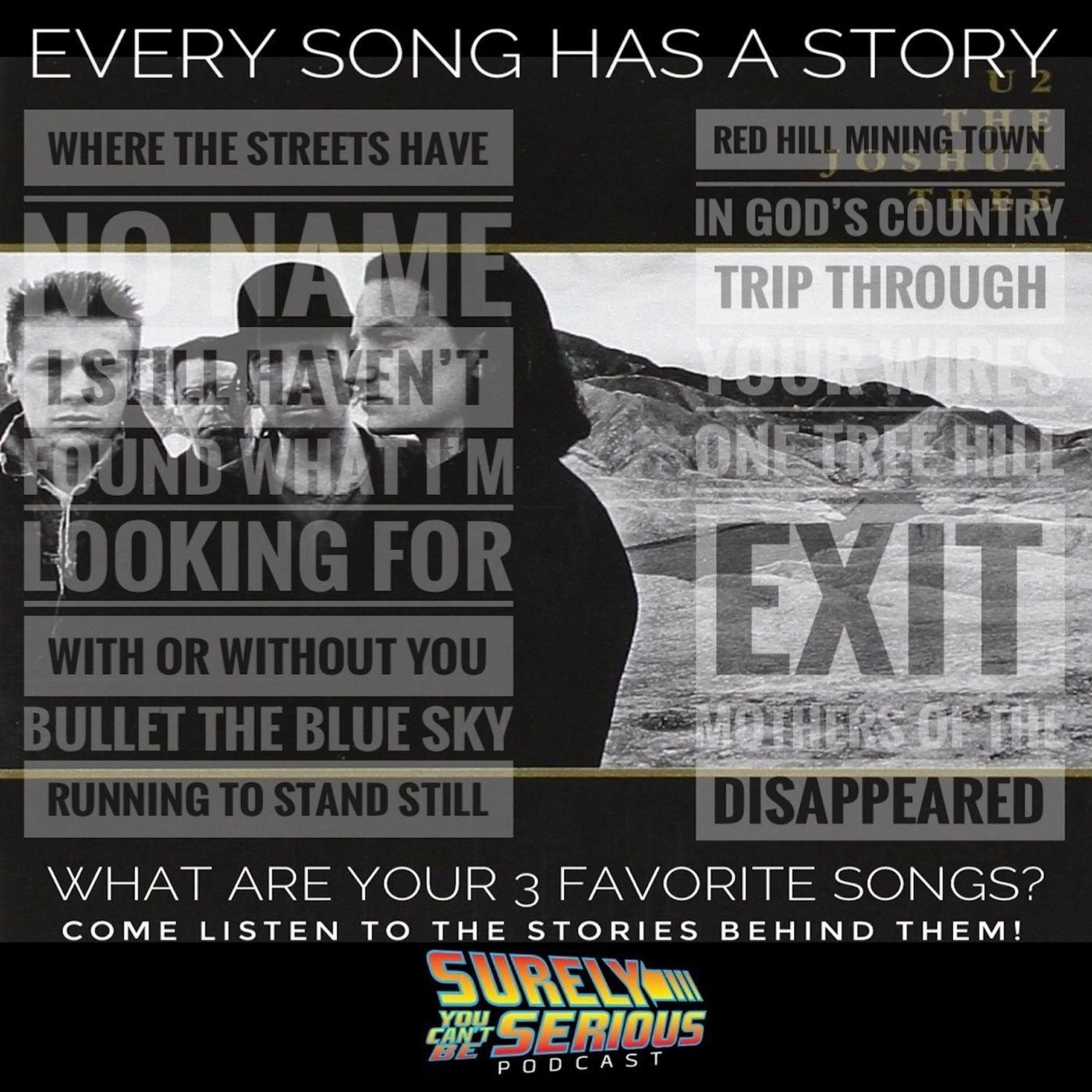
U2's "The Joshua Tree" (1987): Track by Track! (Part 2)
Every song has a story! Join us as we dive into the stories behind each track of the Best Album of one of the best years in music history, U2's Joshua Tree. Then hear our final determination of which album from March of 1987 is the best, Joshua Tree or Prince's Sign O' the Times.
2020-12-01
49 min
Transcript
Available Results
Generated results are saved to the knowledge database for reuse and search.
No generated results are available for this episode yet.
Extract Knowledge
Pick what you want extracted first. Model, scope, and chapter options appear after a template is selected.
Generated results for public episodes are saved to the knowledge database so they can be reused and searched later.
Transcript
<v Speaker 1>Hey, everybody, welcome back to the Shirley You Can't Be
<v Speaker 1>Serious podcast. We are here for part two of our
<v Speaker 1>episodes on you two. If you didn't tune in last week,
<v Speaker 1>you missed the stories of Bono saving a Wham fan
<v Speaker 1>and and threats of assassination and magic mushrooms.
<v Speaker 2>So yeah, there was a lot of cool stuff in
<v Speaker 2>last week's episode. If you haven't heard that, and you
<v Speaker 2>definitely want to go back and listen to it. But
<v Speaker 2>this is a comparison to Princess Sign of the Times album,
<v Speaker 2>so you definitely want to go back and hit that
<v Speaker 2>one up. So Princess Sign of the Times two weeks ago,
<v Speaker 2>Part one of Joshua Tree last week, Part two this week.
<v Speaker 2>All right, yeah, we ready to jump into the songs
<v Speaker 2>on the album.
<v Speaker 1>I am so ready to jump into the songs on
<v Speaker 1>this album. So ready, let's do it.
<v Speaker 2>Okay. First song right out of the gate is a
<v Speaker 2>song called Where the Streets Have No Name.
<v Speaker 1>Okay, before we fully fully jump into this album. As
<v Speaker 1>this first song begins, I've got to tell you a story.
<v Speaker 1>Every time I hear this song, it takes me back
<v Speaker 1>to having just graduated from college. I was a theater major,
<v Speaker 1>I was going into law school, but that summer in
<v Speaker 1>between those two facets of my life, we put together
<v Speaker 1>a theater company and I got to direct our first show,
<v Speaker 1>and our first show was The Breakfast Club, and we
<v Speaker 1>convinced the Norman High School over here to let us
<v Speaker 1>perform it in their library. So it's really like you're
<v Speaker 1>inside of the movie as it was going on. And
<v Speaker 1>so I was resoundtracking the whole movie to kind of
<v Speaker 1>update it a little bit, but I also wanted to
<v Speaker 1>have the feel of the eighties, and I didn't know
<v Speaker 1>how to start it off. And the beginning scene is
<v Speaker 1>like all of the students, one by one coming into
<v Speaker 1>their classroom. One day, I was walking back to my
<v Speaker 1>car and I was listening on headphones and I heard
<v Speaker 1>this beginning that I had ever really heard before, Like
<v Speaker 1>I had always kind of picked it up when the
<v Speaker 1>guitar comes in, but I had never heard this kind
<v Speaker 1>of synthesizer organ thing that's going on. And I was like, Wow,
<v Speaker 1>this is almost like a religious experience. And I was like,
<v Speaker 1>that's it. That's what the beginning of Breakfast Club needs
<v Speaker 1>to be. It needs to be this religious experience. And
<v Speaker 1>so when he crescendo's on that first guitar part, I
<v Speaker 1>had the bell ring and the class start and it
<v Speaker 1>was I still think about it. I'm sorry, but it
<v Speaker 1>just every time it brings me back to that moment
<v Speaker 1>in time that I had. All right, So this first
<v Speaker 1>part is being played by Brian Eno. One of the
<v Speaker 1>producers on the album, the organy church like synthesizer is
<v Speaker 1>Brian Eno. And so then what we have come in
<v Speaker 1>after that is this fantastic guitar by the Edge and
<v Speaker 1>what he's doing here spectacular and it took me until
<v Speaker 1>doing this podcast preparation to figure out how he did
<v Speaker 1>what he was doing.
<v Speaker 2>This is super interesting. You've got to explain it for
<v Speaker 2>our listeners. I was blown away.
<v Speaker 1>Okay. So he has an echo effect on his guitar.
<v Speaker 1>The effects pedal causes the amplifier to replay what you
<v Speaker 1>have just played. It echoes it. It's kind of tricky
<v Speaker 1>to do this because when you have an echo effect,
<v Speaker 1>the timing of the echo is precise, but it's through
<v Speaker 1>the pedal and so not only does he have to
<v Speaker 1>match what he's playing to fit that echo, so does
<v Speaker 1>every other member of the band, you know, including the
<v Speaker 1>rhythm section. The bass player and the drummer, So it
<v Speaker 1>gets a little bit complicated. But what he does here,
<v Speaker 1>we can listen to it how it sounds without the
<v Speaker 1>echo effect, and now we can listen to how that
<v Speaker 1>sounds with the echo effect.
<v Speaker 2>Yeah, that's incredible.
<v Speaker 1>It's amazing, right, I mean, it's an entirely different sound.
<v Speaker 1>And he says, it's like playing a duet with yourself.
<v Speaker 1>So not only does he have to create this amazing sound,
<v Speaker 1>but he has to do it in such a way
<v Speaker 1>that whatever the end of the preceding measure is, it
<v Speaker 1>fits in with the beginning of the next measure. So
<v Speaker 1>it's really really a complicated thing. He put this together.
<v Speaker 1>He just used a little four track and a drum
<v Speaker 1>machine and the echo pedal and all this, and he
<v Speaker 1>put this thing together and he played it for the band,
<v Speaker 1>and Adam, the bass player say said, I didn't really
<v Speaker 1>think about how many hours that it took at a time.
<v Speaker 1>All I could think at the moment was this just
<v Speaker 1>sounds like a way to put the rest of us up.
<v Speaker 2>This song is amazing. When the album begins, it's like
<v Speaker 2>the sun coming up with the horizon. I just love
<v Speaker 2>it so much. They want this album to be cinematic,
<v Speaker 2>and for me, this song really starts off with a
<v Speaker 2>cinematic feel.
<v Speaker 1>It's got that build that the U two songs have
<v Speaker 1>in its purest essence, and it does some amazing things too.
<v Speaker 1>So this first part with the guitar is in three
<v Speaker 1>four times. It's one two three, one two three one
<v Speaker 1>two three one two three one two three, and then
<v Speaker 1>when it shifts into the part that's behind the lyrics,
<v Speaker 1>it moves into four four time, and so it's one
<v Speaker 1>two three four one two three four one two three four.
<v Speaker 1>It's super fast, super fast tempo. But it's amazing that
<v Speaker 1>he's changing from one tempo three four into four four.
<v Speaker 1>And then of course at the end of the song
<v Speaker 1>he goes back into the three four time and he
<v Speaker 1>does it so seamlessly that it's just unnoticeable but fantastic.
<v Speaker 2>This song was originally titled White City.
<v Speaker 1>Okay tell me more.
<v Speaker 2>Well, that's all I know. I do know that on
<v Speaker 2>their way back from their humanitarian trips, and his wife
<v Speaker 2>Ali were on an airplane and Bono wrote the lyrics
<v Speaker 2>to this song on a barf bag.
<v Speaker 1>He actually wrote it in a tent. He still had
<v Speaker 1>the airsick bags from air India with him and some
<v Speaker 1>napkins and some other scraps of paper. But he was
<v Speaker 1>sitting in a tent in Ajibar in northern Ethiopia when
<v Speaker 1>he wrote this one.
<v Speaker 2>Nice apparently in Belfast, Northern Ireland. Yeah, you can tell
<v Speaker 2>what the person makes, what the religion is, what beliefs
<v Speaker 2>they have all based the name of the street in
<v Speaker 2>which they live.
<v Speaker 1>Right the idea. You know, he's got these dueling concepts
<v Speaker 1>going on, the Northern Ireland concept Belfast and here he
<v Speaker 1>is in Africa where everyone is poverty stricken and none
<v Speaker 1>of the streets have any names, and he wants to
<v Speaker 1>break down these walls and he wants to discover something new.
<v Speaker 1>And he talks about this being in the desert, we
<v Speaker 1>meet God in parched times, in fire and flood, we
<v Speaker 1>discover who we are. It's this moment that he going
<v Speaker 1>through this humanitarian effort in Ethiopia that he realizes, hey,
<v Speaker 1>here are some of the things that even in our
<v Speaker 1>prosperous world, we're being caged by. And I think it's fantastic.
<v Speaker 2>I saw an interview with the Edge and when he
<v Speaker 2>was writing this song, and he felt like they didn't
<v Speaker 2>quite have a great live song, something that would be
<v Speaker 2>amazing from the stage, and so he set out to
<v Speaker 2>make the ultimate YouTube live song.
<v Speaker 1>They spent nearly half of their time just on this song.
<v Speaker 1>They would keep coming back and coming back to the song.
<v Speaker 1>They couldn't just get it the way that they wanted it.
<v Speaker 1>Brian Eno almost erased it. He was getting frustrated at
<v Speaker 1>the fact that they couldn't get it right, and he
<v Speaker 1>felt like the reason they couldn't get it right was
<v Speaker 1>because basically they were working with a flawed version, and
<v Speaker 1>so he thought it would be better to just scrap
<v Speaker 1>it and start again from the beginning. But that's a
<v Speaker 1>scary thing to do, you know, So you can't just
<v Speaker 1>say to the guys, hey, let's just throw away all
<v Speaker 1>this work that we've done and just start with nothing
<v Speaker 1>all over again. So he was going to stage an accident.
<v Speaker 2>I accidentally hit the dele button fellas.
<v Speaker 1>Ultimately, they did not erase it. He did not erase it.
<v Speaker 1>They just kept working and kept working and fixed it,
<v Speaker 1>and through all of that work they fell in love
<v Speaker 1>with it, which is why they decided to make it
<v Speaker 1>the first song on the album.
<v Speaker 2>This is a fantastic song. It's one of the most
<v Speaker 2>iconic songs of the eighties. This song only reached number
<v Speaker 2>thirteen on the Hot one hundred in SI Crack the
<v Speaker 2>top ten Insane. This was the third single released August
<v Speaker 2>seventh of nineteen eighty seven, reached number thirteen the week
<v Speaker 2>did it peaked number one on the chart. I Think
<v Speaker 2>We're Alone now by Tiffany.
<v Speaker 1>Somebody needs to have their face slapped. I don't know
<v Speaker 1>who it is, but somebody needs to have their face
<v Speaker 1>slapped over that.
<v Speaker 2>This song deserved better than the top thirteen on the
<v Speaker 2>year apparently one. Okay, I want to talk about the
<v Speaker 2>music video for a second. This might be my favorite
<v Speaker 2>music video of all times. They shot a concert from
<v Speaker 2>the top of a liquor store in downtown Los Angeles. Yes,
<v Speaker 2>and they broadcasted out and invited people down. Hey, YouTube
<v Speaker 2>is playing a concert, and next thing they know, there's
<v Speaker 2>hordes of people coming down to listen to this concert.
<v Speaker 1>The Beatles had done the same thing where they play
<v Speaker 1>a live set from the top of a building, and
<v Speaker 1>you know, the crowds are blocking the streets trying to
<v Speaker 1>watch these icons make their music.
<v Speaker 2>Yeah, it's really cool.
<v Speaker 1>It's really cool.
<v Speaker 2>I saw a little bit about this and so in
<v Speaker 2>the music video there's actually a lot of drama involving
<v Speaker 2>the police. Right, So there's this one moment where the
<v Speaker 2>police chief comes in and it's like, that's it. We're
<v Speaker 2>shutting it down. This whole thing is shutting it down. Now.
<v Speaker 2>The funny thing is that their manager actually tells a
<v Speaker 2>story that, in actuality, the police kept giving them extensions.
<v Speaker 2>They kept saying, all right, that's it, Okay, one more song,
<v Speaker 2>that's fine, one more song, and they were like, no, really,
<v Speaker 2>you just go ahead and shut us down. It's more
<v Speaker 2>drama for the video. Q Magazine's readers voted the track
<v Speaker 2>the forty third greatest song in history, and this song
<v Speaker 2>is YouTube's most played track from the Joshua Tree in concert.
<v Speaker 1>Okay, second track on the album, I still haven't found
<v Speaker 1>what I'm looking for. So I gotta say it's amazing
<v Speaker 1>to me that again, we have this rhythm that comes
<v Speaker 1>in with the guitar. The guitar is such a major
<v Speaker 1>facet of the rhythm. You know, you can talk about
<v Speaker 1>chord progression and melody and all of that, but what
<v Speaker 1>the Edge does rhythmically with his guitar is amazing and
<v Speaker 1>unlike anybody else that I can think of out there
<v Speaker 1>in the world.
<v Speaker 2>Yeah. When he plays, I hear it and I go,
<v Speaker 2>that's you too.
<v Speaker 1>It's unquestionable. Yeah.
<v Speaker 2>Yeah. This was the second single released May twenty fifth,
<v Speaker 2>nineteen eighty seven. This one reached number one on the
<v Speaker 2>Hot one hundred August eighth of ninet eighty seven, and
<v Speaker 2>Bono has described it as the anthem of doubt right.
<v Speaker 1>He talks about how his favorite songs are about either
<v Speaker 1>running toward God or running away from God.
<v Speaker 2>Is interesting one for me because for me to hear
<v Speaker 2>a song like this that's a little bit deeper was
<v Speaker 2>a transition thing for me, and it helped me think
<v Speaker 2>about things larger than just the party scene. It's not
<v Speaker 2>the common theme of searching for love or sex or money,
<v Speaker 2>but the sadness of not finding what you're looking for.
<v Speaker 1>So the other producer on this album is Daniel Lenoaugh
<v Speaker 1>and Brian Eno. Daniel Lenoaugh contributed massively to this album.
<v Speaker 1>They had also done The Unforgettable Fire before this, but
<v Speaker 1>Larry Mullen talks about how Daniel Lenoaugh really had an
<v Speaker 1>emphasis on percussion unlike Lily White had, and it really
<v Speaker 1>comes through in this song. Now this beat that Larry
<v Speaker 1>Mullin has. He had actually done with the song that
<v Speaker 1>was supposed to be called The Weather Girls, but Daniel
<v Speaker 1>Lenoi said, I don't really like the song, but that
<v Speaker 1>beat is awesome. You should keep that beat, And so
<v Speaker 1>basically he took the beat and then the Edge came
<v Speaker 1>in and added a guitar and the melody and the title.
<v Speaker 1>Edge came up with the title, and then Bono took
<v Speaker 1>that and added all of these gospel themes that I mean,
<v Speaker 1>who else is doing this? Nobody else is doing this
<v Speaker 1>at the time. And then once Bono had his lyrics,
<v Speaker 1>the Edge, Brian Eno and Daniel Noaugh all added backing
<v Speaker 1>vocals over his lyrics. This is great because this is
<v Speaker 1>the top of Bono's range and you can really feel
<v Speaker 1>the intensity that he has when he's singing in the song.
<v Speaker 1>It's fantastic for sure.
<v Speaker 2>For sure, I heard Bono talking about the difficulty of
<v Speaker 2>taking a gospel tune and bringing it into the modern world.
<v Speaker 1>Right, So do you remember the video for this one? Yeah?
<v Speaker 2>I really like the video on this. They're down on
<v Speaker 2>Fremont Street in Las Vegas.
<v Speaker 1>Yes, there's this one part where, like you know, they're
<v Speaker 1>just They're walking around in the street and people are
<v Speaker 1>just kind of walking around and Bono is singing to
<v Speaker 1>different people, and then he turns to the Edge. And
<v Speaker 1>this is back when the Edge wore the kind of
<v Speaker 1>big cowboy hat looking hat and just was quiet and
<v Speaker 1>as stoic as you could be. But back then I
<v Speaker 1>was just like, what's up with this guy? He just
<v Speaker 1>doesn't talk. So anyway, he's there. He's just there with
<v Speaker 1>his acoustic guitar playing along, and all of a sudden
<v Speaker 1>bonds like kind of pressing up close to him and
<v Speaker 1>singing and right singing right in his face, and you
<v Speaker 1>get this classic like my teenage kid couldn't do a
<v Speaker 1>better I roll of Oh my gosh, would you just
<v Speaker 1>stop already?
<v Speaker 2>So I went to Las Vegas a couple of years ago. Okay, yeah,
<v Speaker 2>and so you've got you know, the modern area where
<v Speaker 2>all the kind of all the casinos are, the big
<v Speaker 2>casinos and stuff like that. Fremont Street is kind of
<v Speaker 2>down and kind of by itself. It's Old Vegas, and
<v Speaker 2>I didn't know that. I was there for the first time,
<v Speaker 2>and I'm walking around and all of a sudden it
<v Speaker 2>hits me like I walk into a movie right, and
<v Speaker 2>I walk in and I'm on Freemont Street and I'm like,
<v Speaker 2>holy crap, this is where they shot Dimes Are Forever.
<v Speaker 2>And I still haven't found what I'm looking for.
<v Speaker 1>Yeah, I didn't tell this story during James Bond, but
<v Speaker 1>I'll tell it now. So, my grandmother was from Henderson, VA,
<v Speaker 1>which is just outside of Las Vegas, and she, you know,
<v Speaker 1>she passed away, and I went to her funeral, of course,
<v Speaker 1>and my brother was there. He, like us, had grown
<v Speaker 1>up watching James Bond, so he just drunk it in,
<v Speaker 1>you know, memorized every scene in the movie was Diamonds
<v Speaker 1>Are Forever. Well. Then, of course, you know, you fast
<v Speaker 1>forward multiple years later, and my grandma was awesome. You know.
<v Speaker 1>I went through Las Vegas like you did and met
<v Speaker 1>with her, and she gave me and my buddy one
<v Speaker 1>hundred bucks and said you can't spend this on anything necessary.
<v Speaker 1>And I was like, yeah, that's awesome, Grandma, that is fantastic, right,
<v Speaker 1>And so when she passes, we're at her funeral and
<v Speaker 1>my brother starts looking around at this funeral home that
<v Speaker 1>we're at and he's like, I know this place. How
<v Speaker 1>do I How do I know this place? And he's like,
<v Speaker 1>oh my gosh. And he goes over to the you know,
<v Speaker 1>the funeral director, and he's like, is this the place
<v Speaker 1>that they shot Diamonds or Forever? And the funeral Director's
<v Speaker 1>like yep, and he's like, oh my gosh. He was
<v Speaker 1>in a casket, like in that wall over there.
<v Speaker 2>Yeah.
<v Speaker 1>And I just felt like it was almost a nod
<v Speaker 1>from above of Hey, I want you guys, even though
<v Speaker 1>this is a sad moment, I still want you to
<v Speaker 1>have a little bit of fun on me.
<v Speaker 2>Okay, that's cool, man, that's really cool. Okay, we done
<v Speaker 2>with this one.
<v Speaker 1>I think we're done with I still haven't found what
<v Speaker 1>I'm looking for.
<v Speaker 2>Huge song, number one hit in eighty seven. Okay. That
<v Speaker 2>brings us to the third song on the album. This
<v Speaker 2>song was the first single released on March twenty first,
<v Speaker 2>nineteen eighty seven.
<v Speaker 1>This is With or Without You. Okay, So once again,
<v Speaker 1>this song is so so incredible.
<v Speaker 2>This is one of those songs I've heard ten thousand
<v Speaker 2>times in thirty three years and I still want to
<v Speaker 2>weep every time I hear it.
<v Speaker 1>See the Stones sets, see the song twist Em, sid
<v Speaker 1>Oh Wi for You. It's a song that Bono had
<v Speaker 1>been working on since eighty five, right, so he's two
<v Speaker 1>years coming on this one. And it's a four chord song.
<v Speaker 1>Like you know, I've talked before about how a lot
<v Speaker 1>of the greatest hits that we have of the eighties,
<v Speaker 1>especially like Don't Stop Believing in Africa and down Under,
<v Speaker 1>there are four chord songs are the same four chords
<v Speaker 1>in the same order, and that's the way this song
<v Speaker 1>is as well. And it's fantastic, of course, it's a
<v Speaker 1>big hit, but it was something that the band couldn't
<v Speaker 1>find the right feel for and after a while, everybody
<v Speaker 1>except Bono had given up on it. They're like this,
<v Speaker 1>we're just never going to get it right. And this
<v Speaker 1>song had meant quite a lot to Bono because it
<v Speaker 1>was kind of his take on being married and being
<v Speaker 1>on the road, which of course is had taken a
<v Speaker 1>lot of things through the journey back in there again.
<v Speaker 1>But they were ready to trash it, and Bono kept
<v Speaker 1>holding on, and there's a guy named Gavin Friday who's
<v Speaker 1>involved with them quite a bit, and he was sure
<v Speaker 1>that it could be a hit, and so they work
<v Speaker 1>together and they kind of rearranged it a little bit,
<v Speaker 1>and it still wasn't quite right. But then this magical
<v Speaker 1>thing happens. Enter Michael Brooke. And Michael Brooke is a
<v Speaker 1>producer and musician. He's done some cinematic stuff, but he
<v Speaker 1>is also an inventor. And he invented a guitar that
<v Speaker 1>was called the Infinite Guitar. And when he first created them,
<v Speaker 1>two of them went out. One was to Daniel Lenoa
<v Speaker 1>and the other was to the Edge. And so the
<v Speaker 1>Edge gets this guitar, opens up the case. It's his
<v Speaker 1>first day to have this guitar. He opens it up
<v Speaker 1>and he starts playing it. Now, the way this Infante
<v Speaker 1>the guitar works is kind of mind blowing. I mean,
<v Speaker 1>it's just it's brilliant. You got to understand that microphones
<v Speaker 1>and speakers are very similar in the way they work.
<v Speaker 1>In fact, they're almost identical. It's just one I don't
<v Speaker 1>want to go into that, all right, So biber Bund
<v Speaker 1>and speakers are very they're virtually the same thing, right,
<v Speaker 1>And so what he's what he does, you know, imagine
<v Speaker 1>a guitar electric guitar in your head. What he does,
<v Speaker 1>what Michael Brooke does is he takes that bottom pickup
<v Speaker 1>and instead of making it a microphone. He makes it
<v Speaker 1>a speaker, and so when you play the note on
<v Speaker 1>the guitar, it translates through the pickup into the speaker
<v Speaker 1>that's in the place of the pickup, thereby sending it
<v Speaker 1>back into the strings of the guitar and creating this
<v Speaker 1>infinite loop of sound. Hence the name the infinite guitar, right,
<v Speaker 1>And so that creates this ethereal magic that is again
<v Speaker 1>unlike any other songs out there.
<v Speaker 2>Yeah, it's like a symphony almost. It's like a one
<v Speaker 2>note symphony.
<v Speaker 1>Yeah, it's like a violin. The violin can just staying
<v Speaker 1>the note because the person just keeps moving the bow
<v Speaker 1>back and forth on the note. It's a very similar
<v Speaker 1>type of sound. Yeah, it's amazing.
<v Speaker 2>I love how in this song you have that slow
<v Speaker 2>build and then the drums start to gather momentum and
<v Speaker 2>then and then you close off with that. I mean,
<v Speaker 2>that's that whoa from Bono. That's so powerful. This song.
<v Speaker 2>Every time I hear it is just magical. It speaks
<v Speaker 2>to my soul. They really did not want to release
<v Speaker 2>this as the first single. There was kind of this
<v Speaker 2>battle going on. Their manager, Paul McGinnis was like, it's
<v Speaker 2>too it's too strange sentence. They kept coming back to it.
<v Speaker 2>It just kind of became everybody's favorite.
<v Speaker 1>Song, and they had the iconic video on MTV the
<v Speaker 1>black and white where he's got his hair now on
<v Speaker 1>a ponytail. I mean, the mullet that he had going
<v Speaker 1>on during live aid was one of the most intense
<v Speaker 1>mullets that I had seen. I mean, it rivaled David
<v Speaker 1>on The Lost Boys on the intensity of that mullet.
<v Speaker 1>By the time we get to the video for With
<v Speaker 1>or Without You, he's got it all slicked back, looking
<v Speaker 1>very cool.
<v Speaker 2>I think all four members of the band, their talent
<v Speaker 2>is really on display. Okay, next song, song number four.
<v Speaker 3>This song is called Bullet the Blue Sky.
<v Speaker 1>Okay, so this is a song that's kicking some button
<v Speaker 1>right out of the gate. Right. We were done with
<v Speaker 1>our kind of pretty ethereal operatic stuff and now we're
<v Speaker 1>out there to kick some booty YEP.
<v Speaker 2>This is a rocker.
<v Speaker 1>Oh yeah, oh yeah, I love it. I can't tell
<v Speaker 1>you how much I love this song. This is I
<v Speaker 1>can't figure out why they didn't release this one as
<v Speaker 1>a single. It should have been. It's one of the
<v Speaker 1>best songs on the album. Blows my mind, and about
<v Speaker 1>some i mean some rough subject matter too. I mean
<v Speaker 1>they're talking about El Salvador and the war that's going
<v Speaker 1>on down there that they had when they that they
<v Speaker 1>observed when they visited down there, and it's it's rough stuff.
<v Speaker 1>But what's interesting is we've talked about how Larry and
<v Speaker 1>Adam drums in the bass are typically the foundation, but
<v Speaker 1>they're the standouts on this one. The drums and the
<v Speaker 1>bass are your focus on this one. And the Edge
<v Speaker 1>talked about how the song came about. You know, he
<v Speaker 1>had been playing with this rhythm that he had and
<v Speaker 1>so he comes in and he starts playing it. And
<v Speaker 1>as he's playing along, you know, Larry comes in, sits
<v Speaker 1>down at the drums and he starts drumming, and Adam
<v Speaker 1>comes in and he starts playing the bass, and the
<v Speaker 1>Edge is like, Larry's playing halftime. He's like, this is wrong,
<v Speaker 1>this is the completely wrong rhythm. What are you doing
<v Speaker 1>over here? Then Adam on the bass is doing the
<v Speaker 1>same kind of fast, heavy, like, well, what's going on?
<v Speaker 1>And they play for about five minutes or whatever, and
<v Speaker 1>they get done and they walk into the sound room
<v Speaker 1>and all the guys are like, yeah, yes, that was it.
<v Speaker 1>You finally got it. Still's not he's still not getting
<v Speaker 1>He's like, yeah, yeah, no, but I mean they you know,
<v Speaker 1>they messed it up. They didn't do the right rhythm
<v Speaker 1>and it finally he was like, oh wow, No, this
<v Speaker 1>makes the song this and that it is. It is
<v Speaker 1>the hook, that drum beat as it comes off that
<v Speaker 1>unusual time sequence that he's playing. Uh, too good, too good.
<v Speaker 2>Yeah, it's amazing. This is one of the I mean,
<v Speaker 2>I would call it the El Salvador trilogy on this album. Right,
<v Speaker 2>so you've got this song, You've got One Tree Hill,
<v Speaker 2>and you've got Mothers of the Disappeared that sort of
<v Speaker 2>talk about this serious subject matter. While Bono was on
<v Speaker 2>these humanitarian missions, he witnesses US forces burning out villages
<v Speaker 2>to get to these paramilitary members. Bonno was just appalled
<v Speaker 2>that the US would do this and hurt these people
<v Speaker 2>that are impoverished and have nothing. Anyway, the thing that
<v Speaker 2>was most shocking to him was he knew that they
<v Speaker 2>were Christians back in the United States that sort of
<v Speaker 2>sanctioned this behavior, and he was calling upon the scriptures
<v Speaker 2>to help these Christians realize what was going on. Number one,
<v Speaker 2>and how we need to see better answers for this.
<v Speaker 1>Yeah. I mean he's taken biblical imagery like Jesus being
<v Speaker 1>nailed to a cross and Jacob wrestling with an angel
<v Speaker 1>to drive home the point that hey, Christians, wake up
<v Speaker 1>and look what it is that you're supporting here.
<v Speaker 2>Also, I don't know this for sure, but I got
<v Speaker 2>to believe from the lyrics of this song it mentions
<v Speaker 2>rattle and hum. It's got to be where they came
<v Speaker 2>up with the title for their next.
<v Speaker 1>Album, Yeah, for sure. And he's got in the middle
<v Speaker 1>of the song, he's got this almost spoken part that
<v Speaker 1>is really unsettling, and you know, talking about throwing the
<v Speaker 1>bills down two right, And in his mind this was
<v Speaker 1>Ronald Reagan was the guy who was doing this. Say
<v Speaker 1>what you will about his intentions. It's still I mean,
<v Speaker 1>the effect is it kicks some major butt, that's for sure.
<v Speaker 2>Great song four for four so far in the album.
<v Speaker 2>Let's move on to song number five. This one's called
<v Speaker 2>Running to stand Still. The beginning of this song is
<v Speaker 2>very interesting to me. It doesn't seem like it fits
<v Speaker 2>with the rest of the song. Is this kind of
<v Speaker 2>bluesy guitar and then you slide into this ballad, it
<v Speaker 2>just doesn't seem to fit.
<v Speaker 1>It's interesting, Yeah, I mean you talked about, you know,
<v Speaker 1>how they were trying to be cinematic about how the
<v Speaker 1>album went, and you you know, you go through these
<v Speaker 1>ethereal operatic songs. Then it's almost violent in nature bullet
<v Speaker 1>the Blue Sky song, and then all of a sudden,
<v Speaker 1>it's almost as though you're waking up the next morning
<v Speaker 1>from having the crap beaten out of you, and that's
<v Speaker 1>you get that blues feel, and then they start singing
<v Speaker 1>this ballad about drug addiction. So Heroin was a big deal.
<v Speaker 1>If you've seen the movie train spotting issue.
<v Speaker 2>Right, it's a big deal.
<v Speaker 1>Yeah, well in Ireland specifically, and so this is kind
<v Speaker 1>of a you know, a couple talking about the one
<v Speaker 1>way out being, you know, go somewhere and score some
<v Speaker 1>drugs in order to bring it back and make ourselves rich,
<v Speaker 1>not just to take them, but just to sell them.
<v Speaker 1>And so that's the that's the white Gold Pearls that
<v Speaker 1>she brings back. But it's again, it's not just a
<v Speaker 1>song about drugs. It's another political commentary by Bono about
<v Speaker 1>what had happened in some of the poorer neighborhoods. These
<v Speaker 1>were housing setups that were meant to bring people out
<v Speaker 1>of poverty and to clean up the neighborhoods, and it
<v Speaker 1>just ended up making it worse. Ballyman Flats in Ireland,
<v Speaker 1>that's what the place that he's singing about in his song.
<v Speaker 2>Yeah, this is a beautiful song. Once again, it's a
<v Speaker 2>slow burn. It builds. You've got bono on harmonica. The
<v Speaker 2>producer Daniel LANMWOII is playing the rhythm guitar on this song.
<v Speaker 2>But it's just a beautiful build.
<v Speaker 1>Yeah. The Edge is the one playing the pian on
<v Speaker 1>this one.
<v Speaker 2>Nice so far Five in a row, No skippers.
<v Speaker 1>No, no, not at all.
<v Speaker 2>After running to stand still. The next song on the
<v Speaker 2>album is called Red Hill Mining Town.
<v Speaker 1>So this again we have another unique sound. This song
<v Speaker 1>doesn't sound like any of the other songs on the
<v Speaker 1>album so far, and to me, this could be a
<v Speaker 1>song in like a John Hughes movie, right, especially when
<v Speaker 1>he comes in on the chorus. Just that amazing passion
<v Speaker 1>that he has in his voice. I mean, I can see,
<v Speaker 1>you know, one of the rat pack raising the fist
<v Speaker 1>above their head in the song. But of course he's
<v Speaker 1>singing about something that's not at all what you would
<v Speaker 1>have in a John Hughes movie. This is about like
<v Speaker 1>a minor strike in the mid eighties. Margaret Thatcher had
<v Speaker 1>closed down some unprofitable coal mines in the UK and
<v Speaker 1>that left a whole lot of people without jobs, and
<v Speaker 1>so this song is about the struggle that they have
<v Speaker 1>of trying to provide for their families after not having
<v Speaker 1>a job anymore.
<v Speaker 2>Right, The subject matter on this type of stuff way
<v Speaker 2>over my head at age fourteen. This sounds like it's
<v Speaker 2>more of like a Bruce Springsteen type of song, you know,
<v Speaker 2>the working man and trying to make a living and
<v Speaker 2>that type of thing. I've heard it said that it
<v Speaker 2>was either planned to be the second single or the
<v Speaker 2>third single, but the band couldn't really agree, and urban
<v Speaker 2>legend is that they didn't want to have to play
<v Speaker 2>this song in constant too much because of the high
<v Speaker 2>notes for Bono to hit. This is the only song
<v Speaker 2>from the Joshua Tree prior to their reunion concert to
<v Speaker 2>have never been played live. Wow, which is crazy because
<v Speaker 2>this seems like such a single long wave your hands
<v Speaker 2>in the air type of song.
<v Speaker 1>Yeah, break out the lighters.
<v Speaker 2>So that brings us to the end of side one of.
<v Speaker 1>The Joshua Tree push stop on you tay player, kick.
<v Speaker 2>It out, flip it over, put it back in press,
<v Speaker 2>play next song in God's Country.
<v Speaker 1>Once again, something completely different. We're not getting anything repetitive
<v Speaker 1>on this album.
<v Speaker 2>Yeah, this was the fourth single. This was released in
<v Speaker 2>North America only, which seems kindstry. I never really understand
<v Speaker 2>that if you're going to release a song, why don't
<v Speaker 2>you just release it?
<v Speaker 1>Well, the I mean the thing about this is this
<v Speaker 1>is a very American song. I mean this one really
<v Speaker 1>he's talking about the when he's talking about the deserts
<v Speaker 1>in this song, he's talking about the American deserts. And
<v Speaker 1>you know, God's Country is about America. And he ultimately
<v Speaker 1>dedicated this song to the Statue of Liberty. He said
<v Speaker 1>he wanted to write about America and you know, the dream,
<v Speaker 1>the American dream, and he said, I wonder where are
<v Speaker 1>the people that will rise to the challenge, you know,
<v Speaker 1>where are the new dreamers? And so it was this
<v Speaker 1>kind of idea of the desert, not as a barren wasteland,
<v Speaker 1>but as an empty can this on which to build
<v Speaker 1>something new.
<v Speaker 2>Okay, I've got a friend and I've mentioned her before,
<v Speaker 2>but she's a pop culture encyclopedia and she is a
<v Speaker 2>huge You Two fan. She got on our Facebook page
<v Speaker 2>the other day and mentioned that some husbands buy roses
<v Speaker 2>for their wives. Her husband buys her YouTube tickets, right,
<v Speaker 2>yeah was Her name is Jeanie Alexander, and so I
<v Speaker 2>hit her up right before we record this, and I'm like,
<v Speaker 2>you know, hey, tell me about what your takes are
<v Speaker 2>in justure Tree. And of course she's got a long
<v Speaker 2>litany of things that she loves about this album. But
<v Speaker 2>she was talking to me about Bono's vision of America
<v Speaker 2>as two Americas. Right, you have the American dream, you
<v Speaker 2>have the prosperity, you've got the freedom, and then you've
<v Speaker 2>got the addictions and the crime and the poverty and
<v Speaker 2>the problems of America's the two Americas. That's what I
<v Speaker 2>think about when I when I listen to this song,
<v Speaker 2>The two Americas.
<v Speaker 1>It's fantastic.
<v Speaker 2>Thanks Jeannie for all your help on this episode.
<v Speaker 1>Appreciate you. Yeah, thank you for your support. Thank you
<v Speaker 1>for educating us.
<v Speaker 2>Okay, we done within God's Country. Yes, shout out to
<v Speaker 2>the Statue of Liberty, and we're on to the next song.
<v Speaker 1>Trip through Your wires. Oh, listen to that beat and
<v Speaker 1>that harmonica. Baby, I'm playing some.
<v Speaker 2>Blues rhythm and blues baby. Nobody gets out of here
<v Speaker 2>without playing the blues.
<v Speaker 1>Did you just quote did you just quote Adventures and
<v Speaker 1>babysitting on her? Yes?
<v Speaker 2>I did, Thank you, good job.
<v Speaker 1>Oh my gosh. All right, so this one, this is
<v Speaker 1>a great This is a very very blues song. And
<v Speaker 1>Bonno really thought that this needed to be paired with
<v Speaker 1>Sweetest Thing, but he got outvoted and so it didn't
<v Speaker 1>make it on. It was just on the B side,
<v Speaker 1>I think, is where that ended up. But there, Bono
<v Speaker 1>feels like Wires and Sweetest Thing are hairs. They need
<v Speaker 1>to be get together, both about love, but one's about
<v Speaker 1>being enticed and the other one's about being apologetic. And
<v Speaker 1>Wires is obviously bluesy it. Where's Sweetest Thing is more
<v Speaker 1>r and.
<v Speaker 2>B Yes, yes, I heard that story as well. I
<v Speaker 2>need to tell a quick story about the Sweetest Thing.
<v Speaker 1>Okay, yeah.
<v Speaker 2>Apparently the story is that Bono forgot his wife's birthday
<v Speaker 2>and as a way of apologizing. As a way of
<v Speaker 2>apologizing to her, he wrote this song called the Sweetest
<v Speaker 2>Thing and gave it to her. As a gift, right right,
<v Speaker 2>and she said to him, Okay, you're giving me this
<v Speaker 2>song as a gift. That's very sweet. I want the publishing.
<v Speaker 1>That's awesome. That is awesome.
<v Speaker 2>This song is awesome, man. I love this is in
<v Speaker 2>the top three or four for me in the album.
<v Speaker 1>It just is a.
<v Speaker 2>Feel good The core is just awesome.
<v Speaker 3>I love it.
<v Speaker 2>This is one of my favorite songs on the album.
<v Speaker 1>Love it too, I'll dig it.
<v Speaker 2>Okay, love this song. Moving on to a song called
<v Speaker 2>One Tree Hill.
<v Speaker 1>All right, So this song starts off and it has
<v Speaker 1>a very definite feel to it. It's almost native in
<v Speaker 1>the way that the instrumentation comes in, and I think
<v Speaker 1>that has to be a throwback to New Zealand and
<v Speaker 1>the Maori folks in New Zealand, because this is about
<v Speaker 1>a guy who is very special to you two who
<v Speaker 1>was from New Zealand, a Maori from New Zealand.
<v Speaker 2>So One Tree Hill was written for a guy named
<v Speaker 2>Greg Carroll, whom the band met when they landed in Auckland,
<v Speaker 2>New Zealand, while on tour for The Unforgettable Fire in
<v Speaker 2>nineteen eighty five. Bonald gets there, he's got major jet
<v Speaker 2>LaGG he can't sleep, and so he decides, Hey, I'm
<v Speaker 2>gonna go hit the town and he meets some native guys,
<v Speaker 2>some local guys. One of them is this guy named
<v Speaker 2>Greg Carroll and takes him around. They became friends, and
<v Speaker 2>he ends up taking him to this place called One
<v Speaker 2>Tree Hill, which is significant spiritual volcanic sight. Right, I
<v Speaker 2>don't really know because I've never really been there, but
<v Speaker 2>so it's called One Tree Hill. He becomes a roadie.
<v Speaker 2>Bono appreciates his sense of humor in his work ethics,
<v Speaker 2>so he's hired to be his personal assistant. During the
<v Speaker 2>Live Aid concert, you can actually see him handing him
<v Speaker 2>a guitar on stage. It's pretty cool. But he was
<v Speaker 2>driving Bono's motorcycle returning it to Dublin when he was
<v Speaker 2>killed in a motorcycle accident on July third, nineteen eighty six. Yeah,
<v Speaker 2>he was twenty six.
<v Speaker 1>When that happened. Yeah, this was a really devastating moment
<v Speaker 1>for the band, for the whole band, They really loved
<v Speaker 1>this guy. Larry Mullen said, his death really rocked us.
<v Speaker 1>It was the first time anyone in our working circle
<v Speaker 1>had been killed. Bono had actually flown to Texas to
<v Speaker 1>sing with Willie Nelson By An hour after he arrived,
<v Speaker 1>he heard the news of Carol's death and immediately flew
<v Speaker 1>back to Ireland. This was obviously a big important guy
<v Speaker 1>to them, and it packs this song with a whole
<v Speaker 1>lot of meaning that I didn't understand before. And I'm
<v Speaker 1>glad I know the story now.
<v Speaker 2>Apparently at the funeral, Bono's saying, let it be knocking
<v Speaker 2>on Heaven's door. But he wanted to do more to
<v Speaker 2>honor Greg and so he wrote the song One Tree
<v Speaker 2>Hill And when he recorded it, he recorded the vocals
<v Speaker 2>in one take. He felt too emotionally wiped out to
<v Speaker 2>any more than once.
<v Speaker 1>Yeah, it was. It was months before he was ever
<v Speaker 1>able to perform it live.
<v Speaker 2>It don't play this song live very often, but every
<v Speaker 2>time they go to New Zealand, they always play One
<v Speaker 2>Tree Hill.
<v Speaker 1>Right.
<v Speaker 2>Yeah, here's another interesting tidbit on this song, Okay, and
<v Speaker 2>I'm gonna try and describe this for our younger listeners.
<v Speaker 2>Way back in the eighties, he had this thing called
<v Speaker 2>long distance long distance elephone calls. Yeah, and transatlantic long
<v Speaker 2>distance calls were super expensive. So while they were recording
<v Speaker 2>this song, there were these three Toronto bassed musicians who
<v Speaker 2>were recording the string section portion of this song. The
<v Speaker 2>Edge and Daniel Lanois are across the Atlantic Ocean directing
<v Speaker 2>them and they're on the phone for six hours.
<v Speaker 1>Wow.
<v Speaker 2>I love this song. It's it's mournful, but it's upbeat.
<v Speaker 2>It makes me smile. It's like sad smiling.
<v Speaker 1>Yeah, it's kind of the notion of the wake. You know.
<v Speaker 1>It's a celebration of someone who's passed. It's a celebration
<v Speaker 1>of their life.
<v Speaker 2>Right, great song. I love it. One Tree Hill is
<v Speaker 2>the fifth single released from this album, but it was
<v Speaker 2>only released in Australia and New Zealand. Interesting next song
<v Speaker 2>on the album is a song called Exit.
<v Speaker 1>He used to stay away to drive the dreams. All right,
<v Speaker 1>So here we go with another feel good song. Just kidding,
<v Speaker 1>just kidding. This song it has it has kind of
<v Speaker 1>a dark beginning and middle and end.
<v Speaker 2>This is a dark star song all the way through
<v Speaker 2>it is. This song was originally supposed to be titled
<v Speaker 2>Executioner's Song.
<v Speaker 1>So this song came about after Bono had been reading
<v Speaker 1>some American novels about murders. Basically, so he had read
<v Speaker 1>Norman Mahler's The Executioner's song and Truman Capote's in Cold Blood,
<v Speaker 1>And this was his attempt is what these are his words.
<v Speaker 1>This was my attempt at writing a story in the
<v Speaker 1>mind of a killer. It's all very well to address
<v Speaker 1>America and the violence that is in an aggressive foreign policy,
<v Speaker 1>but to really understand that, you have to get under
<v Speaker 1>the skin of your own darkness, the violence that we
<v Speaker 1>all contain within us.
<v Speaker 2>Okay, this is where it gets interesting. Okay, so Bono
<v Speaker 2>wrote this song said after reading some stuff about murder.
<v Speaker 2>One of the guys was Gary Gilmore, who was this
<v Speaker 2>guy who executed some people, and then he wanted the
<v Speaker 2>court to hurry up with his own death sentence, like
<v Speaker 2>he wanted them to execute him as soon as possible.
<v Speaker 2>Very dark, very interesting story. But where it really gets
<v Speaker 2>weird is when this guy, Robert John Bardo comes along.
<v Speaker 2>If you were around in the eighties, you'll remember this
<v Speaker 2>is the guy who stalked and murdered the actress Rebecca
<v Speaker 2>Schaeffer on July nineteenth, nineteen eighty nine. Oh gosh, do
<v Speaker 2>you remember that. Yeah, she was in that TV show
<v Speaker 2>called My Sister Sam. Yeah, him Dabber, the girl from
<v Speaker 2>More Committy. He so he stalked her, shot her, killed her,
<v Speaker 2>and then during his trial, his attorneys said that this
<v Speaker 2>song influenced him to commit these deeds, and so they
<v Speaker 2>played it during the court sessions and when they played it,
<v Speaker 2>he's bobbing his head and along in court.
<v Speaker 1>Oh my, really weird.
<v Speaker 2>This was recorded the last day of the Joshua Tree sessions.
<v Speaker 1>Yeah, this came. This came out of the band doing
<v Speaker 1>some jam sessions. They only played at one time, and
<v Speaker 1>then Brian Eno came in and cut it down into
<v Speaker 1>the final product. But it was a one take kind
<v Speaker 1>of deal for them. Yep.
<v Speaker 2>Pretty amazing. This song was played on all one hundred
<v Speaker 2>and nine in the Joshua Tree Tour shows, but has
<v Speaker 2>been played only once until they did the Reunion tour
<v Speaker 2>for the thirtieth Joshua Tree Reunion Tour.
<v Speaker 1>Huh. It has an intensity that is unmistakable and the
<v Speaker 1>you don't want to say you love this song, but
<v Speaker 1>you feel the impact that they were trying to convey
<v Speaker 1>without question.
<v Speaker 2>Yeah, this is a dark song. I'm kind of out
<v Speaker 2>on this one. It's got an interesting history, but this
<v Speaker 2>is the first one where I'm like Skipper.
<v Speaker 1>Now, I still I wouldn't skip this song. It's just
<v Speaker 1>it's got to be the right moment. I mean, I'm
<v Speaker 1>not going to listen to this with the kids in
<v Speaker 1>the park. But you know, if I'm driving in the
<v Speaker 1>morning to go work out, maybe this is the song
<v Speaker 1>I get to kind of intensify my testosterone levels or something.
<v Speaker 1>I don't know.
<v Speaker 2>Yeah, it's gonna take a playing of playing in the
<v Speaker 2>sunshine and starfish and coffee and wake me up before
<v Speaker 2>you go go to pull me out of the funk.
<v Speaker 1>Yeah. Yeah, Well, and Bono talks about how I'll take
<v Speaker 1>a walk occasionally and have a drink with the devil,
<v Speaker 1>but I'm not moving in with him.
<v Speaker 2>That's good.
<v Speaker 1>I like that.
<v Speaker 2>Yeah, have you ever danced with the devil in the pillow?
<v Speaker 1>What did you say?
<v Speaker 2>I always asked, out of all my brain. I just
<v Speaker 2>like the sound of it.
<v Speaker 1>So Oddly, exit is not the last song. It seems
<v Speaker 1>like it would be, but it's not.
<v Speaker 2>It should be. Yeah, maybe it is.
<v Speaker 1>And this is the encore. The encore is Mothers of
<v Speaker 1>the Disappeared.
<v Speaker 2>Okay, once more, this is not a feel good so.
<v Speaker 1>So you have this really fascinating beginning here. This is
<v Speaker 1>obviously a pick on the edge of the wound strings
<v Speaker 1>on a guitar, and it has an almost industrial sound
<v Speaker 1>to it, you know, like machinery or somebody scratching at
<v Speaker 1>something metal, and it creates a scene that to me
<v Speaker 1>is very dark and mysterious. And then when the bass
<v Speaker 1>comes rolling in here and it's got a twang to
<v Speaker 1>the bass. It's got that kind of vibration going on
<v Speaker 1>in the bass, and it's almost what we would later
<v Speaker 1>describe as industrial and its sound. But then the lyrics
<v Speaker 1>come in and it's a God's tragedy. You know that
<v Speaker 1>we've got these oppressive governments in these South American countries
<v Speaker 1>who when the government is oppressive, you will have college
<v Speaker 1>students who protest what the government is doing. And what
<v Speaker 1>the government would then do with those students is disappear them,
<v Speaker 1>would cause them to no longer be there. They would
<v Speaker 1>be kidnapped in the night and never seen again, very
<v Speaker 1>in an unmarked grave somewhere. And it's the mothers of
<v Speaker 1>the disappeared is actually another type of protest group that
<v Speaker 1>began in the seventies and eighties of these mothers, I
<v Speaker 1>mean exactly what it is, mothers of these students who
<v Speaker 1>have disappeared. It's an emotional subject and an emotional song
<v Speaker 1>and so intense. And again, I love it for what
<v Speaker 1>it does. It captures something, and I love the sound
<v Speaker 1>of it. It is cinematic in its ability to paint
<v Speaker 1>a picture with the music and the sounds that come
<v Speaker 1>from these instruments.
<v Speaker 2>Yeah, it's haunting and beautiful and sad. You know, did
<v Speaker 2>you know? I don't know if you know this or not,
<v Speaker 2>but the song's guitar melody comes from an original piece
<v Speaker 2>that Bono composed to help teach children about basic heiji
<v Speaker 2>while he was in Ethiopia nineteen eighty five. Huh. Now,
<v Speaker 2>he had a little ditty, you know, teaching them to
<v Speaker 2>brush their teeth or whatever, and he transformed it into
<v Speaker 2>this song.
<v Speaker 1>Wow, that's awesome.
<v Speaker 2>This again is part of that trilogy involving One Tree
<v Speaker 2>Hill and Bullet Blue Sky. Okay, I don't know if
<v Speaker 2>you know this or not, but on February fifth, nineteen
<v Speaker 2>ninety eight and February eleventh, nineteen ninety eight, you two
<v Speaker 2>performed this song live in Argentina, and then again a
<v Speaker 2>week later in Chile. He brought the mothers on stage
<v Speaker 2>and called upon the government to tell these women where
<v Speaker 2>the bones of their children.
<v Speaker 1>Are Can you imagine. I mean, that's some brass tax
<v Speaker 1>right there. Bro. Seriously, I mean you were throwing out
<v Speaker 1>these accusations and making these demands of a government who
<v Speaker 1>obviously has no hesitation about taking the lives of its
<v Speaker 1>own citizens, let alone the lives of some Irish band
<v Speaker 1>who's coming out here mocking.
<v Speaker 2>Us my got punk rock star.
<v Speaker 1>Yeah, brassball, baby, brassball.
<v Speaker 2>That's what I love most about Bonall. Mean, he is
<v Speaker 2>not afraid to use his platform to do the good
<v Speaker 2>things that he feels like he's been called pot to do.
<v Speaker 1>Yeah. Good finish to the album. I know you had
<v Speaker 1>one skipper in there, but there were no skippers for me.
<v Speaker 1>Fantastic from beginning to the end.
<v Speaker 2>It is a fantastic album. So the Joshua Tree did
<v Speaker 2>win the Grammy four the Album of the Year in
<v Speaker 2>nineteen eighty seven, beating out Princess Sya the Times album.
<v Speaker 2>This album topped the chart in over twenty countries and
<v Speaker 2>it became the fastest selling album in British history. It
<v Speaker 2>went platinum in forty eight hours.
<v Speaker 1>Forty eight hours. There's a lot of records.
<v Speaker 2>It's incredible. This was a huge album. Nineteen eighty seven.
<v Speaker 2>We ready for final judgment.
<v Speaker 1>Yeah, let's move on to final judgment. Okay. So I
<v Speaker 1>called you up a few days ago and I said,
<v Speaker 1>do you know where you stand on that between these
<v Speaker 1>two Mammoth albums of March of nineteen eighty seven? And
<v Speaker 1>you said yes, And that is all that you told me.
<v Speaker 1>And so I'm waiting with baited breath to find out
<v Speaker 1>whether we are about to go to war or where
<v Speaker 1>their two Hearts beat is one. I could not find
<v Speaker 1>what I was looking for when I call it you.
<v Speaker 2>Okay, So I didn't really have a relationship with either
<v Speaker 2>one of these albums. I knew the hits very well
<v Speaker 2>and loved the hits very well. So when we Dove Deep,
<v Speaker 2>it was the first time that I had heard some
<v Speaker 2>of these songs. So when I listened to Sign of
<v Speaker 2>the Times, I have fun. I enjoy what I'm listening to.
<v Speaker 2>I'm dancing, I'm singing. There are some highs and lows
<v Speaker 2>on Sign of the Times. I don't think it's as
<v Speaker 2>good as Joshua Tree all the way through. However, if
<v Speaker 2>I'm going on a road trip, the first CD I'm
<v Speaker 2>grabbing of these two is Sign of the Times.
<v Speaker 1>Wow.
<v Speaker 2>It just fits my personality more.
<v Speaker 1>Okay, you're up all right. Well, when we started comparing
<v Speaker 1>these albums, I started listening to Sign of the Times first,
<v Speaker 1>because number one, we were covering it first, and number two,
<v Speaker 1>I had heard Joshua Tree one thousand and one times.
<v Speaker 1>This was one of those albums that I just listened
<v Speaker 1>to beginning to end over and over again. And so
<v Speaker 1>Sign of Times was something that I had to become
<v Speaker 1>familiar with. You had talked about being kind of a
<v Speaker 1>YouTube greatest hits guy Prince for me was Purple Rain
<v Speaker 1>and then whatever hits came out after and before Purple Rain.
<v Speaker 1>And so when I started listening to Sign of the Times,
<v Speaker 1>we had discussed quite a bit about how we wanted
<v Speaker 1>to compare something to Purple Rain because it's so iconic, right,
<v Speaker 1>but what do you compare that to? And then I
<v Speaker 1>wanted to do Joshua Tree. What do we do to
<v Speaker 1>compare that to? We came up with Sign of the Times.
<v Speaker 1>I said, okay, sure. I started listening to it. After
<v Speaker 1>about the first five songs, it was just like the Police.
<v Speaker 1>After the first five songs, I called Yep, and I said,
<v Speaker 1>how much work have you done? Because I don't think
<v Speaker 1>that this can even compare to Joshua Tree. Right this,
<v Speaker 1>I remember that, really, these songs are not good. First
<v Speaker 1>songs good, the rest of everything that I've heard so far,
<v Speaker 1>and it's a long album. I wasn't all the way
<v Speaker 1>through it, but it was not good. And You're like, dude,
<v Speaker 1>this is considered his best album. And I said, nuh uh,
<v Speaker 1>and you said, yes, critics consider this his best album.
<v Speaker 1>I'm like, okay, then there must be something wrong with
<v Speaker 1>my day to day. And so I listened to the
<v Speaker 1>whole album and I didn't love it, and so I
<v Speaker 1>said I need to listen to it again. I listened
<v Speaker 1>to it again and I liked it a little bit better.
<v Speaker 1>And then I listened to it again and I still
<v Speaker 1>didn't love it. It was okay, And on the fourth listen,
<v Speaker 1>I just said, this album is not my album. I'm
<v Speaker 1>glad that everybody loves it, It's just not for me.
<v Speaker 1>And when we started going into Joshua Tree, I had
<v Speaker 1>the fantastic pleasure of just letting this play on repeat
<v Speaker 1>in my car. If I wasn't listening to some sort
<v Speaker 1>of podcast on Joshua Tree, I was listening to Joshua
<v Speaker 1>Tree the album and loving every second of it and
<v Speaker 1>loving it more and more the more I heard. It
<v Speaker 1>was great to come back to this thing. So sorry,
<v Speaker 1>Sign of the Times. Sorry Prince fans. I don't despise him.
<v Speaker 1>I think he's a brilliant musician. I think he probably
<v Speaker 1>could have played all of the songs on Joshua Tree,
<v Speaker 1>and they probably couldn't have played his songs, but he
<v Speaker 1>didn't play them. They played them. They came up with them.
<v Speaker 1>I can play Nirvana's first album probably too, but I didn't.
<v Speaker 1>It was them that did it, and so I have
<v Speaker 1>to go Joshua Tree one hundred and ten percent. Sign
<v Speaker 1>of the Times, despite my best effort, couldn't find its
<v Speaker 1>way into my heart.
<v Speaker 2>Okay, well that's great and it's not for everybody, but
<v Speaker 2>that's fine. Where are you, guys, We love to hear
<v Speaker 2>from you. Hit us up on Facebook, hiss up on Twitter,
<v Speaker 2>email us.
<v Speaker 1>Don't forget to go to patreon dot com, slash Shirley
<v Speaker 1>Podcast and become an executive producer of the show. We
<v Speaker 1>will say your name at the beginning of the show.
<v Speaker 1>This show brought to you by executive producer whatever your
<v Speaker 1>name is, Buckley. Go and yes, James Buckley, Thank you
<v Speaker 1>James Buckley for jumping out there on the very first day. Fantastic,
<v Speaker 1>But we have got We aren't asking for money for nothing.
<v Speaker 1>We're not asking for the chicks for free. We we
<v Speaker 1>will send you stuff you join us. You know, the
<v Speaker 1>first stage is your executive producer. Second stage is you
<v Speaker 1>get like a thirty dollars set of nice earbud headphones
<v Speaker 1>that are waterproof and bluetooth and they're amazing. Next stage
<v Speaker 1>you get a custom engraved stainless steel coffee mug. It's fantastic.
<v Speaker 1>And then if you want to go if you want
<v Speaker 1>to go full hog, if you want to go Prince
<v Speaker 1>akeem level, you get to pick an episode on what
<v Speaker 1>we talk about, whatever movie or song or album or
<v Speaker 1>comparison you want to hear. We will do it for you.
<v Speaker 1>So jump on patreon dot com, look us up Shirley
<v Speaker 1>Podcast and become a member of our happy little family.
<v Speaker 2>Love it, love it. If you like what you hear,
<v Speaker 2>we could sure use a five star review on Apple Podcasts.
<v Speaker 2>Take a few moments, go there, click five stars and
<v Speaker 2>tell everybody how great we are. We appreciate it, all right.
<v Speaker 1>It's been super fun to hit these albums can't wait
<v Speaker 1>for next week.
<v Speaker 2>Let's talk about next week real quick. Next week we
<v Speaker 2>dive into two of the greatest Christmas movies ever made,
<v Speaker 2>Leath the Weapon and die Hard Mofos. We're getting into it.
<v Speaker 1>I'm getting too old for this.
<v Speaker 2>We'll see you next time
<v Speaker 1>All right, good night,
Chapters
No chapters available.