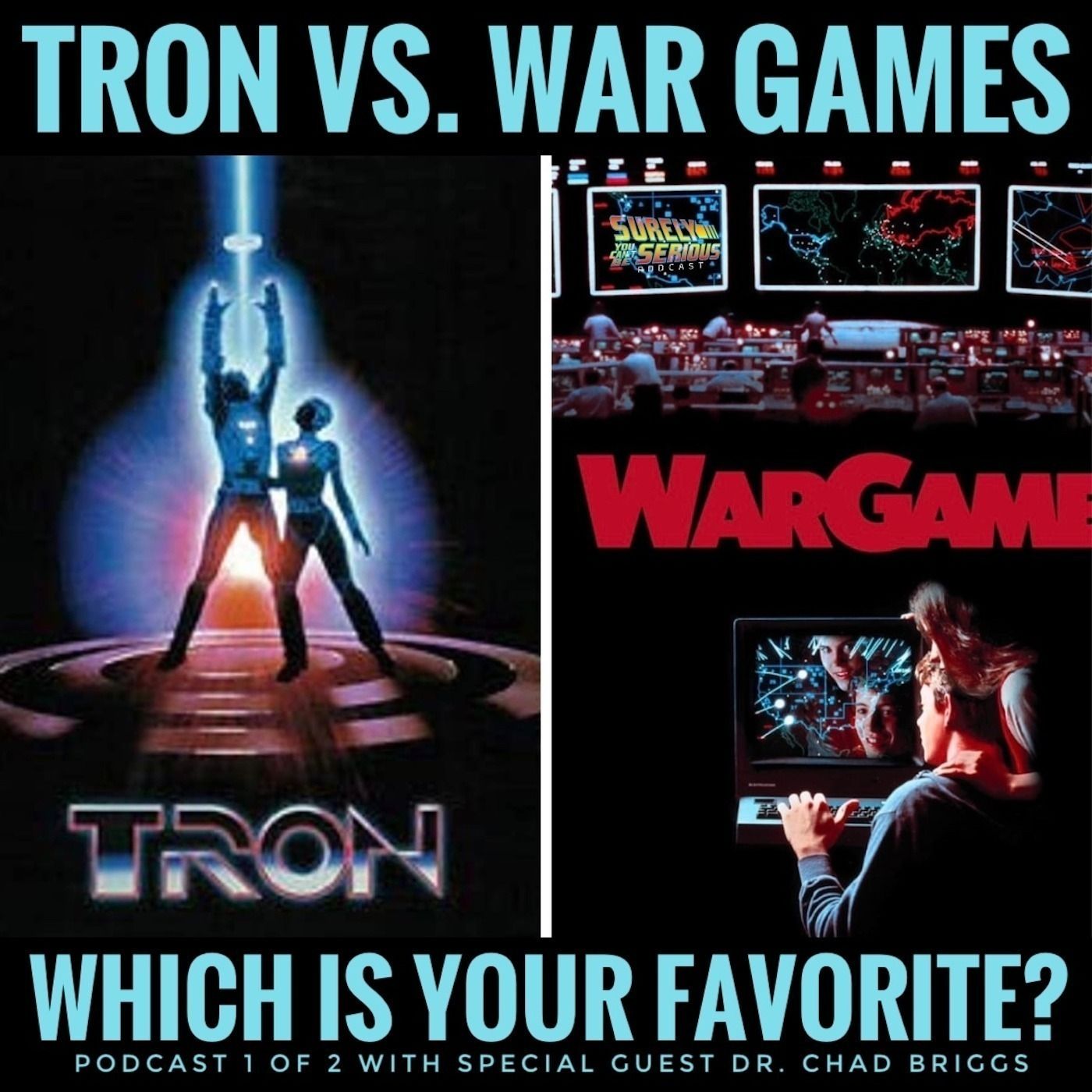
Tron (1982) vs. War Games (1983): Part 1
In the early 1980s, Hollywood began creating movies that involved the increasingly important technologies of computers and video games. Two of the most dynamic movies of that time that involved that subject were "Tron" (1982) and "War Games" (1983). Join us this episode as we discuss the genesis of each project, the impact that they had and the incredible cast of each movie. This week we will also be discussing the real life Cold War incidents, Nuclear near misses and crazy true stories of missile defense mishaps with Dr. Chad Briggs. You won't want to miss it! Shall we play a game?
2023-06-06
64 min
Transcript
Available Results
Generated results are saved to the knowledge database for reuse and search.
No generated results are available for this episode yet.
Extract Knowledge
Pick what you want extracted first. Model, scope, and chapter options appear after a template is selected.
Generated results for public episodes are saved to the knowledge database so they can be reused and searched later.
Transcript
<v Speaker 1>Wow, we got something we're in Greetings. Hello, shall we play?
<v Speaker 2>Then?
<v Speaker 3>Oh love to.
<v Speaker 4>Let's play Global Thermo Nuclear War.
<v Speaker 5>Hello everybody, and welcome back to the Shirley You Can't
<v Speaker 5>Be Serious Podcast. I am here with my friend Jason Coln. Jason,
<v Speaker 5>I got a story for you. Ready for this?
<v Speaker 3>Yes?
<v Speaker 5>Okay. In nineteen eighty three, heads of the military believed
<v Speaker 5>that a real nuclear attack was about to occur. They
<v Speaker 5>begin readying their nuclear forces, placing air units on alert,
<v Speaker 5>and loading nuclear warheads onto combat planes in preparation for war.
<v Speaker 5>And all of this was based upon a misinterpretation of
<v Speaker 5>what was a simulation, something they should have known was
<v Speaker 5>just a war game. You want to know what the
<v Speaker 5>plot twist is. Let's plot twist. This happened four months
<v Speaker 5>after the movie Wargames came out. This is real life
<v Speaker 5>plot twist. This is not the plot of the movie.
<v Speaker 5>This is the plot of real life a situation called
<v Speaker 5>the Able Archer eighty three incident, where NATO was conducting wargames.
<v Speaker 5>The Soviet Union was sure that it was all just
<v Speaker 5>a ruse, and they literally manned their lanes, loaded the
<v Speaker 5>nuclear warheads, and we came other than the Cuban missile crisis.
<v Speaker 5>We came closer to nuclear war at that moment, and
<v Speaker 5>nobody knew what was going on over here at all. Really,
<v Speaker 5>we're going to tell you more about this. That's incredible. Later.
<v Speaker 3>Hey, wait, before you get any further, I still really
<v Speaker 3>enjoy How, like Gene Hackman, you say nuclear, I.
<v Speaker 5>Knew it's gonna come. I can't help it. Nucular. I
<v Speaker 5>learned the word by watching Quest for Peace. That's how
<v Speaker 5>I know that word. That's why I say nu killar.
<v Speaker 3>Okay, fantastic guys.
<v Speaker 5>We are blessed to be joined by a very special
<v Speaker 5>guest today. We have a Patreon member of all things.
<v Speaker 5>He hit us up and he said love the show
<v Speaker 5>and I said great, you have any episodes you'd like
<v Speaker 5>to hear? And he said, I'd be great if I
<v Speaker 5>could hear an intelligent podcast about wargames and AI and
<v Speaker 5>that sort of thing. And I said, super, why don't
<v Speaker 5>you come do that for us? And so we are
<v Speaker 5>here today with doctor Chad Briggs, a global security expert.
<v Speaker 5>He advises global organizations on the intersection between climate change
<v Speaker 5>and national security. He has advised the US Department of State,
<v Speaker 5>the US Air Force, the Swedish military, the EU, the
<v Speaker 5>US Department of Energy, all kinds of other academic organizations.
<v Speaker 5>He's an intelligent guy, but an underachiever and alienated from parent.
<v Speaker 5>Oh wait a minute, I'm sorry. That was Matthew Brof.
<v Speaker 5>I gotta let you far there on that one. Chad.
<v Speaker 5>It is so wonderful to have you with us. Thank
<v Speaker 5>you for joining us today.
<v Speaker 2>Thank you, guys, glad to be here.
<v Speaker 3>Chad. Would you say you're a little more Dabney Coleman
<v Speaker 3>or are you more General Barringer on this deal?
<v Speaker 2>I'm more a professor Falkan.
<v Speaker 3>Really awesome, nice, awesome, nice.
<v Speaker 5>That is fantastic. So just to give you guys an
<v Speaker 5>idea of this notion of the intersection between national security
<v Speaker 5>and climate change. In April of twenty eleven, they are
<v Speaker 5>conducting wargame scenarios. It's a simulation. It is led by
<v Speaker 5>Air Force Colonel I'm not kidding, Wilbur Wright. What. Yes,
<v Speaker 5>he led the simulation. But the participants were presented with
<v Speaker 5>four different scenarios. One was that the Mexican government had collapsed.
<v Speaker 5>The other was that Iran was carrying out a nuclear test.
<v Speaker 5>The third was that China was taking control of the
<v Speaker 5>Spratley Islands in the South China Sea. And the fourth
<v Speaker 5>was the eruption of Mount Spur, the volcano in Alaska.
<v Speaker 5>And a lot of the officers laughed off this fourth
<v Speaker 5>option until a couple of days later when they realized
<v Speaker 5>that they couldn't see anything on the ground because all
<v Speaker 5>of the volcano ash had basically eliminated all of their
<v Speaker 5>aerial observation capabilities. And so that is kind of Chad's
<v Speaker 5>specialty is how does environmental change affect national security and
<v Speaker 5>potential warfare? Did I get that about right?
<v Speaker 2>Yeah? I mean technically it was more they didn't want
<v Speaker 2>to fly through the ash clouds because that's really dangerous
<v Speaker 2>and if you're trying to get aircraft from North America, Asia,
<v Speaker 2>kind of hard to miss Alaska. So it just it
<v Speaker 2>just sort of threw off a lot of their assumptions
<v Speaker 2>about stuff. But yeah, it was trying to just insert
<v Speaker 2>ideas of well, you know, we always assume that environment
<v Speaker 2>it's there, it's a steady state. But what if it
<v Speaker 2>you know, what if we did it thrown a curveball
<v Speaker 2>and something happens you just don't expect.
<v Speaker 5>Yeah, So a few days into the scenario, real tornadoes
<v Speaker 5>and thunderstorm started happening in Alabama, and they're listening to
<v Speaker 5>news reports and one of the participants leans over to
<v Speaker 5>Chad and says, is this really happening or is this
<v Speaker 5>part of the simulation?
<v Speaker 2>And unfortunately that was real. That was a huge outbreak
<v Speaker 2>of tornadoes that night. That was one of the things
<v Speaker 2>we shoot for, is for people just not to know
<v Speaker 2>necessarily if something's real or if it isn't. But that's
<v Speaker 2>also one of the most famous lines from wargames.
<v Speaker 3>I was just gonna mention this. Today coincidentally is the
<v Speaker 3>forty third anniversary of the eruption of Mount Saint Helens. Oh, yeah,
<v Speaker 3>which I take would it'll be a big deal of
<v Speaker 3>satellite images and that type of thing.
<v Speaker 5>So nineteen eighty the world becomes covered in ash yep.
<v Speaker 2>Yeah, And unfortunately I'm old enough to remember that.
<v Speaker 3>I mean too. Today we're going to compare war games
<v Speaker 3>from nineteen eighty three to Tron from nineteen eighty two.
<v Speaker 5>Yeah, they were. It was the first time for a
<v Speaker 5>lot of folks to be seeing this type of stuff
<v Speaker 5>pretty accurately portrayed in a lot of circumstances. Obviously a
<v Speaker 5>lot of fantasy and Tron, but still had some components
<v Speaker 5>that were very cutting edge and brand new to the
<v Speaker 5>audiences that were watching them, for sure.
<v Speaker 3>Chad, what are your memories of these two movies?
<v Speaker 2>Well, I was in grade school. I think when these
<v Speaker 2>came out. Tron completely blew me away, you know, in
<v Speaker 2>terms of its vision of computers. It's it's computer graphics.
<v Speaker 2>I didn't quite understand the story, and we can get
<v Speaker 2>into that just because Blinton, the Jeff Bridges' character was
<v Speaker 2>already living the dream because he already owned an arcade,
<v Speaker 2>So what more could you get?
<v Speaker 5>The right war games?
<v Speaker 2>I remember, and you know, my brother and I were
<v Speaker 2>both into computers. He ended up getting a master's in
<v Speaker 2>computer science and where's the list alamos now? And this
<v Speaker 2>kind of inspired us a lot. But I didn't understand
<v Speaker 2>wargames until I was much older, and I understood the politics.
<v Speaker 2>Both of them sort of caught up to technology, but
<v Speaker 2>in really different ways. So they're they're they're really really
<v Speaker 2>influential for me. And of course I also remember the
<v Speaker 2>Tron arcade game I believe absolutely made more money than
<v Speaker 2>the movie itself.
<v Speaker 3>Yeah, we absolutely have to talk about that.
<v Speaker 5>By the way, Jason pointed this out and sure enough
<v Speaker 5>I saw it as you come in on David Lightman
<v Speaker 5>in that first arcade scene, as it pans across the arcade,
<v Speaker 5>you see very prominently the video game Tron.
<v Speaker 3>Along with the much less influential Jungle Hunt game you
<v Speaker 3>didn't like Jungle Hut.
<v Speaker 2>I like Jungle Hunts better Jungle Hunt than Tron.
<v Speaker 5>The nerves that I would build up whenever I was
<v Speaker 5>having to fight those spiders, the spiders which were there
<v Speaker 5>spiders in the moon. Yeah, okay, they call them grid bugs,
<v Speaker 5>Oh right, right, the grid bugs. Okay, yeah, So it
<v Speaker 5>was just spiders to me that one. And then when
<v Speaker 5>you got a couple levels up, when you were diving
<v Speaker 5>into the Master Control rainbow spinny thing and it was
<v Speaker 5>going so fast and you were going so fast, anxiety
<v Speaker 5>to the max. But I would still shove my borders
<v Speaker 5>in for sure.
<v Speaker 3>Oh my gosh. Yes, okay, which one we which one
<v Speaker 3>we're going to talk about first?
<v Speaker 5>I'd say let's talk about war games first. Yeah, yeah,
<v Speaker 5>all right, see, let's sign up here up here.
<v Speaker 3>Yeah. Con that indicates our current defense condition.
<v Speaker 2>It should read the def con five.
<v Speaker 5>Which means piece it's.
<v Speaker 2>Still on four because of the little stunt you pulled.
<v Speaker 3>Actually, if we hadn't caught it in time, it might
<v Speaker 3>have gone to def Con one.
<v Speaker 5>You know what that means, David, No, what does that mean?
<v Speaker 3>World War three?
<v Speaker 5>Chad? Tell us, tell us what you know or you know,
<v Speaker 5>give us some information on how things went from the
<v Speaker 5>development of the movie war games to when you got
<v Speaker 5>involved yourself doing them, Like, what's what's kind of the
<v Speaker 5>history there? I talked a little bit earlier about the
<v Speaker 5>able Archer incident in eighty three, and part of what
<v Speaker 5>happened in that scenario was that they started using a
<v Speaker 5>lot of new technology. So what do you know? What
<v Speaker 5>do you know about what happened between nineteen eighty three
<v Speaker 5>and whenever you started participating live and in living color
<v Speaker 5>with true wargames simulations.
<v Speaker 2>Well, I can tell you there were actually a couple
<v Speaker 2>other incidents too, and I will go into detail about it,
<v Speaker 2>But you have November nineteen seventy nine. That was another
<v Speaker 2>nuclear alert that was thrown off by someone mistakenly putting
<v Speaker 2>a training tape into the computer, which then was interpreted
<v Speaker 2>as being real because of course the computer doesn't know
<v Speaker 2>the difference.
<v Speaker 5>That came up when they were writing the script for
<v Speaker 5>wargames because they began to question, you know, could this
<v Speaker 5>really happen? Would the military really not know what was
<v Speaker 5>going on in this situation? And literally turned on the
<v Speaker 5>news story and Walter Cronkite is saying, oh, for three minutes,
<v Speaker 5>we thought we were at the brink of nuclear war.
<v Speaker 5>And it turns out somebody just left a simulation tape
<v Speaker 5>inside the tape player.
<v Speaker 2>Yeah, and something similar happened the following summer. So June
<v Speaker 2>nineteen eighty, that was a computer glitch, but the people
<v Speaker 2>at NORAD suddenly saw thousands of nuclear missiles headed for
<v Speaker 2>the United States. I had to figure out is this
<v Speaker 2>real or not? Or is this just And turned out
<v Speaker 2>it was just the computer hiccupping and just throwing out
<v Speaker 2>odd radar returns that didn't actually exist.
<v Speaker 3>Turns out Chad was just playing missile command in the
<v Speaker 3>next room.
<v Speaker 5>So you guys, you and your brother were into computers.
<v Speaker 5>Did you do any you do any hacking back? Then
<v Speaker 5>try to sneak into any school.
<v Speaker 2>Oh, I would never have done anything. Now, I was
<v Speaker 2>an overachiever in school, so I didn't have to change grades.
<v Speaker 2>But and I will say my junior high principle was
<v Speaker 2>pretty smart. Because he co opted me. I think he
<v Speaker 2>knew and this is like nineteen eighty six and I
<v Speaker 2>tay seven. So he was testing out some sort of
<v Speaker 2>new library system, you know, get the computer online at
<v Speaker 2>the school. This is the first time that they were
<v Speaker 2>really trying this, and so he invited me and said, hey,
<v Speaker 2>we want you to figure this out and whether it's
<v Speaker 2>worth doing. And it's sort of like I realized later, Okay,
<v Speaker 2>this is keep your enemies close closer. Yeah, right, and
<v Speaker 2>I know what they're up to. Yeah, I knew how
<v Speaker 2>to do those sorts of things because sometimes, I mean, honestly,
<v Speaker 2>it is so easy to break into computers sometimes some
<v Speaker 2>of the back doors, and you know what they don't
<v Speaker 2>address is that oftentimes it's just people making the mistakes.
<v Speaker 2>You know, well, either you're leaving the scenario tape in
<v Speaker 2>the computer or you just didn't put in the right password.
<v Speaker 2>So yeah, all those sorts of tricks we knew. And
<v Speaker 2>partly that's because when I started working on cybersecurity, you
<v Speaker 2>sort of have to know this, and I worked more
<v Speaker 2>on the human side of cybersecurity. It sort of inspired
<v Speaker 2>us just to sort of know how computers work. And
<v Speaker 2>maybe both movies inspired that because we were so taken
<v Speaker 2>in with this idea that hey, you can create programs
<v Speaker 2>and they're sort of like these little living things and
<v Speaker 2>they're yours and they're your identity, right and they live
<v Speaker 2>inside the computer. But the internet stuff I really didn't
<v Speaker 2>get into heavily until probably the mid nineties.
<v Speaker 5>So Chad listened to our Best of eighty eight episode
<v Speaker 5>and said, boy, was I in an entirely different world
<v Speaker 5>as you guys were at that point. I made him
<v Speaker 5>send the list, but do you do you remember it?
<v Speaker 5>Do you know what your top five is from eighty
<v Speaker 5>h et Partly.
<v Speaker 2>I was teasing you, guys. I thought you were sending
<v Speaker 2>me emails asking about albums by Poison, So why didn't
<v Speaker 2>I just throw in Melissa Athringe and see what you
<v Speaker 2>guys think. I don't know. It's a transition time, partly
<v Speaker 2>for me because I was leaving the US, and I
<v Speaker 2>think partly for music too, because eighty eight you start
<v Speaker 2>getting Millie Vanilli. By eighty nine you've got what new
<v Speaker 2>kids on the block? Yeah, boy bands. So when I
<v Speaker 2>looked at my computer, all the music from the eighties
<v Speaker 2>that I had, and like the compilation files that I'll
<v Speaker 2>have or it'd be like, you know, best of nineteen
<v Speaker 2>eighty five for one hour, it stops in nineteen eighty seven.
<v Speaker 2>By that point I was just cut off. I just
<v Speaker 2>I had no connection to it anymore. And you know,
<v Speaker 2>I went to Europe and to started listening to seventies music.
<v Speaker 2>That's what everyone is listening to.
<v Speaker 5>So you were you were in Europe around that time,
<v Speaker 5>and you mentioned something about I think in an email
<v Speaker 5>to us about Aha. Yeah, listen to your episode because
<v Speaker 5>you're calling them heavy wonder you guys.
<v Speaker 2>For you guys to say that Alha was a one
<v Speaker 2>hit wonder was for anyone who's ever lived in Norway,
<v Speaker 2>you know, it's sort of heresy personally, I like the
<v Speaker 2>sun always shines on TV better than take on me.
<v Speaker 5>Wow, it's all about where you were, That's right, That's
<v Speaker 5>true what you were doing at the time, at the
<v Speaker 5>risk of forgetting to do this before we're done with
<v Speaker 5>our day, and at the risk of somebody calling me
<v Speaker 5>away and I don't get to ask this question. On
<v Speaker 5>one of your very first emails, I asked you how
<v Speaker 5>you came across us. You said you're looking for eighties podcast.
<v Speaker 5>You came across our Toto episode really got engaged with
<v Speaker 5>our Dirty Dancing the album episode, and you mentioned I
<v Speaker 5>won't name a specific country at the risk of offending somebody,
<v Speaker 5>but there's a country over in Europe that the military
<v Speaker 5>has a strange fascination and love affair with the movie
<v Speaker 5>Dirty Dancing. You give me more details, please.
<v Speaker 2>Yeah, I won't say the particular country, but I will
<v Speaker 2>say there's more than one country. I won't say it's
<v Speaker 2>the entire military. I just know people in the military
<v Speaker 2>you have a strange affiliation with it. But yeah, that
<v Speaker 2>movie resonates. I mean, you guys said on your Dirty
<v Speaker 2>Dancing podcast that that was the highest selling album ever
<v Speaker 2>in Germany and it did a thriller in Germany, and
<v Speaker 2>being a good professor, I had to go up and
<v Speaker 2>look it up, and yeah, it was true. But I
<v Speaker 2>think it resonated with people in a way, you know,
<v Speaker 2>because in the US, we had this idea of nostalgia
<v Speaker 2>for this sort of innocent time in the US the
<v Speaker 2>early sixties, and so Lucas gave us American graffiti. But
<v Speaker 2>Americans wouldn't care about a bunch of teenage kids driving
<v Speaker 2>around Medesto all night, right, But they had Dirty Dancing,
<v Speaker 2>which which is innocent America. It's the sort of America
<v Speaker 2>that they wanted to believe in. And the music I
<v Speaker 2>think really helped that so much because it was it
<v Speaker 2>was this sort of missimash of you know, fifties and
<v Speaker 2>sixties and even stuff from the eighties that they just loved,
<v Speaker 2>you know, and have a movie in a soundtrack start
<v Speaker 2>with the run ats like that. I think it was
<v Speaker 2>just intoxicating for so many people.
<v Speaker 5>Did I tell you that Chad has driven his bike
<v Speaker 5>not once, but twice up to the resort where they
<v Speaker 5>filmed Dirty Dancing in Virginia? Yeah?
<v Speaker 3>Man, that's awesome. I love that, Jason Is.
<v Speaker 2>It's actually a semi famous mountain for cyclists because it's
<v Speaker 2>a really tough one to climb, especially to the backside.
<v Speaker 2>But yeah, the first time I got up there, I
<v Speaker 2>didn't even know where I was and I looked around.
<v Speaker 2>It's like, wait a second.
<v Speaker 3>That's the staircase the baby danced on it.
<v Speaker 5>Fantastic.
<v Speaker 3>That's awesome. Okay, So we want to get in the
<v Speaker 3>origin story of wargames.
<v Speaker 5>Okay, yeah, sure, Okay. So Wargames starts off with Lawrence Lasker.
<v Speaker 5>He gets fascinated with a guy we've all heard of
<v Speaker 5>at this point named Stephen Hawking, who is less famous
<v Speaker 5>at that point in the general world, but was super
<v Speaker 5>famous in the science world, and also is interested in
<v Speaker 5>the fact that he has als and this idea that
<v Speaker 5>this you know, genius who could potentially come up with
<v Speaker 5>the theory of everything might not be able to commute
<v Speaker 5>indicated to us, and so he thinks, Okay, I want
<v Speaker 5>to have a story where this older genius finds this
<v Speaker 5>younger genius that he can communicate with. And that's how
<v Speaker 5>this story gets passed along by the way. Side note,
<v Speaker 5>the meeting that he had in mind was supposed to
<v Speaker 5>be the old geniuses in his mechanical wheelchair sitting on
<v Speaker 5>a pier trying, you know, fishing, and the young kid
<v Speaker 5>walks up from behind, and when he turns around, the
<v Speaker 5>old man is John Lennon.
<v Speaker 3>That would have been amazing to see John Lennon in
<v Speaker 3>this role.
<v Speaker 5>Yeah, And obviously, unfortunately, I mean wise, it didn't work out.
<v Speaker 5>It did not work out. There were a couple of
<v Speaker 5>different important assassination attempts, and unfortunately John Lennon's was a success.
<v Speaker 5>So anyway, Lawrence Lasker has this idea he calls up
<v Speaker 5>his college roommate whose name is Walter Parks, and they
<v Speaker 5>start working together on this script and they spent this
<v Speaker 5>is seventy nine or so. They spend quite a bit
<v Speaker 5>of time developing this genius master and genius student story.
<v Speaker 5>They had this idea that he's going to be thirteen
<v Speaker 5>year old kid at California Berkeley, which sounds like real
<v Speaker 5>genius to me.
<v Speaker 3>It does sound like real genius.
<v Speaker 5>I don't know if they like snag that idea and
<v Speaker 5>redid it with real genius or not, but that's what
<v Speaker 5>it's sounded like anyway. At some point in this process
<v Speaker 5>they meet a very famous guy named Peter Schwartz. Peter
<v Speaker 5>Schwartz is what we call a futurist, and that just
<v Speaker 5>means he's like looking at different analytical models and trying
<v Speaker 5>to predict what's going to happen in certain fields in
<v Speaker 5>the future. And he says, hey, you know, computer games
<v Speaker 5>are getting really popular right now. And I don't know
<v Speaker 5>if you guys have looked at this, but those computer
<v Speaker 5>games really seem to resemble the same screen images that
<v Speaker 5>you see over at Norad with all of their war
<v Speaker 5>models on there. Of course, that's a little light bulb
<v Speaker 5>for both of them all say this is great. How
<v Speaker 5>do we combine these ideas right? And then of course
<v Speaker 5>they start getting interested in the hacker culture, which it's
<v Speaker 5>starting to really ramp up at this point. And Lawrence
<v Speaker 5>Lasker has a friend from Yale named Ron Rosenbaum who
<v Speaker 5>writes this article called The Subterranean World of the Bomb
<v Speaker 5>and talks about these military simulations that go on that
<v Speaker 5>are basically like games. They think, Wow, if you know,
<v Speaker 5>if only we could get into Nord and look around
<v Speaker 5>and see what it's like in there, we'd really have
<v Speaker 5>some meat for our story. Well, as it turns out,
<v Speaker 5>Norrad actually invites Hollywood types out. I'm watching the movie
<v Speaker 5>and I'm like, there's no way. There is no freaking
<v Speaker 5>way they're going to have a guided tour in the
<v Speaker 5>middle of the war games simulations.
<v Speaker 3>The bus from Birmingham.
<v Speaker 5>Turns out they do. Turns out they do. That's incredible,
<v Speaker 5>So they get they managed to get themselves out to Norad.
<v Speaker 5>They're going on this tour. They're about to get back
<v Speaker 5>on the bus and this guy named General Hardinger stops
<v Speaker 5>them and says, boys, I hear you're writing a story
<v Speaker 5>about me, and they're like, uh yeah. He goes, well,
<v Speaker 5>let's go, let's go talk, let's go have some drinks.
<v Speaker 5>And they're like, well, we got to get back on
<v Speaker 5>the bus. And he goes, I's got forty three men
<v Speaker 5>under my command right now, I think I can get
<v Speaker 5>you back to your hotel. And so they go with
<v Speaker 5>him and start talking about things, and it turns out
<v Speaker 5>very similar to the character that they develop. He feels
<v Speaker 5>that it is vital that human beings have some sort
<v Speaker 5>of involvement with the decision to set a nuclear strike
<v Speaker 5>into play. You got any info on that, Chad, I mean,
<v Speaker 5>could it happen that there is no human involvement?
<v Speaker 2>Well, it's it's kind of tricky. I mean if you
<v Speaker 2>think back to the plots for fail Safe and Doctor Strangelove,
<v Speaker 2>right which her influences on wargame, and they're both on
<v Speaker 2>this idea of accidental nuclear war that in Doctor Strangelove
<v Speaker 2>you get a general who just goes crazy and sets
<v Speaker 2>off an attack that he shouldn't and fail Safe they
<v Speaker 2>mistakenly think that a civilionaire liner is a bomber, and
<v Speaker 2>bombers get sent off to Moscow. That they can't control.
<v Speaker 2>All these strategies have been based on this idea of
<v Speaker 2>launch on warning, so you don't wait until the bombs
<v Speaker 2>actually hit before you launch your own missiles, right, But
<v Speaker 2>that means you have to rely upon what the computers
<v Speaker 2>are telling you. So you don't have plane spotters out
<v Speaker 2>there in Alaska actually just looking for the missiles. You're
<v Speaker 2>relying upon radars and satellites to tell you that something's happening.
<v Speaker 2>But they can be wrong, right, So it's always it's
<v Speaker 2>always a bit fantastical to begin with that. Okay, whatever
<v Speaker 2>you see on the screen is just what the computer's
<v Speaker 2>telling you is on the screen, and you have to
<v Speaker 2>trust that, right. So, yeah, there always had to be
<v Speaker 2>some sort of control there, right, The two keys that
<v Speaker 2>you saw famously at the first scene, that you've seen
<v Speaker 2>in other movies too, like Crimson Tide, and that's always
<v Speaker 2>been there both for the US and the Soviets precisely
<v Speaker 2>because they always knew that. Well, you can't always trust
<v Speaker 2>what the computer is seeing because the computer can't make
<v Speaker 2>judgments on whether something's real or not.
<v Speaker 3>Crimson Die is a great reference, by the way. I
<v Speaker 3>love that movie. Yeah, they get the message to launch
<v Speaker 3>and then it's sort of corrupted or incomplete and they
<v Speaker 3>have to decide no, this is a partial message. No,
<v Speaker 3>this is the real message. We need to launch. No,
<v Speaker 3>we don't need a launch.
<v Speaker 5>Yeah. I think there's an actual historical event that's related
<v Speaker 5>to that as well. Was I think a similar situation Maybe.
<v Speaker 5>I think it was the Soviets though, but it was
<v Speaker 5>that incomplete message, and like, I think they had three
<v Speaker 5>guys who had to do something, and two of the
<v Speaker 5>three were like, we're doing it, and one guy was
<v Speaker 5>a holdout and averted a nuclear catastrophe because of it,
<v Speaker 5>Thank god.
<v Speaker 2>If that's the Petrov incident, yeah, yeah, yeah. So there
<v Speaker 2>was a colonel by the name of Sanslow Petrov, and
<v Speaker 2>he was in charge of this early warning system that
<v Speaker 2>had been set up by the Soviets. It was a
<v Speaker 2>satellite system to watch for missile launches from the United States.
<v Speaker 2>And he got this report from the satellites that there
<v Speaker 2>were missiles being launched. They couldn't exactly tell it was
<v Speaker 2>maybe five missiles, and his protocol, right his checklist, said
<v Speaker 2>you need to report this. It's not a judgment. You're
<v Speaker 2>just a lieutenant colonel. You're just supposed to report it
<v Speaker 2>up the chain of command. And then things get moving,
<v Speaker 2>but he knew that the system was kind of glitchy.
<v Speaker 2>He knew that, well, the US wouldn't attack US with
<v Speaker 2>just a couple of missiles, they would attack with thousands
<v Speaker 2>of missiles. So he refused to he refused to report it,
<v Speaker 2>and of course he didn't tell anyone for a long
<v Speaker 2>time because he would have gotten into trouble. But if
<v Speaker 2>that had gone on, and you have to remember the context,
<v Speaker 2>nineteen eighty three was a really really bad time between
<v Speaker 2>the US and the Soviets. So September of nineteen eighty three,
<v Speaker 2>the Soviets had just shut down Korean airliner, you know,
<v Speaker 2>the Korean airliners seven forty seven, and only three weeks
<v Speaker 2>later this happened, you know, this Petrov incident. And then
<v Speaker 2>only three weeks after that was the instant the able
<v Speaker 2>Archer that you were mentioning earlier, right, which also coincidentally
<v Speaker 2>was the same week that Wargames was released in West Germany.
<v Speaker 5>Wow, that's cool.
<v Speaker 3>It's cool.
<v Speaker 2>Life imitating art right.
<v Speaker 5>Well, And just to finish the story, like Reagan has
<v Speaker 5>come in. I mean we for twenty years things have
<v Speaker 5>kind of been cooling down, and the Reagan comes in
<v Speaker 5>and turns the heat up to hide. He calls them
<v Speaker 5>the Evil Empire. They start engaging in some serious psyops,
<v Speaker 5>which when I watched the When I was watching the
<v Speaker 5>documentary and John Badam was talking about how changed the
<v Speaker 5>name of the computer from Psyop to Whopper, He's like,
<v Speaker 5>Syop doesn't make any sense. I'm like, it makes perfect
<v Speaker 5>sense because it's psychological operations. But okay, anyway, so they're
<v Speaker 5>doing and I love this. So what the US would
<v Speaker 5>do is they would have these planes, these attack planes,
<v Speaker 5>fly straight for Soviet airspace, and at the very last second,
<v Speaker 5>right before they enter the space, they would veer off.
<v Speaker 5>It was the global thermal nuclear war equivalent of I'm
<v Speaker 5>not touching you. I'm not touching you. Really, it's fantastic.
<v Speaker 5>And so that is why the Soviets were at the
<v Speaker 5>top of their paranoia. They were completely afraid of what's
<v Speaker 5>going on. And so Norad is doing these real wargame simulations.
<v Speaker 5>They add all these other components, and the Russians think
<v Speaker 5>this is a ruse, this is a fake. They're really
<v Speaker 5>about to attack, and they literally put everything in place
<v Speaker 5>to begin their retaliatory strike. Before the first US missiles hit, I.
<v Speaker 3>Could just sear Maverick can go saying we can't shoot
<v Speaker 3>this son of event. You might as well have fun
<v Speaker 3>with him.
<v Speaker 2>But yeah, once things get started, it's hard to stop.
<v Speaker 2>So during the Kuban missile crisis, Kennedy told all of
<v Speaker 2>his advisors Street the Guns of August by Barbara Tuckman,
<v Speaker 2>because that talked about the start of World War One.
<v Speaker 2>And once you get things started, you can't back down.
<v Speaker 2>It's really tough, just because organizationally, things get move in
<v Speaker 2>and once someone starts firing, other people start firing back.
<v Speaker 2>It's like being in a boxing match. Well, you know,
<v Speaker 2>when someone punches you, you got punched back even a little
<v Speaker 2>bit harder.
<v Speaker 5>Yeah, we didn't, Like I said, we didn't even know
<v Speaker 5>that this had occurred. We did not know that the
<v Speaker 5>Soviets were about to Nucas out of existence until like
<v Speaker 5>almost two years later. There was a Soviet double agent
<v Speaker 5>named Olegg Ordievsky. He was a double agent, and eventually
<v Speaker 5>they figured out that he was a double agent and
<v Speaker 5>they were about to They sneak in, they get him
<v Speaker 5>back out, and he's the one that tells them, hey,
<v Speaker 5>this is how close everybody came beginning annihilated.
<v Speaker 3>Well, I'm sitting there playing with my Transformers and listening
<v Speaker 3>to Michael Jackson. I was about to be glowing in
<v Speaker 3>the dark.
<v Speaker 5>I never learned to swim.
<v Speaker 2>I mean, people were scared them The Europeans remember the
<v Speaker 2>Euromissile Crisis in nineteen eighty three, it's what they're referred
<v Speaker 2>to it. And by then Threads had already been released
<v Speaker 2>in the UK, right, which was the UK equivalent of
<v Speaker 2>The Day After Tomorrow, and that was a pretty brutal movie.
<v Speaker 2>You can find that, I think on YouTube these days.
<v Speaker 2>But then I think it was nineteen eighty three. That
<v Speaker 2>was when Day After Tomorrow came out in the US,
<v Speaker 2>and that scared the hell out of me as a kid.
<v Speaker 2>I mean, that's what I remember that more than wargames
<v Speaker 2>at least be first interesting.
<v Speaker 3>Okay, yeah, so the company that put Wopper, you know,
<v Speaker 3>the US military that put Wopper into play obviously didn't
<v Speaker 3>work out at the end of War Games, so Cyberdine
<v Speaker 3>perfected that a few years later, and then Skynet and
<v Speaker 3>I'm just kidding. Actually there's a lot of similarities here
<v Speaker 3>between the Terminator franchise and wargames.
<v Speaker 5>I think I don't know why we're talking about all
<v Speaker 5>this old stuff. Why don't we talk about something that's
<v Speaker 5>relevant today.
<v Speaker 2>Yeah. Right, So, okay, computers would never tell us what.
<v Speaker 5>To do exactly. There's no way that they can actually
<v Speaker 5>learn and be intelligent. So the guys who are writing wargames,
<v Speaker 5>Parks and Laskar, they have hit up this guy named
<v Speaker 5>Leonard Goldberg. He's a producer. He's like, hey, go write
<v Speaker 5>the script. After a year of waiting, he's like, I said,
<v Speaker 5>write it, not carve it in stone. Let's get something.
<v Speaker 5>But he's expecting this genius mentor to genius student story
<v Speaker 5>that they proposed to him. So a little while later,
<v Speaker 5>ficretary comes in and says, well, they didn't write the
<v Speaker 5>story they said they're going to write, but they wrote
<v Speaker 5>this war movie instead. He's like war movie. And then
<v Speaker 5>she's like, why don't you just read it? We got it.
<v Speaker 5>It's something, And he reads it and says, thank you
<v Speaker 5>for an awesome weekend. It is a fantastic story. Yeah.
<v Speaker 5>So he shops it around to various studios, gets turned
<v Speaker 5>down repeatedly, ends up that United Artist MGM says, yes,
<v Speaker 5>we're willing to do this, and that is what we
<v Speaker 5>call a green light. Okay, so war Games came out first.
<v Speaker 5>We're going back in time now a year before when
<v Speaker 5>Tron came.
<v Speaker 4>Out nineteen eighty two.
<v Speaker 5>Nineteen eighty two, so earlier than that, I'm going to
<v Speaker 5>go back to let's say seventy six. This guy named
<v Speaker 5>Stephen Lisberger is a aspiring animation artist. Has even put
<v Speaker 5>together a little studio of his college friends, about five people,
<v Speaker 5>called Lisburger Studios. He gets introduced to this new crazy
<v Speaker 5>invention called.
<v Speaker 3>Pong pong that's mind blowing.
<v Speaker 5>Yeah, and he is inspired. He is like, holy crap,
<v Speaker 5>I gotta make a movie about video games.
<v Speaker 3>Hey, let's talk about that for just a second.
<v Speaker 2>Yeah.
<v Speaker 3>So if you're younger than we are, you don't really
<v Speaker 3>grasp how mind blowing that pong was. At that time.
<v Speaker 3>The idea that you could actually compete using electronics on
<v Speaker 3>a TV screen was unbelievable at the time.
<v Speaker 2>Yeah, there were so many quarters wasted invested investment in
<v Speaker 2>time that was training training. Atari even called that special Olympics, right,
<v Speaker 2>video Olympics.
<v Speaker 3>When I was growing up, my church had a gym
<v Speaker 3>and a little ping pong area. We had space invaders,
<v Speaker 3>we had asteroids, and we had Donkey Kong guess what
<v Speaker 3>I did all the time?
<v Speaker 5>Redchid Bibelin prayed, no, that would be interorrect.
<v Speaker 3>I played a crap ton of Donkey Kong.
<v Speaker 5>Gotcha? Gotcha, Chad? Did you have an Atari growing up?
<v Speaker 2>Yeah? Yeah, we had an Atari twenty six hundred.
<v Speaker 3>You Yes, of course.
<v Speaker 5>So Pong Breakout, eventually Pitfall, which was to me the
<v Speaker 5>Atari game of all Atari games.
<v Speaker 3>Eventually Tron Deadly Discs was an incredible twenty six hentred game.
<v Speaker 5>So I know we're going to talk about, uh, we're
<v Speaker 5>going to talk about the video game here in a
<v Speaker 5>little bit. But yes, the Deadly disc was supposed to
<v Speaker 5>be a part of the original game. They didn't even
<v Speaker 5>have time to get it done. That's okay. Four games
<v Speaker 5>was plenty for me. Unfortunately, it comes out right at
<v Speaker 5>the time that video games are starting to the bubble
<v Speaker 5>is starting to burst.
<v Speaker 3>I don't care that Tron. The black light from that
<v Speaker 3>video game and the music, the windy Carlos music blaring
<v Speaker 3>through the arcade. I put a million dollars worth of
<v Speaker 3>quarters of that game myself. Love that game.
<v Speaker 5>So Liz Burger is inspired by Pong. He thinks, okay,
<v Speaker 5>how can I do Pong combined with Alice in Wonderland
<v Speaker 5>and the wheels start turning right. But he is an animator,
<v Speaker 5>he is not a live movie producer. And in nineteen
<v Speaker 5>seventy nine he gets ten thousand dollars from AFI a
<v Speaker 5>grant from them to a seven minute short film and
<v Speaker 5>it involves animals competing in the Olympics. And the name
<v Speaker 5>of the show is Animal Olympics. Yeah, very creative Animal Olympics.
<v Speaker 5>That one does well enough that NBC decides to fund
<v Speaker 5>a full film, which is a seven figure budget. He
<v Speaker 5>leaves Boston, goes out to California with his partner and
<v Speaker 5>they start working on this full fledged Animal Olympics movie.
<v Speaker 5>Go ahead, I got something for you that you skipped over. Okay.
<v Speaker 3>In nineteen seventy three, he won the Student Academy Award
<v Speaker 3>for a little short film called Cosmic Cartoon where a
<v Speaker 3>gladiator throws glowing discs. In nineteen seventy three.
<v Speaker 5>Oh wow, that's solid, dude. I gotta tell you. I
<v Speaker 5>saw that he won that thing. I'm like, it's too much,
<v Speaker 5>I'm gonna cut that out. I did not realize that
<v Speaker 5>the game actually comes into DirectPlay. That's disks fantastic. So
<v Speaker 5>he ends up producing two thirty minute parts, a Animal
<v Speaker 5>Olympics Winter Games and an Animal Olympics Summer Games, but
<v Speaker 5>only the Winter Games gets aired on NBC because the
<v Speaker 5>Soviets come into play again. They invade Afghanistan, and the
<v Speaker 5>US boycotts the Olympics, and so they are taking all
<v Speaker 5>Olympic related things off of the boob tube. And so
<v Speaker 5>he's got these two pieces, only one of which the
<v Speaker 5>rest of the world has seen. Fortunately, he gets a
<v Speaker 5>deal with HBO, puts those two parts together, adds about
<v Speaker 5>another thirty minutes of additional footage, and it airs exclusively
<v Speaker 5>on HBO and gains a cult following. And I got
<v Speaker 5>to say, I remember I looked at the pictures here
<v Speaker 5>and I remember this cartoon. I remember seeing this on HBO.
<v Speaker 5>I feel like there's a naked lion in there somewhere,
<v Speaker 5>like a naked female lion, anamorphic thing. Yeah, that had
<v Speaker 5>been a reason for me to remember it, But this
<v Speaker 5>nineteen eighty what are you going to do? So interestingly,
<v Speaker 5>one of the animators on this series, Brad Bird Get
<v Speaker 5>out of Here? No, Yeah, brad Bird. One of his
<v Speaker 5>very first credits is he is an animator on the
<v Speaker 5>Animal Olympics. Also you had. The voices of the characters
<v Speaker 5>were Gilda Radner, Billy Chris, and Perry Shearer.
<v Speaker 3>Really, yeah, that's fantastic. By the way, flashback to our
<v Speaker 3>best movie since two thousand episode right, Well, we talked
<v Speaker 3>extensively about The Incredibles.
<v Speaker 5>Yeah, yeah, because you picked it as number one because
<v Speaker 5>it's best movie since two thousand. Well, Okay, I don't
<v Speaker 5>know if I agree with you there, but we'll keep
<v Speaker 5>on going. Okay, okay, So why am I telling you
<v Speaker 5>about animallypics when we're here to talk about Tron Because
<v Speaker 5>the opening studio credits marked the very first appearance of
<v Speaker 5>the character Tron. At this point, it was a mascot
<v Speaker 5>for Lisberger's company, and it was more like an electric light,
<v Speaker 5>and it was yellow instead of blue. Okay, but do
<v Speaker 5>you know where the name Tron comes from?
<v Speaker 3>Electron?
<v Speaker 5>Yeah, electronics, Electronics. This is the Tron in the middle
<v Speaker 5>of electronics. That is it. It's awesome. So the original
<v Speaker 5>Tron character actually looked like the Cylons from Battlestar Galactica. Yes,
<v Speaker 5>if they had a beard like it was a big
<v Speaker 5>bearded guy with that kind of look about him.
<v Speaker 3>You're talking about the appearance of these things the appearance
<v Speaker 3>of the characters in the movie Tron. You know why,
<v Speaker 3>Jeff Ridges has a little skirt type of thing that
<v Speaker 3>he wears.
<v Speaker 5>He literally Morgan was in the movie with him in
<v Speaker 5>her own tight little outfit.
<v Speaker 3>Basically, yes, to keep the film modest. Apparently, Jeff Bridges
<v Speaker 3>is uh, he's the Huey Lewis of the movie world. Huh.
<v Speaker 2>It was a Disney film by then, his deadly disc
<v Speaker 2>was showing a little too much, so they had to
<v Speaker 2>cover him up.
<v Speaker 5>That's hilarious. Hey, Jason, I was gonna tell you there's
<v Speaker 5>another podcast that's covered Tron recently that you should go
<v Speaker 5>check out.
<v Speaker 3>Oh yeah, what is it?
<v Speaker 5>So the name of the podcast is the All Eighties
<v Speaker 5>Movies Podcast.
<v Speaker 3>Yeah, Bill and Jason. There are good buddies over there.
<v Speaker 3>Oh yeah, you know, yeah I do.
<v Speaker 5>Yeah, they do great stuff. They've just covered Tron. Be
<v Speaker 5>sure and go and check out their episode on Tron.
<v Speaker 5>That is the All Eighties Movies podcast available on all
<v Speaker 5>streaming platform.
<v Speaker 3>Yeah. In fact, they did The Outsiders and Tron recently,
<v Speaker 3>so we're kind of crossing past a couple different ways. Yeah,
<v Speaker 3>definitely go check him out. There are good friends over there,
<v Speaker 3>all eighties movie podcast.
<v Speaker 5>So they planned to use the money that they had
<v Speaker 5>borrowed against the anticipated profits of Animal Olympics to develop
<v Speaker 5>the storyboards for Tron. But then this article appears in
<v Speaker 5>Variety magazine and this guy named Alan Kay sees the article.
<v Speaker 5>Alan Kay reads this article in Variety, and Alan Kay,
<v Speaker 5>if you don't know who he is, is a pioneer
<v Speaker 5>of the computer world. He is a computer scientist. He
<v Speaker 5>is responsible largely for the object oriented programming and the
<v Speaker 5>windy wing graphical user interface that Xerox came up with
<v Speaker 5>that you know, Bill Gates and Steve Jobs stole the
<v Speaker 5>ideas from. He's a mastermind of computers.
<v Speaker 3>He sees this.
<v Speaker 5>Little article in Variety and he calls up Steve Lisberger
<v Speaker 5>and says, I want you to make me a consultant
<v Speaker 5>on your movie. And he's like okay, and he goes
<v Speaker 5>and also, you don't need to do this hand drawn
<v Speaker 5>animation stuff. You can do the animation with computers. And
<v Speaker 5>so that's how in nineteen eighty two we get one
<v Speaker 5>of the very first uses of CGI.
<v Speaker 3>Yeah, it's incredible. You know, when I watched this movie,
<v Speaker 3>there's some effects that are a little hookey for today,
<v Speaker 3>but back in nineteen eighty two, this was mind blowing stuff.
<v Speaker 5>Yeah.
<v Speaker 2>For them to have a computer that had two megabytes
<v Speaker 2>of around, I mean that's nothing now, but back then
<v Speaker 2>it was just Yeah, it was mind blowing. And certain
<v Speaker 2>scenes like the light cycles, you know, still kind of
<v Speaker 2>holds up.
<v Speaker 3>Oh yeah, the light cycle stuff is incredible.
<v Speaker 2>And back then though, it was just beyond belief.
<v Speaker 5>It's amazing. I mean there was nothing like it at
<v Speaker 5>the time at all.
<v Speaker 3>I'll use more stories than that to make this podcast,
<v Speaker 3>to make a phone call.
<v Speaker 5>Yeah. Yeah. So Steve Lisberger has been working with this
<v Speaker 5>friend of his name de Bonnie mcbird. She's an actress,
<v Speaker 5>and so she starts working on him with the story.
<v Speaker 5>Alan Ka comes into the project and she develops the
<v Speaker 5>character Alan the creator of trone after Alan Kay yes,
<v Speaker 5>and she suggests Robin Williams as the Flynn character because
<v Speaker 5>she wants him to be fun and kind of crazy,
<v Speaker 5>and so she gets credit in this as the story
<v Speaker 5>by They definitely worked on the story together and Alan
<v Speaker 5>Kay was heavily involved. But basically there's maybe one line
<v Speaker 5>in the whole thing that she composed that ends up
<v Speaker 5>in the movie, and later on they end up having
<v Speaker 5>kind of a bitter, kind of legal battle about writing
<v Speaker 5>credits for the movie, but turns out okay for her
<v Speaker 5>in the end because she and Alan Kay become so
<v Speaker 5>close that they actually end up getting married and have
<v Speaker 5>been married.
<v Speaker 3>Really, yeah, that's fantastic.
<v Speaker 5>So they develop the script. They get rejected by a
<v Speaker 5>great many studios who just don't get it, but they
<v Speaker 5>ultimately get picked up by Disney.
<v Speaker 3>Yeah, so, in fairness, I didn't really get it in
<v Speaker 3>nineteen eighty two either, but one company that did was Disney.
<v Speaker 3>They decided to do it. Now, this is a time
<v Speaker 3>when Disney is kind of feeling their way out of
<v Speaker 3>the seventies. They're trying to branch out do more live
<v Speaker 3>action stuff. They've swung and missed three times, like swung
<v Speaker 3>hard and missed The Black Hole, Yeah, which I liked
<v Speaker 3>as a kid, but it wasn't Star Wars.
<v Speaker 2>In fairness, nothing could be Star Wars but Hole. I
<v Speaker 2>asked so many questions of my poor mom of astrophysics
<v Speaker 2>and cosmology that eventually it did help inspire me to
<v Speaker 2>actually study the physics.
<v Speaker 3>But okay, it was your mother a physicist or was
<v Speaker 3>she just the person.
<v Speaker 5>In the room that knew more than you.
<v Speaker 2>She was just the poor person who had taken me
<v Speaker 2>to the movie, and I expected her to know these things.
<v Speaker 3>Why is the robot in hell?
<v Speaker 5>Mom?
<v Speaker 3>What the heck is going on here? That movie scared
<v Speaker 3>the crap out of me as a kid.
<v Speaker 2>That one scene, Maximilian still Ranks is one of the
<v Speaker 2>really toughest robots they've ever created.
<v Speaker 3>Yeah, no doubt. So.
<v Speaker 5>It was a swing in the miss in the seventies,
<v Speaker 5>but we still like it today. Yeah, okay, what else
<v Speaker 5>you got? What are there other three?
<v Speaker 3>The other swing of miss is another movie called Midnight Madness.
<v Speaker 3>I remember it, Chad, Nope, never heard of it, okay,
<v Speaker 3>all right. And the other was a movie that I
<v Speaker 3>actually saw the trailer for. I remember watching it in
<v Speaker 3>the theater. It may have been when I saw a
<v Speaker 3>black hole. It's called The Watcher in the Woods. Yeah,
<v Speaker 3>well it kind of it is like a it's kind
<v Speaker 3>of a ghost story for for Disney. Betty Davis was in.
<v Speaker 3>I think it may have been her one of her
<v Speaker 3>last movies. Anyway, all three of those tanked, and Disney
<v Speaker 3>was still trying to find the way. So they say, okay, yeah,
<v Speaker 3>we'll do your video game movie. That sounds cool. They
<v Speaker 3>read the script, they punted it back to him and said, hey,
<v Speaker 3>we like what you're doing here. There's some religious aspects
<v Speaker 3>to this story. This is stuff I never picked up
<v Speaker 3>on at the time, the idea of do you believe
<v Speaker 3>in users? How would I get here if there's not
<v Speaker 3>a user? So there's there's some spiritual aspects to this.
<v Speaker 3>I talked about that, yeah, for sure, and Disney actually
<v Speaker 3>wanted to emphasize those, right, So they punted it back
<v Speaker 3>to him, says, bring more on this. They bring in
<v Speaker 3>Wendy Carlos to do the music. Wendy Carlos had done
<v Speaker 3>a clockwork Orange and the.
<v Speaker 5>Shining fantastic soundtrack like that may be the best feature
<v Speaker 5>of the whole movie. That and the animation might be
<v Speaker 5>the two top features of the movie.
<v Speaker 3>Well, and I know the music so well from the
<v Speaker 3>video game. Right, you walk in an arcade, you can
<v Speaker 3>hear Wendy Carlos down the hall. There's Tron way over there.
<v Speaker 3>And then you also have two Journey songs on this soundtrack.
<v Speaker 5>That's right, They're barely there, but they're there.
<v Speaker 3>You know why the Journey was picked because Supertramp was unavailable.
<v Speaker 3>I'm not kidding. I like Super Trimp, but this is
<v Speaker 3>the most interesting thing to me. So you talked about
<v Speaker 3>how they're when they shot this, they're in colorless bodysuits.
<v Speaker 3>There's no blue glowing nothing. It's white and black, and
<v Speaker 3>there's no life to it when they film it. And
<v Speaker 3>they add all that of course later. But this was
<v Speaker 3>originally scheduled for a Christmas nineteen eighty two release, okay,
<v Speaker 3>but Don Bluth had left Disney and taken a bunch
<v Speaker 3>of animators with them to go create this thing called
<v Speaker 3>The Secret of Nim, right, and Disney was pissed about
<v Speaker 3>that and said, let's go head to head and go
<v Speaker 3>kick the Secret of Nim's butt, okay, and so they
<v Speaker 3>moved it to the summer of eighty two. Well, the
<v Speaker 3>problem was the summer of eighty two, and we've already
<v Speaker 3>discussed it in a three part podcast that we did, right,
<v Speaker 3>was you were up against Blade Runner, the Thing Star
<v Speaker 3>Trek to the Rathakon Pultergeist, but really et Et and
<v Speaker 3>that was sort of the death blow for all these
<v Speaker 3>movies and really was not a brilliant move by Disney.
<v Speaker 2>Jason didn't didn't a lot of the Disney animators refuse
<v Speaker 2>to work on this.
<v Speaker 3>That's interesting. What do you got for me on that?
<v Speaker 5>I don't know.
<v Speaker 2>Well, a lot of the animators didn't want to work
<v Speaker 2>on it because, just like today, they thought that, well,
<v Speaker 2>if you computerize everything, then we're out of jobs. So
<v Speaker 2>you know, they viewed this just like we view AI
<v Speaker 2>art nowadays as well, this is just really stealing our stuff.
<v Speaker 2>And later on, of course, the Academy Awards refused to
<v Speaker 2>even consider them for special effects because they said that
<v Speaker 2>using computers for special effects is cheating.
<v Speaker 3>That's amazing, right.
<v Speaker 2>One other thing I can mention about black Hole was
<v Speaker 2>that the opening credits for black Hole, where you see
<v Speaker 2>the sort of grid system and everything, that was the
<v Speaker 2>first use in a movie of computer animation.
<v Speaker 3>Really. Yeah, so Disney's pioneering this stuff. So no wonder
<v Speaker 3>they're interested in tront.
<v Speaker 2>They did, they did have some experience with it.
<v Speaker 3>Wow, that makes me want to go back and watch
<v Speaker 3>black Hole. Maybe we should cover the black Hole.
<v Speaker 5>We should cover the black Hole. I think that's a
<v Speaker 5>great idea.
<v Speaker 3>Maximilian goes to Hill.
<v Speaker 1>Greetings yesterday same was interrupted, although primary go pass not
<v Speaker 1>yet being achieved. Solution this near game time denapsed. That's
<v Speaker 1>one dollars twelve minutes fifty seconds estimated time remaining two
<v Speaker 1>as seventeen meets.
<v Speaker 2>Ten is the primary goal.
<v Speaker 1>To win the game.
<v Speaker 5>Okay, so they've gotten the green light for war games,
<v Speaker 5>and so now they need a director. Lawrence Lasker knew
<v Speaker 5>this guy from college named Martin Brest, Yes, happened to
<v Speaker 5>be absolutely on fire at the moment as a new
<v Speaker 5>upcoming director, and so he gives him a call. Martin
<v Speaker 5>Brest says, I'm in, and they've got to go right.
<v Speaker 5>They've got a fantastic director. The only problem is is
<v Speaker 5>that Martin is wanting to take this script in a
<v Speaker 5>much darker place than Lawrence and Walter had intended it
<v Speaker 5>for to go. So yeah, so they end up arguing
<v Speaker 5>quite a bit about what should be done with various things.
<v Speaker 5>Martin is adding a lot to the script and manipul
<v Speaker 5>relating a lot of things, and at some point they're
<v Speaker 5>in an argument. Lawrence and Walter are in an argument
<v Speaker 5>with Martin on the phone, back and forth, back and forth,
<v Speaker 5>back and forth, and finally Martin is like, you know what,
<v Speaker 5>it's okay, don't worry about it. It's good. We're all
<v Speaker 5>good and they hang up the phone and they said, Walter
<v Speaker 5>said to Lawrence, it's all done. I think we might
<v Speaker 5>have just gotten fired. And sure enough, within the next
<v Speaker 5>hour they get a call from their agent and they said,
<v Speaker 5>you're off the picture. And so this is pretty hard blow.
<v Speaker 5>I mean, they started this project in seventy nine, this
<v Speaker 5>is eighty two. They put a lot of blood, sweat
<v Speaker 5>and tears into developing this story and now they're completely
<v Speaker 5>off of it. But it turns out that Martin was
<v Speaker 5>not getting along with the studio either. Right now. What
<v Speaker 5>he did contribute was that it was his idea to
<v Speaker 5>put Ali in the second half of the movie. Like
<v Speaker 5>the original concept was, she sends him the money and
<v Speaker 5>he's just on his own after that. But they thought,
<v Speaker 5>he needs somebody to talk You need somebody to talk to, right,
<v Speaker 5>Are we gonna know what he's thinking if he doesn't
<v Speaker 5>have somebody to talk to. So he puts her flying
<v Speaker 5>in to meet David instead of just sending him money.
<v Speaker 5>Now the studio is unhappy with this dark vision. It's
<v Speaker 5>back and forth again, and eventually the studio says Martin,
<v Speaker 5>I don't think we need you anymore, which is pretty rare,
<v Speaker 5>but He's like, Okay, you know, I stands on his principles,
<v Speaker 5>doesn't cower? I mean he's on fire at the point
<v Speaker 5>at that moment, so why not? Right? So he tells
<v Speaker 5>Ali and Matthew, I don't think I'm going to be
<v Speaker 5>directing this movie anymore. And of course they're paying they
<v Speaker 5>think they're gonna get fired, right, right, And so he
<v Speaker 5>ends up doing Okay.
<v Speaker 3>He lands on Beverly Hills.
<v Speaker 5>Cop next like, which does you know two hundred and
<v Speaker 5>fifty million dollars or something? He did? Okay, he did
<v Speaker 5>it right for this, we don't need to worry about him, right,
<v Speaker 5>But they're now without a director, and so who do
<v Speaker 5>they go to? A guy that we've discussed before, a
<v Speaker 5>guy named John Adam.
<v Speaker 3>John Badam. We talked about it on our Saturday Night
<v Speaker 3>Fever episode. He's the guy who did that movie. Hey,
<v Speaker 3>listen to the eighties of John Batham. Okay, yeah, listen
<v Speaker 3>to this. He does, of course Saturday Night Fever. He
<v Speaker 3>does war games. He does Blue Thunder in nineteen eighty
<v Speaker 3>two Blue Thunder, remember that. He does Short Circuit Wow
<v Speaker 3>with Johnny five and Steve Gutenberg and Ali Sheety.
<v Speaker 5>Yeah, he does Steak Out.
<v Speaker 3>In nineteen eighty seven, one of your favorites. I love Steakout.
<v Speaker 3>It's one of my favorites, Emilio asked as Richard Dreyvis.
<v Speaker 5>Yeah.
<v Speaker 3>Uh, And then of course he does Bird on a
<v Speaker 3>Wire with Mel Gibson and Goldie Haun. I think that's
<v Speaker 3>nineteen ninety. But still, that's a string of great, sort
<v Speaker 3>of fun movies.
<v Speaker 5>That's a string of sort of sort of sort of
<v Speaker 5>sort of okay movies.
<v Speaker 3>You tell me you don't like Short Circuit.
<v Speaker 5>It was innovative for its time. I think if you
<v Speaker 5>go back to watch it now, we will be less
<v Speaker 5>impressed than we were when we were then.
<v Speaker 3>Might be true, that might be.
<v Speaker 2>But it does talk about a computer becoming self aware,
<v Speaker 2>you know, Johnny.
<v Speaker 5>Five, great point there you go.
<v Speaker 3>Hi, Hey, Plus, you got have a helicopter going upside
<v Speaker 3>down in Blue Thunder.
<v Speaker 5>So John Badam is thrown into this project. He starts
<v Speaker 5>looking over what Martin Brest has done with the script,
<v Speaker 5>and he calls up Lawrence and Walter and says, guys,
<v Speaker 5>I'm looking at what I'm guessing is probably a three
<v Speaker 5>hour long movie with the script. Do you guys have
<v Speaker 5>anything that you'd like to send me that I might
<v Speaker 5>be able to look at instead of this, and they said, yeah,
<v Speaker 5>we wrote a second draft that like nobody has looked at.
<v Speaker 5>He goes send it over and they're like, well, you know,
<v Speaker 5>a guy down the hall has a copy. He goes,
<v Speaker 5>I'd prefer if you came and gave it to me.
<v Speaker 3>Yeah, give it direct.
<v Speaker 5>At that moment, they're like, maybe we're back in. He
<v Speaker 5>reads it. He says, this is the best script I've
<v Speaker 5>read so far, and the writers are back in. They
<v Speaker 5>no longer have to watch somebody else making love to
<v Speaker 5>their girlfriend. They can enjoy making love to the girlfriend themselves.
<v Speaker 5>So Badam brings on the one big chance other than
<v Speaker 5>you know, going back to this second draft script, the
<v Speaker 5>one big change that Batham brings is he brings on
<v Speaker 5>mister Barry Corbin.
<v Speaker 2>Mister McKittrick.
<v Speaker 3>After very careful consideration, sir, I've come to conclusion that
<v Speaker 3>your new defense system sucks. He steals every scene that
<v Speaker 3>he's in.
<v Speaker 2>Absolutely, he was the best. I mean, he was based
<v Speaker 2>on the real life Nora in general of the time
<v Speaker 2>and basically ad lid his way through the whole movie
<v Speaker 2>that came up with the most quotable lines of the
<v Speaker 2>movie as well.
<v Speaker 3>Absolutely, they would come to him and they say, hey,
<v Speaker 3>can you say something colorful right here? And he's like,
<v Speaker 3>I'd piss on a spark plug if I thought of
<v Speaker 3>doing a good that's all his stuff.
<v Speaker 5>A question might be what happened to the guy that
<v Speaker 5>was originally cast in that part.
<v Speaker 3>You know, he was moved to like the side character.
<v Speaker 5>He's the guy I can't even imagine, like you've got
<v Speaker 5>the general's role. New director comes on and he says, Okay,
<v Speaker 5>you're now going to be the general's helper. Yeah. Who
<v Speaker 5>doesn't say any And it's the actor's name is Michael
<v Speaker 5>Ensign And I mean he's been in a ton of
<v Speaker 5>stuff as well. Like when I saw him in the movie,
<v Speaker 5>I'm like, he's a pretty famous actor. I wonder why
<v Speaker 5>he's not saying anything. And I think at one point,
<v Speaker 5>probably improvised, Barry Corbin goes, where is that guy? Oh?
<v Speaker 5>There he is. I didn't see you there.
<v Speaker 3>That's good.
<v Speaker 2>By the way, guys, do you know what happened to
<v Speaker 2>one of the versions of the original script that Alaska wrote?
<v Speaker 5>What tell me?
<v Speaker 2>Oh? He rewrote it and it became Sneakers the movie
<v Speaker 2>in nineteen ninety two with Robert Redford and Ben Kinsgilly
<v Speaker 2>oh Perfet. Wow.
<v Speaker 3>I love Sneakers the hacker movie, right, it is a
<v Speaker 3>hacker movie perfect Redford, River, Phoenix City Potier, Dan Aykroyd.
<v Speaker 2>A lot of what Alaskar originally wanted to write about
<v Speaker 2>he couldn't put into war Games, and so he took
<v Speaker 2>all of that and years later rewrote it into Sneakers.
<v Speaker 5>Fantastic.
<v Speaker 3>Wow, that's incredible.
<v Speaker 5>By the way, if you don't recognize the name Michael Ensign,
<v Speaker 5>he's the hotel clerk from Ghostbusters.
<v Speaker 3>Yes, he's also the guy in Titanic who's like, we're
<v Speaker 3>dressed in our best and prepared to go down with
<v Speaker 3>the ship.
<v Speaker 5>There you go. I know, you bring Titanic into it.
<v Speaker 3>I love Titanic. Well, I mean, let's talk first of all,
<v Speaker 3>Matthew Broderick in the lead role. He was actually filming
<v Speaker 3>Max Dugan Returns, which was his first movie at the time,
<v Speaker 3>when he was hired to be in Wargames, and when
<v Speaker 3>there's a change with the boss, he thought he was
<v Speaker 3>going to get fired.
<v Speaker 5>Yeah, but they kept him.
<v Speaker 3>Of course. Ali Sheety where you know her from Breakfast
<v Speaker 3>Club and Sante almost fire and short circuit.
<v Speaker 5>Yeah, I mean it's interesting. Obviously, John Hughes saw this
<v Speaker 5>movie because he cast Ali Sheety in Breakfast Club, and
<v Speaker 5>then he casts Matthew Brodrick in Paris Bueler's Day Off,
<v Speaker 5>where again he is using a computer to change his
<v Speaker 5>grades nine times.
<v Speaker 3>Grace, I'll tell you who the guy that I think
<v Speaker 3>is the best in this movie. I mean, he's literally
<v Speaker 3>the best in every movie. Dabney Coleman brings his A
<v Speaker 3>game in this movie. He actually brings sense of authority.
<v Speaker 3>You really feel like you're in trouble when he's talking
<v Speaker 3>to you.
<v Speaker 5>It is a true contest. It is a true contest
<v Speaker 5>of Will's whenever he is arguing with Barry Corbin. I mean,
<v Speaker 5>those two guys are imminently confident and strong characters, and
<v Speaker 5>those actors are the same way, and they both play
<v Speaker 5>them as perfect contrast to each other.
<v Speaker 2>I loved it, and you really needed them at the
<v Speaker 2>beginning of the movie because the second scene they do
<v Speaker 2>a lot of trying to explain what's going on with
<v Speaker 2>the whole command and control system of Nora in a
<v Speaker 2>two minute scene, which is not easy. You know, you
<v Speaker 2>could have exposition that would last for half an hour,
<v Speaker 2>or you could have a twelve part series that would
<v Speaker 2>talk about everything that they were mentioning. But it takes
<v Speaker 2>actors like yeah, Dadney Coleman and Barry Corbin to go
<v Speaker 2>through that. And that's when Corbin actually repeated one of
<v Speaker 2>the lines that the General actually said to the writers
<v Speaker 2>in the first place, Right, well, I sleep very well
<v Speaker 2>at night knowing those boys are down there.
<v Speaker 5>Yeah.
<v Speaker 2>Yeah, of course he had to throw into how do
<v Speaker 2>doty references?
<v Speaker 5>Yeah, I think the actual general said I sleep well
<v Speaker 5>at night knowing I'm in charge. Yeah. Let me ask
<v Speaker 5>this Chad, like, is this a debate or has it
<v Speaker 5>ever been a debate among the wargame simulations of how
<v Speaker 5>much control do we put in the hands of the
<v Speaker 5>computers versus how much control do we put in the
<v Speaker 5>ends of the humans?
<v Speaker 2>I think theoretically, yeah, But that means by theoretically, I
<v Speaker 2>mean you're always going to have some academics or people
<v Speaker 2>at the Rand Corporation saying, hey, maybe we could be
<v Speaker 2>more efficient, we could have more control, right, But then
<v Speaker 2>you end up getting the Walter Matthau character from Failsafe,
<v Speaker 2>you know, rather than the people who who are actually
<v Speaker 2>working at it. And so the military has always been
<v Speaker 2>adamant no, no, we need men and no women, you know,
<v Speaker 2>to be in the command and control that there has
<v Speaker 2>to be a clear set of controls. And you got
<v Speaker 2>to have the men with the brass keys because they're
<v Speaker 2>the only ones who can stop it if they're.
<v Speaker 3>The keys, sir.
<v Speaker 5>By the way, early appearance by Michael Mattson and On Spencer, Yeah,
<v Speaker 5>Matt's and beat popping a guy's ear off and reservoir
<v Speaker 5>dogs in a few years and John Spencer's running the
<v Speaker 5>West Wing.
<v Speaker 3>That's right, And that.
<v Speaker 2>Was Madison's first role. In fact, he auditioned for it
<v Speaker 2>as a joke. He didn't think anything was going to
<v Speaker 2>come with it, but yeah, he he really made that
<v Speaker 2>first scene.
<v Speaker 3>And then you've got Art Lafleur, who's the third guy
<v Speaker 3>in that scene. He's the guy who plays the babe
<v Speaker 3>in Sandlot. He's kind of a.
<v Speaker 5>Guy, that guy, Yeah, who's talking to Yeah, talking to
<v Speaker 5>him as they come in. I remember that.
<v Speaker 3>Yeah, you've got some other guys, I mean so, I
<v Speaker 3>mean John Wood goes on to do Lady Hawk with
<v Speaker 3>Matthew Broderick. Yep, Okay, Barry Corbyn we talked about. He's
<v Speaker 3>the general who comes up with all the colorful lines
<v Speaker 3>he was in any which way, you can playing strip
<v Speaker 3>poker with the old ladies, which I can't wait to
<v Speaker 3>talk about with you.
<v Speaker 5>Right Eddie, see the way he yanked me out of
<v Speaker 5>the car like that finger?
<v Speaker 3>You have Eddie Deeson, the guy who plays Malvin. He's
<v Speaker 3>from Greece.
<v Speaker 1>Wow, what'd you get?
<v Speaker 3>I was trying to break into provision.
<v Speaker 1>I wanted to see the program for their new games.
<v Speaker 2>Wait, I'm not through yet. Remember you told me to
<v Speaker 2>tell you when you were acting foodly and insensitively. Remember
<v Speaker 2>that you're doing it right now.
<v Speaker 3>And then, of course you have William H. Macy as
<v Speaker 3>the nor D officer.
<v Speaker 5>I missed. I missed that.
<v Speaker 3>He is just he's in the background.
<v Speaker 5>Wow, yeah, I missed that completely.
<v Speaker 3>One more name for you. You have James Tolkien, the
<v Speaker 3>principle from Back to the Future. And the guy in
<v Speaker 3>Top Gun who's gonna tell Maverick that he's gonna fly
<v Speaker 3>a cargo ship full of rubber dog crab.
<v Speaker 5>Jeez, didn't that guy ever have hair? Yeah?
<v Speaker 3>There you go? How about that? The cast incredibly strong
<v Speaker 3>in war games. Oh, one more name for you. Jason Bernard.
<v Speaker 3>He plays the judge in Liar Larry, the kind of
<v Speaker 3>the black officer.
<v Speaker 5>Oh yeah, yeah, I remember seeing him. I'm going Liar
<v Speaker 5>Larry judge another guy. Yep. By the way, I don't
<v Speaker 5>know that everybody knows this, but Wood wasn't just Stephen
<v Speaker 5>Faukin character. He was also the voice of the computer.
<v Speaker 5>So they realized that when text appears on a computer screen.
<v Speaker 5>Unlike today where everybody's used to reading text on a
<v Speaker 5>screen all the time, back then ninety percent of people
<v Speaker 5>weren't reading whatever was up there. And so John Batham
<v Speaker 5>came up with this idea, Well, why don't we have
<v Speaker 5>why don't we give the computer a voice, a speaker
<v Speaker 5>so that we can hear what it says. And by
<v Speaker 5>the way, one of the most memorable parts of the movie,
<v Speaker 5>I mean that voice is incredible. John Wood is the
<v Speaker 5>guy who gives the voice for the computer. Yep. John
<v Speaker 5>Badam comes to him and says, Okay, I want you
<v Speaker 5>to read these lines, but I want you to read
<v Speaker 5>them from right to left instead of left to right
<v Speaker 5>and yeah, and John Wood is like, why would I
<v Speaker 5>do that? He goes, well, because the computer would not
<v Speaker 5>have the personality of speech that you have, and so
<v Speaker 5>if you read them backwards, you've got to basically isolate
<v Speaker 5>each word and it will sound like a computer where
<v Speaker 5>each word has been pre recorded.
<v Speaker 3>So rather than shall we play a game, it's play
<v Speaker 3>a game.
<v Speaker 5>Good try thing it.
<v Speaker 3>I'd have to have it written down for me.
<v Speaker 2>Yeah, and they they really had trouble even using the computers.
<v Speaker 2>No one knew how to type, right, so they had
<v Speaker 2>to come up with what is pretty common nowadays that
<v Speaker 2>whatever key you press, it'll it'll write what's supposed to
<v Speaker 2>be in the script. But at first they were trying
<v Speaker 2>to do it with Matthew Broderick. He just didn't know
<v Speaker 2>how to type, and so they were trying to give
<v Speaker 2>him computers so we could practice. But of course they
<v Speaker 2>also had to give him a Galago so we could
<v Speaker 2>practice on that before the arcade scene.
<v Speaker 5>Focus a little more.
<v Speaker 3>On the gallery, I think, So I wish somebody had
<v Speaker 3>given me a gallagant game and focus.
<v Speaker 5>Okay, so we're ready to talk casting on Tron.
<v Speaker 3>Then let's talk casting on tron all right. Okay, So
<v Speaker 3>in the lead role of Kevin Flynn, we have Big
<v Speaker 3>Lebowski himself, Jeff Bridges. Jeff Bridges of course has done
<v Speaker 3>true grit against all odds. He's Obadiah Stain and Iron
<v Speaker 3>Man Show in a Million Things. Glynn is Hans Solo.
<v Speaker 3>He's the Gunslinger, He's the guy who breaks the rules.
<v Speaker 3>He's the guy the girl really secretly likes. I'll make
<v Speaker 3>the case that Riyori is Princess Lea. Tron is Luke,
<v Speaker 3>and Sarcus Darth.
<v Speaker 5>Vader, who's Gold five five five Gold five is Gold five.
<v Speaker 5>You if you watch this movie and are familiar in
<v Speaker 5>the least with Star Wars, you gotta be going these
<v Speaker 5>guys were Star Wars fans.
<v Speaker 3>Dumont was clearly Obi Wan Kenobi obviously Yep, yep. Bernard Hughes,
<v Speaker 3>Bernard Hughes, who was also Berlin and the TV series,
<v Speaker 3>and of course the grandpa on The Lost Boys. Ah.
<v Speaker 3>The bad thing about this plays it's too many damn vampires,
<v Speaker 3>all right. Bruce Boxleitner plays Tron.
<v Speaker 5>Yes.
<v Speaker 3>The only thing I know from him is that he
<v Speaker 3>was in Babylon five. Yeah, shout out to our buddy
<v Speaker 3>Van Allen Plexico. I've never seen Babylon five life, but
<v Speaker 3>he runs a podcast on Babylon five. If you want
<v Speaker 3>to know about that, go listen.
<v Speaker 5>To his stuff.
<v Speaker 3>Then, of course you have Cindy Morgan who plays Laura Baines.
<v Speaker 3>She's Lacy underalls.
<v Speaker 5>From Lacy Underalls like I saw, I'm like, I feel
<v Speaker 5>like there's a hot girl behind those glasses somewhere. So
<v Speaker 5>I looked up the actress and sure enough, she's back there.
<v Speaker 2>Yes, it's great that you could go from being a high,
<v Speaker 2>high class socialite to being a computer programmer and such
<v Speaker 2>a short period of time.
<v Speaker 5>Well she wore the computer outfit, Well, yes she did.
<v Speaker 4>She did.
<v Speaker 3>By the way, the little dome thing that she had on.
<v Speaker 3>I heard her talking about this, so they would like
<v Speaker 3>glue it to her face in her head. It looks
<v Speaker 3>like a like those little plastic things you put on
<v Speaker 3>your head so you don't have to wash your hair.
<v Speaker 3>Ladies wear the shower cap, shower caup.
<v Speaker 5>There you go.
<v Speaker 3>Hey, it's a shower cap. But they would kind of
<v Speaker 3>glue it to her face, and then as she would
<v Speaker 3>take it on and off, she began to get these
<v Speaker 3>little blisters on her face. She's like, why can and
<v Speaker 3>I have a freaking hockey helmet like the guys get
<v Speaker 3>so towards the end of the movie, she actually is
<v Speaker 3>wearing a more of a hockey style. All right, you
<v Speaker 3>have David Warner who plays Ed Dillinger. He's also Sark. Yeah,
<v Speaker 3>he's Darth Vader.
<v Speaker 5>Yeah.
<v Speaker 3>David Warner just passed away last year.
<v Speaker 5>I think we talked about how good he is being
<v Speaker 5>a bad guy. He's a bad guy from the time banded,
<v Speaker 5>time banded bad guy in Titanic. He his favorite movie. Yes,
<v Speaker 5>what was the other one? He was a bad guy
<v Speaker 5>in another one too? Oh, he was. He was in
<v Speaker 5>one of the Star Trek in one of the Star Treks.
<v Speaker 3>Yeah, it was discovered country is Star Trek six.
<v Speaker 5>Yeah. Yeah, he's good at being a bad guy, and
<v Speaker 5>he's a good bad guy in this one too.
<v Speaker 3>By the way, Peter O'Toole was approached to play Sark
<v Speaker 3>in this movie. Peter O'Toole Lawrence of Arabia.
<v Speaker 5>Yeah.
<v Speaker 3>Right, he read the script and he's like, hey, guys,
<v Speaker 3>this is really good.
<v Speaker 5>I want to play Tron.
<v Speaker 3>And they're like, ah, you're not really what we had
<v Speaker 3>in mind for Tron. Yeah, and he really tried to
<v Speaker 3>sell them on the idea that he could play Tron.
<v Speaker 3>So he ended up getting neither.
<v Speaker 5>Yeah, so he got my favorite year.
<v Speaker 3>Yes, also for the role of Yori, they wanted Debbie
<v Speaker 3>Harry of Blondie.
<v Speaker 5>Well, they had a similar look. I mean, they definitely
<v Speaker 5>have a similar similar look.
<v Speaker 3>I can see that both would look good in the
<v Speaker 3>you know, form fitting electronic suit argument.
<v Speaker 2>I think Blondie music would have gone well in place
<v Speaker 2>of Journey.
<v Speaker 3>That would have been easy, flip in, flip out.
<v Speaker 5>Right, sure, Yeah, I feel like Flynn would have been
<v Speaker 5>a bigger Blondie fan than he would have been a
<v Speaker 5>Journey fan. Yeah.
<v Speaker 3>And then of course Bernard Hughes Uncle Grandpa from The
<v Speaker 3>Lost Boys, as Dumont call him Uncle Grandpa, Uncle Grandpa,
<v Speaker 3>don't dodge my oreos, Okay, And that's pretty much it
<v Speaker 3>in Toronto. I mean, you got a couple other guys.
<v Speaker 3>One guy plays Ram and one guy plays an accountant
<v Speaker 3>who gets killed ten seconds. But you know, right, so
<v Speaker 3>there's really not that much going on cast wise in Tron.
<v Speaker 5>Yeah, so let's talk about the movies themselves. I'm gonna
<v Speaker 5>touch on Tron just a little bit. You mentioned that
<v Speaker 5>there's obviously some significant theological questions and impacts going on here.
<v Speaker 5>He's a guy who is comes from above, goes down
<v Speaker 5>to the world below, and is a user incarnate and
<v Speaker 5>the powers that be very strong similarity to the Roman
<v Speaker 5>Empire and the games that they would have the peasants
<v Speaker 5>and the other ladiators play all very similar and requires
<v Speaker 5>them to renounce their belief in the silly superstition or
<v Speaker 5>they're going to get the standard substandard training, or they
<v Speaker 5>can renounce it and have the expert training right right.
<v Speaker 5>And the guys even say, you know, do you really
<v Speaker 5>believe in the users? And the guy says, yeah, I
<v Speaker 5>mean if I don't have a user who created me,
<v Speaker 5>So it's very It has a lot of those religious quotes. Sure,
<v Speaker 5>what was kind of interesting to me and Chad you
<v Speaker 5>touched on this just a little bit, But we all
<v Speaker 5>kind of have from almost our inception a little personality
<v Speaker 5>that belongs in the computer system. Like from the time
<v Speaker 5>that we are born, we are immediately entered into a
<v Speaker 5>computer database as a number, our social security number. Right.
<v Speaker 5>Like I had this weird case where I was dealing
<v Speaker 5>with a guy who, even though he was alive, he
<v Speaker 5>appeared to be dead because somehow in the computer system,
<v Speaker 5>they had decided he was dead and he had no
<v Speaker 5>way to prove that he was alive because the computers
<v Speaker 5>said he was dead. Huh. So it's a very interesting
<v Speaker 5>concept that we really are these little guys running around
<v Speaker 5>an avatar computer person that is us, that's there from
<v Speaker 5>our birth until our death.
<v Speaker 2>And then you add the new technology of like Facebook
<v Speaker 2>and social media, who are keeping track of everywhere we
<v Speaker 2>go and what we buy and who our friends are,
<v Speaker 2>and they have their own idea of who we are,
<v Speaker 2>right and sometimes it's even a better idea. They know
<v Speaker 2>what we want to buy, they know what we want
<v Speaker 2>to see next. I think met is a little confused
<v Speaker 2>over where I live.
<v Speaker 5>But that's probably true around a lot.
<v Speaker 2>But it's true those identities exist, right, and there are
<v Speaker 2>other computers that keep track for our credit scores and
<v Speaker 2>judges based upon that. And then there's a sort of
<v Speaker 2>online identities. You know, you can even ask if you're
<v Speaker 2>better known on the internet, and you can ask chat
<v Speaker 2>GPT you know who is so and so, and then
<v Speaker 2>they'll come up with an idea of well, this person right,
<v Speaker 2>And if people do a search for my name, you
<v Speaker 2>get really different results depending upon which keyword you use
<v Speaker 2>with it, because there are other Chad Briggs is out there.
<v Speaker 5>And the media out there with your name as well
<v Speaker 5>you'll lit you up.
<v Speaker 3>Yeah, So whenever you delete something from face, you have
<v Speaker 3>a little man in the computer who throws a disc
<v Speaker 3>at it and it blows up.
<v Speaker 5>All right, everybody that does it. For our first part
<v Speaker 5>of the Tron Versus Wargames series, we are going to
<v Speaker 5>be back next week. Chad, our expert guest, is going
<v Speaker 5>to be with us and we are going to be
<v Speaker 5>talking about real life wargames versus what we saw in
<v Speaker 5>the movie and how close those might be.
<v Speaker 3>Please join us for that episode.
<v Speaker 5>Chad, as I mentioned before, not only is a super genius,
<v Speaker 5>but also a Patreon subscriber, So if you want to
<v Speaker 5>be like the other super geniuses in the world, be
<v Speaker 5>sure and check out our Patreon page. It's patreon dot
<v Speaker 5>com back slash Shirly podcast where you can sign up
<v Speaker 5>for as little as five bucks a month, and like
<v Speaker 5>Chad's favorite episode of Aha, take on Me, you get
<v Speaker 5>to hear our analysis of various one hit wonders and
<v Speaker 5>other random choices by Jason that the general public doesn't
<v Speaker 5>get to hear, just star Patreon subscribers, so be sure
<v Speaker 5>and check us out there. If you don't have the
<v Speaker 5>funds to do that, do us a favor and hit
<v Speaker 5>a review, hit a five star review, write us a review.
<v Speaker 3>We'll see you guys here next week. Chad you coming back,
<v Speaker 3>I'll be here, awesome man, Bye, guys,
Chapters
No chapters available.