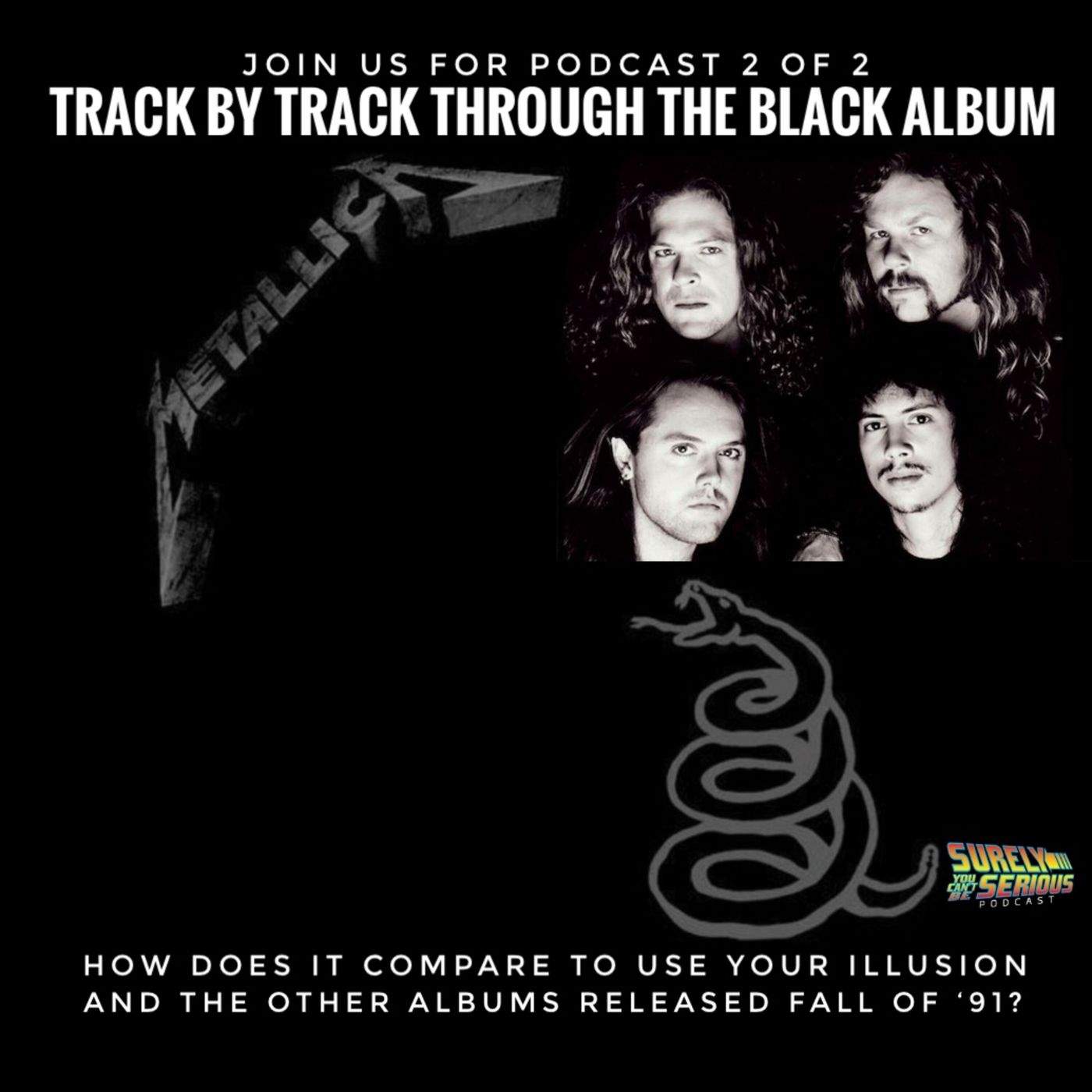
Metallica's Black Album (1991): Track by Track!
In August of 1991, Metallica released their self titled album, commonly referred to as the "Black Album". WIth mainstream rock anthems like "Enter Sandman" and "Wherever I May Roam" and beautiful rock ballads like "The Unforgiven" and "Nothing Else Matters" album quickly went to number one bringing in new fans. How would fans of old receive it? We discuss that and the awesome stories behind each of these classic songs and we will ultimately compare them to Guns 'N Roses' "Use Your Illusion" albums. Take my hand!
2021-09-07
59 min
Transcript
Available Results
Generated results are saved to the knowledge database for reuse and search.
No generated results are available for this episode yet.
Extract Knowledge
Pick what you want extracted first. Model, scope, and chapter options appear after a template is selected.
Generated results for public episodes are saved to the knowledge database so they can be reused and searched later.
Transcript
<v Speaker 1>Hey, everybody, welcome back to the show you can't be
<v Speaker 1>serious podcasts. This week, d we are going to continue
<v Speaker 1>our study with Metallica and we are going to go
<v Speaker 1>track by track to the Black album.
<v Speaker 2>Yeah. This album was the album that changed the direction
<v Speaker 2>of the band. It offended a lot of their hardcore fans,
<v Speaker 2>but it also introduced them to a whole spectrum of
<v Speaker 2>new fans, including yours, truly and me. I can probably
<v Speaker 2>play more songs off of this album than any other
<v Speaker 2>album On the guitar. I learned just about every song
<v Speaker 2>that I could on this album. But the other reason
<v Speaker 2>for that is these songs were easier to play than
<v Speaker 2>what they had been playing before. These were some simple, straightforward,
<v Speaker 2>good melody songs.
<v Speaker 1>I'm not a guitar player, but I can tell that
<v Speaker 1>they're simpler. Yeah, but they are awesome. Yes, I mean
<v Speaker 1>there are some grand slams on this.
<v Speaker 2>Album, absolutely five of them, at least at least five.
<v Speaker 2>So let's let's dive into it. Man.
<v Speaker 1>This album, as you said last time, it was remixed
<v Speaker 1>three times, it cost one million dollars to make and mix,
<v Speaker 1>and it ended three marriages.
<v Speaker 2>Yeah. It literally like Lars Kirk and Jason all got
<v Speaker 2>divorced while this album was going on, which is tragic,
<v Speaker 2>and they ended up putting a lot of those guilt
<v Speaker 2>and emotions into the songs, which may be part of
<v Speaker 2>why it's so good. But as we talked about last time,
<v Speaker 2>Lars said, I wanted to do something that was less
<v Speaker 2>technically difficult, but more soulful and something that I could
<v Speaker 2>feel more than think about. And boy, they hit it
<v Speaker 2>on the head. Before we get going, I just want
<v Speaker 2>to point something out. We have been talking to each
<v Speaker 2>other now for a couple of years face to face,
<v Speaker 2>and one of the reasons that I can do that
<v Speaker 2>is because you don't have nose hair. Have you been
<v Speaker 2>talking to people and like you can't even concentrate on
<v Speaker 2>what they're saying because of their nose hair.
<v Speaker 1>Absolutely, they like tuck to you.
<v Speaker 2>It dangles, Yes, it wiggles. It's a total distraction. Absolutely,
<v Speaker 2>And so let me let me say if you are
<v Speaker 2>one of those guys, we have a product that is
<v Speaker 2>supporting the podcast that you need to check out is
<v Speaker 2>called the weed Whacker, and it is from Manscape.
<v Speaker 1>It is an amazing product. It trims your nose hair.
<v Speaker 1>It's not embarrassing. You just stick it up there.
<v Speaker 2>It takes care of it. You're not gonna look at
<v Speaker 2>people and bother them, right, And I'm one of those
<v Speaker 2>guys who's self conscious about my nose hair. So somebody
<v Speaker 2>that you're gonna see me and I'm gonna be like
<v Speaker 2>yanking them out and wincing in pain, don't do that.
<v Speaker 2>There is a special thing that they make and they've
<v Speaker 2>also just released. In addition to the weed whacker, they
<v Speaker 2>have just released something called the lawnmower. If you have
<v Speaker 2>other areas of your body that you're looking to trim up.
<v Speaker 2>And I'd like to point out that a giraffe is
<v Speaker 2>easier to see in the planes than it is in
<v Speaker 2>the forest. That's wonderful. Yes, yes it is.
<v Speaker 1>So it's very good around sensitive areas, if you know
<v Speaker 1>what I'm saying.
<v Speaker 2>Yeah. They have also an entire shavekit called the Ultra
<v Speaker 2>Smooth Package package. You get the idea. So who doesn't
<v Speaker 2>want their package ultra smooth? Right? Right? So don't forget
<v Speaker 2>to go to manscapes dot com and use the promo
<v Speaker 2>code fan sided twenty to get twenty percent off your
<v Speaker 2>order and free ship and whack it perfect time. They
<v Speaker 2>shouldn't but as simple as it was, and as soulful
<v Speaker 2>as it was, it was really difficult to make. I
<v Speaker 2>mean we talked about it took eight months of recording,
<v Speaker 2>and they're working with Bob Rock, who was a guy
<v Speaker 2>that they had hesitation about, and he was a guy
<v Speaker 2>that put the thumbs to him man. I mean, he
<v Speaker 2>pushed hard against what they had gotten used to in
<v Speaker 2>their previous recordings, and he's he's very much in that
<v Speaker 2>school of Mut Lang of you don't have it right yet,
<v Speaker 2>you don't have it right yet, We're gonna keep record
<v Speaker 2>it until you get it right. So they did take
<v Speaker 2>after take after take and sometimes almost on all of
<v Speaker 2>these songs. Actually it was the other Mutt Lang approach
<v Speaker 2>of all right, well we had a good you know,
<v Speaker 2>first four measures in this recording, we have a better
<v Speaker 2>sounding second four measures in this recording. And so it
<v Speaker 2>was a mix and match. And there's a movie that
<v Speaker 2>came out that was a documentary called A Year and
<v Speaker 2>a Half in the Life of Metallica, where you watched
<v Speaker 2>them go through this very difficult process with Bob Rock.
<v Speaker 2>They did not like each other at the end of
<v Speaker 2>all of this, right, Yeah, there's a point where Kirk
<v Speaker 2>has recorded something over and over and Lars is listening
<v Speaker 2>to it and they're like, well, we want to use
<v Speaker 2>this here and then plug this a little bit right
<v Speaker 2>in here, and we'll grab this other piece and plug
<v Speaker 2>it right in here. And he's like, you know, hey, guys,
<v Speaker 2>that's great. You know, I can't wait until you're able
<v Speaker 2>to do that with the drums and I don't even
<v Speaker 2>have to show up. He's like, pretty soon we're going
<v Speaker 2>to be like giving you guys the music and we'll
<v Speaker 2>be able to come back and get the money whenever
<v Speaker 2>you know you've recorded it all. It's kind of scary
<v Speaker 2>how prophetic that was, because that's the way it is now. Yeah.
<v Speaker 2>I saw the meme today where it was like rock
<v Speaker 2>band in the nineteen eighties and it was this band
<v Speaker 2>inside a garage, and then rock band in the twenty
<v Speaker 2>tens and it's this guy with a guitar in front
<v Speaker 2>of his computer. Yeah, we're ready for another revolution, folks.
<v Speaker 1>So one of the things she talked about was who
<v Speaker 1>knows when in the timeline this was, but it was
<v Speaker 1>late in the game. Yeah, and Lars is like, you know,
<v Speaker 1>I and bout Rock's like what Lars, what what? Just
<v Speaker 1>spit it out I mean he doesn't even say anything bad.
<v Speaker 2>He's just kind of.
<v Speaker 1>Like I think maybe you know he had had it,
<v Speaker 1>but it was it was really funny. So this is
<v Speaker 1>their fifth album. Yeah, as we said, it was released
<v Speaker 1>August twelfth of nineteen ninety one. We just hit the
<v Speaker 1>thirtieth anniversary of this album. This album's thirty years old.
<v Speaker 2>Crazy, I can't believe it.
<v Speaker 1>And they've played Inner Sam added every single football game
<v Speaker 1>ever since.
<v Speaker 2>If you have one song to pick, that is the
<v Speaker 2>Hey flagpole song for every you know, take a take
<v Speaker 2>a survey of all human beings who have heard of Metallica,
<v Speaker 2>and say, what's the one song that you think of.
<v Speaker 2>It's going to be Inner Sad.
<v Speaker 1>It's Sam and without a doubt. So this was released
<v Speaker 1>August twelfth, nineteen ninety one. On August second of nineteen
<v Speaker 1>ninety one, they had the listening party. I thought this
<v Speaker 1>was super cool if you're in and around New York
<v Speaker 1>City in nineteen ninety one. Yep, they gave out nineteen
<v Speaker 1>thousand free tickets to go to masson Square Garden. The
<v Speaker 1>band was not going to play live. They were just
<v Speaker 1>going to play the album and let fans hear it
<v Speaker 1>and there's sort of judge feedback wise what they thought,
<v Speaker 1>which I thought that was super cool and I would
<v Speaker 1>love to.
<v Speaker 2>Have been there during that time. When this album was released,
<v Speaker 2>debuted at number one in ten different countries. It sold
<v Speaker 2>six hundred and fifty thousand copies in the first week,
<v Speaker 2>like it was, and it started just going a million
<v Speaker 2>a week, a million a week, a million a week,
<v Speaker 2>knowing it knocked out of the number one spot. Oh, okay,
<v Speaker 2>this is going to blow you away. Yeah.
<v Speaker 1>This is the music scene in nineteen ninety one, which
<v Speaker 1>we've already said was not good until fall.
<v Speaker 2>Right. Unforgettable, that's what you all.
<v Speaker 1>Unforgettable Natalie Cole's unforgettable. Unforgettable.
<v Speaker 2>Oh the copy that she did with her dad from
<v Speaker 2>like one hundred years ago.
<v Speaker 1>Yeah, wow, there's a duet with her father, her dead father.
<v Speaker 2>Kind of forgettable.
<v Speaker 1>It's kind of neat. Yeah, not my favorite, No, it's not,
<v Speaker 1>certainly not. When I was eighteen, I liked.
<v Speaker 2>It when he sang it. Anyway, back to Metallica, Okay, okay,
<v Speaker 2>just a couple more things before we dive in.
<v Speaker 1>Track by track, Bob Rock thought this was going to
<v Speaker 1>be easy until he met the guys and realized they're
<v Speaker 1>all perfectionists, yes, and of course he's a perfectionist, yes,
<v Speaker 1>And so it was a lot harder than he thought.
<v Speaker 2>For example, kirk Ham is a very spiritual guy, right,
<v Speaker 2>and so he's very touchy feely does it feel right
<v Speaker 2>in the moment kind of deal, and Bob Rock is right,
<v Speaker 2>is like, this isn't good enough. You have to do more,
<v Speaker 2>do it more, do it more, do And Lars starts
<v Speaker 2>to stand up and he's like, well, you know, this
<v Speaker 2>just isn't the way that he is. You know, this
<v Speaker 2>isn't the type of guy that he is. And he's like,
<v Speaker 2>but it's not to the quality that it needs to
<v Speaker 2>be and he goes, yeah, but you just can't. You
<v Speaker 2>can't push him. He goes, I can't push him to
<v Speaker 2>be good. You want me to have him not be good?
<v Speaker 2>Is that what you're suggesting? He's like, no, I'm not.
<v Speaker 2>He's like, well, what are you suggesting? It is? I'm
<v Speaker 2>not suggesting anything.
<v Speaker 1>Yes, that's exactly right, And I want to talk about
<v Speaker 1>that and more and depth when we get down forgiven. Yeah,
<v Speaker 1>so the tempos were slowed down, as you said, they
<v Speaker 1>turned the bass up because.
<v Speaker 2>And Justice Frock said Hey, you guys know this thing
<v Speaker 2>called bass it exists.
<v Speaker 1>There was almost no base on Injustice for All is
<v Speaker 1>kind of a way of punishing Jason for being the
<v Speaker 1>new guy guy. James Hetfield was inspired by Bob Dylan,
<v Speaker 1>Bob Marley and John Lennon when he wrote this album. Okay,
<v Speaker 1>the more beatlesque, yeah for sure, and more melodies. You
<v Speaker 1>have James Hetfield singing instead of screaming on this album.
<v Speaker 2>Yeah.
<v Speaker 1>This is the untitled Metallica album. People referred to it
<v Speaker 1>as the Black album. It was almost called five because
<v Speaker 1>it was the fifth album.
<v Speaker 2>So you know the bit about Spinal Tap thing, right, Yeah,
<v Speaker 2>so Spinal Tap came out in eighty four. But in
<v Speaker 2>Spinal Tap they were like, I think we just do
<v Speaker 2>an album that's just all black. Just the whole album
<v Speaker 2>is black. It's like a white album, except he's black.
<v Speaker 1>It was the guy on Laverne Shirley who starred in
<v Speaker 1>Spinal Tab and he's talking to Lars and James and
<v Speaker 1>he's like.
<v Speaker 2>We've got a bound to pick with bass. You know,
<v Speaker 2>it's cool black album. It's a cool black album.
<v Speaker 3>Now, where did the idea come from?
<v Speaker 2>Do an all black album? Metallica representing Tato. Well, I'll
<v Speaker 2>tell you something, if it had been a really pissed
<v Speaker 2>cool album, then we would have gotten right TikTok.
<v Speaker 4>You know, if they would have bought it was off.
<v Speaker 5>It was a jacent album, didn't sell badly, so we
<v Speaker 5>figured yeah, yeah, we took it as a trivia.
<v Speaker 1>But when you said that this album hit number one,
<v Speaker 1>this I thought this quote was gold from Lars. He's like,
<v Speaker 1>you know, you think one day somebody's going to tell
<v Speaker 1>you have the number one record in America and the
<v Speaker 1>whole world will And I just stood there in my
<v Speaker 1>hotel room and there was this facts that says you're
<v Speaker 1>number one, and I was like, well, okay, it was
<v Speaker 1>just another facts from the office and standing there in
<v Speaker 1>his underwear like hey, I'm number one.
<v Speaker 2>Awesome. Okay. So we're about to have the slower, heavier,
<v Speaker 2>more refined and not nearly as thrash Metallica, but man,
<v Speaker 2>we still start kicking button.
<v Speaker 1>Let's go track by track, starting with one of the
<v Speaker 1>most well known rock songs of the.
<v Speaker 2>Nineties, of ever, of ever, of ever, the defining Metallica
<v Speaker 2>song Enter Sandman. It's amazing.
<v Speaker 1>I saw d Snyder talk about this song one day. Yeah,
<v Speaker 1>he said that the intro to the song is so
<v Speaker 1>good you don't want to get to the chorus.
<v Speaker 2>That's true, that's exactly right. That is exactly right. So, yes,
<v Speaker 2>this is more melodic, Yes it's more basic, but man,
<v Speaker 2>it's still kicks some butty, are you kidding me?
<v Speaker 1>This is maybe the greatest rock song since Welcome to
<v Speaker 1>the Jungle.
<v Speaker 2>Woo okay, interesting all right, and commenced to head beannging.
<v Speaker 5>Yeah uh yeah.
<v Speaker 2>So this song is about nightmares. This song they had
<v Speaker 2>started with it very early. It started with it back
<v Speaker 2>in nineteen ninety. But it was just the music. They
<v Speaker 2>knew that it was good. It had come from a
<v Speaker 2>riff that Kirk Khanmon had done. He talked about how
<v Speaker 2>he you know, he just records. You've got the recorder
<v Speaker 2>next year, and you just play and then you listen
<v Speaker 2>to it and sometimes you go, hey, that sounded good.
<v Speaker 2>I'm gonna go back and figure out what I did
<v Speaker 2>right there the original way it was right, except with
<v Speaker 2>this one. He did that and Lars was the one
<v Speaker 2>that was listening to it and he's like, hey, you
<v Speaker 2>had this one part that was done. No, no, no, I
<v Speaker 2>think you should play it three times and then do
<v Speaker 2>that little break that that after that, and that's how
<v Speaker 2>the song looked. So I repeated the.
<v Speaker 1>You can actually see that happen when you watch that
<v Speaker 1>documentary and you have the birth of the greatest rock
<v Speaker 1>anthem of all time.
<v Speaker 2>It is a one riff song. It's a one riff song,
<v Speaker 2>like that's it, but it is amazing. So they started
<v Speaker 2>off with the music in ninety but this was one
<v Speaker 2>of the very last songs to have the lyrics really. Yeah.
<v Speaker 2>So James Hetfield had written some lyrics that was talking
<v Speaker 2>about basically the destruction of the perfect family, like there
<v Speaker 2>was a crib death involved in all that, like sids. Yeah,
<v Speaker 2>and it's bob Rock and Laura's Alrich said that's not good.
<v Speaker 2>You can do better than that, and so that's how
<v Speaker 2>he came up with the nightmares themed song that we
<v Speaker 2>have before us. Yeah.
<v Speaker 1>I heard somebody describe it as the world's first metal lullaby.
<v Speaker 2>Here's something interesting. The music part of it, Kirk Hammon said,
<v Speaker 2>was inspired by Sound Gardens Louder than Love.
<v Speaker 1>Soundgarden another album that came out Fall of ninety one, incredible,
<v Speaker 1>So they use that poem.
<v Speaker 2>Now I lay me down.
<v Speaker 1>To sleep, and it's like a father teaching a child
<v Speaker 1>what to say as you're going to sleep, because the
<v Speaker 1>Sandman he's coming.
<v Speaker 2>Now down ray ther.
<v Speaker 4>My die before I rave my die.
<v Speaker 1>The So they did say that they wanted to incorporate
<v Speaker 1>some more adult nightmare images into it, but they didn't
<v Speaker 1>want anything stupid like Frankenstein, you know, jumping around the
<v Speaker 1>corner and scaring you. This song reached number sixteen on
<v Speaker 1>the Hot one hundred.
<v Speaker 2>Okay, So in watching A Year and a half in
<v Speaker 2>the Life of Metallica, it shows the part where they're
<v Speaker 2>recording the Little Kid, and this just is another example
<v Speaker 2>of Bob rockness. He's like, now I lay me down
<v Speaker 2>to sleep. Now I lay me down to sleep. I
<v Speaker 2>pray the Lord myself. Okee, I pray the Lord myss.
<v Speaker 2>And he goes through the whole thing and Bob Rock's like,
<v Speaker 2>all right, let's do it again, and he guds like,
<v Speaker 2>what did I do wrong?
<v Speaker 1>That kid's now approaching forty whoosh? Have you ever heard
<v Speaker 1>this song tapping into the emotional void?
<v Speaker 2>Only because you played it for me about twenty minutes
<v Speaker 2>ago and I was like, oh, this is somebody covering
<v Speaker 2>inner Sandman acoustically and you said, no, no, this was before.
<v Speaker 1>Let's hear it.
<v Speaker 2>You're really pretty on the nose. Sounds a little bit familiar,
<v Speaker 2>doesn't it. Yeah, it really does.
<v Speaker 1>So that's a group named Excel, not Microsoft Excel, just
<v Speaker 1>regular Excel, and the members were considering legal action. Don't
<v Speaker 1>know whatever happened to that. Let's talk about the video
<v Speaker 1>for a second. Okay, So the video was directed by
<v Speaker 1>our guy named Wayne Eisham.
<v Speaker 2>Yes, we've talked.
<v Speaker 1>We've talked about him a bunch. He directed all the
<v Speaker 1>Bonjovie videos. He's directed a billion videos.
<v Speaker 2>But it was.
<v Speaker 1>Recorded in Los Angeles and in premiere July third, nineteen
<v Speaker 1>ninety one, two weeks before the release of the album.
<v Speaker 1>And you have this kind of nightmare scenario. But you
<v Speaker 1>have this really cool scene where there's a semi bearing
<v Speaker 1>down on a bed in the middle of the highway.
<v Speaker 1>And when James Hetfield goes at that part in the
<v Speaker 1>song where he goes boom, the semi truck hits the bed.
<v Speaker 2>Oh all right. So there's an old man, there's a
<v Speaker 2>little kid who's praying, and then there's an old man.
<v Speaker 2>You know, the old man is old, crinkly faced dude.
<v Speaker 2>You know who it is, tell me who is I
<v Speaker 2>don't who's it? Okay, So the guy's name is R. G. Armstrong. Okay,
<v Speaker 2>you'd know him if you saw him, but I'm going
<v Speaker 2>to give you some clues. He was in Dick Tracy.
<v Speaker 2>He played prune Face, but you probably know him as
<v Speaker 2>General Phillips from Prederick Get to the Chopper.
<v Speaker 1>This one Best Hard Rock Video at the nineteen ninety
<v Speaker 1>two TV Music Awards. Besides being played at every single
<v Speaker 1>football game ever known demand since nineteen ninety one, all
<v Speaker 1>their live shows too. Oh yeah, I mean they have to.
<v Speaker 1>This is one of those must plays the Yankees. The
<v Speaker 1>New York Yankees would play this song whenever their all
<v Speaker 1>time great closer, Mariano Rivera took the mound, and they
<v Speaker 1>did it so like he's recognized as being the.
<v Speaker 2>Greatest relief picture of all time.
<v Speaker 1>It coincided so much with him, he became known as
<v Speaker 1>the Sandman.
<v Speaker 2>Oh nice, kind of like wild thing. Yeah nice.
<v Speaker 1>When Mariano Rivera retired, Metallica came and played live inside
<v Speaker 1>Yankee Stadium when he took the mound for the last time.
<v Speaker 2>That's the best thing of the show. How about that?
<v Speaker 2>We can stop now because that's the coolest thing of
<v Speaker 2>the show.
<v Speaker 1>How about that this has been covered a million times.
<v Speaker 1>I listened to one today by Weezer, and of course
<v Speaker 1>Pat Boone has covered this.
<v Speaker 4>Song with.
<v Speaker 2>The've been Your Pillow tide head Boon never afraid to
<v Speaker 2>steal something and make it terrible, So you sent me
<v Speaker 2>this thing that was There's this huge, like tribute album
<v Speaker 2>that's coming out, like fifty three different artists playing their
<v Speaker 2>favorite songs off the Black album. Yes, it's called Blacklisted.
<v Speaker 2>That's it Blacklisted? Yeah, Yeah, And I'm excited to hear it.
<v Speaker 2>I haven't heard it yet, I've just I just saw
<v Speaker 2>the preview and it looks exciting. There are a couple
<v Speaker 2>of bands, there's some of it is available on Spotify
<v Speaker 2>if you want to listen to the who Hu Not
<v Speaker 2>Right Who? Which is a band I saw with my
<v Speaker 2>dad that I've mentioned in a podcast in the past,
<v Speaker 2>the ones that do the double vocaling like Bill and
<v Speaker 2>Ted do at the beginning to face the music. I'm
<v Speaker 2>really excited to hear whatever version. And then I've also
<v Speaker 2>seen Cage the Elephant, who's done one of the best
<v Speaker 2>live shows I've ever seen. I can't wait covering too. Yeah.
<v Speaker 1>Well, and I think like Darius record does cover of
<v Speaker 1>nothing else matters that I can't wait to hear.
<v Speaker 2>Oh yeah, we don't say. Man, it's unfortunate because it
<v Speaker 2>is a tent fole song. But guys, so good. We're
<v Speaker 2>moving into something that's still pretty friggin' awesome.
<v Speaker 1>Here it comes track number two, Sad but True.
<v Speaker 2>Dude, you got the incredible use of the silent break
<v Speaker 2>right before I love Love Love, the way that it stops,
<v Speaker 2>and the drums. Oh man, too good.
<v Speaker 1>You have that crunchy guitar at the beginning.
<v Speaker 2>Just oh so good.
<v Speaker 1>Sad but True was the fifth single, released February eighth,
<v Speaker 1>nineteen ninety three. This is one of those five singles
<v Speaker 1>that was an absolute home run.
<v Speaker 2>Okay, so what do you think the son's about?
<v Speaker 1>Okay, So this is the interesting thing about their music
<v Speaker 1>now they do have more serious tone stuff. It's not
<v Speaker 1>girls and booze and the typical party rock that you
<v Speaker 1>and I like.
<v Speaker 2>Right, it's not the Motley Crue sex stuff all of
<v Speaker 2>the time, sex, drugs and sex. Yes, right, how about
<v Speaker 2>some more sex stripper music. So I thought it was
<v Speaker 2>interesting the way they weart their music is they come
<v Speaker 2>up with a riff, a riff that they can build
<v Speaker 2>a song on, and then they sort of grow it
<v Speaker 2>from there. But they have a running title list, so
<v Speaker 2>they just have words that they think sounds cool. So
<v Speaker 2>they had a list that had sad but true. Enter Sandman,
<v Speaker 2>nothing else matters, uh huh, and they're like, hmm, this
<v Speaker 2>sounds like sad right true. And then they take that title,
<v Speaker 2>they take the riff, they mash those together, and they
<v Speaker 2>build a song of pain while you're you know, okay,
<v Speaker 2>so we really don't know what it means. I don't.
<v Speaker 2>I mean, I'm looking at these lyrics and I can
<v Speaker 2>understand that it's like, I'm the evil side of you.
<v Speaker 2>That's kind of the impression that I get. And that's
<v Speaker 2>the idea is that's sad but true, but I'm you.
<v Speaker 1>Well, Hatfield has talked about how in this song it's
<v Speaker 1>about his duality, right like inside of me, there's the
<v Speaker 1>public me and there's the the me me, you know,
<v Speaker 1>and how there's one good and one evil and they
<v Speaker 1>kind of wrestle with you.
<v Speaker 2>I'm the hate when you want love. So musically, there's
<v Speaker 2>an interesting thing that happened on this one. So Bob
<v Speaker 2>Rock is looking at their songs and looking at all
<v Speaker 2>of the chord progressions, and he's like, these songs are
<v Speaker 2>all in. What's up, guys, you know? And they're like, well,
<v Speaker 2>we're a heavy metal band. Turns out we like E
<v Speaker 2>Shocker And he's like, yeah, but you know the bass.
<v Speaker 2>Remember what he said he introduced the bass bob, He's
<v Speaker 2>lowest note. He's like, you can tune it down. People
<v Speaker 2>do it all the time. You know that album that
<v Speaker 2>you called me because you liked the Doctor Feel Good album. Wow,
<v Speaker 2>drop D. You know, take that E note and tune
<v Speaker 2>it down a full step. And that's where we get
<v Speaker 2>the music for Sad but True. That's where that's why
<v Speaker 2>it sounds so heavy and full on that base side
<v Speaker 2>of things. It's because they're doing a drop D tuning.
<v Speaker 1>Thank you Motley Crue for giving us Sad but True.
<v Speaker 2>Oh my gosh, we're gonna get a fire. Okay. So
<v Speaker 2>the solo that happens in this one is pretty freaking awesome.
<v Speaker 2>All right. So, just before you can hear this double track,
<v Speaker 2>guitar and then they do that stop that I was
<v Speaker 2>talking about. Stop drums come in. And this is a
<v Speaker 2>great solo because instead of doing the metal style leads
<v Speaker 2>that he's done in the past, Kirk is doing something
<v Speaker 2>far more blues based like this. It sounds like he's
<v Speaker 2>almost playing with a slide. I'm not sure if he
<v Speaker 2>is or not, but it sounds so more blues scale,
<v Speaker 2>blues riff than any of the stuff they've done before.
<v Speaker 2>And it's one of those solos that you're going to
<v Speaker 2>play along the air guitar with because it's memorable. It
<v Speaker 2>sticks in your head and it kills it kills it.
<v Speaker 1>We were talking about that documentary earlier, Bob Rock said,
<v Speaker 1>Kirk is one those guys you have to push right
<v Speaker 1>and so he'll just throw out some crap and you're like,
<v Speaker 1>what do you think and he's like, no, not good enough,
<v Speaker 1>keep going. Yeah, So clearly he was being pushed on
<v Speaker 1>this song for sure. All right, but don't saba true.
<v Speaker 1>It's Saba true, all right. Song number three, this song
<v Speaker 1>is called Holier than Thou.
<v Speaker 2>All right, So just when you thought we had moved
<v Speaker 2>into the blues, let me bring back the thrash metal
<v Speaker 2>right now. Yeah, this one's really heavy. It starts off
<v Speaker 2>super heavy, yeah, and repetitive. I mean that.
<v Speaker 1>Little loop I counted it. It's twenty four times.
<v Speaker 2>This is really long, over and over and over again,
<v Speaker 2>which I understand the build. You know what, Bob Rock
<v Speaker 2>wanted this to be there first.
<v Speaker 1>This is a great story.
<v Speaker 2>Yeah. So they're sitting in a restaurant and he's like,
<v Speaker 2>you know, guys, obviously the first song, first single that
<v Speaker 2>needs to be released soldier than that. And they're like, really, Bob,
<v Speaker 2>tell us why just the way that it builds and
<v Speaker 2>you start, You've got the drums, then the guitars build
<v Speaker 2>on top of it, and you've got the dynamics in
<v Speaker 2>the song. And he's yeah, he was. He was selling
<v Speaker 2>it hard.
<v Speaker 1>You can see it in the documentary him actually say
<v Speaker 1>these words with songs like Unforgiven and Enter Sandman and
<v Speaker 1>Wherever I May Room.
<v Speaker 2>Which is nuts because he's the guy that like like
<v Speaker 2>led them away from the thrash metal sound. But he's
<v Speaker 2>suggesting that the thrash metal be the first song that
<v Speaker 2>comes off the album. It's it's just interesting. I don't
<v Speaker 2>know if they turned him or if he just thought,
<v Speaker 2>you need to have this as the first single because
<v Speaker 2>your fans will buy in that way. I don't I
<v Speaker 2>don't know, I don't know. So here's the thing.
<v Speaker 1>Okay, I thought this was great, and he's probably protecting
<v Speaker 1>himself a little bit because he does seem a little
<v Speaker 1>silly when he when he said those words, he said,
<v Speaker 1>this was before there were words laid down for any track,
<v Speaker 1>including Samon, right, and so he just thought he liked
<v Speaker 1>the crunch and he said it was early on, and
<v Speaker 1>the songs later sort of blossomed into these mega songs,
<v Speaker 1>and so it was a little early.
<v Speaker 2>In the game.
<v Speaker 1>And he's like, but yeah, So the band whenever they
<v Speaker 1>see him, like they'll be like, hey, Bob.
<v Speaker 2>How's it going.
<v Speaker 1>He's like, fine, guys, how's it going. They're like, holyer
<v Speaker 1>than now? Huh? That was early in the game. I
<v Speaker 1>think that's hilarious.
<v Speaker 2>The lyrics.
<v Speaker 1>Bob initially thought it might even be about him being
<v Speaker 1>holier than now.
<v Speaker 2>Oh interesting, Okay, what do you think you like this one? Well,
<v Speaker 2>I hate to judge it lest I judge myself. That's good. Yeah,
<v Speaker 2>I mean I could see it being about Bob or
<v Speaker 2>anybody else who's probably given them trouble along the way.
<v Speaker 2>This is a I don't need your attitude and your opinions, right,
<v Speaker 2>you're thinking you're better than me. Good song. There's better
<v Speaker 2>songs there. I'm ready to jump to track number four
<v Speaker 2>for sure. I'm listening to the album. I'm like, I'm
<v Speaker 2>hearing the same thing. I'm like, Okay, you've played it
<v Speaker 2>too long. I don't care what the words are.
<v Speaker 1>Moving on the next song on the album, track number four,
<v Speaker 1>the Unforgiven.
<v Speaker 2>Okay, throw back to Van Halen sound effect at the
<v Speaker 2>beginning of the song. What Doppler effect of the thing
<v Speaker 2>going by card going by? Yeah? But then we come
<v Speaker 2>in after we've had this thrash metal song. We come
<v Speaker 2>in with a classical guitar playing a almost Spanish style balad. Yeah,
<v Speaker 2>it's sweet and sad. It is sweet and sad, and
<v Speaker 2>then you get a little lead over the top and
<v Speaker 2>it's beautiful. It's hooky. This song is gold and they've
<v Speaker 2>totally stolen it from themselves. I've brought you this today
<v Speaker 2>because and I wish I could say, you know, I
<v Speaker 2>wish I could say, well, I recognized the song when
<v Speaker 2>I heard the Black Album for the first time, because
<v Speaker 2>but I didn't, because I've already said I came through
<v Speaker 2>the Black Album and then went back to the other albums.
<v Speaker 2>And this morning, as I was working out listening to
<v Speaker 2>Fade to Black, I was like, this is the same
<v Speaker 2>chord progression as Unforgiven. And I said to you, and
<v Speaker 2>you're like, I'm too familiar with Fade to Black to
<v Speaker 2>hear it. But I looked it up. Literally exactly the
<v Speaker 2>same chords. There's a bit of a twinge difference at
<v Speaker 2>the end of a line or two, but it is
<v Speaker 2>the exact same chords from beginning to end. It's not
<v Speaker 2>where Fade to Black first starts, but once you get
<v Speaker 2>down at the intro guitar intro on theta black and
<v Speaker 2>then go into the more acoustic sound, Yeah, it's the same.
<v Speaker 1>Interesting. Well, they're both wonderful songs. Yeah, and you know,
<v Speaker 1>if it works, keep going to it. You sure they
<v Speaker 1>reused it again Unforgiven Part two. This song has sequels. Yeah,
<v Speaker 1>it has an Unforgiven Part two and an Unforgiven Part three.
<v Speaker 2>Oh my gosh.
<v Speaker 1>This was released October twenty third of ninety one. This
<v Speaker 1>is the second single. I thought it was interesting that
<v Speaker 1>they wanted to do something with a heavy verse and
<v Speaker 1>a soft chorus running out. That was the goal when
<v Speaker 1>they made this song.
<v Speaker 2>Yeah, and it's such heartbreaking lyrics. I mean, the New
<v Speaker 2>Blood joining the earth and immediately he's subdued and he
<v Speaker 2>has pain and discrace and he has to learn the rules,
<v Speaker 2>and it's just, you know, the whipping void done wrong.
<v Speaker 3>It is tragedy of a beaten down life shot.
<v Speaker 1>Okay, d I want to talk about the guitar solo
<v Speaker 1>on this song Unforgive. This is the song where Bob
<v Speaker 1>Rock was like Kirk that that solo is not good enough.
<v Speaker 1>Go back and try again. And he kept trying and
<v Speaker 1>and he kept sort of browbeating him to.
<v Speaker 2>Come up with something better.
<v Speaker 1>He's like, you have to respect the song. The song
<v Speaker 1>is too good for you just to throw out a
<v Speaker 1>crappy the solo. And Kirk had said, I just don't
<v Speaker 1>really have the feel. He's like, that's what all lazy
<v Speaker 1>players say. I don't have the feel. Go back and
<v Speaker 1>come up with something better.
<v Speaker 6>And and so that's why we have this screaming awesome
<v Speaker 6>guitar solo is because Kirk was pushed to the edge
<v Speaker 6>and he was breaking emotionally.
<v Speaker 1>You know you mentioned that horn at the very beginning.
<v Speaker 2>Yeah, that horn.
<v Speaker 1>They actually reverse it so that people can't recognize it.
<v Speaker 1>It was stolen from a Western movie, although they haven't
<v Speaker 1>really named it because for you know, legal reasons, they
<v Speaker 1>don't like to get sued, right, And most people think it's
<v Speaker 1>from the Clin Eastwood movie for a few dollars more.
<v Speaker 2>Which is interesting that the clinicst Wood then came out
<v Speaker 2>with a movie called The Unforgive Ah.
<v Speaker 1>Yeah, I mean you think about that there, you got
<v Speaker 1>good job?
<v Speaker 2>Yeah, all right, I told you I had.
<v Speaker 1>I had a cool story about this, right, So listen
<v Speaker 1>to this. When Dave Mustaine was fired from Metallica, yep,
<v Speaker 1>he could not bring himself to listen to them, look
<v Speaker 1>at them, think about them.
<v Speaker 2>Mention their name.
<v Speaker 1>He was very bitter, right, yes, And we talked about
<v Speaker 1>how he felt like Kirk took his job and stole
<v Speaker 1>his riffs right and still his riffs right. But when
<v Speaker 1>he finally got around to listening to Metallica and he
<v Speaker 1>listened to this album and this was the song that
<v Speaker 1>he gravitated towards. This is the lead singer of Megadeth.
<v Speaker 1>When he was talking to Revolver magazine, he said, I
<v Speaker 1>remember hearing this song when I was talking to Lars
<v Speaker 1>One and telling him this was my favorite song off
<v Speaker 1>the Blackout, and he's like, wow, really, that's surprising, and
<v Speaker 1>he said I liked it because this is the first
<v Speaker 1>time I'd ever really heard him sing.
<v Speaker 2>It's awesome. Yeah, he's He definitely brought vocals in this one.
<v Speaker 1>Okay, I got something for you on the music video. Okay, okay,
<v Speaker 1>this video was directed by a guy named Matt Maharan.
<v Speaker 1>I'm not sure I'm pronouncing it.
<v Speaker 2>It's easy for you to say, Matt Mcharran. Okay.
<v Speaker 1>Now, he's a video director, he's a photographer. He has
<v Speaker 1>done a number of things, but you will know him.
<v Speaker 1>He's the guy who took the picture of OJ Simpson's
<v Speaker 1>mugshot that Time magazine then sort of filtered to make
<v Speaker 1>him look darker. Yeah, and it was a very controversial picture.
<v Speaker 2>This is the guy who took that picture.
<v Speaker 1>Oh wow, So that picture that he took ended up
<v Speaker 1>on the cover of Time magazine. We don't get into
<v Speaker 1>politics on here. Moving on this song number five, This
<v Speaker 1>is Wherever I May roam.
<v Speaker 2>Okay. This is a different sound. Yeah, that's sitar at
<v Speaker 2>the beginning. Yeah, it's got a very middle least kind
<v Speaker 2>of sound to it. And while they were recording this album,
<v Speaker 2>Lars came in one day and they had an entire
<v Speaker 2>table full of different percussive instruments, and so the little
<v Speaker 2>see the two hear he I'm sure pulled off of that,
<v Speaker 2>and you get some knocking here and there. At one
<v Speaker 2>point it showed James Headfield cocking a gun as one
<v Speaker 2>of the right. They added a lot of sound samples
<v Speaker 2>in this one, but it's weird to hear Metallica coming
<v Speaker 2>in with the sitar. Now. The Beatles way back in
<v Speaker 2>the sixties had done citar music. It pops up with
<v Speaker 2>Led Zeppelin from time to time, something like that, but
<v Speaker 2>not something I was expecting from Metallica. But then they
<v Speaker 2>take that very Middle East sound and then they drill
<v Speaker 2>the drums and they make it a booming guitar lead,
<v Speaker 2>booming guitar riff, and I love it. This is my
<v Speaker 2>favorite song on the album.
<v Speaker 4>Back.
<v Speaker 2>It's favorite song phantomas album. I'll listen to the beginning
<v Speaker 2>over and over again. I don't even need to listen
<v Speaker 2>to the rest.
<v Speaker 1>It's like, like you said, I don't even want to get.
<v Speaker 2>To the chorus. I just want to listen to the
<v Speaker 2>intro to the song over and over.
<v Speaker 1>The lyrics of this song and what really speak to me.
<v Speaker 1>This is like a road Dog song. Right, there's this
<v Speaker 1>line in where he's like roamer, wanderer, nomad, vagabond, call
<v Speaker 1>me what you will. But that's the idea of I
<v Speaker 1>get everything I need.
<v Speaker 2>From the road. It's a love song to the road.
<v Speaker 2>It is the road becomes my bride, and the road
<v Speaker 2>becomes my bride.
<v Speaker 1>This was the fourth single released October nineteenth, ninety.
<v Speaker 4>Two, abut on a Lawn, Road.
<v Speaker 2>Lawn. Such a good song.
<v Speaker 1>Kirk Hammitt talks about when he talks about this song,
<v Speaker 1>he remembers at the time being on tour. He said,
<v Speaker 1>I bought a house last year that I haven't even
<v Speaker 1>seen yet.
<v Speaker 2>Yeah. So the tour after this was called the Wherever
<v Speaker 2>I May Roam Tour. Yeah, a great name for a tour.
<v Speaker 7>Yeah.
<v Speaker 2>I mean, if the road is going to be your bride,
<v Speaker 2>it's gonna be where you're on tour. Right. Such a
<v Speaker 2>great song. And so the music video is it's their
<v Speaker 2>road video. Man, it's the one that's got to have video, yeah,
<v Speaker 2>to have it. So the Wherever I May Roam Tour
<v Speaker 2>is where they got the video for the Wherever I
<v Speaker 2>May Roam video. Yeah, you've got to have it.
<v Speaker 1>Every band in the early nineties late eighties had to
<v Speaker 1>have this this video.
<v Speaker 2>So normally when they would play this song live, they
<v Speaker 2>would start it off with the recording of the sitar
<v Speaker 2>and they would let everybody walk out to this song
<v Speaker 2>because they didn't typically have a gitar right playing. All right,
<v Speaker 2>we got to move on, Okay, moving on.
<v Speaker 1>The next song on the album is a song called
<v Speaker 1>Don't Tread on Me.
<v Speaker 2>Okay. The song starts off with a lot of but kicking.
<v Speaker 2>It's the headbanger. It is. We're back to our thrash now.
<v Speaker 2>This is almost like a thrash metal anthem. It's like
<v Speaker 2>a patriotic metal anthem kind of yeah it is. I
<v Speaker 2>would say of all of the songs that were not
<v Speaker 2>singles on this album, this one's the best. Okay, interesting,
<v Speaker 2>I think it's better than any of the other non
<v Speaker 2>single this is. This is a really good pump your fist,
<v Speaker 2>bang your head. It's not quite tapped your foot, but
<v Speaker 2>it's the lyrics are so on point that you're just
<v Speaker 2>you're still singing a lot.
<v Speaker 1>Some people felt that this was a very pro America song,
<v Speaker 1>and Halfield has him backed down for that. He's like,
<v Speaker 1>you know, I've been out touring I've seen a lot
<v Speaker 1>of places, and let me just say, America is really
<v Speaker 1>a great place. Yeah, so you know, come to appreciate America,
<v Speaker 1>even with its warts. You know, America is pretty awesome.
<v Speaker 2>Yeah. He's not saying so be it. By the way,
<v Speaker 2>it's so be it, so be it, so be it. It's
<v Speaker 2>not so Soviet. It's not saying so okay, it's not
<v Speaker 2>the US song that's involved. It's not the USSR that
<v Speaker 2>you said threatened no more. It's interesting because ninety one right,
<v Speaker 2>that having that just happening could have been Soviet. Sure, yeah,
<v Speaker 2>it's so be it. There were some people that were shot.
<v Speaker 1>They thought they were a pro war band after the
<v Speaker 1>song came out, after thinking they were an anti war band,
<v Speaker 1>and I got to think that. You know, we talked
<v Speaker 1>about they were recording this during the Persian Gulf War
<v Speaker 1>and people in America felt a lot of American pride
<v Speaker 1>at that moment in time.
<v Speaker 2>Well, I mean, you say never surrender, showing the fangs
<v Speaker 2>of rage, and then you say to secure peace is
<v Speaker 2>to prepare for war. It's hard to say that.
<v Speaker 1>They're all right, So don't tread on me is a
<v Speaker 1>very popular term from colonial America. You have that famous flag,
<v Speaker 1>the Gadsden flag. Yeah, the snake, the snake that's on
<v Speaker 1>the front cover of the album. If you can make
<v Speaker 1>it out, it's barely on there.
<v Speaker 2>Oh yeah, it's the same snake.
<v Speaker 4>Yep.
<v Speaker 2>I like this one.
<v Speaker 1>I got no problems with it.
<v Speaker 2>It's a butt kicker, all right.
<v Speaker 1>So here's a great story for you about this song.
<v Speaker 2>Okay.
<v Speaker 1>So there's this Canadian woman named d Gallant. So she
<v Speaker 1>was walking. She lives in British Columbia. She was walking
<v Speaker 1>on a hike and there was a cougar that was
<v Speaker 1>coming after her. It's not the car, a real live
<v Speaker 1>mountain lion, right, a cougar, right, And so she started yelling,
<v Speaker 1>making noises, trying to scare this cat away, and it
<v Speaker 1>wouldn't go, and so she pulled out her phone. She said,
<v Speaker 1>I was just looking for the loudest thing I could
<v Speaker 1>possibly play Don't Tread on Me by Metallica, and the
<v Speaker 1>cat left.
<v Speaker 2>Oh my god.
<v Speaker 1>And so a week later she gets a phone call
<v Speaker 1>from mister James Heap. Oh wow, how cool is that?
<v Speaker 2>That's freaking awesome? All right? We done with this one,
<v Speaker 2>I think so. And I think if this was a
<v Speaker 2>tape this would be the end of side one, right.
<v Speaker 1>Yep, push stop in your tape player, pick it out,
<v Speaker 1>flip it over. Side two we start off with Through
<v Speaker 1>the Never, one.
<v Speaker 2>Of the songs where Third Rock from the Sun got
<v Speaker 2>their name. What do you think about this one? Well,
<v Speaker 2>I think that they tent pulled this album with their
<v Speaker 2>thrash metal songs, which thrash metal is not my thing, right,
<v Speaker 2>I mean, innerstand man, Obviously you've got to put that first, right,
<v Speaker 2>it's going to appeal to everybody, even thrash metal, non
<v Speaker 2>thrash metal. It doesn't matter. It's a winner. Right. But
<v Speaker 2>they end side one thrash metal. They begin side two
<v Speaker 2>thrash metal. Not anything, but it's not.
<v Speaker 1>Bad, okay, Metallica name there twenty thirteen Imax concert.
<v Speaker 2>Film Through the Never. Did you watch that? No? I
<v Speaker 2>haven't figured you would watch that. No, really bad movies.
<v Speaker 2>I try to.
<v Speaker 1>I try to watch as many bad movies on the
<v Speaker 1>stuff as I can.
<v Speaker 2>You've seen any about it at all. It's supposed to
<v Speaker 2>be like surrounding their concert, but there's like a thriller
<v Speaker 2>movie going on, like a storyline going on as well.
<v Speaker 1>I saw the trailer. I watched the trailer. Yeah, there's
<v Speaker 1>like some movie plot around their concert.
<v Speaker 2>All right, d so you watch the trailer. What do
<v Speaker 2>you think. I'm intrigued, legit, I thought, Okay, a thriller
<v Speaker 2>surrounding a concert movie that can't really be pretty cool setting? Right?
<v Speaker 7>Good?
<v Speaker 2>It looks like a mad Max style, like suddenly there's
<v Speaker 2>an attack and there's, you know, this apocalyptic event that's
<v Speaker 2>going on all during this concert. It's got the guy
<v Speaker 2>from The Amazing Spider Man like the second not philby maguire,
<v Speaker 2>but Andrew Garfield. Yeah, he's the guy that was the
<v Speaker 2>bad guy in that one is kind of the main
<v Speaker 2>character and he's doing something for the band when all
<v Speaker 2>of literally hell breakslus. It looks like and it looks
<v Speaker 2>an interesting and IMDV gives it a seven point two,
<v Speaker 2>which is not a bad rating. I want to go
<v Speaker 2>watch this. That's interesting. I will be back with my
<v Speaker 2>report later. Okay.
<v Speaker 1>When they were talking to James Heffeld about the naming
<v Speaker 1>of this movie, right yeah, he said, well, I was
<v Speaker 1>looking at the movie and people were like, well, what
<v Speaker 1>is this? Is this a documentary? Is this a concert movie?
<v Speaker 1>Is that an action movie?
<v Speaker 2>Is a thriller? Said?
<v Speaker 1>So we wanted to choose a title that was as
<v Speaker 1>vague as we could possibly be, so we chose our
<v Speaker 1>own through.
<v Speaker 2>The Never It's a good one. It's a head banger.
<v Speaker 2>It's not a single, but it's it's good. Yeah, all right.
<v Speaker 1>Next, this song is called Nothing Else Matters.
<v Speaker 2>So this was the first Metallic song I don't learned
<v Speaker 2>how to play. Okay. I was like, this is awesome.
<v Speaker 2>I got to figure this out. This is a love song.
<v Speaker 2>This is I this is the song that made me
<v Speaker 2>fall in love with them. I remember hearing that's for
<v Speaker 2>the first time and just immediately falling in love with
<v Speaker 2>the song it is. It's so good. It's sweet, and
<v Speaker 2>it's mysterious and it's amazing and I'm gushing, but yeah,
<v Speaker 2>this is this is the song that I fell in
<v Speaker 2>love with Metallica on Community the.
<v Speaker 4>Trusted and.
<v Speaker 2>This is interesting.
<v Speaker 1>So James Hetfield wrote this, he thought for himself. He
<v Speaker 1>didn't anticipate it being on the album. He was kind
<v Speaker 1>of bummed out. He's missing his girlfriend, wrote this for
<v Speaker 1>her and never really intended it to be on the album,
<v Speaker 1>and then Lars heard it and was like, no, that
<v Speaker 1>needs to go on the album.
<v Speaker 2>Yeah, I mean the lyrics are this beautiful opening up?
<v Speaker 2>I mean never, I've never opened up to somebody like
<v Speaker 2>I've opened up to you, And to have that kind
<v Speaker 2>of vulnerability in a heavy metal song is unexpected.
<v Speaker 1>Yeah, I think he was a little bit afraid the
<v Speaker 1>guys are gonna laugh him out of the room when
<v Speaker 1>he presented this one. What about a song about your girlfriend?
<v Speaker 2>Come on, what are we here? This was a crew.
<v Speaker 1>This was the third single reached number eleven on the
<v Speaker 1>mainstream rock trikes.
<v Speaker 2>Epically beautiful song, love it Okay, So the intro to
<v Speaker 2>the song, it's a very acoustic, beautiful lead, but then
<v Speaker 2>toward the end of the song we get the guitar solo,
<v Speaker 2>which is this screaming but still amazingly beautiful solo. Let's
<v Speaker 2>listen to it now. And so this again, he's gone
<v Speaker 2>back to this blues bass lead. We're not we don't
<v Speaker 2>have the speed metal. We've got a song that you're
<v Speaker 2>gonna air guitar with, You're gonna thrash and you're gonna
<v Speaker 2>know every note to This is one of a couple
<v Speaker 2>of songs on here where you have the guitar solo
<v Speaker 2>that you could hum the whole thing without you know
<v Speaker 2>without it being there, and again it kills it. I
<v Speaker 2>love love love it.
<v Speaker 1>I guess for you on that guitar solo. Okay, that's
<v Speaker 1>not Kirk Hammick playing that guitar solo. James Hephil Yeah,
<v Speaker 1>how about that.
<v Speaker 2>That's awesome.
<v Speaker 1>A couple of things on this song besides it being
<v Speaker 1>amazing and beautiful and a definite change in.
<v Speaker 2>Tone for the band. Yeah.
<v Speaker 1>This song hit one billion views on YouTube August first,
<v Speaker 1>twenty twenty one, just a few weeks weeks ago. Yeah, yeah,
<v Speaker 1>making it Metallica's first music video to ever hit one billion.
<v Speaker 2>Views on YouTube.
<v Speaker 4>Oh wow.
<v Speaker 2>Okay it was awesome.
<v Speaker 1>And this music video had a part in being very
<v Speaker 1>detrimental to another musician's career.
<v Speaker 2>Do you know this?
<v Speaker 1>No, there is a clip that they play in this
<v Speaker 1>music video from the documentary we talked about where Lars
<v Speaker 1>is throwing darts at a poster of Kip Winger.
<v Speaker 2>Oh yeah, yeah, that's the that's in the documentary as well. Yeah.
<v Speaker 1>That, plus Beavis and Butt turned against Winger and made
<v Speaker 1>them the uncool rock band.
<v Speaker 2>Oh my god, I like Winger. Can tell me Stewart,
<v Speaker 2>I know I know you like Winger, So I've played
<v Speaker 2>this song on guitar. Hero, Yeah, it's easier to play
<v Speaker 2>it on the guitar. I don't know. What they're doing
<v Speaker 2>is hard hard.
<v Speaker 1>James Hefhel talks about how he went to a Hell's
<v Speaker 1>Angels get together in New York City, Okay, and they
<v Speaker 1>showed him a video that they had made of their
<v Speaker 1>Fallen Brothers set to this song.
<v Speaker 2>Oh wow, And James said.
<v Speaker 1>That it was much more meaningful than just a love
<v Speaker 1>sick boy talking.
<v Speaker 2>About his girlfriend. Wow. So he said, anybody could use,
<v Speaker 2>the army could use. That's awesome. We've done with this one.
<v Speaker 2>I hate to be but yes, we got to move on,
<v Speaker 2>all right.
<v Speaker 1>The next song is called a Wolf and Mend Miss Run.
<v Speaker 2>So of wolf and men, what do you think?
<v Speaker 4>Eh?
<v Speaker 2>Eh, yeah, it's it's okay.
<v Speaker 1>I know James Heffer was kind of getting into the
<v Speaker 1>hunting thing during this time. Yeah, and so it talks
<v Speaker 1>about kind of living off the land a little bit.
<v Speaker 2>I know.
<v Speaker 1>Our buddy James Buckley loves this song. This is one
<v Speaker 1>of his favorites that is a non single off this album.
<v Speaker 2>Yeah, it's it's just not my cup of tea. It's
<v Speaker 2>all right, Yeah, it's I mean if it was used
<v Speaker 2>in a werewolf movie, then maybe, right, maybe that's what
<v Speaker 2>it is. Yeah.
<v Speaker 1>Bob Rock even thought this song was silly, like he's like,
<v Speaker 1>what are we doing here?
<v Speaker 2>Guys were sinking about a wolf? Okay, that's it. Yeah,
<v Speaker 2>so that's all for that song. We're moving on the
<v Speaker 2>God that Failed. Okay, have we had a song yet?
<v Speaker 2>It just starts off with the drums and a bass line. No,
<v Speaker 2>all right, let's do this. Let's go ahead and build
<v Speaker 2>it up with the guitar like every good rock song should.
<v Speaker 2>I don't know. I think this was like the best
<v Speaker 2>of the non singles. Yeah. Yeah.
<v Speaker 1>James Hetfeld wrote this about you know, he grew up
<v Speaker 1>Christian scientists.
<v Speaker 2>Yeah yeah, which his mom died of cancer, I believe,
<v Speaker 2>and so that not taking medicine, not going to the
<v Speaker 2>hospital had to be a rough experience.
<v Speaker 1>He was a firm believer that you just prayed and
<v Speaker 1>that God would would take care of your medical issues,
<v Speaker 1>and when that didn't happen, it left him bitter.
<v Speaker 2>Yeah, then you end up with songs like this.
<v Speaker 4>Yep.
<v Speaker 2>But we don't talk religion either. Nope, we don't moved on. Yeah,
<v Speaker 2>all right, So the next one is my friend of Misery.
<v Speaker 2>By the way, we are almost to the end of
<v Speaker 2>this album and we have not had yet an instrumental song,
<v Speaker 2>which I believe could be wrong, but I believe every
<v Speaker 2>single Metallica album before this album you had at least
<v Speaker 2>one song that was instrumental. This song, My Friend of Misery,
<v Speaker 2>was supposed to be an instrumental song. It was one
<v Speaker 2>that came from a groove that Jason Newstead did. He's
<v Speaker 2>the only one that he gets some writing credit on
<v Speaker 2>on this whole album. But then ultimately they put these
<v Speaker 2>words to it and here we go awesome.
<v Speaker 1>When Bob Rock talks about this song, he said, this
<v Speaker 1>song is all about mood, which is very cinematic in feel.
<v Speaker 1>Metallica knows how to play their strengths, dishing out raw power,
<v Speaker 1>but on this song we went more for atmosphere. It's
<v Speaker 1>ominous and it works.
<v Speaker 4>Man, Okay.
<v Speaker 1>One of the cool things about My Friend of Misery.
<v Speaker 1>Jason Newstead felt particularly proud about this song. He felt
<v Speaker 1>at the moment that this was finally him getting in
<v Speaker 1>with the band. They came to him and said, hey, Jason,
<v Speaker 1>what do you got for us? Man, Let's let's throw
<v Speaker 1>your song in and he really was proud that he
<v Speaker 1>was able to contribute one of his songs to Metallica.
<v Speaker 2>All Right.
<v Speaker 1>The last song on the album is called The Struggle Within.
<v Speaker 4>Okay.
<v Speaker 2>Immediately starting out, I'm thinking about one and I'm thinking, okay,
<v Speaker 2>this is very one ish. It's just ish so far,
<v Speaker 2>and as we keep getting more and more into it,
<v Speaker 2>it's like, I think this was a swing and a miss.
<v Speaker 2>It was like, you're trying to get that vibe of
<v Speaker 2>one from Injustice for All and you missed it. Well,
<v Speaker 2>i'll tell you why. You want to know why? Yeah, sure, Okay.
<v Speaker 1>This song was written and sung on Metallica's Last Day
<v Speaker 1>in the studio.
<v Speaker 2>Oh, they were done. They were done, so.
<v Speaker 1>They needed one more song and they're like, uh, well,
<v Speaker 1>what's some looks like something like one, except I only
<v Speaker 1>have thirty minutes to do. So it was a song
<v Speaker 1>James Haffo couldn't come up with lyrics. So the song
<v Speaker 1>is about struggling within yourself to come up with lyrics.
<v Speaker 2>Familiar. Well, it worked for Bruce Springsteen, it did not
<v Speaker 2>work for Metallicy. Yeah, last day in the studio and.
<v Speaker 1>It sounds like it.
<v Speaker 2>Unfortunately. I love this album. I love it, but there
<v Speaker 2>are certainly some filler and some skipper songs in here.
<v Speaker 4>For me, it.
<v Speaker 1>Starts off so strong, maybe the best side to any
<v Speaker 1>album in the nineties, the first five songs.
<v Speaker 2>Really, really, really really if they.
<v Speaker 1>Had moved nothing else matters and moved holier than now
<v Speaker 1>to the other side. We're a little tough on songs
<v Speaker 1>at the end, so I think it faded in its strength.
<v Speaker 2>Yeah, it faded to black and faded to black. One
<v Speaker 2>of the things I want to throw in real quickly.
<v Speaker 1>We have this new thing we're doing called the Shirley
<v Speaker 1>Spotlight or surely shout Out.
<v Speaker 2>I can't remember what we're calling it.
<v Speaker 1>This week we've got Brandon Hostlton, who's been a fan
<v Speaker 1>of the show. He's a good friend of mine, and
<v Speaker 1>he wanted to weigh in on Highlander versus Flash Gordon.
<v Speaker 2>Here's what Brandon had to say.
<v Speaker 7>Hey, good evening, Shirley Podcast fans. Brandon Hoslton here to
<v Speaker 7>give you my personal final judgment between the movies Flash
<v Speaker 7>Gordon and Highlander. Before I do that, I want to
<v Speaker 7>thank Dee and Jason for allowing me this opportunity. Guys,
<v Speaker 7>you have a fantastic show. I look forward to it
<v Speaker 7>each week. Keep up the good work. Okay, So my
<v Speaker 7>personal final judgment, and I'll just tell everybody right up front.
<v Speaker 7>Highlander is my personal favorite movie of all time. I've
<v Speaker 7>seen it many many times. This movie allows the viewer
<v Speaker 7>to thank and ponder what life for him was like
<v Speaker 7>in the periods of time that we don't see. You
<v Speaker 7>wonder what's the backstoryline? Who did he run across in
<v Speaker 7>all of his travels, and all while doing so, he
<v Speaker 7>had to keep a low profile. He had to learn
<v Speaker 7>to be a superior swordsman. He had to prepare himself
<v Speaker 7>to battle a fellow immortal in what will be the
<v Speaker 7>ultimate battle of good and evil. He has to do
<v Speaker 7>that in total secrecy. He has to do that knowing
<v Speaker 7>that anybody he cares for likely will die before he will.
<v Speaker 7>And there's just a lot of open questions that this
<v Speaker 7>movie allows the viewer to answer in their own way
<v Speaker 7>and in their own mind. Flash Gordon, on the other hand,
<v Speaker 7>it's it's basically Captain America, Tony Stark, all the Avengers
<v Speaker 7>characters rolled into one where they come and kick butt
<v Speaker 7>of fantoms, right, I mean, that's basically what you have here.
<v Speaker 7>You have Planet Earth, under attack by a mean, dark
<v Speaker 7>hearted villain, you have Flash Gordon. He quickly determines, hey,
<v Speaker 7>there's a problem here. We've got all these other groups
<v Speaker 7>of people that just simply can't figure out how to
<v Speaker 7>get along with one another, and so he bans them
<v Speaker 7>together as any good team captain, any quarterback would do,
<v Speaker 7>and basically says, hey, look across that field, we're going
<v Speaker 7>to go kick their butt and then when we're done,
<v Speaker 7>we're all going to go have a beer. And by
<v Speaker 7>the way, the chick over there in the corner, I'm
<v Speaker 7>going to take her home later tonight. That's basically what
<v Speaker 7>Flash Gordon is. So there you have it. Both movies.
<v Speaker 7>I highly recommend Flash Gordon is just pure entertainment. Okay,
<v Speaker 7>sit back, enjoy it. Highlander, on the other hand, it's
<v Speaker 7>a little slower pace, it's a little deeper thought. It's
<v Speaker 7>equally fun in terms of the action sequences. But the
<v Speaker 7>thing that sets it apart is it allows the viewer
<v Speaker 7>to think about and imagine what could be the additional
<v Speaker 7>storylines within the movie. All right, So that's it. That's
<v Speaker 7>my final judgment. I hope everybody enjoys it. D Jason,
<v Speaker 7>thank you again for this opportunity.
<v Speaker 2>Okay, I wish that he was my friend. I need
<v Speaker 2>to meet this guy because obviously he knows what he's
<v Speaker 2>Brandon Rayman loves Highlander.
<v Speaker 1>It's like his favorite movie all time. Brandon, Thanks, buddy,
<v Speaker 1>appreciate you. If you want to be a part of
<v Speaker 1>the Shirley Spotlight, just email us an audio clip less
<v Speaker 1>than three minutes of what you've thought on any of
<v Speaker 1>our previous episodes. Weigh in with your own final judgment,
<v Speaker 1>tell us how great we are, whatever, and send us
<v Speaker 1>candy and maybe we'll put you on. All right, So
<v Speaker 1>this is one of the big albums for the fall
<v Speaker 1>of ninety one.
<v Speaker 2>Oh yeah, you were hearing all songs from this for
<v Speaker 2>the next two years at least.
<v Speaker 4>Yeah.
<v Speaker 1>We talked about how they had nineteen thousand people at
<v Speaker 1>the listening party for this album the listening party, it
<v Speaker 1>was hugely anticipated. However, we're going to cover two more
<v Speaker 1>albums that were even more anticipated than this album.
<v Speaker 2>Yeah. We've spoken before about how Metallica made its name
<v Speaker 2>from being a rebellion against a certain style of music
<v Speaker 2>and then a lot of people felt like this is
<v Speaker 2>where they transitioned, and this is where they became mainstream
<v Speaker 2>and we're going to have the same kind of situation
<v Speaker 2>in our next show when we see and Roses move
<v Speaker 2>from dirty Hollywood strip crime written band to pianos orchestras.
<v Speaker 2>It'll be interesting. It's still gonna be some good music.
<v Speaker 1>Oh there's some gems come back. Next week, we're going
<v Speaker 1>to dive into usually illusion one.
<v Speaker 2>Don't forget to hit that subscriber button before you go
<v Speaker 2>so that you're sure not to miss it.
Chapters
No chapters available.