Ep 15: Choral Counting: Number Sense Routines Series
Making Number Sense Make Sense: A Math Podcast for Early Elementary Teachers
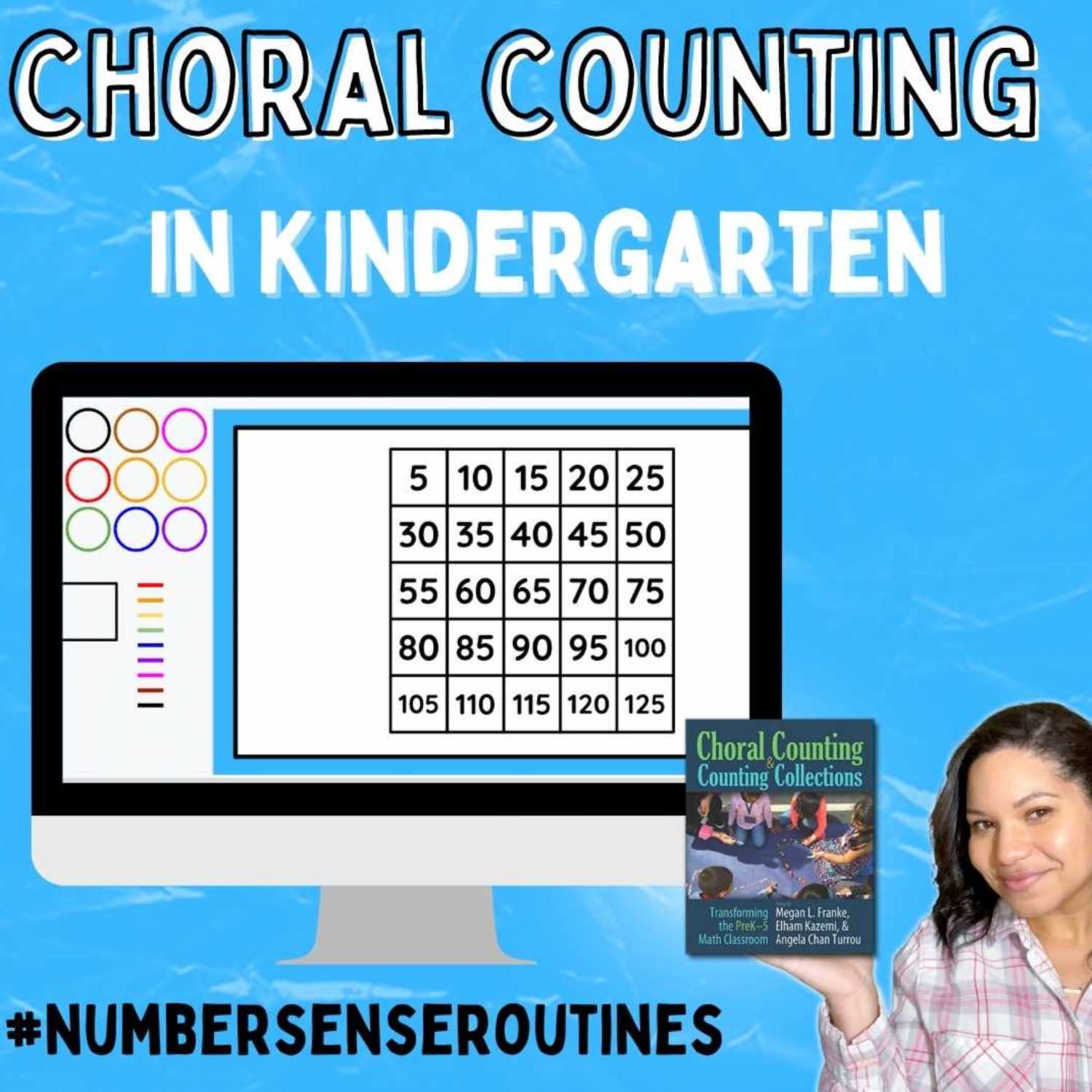
Rounding out our number sense routine series is Choral Counting. This routine is great for focusing on specific number sequences that may be tricky for your students!I talk about what a choral count is, how to do a choral count, different ways to record your counts, and some ideas for varying your counts to support different areas of our number system.
Any podcast episodes you want me to make?
Let me know in this Google Form!
Helpful Links
- Blog Post:
- YT Video
- Choral Counting Templates and Planning Sheets
- Choral Counting Planning Sheets
- Get the Number Sense Routines Bundle!
Let's Connect! InstagramWebsiteYouTube Channel
Available Results
Generated results are saved to the knowledge database for reuse and search.
Extract Knowledge
Pick what you want extracted first. Model, scope, and chapter options appear after a template is selected.
Transcript
1
00:00:00,000 --> 00:00:05,760
As promised, in this episode I'm going to talk about choral counting, which is

2
00:00:05,760 --> 00:00:10,920
another excellent number sense routine, especially for trickier number sequences

3
00:00:10,920 --> 00:00:15,240
when kids are counting and pulling out patterns in our number system. And if

4
00:00:15,240 --> 00:00:18,880
there's one episode where you're going to actually click from the show notes, it

5
00:00:18,880 --> 00:00:22,520
would be this one to go check out the blog post or the video because you'll

6
00:00:22,520 --> 00:00:25,480
see what I'm talking about. I have some pictures of what a completed choral

7
00:00:25,480 --> 00:00:30,280
count might look like and give you some ideas about how to make it work in your

8
00:00:30,280 --> 00:00:31,080
classroom.

9
00:00:31,080 --> 00:00:43,080
Hello and welcome to Making Number Sense Makes Sense, a podcast for elementary

10
00:00:43,080 --> 00:00:46,840
teachers, specifically early elementary teachers, looking to really make an

11
00:00:46,840 --> 00:00:51,280
impact in the number sense of their students. Last week I talked about

12
00:00:51,280 --> 00:00:56,120
rote counting and things that you can do to make rote counting a little more

13
00:00:56,120 --> 00:01:00,880
exciting in your classroom. And one of the things that I really like to include

14
00:01:00,880 --> 00:01:05,760
is a choral count for trickier number sequences or if they're having a lot of

15
00:01:05,760 --> 00:01:11,040
trouble specifically writing numbers and getting the order of the numbers

16
00:01:11,040 --> 00:01:15,520
mixed up, like if they're trying to write 15, writing a 51, choral counting is a

17
00:01:15,520 --> 00:01:19,720
great way to really draw attention to that and help them make sense of why the

18
00:01:19,720 --> 00:01:25,200
numbers have that order. Last year I got rid of most of the stuff on my walls.

19
00:01:25,200 --> 00:01:28,760
Well, number one, because it was hard to put up because I had whiteboards all

20
00:01:28,760 --> 00:01:32,880
over my room, I also wanted the whiteboards available when we did building

21
00:01:32,880 --> 00:01:36,200
thinking classroom style tasks and I have a bunch of episodes about that that

22
00:01:36,200 --> 00:01:40,200
you can go check out and it's a really, really great framework for problem

23
00:01:40,200 --> 00:01:44,560
solving in kindergarten. But coming back to choral counting, so the only thing

24
00:01:44,560 --> 00:01:48,200
that I actually lift up all year like I used to have the calendar up all year,

25
00:01:48,200 --> 00:01:51,760
that kind of thing, my math station chart, all that kind of stuff, I used to have it

26
00:01:51,760 --> 00:01:56,960
in pocket charts up all year. But this year I got rid of all of that, went digital

27
00:01:56,960 --> 00:02:01,160
for calendar, went digital for math stations, but what I did not go digital

28
00:02:01,160 --> 00:02:07,120
with was a hundreds chart. The hundreds chart stayed up all year because it's such

29
00:02:07,120 --> 00:02:11,600
a valuable tool and when I first started teaching I don't think I realized how

30
00:02:11,600 --> 00:02:16,320
valuable that tool was. Now the hundreds chart that I used was actually like in

31
00:02:16,320 --> 00:02:20,480
rainbow order because my students, my team really enjoyed rainbows so it was a

32
00:02:20,480 --> 00:02:23,040
rainbow order and I feel like that's another reason the kids liked it because

33
00:02:23,040 --> 00:02:25,960
it was a rainbow and if you are spent any time around kindergartners you know

34
00:02:25,960 --> 00:02:31,720
that they love rainbows. But one day I don't know why I asked the kids like what

35
00:02:31,720 --> 00:02:34,920
do you notice about the hundreds chart and do you have any questions about the

36
00:02:34,920 --> 00:02:39,080
hundreds chart and it sparked really interesting discussions around the

37
00:02:39,080 --> 00:02:45,200
hundreds chart. Kids were asking me why certain numbers repeat or why this group

38
00:02:45,200 --> 00:02:49,880
has a ones in front and why the next line has a two in front of each number

39
00:02:49,880 --> 00:02:53,440
and why the numbers change and why there's zeros like they had really been

40
00:02:53,440 --> 00:02:58,120
paying more attention to the hundreds chart than I realized and I was like hmm

41
00:02:58,120 --> 00:03:00,680
that's really interesting. I didn't I wouldn't have thought that they were

42
00:03:00,680 --> 00:03:03,600
paying that much attention because you know sometimes you're like I just don't

43
00:03:03,600 --> 00:03:06,760
think that they listen to me at all but they listen more than you think and

44
00:03:06,760 --> 00:03:09,920
they're paying attention to the most interesting things. So that's when

45
00:03:09,920 --> 00:03:15,000
choral counting came in because some kids were noticing that patterns ended up

46
00:03:15,000 --> 00:03:20,480
that way but didn't really know why and some kids just had no idea. So a choral

47
00:03:20,480 --> 00:03:25,080
count is like it sounds when you're counting together chorally but only in a

48
00:03:25,080 --> 00:03:31,560
specific range. So you might start at the number eight and go to the number 20

49
00:03:31,560 --> 00:03:37,080
together. So instead of just counting like eight, nine, ten, eleven what you're

50
00:03:37,080 --> 00:03:41,800
doing as the teacher is you're writing down the numbers that you're saying so

51
00:03:41,800 --> 00:03:45,240
you remind your students like don't count too fast because I have to actually

52
00:03:45,240 --> 00:03:48,520
write down the numbers that we're saying. So when you say eight you write down the

53
00:03:48,520 --> 00:03:54,240
eight, nine, ten and then go to 20 and from there you'll ask the kids okay we're

54
00:03:54,240 --> 00:03:58,000
looking at these numbers what do you notice about them. So before you even

55
00:03:58,000 --> 00:04:01,600
start counting you'll be like okay we're gonna start at eight I want you to think

56
00:04:01,600 --> 00:04:05,640
about what the next number is so that everybody can join in in the choral count.

57
00:04:05,640 --> 00:04:11,320
So if we're working with eight so go eight, nine, ten and then stop at 20 and

58
00:04:11,320 --> 00:04:16,640
from there just give all of the kids some think time to look at the numbers that

59
00:04:16,640 --> 00:04:21,440
you said, the numbers that you wrote down and have them tell you what you

60
00:04:21,440 --> 00:04:25,760
noticed. When you're recording your choral count so you've written the numbers

61
00:04:25,760 --> 00:04:31,200
out and then whatever the kids are calling attention to highlight those. So I

62
00:04:31,200 --> 00:04:35,200
often like to use a different color. So if a student tells me that they notice

63
00:04:35,200 --> 00:04:38,320
that there is a repetition of twos like look there's a two there, two there, two

64
00:04:38,320 --> 00:04:44,280
there, I might circle all of the twos in one color and then right on the side like

65
00:04:44,280 --> 00:04:48,640
so and so said that they noticed a lot of twos and then go on to the next one

66
00:04:48,640 --> 00:04:51,360
it's like what else do you notice. Someone else say they might notice that

67
00:04:51,360 --> 00:04:56,860
there is a lot of ones in the teens like all of those numbers start with one. So

68
00:04:56,860 --> 00:05:01,280
from there I might circle all of the ones in a different color and write

69
00:05:01,280 --> 00:05:06,240
student X said that they noticed a lot of ones and then move on to the next

70
00:05:06,240 --> 00:05:10,880
person so the different colors kind of help the kids visually differentiate

71
00:05:10,880 --> 00:05:15,120
between the things that their classmates are saying and also helps the kids feel

72
00:05:15,120 --> 00:05:19,200
like oh I made a contribution if you're writing down what they said in their

73
00:05:19,200 --> 00:05:23,280
words to encourage more participation also for them to be like oh I did notice

74
00:05:23,280 --> 00:05:26,540
something different or they had a connection with another student they're

75
00:05:26,540 --> 00:05:30,280
like oh you notice the twos and I notice the twos too. So recording it

76
00:05:30,280 --> 00:05:34,880
colorfully and what the kids say can really bring some authenticity and

77
00:05:34,880 --> 00:05:38,560
meaning to the choral count. With a choral count you could just write the

78
00:05:38,560 --> 00:05:43,320
numbers horizontally but you might also try and write them vertically if you're

79
00:05:43,320 --> 00:05:47,800
wanting to pull something different from the numbers. So if I started at 8 and I

80
00:05:47,800 --> 00:05:53,600
went to 20 and I wrote it horizontally they might start to notice that in 8

81
00:05:53,600 --> 00:05:58,840
there's an 8 but there's also an 8 in 18 they might notice there's a 9 in 9 and

82
00:05:58,840 --> 00:06:03,640
also in 19 they might notice that 10 and 20 both have a 0 if they're looking

83
00:06:03,640 --> 00:06:08,720
right at the end there they might not see necessarily something in the middle

84
00:06:08,720 --> 00:06:13,720
from the 11 to 18 they might not see anything but if I went vertical instead

85
00:06:13,720 --> 00:06:17,960
of horizontal so I started at 8 and then 9 and then went to 10 from the top and

86
00:06:17,960 --> 00:06:23,240
then 11, 12, 13 all the way to 20 then they might see that all of the numbers

87
00:06:23,240 --> 00:06:28,440
this way vertically the first number is always a 1 and the second number counts

88
00:06:28,440 --> 00:06:32,840
up and they might say oh I see two twos I see a lot of ones I see this I see that

89
00:06:32,840 --> 00:06:38,480
and looking at numbers that way like kind of like a microscope on a certain

90
00:06:38,480 --> 00:06:42,240
number range can really help pull out those notice things that you want kids

91
00:06:42,240 --> 00:06:48,080
to have and then they might see oh this pattern can be extrapolated or if I ask

92
00:06:48,080 --> 00:06:51,200
them what do you think the next number might be what is it going to look like

93
00:06:51,200 --> 00:06:55,120
they can think about the pattern that they saw and then move from there so if

94
00:06:55,120 --> 00:07:00,840
I stopped at 20 and I was like okay what do you think 21 would look like so if

95
00:07:00,840 --> 00:07:06,000
they're thinking about it that way they might be hmm well if the 20 is a 2 and a

96
00:07:06,000 --> 00:07:11,520
0 and I'm looking at 21 I know that the number has to start with a 2 because

97
00:07:11,520 --> 00:07:15,280
that's the decade we're in and if it's 21 the one comes next or you might ask

98
00:07:15,280 --> 00:07:19,080
what does 25 look like skipping some numbers and they could use the same

99
00:07:19,080 --> 00:07:23,200
strategy well it has to start with a 2 and if I'm looking across this way there

100
00:07:23,200 --> 00:07:27,920
are 5's there so then they can pull out the next number and realize that the

101
00:07:27,920 --> 00:07:32,640
number sequence is actually a pattern that can help them when they have to

102
00:07:32,640 --> 00:07:35,760
wrote count or when they have to figure out how to write a number think about

103
00:07:35,760 --> 00:07:39,800
what the other numbers around it look like planning a coral count can be a

104
00:07:39,800 --> 00:07:46,080
little bit more time-consuming than planning for a quick image or planning

105
00:07:46,080 --> 00:07:50,240
for which one doesn't belong this one can take a little more time just because

106
00:07:50,240 --> 00:07:54,560
you need to really consider what it is you want to focus on when you're planning

107
00:07:54,560 --> 00:07:59,240
a coral count so you want to decide if you want it to be actually written like

108
00:07:59,240 --> 00:08:03,440
on chart paper or or on a whiteboard if you want it to be digital what you want

109
00:08:03,440 --> 00:08:06,480
to call attention to the direction of your numbers that you're writing top to

110
00:08:06,480 --> 00:08:10,400
bottom are you writing left to right and the range of numbers that you're using

111
00:08:10,400 --> 00:08:13,720
so a planning sheet for something like that could be helpful I'll have one

112
00:08:13,720 --> 00:08:17,120
link down below you're also going to want to think about what you're going to

113
00:08:17,120 --> 00:08:20,640
count so what is the number order that you're going to be working on are you

114
00:08:20,640 --> 00:08:24,400
going to be focusing on skip counting you can change the way that things are

115
00:08:24,400 --> 00:08:28,320
oriented to highlight certain numbers and skip counting you might want to

116
00:08:28,320 --> 00:08:31,800
highlight crossing over a decade if that's tricky or team numbers like I

117
00:08:31,800 --> 00:08:36,000
used in my example and if you're working with first grade second grade you might

118
00:08:36,000 --> 00:08:40,640
want to highlight the difference between two digit numbers and three digit

119
00:08:40,640 --> 00:08:46,880
numbers so you might start at 95 and go to 115 and then focus in on what looks

120
00:08:46,880 --> 00:08:50,480
different about those numbers like beyond the obvious two digits and three

121
00:08:50,480 --> 00:08:55,440
digits but also kind of think about wow the number sequence even though I'm

122
00:08:55,440 --> 00:09:00,560
writing 115 instead of 15 the number sequence is still similar what's

123
00:09:00,560 --> 00:09:04,640
changing is the number in front which is the hundred so you can really bring in

124
00:09:04,640 --> 00:09:09,160
discussions about place value that way but the number sequence is still a

125
00:09:09,160 --> 00:09:13,680
pattern and the pattern continues throughout all of the decades all of the

126
00:09:13,680 --> 00:09:19,800
centuries I guess and beyond 100,000 so if you're starting from 995 and go to

127
00:09:19,800 --> 00:09:24,000
1015 so that kids can see the difference between what a three digit number looks

128
00:09:24,000 --> 00:09:27,920
like four digit number looks like and really focus on that because students

129
00:09:27,920 --> 00:09:32,440
don't really have as much opportunity to see four digit numbers five digit

130
00:09:32,440 --> 00:09:37,240
numbers written out so a coral count can really help kids hone in on what they

131
00:09:37,240 --> 00:09:41,040
look like and start to make the connection between number patterns from

132
00:09:41,040 --> 00:09:45,040
the simple hunters chart to what it looks like in the thousands to what it

133
00:09:45,040 --> 00:09:49,280
looks like in the 10,000 and beyond so again please let me know if there's

134
00:09:49,280 --> 00:09:52,720
anything else you'd like to know about coral counting like I said I'll have the

135
00:09:52,720 --> 00:09:57,320
link to the blog post some resources that you might like to look at down below

136
00:09:57,320 --> 00:10:20,320
that you can click on and let me know if you have any questions