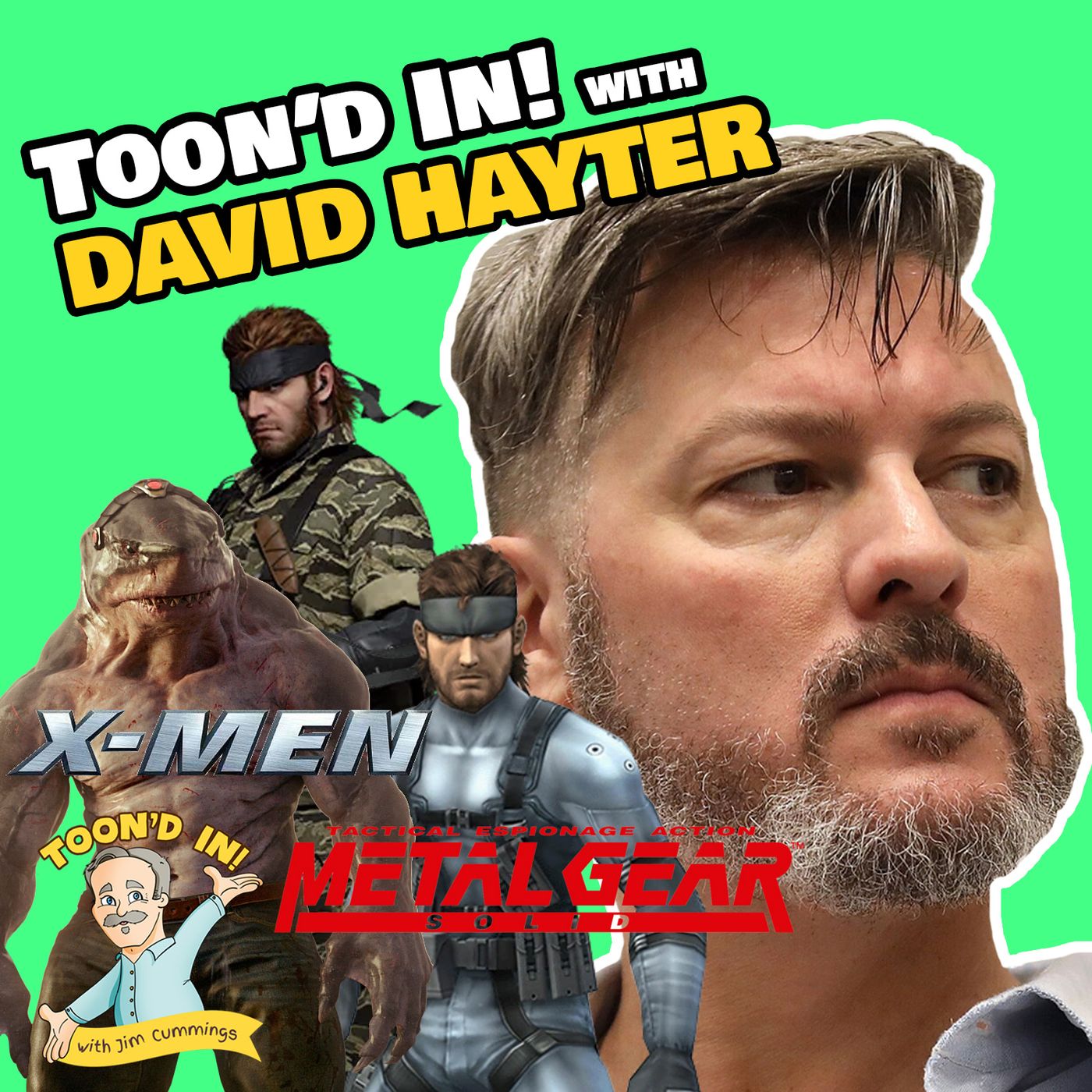
David Hayter (Metal Gear Solid, X-Men)
It's mutants vs the world as David Hayter joins Jim and the guys to discuss his career. We cover his time voicing Snake in the "Metal Gear Solid" series, writing the original X-Men movies, collecting comics, his love of gaming and more!
Support Jim on Patreon for EXCLUSIVE CONTENT including EARLY & AD-FREE ACCESS, DISNEY AUDIO COMMENTARIES, PRIZE DRAWS and more by joining the Toon'd In! family today at patreon.com/jimcummingspodcast
For more information on Jim's upcoming appearances, visit jimcummingsworld.com
Order a cameo from Jim at cameo.com/toondinjimcummings
CHECK OUT FOUR FINGER DISCOUNT'S OTHER PODCASTS:
Four Finger Discount (Simpsons) - spreaker.com/show/four-finger-discount-simpsons-podcast
Goin' Down To South Park - spreaker.com/show/goin-down-to-south-park
The One About Friends - spreaker.com/show/the-one-about-friends-podcast
SpeaKing Of The Hill - spreaker.com/show/speaking-of-the-hill-a-king-of-the-hill-
Talking Seinfeld - spreaker.com/show/talking-seinfeld
Become a supporter of this podcast: https://www.spreaker.com/podcast/toon-d-in-with-jim-cummings--5863067/support.
Support Jim on Patreon for EXCLUSIVE CONTENT including EARLY & AD-FREE ACCESS, DISNEY AUDIO COMMENTARIES, PRIZE DRAWS and more by joining the Toon'd In! family today at patreon.com/jimcummingspodcast
For more information on Jim's upcoming appearances, visit jimcummingsworld.com
Order a cameo from Jim at cameo.com/toondinjimcummings
CHECK OUT FOUR FINGER DISCOUNT'S OTHER PODCASTS:
Four Finger Discount (Simpsons) - spreaker.com/show/four-finger-discount-simpsons-podcast
Goin' Down To South Park - spreaker.com/show/goin-down-to-south-park
The One About Friends - spreaker.com/show/the-one-about-friends-podcast
SpeaKing Of The Hill - spreaker.com/show/speaking-of-the-hill-a-king-of-the-hill-
Talking Seinfeld - spreaker.com/show/talking-seinfeld
Become a supporter of this podcast: https://www.spreaker.com/podcast/toon-d-in-with-jim-cummings--5863067/support.
2024-08-20
58 min
Transcript
Available Results
Generated results are saved to the knowledge database for reuse and search.
No generated results are available for this episode yet.
Extract Knowledge
Pick what you want extracted first. Model, scope, and chapter options appear after a template is selected.
Generated results for public episodes are saved to the knowledge database so they can be reused and searched later.
Transcript
<v Speaker 1>How you doing out there? It's me Tigger. I am
<v Speaker 1>Duc Wing Duck. It's me Bunkers keep bobcat. All right, y'all?
<v Speaker 2>Did it great?
<v Speaker 1>Your favorite firefly you desire? Hold old knock guy. My
<v Speaker 1>name is Jim Cummings and welcome to tuned In. Hey, everybody,
<v Speaker 1>welcome back. Are you kidding me? This is a world
<v Speaker 1>famous episode of Tuned In with Jim Cummings because we
<v Speaker 1>have none other than David Hayter. Ladies and gentlemen, let's
<v Speaker 1>hear it. Well, I'm on down.
<v Speaker 3>Thank you for having me.
<v Speaker 1>Jim.
<v Speaker 3>It's nice to see you again.
<v Speaker 1>It's very nice to see you again.
<v Speaker 4>Here.
<v Speaker 1>I'm gonna just keep clicking. I'm gonna play catch with
<v Speaker 1>this microphone here obviously. But we know each other from conventions,
<v Speaker 1>from comic cons and the occasional panel there. But the
<v Speaker 1>world knows you and in a very entirely different, completely
<v Speaker 1>different realm. No funny voices involved, necessarily, but a lot
<v Speaker 1>of on a writing involved. Yes, And would you say
<v Speaker 1>that is what is your first passion?
<v Speaker 4>Oh?
<v Speaker 3>What's my first passion? My first passion was acting. That's
<v Speaker 3>that's what got me into this whole thing. I started
<v Speaker 3>writing when I was about twelve years old. Started acting
<v Speaker 3>when I was nine. Wow, I started writing when I
<v Speaker 3>was twelve. But I never I never had any concept
<v Speaker 3>of how you get writing work. Acting made sense to me,
<v Speaker 3>just you go and do you read your things whatever.
<v Speaker 3>But to me, you know, the scripts can come down
<v Speaker 3>from the gods, and I was like, I don't know
<v Speaker 3>how who's creating this, how they get this work or whatever.
<v Speaker 3>So I never really pursued it, and then I just
<v Speaker 3>sort of fell into it. But I kept writing, and yes,
<v Speaker 3>you did fell into the business professionally in nineteen ninety nine.
<v Speaker 1>Oh okay, so it was ninety nine and the first
<v Speaker 1>thing out of the gate was it? It was X Men.
<v Speaker 3>Yeah, it was my first paid writing job.
<v Speaker 4>Okay, how does that come about? How do you go
<v Speaker 4>from nothing to unrotting? The X Men film the super Bowl?
<v Speaker 1>It's it's you went from the sandlot to the super Bowl,
<v Speaker 1>that's right, with no practice.
<v Speaker 3>It's a very strange, wild Hollywood story. I had produced
<v Speaker 3>and starred in a little quarter million dollar film in
<v Speaker 3>nineteen ninety seven, and that was executive produced by Brian Singer,
<v Speaker 3>who eventually went on to direct X Men. He wro
<v Speaker 3>directed Usual Suspect.
<v Speaker 1>Well yeah, and which.
<v Speaker 3>Won a couple of Academy Awards, and I had known
<v Speaker 3>him before all of that occurred. And then and then
<v Speaker 3>the deal for my little film fell apart, and I
<v Speaker 3>was broke, and so I called Brian and asked if
<v Speaker 3>I could have a job on his next movie, you know,
<v Speaker 3>answering the Phones or something. So I got hired to
<v Speaker 3>dance of the Phones on X Men and Brian complaining
<v Speaker 3>to me because we you know, we had made a
<v Speaker 3>film together, so he knew I was a filmmaker. And
<v Speaker 3>he kept saying, bye, you know the script is, you know,
<v Speaker 3>it's not good, and people don't nobody knows the x Men,
<v Speaker 3>and I don't know how to achieve what I want
<v Speaker 3>to achieve. And I said, well, I know the x Men.
<v Speaker 3>I grew up with the comic books and all that,
<v Speaker 3>and you know these you know, I knew those characters
<v Speaker 3>like they were family. And so I said, well, why
<v Speaker 3>do you have a scene where Cyclops runs into Wolverine
<v Speaker 3>on the Mansion grounds and he says this, and he
<v Speaker 3>says this, and he says this, and that'll solve your
<v Speaker 3>problem for you. And Brian said, good, go write that
<v Speaker 3>for me, and I thought he was kidding because it
<v Speaker 3>wasn't legal. I wasn't in the writers Guild, you know,
<v Speaker 3>I certainly wasn't getting paid. So I wrote the scene.
<v Speaker 3>He put it in the movie, and then he started
<v Speaker 3>having and then he would he'd be at the end
<v Speaker 3>of the day. I'd answer the phones all day. At
<v Speaker 3>the end of the day, he'd say, all right, take
<v Speaker 3>a look at this scene and make this better.
<v Speaker 1>Wow.
<v Speaker 3>So, by the time the studio found out I had
<v Speaker 3>written rewritten about fifty some odd percent of the script,
<v Speaker 3>they were in a legal bind and they had to
<v Speaker 3>make a deal with me. So they paid me thirty
<v Speaker 3>five thousand dollars, which is the guild minimum rewrite fee.
<v Speaker 3>And basically I worked on the film for thirteen months,
<v Speaker 3>went up to Canada, I was on set. I was
<v Speaker 3>there for all the casting, I was there for all
<v Speaker 3>the shooting.
<v Speaker 1>Wow.
<v Speaker 3>Wrote about one hundred and fifty drafts of the script,
<v Speaker 3>and Yeah, got sole credit. And then my friend Chris mccuori,
<v Speaker 3>who had been the writer on the film before me,
<v Speaker 3>the Academy Award winner for Usual Suspects, called me up
<v Speaker 3>and he said, do you realize you are the most
<v Speaker 3>successful first time screenwriter in film history, and that I
<v Speaker 3>don't know if that's still okay. All by chance, I
<v Speaker 3>literally fell ass backwards into it and here we are.
<v Speaker 1>It worked, yeah.
<v Speaker 3>Yeah in the movie, you know, and people didn't didn't
<v Speaker 3>think it was going.
<v Speaker 4>To be good. This is pre MCU so oh yeah, yeah, yeah.
<v Speaker 3>Nobody thought that any thing that wasn't Batman or Superman
<v Speaker 3>or spider Man could work.
<v Speaker 4>That's the thing.
<v Speaker 3>And we had eleven superpowered main characters.
<v Speaker 1>And and yeah, uh so I didn't even think of it.
<v Speaker 3>Yeah yeah, yeah, it's and so while they had different
<v Speaker 3>powers and different names and this and that and and
<v Speaker 3>just setting up this weird world and so nobody really
<v Speaker 3>had a lot of confidence in it. But I, being
<v Speaker 3>a fan of the comics, yeah, I was like, no,
<v Speaker 3>this is this is a great world. It's it's an
<v Speaker 3>amazing place to be and and uh stan Lee, yeah yeah,
<v Speaker 3>So that love of the comic books came through in
<v Speaker 3>the movies and they did pretty well.
<v Speaker 4>And then I, well, it's a credit to you because
<v Speaker 4>with Avengers, we had all these films setting up building
<v Speaker 4>to that one. With them all in the same one,
<v Speaker 4>you had nothing. You were just you were making Avenges
<v Speaker 4>from the beginning.
<v Speaker 3>Yes, yeah, yeah, and if you look at the first movie,
<v Speaker 3>I mean, it really is all set up. It's just
<v Speaker 3>all describing what this world is. They are, It's a
<v Speaker 3>very simple story.
<v Speaker 1>Yeah, you know how they got to be what they are? Yeah,
<v Speaker 1>all that stuff for a while.
<v Speaker 3>But that's how it happened. It was it was crazy.
<v Speaker 4>You have said that the eleven main characters all had
<v Speaker 4>to have their own journey, as you were talking about
<v Speaker 4>before their own story. Which journey did you struggle the
<v Speaker 4>most to incorporate into that world?
<v Speaker 3>Well, I don't know that they all had their own journey.
<v Speaker 3>I mean, Toad is just a Toad guy. And Sabretooth
<v Speaker 3>I didn't even know that Sabretooth had eventually been revealed
<v Speaker 3>to be Logan's brother, Wolverine's brother. I didn't know that
<v Speaker 3>at all, So we didn't incorporate any of that. You didn't, no,
<v Speaker 3>I know, I know. I'm sure the younger, younger X
<v Speaker 3>Men friends are probably outraged. But for the X Men, well,
<v Speaker 3>basically what I did was I just want to make
<v Speaker 3>sure each character had, you know, and Magneto, that each
<v Speaker 3>character had a beginning, in the middle and an end
<v Speaker 3>no matter what. You know, how big or small, those
<v Speaker 3>things were. So what I did was I did a
<v Speaker 3>global search through the script for just the character's name
<v Speaker 3>saying dialogue, and I went through all of Cyclopsis dialogue,
<v Speaker 3>all of Storm's dialogue, all the Jeenes dialogue, to make
<v Speaker 3>sure that they at least had you know, some sort
<v Speaker 3>of growth, some sort of movement through the story. And
<v Speaker 3>you know, apart from it all being difficult, I don't
<v Speaker 3>remember anything being specifically harder than others. The hardest thing
<v Speaker 3>was we want a Beast in the movie, but we
<v Speaker 3>couldn't afford to have him do any action because he's
<v Speaker 3>a big blue creature. So we kept writing that he
<v Speaker 3>would break his leg before the third act action and
<v Speaker 3>then eventually we're like, this is stupid. If we can't
<v Speaker 3>use him, then yeah, then you know what's the point.
<v Speaker 3>And so poor Beast got cut from the movie.
<v Speaker 1>And that was based on just his inability to you
<v Speaker 1>couldn't write for the or didn't want to or no, no, no,
<v Speaker 1>no no.
<v Speaker 3>I wrote a big sequence where they you know, they
<v Speaker 3>go to the Statue of Liberty, and so I had
<v Speaker 3>a whole sequence where he had a big battle inside
<v Speaker 3>the statue where the where the staircases are and all
<v Speaker 3>that stuff that he'd be swinging around and fighting with
<v Speaker 3>evil mutants and whatnot. But that was so expensive to
<v Speaker 3>to Oh you know, we didn't even create that set,
<v Speaker 3>so it would have been just for him.
<v Speaker 4>You know.
<v Speaker 3>CG was not in a place at that time where
<v Speaker 3>you could do like a big monkey type guy swinging around,
<v Speaker 3>So so it just went away. At one point we
<v Speaker 3>had Jim Hansen, Jim Henson's company bidding to build a
<v Speaker 3>beast for us, which would have been really cool. Wow,
<v Speaker 3>but again, you know, putting him up on wires and
<v Speaker 3>making him do acrobatics was just not within our budget range.
<v Speaker 4>Yeah, and CG. I wasn't really quiet there yet, was it.
<v Speaker 1>No? I mean no, it was.
<v Speaker 3>It was okay for doing like hard surfaces, airplanes and
<v Speaker 3>rocks and stuff like that, but you couldn't do, you know,
<v Speaker 3>any living creature look like crap at that point.
<v Speaker 4>I have seen an interview where you said that a
<v Speaker 4>lot of the actors and it didn't know who you were.
<v Speaker 4>Some people from the studio didn't necessarily once you around that.
<v Speaker 3>Oh yeah, what what was that like?
<v Speaker 4>And do you ever call the moment where you sort
<v Speaker 4>of felt like you'd earned the trust of the people
<v Speaker 4>working there.
<v Speaker 3>I felt I did. I don't think they ever felt
<v Speaker 3>I did. You know, yeah, they were I was just
<v Speaker 3>the phone answer guy to to them. You know, I
<v Speaker 3>had I had been in a few movies and that
<v Speaker 3>they'd never heard of, and I had produced and starred
<v Speaker 3>in a movie that they'd never heard of. So, you know,
<v Speaker 3>there's they call it breaking into Hollywood because you know,
<v Speaker 3>there comes a point where your name goes on the
<v Speaker 3>A list. There's literal lists that get given out for writers,
<v Speaker 3>for actors, whatever, and breaking in means you end up
<v Speaker 3>on these lists, and it's very you know, there's a
<v Speaker 3>there's a sense of ownership over Hollywood by studio executives
<v Speaker 3>and whatnot, and if they don't feel you deserve to
<v Speaker 3>be there, they're very resentful about that. I thought once
<v Speaker 3>the movie opened and made you know, four hundred million
<v Speaker 3>dollars or whatever, that I'd be like, Oh, now they'll
<v Speaker 3>really respect me, you would think, But that that wasn't
<v Speaker 3>the case. I Mean, they still the hired me to
<v Speaker 3>write X Men too, but they were still just as
<v Speaker 3>vicious and just as mistrustful as they had been.
<v Speaker 4>Before in what way, So you would pitch something and
<v Speaker 4>they wouldn't agree with you. What was in what way
<v Speaker 4>would they know?
<v Speaker 3>No, it wasn't that if I pitched something and it
<v Speaker 3>was good, they would recognize it and they would they
<v Speaker 3>would back it. It was really more a matter of
<v Speaker 3>just how insulting the deals were and their business affairs people,
<v Speaker 3>the people that make your deal were just so dismissive
<v Speaker 3>and rude.
<v Speaker 1>And I think I know those guys.
<v Speaker 3>Yeah, I mean it was just they were just hostile
<v Speaker 3>for no reason. And I, you know, I just sort
<v Speaker 3>of took that as well. This is what it's like
<v Speaker 3>working on the big movies. Now, I've since worked on
<v Speaker 3>a bunch of big movies and it's not always like that,
<v Speaker 3>but it is always stressful, and it is always, you know,
<v Speaker 3>you have to prove yourself again and again and again.
<v Speaker 3>And the fact that I came out of nowhere it
<v Speaker 3>made them all very nervous. I mean, look, you know,
<v Speaker 3>from their respective they have to justify to their shareholders. Yeah,
<v Speaker 3>why the phone answer guy is writing their eighty million
<v Speaker 3>dollar film, right, you know, as opposed to Josh Whedon
<v Speaker 3>or Chris McCrory or these writers. So I understood it
<v Speaker 3>to a certain extent, but it was it was pretty unpleasant.
<v Speaker 4>Yeah, you know, was a case of maybe just toll
<v Speaker 4>poppy scene drum as well as how dad this guy does.
<v Speaker 4>He hasn't sort of had to go through the hot
<v Speaker 4>yahs and prove himself from a roting perspective. He's just
<v Speaker 4>been given this massive opportunity.
<v Speaker 3>Yes, yeah, that's exactly right, that's exactly right. They want
<v Speaker 3>you to they want you to have paid your dues,
<v Speaker 3>and they want other studios to have hired you first.
<v Speaker 3>So nobody wants to be the first person to hire
<v Speaker 3>an unknown writer and I and I totally get that. Yeah,
<v Speaker 3>but I thought, you know, they'd be like, oh my god,
<v Speaker 3>we love this this scene, you know, and they'd say, well,
<v Speaker 3>you know who wrote this?
<v Speaker 1>Once it worked? It worked I did, and you would think, yeah.
<v Speaker 3>They'd be like, oh okay, well fue. Yeah, they grudgingly
<v Speaker 3>put it in the movie and grudgingly spend all the
<v Speaker 3>money that they made off of my scenes, right right right, Well,
<v Speaker 3>not that I'm complaining, I mean I am a little bit,
<v Speaker 3>but but it all worked out.
<v Speaker 1>Well, it worked out and came out in the wash.
<v Speaker 3>Yeah, and I and I just said, look, don't get
<v Speaker 3>your ego involved. Just you know, this is the opportunity
<v Speaker 3>of a lifetime. Put your head down, work as hard
<v Speaker 3>as you can, take all the abuse, and don't you know,
<v Speaker 3>just let it roll off.
<v Speaker 1>And let it roll off your back and then roll
<v Speaker 1>into the next one. Yeah, yeah, that's perfect.
<v Speaker 3>That was it, you know, because getting your ego involved,
<v Speaker 3>especially when you're starting out, will kill you. You know,
<v Speaker 3>people will be like, who do you think you are?
<v Speaker 3>And they won't hire you and there you know, there
<v Speaker 3>are certain gatekeepers to the business in acting and right,
<v Speaker 3>oh yeah, that you have to appease, whether your ego
<v Speaker 3>likes it or not. So you know, best to just
<v Speaker 3>sort of look at it all as a as a game,
<v Speaker 3>and you know, try to be smart, try not to
<v Speaker 3>take it personally, try not to let it, you know,
<v Speaker 3>break you down inside.
<v Speaker 1>Mm hm right, wow, well good for you.
<v Speaker 4>Do you think the MCU exists if you didn't rock
<v Speaker 4>this film the way you didn't has such a success?
<v Speaker 3>Do I think that?
<v Speaker 1>Well?
<v Speaker 3>I mean, obviously the X Men films led the way
<v Speaker 3>towards the MCU as it is, but I also feel
<v Speaker 3>like there were so many amazing untapped stories in there.
<v Speaker 3>I think all of it, you know, me, Kevin Faigi,
<v Speaker 3>Tom DeSanto. You know, the people that were real comic
<v Speaker 3>book fans knew that there were you know, sixty seventy
<v Speaker 3>years worth of storieselievable that were amazing that weren't being
<v Speaker 3>exploited for movies. And with CG coming into its own,
<v Speaker 3>we were getting to a point where we could make
<v Speaker 3>Iron Man or the Hulk or whatever, which I worked
<v Speaker 3>with both of those, and so I think there would
<v Speaker 3>have been an MCU eventually, you know, if the stars
<v Speaker 3>had come together differently, But certainly we opened the doors
<v Speaker 3>for that and made the studios very confident that other
<v Speaker 3>comic book characters could could be successful in the movies.
<v Speaker 4>All in the one film.
<v Speaker 3>Yeah, yeah, well yeah, I mean, and you know, I
<v Speaker 3>said to Tom Rothman, who was the president of Fox.
<v Speaker 3>I was like, look, there's there's fifty x men imprint
<v Speaker 3>comic books out there every month, like all over the world.
<v Speaker 3>Like we should have a built in you know, enormous
<v Speaker 3>built in audience.
<v Speaker 1>Built in audience.
<v Speaker 3>Yeah yeah, And he said, he said, David, the comic
<v Speaker 3>book fans will be done by ten pm Friday night,
<v Speaker 3>and we have to get everybody else. So that kind
<v Speaker 3>of put it in perspective for me.
<v Speaker 1>Well that's interesting.
<v Speaker 4>Do you agree with that perspective?
<v Speaker 3>Well, he's the president's studio. I figured you had to
<v Speaker 3>have done some restart. Yeah, yeah, I mean, you know,
<v Speaker 3>when you really think about it, the number of people
<v Speaker 3>who see movies versus the number of people who read
<v Speaker 3>anything is far greater numbers. So yeah, it made sense
<v Speaker 3>to me. But I did feel like there was a big,
<v Speaker 3>you know, an underground base of fans that that would
<v Speaker 3>turn out for the movie and would bring, you know,
<v Speaker 3>friends and girlfriends. Well they wouldn't have girlfriends, but you know,
<v Speaker 3>friends and relatives and whatnot to their comic book movies
<v Speaker 3>to see the characters they've always loved.
<v Speaker 1>Yeah. Yeah, and girls aren't going anyway with themselves.
<v Speaker 3>Well well you know, but the thing is we had
<v Speaker 3>we had really kick ass women characters which came from
<v Speaker 3>the comic book.
<v Speaker 1>Well, that's true.
<v Speaker 3>And so it was really, you know, I mean a
<v Speaker 3>personal goal of mine to make sure that the girls
<v Speaker 3>would go and go, oh my god, I could be
<v Speaker 3>an X man.
<v Speaker 1>I could you know, that could be pretty pretty bodacious.
<v Speaker 3>She was pretty awesome and Jeane and Mystique is amazing,
<v Speaker 3>Like Mystique.
<v Speaker 4>Mistake was the big one for me.
<v Speaker 3>Yeah, and she had people forget she had one line
<v Speaker 3>in the first film and then became like a lynchpin
<v Speaker 3>of the whole series.
<v Speaker 1>So wow, yeah, I didn't.
<v Speaker 4>As you said earlier, you know, we had Batman and
<v Speaker 4>Spider Man and Superman. It was always Men Men Wonder Woman,
<v Speaker 4>but Wonder Woman had had her own film at that point.
<v Speaker 3>You know, no, just the TV show in the seventies.
<v Speaker 3>And in fact, you know, after X Men, I was
<v Speaker 3>hatched to direct, write, and direct the Black Widow movie
<v Speaker 3>and that's right, yeah, after her. Yeah, I named my
<v Speaker 3>daughter after forced them to make the movie, but they didn't,
<v Speaker 3>and that one we were ready to shoot. And then
<v Speaker 3>in one weekend, Eon Flux and Blood Rain and Ultra
<v Speaker 3>Violet came out in the same weekend and they all failed.
<v Speaker 3>And so the Lionsgate was like, oh, you know, female
<v Speaker 3>action movies don't work, Female superhero movies don't work, and
<v Speaker 3>so you know, that knocked us back another decade or so,
<v Speaker 3>which was a shame.
<v Speaker 1>Yeah, that is a shame.
<v Speaker 4>Yeah, well, Jim, you're a big comic book guy, aren't you.
<v Speaker 4>Love You love collecting comics, don't you, Jim?
<v Speaker 1>Oh, god. Yeah, yep. Still I still go over to
<v Speaker 1>Burbank and hit up the comics, you know, every couple
<v Speaker 1>of weeks.
<v Speaker 3>What are your favorites?
<v Speaker 1>Well, spider Man, yeah, Punisher, yeah, x Men yeap. X
<v Speaker 1>Men are way up there. Always love Wolverine, Deadpool, he's working,
<v Speaker 1>you know, gosh, and some Batman.
<v Speaker 3>Oh I was Yeah, it was a huge Batman.
<v Speaker 1>Huge Batman. Yeah. There's like eight Batman titles out there now, yeah,
<v Speaker 1>right now.
<v Speaker 2>Did you guys get a chance to see Deadpool and Wolverine?
<v Speaker 1>Yeah?
<v Speaker 3>Yeah, have you seen it?
<v Speaker 1>Ye?
<v Speaker 3>Yeah, and they do. They do this really amazing tribute
<v Speaker 3>to the Fox X Men era, and so all of
<v Speaker 3>those behind the scenes clips from X Men one. I
<v Speaker 3>am standing, like literally right off camera watching all that happens.
<v Speaker 3>So it was really emotional watching.
<v Speaker 1>That's nice.
<v Speaker 3>It was really cool.
<v Speaker 1>Well that's good to know.
<v Speaker 3>Yeaheah, I loved it.
<v Speaker 1>Good. Now I'm gonna look for it, look for your shadow. Yeah.
<v Speaker 3>I might be in the footage.
<v Speaker 1>I didn't.
<v Speaker 3>I didn't spot myself, but yeah, I am there for.
<v Speaker 2>The entire It was emotional, wasn't. I wasn't even involved
<v Speaker 2>with the project, but I felt the same way because
<v Speaker 2>to me, like the X Men. To me, it was
<v Speaker 2>like x Men x two, Iron Man. That was kind
<v Speaker 2>of like the impetus of like the new aneration of Superheroes.
<v Speaker 2>You know, it changed like the Batman forevers and like
<v Speaker 2>you know, that was kind of like a different it
<v Speaker 2>was just a different feel to those movies.
<v Speaker 3>Yeah, well we decided and I think that this really
<v Speaker 3>did help kick off the MCU that.
<v Speaker 4>We didn't.
<v Speaker 1>Well.
<v Speaker 3>I wanted to make a com book movie because I
<v Speaker 3>knew how cool comic books were, but Brian Singer didn't
<v Speaker 3>read comic books, and he was like, no, we're just
<v Speaker 3>making a real movie and an actual action movie with
<v Speaker 3>real characters, and if it doesn't feel real, we're not
<v Speaker 3>doing it. And so that really, you know, taking it
<v Speaker 3>seriously like that said, you know, spoke to the fans
<v Speaker 3>and also spoke to people who had not yet been fans.
<v Speaker 2>So yeah, so it worked out, and to your point
<v Speaker 2>of like how far CGI has come as well, I
<v Speaker 2>remember there was one scene and it's when Deadpool and
<v Speaker 2>Wolverine are fighting like all the multiverse of Deadpools, and
<v Speaker 2>I swear there was like an entire animated fight scene.
<v Speaker 2>Like I swear there was no stunt people or anything.
<v Speaker 2>It was just like it looked like a video game.
<v Speaker 2>It was just like I looked at my girlfriend, I
<v Speaker 2>was like, that was all animated, Like that was one
<v Speaker 2>hundred percent animated.
<v Speaker 1>Yeah.
<v Speaker 3>Yeah, it's pretty amazing with what they can do now,
<v Speaker 3>but they could not do that back in.
<v Speaker 1>Yeah, just about magic. Indeed, you know, it's it is
<v Speaker 1>to me. I'm still I'm still impressed with that. Just
<v Speaker 1>sketches and oh yeah, you know, no, it's bath easily please. Yeah, yeah,
<v Speaker 1>it's so true.
<v Speaker 4>How different do you think your X Men scripts would
<v Speaker 4>have been had you had that technology at your fingertips
<v Speaker 4>to work with at the time.
<v Speaker 3>Well, the first one wouldn't have been too different because
<v Speaker 3>they were you know, they said, it's the budget is
<v Speaker 3>seventy five million, which which was pretty tight even then
<v Speaker 3>for the size of movie we were trying to make.
<v Speaker 3>And our first budget came in at eighty two and
<v Speaker 3>I was like, oh, they're going to be thrilled, but
<v Speaker 3>they were not thrilled.
<v Speaker 1>Wow.
<v Speaker 3>I was like, yeah, we're so close. But they were
<v Speaker 3>not thrilled. They said, you know, seventy five million, not
<v Speaker 3>a penny more. Can you make it for that amount?
<v Speaker 3>And we were like, if that's what you're giving us,
<v Speaker 3>that's what we can do. So it was really I mean,
<v Speaker 3>there were limitations to the technology, but it wasn't about that.
<v Speaker 3>It was about they didn't want to spend a dime
<v Speaker 3>more than they had to to try to make a
<v Speaker 3>dent with this movie. So it was really it was
<v Speaker 3>it was almost like making you know, it's weird to
<v Speaker 3>say it was seventy five million dollars, but it was
<v Speaker 3>like making an indie superhero film.
<v Speaker 4>Twenty twenty four perspective, of course.
<v Speaker 3>Yeah, yeah, yeah, I mean yeah, now now that's that
<v Speaker 3>budget is so minuscule. But but yeah, so we were
<v Speaker 3>we were definitely limited by and the first cut of
<v Speaker 3>the movie, uh, it was over two hours long, and
<v Speaker 3>we called it Woody Allen's X Men because it was
<v Speaker 3>there wasn't enough action to fill the movie. People talking
<v Speaker 3>the time.
<v Speaker 4>That may need movies now they go for two hours
<v Speaker 4>as an average. Now, I feel because they want to
<v Speaker 4>get people their money's worth, were actually forking out and
<v Speaker 4>going to the to the films.
<v Speaker 3>Yeah, when maybe they should not do that.
<v Speaker 4>Yeah, what's what's your ideal length for a film like that?
<v Speaker 4>Between I need one hundred minutes.
<v Speaker 3>It depends on how much story you have. So I
<v Speaker 3>also worked on Watchmen, but that's adapted from an extremely
<v Speaker 3>complex book. It's like a seven act movie. Yeah, and
<v Speaker 3>the characters, Yeah, all the characters have massive, intertwined backstories
<v Speaker 3>and all that stuff. So that movie's over three hours long,
<v Speaker 3>and I think it if it's not, it's not Watchmen.
<v Speaker 3>But X Men should have been an hour and a half.
<v Speaker 3>I love a good ninety minute movie. I think x
<v Speaker 3>Men was ninety eight actually, but in x Men two
<v Speaker 3>we had more story and so that one was two
<v Speaker 3>hours long. It just depends on how much story you have.
<v Speaker 3>But if you make a two hour movie and you
<v Speaker 3>only have eighty minutes worth of story, then it gets tiresome,
<v Speaker 3>you know.
<v Speaker 1>Stretching.
<v Speaker 3>Yeah, just like just saying, well, throw everything in just
<v Speaker 3>to because we have it is not a reason to yeah,
<v Speaker 3>to make a movie long that long?
<v Speaker 4>You know.
<v Speaker 1>Yeah, Well, I think it has to be. Isn't it
<v Speaker 1>sixty minutes?
<v Speaker 3>It has to be for a quote quote for a
<v Speaker 3>future film. I think it's just like seventy two is
<v Speaker 3>sev under that it's not doesn't qualify as a movie.
<v Speaker 1>I remember the when when died Poo was made into
<v Speaker 1>a movie in the sixties. We're talking about this earlier.
<v Speaker 1>I think they they put together I think three twenty
<v Speaker 1>two minute shorts and called it a movie and it
<v Speaker 1>was great, you know, and then they released it. It
<v Speaker 1>want an Academy Award, and thank god they didn't do
<v Speaker 1>anything for the next twenty years because it gave me
<v Speaker 1>a chance to grow up and become Winny the Poop. So,
<v Speaker 1>you know, back then, weird the way things work. Yeah,
<v Speaker 1>I'll take it right. Indeed, Well that's amazing. So I
<v Speaker 1>feel like I'm being redundant here. But do you is
<v Speaker 1>it do you like the writing more or is it
<v Speaker 1>on camera or off camera?
<v Speaker 2>For you?
<v Speaker 1>And you know, I mean, what's more rewarding or.
<v Speaker 3>Well, that's a good way to put it. The writing
<v Speaker 3>is more rewarding.
<v Speaker 1>Financially, gotta be Oh, okay, you know.
<v Speaker 3>That that pays for my cushy lifestyle.
<v Speaker 1>There you go.
<v Speaker 4>And I do like that, you likeushy?
<v Speaker 1>Cush is good?
<v Speaker 3>Yeah, yeah, very comfortable and can't beat a good cush Indeed,
<v Speaker 3>I I think voiceover is the most pure fun job.
<v Speaker 3>Like I just absolutely love that. I love doing on camera.
<v Speaker 3>But you know, it's it's boring. You're in your trailer
<v Speaker 3>the whole time. It's either super hot or super cold,
<v Speaker 3>or you're covered in bugs or toxic goog or whatnot.
<v Speaker 1>So it's good to me.
<v Speaker 3>I mean, that was that was all I wanted to
<v Speaker 3>do when I was a kid. Now, you know, now
<v Speaker 3>I'm used to a more comfortable lifestyle. I was doing
<v Speaker 3>a Canadian horror movie about ten years back, and I
<v Speaker 3>was just covered in prosthetics and like toxic blood stuff,
<v Speaker 3>and I was like, what am I doing this for?
<v Speaker 1>It?
<v Speaker 3>Like I don't need to be doing this and and
<v Speaker 3>but it was still fun so and and the writing
<v Speaker 3>can be very rewarding and and fun, but it's it's harder,
<v Speaker 3>it's more frustrating. It's it's less about fun because you're
<v Speaker 3>working with major studios who're very concerned about budgets and
<v Speaker 3>you know, their business y things, you know, whereas you know,
<v Speaker 3>you get into a booth with you know, Chris Zimmerman
<v Speaker 3>directing or something, and it's just you're just having a blast.
<v Speaker 3>And yeah, the idea is to come in and have fun.
<v Speaker 1>And to play and yeah, create absolutely.
<v Speaker 3>So they all have different with you. Yeah, they all
<v Speaker 3>have different charms for me.
<v Speaker 4>You know, can you tell us about the first day
<v Speaker 4>you went in to do Solid Snake, because I think
<v Speaker 4>you said it's about ten day recording sessions, right for
<v Speaker 4>that first game. What was the vibe like did you
<v Speaker 4>did you know at that time could you get a
<v Speaker 4>sense there's something special here or was it just sort
<v Speaker 4>of well, I think it's good, but let's just see
<v Speaker 4>how it goes. Could you just could you just sense
<v Speaker 4>at the time this is going to be a hit.
<v Speaker 3>I when I went into audition, the Yoji shin Kawa
<v Speaker 3>artwork was up on the walls and I saw that,
<v Speaker 3>and so if anybody, if you haven't seen it, you
<v Speaker 3>can google Yoji shin Kawa, And.
<v Speaker 1>I think that's always helpful. Yeah.
<v Speaker 3>Well, it's just the artwork so badass and so ahead
<v Speaker 3>of its time. I mean, it was just it was
<v Speaker 3>just so visionary. So and then I went in to
<v Speaker 3>record and we were recording in this weird house that
<v Speaker 3>wasn't a recording studio, was a living room with like
<v Speaker 3>five five microphones set up, and then the engineer was
<v Speaker 3>just in the room with us with so they had
<v Speaker 3>to be super quiet.
<v Speaker 1>A couple of yeah, yeah, they take you by surprise.
<v Speaker 1>You're going, wait, this is it? Yeah, well fine, yeah.
<v Speaker 3>So so we were in there and then I was
<v Speaker 3>already thinking that this was going to be a pretty
<v Speaker 3>epic game, because I was gamer and I knew the
<v Speaker 3>state of the art. And then in the middle of
<v Speaker 3>the day, I think it was Jeremy Blaustein, the producer
<v Speaker 3>and translator, the guy wrote the English language lines, translated them,
<v Speaker 3>played us the cut scene where Snake shoots down the
<v Speaker 3>hind D helicopter, and when we saw that, I was like, Okay,
<v Speaker 3>this is an entirely new thing. It's clearly very expensive,
<v Speaker 3>and they're making a big swing at it. So so
<v Speaker 3>I expected from that moment on that it would be big.
<v Speaker 3>I didn't expect to be talking about it twenty five
<v Speaker 3>years later, but I figured it would be a big
<v Speaker 3>game and maybe have some sequels and stuff. So yeah,
<v Speaker 3>it was very exciting.
<v Speaker 1>That's amazing.
<v Speaker 2>Yeah, and now they're doing what is it, a remaster
<v Speaker 2>Metal Gear Solid Delta.
<v Speaker 1>Yeah.
<v Speaker 3>Yeah, so Meddle Gears Solid Meddle Gear three is you know,
<v Speaker 3>pretty much recognized as the most beloved of the titles,
<v Speaker 3>and so Snake Eater Snake Eater, Yeah, and it's just
<v Speaker 3>a favor. It goes back to the sixties and it's
<v Speaker 3>sort of like a James Bond spot thing. I mean
<v Speaker 3>it's really amazing and so yeah, so they're doing a remaster.
<v Speaker 3>I get to play it the other day. I mean
<v Speaker 3>it's spectacularly beautiful.
<v Speaker 4>Yeah.
<v Speaker 3>Yeah, so people are going to be blown away.
<v Speaker 2>Yeah, you're reprising the role obviously sort of.
<v Speaker 3>They're just they're using the original tracks.
<v Speaker 1>Oh they are.
<v Speaker 3>I'll do some I'll do some some clean up tracks
<v Speaker 3>and things like that and clarify any controls that have
<v Speaker 3>been changed and stuff like that. But it's really it's
<v Speaker 3>the original performance, right.
<v Speaker 1>Well that's great, yes, yeah, no kidding, We'll take it. Good. Ching.
<v Speaker 4>How did you approach the voice, because going in obviously
<v Speaker 4>you didn't really have much to work with. By the
<v Speaker 4>time you made the second or third you knew who
<v Speaker 4>Solid Snake was. How did you create the Solid Snake?
<v Speaker 3>Unlike all the other games or any other thing. They
<v Speaker 3>sent me the script before, like a month or two
<v Speaker 3>before we recorded, and it was you know, it was
<v Speaker 3>a stack of pages like this. So I had auditioned
<v Speaker 3>with my voice, which at the time, you know, kind
<v Speaker 3>of sounded like this. I sounded like, you know, a
<v Speaker 3>cocky fighter pilot type of guy. And I auditioned, and
<v Speaker 3>I think I'm not sure about this. I think I
<v Speaker 3>got the role because I had starred in a movie
<v Speaker 3>called Guyver, Dark, Hero and Hideokojima was a fan of
<v Speaker 3>that movie, so I think he just said, oh, David Hayter,
<v Speaker 3>we'll hire that guy. But I read the script and
<v Speaker 3>he in the opening, his snake is already retired and
<v Speaker 3>he's a legend and he doesn't want to come back,
<v Speaker 3>and they basically go and they hijack him from his
<v Speaker 3>ranch in Alaska and you can pull him back in.
<v Speaker 3>And I was just like, I feel like this guy
<v Speaker 3>needs to sound older than I do, and I feel
<v Speaker 3>like he needs, you know, needs to sound like he's
<v Speaker 3>been dragged across a bunch of bad road and you know,
<v Speaker 3>there's got to be waight to it. There's got to
<v Speaker 3>be this heavy kind of I don't want to come
<v Speaker 3>back kind of feel to it. And so that's uh
<v Speaker 3>so it just came out of the script and so
<v Speaker 3>I didn't perform the voice I auditioned with, which typically
<v Speaker 3>isn't a good idea.
<v Speaker 1>But yeah, but Chris, but where's the other guy? Yeah?
<v Speaker 3>In the middle. In the middle of recording, Chris goes, hey,
<v Speaker 3>can I play the voice you auditioned with?
<v Speaker 1>Oh?
<v Speaker 3>I know, it's like you should we go back, and
<v Speaker 3>she goes, no, this is working. And I felt good
<v Speaker 3>about it, too cool. I felt like, you know, it's
<v Speaker 3>not really a real voice, it's it's sort of a
<v Speaker 3>larger than life version of a badass. And I kind
<v Speaker 3>of felt like people would get into it, well and yeah,
<v Speaker 3>that's what's up. And they did, and it was you know,
<v Speaker 3>and again it because of my love of what I
<v Speaker 3>was doing that comes through and hopefully that does you know,
<v Speaker 3>you know what it is you love and fire into it.
<v Speaker 1>People respond yeah, absolutely, yeah, well it shows yeah, well,
<v Speaker 1>you know, it shows people get it, no doubt about it.
<v Speaker 3>Well, I appreciate that.
<v Speaker 1>Do you do any.
<v Speaker 3>Are you strictly an actor or do you right? And
<v Speaker 3>I should know this because it's just.
<v Speaker 1>You know, just veo. You know, used to be in
<v Speaker 1>places as a kid, obviously, but I think everybody was
<v Speaker 1>but that and.
<v Speaker 3>Singing, you know, and have you had any success with those?
<v Speaker 1>So far? So good? Yeah, so far.
<v Speaker 4>Yeah.
<v Speaker 3>I've been all over the world with Jim and just
<v Speaker 3>children's eyes Explode with excitement when they hear them, and
<v Speaker 3>it's it's a cool thing.
<v Speaker 1>Well, it's fun because people think I'm not even sure
<v Speaker 1>how why they think this, but for some reason, Winnie
<v Speaker 1>the Pooh, you know, they'll say, well, can you sign
<v Speaker 1>this for me? And you be signing something and it
<v Speaker 1>will be Pooh and Tigger, and then I'll give them
<v Speaker 1>a little Winnie the Pooh and have a smack wrel
<v Speaker 1>of honey on me and they go, I thought you
<v Speaker 1>had to go somewhere and do something and do it
<v Speaker 1>like there's a spit.
<v Speaker 3>Oh.
<v Speaker 1>Oh yeah, I's good. I didn't have that diode in
<v Speaker 1>my head today. That's so I won't be able to
<v Speaker 1>do it. But yeah, they think that there's something going
<v Speaker 1>on there.
<v Speaker 3>I get that a lot too. Yeah, people like, could
<v Speaker 3>you possibly do this in the snake voice? And I'm like, yeah,
<v Speaker 3>that's why I'm here. Yeah, I can do it anytime.
<v Speaker 1>Yeah yeah, see.
<v Speaker 3>Right, Yeah, that's very funny.
<v Speaker 1>Yeah.
<v Speaker 3>But I mean it's you know, it's it's alchemy, it's magic,
<v Speaker 3>you know. I mean, like, you know, I've I've done
<v Speaker 3>pretty well. But I look at Jim and I look
<v Speaker 3>at Maurice LaMarsh And and Billy West and there's just
<v Speaker 3>the stuff you guys do is just it's just still
<v Speaker 3>magically annoying.
<v Speaker 1>Oh oh that too, Yeah that's personality.
<v Speaker 3>That's different.
<v Speaker 1>Yeah, that's different. Yeah you're annoying, but we don't mind
<v Speaker 1>dark wing duck.
<v Speaker 3>Yeah that's right.
<v Speaker 1>Oh man, So heroes are villains? What do you think?
<v Speaker 1>What do you like?
<v Speaker 3>I always my whole, my whole acting career. I mean,
<v Speaker 3>with with very few exceptions, I always got cast as
<v Speaker 3>heroes my whole life until I turned forty, and then
<v Speaker 3>they started turning me into a villain. It's like it's
<v Speaker 3>like it's like that scene in Once upon a Time
<v Speaker 3>in Hollywood where where Leo meets with Paccino and he's
<v Speaker 3>telling them, oh, it's an old Hollywood trick.
<v Speaker 1>You know.
<v Speaker 3>They take an old action star and they put him
<v Speaker 3>up against a young guy, and young guy kicks the
<v Speaker 3>shit out of you and excuse me, uh and uh
<v Speaker 3>he you know, but he's really, you know, kicking the
<v Speaker 3>crap out of J. K. Hill or whatever, and you know,
<v Speaker 3>and so now that's me. So now now I play
<v Speaker 3>like insane soldiers that other people.
<v Speaker 1>Have to come after.
<v Speaker 3>But villains are there more fun to play? Yeah, you know,
<v Speaker 3>I always love being the hero and I always love,
<v Speaker 3>you know, doing the right thing, getting the girl and whatnot.
<v Speaker 3>Playing playing a psychopath is is more fun than anything.
<v Speaker 1>It's gotta be.
<v Speaker 3>Yeah, it's great.
<v Speaker 1>Yeah. I've had a few of those, but not many,
<v Speaker 1>not many psychopaths. But but one of them would be
<v Speaker 1>Splatterhouse I think, you know, right, But I'm not going
<v Speaker 1>to bring that up because he he's got a potty mouth.
<v Speaker 3>Oh yeah, yeah, yeah, so do I apparently I apologize, Yeah, yeah,
<v Speaker 3>of course.
<v Speaker 1>You like him.
<v Speaker 4>Well, no, it's just it's the one that Jim just
<v Speaker 4>won't talk about anymore. Suck the Holy Grail. The people
<v Speaker 4>want to him do terror masking you guys, I'm not
<v Speaker 4>doing it anymore.
<v Speaker 1>It's been done.
<v Speaker 3>I'm sorry. I don't know that one though.
<v Speaker 1>Not that's okay. No, it's a video game. Okay, if
<v Speaker 1>you play it, you know, if you didn't, you don't, right,
<v Speaker 1>So you're fine.
<v Speaker 2>Yeah.
<v Speaker 4>I want to touch on you mentioned numerous times you
<v Speaker 4>fan fiction when you're twelve, the Style Wars, Indiana Giant stuff,
<v Speaker 4>that's right. I want to know the stories did you
<v Speaker 4>have Indiana mate Han Sol what were the stories there?
<v Speaker 1>No?
<v Speaker 3>I had I had Indiana Jones. I remember one sequel. Yeah,
<v Speaker 3>so I started. For anybody who doesn't know, that's how
<v Speaker 3>I started writing. I saw I was obsessed with Star Wars.
<v Speaker 3>Then I saw Raiders Lost Arc, and then I started
<v Speaker 3>writing fan fiction. I'd like to think I invented it,
<v Speaker 3>but probably not. But I was twelve years old and
<v Speaker 3>I remember there was like one scene on like a
<v Speaker 3>super sci fi train. It was on the roof of it,
<v Speaker 3>and he had a laser whip. So I came up
<v Speaker 3>with this idea for Indiana Jones. But he's got like
<v Speaker 3>a Han Solo type laser whip and sort of thing,
<v Speaker 3>which they actually just used in Acolyte. I don't think
<v Speaker 3>they stole it from my work.
<v Speaker 4>But Climate Climate, Yeah, yeah, but I did come up
<v Speaker 4>with it.
<v Speaker 3>You know, forty years earlier.
<v Speaker 1>Ye. Yes, Well, I'm pretty sure that I invented the
<v Speaker 1>Power Rangers, me and my best friend Kenny, is that right.
<v Speaker 1>We pitched it. We pitched something like that to Fox,
<v Speaker 1>and then five years later the Power Rangers were there,
<v Speaker 1>and I often wondered worth it is it? You know?
<v Speaker 1>And I don't. I don't know how I could have
<v Speaker 1>proved it, but it was teenage kids who banded together
<v Speaker 1>and blah blah, and then the next thing you know,
<v Speaker 1>that poof they appear and there one is Super this,
<v Speaker 1>and one Super that and one and it was kind
<v Speaker 1>of like, hmmm, you know, it may just scratch your head,
<v Speaker 1>but what are you gonna do?
<v Speaker 3>I mean, yeah, those are very difficult situations. I've been
<v Speaker 3>in those situations and I've been in uh legal discussions
<v Speaker 3>with studios or whatnot. I mean, it's to cost you
<v Speaker 3>one hundred thousand dollars to go up against them. They
<v Speaker 3>have the best lawyers in the world. It's you know,
<v Speaker 3>you and you never want to do that unless you
<v Speaker 3>have a lot of money to put into it, and
<v Speaker 3>unless you've got them if you've delivered a if you
<v Speaker 3>delivered a copyright a piece of material that's called the
<v Speaker 3>Power Rangers and they've got the white, yellow, red, black Man,
<v Speaker 3>if you've done all that, Actually, the Writers Guild at
<v Speaker 3>that point will put up their own lawyers to help
<v Speaker 3>you go after them. But yeah, specific you better be
<v Speaker 3>air tight. Yeah, it which all destroy it.
<v Speaker 1>Yeah, we figured they just got the inkling and a
<v Speaker 1>you know what we could do, we could do, you know,
<v Speaker 1>And it was like.
<v Speaker 3>I had a friend who wrote, wrote a movie, sent
<v Speaker 3>it to the woman who eventually starred in the movie,
<v Speaker 3>sent it to the producer who ultimately made the movie,
<v Speaker 3>and it was exactly the same. And he sued, and
<v Speaker 3>he had all the documentation and everything. He sued, got
<v Speaker 3>a judge who didn't really understand how the business works,
<v Speaker 3>got the judgment put against him, and then was was
<v Speaker 3>charged two hundred and fifty thousand dollars to pay for
<v Speaker 3>the studios legal fees. What that stole his film? And
<v Speaker 3>eventually that got thrown out, But he could have been
<v Speaker 3>stuck for a quarter million dollars defending his own film,
<v Speaker 3>which was clearly stolen. So anyway, this is all inside baseball.
<v Speaker 3>But it's like, you really, you really have to be
<v Speaker 3>careful going up against these these entities.
<v Speaker 1>Well you know, that's why they're the big guys.
<v Speaker 3>Yeah, they got all the money in the world and
<v Speaker 3>you gotta you're got to take that into account and
<v Speaker 3>nothing but time, nothing but time and lawyers, and they
<v Speaker 3>don't care. That's what their lawyers are there for.
<v Speaker 1>Yeah, that's right, ouch lesson learned.
<v Speaker 3>Anyway, there's probably more fun stuff we could talk about.
<v Speaker 4>Yeah, yeah, what did you watch growing up? You said,
<v Speaker 4>he's a big fan of Style Wars. Indiana Jones, what
<v Speaker 4>did you watch TV show?
<v Speaker 1>Was?
<v Speaker 3>Well, they're only there only three stations, so I mean
<v Speaker 3>I also grew up in Canada, so you know I
<v Speaker 3>watched the same show as everybody else did. I mean,
<v Speaker 3>you know, through the eighties I loved you know, I
<v Speaker 3>don't know Cheers.
<v Speaker 4>And you a ha Man fan or anything.
<v Speaker 3>I was not a he Man fan.
<v Speaker 1>I was.
<v Speaker 3>I mean, he Man came out when I was twelve,
<v Speaker 3>so I guess I was in the denverrak, but I
<v Speaker 3>never really bought it. I was thought he Man was
<v Speaker 3>super lazy. I'm like, oh, yeah, we need a strong guy.
<v Speaker 3>We'll call him he Man. And then we got a
<v Speaker 3>skeleton faced guy. What what can we call him? What's
<v Speaker 3>the most I know? How about skeleton? No, that st
<v Speaker 3>how about skeletor all right, fine whatever?
<v Speaker 1>Want to go. What are we going to call the
<v Speaker 1>he Man? Yeah? He Man?
<v Speaker 3>Well let's call him he Man and his friend, his
<v Speaker 3>friend who's got the big fist. How about fisto, Yes
<v Speaker 3>that's a real guy, but fist oh yeah he so.
<v Speaker 3>So even at twelve, I was like, this is lazy writing.
<v Speaker 1>That's not Yeah, she Rah come on, she row exactly.
<v Speaker 4>Even at twelve, You're like, it's beneath me. Get back
<v Speaker 4>to my fan fiction, totally, totally.
<v Speaker 3>Well, by then, I was already into the X Men
<v Speaker 3>comics and you know if I mean Chris Claremont and
<v Speaker 3>John Byrne and yeah, yeah, I mean the stories were
<v Speaker 3>so deep and so adult and so psychologic. I was
<v Speaker 3>I was past all that, but I loved uh, you know,
<v Speaker 3>I loved the original Star Trek. I love Star Trek
<v Speaker 3>the next generation. Uh, I don't know, uh, yeah, just
<v Speaker 3>I was watching everything everybody else was. But also growing
<v Speaker 3>up in Canada, we had a lot of British shows,
<v Speaker 3>so I love Monty Python and Dave Allen and you
<v Speaker 3>know all these BBC shows that that really spoke to
<v Speaker 3>me as well.
<v Speaker 1>Yeah, I got Mighty Pathon they were the Holy Grail.
<v Speaker 3>Yeah, that was the best, most inspired. I mean the
<v Speaker 3>writing of it, the brilliance of it, the comedy that
<v Speaker 3>was so sharp.
<v Speaker 1>Yeah. I just saw John Place's Faulty Towers.
<v Speaker 3>Oh first time, Uh huh, first time.
<v Speaker 1>Amazing, you know, No, I mean they still doing I
<v Speaker 1>meant the play, I meant the broad what was it
<v Speaker 1>Broadway or no, it.
<v Speaker 2>Was off Broadway in London.
<v Speaker 3>Yeah, oh yeah, I didn't know they had done Broadway.
<v Speaker 1>Really. Yeah, it's really cool.
<v Speaker 2>Oh cool, just premiered just a couple of months ago.
<v Speaker 1>Yeah.
<v Speaker 3>I just met John Cleese at one of the comic
<v Speaker 3>cons recently, and I was like, what can I say
<v Speaker 3>that won't make me sound like an idiot? And then
<v Speaker 3>so I introduced. I didn't succeed, but I I introduced
<v Speaker 3>myself as a screenwriter, and I said, look, I just
<v Speaker 3>want to say the screenplay for A Fish called Wanda
<v Speaker 3>is so sharp, and it's so smart and perfectly constructed.
<v Speaker 1>And he just lit up and so we started, you know, yeah,
<v Speaker 1>oh that's good.
<v Speaker 3>It was great. I was, you know, just over the moon.
<v Speaker 1>Oh yeah, yeah, that was that was That's one of
<v Speaker 1>my favorite films.
<v Speaker 3>Actually, it's so perfect, it's so unique.
<v Speaker 1>Yeah it is.
<v Speaker 3>Kevin Klein is just astounding in that movie.
<v Speaker 4>He is.
<v Speaker 3>If you haven't seen it, check out A Fish Called Wanda.
<v Speaker 1>Yeah. Yeah, well I think he's underrated anyway, Kevin Klein. Yeah, well, he.
<v Speaker 3>Certainly doesn't work as much as he should. I mean,
<v Speaker 3>for you know, for for a while in the eighties
<v Speaker 3>and nineties, he was over Yeah, I mean he I
<v Speaker 3>think that was the first Oscar One for comedic role.
<v Speaker 3>I might be wrong, but I mean maybe you know,
<v Speaker 3>some like it hot or something, but but I remember,
<v Speaker 3>like it was unheard of that a comedian, like a
<v Speaker 3>comic role would win the Academy Award. But yeah, he
<v Speaker 3>earned it, man.
<v Speaker 1>Yeah he sure did. He sure did. Wow. Yeah, I
<v Speaker 1>love that guy. Yeah, but we'll have to get him
<v Speaker 1>on should do.
<v Speaker 4>When it comes to writing, David, would you say video
<v Speaker 4>games storytelling it's more like a television show in a sense.
<v Speaker 4>It's more episodic mission put by mission as opposed to
<v Speaker 4>a movie.
<v Speaker 1>Yeah.
<v Speaker 3>Well that's a good question. You know, it's sort of
<v Speaker 3>like it's sort of like Japanese storytelling in a way
<v Speaker 3>in that in that like Japanese movies, not all of them,
<v Speaker 3>but but but you know, a good portion of them
<v Speaker 3>are not necessarily fully linear, like they're like we're experiencing
<v Speaker 3>this portion of the movie now, and now we're we're
<v Speaker 3>experiencing this portion of the movie. Like I mean, I
<v Speaker 3>like there's an extreme example, but like a cure of course,
<v Speaker 3>I was dreams. It just goes from this to that
<v Speaker 3>to this to that, And I feel like a lot
<v Speaker 3>of Japanese storytelling is like that. So when you're writing
<v Speaker 3>a game that's going to take sixty to one hundred
<v Speaker 3>hours to play, it can't be in movie structure because
<v Speaker 3>you'll have, you know, huge stretches where it's super depressing
<v Speaker 3>and not things happening. Like you can't just stretch out
<v Speaker 3>a two hour movie structure into sixty one hundred hours
<v Speaker 3>like Grand Theft Auto five, I feel like is the
<v Speaker 3>best written video game to date.
<v Speaker 4>It's tuck you in a movie.
<v Speaker 3>You're living a movie, but each adventure is its own movie,
<v Speaker 3>and you're you know, and all three of those guys,
<v Speaker 3>those characters are developing, but really the same dynamics are
<v Speaker 3>happening to them again and again and again in this story,
<v Speaker 3>then this story, then this story. So it's a it's
<v Speaker 3>a when it's done right. It's a pretty unique form
<v Speaker 3>of storytelling. I mean, it's more like more like a
<v Speaker 3>novel really, uh where where you can sort of meander around,
<v Speaker 3>take side trips and side missions and and things like that,
<v Speaker 3>but you still have to develop character. You still have
<v Speaker 3>to bring them ideally to a to a resolution. I
<v Speaker 3>think Grand Theft Auto five did that in a in
<v Speaker 3>a spectacular way. You know by the end, if you
<v Speaker 3>you know, have the one ending where they all survive.
<v Speaker 3>There are various endings. It's really satisfying. It's like they've
<v Speaker 3>they're they're standing on the edge of the cliff and
<v Speaker 3>they're like, you know, we feel like we've been through
<v Speaker 3>something and the sun is setting. I mean, it's just
<v Speaker 3>it's a it's a it's it's a really unique application
<v Speaker 3>of writing, I think, and people are getting better at it.
<v Speaker 3>Like it took a long time for video games to
<v Speaker 3>to develop really effective storytelling, and I think Metal Gear
<v Speaker 3>helped usher that in.
<v Speaker 1>Yeah.
<v Speaker 4>I feel like in the last fifteen to twenty years
<v Speaker 4>video games have taken seriously.
<v Speaker 1>Now.
<v Speaker 4>Yeah, people are willing to invest in it.
<v Speaker 3>Yeah, totally. Well yeah, I mean well, I mean the
<v Speaker 3>money they make is equal to, if not greater than,
<v Speaker 3>the movies now, so yeah, I think it's better. It's
<v Speaker 3>worth it. And if you're going to spend sixty to
<v Speaker 3>one hundred hours with these characters, you want good story.
<v Speaker 3>Good story sells more games and thanks for a better experience.
<v Speaker 1>You know.
<v Speaker 2>Do you still play games?
<v Speaker 3>Yeah?
<v Speaker 1>Yeah?
<v Speaker 2>Yeah, what's your What are you playing right now?
<v Speaker 3>What am I playing? I just went back and I
<v Speaker 3>replayed the Mad Max game on the PS four. Yeah,
<v Speaker 3>because there was there was some sort of controversy about it,
<v Speaker 3>like George Miller said, you know, oh h he wanted
<v Speaker 3>Hideo Kojima to come in andto a Mad Max game,
<v Speaker 3>and because he said he was disappointed in the in
<v Speaker 3>the one that came out, and it's so good like
<v Speaker 3>that game is, so you know, I was so obsessive
<v Speaker 3>about that game. You're building up the car, like you
<v Speaker 3>really feel like Mad Max, and you're, you know, you
<v Speaker 3>your car gets better and better, and you're going into
<v Speaker 3>these these amazing underground post apocalyptic things and you're just
<v Speaker 3>punching the hell out of people and you got your
<v Speaker 3>dog with you to sniff out mine loves.
<v Speaker 1>You have your dog.
<v Speaker 3>Yeah, and the leather jack You can get the leather
<v Speaker 3>jacket at a certain point. So yeah, I just replayed that.
<v Speaker 3>And I just want to shout out to the Mad
<v Speaker 3>Max team creative team, because I know they were hurt
<v Speaker 3>by those comments and that game kicked ass. So I
<v Speaker 3>highly recommend picking that one up again.
<v Speaker 1>Yeah, there you go.
<v Speaker 4>Do you have a dude live streams let's plays?
<v Speaker 1>No.
<v Speaker 3>I did with Vanessa Marshall because she's my friend, and
<v Speaker 3>she asked me to do it. No, I don't like
<v Speaker 3>I don't like playing games with other people.
<v Speaker 1>I don't.
<v Speaker 4>Yeah, I don't get it.
<v Speaker 3>I play games to be away from other people, and
<v Speaker 3>so I don't do you know, massive multiplayer online or anything.
<v Speaker 3>I just you know, it's like being attacked by ants,
<v Speaker 3>you know. Okay, So no, so I don't do that.
<v Speaker 3>And I also don't want to be, you know, to
<v Speaker 3>have the pressure of people going he saw its snakes,
<v Speaker 3>so he must be the greatest gamer in the world.
<v Speaker 3>And I'm like, no, I'm just enjoying myself. Leave me
<v Speaker 3>the hell alone.
<v Speaker 4>Yeah, do you consider yourself a good gamer?
<v Speaker 2>Yeah?
<v Speaker 3>Well, I mean there's some things I can play. I
<v Speaker 3>mean there's some games I was obsessed with about that
<v Speaker 3>I'm I'm amazing at trying to think.
<v Speaker 1>Of what they are.
<v Speaker 3>Well, like, you know, like Assassin's Creed or whatever. I
<v Speaker 3>play that so much that that I would be really good.
<v Speaker 3>But some games I'm not great at, but I don't care.
<v Speaker 3>I just enjoy the story, you know, I just enjoy
<v Speaker 3>sort of bumbling through, and I don't have any any
<v Speaker 3>need to master every game that I get into, you know.
<v Speaker 1>Well, you'd be busy.
<v Speaker 3>Yeah, there's too much, too little.
<v Speaker 1>Yeah, not enough howers in the day for that.
<v Speaker 3>Yeah. And I also like playing just to know what
<v Speaker 3>the state of the art is, to say, oh, there's
<v Speaker 3>a big game. I want to see what it's like.
<v Speaker 3>Sometimes I'll play, you know, through the first third of it,
<v Speaker 3>and then put it away and not worry about it.
<v Speaker 3>Sometimes I get obsessed and I'll play it again and again.
<v Speaker 4>You know reason I brought the passion of tav before
<v Speaker 4>is because very when you watch a TV show, you
<v Speaker 4>have your favorite episodes. Do you have favorite missions in
<v Speaker 4>any various games that you've played.
<v Speaker 1>Oh?
<v Speaker 3>Sure, Yeah, Well, like there's an underground bank heist in
<v Speaker 3>or jewelry heist in Grand Theft Auto five that I loved.
<v Speaker 3>There's all the airplanes smuggling games in GTA five. In
<v Speaker 3>Meddle Gear three, there's the sniper fight against the End,
<v Speaker 3>which is just across this massive space of lay. This
<v Speaker 3>guy somewhere in the mountains coming for you, and you've
<v Speaker 3>you've got a directional mic so you can hear him
<v Speaker 3>because he's old, he's like one hundred years old, and
<v Speaker 3>he'll fall asleep and you can hear him snoring, and
<v Speaker 3>then you have to like find your way up the
<v Speaker 3>mountain without waking him up to take him out, and
<v Speaker 3>it can take you know, days to figure it out.
<v Speaker 3>And oh so that I just it feels so real
<v Speaker 3>and so I love that, and.
<v Speaker 2>I love how many clever aspects to the Metal Gear
<v Speaker 2>franchise there are like that, Like that was a great mission,
<v Speaker 2>and like another one that comes to mind is like,
<v Speaker 2>I forget which one you're fighting. I want to say
<v Speaker 2>it's Vamp and he no psychomantish. Yeah, and you have
<v Speaker 2>to literally had to take out the controller out of
<v Speaker 2>your socket and put it into another socket. Yeah, that
<v Speaker 2>he couldn't control your character, and like, yeah, I thought
<v Speaker 2>that was so creative.
<v Speaker 3>Well, he is this guy, he's psychic, so every time
<v Speaker 3>you fire your boss, he knows it's coming, so he
<v Speaker 3>just SIPs out of the way and you cannot hit him.
<v Speaker 3>And then in the original game, you had to unplug
<v Speaker 3>your controller from port one put it into port too,
<v Speaker 3>and suddenly he's like, I can't read your mind like this,
<v Speaker 3>and he oh, no, that's pretty cool.
<v Speaker 2>It was really cool, and he would like read your
<v Speaker 2>memory card. I remember playing that as a kid, and
<v Speaker 2>you would be like, I see you're playing Super Smash Brothers.
<v Speaker 4>And how did he know that?
<v Speaker 3>Yeah, any Konami games that were on your memory card.
<v Speaker 3>He'd be like, I see you're a fan of Castlevania.
<v Speaker 3>Oh man, who is this guy?
<v Speaker 1>Oh?
<v Speaker 4>The other thing.
<v Speaker 3>The other thing they did was he goes, I will
<v Speaker 3>show you my psychic power. Put your controller down on
<v Speaker 3>a hard surface. So you put it down on your table,
<v Speaker 3>and then you'd activate the vibration and it would start
<v Speaker 3>to move across the table by itself, Like I mean
<v Speaker 3>it was so brilliant.
<v Speaker 1>Wow.
<v Speaker 3>Uh yeah, so that yeah, Wow, that's one of the
<v Speaker 3>great ones.
<v Speaker 2>Really clever. Would you ever write a video game?
<v Speaker 3>I've talked to people about it. Their feeling is they
<v Speaker 3>would love to have me write it, but they're not
<v Speaker 3>used to paying people as much as I get paid
<v Speaker 3>to write movies and stuff, because in the movies you
<v Speaker 3>build up quotes and then it's like, well, I'm not
<v Speaker 3>going to work for less than this, and typically if
<v Speaker 3>it's a big event, you make a little bit more
<v Speaker 3>than your quote. You build up your quote. So I've
<v Speaker 3>been doing it twenty five years, so they don't want
<v Speaker 3>to pay me. What what you what a big writer?
<v Speaker 3>Deserves on a big game usually, but I don't know,
<v Speaker 3>you know, hopefully in the future, maybe some don't come along.
<v Speaker 2>That is that something like you aspire to do, would
<v Speaker 2>you want to do it?
<v Speaker 3>Or is it kind of just saying I feel like, well,
<v Speaker 3>TV movies, video games, I don't care. As long as
<v Speaker 3>the story is good and as long as it gets made.
<v Speaker 3>You know, those are my those are my two favorite things.
<v Speaker 3>But yeah, I would think, but you know, because because
<v Speaker 3>you write, yeah, well, because you write, I get I
<v Speaker 3>get hired to write a lot of movies that don't
<v Speaker 3>get made because I you know, I come in to
<v Speaker 3>sort of break big, expensive movies that they're afraid to
<v Speaker 3>green light, and so most of them they just they're
<v Speaker 3>too nervous about it, and they the movies just disappear,
<v Speaker 3>or they hire sixteen more writers or whatnot. So so
<v Speaker 3>a lot of things you write, you know, and put
<v Speaker 3>your heart and soul into just get thrown out. And
<v Speaker 3>that's really heartbreaking. But no, I'd love to write a
<v Speaker 3>great video game and just create a whole world. And yeah,
<v Speaker 3>because I you know, like comic books, I love that world.
<v Speaker 3>Same thing with comic But you know, people have been like,
<v Speaker 3>you know, would you ever write a comic book? I'm like, yeah,
<v Speaker 3>but it would take me forever to do it, and
<v Speaker 3>and it would you know, they pay them nothing not
<v Speaker 3>it's not right. Yeah, unfortunately.
<v Speaker 1>Ouch that that's depressing to me because I love comics
<v Speaker 1>so much.
<v Speaker 3>It's super depressing.
<v Speaker 1>It's it's shouldn't be that way.
<v Speaker 3>No, it's it's you know, there's there should be profit
<v Speaker 3>sharing and and if a comic book becomes huge it
<v Speaker 3>makes a lot of money, the artists and the writers
<v Speaker 3>should be compensated. But you know, it's a it's a
<v Speaker 3>very harsh business.
<v Speaker 1>Yeah, I love that.
<v Speaker 4>You once is a treaty. Once gave up half of
<v Speaker 4>your salary so that you could bring back the visional
<v Speaker 4>voice cast for a game.
<v Speaker 3>It's almost true. I they when we did the remake
<v Speaker 3>of Metal Gear Solid for the Nintendo System, Uh, they
<v Speaker 3>didn't want to bring back the original cast because everybody
<v Speaker 3>wanted more money. And I was asking for a lot
<v Speaker 3>more money because I was already now a screenwriter. I
<v Speaker 3>had lawyers, and you know, I was negotiating other deals
<v Speaker 3>and yeah, so I said, but I wanted the original
<v Speaker 3>cast back, So I said, so I wanted like this
<v Speaker 3>much money. So I said, well, you pay me this
<v Speaker 3>much money, and they said yeah. So I said, okay, great,
<v Speaker 3>take take this much off and split that up and
<v Speaker 3>give it to the rest of the cast so we
<v Speaker 3>can bring back the main people. So it wasn't half,
<v Speaker 3>but it was. But it was a good chunk.
<v Speaker 1>You know.
<v Speaker 4>I think, just Any's credit, that's incredible that you would
<v Speaker 4>do that.
<v Speaker 3>I mean, yeah, well, you know, it's just well, I mean,
<v Speaker 3>you know, it was people like Jennifer Hale and Christopher Randolph,
<v Speaker 3>Paul Hiding. Not only were these my friends, but Jennifer Hale.
<v Speaker 3>I wouldn't have a voiceover career if it weren't for
<v Speaker 3>Jennifer Ale. She she got me into it, and she
<v Speaker 3>even claims that she convinced Chris to bring me in
<v Speaker 3>for Metal Gears. So so I owe everything to Jennifer Ale,
<v Speaker 3>So you know, I'll do I'll do anything for her
<v Speaker 3>and and for the others. We're all we're all very close.
<v Speaker 3>And I was like, you can't replace autocon, you can't
<v Speaker 3>replace the colonel, Like that's insane, you know. And it
<v Speaker 3>wasn't that much money.
<v Speaker 1>It wasn't you know.
<v Speaker 3>I didn't go broke off off with my large ass
<v Speaker 3>I just, you know, a little nod towards the success
<v Speaker 3>of the first game.
<v Speaker 4>Yeah, Chris, would we played this voice Chris.
<v Speaker 2>On yeah voice swap. Each of you will do a
<v Speaker 2>character a voice character line. So say you'll do a
<v Speaker 2>voice a line of snake, and then Jim will repeat
<v Speaker 2>that line in say Winnie the Pooh, and then vice
<v Speaker 2>versa will switch back and forth. It's just sure a
<v Speaker 2>little game we play with each of the guests that
<v Speaker 2>are on the game.
<v Speaker 3>A little game, or let's play it. Then let's do
<v Speaker 3>not go.
<v Speaker 1>Ahead, you want to give me one of your snaky
<v Speaker 1>yeah lines and I'll have Pooh say it.
<v Speaker 3>A strong man doesn't need to read the future. He
<v Speaker 3>makes his own.
<v Speaker 1>A strong bear doesn't need to read the future. He
<v Speaker 1>steals his own.
<v Speaker 2>Wait, could you do that line as Hondo as well?
<v Speaker 2>I feel like Honda would say that the.
<v Speaker 1>Wrong men does not need to read read the future.
<v Speaker 1>He makes his own. Nice Hondo. You gotta love Honda.
<v Speaker 3>I loved Hondo. I think I even prefer.
<v Speaker 1>You don't actually have to love Hondo, but I do. Yeah,
<v Speaker 1>that's all right. Well let's see then let's.
<v Speaker 4>Do tika only snakes syed Tika.
<v Speaker 1>Oh there we go. The wonderful thing about Tiggers, it's
<v Speaker 1>tiggers are wonderful things.
<v Speaker 3>The wonderful thing about tiggers is the tiggers are wonderful things.
<v Speaker 1>You've got a point there. They are pretty wonderful.
<v Speaker 3>Their bodies are made out of rubber, and their tails
<v Speaker 3>are made out of springs. Their bouncy, flouncy, jouncy, bouncy
<v Speaker 3>fun fun, fun, fun fun. But the most wonderful thing
<v Speaker 3>about tiggers is that I'm the only one. I'm the
<v Speaker 3>only one.
<v Speaker 2>Yeah, yes, David Ladies, and I love I love hearing that.
<v Speaker 2>I mean, obviously, we've met each other at a couple
<v Speaker 2>conventions now, and I still can't get over that. Like
<v Speaker 2>when I hear snake, Like, I've played those games for
<v Speaker 2>so many hours and it's just like it sends me.
<v Speaker 1>It sends me every time. Yeah, that's great.
<v Speaker 3>It's a weird thing because you know, many grown men
<v Speaker 3>will burst into tears at my table.
<v Speaker 1>And isn't that something?
<v Speaker 3>But you you spend I mean some people spend years
<v Speaker 3>playing these games, and it's not it's not like watching
<v Speaker 3>a movie where you're watching Harrison Ford or or you know,
<v Speaker 3>whomever up on the screen. Doing their thing. It's you you,
<v Speaker 3>you are the character, you're the player character, but it's
<v Speaker 3>my voice in your head the whole time. So it's
<v Speaker 3>a really intimate experience. And like we go through so
<v Speaker 3>much over the course of the nine games. I did
<v Speaker 3>you know, there's just so many moments andtional thing and
<v Speaker 3>it really you know, and people bond with their dads
<v Speaker 3>or their uncles or brothers whomever over it, and and
<v Speaker 3>so it really gets woven into their heads. So it's, uh,
<v Speaker 3>it's a cool kind of fame to have because you know,
<v Speaker 3>if you don't know metal Gear, you won't know who
<v Speaker 3>I am. You'll be like, what do you have laryngitis?
<v Speaker 3>What's your problem?
<v Speaker 1>Yeah?
<v Speaker 3>But if you do know metal Gear and you and
<v Speaker 3>you find out, like people just flip out, it's really
<v Speaker 3>it's very cool.
<v Speaker 1>Yeah it is. Yeah, Yeah, it's really something. Yeah. I
<v Speaker 1>remember when the video games were first coming up and
<v Speaker 1>they were saying, Wow, they're not gonna last, They're not
<v Speaker 1>gonna last. And I was like, nothing comes yeah, like
<v Speaker 1>like video itself didn't have videotape, no, no.
<v Speaker 3>No, monkey yeah yeah, and I gonna catch on.
<v Speaker 1>It was that it was like nothing comes out changes
<v Speaker 1>the world then just goes away.
<v Speaker 2>Yeah.
<v Speaker 1>You know.
<v Speaker 3>Now, first time I saw Pong, I was like, it
<v Speaker 3>just exploded in my brain. I was like, oh yeah,
<v Speaker 3>that's I can control my TV like that's yeah. Oh god,
<v Speaker 3>the whole new thing, you know.
<v Speaker 1>Yeah?
<v Speaker 2>Yeah, I mean yep, Well, what's what's what's up next
<v Speaker 2>for you? Do you have anything to plug or anything
<v Speaker 2>to talk about?
<v Speaker 1>Were you?
<v Speaker 3>I mean, everything I do is secret until it comes out.
<v Speaker 3>I mean, you know, I hope people are still enjoyed.
<v Speaker 3>I was the executive producer and executive producer on Warrior
<v Speaker 3>None on Netflix.
<v Speaker 1>Yeah.
<v Speaker 3>So if you haven't seen that show, there's two pretty
<v Speaker 3>awesome seasons. In fact, best reviewed seasons of television Netflix history.
<v Speaker 4>Wow.
<v Speaker 3>Wow, we had one hundred percent audience score ninety nine
<v Speaker 3>one hundred percent Rotten Tomatoes ninety nine percent audience score,
<v Speaker 3>which is yet to be taught.
<v Speaker 1>Wow. I have.
<v Speaker 3>Yeah, I mean I've got I've got a couple of
<v Speaker 3>television shows that I'm developing right now with different studios.
<v Speaker 3>But I but I can't talk about them yet. Okay,
<v Speaker 3>but things are coming down the road. Just keep an
<v Speaker 3>eye out for my name and hopefully I'll I'll have
<v Speaker 3>something for you sooner rather than later.
<v Speaker 1>Sounds good right on, very very cool. Well, thank you again, brother,
<v Speaker 1>I appreciate it.
<v Speaker 3>Thank you so much for having me. Gentlemen, this is
<v Speaker 3>a great conversation. Always great to see you all and
<v Speaker 3>nice to meet you and and yeah, this is just
<v Speaker 3>super fun. I'd love to be back sometimes.
<v Speaker 1>Yeah, thanks for being here. Thank you, my pleasure. Sneak out,
<v Speaker 1>sneak out.
<v Speaker 4>All right, guys, thanks to check out the last episode
<v Speaker 4>of Tuned In with Jim Cummings with David Hayter. If
<v Speaker 4>you're watching this on YouTube, do not forget to hit
<v Speaker 4>that subscribe button. Give us the thumbs up and comment
<v Speaker 4>below tell us what you thought of the episode. Jim
<v Speaker 4>reads all the comments and they are all much appreciated
<v Speaker 4>Forget to follow us on social media at Jim Cummings
<v Speaker 4>part on Twitter and Instagram, and if you want to
<v Speaker 4>get in touch, it is just that Jimcommings Podcast at
<v Speaker 4>gmail dot com. And if you want early and add
<v Speaker 4>free access to the show as well as access to
<v Speaker 4>exclusive bonus content, you can support us on Patreon, Patreon
<v Speaker 4>dot com, slash Jim Comings Podcast Things Again. David's been
<v Speaker 4>absolute pleasure.
<v Speaker 3>Pleasure was on mine thank you for having me.
<v Speaker 4>What was that, Jim Chris just kidding than you and
<v Speaker 4>joined the next episode of Tuned In with Jim Cummings.
<v Speaker 3>That was that was a first called wonder joke.
<v Speaker 1>Uh that was the middle thing again. Yeah, yeah, yeah,
<v Speaker 1>I was it. I'm sure I stole it. I think
<v Speaker 1>we subliminally said I
Chapters
No chapters available.