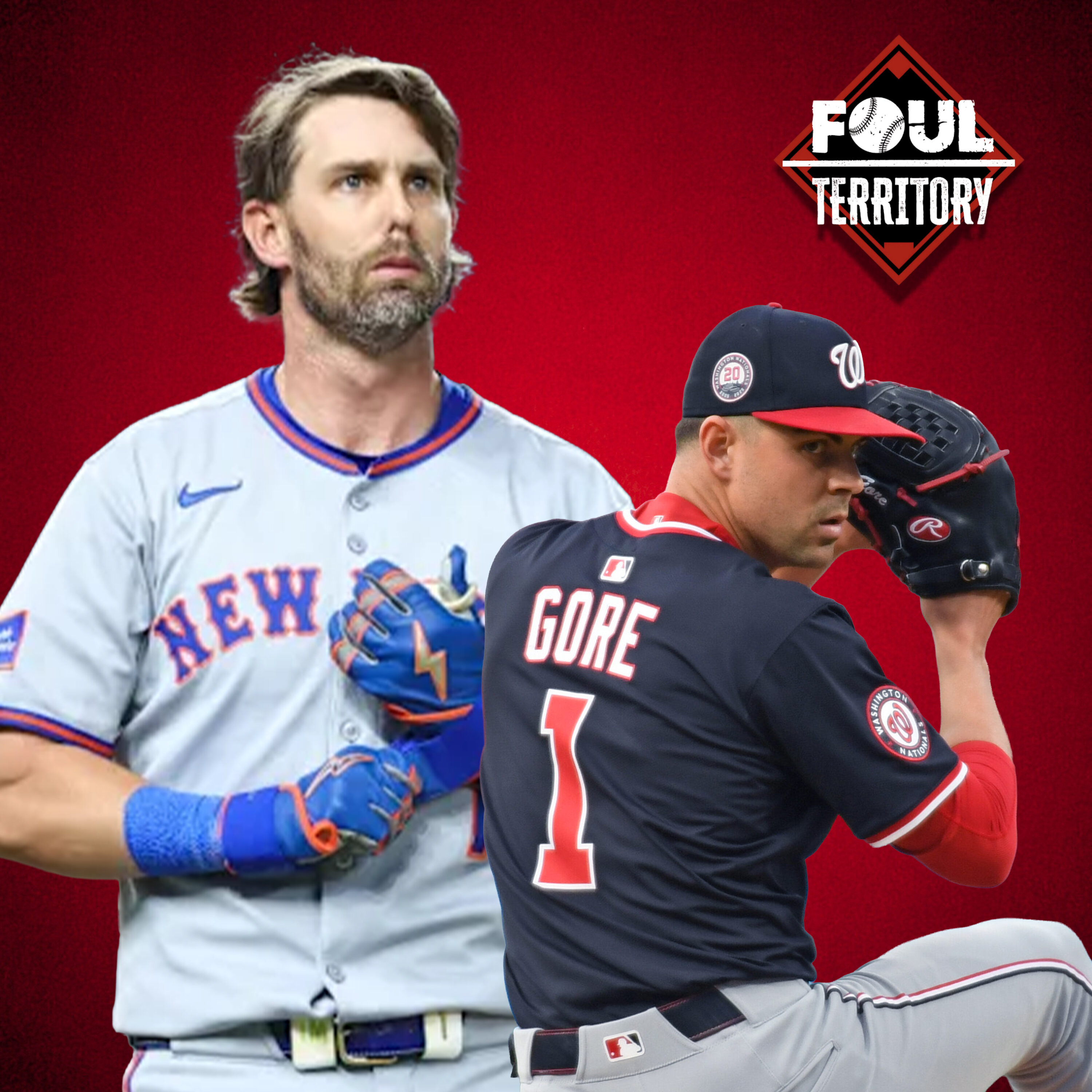
Baseball America Hot Sheet trade breakdowns + Nationals to-do list
Washington Post reporter Andrew Golden delivers the offseason to-do list for the Nationals and explains why he thinks MacKenzie Gore should be traded & CJ Abrams kept. He also discusses why a first baseman add is crucial for the NL East squad.
(08:49) JJ Cooper, Geoff Pontes, Jacob Rudner and Scott Braun dive into the intra-division deal between the Baltimore Orioles and Tampa Bay Rays for starter Shane Baz. Plus, they examine the return package for Willson Contreras from the Red Sox and why Munetaka Murakami signed a 2-year White Sox deal. The guys also explore the San Diego Padres signing KBO’s Song Sung-mun, and Japanese star Genei Sato picks...Penn State?
Baseball America Hot Sheet airs every Monday LIVE on YouTube
See omnystudio.com/listener for privacy information.
Available Results
Generated results are saved to the knowledge database for reuse and search.
Extract Knowledge
Pick what you want extracted first. Model, scope, and chapter options appear after a template is selected.
Transcript
00:00:08
Speaker 1: It's the Nationals offseason to do list with Andrew Golden, who covers the Nats for the Washington Post. Andrew, great to see you, and I'll let you lay out what you think the Nats are going to do over the next couple of months leading up to spring training. I think this is important non Nats fans pay attention to number one on your list.

00:00:25
Speaker 2: Go ahead, Yeah, thanks for having you on, guys. Yeah, I think in terms of my Nationals to do list, my number one is I think the Nationals to trade Mackenzie Gore but keep CJ. Abrams. That's my number one. Number two is acquire a first basement and that's really important for the Nationals, I think, either via trade or in free agency. And the thirdest, continue to shape the vision for the team. There's been a lot of changes, and I think that that's a very important goal for them moving forward.

00:00:51
Speaker 3: All Right, I'll start off explain number one, Trade Gore, keep Abrams. What makes you say that?

00:00:58
Speaker 2: Yeah, I think with McKenzie, like I think, like, first of all, obviously, pitcher injuries are very common, so you don't want to ever risk losing value in a guy, especially a pitcher who has the caliber Mackenzie Gore and as we've seen during free agency, teams really value potential and they value stuff, and Mackenzie or has that. He has a swing and miss stuff. He has two years of team control, and he's pretty cheap comparatively to a lot of the free agent leavers that are out there, the free agent starters that are out there on the market. Like a fan of Valadez and my guys like that, and so I think that it's be valuable for them to trade, you know, McKenzie while they have the opportunity to do so. Cj Abras, on the other hands, I think that they can develop him a lot more. I think his defense, he's been one of the worst short stops in baseball since he debuted in twenty twenty two. But I think he has a lot of potentially he can unlock to improve because I don't necessarily see that he's that bad when I watch him just from the eye test, and then offensively, he's a really talented player. I think there's another level that he can unlock, and so I would hold on to him, see if he can improve his value, you know, for another season, and then maybe see what the market looks like next year. But I don't see him any need to trade CJ right now. But McKenzie I definitely think that.

00:01:59
Speaker 3: They all right, I'm gonna I'm gonna follow up on that. And it kind of goes down to your your last question too. They went out and made kind of an unorthodox hire and their manager, Jake but Tarra, do they believe that he is the guy for the next x amount of years, you know, hiring someone so young with not a ton of experience, And the fall up question is if they do trade McKenzie Gore, is this someone they're trying to bring into the organization that's going to help them today or are they building for three four years out and as Terror the guy who's going to be there to see it through.

00:02:33
Speaker 2: Yeah, I think but Teria's obviously shown that he really can develop guys, and obviously that's part of the appeal of trying to hire a guy like him, is that he's as good a development. So I think when you look at what the long term goals are, I think the goals to develop the Nationals and the players that they have internally and the players that they draft and develop into like really bigly contributors who can help them down the line. So I think Paterra is here to see this through. And so I think that when you're looking at what they can get into return for McKenzie gore, like, I think the goal is to do things that will set them up to help him in the future. And so whether that is somebody who is you know, just like Harry Ford who doesn't have a lot of you know, doesn't have a lot of big lead time and it has like six years that they can get out of him, I think if he can help right now, then sure, if it fits within their timeline. I think they also to acquire guys who are in the minor leagues and could be good in a couple of years. I think their goal is not to compete right now or even next year, but I think looking a couple of years down the line, and so I think it ever helps them fit that vision all right.

00:03:25
Speaker 4: Well, then leading into your second point, then acquiring a first baseman, is it gonna be another stop gap first baseman again it Peede Alonzo is not available anymore, but I felt like Peter Alonzo was gonna be that, and we always use it. It's a lazy narrative. That Jason Worth, the guy, the guy who you're like, Oh, if I'm a free agent, I'm okay hitting behind Pete Alonzo, I'm okay hitting in front of Peter Alonzo or whatever it is. So I want to go to what the Nats are building. Is it just gonna be another Josh Bell? Is it gonna be another you know? Is it gonna be Reyes Hoskins because they know him? And now East what are we looking for here?

00:04:03
Speaker 2: I hate to break your heart, but I would think of being in their stop gap, That's my guess. I don't think it's gonna be like a big, a big name guy. I would be shocked me. Maybe there's a potential that they they do pull that off, but I would expect it to be somebody who's a stop gap. Maybe you may acquire somebody in a trade. Maybe there's a team that has, you know, has a surplus of of you know, first base that will to acquire me. Even the Oils and Orioles have Mount Castle, they have Kobe May over there obviously, p Alonzo and Rutchman and Desio and all those guys, and so I think that maybe their potential fit. Maybe, but I would look to, you know, I see a stop gap or somebody who they can maybe get in a trade, but I wouldn't expect them to sign like a p Alonzo or a big name guy. Obviously not p Alonzo.

00:04:42
Speaker 3: Since there are a couple of years out, do you see any guys on their current roster that are extension candidates that they could kind of build around, you know, for the future.

00:04:52
Speaker 2: Here I mean, obviously James Wood was the big one, right Like, I mean, who wouldn't want to resign James Wood to a long term deal. But when I look at the roster, a couple of guys that intrigue me. Dalen Lyle is somebody who was the n I think here of the month of September and was a really good rookie in the second half. I always kind of wonder if it'd be possible to look at him as an extension candidate. And the other guy I look at two is Kate Cavali. He was the first round picking twenty twenty, missed a couple of seasons recovering from Tommy John, but he looked pretty good last year. He has the stuff to be a top of the rotation guy, but he's also dealt with injuries. So I'm winning if there's an ability to maybe leverage that and see if there's a way to work out a long term deal. And so obviously James would I think CJL Abrams obviously could fit in that you want to extend CJ. But two guys that I think will be interesting will be Dalen Lyle. They're outfielder who I think will be their starting right fielder next year. And then Kay Cavali, who I think has a lot of potential but has had some injuries.

00:05:40
Speaker 5: I love Lyles. I love Lyles like just his fire.

00:05:43
Speaker 4: He just looks like he's like a little angry at the baseball field when he's out there. So I love that. I love that you said that. Here's my thing. Your third point is continue to shape the vision of the organization. Why are we going to see that? Paul Taboni was on our show and he really said not says the right things, but he kind of commands that presence that I don't think everybody in the that's current organization does. When are you going to see something from or what would be something that you would want to see from Paul Taboni? Because your first point was keep cj Abrams. You're also saying maybe worth three or four years out. C j Abrams is a free agent. C j Abrams, You're gonna basically build cj Abrams up for a draft pick as a qualifying offer or a trade in a year. So like, when will we see or what is one thing that you would want to see the organization do this year by the end of the season that shapes their future vision?

00:06:41
Speaker 2: Yeah, I think just invest in technology and really show they can use that technology to actually develop the players, and they need to develop. I think they have a lot of young talent internally, and so I think what I want to see is just gradual and steady improve it from those guys like A James would takes a step forward, if Dylan Cruiz takes a step forward, Dalan Lyle CJ. I think, like I think, what would be a successful year for them is when you look back and you see if these players have gotten better, and that's proved to me that their development plan and what they're putting into place to help these players improve is actually working. The same thing goes for their starting pitching rotation. I think even if they keep McKenzie, you know, Kei Cavali and some of the young guys that they have. They have a lot of young guys that they can kind of work and grow and build with it. So I think this year for me is just seeing like which of these guys can be impact players down the line. I think, like who can they actually develop? So that's what I'm looking for this year.

00:07:27
Speaker 3: All right, kind of off topic, but we just had Ken Rosenthal on and Scott brought up a good point. How do you feel about maybe a dead period from starting tomorrow through the end of New Year's where you don't have to work, no transactions could be done, you could step away from your phone, you don't have to write. Are you in on that?

00:07:46
Speaker 2: Yeah, I'd be totally on that. I actually, you know, funny enough last year and Nathaniel Lob got traded. I was actually a holiday party with my friends at my phone. They put your phone away for the night. I put my phone down, wasn't looking, and I look at my phone five hours later and Nathaniel Lobe been traded. I missed everything, honestly, Like, I'll actually all for it. I'd be cool with it because I definitely missed the Nathaniel treat last year.

00:08:05
Speaker 4: Well, and the first time you were on, I remember when you were on you said your mom was watching, So is she still going to be watching?

00:08:12
Speaker 5: What's going on here?

00:08:14
Speaker 2: I actually didn't tell her I was gonna be on today, so I'm not here. She's watching. I know my wife is watching, so I told her by it, so I'm sure she's watching.

00:08:20
Speaker 4: More more important. That is more important. But your mom probably still wants a phone call to know when you're going to be on, or at least like retweet it, retweet it and send.

00:08:28
Speaker 5: It to her.

00:08:29
Speaker 2: She definitely will, she definitely will.

00:08:33
Speaker 1: I love it well, Andrew, Happy holidays. Great to have you on, Thanks for getting us caught up on the Nats. And we will see you in twenty twenty six.

00:08:41
Speaker 2: So I was good looking forward to doing this soon. And you all have a happy holiday.

00:08:44
Speaker 1: You too, appreciate you. Check out Andrew's work in the Washington Post.

00:08:47
Speaker 5: We'll swing right back.

00:08:54
Speaker 1: It is the final Hot sheet of twenty twenty five, and we'll keep running it every Monday, twenty twenty six. Scott Brown with Baseball Americas, JJ Cooper and Jeff Ponce And these are some of my favorite shows, JJ, because we get to go over prospect returns as part of trade packages. And let's be real, there and many fans out there that don't know every single prospect in every organization, and that's part of what BA does best, and that's from big deals to small So I just wanted to start it out this way. We're going to get into some larger deals and some bigger named prospects. But right before the show started, Jeff McNeil, a name many of us know, was traded from the Mets over to the A's and it is not the.

00:09:34
Speaker 5: Most well known prospect.

00:09:36
Speaker 1: And this is where most baseball shows aren't going to go this deep.

00:09:39
Speaker 5: We are.

00:09:40
Speaker 1: The Mets receive right handed pitching prospect, your Don Rodriguez. The A's get Jeff McNeil and close to six million bucks to help cover the sixteen million that is due for him, and the Mets will also pay the two million dollar buyout if his option is an exercise, and the way he's been playing lately, it probably won't. So the A's essentially get Jeff McNeil for about ten million bucks this coming season, and they give away someone pretty far down the list.

00:10:07
Speaker 6: So we do have we We just wrapped up the prospect handbooks. So we just have ranked the top thirty prospect in the A's system, like literally sending that to the printer today. Jordon Rodriguez not one of those thirty. However, he does rank because we also do the depth chart that kind of expands it to like sixty players. Jordon Rodriguez is our thirteenth ranked A's right handed starting pitching prospect. So put him in the forty to forty five range. I would say in the A's system, he has fifteen innings in the DSL right. So this is you could go a couple of ways in this. When you make a trade like this, I kind of like this approach. This is the we're going to take a flyer on a guy who is far far away, who we like the projectability. Now, the stuff, the present stuff's fine. He sits in the low nineties, he can touch ninety five, he's got a slider. But you are projecting out like he's going to be five six years down the road. There's a chance here that he could be something. And when you're kind of making almost a little bit of a salary dump kind of move here, that's probably a better approach. If you're the Mets, you know, than it is to try to pick up, you know, a close to the majors guy who's only going to be an up and down guy. Probably not going to say that this is the trade that we will remember for years to come. But there, you know, every now and then, Hey, there was a Yordon who was traded in a deal like this years ago. Josh Field traded for Jordon Alvarez had yet to play a game for the Dodgers, and he ends up being Yordon Alvarez for the Astros. So it does happen. It's just a you know, the likelihood of that is very very low.

00:11:44
Speaker 7: Yep, it's just only only from the Yordon quota.

00:11:48
Speaker 8: Like there's obviously a higher percentage of this hitting simply because his name is Jordon. But I mean it's kind of interesting, like low level guy, pretty good extensions, like six and a half feet of extension. Based in the data we have, it's low nineties and projectable. You can't really tell too much on fastball shape down there because some of those trackmens aren't exactly well calibrated. So it was puting like seventeen inches of IVB and like fourteen inches of armside, which is just kind of a nonsense number, so probably a little bit of ride and some heavy arm side run from decent extensions. So maybe something they can do with this, But yeah, not a huge name.

00:12:26
Speaker 1: Well, we have bigger names to dissect. Now let's hit the first moved me.

00:12:34
Speaker 5: We'll get to a few deals here.

00:12:35
Speaker 1: Let's start with Shane Bass being acquired by the Baltimore Orioles. So what did you think of this deal and the package in return for someone who has high upside? And I thought I saw that in the return package.

00:12:47
Speaker 5: JJ. Do you agree? Oh?

00:12:49
Speaker 6: Yeah, like this would You could very well argue that this is an overpay from the standpoint of the race got four pieces back. At the same time, I'm going to sound like I'm talking about both sides of my mouth, but I'm not. It also is a trade that I like for the Orioles because the key thing here is is while they traded, they they had the Orioles had the draft of all drafts this year because they had so many picks, they had so much money to spend. And then they turned around and they traded Slater to brun and Caden bodein from that group, they also traded Austin Overn who's intriguing outfielder as well. But they didn't trade from the top of their system. They didn't trade a top one hundred prospect. They didn't really trade. You know, this is not Nate George being involved in this in this deal, This is not really even Michael Ferrett is probably right now the closest to the big league's prospect.

00:13:36
Speaker 5: They traded.

00:13:37
Speaker 6: All of those guys that the Rays got are very plausible future big leaguers. But if I'm the Orioles, I just significantly upgraded my rotation, and I did so without trading Obviously not a Samuel Basio, Obviously not you know, again, a Nate George. Guys like that, guys who are the top top of my system. I traded guys who were further away. I love Caden Bodin, think Jeff does too. Really good defensive catcher, really great back to ball skills. But this is the Orioles. They have Besio, they have Rushman, it's not something. And they had Ike Irish is going to catch a little bit as well, another part of.

00:14:11
Speaker 5: That big draft.

00:14:12
Speaker 6: So the Orioles traded from a position of depth, positions of depth and strength. I can't tell you how you know debraun and over and two outfielders were gonna fit when you can't even figure out how the guys who were in the Oriols outfield last year are gonna fit now. So trading from positions of strength, it makes the Rays deeper in the farm system for further away, you know, but for years from now. But at the same time, if I'm the O's, I'd much rather have Shane Boss.

00:14:38
Speaker 8: Yeah, and I think you get those three years of control as well, So you essentially like trade out four years of Grayson Rodriguez and any of the baggage and health concerns that that came along with Rodriguez. You trade that out for bos who's someone who's had a somewhat checkered injury history. But at the same time, like you kind of look at last year, you know, built up some innings. You can probably project another twenty or thirty onto that next year, and you're looking at somebody who's you know, consistently out there for potentially thirty starts with upside for more. They have had some success in terms of reclamation projects, not that I would necessarily put Bo's in the same camp as Trevor Rodgers, but we did see them really, you know, watch him take a massive step forward over the last year or so within that organization. So I think that's definitely one thing to look at within this trade is I think there's value going both ways. It's one of those classic This is kind of a good deal for both teams and the Rays depending upon what they decide to do over the next month plus leading up to camp, they could still potentially move some of this prospect capital that they've built up to acquire, you know, more major league talent. I know they've been sort of in the mix on the Kettle Marte trades, so this doesn't necessarily signify that the Raiser out of it for next year, but simply sort of trading one out set for some other assets they obviously liked and felt they could maybe package together with some of the other players in the system for upgrades.

00:16:06
Speaker 7: In the major league team.

00:16:08
Speaker 8: So I think this is kind of like the first shoot to drop with some more Al East activity, and there's been a lot this far.

00:16:14
Speaker 1: There are a lot of jokes by the way, I just remember it online too JJ about how the pick goes over to Baltimore. They spend the four million bucks on de Brun and then they get the player back. So I know it also requires Shane boz moving. Let's not discount that, but it is clever. They were like, you take the pick. Oh you picked him. Oh he gave him four million bucks. We love him, We'll take them.

00:16:36
Speaker 6: Yeah, exactly. Obviously, this also was the same day we saw another trade. I know what Jeff just said there, and I agree that it's very possible at the race just look at this as a way to move from one guy to another. But Brandon Lawle going to the Pirates, getting back the three we deal with the Astros trade Jacob Melton and Anderson Brito, who end up now joining what is a much deeper Rais system. I also kind of think that there's a chance that this is the Rays kind of taking a step back, looking around and realizing, hey, in a division where the Blue Jays just went to the World Series, where the Orioles are doing everything in their power to kind of prove that last year was an aberration, where the Red Sox are getting better. Because we've got another trade that we're going to talk about there. And Okay, the Yankees haven't done a ton yet, but the Yankees were there just a couple of years ago. They still have Aaron Judge, they have Garrett Cole coming back. I do think it's really hard to see how the Rays are going to be that competitive, even if they did pick up Marte or someone else in a deal for twenty twenty six. So if you told me that this is the raise way to kind of take a step back and kind of try to rebuild for twenty seven and beyond, that also makes some sense to me, because when I look at the rest of this division, I do feel like that even with the prospect editions they have, even with you know, some guys who should be in the big leagues coming up from the miners this year, in twenty twenty six, I still think the Rays are probably pretty clearly the number five team in a very difficult division.

00:18:00
Speaker 5: Right now, What do you think, Jeff, I mean the other move.

00:18:07
Speaker 1: First of all, it's always fun to see a three team, as we called it the other day, a three team sizzler, which is a favorite word of Todd Father, who was on the show the other day. But you know, you don't see them often. I thought this was fascinating. I mean, even from the Mike Burrows perspective. Here's someone that clearly the Pirates can afford to trade away, and at some point you do have to show that you're ready to at least spend a little bit and compete. It seems like they finally have put a stake down and said, okay, here's a guy who could at thirty home runs for us at second base in Brandon Lau. And I think it actually shows an ounce of seriousness to the marketplace. This helps them for their next free agent signing, so that they can say, hey, look, you're not going to be the first and only guy here.

00:18:51
Speaker 8: Yeah, I agree, And I think, you know, this was sort of a necessary move for the Pirates to actually bring in, you know, some MLB oliver every day positional talent.

00:19:02
Speaker 7: They really haven't had that over the last several years.

00:19:05
Speaker 8: And there could be you know, there could be some other players coming up from the farm system shortly.

00:19:11
Speaker 7: We've talked a lot about.

00:19:12
Speaker 8: Connor Griffin and you know, the hope that there's maybe even a chance he's up very early this spring with a big league club, So I think, you know, that sort of sets the stage. The Astros were very aggressive. I had said this, you know, over the last couple of weeks that Melton in particular have been dangled, you know, for pitching upgrades. They certainly view Burrows as one took a big step forward, kind of tightened up that arsenal a little bit more last year, and it'll be interesting to see what the what the Astros were able to do with him. They obviously identified something there and they've been excellent in sort of taking these guys and shepherding these arms to you know, three to four win seasons kind of out of nowhere at times. So Borrow has big town Borrows, his big talent. Should be interesting to see what they do with him. And then I think from the Rays perspective, you had a guy in Jacob Melton that you know, in a lot of ways as kind of an upgrade from some of the options that they had in the outfield last year. It's a pretty good bat. There's contact there, there's power there, there's a lot of base running ability and just you know, in general speed in his game. Can play all three outfield positions pretty comfortably, and he's seen a lot of time you know, in the corners as well as in center field over the last three or four years. So he's really interesting. And then Britail was somebody that depending on who you talk to, he was ranked as highly as one by some teams in this farms in this farm system, and I think there's good reason. I mean, he's undersize, but it's you know, three above average pitches, probably two plus pitches at the very least, there's command there. It's just a matter of you know how durable is a guy who put on a lot of weight in a short period of time, added a lot of philosophy onto his fastball in a short period of time. This is somebody was throwing low nineties a few years ago, and you know, how is that workload with all those additional factors going to sort of look over the next couple of years. If he gets back to what he looked like in his first year and you know, maybe puts together a ninety to one hundred inning season, I think that probably looks pretty good in the rays a year from now, and you know, maybe trend Storret a top one hundred prospect.

00:21:14
Speaker 1: One more trade to hit, then we'll get the signings. What did you think of the Wilson Contreras acquisition for the Red Sox Jeff and three pitchers going the other way.

00:21:25
Speaker 2: Yeah.

00:21:25
Speaker 8: You know, I was talking to a Cardinals official finishing up the handbook last week and I was kind of like, are there going to.

00:21:31
Speaker 7: Be any trades? Like how inaccurate is this list going to look?

00:21:34
Speaker 8: And I was assured that before Christmas that the list would not would certainly look inaccurate.

00:21:40
Speaker 7: I think it's good.

00:21:41
Speaker 8: You know, it seems like, you know, High and Bloom and Craig Breslo have no hard feelings between the two of them, because I think this is maybe two trades this offseason, but I think threes since the Stephen Matt's trade at the deadline last year. They love connecting on deals, and obviously High and Bloom, you.

00:21:58
Speaker 7: Know, knows the players in this system.

00:22:00
Speaker 8: A lot of the guys that he's acquired were players that you know, he initially had acquired when he was still with the Red Sox. I think Dobbins is interesting from the sense of a guy that has a little bit of major league experience, you know, maybe isn't going to blow you away. I can't think it's kind of the same as Richard Fitz that was in the previous deal, but he is somebody that's going to give you major league caliber innings and kind of be a bridge to this group of really talented arms that are now coming through the system led by Liam Doyle. And they acquire Brandon Clark, who is really big stuff. We'll see where that goes, Tin or Franklin. And then you know, you add in, you know, Frajardo, who I think we had talked about in the show a few weeks ago. He was a top ten Red Sox prospect I think greaked eighth or ninth in that system. He's going to slide into like ten or eleven in the Cardinals system.

00:22:48
Speaker 5: You know.

00:22:48
Speaker 8: And then they add a guy in Blake Ada who probably falls into the back end of the list, maybe into the thirties.

00:22:55
Speaker 7: He's really interesting.

00:22:56
Speaker 8: He's got two breaking balls with twenty eight plus RPMs, a spin on them, got a nasty sweeper. I think it's above average, you could maybe even call it plus. There's set sixteen to seventeen inches of movement on that pitch, three thousand RPMs on average, and he commands it and gets a ton of whiffs inside and out of the zone on that pitch. I think when someone has spin traits like that. There's typically more opportunities for that style of player, a guy that supinates like that, to add a bunch of different styles of pitches, to add a cutter, to add a sinker, if you add a little power onto aids profile. I actually think that we could look back in a couple of years and say, oh, they got this guy as well, Like this was a pretty good trade overall. So I think a good move for the Red Sox. I think it fits that lineup and sort of what they need in terms of right handed power and a guy that can get on base, maybe a little positional versatility as well, and you know, potentially an upgrade at first base. But overall, I think, you know, the Cardinals continue to add pitching talent into this system that you know, for a lot of years was kind of lacking anything but soft tossing left easy through a lot of strikes. There's a lot of good stuff in the system now and some really interesting arms across the board. Okay, so those are significant trades over the past several days. And now let's get to some standout international signings. So, Jeff, I'm going to pass the rock right back to you.

00:24:20
Speaker 1: We got a bunch of questions on song Sung Moon the KBO star who signs with the Padres, And that's one that I didn't even see a.

00:24:29
Speaker 5: Lot out there about over the offseason. So what can you tell us?

00:24:34
Speaker 1: Because he actually got more money I think than most people anticipated. I believe it was thirteen million dollars for him to sign up with the San Diego Padres. What do you think they're going to get?

00:24:45
Speaker 7: It's going to be interesting.

00:24:47
Speaker 8: He was kind of a later stage breakout in terms of when the production started to show up in his career. Spent I think five or six years not really getting full time at bats, broke into the first.

00:25:01
Speaker 7: Team and twenty twenty two as a twenty.

00:25:04
Speaker 8: Five year old, and then had a huge sort of out power and production jump in twenty twenty four as a twenty seven year old.

00:25:13
Speaker 7: Followed that up this year.

00:25:14
Speaker 8: He had a better year in twenty twenty four, where he hit three forty four h nine five eighteen, had nineteen home runs twenty one stolen bases. This year top the home run number with twenty six. Batting average was down a little bit, but I don't think the power is going to quite play like this state side. It's probably more like twelve to fifteen home runs. Maybe in you know, a good luck season in terms of bat and ball luck, he gets up to seventeen or eighteen, but probably more like that twelve to fourteen, twelve to fifteen range. Decent batting average, good contact. Hitter has some positional versatility, you know, has played some first base, has played some second base, has played some third base, so it can kind of play all over the infield.

00:26:00
Speaker 7: I don't know how good.

00:26:01
Speaker 5: The defense is.

00:26:02
Speaker 8: I think it's sort of average ish fringe averages that he's you know, usable at multiple spots. View him more as like a utility player than some of the Japanese talent that's come over, but should be interesting to see how it tracks. I just think it's hard with some of these KBO guys, just based on the run environment to know one for one, how that translates.

00:26:23
Speaker 6: Speaking of Japanese guys, I'll kind of give us a quick little update on who the White Sox sign Moon tak up Murkami, who. I will say that what compared to the fact that when you hear the tagline the Japanese you know, the hitter who broke Sadahara's Japanese born home run record in the MPB. Pretty shocking to see that this guy went for pretty modest deal to the White Sox, but it is. It is a I would say, in this case, a low risk, high reward for both sides, very short term deal two years. Murakami has real swing and misissues there. How that's going to translate to the US is going to be fascinating. Not a whole lot of defensive value, probably a first base only in the US. Has played some third but probably not gonna be able to do that in the US. But the thing about it is he's going to the White Sox. The great thing about this for both sides here is is that if I'm the White Sox, I'm giving him four hundred plate appearances. No matter what happens at those four hundred, I'm gonna say, if he's bidding hitting a buck fifty, there's no reason not to let it go. And then on the flip side from Urkami, if you went to a contender for a modest, short term deal, they would probably give him two hundred play appearances and if it wasn't working, that have cut him loose. He may need a little time to adjust to the US. This is the guy who could do that, and we'll see how it pays off for both him and the White Sox.

00:27:37
Speaker 1: Good stuff, guys, And now let's bring in another member to the party. Here, we're gonna hit the final sprint for a fascinating topic. Here comes to Jacob Rudner and I'm gonna go right to you, Jacob on Janey Satto who ends up with Penn State. Can you explain more of how this all went and what this means for the future of players potentially hitting some college baseball overseas instead of going pro out there.

00:28:09
Speaker 9: Certainly, well, the first thing that needs to be addressed is just how the heck Penn State. I think when everybody found out that that was where this prospect was headed, it was kind of a system shock for the college baseball community. This is not exactly the path that most potential early first rounders take. However, there were some connections that were very meaningful for Sato in his recruitment, one of them being that Penn State is home to the best Japanese collegiate wrestler in the world. And I'm not even going to attempt to butcher his name, but the fact that he's on campus was significant, and Penn State knew that they were going to be able to bring in somebody who maybe had a little bit of a language barrier, certainly a cultural barrier. Even the baseball calendar is different. But because there was some infrastructure of elite Japanese athletes going over to state college Pennsylvania, there was a route for this to take place, and that's exactly how it went down. As far as major talents from Japan making them move to the United States, is this going to become some widespread and frequently occurring trend with again potential early first rounders. I somewhat doubt that, but it is certainly a continuation of something that we've seen at a modest rate, which is that there are Japanese players who want to get to American college baseball in order to become eligible for the MLB Draft. It gets them the free agency sooner, it gets them into American professional baseball sooner, and that's obviously meaningful from a financial standpoint. So again, is it something that happens widespread. Probably not, But I do think that for elite talent this may become more frequent an occurrence from Japan to the United States.

00:29:44
Speaker 6: So Jacob with this, I'm just kind of asking on this, So what kind of talent are we talking about here?

00:29:51
Speaker 9: You know, we're talking about a potential first half of the first round pitcher. And I want to be clear, this is not Paul Schemes of Japan coming over to the United States. But it doesn't make him not bad. It's a plus fastball, it's a potentially double plus splitter that he throws into the low nineties against Team USA over the summer the collegiate national team, he touched ninety three with his splitter. Apparently, according to Rock Chalowski, it was one of the more devastating splitters he's ever seen, and he told me that Team USA's hitters just in general, really struggled with it. Drew Burris, I believe, struck out both times against Sato against that splitter. So there is elite tools in the tool shed here. I think where you start to get a little bit less generational talent is in the control category, which is kind of a question mark for a lot of evaluators.

00:30:37
Speaker 2: And then the spin. He doesn't have great feel for spin. It's a below.

00:30:40
Speaker 9: Average, maybe fringe average slider with two plane break, he doesn't get great spin on it. And then there's a curveball in the high seventies that I got mostly forties on on the scouting scale, so below average on the curveball. There is some hope that he's going to be able to round into form. He's very athletic, and so there is potential that he's able to kind of broaden out to pitch micks, but for now it is too comfortably plus if not double plus pitches that kind of lead the attack and will allow him to be a successful starter in the big ten most likely.

00:31:10
Speaker 6: Okay, when you say that, it kind of makes it kind of can't help. But think of what we saw at the big leagues last year of Roki Sazaki, who had a really good fastball, although not as good as it was you know in the past years, a great splitter, and then had really kind of trouble spinning. It is this kind of a potentially a similar profile. Doesn't mean he's as good as Roki Sasaki, who obviously has also already succeeded at the big league leven all, but are that kind of profile potentially, you know, there are there some similarities here.

00:31:40
Speaker 9: Certainly I think that it's for the reasons that you just said. This is somebody with a plus fastball. He has triple digit velocity. We were told that he's touched one hundred miles per hour. He was up to ninety nine against the collegiate national team over the summer. The splitter, like with Roki Sasaki, is in that double plus elite category, and then, like you said, there's a lack of feel for spin, big differences. While he is a good athlete, he is not a very big guy. He's five for eleven, one hundred and eighty pounds. There's a lot more room still for physical projection despite him being on the older side. I think it's important to remember he will be twenty two when he is draft eligible in the United States in twenty twenty seven. That matters, So it's not the same exact prospect. I think that Roki, you know, for all of the faults that he had and some of the reasons that he went through struggles during the season, he is a much larger pitcher. He's longer levered, and I think that those things are easier to hang on to. This is somebody who you know, by every definition is undersized, but the stuff is certainly there, So yeah, you know, I could see him being to Roki light Mini Rokie if you.

00:32:42
Speaker 1: Will, Jacob, this isn't happening until twenty twenty seven. Next year is twenty twenty six, so this is for the twenty seven season. Do you think there's any chance that I don't want to say it's a leverage play, but that you know, an MPB team, however the system works, there can come through and be like will millions of dollars if you don't do this.

00:33:04
Speaker 9: You know, money can buy a lot of changes of heart. I don't think that that's likely in this situation. I can't rule it out because I'm not familiar enough with what could happen over there and the scene and the precedent for those.

00:33:14
Speaker 2: Kinds of things.

00:33:15
Speaker 9: But based on the conversations I've had, it does sound like he's truly headed to Penn State. He's expected to a roll in classes in the summer of twenty twenty six. They are expecting him to play fallball with the program in twenty twenty seven, and the only reason he isn't playing baseball in the United States this spring, so the college season of twenty twenty six is probably because of eligibility. The academic calendar in Japan, even at the university level, doesn't line up with the American collegiate calendar. On the academic side, enrollment is still a factor. He will be a student athlete, and so I think that that was probably a barrier to getting him here at an age appropriate time. Again, he is already twenty one years old, so you know, I think that the commitment is there, and it's just a matter of the logistics that push him back to the twenty twenty seven season and twenty twenty seven class.

00:33:57
Speaker 1: Well, we appreciate the time, and also I think I just will circle it back to where we started here, Penn State, Penn State of all spots. Hey, here comes potentially the next Roki Sazaki, first round pick in college ball, and he's going to be pitching it Penn State. Just if you're a college baseball fan, you know how that hits. So anyway, Jacob, good stuff, JJ last word here on our way out, as we say bye to everyone in twenty twenty five that has followed this show and really all of Baseball America's coverage.

00:34:30
Speaker 6: Thank you everyone, Happy holidays, Happy New Year. But also with that if you're looking for a last minute Christmas if if you go to Baseball America dot conflict on store, you could order a Prospect handbook today and by the way, they will have the you know, send me the email address that you want a ship to and they will have a digital copy of it before Christmas because we send it to the printer today. We will be sending out we hopefully tomorrow, all the handbooks to people who have already pre ordered at baseball America dot com, so you can do that. If you want a last minute gift idea, here here's one that you can actually get in their hands right on time.

00:35:08
Speaker 1: Yep, and happy holidays everyone. We're back on January fifth to keep running with this show.

00:35:13
Speaker 5: We'll see you then