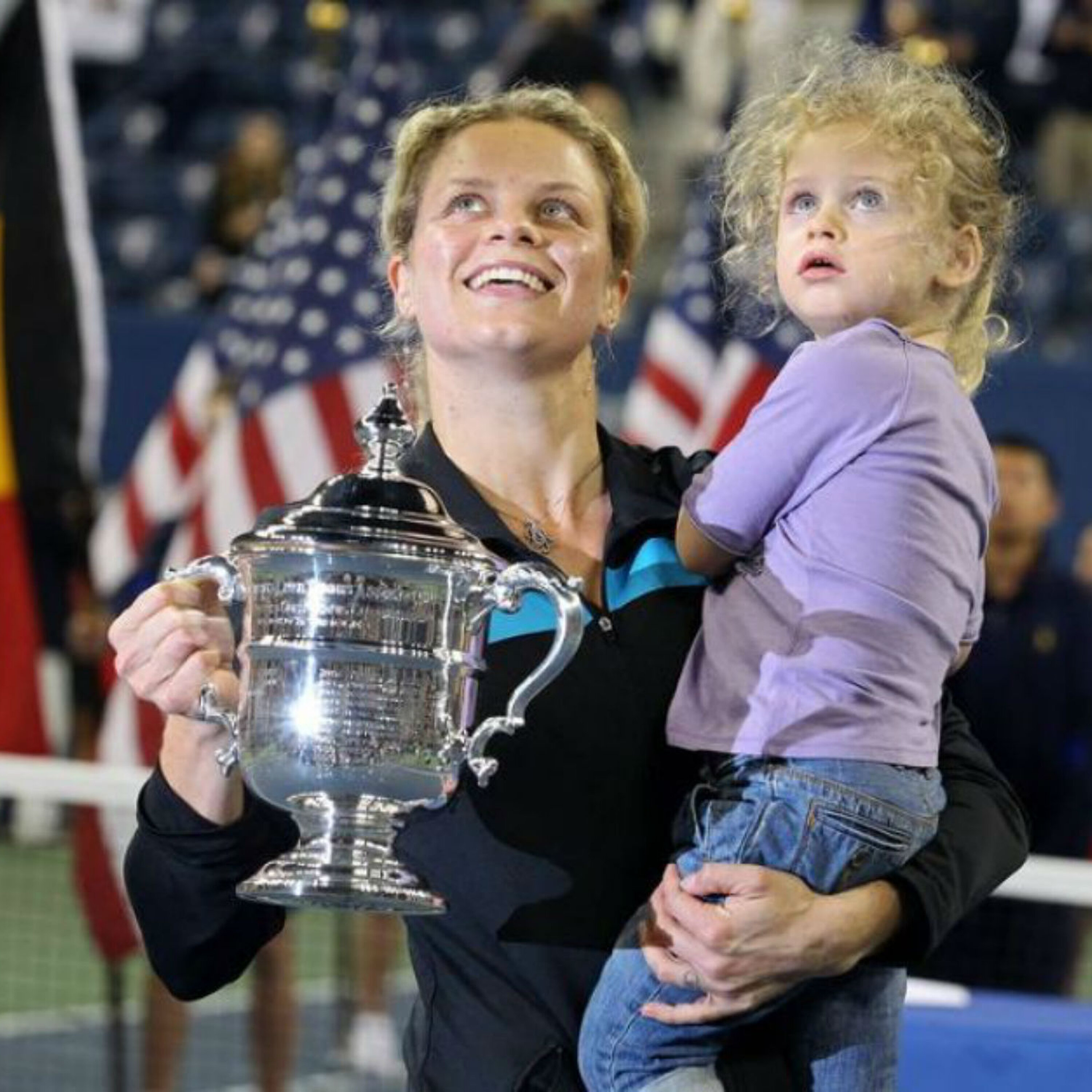
Kim Clijsters, Pt. 2
In the second half of our chat with the grand-slam champ, we talk playing with your sig o, the origin of the nickname “Aussie Kim,” and the time a fan dentist saved her from pulling a Dumb & Dumber.
Hosted on Acast. See acast.com/privacy for more information.
See omnystudio.com/listener for privacy information.
2018-07-11
51 min
Transcript
Available Results
Generated results are saved to the knowledge database for reuse and search.
No generated results are available for this episode yet.
Extract Knowledge
Pick what you want extracted first. Model, scope, and chapter options appear after a template is selected.
Generated results for public episodes are saved to the knowledge database so they can be reused and searched later.
Transcript
00:00:01
Speaker 1: I didn't see it, dandas I can't go on corsel like this.

00:00:15
Speaker 2: Hello Renee, Hello Kate, when we're back. We're back, but part Dick. We had an incredible interview with Kim Cloisters. It was so long on the roof of the All England Lawn Tennis Center Media Center that.

00:00:26
Speaker 1: We decided to trap the episode in two.

00:00:27
Speaker 3: I mean, we have so much to talk about with her, and she had so much to tell us, and we just couldn't get enough, and we thought you guys could not have.

00:00:34
Speaker 1: Possibly had enough.

00:00:35
Speaker 3: She talks about everything from her speech at the Strain open to being the reason why she.

00:00:40
Speaker 1: Was called Asie Kim dressing a fan in a skirt. Oh that's right, guess what which I was a part of? You were on the court. I'd had a pems on the court. That's one spoiler alert.

00:00:48
Speaker 2: We might or might not have made a pact to get matching tattoos.

00:00:51
Speaker 1: I'm doing it, I'll do it, She's doing it.

00:00:54
Speaker 4: Well, we're doing it.

00:00:54
Speaker 1: Here's part two.

00:00:55
Speaker 5: If you haven't re brought one, go back listen to that.

00:00:57
Speaker 2: First, then come back.

00:00:58
Speaker 1: Thank you for listening.

00:00:59
Speaker 2: Here's Kimster's party.

00:01:04
Speaker 1: What was I like living in the States for you, did you like it? I mean, I don't have to feel like officially lived in the States yet you haven't. No, I trained, and I would.

00:01:14
Speaker 4: You know, we have a home in New Jersey, and obviously my husband's my husband is American and we we it's his family's all there.

00:01:22
Speaker 1: They try to come and visit us when they can. His brothers were just over and his.

00:01:27
Speaker 4: Parents, you know, his mom helps a lot, like when I've had you know, either Jada or Blake, Like she's come over and stayed for a month, sometimes two months.

00:01:34
Speaker 1: To it to help out.

00:01:35
Speaker 4: And so I've gotten a lot of help from her. But yeah, for my husband still because he has his you know, his basketball, so he doesn't get to go like home, let's say, for about ten months out of the year, and then so usually in the summer break we try to spend.

00:01:50
Speaker 1: I mean, I would rather be in Belgium. I think we like being in Belgium.

00:01:55
Speaker 4: We feel like after this, you know, when we come home, or when we're about to leave, or when we've been in America for four or five weeks and we're ready to go home again, back to Belgium, because I think we have our routine life, and when we go to the States. Now, Jada thinks Jada wants to live in America because she thinks it's always sunny because we're always there in the summer.

00:02:12
Speaker 1: She has no school. She gets to like spend time with all her cousins.

00:02:15
Speaker 4: And stay up plaid, stay up plate, and she does you know, she does surf camp. She goes to like parties, and and we have a lot of people and friends come over from Brian from college back when he was you know, playing basketball, and they come visit us.

00:02:29
Speaker 1: So there's always something to do.

00:02:30
Speaker 4: And we're in Belgium, you know, everything is a little bit more strict and organized.

00:02:34
Speaker 1: And school, she has school, So it will be an adjustment if we ever decide to move. Would would you would you move? Yeah? I mean, I don't mind.

00:02:42
Speaker 4: I don't feel I know, I know, but I do feel like because we have that European base of our European lifestyle that I think it I would always keep that even if I would.

00:02:56
Speaker 1: Live in America. I think America.

00:02:58
Speaker 4: Living in America, I think is very convenient. Politics in America aren't in Belgium. Aren't gray either does in every country there's something or somebody.

00:03:06
Speaker 1: That you're you know, maybe disgusted by.

00:03:10
Speaker 5: But yeah, you guys had French and Flemish.

00:03:13
Speaker 4: Yeah, yeah, of course there's always something you know that's not how it should be. But but we tried to do what how we think it works for us. That's great, and that would be the same wherever we live. Of course, I've always said I would love to live in Australia.

00:03:32
Speaker 1: Well they've adopted you. Yeah, but even before that I enjoyed it. No, never sure they would if you asked. I don't know, I don't know. Maybe we'll get to work. Yeah, but New Jersey is a very different place. I like it.

00:03:45
Speaker 4: I mean there were Belgian tennis plays, American tennis players like Marty Fish and like they were like, so where is.

00:03:52
Speaker 1: Your husband from?

00:03:53
Speaker 4: Or they remember him from when he was playing college basketball, and and yeah, New Jersey is like oh, they felt like sorry for me.

00:04:01
Speaker 1: I was like, oh, like, you know, where am I going to end up here? And then where is it?

00:04:07
Speaker 4: It's in Belmar, It's at this beach on the beach, Like we literally lived like one hundred meters from the beach. I don't know, yeah, close by, so.

00:04:16
Speaker 1: Easy lifestyle. That's actually pretty good. It's very relaxed, and we still get to go to the city and then when we feel like doing something, you know more likely No, no, no.

00:04:28
Speaker 4: No, not at it's the first let's say, forty minutes out of the airport are horrible, and then all of a sudden, there's like this green patch and then you're it's a different world. Yes, I heard my thumb. I was playing basketball with our daughter.

00:04:44
Speaker 1: Oh you play, I try, I try. I enjoy it. I've always liked to do different.

00:04:53
Speaker 4: Things, even as workouts or when I was, you know, training for tennis. I always wanted a lot of variety in my workouts. I can whatever we found.

00:05:03
Speaker 1: Ye, I wasn't.

00:05:03
Speaker 4: I didn't enjoy like running for an hour, and I always trying to put variety in it. And even now, like we tried to work out, like we put a little basketball in the backyard, and and my husband and I like good night when the kids are asleep, like should yeah one on one, or like he rebounds and I have to try and make fifty shots like stuff like that. Like yeah, like little things like to just kind of get a little sweat in.

00:05:25
Speaker 1: I guess no, totally. I also think there's nothing. There's nothing like playing.

00:05:29
Speaker 5: A new sport and learning it, Yeah, to show you a little bit about who you are, because.

00:05:34
Speaker 4: I I sit on the sideline a lot, like in basketball, I go Throse games. I actually enjoy like like driving up with him and watching a practice and kind of seeing I enjoy like seeing the mental side of different sports and seeing how professional the guys are or you know, like things like that.

00:05:51
Speaker 1: I really enjoy it.

00:05:52
Speaker 4: And and and not to tell him or just more for myself to see the differences and everything. And yeah, yes, but then I want to try it, and I want to I don't know, see, you know, how far is.

00:06:05
Speaker 1: That three point line? I've been like, good, Yeah, I'm okay. I mean it's not nothing. It doesn't come natural.

00:06:11
Speaker 6: Yeah, but if I'm okay, I mean it's soccer, Sam football, football. I feel more comfortable, of course, because I know all the football, I'm sure. Yeah, I feel more comfort because I've played my dad, you know. I yeah, yeah, I love I love football. Yeah, it's my my passion is in football.

00:06:29
Speaker 1: Yeah. Yeah.

00:06:29
Speaker 4: I rent this little apartment here, so I had some people, like some Belgians. We had actually had a couple of Belgians that we're still playing and and and so we got some little snacks and so few people there were seven of us, I think, but then all the emotions, yes, because we were down there too. And then you know, ended up winning at the in the last thirty seconds of the game, but it was we were so like believed and happy all that time, and then we had adrenaline rushed of course, and then we went after the dog and Fox with which.

00:07:01
Speaker 1: Is like a popular pub up here. Hardly ever do they play the.

00:07:06
Speaker 4: National anthem in Belgium, but there they did, and some of the kids, the little kids were dressed up and they and Brian, my husband is there, and they you know, started playing the national anthem.

00:07:15
Speaker 1: And he was like, there is nobody getting up, Like everybody stayed in their seat and listened, like was quiet.

00:07:22
Speaker 4: But it's like in America, it's such a it's a different there's a different vibe, you know, different. Yeah, Like I get goosebumps when I hear the American, dude. I mean especially also when I when I've been at the US Open, and also they played the American then the national anthem, I get goosebumps, Like before my match I'm like ool, like it's it's because you feel how howsports and in Belgium we don't, we don't have it.

00:07:52
Speaker 1: I can't tell if that's a good thing or a bad thing.

00:07:53
Speaker 4: Yeah, I don't know, especially at the US Open, where you feel like the stadium, I mean, let's say like a US Open. Yeah, but but it's the loudest grass slam too, Like it's hard to to quiet a New York crowd at the US Open. And and then all of a sudden it goes from like always like a buzz and like like you know, you always better like whatever potato chip something, glasses clinging, like there's always noise. Yeah, but then when you hand the national anthem and everybody gets up and looks, you know, at the flag and and it's a different It's it's very.

00:08:30
Speaker 1: I don't know, like the energy changes within a second.

00:08:33
Speaker 5: It must be on the court at Arthur ash Stadium. Yeah, very unique as a player.

00:08:39
Speaker 4: Yeah, and it's you know usually like before a final, like it's it's it is at night as well, and you know, so.

00:08:44
Speaker 1: The whole moment is it is Yeah, it's a that's kind of cool. It is cool. It is the Olympics, like that.

00:08:51
Speaker 4: A different I mean for me as a Belgian. I mean I enjoyed playing the Olympics, but again you don't have that same.

00:09:02
Speaker 1: Yeah, I don't know, feeling of patriotism.

00:09:06
Speaker 7: Yeah, yeah, Do you think that's a Belgian there or I think so, Yeah, I think it's a Belgian thing.

00:09:10
Speaker 4: Yeah.

00:09:10
Speaker 1: I think we're very.

00:09:14
Speaker 4: I'm not saying individual, but like also like with our feet on the ground kind of like like clear minded, like we don't you.

00:09:23
Speaker 7: Don't get swept up in emotional No, not a lot like that. No, no, no, well.

00:09:28
Speaker 5: That was what it was. So I was always so interesting to me about Justine because in America a lot of us sort.

00:09:34
Speaker 1: Of like thought of her as French just because obviously she's French speaking in the French part of the country.

00:09:40
Speaker 5: And you have been adopted and it's partly maybe because you married an American, but you've been adopted by these English speaking countries because you feel maybe more like us.

00:09:50
Speaker 1: Yeah, I do.

00:09:51
Speaker 4: And I remember when I was a little girl, or you know, when I was eleven, twelve, thirteen years old, going to the States for the first time. To me, it was like like literally a dream come true, like whatever, like watching TV shows, to music, to the convenience of going to you know, I come from a small small town and breathe and a small city and a small town near near that city, and I I admired you know, I watched tennis on TV, I saw shows, and but then when I was actually in the States and I was able to experience it, you know, without my parents, it was like my own adventure, you know. And yeah, it was really cool and I enjoyed. You know, we don't have morning TV shows or or you know, yeah, late night or whatever.

00:10:38
Speaker 5: I think if I may be so, well, I think you're an extrovert, and you felt like you feel energized by that, by the expansiveness, by the big possibilities.

00:10:47
Speaker 1: Is that I thought, Yeah, is that a good statement? Yeah, yeah, maybe. But I also enjoyed.

00:10:52
Speaker 4: What I loved seeing was how open people were able to talk about whatever.

00:10:59
Speaker 1: Yeah that's what I mean.

00:11:00
Speaker 4: Yeah, Like, I like, I loved it. I loved seeing in belgiumate stuff.

00:11:06
Speaker 1: Very We're a very sarcastic, very sarcastic crowd.

00:11:10
Speaker 7: Really oh yeah, yeah, like like our humor is sarcasm and you always tell what somebody means, what they say or says what they mean or is it.

00:11:19
Speaker 1: Always sort of questionable. I mean, you know, I'm sure you can tell. Yeah, there's people who you know.

00:11:25
Speaker 4: I have friends who I know there who have a very sarcastic sense of humor. But it's always yeah, I don't know. It's a different type of different than the States. I'm to me, not one is better than the others, but I feel more a big I'll give you an example for me, Like when I go running in the States in the morning, when the sun comes up, it can be six am or whatever, five thirty I go running.

00:11:56
Speaker 1: Out of the let's say thirty.

00:11:58
Speaker 4: People you cross, twenty five of them will say good morning, which in the States is like a normal thing. That really surprised me in the beginning because in Belgium it's not like that. It's more to their own like like like they don't like the yeah, like I don't know, to go into somebody else's space or you know.

00:12:20
Speaker 1: And it's not on purpose, it's not like they're trying to be mean. No, it's just different. And well the Australians are very much the same way now. Yeah, yeah, so you find more coming around.

00:12:30
Speaker 4: I like that, Yeah, I like because I like to by just a simple little hello or whatever you know, can can Yeah, it makes somebody can give you a little spark, It gives you energy.

00:12:42
Speaker 1: Yeah, well it sounds like and maybe that's what is that what.

00:12:44
Speaker 5: It feels like when you're at the academy, like when you're around all these other people they're playing you know it is that a natural thing for you to do it.

00:12:51
Speaker 4: I wanted to give back. I wanted to give back from sports where you know that that has given me so much.

00:12:57
Speaker 1: Your family, somebody. This has been the diffin Also.

00:13:00
Speaker 4: It can also be draining because it's it's also a business in a way, and and people, which I'm not good at, but people always it's you only hear a lot of times, you only hear the complaints, you know, when this person or this.

00:13:16
Speaker 1: Like they want something, they want something. So it says you have to find a good balance between and I have.

00:13:22
Speaker 4: You know, my coach who was my longest coach, Carl, he's the director of my academy. So he is kind of the filter, you know, he gets everything and then we talk and have meetings and he filters kind of what I need to No, I'm not and but do.

00:13:38
Speaker 1: You get energy from it? Like are you sort of like is it something I do?

00:13:42
Speaker 4: I do?

00:13:42
Speaker 1: There's I mean there's.

00:13:43
Speaker 4: Moments where where it drains energy as well, but but overall it yeah, I get energy from.

00:13:48
Speaker 1: It as he Kim, how did that come about? The tell people that didn't say the speech?

00:13:55
Speaker 3: And did you ever think about that before you actually about my at all?

00:14:01
Speaker 4: Because I'm just saying it's my superstition, is I don't think anyway? I was named Ozzie Kim because my first boyfriend was an Australian danniswear.

00:14:12
Speaker 3: They'd lead to it, and hey, well hold on the second time out, not only was it her first boyfriend, but she was engaged to him. And second of all, I still have somewhere in the archives of my world an invitation to the wedding, I know, and it was from Kim, not not.

00:14:28
Speaker 1: From Layton, which is even funnier. Yeah, it's somewhere.

00:14:32
Speaker 3: Somewhere Belgian Adelaide, in Adelaide.

00:14:39
Speaker 1: So anyway, that didn't happen. No, it didn't happen.

00:14:42
Speaker 4: But even when I was with Leyton, I always felt, you know, I traveled through a lot of the Davis Cup tires and I would sit with the fanatics and.

00:14:49
Speaker 1: I would know them, and I would I would I.

00:14:52
Speaker 4: Love that people know that. Yeah, the openness you know that, the yeah that that lifestyle, the culture.

00:15:00
Speaker 1: Sure, you know.

00:15:00
Speaker 4: So anyway, so years went on and we did. I didn't get married to him, but then I would still when I would go back to the Australian open people would still call me Aussie Kim in the pat in the way interviews and people on the street like good day Ausie Kim, like they would they kind.

00:15:19
Speaker 7: Of like.

00:15:21
Speaker 4: Anyway, there's actually still people nowadays that asked Brian, oh, yeah, where are you from in Australia.

00:15:28
Speaker 1: I'm like no, that was so He's like, oh, here we go.

00:15:36
Speaker 5: So then, well, I asked her earlier, if Australia had offered her citizenship, I would have given it to him, That's what I said.

00:15:42
Speaker 3: She tried to recruit of her fed Cup, but she she wouldn't give her Belgium to anyway. So go on, So you win, So you feel the pressure in Australia a little bit? Did you feel a little bit of the pressure to win there?

00:15:54
Speaker 1: If I wanted to win another I felt pressure to win another Grand Slam.

00:15:58
Speaker 4: Besides my three my USO. First, when you win your first one, you're so happy and you feel like relief. But then you're like, I need to win another one because I don't want to be the person that has only one one friend.

00:16:09
Speaker 1: No seriously, other people that never won one. But that's how I keep like, I know, you don't want it to seem like a flute.

00:16:16
Speaker 4: The Australian Open was one where, of course, you know, if you can win wimble then that's also great, you know, But the Australian Open to me for my game, I felt like I was more comfortable on another hardcore which was you know, in Melbourne. And so yeah, I got closer to the and you felt the moment people, I felt the love.

00:16:36
Speaker 1: I mean everyone wanted to like outside, even you know. And and and then I won and I actually chipped my tooth really badly. Just remember this the.

00:16:45
Speaker 4: Night before, my day before when I played, I was a little bit like autistic.

00:16:51
Speaker 5: Like with my.

00:16:54
Speaker 1: Yeah maybe I had you know you like, yeah, yeah, I habits that only I did, you know.

00:17:04
Speaker 4: And I always traveled with this. It's like a pen from metal and don't laugh, I am, but it really vibes or like produces the energy in the water, so I always swirl like ten things, so I would do it in bottled water like but then it fell in the pen fell in the water, so I'm trying to get it out by drink. I can't reach it with my fingers, so I try to like drink it and the metal pen like like.

00:17:38
Speaker 1: My tooth, and it ships my whole front tooth this day before.

00:17:42
Speaker 4: The final no, no, before the to so I'm like, I'm cold that the physios from the WTA. I'm like, I need to see a dentist. I can't go on core like this, like like dumb and dumber, you know, dumb and dumber.

00:17:55
Speaker 1: I can't go on cored this. So I get this guy who a fan and and he's like yeah, and you know, I'm more than happy to help. Yeah, well he's a dentist to be a fan. He's like, I would love to, you know, getting autographs. And it was like, by the way, me some pictures.

00:18:12
Speaker 4: And no, no, no no, I called, like the w DA called him and and you know it wasn't the lady trying to be nice and saying that he was a fan.

00:18:20
Speaker 1: But he helped out. You get you get my tooth fixed.

00:18:23
Speaker 4: Happy, you know, I win my the next day and get to the final. And the thing was, I actually told him that I'll I'm going I'll say something about you if I win, you know, or he's mentioned something like that was just give me a shout out, like he didn't want me to pay him, and he said, just give me a shout out when you win.

00:18:42
Speaker 1: I'm like, deal, of course, like if I win, great, I'll say whatever you want to hear. And so then you're so married.

00:18:51
Speaker 4: Right.

00:18:52
Speaker 8: So so.

00:18:55
Speaker 4: When I was standing there and I get the microphone handed over to me, I thinking, oh my god, I have to thank my the dentist, and actually I forgot his last name, like so I said, that's the first I wanted to get it over and done with, because I mean it must have sounded like pretty ridiculous, you know.

00:19:14
Speaker 1: I did that. And yeah, and then at the end, I was like, Okay, now I feel like, you know, I told him, I said.

00:19:23
Speaker 4: Now I really feel like you guys can call me Oussie Kim because you know, I was holding the trophy.

00:19:29
Speaker 1: Definitely a curse. It was a beautiful story. I was a great speek.

00:19:34
Speaker 5: We will find a speech and I will put it in the audio if that's okay. Now you've shouted out this dentist.

00:19:39
Speaker 3: It was a great speech, thankfully, you know, and you beat Lena, who of course ended up being sort of like the next heir.

00:19:48
Speaker 1: Apparent to the Australian public wanting to win.

00:19:51
Speaker 3: Because I really feel like, you know, the Australian public in particular, I think everywhere but Australia really gravitates to people that.

00:19:58
Speaker 1: Have that personality. It's fun and the easy going.

00:20:01
Speaker 3: And Lena, obviously we all know, had those postmatch interviews of giving Dennis her husband hell and so they sort of once you had won, then it's like then she ended up winning a couple of years later, and everyone really pushed her to win.

00:20:13
Speaker 1: But when Kim won, there was there was a lot of very happy people.

00:20:17
Speaker 9: And I was caught side for the match for Channel seven, and Kim remember watching looking at you sometimes, like when you were sitting.

00:20:24
Speaker 1: Right in front of me.

00:20:25
Speaker 10: Literally I was imagine her doing her thing. I've got something to look at her like. She's like, yeah, yeah, I mean I don't want to be biased.

00:20:36
Speaker 3: Obviously, no, my friends with everyone, but Kim and I go back a long way and so there were times that she would I mean literally we are exactly across from each other on the court, and there were times that she would look at me and I'd sort of just look at it like almost like her mum, like Gerrikay, you're doing keep going, keep going, you know, and you know any player. I've done it with a lot of players. It's literally where my seat is is directly opposite. And I remember that night, and I remember thinking when she won and I got to interview her after the match, the.

00:21:05
Speaker 1: First person to interview it, and yeah, they're great moments that you share with.

00:21:09
Speaker 3: Really, we're traveling circus and Kim is definitely one of those people you loved.

00:21:14
Speaker 5: To see when well, I was telling her, I feel like that's why so many countries have adopted her, because Americans consider her one of our own.

00:21:21
Speaker 1: And different than America, than in Australia, than in Australia. Yeah, yeah, I don't know what it is.

00:21:26
Speaker 3: I think we just took such a love to Kim immediately and vice versa her.

00:21:30
Speaker 4: That's the thing I talked about, that the sarcasm, that humor, that yeah, Australians.

00:21:35
Speaker 1: Have that too.

00:21:35
Speaker 3: Yeah, you know, so it's like some Americans don't have the same humor as Australians because you can literally say I went to an event recently and I walked by a girl and it was outside I've told you this story, and it was sunny and it was beautiful, and I was with my Aussie friend Joe, and I said, ah, really, you know average day to day right, aha.

00:21:54
Speaker 1: Meaning it's an amazing day, isn't it right? And she goes, well, actually it's not bad. And I was like, oh my god.

00:22:00
Speaker 3: She did not get like, there's not that's Kim would get it if I said, really, crap, isn't it.

00:22:07
Speaker 5: But you know it's a different Americans don't take the piss, that's right, and you we can't handle the piss.

00:22:14
Speaker 4: The alcohol is a different story. I don't think with my husband and I like, I give it. I tease him so much, like all the time, all the time, and he's like, are you serious? Are you serious?

00:22:26
Speaker 1: I'm like, don't get all sensitive on me now, like I'm only joking.

00:22:29
Speaker 11: One of the kids, which kids have your personality and his personality, Jada is my personality wants to tease and and all the time, like drops from your trade.

00:22:40
Speaker 4: Jack is sensitive sensitive, We'll have the big like elephant tears. If I even make like make him like want to tease him a little bit, it starts and the lip goes down, and I'm like, that's okay, Like Mom is only joking, you know, But I'm like, tough enough, come.

00:22:58
Speaker 1: On, tough enough. What's for? Are they going to play Jada basketball? For sure?

00:23:03
Speaker 3: Did you tell me that we're supposed to play Ladies Invitational here at Wimbledon and you've just told me you have a thumb injury due to playing basketball.

00:23:10
Speaker 1: I think it's getting better. We talked about it. Don't expect me to take on any ground strokes over you. What side would you like to play on? Forehand or back end?

00:23:19
Speaker 3: Well, clearly, Skim, I know your backhand is like as good as any back end we've ever.

00:23:23
Speaker 1: Seen in the history of the game. But I'm pretty sure that your forehand is fifty billion times better than my forehand.

00:23:30
Speaker 3: So I think it's best I played the backhand side because I know that I can still hit a late forehand, but it hit an early forehand.

00:23:37
Speaker 1: Might be a little difficult for me. So let's let me play in the backhand. Really, okay, you know, what whatever you.

00:23:42
Speaker 4: Want to be, what you want to play on you figure it out. The only thing I have just have to see you with my thumb. If I can hit a car beforehand.

00:23:47
Speaker 1: Well I have to figure out if my neck. I mean, we're just a disaster. Let me ask a question, because I know Lena is actually playing Legends. I can't Yes, does that seem because so recently retire I walked over to this. Wait a second, you have to wait a second. You just asked if Lena is it's okay for her to play.

00:24:05
Speaker 3: Martina Hingis was playing when she was like twenty seven in the Ladies Invitational and then came back like two years later in one Wimbledon doubles again, So there's no criteria really here at all.

00:24:14
Speaker 1: No, everybody's really good.

00:24:15
Speaker 5: I watched the ship out of the Lady's Legends at the front Shopen. I watched Nevradolova play with Marian Bertoley. Marion Bertoley was hitting like one hundred and fifty mile an hour or two hundred four hens at Rancha suncheest Is in the face.

00:24:27
Speaker 1: It was intense. So he played him the day before and summer Bartley was a lot like yeah, some are a little more intense than others. It was watching the Sometimes it's hard.

00:24:40
Speaker 4: I find it hard in legends to find like you have to find a balance between fun. Yeah, fun, because there's there's a different generation too of players who don't.

00:24:50
Speaker 1: Hit hard at all.

00:24:51
Speaker 3: You know.

00:24:51
Speaker 4: I still feel like if I, you know, kind of put my body weight into the pool, I can create some like face, you know, and I've yeah, you have to find a ba there.

00:25:00
Speaker 3: And Kim can hit one hundred mile an hour winner at any time, anywhere, any place she wants.

00:25:05
Speaker 1: But what's the point. You want to have a bit of fun, although it does get a little bit too competitive. I could also come in and hit a volley at someone's face if I really want to. But yeah, but I don't really know that's the thing.

00:25:15
Speaker 4: But I also don't have I think that natural talent of kind of you know, really goofer racket and make it look like, oh, we're playing like the men.

00:25:26
Speaker 1: Do you know they do these tricks? And which is why she leaves that to me, because that's all I've got now between its exactly.

00:25:32
Speaker 4: So I do have to, like, if I look like I'm not putting the effort in or don't like, let my arm go through a swing, it through the through the ball.

00:25:40
Speaker 1: Then I actually don't.

00:25:42
Speaker 3: I don't know.

00:25:42
Speaker 1: Did you guys request each other? How do you get paired up? No, we don't request each other. I mean, why would I used to request playing with me when we're on tour. I wish we'd played together one time.

00:25:53
Speaker 3: I've been so good because we would have been great to Although, you know, I can honestly say that I never lost a Kim.

00:25:58
Speaker 1: That's true, but I never got annoying to play against. Ever lost to Kim.

00:26:04
Speaker 3: But I never played her in singles. She hated playing mean doubles. But I loved playing Kim.

00:26:10
Speaker 1: We had good fun together. Yeah.

00:26:14
Speaker 4: Actually I didn't hate playing against you. It's like just it's hard, you know, which is good?

00:26:20
Speaker 1: Oh? Thanks?

00:26:21
Speaker 3: I played Kim actually in my very first Wimbledon final here that I won was against Kim.

00:26:26
Speaker 1: But she was a baby. She was what were you seventeen eighteen?

00:26:30
Speaker 3: Yeah, so Sugia and Kim and was me and Lisa Raymond and yeah, so Kim was a baby then.

00:26:37
Speaker 1: Yeah, I played against Kim Layton in mix mixed doubles. Was that here French Open? That was our first mixed doubles that.

00:26:45
Speaker 3: We play and Todd I believe played you and Layton or was it Daniel Nessa I don't remember him.

00:26:51
Speaker 4: My first mixed doubles match, I had no idea what to expect to lead and I were like, you know, I really love and we wanted we wanted to play mixed doubles together. And the first game he tries to love. I think it was a Danish I don't remember who it was or some Scandinavian.

00:27:14
Speaker 1: Yeah, and he loves but he loves too short.

00:27:16
Speaker 4: And the guy hits smashes straight at me like it hits my stomach, like straight, full out like and I'm like oh, and.

00:27:27
Speaker 1: She's like I'm sorry. I'm like, we're done.

00:27:29
Speaker 4: So I guess the guys go because I was wondering, like DoD the guys, you know, go full loud.

00:27:33
Speaker 1: And so that was my answer right there. You got pegged in the stomach immediately with a by your boyfriend. Yeah, and that was the relationship. No, No, No, that was just the start. Was it weird playing with somebody that you were in It was so much fun. It's weird that you guys could play together too.

00:27:50
Speaker 7: No, not me.

00:27:52
Speaker 1: I didn't play with Kim. We went in love. I love her, but we're not.

00:27:54
Speaker 5: Yeah, I love you, but you both have played with your significant others on the professional tennis court.

00:27:59
Speaker 1: I thought it was fun. Did you have I always laughed.

00:28:02
Speaker 3: Do you enjoy like looking down the other end thinking that Lisa and I would be fighting or something?

00:28:08
Speaker 1: I mean there were times where I was like, oh, poor Lisa. Rude, that's our promo right there.

00:28:20
Speaker 3: If there was one match, Kim cloisters that you could take back way.

00:28:25
Speaker 4: Again, which was Vonaeva twenty eleven quarterfinal, I think here at one more than yeah, I was up a set and just kind of lost my and I felt, I think, I'm not really I'm not good at remembering draws and stuff like that, but.

00:28:47
Speaker 1: I think pir on Kova would be the next. I think she beat Venus or something on the quarters, and that was.

00:28:53
Speaker 4: Obviously the match before our match, and so it was kind of like, I think Pironkova in the semi final.

00:29:00
Speaker 1: Then, you know, it was like a good a good draw, I.

00:29:03
Speaker 4: Guess, you know, and and I just yeah, kind of stopped playing, you know. So that's a match that I wished a few times already.

00:29:13
Speaker 1: That I could do play that.

00:29:15
Speaker 5: Over again, because theoretically you would have been in the finals, which you've never played.

00:29:19
Speaker 4: Maybe you still have to play for that. There was a big chance at Wimbledon. I've lost my semi finals, I think, to Venus and to Lindsay my two semi finals.

00:29:27
Speaker 1: So they were too good. Yeah, too good. They played too good. I mean, I mean Venus and Lindsay are two are the greatest great players on gross. So that's the one. Yeah, that's the one where I feel like and the other ones. I mean I've lost grandson finals, you know, the one against Jennifer Capriati and at the French and Choba. But I was too young to win. I know, like, without a doubt, I was too young to win and to kind of be ready for that.

00:29:54
Speaker 5: When you say you were too young to win, what does that mean? Like, where is your mind when you're ten years old than Yeah?

00:30:00
Speaker 1: Why is that different for you and not for Hindus or Serena or Stephie.

00:30:05
Speaker 4: Because of the impact of how your life changed. It already changed big time, but I wasn't ready to take on that pressure yet.

00:30:15
Speaker 1: Is that what changed when you had a kid? Because your perspective changed.

00:30:19
Speaker 4: I was able to just focus on tennis when when, and not all the other stuff. The other stuff wasn't important anymore.

00:30:27
Speaker 7: You know.

00:30:27
Speaker 4: When I was younger, I who I felt overwhelmed when the attention. Still I still do, but I was overwhelmed by the the money, expect the expectations. Yeah, yeah, that's not why I didn't sign up for that when I you signed up to have fun in place. I want to play tennis and to go all out and to work, you know that, Like my passion is still. I still feel as much passion for tennis as I did when I was younger. If I can go, if we go play, it's my playground, like it's my tennis was my psychologist, it was my fun.

00:31:04
Speaker 1: It was my like still passion, you know.

00:31:07
Speaker 3: And yeah it's but so it changed when you felt like Grand Slam is going to change my it's going to change my joy to being a job work expectation.

00:31:18
Speaker 4: Is that because all the other stuff that gets added onto your schedule that has nothing to do with tennis anymore.

00:31:25
Speaker 1: I wasn't ready for It's not like I was not for the tennis part of it, but it was all the other.

00:31:30
Speaker 4: Stuff, the responsibilities, the attention, appearance, appearances, like all that.

00:31:35
Speaker 3: Stuff, Like I, so, do you understand when somebody wins one Grand Slam and then struggles for a year or two like you've seen you understand why, of course, and how difficult it is, because it's a process. I honestly, as as painful as it was to lose my Grand.

00:31:50
Speaker 4: Slam finals, the one against Jennifer wasn't as painful because it was still a great result.

00:31:58
Speaker 1: When I was a young girl, I played some of my best tennis and it was huge and Jennifer was a superstar.

00:32:05
Speaker 4: But then my next match is when I lost to Justine and whatever I think, the three next finals devastating, devastating, They hurt, But what hurt the most was that I was overwhelmed already.

00:32:18
Speaker 1: Before the match.

00:32:19
Speaker 4: I didn't know how to handle the situation playing another Belgian, playing in a.

00:32:25
Speaker 1: Grand Slam final.

00:32:27
Speaker 4: It's all those little things together because I played Justine many times before, you know, and beaten her. And there are semi finals of the French Open, which was also a big occasion. But I was still capable of playing some of my best tennis, just not in the match. Like the thought of winning a Grand Slam to.

00:32:43
Speaker 1: Me was too overwhelming because it was like as a little girl, I.

00:32:51
Speaker 3: Don't you don't realize winning a Slam is one thing, but everything that comes along with it you're not taught how to deal with.

00:32:58
Speaker 1: Do you talk to a players that you know on the tour of the last couple of years that have had that expectator? Have you ever asked you how did you handle this?

00:33:07
Speaker 7: Kim?

00:33:07
Speaker 1: I've had a few players actually, yeah, you know, like, no, that's fine.

00:33:12
Speaker 4: I mean Simona Hallep, you know, situation, Caroline, was Niyaki, you know how how.

00:33:18
Speaker 1: To handle after before those conversations.

00:33:22
Speaker 3: So you've had You've had conversations with was Niyaki Halub about how to win a slam and then how to deal with it after it.

00:33:28
Speaker 1: More more afterwards.

00:33:30
Speaker 4: I think you know when when Simona lost the French Open last year, you know, so when you get so close and you see the reason why they lost, although she was the much better player, you know, she just kind of froze and her arm got tight, and I could relate to.

00:33:43
Speaker 1: That so clearly.

00:33:44
Speaker 4: But then yeah, you just you have to try and just stick to what you're doing because everything that you're doing is working well.

00:33:52
Speaker 1: You know, you're getting to the finals, You're you're she was number one in the world. She she's fit, she she can do anything she wants.

00:33:58
Speaker 4: But you just have to try and get yourself in that position again, because you can't practice that moment.

00:34:04
Speaker 1: You know, you can't practice for that.

00:34:05
Speaker 4: So you have to try and get yourself into a position again where you're capable of doing a couple of things.

00:34:11
Speaker 1: Having a chance.

00:34:11
Speaker 3: I remember because I talked to you about this with Carolina Plishkower and Singapore. Yeah, and I said, I grabbed Kim, I literally grabbed Kim, and I said, Kim, tell Carolina something, you know, And she said, that is the exact words. She said, you know what, Sometimes you just have to keep putting yourself in that situation.

00:34:30
Speaker 1: And Halla is a perfect example, as it was Niaki, as was you. It's rare. You know what happened to Ostapenko last year at the French Open.

00:34:39
Speaker 4: That's that's not normal, No, not normal, but it's rare that you win your first Grand Slam. And I had people tell me like, oh, I do give a Lando five?

00:34:46
Speaker 1: Yeah, I think Andy Murray same thing. Yeah, So it.

00:34:50
Speaker 4: Happens, and I really believe that if I just within myself, if I look at the process that I made as a tennis player but also as a human being, this it had to happen like this, and I wouldn't change it for anything like it had to happen.

00:35:06
Speaker 1: I had to lose those matches for.

00:35:09
Speaker 4: Me to win in a five and or not like like it's because they all helped. You had points, Yes, if they all help.

00:35:16
Speaker 2: When you say that you had conversations with you know, obviously that's because Renee thrust her out you and said, Kim really smart was the end.

00:35:25
Speaker 4: But we would talk about it sometimes we could see that her you know, body language got down or nervous.

00:35:30
Speaker 1: Thing is why wouldn't you Todd? Of course, And this is why I believe, and I said this on the podcast with Todd.

00:35:37
Speaker 3: You will see hopefully more women start to bring the Kim pisons that justin Anna and who you know Switzerlina brought in the last couple of years ago. Look at look at look at Muga Rutho with Conchidah last year. There is nobody that can substitute Maresma.

00:35:51
Speaker 1: There's no one that can you can substitute with somebody who's.

00:35:54
Speaker 12: Been there and done it, and a female and a female because the female Yeah, there's not enough of us.

00:36:02
Speaker 1: It was not a lot of female coaches even in our And I try, you know, I but I get because.

00:36:08
Speaker 4: A family life becomes so Yeah, there's there's a tough juggling and tendis too. Like you have to if you want to become a coach, you have to travel, You have to be away a little bit.

00:36:19
Speaker 1: And I mean even for me, I've had.

00:36:21
Speaker 4: Great offers from players, you know, who wanted to work and who thought that maybe I had, you know, could have a positive impact or change something.

00:36:29
Speaker 1: In their career.

00:36:30
Speaker 4: And and but you have to be able to travel a certain amount of weeks. And and especially with me, you know, with the last two you know kids, I couldn't do that yet. And although there's a part of me that really wanted to do it and take on that challenge because I love the challenge of being able to help.

00:36:48
Speaker 1: Somebody to try and achieve a goal. And are they absorbing it?

00:36:51
Speaker 8: Do they do? They?

00:36:52
Speaker 5: They do?

00:36:52
Speaker 1: Yeah, because they do this is a human being. Yeah, because I don't I really talk out of my experience because I really felt to me it was very clear how it, you know, how it happened. And so if I just explain how it went for me, then it's up to them what they do with it.

00:37:11
Speaker 4: But I think some there's some parts that will stick, you know, into their into their head that when they get through a certain situation, there's they And Simona told me after the like after the match at the friend, she was like like she thought about you. I didn't want this. I didn't want to go forth, you know for matches like like you yea, so things like yeah, but that's really nice. Yeah, but that's it's great, you know. And and because in our sport too, like it's it's so individual, yeah, you know, and and players don't really want to give anything away and they're not jealous. Yeah, why they're still playing and and jealous. And I felt like I am always I mean with you, like we were playing, but you would help and give advice and you know, like all the time there's stuff like that, and that's what I like. Like there's players who were lily open to do that, and then you have the other ones who don't trust anybody, who don't want to take or think you're lying, you know, like there's always the different personalities.

00:38:08
Speaker 1: But I corner her and tell her listen, just kidding, no, But I mean I've been coached by herself. She's like your back. But I think passion. I think it's about passion.

00:38:20
Speaker 5: And I think what I was trying to say earlier by complimenting you is about athletic player or joy as player is you're playing for the.

00:38:26
Speaker 1: Sport of it.

00:38:27
Speaker 5: And if you're playing for the real sport of it because you want the best possible tennis to be happening, then you can be generous.

00:38:33
Speaker 4: I can honestly say it can be whenever I played for money. Yeah, I believe I've never played for money. You can tell if I if I even felt like the pressure of oh if I win this match, I can become hold on, hold on.

00:38:46
Speaker 1: Hold on, because I remember having a conversation with you at the Stranda.

00:38:49
Speaker 3: I've been a couple of years ago when you played your last one I think it was, and you said, oh, stuvesy mate, I'm gonna make the semi.

00:38:56
Speaker 1: I'm gonna make the quarters just to break even with the g that I got because I was playing with a lot of traveling with a lot of people.

00:39:02
Speaker 4: But it's never my fire, you know, like but but a lot of players don't have the choice to play for money because it's it's their income.

00:39:12
Speaker 3: Like they have to.

00:39:13
Speaker 4: Juggle and make the pieces of the puzzle fall into place like that. If it to me, if it had to get to that, I don't know if I could do it to me. I still feel like when I go practice now, it feels the same as when I was eight years old, practicing and going all out and running for a ball that's two meters out and trying to get to it.

00:39:34
Speaker 1: Like I still do that.

00:39:35
Speaker 4: My body can't handle it now I'll have injuries, but it's that's how my mind is. If I now I don't warm up, I will still hit my first smatch as hard as I can.

00:39:45
Speaker 1: Yeah, Stephie's the same. Steffie was your idol.

00:39:48
Speaker 7: She was.

00:39:52
Speaker 1: Yeah, I used to Yeah, not anymore. She's taking that rafter. Why didn't you become a seven volume then the stay.

00:40:00
Speaker 4: I tried to serve like him a lot of times in my you know, when I practiced and we were playing around.

00:40:05
Speaker 1: And we are at Wimbledon.

00:40:07
Speaker 3: One of the most watched videos of all time at Wimbledon has been the fact that Kim Cleister's brought someone down from the public that Chris Quinn was his name, was a bit large at the time.

00:40:19
Speaker 1: He's now lost weight, he's working out. His looks awesome.

00:40:23
Speaker 3: But Kim brought him down under the court and put a white skirt on him and my white top on him and served to him. And if you haven't seen it on YouTube, just YouTube Kim Cleister's man in skirt?

00:40:35
Speaker 1: Did he return yourself?

00:40:37
Speaker 3: And the joke was that the crowd kept telling Kim where to serve and hit a n ace and she's so bloody good still.

00:40:44
Speaker 1: She literally hit two races and.

00:40:46
Speaker 4: Then they asked me they would tell me first I started to hit a niece and I was like, okay, I'm going to do it.

00:40:53
Speaker 1: And I hit a niece. I can do. That's worke up over.

00:40:58
Speaker 4: So then I look at the and again and I'm like, where shall I serve? And he was like what I said, where shall I serve?

00:41:05
Speaker 1: And then all of a sudden, this one guy yells out, just serve to her body, and I'm like, she to Martinez looks like what does that mean? Like, what do you mean when you serve an ice to the body? It's gonna hit me.

00:41:16
Speaker 7: Yeah.

00:41:17
Speaker 4: So I was like like, excuse me, like do your body, let me serve to your body like this because it was a bigger target. And I was like, come on, you know, and I was like and I just went along and I don't know, and then I realized I'm standing there and I see that he's in like a blue shorts, like against every Wimbledon rule, you know, And I'm like, oh, and.

00:41:42
Speaker 9: I usually have like a spare skirt or whatever. She's the only legend that actually brings extra clothes. But anyway, I was, you know, I can't say I'm the only mother. Maybe there's some problems happening on the court or something.

00:41:57
Speaker 1: Anyway, so she runs to a bag. I run to my bag and I have the skirt and I go over to him and try to put it on him. I couldn't get it over, isn't he you said?

00:42:07
Speaker 3: It was like putting it on, you know, my five year old. I just wrinkled it up, put it over his ankles and thought that's going to be it. But God love him, he called it.

00:42:14
Speaker 1: All the way up.

00:42:15
Speaker 4: Yeah.

00:42:15
Speaker 1: I couldn't get it over and unless I was like ripping it, but he did ripped it.

00:42:22
Speaker 3: Put my shirt on, which was even smaller, and then he did look like stuff sausage and he got the serve back in the court and it was hilarious and Kim was in tears, and it was on Jimmy Kimmel, It was on Sports Center and the ESPN and the Safe.

00:42:40
Speaker 1: It went everywhere in viral. So if you haven't seen it, everybody out there, you've got to look at it.

00:42:44
Speaker 3: And the greatest line from the commentator who was doing the match says, yes, that's a man in a skirt trying to return Kim Closer's serve at.

00:42:57
Speaker 1: Drunkest you ever got after winning? You know the answer?

00:43:01
Speaker 4: Come on, come on?

00:43:04
Speaker 1: Yeah, it was after my last US so, no, my two thousand and ten win. Are you working for the Tennis channel? Ye?

00:43:18
Speaker 4: What was it?

00:43:19
Speaker 1: I was, I was working for Tennis channel. Tennis channel, you were working and it was my last match match, last Grand Slam. No, but I won? No, well you came, but I.

00:43:33
Speaker 9: Retired you'd retired. That was actually in the second round mixed doubles. Yeah, I believe, No, it was after I won. What we're trying to say, Kim got drunk a lot.

00:43:46
Speaker 1: It's not true at all.

00:43:48
Speaker 4: That's why after I was drunk, because it was after two or three glasses of champagne and your TV compound booth wherever we were, so their feet and they're like cheers, and.

00:43:58
Speaker 1: I'm like yes, and it was I was happy.

00:44:01
Speaker 9: I think it was after my win twenty ten. I think it was that time in particular. Let me tell me the story here, because you was obviously too drunk. That wasn't the drunkest after a win. That was after you retired.

00:44:13
Speaker 1: It was Tracy Austin and me and I think I might have been bred hyper from Tennessee.

00:44:18
Speaker 3: It was, and we kept supplying you was champagne and you kept drinking it, but you had n eaton and so you got very drunk.

00:44:24
Speaker 1: But after you want to slam, do you remember any of those?

00:44:27
Speaker 3: No?

00:44:28
Speaker 2: I never.

00:44:29
Speaker 1: That's a weird thing about a Grand Slam. You're tired. You're tired. As a kid, I.

00:44:37
Speaker 4: Pictured, or try to put myself visualized, how awesome it felt to win a Grand Slam, and.

00:44:43
Speaker 1: It's it's the happiest moment for me.

00:44:46
Speaker 4: When you win is actually when you're able to go see your coach, your team, your family, your people who are there with you, because those are the people who helped you get to that point. Like you trained the hardest, you have, you know, whatever or tough situations, you went through it, and and you're happy when you win. But that's like that last a minute, two minutes, maybe you know you're still proud, but then that that first feeling is kind of gone. But then when you're able to go to your your box and see your family and everybody, that's that's when it becomes the most emotional. And then once that's over with, you start doing media and then you know, you go to your hotel room and you sit there and my first year is open. I remember I would buy myself in my hotel room. Brian was in Belgium and my dad was in Belgium, and I sat in my hotel room and we were leaving the next day. We were flying back to Belgium. So I'm sitting on the floor. I had all a mess.

00:45:41
Speaker 1: My room is a mess.

00:45:42
Speaker 4: I'm not very organized, so i have like all my clothes there and my dirty laundry bag, and I'm like trying to like figure out how am I going to.

00:45:52
Speaker 13: Pack, you know, And I'm literally sitting in between all these piles of clothes and I'm yes, and literally that I said, look at me, that's what I'm thinking.

00:46:03
Speaker 1: I leave bag and I'm like, look at me, this is this is this?

00:46:07
Speaker 4: Is it?

00:46:08
Speaker 5: Like?

00:46:09
Speaker 1: And then what is this it?

00:46:10
Speaker 4: Yeah?

00:46:10
Speaker 1: Exactly, that's literally that's how I got. And I was like, and then you get so tired and then you're tired and you just hit the wall. Can I tell you a little added story to that?

00:46:20
Speaker 3: When I it's nothing like winning singles, but when I won my first Australian Open and the doubles in the mix, they give you the trophy. Now they'll send it to you, right, Well, maybe they don't for the doubles, but they literally give you the trophy.

00:46:31
Speaker 1: And you remember the Bali bags, you know, the mesh bags and like ear you're overweight, don't put in your bags. Well, they gave me a couple of those from my trophies.

00:46:38
Speaker 5: Right.

00:46:39
Speaker 1: So here I am by myself drive to the Lisa had already gone to Japan to play the next tournament. Right, so I was there by myself, go to.

00:46:48
Speaker 3: The airport with all my shit, okay, all my bags and I've got my two trophies in the mesh bags from BALLEI okay with my rackings and I go into the airport.

00:46:57
Speaker 1: I sit down. I'm starving. I get a big mech from McDonald's. No excuse me. I was like Burgie King, sitting at Burgie King at the airport.

00:47:06
Speaker 3: You're flying to Tokyo for the next tournament because we don't have any time to celebrate, And I'm sitting there by myself in Melbourne airport.

00:47:14
Speaker 1: Isn't it having a Burgie King with my two trophies next to me? Going see it?

00:47:20
Speaker 5: This is it?

00:47:21
Speaker 1: Yeah? Okay, well let me tell you.

00:47:22
Speaker 5: Let me let me say something, as the only person in this room who's never won a Grand Sound and never will that I am so happy for both of you guys, truly, that you have what's way more important, which is that you didn't play for money. You didn't play for a fame, you didn't play for trophies. You played because you fucking love it. Because this limit lives three blocks away from me, and I'm so much worse than she is, even though I'm decent, and she still wants to play with me.

00:47:45
Speaker 1: Come on, hey, come on, let's go play in the passion. That's the only she she drags me to the court. You're playing, it's your playground. It's fucking awesome.

00:47:55
Speaker 4: It's always I love it and already does the moment, the first moment when I stepped on a tennis court.

00:48:01
Speaker 1: That's awesome. That's when it's that's like the best thing I've ever heard.

00:48:04
Speaker 3: The number one word, honestly for every kid out there, every parent, every coach.

00:48:10
Speaker 1: You have to have passion for anything.

00:48:12
Speaker 12: Anything you do anything, if you have passion for it, you will be you will be great at it.

00:48:18
Speaker 1: And it doesn't matter what if it's a sport, if it's a business.

00:48:20
Speaker 3: If you have a passion for something, you will endeavor to find and find a way.

00:48:25
Speaker 1: And then there's.

00:48:25
Speaker 4: Lifestyle, like through tennis, like I've met so many people who you know, you know, you learn a lot about people, you learn the different personalities and the people you kind of try to stay away from because you know there's always something they want, you know, for them.

00:48:40
Speaker 1: Like there's good people. There's really good people as well. And and but to me, like when I when when I hear people.

00:48:48
Speaker 4: Talk about passion, even if it's about a subject that I know absolutely nothing about, but they can you feel their passion come through.

00:48:54
Speaker 1: That's when I'm already like, you've got me. Yeah, That's that's all I need. And we're getting tattoos, all right, Passion, Let's go, we go, before we go.

00:49:08
Speaker 5: A fashion report from London in a British accent.

00:49:15
Speaker 8: Great Inks from London, Your most beloved fashion contributor Andreya Pepkevich reports for duty a heat wave has not only confused the British inhabitants, but has also caused all seats to tumble out of style, so to speak. Thus, it is not a cup of tea, dam but the choice of a glass of ice called water or a glass of my favorite pimps strawberries and cream and scorne bes Jam will keep your company for this segment. White is, in principle, always on the schedule at Wimbledon, from a much discussed collaboration between Adidas and the skateboard company Palace to flowing Nike dresses with holes in the back.

00:50:03
Speaker 1: You can find it all.

00:50:05
Speaker 8: The Royal Box is as traditional as one would assume, and as is proposed in the formal dress code, the men wear three piece suits and tie, and the women for their most beautiful cocktail dresses in pastel colors. Do you feel frescy? Wear a head to a mainly suggested learn out here, but don't be mistaken. Just a few tube stations north from s W nineteen the most avant garde streetwear will catch your eye. Architectural avant garde, a la Conde, Garson plateau, sneakers and minimum makeup make the London look fear no gender because boys look like girls and the girls.

00:50:52
Speaker 1: Look like boys.

00:50:55
Speaker 8: Though the occasional bird sighting is unavoidable, it seems that the hoods have changed and what once was fair is now frowned upon. Grab a pine in your most beloved pup and beware because rumor on this stray.

00:51:11
Speaker 1: Has it that A is coming home.

00:51:15
Speaker 8: I'm Petco and this was fashion Football's coming Home is calming. Home is coming footballs coming home is coming Home is coming.

00:51:33
Speaker 1: And that's it for this episode of the Racket Magazine podcast.

00:51:36
Speaker 2: Thanks for listening.

00:51:37
Speaker 1: Our host is Renee Stubbs.

00:51:39
Speaker 2: Our co host and producer is me Caitlin Thompson. Music by internationally renowned DJ Stretch Armstrong. Thanks to tim Or Dairy, Taylor Dalton and the team at ACAST. Find us at racketmag dot com slash Podcast and subscribe to us at any of your favorite podcatchers.
Chapters
No chapters available.