Ep 55: 5 Low-Floor High-Ceiling Math Tasks: Kindergarten Grade Building Thinking Classrooms Tasks
Making Number Sense Make Sense: A Math Podcast for Early Elementary Teachers
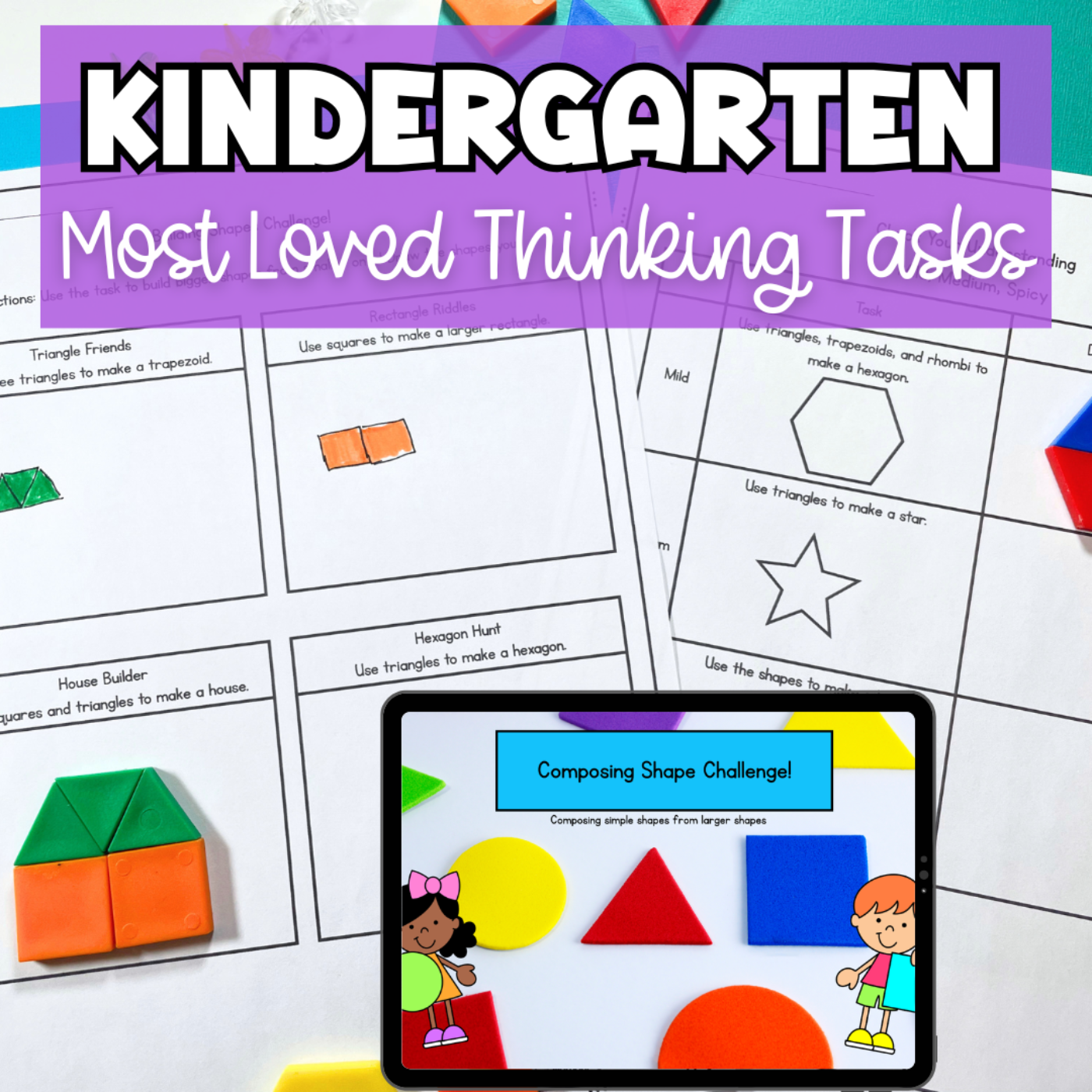
Are you looking for Building Thinking Classrooms Style Math Tasks that are perfect for Kindergarten? In this episode, I talk about the best of the best, most popular Kindergarten low floor, high ceiling math tasks!
Have a topic you want me to discuss? Fill out the Google Form!
Helpful Links
Let's Connect!
2025-08-18
8 min
Transcript
Available Results
Generated results are saved to the knowledge database for reuse and search.
No generated results are available for this episode yet.
Extract Knowledge
Pick what you want extracted first. Model, scope, and chapter options appear after a template is selected.
Generated results for public episodes are saved to the knowledge database so they can be reused and searched later.
Transcript
Let's talk about five of my most popular kindergarten
building thinking classroom style math tasks.
Hello and welcome to Making Number Sense Make
Sense, a podcast for elementary teachers, specifically
early elementary teachers, looking to really
make an impact in the number sense of their students.
Sometimes the hardest part about problem solving
is finding tasks that your kids will actually
enjoy that align with the standards, especially
in these younger grades like kindergarten. So
today I'm going to share with you five task ideas
that you can use in your own classroom. I like
to include task launch slides. to kind of bring
these tasks to life, but they're usually very
few slides. It's really just to launch the task.
No more than five minutes, probably three minutes
max if it's not a more complex story. Like to
have different levels of thin slicing. Something
that you might notice when you're doing just
a normal give students a story problem is some
students finish quickly. Some students are not.
So having thin slices of tasks, getting a little
more challenging and a little more challenging,
but building on things that they have just done
can help them get to more advanced and deeper
understandings of the tasks that you're doing
and giving the opportunity to either have some
kind of check your understanding problem that's
similar to what they just did, but just different
enough so they can start to generalize what they've
been working on. And in kindergarten specifically,
I also like to include sometimes some kind of
activity or extension that they can use in the
center so it's still building on what they've
been learning. The first task I'm going to talk
about is a composing shapes challenge. So in
this one I would give them something really simple
to start off with to say okay your first challenge
is to build a trapezoid using Three triangles.
So in that one, I'm giving them the shape I want
and also what shapes they're going to use. So
that's kind of our entry level. In the next one,
I might say I want you to make a rectangle, but
not say which shapes I want them to use. So it
starts to get a little more challenging. So they
have a goal in mind, but still need to figure
out how they're going to do it. And then from
there, give them something that is not just a
normal shape. So I might say build a house or
build a rocket, things like that. Shapes and
forms that... I feel like they would be able
to do, but they also want to do. So starting
off simple to get their feet wet and then they
say, like, I want to build a rocket. You can
go really crazy with it to maybe build me a castle
or build me an apartment building or something
like that so they can get creative. But also
thinking about the shapes that compose bigger
shapes, which meets the standard for kindergarten.
Another test that I found really popular is called
toy trouble. So in toy trouble, the students
have. been playing with their friends and now
it's time to sort the toys and figure out how
many there are. This is a sorting and graphing
task, so data and graphing task. So for this
kind of activity, it's kind of challenging to
kind of give them nothing to go by. So my thin
slice would be different. toys that they have
to count and then graph to figure out which one
has more and which one has less. And in terms
of getting more challenging, what's changing
is the number of things they have to count and
how many categories they have to sort. So starting
off with two, moving to three, and if a student
really wants to challenge themselves in the check
your understanding piece, if they want a mild,
medium, or spicy, I might give them three or
four categories. that they can try to do if they
want to, which is above the standard. But I found
that once they're kind of on a roll and they
understand what to do, they can apply what they
did in the previous tasks to the check your understanding
piece. The next task is a comparing lengths task,
and that might get your students moving a little
bit. So basically they have their recording sheet
and their pencil, and they need to measure the
things on the recording sheet and figure out
if those things are longer or shorter than their
pencil. And these are simple materials that you
would probably have in your classroom, like a
crayon or a marker or a cube or a desk, things
like that, so they can really start to decide
if something is longer or shorter than the thing
that they're measuring against. You could even
have them start to decide what things they want
to measure if they go through the list and they
have the time. Now in terms of a check your understanding,
consolidation, or reflection piece, this is where
I would include a game or something that can
be used as a center. The game for this activity
has a spinner and something on the side of a
paper that's printed off that they can use to
measure. So the spinner has numbers 1 to 5 or
1 to 10. So they would spin. and let's say they
chose six, they would build a tower with six
cubes. And then they'd have to measure their
tower of cubes against the object that they're
measuring on their paper to see if it is longer
or shorter than the object. So it might be a
marker, it might be a pencil, but it's something
that they can see and they can align to the bottom
because there's a line underneath the thing that
they're measuring to be like, this is where you
start measuring to reinforce that when you're
measuring things, they have to be lined up. at
one of the edges or one of the sides to get an
accurate measure. The next two tasks are fun
because they add a little bit of spice, a little
bit of mystery to the tasks that you're doing.
So the first one is for decomposing numbers and
it's called how many crayons. And in this one,
I would suggest you actually hide crayons in
your desk or in your teacher area so they can't
see it. And you say to them that you've hidden
five crayons in your teacher area. Some of them
are red. And some of them are yellow. Which crayons
could I have? So then they and their partner
would have to figure out what are the possible
combinations of five that they might have. So
they and their partner would have to figure out
what are the possible combinations of five that
could be hidden in your desk. And at the end,
you can actually show them the crayons that you
had so they can see if they were correct or incorrect.
Usually, they would have gotten... One of the
combinations is probably the one that you had,
so they get excited that they guessed it right,
but it gives a little bit of something extra
to get them excited to do this task. Decomposing
numbers is always such a great topic for this
kind of task because you can have them figure
out all of the combinations, and if they still
have time, you can give the suggestion that you
might have more crayons in your desk or whatever
the two objects are that they're using to make
the target number. The last task I'm going to
share with you today is the mystery bag task.
And the mystery bag task is working on T numbers.
So understanding that a T number is 10 and some
ones. In this one, you have a bag that is not
see -through that has a tens rod or a... tower
of 10 cubes and some loose ones so then similar
to the last ones your students have to figure
out how many cubes could be in the bag so in
this task they would have to figure out if they
have 10 and 1 how many would that be 10 and 2
and keep going until they're able to find all
the combinations that could be in the bag and
again at the end you could pull it out and show
them how many cubes were actually in the bag
and this is another situation where using a game
could be a great way to consolidate this task
to reinforce that 10 and some ones make a t number
and practice writing the t numbers as well because
number reversal can be something that's really
common especially in kindergarten so understanding
that that 10 is the one and that's why it goes
first is helpful. So similar to the previous
task, they have a spinner and they spin however
many ones there would be. So if they spun a seven,
then their number would be one tens rod and seven
would make 17. So they're practicing writing
those numbers as well as starting to understand
conceptually how many each of these teen numbers
represents. I will have a link to all of these
tasks together down below. And if you're wanting
to just try out a thinking classroom task, there's
also a link at the bottom called the escaping
ants task. And that's one that you can try for
free.
Chapters
No chapters available.