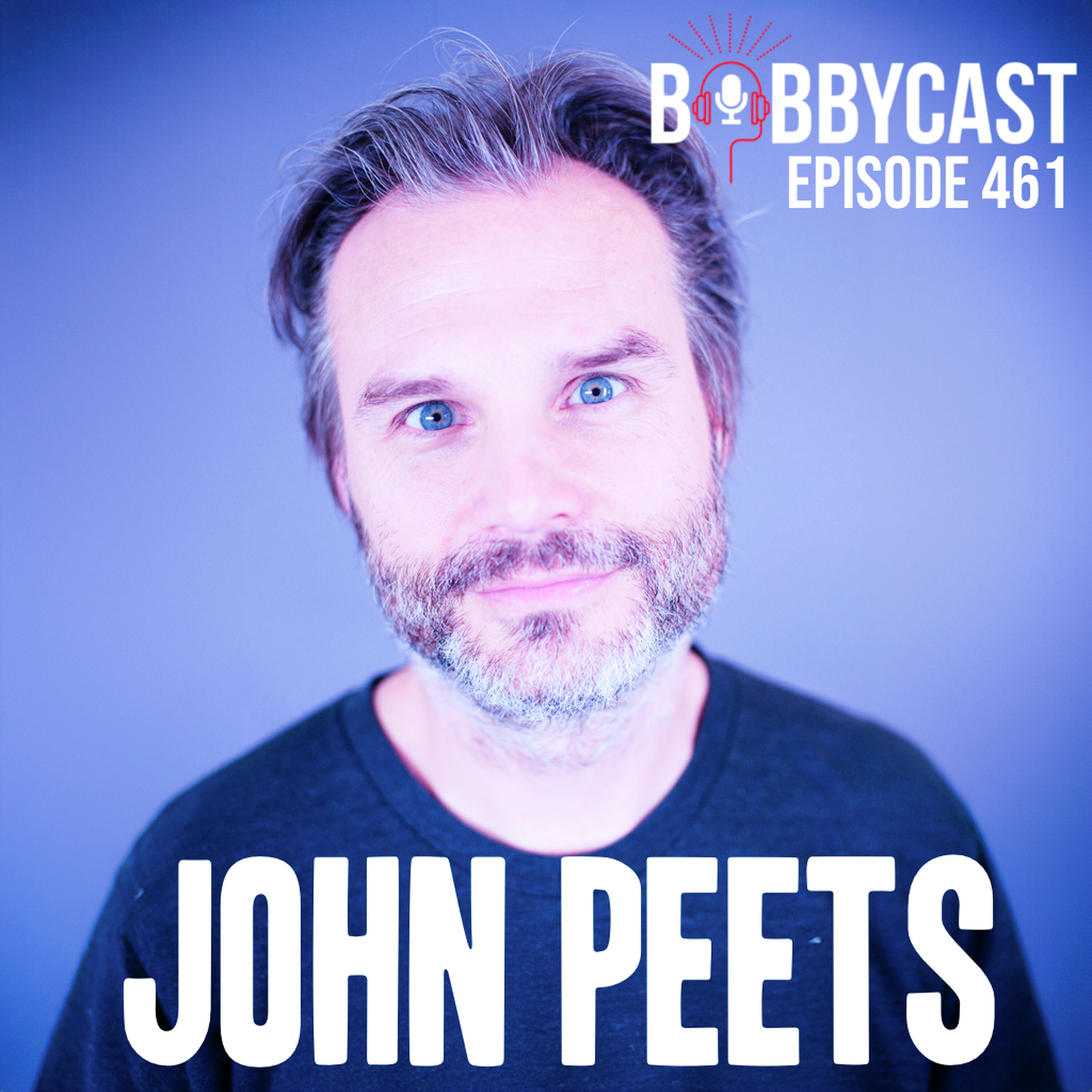
#461 - John Peets on His Role Managing Eric Church's Career + How To Build Artists
John Peets sits down with Bobby Bones to give an inside look of what being a manager for artists is like! John has been the longtime manager for Eric Church since 2004. He shared how he's helped play a role in his career, what he saw in Church in his early days and more. He also shares what he does to help build an artist and the importance of knowing their audience. John is also a manager for artists like Brett Eldredge, Brothers Osborn and Ashley McBryde and shares what it's like working with them, how he helps the artists build their brands and more!
Check out John's Artist management Q Prime South on Instagram!
Follow on Instagram: @TheBobbyCast
Follow on TikTok: @TheBobbyCast
Watch this Episode on Youtube
See omnystudio.com/listener for privacy information.
Available Results
Generated results are saved to the knowledge database for reuse and search.
Extract Knowledge
Pick what you want extracted first. Model, scope, and chapter options appear after a template is selected.
Transcript
00:00:06
Speaker 1: Sometimes I start with what is your greatest of all time? But they have in common is they're like nothing else. If you want to ask me what my calling is, I want a bunch of those. I want to work on the stuff that people will never forget.

00:00:18
Speaker 2: Episode four sixty one with artist manager Extraordinary John Pets. He currently manages Ashley McBride, Brett Eldridge, Brothers Osbourne, Eric Church, Marty Stewart, Harper O'Neil. I mean, the guy's next level and I've known him for a long time. He doesn't do a lot publicly, so it's pretty cool that he came over and did this with me. And even though I know him personally, I did not think he was going to say yes. I don't know that he wanted to say yes. I think he maybe felt a little personal pressure, but I think in the end he liked it. I think it was good. Yeah.

00:00:51
Speaker 3: I like the ones we do where they don't normally do interviews.

00:00:54
Speaker 2: Yeah, me too. And again I had, I mean socially hung out with them, I don't know two months prior, but we've never done anything professionally together. So he's like, you know, enigmatic, as they would say, he's an artist manager from Ohio. He started Q Prime South, a Nashville based artist management company, in two thousand and one. He has overseen Nickel Creek, a little big town, the Black Keys, you know, really instrumental in their success. He's a photographer, video director, executive producer. His photos have been in the album packages with The Black Keys, Eric Church Ashley McBride. His photos have been I could keep going, but really cool guy, really interesting guy. He's like the Doseki's guy, but just way younger. It's like if you shaved the beard off. And also like twenty years he's the most interesting man. John Pete's Q Prime South. That's the Instagram and episode four sixty one is now, I did not think you would say yes to this. I just want you to know. I've loved you forever. I've been myriady forever, but you're like the mythological creature.

00:02:02
Speaker 1: Oh well, that's nice to hear you say. I do like that position. Yeah, I said.

00:02:08
Speaker 3: Yes because I like you too.

00:02:09
Speaker 2: One thanks, I guess.

00:02:10
Speaker 1: And yeah, I feel I don't do a lot of this and I really don't come out of my hive much, you know.

00:02:18
Speaker 2: I do know, Yeah, which is why I'm super grateful that you decided to spend you know, forty five minutes, fifty minutes with me. And I've never asked this question to somebody sitting next to me, but my my whole purpose of this is going to figure out the answer to the question I'm going to ask. It's like, why are you the way you are? Like, that's my goal of sitting with you, because you're definitely different than anybody else in this industry, in this town that I have gotten to know on any level professionally or personally. You know, and you and I it's been a few years, but you know, we used to invest a little time, just spend a time with each other. Right. I was so intrigued by you, and I was like, I need to see what this guy's all about, because I would never hang out with anybody. And I tried to make the deal with myself, don't hang out with anybody because you can be unbiased, terrible idea, because there are great people here, right.

00:03:05
Speaker 3: I do remember that idea, Yeah, for good reason.

00:03:07
Speaker 2: I think you had good reason, and so you were one of the guys. I was like, I'm gonna break the rule because it's you know, part of it is the artists that you represent. There is like a there's like a string that that they all kind of hold, and they all kind of represent your ability to take someone who's creative, to push them to do the art their way, but also to trust you in order to guide them. And if it's Brett, one of my best friends, and I've been able to see close but like brothers in church, and I remember, and I'm just talking a whole lot here, but when Ashley McBride first started like to be in town a lot, you were like, here's an unmarked CD of this artist and it may take her a while, but she's awesome right now. Remember that? So, like, why do you find the artist that you find when it seems that a lot of them are very difficult to break at first?

00:04:08
Speaker 1: Yeah, that's a great question. And I do think that some of the stuff finds you. You know, I don't go out hunting necessarily. But the one thing that I feel like, and doing some thinking about this and some reflection, it's what doesn't appeal to me is something that I feel like has been done. And I think that leads you to when you first hear somebody, if it feels different, that's instantly an appeal for me. If I hear something that I feel like is already happening, whether that's right or wrong, I don't it doesn't attract me. So I feel like I'm attracted to stuff that is very different and kind of therefore.

00:04:50
Speaker 3: Almost takes a long time. You know.

00:04:53
Speaker 1: Eric Church is a good example in the sense of running into him. It was such a it was such a testosterone fueled male thing.

00:05:02
Speaker 3: I loved it. I loved everything about it.

00:05:06
Speaker 1: We went so detailed that there was a song in there called Living Part of Life on the first album, and that had a living part of Life rhyme with the word rife the wife.

00:05:14
Speaker 3: There was a wife line in there.

00:05:15
Speaker 1: He said, I can't have that line in there, and he changed it to make it just all single male thing. And we made the whole record and they said, you know, we're trying to market to soccer moms and like thirty five year old women.

00:05:27
Speaker 3: It's like, no, that never occurred to me.

00:05:29
Speaker 2: You know when did when did you in Church meet the first time?

00:05:33
Speaker 3: Two thousand and four?

00:05:34
Speaker 2: And where was he in his life at that point? He was, he was.

00:05:38
Speaker 3: Here, He.

00:05:41
Speaker 1: Had a publishing deal and he came to be a writer. Primarily it was before the record deal with Capitol. I met him right before that and did that deal.

00:05:52
Speaker 2: And what did you see about him that allowed you to see something so much bigger than what he was doing at the time.

00:06:00
Speaker 3: Well, it was the song It was the songs.

00:06:03
Speaker 1: Really he was I don't want to say unremarkable, but you know, he was a normal guy, you know, in sweatpants and writing songs, and he didn't exude stardom. I always kind of felt like he grew into it. I felt like his shoulders got wider and he got taller or something. Over time he really matured into the artists that you know now. But I think he was came here to be a songwriter, a great songwriter. But he was very competitive, and I like those two.

00:06:33
Speaker 3: Those two qualities were like the biggest thing.

00:06:35
Speaker 2: Did you feel like the competitiveness was sports based? Yes, it came from that background. And when you say competitiveness in writing the best song, beating yourself at a song, getting better as a performer, how is there a competitive I.

00:06:50
Speaker 1: Think on all of those levels, I think, but I do think the performing thing was last. You know, the artist thing was definitely last. But really studying the craft, and he had the opportunity. He's of the age and era that he was still writing with old cats, you know, people that had written for George Jones and Waylon Jennings and things like that. And he was a good student man. He wanted to I think he wanted to beat his peer group, and I think looking beyond to the great people that he had access to in this town, that he wanted to bring what they had to the table.

00:07:23
Speaker 2: What do you think he believed in within himself early on that allowed this whole creation? Was it that the songs? First? It just did he just believe he could write great songs or could get to the point where he could write great songs?

00:07:36
Speaker 3: I think he did. I think he did.

00:07:37
Speaker 1: And then I think once he started getting some affirmation of that, which wasn't right at the beginning. You know. Again, he tells some pretty funny stories about you're writing about Merle Haggard and two thousand and three. Really, you know, So he was criticized a little bit on some of the songs, but he got there, and I think that that confidence allowed him to grow into the the artists.

00:08:00
Speaker 2: You know, with a lot of artists that I know that have a even myself, you have to kind of turn up your persona. I have to turn myself up on the air because I'm I'm an introvert. Yeah, but when I'm on the show, I'm the opposite of an introvert or if I'm on stage in comedy. But that is a part of who I am. I just have to take that, extract it and dial it up, right.

00:08:25
Speaker 1: I think that's true for everybody. Yeah, that I deal with with Eric?

00:08:29
Speaker 2: What did you identify inside of him that allowed him to turn into the and this I have the same thing the character that we know of as Eric Church on stage.

00:08:41
Speaker 3: What I think it was sports, I really do.

00:08:43
Speaker 1: He was such a competitive basketball player and he loved to watch sports.

00:08:49
Speaker 3: He knew a lot about sports.

00:08:51
Speaker 1: He competed very hard, you know, he would I remember taking a trip early back to his high school and he immediately wanted to shoot free throws against whoever was the best basketball player there, you know, at his high school. So I think that I mean I'm a I'm a I'm a runner. I was a runner in high school. And my dad was at a competitive high school. He was a football and wrestling coach and a powerlifter.

00:09:16
Speaker 3: My dad is a not me.

00:09:18
Speaker 1: He's a very big strong man, and so I grew up wrestling really young, playing foot you know, doing the stuff for my dad. But when I quit that because I had run track one year, like in sixth grade and showed some promise there, I decided to run cross country and do all these sports that I feel like my dad felt. If you can play football, you can kill the runners, you know what I mean, Like that's not a sport, you know. And I say all that to say I think there's a little bit of that attitude and athletes that come and do music that sports and athletics are so challenging and so hard mentally physically and everything that you go, yeah, man, I can whoop this thing's ass.

00:10:00
Speaker 2: There's a lot of failure in sports. Honestly too, as someone who played a lot of sports, and there's a lot of failure in sports. It doesn't matter if you're basketball. Listen, you shoot fifty percent of the field, right, that's a great night playing basketball. If you bat three hundred in there, that's all. So in this industry, there's a lot of failure that we're in, that's right. And I feel like a sports background introduces you to all failure is not death.

00:10:23
Speaker 3: That's right.

00:10:23
Speaker 2: I agree with that too, that's right, and I have very important I've had a similar thought about it, and people are like, why are these athletes just so great at everything? And I don't think so. I think it's the culture that is now inside of yourself included, that is now inside of you guys that all all sicknesses and death, all failure isn't loss, right, and it's the ability to also take criticism, game tape, whatever and grow from it. It's interesting that you put Eric in that sports category. Definitely, I didn't know him as a young athlete, so for me to I know, I know he's a big North Carolina basketball fan, I know he has those interest When did Eric start to wanted to start to simmer a little bit where you were like, we might actually have a little bit of commercial, Like we know he's good, but when did that commercial start to happen a little bit?

00:11:11
Speaker 1: Well, it was for It's interesting that you say, because for me that the definition of commercial is so it was so foreign to me. So I when I signed Eric, I was doing a band called Nickel Creek. That was my first love Nickel Creek Man and Gillian Welch, Like, that's my experience. So I'm coming to this thing going, are you kidding me that it's possible to get a song that you're not having to sing yourself like on the radio being played, being broadcast. I mean anything on the radio was like a massive windfall in my perspective because I've been doing it for years of really working in this, you know, high level musicianship and credibility and everything, but mass exposure was really hard to get, you know. But everybody who's making a living, they were doing the art they wanted to do, and I just consider those things wins, you know. It's one of the first things for me is like, what is your definition of success?

00:12:00
Speaker 3: Fame?

00:12:00
Speaker 1: I'm not interested, you know, but if you go, I'm called to do music. I'm put on earth to do this. Then I said, well, the first goal should be not have to wait tables like you. If you could just do it, no matter how big it is, that that should be a win for you and then you can grow it from there. So when the idea that even the first record and the first song is how about you whatever, it went to maybe eleven or something, I mean it was looked at as kind of not great. You know, you got a new record, new new guy, new record, big push, whatever, I'm going. This is amazing, This is incredible. I mean, the people were reaching, the millions of people were reaching is insane. So I never took any of her for granted, but I do think the town had a completely different perspective. And of course we go to eleven or whatever it was, and then we're gonna go two pink lines, you know, they go the pregnancy song, you know, I mean, we just get killed.

00:12:50
Speaker 3: And so it's been kind.

00:12:52
Speaker 1: Of that cadence of playing not really the game, but I guess the strategy maybe of trying to do things, delivering some things from Eric that we feel like could get done to some degree, and then really trying to test the audience, you know, and ship a song that's going to be really hard and probably not going to work, but it's going to speak through that big bullhorn to the audience, you know, to the actual people he's trying to reach. And there were so many of them, you know, for us to get anywhere into the twenties even it was an.

00:13:24
Speaker 3: Incredible amount of reach. From my perspective, particularly then your dad was a coach.

00:13:30
Speaker 2: It feels like in a lot of sports what you said there, what was his primary sport? Was he? Did he have a primary? And then he just kind of got like was he more of a wrestling more footbootball? Yeah?

00:13:39
Speaker 1: Yeah, he tried out for the Cleveland Browns when he was in college and broke his back actually in the tryouts.

00:13:45
Speaker 3: I never made the team, but yeah, big football guy.

00:13:48
Speaker 2: A lot of pressure on you to perform from your.

00:13:51
Speaker 3: Dad, I think so.

00:13:53
Speaker 1: Yeah, I mean either probably a little directly, but certainly you know, all of us, you know, trying to impress the dat. It feels like so I think a lot of implied stuff too.

00:14:05
Speaker 2: How did it feel to have your dad as a coach?

00:14:07
Speaker 3: He never coached me?

00:14:09
Speaker 2: Okay, your dad as a coach, he's going to be coaching. Might be worse from the stand it might be worse.

00:14:15
Speaker 3: But yeah, he coached for another high school, not the high school I went to. But wow, he.

00:14:19
Speaker 2: Didn't coach your high school. You didn't go with them to the other school. No, is that purposeful?

00:14:24
Speaker 4: Uh? No?

00:14:24
Speaker 3: I think it's this public school system.

00:14:26
Speaker 2: You know, was a different school and did so did he get to watch your games.

00:14:34
Speaker 1: Okay, yeah, he did especially well, especially when I turned to running.

00:14:38
Speaker 3: You know, he was there at all that stuff.

00:14:40
Speaker 1: But yeah, the coach mentality can't help but comment and criticize sometimes the other coaches and everything.

00:14:46
Speaker 2: When did you become in your heart at creative? Because you're not a typical to me, you're not a typical manager or or CEO of management company like you're are. I feel like you're a creative first, and.

00:14:56
Speaker 3: I definitely am. Yeah, I mean especially in retrospect.

00:14:59
Speaker 1: Yeah, I did go to college. But when I was in college, I was playing in bands, so I was. I was playing in rock bands and not very good. I thought I was pretty good.

00:15:12
Speaker 2: You do it? What what part of the band were you?

00:15:14
Speaker 3: Guitar?

00:15:14
Speaker 2: Yeah? Do you sing it all? Uh?

00:15:16
Speaker 3: No, did not sing at all?

00:15:17
Speaker 2: Vocals Uh?

00:15:19
Speaker 1: Some yelling okay, fair enough, but but primarily played guitar, played lead guitar.

00:15:25
Speaker 3: And we did okay.

00:15:27
Speaker 1: We made one record that never got picked up. And as I moved out of college, I just started to working night shift in a wine warehouse, pulling wine for four days a week, and I'd have off Friday, Saturday, Sunday and I would go play play with the band into my parents. Great disappointment, but yet supportive. I say that lightly.

00:15:50
Speaker 3: You know.

00:15:51
Speaker 1: I decided I better make a choice, and I moved to Nashville. And when I got here, man, that I quickly learned just not even close to good enough.

00:16:04
Speaker 2: You know, when you moved here, the intention was to play music, yes, in your head, in your heart.

00:16:08
Speaker 3: Yes, and not.

00:16:09
Speaker 1: I mean it took me two weeks, man to figure out, Holy crap, you are.

00:16:13
Speaker 3: Bad, you know.

00:16:14
Speaker 1: But I was also, I really was the organized guy. I really did kind of name work on the gigs, do do a lot of the work that I now found out that was going to be helpful for my my real calling.

00:16:28
Speaker 2: So you were, but you were managing the band. Even though you were in the band. Somebody had to manage the band.

00:16:32
Speaker 3: Yeah it's those little band. Someone's sure going when do we leave schedule?

00:16:36
Speaker 2: And yeah, yeah that's right.

00:16:38
Speaker 1: But yeah, I used to, you know, love to write and play. And that's why I still paint today and stuff.

00:16:43
Speaker 2: I still can you take pictures to do the atography, And that's how I know you're a creative. I mean, I've been in your different offices and you can tell just by looking around the aesthetics like either this guy has way too much money, let somebody buy random stuff, or he's really creative. Yeah, and it's the second. It's definitely the second. But I've seen your pictures and was there a point where you had to go, like a self humbling of Okay, I'm not gonna make it in music, and that kind of sucks, but I can kind of fill my cup in this unexplored in your life, this unexplored area. Maybe it wasn't man at the time, may have been an agent, manager. Uh, I don't know what it was. There's just so much here. Did you realize you were gonna have to pivot a bit?

00:17:27
Speaker 3: Uh?

00:17:27
Speaker 2: I did?

00:17:27
Speaker 3: I don't know If I I didn't. I realized it fairly quickly, like I didn't know that there was a man sure and agent. Yeah.

00:17:33
Speaker 1: You get in these little bands and you run around, you know, your a little small town.

00:17:36
Speaker 3: You don't realize this stuff even exists.

00:17:38
Speaker 1: You get here and go, wait a minute, if you really love music, and I would I would say this sometimes I say this to like college kids or something that are interested in what I have to say. But if you were interested in music, you'll love of music and you can do anything. You can be an engineer and build staging. You know, you can be an accountant.

00:17:55
Speaker 2: You know you do not record label agent.

00:17:57
Speaker 1: There's anything, anything that you have you can can tribute to the arts.

00:18:01
Speaker 3: And I think that's fantastic.

00:18:02
Speaker 1: And I found my way there by just kind of sweeping studios, you know, I mean, you did all the odd jobs that people do.

00:18:11
Speaker 3: You know.

00:18:11
Speaker 1: I was all over everywhere and I built I was cleaning out an attic, organizing some some T shirts, counting T shirts, and an attic of a management company. And I told the guy, you know, I can come back here every month and count these for you, or I could build a little database that kind of if you just check them out, it'll subtract it for you.

00:18:31
Speaker 3: You don't know what's in your attic. He goes, you could do that, yeah.

00:18:34
Speaker 1: And he was also had a couple of recipe boxes on his desk for booking contracts. And it was in the building, it was in the red, if it was in green, it had been sent back to the agency. I could build a little thing for that little radio button thing you can tell if they're in the business in the building or not. And so eventually I did a couple of these little computer solutions for this guy, and he's he hired me and put me in the basement and just said, just figure shit out for me, you know, like little just stuff. So I started about this, like talking to the managers there and talking and kind of figuring out what is quantifiable and what these guys are doing, you know, what stuff is repeating, what are they doing all the time, And so I built a kind of a management database thing. So in doing that, I really learned what the pros were trying to do. And all the while, you know, I know how to roll chords, I know how to do The artists kind of like me because I could relate to I'd been rolling around in a bus and it sucks, or in a van, you know, And so I really related to the artists and what they're doing, very drawn to the creatives. But I was starting to get an understanding of the quantifiable part. And then I, you know, I just realized, I think this management thing is like a half super quantifiable and a huge chunk of intuition and creativity would make a great manager, because without that imagination and the building of those real creative plans, that's kind of boring, and if you're just an administrator and booking travel and doing the repetitive stuff, it's like a lot of people could do that. So I felt right in there. I started to feel like I might have something to offer that was different than what I was observing out of who I was working for and building things for them, Like, I think I might have a little something to offer here.

00:20:20
Speaker 2: But did you ever think about going back to Ohio? When you got here and you're like, Okay, Wow, everybody's really good and maybe I'm right now, did you ever go maybe I should go home?

00:20:27
Speaker 5: Oh?

00:20:28
Speaker 3: Yeah, definitely. Yeah.

00:20:29
Speaker 2: Why did it? And why did it?

00:20:30
Speaker 1: You?

00:20:30
Speaker 3: Well, you know, you know why? Because I think because I could.

00:20:34
Speaker 1: In some ways it's weird to say, but my parents not understanding. I still don't think they really know what I do, you know, producer or what are you? But I I knew I could always go there, and that I think it has a little bit of a obligatory thing to it too. When you when you have a safety net like that, if you're privileged enough to know I can go home and there's going to be a bed and I'll probably get something to eat. I feel you're obligated to take some chances. You're obligated to go for it, you know, and make a difference. And so that kind of kept me here, you know, because I could go back.

00:21:08
Speaker 2: What music did your parents listen to in the house.

00:21:11
Speaker 1: We listened to a lot of country. They were country music fans. Yeah, they did the Johnny Cash thing and all that.

00:21:17
Speaker 2: I don't know that that was the answer I was expecting, not that it wasn't. Because you're from you know, Ruleish, Ohio, so it makes sense. But I know, you're just kind of like rock and roll to me, and maybe you're just rock and roll in the country. I mean, you're just different.

00:21:30
Speaker 1: Well, I liked rock a lot more than I liked country, but they played shuntry and I had an affinity. I mean, and to be fair to my dad, he was pretty outlok on. I mean, he was really the Cash Whalen guy. He liked the rockier stuff. But yeah, I mean I locked into the rock bands for sure.

00:21:48
Speaker 5: Hang tight, The Bobby Cast will be right back and we're back on the Bobby Cast.

00:22:03
Speaker 2: Your first music that you listened to that you felt like was your your music, meaning mine was probably like John Mayer. I felt like he sang songs and wrote songs that kind of represent what I felt country music represent where I came from, but like alternative stuff is what I felt like. But really the John Mayer type stuff was like, oh, this is like, well, I'm trying to say, like, what were your first musical folks that you felt like?

00:22:29
Speaker 3: Man, I relate, hmmm, yeah, that's that's that's interesting.

00:22:32
Speaker 1: I mean I kind of I vacillate a lot in there, because this is a long way of saying this, but we live close to an amusement.

00:22:43
Speaker 3: Park, close enough that at age fourteen.

00:22:48
Speaker 1: You could get a license for riding like a moped on the street, go to motorize bike. So we would get one season pass and my friend who is now an architect, great artist, we'd get one season passed.

00:23:01
Speaker 3: One person would go in. I'd stamp your hand, come out.

00:23:04
Speaker 1: He would take his role of markers and he would draw on everybody's hand the stamp and we would all go in every day of the summer, and you know, you're fourteen. You get your first glimpse of freedom and the record of the year that year is Back in Black by ac DC, and I can't I could never shake that record, you know. And I don't know if they're saying my you know, my value set necessarily, but the the guttural like thing of that that was all over that park. You know, you're meeting girls and it's like you're riding the rise. It's just it's just cranked with And Cleveland was, as you know, Cleveland's kind of a rock and roll town anyway. So your radio station is coming from WMMS up there, who had won Rock Station of the Year over and over and over again, and a lot of Cleveland pride and breaking rush and you know, just doing rock bands, you know, So that all was kind of going in at that time. So but I really liked all kinds of music, and I think I really like the Eagles, you know too for some of the more I think kind of subtle messages and musicality and melody and stuff like that.

00:24:10
Speaker 3: But man, I liked it. I just liked to rock when I was young.

00:24:13
Speaker 2: Were there any concerts that came to the theme park near your house? Any artists that would come because we had a Magic Springs we had like Diamond Real. First concert ever went to Diamond Real Magic Springs. Were there artists that came through.

00:24:23
Speaker 3: Yeah, the other artists that came through go or did you even I went to Yeah? I went to a couple.

00:24:29
Speaker 1: I think I saw the cars maybe, But there was also a great amphitheater there. Oh yeah, it was pretty close that. I saw a lot of my first concerts there too.

00:24:40
Speaker 2: Being in Cleveland, is it like New York and the Statue of Liberty when you have the rock and Roll Hall of Fame? Do you ever go or did just Touristicota?

00:24:47
Speaker 3: The first time I've gone is like a couple of years ago.

00:24:49
Speaker 2: Yeah, terrible because it's you know, Cleveland is to me is rock and roll. Lebron and rock and roll. Those are the two things I think about when I think about Cleveland. But was that when was that built? Was it built already there the Hall of Fame when you were a kid?

00:25:03
Speaker 3: Oh? I think I think it was built after that.

00:25:06
Speaker 1: I don't know what year was built, but I think I moved to Nashville in ninety five, I think, so it might have been built before then, but not ninety five.

00:25:15
Speaker 2: Yeah.

00:25:16
Speaker 3: Yeah, Okay, So if I left and they built it, do you.

00:25:18
Speaker 2: Care that if about the Guardian's name? Oh, I don't, I don't like that. I don't either.

00:25:23
Speaker 3: Yeah, I don't either.

00:25:24
Speaker 2: And you know what, I actually understood a bit of the Redskins situation. I was like, I get it. I didn't feel like the Guardian. That one doesn't feel good to me.

00:25:33
Speaker 3: That's hard for me.

00:25:34
Speaker 2: Yeah.

00:25:35
Speaker 3: Yeah.

00:25:35
Speaker 2: And I'm not even from Cleveland, and I feel like The Guardians that's kind of weird. And you know, our show is on in Cleveland and I have to talk about The Guardians. Some they do something in a local but The Guardians feels weird and I'm not even a local there.

00:25:44
Speaker 3: Yeah, I don't know what we're garden up there anyway?

00:25:47
Speaker 2: Yeah, or where you're what is that? I don't know how you moved to town and you're figuring out who you are as a person, You're figuring out what you're good at. Are you finding enjoyment in kind of this new area that you've pulled yourself into, or are you still just kind of figuring out what you want your next thing to be going maybe I want to be at a label or are you going, oh, this is what I can do. I'm building these databases. Yeah, I think I can actually carve my own version of this. Did you feel like that early.

00:26:17
Speaker 1: On, Yeah, early on, I mean I loved it here from you know, I mean disappointed maybe or maybe just kind of facing a truth that you're not you know, you were pointed at the root note, you know, kind of the caveman version of oh you, I want to be a singer, I want to be a guitar player.

00:26:34
Speaker 3: Whatever.

00:26:34
Speaker 1: It's kind of the basics, not understanding how much opportunity was really was really here, you know. And I but the people I ran into and the stuff I got to be a part of, and do and I mean I remember, you know Pam Tillis's I do. Yeah, I had to take her speakers shop because I always have been a studio or a stereo person.

00:26:56
Speaker 3: I've I've you know, I didn't have any money, but I would buy the best beacause I could ever buy.

00:27:01
Speaker 2: An engineer or engineer then producer.

00:27:04
Speaker 1: I did, I did, and I and I tried a little bit of that. I I mixed on the road, I made a record on.

00:27:10
Speaker 3: My brother's band. I worked in the studio a bunch.

00:27:14
Speaker 2: Why don't you think that stuck?

00:27:16
Speaker 3: I don't think it was that good at that either. I think it was okay. And one of the reasons.

00:27:22
Speaker 1: Uh, what I have trouble with in studio my problem with studio stuff, And it's still as you said earlier. I mean, I'm heavily involved with record making from my seat as a manager, But listening to a snare over and over to pick subtleties of the snare and how that's going to come together is not my thing.

00:27:42
Speaker 3: I'm way more of an emotional.

00:27:43
Speaker 2: Listener, you know, like a Rick Rubin.

00:27:45
Speaker 3: He thinks way more in there.

00:27:47
Speaker 1: I've sat with him and you have, yeah, nickel Creek. I was going to make a record with him that we didn't end up making.

00:27:53
Speaker 2: But but that's you to me in this space, like you're that Rick Rubin to me, well, that's very not as old, you know. Rick Rubin, him, in my mind, paved the way for people with awesome taste to be a part of making in that foundation level of making music. You don't have to be in Rick Rubin, he's not a musician, yeah, but he just goes in. It's an intuitive yeah, And I feel like that's that's what you are.

00:28:22
Speaker 1: I think, Well, I love that comparison, of course, but I think when you say that, it also is interesting because I had to come over here, you know.

00:28:31
Speaker 3: I was thinking about it. And we have a wall in the office of.

00:28:34
Speaker 1: The records, you know, and there's there's sixty albums up there that I've been a part of making and managing, you know, but they're not It's from Nickel Creek to the Black Keys. It gets and Rick is kind of like that too. It's like it's beast.

00:28:50
Speaker 3: Doesn't feel good or is it right? You know?

00:28:52
Speaker 1: And that's how I've always seen music too. And that's even weirder for a manager, in the sense that a lot of it, or people assume a lot of it is predicated on your contacts and your relationships and your ability to do.

00:29:04
Speaker 3: Business or you know the people right, and you know the particular specialty in which you are doing, you know, and I have not done that.

00:29:14
Speaker 2: Tell me about pamp Tellos and the speaker, Oh speakers of me so b.

00:29:18
Speaker 1: Anyway, she wanted to go buy some new speakers and this guy was working for so you should take her because you know more about this than us. But the cob I was driving it, nineteen eighty seven Chevy something but in Ohio. I brought her from a house all rusted and the headliner and certain humidity you know, comes down a fall. Yes, and her door, the door, passenger door or the driver door doesn't work, so I can open the door for her, but I have to get in through the window or the back.

00:29:48
Speaker 3: Seat, you know.

00:29:49
Speaker 1: So she and I have a really long hair at this point, and she knows a little bit about me, so it isn't like I've just kind of met her, but she's just shaking her hand. We had the best time, and it was just like one of those things where going I cannot believe this kid from Ohio was sitting here taking Pam Tillis speaker shopping in my shitty car, like I just couldn't believe it.

00:30:08
Speaker 3: And it's those kind of things that was going. This is worth the whole thing right here.

00:30:12
Speaker 1: If nothing happens, these experiences, these little moments, you know, are beyond I would.

00:30:17
Speaker 2: Have ever thought any music in your house being played, your parents playing music, your parents, seeing mom, dad, anything.

00:30:22
Speaker 3: No.

00:30:24
Speaker 2: So your love comes from what just the age you grew up, in the place you grew up.

00:30:29
Speaker 1: I guess, and the deep, deep pull on the heart.

00:30:32
Speaker 3: Man, I mean it's.

00:30:36
Speaker 1: I think, and I've miss so many people in town here. I think there is a big common thread of that. I think you beat the accountants, you beat anybody. They for the most part, people love music that move here and work in music. They were affected greatly as children somehow. So I don't know if it was the place. My mom's one of nine. It's a very big family. We partied all the time, so there was lots of lots of that celebration going on. There was always music around. Nobody played, but it was always in the in the mix. And I just think it really when you're young and you're dealing with your stuff. I really just leaned into leading into that music. You know, it meant a lot.

00:31:17
Speaker 2: When did you think and who was it? Yeah? I needed an artist. I think I can really shape an artist. Or you met somebody and you're like, we need a partnership, like in your in the infancy stages. Who was that artist that you were like, come with me or let's work together, or like who was the first else?

00:31:35
Speaker 3: Nickel Creek. Yeah, and they were I mean I don't know how.

00:31:40
Speaker 1: I mean, they must have been sixteen years old or something and dad was playing bass, and I just remember, and I mean you've you've probably seen this a bunch and I have now too, but it it's.

00:31:50
Speaker 3: Like it's it's just magic. You know.

00:31:52
Speaker 1: Music is magic, and if especially when you put it in a room like this and you take a band like that with three disparate acoustic instruments, and just all of a sudden, the room is filled with what you can't even imagine what's going on, especially with those three so intricate, you know what they're playing and playing all each other and singing that beautiful harmony, and you're going, I mean, I could, I could rule the world with this magic trick, you know. So then I just go, these guys are great. I just need to get put them in front of the right in the right situation and turn it on, you know, is the way it felt. And then fortunately for me, oh brother, where at thou happened?

00:32:28
Speaker 3: You know?

00:32:29
Speaker 1: So I'm sitting there with the band of sixteen and seventeen year olds, and Time Magazine makes a trip to this festival called Myrtle Fest because their, oh brother, the movie is taking off, so like we need to see what old time music is. So they come down to see Dolly Parton kind of thinking in this, you know, North Carolina Music Festival.

00:32:48
Speaker 3: That's what it's going to be.

00:32:50
Speaker 1: And my guy, Chris Theely is playing mandolin in Dolly's band because that's what they do, these bluegrass bands, you know, they all they have their band, but they play with everybody.

00:33:00
Speaker 3: Who is this kid and this kid.

00:33:03
Speaker 1: Has a band and he came and saw the band and they wrote about it in Time magazine that you know, they called them a band of the millennium or something like some crazy thing because the old time music had a spotlight on it and they were their kids here, you know, is basically what the story was. And that just kind of really got things going for us.

00:33:23
Speaker 2: Yeah, that's exciting because it was it was different and then it was everywhere. But you were already involved in it when it was different. So when it became normal, oh, brother art, that really did like put them on a scene, but they were already.

00:33:36
Speaker 3: Doing it right Oh yeah yeah, so.

00:33:38
Speaker 2: You're involved and you're like, we're just trying to get this exposed. Who knows if it'll work. And definitely Nickel Creek's different. I mean it's like a little bluegrass, a little so oh. We used to play their videos all the time in the music station I work for back in Texas, Like that's where's where I became a fan watching their videos. But then it comes around does it feel like success or does it feel like we're fine, we finally now have a shot or was it not even about the shot? Was it just about making music and let's just see where it lands.

00:34:02
Speaker 3: Yeah, that's that's more. That's more like it. You know.

00:34:05
Speaker 1: I felt like that's what it was, just making music and going and again a lot of gratitude and it's it's turning out to be a recurring theme in here. But it's like, just your expectations or what are your.

00:34:18
Speaker 2: Expectations weas to do it? Yeah, that's what I want to know.

00:34:20
Speaker 1: What were your expectations, Yeah, to be able to have a job doing this, you know. And they they I think they were interesting because they were homeschooled and they were their parents took them to bluegrass festivals, which I'm still in awe of that culture in the sense that there's not a lot of music culture where the masters the children have access to the masters. So you can go to a bluegrass festival and here is the best Tony Rice Bayla flex at the campground, and here is twelve year old kids watching them, trying to.

00:34:48
Speaker 3: Play with them. I mean it's like, how do we learn how to walk?

00:34:51
Speaker 1: I don't know, but we're around it and it just becomes something you do and you do it, you know, And I feel like that that opportunity went in like that. But they there, they're homeschool, they get to access their masters, they start a band, and the band kind of works. I mean that's idyllic, you know, in a sense. So I think they didn't have a sense of this is going to be hard or this is what is this going to be. It just kind of was part of their life. And I kind of enter that scene with no real no track record.

00:35:18
Speaker 3: No expectation. Wow, this is kinda we can do this, you know.

00:35:24
Speaker 2: I feel like one of the superpowers I was lucky enough to find with myself was a bit of ignorance about the industry and being naive but not scared because I've been in my fair share of trouble and had my fair share of naysayers. And anybody that does anything different does because it challenges the status quo, and the status quo is happy, right, the status quo is just happy and sitting up in the chair and having to having a good day. But the fact that I was a bit naive, not that knowledgeable, had a love but wasn't scared. Like I feel like that was like the right ingredients from my stew to work. And it feels a little bit like because they were so good, but they were so young, so they weren't even they weren't like they didn't burn by the industry.

00:36:08
Speaker 3: Oh they didn't know.

00:36:08
Speaker 2: I didn't know.

00:36:09
Speaker 3: Yeah, naive, it's awesome. I mean, it really is.

00:36:12
Speaker 1: I think those qualities you described her man, if we could all stay there.

00:36:16
Speaker 2: In the right mix.

00:36:16
Speaker 3: Though, Yeah, you got to be so nice.

00:36:18
Speaker 2: I want to be so naive. Another artist that I think about when I think about you and you believing in them way early and they were so good, but I think it took forever was Ashley. I feel like Ashley took about three years longer than it should have.

00:36:32
Speaker 3: Yeah, I'm always at that.

00:36:33
Speaker 1: I don't know why I always said that in that mix, but it's uh but yeah, and again it was just one of those things.

00:36:40
Speaker 3: And she was with me.

00:36:43
Speaker 1: We went to third Linsley, you know, and sat down and this girl took the stage and I had seen a video on Reverb, so I knew. I was like, this is interesting because she sounded country to me, and at that time there wasn't I don't want to say any did seem like there were any, you know.

00:37:01
Speaker 3: It was overwhelmingly kind of pop style singing.

00:37:06
Speaker 1: And we went to the bar and I think it was maybe two songs in and I just leaned over to Regina and said, we're doing this.

00:37:13
Speaker 3: I know exactly what this is.

00:37:14
Speaker 1: We're doing this with her about her, I mean, her command of herself and the sound and her just command.

00:37:23
Speaker 3: I'm going this girl's been playing.

00:37:24
Speaker 1: Bars for I don't know how long, but she knows how to handle herself in front of people. And again it was just like that, a little bit like that Nickel Creek thing.

00:37:32
Speaker 3: Of she just needs to be put in the right positions.

00:37:35
Speaker 1: She just needs to, you know, have the songs edited down into something that makes sense for that harmonizes with who she really is as a person.

00:37:43
Speaker 3: These kind of things.

00:37:44
Speaker 1: This is not taking someone and having to figure out every bit of it. You know. It just seemed like the statue was kind of there, you know, in the rock already.

00:37:54
Speaker 3: You just got to like just let it out there.

00:37:55
Speaker 4: It is the Bobby cast Will be right back. This is the Bobby Cast.

00:38:10
Speaker 2: How do you start with something you know is great and something you know everybody else is eventually going to know is great. It's gonna be a process to get there a little bit. How do you sit with Ashley and go I want to work with you and I don't really want you to be anybody different, but there's some steps we got to take in order to if we want this goal, this goal or that goal, Like where are those conversations? How do they happen?

00:38:28
Speaker 1: I think you I always start with with what is your idea of success? Like we talked about earlier. I think it's really important to hear the elements of that I don't have a choice is really a little strong. But you want to feel like this person is called to do this, and if it's going to be Saturday night, they're going to be planning there at their friend's house, the coffee shop or the arena, like it wouldn't really no.

00:38:54
Speaker 2: Plan beaters is what I call them.

00:38:55
Speaker 1: Yeah, yeah, yeah, that's right, that's right, and that that's number one, you know, And then you can kind of like go right, let's go d further into that and go what what do you, what can you do? You really want a brand new car?

00:39:08
Speaker 2: Early?

00:39:09
Speaker 3: Are you? What do you? How do you view your peer group?

00:39:11
Speaker 1: You know, which is always an interesting kind of thing because you can't pin your stuff on other people's success. You really have to be tilling your own acre. It's a trapping and yeah, and it's so hard in your face, you know, so trying to frame up those kind of characteristics in a person, because the talent is one thing, and then there's these characteristics that seem like they're another thing, and a little bit of stubbornness, you know, a little bit of like I mean, I sometimes I start with what is your greatest of all time? And people have all kinds of different answers of that, and they'll say, you know, someone say Johnny Cash or Pink Floyd or whatever they whatever they say, and you put them up on the board and you say, what do they have in common? And what they have in common is they're like nothing else. And I always say, that's what I want to do. If you want to ask me what my calling is, I want a bunch of those. And there's all kinds of derivatives. They're gonna make great money and great, great things.

00:40:06
Speaker 3: I want to believe.

00:40:07
Speaker 1: I want to work on the stuff that people will never forget, and those things should be hard to find and they should be hard to build, and you've got to be ready for that. But immediately when you set that tone, you're not looking for what's similar. You're looking for what are your points of differentiation between you and this see of what the country music community is.

00:40:28
Speaker 3: And that often comes with this is going to be really hard and long.

00:40:31
Speaker 2: Because it's different. Yeah, people don't like people are told they don't like different things, because people do like different things. It's just if it doesn't feel comfortable, we're like, ooh, should I trust it?

00:40:45
Speaker 3: Right?

00:40:47
Speaker 2: My moment with Ashley where I've like fell in love with Ashley happened. It was kind of an uncomfortable situation in a space. Somebody from a record label, a different record label was like, hey know, and Ashley and I don't play music like I'm not I don't pick music. I'm not a program director. Sometimes people pin that on me. Just not my job. They told me to be go be compelling for five hours. They put like three songs up an hour. I might play them, I might not, but I don't even pick them but I could pick them, like if I want to just play a song, I can, but not my deal. And I remember somebody came up to me and they were like, yeah, you guys aren't playing Ashley And she said f you guys, you especially, or something like that to me, and I was like, I don't even know her, That's what I remember thinking. I don't even know her. And so I saw her and I was like, hey, I'm Bobby, and somehow that I gotten back to her and she was like you should just know, and it was something I'm gonna I'm gonna paraphrase. She was like, I don't need you a radio, but like I would like it, and if you like what I'm doing, that would be awesome, Like we can, we can do we do tons of things if you like. But it was just like her going, I don't really say that, and I'm not begging you to do anything, but if there's like a common thread here, why would we not just walk together a little bit? And I thought that was so honest and refreshing and not what I'm used to here, especially then when I really didn't know the difference. Who has given me the oh right?

00:42:11
Speaker 3: Yeah?

00:42:11
Speaker 2: And I was just like, man, I think she's awesome. I love her now and she's I like spending time with her. That that that kind of person, and I can see how you could see the authentic authenticity in her quick. Yes, and when you're having those those talks, right, she's telling you exactly what she wants, you kind of believe her. Yeah. Yeah. Brother's Osborne interesting as well. Yes, And I'll have to remove a little of my personal bias because I really I love those guys like as.

00:42:41
Speaker 3: People like yeah, incredible people.

00:42:44
Speaker 2: Yeah, like the like I get emotional talking about them, and I have to like sometimes check that whenever my boss comes to me and goes, hey, what do you think about this? And I'm like, if you're gonna see me a Brother song, automatically love it. I've even heard it right, Like, it's hard for me to just be because I do what they represent, what they John and TJ, both in their own respective ways, individually represent and the vulnerabilities that they've shared, the freaking awesome music they make. It's twenty eight percent different than anything else, but it's they look different. They like it feels. It's a very common thread here. Are you finding an artist that is so takes a long time, so that is so pure and you don't make them change, but you find a way to communicate exactly what they're doing to the people so they can understand it so they can then share it with the world. I feel like that communication is the hardest thing for you, for people to understand what Brothers Osbourne, whether about what they're doing and how they connect with people.

00:43:48
Speaker 1: I think that's what it is, amen, brother, Yeah, that's I work on that puzzle almost every day because with these guys.

00:43:54
Speaker 2: Yeah, if you knew nothing about them and you're like, here's this band, it's kind of like, we'll really simplify. It's like a a country skinnerd and they are from a rural part and don't take the fact they're from the Northeast holding together. They're from rural parts. They're from freaking rural America. Yeah, and I mean other parents, So yeah, you don't come from that and not be country. If you just played it for people before they saw them or before they I think they'd be like this freaking rocks. Yeah, but some people get weird ideas when they see people. I saw them at a radio seminar in Chicago, like thirteen years ago, they came and played it a radio thing together, first time I ever saw them, and I was like, I was thinking I was some pop. I was in pop then doing pop and hip hop, and I remember thinking, oh, those guys are good, Like that's that's that's that's country music. That's good though. That's like it was. It was soulful. But I just feel like that communication on brothers Osborne. I'm very being very personal about this, but I feel like that's the hardest thing. Is like, this is what they do and this is who they talked to and four and it's exactly who you're trying to talk to and for. Don't be so scared of it.

00:45:01
Speaker 3: Right right, right, that is it's the hardest part. I know, it is the hardest part.

00:45:05
Speaker 2: I feel like I do that for them too. I shouldn't say that, but I do. And they make really really good music and I'm glad they haven't modified what they're about and even what they're doing to chase that.

00:45:18
Speaker 3: Right, that's a big that's a big thing, and.

00:45:21
Speaker 2: That's what's going to keep them around for them, Right, That's right.

00:45:23
Speaker 1: And it's a slower it's a slower curve, but it's a it's a rewarding and gratifying curve. And I just that's just my calling, man, That's that's what I'm going to kind of orbit. And you know, like you said, I feel like my job is to magnify the best parts of who they are and those points of differentiation and coax those forward and coax those out of.

00:45:47
Speaker 3: Why you're different. You know.

00:45:48
Speaker 1: So I'm not really helpful in the equation if you were saying, well, uh, here's a here's a band, and if they would just soften this sound, you know, they can really fit in. And I thought that's what most people's perspective would be, and I just don't. My instincts are opposite of that. I had a conversation the other day with a songwriter and he's not from here. He's from another country, and he's he did really well, and so the country has come here. He's writing with songwriters and he met with me and and he said, yeah, so I'm trying to find my tribe. And he's describing a writer's room and he goes, do you think those are important? I said, well, I, you know, I think that the craft is very important as a high level here. The craft here is amazing. You should learn what you can learn about the craft. He said, well, you know, I have this mountain where I'm from and it means a lot to me, and I wrote about it, and I said, you can't talk about that mountain. You know, that mountain is nobody knows what you're talking about. That's never gonna don't just don't don't do that. And I said, see, I'm gonna stop you right there. If I was worrying with you, the record would be entitled that Mountain like that.

00:46:49
Speaker 3: It would be all about that mountain.

00:46:50
Speaker 1: It would be that's that's your whole thing, your whole points of differentiation is about that and where you're from and your different perspective. Said, they're trying to make you fit inside country music. You have an opportunity to make country music bigger. That should be your calling, you know. And I don't know if that went very well, you know, with him, but it's.

00:47:09
Speaker 2: Probably different than what anybody else was telling him too.

00:47:11
Speaker 1: Yeah, but that that is my true truly, I tell you, that's my instincts with everybody. That's what it's gonna be. It's gonna be, you know, what is the the thing that's going.

00:47:19
Speaker 3: To keep it different.

00:47:20
Speaker 2: Even the art. Let's you know, because you have Ashley and Eric and brothers and there's a there's a thread between them where they're very authentic with who they are on stage off stage, sonically it's it's a bit different. But if we move from the artist thing, like I'll use Brett and I'll say again, it's hard to remove bias because Brett's one of my top three best friends on Earth. But the record when he came over and sort of working with you, the record that he did that wasn't the most commercially successful record is my favorite record he's ever done, and his favorite record he's ever done. And I remember him just being like, yeah, I don't really know if there are any radio hits here, and you know they haven't done that, but he's like, this feels so good to make the record and have somebody go make the art you love, right, And that from already semi knowing you but definitely knowing your work, but then having another, you know, connection to you through somebody that I'm really close with. Like the happiness that he felt by the pressure not being how many number ones can you make from this record? And I genuinely think It's made him a better artist, right, the ability to feel free to chase what makes him and commercially there may be a setback or two, but I think he's a better artist now and a better feeler than he ever was. And I credit you with that, and I think he does too. When you hear words like that, do you realize how instrumentally you are in people's lives you?

00:48:46
Speaker 3: I don't know, man, but that that makes me.

00:48:48
Speaker 1: That fills my heart because that if if, if that is what if that's all I did, and no one ever heard of any bands.

00:48:55
Speaker 3: I work with, I would I would die a happy person. You know.

00:48:57
Speaker 1: I mean that that aultimate at least, seems like the the job.

00:49:02
Speaker 2: Why would you work with bretla Uh?

00:49:05
Speaker 1: Because I do think that he is different and uniquely talented if you boil down him to his elemental self.

00:49:12
Speaker 3: I did not like his music. I mean, I like the hits.

00:49:16
Speaker 1: They are fun, you know, I liked it, but I didn't love it in the same way that these these that other thread you said it seems like an odd ball on its on its face, but I think if you dig a little deeper, he is has such a unique gift. His gift is and his voice is incredible. His ability to emote is second to none. I believe everything that guy says if he's framed right, you know, and.

00:49:44
Speaker 3: That is rare. So I felt that that was insanely different.

00:49:49
Speaker 1: And unique, you know, But it wasn't just you know, it wasn't allowed to do what.

00:49:54
Speaker 3: It was supposed to do.

00:49:55
Speaker 2: It feels to me, and correct me if I'm wrong. With these other artists, they had who they were, and you were embracing that, and you're strategizing a way to make them achieve their whatever their success is. With Brett, like he already had success, and it was more of I made it worse. Let's let's figure out who you are again? Yes, No, that was it, instead of the opposite like you're yeah, because again Brett can write one hundred number one radio hits. Yeah till tomorrow.

00:50:24
Speaker 3: Yeah.

00:50:24
Speaker 2: But I feel like with Brett, it was a bit of the opposite where it's like, yeah, down the middle, you've crushed it, but yeah, you want to you want to feel something. Who the heck are you? That's right?

00:50:33
Speaker 1: And that and that took we called it the uh walking in the woods, you know, we we took a lot of time to just talk and try to figure out who each other were, and and then then you can know, you know, then you fall in love with the guy. He's a great guy too, you know, which makes you go, we're gonna We're gonna figure.

00:50:53
Speaker 3: This out no matter what. You know, however how long it takes.

00:50:56
Speaker 1: And and we took a lot of time towards that, and that's I think that's what he needed. And I was able to provide some of that for him and super.

00:51:07
Speaker 3: Proud of the work we've done. Yeah, but it took, but it took.

00:51:11
Speaker 1: I mean it was music was out of the mix for a long time. This is like, this is human stuff, man.

00:51:16
Speaker 2: You know, that's an investment. I mean, yes, it's a business you're doing, but you're also you're in the business of people. But you're that's a big investment time, yes, because if you're spending time at making no money, that's costing you money. But is the cost of money actually making you more? You know, it's all these things. You're constantly having a wagh out, right, And so it just feels like you're very much an intuitive with people and you try to find what their true self is that they can do for a long, long, long time because it's their true self right sustainable, find that it's sustainable.

00:51:47
Speaker 5: Yeah, let's take a quick pause for a message from our sponsor.

00:51:59
Speaker 2: Welcome to the Bobby Cast Black Keys. Yes, I don't know, I'm just gonna say those two words.

00:52:06
Speaker 3: Black Keys.

00:52:07
Speaker 1: Seventeen years of working with them. Great band, I mean again, one of those things that felt very out a visceral response to what they were doing early on, and thought I could do them some good. They're from Ohio, you know, so we had a little bit of a connection there and I'm really proud of the work we've done. Man from Bannon Akron. That was you know, I don't know what it was, maybe five or ten dollars tickets, you know, they they were a little bit known. They had a couple of records on Fat Possum when I picked them up and took them to one of the biggest rock bands in the world, and it was a journey of a lifetime.

00:52:53
Speaker 3: You know, it was amazing.

00:52:56
Speaker 1: And you know, trying to do what I do best it and I'm I'm very open to this because you know, I don't I haven't had the same roster for my entire life. You know, some of them are very long term. I like it to be that way. I invest that way. I'm that kind of person, you know. But I also understand that there are windows of time that you're right for certain human beings, and sometimes it's time for them to change. Change it up for me and for for them. You know that you've served your your role maybe, and so you know, we got to a place where that we were kind of talking two different languages about what I thought it should be and what they thought it should be. And sometimes relationships, like marriages, they can grow complacent with the value of someone. Speaking of Rick Rubin, you know, that's one of those things that you hear about him. Sometimes I lays on the couch. I don't know what he's doing, you know, but when he hears something and he sticks up from that couch, he's right, you know.

00:54:00
Speaker 3: So there's our time was it was time to kind of make a change for them.

00:54:07
Speaker 1: But we we still talk and we still have a relationship, and you know, sometimes that's that's good to take a split and go go, go try something different. See you know what those differences are. And you know, I never had a real job, you know, I worked in that wine warehouse and then I started doing odd jobs and I do this so I'm always open to Hey, you know, I don't know what other managers even do, really, you know, so try it.

00:54:33
Speaker 2: You know that you guys had such mega success together. Mega success yeah crazy, what I mean it's it's two guys. Yeah, it sounds like a full rock band. And what you guys were able to do together, I mean it's it's mega success pop. It was so big it turned pop. Yeah, he didn't chase pop. But sometimes things get so big they're just popular and they are in just the consciousness of folks. And you got you did that with something that probably shouldn't have been if.

00:55:03
Speaker 1: I mean, I don't know, two pieces like that's what it was, rock band from Makrot High. That's hard, that's I mean again, I don't credit myself, but together we you know, we build something that you're getting calls from Japan, you know, I mean.

00:55:15
Speaker 2: It's cool, uh, group people, dynamics. How often do you have to step in if you're and we'll take the let's completely removed black keys because it's not about them, but you do have you know, you have brothers or if you're dealing with the band. Well they're brothers. That's weird. How often do you have to hop in and make sure everybody's good?

00:55:32
Speaker 3: A lot? And I think we should probably do it more, you know. I mean there's a real ah. This goes on the management side too, in your job too.

00:55:42
Speaker 2: Man.

00:55:42
Speaker 1: It's like a work life balance is really important to all of us, and we all work in disciplines that will take everything you can give, and there's still plenty more if you would like to work some more.

00:55:55
Speaker 3: You know, there is no the day is over thing for any of us.

00:55:58
Speaker 1: And I think that's really important to try to balance that. If you are going for that sustainability, if you are trying to be one of the greatest of all time, it's going to take time and.

00:56:10
Speaker 3: Sacrifice, yes, in fact sacrifice.

00:56:12
Speaker 1: And so I think it's really important to be checking in, and not only with the bands, but there are so many people whose lives orbit the band, the root note of the band, and most importantly, but their primary relationships, whatever that is. You know, new artists now, I really take some time to get with the significant other and say, hey, this person's about to go out on this radio tour or some promotional thing, and let me tell you something.

00:56:43
Speaker 3: It sucks.

00:56:44
Speaker 1: But what you're going to see is you're going to see an Instagram feed that looks like this person having the time of their life, and I'm telling you it's not true.

00:56:50
Speaker 3: And they're working really hard.

00:56:51
Speaker 1: And I want you guys to talk about it now and keep me in the triangle of this because I will help, because I know that it's immediately going to get off on the wrong foot if you don't talk about it.

00:57:03
Speaker 3: You know. So there's this whole you know, there's all that stuff that goes.

00:57:07
Speaker 1: On, and I think it's really important for a manager to be cognizant of those mental health things and work life things and keeping the goal, you know, reminding people of the original conversation, at least.

00:57:20
Speaker 3: For me, of like what are you doing this for?

00:57:23
Speaker 1: And what is your definition of success? And don't forget it, you know that's really important.

00:57:29
Speaker 2: When did you start to prioritize a bit more. Balance is a tough wad because you never actually achieve it. You make a great point about this business. If you want to do the work, there's always a lot more work to be done, right, And I've gotten caught up at times in only doing that and neglecting any sort of personal right relationship to which is why I ask you, when did that happen for you that you needed to invest a little more of yourself into the person version of you.

00:58:01
Speaker 3: Kids, we'll do that.

00:58:04
Speaker 2: See that's where that's where we don't have kids yet talking about it.

00:58:08
Speaker 3: Yeah.

00:58:08
Speaker 1: Yeah, that's a that's a thing that you have big decisions to make and they're moving quick, and they don't care who you are, you know, they just and uh, I mean I hope for you and for others that doesn't take that, you know what I mean? Because we should try to be able to get there without that take.

00:58:26
Speaker 2: We should. But we're all not the same. Yeah, we all come from different backgrounds, right. I I struggle. I don't. I don't just consciously go, let's get some balance. I have to really remind myself that I have a wife that would rather not see me flip the laptop open at three am and close it at midnight and then do it again the next day and just stay on that. But I don't do it on purpose. But if I don't stay on me too. To put in my calendar certain things, and it feels so clinical, but to put on my calendar to not work.

00:59:01
Speaker 1: Yeah, well that's what that's what you need. And I and I get empathized. I mean, you're you're undoubtedly your input size is so heavy.

00:59:09
Speaker 2: I don't talk about me. That's just an example of of you as well. Like when did how did you start to park? How did you you have a kid? Okay, it was it? It was it natural?

00:59:19
Speaker 1: No no no no no it's not it's not natural. I I uh, we we still work on this. I mean there are still in a calendar right now. If you look at me, there's going to be things every day that say deep work, ast McBride, deep work, I mean intentionality within the workday, even for that, because again, you know you're just getting incoming missiles, you know.

00:59:39
Speaker 3: I mean, I won't look at my email. I can't.

00:59:41
Speaker 1: I can't have text and email and slack and it's you could really feel busy and you can really feel productive, but you're not, at least in my position, because what I am tasked to do, the way I'm built is it is in that deep work. All the big things, all the big ideas, all the fundamental things that unlocked things we're never doing emails.

01:00:02
Speaker 2: Has been a dad maybe a better manager has been a day Oh for sure, for sure. I mean you're managing, but you have to live with those. Yeah those are yeah, yeah, those are yeah.

01:00:14
Speaker 3: But also I.

01:00:15
Speaker 1: Think there's just a huge dose of grounding regrounding. You know, we live in a weird bubble of celebrity and not real stuff, and and our kids do too, you know, to be fair, but they at least they don't know it yet, you know, or they come to know it, but but they're way more grounded in things that Like I remember, uh, we moved and I was looking around, you know, there's boxes everywhere and stuff like that.

01:00:38
Speaker 3: It's going I don't you know, I'm complaining. I don't know where this is. I don't know where that is. And my daughter said, you.

01:00:42
Speaker 1: Know where I am and I was like, oh, yeah, you know, yeah, there's that.

01:00:49
Speaker 2: I have like three more questions for you. So for example, the Heart and Soul with Eric and the photography in the art, you know that's you did somebody else do it and go like and this is how I see it, and then you did it.

01:01:03
Speaker 3: I do it first.

01:01:05
Speaker 1: So this is what the way it's worth for me is I photography has been something that there were a couple of things that.

01:01:12
Speaker 3: Got me there.

01:01:13
Speaker 1: One, I don't like to be idle, so if I'm in the studio. It was something that I could do early on Nickel Creek Day, really early on just going I can contribute to this by you know, documenting some of this has it.

01:01:26
Speaker 3: Become a little more intentional.

01:01:29
Speaker 1: It dawned on me at some point that a picture is worth a thousand words, and I know the thousand words, and I'm sitting there telling this photographer of the thousand words so they.

01:01:36
Speaker 3: Can kind of shoot it.

01:01:38
Speaker 1: And it just became easier for me to go, I am going to shoot this what I think. This is where we are, and if it's not good, someone else can redo it. But let me get it knocked up where it is very concrete and easy to communicate, you know, and I think it's it's really interesting or easy to see it through the Eric covers in the sense of, you know, I shot the Chief cover and that cover was.

01:02:03
Speaker 3: You know, famously. You know, this sucks.

01:02:05
Speaker 1: We can't do you can't have sunglasses on a on a record cover. It's not a hip hop you know. Country music is the connection in the eyes and all that. But we won that ultimately because that's what was going on on the road. So we do this real macro kind of shot of him. And then when it came time to make the Outsiders, it was a study in pluralism. For me, I was like, we don't want to do chief again if at some point a character becomes a character, you know, if you go after it too much. So I like I wanted and he wrote Outsiders. I'm like, I want to do this and everything in pluralism. So that whole session, it's the bands on the cover, there's hands in photographs, he doesn't have any pictures with him alone. It's all that's all plural And then mister misunderstood went to a third person. We zoomed in on one of those outsiders, and so you can go through the covers and I have I have the concept behind all of every single thing that I ended up shooting in photographs. There before the photos every time saying I'm going to knock this up and if you don't like it, then we will go get a professional to do it.

01:03:06
Speaker 3: But just oftentimes they they do like it.

01:03:09
Speaker 2: Some of my favorite work Eaters is the clapping and skeletons, such a good brothers Osbourne. The first time I heard it, I was like, that's good.

01:03:17
Speaker 3: My wife will never let me go.

01:03:18
Speaker 1: I get these little checks for like fifteen cents, so I've clapped out in black keys, I've clapped.

01:03:23
Speaker 3: I've done a lot of clapping. So I get these like random checks in the mail.

01:03:26
Speaker 1: And she got me gloves one time and said this for the first Yeah, that's funny.

01:03:32
Speaker 3: Yeah, they never let me live it down at home.

01:03:35
Speaker 2: One other final thing that it's a question, but it's mostly you're not going to say it about yourself, so I will. And I've only been able to learn like the different fibers because again, you work with somebody that I'm so close to, and you know, Brett Harley toured last year at all just was like I'm taking the time off, get him a head straight, figuring out who I am. He didn't do any shows he did, like unless it was committed to the year before he did until the Christmas shows. You're his manager, and you know how you make money. He makes money, he makes money. You take your part of his money, and that's how you make your money. Right, collectively, you decided he wasn't he wasn't gonna do any shows. So just looking at the bottom line there, you cost yourself a bunch of money. Now, not just looking at the bottom line, why and why would you do that? Why would you guys come to that that solution there?

01:04:23
Speaker 1: Yeah, well it's I will always do It's better for the human being always. And there was an anecdotally. I had a guy that I had an office in Marathon Village for like a year before Marathon Village was a train wreck.

01:04:40
Speaker 3: Lights were getting shut off all the time. There was this guy.

01:04:42
Speaker 1: I don't know if he was homeless, I don't know what he comes through. He asked for work and he said something to me one day. I said, I don't have any money. He was like, can I clean up around here? I don't know have any money. He goes, I don't want your money right now. I want your money from now on. And I was like, I'm taking that, you know. And again to the sustainability, it's like, do by the person, do right by the art, the money will come. It's back to that thing about the naivete and and Nickel Creek and all that stuff.

01:05:08
Speaker 3: From the beginning.

01:05:08
Speaker 1: Man, I came from a dirt road I didn't have anything. I'm I'm I'm playing with house money. My life is stupid, you know, so the least I can do is do the right thing when given the opportunity financially, When it comes to that, always it just doesn't enter my mind.

01:05:25
Speaker 2: The reason I share that story to end this, I wanted people to hear something tangible that instead of me just going like, you're cool, you care you that was a real decision you had to make for the long term right relationship, health, create creativity, and it costs you a little money. It did. You weren't just chasing the dollar, but we were chasing like how do we how do we get happier? Therefore, how do we be better? Right? And I was able to see that firsthand, and I wanted to end on that so people just didn't think I'm just like, you know, giving you massage of the whole show. Well, I'm a big fan, even if I didn't know you personally. Like what you've been able to do in the amount of times you've been able to do it. You haven't just caught lightning in a bottle once or twice. You've been able to actually figure out how to produce this lightning and how to put it in a quality bottle and get it to the right people, and sometimes the shipping takes a little longer. But that's that's heck of lightning that you're able to put in that bottle. So yeah, really cool.

01:06:24
Speaker 3: Well, thank you man, it means a lot. I mean, I'm honored to be.

01:06:27
Speaker 2: Here and thank you for coming. I did not think you were coming. I told Mike, there is no I said. If I called John, it was like, hey, I want to come over to the office and hang out for an hour. He'd be like, yeah, cool. But if we invite him, he ain't coming. Not to talk on a microphone.

01:06:39
Speaker 3: I know it is weird.

01:06:40
Speaker 2: I will tell you, and I don't know if I've ever done it, because we've I mean, we were just it doesn't matter when we're We were together pretty recently and we could have. I've felt we could don that twenty times before you said yes to this. So thank you very much. We really appreciate it. It's because of you, man, Thank you. I'm so thank you. Yeah. Support John's artist, or as people call him, pets about it. I mean, I don't call him pets. Sometimes they're like peetz. I feel it doesn't matter. I'll talk about John Pete's follow Q Prime South on Instagram'd be good. And we told you a lot of We talked a lot about your company before you came in. And thank you for the time. I really appreciate it.

01:07:14
Speaker 4: Thank you, thanks for listening to a Bobby Cast production