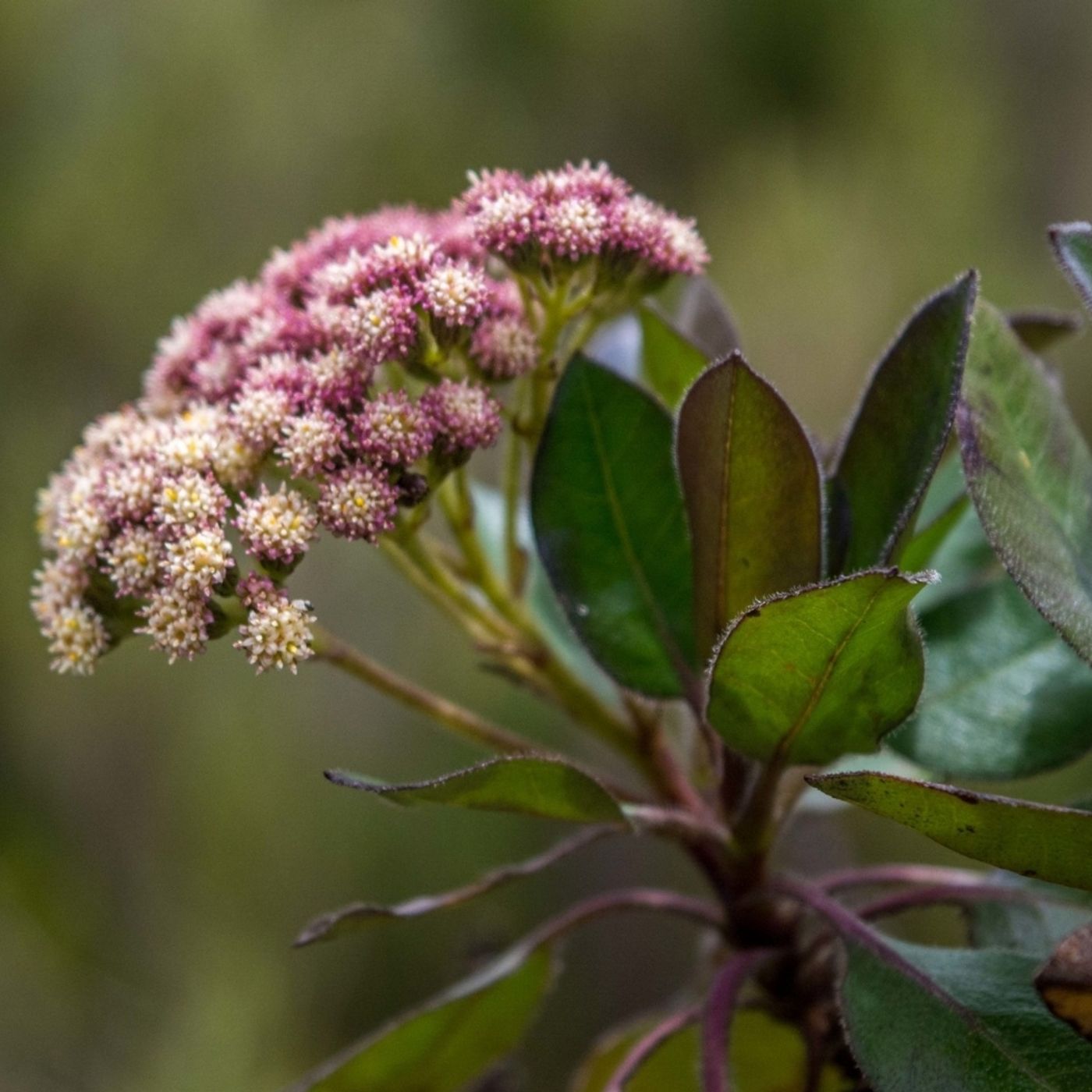
A Deep Dive Into Coyote Bush
Ads are terrible, Ads are hell, and if they bother you, here's a reminder that you can avoid them altogether by listening to this podcast Ad-Free on the Crime Pays Patreon at :
www.patreon.com/crimepaysbutbotanydoesnt
The genus Baccharis is one of the largest and most diverse in the Composite Family, Asteraceae. It originated in South America a few dozen million years ago and has diversified and spread throughout South and North America and adapted to a variety of different habitats due to a number of key innovations such as tufted trichomes that secrete sticky wax, the abundant production of wind-dispersed seeds, and rapid growth, among other traits. When I was working for the railroad and frequently visiting abandoned industrial corridors in California, the genus Baccharis was one of the only native plants that was able to hold its own amidst the concrete, pollution and toxic soil of former industrial sites.
Today we talk with Baccharis researcher Gustavo Heiden from Southern Brazil about his research and study of this tough and remarkable genus, where it originated and what makes it so successful.
www.patreon.com/crimepaysbutbotanydoesnt
The genus Baccharis is one of the largest and most diverse in the Composite Family, Asteraceae. It originated in South America a few dozen million years ago and has diversified and spread throughout South and North America and adapted to a variety of different habitats due to a number of key innovations such as tufted trichomes that secrete sticky wax, the abundant production of wind-dispersed seeds, and rapid growth, among other traits. When I was working for the railroad and frequently visiting abandoned industrial corridors in California, the genus Baccharis was one of the only native plants that was able to hold its own amidst the concrete, pollution and toxic soil of former industrial sites.
Today we talk with Baccharis researcher Gustavo Heiden from Southern Brazil about his research and study of this tough and remarkable genus, where it originated and what makes it so successful.
2024-11-05
129 min
Transcript
Available Results
Generated results are saved to the knowledge database for reuse and search.
No generated results are available for this episode yet.
Extract Knowledge
Pick what you want extracted first. Model, scope, and chapter options appear after a template is selected.
Generated results for public episodes are saved to the knowledge database so they can be reused and searched later.
Transcript
<v Speaker 1>Welcome to the crime payers a bond he doesn't podcast Today,
<v Speaker 1>I've got a researcher on the podcast who specializes in
<v Speaker 1>the genus back Arrist. That is the genus of coyote bushes,
<v Speaker 1>at least as their colloquially known in California. Or I think, Uh,
<v Speaker 1>the stupid name poverty weed here in Texas, one of
<v Speaker 1>many stupid common names uh from you know that are
<v Speaker 1>that are used in Texas botany and uh, no offense
<v Speaker 1>to anybody who uses them. Just learn the fucking genus
<v Speaker 1>back rist for Christ six and uh and then what
<v Speaker 1>is it? What's the what's the eastern one called back
<v Speaker 1>arris halimafolia. I don't know either way. This is the
<v Speaker 1>genus I've seen all over the world, well all over
<v Speaker 1>the western side of the Atlantic, North and South America.
<v Speaker 1>I've seen it in Dominican Republic, Brazil, Chile, high altitude
<v Speaker 1>Chile up there on the out the planel and he
<v Speaker 1>out the plane all as you might say, if you're
<v Speaker 1>you know, uh, if you never leave the United States. Uh,
<v Speaker 1>fucking they're common in California. Back Ross pillolarius Bacris sarathroides.
<v Speaker 1>Down there in northern Baja Mexico and the deserts of
<v Speaker 1>southern California. This is a very ecologically successful co Mostly
<v Speaker 1>these genus of plants in the sunflower family, almost all
<v Speaker 1>of them are dioecious, just like cannabis. They're either male
<v Speaker 1>or female. We talk about that others. I think the
<v Speaker 1>exception is two or three species. One is monoecious, one's gynodioecious.
<v Speaker 1>I think one might be bisexual aka hermaphroditic and flower.
<v Speaker 1>Either way, this is everywhere. Back Rous neglect is really
<v Speaker 1>common in Texas. I see it, you know, recolonizing places
<v Speaker 1>that have been bulldozed or flattened by people, you know,
<v Speaker 1>by humans. And then the great thing about it, what
<v Speaker 1>makes it so ecologically important, is primarily that it's just
<v Speaker 1>a fucking huge building, a huge green building for pollinators.
<v Speaker 1>It's like a huge green face just lit up in
<v Speaker 1>thousands of tiny flowers and each producing tons of nectar.
<v Speaker 1>You'll see tons of I remember I saw backrist I
<v Speaker 1>think it was neglecta in Fort Worth once, near one
<v Speaker 1>of their the reservoirs they have near the dam, and
<v Speaker 1>there was just like a forest of them, and it
<v Speaker 1>was lit up with americansnout butterflies and cool native wasps.
<v Speaker 1>I mean, they're so they're so rich with life in
<v Speaker 1>late summer and early fall when they're going off, and
<v Speaker 1>that is one of the reasons that I fell in
<v Speaker 1>love with this genus. And then when you see some
<v Speaker 1>of the winged baccarrist species down in South America, like
<v Speaker 1>Trimera et cetera, you know, you kind of it just
<v Speaker 1>blows your mind even more, the many variations on a
<v Speaker 1>theme that you already know, which is part of what
<v Speaker 1>makes biology and botany especially so fucking fun. So anyway,
<v Speaker 1>Gustavoheyden studies bacharrists in Rio grande O Soul, the state
<v Speaker 1>of Real grand Ol Soul in southern Brazil. Brazil, as
<v Speaker 1>some of you may know, is a hot spot of
<v Speaker 1>astor ac diversity. The sunflower family, Okay, we think of
<v Speaker 1>this family in North America. It's a lot of dyc's boring,
<v Speaker 1>not to me, but boring yellow flowers. I could understand.
<v Speaker 1>I can sympathize with people who think they're boring. You
<v Speaker 1>gotta look at those fieries. Don't just look at the
<v Speaker 1>flower head on because they all just look like little
<v Speaker 1>yellow daisies. You gotta look at the sides of the
<v Speaker 1>flower head, look at the morpholegy. Ito's involucral breaks. But
<v Speaker 1>when you get to South America, when you get to
<v Speaker 1>places like South Africa, there's wild shit. There are endless
<v Speaker 1>forms most beautiful on the theme of this family. There's trees,
<v Speaker 1>there's aquatics, I mean, there's some there's plants. There's a
<v Speaker 1>coyote bush that grows directly out of salt. Looks like
<v Speaker 1>a little green carpet of little rosette leaves that grows
<v Speaker 1>out of fucking literally chunks of salt, because you get
<v Speaker 1>a lot of salt in the out of common desert.
<v Speaker 1>So that's what we talk about. And but we're talking
<v Speaker 1>about just the diversity of this genus. I think there's
<v Speaker 1>like five hundred species, four hundred and forty accepted names
<v Speaker 1>on Plants of the World online. Maybe there's probably seventy
<v Speaker 1>or eighty species that have been collected, but now you
<v Speaker 1>have formally described, and there's probably a bunch more that
<v Speaker 1>have not been formally described. So if you don't know
<v Speaker 1>about this genus, you should. They're everywhere if you live
<v Speaker 1>in the United States, unless you're up in like fucking
<v Speaker 1>North Dakota. I don't think there's any There may not
<v Speaker 1>be any back Rists in North Dakota. Back Rists may
<v Speaker 1>have left North Dakota alone, and it can be forgiven
<v Speaker 1>for doing that. Anyway, enjoy and don't think about that
<v Speaker 1>as fucking horrible election going on today. I mean, also,
<v Speaker 1>be your nice escape unless you're listening to it after
<v Speaker 1>and you already got the news, which hopefully isn't too
<v Speaker 1>isn't too painful. Ah Jesus Christ, I'm already looking for
<v Speaker 1>the fire escape figuratively speaking. Okay, enjoyed this, have a
<v Speaker 1>gress your day and go fuck yourself by. There we go.
<v Speaker 1>Now we're recall, Okay, welcome to the crime pays, but
<v Speaker 1>Bodany doesn't podcast. It's here at selection day in the
<v Speaker 1>United States. The companies are very pleased. They're very very
<v Speaker 1>pleased because no matter who you vote for, they're gonna
<v Speaker 1>get their way no matter what. Obviously anyway where that's
<v Speaker 1>All'm gonna fucking say. I don't even tell you anyway.
<v Speaker 1>I'm here with a researcher, GUSTAVO. Heyden. Are you a doctor?
<v Speaker 1>Are you doctor? Or you got PhD? Right? Not that
<v Speaker 1>I give a shit. Some people get offended. If you
<v Speaker 1>don't say doctor, I'll call you doctor Heiden. All right,
<v Speaker 1>doctor Gustavo Heyden, who is a researcher who studies. He's
<v Speaker 1>a botanist and a researcher who studies. The genus backeris,
<v Speaker 1>which anybody who doesn't know. If you don't know what
<v Speaker 1>this genus is, shame on you. Unless you're like in
<v Speaker 1>the higher latitude in the United States, then you can
<v Speaker 1>be forgiven. But if you don't know this genus and
<v Speaker 1>you live in the lower latitudes or anywhere than shame
<v Speaker 1>on you. Shame on you, because this is a fucking
<v Speaker 1>cool genus. It's a very ruteral species. It's a quote
<v Speaker 1>weedy native. You got back ress halimafolia in the East Coast.
<v Speaker 1>I saw growing on the fucking uh salty Uh what
<v Speaker 1>was the what was the Newtown Creek in Queens all
<v Speaker 1>the way up into Massachusetts. I think it goes you
<v Speaker 1>got back rest pilliolaris in California, and you got a
<v Speaker 1>ton of back wrists in the deserts So uh. Anyway, Gristavoheyden,
<v Speaker 1>tell us where you're coming from. Where are you right now.
<v Speaker 2>Joey, I'm from Brazil. I am a biologist with a
<v Speaker 2>master and a PhD degree in botany. Uh, I'm not
<v Speaker 2>offended if someone doesn't call me doctor, they call me
<v Speaker 2>by my name. Yeah. Yeah, and I and I understand
<v Speaker 2>your perplexity about the uvulations. I think every every person
<v Speaker 2>is perfect about it. And it's that kind of the
<v Speaker 2>illusion illusion of choice when you have to choose between
<v Speaker 2>between two oceans, that that both of them maybe are
<v Speaker 2>not the ocean that you would like to have. Yeah,
<v Speaker 2>so thinks are exactly the same here the other side
<v Speaker 2>of them.
<v Speaker 1>Yeah, I know, Yeah, man, I've heard. I mean, the
<v Speaker 1>political ship is nuts. I feel like everyone's just being
<v Speaker 1>manipulated by algorithms, algorithms and social media. It's just it's
<v Speaker 1>so turned up in nuts, man. But either way, I
<v Speaker 1>still wish I was in Brazil at this very second,
<v Speaker 1>as opposed to hear I love man. The biology and
<v Speaker 1>diversity you guys have, especially with plants is incredible. So
<v Speaker 1>okay and so sp But we're here to talk about
<v Speaker 1>back Rist, so we'll focus on back Ris. Course. What
<v Speaker 1>I mean, I want to talk about all South American
<v Speaker 1>astorracy that you have any experience with, but back Arrist,
<v Speaker 1>I mean I saw Backris species when I was in
<v Speaker 1>the Atlantic Forest of Rio, or when I was in
<v Speaker 1>you know, I don't think I saw it in Minus
<v Speaker 1>too much, but it's certainly in the Atlantic Forest. I
<v Speaker 1>saw some wild stuff down there. Tell me about this genus.
<v Speaker 1>Tell everybody about this genus and how you got so
<v Speaker 1>amped on it? What made you uh so excited about
<v Speaker 1>it that you want to study it.
<v Speaker 2>So I am a biologist with a master and a
<v Speaker 2>pH d in botany. But a long time before I
<v Speaker 2>even knew that bocany or biology or a career to follow,
<v Speaker 2>I was born in love with plants. So I lived
<v Speaker 2>in the countryside, in an area in the Pampus, in
<v Speaker 2>the border of Gradudusud that's my state in Brazil and Uruguay.
<v Speaker 2>And that region has the like the like the southwestern
<v Speaker 2>USA or even some parts of the eastern USA. We
<v Speaker 2>have many grasslands with lots of packeries there, and as
<v Speaker 2>a child, playing with my friends in the grass, I
<v Speaker 2>was always curious about the plant, and especially curious about
<v Speaker 2>a plant that's called here in my region Carcaasia. You
<v Speaker 2>a c A c A r q u e j
<v Speaker 2>a Caucasia. In fact, in fact, the original Carcasia is
<v Speaker 2>from the Iberian Peninsula in Europe. It's a legume from Europe,
<v Speaker 2>from Spain and Portugal, and it's a plant with the
<v Speaker 2>winged stamps. So we have several species of baccaries that
<v Speaker 2>have winged stems too. So when I was a child
<v Speaker 2>play in the in the grasslands with my friends, I
<v Speaker 2>was always curious about that plants that are shrubs leafless
<v Speaker 2>and their stems are winged. They have three, two, three
<v Speaker 2>or even five wings in the stem and most of
<v Speaker 2>their pototo syntactic photo cities occurs in these wings. So
<v Speaker 2>I was I was always curious about them. And some
<v Speaker 2>people that come to South America even say that all
<v Speaker 2>these these are cactili like bacts. I would not say
<v Speaker 2>coct like exactly because they are not sucolant, but if
<v Speaker 2>you if you look from a certain distans, it sometimes
<v Speaker 2>really look like cocta.
<v Speaker 1>Like what was really really quick? Really quick? Was this
<v Speaker 1>back risk Trimera or what species?
<v Speaker 2>Yes? Yes, but baka is Trimera and their relatives. Because
<v Speaker 2>there are about forty species of pakas belonging to two
<v Speaker 2>sections that have winged stamps. Wow, so this oneaka Trimera
<v Speaker 2>is the most common one. And because It's found mostly
<v Speaker 2>everywhere in southern South America. And because it has this
<v Speaker 2>common name Caucasia, because it's a plant, use it for
<v Speaker 2>as a medicine. Yes, or drink it too.
<v Speaker 1>I forgot, sorry, I forgot about that. I want we'll
<v Speaker 1>have to ask that I'm taking notes over here because
<v Speaker 1>I forgot, but really quickly, and pardon, I told you.
<v Speaker 1>I interrupt a lot. It's just my fucking ad d.
<v Speaker 1>I can't you know, forgive me. But this is such
<v Speaker 1>a cool plant for anybody who's who's not familiar with
<v Speaker 1>their back risk trimera. It's got the wing stems. And
<v Speaker 1>I first saw it, I think in a botanic garden here,
<v Speaker 1>and then when I was in Brazil it was everywhere.
<v Speaker 1>But this this wing stem and what is it? What
<v Speaker 1>is the adaptive benefit of that just increases photosynthetic area
<v Speaker 1>while maintaining well, not having to worry about losing moisture
<v Speaker 1>or what do you? What do you think?
<v Speaker 2>So it's a it's a very intriguing question because in
<v Speaker 2>these plants like black Stroma, we found them, we find
<v Speaker 2>them growing on mostly more dry, dryer areas. But when
<v Speaker 2>when I was curios about these plants, I got to
<v Speaker 2>the biology graduate course and decided to and was still
<v Speaker 2>asking myself why these plants have this this look and
<v Speaker 2>start trying to study the psychogenetics of them. I quickly
<v Speaker 2>gave up off the side to genetics because it was
<v Speaker 2>kind of boring. The chromosomes were really, really small. But
<v Speaker 2>I fell in love with taxonomy because I collected examples
<v Speaker 2>of this carcasi at this back astrain era, and quickly
<v Speaker 2>I realized that I was not dealing with one species,
<v Speaker 2>that I was dealing with more than one. And when
<v Speaker 2>I was looking for the available taxonomy reviews, I was
<v Speaker 2>completely surprised that there were more than fifteen species described.
<v Speaker 2>So this yes, So this kept kept me very interested,
<v Speaker 2>very intriggued about it. And as much I was studying
<v Speaker 2>these plants, I was realizing that there were even more
<v Speaker 2>outside Brazil, and some of them were only know by one,
<v Speaker 2>two or three just a felical actions. So I started
<v Speaker 2>doing studying backers based on these plants because I was
<v Speaker 2>trying to answer your last question, why these plants have
<v Speaker 2>this winged stems while all the other backeries have like
<v Speaker 2>to leave in stems most of them, and this uh,
<v Speaker 2>this group of winged backeries, they have these winged stems.
<v Speaker 2>So I did my masters still on taxonomy and study
<v Speaker 2>the backeries from Hugenia State in eastern Brazil. And after that,
<v Speaker 2>when I was planning my pH D, I finally could
<v Speaker 2>get to the molecular data to DNA sicknessing and and
<v Speaker 2>did I hear it something in the genus for the
<v Speaker 2>genus to to reconstruct the phylogenetics of the revolution of
<v Speaker 2>the genus. And I was always really sure that all
<v Speaker 2>carcases or winged backeries belong have a single ancestor single
<v Speaker 2>common ancestor. Uh. Then one day my advisory professor Perni
<v Speaker 2>from the BI Sam Pauli, just a few days before
<v Speaker 2>I run the phylogenetical reconstruction, has had have you he asked?
<v Speaker 2>He asked me, have you ever thought about if the
<v Speaker 2>winged backers are not monophyletic? And I looked at him
<v Speaker 2>to him like, oh, no, it's obvious they are monophyletic.
<v Speaker 2>Then after that, after the results, I realized that they,
<v Speaker 2>in fact they are not monophyletic.
<v Speaker 1>So the wing stems, the wing stems in other words,
<v Speaker 1>quite likely evolved independently numerous times.
<v Speaker 2>Yes, more than more than ones. And and then I
<v Speaker 2>could realize after the phylogenetical results that these winged species
<v Speaker 2>were placed in two distinct clades, and in both clades
<v Speaker 2>it's like the the evolutionary history was quite the same.
<v Speaker 2>In the beginning, I thought that the winged stems were
<v Speaker 2>an adaptation to save water, because the the plants that
<v Speaker 2>are leafless and have wingeds in grow growing dry areas.
<v Speaker 2>They they are very resinos. They they have a thick
<v Speaker 2>covering of like a raisin to avoid wax.
<v Speaker 1>Are they like waxy? Huh?
<v Speaker 2>Yes? What, Yeah, that's right. And but then when I
<v Speaker 2>start knowing the other species, I found that, like the
<v Speaker 2>first the virgin lineages, in both clades, they were from
<v Speaker 2>the edge of cloth forests in eastern Brazil. They were Yeah,
<v Speaker 2>they were like shrubs with leaves well developed and the
<v Speaker 2>wings were really narrow. And then there was like a
<v Speaker 2>tendency to some species to colonize very wet areas like
<v Speaker 2>bogs and swamps. Yeah, and in these species they kept
<v Speaker 2>the winged stem together with the developed leaves. So I
<v Speaker 2>was wondering if they have gone that to increase their
<v Speaker 2>evapple transpiration because they had more surface for water exchange.
<v Speaker 1>So they're trying to increase it's possible that the wing
<v Speaker 1>stems might be a way for them to increase the
<v Speaker 1>amount of water that can get pumped up, and so
<v Speaker 1>they're not just sitting in water, you know.
<v Speaker 2>Yeah, exactly, that was my my hypothesis. And after after
<v Speaker 2>I could see across the evolutionary three of the both
<v Speaker 2>sections that have winged stems that there were there was
<v Speaker 2>a tendency to them to go out after the swamp
<v Speaker 2>wet areas to conquer open brassy areas that were much dryer.
<v Speaker 2>And if we think of water bodies, a lot of
<v Speaker 2>them they have like a strong seasonality. So these lens
<v Speaker 2>were had some selection to pressure them to live, yeah,
<v Speaker 2>at the same time in wet places, but these places
<v Speaker 2>could get very dry, and these have been like this
<v Speaker 2>was like a driver. They have increased the especiation in
<v Speaker 2>both sections.
<v Speaker 1>Ephemeral like ephemeral like wetlands that dry up and get Yeah,
<v Speaker 1>we get those a lot in Texas too, Like they'll
<v Speaker 1>be inundated with water for a few months, but then
<v Speaker 1>they'll be bone dry for a few months too. So
<v Speaker 1>you've got to be able to deal with both conditions.
<v Speaker 2>Exactly. So after they got these wings develop, it it
<v Speaker 2>was just a few steps to them to get out
<v Speaker 2>of the box and start spreading through the as. And
<v Speaker 2>then after colonizing the grassland bay, they start losing their leaves.
<v Speaker 2>The leaves started to get in and every time more
<v Speaker 2>smaller and reduce it at a point that some species
<v Speaker 2>are when they're completely leafless. And one extreme case is
<v Speaker 2>ba is all from the Sahara domain in Brazil.
<v Speaker 1>Sorry I say it against What is it? How do
<v Speaker 1>you spell it?
<v Speaker 2>Yes?
<v Speaker 1>Okay, yes, yes, it's one of these brooms.
<v Speaker 2>Yes, yes, in the Sahada Amina, San Paolo and other
<v Speaker 2>Brazilian states. It's it's it looks it looks like is
<v Speaker 2>saratroigs bon si version with no leaves and the wings.
<v Speaker 1>Yeah, damn that's cool man. This this the back rists
<v Speaker 1>I saw in Brazil were blowing my mind. I just
<v Speaker 1>I mean, going down there. That's what I love about
<v Speaker 1>South America so much, is because you see genera that
<v Speaker 1>you're familiar with in North America, but you just see
<v Speaker 1>the wildest variations on them, like you didn't even know
<v Speaker 1>that this could be done with this genus, you know.
<v Speaker 1>And that's the cool thing about not having a huge
<v Speaker 1>ocean separating the two continents. There's all They've been close
<v Speaker 1>enough that there's always been you know, flow of genera
<v Speaker 1>and families between. But but you know, in Texas, I've
<v Speaker 1>noticed that I've never thought about the duality of growing
<v Speaker 1>in wetlands and then also being able to grow in
<v Speaker 1>shitty dry areas. You know, by shitty, I just mean
<v Speaker 1>stressful for a plant. But that's a lot of what
<v Speaker 1>we get in Texas too, because we'll get you know,
<v Speaker 1>we get back risk neglecta. I mean, that's one of
<v Speaker 1>the first plant species to recolonize an area that's been bulldozed.
<v Speaker 1>And there's been a lot of bulldozing in Texas lately,
<v Speaker 1>especially in like the Austin area. And I remember seeing
<v Speaker 1>fields of back wrists and neglect that which most people
<v Speaker 1>pass by and just don't even realize how ecologically important is.
<v Speaker 1>They just see that it's a weed. But then you know,
<v Speaker 1>when you see it in late summer early fall covered
<v Speaker 1>in butterflies, You're like, man, this thing is feeding so
<v Speaker 1>much life. Are all the back rists? Are they all
<v Speaker 1>insects pollinated? Or are any of them wind pollinated? Or what.
<v Speaker 2>They have? Like they are in buffios, they are pollinated
<v Speaker 2>by wind and by insects, so we can see lots
<v Speaker 2>of insects around them. Every everywhere I have gone to
<v Speaker 2>collecting bakries, even in the higher points of the Andes,
<v Speaker 2>I have seen insects, even flies visiting the flowers of
<v Speaker 2>pockets flies and butterflies.
<v Speaker 1>There's nectar like they're producing sugar in there.
<v Speaker 2>Yes, and this is very interesting because at least several
<v Speaker 2>species some species of pokris, they flowers mostly in the spring,
<v Speaker 2>and another group in the autumn, and the ones that
<v Speaker 2>are early spring flowers, they like provide food for many insects,
<v Speaker 2>at least here in south of Brazil when no other
<v Speaker 2>sarce is available, and the same in the autumn in
<v Speaker 2>the fall when a lot of them keeps flowering to
<v Speaker 2>the beginning of winter, and they provide energy to many insects. Yeah,
<v Speaker 2>so it's very very it's a very important genus for
<v Speaker 2>ecologically speaking.
<v Speaker 1>It sounds like it sounds like one would gather that
<v Speaker 1>this is something that's worth keeping around and not just
<v Speaker 1>bulldozing because you think it's a weed, which you probably
<v Speaker 1>don't have to worry about too much where you are,
<v Speaker 1>but where I am, it's super common. I'm grateful because
<v Speaker 1>they will establish these many forests like packers neglect, and
<v Speaker 1>I forget what other some of the dominant speed she's
<v Speaker 1>we get in Texas. I think Sarah Throid's Salasina righty eye,
<v Speaker 1>et cetera. But neglect is the biggest one. And it'll
<v Speaker 1>just it'll set up these well, there's even a back
<v Speaker 1>ers taxing, I know, ship it'll just set up these,
<v Speaker 1>you know, it'll set up these these like many forests,
<v Speaker 1>and just and it'll it'll grow so quick, like one
<v Speaker 1>showed up in my yard and I let it ride
<v Speaker 1>for a while. I got eight feet tall, et cetera.
<v Speaker 1>But uh, but that's the other thing too, is the
<v Speaker 1>dispersal of these things. I mean, most are wind dispersed
<v Speaker 1>if you get a female plant, because most are dioecious.
<v Speaker 1>The seeds, like tell me about the seeds, Like the
<v Speaker 1>seeds are just super tiny and one plant will produce
<v Speaker 1>how many seeds.
<v Speaker 2>I have no idea about how many seeds, but I'm
<v Speaker 2>sure that fans of thousands, depending on the species. Most
<v Speaker 2>of most of them are wind dispersed. But there are
<v Speaker 2>a few subgenera where the tops it's the seeds after
<v Speaker 2>the fruit. The Cisela is fully developed the puputly detached
<v Speaker 2>from the fruit and does not fly that longer as
<v Speaker 2>you would expect most of the species of the genus,
<v Speaker 2>But when you consider the majority of them, they are winded,
<v Speaker 2>passed and can fly kilometers far from the source plan
<v Speaker 2>But talking about insects, that are other things really interesting
<v Speaker 2>too about the interaction of the genus. For example, we
<v Speaker 2>always realize what we always that the first impression we
<v Speaker 2>have is about the pollinators that we look around the
<v Speaker 2>capitula the flowers, but there are also the galling insects.
<v Speaker 1>Yeah, I've seen some coyote bus.
<v Speaker 2>If you google backaries and goals, it's like another hidden
<v Speaker 2>universe of research. There are lots of people who work
<v Speaker 2>on the ecology of calls in bakerries and they recently
<v Speaker 2>I have seen some like a butterfly species that feed
<v Speaker 2>and baker is too, specifically some groups of butterflies that
<v Speaker 2>feed on bakries. But there are many many gall insects
<v Speaker 2>that in fact specialized in gallic bakker Is species, and
<v Speaker 2>there are some species specific relationships. Most of the research
<v Speaker 2>on gals in bokers, as far as I remember, are
<v Speaker 2>being gon in California and Minno genies and people people
<v Speaker 2>from the ecology get crazy about the galls of bakers. Look,
<v Speaker 2>they are always getting surprised about that behavior.
<v Speaker 1>I would imagine most of them. I would imagine most
<v Speaker 1>hold that thought sorry once, I would imagine most of
<v Speaker 1>the galls on back risks, like the insects are specifists,
<v Speaker 1>probably because these are really like chemically rich plants. I mean,
<v Speaker 1>they've got a lot of probably toxic chemicals, at least
<v Speaker 1>toxic to insects. So once you evolve an adaptation to
<v Speaker 1>back rist you're probably.
<v Speaker 2>Yeah, I'm really I'm sious to find a collaborator partner
<v Speaker 2>to see how how the evolution of the gallic insects
<v Speaker 2>matches or not the evolution and diversification of some plains
<v Speaker 2>of packeties, because we can, as far as I have
<v Speaker 2>my field work conservations. The sub genus Packeries that's the
<v Speaker 2>one where baccar Is alimiphoria is placed, is basically half
<v Speaker 2>the genus and most of the goals are found in
<v Speaker 2>this subgenus too. One more, very one more, very interesting
<v Speaker 2>think about insects and backeres is the properties there, the
<v Speaker 2>green properties. Have you heard about it? Now?
<v Speaker 1>What is this?
<v Speaker 2>So? During during a long time in Brazil people were
<v Speaker 2>relying on a type of properties called green properties, but
<v Speaker 2>no one knew where which which plant was the source
<v Speaker 2>of this properties green.
<v Speaker 1>Tell everybody what propoly is is. This isn't made by
<v Speaker 1>bees or what?
<v Speaker 2>Yeah, it's it's made by bees. And they use the
<v Speaker 2>properties to in the construction of the combs, is.
<v Speaker 1>It right, the dombs, yeah, the honeycombs.
<v Speaker 2>Yeah, honey combs. And they use these properties to because
<v Speaker 2>to like like to to seal some some or if
<v Speaker 2>it is to to cover some areas, to protect against
<v Speaker 2>other insects, to avoid funai too, to keep to keep
<v Speaker 2>the health of the colony. And and after you get
<v Speaker 2>the honey, you get the propolies. So this green properly,
<v Speaker 2>it's as the name say, it's green. And no one
<v Speaker 2>knew from the stars until the beach over that's from
<v Speaker 2>Backer is dragging California. And and a lot of pharmaceutical
<v Speaker 2>research is done on these green propolies. And every every
<v Speaker 2>every week I received a lot of Google alects about
<v Speaker 2>new research and green properlies and their potential to like
<v Speaker 2>antibiotics or antioxidants even to fight cancer. And Brazil impact
<v Speaker 2>export a lot of green pad propolies to Japan, for example,
<v Speaker 2>and a lot of the research on green properties is
<v Speaker 2>doing in Japan too because of this very high potential
<v Speaker 2>they have and the bees. They go to the backeries
<v Speaker 2>rock and qulifoida plants to collect and acted, but also
<v Speaker 2>to collect the walks. And besides the walks, they collect
<v Speaker 2>the tip of the style arms of the family.
<v Speaker 1>They collect the style.
<v Speaker 2>Yeah, the collective style tipe. And this is used as
<v Speaker 2>one of the main ingredients of the green property.
<v Speaker 1>Yeah, I see it here, Okay. Green propolist is a
<v Speaker 1>natural product that comes from the back risk the tracuncular
<v Speaker 1>Folia plant native to presil So this is but there's
<v Speaker 1>not I mean, these are European honey bees. These weren't.
<v Speaker 1>No native bees obviously do this, but it was still
<v Speaker 1>something that the European honeybees because they I mean they
<v Speaker 1>just collect propolists. They create propo lists from plants that
<v Speaker 1>they collect. But when they were hitting this one plant,
<v Speaker 1>because of it's phyto chemistry, there was I guess a
<v Speaker 1>lot of benefits. That's that's wild man. So what's what's
<v Speaker 1>up with the chemist the fyto chemistry of of back risk.
<v Speaker 2>Well, the phytochemistry. I have been collaborating with people from
<v Speaker 2>the chemistry area, and and I am not really good
<v Speaker 2>at chemistry, but what I can say about the chemistry
<v Speaker 2>of them is that for carcasia, for example, they have
<v Speaker 2>that's the main compound that has these benefits for health
<v Speaker 2>and for the digestive organs and the fighto chemistry. It's
<v Speaker 2>very interesting because I did a collaboration with another pH
<v Speaker 2>d from the pharmacy faculty of Universialities and Powell, and
<v Speaker 2>she studied the metabolomics of all back species that I
<v Speaker 2>have sample for the phylogenetics, and she could find for
<v Speaker 2>some groups that I did not have clear morphological characteristics
<v Speaker 2>to circumscribe them to recognize them, but that that groups
<v Speaker 2>were really for the work over our plads with one
<v Speaker 2>hundred one hundred percent comfort ability. I could not find
<v Speaker 2>some morphological traits. I still could not find to define them.
<v Speaker 2>But this this other PhD student, she found several chemicals
<v Speaker 2>that are related to some groups and are in other
<v Speaker 2>plades of faculties. So certainly the chemistry is a very
<v Speaker 2>important rule in the diversification of some groups. Like I
<v Speaker 2>would say like key innovations, but that that is something
<v Speaker 2>that should be tested. But yeah, when you see it
<v Speaker 2>in the Phylogenetica tree, it's very very clear.
<v Speaker 1>Yeah, phyto chemistry is key innovations. Man, that's the cool
<v Speaker 1>I mean that alone is an ast racy is so
<v Speaker 1>good at that because I mean you could, I mean
<v Speaker 1>you can see it when you see these things thriving,
<v Speaker 1>like like in areas here in Texas where there's there's
<v Speaker 1>tons of deer, but there's back rists everywhere. I mean,
<v Speaker 1>the deer aren't eating it, and you figure there's something
<v Speaker 1>in those leaves that obviously the deer hate bitter compounds.
<v Speaker 1>I mean a lot of astracy of course, uh, you
<v Speaker 1>know produced sessketerpene, lactones and that kind of thing. But
<v Speaker 1>but I've heard, you know, and I've heard a lot
<v Speaker 1>of the South American species of back risk too are
<v Speaker 1>have been used in you know, herbal medicine for you know,
<v Speaker 1>hundreds thousands of years. Going back really quick, when you
<v Speaker 1>recovered fifteen different species out of what you primarily thought
<v Speaker 1>was or what you initially thought was one species, could
<v Speaker 1>you tell, I mean morphologically did they look kind of
<v Speaker 1>off from each other or did the DNA just kind
<v Speaker 1>of recover them as cryptic species or what.
<v Speaker 2>So after starting the taxonomic review of the winged species,
<v Speaker 2>now from about fifteen twenty species, now in fact we
<v Speaker 2>have more than forty species. One reason is that because
<v Speaker 2>the wingless species that I related to them were placed
<v Speaker 2>in other sections because they were missing wings, or because
<v Speaker 2>new species were discovered. So there are some species that
<v Speaker 2>I have described with some collaborators that are really interesting,
<v Speaker 2>like some Caucasias, some wingod species that grows only on
<v Speaker 2>on on swagen for example, that that moss Is spaginum.
<v Speaker 1>There's a species, there's a species of backers that only
<v Speaker 1>grows on Sphagnum.
<v Speaker 2>Yes, there are three species at least that are endemic
<v Speaker 2>two pit bogs in the southern Brazilian highlands. There there
<v Speaker 2>are also Yeah, there are also other data other species
<v Speaker 2>that are endemic to one or other mountain peak. And
<v Speaker 2>and that the group of Bacaristra and era. It's a
<v Speaker 2>difficult one because they are more or less the morphology
<v Speaker 2>look alike to each other. But when you go to
<v Speaker 2>the other species that have like leaves and wings winged
<v Speaker 2>steams at the same time, they look completely different from
<v Speaker 2>each other. There are they are really remarkable and easy
<v Speaker 2>to tell a path from each other.
<v Speaker 1>So I got a question for I mean, this is
<v Speaker 1>kind of getting off topic here, but the where you're at,
<v Speaker 1>I mean, I had no idea that there were peat
<v Speaker 1>bogs in southern Brazil, like highland peat bogs. I think
<v Speaker 1>most Americans, which again this is set in the bar
<v Speaker 1>pretty low, but when most Americans think of Brazil, they
<v Speaker 1>just think of the Amazon. They don't realize how fucking
<v Speaker 1>big the country is, in the diversity of habitats, that
<v Speaker 1>there's like you know, these tropical you know, thorn forests
<v Speaker 1>or tropical deciduous dryland forests, or you know, so much
<v Speaker 1>cactus diversity. Where you're at, tell everybody what I mean,
<v Speaker 1>because you're down like near Argentina, Like what is the uh,
<v Speaker 1>It's it's the pompous Like what is the what is
<v Speaker 1>the what's the pampas? What are these grasslands? There's it's
<v Speaker 1>like arid, it's kind of dry. What is it like?
<v Speaker 2>So so when we're thinking Brazil is like the United States,
<v Speaker 2>we we live in a counter that's among the top
<v Speaker 2>ten largest in the world. And if you look at
<v Speaker 2>the Brazil, I mapp the northernmost point of Brazil is
<v Speaker 2>closer to the US, than to the southern part of Brazil,
<v Speaker 2>the easternmost point of Brazil, exposure to Africa, then to
<v Speaker 2>the western side of Brazil and so on. So when
<v Speaker 2>you think about the Amazon, it's a zero degree latitude,
<v Speaker 2>and down here where I leave, it's about thirty three
<v Speaker 2>degrees south something like Georgia, Texas and other southern US
<v Speaker 2>states same latitude. So the vegetation here it's a transition
<v Speaker 2>between the Atlantic rainforest in the north that gets drier
<v Speaker 2>and drier and coldd when you go south, and when
<v Speaker 2>we go west, there is a connection and transition with
<v Speaker 2>the chocoal domain from mostly found in Paraguay and Chargina. Chacoal, yes, yes,
<v Speaker 2>So if where I am, it's like the we have
<v Speaker 2>four seasons with we like frosts in the winter, very
<v Speaker 2>very cold sometimes that called zero the great temperature, very
<v Speaker 2>similar to Texas to something to some parts of Texas
<v Speaker 2>at least. And when we go to the west, we
<v Speaker 2>have a lot of mostly mostly the southern half of
<v Speaker 2>the states where I live, it's grasslands. So when we
<v Speaker 2>go west we have more spiny plants. We have like
<v Speaker 2>for example Prosops. That's not prozops, it changed the name
<v Speaker 2>we have Vacalia that once was a Cassia and now
<v Speaker 2>was Ralia. Another lagoon. So we have many.
<v Speaker 1>So there's vice. What was the first one you said?
<v Speaker 3>The first genus, uh, prosops I don't know, and now
<v Speaker 3>it's p R O.
<v Speaker 2>S O p I s. But this this genus recently
<v Speaker 2>changed and changed the name. I don't remember now the
<v Speaker 2>new name, yeah, bureau oh p I S.
<v Speaker 1>O prosopis, oh misquits Yeah, oh wow, there's oh now Tuma. Yeah,
<v Speaker 1>they changed it to nel tuma And yes, anyway, I
<v Speaker 1>guess I understand that because that was a fucking you know,
<v Speaker 1>there was a big grab bag of lookalike faviords, you know,
<v Speaker 1>or memosoids. But still it's that's cool. Yeah, I bet
<v Speaker 1>you got some pretty cool luggings down there.
<v Speaker 2>Yeah, so this vegetation is also it also has a
<v Speaker 2>lot of endemic cocti, many of that small round cacti
<v Speaker 2>that people used to grow in their homes everywhere in
<v Speaker 2>the world. A lot of these species, like some of
<v Speaker 2>the genus Calisium. Yeah, found.
<v Speaker 1>Yeah, you guys. Have you guys have Onathoras down there?
<v Speaker 1>Are there native onatha o E n O th h
<v Speaker 1>E R a the Evening Primrose genius.
<v Speaker 2>Yes, there are. There are about six or seven Na
<v Speaker 2>native here and also some other interesting groups that we
<v Speaker 2>find here are some genera that are South American, like
<v Speaker 2>notic Astrime, but it belongs to a tribe of Asteriation
<v Speaker 2>that's mostly North American. That's the subcribe Chris Obsidiny of
<v Speaker 2>Tribe Asteri. It's a lineage from the north North America
<v Speaker 2>that is there here to the South America and mostly
<v Speaker 2>diversified in this grasslands area. We also have here other
<v Speaker 2>interesting genius of Asteri that's green Alias you know.
<v Speaker 1>Yeah, yeah, we get some yeah, yeah, I didn't know
<v Speaker 1>they made it down there. Wow.
<v Speaker 2>Yeah. Yeah. Almost half of them are in South American
<v Speaker 2>in the other half in America with a very large
<v Speaker 2>conjunction distribution. So it's very it's very funny to see.
<v Speaker 2>I'm always intrigued about this Florida that has connections to
<v Speaker 2>places that today are far away from here. But the
<v Speaker 2>vegetation here so in the south is mostly grasslands. And
<v Speaker 2>when we start going to the north of my state,
<v Speaker 2>we we have Atlantic grainforest, we have the Arocada and
<v Speaker 2>Nick said forest on the highlands.
<v Speaker 1>Yeah, there's right, and Costa Foia.
<v Speaker 2>Yes, yeah, so when when Yeah, it's it's an amazing
<v Speaker 2>landscape because you have you go to the Rocarda forest
<v Speaker 2>and the cloth forests associated with them along the border
<v Speaker 2>of Sejajero. That's a chain of of mountains. And when
<v Speaker 2>once you're there, you you see Fusia, you see Gunera, Rocardia,
<v Speaker 2>A lot of plaints that are related to the jungas
<v Speaker 2>in Bolivia. Go to Therocaria forests in southern Chile. And
<v Speaker 2>then if we still go up north of Brazil, we
<v Speaker 2>get we passed the Catecorn tropic and reach the tropical
<v Speaker 2>area of the country where we have the most rich
<v Speaker 2>area of the Atlantic main forests. That's amazing.
<v Speaker 1>Yeah, wetlands, that's my favorite. Really quick, do you get
<v Speaker 1>any There's a genus of prote acy that I kept
<v Speaker 1>seeing in Brazil. It's one of the only ones rue
<v Speaker 1>Pala r o u p A l A. Do you
<v Speaker 1>guys get any of those? In Rio Grande o soul
<v Speaker 1>rue Pala it's protec the family.
<v Speaker 2>Okay, yeah, in some highland areas, but just a few species.
<v Speaker 2>It's much more and more diverse in central Brazil.
<v Speaker 1>Yeah, okay, okay, cool, Yeah, what if fruits. Uh, it's
<v Speaker 1>a fucking weird one man, kind of like stiff leaves. Yeah,
<v Speaker 1>the proteas, it's one of those like cantwan and relic
<v Speaker 1>uh genera. But the racy that's down there, I mean,
<v Speaker 1>every time I go to South America, the members of
<v Speaker 1>the sunflower family I see just fucking blow my mind.
<v Speaker 1>They're so cool, They're so weird compared to what we
<v Speaker 1>get up here, you know.
<v Speaker 2>Yeah, yeah, when we think about the ast racy floor
<v Speaker 2>of Brazil. Here in the South, we have like a
<v Speaker 2>sklet and Dalia. That's one of the specific genus that
<v Speaker 2>its position in the Phylogenetica three and devolution ary three
<v Speaker 2>of the family is still controversial. Sometimes it's the sister
<v Speaker 2>of the whole family. Sometimes it's not. But it's really
<v Speaker 2>interesting because it's anstion that's grass like, yeah, it's.
<v Speaker 1>In its own there's no these are I'm looking through Okay,
<v Speaker 1>I'm trying to look it up an island. It looks like, yes,
<v Speaker 1>Schlecktin Dahlia. Wait, it's thought to be sister to the whole.
<v Speaker 2>Yes, sometimes in some in some evolution aren't sutions it is,
<v Speaker 2>And then it's in the subfamily barnadizoid. That's all the spiny,
<v Speaker 2>but this species is not spiny.
<v Speaker 1>I mean the barnetoids. The Barnet dieseloids are fucking weird too.
<v Speaker 1>For anybody listening. The barnet theeseloids, that whole subfamily is
<v Speaker 1>like the most basal family in racy. They look weird.
<v Speaker 1>A lot of them are really spiny. And Jesus Christ,
<v Speaker 1>you know, I've never heard of this man, I've never
<v Speaker 1>heard of this genus. Maybe I read about it in
<v Speaker 1>Vicky Funk's book, but Schlechtan Dahlia lose lazulifolia and it's
<v Speaker 1>it's just a monotypic genus.
<v Speaker 2>Huh, exactly what.
<v Speaker 1>It looks like. Crash, What the fuck? This family is insane?
<v Speaker 1>So okay, sorry, go.
<v Speaker 2>Ahead, go ahead, No way, we're reading the same each other,
<v Speaker 2>doesn't it's not problen so with this. Here in the South,
<v Speaker 2>we have some some tribes or lineages that are closer
<v Speaker 2>to the Patagonian ones, like Asauvi m It's another beautiful,
<v Speaker 2>beautiful tribe. But when we go to the Athletic forest,
<v Speaker 2>we have a lot of indent groups and a lot
<v Speaker 2>of general or tribes that were formerly considered cheesy that
<v Speaker 2>are bird pollinated and they have really astonishing showy flowers
<v Speaker 2>like with Easia in stiff there. They are completely incredible.
<v Speaker 1>Giant giant grapefruit sized, hummingbird pollinated. Uh tree like small tree. Yeah.
<v Speaker 2>And I don't know if you have seen when you
<v Speaker 2>were in the Sahadrian resume und Lika.
<v Speaker 1>What was it?
<v Speaker 2>W Oh?
<v Speaker 1>Yeah, yeah, I saw two species. I start, a fucking
<v Speaker 1>giant one mirabolis. That's bad. Is that bad pollinated?
<v Speaker 2>And I don't know, but maybe it is. It's a
<v Speaker 2>very odd genus because they are with the seed, the
<v Speaker 2>seed leaves. The capitula looked like our chokes, giant chokes.
<v Speaker 1>Yeah.
<v Speaker 2>And then some of these suspicies they grow apathet to
<v Speaker 2>rocks along the Atlantic forest or in areas completely crazy.
<v Speaker 1>Yeah, that was when I saw When I saw that,
<v Speaker 1>I mean yeah, and it's like the Wonderlikia mirabolus is
<v Speaker 1>so densely covered in wool that it looks like torches.
<v Speaker 1>I saw it during the dry season, during the dry winter,
<v Speaker 1>and it was, you know, it was fucking twelve to
<v Speaker 1>fifteen feet tall. I found an old capitula. I could
<v Speaker 1>tell it was astrasy just by the look of the leaves.
<v Speaker 1>It just kind of had that, you know, that look
<v Speaker 1>to it that could stop. But when I found a capitula,
<v Speaker 1>it was like an old one. I was like, this
<v Speaker 1>is fucking wild, what you know? And then I finally
<v Speaker 1>figured out what it was. But the leaves are huge.
<v Speaker 1>The leaves are huge, and they're very like leathery and
<v Speaker 1>wooly at the same time.
<v Speaker 2>Exactly. And we're thinking about the other biomes in Brazil,
<v Speaker 2>EUPATAI and n and I are really really diverse. There
<v Speaker 2>are several genera that are endemic to the Atlantic forest
<v Speaker 2>and this Ahada domain with adaptations for like post fire
<v Speaker 2>recovery and flowering after after after fires, with like legnal
<v Speaker 2>tubers in the underground systems. And when we see that
<v Speaker 2>this personalist approach to explain the distribution of a station
<v Speaker 2>around the globe, we have that lineas that maybe came
<v Speaker 2>from untied to our south in South America, developed here
<v Speaker 2>and did all the way around the globe to get
<v Speaker 2>to North America and to North America come back here
<v Speaker 2>to South America mid their or relatives. So we have
<v Speaker 2>a lot of alien Aliante. There is a tribe that
<v Speaker 2>I'm collaborating with another research that's neuralle Any. That's very
<v Speaker 2>intriguing too. We are reconstructing the phylogenetics of this tribe
<v Speaker 2>and it seems that the early origins of the tribe
<v Speaker 2>is linked to the Caribbean, with the Caribbean Islands landemic
<v Speaker 2>to the Yeah.
<v Speaker 1>I mean yeah, the Caribbean Islands are just kind of
<v Speaker 1>stepping stones between North America and Northeastern Yeah. I saw
<v Speaker 1>a lot of plants when I was in like Dominican Republic.
<v Speaker 1>I saw a lot of those Vernoni tribes you know,
<v Speaker 1>at that h that I like genera that I later
<v Speaker 1>later saw in Brazil, and it kind of clicked, that
<v Speaker 1>made sense, like, oh, yeah, these have traveled all up
<v Speaker 1>and down the eastern South American.
<v Speaker 2>Another group of Astasia that's very interesting that found here
<v Speaker 2>where I lived, that I was not I was. I
<v Speaker 2>wasn't lucky enough to see them in the field the act,
<v Speaker 2>but I'm trying to find them because they are really rare.
<v Speaker 2>It's the monotypic generals.
<v Speaker 1>Jan hold hold on getting next. I'm getting too excited here.
<v Speaker 1>Let me write this down. What's it called? How do
<v Speaker 1>you spell it?
<v Speaker 2>I A okay, am M D H oh, okay, papse
<v Speaker 2>the a p p U spross.
<v Speaker 1>Wait wait, it's not a camp It's okay, Google, Googles
<v Speaker 1>have given me, give me a campto papist. How do
<v Speaker 1>you spell it?
<v Speaker 2>I A H I A am d h oh I am?
<v Speaker 1>Why is this not okay? You know this? Maybe this
<v Speaker 1>this is I think the Google's messing up here. Now
<v Speaker 1>it's not giving me anything. Damn, it's not load okay anyway.
<v Speaker 2>But but do you know a lot of li Like
<v Speaker 2>in the US, you have the case of Plice.
<v Speaker 1>Oh he Castle Clase. Yeah, that's yeah, that's a fucking
<v Speaker 1>weird one.
<v Speaker 4>Yeah, yeah, way lost lost lineage that that is difficult
<v Speaker 4>to to explain how.
<v Speaker 2>It's got in North America. It's origion of the plague.
<v Speaker 2>So this Nippis is kind of the same. The tribe
<v Speaker 2>reality of aust race has just a few species, half
<v Speaker 2>of them in Southeastern Asia and three of them here
<v Speaker 2>in South America, and this Nipops is one of these
<v Speaker 2>very intriguing plants.
<v Speaker 1>Can you can you text me text me on WhatsApp
<v Speaker 1>with the name because I'm losing my mind. I can't
<v Speaker 1>findish that. I don't know why it's not loading. I
<v Speaker 1>might just be misunderstanding it. And there's a delay on
<v Speaker 1>the WhatsApp too, so it's hard to if you don't
<v Speaker 1>mind because this, I mean, that's the thing, you know
<v Speaker 1>what drives me nuts about astracy, And I'll go on
<v Speaker 1>a little rant while you're doing this, is it? I
<v Speaker 1>mean because of what we get in North America. A
<v Speaker 1>lot of the native members are just these heli ante
<v Speaker 1>tribes with the you know, the DYCs that the yellow flowers,
<v Speaker 1>and they all kind of look the same unless you
<v Speaker 1>look at the fieries. But I don't think people realize
<v Speaker 1>how fucking weird and and not only have about how
<v Speaker 1>ecologically successful this whole family is, like the sunflower family
<v Speaker 1>is when I when I figured that out, and starting
<v Speaker 1>when Vicky Funk sent me your book, her giant ten
<v Speaker 1>pound tome, and I was able to see all this
<v Speaker 1>weird shit that grows in other continents, I got really
<v Speaker 1>curious about the family. I mean when the stuff I
<v Speaker 1>saw in South Africa, some of those nephalioids, those paper
<v Speaker 1>daisies you get in Australia too, I mean, they don't
<v Speaker 1>they put all our dyc's to shame, not knocking them.
<v Speaker 1>I still like the d y C's, they're very ecologically successful.
<v Speaker 1>But this family has been around for you know, since
<v Speaker 1>the Eocene, maybe earlier fifty five million years, and it's
<v Speaker 1>done everything. And that's part of the reason why it's
<v Speaker 1>the you know, the second largest angiosperm family after orchids.
<v Speaker 1>It's just it's so fucking cool. It's so ecologically important.
<v Speaker 1>Some of them, you know, obviously, are really weedy and
<v Speaker 1>invasive in other comments, you know, if they're transported across
<v Speaker 1>an ocean or something. Because I mean, you see a
<v Speaker 1>plant that's so successful in its home, I can imagine
<v Speaker 1>how how we get out of control somewhere else. But
<v Speaker 1>it's just such a fucking marvelous family. Man. That's why
<v Speaker 1>I was, you know, like backers, they call it coyote
<v Speaker 1>bush in California. I don't know what they call it
<v Speaker 1>in Texas, but uh, you know, it's just a fucking
<v Speaker 1>great genius. And it's yeah, yeah, man. I mean, if
<v Speaker 1>if something that can recolonize disturbed, fucked up areas that
<v Speaker 1>humans have ruined so easily, you got to give it.
<v Speaker 1>You got to give it props, you know, you have to.
<v Speaker 2>You have to do with some respect, even that species
<v Speaker 2>that you were talking about, that's very common in Texas.
<v Speaker 2>A Baccary neglect. I think, I think the common name
<v Speaker 2>in some areas of Texas is over to each yeah yeah, yeah.
<v Speaker 2>Before sometimes give us some names that are now really
<v Speaker 2>following the importance of peace plants, and we always think
<v Speaker 2>in the most common ones and forget about or never
<v Speaker 2>have the opportunity to get to know the rare ones.
<v Speaker 2>But when you see as you're just thought about the
<v Speaker 2>whole family estoration, there are that common weeds and the
<v Speaker 2>yellow composites, and there are also a lot of outsiders,
<v Speaker 2>a lot of wet plants. And this happens several times
<v Speaker 2>in many linages, even in Bakries, because we were when
<v Speaker 2>I don't know if you have heard about some species
<v Speaker 2>that are and baker is David Sony from the Andes.
<v Speaker 1>No, what are they tell me about them?
<v Speaker 2>So they are most most like backers. They grow apacit
<v Speaker 2>to the ground, and if they're not flowering, one easily
<v Speaker 2>could think that could be any moss. But then when
<v Speaker 2>you go to the ground and look at them closer,
<v Speaker 2>you can realize that there are there is like a
<v Speaker 2>covering of these species, and they only grow in salt flats.
<v Speaker 1>So it's like a madad. It's like a carpet plant.
<v Speaker 1>It's like a matid, like yeah, yes, yes, how high?
<v Speaker 1>How high up are they? High?
<v Speaker 2>Up?
<v Speaker 1>Are they high?
<v Speaker 2>Elevation about four thousand meters?
<v Speaker 1>Oh Jesus, okay, yeah, so that's why that's that they're
<v Speaker 1>taking on that that matted carpet alpine form. And what
<v Speaker 1>is what back risk? What what is this? David Sonya?
<v Speaker 2>You said, david sony and a callis.
<v Speaker 1>And no sense? Yeah, that makes I guess that makes sense? No, no,
<v Speaker 1>no ca Okay.
<v Speaker 2>So so they grow like a carpet and in one
<v Speaker 2>interesting thing is that they grow only in south flats.
<v Speaker 2>They are adapted to the salty soils in south flats.
<v Speaker 2>It's it's incredible, and these these plants are rare. But
<v Speaker 2>there are many other species too that you can find
<v Speaker 2>only like in the semitop Given Mountain. There are many,
<v Speaker 2>my friend inox.
<v Speaker 1>Yeah, the picture I see, the picture I see of
<v Speaker 1>back risk calls a C A U L I S.
<v Speaker 1>Which any buddy listening, if they're curious, should look up.
<v Speaker 1>Is it's a fucking This is so cool, man. It's
<v Speaker 1>a little rosette. It looks like Azirea. It's a little
<v Speaker 1>rosette and it's growing. I mean it's literally growing with
<v Speaker 1>chunks of salt nearby, like the photo is growing in salt.
<v Speaker 1>It looks like a really fucking stretch. So this is
<v Speaker 1>where we're in Chile? Is this northern Chile or central Chile?
<v Speaker 2>Northern Chili, but mostly Bolivia?
<v Speaker 1>Fuck, I need to see this thing. Oh my god,
<v Speaker 1>why is this? So there's there's so much salt up there,
<v Speaker 1>I mean in your high handies. So it's really high up,
<v Speaker 1>it's really windy, it's cold and there the evaporation race
<v Speaker 1>just got to be through the roof. So that's why
<v Speaker 1>there's all because I saw a misky that What is
<v Speaker 1>a prosopis tamarugo that grows out of u uh or
<v Speaker 1>maybe it was to I forget what species, but it
<v Speaker 1>was growing out of like chunks of salt. It was
<v Speaker 1>a misky growing out of pure salt, which is time blow.
<v Speaker 1>I mean how it tolerates that and prevents water from
<v Speaker 1>being pulled out of its roots by the soil. It
<v Speaker 1>grows and is crazy.
<v Speaker 2>I mean it's crazy. It's it's something that deserves to
<v Speaker 2>be started because there are other other unrelated species that
<v Speaker 2>that you if you go to the coastline of Uruguay
<v Speaker 2>nearby monte Video, you see the growing along the seashore
<v Speaker 2>like salty salty areas that are flooded, so that that
<v Speaker 2>adaptation is amazing.
<v Speaker 1>Yeah, I've seen, I think I've seen that it might
<v Speaker 1>be it's probably a different species because I saw it
<v Speaker 1>in northern Chile. I saw backwards Junia in where do
<v Speaker 1>I see.
<v Speaker 2>It's it's the same found in Chile and along the Andes,
<v Speaker 2>but the same species. It reaches the coastline and in
<v Speaker 2>some areas of Uruguay it grows by the by the coast.
<v Speaker 2>It's amazing. And there are also a bunch of species
<v Speaker 2>that grow on tropical forests that you can find along
<v Speaker 2>the Amazon, for example, that they are climbing species and
<v Speaker 2>they grow leannesssent they grow several meters to reach the
<v Speaker 2>top of the trees. Sometimes people vis identify them think
<v Speaker 2>that they could be in my Kenya, but they have
<v Speaker 2>nothing to do with Mikela.
<v Speaker 1>There's climbing like there's a vining back.
<v Speaker 2>Ers, yes, vining. Yeah, some of them can get even woody.
<v Speaker 2>And we also have some species here in Safa presum
<v Speaker 2>that they are three? Not not sure? Up there are
<v Speaker 2>three species. They are found in some the Cityl's forests
<v Speaker 2>or the Clinux vegetation.
<v Speaker 1>How big did they get if they're an actual tree? Like,
<v Speaker 1>how how tall do they get?
<v Speaker 2>Uh? For for far backers are consider it three up
<v Speaker 2>above five meters five seven meters they can reach.
<v Speaker 1>That's insane, that's crazy. What species are? What are some
<v Speaker 1>of the tree species that you get? How do you
<v Speaker 1>spell that?
<v Speaker 2>L O N G, I A T T E and
<v Speaker 2>U A A long?
<v Speaker 1>Yeah, okay, let me look this see let me look
<v Speaker 1>this one up. I mean it just it just kind
<v Speaker 1>of goes to show you that no, no genus is
<v Speaker 1>restricted and what it can do given enough time and
<v Speaker 1>natural selection and you know, selection pressures for different environments.
<v Speaker 1>But uh, what are some what are some of the
<v Speaker 1>I've got a bunch of unidentified species on my naturess.
<v Speaker 1>I'll send you the link after if you can identify
<v Speaker 1>some of them. But uh, of course I think, Uh,
<v Speaker 1>what were some of the cool ones I saw down there?
<v Speaker 2>Yeah?
<v Speaker 1>I saw Platypoda. I saw only three have been identified
<v Speaker 1>dracuncular folia. I saw that one Trimerius in the restaurant
<v Speaker 1>unidentified one's one has a flower with an extremely long peduncle. Damn,
<v Speaker 1>it's yes, it's crazy. Man. Are any humming bird pound
<v Speaker 1>you know?
<v Speaker 2>As far as I know, there is no mm hmm
<v Speaker 2>having bird pernet. I don't know any any species, but
<v Speaker 2>maybe maybe this one that you told before the people
<v Speaker 2>that this this one is really interesting too. It's found
<v Speaker 2>with this junk distribution in some areas of north Bolivia
<v Speaker 2>and southern Peru, and then it's found again in the
<v Speaker 2>eastern Brazil in Sahadu and the rock out crops of
<v Speaker 2>that land green forest and I am Maurice Bonifacino throne.
<v Speaker 2>While we have nick name it as the cauliflower backeries.
<v Speaker 1>The color which one? Which one?
<v Speaker 2>The people because it has secondary heads and it's a
<v Speaker 2>lot of heads all together that looks like a coldiflower.
<v Speaker 1>Yeah, yeah, it's fucking Let me. Are you on a
<v Speaker 1>computer right now? Maybe I can send you this now
<v Speaker 1>and you can tell me what some of these are.
<v Speaker 1>If not, but uh, let me see if I can. Uh.
<v Speaker 1>I think I've got your email on there. If not,
<v Speaker 1>I'll just send it to you to your What's app.
<v Speaker 1>But let me see this.
<v Speaker 2>Feel free to send me back speakers anytime, because it's
<v Speaker 2>always a pleasure to see.
<v Speaker 1>Okay, all right, there we go. So uh yeah, god,
<v Speaker 1>so how many? How many different species? You just all right,
<v Speaker 1>thanks for doing that. By the way, Gustavo just went
<v Speaker 1>through all my back risks observations in Brazil and uh
<v Speaker 1>identified all of them. Laterals Sarah Latta kel Vessen's Oh
<v Speaker 1>what is this one? This one was someone was calling dracuncula.
<v Speaker 1>Let me see what it. Oh, that's cal Vessons too.
<v Speaker 1>You were saying Dracuncula folia is like the trash bag
<v Speaker 1>like catch all, uh, species description for a lot of
<v Speaker 1>probably what it is a lot of species then down
<v Speaker 1>there mm hmmm.
<v Speaker 2>Yeah, and it's a widespread species found. It's like Baka
<v Speaker 2>is neglected for Texas, Baker is dragging Palifarida in South America?
<v Speaker 2>Is that species that grows in the most stubed site?
<v Speaker 1>Mm hmm yeah, yeah, yeah. What is some of these
<v Speaker 1>are just some of these were so waxy, man, it's crazy,
<v Speaker 1>like they had so much resin and and epicarticular wax
<v Speaker 1>on their Like, what is this one? What is it?
<v Speaker 1>Back it tatii? How do you pronounce it? What is Itatia.
<v Speaker 1>What is that? Like? What is.
<v Speaker 2>So iya Itachiaya is the name of the highest mountain
<v Speaker 2>in huge and I State. That's two thousand, eight hundred
<v Speaker 2>and eighty eight meters above Silavu, And this is an
<v Speaker 2>area of a lot of Baka is endemic to this
<v Speaker 2>chain of mountains, but it is not endemic to that.
<v Speaker 2>It was found there at the first time. And it's
<v Speaker 2>also distributed in compus who passes rocky grass from state.
<v Speaker 2>It's it's a species that's half the way to become
<v Speaker 2>like a plato because if they also have second bary heads,
<v Speaker 2>but they are not as developed as in they are
<v Speaker 2>with much less capitular.
<v Speaker 1>Yeah, okay, so so the second the secondary the secondary
<v Speaker 1>head thing is weird too, because I think most people
<v Speaker 1>don't get what I mean. Astracly morphowers is so weird
<v Speaker 1>to begin with them, most like the secondary head. It's
<v Speaker 1>it takes a while for people to understand. So, you know,
<v Speaker 1>like a for anybody listening, like a sunflower is ahead
<v Speaker 1>of tiny flowers, right, So then imagine a sunflower itself
<v Speaker 1>being you know, that flower head that is a sunflower
<v Speaker 1>then being ensconced in another in volocar like a little
<v Speaker 1>vase that holds the flowers with another with another flower
<v Speaker 1>like so it's like doubling up. It's it's it's packing
<v Speaker 1>way more flowers floor. It's into a flower head like
<v Speaker 1>you know, you see it in a lot of Vernonia tribe.
<v Speaker 1>It's weird. What is the aramandas? Is that the genus
<v Speaker 1>of tree? Yes, composite yeah.
<v Speaker 2>Mm hmm. It's like a trend in many distinct images
<v Speaker 2>growing on the aard domain. And it also happens in
<v Speaker 2>just a few species of packers too, these secondary heads.
<v Speaker 2>But I add something that's really cool about the capital
<v Speaker 2>and morphology too is when you find a single flowered
<v Speaker 2>apul there's species. Yeah, there is two species that I
<v Speaker 2>discovered the sept that's the rich. When people thought think
<v Speaker 2>about Brazil as the most rich country concerning its flora,
<v Speaker 2>that's true. Then if we think in a Brazilian state
<v Speaker 2>that's the richest. One is minis your eyes And when
<v Speaker 2>you go to Minios your eyes is uh uh highland
<v Speaker 2>area mountain area that has the riches biodiversity square meter
<v Speaker 2>in Brazil. And there once I was doing food work
<v Speaker 2>with my my supervisor and some colleagues, and I was
<v Speaker 2>looking triggered to some plants that looked like backeries, but
<v Speaker 2>they were all the way along sterio with no florids.
<v Speaker 2>Then I decided to oh, let's take a look closer
<v Speaker 2>to them, because if it's not flowering now, maybe it
<v Speaker 2>could flower later, or maybe I can struct the na
<v Speaker 2>and gas and having an idea where it could fall
<v Speaker 2>within the philogy of the gyms. And then when I
<v Speaker 2>grabbed that branch of the plant, I was shocked because
<v Speaker 2>there was there were really tiny heads hidden between each
<v Speaker 2>leaves of the stem. She was almost like like the
<v Speaker 2>size of a hair. And then I walked I said
<v Speaker 2>that that moment when you see a plant in the
<v Speaker 2>field that say, oh no, this one is a new one.
<v Speaker 2>And then I collected found the staminates the male plant
<v Speaker 2>two and took them to the lab to the barn
<v Speaker 2>to investigate more. But since the beginning I was sure
<v Speaker 2>that it was something new. And after that I found
<v Speaker 2>the second one in the same area that they have.
<v Speaker 2>This the female capitoli has just one flower.
<v Speaker 1>It's like and they're tiny. They're tiny flowers.
<v Speaker 2>In ven time time, tiny really tiny, a few millimeters long,
<v Speaker 2>the the width of hair, and then surrounded by a
<v Speaker 2>really narrow infolok of hilaris and hidden by the axis
<v Speaker 2>of the leaves.
<v Speaker 1>Because grows in a dry environment or what.
<v Speaker 2>Yes, yes, because when you go to the Sajad, the
<v Speaker 2>sun radiation, the sun exposure is very high. Yeah, so
<v Speaker 2>a lot of plants, plants that are waxy, and they
<v Speaker 2>also have very odd leaf patterns along this stem because
<v Speaker 2>they try to the plants. They they have really congested
<v Speaker 2>leaves because this way one leaves provides shadow to the
<v Speaker 2>next one. And and then you have these really rose
<v Speaker 2>late plants. And the capital of these two species were
<v Speaker 2>hidden in between the leaves and we're really small.
<v Speaker 1>That was something I meant when I was down there
<v Speaker 1>because Saharo, I mean it'll be it'll be dry for
<v Speaker 1>like six months, right, you got dry winter periods, but
<v Speaker 1>it's still really hot. But then during the summer it
<v Speaker 1>gets a lot of rain. Right like it greens up.
<v Speaker 1>It looks night, it's night and day. I mean, it's
<v Speaker 1>totally different, but it's that long dry Read why a
<v Speaker 1>lot of these things have to evolve adaptations to dry
<v Speaker 1>you know, like building a tuberous storage route or having
<v Speaker 1>stem succulents, or going drought decision. There's a lot of
<v Speaker 1>cacti grow on those areas. But what I noticed that
<v Speaker 1>thing among the leaves that kind of imbricate, almost like
<v Speaker 1>snake scales. Everything converges on that, like all these unrelated
<v Speaker 1>plants are doing it. Members of the coffee family, members
<v Speaker 1>of the of sunflower family, members of the pea family,
<v Speaker 1>the cama cristas. What's what's up with that? That that like?
<v Speaker 1>And you've got a lot of only have one or
<v Speaker 1>two stems and they'll be totally leafless for the But like,
<v Speaker 1>if you look at Lichnopera, you know Lichnofa, the vernonia relative,
<v Speaker 1>looks like a fucking it looks it looks like a spruce.
<v Speaker 1>It's an it's a sunflower. It's related to iron weeds,
<v Speaker 1>which people in North America would know it's related iron
<v Speaker 1>weeds to vernonia. But it looks like a spruce. And
<v Speaker 1>it's got like plastic feeling leaves with felt any underside,
<v Speaker 1>like tiny hairs on the underside. Why what do you
<v Speaker 1>if there is anyone written papers on that that trade
<v Speaker 1>among all these unrelated lineages of plants.
<v Speaker 2>Yeah, yes, that that are if you see the sajado,
<v Speaker 2>that are two two main types of vegetation the seja
<v Speaker 2>to itself, that's like more like a savannah. And when
<v Speaker 2>you go higher in the Saha, do you have the
<v Speaker 2>compus pasts that are rock grasslands with the soil it's
<v Speaker 2>all sandy soil. The mountains are made made of quartz
<v Speaker 2>and the soil is quartside in the in a lot
<v Speaker 2>of sand. And then do you see a lot of
<v Speaker 2>plants that are adapted to reflect the excessive sunlight because
<v Speaker 2>sunlight in excess could in a bit photosynthesis and also
<v Speaker 2>the U V radiation and to avoid losing water. So
<v Speaker 2>they have this very encompass passages. It's very a different
<v Speaker 2>way of presenting beliefs in this imbricate abbit. And by
<v Speaker 2>the way I have to describe a new backer is
<v Speaker 2>that from the air that I'm considering may be called it,
<v Speaker 2>but this lecopodioids because it looks like a lecopody lives
<v Speaker 2>are really undicates, yes, and so it's a trient. And
<v Speaker 2>in their plants from campus passes. There are some papers
<v Speaker 2>on the evolution of that vegetation that talk about this,
<v Speaker 2>and it's incredible when you see the anatomy of the
<v Speaker 2>plants from campus pasts. Professora Professor Manusa from Universologic Santaldo.
<v Speaker 2>She has some amazing papers on the morphological morphun atomic
<v Speaker 2>adaptations of these lands to save water or to decrease
<v Speaker 2>the amount of light they receive, even with tri combs
<v Speaker 2>or even with some other types of covering. It's it's
<v Speaker 2>really amazing. It's the most diverse area in Resum.
<v Speaker 1>It's not I went there. I was just intoxicated with
<v Speaker 1>how crazy it was. What were you saying before I
<v Speaker 1>interrupted you? If you go what? What what were you
<v Speaker 1>saying before I interrupted you? You were you were going
<v Speaker 1>to say it's the most diverse area in Brazil if
<v Speaker 1>you go and then.
<v Speaker 2>Oh yes, so so well, I was talking about this
<v Speaker 2>area because we were talking about a single flowered capitla
<v Speaker 2>that that's the reason. And before that we were we
<v Speaker 2>were talking about you told something about how waxy are
<v Speaker 2>the leaves of Pocontis And this is a very interesting
<v Speaker 2>command because do you know why?
<v Speaker 1>No, I mean, I would imagine it's something that it's
<v Speaker 1>a drought adaptation mixed with you know, response to their
<v Speaker 1>bavery pressure or what mm.
<v Speaker 2>Yeah, so it's related to this. But taxonomically is very
<v Speaker 2>important because where before the phylogenetics the construction of the genus.
<v Speaker 2>It was considered that this type of what that not
<v Speaker 2>the wax, but the type of tricom that exudates that
<v Speaker 2>secrete this wax is unique to back. So it was
<v Speaker 2>some some earlier the researchers proposed that this was a cinapomorphy,
<v Speaker 2>a characteristic that was uh that appeared in the genus
<v Speaker 2>from a common ancestor. Yeah. And this this type of
<v Speaker 2>tracon is very odd because it's it's called the tifted indomentum.
<v Speaker 1>It's a tricomb. It's it's not just a wax, it's
<v Speaker 1>a trichomb. It's a tough.
<v Speaker 2>Yes, it's a the tifted indumental. It released this wax
<v Speaker 2>that covers the entire leaves or wings. So it's a
<v Speaker 2>it's a very bizarre recon because it has a single
<v Speaker 2>bazzal cell and a lot of projections like former trichombs
<v Speaker 2>in evolution, an air past that all joined together in
<v Speaker 2>a single basal cell, and the toothed indmentum. When you
<v Speaker 2>look in the with the naked eye, it really it
<v Speaker 2>reminds of that the dots finding found in mutation. You
<v Speaker 2>know that glendola dots founding mutation.
<v Speaker 1>Yeah, myrt taste myrtle family.
<v Speaker 2>Yeah, yes, that is one. So when you when you
<v Speaker 2>look to some Bacca species that are really waxy, you know,
<v Speaker 2>sometimes can see with the naked eyes and dots in
<v Speaker 2>these dots, they they release all the wax that covers
<v Speaker 2>empire the leaves and the stems of a lot of species.
<v Speaker 2>So some researchers proposed that this was a synapomorphy of
<v Speaker 2>the genus, but after the phylogenetic reconstruction. In fact, the
<v Speaker 2>first the Virgin lineage does not have this type of racon,
<v Speaker 2>but all the following ones they have this very specific
<v Speaker 2>type of crac as far as I know, only found
<v Speaker 2>in bacries.
<v Speaker 1>What is so it's a tough that indumentum, But what
<v Speaker 1>is the what's the actual is that the name for
<v Speaker 1>the tricone type or what it's it's Oh yeah, I say, okay, yeah,
<v Speaker 1>I'm looking at this paper. I'm looking at that I
<v Speaker 1>think it was in I mean, it's one of your papers.
<v Speaker 1>But there's a good up close view of it.
<v Speaker 2>Yeah. And there is also the fact the original paper
<v Speaker 2>that have that have described this type of precom that's
<v Speaker 2>from eighteen seven something. And remember exactly from a German
<v Speaker 2>researcher that was the first one that have looked at
<v Speaker 2>this type of disaster. I come and have drawn it
<v Speaker 2>perfectly the way it is. It's really really intriguing.
<v Speaker 1>So does this does this tricom secrete wax too?
<v Speaker 2>Yes, it secretes the wax that covers the that gives
<v Speaker 2>that that appearance. That chine appears several species of battles
<v Speaker 2>after the other along the evolution of the gyms. Some
<v Speaker 2>other men just have lost the trichones, but most of
<v Speaker 2>them still had it.
<v Speaker 1>So this this wax is it? So the wax is
<v Speaker 1>secreted by these hairs, and it's like, what does it
<v Speaker 1>look like? What does the hair look like? Is it
<v Speaker 1>like a like bulbous in the base or what is it?
<v Speaker 2>Uh? The base is just a single flattened cell, and
<v Speaker 2>all the other projections of the trichon like uh uh,
<v Speaker 2>they are all attached to that single cell.
<v Speaker 1>But it's a it's a living trichone though, I mean
<v Speaker 1>it's it's producing. It's it's alive and it's producing this glandular.
<v Speaker 2>Exident like lipid.
<v Speaker 1>This wax fucking wild man. Yes, and and all but
<v Speaker 1>one or two species do it in the genus Sorry, all, all,
<v Speaker 1>all species in the genus do it except for one
<v Speaker 1>or two? Is that correct? Is that what you said?
<v Speaker 2>Most of them we have currently we have a classification
<v Speaker 2>with seven subgenera. In Backers, the first subgenus that start
<v Speaker 2>peontologies diverging from the rest of the genus, it does
<v Speaker 2>not have this type of indimental. Then when we move
<v Speaker 2>towards the other next diverging unage, most of them are
<v Speaker 2>characterized by this type of dracon and in some subgenera,
<v Speaker 2>some clades or some individual species have lost it, but
<v Speaker 2>most of them has this distrait. It's really important, and.
<v Speaker 1>That's probably I mean when people are making tea out
<v Speaker 1>of backeries. As you know, a lot of the South
<v Speaker 1>American species especially are very medicinal. That's what they're essentially
<v Speaker 1>going for, is the compound produced by those tufted tricombes.
<v Speaker 2>Mm hmm I think so. But also there are some
<v Speaker 2>compounds that are important that are from the.
<v Speaker 1>Loose the insight of like thes the nest of you.
<v Speaker 2>Yeah, doubtless, doctor Leslie. The this walks also plays an
<v Speaker 2>important role.
<v Speaker 1>Mm hm so did that? Well? Going back to that
<v Speaker 1>the tiny the tiny flower, you know, single single floor
<v Speaker 1>perpetula species that you found. Was that a new species
<v Speaker 1>or what was it that?
<v Speaker 2>There were two new species? One was I forgot the name.
<v Speaker 2>One was is oh ship Let me think twisty. The
<v Speaker 2>two species were described together in the same thing. One
<v Speaker 2>is back the simplex, and the other one is that
<v Speaker 2>carries I forgot the name.
<v Speaker 1>Let me see if you can see the habitat. Oh
<v Speaker 1>it's yeo am I am I pronouncing that right because
<v Speaker 1>I know it looks like sarah do sippo pronounced in Gringo,
<v Speaker 1>but of course in Portuguese, when you've got two ares
<v Speaker 1>next to each other, it has an h sound. So
<v Speaker 1>it's how do you say? How do you pronounce it?
<v Speaker 2>Sorry?
<v Speaker 1>I did not understand that the mountain range where you
<v Speaker 1>found these, it's saha thoile. How do you pronounce.
<v Speaker 2>It the mountain range?
<v Speaker 1>Okay, okay, right, so I didn't funk it up too much. Okay,
<v Speaker 1>let's see, Oh wow, oh ship. Yeah, okay, so I'm
<v Speaker 1>I'm looking at this paper now. God, the thing is crazy, man. Yeah.
<v Speaker 1>Look at those tiny little things. They're they're hidden in
<v Speaker 1>the axles just above the leaves.
<v Speaker 2>Yes, yeah, adult, and these.
<v Speaker 1>Are probably waxy as hell. To right, very like almost sticky.
<v Speaker 2>Yes, the two, the two are this. The atata is
<v Speaker 2>completely sticky. Once once I one friend of mine, we
<v Speaker 2>were doing for the work together, and he told me
<v Speaker 2>that could be a good idea to put alcohol on
<v Speaker 2>the plant press to save the plants. But that was
<v Speaker 2>the worst idea. All of them get became a glue
<v Speaker 2>and I could never get them out of the newspaper.
<v Speaker 1>Oh they got well, they so when you put alcohol
<v Speaker 1>on it, it kind of turned them into just like
<v Speaker 1>this wheat paste, like it made them like fucking wow,
<v Speaker 1>like a wallpaper paste.
<v Speaker 2>It solves the rocks completely and it became like a blue.
<v Speaker 1>Yes, some of them, some of those, some of the
<v Speaker 1>some of the back road species I remember seeing on
<v Speaker 1>there were super sticky supers. I got collected specimens and
<v Speaker 1>brought them to the arbarium and Rio and I remember
<v Speaker 1>pulling them out of the plant press. Yeah, it was
<v Speaker 1>like matted, like if you don't separate the leaves when
<v Speaker 1>you're putting them in there, you just come out with
<v Speaker 1>this wad. You know, it looks like a want of
<v Speaker 1>like almost green chewing gum. So, okay, what backer is magnifica?
<v Speaker 1>What is that that's like a small tree and why
<v Speaker 1>what's what's magnificent about it?
<v Speaker 2>So this one is maybe my favorite one. In fact,
<v Speaker 2>before I was thinking if we were going to record
<v Speaker 2>the video or just a conversation, and I have a
<v Speaker 2>T shirt with business species. It's really beautiful. Uh, maybe
<v Speaker 2>one of the most beautiful ones species of parkers. It's
<v Speaker 2>endemic to Pico, that's the highest mountain in Brazil. During
<v Speaker 2>during a long time, uh, the Brazilian government thought that
<v Speaker 2>this mountain was the highest mountain in Brazil. But in
<v Speaker 2>fact we have Picco don the Vienna and some the
<v Speaker 2>police in the Amazona that are higher. So this bakar
<v Speaker 2>is magnificantly from this mountain, part national Parkara and it
<v Speaker 2>grows only in two peaks. It has very large leaves.
<v Speaker 2>It's a shrub with large leaves that that looks like
<v Speaker 2>a mertesy the myrtle family and the it's dioecious and
<v Speaker 2>but the staminate. The Mao capital sometimes has some like
<v Speaker 2>uh not developed ray floor. It's around the main Mayo capital, while.
<v Speaker 1>One has the florids, yes, but but not developed, like
<v Speaker 1>uh something not not developed, because well, how can I
<v Speaker 1>explain that?
<v Speaker 2>I don't remember if you were recording before when we
<v Speaker 2>were talking about if Baca is always dioecious, because most
<v Speaker 2>of people assuming that Chills is complete in dioecious but
<v Speaker 2>in fact biocious. Yeah, sort about the pronunciation. So during
<v Speaker 2>a long time it was accepted that Packers was dioecious.
<v Speaker 2>And when any botanists find a plant that looks like
<v Speaker 2>backeries but was like hermaphrodite or other types of expression
<v Speaker 2>of sexuality, they were being described in segregated genera. And
<v Speaker 2>we have for example, Bacaridastrom that was a segregated genus
<v Speaker 2>from Baccaries that was even considered cognized, that has a
<v Speaker 2>capitula that they have the middle of the capitrum with
<v Speaker 2>staminate flowers and the margins with the distillate feminion flowers
<v Speaker 2>for it. So there are two species this way with
<v Speaker 2>hermaphrody capitula, and there was another segregate from backer Is
<v Speaker 2>that's it Alums, which the three species belonging to this
<v Speaker 2>genus they had entirely slate or feminine capitulum and on
<v Speaker 2>the other side functionally male capitulum that has in the
<v Speaker 2>disc staminate floords, but it also has gray floodeds in
<v Speaker 2>the margin like a small daisy. Oh wow, it's really
<v Speaker 2>really yeah, it's lovely.
<v Speaker 1>There's only two species of bisexual flower backers.
<v Speaker 2>Yeah, yes, completely bisexual. The capitulum are only two. Then,
<v Speaker 2>so this this the reality is very treaty because there
<v Speaker 2>are there are most of the species that have male
<v Speaker 2>and femal capitulum. Then there are two species that have
<v Speaker 2>hermaphrodite capitulum, but the sexuality the flowers are separate that
<v Speaker 2>are distaminating the pistolate ones. Then there is a species
<v Speaker 2>that has three types of capitulum, one completely male, the
<v Speaker 2>other femeral and intermediated hermaphrodite. There is a Pteropalamus that
<v Speaker 2>has a completely pistolate or feminine capitulum and another capitulum
<v Speaker 2>that's functional the male with some gray florets that are pistillate.
<v Speaker 2>And there is another backer Is monoica that has u
<v Speaker 2>staminate and pistillate capitum separate to each other, but in
<v Speaker 2>the same plant. And this baccar Is magnificat. So is
<v Speaker 2>something that's like a link between the eterotalamus that has
<v Speaker 2>gray florets and the other species close to them, like
<v Speaker 2>baccar Is Acaullis that we were talking before that lives
<v Speaker 2>in South Flats in Bolivia that has h staminate capitals
<v Speaker 2>in one capitala on one side and the late capitol
<v Speaker 2>on the other side. And this magnifica is like intermediate
<v Speaker 2>between these two types of capitula.
<v Speaker 1>On one side, like it's got it's got male flowers
<v Speaker 1>on one side of the capitulum and then female on
<v Speaker 1>the other side.
<v Speaker 2>Yeah. Yeah, the the t alums staminate ones have this
<v Speaker 2>floorage that are male and ray flowage that are female.
<v Speaker 1>So it's it's niche basically, but then.
<v Speaker 2>There is ah, it's no man issues, it's guy of
<v Speaker 2>issues issues. Okay, I don't know, is it okay? The
<v Speaker 2>pronunciation it's like one well, okay, So the alums was
<v Speaker 2>described as guide of the issues. Then when we go
<v Speaker 2>to bakar is magnifica and it's history species that's also
<v Speaker 2>from the same mountain in Brazil Dubia. It also has
<v Speaker 2>the Mayo capitla with some scattered, scattered, undeveloped the ravelots
<v Speaker 2>in the margin and the other claude that's sister to
<v Speaker 2>the etalamus and the magnifica, and it's and they did
<v Speaker 2>sony from the south flats of the end is. So
<v Speaker 2>it's like Magnifica is a it's not evolutionary, correct, but
<v Speaker 2>we could say that it's like the descent link between
<v Speaker 2>these two other clads. It has in the intermediate characteristics
<v Speaker 2>of the of not developed the ray flats around the Functionally,
<v Speaker 2>it looks.
<v Speaker 1>Like the leaves look like a it looks like a
<v Speaker 1>madrone like it looks like our Bautists, which I don't
<v Speaker 1>know if you know that genus maybe in hortor culture
<v Speaker 1>down there, but it looks it's a member of very Casey.
<v Speaker 1>But it's the leaves look like that. It looks like
<v Speaker 1>a yes cloud.
<v Speaker 2>Foresh Yeah, yeah, it's magnificent and the male.
<v Speaker 1>So this is like a This is like a high elevation,
<v Speaker 1>very wet forests that are grows in.
<v Speaker 2>Yes, it grows on rock out crops and along river
<v Speaker 2>and vegetation above two thousand and eight hundred meters side
<v Speaker 2>only only in a few places and along the edge
<v Speaker 2>of this this mountain. We can find it too in
<v Speaker 2>forest peaks of cold forest. So it's a it's a
<v Speaker 2>link between three D images that are completely separate. One
<v Speaker 2>is in this mountain that's bad magnifica. The other lineage
<v Speaker 2>is along the end is living in south flats, that
<v Speaker 2>is David Sony and Bazakali and the thirty one that
<v Speaker 2>was the former Interotalum is genus Genus. It's from the
<v Speaker 2>Pampus in Uruguay, argent China and south of Brazil. And
<v Speaker 2>so during a long time, no, it was not reason
<v Speaker 2>about to think that the south flat plants were related
<v Speaker 2>to the Pampas plants, although I was already considered the
<v Speaker 2>tur alums before and when we get to know these
<v Speaker 2>plants from Pecodabanda in National Park and did the phylogenetic reconstruction,
<v Speaker 2>it was crazy that these two plants were the missing
<v Speaker 2>link between these other two lineages from the end.
<v Speaker 1>So far apart. Man, I'm looking at a satellite that
<v Speaker 1>now of parking now Capara, how do you pronounce it?
<v Speaker 1>H And it's a It's it's amazing because you can
<v Speaker 1>kind of see I mean, first off, I hadn't I
<v Speaker 1>mean I should have known. But uh, the Atlantic Forest,
<v Speaker 1>I mean there's like one percent two percent of it left.
<v Speaker 1>It's all been I'm seeing just farm land. Everything's been
<v Speaker 1>developed around it. But this one park what saved this
<v Speaker 1>one park. Like what prevented this one park from being
<v Speaker 1>turned into farmland like everything else around it, you know.
<v Speaker 2>Yeah, the fact that during the imperial time of Brazil,
<v Speaker 2>when the country was ruled by the Portuguese things, they
<v Speaker 2>thought that this mountain was the highest point of Brazil.
<v Speaker 2>So they decided to call the people that one data
<v Speaker 2>that means the flags speak and they put a Brazilian
<v Speaker 2>flag there and kept it like a preserved area since
<v Speaker 2>then because it was considered the highest point of the country.
<v Speaker 2>After that it was turned into a national park because
<v Speaker 2>it's completely distinct landscape, very high. It's the highest mountain
<v Speaker 2>in eastern Brazil, and also the mountains are really scenic,
<v Speaker 2>and the percentage of the endemic plants, it's amazing there.
<v Speaker 2>And we have many lineages like this, yeah, not only
<v Speaker 2>for not only for ba, but we have for many
<v Speaker 2>other families of plants uh in and also Inaya some
<v Speaker 2>some species of genera that are sister to onion linages.
<v Speaker 2>So it's like a missing link for the evolution of
<v Speaker 2>many alpine flora in South America. It's remarkable.
<v Speaker 1>I mean, you could see it's i mean everything is
<v Speaker 1>dense green and then everything around it is like chicken
<v Speaker 1>poked with you know, just agriculture, like the same thing
<v Speaker 1>you see in any you know, first world country where
<v Speaker 1>there's a lot of development, and you know, your European
<v Speaker 1>colonialism was for a long time. But it's thank god
<v Speaker 1>that little peace got set up. The Atlantic Forest, I mean,
<v Speaker 1>from what little I saw of it, it's it's so
<v Speaker 1>remarkable and so cool, and it's it's kind of like
<v Speaker 1>almost a temperate like a temperate rainforest. Yeah, with those insulburts,
<v Speaker 1>those huge granite domes that pop up in it.
<v Speaker 2>Yes, like the sugar if you if you go to
<v Speaker 2>these mountains in eastern Brazil, like Itachia's Organs and Capara.
<v Speaker 2>It's amazing because it's a completely distinct alpine flora that
<v Speaker 2>lives there much much longer time than the Andes exist.
<v Speaker 2>They are mountain things that are really much older than
<v Speaker 2>the Andes and maybe for some plant limages that these
<v Speaker 2>mountains were the museum the source of many images that
<v Speaker 2>have migrated to the Andes and diversified afterwards, even for
<v Speaker 2>for battles we find in these ancient mountains that are
<v Speaker 2>like completely isolated, the Sky Islands or the Skyland or
<v Speaker 2>Sky Archipelagus, we we find many of the bazau or
<v Speaker 2>or thet diverse. Is there so pointing that these places
<v Speaker 2>are really important in the zeals of Paleo indonesisms. We
<v Speaker 2>could say.
<v Speaker 1>That, yeah, yeah, yeah, for sure. Yeah, I mean it's
<v Speaker 1>fucking and plus they're so high up. They're so high up.
<v Speaker 1>I'm just I'm just clarifying a pronunciation for anybody listening. No, man,
<v Speaker 1>you you speak excellent English. But but i mean they're
<v Speaker 1>so high up too, especially for wind dispersed species, and
<v Speaker 1>a lot of backgrounds are wind dispersed, understand, you know
<v Speaker 1>how easily they can Yeah, they could act as a diversity.
<v Speaker 2>And these mountains are also the northernmost point for distribution
<v Speaker 2>of carocari and in Brazil. So you go there, you
<v Speaker 2>can see some okay, athortist tickets that are amazing because
<v Speaker 2>all the temperate aua is together associated with this high
<v Speaker 2>altitude of kara forests from people.
<v Speaker 1>Probably how long how long can those trees? Yeah, the
<v Speaker 1>car a thousand years?
<v Speaker 2>Well, yeah, yes they can. It's controversial in fact, because
<v Speaker 2>most of the oldest ones, the old growth ones, like
<v Speaker 2>the employers in the United States, they were cleared because
<v Speaker 2>would the team that they were was very valuable. So
<v Speaker 2>just a few old ones survived and uh that there
<v Speaker 2>are two here in south of Brazil. One people say
<v Speaker 2>that is more than one thousand years, but other people
<v Speaker 2>does not like con it's not really sure about it.
<v Speaker 2>And there are other that's this is said to be
<v Speaker 2>seven hundred years. Anyway, when you when you see these
<v Speaker 2>two plants that hundreds one hundred years old, you you
<v Speaker 2>you get completely how can I say, you can't believe
<v Speaker 2>how big they could? Yeah? How and you then you
<v Speaker 2>can't wonder hi, how wonderful it was before they were
<v Speaker 2>all they had to the grounds because they had it's
<v Speaker 2>just you know that very classic monkey monkey three.
<v Speaker 1>Yeah yeah, the monkey puzzle, yeah yeah, yeah yeah.
<v Speaker 2>But that here in South America, they have a very
<v Speaker 2>unique way of the they have how can I say,
<v Speaker 2>the sel.
<v Speaker 1>The habit like, the way that the way they looked
<v Speaker 1>like kind of like a.
<v Speaker 2>Yes, the way they look like when you look at
<v Speaker 2>these uh, centuries old trees, it's like they have summi
<v Speaker 2>fire in several of this type of canopy over just
<v Speaker 2>one single trunk. They are really beautiful. But said that,
<v Speaker 2>there are only just a few.
<v Speaker 1>Do you think are the oldest? Are the oldest ones
<v Speaker 1>in this park.
<v Speaker 2>Probably I think, no, the oldest ones are in south
<v Speaker 2>of Brazil because here the conditions are more favorable for
<v Speaker 2>them to live longer. Although they were they were in
<v Speaker 2>eastern Brazil since a long time after the last the
<v Speaker 2>end of the Plicetocent, the weather start getting more drier
<v Speaker 2>and hotter in this upland areas inst Razio, so so
<v Speaker 2>it became less favorable to the arrowcaras developed and leave
<v Speaker 2>for so long. But this is why today the southern
<v Speaker 2>ones are older.
<v Speaker 1>There was there was just a fire in one of
<v Speaker 1>those Uh. I'm friends with a guy who works in
<v Speaker 1>one of those parks that I think Nova Fribergo, and he, uh,
<v Speaker 1>he was posting photos of a of a fire that
<v Speaker 1>just came, which is insane because those forests aren't supposed
<v Speaker 1>to burn. Those are not fire at that forest. But man,
<v Speaker 1>there's once you get southwest of South Paulo, there's a
<v Speaker 1>ship ton of Atlantic forest left that looks like that
<v Speaker 1>hasn't been you know, chicken pocked up.
<v Speaker 2>Yes, yeah, yeah. Even Sam Paulo, the city of sam Paulo.
<v Speaker 2>The city was built over an area that was a
<v Speaker 2>transition between Seradu Arocaa forest and Atlantic forest with some
<v Speaker 2>highland grasslands in between. If you go to Herbaria and
<v Speaker 2>see one hundred one hundred century old speciess, you can
<v Speaker 2>tell that each neighborhood of paul we used to have
<v Speaker 2>a different Byome, I would say there are neighborhoods that
<v Speaker 2>were Atlantic forest. The other ones that are had are
<v Speaker 2>the ones that were high altitude grasslands. Yeah, and eating
<v Speaker 2>the uptact forests that remained in some parks nearby.
<v Speaker 1>I gotta get to this. There is this is yeah, south,
<v Speaker 1>once you go southwest to south Paulo, I'm going to
<v Speaker 1>put that on my laundry list of places to go.
<v Speaker 1>Once you get southwest to south, there's a ton. It
<v Speaker 1>looks like there's a ton of intact forest left. And
<v Speaker 1>then I definitely want to get down to those southern
<v Speaker 1>grasslands by Uruguay too.
<v Speaker 2>Yeah. You should, you should come. You should come to
<v Speaker 2>to visit the Aracaa mixed forests in South Brazil. And
<v Speaker 2>there are some canyons that maybe I don't know if
<v Speaker 2>we have heard about, but we have very close to
<v Speaker 2>the to the shore. The seashuare one thousand meters high
<v Speaker 2>basalt canyons where we can have a lot of endemics
<v Speaker 2>grow in the growing in the canos. Then down by
<v Speaker 2>the coast is let's start again. Down by the coast,
<v Speaker 2>it's Atlantic rainforest. At the edge of the keos, it's
<v Speaker 2>rock rock vegetation nine degrees rocks, the plants of danisms.
<v Speaker 1>Did you say steep, Did you say basalt like it's volcanic.
<v Speaker 2>Basalt, Yes, volcanic, it's more more than it's almost seven
<v Speaker 2>or eight hundred meters of pure buzz out over sandstorm.
<v Speaker 2>So we have specifically Florida linked to the sandstone. Then
<v Speaker 2>some other species that grows on the bus out up
<v Speaker 2>when you go to from the steep area to the
<v Speaker 2>highland plateau, we have glod forests with a lot of
<v Speaker 2>gunera and many other alpining.
<v Speaker 1>You guys got gun that what species.
<v Speaker 2>Manicotta?
<v Speaker 1>Is that a big one?
<v Speaker 2>It's maybe I think it's the largest one.
<v Speaker 1>That's crazy. Yes, let me see that's a while.
<v Speaker 2>I'm gonna I'm gonna say, yeah, I'm gonna send you
<v Speaker 2>some pictures. The most similar place to have a symbolce
<v Speaker 2>like this was in in another stick mountain with a
<v Speaker 2>lot of gunners together. And then we have this this
<v Speaker 2>cold vegetation that in many other species.
<v Speaker 1>Yeah, yeah, it looks it looks Jesus, that is such
<v Speaker 1>a weird plant. That's such a weird lineage too. I
<v Speaker 1>mean it's like this long, lonely branch and the file
<v Speaker 1>of the ae sprum philogeny fucking nuts man. So okay,
<v Speaker 1>well bringing it back to the backwards, so let's clear
<v Speaker 1>it up with. So there you've got the genus back
<v Speaker 1>and then what subdivisions of taxonomy, like what's what's the
<v Speaker 1>next few times sub levels of taxonomy, subgenus or section.
<v Speaker 2>Both of them. So after after the last phylogenetric it
<v Speaker 2>was possible to propose NOD classification based on phylogenetic grounds.
<v Speaker 2>And the new current classification recognize seven subgenera and more
<v Speaker 2>than forty sections. And there are still some yes, and
<v Speaker 2>there are some species that are still missing to be
<v Speaker 2>placed in this classification. Some of them it was possible
<v Speaker 2>even without having the DNA based on morsology. But still
<v Speaker 2>there are some species that are really really odd that
<v Speaker 2>even with morphology, I'm not sure which which section do
<v Speaker 2>they belong or which is the closest lineage. All of
<v Speaker 2>them are placed in some sub genera, but several ones
<v Speaker 2>are still missing a section to be placed or confirmed
<v Speaker 2>as really monophyletic, I would say so. So there from
<v Speaker 2>the seven sub genera, all of them are found in
<v Speaker 2>this area I was telling you, in the basalt cliffs
<v Speaker 2>in south Brazil. And from from this core area we
<v Speaker 2>find other sixth of genera that extends through the mountains
<v Speaker 2>north up to the affront forest almost reaching by the estate.
<v Speaker 2>We have these subgenuous taconontoyages that's mostly from South and
<v Speaker 2>South America and the mountains of eastern Brazil. Then we
<v Speaker 2>have the sub genus Oblongifoli that are diversified in clode forests.
<v Speaker 2>So we can find this oblong Foli with one widespread
<v Speaker 2>species found almost almost in every high outstoode forest, jungas
<v Speaker 2>or world forest, in Atlantic forest, in Brazil, the Amazon
<v Speaker 2>and the Andes. That's bacca is oblong soiled. And then
<v Speaker 2>a lot of endemics that like bacca is, which is
<v Speaker 2>ida from the poolie baca is I've forgot the name.
<v Speaker 2>Baca is the automat that looks like a bonsai from
<v Speaker 2>the zoo. Many endemics that.
<v Speaker 1>Which one, which which one? Yeah? Which one is that
<v Speaker 1>the one that looks like a band. And when you
<v Speaker 1>say the pool is, you're I mean the most all
<v Speaker 1>of theapoois those weird sandstone there in the north of Brazil, right,
<v Speaker 1>you don't really get me in the south.
<v Speaker 2>Yes, no, that that the poois are all in the
<v Speaker 2>north of Brazil. But there are other other mountainous areas
<v Speaker 2>in the other regions of the country where we can
<v Speaker 2>find endemics of this section belong. So then we have
<v Speaker 2>the other, the other sub generous that we were talking
<v Speaker 2>before that has the back.
<v Speaker 1>Yeah, and.
<v Speaker 2>All the slur genus, one of these isss that once
<v Speaker 2>was also segregated as another genus pandemic to this.
<v Speaker 1>Yes, here's a wild I got to send you this.
<v Speaker 1>You got you got to identify this. I was just
<v Speaker 1>looking on in ned there's some guy Santiago Mile Hosts
<v Speaker 1>photographed something that looks very errochoid. Man. Yeah, if you
<v Speaker 1>you should. I noticed a lot of people don't use
<v Speaker 1>a naturalists down there. It just hasn't taken off yet. Maybe,
<v Speaker 1>but man, if you you should go through and just
<v Speaker 1>when you when you get time you can get a
<v Speaker 1>while hair up your ass or anything, just go through
<v Speaker 1>and identify because it'll help. So many people learn this
<v Speaker 1>thing has sessile leaves. Sessile leaves, they look kind of arochoid.
<v Speaker 1>It's got felty stems axillary flowers. It just it looks
<v Speaker 1>fucking cool. It's in where do you see it? Parky Parka.
<v Speaker 1>And now the oparados they say, hai, you know.
<v Speaker 2>This is the can Yes, this is the Kenyons area
<v Speaker 2>that I was talking to you just before talking about
<v Speaker 2>sub genera. So this is a sub genus that has
<v Speaker 2>only this species bakaries that was first described as the plums.
<v Speaker 2>And it's completely distinct from the all the other linages.
<v Speaker 1>How do you spell?
<v Speaker 2>What is it? Oh?
<v Speaker 1>Wagons?
<v Speaker 2>You know, in honor of a former German botanist who
<v Speaker 2>have done the studies on bakeries. And it's it's a
<v Speaker 2>beautiful species. I would like to have it at my
<v Speaker 2>at my home, at my Guardien hanging on by the walls.
<v Speaker 2>But then there is another sub genus that is foiling.
<v Speaker 2>This is one is interesting because the they have developed
<v Speaker 2>association with some Michael Michael Ris and co.
<v Speaker 1>Yeah No, that's yeah, yeah, yeah. What what species glamar makota?
<v Speaker 2>What Michael, I don't know, frankly, they don't know but
<v Speaker 2>they have association with some Macael Heis and Michael Hysant
<v Speaker 2>which no, sorry, sorry, it's not Michael Heiser. It's an
<v Speaker 2>indoor fike fung Gi. Oh oh wow, this is another
<v Speaker 2>crazy subject. We can Let's let me talk about the
<v Speaker 2>end of fifty funji. Once I was collaborating. We're collaborating
<v Speaker 2>with the mycologist. He's specialized on endosificy funjai, and I
<v Speaker 2>was sending him leaving samples of bakers for the isolation
<v Speaker 2>of Indo City fun Gi in baccar is hubrand ansious
<v Speaker 2>that is a winged species from southern Brazil. He was
<v Speaker 2>able to isolate more than seventy distinct endemic tunji.
<v Speaker 1>And where he is living in the roots or in
<v Speaker 1>the stems, or where.
<v Speaker 2>And stems and stamps inside the stems, and some of
<v Speaker 2>the compounds sometimes founding a giving species maybe are not
<v Speaker 2>from a plant origin and from the end of its sunjai.
<v Speaker 1>So there's funny. This is why you're living inside the
<v Speaker 1>stems of some of these species that you're starting.
<v Speaker 2>Yes, and I was completely amazed when when he told
<v Speaker 2>me that one species was the the heck could record.
<v Speaker 2>He was registered with more than seventy species growing inside
<v Speaker 2>seventy species, yes, saving zero seven zero more than seventeen
<v Speaker 2>Jesus Christ.
<v Speaker 1>So what was he what was he doing just just
<v Speaker 1>just throwing DNA primers on there and seeing what what
<v Speaker 1>came out? Or what did he identify the species or no?
<v Speaker 2>Well, he get the sample, the living sample, and you know,
<v Speaker 2>like that microbiologist work of isolating spreading on a plate
<v Speaker 2>in a petri dish with some medium, distinct types of medium,
<v Speaker 2>and depending on each type of medium, different species will
<v Speaker 2>grow in that medium, all of them from the stems
<v Speaker 2>or leaves of the species. He told me that many
<v Speaker 2>of the genera and species he's finding are new to science.
<v Speaker 1>That's fucking crazy. That's wild. That's such an understudied area too.
<v Speaker 1>Is the whole, the whole you know, arena of endophetic
<v Speaker 1>fungi living inside of plants. You know the microbi Yeah,
<v Speaker 1>the plants basically have their own their own microbiome.
<v Speaker 2>Yeah. So so so this code defoil is of genus
<v Speaker 2>is interesting because they have endofitd the fungi that are toxic,
<v Speaker 2>they are toxic for cattle. They produce a substance that's
<v Speaker 2>called macrocyclic tricopesciens.
<v Speaker 1>Macro and tricopines what trico?
<v Speaker 2>What Tricho tissin e c And yes, trichotisiens and this
<v Speaker 2>compound it is really poisonous to cattle. I remember once
<v Speaker 2>I was in Argentina, were reviewing some species and it
<v Speaker 2>was written in one one of Baccaris calidiforia. That's the
<v Speaker 2>most wide spread species from this obigines having Oh this,
<v Speaker 2>this species has killed forty books forty what somethime forty cattle?
<v Speaker 2>Where was this?
<v Speaker 1>Where was this.
<v Speaker 2>In Argentina? Oh? Wow, Jesus, But this species it's found
<v Speaker 2>also in Reguire, Entia and Brazil. People say that even
<v Speaker 2>I don't remember which country have lost a battle because
<v Speaker 2>their animals during the war have fed on this plant.
<v Speaker 2>And what happens when when you when you raise the
<v Speaker 2>cattle in a grassland that has these species, the the
<v Speaker 2>calves they learn that's toxic. But if you move cattle
<v Speaker 2>from a place that does not have this plant to
<v Speaker 2>a place where it grows, the cattle doesn't know. They
<v Speaker 2>forage it and they are they just I think less
<v Speaker 2>than one day till one or two days they start
<v Speaker 2>to get bloated and die. So this genus is very
<v Speaker 2>interesting association and some research on these toxic compounds they
<v Speaker 2>over that's not produced by the plant itself. It's produced
<v Speaker 2>by the endos idiotic fungus that lives inside them. Promising
<v Speaker 2>not a plant, Yeah, not the plant. And it's very
<v Speaker 2>very promising compounds for a fighting cancer.
<v Speaker 1>Oh no, ship the candles, why are they It's being
<v Speaker 1>studied for cancer research currently.
<v Speaker 2>Yes, currently since the seventies. But still I am still
<v Speaker 2>finding new research on these compounds.
<v Speaker 1>Jesus man, that's grazy. So the phytal chemistry of this
<v Speaker 1>plant and also the funky that are found inside this
<v Speaker 1>genus is huge.
<v Speaker 2>Yeah, this is one genus sub genus that have lost
<v Speaker 2>that type of tricon secreting the box. Maybe this was
<v Speaker 2>an alternative the group had to defend itself association associating
<v Speaker 2>with another fungus. And after after the five smaller sub genera,
<v Speaker 2>we have the two biggest ones that are the subgenerus
<v Speaker 2>Molina and SubGenius Bacaries. These two are the ones found
<v Speaker 2>in the United States in North America.
<v Speaker 1>General, what what's what gus SubGenius back Ris and SubGenius.
<v Speaker 2>What molina o l I m Alina that is on
<v Speaker 2>your ages that you have posted some days ago in
<v Speaker 2>your Instagram account belongs to Morphologically, it belongs to subgenus Molina.
<v Speaker 2>That's the same of another very common species, and that's
<v Speaker 2>maybe the most spread of the genus.
<v Speaker 1>That's yeah, it is very common.
<v Speaker 2>Yeah, yeah, yeah, it's a mule. I think it's the
<v Speaker 2>common name in the US.
<v Speaker 1>Yeah, it's a weird name for I saw I saw
<v Speaker 1>that the genus archebact rist. I think I saw that.
<v Speaker 1>That was what I saw that in the Dominican Republic.
<v Speaker 1>I'll send that to you. You can identify that. But
<v Speaker 1>what was the of that? That's got kind of a
<v Speaker 1>unique I mean they look like back ris flowers, but
<v Speaker 1>it looks slightly off. Yeah, yeah, it's do you know
<v Speaker 1>much about that?
<v Speaker 2>So, Archebacles was during a long time considered to be
<v Speaker 2>the likely sister genius of packeries, but since the add
<v Speaker 2>theent of the molecular biology and recent papers have shown
<v Speaker 2>that the sister genius of Archebacris, if I'm not wrong,
<v Speaker 2>it's plugged Ocalus that's completely morphologically h one hundred percent
<v Speaker 2>distinct from it. But but nowadays it's known that archebaceris
<v Speaker 2>is not close to baccaries, it's closer to pluggy OCAs.
<v Speaker 1>And the more, what's the sister genius, what's the sister
<v Speaker 1>genus to the back risk?
<v Speaker 2>So this is still an open question, but the most
<v Speaker 2>recent evidence is pointing out that could be Exostigmata. It's Exostigma.
<v Speaker 2>It's a genus of only two species found in the
<v Speaker 2>atlant grainforests, shad and pampas. They are understory herbs with
<v Speaker 2>they look like you know Emilia, the genus Emilia from nationally.
<v Speaker 1>Mm hmm.
<v Speaker 2>They look like Emilia, but in tr try diaster and
<v Speaker 2>with white flowers. So so.
<v Speaker 1>It originated in South America probably.
<v Speaker 2>Yes, Yeah, it's obviously originated in South America and in
<v Speaker 2>southeastern Brazil. And then this this likely sister genus Exostigma
<v Speaker 2>has its herb that the two species are herbs. One
<v Speaker 2>is more common in the Atlantic rainforest and the other
<v Speaker 2>one in the Sajado And they are understory plants that
<v Speaker 2>you find in the woods along river streams, very small plants.
<v Speaker 2>If you take a look in their capitular and forests,
<v Speaker 2>it reminds of backeries, but still a bit different of backeries,
<v Speaker 2>and the former classifications considered backeries to be comprised by
<v Speaker 2>the subscribe Bacaridina to be comprised by Bakares, that segregated genera.
<v Speaker 2>That's why we were talking before and archie batteries. But
<v Speaker 2>nowadays the subscribe Bacardi is considered to comprise Baccaries, Exostigma,
<v Speaker 2>and other small genera that are found in southern South
<v Speaker 2>America like proto Coma and in lopsies as the opsis
<v Speaker 2>on the Felsia, a bunch of genera with two three,
<v Speaker 2>one five less intense species.
<v Speaker 1>So what what is that? The things that the things
<v Speaker 1>that make this genus so successful obviously are when dispersal
<v Speaker 1>rapid growth UH small seeds, producing an abundance of seeds,
<v Speaker 1>and probably that I would I would guess with those
<v Speaker 1>tough the trichombes UH producing that thick amount of wax
<v Speaker 1>which is anti orbivery, and also it probably helps a
<v Speaker 1>lot in dry environments as well.
<v Speaker 2>I think so, I think that, I think so this
<v Speaker 2>association with endo authentic microorganisms, the calls, I think they
<v Speaker 2>These two ecological interactions also have played an important role,
<v Speaker 2>but it's two fields of research that are completely neglected,
<v Speaker 2>neglected considering the evolutionary approach to Backeres, considering what we
<v Speaker 2>have done already in the chemistry and morphology these trichmbes
<v Speaker 2>and the chemistry that we have different chemical compounds in
<v Speaker 2>distinct some general sections, I think these points to to
<v Speaker 2>some key innovations that were important for the diversification of
<v Speaker 2>some glades.
<v Speaker 1>Yeah, yeah, I did not know that that wax was
<v Speaker 1>the result of those those tricombes. I thought it was
<v Speaker 1>just you know, like secreted by the epidermis. I mean,
<v Speaker 1>tricombs are part of the epidermis, but I thought it
<v Speaker 1>was just you know, I didn't know. I need to
<v Speaker 1>look that up, and I'm curious what those tricomb cells
<v Speaker 1>actually look like.
<v Speaker 2>They are really intriguing in returning to microscopy. The same
<v Speaker 2>for the flower the floor. It's because when you think
<v Speaker 2>about asteraci, it's all about the secondary exposition of poly
<v Speaker 2>you know, ye, yes, the secondary polin presentation. And when
<v Speaker 2>you look at the flowers of pacaties, you have in
<v Speaker 2>one side flowers that have specialized it on the slate side,
<v Speaker 2>and the staminate flowers that have specialized it on the
<v Speaker 2>pollen production. So if you see the semle heads, they
<v Speaker 2>have only like ovary APUs corolla and the pistol. Most
<v Speaker 2>ninety nine nine nine percent of the time they do
<v Speaker 2>not have steminoles. There is one special special that has steminoles.
<v Speaker 2>But when you go to the mayo plants, the functionally
<v Speaker 2>steminate plants, they still need that pistol to do the
<v Speaker 2>secondary presentation of the pollen. Right, and yeah, and then
<v Speaker 2>and then when you when you're seeing this and the
<v Speaker 2>electronic microscopy, they are beautiful. They have ravery developed sleeping hairs.
<v Speaker 1>It's it's very developed, very developed. What did you say
<v Speaker 1>that very developed? What the style that comes out for
<v Speaker 1>the secondary pound.
<v Speaker 2>Process the sleep sleeping hairs, sweeping tray coons, the tricons
<v Speaker 2>on the optics of the the pistol, the two a secondary.
<v Speaker 1>Right, yeah, yeah, yeah, the hair is on that when
<v Speaker 1>it's so when it when it's emerging out of that
<v Speaker 1>fused answer to those hairs that pollen.
<v Speaker 2>Yeah, okay, so when you look at the staminique capital
<v Speaker 2>you can see very clearly that that that appropriate. How
<v Speaker 2>can I say not develop it style brains not developed
<v Speaker 2>to receive palling, but developed to expose the falling, so
<v Speaker 2>they push all the falling, sweeping them to out of
<v Speaker 2>the snoties and and they are their shape. It's really incredible.
<v Speaker 2>Under can you send me?
<v Speaker 1>Can you send me? Can you send me some pictures
<v Speaker 1>if you got any later or now? Whatever?
<v Speaker 2>Yes, I have, I'll send you They are amazing.
<v Speaker 1>That would be cool to put. Is the thumbnail for
<v Speaker 1>this podcast episode. If anybody is listening doesn't know what
<v Speaker 1>the hell we're talking about, you got to read about
<v Speaker 1>secondary palin press, which is common throughout many families in
<v Speaker 1>the order Asterelis, and is fucking wild. It's really it's
<v Speaker 1>a really cool phenomenon. But but yeah, I never thought
<v Speaker 1>about that when you've got because most asteraci are not dioecious,
<v Speaker 1>but when you've got a genus, it's primarily dioecious, you know,
<v Speaker 1>the but it still does secondary pollen presentation and it's
<v Speaker 1>still using you know, the essentially the female part, the
<v Speaker 1>female appendage of the flower to present pollen. You know,
<v Speaker 1>how how does that come out? Like how does that change?
<v Speaker 1>So that's yeah, that's cool. So what what what are
<v Speaker 1>the uh do the do the pistolate? Do the female
<v Speaker 1>flowers on a on a baccars a female backers plant?
<v Speaker 1>Do they have like what do the fused anther tubes
<v Speaker 1>look like are they just duds? Is there? No, they
<v Speaker 1>just don't produce pollen. Are they still there or what?
<v Speaker 2>So the fe male plants so the sameo capitla. They
<v Speaker 2>do not have.
<v Speaker 1>Aunters, They don't have any fused answer tube.
<v Speaker 2>They lack. Yeah, they like completely the stamins. But then
<v Speaker 2>when you go to the functionally male plants, they have
<v Speaker 2>the stamins well developed and they also have to keep
<v Speaker 2>the morphology of the semele part of the plant even
<v Speaker 2>though it's not fertile because of the secondary presentation.
<v Speaker 1>Right right, it's just it's presenting pound but it's not
<v Speaker 1>opening up like you know that forked ship like bisexual plant.
<v Speaker 2>Yeah, exactly exactly. It presents and it does not open up.
<v Speaker 1>But the male the standina plants don't have they don't
<v Speaker 1>have papos like elongated papas hairs, right because they don't
<v Speaker 1>need them. There's no wind dispersal of seeds going on.
<v Speaker 2>So they have they have purpose, but the purpose it's
<v Speaker 2>it's in a distinct morphology and when compared to the
<v Speaker 2>same ones. And anyway, they still do some defense to
<v Speaker 2>protect the capituum.
<v Speaker 1>Yeah, the hairs are the fence, but are they they're
<v Speaker 1>not as long or what like, if you look at
<v Speaker 1>a female, if you look at a female plant, you
<v Speaker 1>can tell from far away that it's a female, right
<v Speaker 1>in most cases.
<v Speaker 2>Yeah right, yeah, h And there are some famale plants
<v Speaker 2>that the purpose, as I told you before, it's the situs.
<v Speaker 2>But there are very few cases like this. And there
<v Speaker 2>are some groups or species where the purpose is very accrescent.
<v Speaker 2>After the flower is certilized, it develops a lot.
<v Speaker 1>It does. Sorry I say again, it's it's accrescent.
<v Speaker 2>After the flower is fertilized, the starts growing.
<v Speaker 1>Longer, longer, So that's when it starts maturing, right, So
<v Speaker 1>it's it's it happens after fertilization. Yeah, what, But I
<v Speaker 1>mean in general, our male or staminate flower heads they
<v Speaker 1>produce the papa's hairs aren't as big is a female.
<v Speaker 2>It's a small it's smaller and has a completely distinct
<v Speaker 2>morphology from the female ones. Yeah, and it does not develop,
<v Speaker 2>It does not increase in size. It's always the same size.
<v Speaker 2>But the female plants in several species, they develop after
<v Speaker 2>the fertilization.
<v Speaker 1>How many species, how many species in Brazil for instance,
<v Speaker 1>are used medicinally Do you.
<v Speaker 2>Know Oh, I don't know. Because we have one hundred
<v Speaker 2>and ninety species of packers that are native. I would
<v Speaker 2>say that that at least twenty of them I use
<v Speaker 2>it as far as I know, but doubtlessly maybe there
<v Speaker 2>are more that I use it and I still don't know.
<v Speaker 1>Sorry, go ahead, go ahead. Yes, the most common one is.
<v Speaker 2>The most common ones are that ones with prinkage stems
<v Speaker 2>that I told you so about four of them are
<v Speaker 2>commonly use it, but others are using because people sometimes
<v Speaker 2>mistakenly identify a less common species with a more common one.
<v Speaker 2>That there are other species that are called the herbacenta
<v Speaker 2>that means holy, holy plant, holy herb. People used to
<v Speaker 2>wash wash when they have like scars or like some
<v Speaker 2>injury in their skin to avoid infection, so they washed
<v Speaker 2>with antibiotic purpose.
<v Speaker 1>I would say, that's cool. They were they were making
<v Speaker 1>salves or like a tea or what.
<v Speaker 2>Like a t tea or or for drink, like a
<v Speaker 2>influsion a tea or two to wash to wash the
<v Speaker 2>the body. If you get any something hurts, it's like
<v Speaker 2>a tea the same. And I also found some uh,
<v Speaker 2>some information in specimen labels that one species is used
<v Speaker 2>in some African heritage revisions to like for for to
<v Speaker 2>take baths, to to to clean the body in the
<v Speaker 2>meaning of the spirit, or cleaned the body, you know,
<v Speaker 2>clean to to to clean your soul, I would say.
<v Speaker 2>And one intriguing species that I still want to get
<v Speaker 2>more to know about it is back at civil artist
<v Speaker 2>from the Sahad and it's a species that what is
<v Speaker 2>it ribal artist, ribal artist yea as the name say.
<v Speaker 2>It grows along streams in the Sahara vegentation and it's
<v Speaker 2>very smelly. But once I was reviewing some specimens and
<v Speaker 2>it was written on one specimen label that a person
<v Speaker 2>who collected that specimen considered it so pleasant they smell
<v Speaker 2>that he made a influsion, donk it and have a
<v Speaker 2>lot of hallucination.
<v Speaker 1>So so revularis it's not even an financialist man, Damn.
<v Speaker 2>No, it's not. It's not common one. And it's a beautiful,
<v Speaker 2>beautiful shrub. I just have seen it only once, and
<v Speaker 2>I was really curious about because the person did not
<v Speaker 2>say it was a good ra bad trip. It always
<v Speaker 2>had about illuccinations. That information is really important, but it
<v Speaker 2>was missing in the label and I would like to
<v Speaker 2>to get samples to give someone from phytochemistry to to
<v Speaker 2>study them because maybe it's from the plant, or maybe
<v Speaker 2>it could be from an endothethic fungi living in that
<v Speaker 2>So that's a question that I'm still looking for the answer.
<v Speaker 2>But it's the most sturdios I would say, use or
<v Speaker 2>consequence of drinking black beastee that I have seen.
<v Speaker 1>But phyto chemically. I mean, there seems there's a lot
<v Speaker 1>going on in this genus, which is that's pretty fucking
<v Speaker 1>curious and cool. So man, well thanks a lot for
<v Speaker 1>being down to do this. I really appreciate it. And uh, yeah,
<v Speaker 1>I don't know. I think I'm probably I know there's
<v Speaker 1>a lot of people that love that love this genus,
<v Speaker 1>like our West in California because you know, you get
<v Speaker 1>coyote bush piolaris. But I think I probably in my
<v Speaker 1>like in Texas, I'm one of the probably the only
<v Speaker 1>people that gets amped when I when I see it.
<v Speaker 1>You know, I think there's just because a lot of
<v Speaker 1>people just don't don't know it or know how cool
<v Speaker 1>it is. But I mean I've seen it everywhere I go.
<v Speaker 1>I'm Dominican Republic, you know, fucking Chile, Brazil. There's none
<v Speaker 1>that occur on the eastern side of the Atlantic. Are
<v Speaker 1>there were there any that made it over to Africa?
<v Speaker 2>Probably not, No, No, it was introduced in Europe, in
<v Speaker 2>Africa and Australia mostly the baccar is holimipholia from the
<v Speaker 2>United States was introduceive in the other continents as a
<v Speaker 2>garden plant or the mental plant, and then it spread
<v Speaker 2>in like Portugal, Spain, France.
<v Speaker 1>I bet it's invasive as hell over there because it's
<v Speaker 1>so successful in eastern North America. Yeah, but I mean
<v Speaker 1>I love that species, but it's you know, things got
<v Speaker 1>to stay in the ecosystem. They evolved and otherwise they
<v Speaker 1>can read havoc. But but well, thanks a lot man
<v Speaker 1>and hopefully hopefully you know, we can hang out in
<v Speaker 1>person someday. I need to get back to Brazil. That's
<v Speaker 1>probably one of my favorite places for BONDI. So yeah,
<v Speaker 1>if people want to read any of your papers, I
<v Speaker 1>suggest just going on research Gate or Google scholar Gustavo
<v Speaker 1>hiding h E I D E N. Is there any
<v Speaker 1>do you got a website or anything or an achro's
<v Speaker 1>account or.
<v Speaker 2>So. Most of my publications you can find one can
<v Speaker 2>can find in the research Gate. As you told or
<v Speaker 2>on Google scholar. I don't know if how have a
<v Speaker 2>personal website because I work on a company and we
<v Speaker 2>are required to not having like personal websites for our research. Yeah.
<v Speaker 1>Yeah, how many papers? How many papers have you written?
<v Speaker 1>You've written quite a few.
<v Speaker 2>Huh in general in botany more than one hundred, but
<v Speaker 2>concerning baka is I don't know. Maybe thirty at least,
<v Speaker 2>that's it. Yeah, you have many I still have I
<v Speaker 2>would say twenty species to be described and have to
<v Speaker 2>manage time to do it. Plus yes, and to keep
<v Speaker 2>the phylogenetic work going on. Because the that the Trooper
<v Speaker 2>have publicity in twenty nineteen, it has about two hundred
<v Speaker 2>and fifty species sample and after that I got more.
<v Speaker 2>I would say seventy for other species to be sequenced.
<v Speaker 1>What's the total numbers?
<v Speaker 2>It's a lot of work to be done.
<v Speaker 1>Yeah, what's the total number of species? Genius? Five hundred? Probably,
<v Speaker 1>I mean estimated.
<v Speaker 2>Yeah, the accepted is the amount of accepted names currently
<v Speaker 2>is four hundred and forty four.
<v Speaker 1>But there's problem.
<v Speaker 2>Yes, I would say that probably five hundred because there
<v Speaker 2>are some complexes of species that it's an ass when
<v Speaker 2>you when you go to that names and the synonyms.
<v Speaker 2>It's clear that there are more than one species in
<v Speaker 2>that complexes. And there are also these ones that are
<v Speaker 2>waiting for my dedication and my shelves. And there are
<v Speaker 2>many parts of the American continents that nobody never got
<v Speaker 2>there to collect. Several amount is to be still uh scored,
<v Speaker 2>to be still exported and collected. So I have effects
<v Speaker 2>to take it to the decay time to iron it
<v Speaker 2>really stood because I know that many rare or even
<v Speaker 2>maybe new species are hidden there. The same for her barrier.
<v Speaker 2>There are many a barrier that for decades with no
<v Speaker 2>one they are studying their Baccaris collections. So there are
<v Speaker 2>a lot of work to be done. Yeah. Well, also
<v Speaker 2>I have I'm doing all that collaboration with other people
<v Speaker 2>that are doing these other approaches on calls or on
<v Speaker 2>the phytochemistry, morph anatomy and also on taxonomy. Currently there
<v Speaker 2>is a PhD student from Uruguay. Her name is Victoria
<v Speaker 2>about yeah, and she is at the main fist with
<v Speaker 2>Jennifer Mendel. She is co supervised by not Visible in
<v Speaker 2>Calasilo along with Nique, and she's doing the phylogenomics. She's
<v Speaker 2>applying that composity ten sixty one kid the sequents, all
<v Speaker 2>the two species from the all the two all the
<v Speaker 2>more than fourty species belonging to the two sections that
<v Speaker 2>have winded stamps group for one of that for one
<v Speaker 2>of that section. The two sections one have very well
<v Speaker 2>resolved biologeny and the other one still has a not
<v Speaker 2>really good resolution. So I think that her work there
<v Speaker 2>in Antis with the Jennifer will bring even more exciting
<v Speaker 2>news about the evolution of winget stems in Backer.
<v Speaker 1>She's what you said, she's in Memphis.
<v Speaker 2>Yes, she's doing her PhD in monte Video, but currently
<v Speaker 2>now she's spending six months in Memphis doing the sequencing
<v Speaker 2>of the compulsity ten sixty one on the wing at
<v Speaker 2>backeries for like six months. I think she's coming back
<v Speaker 2>in February, I guess.
<v Speaker 1>Yeah, Man, I wonder what she's gonna have to say
<v Speaker 1>about the United States. It's a fucking it's a fucking
<v Speaker 1>zoo over here. But yeah, that's I mean, this genus
<v Speaker 1>is such a great model for speciation and for yeah,
<v Speaker 1>for key innovations, and just for dominating, you know, especially
<v Speaker 1>just diurbed environments. I mean again, that's where I see
<v Speaker 1>it really thriving, Where I am, and it's so nice
<v Speaker 1>to see a native quote weed, because what's a weed, right,
<v Speaker 1>It's just a plant that's not wanted where it's growing
<v Speaker 1>by people, which doesn't mean anything. But to see a
<v Speaker 1>native species that does so well as uh, it's you know,
<v Speaker 1>it's it's it's always pleasant as opposed to any of
<v Speaker 1>the you know, the rowdy, terrible invasives that we tend
<v Speaker 1>to get here. So well, you're my back risk guy
<v Speaker 1>from here on out. So thank you so much for
<v Speaker 1>coming on. And uh yeah, man, I'll be staying in
<v Speaker 1>touch with you for sure, soank you.
<v Speaker 2>Thank you so much for inviting me for this very
<v Speaker 2>pleasant conversation. And I'm always happy when I receive any
<v Speaker 2>Bakaris messaging or picture or anything related to baccar Is,
<v Speaker 2>So please feel free to contact me. And you are
<v Speaker 2>invited to come here to visit southern Brazil. Oh, I'm
<v Speaker 2>coming Kartaorest or the southern portion of the front Greyfest.
<v Speaker 2>I'm sure that you will be delighted with what you
<v Speaker 2>are going to find out.
<v Speaker 1>I'll fucking lose my mind down there, it would be
<v Speaker 1>so not Yeah, that's how I felt in in Minas Man.
<v Speaker 1>I was just over I was like intoxicated. It was
<v Speaker 1>so overwhelming and right anyway, all right, well, thanks so much, Gustavo.
<v Speaker 1>Everybody else have aggressed. Day, Go fuck us up by
Chapters
No chapters available.