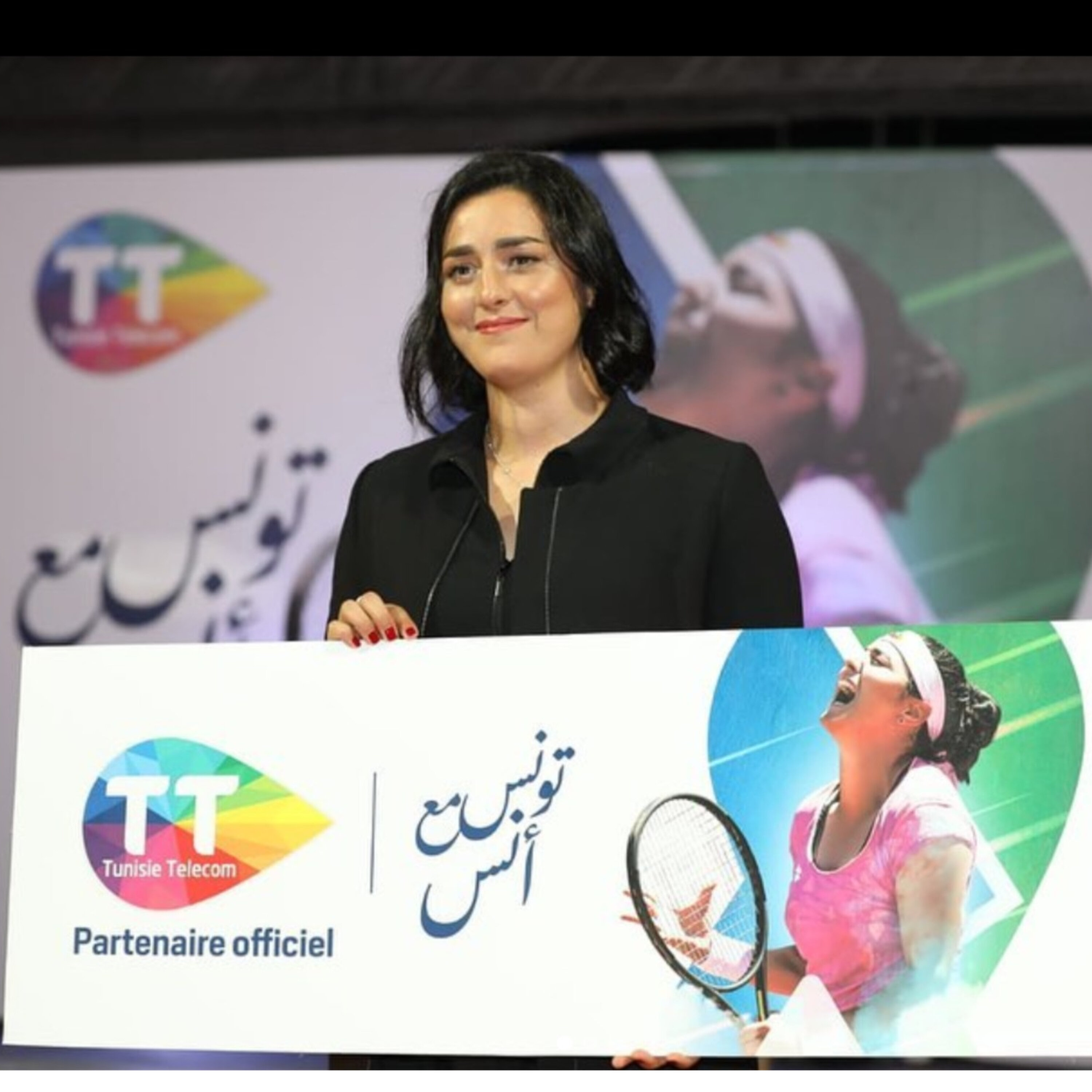
Ons Jabeur
Rennae talks with the Arab world's most famous tennis player (and drop-shot specialist) about growing up watching Andy Roddick, enjoying her steady climb up the rankings and how she deals with her tennis fame back in Tunisia.
Hosted on Acast. See acast.com/privacy for more information.
See omnystudio.com/listener for privacy information.
2021-05-10
41 min
Transcript
Available Results
Generated results are saved to the knowledge database for reuse and search.
No generated results are available for this episode yet.
Extract Knowledge
Pick what you want extracted first. Model, scope, and chapter options appear after a template is selected.
Generated results for public episodes are saved to the knowledge database so they can be reused and searched later.
Transcript
00:00:00
Speaker 1: I mean even driving the car a good job. Also, like thank you, I'm just driving the car.

00:00:15
Speaker 2: Hy Renee. How's gone, Hey, Caitlin, how are you mate?

00:00:19
Speaker 1: Good? Oh?

00:00:19
Speaker 2: Good?

00:00:20
Speaker 3: I'm so excited that red clay court tennis is on my TV every day. It's my favorite time of year.

00:00:26
Speaker 2: Yes, I know it's your favorite time, and I'm glad for you because it is. It's long. So there you go, perfect for.

00:00:34
Speaker 3: You, perfect for me. I just wish everyone in America. We're recording this a couple of days after John Isner's loss in Madrid meant that there are no men in the top thirty from America since the days of Andre and Pete and Jim Currier and Michael Chang and all those great guys who were really Andy Rottick, Andy Rottick. It's nuts, It's absolutely nuts. And I can't but thinking if we had more clay courts in America, these guys learn how to be a little bit more diverse in their skill set.

00:01:07
Speaker 2: Do you think that's true? Well, I mean I think so. You could make it an argument for that, There's no question about that. But I mean, you know, they grow up in hardcourt, they play big hitting tennis. They want to keep the points reasonably short, and clay is a learned thing. I think it's a little bit easier for the American women to adjust to it. I don't know why, but there is no question. I don't think it's got to do with clay, Caitlin. I think this is an overall problem for men's tennis in the US. I mean, let's face it, they're sucking it and then women are doing unbelievable and they keep coming out with new, great, amazing American young female players, but the men not so much. Not so much.

00:01:45
Speaker 3: We have a amazing young Tunisian player on the show today. You had a chance during the Australian open quarantine period to sit down with the one and only as Jibbur Tunisian, first woman from the Arab world to be in the top ranks of the WTA, and she ended up having an incredible run at the Australia but she made the quarter finals.

00:02:10
Speaker 2: You know this young lady. I love her so much. She's so fun, she's so fun to watch. If you don't really know her or haven't really followed tennis over the last year or two, what are you doing? Because Azuba is like literally one of the most fun players to watch. She's got the craziest drop shot in Wems's tennis. Like literally every player that plays her is like has to practice running forward to the net to anticipate the drop shot. But then she can also whack a big fourhand, she can whack a big backhand. She's got a good slice. She's very versatile. She likes to come in there. It kind of suits her personality down to tea, but she's great. I spoke to her down in the US Train Open just before these train Open. She was in severe lockdown for two weeks during this time, so it's kind of ironic that we've made her sit in the vault for this amount of time before we have released this episode. But you know, sad she had to pull out of her match last week. She's nursing a hamstring injury, so hopefully she's going to be okay for the French Open. So everybody out there, I mean love this interview, loved talking to her. She's one of my very good friends out there. I just adore her, and I just love that she keeps creeping up that ranking because nobody likes to play ons because their hamstrings get a workout running for those droppies.

00:03:23
Speaker 3: I mean, as you'll hear in the episode, one of the potential collaborations is I mean, I know she's coached by her husband, so she's not exactly in the coach at market. But you know, Renee Stubbs coach for High.

00:03:35
Speaker 2: I'm not coach for High. I've got Sam Stozer still in my wings, and but I don't know if I can handle coaching ons because the drop shot on many occasions will kind of probably dropped me, drive me crazy. But having said that, oh my god, she'd be so fun to watch all the time as a coach. Frustrating but also fun.

00:03:54
Speaker 3: Because too much fun. She's her personality really shines through in this interview. To hear somebody who is joyous about playing, that's something you can't always say about some of these players. And she just truly strikes me, and you can see it in the way she plays. She's out there having fun and all that variety. You know, I've read she says she gets bored, and you know, sure enough, you guys talk about it if she doesn't mix it up enough. So look, you're never going to be bored watching an on stubur match.

00:04:20
Speaker 2: I can tell you that no, absolutely, and I hope you guys will enjoy this episode as much as I did doing it. And as I said when we did this interview, she was locked up going stir crazy in a hard quarantine in Australia for two weeks, so it was impressive what she did down there. And she keeps climbing up as I set up the ranking, so fingers crossed, her injury gets better, and she has a great friend open. I want to introduce a very good friend of mine and somebody I enjoy so much. Onto. I'd love to watch her play, I love to commentate her, and I like to be around her as a human being and as a person. And it's Ange Jobert. Welcome to the Racket Magazine podcast.

00:05:02
Speaker 1: Thank you. I'm really fraud of. I mean, what introduction here? And I actually never heard you commentating my matches, so I.

00:05:10
Speaker 2: Should really Well. One of the reasons yeah I should, is that I'm commentating your match, so it's pretty tough to listen. Hopefully you're not listening to me while you're playing, but it's possible. No, So honest, I want to know. I ask everybody the start of my podcast, how did you get into tennis? Why tennis?

00:05:32
Speaker 3: Uh?

00:05:32
Speaker 1: Well, I started because my mom wanted to like to play tennis since she was young. But after having kids, she had time and she started playing tennis. And I was the youngest in my two brothers and one sister, and she takes me with her to the tennis club and that's how I picked up this small racket and she was enjoying a lot to be in like around my mom playing and that's how I actually discovered tennis.

00:05:56
Speaker 2: So, I mean, it's kind of an interesting situation really because you know, given from where you are in the world, it's a little unusual that it's the mom, the female in your family that sort of led you down a path of sports. Is that was that unusual or give me a background there.

00:06:15
Speaker 1: Well, to be honest, a lot of female they do sports there. I think more the female they're like really have a lot of energy to do stuff. So my mom was the one going to play tennis and my father was working, so it was like the combination between both. And I mean, I'm grateful that she wanted to play tennis and because before I used to like go swimming and play tennis at the same time. But I guess I was more interested in playing tennis, which I don't regret right now choosing tennis, And yeah, it was for me. I love competition. I love to compete either on a tennis court or outside. So it's either I want to win all the time. And I have two brothers. They're driving me crazy with playing football with them in everything, you know.

00:07:01
Speaker 2: Yeah, it's funny. We have a very similar background because I also grew up doing a little bit of competitive swimming myself, so maybe that's a good thing for for us. I think it's important to do a lot of sports when you're young. So what what were the some of the sports other than tennis that you were doing growing up.

00:07:21
Speaker 1: I played football, of course and still do because I love it. Played the handball I was running, but it was not my favorite. It was too tiring. But everything with the ball, I love it. So basically that's that's everything. And to be honest, I don't know if you know that, but I'm a huge football you know, the football, the not the soccer.

00:07:48
Speaker 2: You know.

00:07:48
Speaker 1: It's yeah, I know I say football because it's football.

00:07:52
Speaker 2: Yeah, I know that, I mean a football I know. I'm from Australia. But I'm an international traveler. I know the difference now and what is in Australia football, Well, in soccer, it can be a little bit of both. It can be soccer in Australia or it can also be Some people call it football. The people that really play and really watch they call it football. Yeah, football, It's okay, It's okay. I mean because the difference of football in Australia is rugby and AFL. So when you stay football, a lot of people understand it. Plus, we have a very multicultural country growing up here. We yeah, yeah, so you know obviously I know that you're from Tunisia. Okay, So it's not exactly a mecca of tennis of course in my day Salima Safar was a former top one hundred player in singles. But how difficult? What were the challenges in particular coming from where you came from in Northern Africa.

00:08:51
Speaker 1: Honestly when I was when I was young, I didn't like see it as a difficult, you know, place to play tennis. For me, I had a tennis called had Rackets and I went to play.

00:09:02
Speaker 4: You.

00:09:02
Speaker 1: No, I didn't make a lot of you know the differences for me and had I made the choice at the age of thirteen years old too, because I'm from Seuss, which is one hundred and forty kilometers far from Tunia's the capitol, two hours driving and I want to live there because I was in high school practicing and going to school at the same time. So actually I was practicing like twice a day. We had balls, we had tennis, rackets, we had everything, and I used to go to play Arabic Championships, African Championship. It was amazing for me. I didn't feel the difference then after all people talking and saying you should have this. Of course, we don't have the same equipment as a Friends or Australia or USA. We don't have a big federation, we don't have a lot of people who were in the top one hundred. So for me, it was one of also my goals to inspire the girls who were in Indonesia or in Africa and tell them that if I made it here, it's not impossible. I know, you should have a lot of equipment, you should have a lot of everything around you, but it's not the most important thing. And the most important thing is like you have to believe in yourself and then you have to work hard and achieve whatever you know. And that's what I'm trying to do, to be honest, And I started since I've won the juniors in a friend sh Open in twenty eleven, and that's what I started to believe even more in my dream. I was like, yeah, this could work, to be honest, this could work.

00:10:38
Speaker 2: There's a big step up from like, you know, doing well in your own country and your own sort of environment, and then obviously doing well by winning the French Open juniors that's a huge step up as well. But I want to know, then, like, what was the difference in you mentally to say yeah, why not? Because you didn't have a lot of you know, idols like that you saw growing up. I mean, I guess I want to ask you who was somebody that you looked up to that you thought, hey, maybe I could do.

00:11:10
Speaker 1: This well I to be I had a goal in my mind. I wanted, like to really like achieve my dream and be number one. I don't know why, but I had this in me growing up. I used to watch a lot of Andiotic and I love how he plays, I love his serf and actually I tweeted once and he replied, which was amazing. And he told me like he's following how I play, and I was like, whoa, you do really? So so it was amazing to have this feedback. But I mean something in me was telling me that I could I could do it. And the more people laughing at me, the more it gives me courage and and you know, a lot of the strength to go forward, because i mean I've I had like a before winning the Friends Open, I had like a surgery in my wrist. And of course people making fun She's not gonna play them because after five months I.

00:12:06
Speaker 2: Was hitting like not in the court, I was hearing really bad.

00:12:10
Speaker 1: And you know, there's kind of a challenge, is they give you the strength to go forward and make like really good results. And of course if you're in the friend Shop and okay, she's gonna stop there, and then after you do, you go to the top hundreds, like okay, that's her maximum. And now I'm thirty and I'm like, I'm still going. You know, guys, don't.

00:12:28
Speaker 2: Don't even follow me, you know, oh yeah, I can tell you all the detractors, all the people that said you weren't going to be anything. You have there.

00:12:36
Speaker 1: There is so.

00:12:37
Speaker 2: Much more for you to do. I mean, in my opinion, like who were some of the people. Were they more from your country or were they just outsiders in the tennis world that were telling you you're not going to be.

00:12:48
Speaker 1: Enough more from more from the country, I mean more, I mean, I don't know. They sometimes they don't believe that we can do it. And it's which I understand because we didn't have so many people growing up doing something well. But we have a lot of Olympic champions, we have a lot of people succeeding, you know, but those are the minority. To be honest, there's a lot of people who encourage me and were there for me, and I'm grateful for every single person who really like supported me. And I just really want to show and the take off this mentality that we can do it. We can be here. Okay, we are a small country, we are it's Africa, but we can we have I mean, we are human beings. We don't have anything different from other people. Just have to work out and believe in yourself.

00:13:36
Speaker 2: So I mean I looked at obviously some of your results over the last like four or five years, I really saw you're like a typical sort of progression up the rankings. You were like somebody who came under the scene in one year and like was top fifty or had these great wins. You really slowly, you had to dig through slow, like you had to play ten thousands, twenty five thousand, fifty thousands. You got up and you had to go back down. What what's some of the things that you know and and and it can can it continues to do that? Right? You think, oh, I'm here, and then all of a sudden you're there and you maybe get an injury and you're back here again. What are some of the things that you could tell somebody who certainly from Tunisia or from a very obscure country, what it takes mentally before the physical part, mentally, what it takes.

00:14:27
Speaker 1: Well, well, we all know tennis is a very tough sport mentally. And I mean I've been pretty stable these last two years, much better than the other years. But I mean I kind of I understand why. And since I got to understand why this is happening, it got much better. I don't have a typical game, you know, I know, how can I do everything? Slies, dropshots? I can hit flat, I can, I can spin, I can do everything.

00:14:58
Speaker 2: But when before you go into that, how did that happen? Like why? Like growing up? Like I took Agneska Radwanska about this, and you know, she explained to me why it happened. Why how does that happen with you?

00:15:13
Speaker 1: I asked my first coach. I asked him, I was like, how did I start doing these structure these tricks? You know? And he tells me like he sutten on your own. I was practicing with a lot of guys growing up, and I just I think it reflects my personality as a person that I don't wanna I don't want to like I hate routine. I don't want to repeating things. So I like to mix it up. And that's what happened with my game. I love fun and lot. I love to give the show to people and people come and watching me. For me is like, I don't know, it's not just a tennis match, but it's I like to have fun on the court. And when I have fun on the court, I play the best because I'm relaxed. I'm not stressing out and everything, you know, and I'm going to enjoying the everyone supported me, and they like enjoying. I'm enjoying also, you know, it's the energy Esus is coming back and forth with the public, with everybody watching me. So yeah, I've been changing and mix it up a lot. And at a certain time I didn't have the I have a choice. I don't know what to do anymore. I know to do anything, but what should I do in this shot? So I wasn't actually going through a good tactic. I don't know. I wasn't. I wasn't really sticking to the plan. But since I got to fix that, I also improved physically. I improved also mentally, and I got in in a good track knowing what I really want. That's how it started to get better. And of course with a few injuries from there, and of course this is also ready to fitness, so it helped me a lot when I improve my fitness and to be honest, less injuries now, thank god, hopefully I'll be good after those two weeks.

00:16:52
Speaker 2: Yeah, yeah, so it's a combination. It's important. I think for you, you're such a perfect person to talk to about. Like if you have a kid, a player, you know that's like this way would you say it's more important to understand their personality and mold their game towards their personality, but then also teach them the importance of hard work, definitely discipline, fitness, but don't change the things that makes them really good. But there's a balance, right, Like, you can't hit a drop shot on every shot? Explain why?

00:17:27
Speaker 1: No. I know that, I know that, But the thing is, that's what I kind of bothered me a lot during my career. I had coaches they wanted to change my game. I tell you, one of the courses told me to be like Sharapova, and I'm like. At the time, I was like, okay, sure, I mean, I'm like and then after I realized, how can I be like Sharapoola? Were not the same? Like completely different? Was because I was joking around before the match and that was my kind of being and let the stress out. You know, I couldn't be like this and not talk to anybody.

00:18:00
Speaker 2: I don't know.

00:18:01
Speaker 1: I was my personality, you know. And since then, I mean there I mean some coaches that didn't want me to do a lot of drop shots. But instead of telling me that, maybe you should show me how maybe to have a technical how to build the point and then finish with the drug shot, you know, and understand maybe why I do a lot of drug shots, you know. That's sometimes why I used to blame some coaches, you know, But to be honest, I found a solution that I should really rely on myself much more, and I understood, and then now I'm kind of taking the better decisions to do this.

00:18:39
Speaker 2: The famous drop shot, you know, yeah, I mean, it's such I'm so fascinated by it because you know, obviously I played, so I understand when you should hit it, maybe when you shouldn't hit it. But is there a time does it come? There's a couple of questions on it. Does it come completely last minute or is there a plan or is it? Both?

00:19:00
Speaker 3: With you.

00:19:02
Speaker 1: Actually both because some players, of course they know me so well and they know that when I'm gonna do the drop shots.

00:19:08
Speaker 2: I think right away.

00:19:10
Speaker 1: Of course, the currerunning I see them. And now, of course at the beginning it was difficult because everybody know that I'm gonna do drup shots. But now sometimes I do drop shots in a shot that it's unexpected that I do it, so I do it, you know, And I also mix a lot with my slice, So I just go like this, but you don't know I'm gonna do drup shot or slice, you know, and I mix it up. And I also with the drop shot, I also improve my baseline game. I'm more solid in defense, I attack much better, I'm more patient in the in the rallies, I run better. So also it adds a little bit with the touch, I mean, yeah, I can do a lot of damage, I think.

00:19:53
Speaker 2: Yeah, I find it really interesting these days when you look at players like Bianca and dress you and yourself and even swa Tech and of course prior to you, guys was Agneshka Radwanska who was so good at it as well. I'm finding that women's tennis in particular is really starting to think and I've seen it. I've seen girls practicing next to me practicing the drop shot. Okay, So do you feel like, with the success of Swatek and of course Bianca and yourself, do you feel like it's a shot that we will really see a lot of and why is it so successful?

00:20:34
Speaker 1: Well, honestly, yeah, it helps a lot because I know if I play against one of the players who play like me and makes me drop shot and it's gonna drive me insane because you never know. I mean, you're gonna run everywhere. They can change their rhythm, they can do this, they can do that. And also I noticed that a lot of.

00:20:51
Speaker 2: Girls they go into the volley right now, they.

00:20:54
Speaker 1: Change it up and playing more doubles and going to the volley to improve the volley and mix it up a little bit. Of course, if you do drug shot, you're gonna need your volley. You're gonna need to be I know, it's I think it's another option. You know, it's it's not something you're gonna rely on your game, but it's definitely a great option for the for the game.

00:21:14
Speaker 4: Now.

00:21:15
Speaker 2: Okay, so away from the tennis a little bit. You got named Arab Woman of the Gear in twenty nineteen. I mean, excuse me, I want to know who other people that normally win that this.

00:21:30
Speaker 1: That was in London, I remember in twenty nineteen, and they gave to each woman successful in different like it was me in sports. Some was in politics so different like like levels and stuff. So I know that some other athletes wanted Olympic athletes. I know the Teunisian one wanted also before they give to actresses. So I don't know who made this, but it was incredible. To be honest, I didn't know that it's gonna go like whoa everybody it was going to talk about it. But it was fun for me going two days to London and enjoy myself there. So it was it was very nice.

00:22:07
Speaker 2: Yeah, that's I read that little bit. I do a ton of research because I know you guys.

00:22:11
Speaker 1: We make a big deal about our woman, trust me. I mean I don't know why.

00:22:15
Speaker 2: But we make a big deal about it. How is it for you at home now? Because you are from a pretty small area in Deunisia. Obviously you moved to Tenis so it's bigger. But what's it like for you to go home to you know, your small town.

00:22:30
Speaker 1: Well, I mean people recognize me much.

00:22:32
Speaker 2: Bet don't know.

00:22:33
Speaker 1: They knew the name before, but now they recognized more the face. And I'm honestly happy and proud that every time I imagine I go to do anything and people like good job, I mean even driving the car, good job. So I was like, thank you, I'm just driving the car, you know, and like people cheering actually for me, which is amazing because I don't know how to tell you. But it's a feeling that I felt, especially last year by Dha and I was playing and I saw all Tunisians come and to support me. I mean, wow, even like some players. I was playing a bit of her the next day and she told me, so I heard you have a crowd. Huh. I'm like, yeah, but I'm sorry. You know, I don't know they're going to be loud, but you know, it's it's it's it was fun. It was so much fun, is it?

00:23:21
Speaker 2: I mean, does it mean like so much to you? Because at some point your career will end, and do you have aspirations to like get more young women who can now look at you and be like, why not have you thought about like an academy or even just setting up something or what's what's the future? You're still so young? And as I said, I mean, my thought is, you are for sure top ten material. So I know that there's so many things that you're going to do in your career, But what about that.

00:23:52
Speaker 1: That's for sure? Yeah, that's for sure. No, I think I think about those things. I think about of having my own academy in my own country, and I definitely want to inspire a lot of women and men both, and I want to also inspire a whole continent in Africa. To be honest, I want to have a big academy.

00:24:13
Speaker 2: I wanna.

00:24:14
Speaker 1: I want to set up a program and honestly it's I'm not doing this for the money. I do it to have so many girls in the top one hundred, top twenty, top ten. And I know that, I know I can do that and if you can come and help me as a coach.

00:24:32
Speaker 2: I was gonna say, I've never been to Africa. It's one continent. No, no, I have to come. I would tea after COVID wait, I keep I teach serve and said, that's my specialty.

00:24:49
Speaker 5: Okay, for sure, for sure, Okay, open in location, I have it on record.

00:25:06
Speaker 1: Open.

00:25:06
Speaker 2: Yes, let's talk a little bit about the difficulties of Australian open, the qualifying, the quarantine situation. Just a little bit of the mindset for you now going into two weeks of being in a room and how you approach dealing with something like this and how important it is. Is it more mental or is it physical or is it both?

00:25:31
Speaker 3: For you?

00:25:33
Speaker 1: I mean, I'm not gonna lie to you. It was. It was very tough. Uh shocking, to be honest. When I heard about the news, I wasn't expecting it at all. I didn't think that we could really quarantine two weeks in a room knowing that we're going to play a tournament just after. I don't mind quarantining. We've been, We've been like re respecting the rules of everywhere in any other country. I understand, uh difficulties for Australian people how they reacted when we came here. Of course they're COVID free here and who we come from outside, but some and a lot of players. I myself was in the bubble in Abu Dhabi, so I came from a bubble directly to a bubble and I was like, no, really not going out And it's I mean, COVID is everywhere, and I understand the situations, just sometimes it's tough to accept when you have a tournament just after, and as a professional athlete, I want to be one hundred percent ready. Also seeing other players practicing it doesn't make it fair, so also makes it even hard. But I mean, at the end of the day, you have to accept the situation because we don't have any control over it. And I respect one hundred percent of the rules. I want everybody's safety. And we come up with the fun exercises in the room. We've been running five k's in the room and we have a bike. Now we are trying to do a lot of you know, exercises. I'm trying to keep fit, like working on my mentor a lot like like just seeing myself playing so I don't lose that in my mind. And I heard there's some researchers when you do when you do that, it's the same as practicing. So I'm using everything I can to do and I have pretty good imagination, so trust me, when I close my eyes, I can really see myself doing the drop shots.

00:27:30
Speaker 2: Well, I can tell you you did have Bianca and Rescue on the Record Magazine podcast and she talked specifically about that when she was injured during that period of time, and one thing she wrote down was I will win the Canadian Open. And remember she didn't play from Indian whilst to Canada. I know, I know, So I expect you after this is over to write on a piece of paper. I am going to I'm.

00:27:52
Speaker 1: Imagining myself left in lifting the trophy this speech.

00:27:57
Speaker 2: Yeah, and that's right. And I expect you to tell everybody in the whole world. Of course you told me this, Okay, that's that's right.

00:28:04
Speaker 1: I believe. I believe a lot in energy. I believe a lot in the spiritual world. I believe that everything happened, you should manifest it. I believe that you should ask the universe for everything. So I believe in all these things, and I believe that this is this is how it's meant to be. I was meant to be to stay in the room for two weeks. I believe that if something bad happened to you, I know there is something good is gonna happen. So I am. I have a big faith in God, in everything is happening around us, in myself because I know that I'm capable of So Okay, maybe I was like a little bit upset at the beginning, but I mean, what can you do. I'm a professional athlete and I want the best, you know, So now I mean, really gonna focus. Thank God I'm here, and hopefully hopefully everybody stays safe. To be honest, because this this COVID, I everybody has dis COVID and hope this thing will be over very soon.

00:29:01
Speaker 2: You have a great I like the way you're thinking right now. It's good. And if we do play this after the Australian Open and you win the tournament, we can tell everybody it was because you said it. Here. A couple of last little things. I want to go back to the austrain Open last year because it's usually such a great place for you. It was, of course, the first time an Arab woman ever made the quarterfinals of a Grand Slam. And not only did you make the quarter last year, I mean I had to look her because I forgot the schedule, but you beat Joe Conta, you beat Garcia, and you beat was Niyaki and Wang Xiong. I mean, excuse me, Like, could you have had a harder draw to make the quarterfinals? And of course you ended up losing to the defending uh you know now defending champion in Sophia Kennon. A couple of things about that tournament was Naki? Can you because it was also her last match? And can we just say, boy, did she pick a great time to retire?

00:30:01
Speaker 1: Okay, yeah, she.

00:30:04
Speaker 2: Knew it, Yeah right, I mean hello, but what what was it like for you going on the court because you knew that that was it? Right? If you won that was her last match. Can you give us a little like feeling of how that felt for you? Because I know you're such a nice person, and I knew that you were. There was a party here that still was thinking that. Let me tell you since I was talking about manifesting things. I of course, when I was training, I saw that she was going to retire. And it was.

00:30:32
Speaker 1: In December or maybe before she was going to retire on my story and open, and I was like, I had this feeling that I was going to play her, and I was the one who's going to play her. You know, I'm like, okay, stop being crazy. And it was like I went back to practice. Okay, I was seeing the draw. She was on my side. I remember she was playing Christian jan in the first round and we may see each other, you know. But I was like I kept playing, you know, just like normal. I played. I played her before injured Wes. I remember it was a Martine match. She likes to run a lot. She and I obviously like to make a drop shot and she she gets them all. And of course that time when I went to UH to play the match, I was like, okay, just don't see it as a retirement man. Just see it as a normal match, tennis match. It's it's a Grand Slam. I don't know, it's stuff, and these things happen. But it was my, honestly, my pleasure to play her that day. Everybody I know who was supporting her. But it was a great atmosphere. Only regret one thing, not exchanging rackets with her. I don't know what I was thinking back then, but I was like super stressed and she's a very nice person, and to be honest, it was it was a great experience for me. Probably most of the people hate me, but that's that's tennis.

00:31:52
Speaker 2: Come on, nobody can hate you. Wait before I want to say, did you manifest that you were going to apply her and that you were going to be the beat?

00:32:00
Speaker 1: I thought about it, and I thought about.

00:32:02
Speaker 2: It, but that you were going to be the one that was going to send her off into happy retirement.

00:32:07
Speaker 1: I thought about it, to be honest, that's how I thought about it. I was like, I was like I when I saw she was going to retire, I was like, am I the one who's going to stop her career right here, right now?

00:32:16
Speaker 2: And then?

00:32:17
Speaker 1: And it did happen. When I was going to play play here, I was like, Okay, this is really happening.

00:32:23
Speaker 2: You should have told everybody. Well, you know, just so you know, I manifested. It's like three months. That's such a cool story. I love it. Now listen, if I can, we can figure this out, and you figure out which racket it was that you beat it with, maybe we can figure out an exchange with the rackets.

00:32:41
Speaker 1: Yeah, well, if she sees this, I want your racket. I mean I still have the racket that I've played with.

00:32:46
Speaker 2: That's what I mean. Maybe we could work out something. Let's text her and figure it out after we're done. So you get through that match. It's obviously a big deal. Everyone's talk about you about, you know, beating Caroline, but also then you went into play so what did you what did you?

00:33:05
Speaker 1: Oh?

00:33:05
Speaker 2: Yeah, one after it was one? Yeah, and then you want us to be Serena to be honest, Well, but we all know you gotta buy the match first, right, and she lost to Serena. Yeah that's right, because everyone was talking about it's going to be Serena and Losniaki, but it didn't happen on both occasions. Yes, what what did you learn from the match with Sofia.

00:33:30
Speaker 1: Well, Sophia is a is a tough player because to win appointment gives her you really really really need to work hard and it's every point. And I know she was a tough match for her as well, because I kind of heard her talking to her mom just after something and saying, there was a very, very tough match, and I know it was a lot of stress. It's my first quarterfinal. I was maybe a little bit tired, I guess, but I mean she was much better than me, that much, I admitted. And there is no no, really no regrets. I know that I'm gonna come back stronger and I'm gonna take my revenge one of these days. I know that I have to believe more in myself in my game because I know I can really play really good. I just have to maintain that level and I know it's on in this head and hopefully it's going to be this head was going to be fixed soon and play better on the court.

00:34:30
Speaker 2: You had a great year though after that. I mean you had some really phenomenal wins. Of course, you beat Plishkov, It's been your best win as far as ranking is concerned. I guess the next step is obviously you want to be top ten. You'd tell me how important it is for someone like Cannon Swantek to win a French Open? Does that give players like you who are sort of like I just I want to win a Grand Slam? But I'm not sure does that give you that the feeling of manifested? Also, did you manifest you manifested that you're going to win a Grand winning?

00:35:06
Speaker 4: Right?

00:35:07
Speaker 1: Great? I know, I know I'm gonna do it. I know I'm gonna have that title that I always wanted in my life.

00:35:13
Speaker 2: And which one? Which one? I mean, let's be honest, come on which one?

00:35:17
Speaker 3: Uh?

00:35:19
Speaker 1: I love the French and I love Australia. So since it's in uh in two weeks Australian Open or more three weeks, then I'm going to say Australia for now the process.

00:35:33
Speaker 2: That was a really smart answer there, you know. And then the next one happens to be in the French Open.

00:35:41
Speaker 1: Well, really, I don't know.

00:35:44
Speaker 2: Hey, maybe you can win both. Let's manifest that.

00:35:46
Speaker 1: Well.

00:35:46
Speaker 2: I think you're your ability and of course your husband, you know, he's like working you hard, and I'm sure that hasn't been easy at times that he's the one that has to make you run the extra you know, couple of miles. Does that put a little bit of stress on the relationship.

00:36:04
Speaker 1: At the beginning is but now we.

00:36:08
Speaker 2: Are good.

00:36:08
Speaker 1: We actually understand each other a lot, and he's been helping me and since actually I started with him my best ranking and my best tennis and I'm grateful that I chose him. I mean, it's it's unbelievable balance for both of us because you know, as a tennis player, it's tough to always travel. It's a lonely life, and you know how tough it is to go from each country and you don't have a home. So to be able for him to travel with me and also be my fitness coaches, that's amazing. And to be honest, surviving those two weeks with him next to me, it's also amazing.

00:36:46
Speaker 2: Has he got you to do some fencing because of coause he was a competitive fencer. So have you tried?

00:36:52
Speaker 1: We did once. I tried just after we got married, and wait, I think I want you know, yeah, just after it was a honeymoon gift.

00:37:07
Speaker 2: Did you were you able to get him? And actually, I've always thought fencing wood is a great thing to for tennis because it really does take a lot of footwork and up and back and you know, like having a good reaction exactly.

00:37:20
Speaker 1: The reaction is amazing. I mean to be able to move like a small space and try to like really get the other player. It's it's it's a tough sport.

00:37:30
Speaker 2: Really. Yeah, I think it's probably best that you guys put the fencing. Uh just what is it? What is it called? What's that thing called?

00:37:39
Speaker 1: The sort? No? The thing that is? Yeah, I don't know what's it called. I don't know.

00:37:44
Speaker 2: Is he there is your husband there? Can't you ask him what that is? There is a sep.

00:37:50
Speaker 1: Sword, see because there is three different things. There is a foil saber the ah okay, so there is two each day. Touch and it's different because you're allowed to touch like your body. Some are in the bag and the body.

00:38:12
Speaker 2: So different part of bodies.

00:38:14
Speaker 1: I really didn't get the rules and want to explain.

00:38:18
Speaker 2: To maybe rules. Maybe we'll get like maybe one day we will dress you up as one and we'll I don't think we're not going to do it after you when you straight and open, we're going to get you out we're going to get you a saber, a jousting thing.

00:38:35
Speaker 1: Anyway, he does foil.

00:38:38
Speaker 2: He does foil, Okay, yeah, so you have to get in his Does he travel with his foils? No?

00:38:49
Speaker 1: I travel them with my records.

00:38:50
Speaker 2: The only the only foils I use from my hair, my gray hair.

00:38:54
Speaker 3: You know.

00:38:55
Speaker 2: I put the foil in the hair and paint it. And you don't have yes, I do. Well, listen. I want to thank you for joining me. I know you don't have that much to do right now because it's a.

00:39:08
Speaker 1: Long busy, a long day Netflix.

00:39:12
Speaker 2: I hope you're watching a lot of Netflix. You're watching a lot of like, you know, really good documentaries on like Great Champions, and I know that you're going to get through it and exactly, but I want to thank you, I know, And I really want everyone out there that knows tennis obviously knows you, and the ones that are sort of not really familiar with you, I want them to know how great you are as a person and how fun you are. And we're so happy that you're in our sport because you make you make tennis so fun and it's it's a joy to commentate, it's a joy to watch I've never coached against you, so when that happens, it's not going to be fun because exactly, no, Sam stars in the first round. No, that's not gonna go.

00:40:02
Speaker 1: Oh no, no, that's not good for me, and all this joy is gonna be against me. No, no, no, no, let's erase that.

00:40:09
Speaker 2: Let's erase that. No no, no, that's not gonna happen. It's not gonna happen. Now wait, hold on second, what's you're ranking right now? Thirty? Is this the top highest you've ever been? Congratulations to my friends, thirty twenty.

00:40:21
Speaker 3: One.

00:40:21
Speaker 2: Let's manifest it for you, my friend, let's go. Okay, thank you for joining me. I'll see you on the outside, my friends, I'll see you on the outside, see you okay. Thanks some for good luck. Yeah, exactly, Thanks buddy, And that's.

00:40:36
Speaker 4: It for this episode of the Racket Magazine podcast. Thanks for listening. Our host is Renee Stubbs. Our co host and producer is me Caitlin Thompson. Music by internationally renowned DJ Stretch Armstrong. Thanks to Tim or Jerry and then the team at acast. Find us at racketmag dot com, slash podcast and subscribe to us at any of your favorite podcasters
Chapters
No chapters available.