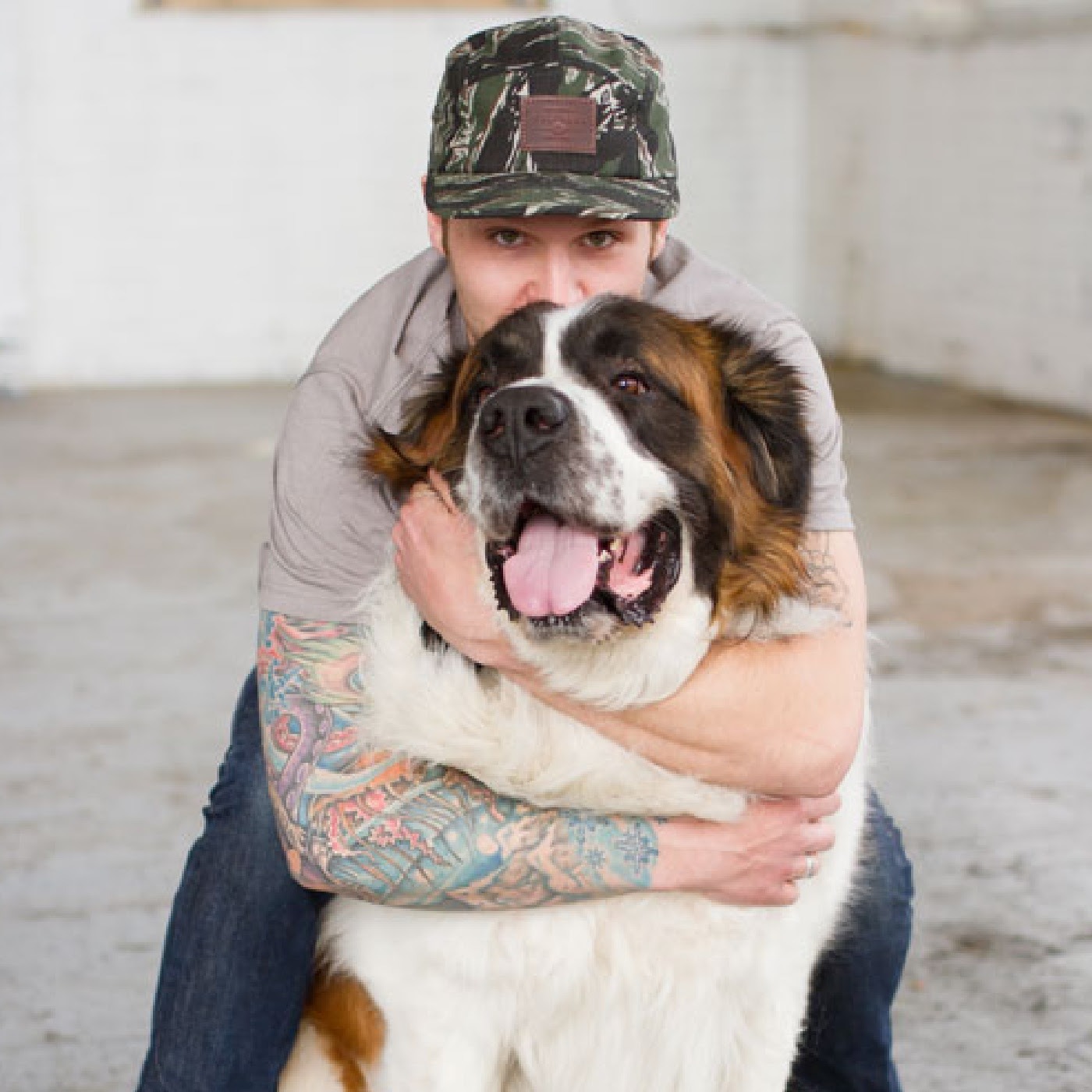
E322- Giant Reactive Rescued Dutch Shepherd Doesn't Give A S*%$T About Your Treats!
Tom speaks with a Dutch Shepherd Owner about his reactivity and dog training economics!
Seminars! 🔥 www.tomdavisevents.com
All my courses! 🧠 www.tomdaviscourses.com
My Online Academy! 👉🏻 https://club.upstatecanine.com/
Advertising Inquiries: https://redcircle.com/brands
Privacy & Opt-Out: https://redcircle.com/privacy
2025-09-26
58 min
Transcript
Available Results
Generated results are saved to the knowledge database for reuse and search.
No generated results are available for this episode yet.
Extract Knowledge
Pick what you want extracted first. Model, scope, and chapter options appear after a template is selected.
Generated results for public episodes are saved to the knowledge database so they can be reused and searched later.
Transcript
[SPEAKER_03]: Hey, what's going on?
[SPEAKER_03]: No bad dog.
[SPEAKER_03]: We welcome back to the number one dog drink podcast in the world.
[SPEAKER_03]: Thank you so much for listening.
[SPEAKER_03]: I just got back from England.
[SPEAKER_03]: It was absolutely lovely.
[SPEAKER_03]: All the footage of me working with all the dogs who came out is going to be uploaded on the Tom Davis online Academy.
[SPEAKER_03]: So you can click the link to find out more information on that.
[SPEAKER_03]: That's basically an online Academy at a low, low, low, low, low, low.
[SPEAKER_03]: Monthly costs to work with me and my trainers every single week as well as all the uncut stuff.
[SPEAKER_03]: Also, I'm gonna be in New Zealand and Australia in November.
[SPEAKER_03]: I'm super excited to get out there.
[SPEAKER_03]: Take us in information is in the link below.
[SPEAKER_03]: Please come out and see me if you want to.
[SPEAKER_03]: I will not be back for very long time.
[SPEAKER_03]: Unfortunately, we have a lot to do and we've already kind of committed to that.
[SPEAKER_03]: So I hope to see you guys out there.
[SPEAKER_03]: And this podcast is absolutely wonderful for anybody who's just scratching their head.
[SPEAKER_03]: Trying to figure out what the heck to do with the reactive dog and they've tried everything.
[SPEAKER_03]: the information this podcast is presented in a way that I have not necessarily done before.
[SPEAKER_03]: I go through a one two three step that I should actually start coining and talking about, which I will after this.
[SPEAKER_03]: But this is a fantastic podcast.
[SPEAKER_03]: Thank you for listening and enjoy this podcast and we'll talk to you in the next episode.
[SPEAKER_03]: What's going on?
[SPEAKER_00]: So what we have, we've been, we've had dogs now, gosh, for about
[SPEAKER_00]: And we, we like to think we're somewhat responsible.
[SPEAKER_00]: So we kind of trainer like yourself years ago with our first dog, since then we've still been in contact with Eric and he's phenomenal, but we are states away.
[SPEAKER_00]: And he's
[SPEAKER_00]: you know, really like like you'll probably admit that really not training the dog or training the person.
[SPEAKER_00]: And so he always give this little things when we got our second dog.
[SPEAKER_00]: We're now on our third dog.
[SPEAKER_00]: We call him and said hey, you know, give us some ideas here and there and or a quick crash course.
[SPEAKER_00]: We're fresher.
[SPEAKER_00]: We have no problem.
[SPEAKER_00]: We were we what this last dog and there's no problems.
[SPEAKER_00]: We're just trying to get him in a better place, us in a better place.
[SPEAKER_01]: So we currently have two dogs.
[SPEAKER_01]: Yeah, large dogs.
[SPEAKER_00]: Yeah, they're we the other dogs were like boxer labs, months.
[SPEAKER_00]: We always tend to go with the.
[SPEAKER_00]: Um, rescues.
[SPEAKER_00]: And we were, we were at a street fair and my, we were kind of talking about getting another dog.
[SPEAKER_00]: Um, our, our one dog's 13th year.
[SPEAKER_00]: And, um, and anyway, we, we came across the dog is a rescue.
[SPEAKER_00]: He's a Dutch shepherd.
[SPEAKER_00]: He's, it was 13 months.
[SPEAKER_00]: They guessed.
[SPEAKER_00]: Um, and he had been at that shelter for about six to eight months.
[SPEAKER_00]: And very RAM boxes is, you know, the breed is a very high energy scared a lot of people off, but we went back several times.
[SPEAKER_00]: It was a good fit for us.
[SPEAKER_00]: We we I was question is is now at 13 months.
[SPEAKER_00]: I'm not always doing trained puppies.
[SPEAKER_00]: So very easy.
[SPEAKER_00]: We, and also Tom, we do a lot of our training through praise.
[SPEAKER_00]: We, we hardly used kibble or anything else for that matter.
[SPEAKER_00]: So as a pop, no problem, 13 month old full strength, you know, high energy dog, not so much.
[SPEAKER_00]: But we've got him with all the obedience.
[SPEAKER_00]: uh, verbal as well as, uh, hand signals, but where we're having a problem with him is in when he was in the, we call it the huskow, uh, there was an issue, uh, well, not an issue, but they, he developed, I think a lot of social, uh, anxiety and problems, uh, with other dogs, um, he gets very excited about other dogs to the point where he charges them his, his
[SPEAKER_00]: Um, it's very hard for me to read them.
[SPEAKER_00]: And he, our problem is this time.
[SPEAKER_00]: He read lines.
[SPEAKER_00]: He goes, I got no verbal communication with him.
[SPEAKER_00]: He does not listen.
[SPEAKER_00]: He, I can hold him back if he's on the lead.
[SPEAKER_00]: Um, but a lot of times it is, it's, it's concerning.
[SPEAKER_00]: It's very scary.
[SPEAKER_01]: I mean, he, uh, is what it does is it really puts him in a prison.
[SPEAKER_01]: We don't, we don't, we don't
[SPEAKER_01]: They've frizzed me to get this energy out.
[SPEAKER_01]: Yeah, first thing I can't walk in.
[SPEAKER_00]: Yeah, my wife could walk in.
[SPEAKER_00]: If there's no other dogs around, it was a little bit with people and some buses and big trucks, I was able to snap them of that.
[SPEAKER_00]: That was no problem just with lead training.
[SPEAKER_00]: And a snap of the leash.
[SPEAKER_00]: But when it's daughter and animals, I've been able like squirrels and deer, I've been able to snap them with that and get them correct him.
[SPEAKER_00]: I shouldn't say snap a correct him of that that, you know,
[SPEAKER_00]: instinct of just taking off, but with other dogs.
[SPEAKER_00]: And where we're at, Tom, this is, I'll just spend a little bit on this.
[SPEAKER_00]: The main purpose of this is we are my wife and I would like to travel and we're looking at getting an RV and we want to take him with.
[SPEAKER_00]: And another thing is, when we fly or
[SPEAKER_00]: Um, and I do not want to create or channel him anymore because of where he's been.
[SPEAKER_00]: I don't know how that would affect him.
[SPEAKER_00]: So he's been with family since we adopted him with two two years.
[SPEAKER_00]: Yeah.
[SPEAKER_00]: So about two and a half years.
[SPEAKER_03]: So you mean when you say you don't want to create your channel, you mean you don't want to put him in a boarding facility.
[SPEAKER_00]: Correct got it.
[SPEAKER_00]: Okay.
[SPEAKER_00]: Well, well, not that I, I would have reservations of that.
[SPEAKER_00]: I don't want him to think that we would abandon him again, because he was, it's time he would not show like it went for gosh least how long it was a year before his tail would wag, we could see that he was happy.
[SPEAKER_00]: He followed us, he was he he acclimated, but he was for a year, he was like very unsure of the process what's going on.
[SPEAKER_00]: And now I mean he's like, you know, any other emotional, you know, or shouldn't normal signs of emotion that a dog would give.
[SPEAKER_00]: And I would, I don't want to jeopardize or lose half him lose confidence because that it was, we just seen it was maybe very traumatic for him being in that shelter for so long.
[SPEAKER_03]: Mm-hmm.
[SPEAKER_03]: Yeah, that makes sense.
[SPEAKER_03]: So now, so just to put everything together.
[SPEAKER_03]: So right now, you're wanting to travel with him in an RV, but his reactivity to other dogs is limiting you in your ability to do so.
[SPEAKER_00]: Well, that's so that as well as we just feel like we've had
[SPEAKER_00]: You know, the training, everything's going great, but that I just, it's too much for me.
[SPEAKER_00]: I, I, and
[SPEAKER_00]: He's just too strong.
[SPEAKER_00]: I mean, he is all muscle.
[SPEAKER_00]: And I mean, we actualize, we did a half hour at the park today he'll swim today.
[SPEAKER_00]: We get him on a treadmill.
[SPEAKER_00]: We throw up my wife throws the ball for him throughout the day.
[SPEAKER_00]: He's a Velcro dog.
[SPEAKER_00]: So he is always within the room and within I site within several feet of us, generally when we're home.
[SPEAKER_03]: Okay.
[SPEAKER_00]: So when you say it's never anxious and anxiety, you know, when we leave, we've not experienced that.
[SPEAKER_03]: Right.
[SPEAKER_03]: Got it.
[SPEAKER_03]: So when you say that he, he's too, he's too much.
[SPEAKER_03]: So are you think about getting rid of them or what do you never never know that's just it.
[SPEAKER_00]: too much in the fact that for me to I don't see that I'm going to get where we want to be comfortably because one the next step time is we would like to this is an RV.
[SPEAKER_00]: We want to be able to take them to restaurants if we should go to walk through a new town be able we don't want to leave them in the RV.
[SPEAKER_00]: We want to be as if any time we can allow we want to
[SPEAKER_00]: And we also would like the potential of flying with him if it should that be the case.
[SPEAKER_03]: Okay.
[SPEAKER_03]: So right now when he reacts, what is it?
[SPEAKER_03]: What does it look like?
[SPEAKER_03]: How does it present itself?
[SPEAKER_01]: that like like, yeah, right in the person who's with the other dog, obviously, yeah, and, of course, the other dog.
[SPEAKER_01]: And a couple of times, he's actually lunched at another dog.
[SPEAKER_00]: Yeah, but there was no fighting, yeah, we've not seen, however, the hunches are up.
[SPEAKER_00]: And he is, he's menacing because he's a brindliest, you know, what the Dutch Shepherd's look like.
[SPEAKER_00]: I mean, he's yeah, he can be
[SPEAKER_00]: I mean, his mouth is huge and he's big white canines and it's, you know, he's snap in and he's grinding and lunging and I'm really pulling the back my wife and that scenario my wife probably would not be able to hold him and my wife is a retired firefighter so she's.
[SPEAKER_00]: She's not a wallflower by any means.
[SPEAKER_00]: So he's a bit much when it comes to any goes red line like I can't I just I can't hold them I can't I can't hold them I can't snap him out of his focus.
[SPEAKER_03]: Yeah.
[SPEAKER_03]: So, when you're trying to snap him out of his focus, what equipment are you using when you're trying to snap him out of his focus?
[SPEAKER_03]: So when he's a big dog, he's reactive on the leash, he lunges, shows his teeth, barks.
[SPEAKER_03]: Because equipment makes a significant difference as it does with anything you're doing.
[SPEAKER_03]: So what equipment are you using to correct him at this
[SPEAKER_00]: So we, it's really just a lead, I would a lot of times what I'll do is I'll try to, if I have like when we're coming to a situation where I see the dog, I'll try to, you know, make a noise and tap his hind corners like with my fingers like I'm kind of prod nimble a little bit like I'll just like that just to get and then I'll say nope and, you know,
[SPEAKER_00]: I mean, just, and then I, we, with totally no success, we even brought a squeaky toy, he loves his balls that squeak, I brought, and that, that is attention, and then, for the first time, and then after that it didn't.
[SPEAKER_00]: So that renders itself useless, and then I got a,
[SPEAKER_00]: Well, what would you, I think it's a loose leash collar, so I put it on with his regular leash where it loops around it's I go like I wouldn't call it it's like I guess it choking collar or choking leash, where it has a slip on it so when he pulls it will choke on.
[SPEAKER_01]: There's no bombs.
[SPEAKER_00]: There's no barbearing thing.
[SPEAKER_00]: It's just, it's just a, it was actually a upon the, one of your recommendations on an older video that you had out that was successful.
[SPEAKER_00]: And it got, I had reservations because he was pulling so hard.
[SPEAKER_00]: I did not want to cause injury.
[SPEAKER_01]: Generally speaking, if we see another dog Tom, we turn it on.
[SPEAKER_01]: We don't want to traumatize the talk or the person that's got our neighbors.
[SPEAKER_03]: Yeah, that makes sense.
[SPEAKER_03]: Okay.
[SPEAKER_03]: So a couple of things.
[SPEAKER_03]: Go ahead.
[SPEAKER_00]: Yeah.
[SPEAKER_00]: So the least training.
[SPEAKER_00]: The least training is the thing.
[SPEAKER_00]: But it's also mainly it's a behavioral thing.
[SPEAKER_00]: And I like I.
[SPEAKER_00]: I said to Lisa, this is, I feel that a lot of this is stem from him being in the kennel and all the dogs just get into a frenzy barking, we don't, yeah, because yeah, he, and what, he's never bit another dog or person that we're aware of.
[SPEAKER_00]: He's been with us since he was 13 months.
[SPEAKER_00]: However, in a way he didn't bite the dog, but our neighbor has a German shepherd, and she is too much.
[SPEAKER_00]: She's a bit.
[SPEAKER_00]: Yeah, they call her, they call her the shark, the bitch.
[SPEAKER_00]: She's, she's, but she does not like in my neighbor, Tom, also said, listen, you got to take her off the leash when you're hit, when you hit him off the leash because Angel will attack him.
[SPEAKER_00]: Like, if she sees a dog on a leash, she attacks him any animal for that matter.
[SPEAKER_00]: And so there's no problem.
[SPEAKER_00]: And then Zeus's fast, he's very agile.
[SPEAKER_00]: So he could take him.
[SPEAKER_00]: Yeah, well, and he was, and they would play and run.
[SPEAKER_00]: And he should couldn't catch him.
[SPEAKER_00]: And he thought it was kind of a joke.
[SPEAKER_00]: Well, my wife, I was over there one day, they were, they were away.
[SPEAKER_00]: I was staying care of the house.
[SPEAKER_00]: My wife brought Zeus, didn't think of it.
[SPEAKER_00]: She kind of started getting closer and closer and then she kind of started really like biting and being aggressive.
[SPEAKER_00]: And of course, he showed his teeth and they're kind of how they kind of do and they're moving their heads back and forth.
[SPEAKER_00]: And I think one of his canines caught her temple.
[SPEAKER_00]: But he didn't bite her, there were no bite marks.
[SPEAKER_00]: He's just, he's such a lovely reactant.
[SPEAKER_00]: He was reacting to her, yes, but he's such a big dog, dog, and so strong.
[SPEAKER_00]: If something were to happen, it would be catastrophic.
[SPEAKER_03]: Yeah, sounds like it sounds like you've got an interesting situation with the neighbors.
[SPEAKER_03]: Well, okay, so there's a couple ways to go about this.
[SPEAKER_03]: There's the grassroots way, which is what I like to focus on, which essentially means like right now what you really need to be focusing on is your level of obedience and communication and relationship with the dog because every single dog reacts for different reasons and for most cases
[SPEAKER_03]: Most cases, it's genetics, it's the dogs, in this case, make sense.
[SPEAKER_03]: The environment that the dog was bringing in, so you know, you get a working dog and, you know, they want to bark and react and maybe they feel insecure.
[SPEAKER_03]: There's so many reasons of why these things can happen.
[SPEAKER_03]: But the reality is, as you have to make sure that you have the ability to communicate with your dog before you even try to stop something.
[SPEAKER_03]: So a lot of people, they want to stop this, right?
[SPEAKER_03]: So I call it the stop at syndrome.
[SPEAKER_03]: So you want to just stop the dog from reacting.
[SPEAKER_03]: It's very normal for these things to...
[SPEAKER_03]: To happen, right?
[SPEAKER_03]: Like you just all you want is hey, I want to stop the dog from reacting like that's all I care about It's all I want to do and it makes sense.
[SPEAKER_03]: It's like okay, but it's not that easy, right?
[SPEAKER_03]: It's this in a lot of dog owners like the way that I explain it
[SPEAKER_03]: is it's the same equivalence to just like telling somebody I want to lose a hundred pounds or I want to put a million bucks in the bank or whatever, that's like how I hear it, you know, obviously it's a it's a much different road map in which you have to go down.
[SPEAKER_03]: It's not that easy.
[SPEAKER_03]: In other words, so really what you need to be focusing on is you need to focus on what you're going to be able to do to communicate with the dog that
[SPEAKER_03]: as well as given them something else to do.
[SPEAKER_03]: So you've already brought out the squeaker toy, which was ineffective, right?
[SPEAKER_03]: So you said, hey, I want you to play with this instead.
[SPEAKER_03]: It's a good thought.
[SPEAKER_03]: It's a little, like, constructive avoidance.
[SPEAKER_03]: Hey, I want you to do this instead to ignore the dog.
[SPEAKER_03]: Sometimes it works, but what it comes down to guys is it comes down to the dog's drive economics, right?
[SPEAKER_03]: So the dog wanting to say, hey, I would rather react than play with the tug, right?
[SPEAKER_03]: So that's, so that's really important to to kind of understand as a lot of people like on paper, I'm just going to go out with food or I'm going to go out with a tug or a toy,
[SPEAKER_03]: And because the dog loves it so much, this is going to help us get us through.
[SPEAKER_03]: And sometimes that is true, but in most cases, with very high energy, high drive dogs, it really doesn't, there's no, it doesn't compete, right, the currency of the ball or the food or the squeaky toy with the currency or the distraction of another dog is in balanced, right?
[SPEAKER_03]: So, some cases not, like if you have a,
[SPEAKER_03]: dog that's just reacting because they're bored or they don't know what else to do or whatever.
[SPEAKER_03]: You can get away with that because they're half-half-half-assin it really.
[SPEAKER_03]: So they're not really fully committing because they don't like my dog.
[SPEAKER_03]: I talk about him all the time, but it just makes people understand it more like he's a very, very, very protective dog.
[SPEAKER_03]: He does also like food.
[SPEAKER_03]: So depending on the circumstance, there's sometimes where he's like, yeah, I'll take the food and then other times he actually feels really threatened and he won't.
[SPEAKER_03]: And so, and the other thing is, is just having, you know, good obedience.
[SPEAKER_03]: I mean, there's, there's, this is the line that it goes, is, is, is, is having, having the ability to counteract or, uh, counter-condition, hey, play with this instead.
[SPEAKER_03]: And the dog's, ooh, okay, piece of candy, I'm over here, what dog?
[SPEAKER_03]: Um, but that's, again, really only works 20% of the time.
[SPEAKER_03]: And then the next piece to this is just understanding what the dog's fundamental basis as skill sets.
[SPEAKER_03]: So it's like, hit Tom, my dog pulls me.
[SPEAKER_03]: Okay, how's your heel?
[SPEAKER_03]: Well, I've never done that.
[SPEAKER_03]: Okay, next, hey Tom, my dog won't come back.
[SPEAKER_03]: How's your recall?
[SPEAKER_03]: Next.
[SPEAKER_03]: So very similar to at least reactivity.
[SPEAKER_03]: Hey, hey Tom, my dog won't stop barking at other dogs.
[SPEAKER_03]: Okay, how's your leave it?
[SPEAKER_03]: Right, so you have to work on you can't just stop something you can but it's it's much much more difficult than actually reprogramming
[SPEAKER_03]: the dog's ability to understand what you want them to do clearly, which in this case would be leave it or in some cases it would be heal.
[SPEAKER_03]: It kind of just depends, but the idea is is most people because I work primarily with this, at least reactivity is 97% of my clientele.
[SPEAKER_03]: And so what happens is this dog owners, they want the dog to stop doing something.
[SPEAKER_03]: And again, it could be anything.
[SPEAKER_03]: And then my question to them is, okay, how much time have you spent in the skill set to accomplish that?
[SPEAKER_03]: Again, if your dog's pulling heel, if your dog's not coming back, recall, and if your dog's barking and reacting,
[SPEAKER_03]: It would be leave it and some other things.
[SPEAKER_03]: So that's kind of like the first line of defense is dog owners who don't have a good foundation will never be successful when they're trying to stop their act from reacting because they're just looking for unintentionally looking for a secret cheat code here, like a loophole.
[SPEAKER_03]: Like how do I just get it to stop?
[SPEAKER_03]: It's possible for sure to just get it to stop, but I want it to be sustainable Which then which then kind of leads me and it's kind of ladder system to be honest.
[SPEAKER_03]: It really is a ladder system from starting off with hey come over here instead and The dogs it go okay fine.
[SPEAKER_03]: They're not really committed to the reaction anyway
[SPEAKER_03]: And then the second piece to that is having no obedience to say, hey, leave it and the dog says, okay, fine.
[SPEAKER_03]: Tell the dog to down as the other dog passes.
[SPEAKER_03]: Tell the dog to focus on you as the other dog passes.
[SPEAKER_03]: Now, these are all things that are, in my opinion, pretty mandatory when you're working with these things.
[SPEAKER_00]: Yep.
[SPEAKER_03]: However.
[SPEAKER_00]: Yep.
[SPEAKER_00]: That's how it'll mean in a ruff and that's how we stop with people and cars and trucks.
[SPEAKER_00]: As they go by, we put them in a sit stay.
[SPEAKER_00]: Yeah.
[SPEAKER_00]: So Carly's we release some our our release command is your through.
[SPEAKER_00]: So, you know, and that's how, but with other dogs, Tom, I, we tried that.
[SPEAKER_00]: I even, but he just loses it.
[SPEAKER_00]: And then what I do is leave, put him in a set, stay at the dog still far enough away, but slack on the lead.
[SPEAKER_00]: And then I step on it, where it's loose on him, but if he can't get up like he goes to get up, you know, the leash is
[SPEAKER_00]: pinned to the ground.
[SPEAKER_00]: And it pulls on him.
[SPEAKER_00]: But he's so strong.
[SPEAKER_00]: He'll lift my leg up.
[SPEAKER_00]: You know, it's when it's when it's like he really goes red line.
[SPEAKER_00]: And so yeah.
[SPEAKER_00]: So that I just, you know, that's how we snap them of those other people and the cars and things like that.
[SPEAKER_00]: But other animals, that's where.
[SPEAKER_01]: where it's, yeah, what you're saying is we need to refine our lead commands in the lead time with him, because honestly, he really gets very little lead time.
[SPEAKER_01]: Well, we tried, yeah, because simply because we're reacting to his reaction by not walking him because we're inept to care for him when he
[SPEAKER_01]: He needs his most when he's like red line.
[SPEAKER_00]: Yeah.
[SPEAKER_00]: I mean, he's off lead even when we're out front of our house.
[SPEAKER_01]: We don't live in the city.
[SPEAKER_01]: We live kind in the country.
[SPEAKER_00]: Yeah, we have some some some space and we have the backyard spends, but the front and everything and we're
[SPEAKER_00]: just always in the end or around the property.
[SPEAKER_00]: And we have deer going by.
[SPEAKER_00]: We have them now, we'll, we'll, we'll come back.
[SPEAKER_00]: So the recalls good there.
[SPEAKER_00]: And we could put them in a sit or a stay when we see the deer before he does.
[SPEAKER_00]: And no problem.
[SPEAKER_00]: So we're, we're dialing a lot of mad at he's very obedient.
[SPEAKER_00]: Yeah, he's he's a please or Tommy wants to please.
[SPEAKER_00]: I just think that there's a glitch that.
[SPEAKER_00]: He had in the shelter that I just don't understand how to snap them with that.
[SPEAKER_03]: Yeah, so, and it could be, and you guys are doing all the right things, and that's exactly what I was talking about with this kind of dog economics, where even if the dog knows what you want them to do, there's still this like third step of the dog says, no, I know what you want, but I'm going to do this.
[SPEAKER_03]: So having that base and having that foundation is crucial, because you can't, you can't
[SPEAKER_03]: Because then if you're dog stops barking, I mean I guess you can just move on and keep walking, but it really you really want to have structure You want to have you keep going to a test and you keep failing right and the first thing you should ask yourself is like Okay, we need to study for this.
[SPEAKER_03]: We need to skill sets.
[SPEAKER_03]: We need knowledge.
[SPEAKER_03]: We need to study.
[SPEAKER_03]: We need experience.
[SPEAKER_03]: We need to know some sort of road map to make sure When our dog starts reacting under any circumstance, we have some sort of base to say hey, here's what I want you to do
[SPEAKER_03]: But the reality is is once the dog, once you tell the dog to down and their economics or their currency overrides you, right?
[SPEAKER_03]: So in a lot of cases with dog owners,
[SPEAKER_03]: It means that the dog is into a down because you've taught them to down with food or praise or reward at some point.
[SPEAKER_03]: So the dog says, okay, I'll down because it's expected of me.
[SPEAKER_03]: And this is a lot of like what you guys are.
[SPEAKER_03]: This is your relationships from what you've told me.
[SPEAKER_03]: So if you teach a dog how to down and this is most people to be fair.
[SPEAKER_03]: If you teach a dog how to down and they say, okay, if I down, I get a piece of be fliver or I get a cookie, I get it, whatever.
[SPEAKER_03]: the dog downs, you pay the dog, the dog gets back up out of a break, you tell a dog to sit, they get a cookie, whatever.
[SPEAKER_03]: So, if that's the way that your whole relationship is and that's the kind of the balancing act that you play with your dog, meaning if there's not much going on and a lot of people again struggle with us every day, hey Tom, my dog, won't listen to me outside.
[SPEAKER_03]: My dog won't listen if there's distractions, blah, blah, blah.
[SPEAKER_03]: It's the same thing, right?
[SPEAKER_03]: So we teach a dog put your sit.
[SPEAKER_03]: They put their button the ground.
[SPEAKER_03]: We give them a piece of tree.
[SPEAKER_03]: They go, this is great.
[SPEAKER_03]: I like this sitting thing.
[SPEAKER_03]: So now if your relationship is one dimensional, which means if the dog does something that you want, they get paid.
[SPEAKER_03]: They get something that they like.
[SPEAKER_03]: AKA, they get currency, right?
[SPEAKER_03]: There's value there.
[SPEAKER_03]: There's an economic value there for them.
[SPEAKER_03]: There's a transaction that happens.
[SPEAKER_03]: So then what you want to do is you go out.
[SPEAKER_03]: And you say, hey, dog, down, because there's a dog walking by.
[SPEAKER_03]: But what happens is, is the dog says, I would rather screw your cookie.
[SPEAKER_03]: I'd rather go towards the dog.
[SPEAKER_03]: So that's that one dimensional type of training that a lot of people go down, unintentionally, and sometimes, potentially, but this is why they fail.
[SPEAKER_03]: So you tell the dog to down, they say, no, because I don't want your food.
[SPEAKER_03]: I want to go after the dog.
[SPEAKER_03]: And so sometimes the dog isn't even misbehaving.
[SPEAKER_03]: They're just choosing the higher reward.
[SPEAKER_03]: They're being opportunistic sometimes.
[SPEAKER_03]: And then other times they know the behavior and that they are just blown you off.
[SPEAKER_03]: So then it becomes the next step.
[SPEAKER_03]: It's the third ladder here, the third step on this ladder would be correcting the dog if they don't listen, right?
[SPEAKER_03]: Step one, step two, step three, they all work together in conjunction with one another.
[SPEAKER_03]: So if you go out, you got your treat pouch on, the dog sees a dog, hackles, go up, ears, go up, they're perked up, you say leave it, they go no, you say focus, they say no.
[SPEAKER_03]: So at this point, you say hey look over here, I got something for you, they say don't care about it because that's more important.
[SPEAKER_03]: Very common.
[SPEAKER_03]: Same thing like people can't get their dog to come back when they're chasing squirrels or deer kangaroos or whatever off leash.
[SPEAKER_03]: is because the thing that they're chasing is more valuable than what you have in your bag, period.
[SPEAKER_03]: And it's also our fault and our responsibility as dog owners to understand.
[SPEAKER_03]: That's that's the, that's actually the training model that we taught the dog.
[SPEAKER_03]: If you come to me, you get this.
[SPEAKER_03]: So when they're out in reality and they choose something else, it's kind of hard to decipher, rather not they're actually not listening or they're just being opportunistic and just doing basic economics of what's more valuable to them.
[SPEAKER_03]: And so the correction comes into the kind of the third piece here.
[SPEAKER_03]: So you say, you say, hey, dog, leave it.
[SPEAKER_03]: They go, oh, I know what that is.
[SPEAKER_03]: But this thing is more important correction.
[SPEAKER_03]: So accountability and consequence for the dog not listening.
[SPEAKER_03]: And that's what I was saying before is the skill sets are important, because that's what you're enforcing.
[SPEAKER_03]: So you could just correct a dog if they launched in bark.
[SPEAKER_03]: There's no problem with that, really.
[SPEAKER_03]: It's just not going to be as clear to the dog that they're doing something as wrong, is if you had a leave it, right?
[SPEAKER_03]: So if you say leave it, which means you need to disengage off of whatever you're doing, and the dog doesn't, they get correction.
[SPEAKER_03]: So the correction is kind of like that third and final piece.
[SPEAKER_03]: And it really is from the, and I'm, I have nothing to gain out of obviously teaching you guys my ideology right it's been something I've been practicing as a practitioner for almost 13 years now every single day with every type of gene pool I could find around the world and this has been the most successful format.
[SPEAKER_03]: with reactive dogs.
[SPEAKER_03]: And so the dog lunges and reacts, you say, hey, you're acting like you want to kill this dog and scare the crap out of this person and all these things, and we don't really know what he would do, but we just know that it's extremely inappropriate, and it's causing stress in your life, and it could even limit your ability to live life to the fullest from a human standpoint, which is
[SPEAKER_03]: Like the the biggest tragedy there is right you guys can't even do the things you want to do as adults in life And so when you correct the dog and say hey leave it and knock it off That's like the one of the biggest missing components to This conversation and like other people
[SPEAKER_03]: So if you use like the slip lead or the slip collar, there's a ladder system to that.
[SPEAKER_03]: So the way that it works with dogs is there's obviously utility to the equipment that you're using depending on the size of the dog.
[SPEAKER_03]: But there's also levels of aversive corrections to dogs.
[SPEAKER_03]: Meaning is the accountability enough to either get through to the dog or for them to actually care about what's going on, which is kind of the game you have to play.
[SPEAKER_03]: It's the same thing on a reward-based system.
[SPEAKER_03]: You want to dog to pay attention to you and they don't care about a ball.
[SPEAKER_03]: Okay, move to food and they don't care about food.
[SPEAKER_03]: Okay, move to a squeaky toy on a on a prey pole.
[SPEAKER_03]: Okay, now they're into it.
[SPEAKER_03]: So it's the same type of formula that you would use when you're trying to figure out what your dog is into is you want to figure out what your dog cares about and doesn't like.
[SPEAKER_03]: And so let's say, you know, for humans, it would be, hey, if you go 75 miles per hour in a 30, I'm going to pull you over take your license away, toe your vehicle and give you a fine.
[SPEAKER_03]: Okay, I don't want to do that versus if you go 70 and a 30 we're going to flash your lights and give you warning every time there's a difference in how you'd behave after that and so with dogs and it depends on the dog like if you're working with a six month old little puppy.
[SPEAKER_03]: that has never been corrected before has it doesn't really know the differences in right and wrong like we're not going to correct that puppy and use the same equipment with that puppy as we would a Dutch a year old Dutch shepherd that's reacting like Kojo like it's completely it's the same thing with kids.
[SPEAKER_03]: like a 21-year-old kid who does something absolutely unsafe and reckless is going to get punished differently than a five-year-old who spills somebody's milk at recess and purpose, whatever, right?
[SPEAKER_03]: So with dogs,
[SPEAKER_03]: That's what you have to start looking at.
[SPEAKER_03]: So the slip leash and the slip collar with a really big, heavy, powerful, explosive dog is probably not going to be the ticket, but most importantly it's not going to be a safe.
[SPEAKER_03]: So I know that you referred to that's a dog pulling really, really hard and you were like, I didn't really feel comfortable like applying all this pressure to the dog.
[SPEAKER_03]: And that's why other pieces of equipment are invented, right?
[SPEAKER_03]: So the brown collar is a safer bet.
[SPEAKER_03]: the plastic pinch collar is a safer bet and even the remote collar into those circumstances are safer because you're not physically fighting with the dog which can cause or so it's a conflict and actually make the situation worse but it's also not safe for a really heavy dog to be pulling like that but again going back to like level two or step two if you will the dog has to also know like if you corrected a dog with a leash and collar
[SPEAKER_03]: you would want them to do something alternatively as well.
[SPEAKER_03]: So he'll leave it, right?
[SPEAKER_03]: So I would say judging by what you've told me, the tool that you're correcting with has not been appropriate and hasn't been effective.
[SPEAKER_03]: And that's I think that that's what you guys should start really focusing on.
[SPEAKER_03]: Is that make sense?
[SPEAKER_00]: Yeah, yep.
[SPEAKER_00]: So what um,
[SPEAKER_00]: And that's so, you know, and I'm not opposed to, you know, an e-collar, but what I, my concern with the e-collar is I don't, I would, we're, we're, I'm concerned about
[SPEAKER_00]: Um, and very much so like what you're saying about, you know, Eric's thing was if you're walking and he's acting up to run go home or turn around go the other way till he comes is takes, you know, get some under control turn around go back when you got him under control and if you respond to turn around go back, but our problem with that is the dog like you'd be great if we had a neighbor dog that was always there and with bark and we'd have this issue, but
[SPEAKER_00]: This issue sometimes is doesn't happen on a walk, which is great for us, or it's at the end of our drive, or it's a mile away from our house.
[SPEAKER_00]: So it was like always very difficult, and then I couldn't get that person saying, would you just stay right here so I can fix this dog?
[SPEAKER_01]: Another thing, which is probably something that's a very common in high energy dogs.
[SPEAKER_01]: After we leave the park, I'm gonna run our way home.
[SPEAKER_01]: He's in the car.
[SPEAKER_01]: Yeah, we're in the car.
[SPEAKER_01]: The wind is down.
[SPEAKER_01]: He's pretty nonchalant about it.
[SPEAKER_00]: So, well, he responds, but we can, our, our discipline word is nope.
[SPEAKER_00]: Yeah.
[SPEAKER_00]: And, and, you know, he's, he then, he'll wine a little bit, and obviously control himself.
[SPEAKER_00]: But if we're on the way to the park, or we had been to the park, or he's had a half hour to rest.
[SPEAKER_00]: And he's, you know,
[SPEAKER_00]: Okay, because when we go to the park, he's a Frisbee dog.
[SPEAKER_00]: I mean, he, I'm believable, you know, we just burn a lot of energy off of them.
[SPEAKER_00]: So that helps, but yeah, when we're on the way to the market, you know, it seems like he's going to go through the window.
[SPEAKER_00]: But so my, back to the, you know,
[SPEAKER_00]: I would just want to make sure that I have the correct strong fun and mentals that I know what I'm doing going into this instead of him learning, I'm teaching, you know, learning on him, so to speak, which I would be anyway, but I just want to make sure I have strong skill set with that.
[SPEAKER_00]: So I mean, I don't know, is that something that could be done in house with you,
[SPEAKER_03]: Yeah.
[SPEAKER_03]: Yeah, that's, that's what you should feel like you don't want to like anything like the anything like the e-call or the prong call or whatever, like all these pieces of equipment are you gotta learn how to use them, which is, yeah, kind of how I built my career really, as I just started putting out videos on and I see a lot of people who don't like these tools, but I also see that these people don't have any idea what these tools are, so I'm going to
[SPEAKER_03]: absolutely that you should have those reservations and that is the right approach to have and the mindset to have is you want to do it right.
[SPEAKER_03]: And so when you do the e-collar introduction, yes, I mean, you definitely can find e-collar courses online that I have done, but also with what you're doing, you could come in and do e-collar training.
[SPEAKER_03]: It just kind of depends on
[SPEAKER_03]: You know, the format and the schedule.
[SPEAKER_03]: So the way that I train is I do an out-of-state program where people come to be called the out-of-state.
[SPEAKER_03]: It's now called the three-day transformation program, where you could come and actually work with me for two and a half days at my facility.
[SPEAKER_03]: That's the only training that I'm doing so far.
[SPEAKER_03]: But you can also train with my trainers.
[SPEAKER_03]: It just depends, but you'd have to come once a week.
[SPEAKER_03]: So there is ways to do it, yes?
[SPEAKER_01]: So the topic that there's an option between the prom collar and the e-follow.
[SPEAKER_01]: Well, here's certain dogs have better benefit from one as opposed to the other or is it just personal preference.
[SPEAKER_00]: Before you answer that time, the one of the piece I want to add is a reason I'm not fond of not fond.
[SPEAKER_00]: The reason I would prefer the e collar is.
[SPEAKER_00]: I would like to off-leash train him to walk off lead.
[SPEAKER_00]: So the prom color doesn't help us in that scenario.
[SPEAKER_00]: If, you know, where the e-colour we could have the recall, if he were to take off or anything else.
[SPEAKER_00]: And especially if we are traveling in the RV and there's no space around, you know, he takes off, you could, you know, recall them on the collar.
[SPEAKER_00]: But with that said, Tom, take over.
[SPEAKER_03]: Yeah, they're to answer your question.
[SPEAKER_03]: They're two different tools for really two different things.
[SPEAKER_03]: They have a lot of nuances.
[SPEAKER_03]: So I mean, if you were to ask me, chappened earlier in my last week at my England, seminar, and I answered it like this.
[SPEAKER_03]: The E-collar is to advance your communication wirelessly.
[SPEAKER_03]: anything else that you put on the leshes for that.
[SPEAKER_03]: It's leash work.
[SPEAKER_03]: But I will say this.
[SPEAKER_03]: With a hard pulling dog, the prawn collar is going to be the safest tool for sure.
[SPEAKER_03]: Everything that you've used is either pointless or even dangerous.
[SPEAKER_03]: So you have a really hard pulling dog.
[SPEAKER_03]: The prawn collar was invented for hard pulling dogs for you to correct them and handle them much safer and full stop.
[SPEAKER_03]: So instead of adding one point of pressure on the dog, like a slip or a dominant dog collar, even a more-and-gale collar, the prong collar actually evenly distributes the pressure all the way around, so it's much safer to use so you're actually harnessing the dog's muscles instead of a lot of times an ill-proper'd slip leash just choking the dog out frankly.
[SPEAKER_03]: And so the prong caller really is a system and a tool and has a lot of utility based off of technique and precision.
[SPEAKER_03]: So really a quick flick of your wrist from a not so huge strong person is enough to really communicate with the dog.
[SPEAKER_03]: And so the prom collar for like your everyday I'm on a walk and if my dog lunges and things like that is a really safe tool to use the only caveat to that is is there's there is definitely some potential issues with redirection.
[SPEAKER_03]: So when a dog and it's hard to say and but when a dog has is loading or getting really stimulated really frustrated Really upset and in most cases this is only applicable for a dog who actually wants to hurt another dog and wants to kill another dog really
[SPEAKER_03]: If you correct the dog with a prom collar or any physical correction, when a dog is in that state of mind, you do have the risk and a heightened risk of redirection.
[SPEAKER_03]: Now, it's not super common, but something to be mindful of that the prom collar correction or in that case any physical correction from a leash, when a dog is in that state of mind, you do gamble the risk of the dog redirecting, basically coming back at you.
[SPEAKER_03]: It's not super common, but that is just something I like to say.
[SPEAKER_03]: So if you were to ask me, okay, this is stressful.
[SPEAKER_03]: It's, here's the thing, guys, is it's stressful for your dog, it's stressful for you, it's stressful with the other people, it's, it'll lose, lose, lose, lose, lose.
[SPEAKER_03]: So, we have to be a result driven kind of a case study here.
[SPEAKER_03]: It's how I run my life and everything in life with business or family or travel.
[SPEAKER_03]: It's like if this works, this is what we're going to do.
[SPEAKER_03]: Right, so my suggestion would be tinker around with a well-fit prong collar.
[SPEAKER_03]: So the prong collar is, and again, when I have a six month old little doodle who is pulling a little bit on the leash, I'm not going to necessarily use a prong collar because it's not necessary for that dog, right?
[SPEAKER_03]: It might be safer long-term for the owner.
[SPEAKER_03]: But the prong collar is a really safe tool to really harbor your ability to communicate with a dog much, much more efficient, much more effective.
[SPEAKER_03]: And again, you don't have, listen, I don't care what you guys do after this.
[SPEAKER_03]: All I'm saying is is the prong collar from what you've told me would be a safer option currently.
[SPEAKER_03]: The E collar is going to be kind of the finishing touches.
[SPEAKER_03]: So the remote collar is a privilege.
[SPEAKER_03]: The remote collar is your ability.
[SPEAKER_03]: to condition an animal, and in your case, your dog, obviously, to a computer.
[SPEAKER_03]: So a lot of times, we condition dogs off a verbal cues matched with food in a rope, at least.
[SPEAKER_03]: Okay, at least, right?
[SPEAKER_03]: So when you look at the dynamics of, again, in the, the temperature of dog training, especially online, is,
[SPEAKER_03]: as you probably already know, extremely binary.
[SPEAKER_03]: It's like, if you do this, you're the worst person in the world and you're the devil and if you don't do this, it's like, it's crazy.
[SPEAKER_03]: And if you work with animals long enough, you know that that is absolutely 100% inaccurate.
[SPEAKER_03]: Every single dog is going to present different information and different behaviors and different personalities, different temperaments, different sizes, et cetera.
[SPEAKER_03]: It's absolutely unrealistic, unfair, unprofessional, and inhumane to suggest any dog's going to be working the same.
[SPEAKER_03]: So the e-collar is a tool that we're going to be used in a modern conditioning way, and so that gives you the ability to condition your dog wirelessly.
[SPEAKER_03]: So you do have the ability to do that for sure.
[SPEAKER_03]: I just think that the steps here would be just to give you like it.
[SPEAKER_03]: which is a low hanging fruit for you guys to really dive into it.
[SPEAKER_03]: Then in conjunction with that you get a nice properly fitted prong collar, which I have multiple free videos on YouTube and how to do that and where to get them.
[SPEAKER_03]: You could also get a plastic pinch collar, which is kind of a grade below as far as a correction.
[SPEAKER_03]: But really what you guys want right now is you want the dog to really, you want it to matter.
[SPEAKER_03]: You have to meet your dog where they're at.
[SPEAKER_03]: Hey, Tom, my dog is lunging, showing teeth, snapping at the end of the leash.
[SPEAKER_03]: And I want to basically whisper to them the stop.
[SPEAKER_03]: No, it's just not going to happen right like unfortunately.
[SPEAKER_03]: So my suggestion would be to get a nicely fit prong collar with the safety clip, start working on your basics.
[SPEAKER_03]: Because you have to in my at least reactivity course, which is called reactive to neutral, I go over the foundation.
[SPEAKER_03]: So I go over, hey, if you don't have a good leash pressure, if you don't have good communication skills, sit down, stay, leave it.
[SPEAKER_03]: If your dog doesn't engage with you, if you don't know how to do a tuna, like all these things, you're going to be wasting your time.
[SPEAKER_03]: It doesn't matter what tool you get.
[SPEAKER_03]: You know, if you got the prong or the e-call or the martin gal or the nose, halty, it doesn't matter.
[SPEAKER_03]: Like you still don't have anything.
[SPEAKER_03]: that would be kind of the roadmap and the remote collars exactly what you said it does.
[SPEAKER_03]: Is it would give you the opportunity to kind of, okay, we have good obedience.
[SPEAKER_03]: My dog listens to me.
[SPEAKER_03]: It's sustainable.
[SPEAKER_03]: Now I just want to really foster this to go completely wirelessly and off leash.
[SPEAKER_03]: And so one thing you said, Michael, as you said, you wanted the dog to listen to you from off leash and on leash and the remote collar
[SPEAKER_03]: want you to think about it like this.
[SPEAKER_03]: The remote collar allows you to enforce and communicate off leash.
[SPEAKER_03]: No other tool in the world on the planet allows you to enforce things off leash.
[SPEAKER_03]: Nothing.
[SPEAKER_03]: So that means if your dog's taken off after a bare squirrel, chipmunk, or other dog, and you say, hey, come and they flip you off and say, this is more important to me, you can't disrupt or interrupt that.
[SPEAKER_03]: Nothing can accept the remote collar, right, effectively.
[SPEAKER_03]: And so one thing that you said, I want you to kind of frame a little bit differently in your mind,
[SPEAKER_03]: is when you're doing, and this is part of like the foundation.
[SPEAKER_03]: So let's say right now.
[SPEAKER_03]: What's your dog's name?
[SPEAKER_03]: Zeus.
[SPEAKER_03]: Zeus?
[SPEAKER_03]: Sit.
[SPEAKER_03]: Zeus says, I know sit, and I don't want to sit because I hear a squirrel on the tree.
[SPEAKER_03]: So right now,
[SPEAKER_03]: your correction for not sitting is likely from what you've already told me considering the breed the temperament and what you're already doing.
[SPEAKER_03]: If you correct the dog with what you have right now, it's very, very, very, uh, not effective to the dog.
[SPEAKER_03]: The dog doesn't care about that correction too much.
[SPEAKER_03]: Okay.
[SPEAKER_03]: So here's the thing.
[SPEAKER_03]: is once the dog starts caring about the enforcement, right?
[SPEAKER_03]: So it'd be the difference of telling the teenager right now that if they, if they, if they don't listen, they can't watch TV.
[SPEAKER_03]: They are okay.
[SPEAKER_03]: Whatever.
[SPEAKER_03]: Okay.
[SPEAKER_03]: Now you have no phone, no TikTok.
[SPEAKER_03]: Boom.
[SPEAKER_03]: What?
[SPEAKER_03]: Sorry.
[SPEAKER_03]: What do you want to do?
[SPEAKER_03]: Right?
[SPEAKER_03]: So the accountability and the correction and what you're using right now, again, is is likely ineffective to the dog from what you've told me.
[SPEAKER_03]: And so, when you tell a dog to do something, their whole, I want you to think of this as a huge picture right here.
[SPEAKER_03]: Like, this is the macro.
[SPEAKER_03]: This is probably the most important thing in my opinion that you'll get from me right now is your relationship with the dog right now is one dimensional likely.
[SPEAKER_03]: So that means the dog will listen if it's convenient.
[SPEAKER_03]: Nothing else going on, nothing to react to and you've got some yummy stuff in your pocket or because you tell them that they were a good boy.
[SPEAKER_03]: Zeus said yes sure Zeus down yes sure Zeus stay yes sure other dog right into a different mode So right now when you correct your dog and you say hey leave it at no whatever You're like you said you kind of have that verbal correction right and so right now your verbal correction is enforced by something the dog doesn't care about
[SPEAKER_03]: And so once you actually start holding the dog accountable with an enforcement that they do respect, that they do care about, that they do want to avoid, your sustainability of what comes out of your mouth, is superior and much more effective.
[SPEAKER_03]: So right now, if you, let's say five months of now, you got out of your RV that you may or may not have now and Zeus slips out and there's a dog standing right there.
[SPEAKER_03]: You say, Zeus come.
[SPEAKER_03]: In his mind, it's going to go really quick.
[SPEAKER_03]: If I don't come, I'm going to get correction, which I absolutely hate, and I want to avoid that, which means I'm going to participate and recalling.
[SPEAKER_03]: Okay?
[SPEAKER_03]: That's one mindset, right?
[SPEAKER_03]: Because you've corrected him in the past, from a, from a caller that he cares about, aka the prompt call or the e-collar, whatever.
[SPEAKER_03]: Now let's say same situation, but right now he's getting corrected by a general leader or slip collar, something that he doesn't really care about.
[SPEAKER_03]: So the consequences for not listening are minimal.
[SPEAKER_03]: The actual ROI of him chasing the other dog and lunging and getting near the other dog.
[SPEAKER_03]: Even if he just goes and scares the crap out of him as much higher,
[SPEAKER_03]: Right, and so one thing that you said that really stuck out to me is I want the dog to listen off leash But you're fundamental obedience and the dog understanding with balance that if they don't listen There's consequences and if they do listen, there's rewards and praise and and all that fun stuff
[SPEAKER_03]: and right now you have an imbalance, which means right now the dog doesn't care about what happens if they don't listen.
[SPEAKER_03]: And so I have found with my clients and with my personal dogs over the years, which is why I train the way that I do, is if I don't have any equipment on them, and I tell them to do something, because they've been corrected in a way before that they care about that mean something to them, they listen.
[SPEAKER_03]: versus having to go through this this this horse and pony show of come over here I have something really goody and then telling the dog to come back four or five times as you're panicking to get to them first like there's the respect level isn't there so I would just I just wanted to throw that in there for you so you can chew on that as we you know continue
[SPEAKER_00]: So, the prom collar you're saying would be a good point to start and then get a basis with that and control with him and then you're saying then the E collar would be something then that would be the fine to in step once we're getting the main reaction under control.
[SPEAKER_00]: So step one e-collar step two.
[SPEAKER_00]: I'm sorry, wrong collar, then step two e-collar fine tune it.
[SPEAKER_00]: My question on those is now, you had said about a leash reactive course.
[SPEAKER_00]: Yes, and that will be a bit.
[SPEAKER_03]: Yeah, go ahead.
[SPEAKER_00]: So on that leash reactive course.
[SPEAKER_00]: Would that be a one.
[SPEAKER_00]: So one of the things I we couldn't do that in a group setting at least in the beginning or maybe if I got the prune prom collar under control a little bit, but then if I do that, it's possible that the least reactive course would not be necessary.
[SPEAKER_00]: I don't know.
[SPEAKER_00]: So I like it won't point to you feel the lead that that course maybe is not necessary and we go to the next.
[SPEAKER_03]: So the course that I'm referring to is it is it is just an in in part like it's a it's a at home course that you take on your own.
[SPEAKER_03]: That you don't that you download and what that'll tell you is it'll give you.
[SPEAKER_03]: everything I'm talking about, but in a couple of hours form, right?
[SPEAKER_03]: It's really all laid out.
[SPEAKER_03]: Hey, here's the equipment that you have, here's the equipment that has worked, here's what you need, you know, all that stuff.
[SPEAKER_03]: So it really kind of gives you all that.
[SPEAKER_03]: So my suggestion would be just going down the process of the, of the least reactivity course, because it'll give you all this extra stuff that you, that you may need.
[SPEAKER_03]: So you can take that at any time, but I just think right now what you should be focusing on is just being able to control because right now it's a you have a liability.
[SPEAKER_03]: OK, so you need to really take control over this liability.
[SPEAKER_03]: So you don't listen, any dog's liability.
[SPEAKER_03]: And it doesn't matter if they're aggressive or friendly.
[SPEAKER_03]: It's if you don't have, if you don't holster what you have on the leash, you are responsible, right?
[SPEAKER_03]: So it's really important for you to make sure you know what you're doing.
[SPEAKER_03]: And that's what that's what I was referring to.
[SPEAKER_03]: That's that reactivity course.
[SPEAKER_03]: And again, I want you, here's what I want you to do.
[SPEAKER_03]: I want you to do whatever works.
[SPEAKER_03]: That is the the most successful thing in dog training hands down objectively is going to be whatever works right and right now what you're doing isn't working and so my suggestion is is start to use some tools that will really communicate I have I have two Dutch I have a mountain line a Dutch shepherd and I've worked with hundreds I've worked with them at a military level I've worked with them at a pet level I've worked with them at a police level
[SPEAKER_03]: I've seen so many different calibers of these dogs, but one thing will remain the same is these dogs are very, very confident, typically, and when they want to do something, they want to do something.
[SPEAKER_03]: And so unless you meet them, where they're at, you are not going to be able to communicate in an effective way.
[SPEAKER_03]: Right, so my suggestion considering what you've told me and all the other dogs that I've worked with in the past is if you get a nicely fit Prong collar with the dog you can start communicating with the dog at a level that he actually can pick up Or right now he sees red, I think you said a couple times he sees red and he just red lines and he goes
[SPEAKER_03]: So whatever you say you're doing right now, you're just, you better just buckle up and hang on because you're not talking to him.
[SPEAKER_03]: You're not communicating with him.
[SPEAKER_03]: You're not getting to him.
[SPEAKER_02]: Yeah.
[SPEAKER_03]: So, so your ability to actually step in and disrupt what he's doing to say, hey man, stop what you're doing.
[SPEAKER_03]: This isn't appropriate.
[SPEAKER_03]: You're causing yourself all this stress and you don't need to.
[SPEAKER_03]: And then he'll look at you.
[SPEAKER_03]: Yeah, and he'll look at you and go, okay, yeah, you're right.
[SPEAKER_03]: I don't like that.
[SPEAKER_03]: What do you want me to do?
[SPEAKER_03]: And you're gonna say, heal.
[SPEAKER_03]: Okay, I know that.
[SPEAKER_03]: Oh, and here's your favorite food by the way for being such a good boy.
[SPEAKER_03]: Well, next time we go out, that's gonna be a better decision roadmap, right?
[SPEAKER_03]: So, yeah, that would be the roadmap.
[SPEAKER_03]: Take my suggestion, take the reactivity course, get yourself a nicely fit prompt.
[SPEAKER_03]: And the course, it goes over all that stuff.
[SPEAKER_03]: It goes over how to fit everything and, you know.
[SPEAKER_00]: Oh, great.
[SPEAKER_03]: Yeah, all that stuff.
[SPEAKER_01]: And where to get it?
[SPEAKER_00]: And that's yeah.
[SPEAKER_03]: yet yet it's on my it's on it's Tom Davis courses.com react reactive to neutral course and i go through it's a very thorough thing right it's like reactivities my bread and butter and i literally spent a month or in change putting the other the content to put out there so people can really walk through each process and what's been successful.
[SPEAKER_03]: So that's my suggestion, and then the e-collar is going to be the finishing touches.
[SPEAKER_03]: I would just, you have to get your, your basics down first, and then you can start thinking about the e-collar, and I have a course for that as well, but that's my suggestion.
[SPEAKER_00]: And is that course online or is that in person?
[SPEAKER_00]: Yeah, it's online.
[SPEAKER_03]: And many, many, many people have gone through the e-collar course because they live in countries and places that nobody knows what they're doing with it.
[SPEAKER_03]: They don't feel comfortable and they've successfully.
[SPEAKER_03]: I just went to England to the December last weekend, a girl from Austria said she took my e-collar course.
[SPEAKER_03]: She actually was against e-collar.
[SPEAKER_03]: She hated them.
[SPEAKER_03]: She watched my videos and it changed her life forever.
[SPEAKER_03]: And so my suggestion.
[SPEAKER_03]: Yeah, of course, yeah, I see her out in the fields and her dogs are off leash and they're living their best life and it's an incredible ability.
[SPEAKER_03]: But I don't want you guys to be like, oh, here's the thing, as I don't want you to be overwhelmed with anything.
[SPEAKER_03]: I want you to understand that.
[SPEAKER_03]: In my opinion, from what you've told me, you're just, you're squaring around whole here.
[SPEAKER_03]: I'm trying to get this to work, but it's not working.
[SPEAKER_03]: From my experience, you could get this thing straightened out because you're using the wrong equipment.
[SPEAKER_03]: All right.
[SPEAKER_03]: You're showing up to the job site using the wrong equipment.
[SPEAKER_03]: Once you start using the right equipment, things are going to fall into place and you're going to see results much much faster.
[SPEAKER_01]: It's so excited.
[SPEAKER_01]: It is exciting.
[SPEAKER_03]: I'm telling you, honestly, it's like, it's such a game changer once you go holy crap.
[SPEAKER_03]: This makes sense.
[SPEAKER_03]: I have it.
[SPEAKER_03]: Oh man, I got to start doing this and things will change for you pretty dramatically.
[SPEAKER_03]: And if you guys watch my videos, which of course you have, what you see is what you get.
[SPEAKER_03]: And you watch a video of somebody coming in and the next day they're walking out crying because their dog is finally doing what they wanted.
[SPEAKER_03]: That's a lot to do with technique, equipment, exercises, relationships.
[SPEAKER_00]: Yeah.
[SPEAKER_00]: Well, you know, it's like it's crazy how when we did our training with our other tote two dogs, they are off well, the ones pass, but they're off lead.
[SPEAKER_00]: They're we totally verbal control.
[SPEAKER_00]: Well, they're unfortunately our 12 year old.
[SPEAKER_00]: He's starting to lose his hearing.
[SPEAKER_00]: So the verbal is not working this well.
[SPEAKER_00]: But he's also 12, he's not going.
[SPEAKER_00]: He's like, yeah, the squirrel's not working.
[SPEAKER_00]: You know, the risk of rewarding is really small.
[SPEAKER_01]: It's so cool what you do Tom, you know, you know, making relationships with people in their dogs possible and who goes to you, man.
[SPEAKER_00]: Thank you.
[SPEAKER_00]: Appreciate it.
[SPEAKER_00]: Yeah, we, we, all right.
[SPEAKER_00]: So so yeah, we'll, we'll check this out and appreciate your time and keep up the good work and, you know, we'll, we'll definitely recommend you, uh, thank you guys.
[SPEAKER_00]: Yeah.
[SPEAKER_03]: All right, Michael Lee say good luck with Zeus and just just take it step by step and you guys will see a different different world with your dog.
[SPEAKER_03]: I'm excited for you.
[SPEAKER_00]: Well, thank you.
[SPEAKER_03]: All right, guys.
[SPEAKER_00]: Good luck.
[SPEAKER_03]: You too, bye.
Chapters
No chapters available.