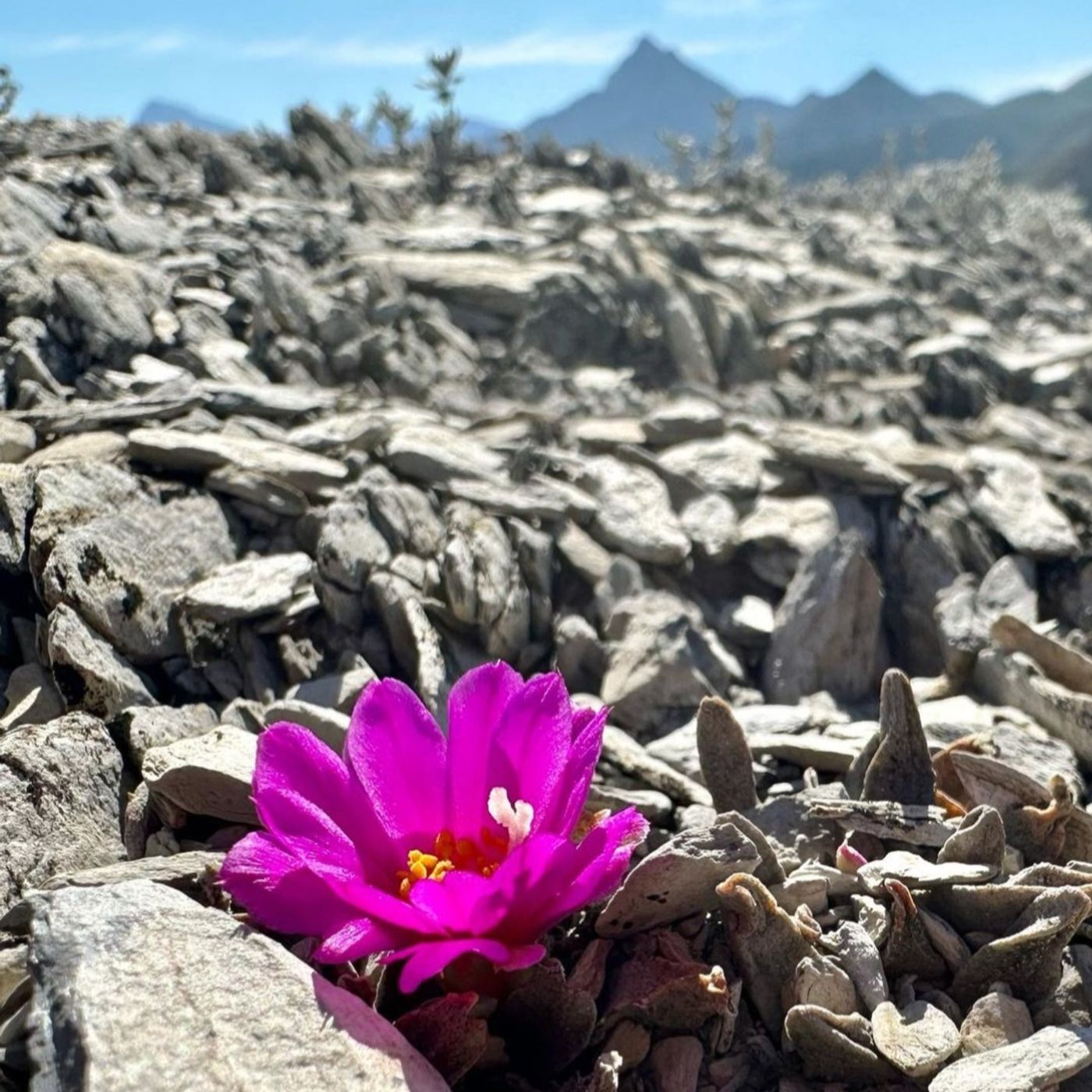
Nuevo León & Tamaulipas Cactus Blitz
Jeremy Spath (owner of Hidden Agave nursery @hiddenagave) and Kevin Krucher (@crazy4cactus) talk about a recent trip through the states of Nuevo León, Tamaulipas and Coahuila to document and explore desert plants and their ecology, including tons of rare species like Lophophora williamsii, Stenocactus phyllacanthus, Astrophytum asterias, Obregonia denigrii, Ariocarpus scaphirostris, Agave Montana, Agave albopilosa and more.
2023-11-16
69 min
Transcript
Available Results
Generated results are saved to the knowledge database for reuse and search.
No generated results are available for this episode yet.
Extract Knowledge
Pick what you want extracted first. Model, scope, and chapter options appear after a template is selected.
Generated results for public episodes are saved to the knowledge database so they can be reused and searched later.
Transcript
All right, welcome to another episode of the Crime Pays What Botany Doesn't Podcast.
I'm here with Kevin Croucher and Jeremy Spath, both plant people, cactus
nerds, extraordinary. Jeremy runs hitting a guy of a nursery. Kevin Croucher's
a hobbyist and does the Instagram account crazy for cactus And uh, they just
got back from a trip with another friend of mine, Ricardo Ramirez Schaparro,
and they were down there. Yeah, it was down there, and uh,
you guys were all over the fucking place. You went from Nuevo Leone,
Kohila, tom Alipis. I mean, you guys saw a ship ton
of plants that a lot of people will never get a chance to see.
And I want to talk about the species and about the habitat and all this
stuff. So I don't know, let's just get going. Let's just jump
jump into it. So where did you guys fly into and where did it
start? Leone? And uh in the Monterey And the main point was that
because that that puts us closest to a gavi Albo paalosa, which was the
first one on the list to see. And originally we created this trip as
a loop around as far as far west as Zakaticus and Durango, UH and
and about as far south as I guess tom Alipus, and just doing a
loop around and seeing some of the govi's in northeast Mexico, because it truly,
I guess you could say, pound for pound some of the possibly the
arguably the best area for a govi's in Mexico. Jeremy uses the Jemmy uses
the pound for pound analogy. I use the sheer volume, you know that,
just agreed, agree, There's so much out there to see, you
know, in a in a in a wide area. I mean, the
species richness is fucking mind blowing out there. I mean it's and I think
it's because you know Mexico, it's it's desert. It's also see, you
know, just seasonally dry in certain areas. You've got desert areas in the
rain shadow, you know, on the west side of the Sarah Mandre Oriental,
which is that mountain range that runs north to south basically directly south of
Texas, and so the rains come from the Atlantic from the Gulf uh and
then gets squeezed the air gets squeezed over that mountain dries out, and then
on the west side of the mountain range you've got all these fucking wild cactus
species and agaves too. I mean, once you evolve succulents, stem succulents,
now you've got an edge in this habitat, and that's a that's a
key innovation, and you know, evolutionarily speaking, and now you could just
you just you know, your lineage just blossoms. You get a ton of
fucking species. And there's a ton of cactus species in subfamily Cactoid, which
is all the cool ones, the non prickly paired no offense of the prickly
pairs, and then the agaves. There's a ton of agave species there.
I mean, I was blown away, man, some of the photos you
guys were posting was is fucking madness, man. I mean, Obergnya all
these cool plants. So so Jeremy, you were there. You mainly specialize
in agave. I mean you grow a shit a ton of them, you
hybridize them. Kevin, you're a you're a backyard growth too. You got
you know, a greenhouse set up there. Of course, that's where we
formed for filmed the sizzle piece for kill your launch so I've seen I've seen
what you're working with firsthand, and it's impressive. But but yeah, so
how long was the trip? And uh? And where that? Where all
did you guys go? Yeah, well, the trip was a week.
It was supposed to be about seven days. Originally we got held up.
There's our flight was canceled. Our one am flight was out of Tijuana got
canceled for about twenty four hours, so we lost a day so we would
have seen more. But you know, the original thing was to go.
I knew I had some other friends we're going to come on the trip,
and I planned the trip for god they hadn't seen yet, and called in
my buddy Kelly, who who has a lot of good locales for aeriocarpas to
dot in between the agabis, and I was like, let's go, let's
go get this done. And so, you know, one thing to mention
is just the sheer volume. I mean, even as much as we saw,
there's so much more we could have seen. And then like, even
on top of that, even if you see it once, it's like I
like to go back multiple times because things change so much, especially in different
seasons. Like if you see plants in the spring versus the fall, they
look totally different. And even going back to some of the same plants,
like we posted a photo that bariegated at Gabby Montana, and it's not the
only one other there's a couple of variegated ones, and I had been there
five and a half years prior and they were both barely bigger. So it
really gives you a great appreciation how slowly these things grow in habitat. And
the Goby Montana is not like a desert desert place. It's actually it's a
mountain. It's over ten thousand feet its snow, it gets rained. And
those plants were barely big. It had added hardly any like like like,
hardly any new leaves in five and a half years. So so you remember
the you remember the individual plant basically, yes, oh yes. And it's
amazing because I've grown a GAVI's from seed and had them flower in five and
a half years. I mean that's not that's not common, but I've seen
it happen. So to see these things, it just gives you a greater
preaching of how how long they actually do live. It really does. What
was awesome too, is that the day before you know we were out,
you know, somewhat deserty. We were up sort of in the mountains.
We're looking at Alba Pelosa. There was some lefa for us, and we
saw a fellow cactus ring conensis and some aerocarpus, you know, and then
we go and we see Agave montana. You know, it's up about ten
thousand feet up in the mountain. And we had hit some weather. It
started to get you know a little rainy, and so we were like up
in the fog the mist. You know. It was quite a change,
you know, from you know, being on the desert up there, and
it was so magical just running through the i mean literally the forest, running
through the forest, and just these pockets of these agave montanas. And while
I've seen them a ton of times that you know, Jeremy's place and I've
seen them, you know, at the nature gardens and things, the size
of these things, I mean, it just blew me away. I mean
they were Jeremy four or five feet across some of these things, yeah,
usually yeah, And I mean they were massive. Was there Gentry Eye up
there too? Because you get both those high elevations, there's some of the
most cold tolerant. The gave that there are Agave montana was that species that
was blooming in Portland. There was one that was blooming in Portland that became
intern that famous during the pandemic because it was, you know, it was
growing in someone's front yard and fucking Portland and the flower on this this the
inflorescence rather the inflorescence of flowers was just like a fucking huge candelabra of nectar
and that thing. Yeah, seeing where it grows, it's it's like the
habitat of Portland. It's I mean, I'm looking at photos right now.
It's fog. Visibility is about I don't know, one hundred feet there's huge
pinus u heartwggy. I you know, Heartwig's pine up there. I don't
know who the fuck hertweg was, but Pinus hart wegg is a very common
pine in Mexico. The habitat is fucking wild, man. I mean it's
it's it's desert down below, but again you get elevation. You're a low
latitude, but you get elevation, and so it's you get this kind of
cloud forest, misty habitat. It looks fucking you know, it looks it
sounds corny, but yeah, it looks magical. It was pretty crazy.
We're all over that hill and all of a sudden, you know, you
just see you can't really see super far, so you don't know where the
eight of us were, and so you just from people yelling, hey,
I found the very you know, like you off off in the distance,
and everybody's kind of trying to run and trying to figure out, you know,
where it's at. It was. It was pretty amazing. Yeah,
And I think that's what's cool about this too, really quick, is that
you know, everyone people get into these plants and they want to grow them
and everything. And it's one thing, you know, when you see a
plant and you you know, you nerd out on it and you're like,
this fucking thing amazing, I don't know, just something about it, the
way it looks. I love it, you know, And it's just in
your garden. That's one thing. You're already struck struck with it. But
when you see it in habitat and you see the relationships that has with the
geology and the fucking you know, the other plants that grow sympatrically with it,
it's a whole other experience. You know, it's like a fucking it's
almost psychedelic, you know, it is, it is, And there is
gentry up there. Gentry mostly grows at lower elevations, you know, not
low elevations by any means, but lower than Montana. And but by the
time you get around nine thousand feet, it's almost it's almost entirely Montana with
just a few gentry I poked in there, and including hybrids. I can't
tell the difference between the two, man, I don't know. I mean,
I know, I saw gentry eye in a Sarah Poto s in the
way with Leone, and it was forming extensive pups. And that's the one
that I a friend of mine, a Mexican friend, got seed of.
But what's the difference between the two Montana and gentry I Not much so one
kind of quick easy way is like you said, gentryye tends to all set
it it makes these pups, whereas Montana is a solitary plant, and Montana
tends to hold more leaves and has more of a tighter rosette versus gentry eye,
which is often generally a little more open with with fewer leaves. But
they were, you know when when Gentry wrote his book they back in the
eighties. You know, they were both under macro coulmus. And because they
have the same flower, so the flowers identical, you know, but they
but they have different growth habits too, Gentry, eyes lower down and the
montana is higher up, so there are some differences. It could be that,
you know, it's two plants that are kind of slowly separating themselves out.
Yeah, I'd be curious if it's in gen bank, if they if
it's been sequenced, if you know, those are two solid species or what.
So many agave's can be hard. You amaze me all the time because
I mean, you're so good at just looking at the leaf blades of these
rosette succulent spiny bastards and knowing what species it is. You know, I
can tell you're you're totally devoted to it. His pattern recognition, you know
what I mean? Yeah, you get used to it. Yeah, Okay,
So let's talk about alba alba pelosa too, because that's another notable agave,
and it's got a super narrow range and it's it's notable especially just because
how fucking weird it looks for an agave. I mean, this is like
a really thin leaved a gave that's not really spiny. But it has these
q tip tufts on the on the distal ends of these leaf blades. So,
I mean, how would you describe it, Well, it's it's like
you said, it's not like any other agavi because of that, it's almost
like you know, and it's it's uh, it's it was only discovered back
in the nineties and it grows on these sheer limestone cliffs and outside of Monterey,
and it it a lot of the thinking is is that you know,
these tufts, these little cotton tops at the ends of the leaf blades that
that they have is to capture kind of traveling fog that that's coming through the
canyon. And then it gets those those cotton tips wet and then those they
as it drips the water down the leaf to the roots of the plant,
feeding the plant's roots. That's the thinking of why it has those. But
it's a beautiful a govi. It doesn't get very big. It's extremely slow,
uh. And it also does, like most other goavis, doesn't die
after after flowering. It it bifurcates or or dichotomizes much like and it's not
the only one that does that, but it's in a group of a govi's
like striata strict uh the striata if you will, that they tend to divide
after flower versus the main head dying out, So does the does the main
head the main head, well, the main head probably dies, but it
forms offsets or the main head doesn't die at all. It splits, it
splits weird flowered and and creates a clump. So it yeah, it doesn't
die. But strict strict strictly does that as well. And there's some other
ones. There's there's there are several that do that, but but it's pretty
rare for agave to do that though, I mean, there's not many that
do that right. Most are monocarpic. Almost to all the monocarpic. It's
a small handful that doesn't. This was one of those plants where you know
on the list that the things that we saw, I mean, there was
a ton of plants that I didn't know that I would see. You know,
Jeremy gave me a couple, you know plants. They were going to
see this and this and this, and I was excited. But the album
Flosa was above and beyond probably neck and neck with a Gave Perry I which
truncata, which we'll talk about it a little bit, I'm sure, but
the Albulosas was one of those, you know, on my wish lists to
see. I mean, it's just such an obscure agave. It's you know,
it might also say super difficult to get to, but you got to.
You gotta get there. Yeah, and you know, getting up on
these limestone, you know, unique landscape and up to these plants and seeing
it when you've seen these, you know, in cultivation, you see them
at plant shows. But to see it where it grows with your buddies,
like you know, epic, you know, bucket list, check a box.
Holy shit, I mean it was awesome. And that was day one,
like literally off the airplane straight to alba Plow. Yeah, I mean
the thing that's hard to see. Yeah, the thing that's notable about that
habitattoo is that it doesn't grow. It only grows out of rock walls.
I've never seen it growing on on out of soil. Oh, it only
grows out of fucking cracks and rocks. I mean that alone, that habitat
is epic too. I saw photos and I was like, I know exactly
where they are. I've been there. There's that one bed of I mean,
for anyone that doesn't know, I mean, all you got to do
is look at a topo map of that part of the Sierra Madre right outside
of Monterey, and you see you see it looks like a rug that's been
you know, pushed up against the door jam and folded up like a floor
rug. You know that's just been crunched off because it's got It's this limestone
that was laid down horizontally and is now nearly goddamn vertical. It's just it's
fucking mind blowing. And that's created this habitat for all these cool plants like
a gave bracdiosa and a gave aa pelosa. But when I was there,
I didn't see any that were that close to the ground. It seems like
poachers had gotten a lot of them. Were you able to find some that
were close to the ground or what. Yeah, there's something you can climb
up to, but most of them you cannot reach. But you don't have
to climb up. Yeah, but that area, it's it's one of the
most beautiful places in the world that nobody's ever heard of. Yeah, and
in the Alba Pelosa they're hard. They're not. I mean, you can
drive very close to them, but they're easy to go by because they're hard
to see. They kind of blend in with the Victoria reginades that also go
there. Yeah, so it's like but its like, as what you said,
there's bractiosa in there, a Goba's bractiosa, Victoria regina Alba Pelosa is
let your gia in there. If you go far enough down, there's plants
that looks so Lido alifolia is Montana all the way towards the end, high
enough. I mean, it's just it's in a dobby tour within itself going
through that. And then there's like there's giant parrots and you guys see any
of those giant parrots flying around too. I saw two of them, we
saw yeah, yeah, so those okay, yeah, so you saw those.
Because I remember being in that, That fucking habitat just insane. I
mean, it's I wish I would have had a drone when I was there.
I know drones are annoying as fuck, but god damn, if there's
a place to use it, I mean because I was looking through binoculars and
I could see a ship ton of elbow pulosa two hundred feet above the canyon
floor growing out of these limestone rock walls. Man, I was like,
it was like, the poachers aren't going to get them up there. You
know they're safe up there? Yeah, no without ropes. Yeah. So
okay, So you guys, so you went up the wash Deca canyon and
and knocked these knocked these agaves off your list, But then you also continued
east towards tom Alipus and tell me, tell me what you guys were going
for there? Well, tom Leapas was sort of this, well, I
guess. We went to see Victoria reginae and Alba pelosa in hast Take Kenya,
those are the big ones, and then headed towards tom Aleipus for Agabi
Montana. But along the way we saw astrophighter mysterious. It's beautiful, beautiful
cactus I've never seen in the wild. So that was high on my list
of things to see for years. And I finally got to see what was
that habitat like there? Because it's we're at the northern end of its range
in South Texas. That that habit that plant a bunch just got destroyed to
build a solar farm. Fucking heartbreaking. There were probably two hundred individuals or
more of star tactus of astrophy and mysterious that just got destroyed bulldozed to build
a fucking solar farm out in Star County in South Texas. But what was
the habitat like where you saw them? Well, rocky outcrop, yeah,
mesquite kind of gentle hilly hills, h mostly growing flat amongst rocks that resemble
kind of beach cobble, you know, like rounded. Yeah, that's kind
of what it's like here. But they're not growing in the shade. I'm
mostly growing out exposed or what mostly exposed, but you know under kind of
nurse plants a little bit, but not entirely. And it was growing with
overgoing did negar eye. But you know what I forgot on the way down
there, the first thing we saw was actually aero carp that scath rostis,
and that plant is just I mean, you talk about cryptic and difficult to
find. It blends in. It blends in with that rock you know,
that shist that that you can't I mean, they're almost impossible to see it
it's like it's like a crumbly mudstone. It's like these these jagged but you
know, not not super sharp, but jagged gray pieces of shale. And
then one of Jeremy's stories, he posted a picture and said, you know,
there's there's four eight scapharostris in this picture and like you look at it
and you don't see ship. Yeah. I used it in a presentation when
I that I did it at a for cactus store in Manhattan and I was
showing slides. I thought, you know, I had uncovered them a little
bit for the photo, and I was like, this is probably one of
the coolest cases of of plant mimicry in the world. And people were like,
where's the plant. I was like, it's right here. I show.
I was like it's right here. They're like what. And then when
people saw it, they're like, what the fuck that I mean? Yeah,
it was funny. Man. There was like a room full, like
one hundred and seventy people when they were everyone in their mind blown was pretty
cool, but the astrophied mysterious. That was a really cool plant for me.
You know, I've traveled with Jeremy a few times. Jeremy and team
a few times, you know, and and you know, n fortunately,
unfortunately there's the plants that these guys have seen, which Jeremy mentioned early on
that you know, he wants to go back and see these year after year,
which is awesome. But when I'm on trips with the guys and there's
something that nobody has seen on the trip, it is even more special.
And this was one of those ones where we were like, Jeremy's up in
the front seat and we're like, are we going to see a stereo?
Is? Are we going to see it? You know, we do,
we have time, can we get to it? You know? And we
get there and we see it together and we both hadn't seen it before,
and it just makes it all that much more special, you know, sharing
that adventure with with your bros. And you know, first time seeing it
out there was pretty amazing. Yeah, how was was the habitat degraded at
all? Or was it pretty unfucked with or what was it? What it
looked like? It looked pretty good for those guys, it did. I
mean, they're all a little bit fucked with because you know, there's inevitably
going to be cows and or goats at spots, and you'll see things that
have gotten chewed on and stepped on or you know, shot on by the
cows. But in general it looked pretty good, I thought, and it
was growing with it. With shoot, I think we saw a Terbini carpas
there, Salurai former saluray. That's another use that's just got fucking dozens of
species, and it seems like just turbinic carpasses nuts. I mean, that's
well. That was one of the cool things is the guys that we went
with, you know, Ricardo and Uriel and Gabriel and Sebastian. You know,
as we were traveling between you know, the kind of major locations,
you know, hey, we want to see you know, aero carpus trigonus.
We want to get to Montana, we want to get to Perry I.
You know, we're saying, you know, what could we see in
between? You know, and I don't know that I would have thought to
stop and see obscure little turbitycarpas or you know, hika, you know,
random hill to check out, you know, a turbuita carpas, bediggia or
whatever. You know, these guys wanted to see those things, and so
you know, it was super cool to just pull over halfway between where we're
going or wherever. And some of these things are super cool. They're tiny
and small and obscure and stucked into the earth and they all look different.
And you know, so if you look kind of at the Instagram post,
it was just this kind of schmattering of all we're all over the place.
Yeah, and everybody contributed, you know, what they were interested in,
you know, so be stopped everywhere. That's sick. I would have loved
to run into like a fucking caravan of eight cactus nerds just just down there,
like crawling around looking among the rocks and shit, it's fucking what was
it was like four Mexicans, four gringos, you had two cars or what.
Yes, and we never traveled together before, but it worked out great.
It was Gabriel Diaz and Fonte and then Urieli Eurebas and Sebastian O'to.
I think he's Chiuala Cactus and Ricardo of course lizard Skin, who always posts
amazing reptile photos. Oh yeah, he's great man. I had yeah,
I had him on last year. I think he's fucking great. Dude knows
his stuff, really well, I was trying to convince him, like,
man, you got to get into Asta RACI like the you know, the
composits, because you're seeing all these there's so many cool composits in Mexico,
you know, Sunflower Family, and you're seeing all these weird, weird,
wild ass you know, desert members and yeah, I don't know. He's
just he's yeah, his stuff is great. Man, That dude knows his
I forget exactly where we were, but we were driving and he kind of
like flags us down and we're like, what's up. Man, He's like,
there's a gecko over here. I got to go see if I can
find it. And so we're like all right, So we kind of like
pull off the side of the road. I shit you not. He like
random pull out, turnout, and he like walks up to this little piece
and in this crack, he goes, oh, there's one right there.
And it was this lizard that I guess he had described at some time like
recently, and he like it was just it was so strange, as if
he knew that the plants were there, he knew that the rock was there,
Like he just rolled up and this lizard was like right there, and
so I took him like fifteen minutes to kind of work him out of the
crack. Herpers have like a hole there. You know, it's a whole
different. I mean, it's similar to, you know, what plant people
do, but it's like herpers are like a whole other you know. I
got friends down here in South Texas that'll kind I'll go out with them and
I'm looking at plants, and they just they know where to find all these
credible snakes and reptiles that I would never know to look for. You know
that I'm probably around all the time when I'm out botanizing and shit. But
but it's, yeah, it's pretty cool to see. So the but I
want to talk about the Obergonia. I'm especially interested in that species, I
guess because it's it is it's sister to peyote, it's it's most closely related
genus to Lofafa. And so you know, you look at a clatogram,
you look at a phylogeny of of cactoid E, the subfamily of cactasy that
all these cool cact iron and you see that it's right right there next to
it. I mean, and when you look at a plant like a you
know, a grown plant of Obergonia basically looks like payoti when you've take the
soil away. Like I was repotting a couple the other day and I looked
and I saw it's got that big fucking you know tap root that you know
peyote's got, but that star cactus doesn't a lot of other cact i don't.
It's got that you know, that battery of a temper that's storage tapper.
It's basically like an underground stem. When you look at the flowers,
it's you're like, oh yeah, that's basically it's like a white peyote flower.
It's you know, the shape of the petals, the everything, so
that I mean, what was that? Like, I'm looking at photos.
It's it's just growing there amongst you these rounded cobbles that you know they're rounded
because they've obviously been transported by water at some point and in some sort of
large river or former beach front that god knows what, but that fucking have
I would have loved to just see that habitat man, I mean, what
was that was? That was like a pull up to it and get out
and you see him and he was like a holy ship and then like you
just kept hearing that what the oh my god, holy ship, Like they
just kept getting better and better. Everybody was just collectively stoked. And it's
nice to go and see it's nice to go to an avatar to see like
a healthy population. Yeah, because we went to some populations of these plants
and we saw poaching, we saw we saw holes, we saw plants that
they had forgotten to take them, just laying on the ground. H and
obergoing. What it has going for it is? It is It's not rare
and as high value as some of these other ones. So it was it's
a you know, you want to think about these things and think like,
you know, I want I want my kids get into this or their kids
getting this. To be able to go down there and see these things.
Yeah, the way the poachy is going with a lot of this stuff,
that's not going to be possible with a lot of species. So it's really
nice to see the obergunis. They were big, They were they were everywhere,
and it was just really hard to pull yourself away because there were there
were just so many to look at it really quick. The large ones were
maybe the size of of a salad plate or even bigger, maybe six inches
across. Some were pretty low and there was some really nice spiraling patterns.
Yeah, they were neat. Do you really quick though, at the area
of Karpus scaff for roaster spot that I mean. I went to one spot
innouiverlaone where that thing had just we were there in twenty nineteen. I went
back in twenty twenty two and they were all gone except for two and there
were holes every where. Did you guys see any posting at that spot or
what? I didn't notice any? Yeah, I didn't either. This was
a spot I hadn't I'd seen that plant before and it was a different spot,
and I'd heard that that spot had gotten hit, but this area hadn't.
And uh, we actually got approached by some locals asking what we're doing
there, So you know, you know, that happened actually several times.
And the more I've been doing this kind of thing in Mexico, the more
that that happens, which is good. There's awareness of it, there's people
who want to protect and that kind of stuff. But the flip side of
it is a lot of times, you know, money talks and people will
be like this cactus. You know, I'd rather have the money and and
they're more than happy to sell it. So it kind of goes both ways.
But but yeah, I didn't know if any at this spot, and
there were there, there was a lot of plants there when she started.
Once she started being able to find them, yeah, you know, it's
like it's like it's like once you know what you're looking for, what you
see, it's the time because it's easier to spot it. And and so
once you start spotting them all this it was a healthy population. Yeah,
that plant especially is like it's total pattern recognition. You're just looking further,
you know, the symmetry amongst the ship. Otherwise you know, chaos,
chaos, visual chaos of those those shale pebbles. Man, it's nuts.
What what did the locals said? I mean, what you did you tell
them the truth? Or did you just what you tell them? Because yeah,
well we're not doing anything wrong. I mean, we were not on
private property, right and we're not digging plants. We're just taking pictures.
So yeah, I mean, I mean go ahead and search us. We
don't we don't have anything. Oh were they were they searching you? Was
it cops or was it just? No? No? But that's my thought.
My thought is that they can go through my stuff. They want to
see, you know, my dirty clothes in my bag and everything. I
mean we don't have anything. Yeah, yeah, yeah, I would almost
worry that they'd be like, what are you interested in? Is that?
You know, maybe they don't know they're there, and now they you know,
it puts it on their radar and now they want to dig it.
I don't know, man, I wonder about some of these poaching operations if
it's just you know, foreign entities hiring locals who are broke or what you
know, that does happen, Yeah, that does happen. And then I'll
also kind of run up on you sometimes and tell you you shouldn't be there
without permission. But in the end say, you know, if you want
to buy any need to help you out, so fun. So, I
mean it's true. I mean there's good people out there who want to protect
them, and there's there's people out there who want to poach them, and
there's people who want to make money off trying to protect them. So you
know, I mean, it's just it's all sides. Yeah, what was
what were your encounters with locals like it all? Because I know Tom a
Leaps especially can be super fucking hot for cartel stuff. A friend of a
friend and this is just a story, of course, but he said he's
got a ranch like thirty miles south of the border. He said, Cartel's
actually ran up on him two weeks ago, and the guy that lives at
this ranch and where, you know, took him out at gunpoint and shit,
and we're like, oh, and he's They said they had a bunch
of Haitians working for him too. It didn't even speak Spanish and they were,
you know, and who knows about the you know how legitius story is,
but took him out and were you know, asking him about the ranch.
But luckily he knew one of the people's whatever and was able to get
out of it and it was no big deal. But there's still but that's
again, that's Northern Tamilypis. I mean, did you guys have any any
interactions with that or did it get Harriet anywhere? Well, this trip with
these guys, as a lot of the other ones, we bring just an
absolute relentless optimism and positivity and so you know, the trips I've been on,
you know, you just end up laughing with whoever you're with and making
friends and you know, it's all good kind of thing, you know.
I think it's Jeremy is right. I think it's all a lot about the
intention and what you're doing. We're not doing nothing wrong, you know,
we're passionate plant people, you know, and so it's one of them things
where like you just explain it in a nice way and you know, like
it's all good. And so, you know, aside from being stopped around
Scapharostris and they were, you know, poking in at us asking questions,
which is great. You know, it was smooth sailing from there. Everybody
else was just way cool and supportive, and you know that's that's great,
man, that's super chill. Yeah. I've heard that about tom alitis as
well. And you know, sometimes you just have to tell yourself things to
go there anyway and do it, so you know, kind of like well
tell I think most of those problems are probably closer to borders and closer to
the coast, not the land areas where we are. But I mean,
I will say, and this is a first hand experience. The last time
we went to go see a Gabby Montana at the same spot tom Alias.
We did. We did encounter a massive change in the village that was up
there. It had gone from a small Indian village into like a large agricultural
operations and mostly that that was camouflage, had a lot of like camouflage cover
over the larger things like bulldozers and tractors that were trying to hide it from
above. And we did find a scalp. We found pieces of a human
scalp and tons of bullet shells. So this is all happened. But you
know, it's real, man, it's real. I've been going to Mexico.
It's real. I've been doing body in Mexico for fucking twelve years now,
and it's fucking hot. There's areas where it's fucking hot. There was
that botanist who is uh you know, young kid who was studying uh cephalanthis
who got murdered in Sonora and no one knows why. Some still fuck murders
of biologists. I mean, it's other bout Mexican biologists have been murdered down
there. It's fucking hairy. I mean, certainly that ship was around you,
but you never know, you know, you just it's you might not
know it. You know, you never know if where that car going by
has a ship ton of guns and you know cartel dudes in it. But
uh and I'd rather not know but or not no. But you know the
other thing is as bad things happen everywhere, and there's areas you just don't
want to go, whether it's Mexico or this country totally, or pretty much
any country totally. So I mean you look at what Mexicans see in the
US, fucking mass shootings like twice a week, you know, just fucking
random people getting shot onto a fucking movie theater or right, your school just
got shut up. Oh a bunch of kids died, right. I mean
this is like, that's freedom. That's a different That's a difference, man,
that's freedom. When people get shot here, it's a symbol of freedom.
Okay, so any but the astrophen I'm going back to that where you
saw the quote unquote sandollar cactus. I mean, was there there was a
lot there? How many were there? I wouldn't say a lot. I
wouldn't say a lot. I mean you can only cover so much space,
you only have so much time. Yeah, and you go to areas where
you know they've been found. And when you look off into the it's expansive.
The lands is expansive. There could be like, you know, one
hundred e other areas where these things grow. What I would say where we
saw what would you say, maybe fifteen twenty total we found at most?
Yeah? Wow. And I was gonna say, like, you know,
when we're stopping at these places, Joe, you know it really we're maybe
covering a football field or two. Right, we're trying into a week,
right, we're trying to pack a lot. But you know, Jeremy and
I love this. He always says like I want to what's up there?
And I wonder what's over there? And I wonder what's over there, and
it's like, no, there's no roads, right, so you would have
to hike in there, right, or somehow come up with some cool jetpack
to get you over there. But you know they're gott to be growing all
over the place, you know, But at least these little areas we're covering,
you know, we're only seeing whatever plants happen to be right there.
And some of these places are like right off the road, and some of
them are down like a little dirt road, you know, some of them
you got to, you know, work a little bit at but you know
they're almost always by a road. Yeah, that's the access, you know.
I mean you look, I mean how long does it take to hike
up a mountain or just hiking through scrub too. Some of that thorn scrub
is just a fucking nightmare. You can see over it, but it's like
a corn maze to hike through. You know, there's no no paths.
But I would just love to see some of that habitat down there, because
it's it would be reminiscent of what it used to be like where I live
here in South Texas, where everything is just getting bulldozed to put up the
dumbest shit imaginable, you know, fucking dollar stores, parking lots, uh
McMansion infrastructure. No one here appreciates the cool plants that used to grow here,
like star cactus should be a symbol of fucking pride for South Texas.
And you know, ninety nine percent of the population has no idea it exists.
So it's yeah, it's tragically. But the Obergonia especially, I mean
that the Obergonia population was robust. There were a shit done there, very
robust and they were growing with ariocarpez trigonis too big, healthy trigona. This
is christ that's crazy. This is this is mountains. This is like mountains
or like rolling hills or what no, I mean kind of gentle sloping,
small hills really on ramps land. So did Jeremy did it start to rain
by that time? Yeah? They were wet, they were those those were
wet. So while the rain you know, presented challenges, you know,
driving whatever, you know, as we moved into the last part of the
trip or the second half, I guess you know, the rain really made
some of these plants just freaking pop. It cleaned them off, it made
them shine. You know. It was really like and I think the overgunies
were one of the ones where you know they were they were pretty nicely lit
up. You know, you had that diffused light from the cloud cover,
and so it made for great pictures. It was just all around awesome.
Yeah, it did make them clean and beautiful, but it definitely made us
wet and cold, which is it's too hot and then you know you can't
find shade anywhere. But I was, I was, we were, I
mean, we had all our all our clothes kind of smelled like mildew by
the end of this trip. Yeah, I just brought one. I brought
one small sweatshirt. I didn't even bring like a slicker, I didn't nothing.
It was like, it's gonna be hot and I'm gonna be sweaty.
And it was the keV had a big idea. We we almost got raged
out. It pretty actually caught up because because the storm was rolling through.
But keV had the idea, and we all that we all put on carpete
bags because we didn't have anything else, you know, we did. We
don't. I mean, it's is Mexico deserts. You don't. You don't.
You don't normally pack warm clothes and rain jackets. Yeah. Yeah,
God, the area of Carpus Trigonis looks fucking uts. I'm looking at it
now. It just looks like a big spiky ball, like the top third
of a big spiky ball. Uh, you know, two thirds of it's
underground. I'm looking at the rocks around it. It's all. Yeah,
it's all these limestone cobbles and tallis. There's a nice little mimosa. I
don't know if that's a Koliata carpo or what species of mimosa with it.
I would have loved to see some of the other plants growing with these,
but but that thing's but they're big compared to compared to like scaf rossis or
cuts. To be honest, they're they're big. They're big plants. Yeah,
the tragonus, Yeah, that's fucking that's wild. It's such such cool
habitats. So what so you guys saw Ara Carpers coach you by anus too?
What was that? Like? That's a tiny little fucker. It's really
easy to miss. What was the habit hot like, Well, we saw
in a couple of places, because we saw uh first with Aerocarpus aga voids,
which is another small one. And the first place we went to actually
was was the one that had been just recently poached, because there were lots
of holes and there was at least two or three plants that were just laying
on top of the ground. So whoever took them dug them and forgot them,
or didn't have enough hands to grab everything they were grabbing, so we
didn't. Yes, and they're only about as wide as they're only about the
size of a quarter. They grow flat to the ground, and I should
say you know, because we haven't said this yet. A lot of the
point of this trip wasn't just heavy hitter at Gobb's in this part of Mexico,
but Ariocarpus in flower because they generally flower November. Yeah, and and
for plants like costrivianas, they're hard to find. They're hard to spot.
There's definitely more you miss than you probably see it. But when they flower,
it's a lot easier to spot up. It's like a little okay spotting
plants the country. To be honest, Jeremy and I were laughing about it.
At our last spot. I couldn't find those to save my life.
I mean they were all around, and then Jeremy like put his foot or
his toe right next to one. He was like, isn't this beautiful out
here? And like he starts like moving his toe, and I'm like,
oh, there's one right there, you know, I like I couldn't see
it. I was blind to him. Yeah. Yeah, that that genus,
the Areo Carpus, especially the living rock cactu. I mean that's that.
I forget how many species there are, ten or twelve or something.
There might even be more that are undescribed yet, but I just think about
when that thing evolved, you know, hover many millions of years ago,
was evidently you know, it blending in with the rocks works so well for
it that it's just it can go. It doesn't need spines. I wonder
what the alkaloid content's like like. If it's producing a lot of nasty secondary
metabolites probably that make it take bad. But it's just that it's so species
rich because that has worked so well of blending in with you know, these
rocky substrates that you grow in. It's it's not sticking out of the ground.
So animals can't take pep fight, right. I mean, they can
get stepped on by a cow and it doesn't bother them, whereas if you
stepped on it like a like a like something that was sticky out of the
ground, it's going to smash them. Yeah, So they're protected that way.
You know. It's really the only time where they're they're probably most vulnerable
is when they're flowering, because then you can see a lot of these things
that that they just light up in places that you you know, you didn't
see. You wouldn't have seen them otherwise. And these these were what was
the said, we didn't, uh, the same, very similar sort of
you know, meski creosote kind of stuff, low growing stuff, but in
like openings, you know, like you'd see it like a patch of plants
then like a barren patch or what? Yes, and have you ever seen
that? Are sarpist kaput medusay? That digit the stigma thing? Oh astrophight
m kaput madousa? Yeah, yeah, you guys didn't see that you,
Yes, astropight not on this trip. But it's a similar habitat to that
kind. Have you seen that one before? Yes, I have, but
we only found a couple of them. How the folks are extremely hard to
find, but and they get poached too. Yeah, how did you?
Yeah? Man, that's crazy. How did you? How did you find
those? You just knew you had a point and went out there and did
it take you a while to look just find them or what? Yeah?
Well we had a local we actually I went out there with the guy who
described it, the guy who originally found it and described it. Oh,
it's a friend of my friend, Carlos. Yeah yeah, yeah. So
he took me and my buddy Kelly Grippin out there, and actually my wife
was on so my wife. You know, I love doing these cards and
things. I took my wife with Kelly on a trip. We drove to
Ahaka from San Diego. She was about I don't know, three four five
months pregnant and didn't realize going to be all these you know, mountainous whining
rows and had had had you know, morning sickness, like all day long,
not just morning. And I'll just remember it was probably the fifth or
sixth night in the trip, and I walked to the hotel room. She's
in tears, going, this is the absolute worst trip. Oh shit,
I don't know how I got there. But she went out there too with
us, And yeah, it was easier with him because he had seen them
and knew where they were. But clearly they those had been poached, and
that was the one that just got The only reason it got discovered was because
he was out there doing a I think it was like a power line survey
or something for the power company there. This is like northern tamilypis right,
and it happened to be flowering. I mean if this if when they're not
flowering, there's not a chance in hell you could really find them. No,
you wouldn't even know. No, so, but any rate, that's
that's sort of what the habitat reminds me of a little bit. How close
was that digital stigma from the border. Was it pretty? Was it?
In a like a very close? But honestly, I mean this was this
was over ten years ago, so I'd have to go back and look at
them. Yeah, that's it. That's the spot I've heard is a little
hot with the with the cartel, you know, it's a little Yeah.
The fellow who took us out there was nervous and his wife is really nervous
and calling them every ten minutes making sure we were okay. Yeah, yeah,
Well that's cool. You got to see it though, goddamn. I
mean, now it's in cultivation. That lady Madam Cacti Jerio, who's fucking
like a you know, astrophyte wizard, is growing that and selling seeds of
it. She just she's got a couple of grafted stock plants on Martillo cactus
and it's fucking great, man. I meant, she's such a great grower
too. I'm taking her out to see uh asterious in December, and which
would be cool for her because she's so in love with that species and then
to see it in habitat, you know, I mean, you you know,
obviously it's it's so mind blowing to see a plan you've been obsessed with
forever and see it in habitat, you know, and you know, find
out what all the other stuff that it grows with this. But uh well
anyway, okay, so moving right along. So after Obergonia, what'd you
guys, what'd you guys end up coming up on you too? Too?
Cool cactus. I really enjoyed seeing that. I didn't think we would see.
One was Stenocactus comptagonas that was in Zacatecas, and then also in Zaco,
Texas, was Stenocactus Phyla canthus. Both just kind of unique looking plants,
just you know, kind of short, quick stops on the side of
the road, you know, off into cow patty Land, you know.
And these were these were cool and so you know, looked in for a
little bit and then all of a sudden, there they are. Yeah,
and there was a really obscure looking Yeah, let's talk about that species to
cause Stino cactus pile of cantas. It looks like, you know, the
Texas horse crippler cactus, which is I think now it's used to be a
kind of this now it's homlocephala text sensus. It's got those weird ribs,
yeah, it least. Yeah, it's got the shape of a it's got
the shape of a cow patty. But it's got these these and it's got
I don't know, what do you think of twenty to thirty ribs. But
they're undulating, they're wavy. It's a really bizarre habit. I wonder what
that what that evolved in response to, if that's some sort of like rain
or fog catchment or something, or what it's fucking that's a great question.
Yeah, yeah, it's God, that's a cool Those were cool. But
you know, one other one we saw was the man malaria pectonifra, which
has these spines that kind of look like like the bottom side of a of
a of a roly polio or like a mealybug kind of it's got it and
it's really similar to the other one we saw, which is a palacefora.
Yeah, I want to I want to ask you about that one because that
thing, placiphera I've seen that mainly because of a shipment got intercepted by Customs
of Post shipment and then sent to sewel Ross University and my friend runs the
greenhouse there and she was potting them up and trying to figure out what to
do with them. And it was fucking heartbreaking, cause you can tell these
plants there, it's one of the it's so slow growing. It's got to
be as slow growing as Astiquium ritori. Maybe not that seah, I mean
they don't get that like a golf ball as well. Yeah, oh yeah.
Some of these were like multiple headed, the size of a grapefruit,
you know, and and knowing that species and knowing how slow it grows,
I could tell that's probably a fucking hundred year old plant at least, you
know. Well, you know, and I always love the big giant plants,
the Montana's and the aerial Carpus fisher I like, you know, really
nice specimen stuff, but I've really learned to appreciate like the micro stuff.
And so when we're out looking at these Turbina carpus or these, you know,
like it really is cool if you're like you sit like literally you just
sit down and you kind of like look around and you just see these small
little cactus just you know, it really is an interesting thing to really find
those small guys. Yeah, and that's size too. I mean again,
it's always I can never separate plants from the habitat. I see a plant,
I want to know what the fuck the habitat looks like and what that
what the environment selected for, because the reason the plant looks a certain way
is a result of millions of years of evolution and selection by that environment.
That the specific traits of that environment, whether it's the geology or the rain
shadow of the Sierra Madre, or the presence of an herbivore that's now extinct
but was here you know, forty thousand years ago. They've all selected.
They're all the reason that that thing looks the way it does. You know,
they've all had a hand or a pollinator, a specific pollinator, whatever.
So that's the really cool thing to think about, is how some of
these forms came into being. You know, That's always fucking blows my mind.
And a lot of times when I go to a habitat of a plant
that I've been really interested in, you know, it starts to come together.
I'm like, oh, I get it now, I get why this
looks like this. I get why it grows like a certain way. I
get why it declines if you don't put it in these conditions, you know.
You know, like someone might see a gave Montana and think, oh,
it's a gave, it's a desert plant. They tried growing it in
Phoenix or something, right, and it's like, well, you see the
habitat. It's a fucking cloud forest at ten thousand feet, you know,
on a foggy mountain top. Oh, there you go. Yeah, that's
where it's happy. But you know, I will say that plant I've grown
at sea level in California and it's done all right, which kind of blows
my mind too, because it's like, why why aren't they growing below like
eighty five hundred feet about? Yeah, when they will grow by the coast
in California, but they won't grow so well in Arizona or whatever. You
know. I mean so cause it's it's those periods when you're not there,
when that the lower elevations are the stuff you don't see. You know,
those lower elevations get so fucking hot in the summer, and if you get
these long dry spells, that would again that's like selecting for it. It
would knock out any any individuals that couldn't take that. So yeah, it's
it's wild, man. I mean I've seen that here, you know,
Like I tried and gentry ice seedlings outside in the summer here and they just
you know, in South Texas and they just fucking they just died. A
bunch of them died. So I brought them back inside, you know,
in the ac and had them under lights where you know, my house stays
like seventy five because it's just it's just too fucking hot here. And a
lot of it too, is the night temperatures don't drop at a high elevation.
The night temperature drops a lot more. But and that fuck starts fucking
with plant metabolism. And when you when you've had like three months of night
temperatures eighty degrees are above, it starts to really take a toll on your
on your metabolism, you know, because plant metabolas was mostly dictated by temperature.
So yeah, it's it's God, it's so cool to see these habitat
photos though. And that's what I love about the ship you guys were posting.
It's like it's not just the plant, it's like everything, it's the
habit you get a really good feel for the habitat. I'm looking at this
picture of you, Kevin with a with this fucking it's hilarious. Man.
I see this like California hippie crutched down next to an Aerocarpus trekgonus, this
huge one that seems to be under this semi leafless shrub. I can't thought
that's Aguaia conn or what, but there's liking all over the shrub and I'm
like, oh, that's the habitat. It's like this calcareous mud with little
sprinklings of limestone in it, and it's growing, you know, on just
under a shrub, but the shrub is not giving it too much cover because
it's leafless, and it's like it's fucking you get so much more context.
You know, that picture there was inspired. I just started following this guy.
I think his name is Leon Klube. I think he's in like South
Africa or something. And what he does he does videos and like he lays
down like right next to the plants, and he's got this super cool voice
and he's you know, this is the wonderful flower of Aerocarpus tregonus. I
get great videos and so when I was out there. I was like,
man, I'm going straightly on clue on this one. So I go down
next to it and I love it. Man, your beard has grown significantly
since I saw you last. You got like this, damn Hemingway white beard.
It's funny. That's a great, great fuck. So we when we
put on these trash bags. They were the guys were giving me a bunch
of shit because I come out of the cloud forest like soaking wet with rain
and my beard, and they call me what the homeless ago they know,
and just coming out of the out of the cloud forest. You know,
that's the guy that lives under four or five overpass over. I see him,
you know, collecting cans on Sundays. Yeah, that's Mountain troll.
Yeah, that's what. When I worked for a railroad, that was fun.
That was another funny thing because a lot of these old heads, like
we all, you know a lot of the old heads looked homeless, you
know, like it was like homeless or a railroader, you know, but
that's that same look. Hilarious. I would be remiss if I didn't mention
at this point, we're all plant nerds, right, and we all love
plants, and this is nature and science and whatever. But I never met
a group of people that laugh more than these groups, you know. So
we had four people join us that hadn't been together. I've been around Nick
and Kelly and Jeremy many times, and these four guys join us, and
you know, the entire trip was freaking awesome plants, yes, but it
was also just straight up laughter, right. And that's what I really appreciate
the most about this hobby and these these people, is we all got this
common goal. We want to go see cool plants and experience nature like we
do. But we laughed our fucking asses off, right, And the homeless
mountain gnome thing was just one of fifty five jokes that we told. And
you know, it was a great experience. Yeah, you got to do
those trips with with with most people, and it's like friends for life after.
Yeah. Yeah, I bet when you're experience, when you're just having
your mind blown repeatedly every day, I mean, it's like you get such
a fucking dopamine shot. That's what I try to you know, getting people
into nature a quote unquote, which again is just the real world. It's
just the fucking rest of the biosphere and planet Earth. But I try to,
you know, get people to see like, man, it's just like
fucking especially you guys are in California, where this shit's a little bit more
normalized. I'm in South Texas where there's still a lot of dumb, macho
shit here. And if you know, the further southeast to go too.
I feel like it's it's got to be put on a certain plate for the
hit right demographic, you know, because there's just there's a lot of like
archaic thinking about like it's Nature's you know, tree hugger b green, which
is just a you know, it's a it's just a really fucking goofy,
lowest common denominator way of thinking that pop culture has dictated to people you know,
from and and I think a lot of people, just especially in the
East Coast, a lot of people so much of the quote unquote nature is
fucking gone because what I call it death cult spin here three hundred years longer,
that a lot of people don't have any experience, any chance to encounter
it. You know, I remember were nature right exactly? We are?
We are? I think we are, That's that's what we are. And
I think when you get away from it, and and you're not in it,
I think generally, at least for me and a lot of people I
know, don't feel as good. But when you are out in it,
you can get out of these powerful natural spots that you know, this isn't
like you're paying an entry fee to get in there. There's a range,
or there's there's paths. Is right, pure pure wild nature that's been untouched
for eons, and and it's just I mean, it's so replenishing. There's
no question well been untouched by the death cult, by the fucking land of
strip malls in you know, bank landscaping, and the fucking office parks and
the freeways and all the shit that we live with now. And I think
that's you know, when I discovered that, god, it must have been
fifteen years ago now, I was like, it feels so good to be
in these places. Why does it feel so good? I don't know,
but I'm just gonna keep sniffing on it because it feels amazing. It feels
like true freedom and peace. And I understand, you know, my place
in the world. And then whenever I had to go back to civilization,
you know, at least the way it's set up in America. You drive
everywhere, you you know, spend most of your time, you know,
interacting with you know, random strangers at like a store or something, or
on the stuck in your car. It's like, this just feels bad.
It feels so much better out there mentally prepare yourself for that kind of stuff.
Yeah, And it's like it's like it feels good because that's what we
have evolved with. We evolved doing this, I mean, two million years
of human evolution, you know, at least as the species that we exist
as today, Homo sapiens, not Australiopithecus or fucking you know, whatever or
whatever prior Homo species. That's what we evolved with. This stuff feels good.
It feels good. You know, we're a part of this living network,
you know, and the civilization that we live in now is, for
whatever reason, it's done so much to disconnect itself from that living network,
you know, and it's easy to forget we you know, that civilization thinks
it's separate and apart from and better than that living network. And so I
don't know, I don't know. I'm just going on a fucking rant now.
But you get you know what I'm saying. It feels. It feels.
You obviously know how good it feels to be in these places and see
these things. Yeah. Well that's why I do it as often as I
do it is because once i've it's been you know, a couple of months,
yeah, I really start to feel yeah. Yeah. Yeah. We
got back on like two on Tuesday, and I think Jeremy sent a text
to the group on Wednesday morning he said, all right, I'm back.
I've been back long enough, Ready to get going again. Yeah. Yeah,
this is This isn't a this is it's not a hobby. It's a
fucking mental health thing. It's like a mental health all right, Well,
moving on, let's talk about I know, Jeremy, you got to dip
out fifteen minutes. Let's talk about the payotes that you guys saw, because
the pictures I'm seeing look a lot of them from the ones we get down
here in South Texas. These are much more seemingly exposed, probably a little
bit higher elevation. We're only at like five hundred feet here in South Texas.
The paotes you got, you guys, were probably quite higher up like
three thousand feet maybe, and they're they're these these payotes are really blue,
like they're fucking really glaucous blue, lots of Tricombe's just just beautiful plants.
Well, the first thing is when we were in Wasteka Canyon looking for album
Filosa, I ran into two that I posted on my Instagram, And to
be honest, I thought that that was probably about all that I would see.
Like, oh, I'm grateful I got to see those plants. And
so the plants you're seeing up above, and Jeremy can walk you through the
kind of landscape. We got out of the car there and it was like,
holy shit, like mind blown. I had no idea there was peote
in Westdaca Canyon. I mean, I guess that makes sense because you get
all the plants that you get down here in South Texas. And I only
saw two down there. I'm sure there's more, but you know, and
I just accidentally ran into him, and I was like, cool, I
saw that plant. You know, that's cool. I didn't think I would
see it again. You know, God, that's beautiful. The first thing
I want to say, though, before we jumping into that, we had
okay, we had a technical difficulty to phone just just crapped out for a
minute. Bear with us, Jeremy's back, Jeremy continue on. Okay,
Well, what I was gonna say is the next place we were supposed to
go to was a Govi Parasana, which another beautiful a gaby in Northeastpexco grows
around eight thousand feet. But it was so rainy that the road up,
which is a dirt road, was just complete mud and uh so we decided
to go to this other spot, which I have been to many times.
But I got out of the car and took about four or five steps and
was like, my eyes just got huge because I had never seen the lafafer
there look like this, and they were just everywhere and they were sticking out
of the ground and it was from all the rain. They were completely cleaned
off, completely pumped up, and just beautiful color like like my Yeah,
and I think my favorite one that we found was actually Nick Dinhardt, but
our friend found was it was it was it was Peyoti. There was five
of them, and they were in the perfect shape of a crucifix. You
know, it was like this peote sign of the cross right there. I
was really tempted to send it to my parents. They're the big religious buffs.
But you know, anyway than these spots, So what what was the
habitat? It wasn't scrub right because I mean, I mean, was it
scrub or was it more like mudflats? God damn really mudflats? Acatillo,
uh, kreoso some more of that, uh sort of river rocky and limestone
kind of chips and uh, but mostly growing in mudflats with Aerocarpus Kutchuan.
It was there too. That's where we found most of the of the coustu
be honest, the small or you found him, I couldn't find that plant
to save my life. Yeah, well was coachy walk and stare at the
ground, was coaching bianas flowering or what? Uh? There? We found
him in Bud. We only found him in Bud. Goddamn that's not open.
Yeah. But the but the the peote because I mean that I think
it's not that rare, and you know it used to not be that rare
here in South Texas. You know, I did that podcast I did with
Keeper Trout. He's talking about, you know, used to be like you
here, old timers talking about it was like walking across mattresses of massive buttons
and clumps and heads, but so much habitat's been destroyed, and you know,
the pyotero's this is where they harvest, uh, you know, for
the entire Native American church population of North America, and so plants don't get
that big anymore. I've only seen a few places in South Texas on private
land that's you know, heavily guarded and you know the owner will never let
payoto's come into harvest whatever. And I mean that was I saw a clump
there. It was a single plant was like two feet wide, probably a
foot and a half. This was one of those locations where you know,
I start taking pictures and like every plant I kept running into is better than
the next. And so I just kept taking pictures and then I get back
and I'm like, which ones do I post? And it was like close
your eyes and pick one, you know, So I just tried to post,
you know, ones a crest, and then one that had no feathers
on it, one that kind of the the tufts were in a straight line.
I mean, the amazing plant to plant differences there, you know,
as you kind of walk through the mudflat and no, there's there's another cool
catchus there too. There's Luchtenbergi principles. Oh god, I wanted to Yeah,
I saw that. That's and that remarkably is sister to faro cactus.
It's most closely related, Yeah, to the genus of barrel cactus. What
the fuck? How does this stuff evolve? That's what I wonder about too.
It's like what is going on in some of these cacti genomes that that
you get a barrel cactus that can suddenly look like this point the ass crown,
you know, those tubercles just elongate so rapidly, and the spines turned
into these weird like papery. I don't know, how would you do?
The spines aren't even really spines in lutenbergie, are they. They're they're more
like flat papery things, aren't they, yeah, Jeremy, are they're growing
with the yucca oh Yuka and lickyana that was there and and almost like aside
from the color, like I could see how you could walk right by it
and not see it. Kelly had to point out the first one. I
was like, oh my god, there it is, because it was like
inside the the you know, the the yucca, like it really camouflaged self.
Well, yeah, that yah Yuka and lick Yana, just like the
Lutenbergia we were just talking about, is is as weird to yuka as the
Lutenbergia is ferrokas. I mean, it's just it doesn't grow a trunk.
It has these really thin elongated leaves that are that are that are very very
cupped, and the flower emerges within that cupped leaf. I mean, how
it's even a yuka is pretty odd. But both of those were cocurring with
the with the peyotes Yuka and oh yeah, I'm looking at photos of this
yuka and oh and Lickyana. God damn. Yeah, it's a weird one.
It's a weird one. And it's got this huge cordisiform based to it
too, Like this fuck, that's you know, that's wild. Yeah,
what a cool fucking and this So this habitat there was there was a Luketenbergia
peyote. Uh, this cool yuka? What and what was it? Like?
It was pretty was it remote or was it there was you know,
cattle ranching thereby or what was it? What was going on? It's in
a deep valley and think of you know when you're driving out near near palm
springs where it's just giant uh you know, windmills catching energy. It's it's
just like that. And then and in fact those those those wind turbines are
here too, And so it's just a big flat valley with lots of acatillo,
lots of creosode, and and then just these weird plants and spotty areas.
Yeah, you know, you know one of the plants we hadn't talked
about it, we've seen a few times. It was epithalantha, and so
there was some growing there. But those are pretty awesome plants as well,
like Epithalantha micromeris. I think it was at the other location. I'm not
sure which which Epithalanta was at this location, but they're really neat, clustering
plants. Yeah. Another just I mean just perfect mimicry. I mean,
these things look like golf balls. The spines aren't prickly, they're just kind
of form this net they formed. That plant kind of like forms its own
shade cloth of white spines that lay flat, almost flat against the epidermis of
this golf ball, you know, and then help it blend in with the
limestone too. I mean, I've seen those on road cuts in West Texas
where you can't even if they're not flowering or in fruit, because their fruits
are birds burst, they're red. It's just you can't even see them.
They just blend in perfectly with the fucking limestone. It's insane. Yeah,
but god damn man. Yeah, that's uh. Well, I guess,
Jeremy, you got to dip out soon, right, Yeah, I do,
I do. Well, we can. We can also continue this on
at another point. But I guess, is any other species you guys want
to talk about that we that we missed so far that just blew your mind,
or the habitat was really notable, or what I'm looking back through my
list here, I mean, I think we covered. Oh you know what
we didn't cover is a gave PERRYI that arguably was the plant on the trip
that I wanted to see the most, and the reason being is because that's
the plant that got me into the hobby. We bought a house and we
were redoing the landscape. It just was super bland and some lady was given
away a bunch of plants and she said, do you want one of those?
And it was this large perry Ey truncata and so I put that in
the yard just cuz. And then I was standing out there kind of looking
at the work I'd just done, and that plant caught my eye and I
was like, man, that is just really really really beautiful. And I
went to Google and google a gave and looked at all the different types of
the gaves and I was like, what the hell? And that was you
know, anything worth doing is worth overdoing right into the agave scene. And
so to see that plant to be out there in habitat, yeah, yeah,
let's talk about that. Because a gave perry. We get some of
those in West Texas too. But this is the truncate leaved form, so
the dips, the tips of the leaves are more flattened, more broad,
and and it's got these black you got these like chalky sky blue leaf blades
that form a dnse rosette, you know, with with these really beautiful fucking
red teeth along the margins that kind of go, you know, every which
way, and then the leaf blades taper in this black point I mean.
And so it's like this this mix of colors of like black and kind of
brick red and chalky glaucous blue. It's fucking I can see why that was
your gateway drug. You know. Yeah, well, and the and the
and it kind of you know, it's going out of the water. Having
that, like seeing that in a nursery or started and owning it is one
thing. But then like seeing the wild to me, like like Kevin said,
it just sort of completes the circle. It's like meeting an old friend
for the first time. It's just like, yes, really, it's really
it's it's I don't know. For me, this is like, you know,
it's like meeting your heroes. Well, and that that particular location arguably
is is the best location. That's where the type locality is for the Huntington
Clone. The trunk call a Huntington Clone can originally everywhere. You know,
when you see row gobs of all time and we're standing out there in trash
bags in the rain, you know, agave gnoming it and you know,
it was just spectacular to be out there, cold and wet and over nine
thousand feet having the time of your life, you know. And that's what
I like to say. I mean, as much as we saw, there's
so much more to see. I mean, we didn't get the gavi parsana
agave ovalifolia also grows up in that area. And uh, but you know
the beauty of that is that it just it just it makes you want to
go back. Yeah, you always miss There's things you don't get to.
There's mountains, there's can you just see and you're like, I wonder what's
over there? And that's that's just the thing that makes you, you know,
as soon as you get home, start looking at tickets to go back.
Yeah, and there's new plants that you'll see out there that you didn't
even know about and didn't know how cool they were, you know. I
mean I love the idea that too. You guys like, you know,
standing in the fucking cold and a trash bag having a fucking religious experience basically,
I mean, that's what it is for me, that's what it is.
I'm going to fucking church, Like I don't. I'm not a religious
person, but that's why I get a little spiritual. And wouu is is
seeing nature and plants and having context for it all evolution and living networks of
you know, biological relationships that exist. You know, God, I'd love
to know what kinds of Michael rise or bacteria you know, beneficial bacteria in
those soils too, So that's cool shit to think about it. Jeremy knows
this. But you know, I love you, Jeremy very much and so
incredibly grateful for your the work you've put into this hobby and the trips you've
made, and for you to call me and text me to say, hey,
I'm putting this trip together and have these kind of hit list of things
and coordinate and curate a group of people and hit these places and you know,
take me on an adventure. I mean, I'm a computer nerd guy
by trade, you know. And to be on a trip like this with
you know, my heroes who I've you know, grown up in this hobby
with, and to be on these trips and see these things man getting home,
you know the gratitude that I have for this experience. Man, I'll
take it for the rest of my life. So thank you. Brother.
Hey, buddy, you are invited on every trip we go on. Yeah,
drag man, I drag my ass so long too. Next time I'm
always down, Well, we need to get out to Texas. I would
love I would still love to see you and in your area and then just
dip south of the border. You guys are welcome anytime, anytime. You
know, you got to place the crash not far from Oldvadafolio, which is,
you know, arguably one of the most beautiful of all gobbies. I'm
and I'm like four hours from month ray to driving, you know really,
and it's before that, so yeah, no, ship ovatafolio is Yeah,
what elevation is probably around fifty five hundred right after double check on that.
But that's just wow, wow, that's that's good. It's super high.
It's local, yeah, because I'm growing it down here and I got like
a bunch of seedlings my friend Patty Manning germinated, and so I got it
just out here. May I came through the summer fine, you know,
like one hundred and five the Greek temperatures in June for three weeks, So
how does summer on record in the region I live in most most of the
planet Earth. But hum too, right, yeah, you get do definitely
get humidity. Yeah, and so rot can be an issue. It's fucking
weird. Man. I had to use like double shade cloth where I live
too, you know, at some point because it was just so fucking the
sun is just so intense here. I mean, it's like it's gonna be
like Phoenix. It's this region will feel like Phoenix, probably in twenty years,
maybe maybe even sooner, who knows, but but yeah, well I
guess we'll end it there. Thank you, Thank you both so much for
being down to do it, and uh we'll talk again sometime soon. Awesome.
Thank you guys. All Right, that'sun like got everybody have a grass
and they go fuck up by go fuck yourself, Go fuck yourself, Bay,
Chapters
No chapters available.