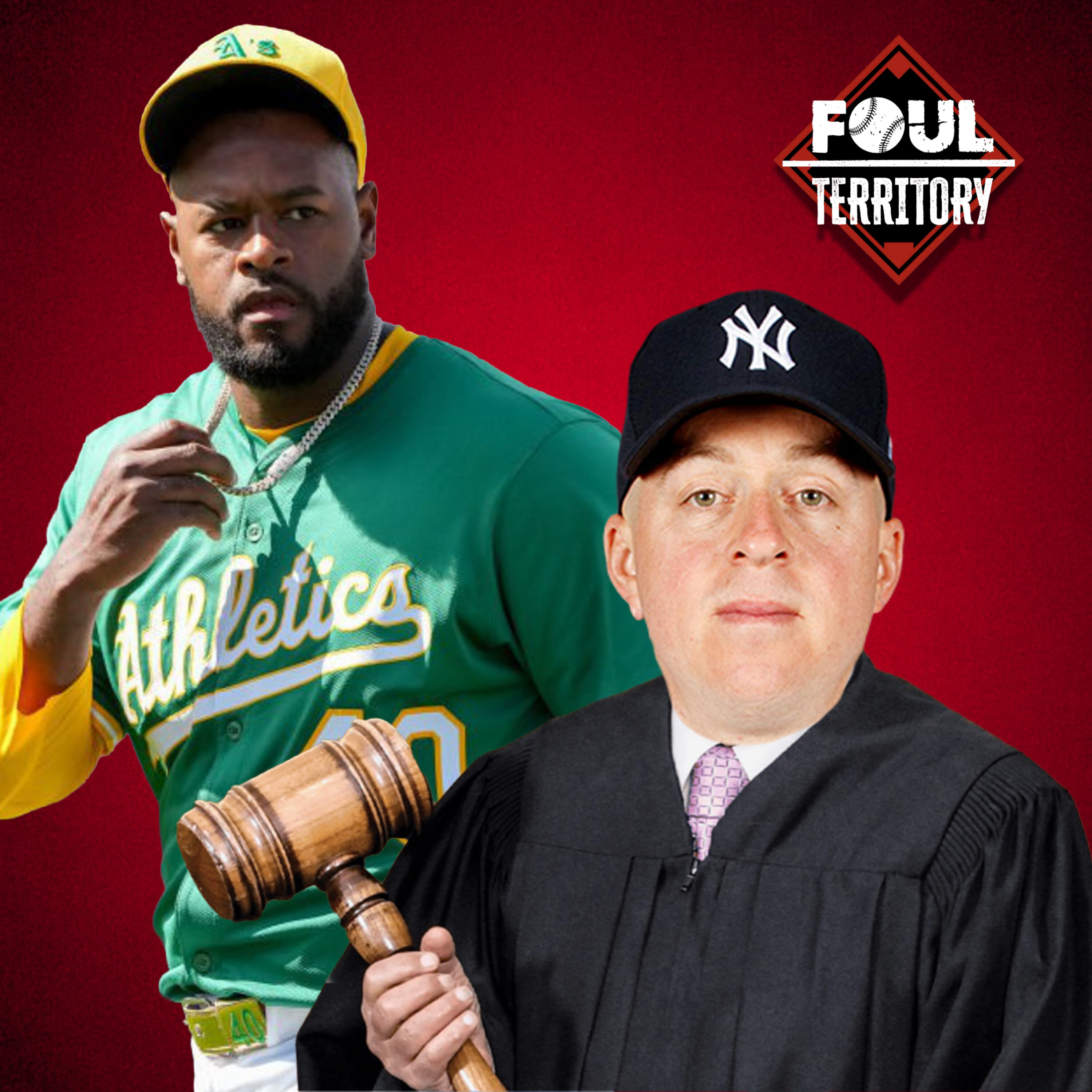
MLB tech enforcement crackdown in the minor leagues + A’s to-do list
Major tech changes coming to the minor leagues--MLB is set to centralize in-game data across all parks. Will this disrupt how teams innovate and utilize their farm systems?
(16:15) The Athletic writer Melissa Lockard stops by to lay out the ideal offseason to-do list for the A's.
Hosts: Kevin Pillar, Erik Kratz, Scott Braun
Download Cash App Today: capl.onelink.me/vFut/hap8idx8 #CashAppPod. Cash App is a financial services platform, not a bank. Banking services provided by Cash App’s bank partner(s). Prepaid debit cards issued by Sutton Bank, Member FDIC. See terms and conditions at cash.app/legal/us/en-us/card-agreement. Direct deposit and promotions provided by Cash App, a Block, Inc. brand. Visit cash.app/legal/podcast for full disclosures.
See omnystudio.com/listener for privacy information.
Available Results
Generated results are saved to the knowledge database for reuse and search.
Extract Knowledge
Pick what you want extracted first. Model, scope, and chapter options appear after a template is selected.
Transcript
00:00:01
Speaker 1: Craft that's on the case. Buckle up, ladies and gentlemen. There has been a change that is flying under the radar, and we are going to bring it to your attention because it will affect your favorite baseball team and your favorite sport, which is baseball. They are going to centralize all in game data and technology in the minor leagues, just like they have done in the major leagues. This article coming out from you Know Cyrus. We also hit this topic on Baseball America Hot Sheet, which is on the Baseball America YouTube channel. You can check that out at some point. But beginning next season, MLB is going to regulate the technology in game that is available for use across all minor league parks.

00:00:43
Speaker 2: I want to make.

00:00:44
Speaker 1: Sure I clarify this doesn't have to do with sign stealing and all that kind.

00:00:49
Speaker 2: Of stuff, right.

00:00:50
Speaker 1: This has to do with what innovations come to our sport and how teams can take advantage of that. This often creates advantages for those small market teams who do invest back into their club. I'm going to leave it at that. Although an MLB spokesperson wrote in a statement confirming the change, quote, we are taking the step to ensure that all thirty clubs are working with the same set of information as they make baseball operations decisions. Each club can use that info however they say fit, But it is important that we provide a level playing field on access to information.

00:01:23
Speaker 3: Crafts on the case trash statement by that MLB official, because that is not the genesis of this. If the genesis of playing major league baseball, which is minor league baseball coming up through the minor leagues, is to make the best players you can possibly make in your minor league system to make your big league teams win. The genesis of the reason for this is control. Major League Baseball wants control of Gee. I wonder what players values are. Well, somebody has kind of text, somebody has skin a text, somebody has this tech, somebody has that tech.

00:01:59
Speaker 4: We're all of across the board.

00:02:01
Speaker 3: But if we can centralize it now, we can lock in one value for a certain demographic sets position of player, so that everybody across the league knows exactly how much you should value that player wise, So they're essentially controlling players value, which people will say, who cares in the minor leagues? You know, good minor league players make it to the big leagues. You're right, but there's also a lot of biometrical stuff that people are taking and understanding that that value. Oh, this guy's really not that great even though he's in the minor leagues. All of a sudden, no teams are trading for that type of player. All of a sudden, everybody has the same evaluations on everybody, and it's a way that they can control it. I heard this said by a big league VET when I was in the minor leagues. Let your play on the field show what you can do. The pictures in the MRI scans, not the fact that the organization I was with at the time was giving out wearables like a watch, like a whoop type of thing, or it wasn't Apple Watch at that time, and they were giving them to the players. He's like, they're not doing it to make you better. They're doing it to monitor you. They're doing it just like an insurance company says, ooh, you can be a safe driver if you just install this.

00:03:29
Speaker 4: No, they're going to hike your rates up unless you.

00:03:32
Speaker 3: Unless you drive at the exact way that they're going to have for the lowest rates. It's exactly with players. They're doing this to control the player, and you have one career. KP knows this, Every player that's ever played knows this. You have one career. And if a team knows what's going on inside your shoulder, inside your elbow, if a team knows every single day that you know, your bat lags a little bit behind on this. Well, you did hit three thirty, you did hit twenty homers, but I don't know.

00:04:05
Speaker 4: Your value isn't that much.

00:04:06
Speaker 3: It's a way to squash the value of players, along with other things too.

00:04:13
Speaker 5: Yeah, I mean, I agree with everything you're saying, and I think in addition to that, I hate the fact that they're trying to take away some sort of competitive advantage that some teams have when they do invest into their minor league organizations. As someone much like Ukratz, at some point in your career, much like myself, when you were an established big leaguer and you have to take a minor league deal, you kind of go down a list of teams where you feel like they have a track record of making guys better. I had to do that after the two thousand, twenty twenty one season with the Mets. I had to sign a minor league deal I chose to go with the Dodgers. I could have picked any minor league team to go in, and I probably had a better opportunity to make the big league team with pretty much any team besides the Dodgers. But I love the way that they presented their case to me about look at these list of players that we've had in our minor league systems. These are the things that we offer that not all these other teams offer. We feel like we can maximize you as a player because of the things that we invested in, the way that we're able to break down the information, the way that we've invested in all these different areas to make you the best version of yourself. I just hate that they're making that a blanket statement because it is a competitive advantage. Yes, teams want to go out and spend money and buy the best free agents on the market. Teams want to draft and develop the best guys. But there's also another component of it is when you get these guys into your minor league system, or you get guys that were kind of on the fringe, you know, had a cup of coffee that hadn't really made it, but they see something in it, much like Mike Soroka was talking about with you know, certain players or certain things or certain resources that certain teams have that are going to, you know, maximize a player's value. And I really hate that they're making this a blanket statement for all teams. And more importantly, I hate that we ultimately know this is a way of suppressing player's value. If you can put everyone into a certain box, it just makes things that much tougher for players to be an outlier or to kind of navigate their own way or carve their own path.

00:06:26
Speaker 4: And I just I hate everything about it.

00:06:31
Speaker 1: For all the parents out there with teenagers like crats, we know life's a little crazy.

00:06:36
Speaker 4: Yeah, cash apps here to not add to the craziness. They're here to help, Yeah.

00:06:40
Speaker 2: Kratz.

00:06:41
Speaker 1: Cash app is designed to meet teens aged thirteen to seventeen where they are with intuitive educational tools. Available through sponsorship by an eligible parent or guardian. Teens gain access to a personalized cash app card. With the cash app card, you and your team's balance is received twenty four to seven fraud monitoring, and if something ever feels off, you have the ability to lock their card right from your phone in just one tap. Download Cash app and get started today. For a limited time, New cash app customers can earn ten dollars if they use code family ten in their profile at signup and send five dollars to a friend within fourteen days. Terms apply. Cash app is a financial services platform, not a bank. Banking services provided by cash apps bank partners, prepaid debit cards issued by Sutton Bank member FDIC, direct deposit and promotions provided by cash App, a block Ink brand. Visit cash Dot App Slash Legal Slash podcast for full disclosures.

00:07:32
Speaker 3: I wish I would have said this first, because some people don't listen to an entire entire segment. But if you want to hear one thing, listen to this. KP brought up the Dodgers, and people will be like, oh, great, Dodgers are spending more than everybody else. Here is where the Milwaukee Brewers, the Cleveland Guardians when I played for them, they were the Indians, the Pittsburgh Pirates. I know people will say, all the pirates. You're going to bag on the pirates. All these teams invested in tech that gave them an advantage because of how they used it. Now the pirates didn't use it as well. The Guardians and the Brewers used it so.

00:08:13
Speaker 4: Well a piece of tech.

00:08:14
Speaker 3: I'll tell you about one system that costs two hundred and fifty thousand dollars for an organization. Two hundred and fifty thousand dollars for an organization, that could be a steep, steep price. Now, all of a sudden, if you can implement that in your minor leagues, you create one big league player. Obviously, these players are gonna happen not no matter what. But let's say this system helps one big league player. You pay a big league player the minimum seven hundred and twenty thousand dollars that system paid for itself. To me, for Major League Baseball to say we want an even playing field is trash, and it is definitely something that they want to push their own agenda on because if they really looked into it, teams like the Guardians, teams like the Brewers, they're okay spending that much because they see the value in the things on the fringes because they're not going to go out and get the twenty million dollar player. They're not going to go out and get the long term extension for three guys on their roster. The Guardians, this is not tech. But the Guardians said, you know what, we're going to hire a full time chef. That full time chef is going to be down in Surprise, I'm sorry, in Goodyear, at their facility, their big league spring training and their minor league spring training facility, and he's going to teach guys how to eat healthy, how to he's going to take them out to the grocery store to buy the products that they're going to buy to cook, to help them reduce inflammation, sleep better, recover better, all those things. What is that investment two hundred thousand dollars at the max when you're talking about hiring a full time professional chef to teach these guys. It's like the difference in get having a man of fish or teaching a man how to fish, which one feeds him for a lifetime. That's where I think Major League Baseball is sadly mistaken. If they want us to believe the fact that, oh, we're making this, we're making this an even playing field, save it. If the teams aren't doing this little extra stuff, good riddance. We'll see at fourth place in your division every single year.

00:10:25
Speaker 1: On Baseball America, we talked about how this is very helpful for college programs. They're not going to have this regulated in the college scene. You're going to have more and more players go to college baseball, which might be what MLB wants. It creates a free minor league system for them, So that is part of this that does enhance the college baseball world. Just small side joke I have to throw in there before I get back on the serious side.

00:10:47
Speaker 2: Are we going to regulate air conditioning too? Like?

00:10:51
Speaker 1: I mean, while we're at it, right, everybody should have a C and a guy who's working on that at all times. Is just funny how we're pointing to something that some teams clearly invest in and it helps their players directly. And it's not something that is just linear with the big market teams. Right, the Angels spend more money than many teams on player payroll, yet they have been known to not spend on things like this, hence the air conditioning joke. But it's not just that the Rockies have been known for this for a long time. Shocker, the Rockies have been in the Stone Age and now they're bringing people in to try and fix that. So this is where the conversations happen. And there's a business component to this too, if you want to add to the conspiracy theory, that has some good insight behind it and research. When a tech company or data company now presents, it's going to be presenting for the entire league.

00:11:43
Speaker 2: Right, It's like state run TV kind of situation. You can choose.

00:11:47
Speaker 1: Your political pathway to come up with a comp I'll let you do that on your own, but you present it. Most likely if one of those companies wants to give a great deal to the league and give them equity and all of that, they will win out, even if they're not the best. And so instead of going to an individual team and creating more of a free marketplace and essentially capitalism, you are doing what socialism, communism, whatever you want to call it. Right, that is the direction that you're going here. And sometimes, sure you want to make a case that it works fine for the sport, okay, But in this particular case, it just hurts innovation in our sports. It's ridiculous. Anyone of the last thought on this, Yeah, I mean.

00:12:26
Speaker 5: I just think about what the Blue Jays had done with their spring training facility. I mean, it's a big reason people are wanting to go there. The team decided they wanted to invest in their spring training facility to give the players all the resources to be better, and you're seeing it pay off. So what was the next step? Everyone has to have similar complexes, facilities, et cetera, et cetera. I hate it.

00:12:50
Speaker 1: Yep, exactly exactly where is the line here? Where do we go from here? Everyone has to have the same everything. Yeah, And I mean my question is, right as just a fan who just wants the best players and the coolest shit in terms of innovation, is there any way to fight this? I mean, the fans never can fight anything, but I'm saying players like this isn't something that they can bargain. I didn't realize that you can just create whatever you want. Right to me, this feels like a rule. I know it's not an on field rule, but it's a regulation. And the minor leagues are unionized. Now, I mean, I guess, you know, I could check with league and with union officials.

00:13:27
Speaker 2: But can they not fight this.

00:13:31
Speaker 3: I don't know how they can because they're just implementing this. This is they're going to say it's a infrastructure type of thing, and it's not directly affecting players because it's organizational rules.

00:13:42
Speaker 4: Like it's not like.

00:13:45
Speaker 3: I feel like without and I'm not you know, I'm not the legal team of the MLBPA, but I feel like it's something that is very It's some tech is something that has hit when we talk about a players association. Hey, make sure whatever tech you're using, you know you you say, yes, you know, I know what this is and I want to use it. Like it's not like there's no mandatory tech. The issue is basically Baseball doesn't care because they know every single one of these players right now is going to be gone and every single team is still going to be around. So they're making implementations that will streamline things for themselves and will and we'll give them the evaluation of the next layer of players, the next group of players that comes through because and as players, you need to be able to stand up and fight for this. But you're not gonna be able to go and buy your own Hawkeye system to get your data, your biometric data that's at stadiums, Like there's there's a lot of there's just a lot of things that you got to make sure you know as a player, are benefiting you and some things that are inhibiting your value throughout your very very short, finite career.

00:15:01
Speaker 1: I'll finish with this because I think this can relate to almost anyone. Almost anyone believes in jobs.

00:15:06
Speaker 2: Right.

00:15:06
Speaker 1: You want your fellow citizens, friends, colleagues, et cetera, to a jobs. So let me relate it because I just was at the Winter meetings and I spoke to many people that work for teams.

00:15:17
Speaker 2: The more data video analysis that.

00:15:19
Speaker 1: We've had, the less jobs because sometimes they're like, oh, we can just use our system. A centralized system actually creates even less jobs because they're all playing with the same numbers. There's no innovation there, so it just completely takes away jobs. That is a direct correlation. That is a guarantee. That is a promise, the number one thing that I can promise you out of all of this, even if you don't care about the player innovation. You want every team to have the same everything, right, Every team spends the same ballpark, Everything looks the same in life.

00:15:46
Speaker 2: Right.

00:15:47
Speaker 1: It eliminates jobs guaranteed. And if we had innovation, it would create jobs, period. That's what it is. Sure there's other tech and things that are going to happen. This isn't like an anti tech thing. This is saying you're only allowed to use this one tech, this one data company, instead of having the option of ten, instead of hiring another person to be able to figure this out for you. That part should be important to almost anyone if you believe in jobs. Let's do some shopping for the A's. I know it sounds weird sometimes, but they did a little bit of shopping last year. Melissa Lockert from the Athletic joining us right now, does fantastic work check out or work over there at the Athletic.

00:16:33
Speaker 2: Well, it's it great to see you, and yeah, let's lay out your list of what.

00:16:37
Speaker 1: You think the A's could and should do the rest of the way here before spring training.

00:16:41
Speaker 6: Yeah, it's nice to see you too.

00:16:43
Speaker 7: I think it's a pretty similar list to last year. You know, they beat pitching pitching and more pitching, but starting pitching, I think first relief pitching. Obviously they don't have Mason Miller anymore. The bullpen still did okay after he left, but obviously you still got to figure that out. And then they've got opening he said, third base and second base. They haven't found their absolute final solution in either of those spots yet. So if there's kind of a free agent there that they can get maybe on a pillow deal that would fit while some of their younger guys come through the system.

00:17:13
Speaker 6: I think that'd be a great fit.

00:17:15
Speaker 4: All right.

00:17:15
Speaker 3: Well, last year they were at this moment and Louis Severino got the tour of Sacramento.

00:17:20
Speaker 4: Louis Severino came in and took pictures. WHOA, I love what they're going to be doing here. Three years, we're going to be out of here.

00:17:27
Speaker 3: I'll take a three year deal, and part way through the year he says, dang, this mound sucks. I can't throw here. It's too hard. Other people are coming and his numbers said it. How do they call how do they call starting pitchers and say, hey, come on over. Louis Severino is lying, we fixed the mound.

00:17:46
Speaker 4: Oh, but it is.

00:17:47
Speaker 3: Still going to be one hundred and ten degrees in front of six thousand fans. How do they sell this starting pitching to truly make an upgrade to a team that I feel like did make a little bit of a jump, even though they got red of Mason mill Are now, so you're really banking on what they got back in that trade.

00:18:05
Speaker 7: Yeah, you know, it's actually it's interesting they can't answer most of those questions.

00:18:09
Speaker 6: They did.

00:18:09
Speaker 7: However, they are building a room next to the dugout for pitchers to go in in between innings, so that they can have somewhere to go where they would you know, typically go into a clubhouse to collect themselves when they're not on the mound, which was something that Severino specifically asked for. So I suppose they could kind of say that they are responsive in some ways, but it's a tough sell. I mean, no denying it as easy as a sell as it was to pitch at the Coliseum. Given the you know, the way that that pitchers were able to get away with a lot there, it's the exact opposite.

00:18:39
Speaker 6: In this situation.

00:18:41
Speaker 7: So they're going to be looking for someone who is you know, looking for a short term deal, maybe a way to kind of pitch halfway through the year and then get traded to a contending team. I think that's probably their best bet. I wouldn't look at too many long term solutions there, but you know, they also have some younger arms coming up, so that wouldn't be the worst way to get through a season would be to kind of bring somebody in who could get them through to July, maybe pitch well enough at least on the road to convince another team that they'd be worth acquiring. And then you bring up a Gauge Jump or even the Jamie Arnold who they took in the first round last year, and start to see maybe where this rotation is actually going to go in the future.

00:19:19
Speaker 5: All right, where do they go for getting guys to play second and third base? And do they have any internal options?

00:19:27
Speaker 6: Yeah?

00:19:27
Speaker 7: I mean, you know, Zach Geloff had one of the weirdest years ever. I mean, he had this great spring, looked like he was kind of kind of get back to the way he was his rookie year, and then breaks his handmaate bone, maybe two days before the end of spring training and just never got back on track. He ended up with a rib injury before he came back. Then he came back and he really wasn't right, got back, sent back down, looked a little like himself for a bit, and then I think, you know, it just never came together before the end of the year. But he's still their best defender at second, still has that potential there you know, Brett Harris and Darryl Hell and I both shared you know, some time at second and third. Max Munsey, the former first round pick, is also in the mix there. But there's just nobody that you can point to and say for sure this is the guy that's going to be able to cover that void for them.

00:20:12
Speaker 3: Wrong, are there because all of these needs can be Yes, they can be filled with trade. Yes, it can be the one year deal. Are there any spending mandates? Kind of last year? Obviously it was the quiet secret that they had to spend this money, but they had to.

00:20:27
Speaker 4: Are there mandates?

00:20:28
Speaker 3: Are they short of that and they have to come to you know, a certain number?

00:20:33
Speaker 4: And if you know what that number is, what is it?

00:20:36
Speaker 6: Yeah, don't.

00:20:37
Speaker 7: I don't know what the number is specifically. I do know they've been in talks with some of their younger players about extensions and that may be the best way for them to get to whatever number it might be.

00:20:48
Speaker 6: You know.

00:20:49
Speaker 7: Also, I think if they bring in a free agent, they're going to overpay him. You know, Mark Lighter Junior signed a three million dollar deal after being non tendered for a year. That might have been a bit of an overpay compared to what he would have gotten in a different situation.

00:21:02
Speaker 6: You know, obviously, Severino.

00:21:03
Speaker 7: I think got a much more handsome contract than he would have gotten. So you may see a little bit of that, but I wouldn't be surprised if you saw some of that money going towards extending and Nick Kurtz and Jacob Wilson, Tyler Soderstrom, shayl Angeliers like those are the kind of targets that would make a lot more sense for them because those are the guys that you can already convince to be there because they're there already.

00:21:25
Speaker 5: Yeah, to piggyback on some of those names, you just mentioned someone who spent the last two years of his career in the same division as the A's. I love their young core players. I think they have potential to build something really special there. When do you kind of see their window of taking off? Is it going to kind of lead into the new stadium? Is when they're really going to kind of push all their chips in the table, try to sign these guys up long enough to make that transition to Las Vegas.

00:21:53
Speaker 7: Yeah, you know, chips on the table is going to be a good metaphor for them.

00:21:56
Speaker 6: When they when they make that move.

00:21:58
Speaker 7: But you know, I mean, I think they they have built a nice lineup corps. I think Lawrence Butler as well is a really important part of that whole mix. Brent Brooker will be around. I think he's guy who's you know, skill set, should age pretty well, and you know as a leader, he's he's a really important part of that mix. So the core of the lineup is really there, but the pitching still remains a huge kind of mess in a huge puzzle. At the moment, they hadn't really invested a lot in draft capital on pitching in the upper round in in the last you know, decade or so really, and their pitching had really fallen off developmental wise. But the last couple of years they've they've invested a little bit more. I think they're seeing more returns there. You saw Luis Morales come up and pitch pretty well. There's some other guys that might factor in there. The guys they acquired from the Padres in the Mason Miller deal, you know, could factor in as well there too, But it's just going to be hard to know how to transition guys pitching in a difficult environment in Triple A in Las Vegas, then coming up to Sacramento Sacramento and pitching in another difficult environment. It's almost similar to the Rockies, I think in a lot of ways. And until they figure out that pitching part, it's a little hard to know exactly when it's all going to come together, because you know, at the moment, I was kind of thinking, you know, it's a very similar team to like those mid nineties A's teams that was post Dynasty, where they had McGuire and Steinbach and all those big sluggers, and they were kind of fun to watch, but they were just like six runs given up every game, and you know, it's hard to build a sustainable winning pattern. And the only way they were able to turn that corner is when Tim Hudson, Mark Mulder and Barry Zito kind of came on the scene and gave them a pitching identity. So once they have a pitching identity, I think you'll see it come together pretty quickly.

00:23:40
Speaker 3: I got to hit the extensions because obviously low Dog's in Rookers In. Who of those guys that you mentioned are the guys that really kind of fit that like window, It has to be obviously a really good player. Obviously, it can't be too expensive. Is Nick Kurt's pas is? You know, is there somebody that fits right into that window that says, okay, you know what with rope, with law Dog, We're going to push these guys as our billboards in the four years from now when we move into Las Vegas.

00:24:15
Speaker 7: Yeah, I mean, I think Nick Kurtz is probably the number one guy there. I think what he does is what has always fit what they like. You know, he's patient, he really understands what he wants to do when he's at the plate. I think he did some things that you know, hint towards even getting better as a hitter and as a defender. I don't think he showed how good of a defender he can be at all last year, but you saw it in the college ranks that he's actually a pretty good defensive first baseman, you know. And Matt Olsen was a guy they should have built around right like this, That was a guy that if you had a different ownership situation, he'd still be with the A's and kind of being their centerpiece. And I think, you know, Kurtz has a lot of similar characteristics to Matt Olsen doesn't have the durability yet, but I think, you know, hopefully for him, we'll get there.

00:24:59
Speaker 6: But he he's definitely one of those guys.

00:25:02
Speaker 7: They absolutely love Shalle Angeliers. It's tough to build around a catcher, and especially ketcher who plays as much as Shaye does, but you know his leadership and and his you know, ability to hit well above what you know a catcher. I mean, if you cal Rally's not in the division, you're talking a lot more about Shallee Engeliers. It's the best hitting catcher in the als.

00:25:21
Speaker 6: So though you know, I.

00:25:23
Speaker 7: Could see something getting done there, it's just tougher with a catcher to sort of.

00:25:26
Speaker 6: Project what what that would be.

00:25:28
Speaker 7: And then so some sort of an interesting one because you know the fact that he was so willing to move positions and he you know, he did a really good job with it. I think showed a lot about him, you know, as as a person and what he was willing to do for the team there. And you know, obviously as a hitter he brings a lot to the lineup as well.

00:25:47
Speaker 3: Now that was that was honestly who I was gonna ask about Shye Langeliers.

00:25:52
Speaker 4: Why is it tough to build around a catcher.

00:25:55
Speaker 3: How wrong Salvador Perez, Will Smith, J Muto in Philadelphia? Like teams, that's what teams do, They build around a catcher. Why would the A's be reticent to do that? Like are they afraid of injury? Like this is one of the I think he's right outside of top five in the league. But I think he has the ability because he throws, he blocks, it's receiving, could you know, to get him to that consistent all star elite status? But to me, that's the guy because you need a catcher. Every team needs a catcher. That's why there's none on the free agent market.

00:26:30
Speaker 7: Yeah, no, I agree with you. I think the one concern is you look at the guy that he replaced in Sean Murphy, and how quickly playing as many games as he played, has accumulated injuries there, and so maybe there's some sense of risk. There's also like Shay's a lot closer into free agency and if there's another place he'd want to go, it may be harder to convince him to sign too. I think that that factors him. And you're looking at a guy like Kurtz who's got you know, five more years, six more years with the organization. If he doesn't sign an extension, no matter what, it's a lot easier, I think, to go in there and say, hey, let's sell you on our future here.

00:27:03
Speaker 6: Because you're here.

00:27:04
Speaker 7: You're here regardless, so you know that's it. But as I say, I mean, you cannot find anyone in that organization that doesn't think the world of shayl Angeliers. So it wouldn't shock me if he was a guy that they that they were able.

00:27:16
Speaker 6: To come to terms with.

00:27:17
Speaker 7: But I think that the position and also just how close he is to free agency, you know, would be the two factors that maybe would make it a little less likely.

00:27:26
Speaker 1: Hey, this team finished pretty well down the stretch. They had just a garbage month and change where it was almost incredible how everything was going wrong for them, And of course the pitching was in shambles during that time period.

00:27:42
Speaker 2: Happens to go down during this early part of.

00:27:44
Speaker 1: The season, Melissa, so it knocks out the care and the fight for fans to pay attention to for the rest of the way. Anyway, my question is how far away do you think they are from playoff contention?

00:27:57
Speaker 2: It doesn't seem like they're.

00:27:58
Speaker 1: Going to do major moves this offseason, but can they compete for a wildcard spot? If we wipe away that one month, which you absolutely cannot do, they would have been in the mix.

00:28:10
Speaker 7: Yeah, I know, I hate to sound like a broken record. I think it comes down to pitching. And it's always come down to pitching.

00:28:17
Speaker 2: You know.

00:28:17
Speaker 7: With the A's traditionally the hittings, they are to be a wildcard team. You know, it's like it can compete with the Cincinnati Reds type lineup with you know, some of those guys, those those teams that you see get that last wildcard spot. I think the lineup is in good enough shape to get there because I think a lot of those younger guys are only going to get better. But you can't have pitching as volatile as they had last year, and and like you said, everything sort of fell apart all at once and snowballed, and you know, maybe they learned from that and maybe that doesn't happen this year. But I think that's what tends to happen when you don't have a lot of veteran anchors and either in a rotation or a bullpen. Is that just things tend to snowball, and so avoiding the snowball is probably you know, where they would have to get to to get to that, and they just haven't been able to find that consistency yet. You know that said, I mean, for all of Savorino's complaints, he now knows what he's dealing with when he gets to the ballpark. Maybe his you know, e Ra drops a run or two at home this year, and he pitches just as well as he did on the road, and that makes a difference. You know, down the bullpen showed a lot after Mason Miller was traded and that they actually were pretty good as a unit. There's a lot of guys that can pitch a lot of different roles there. I know, Marcotte was quite you know, high in his praise of Hogan Harris and how tough he was at the end of ball games, and I think that sort of surprised him a little bit. So they did have a chance to learn a lot about these guys. But you know, and and frankly, the way that the wildcard setup is in baseball now, teams can surprise. So I'm not going to say that they can't compete even this year, but you'd like to see a more stable picture for the pitching to you know, really look at them as any kind of a contender.

00:29:58
Speaker 5: At this point, I want to get your sense from what you've heard from either home players or visiting players about playing in Sacramento, because as someone that went there, no offense to the coliseum. I know it had nostalgia, but that plays wasn't very good. It was kind of a dump. The situation with a batting cage way on center field was kind of a makeshift cage for the visiting players. I actually preferred Sacramento better. The hotel was better, the city of Sacramento was better, the food was better. As a visiting player in Sacramento, I thought the setup they created for the players as a visiting team was better than the coliseum. Are you hearing the same similar things? And what about the home players because I never got to experience the home side in Oakland?

00:30:39
Speaker 7: Yeah, I mean I haven't heard much from the visiting players. I think I think it was mixed for the home players. I think in some sense it helped the team kind of coalesce together. You know, it's a pretty tight group because you know, they're all sort of in this together. It's a very unusual situation. I don't think it feels like a big league ballpark. And I think if you're especially a younger player, and I think you heard Lawrence Butler kind of talk about this a little bit, you know, it's hard to like, you work your way up to the big leagues and this is your home park and it's it's not it's a Triple A stadium. So there's only so much you can do to make it not seem like a Triple A stadium. I think, you know, maybe coming in as a visiting player, that doesn't bother you as much because you end up leaving right away and going back to your home park. But you know, there is something to be said for the amenities that any home park in a major league stadium has, you know versus Triple A. You know, and attendance wasn't quite I think what they had anticipated it was going to be, you know, that said it. I don't think it was like a disaster for the home team at all, you know, I think the frustrations that players had were what they expected them to have.

00:31:47
Speaker 6: And obviously, you know, there is a nice.

00:31:50
Speaker 7: Area there around the ballpark that they can go to so, but I don't think anyone would sign up for that long term.

00:31:59
Speaker 2: Yeah, and that's why to me, try and swing trades.

00:32:03
Speaker 1: You try and spend the money you have on extensions while it's a tough recruiting case for another couple of years, rather than overspend on a player who gets disgruntled and then he's overpaid so it's tougher to move him. Anyway, I can go all day, as you know, Melissa, great to talk to you. Thank you for stopping by, appreciate it.

00:32:21
Speaker 6: Thanks for having me. Guys,