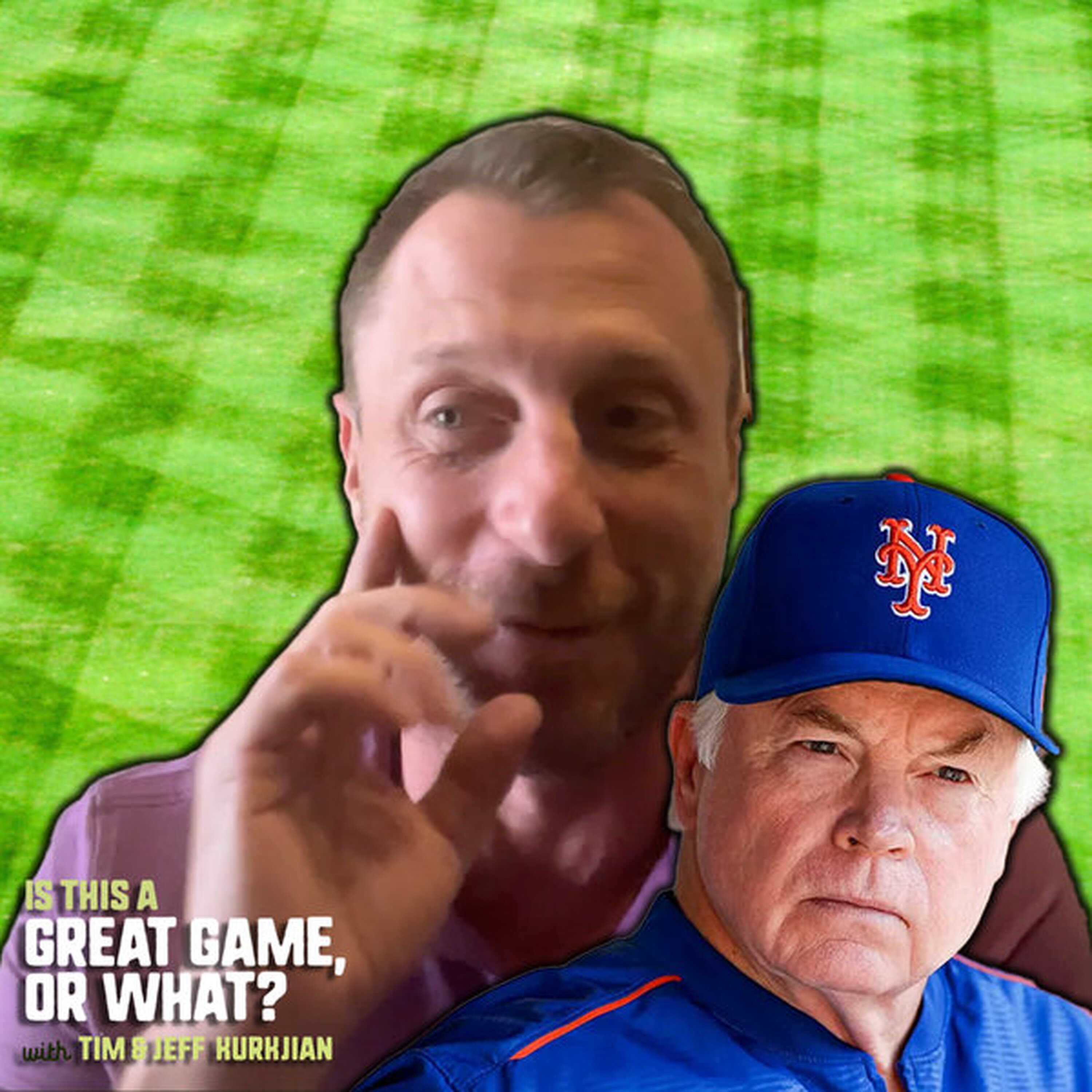
Max Scherzer joins the Kurkjians
Three-time Cy Young Award winner Max Scherzer joined Tim and Jeff Kurkjian on Is This A Great Game, Or What? to share his bold idea for increasing the value of starting pitchers, his touching story about his daughter's letter to the Blue Jays, and Buck Showalter stories.
Subscribe to FT on YouTube please :)
See omnystudio.com/listener for privacy information.
2026-05-03
44 min
Transcript
Available Results
Generated results are saved to the knowledge database for reuse and search.
No generated results are available for this episode yet.
Extract Knowledge
Pick what you want extracted first. Model, scope, and chapter options appear after a template is selected.
Generated results for public episodes are saved to the knowledge database so they can be reused and searched later.
Transcript
00:00:05
Speaker 1: Welcome to Is this great game or what? And our special guest today is Max Scherzer, Toronto Blue Jays pitcher and a future Hall of Famer. Max, this is my son, Jeff. I gave him no height, back hair, and my terrible voice.

00:00:22
Speaker 2: Say hi to Jeff well Fellows, thanks for having me on. Max.

00:00:29
Speaker 3: I gotta say your kiddos are already off to a better start athleticism wise, with you and your wife and your genes that you're bringing to the table. But Max, I have to say, first of all, great to meet you. I was so excited hearing that you wanted to be a part of our podcast. And one of our favorite moments from a previous interview was when we had Ryan Zimmerman on the show and we did ten minutes with him talking specifically about Max rules while basketball. We yeah, yeah, well so now we need to go to the source our Max schools.

00:01:08
Speaker 4: Yeah, Zim can play a little bit. Yeah no, this was it. Uh you know I said, I played basketball in the off season my first fifteen years of my career. So I had that back surgery once I had to hurt any diss and the back surgery, they're like, you can't jump and land anymore like you can, like you just if you're gonna pitch, you can't play basketball. It was finally like the moment in time when I was like, all right, that's it, no more basketball, Like all right, there's always been one of those things I've always know. It's like so frowned upon in the game they ever played basketball, because you know you're risking serious injury. And you know, I felt like I kind of got away at it way, Hey, no, we're gonna play basketball, okay, but we gotta take away the the big injuries. We gotta take away the knee injuries. And that's always by landing on each other. And so you know, it was kind of I say, it kind of started in Detroit where there were some games going on kind of in the offseason screen train where it was more like a shooting competition where you're going up and down the court and you're just you're kind of shooting at each other. And the kind of rules that we came up with was like, hey, the defensive player can't leave their feet, so like, let the offensive player make moves, shoot jump like, you know, make it an athletic move, you know, let the defender play hard.

00:02:23
Speaker 2: You just can't leave your feet and jump to try to block a shot.

00:02:26
Speaker 4: And then we said, all right on the inverse, like once you know the you know, like, once you shoot the ball, then the defensive player can.

00:02:31
Speaker 2: Jump up to go get the rebound.

00:02:33
Speaker 4: And then but the offensive player can can't jump to get a rebound. So once you shoot, like you're either gonna go get a rebound by staying on the ground or or you're falling back on defense.

00:02:43
Speaker 2: And so it's that way, only one person was jumping in.

00:02:46
Speaker 4: The air at a time, and so like that way you could really kind of run a basketball game. If both players are kind of you trying to abide by that, then play as hard as you can.

00:02:55
Speaker 2: You can actually play some really intense basketball games that way.

00:02:58
Speaker 4: And so yeah, Zim, there was an off season where I kept eggings Zim on, like, Zim, come on, we can play like.

00:03:06
Speaker 2: We're not gonna hurt each other.

00:03:07
Speaker 4: We're gonna we're gonna we're gonna get after it like we're gonna do it.

00:03:10
Speaker 2: You came up.

00:03:12
Speaker 4: Patrick Ewing was nice enough at Georgetown to let us use a practice facility there, and so we had some good games up and down the court where uh yeah, we're playing some some hardcore pickup basketball.

00:03:23
Speaker 2: But they had to have those rules so you can't get hurt right now.

00:03:26
Speaker 1: Max Zim also told us that you insisted that after five buckets of each game that you guys shot free throws, because the only way to tell how good a free throw shooter you are is when you're shooting them fatigued.

00:03:40
Speaker 2: Is that correct?

00:03:41
Speaker 4: Yes, that's correct. It was also a way, you know, we were kind of playing the fifteen twos and ones and at five and at ten, we usually take a break to two free throws, so like if you're tired, kind of gives you a break because we're playing up and down like it's either one on one or.

00:03:56
Speaker 2: Two on two full court, So that I mean, it was a conditioning.

00:03:58
Speaker 4: It was for conditioning, and so like when you're playing one on one full court or two and two full court, like you're up and down, like all right, we need just a second, cut your breath, and I get like I said, it's.

00:04:08
Speaker 2: A good time.

00:04:08
Speaker 4: Hey, if you can make a free throw when you're tired, that's when you know you can make a free throw. And kind of that mentality it takes and make a free throw when you're tired. Well, that kind of translates over the pitchure like hey, you know you're gonna beat a big spot, Like can you execute when everything's on the line. So, uh, basketball puts it in the physical sense, you know, baseball puts in the mental sense, but they kind of play with each other in that regard.

00:04:29
Speaker 1: And Chris Bassett, sorry, Jeff. Chris Bassett, former teammate of max Is, told me last year that when you found out that he was a really good high school player, you went to him and said, we're playing full court, one on one, you and me. And Chris Bassett looks a goes, Max, I'm not playing one on one full court with you?

00:04:48
Speaker 2: Is that true? Also, yeah, that's true. I would love to play basketball on one full court.

00:04:53
Speaker 4: That's when you really find out because it's conditioning, like you know, we can play half court, like you can start playing the conditioning because like for pictures, that's how I use this conditioning.

00:05:03
Speaker 2: Uh.

00:05:04
Speaker 4: You know that really gets up and down like let's see what you got basket is? Uh, you know it's crazy. You know you get him on the basketball, he's really fluid, so uh you see his motion and everything there's no way can be fluid. And he gets on the court and he moves around like he's normal, Like so yeah, he's good as well, right.

00:05:22
Speaker 3: Max, We played pickup basketball at every one of my high school buddies weddings. Now we're all thirty two, thirty three years old, so the game has changed massively from when we played summers in high school, where we were full contact, running hard as we can, I mean, just everybody up for rebound, and now we're kind of adopting something like Max rules, so nobody gets hurt, especially the groom.

00:05:47
Speaker 2: The groom.

00:05:48
Speaker 3: The rule at our weddings is you can't. We just say you can't guard the groom right, like you can face guard him right here, but there's no if the groom is driving, there's a little bit of like a you know when a kid gets to play one down, you know at the fall game in college, it's like.

00:06:03
Speaker 2: We're like, oh, oh, we just missed him.

00:06:06
Speaker 3: Like if he because if we injure the groom, we're dead.

00:06:09
Speaker 2: So we gotta play Max rules. Yeah, just the upper body. You can just stay on the upper body. You gotta leave the lower body alone.

00:06:15
Speaker 1: Right, kind of like the NBA all Star Game, right, Yeah, yes, it's unwatchable. Yeah, Max, it is Max. Who was your basketball guy growing up? Who did you used to watch and say, if I want to be a basketball player, that's the basketball player I love to watch.

00:06:38
Speaker 2: You know, the nineties basketball air. I mean just all of it.

00:06:43
Speaker 4: For me, it was also it was about playing it, playing in high school, playing you know, playing in middle school and playing in high school. I always go back to Coach Kirby. You know, Rick Kirby was my high school basketball coach. Coach me so hard in basketball, really made me better. Love those high school teams I was a part of. You know, I just love the game. I love the game of basketball. I mean it's you know, grow up in Saint Louis, you know, you don't have you have winners, so you can't play baseball year round.

00:07:07
Speaker 2: So uh it's great.

00:07:09
Speaker 4: It was actually great for development athleticism wise to be able to in the offseason go play basketball. So you know, you know, obviously you're gonna say the Michael Jordan's, the Allen Iverson's, all those guys in that air. Uh, but I just appreciate the air of the basketball, how physical it was, how tough it was. I think that we all crave that we all wish the game would revert to some form of that again. And so you know, playing it, you know, I love that form of basketball.

00:07:38
Speaker 2: I love the pick.

00:07:39
Speaker 4: I like kind of a harder game, like as long as as long as the contacts up up high in the upper half.

00:07:44
Speaker 2: Basketball is actually I like it when it gets really physical.

00:07:47
Speaker 1: Yeah, and I max I had. I heard an NBA guy say the other day, our game is way more physical than it was in the eighties, and I had to say.

00:07:56
Speaker 2: You've got to be kidding me.

00:07:57
Speaker 1: And the way the Pistons play, the way the played, the Knicks played, the way everyone played. You just did not go down the lane without taking your life.

00:08:06
Speaker 2: In your hands. Back then, it was incredibly physical. Have I got this right? Yeah, that's what That's how I see it. Yeah, just the you know, you don't see any like you.

00:08:20
Speaker 4: I kind of wonder in my head, like weapons if Shack was around in today's game, Like, is Shaq still the same dominant force as you know we got to watch in the nineties as he is to you know, would it be in the same way into today's game? Like, I don't know, to me that he's one of that. He doesn't get talked about enough of how dominant he was. And so, uh, you know, I missed that part of the game. I missed watching physical interior play. Like that's fun, fun to be a part of.

00:08:46
Speaker 1: Right, Max, you went to the University of Missouri and your wife, Erica was a pitcher at the University of Missouri. Oh, you were a pretty good major league hitting pitcher. How did you ever face her anywhere along the way college?

00:09:09
Speaker 2: Since then? How did and how did that go?

00:09:13
Speaker 4: I never did step in a box against her. I did catch her a few times. And when it's you know, at forty three feet, like, man, it's moved, right, I mean, you know, like you know they throw rise balls, it's really just fuzzy, like they're just you know, like forcings that you know really have hop you know, like you know, their curveball, their curveball, they call it drop balls.

00:09:32
Speaker 2: Those things move their curveballs like a slider.

00:09:37
Speaker 4: You know, they have a little screwballs. So like, yeah, they can have it with a lot of different ways to make the pitch move. Uh. You know, it's jealous in some regards because they can throw six hundred pitches a day so they can work on all their they can have all these pitches and just work on it over and over and over where you know, you know, I'm most team, Like I can only throw about twelve sliders in one day, Like that's it. Like I can only work be up max up. If I throw bre like twelve dollars in this day, like I might hurt my arm. So you know, it's funny how the two pitching, how they're polar opposites at the same time.

00:10:09
Speaker 3: Yeah, but at the same time as that, you guys were probably in season at the same time in college. So would you ever have a game at the same time, either you know, one traveling and one other and you call each other and say, okay, how many pitches did you throw? How many strikeouts did you throw?

00:10:24
Speaker 2: And like compare stat lines.

00:10:27
Speaker 4: Uh, not so much because uh, you know, she had gotten hurt.

00:10:34
Speaker 2: So she was miszoo her year.

00:10:38
Speaker 4: She was start the first year, and then she had transferred to slew to try to pitch, and so in the in that next year, you know, and my junior year, sophomore year, she was trying to pitch again, had a few starts, she got hurt again.

00:10:50
Speaker 2: She she dealt with a lot of.

00:10:51
Speaker 4: Injuries, and so she wasn't able to She wasn't able to pitch as much as you would have liked.

00:10:57
Speaker 2: But she has a pitching mind. She knows, she.

00:11:00
Speaker 4: Knows how the game, how the games operate, you know, like how did how did you think about hitting spots? You know, and so you know in the earlier dating careers. Yeah, there was a lot of pitching over last like how to actually expect.

00:11:11
Speaker 1: Jeff Max, of course, is a great athlete, and he really enjoyed hitting and running the bases. We'll get to your three stolen bases in a minute. But you hit a home run off of I don't even know who did you hit your homer off?

00:11:24
Speaker 2: And what was that like for you? Uh?

00:11:28
Speaker 4: Crystal Crystal Grady in Miami. Yep, I'll never forget it. I feel like the only reason I hit that homer is because the game because I actually had a neck. I actually slept on wrong, had a neck spasm. I didn't know if I was even going to pitch that day, if I was going to scratch not. I tried to go into first inning. It's not good, I'm going up there.

00:11:48
Speaker 2: The bunt.

00:11:49
Speaker 4: Dusty has me try to bunt two times. I can't get the bunt down. I'm gonna to too strike count. It takes a bun off and I'm actually flashing. He actually gave me the slash, and so you know, I'm up there just slash and because I can't pull off the ball. My neck is stiff, so I can't. I can't, I can't pull off the ball. I actually run it slash and I keep my head actually on the ball, and I.

00:12:11
Speaker 2: Finally hit it and hit a home run like furst Off. You know how I would hit my first. Max.

00:12:17
Speaker 1: You stole three bases, never got caught stealing. You're three for three. That's how you are, and you're probably not going to get a fourth. Tell us about the stolen bases and what what pride you took as an athlete, as a pitcher stealing a base in the big leagues.

00:12:34
Speaker 4: Oh yeah, I'm I'm way happier about those. I really I fought for those, you know, in the first couple of years in DC, when I you know, I came back from uh, you know, being in an American league. You know, I was always talking to you know, kind of Matt Williams, like, hey, let me go.

00:12:51
Speaker 2: I can get this. Like there's certain.

00:12:53
Speaker 4: Guys like, look, I can go, I can run, like let me go. And so same thing with Dusty, like Dusty, let me go. I'm yelling at Dusty all the time, like let me go, let me go. It wasn't until finally Daty came and you know, we're in spring training.

00:13:10
Speaker 2: We're doing some picture sprints.

00:13:12
Speaker 4: And uh you know, all the pictures are going and I go out and I unleash it and I'm feeling good. You know, I gotta go. I go get it and Davy sees me running. He goes, my gosh, you can steal bases.

00:13:22
Speaker 2: I go, Dave, you haven't seen this for years, Like give me the green light.

00:13:27
Speaker 4: I'll go, like I'm ready. Uh So we talk about it. You know, we go through that spring train. Davy and I are talking about it and he, you know, we kind of came up to little of rules.

00:13:38
Speaker 2: He's like, I'm not gonna give you a sign or anything. He's like, you know, how to play the game.

00:13:42
Speaker 4: If you got about five things they're telling you, you can go, like go, so like, okay, the score of the game out, who's up count? You know, like take the whole you know, game, state and play. And then there was you know times where hey, I think I can get this base.

00:13:57
Speaker 2: You know, I got the pictures falling asleep.

00:13:59
Speaker 4: I know, it's like when the pitch, you know, like when there's a picture on you, you.

00:14:02
Speaker 2: Forget about it.

00:14:03
Speaker 4: And so I could catch the rhythm, saw it and I had five things, and there was three times I found it and I got through the stone bases amazing.

00:14:11
Speaker 1: And Max, I hate to bring this up, but you finished your major league career as a hitter, and we're not finished with your career, but you were, oh you were oh for fifty nine and I'm sorry Max, your final year you being so competitive, loving to get How did you handle going oh for fifty nine in your final season before we went to the universal DH.

00:14:34
Speaker 2: I know, it's so painful. It's so painful.

00:14:37
Speaker 4: I set like major league records for over, like to not get it hit like coming off that like the first two months of that season, like I feel like I hit some decent balls, and so it was that's like a matter of time, Like you know, I've been you know, the past five years, I had been like a two.

00:14:53
Speaker 2: Hundred hitter, like I was. You know I'm not the silver slugger of the you know, I'm not. You know.

00:14:58
Speaker 4: It wasn't the best at you know, pitcher. I'm not claiming that, but I like to say I was like fifth. I was like the fifth best hitting pitcher, you know, trying to make a claim for that. Hey, I could get in there and I could I could get a hit.

00:15:10
Speaker 2: So I was used to hit.

00:15:10
Speaker 4: No, I was always trying to hit over two hundred and so, first couple months ago, buy him singing some balls, like all right, it's gonna turn, It's gonna turn.

00:15:17
Speaker 2: Then I had like a hammy injury or you know, like my hammi was just barking. Just I couldn't.

00:15:21
Speaker 4: There was like a six week period there where I just wasn't in the I wasn't hitting as much. And then it just cratered. And then like I quit working at it. And then I'm just like, oh for thirty, oh for forty like oh no, oh.

00:15:34
Speaker 2: No, no, I gotta get it. Now it's a thing. Now it's a thing. Now it's in my head. And then yeah, I just kept going. Got traded to Dodgers.

00:15:44
Speaker 4: I was like, all right, let me try Albert Pools is bad I gotta try Alba Pools to go up. I gotta do something that didn't work, and yeah, I went oh for twenty twenty one.

00:15:53
Speaker 2: Max.

00:15:54
Speaker 3: Maybe this is a cheesy question, but how for you being a good hit hitting picture? We say again, how did that inform you on the mound? Do you think that that helped improve your game as a pitcher because you kind of you definitely have the eye as a hitter for sure.

00:16:12
Speaker 2: Yeah, it wasn't so much.

00:16:13
Speaker 4: I mean, yes, it's too farce here. Uh, let's start with the first is uh. I really I got better from the hitting part because I started working with Kevin Long. Kevin k Long, I was. I was in the cages. I was like, k Long, if you're such a good hitting coach, then teach me. I'm coachable. Whatever you tell me, whatever drills, I will do it. I'm here to get better.

00:16:34
Speaker 2: Just put with t work. Let's work at tea work whatever you want, like, get me better. I'm here to work.

00:16:38
Speaker 4: And so uh, I was like, teach me to major league stuff, teach me what you I'm like, let me learn what you guys are doing. And to his credit, he really did. He taught me, worked with me. I was in the cage all the time. I mean of the other four days, uh, you know, the four days in between starts, I was in the cage at least, you know, I'm hitting three of the day's at least sometimes four, Like I was hitting a lot, and just being in the cage, being around the hitters and learning, like you know, talking about the different lingo that all the hitters were using, you know, like it made me a little bit better. Yes, as a hitter, and yes I got you know, I went out there and hit, but just the intellect of understanding how guys were practicing, what they actually were trying to accomplish in the cage, how they were working at the swings, how they're you know, you know, how they were.

00:17:23
Speaker 2: Using their legs.

00:17:25
Speaker 4: That's all that it was watching that That's what made me a better picture. And so I started understanding, Oh, now I understand why you want to you know, the tiny mechanisms how this swing breaks down. This is why this swing is breaking down. When you see their hands doing this, this is why their hands are going to break down. And so you start understanding, you know, the flaws and the swings that I had plenty of, and we could never fully get rid of but why why, how the swing, how there's flaws in the swing and how you exploit that, and so it was really working with k Long that under the understanding of that is how I got to be.

00:18:05
Speaker 2: I feel like a better picture through here.

00:18:07
Speaker 1: Right Max, you mentioned several managers are now a coach that you played for. You also played for Buck Showalter, and I have a thousand Bucks Showalter stories. Just just tell us something about Buck that just made you shake your head, like, how in the world could he know this? Because he knows stuff. He sees stuff that nobody else sees.

00:18:29
Speaker 2: I know, I love Bucks so much. It was so much fun playing with him. I'm so lucky. I've got to play for so many good managers.

00:18:35
Speaker 4: Uh. You know, he's in my old school category of you know the ones I got to play for, and that's Jim Leland, Dusty Baker, Buck, and Bochie. So you know, I take your pick those All those guys are awesome.

00:18:47
Speaker 2: Wow. You know, Buck especial to me. I had a year and a half with them.

00:18:51
Speaker 4: But every time you're talking to Buck, I always feel like you're having three conversations and one because you're talking about something he's gonna move it to something else, and you're trying to still say in conversation one, and then you find like, all right, I mean conversation two, and then you got then you start getting down into details and conversation two, then conversation three, and it's the third conversation if there's another he's got another story he's bringing up, and it's about story one and story three, and then like, I mean, you got to be on your toes. You gotta be ready to be able to talk about conversation one three, move back to two, back to three, and back to one.

00:19:25
Speaker 2: Max. I just feel I love that. I love Buck.

00:19:29
Speaker 4: I I'll stay with you. I'll stay with you. You want to talk about one, I'll talk about one.

00:19:32
Speaker 2: Let's talk about three.

00:19:32
Speaker 4: I got one, one to three and you can sit there for an hour and he's talking about all these different things.

00:19:39
Speaker 2: He knows the game so well. Wow.

00:19:42
Speaker 4: I mean it was a treat, joy was mine. But I absolutely love playing for the Buck.

00:19:46
Speaker 2: Max.

00:19:46
Speaker 1: He called me at ten o'clock one night, didn't even say hello. It just starts with a seven, because you know that's how he operates. And he says, Tim, have you ever seen a great player who has a lot of freckles. That's what he asked me at ten o'clock good night, Like I've actually thought about that before. These are the things that Buck thinks about. And you you're right, you are so lucky that you got to play for him and all these other guys who obviously made you a better picture along the way.

00:20:12
Speaker 2: Yeah, actually I'll give you a good buck.

00:20:13
Speaker 4: One is that you know he hasn't he had like he you know, like the freckle thing you know, or you know he will always say, uh, you know, like hitters with blue eyes can't hit during the days, like that was one of his big ones. And so like this, I bought hold on time out here, like I don't think you're right, and he's like, what do you meant? I go, okay, Buck, what you're talking about with blue eyes? I got one of them.

00:20:36
Speaker 3: I got a brown.

00:20:36
Speaker 2: Eye like during the day. It doesn't that's not real, Like I see the same out of boats. The fuck. I know you're smart, you're really really smart, and you know everything about the game. On this one is you're not right, Like I can see you wrong.

00:20:49
Speaker 1: H That is that is absolutely priceless. He is he is something else.

00:21:00
Speaker 3: All right, Matt, So one other actually also just like fuck a former guest of our show. We had Chris Young on the show and he obviously with that Ranger team you were part of, was president of ops and you were He's a former.

00:21:15
Speaker 2: Major league pitcher.

00:21:17
Speaker 3: I was always curious as a picture of your stature and you've got the president. It was a former major league pitcher and a good one at that. What was that dynamic? Like that must have been pretty cool.

00:21:27
Speaker 2: Yeah, I actually really enjoyed that.

00:21:28
Speaker 4: Actually have your GM be a former you know, major league pitcher, Like, hey, we're speaking the same language now, and you know, at that point in my career, you know, I'm you know, I'm a veteran at this point, I really understand like kind of the ins and outs, and maybe I don't understand the GM game as much, you know, but you know I have an idea. Uh you know, he's kind of you know, frustrating into the GM game, and uh, we just had a great relationship. Now all the different decisions are going on behind the scenes about you know, now I'm myself, but the other the guys and.

00:22:00
Speaker 2: How the rotation is is shaping up.

00:22:03
Speaker 4: You know, that's one of the things that as I've gotten to be a veteran in the game is the role of a veteran is also kind of a conduit between the manager. Count of it, between the GM, the manager to the clubhouse and so, uh, you know, a veteran's got to have a very good, you know relationship with you know, those individuals to make sure your.

00:22:21
Speaker 2: Team is a functioning team.

00:22:23
Speaker 4: Uh so that you know, everybody can understand all the decisions that are being made. Like and so for me, I've always had, you know, lately, really good relationships with you know, my manager especially, but also you know, knowing the GM and no understand knowing that what they how they think are seeing the game and and really seeing our team, how they how they view our team, and and so it's great to have see why, you know, we had great conversations about the team and that what we need to do and what needs to be pressed and what does and so uh yeah, I definitely love playing for him.

00:22:52
Speaker 3: Did you ever play hoops with him?

00:22:55
Speaker 2: I didn't know.

00:22:57
Speaker 3: He's a good player.

00:22:58
Speaker 2: It's a vision one back. Yeah, he's way big.

00:23:03
Speaker 1: He's the tallest player. Max ever hit a triple in a Major League game, and he described it for us a couple of years ago on our podcast. It's one of the funniest things.

00:23:12
Speaker 2: I've ever heard.

00:23:14
Speaker 1: He could not believe that they were waving him from second to third like how and then they had him slide into third and he was just laughing, like, what are you doing to me? I can't run watch the video?

00:23:30
Speaker 2: I don't.

00:23:34
Speaker 1: All Right, back on to something a little more serious. Unfortunately, we've lost the value of our starting pitcher today. I grew up in an era where I watched Jim Palmer face Sandy Kofax in the World Series, Denny McClain faced Bob Gibson in the World Series. And yet last year we averaged just over five innings per start by our starters, and for the last ten years have been like the ten and the lowest numbers of how many out a pitch a starting pitcher gets. How concerned are you about this? And what is a possible solution to return the value of the starting pitcher to the game?

00:24:15
Speaker 4: Yeah, I mean this is where the analytics come into the game. And then you know, this is where the front offices. You know, when the constant is searching for efficiency to win more ball games. You know, they look at it and they look at the starting pitcher and they say, we don't want you to go in three times through the lineup. You know, they're pulling out guys what you know, kind of before they even have a bad ending, and preemptively to try to win more ball games.

00:24:34
Speaker 2: And so I get the concept.

00:24:35
Speaker 4: I get why, you know, the decisions are being made in that regard, but to me, it's affecting kind of the beauty of the game kind of the same way.

00:24:45
Speaker 2: You know, if you look at the NBA, how it was.

00:24:47
Speaker 4: A much physical game in the nineties, and you know how the game is much different today. You know, some of the fans might not like the game how it's moved. And so I feel like the same thing is kind of happening in baseball now, only that as we moved to this style, we said, all right, well, if we're gonna have the starting pitcher pitch less, well, if you say I'm gonna throw less pitches, well I'm gonna try to throw more if if i'm if I'm built for one hundred and ten pitches, you know, that's kind of what I was used to. And you say, well, we only want you to throw eighty five or ninety pitches. Well, if I'm built for one ten, now I'm gonna try to max effort these eighty five or ninety pitches. I have more you know, intensity, And because of that, we're also this is contributing to the injury risk, you know, injuries within the game, and so, you know, I just feel like there's a lot of as much as you know this is an optimal way to win more ball games and prevent more runs, I feel like it's negatively affecting the game itself and negatively affecting pitching and harmful to hitters. And so what we actually need to do is make rules to make bring the starter back. I think baseball's better when we have starting pitchers pitching deeper in the ball games. It's a better game. It's actually a more offensive game. You know, we're always trying to make reals for the hitters. If we want to make the game more offensive, just let the starter pitch longer and you'll get more offense. It's it just works like that. And so we actually need to start thinking about protecting the pitcher, making the pitcher, uh, make putting more value back into the starting pitcher. And making them pitch longer. And so you know, what I've wanted to actually i'd love to see implement uh is to get you know, some type of pitch minimum into the game where look, you can't come out of the game unless you throw six innings or you're throwing you know, take a hundred pitches. If we'll have to get there at some point. But if you just theoreically said it's either six innings, one hundred pitches, or four runs, you got to do one of those before you can come out of the ball game.

00:26:40
Speaker 2: So you force the starter to start like you can't come out.

00:26:44
Speaker 4: If you go five innings, one run, and eighty pitches, you got to stay in the game. You can't come out, so you can't just play the matchup game.

00:26:51
Speaker 2: And so.

00:26:53
Speaker 4: You know, if that was kind of the standard, you know, hey, you you're coming into if you're starting pitcher, you were going to throw six innings or you're gonna throw on our pitches, or.

00:27:01
Speaker 2: You got to give up four runs.

00:27:03
Speaker 4: If that was a standard we have, I feel like you'd have a much better the game would be in a better spot because of that, because you'd have starters there would then four starters to pitch more, and it would correct a lot of things I think are wrong with the ballgame.

00:27:16
Speaker 3: Right now, Dah, before you follow up, I just want to emphasize something that Max said that I really think, like, just click the light bulb on for me and probably a lot of baseball fans is here. We are thinking, Oh, if you put a starting pitcher on a pitch count, they're gonna throw eighty pitches instead of one hundred and ten pitches, so they're gonna stay healthier. But what Max just said, future Hall of Famer, which is I'm gonna try to max out my eighty pitches, Which what competitor wouldn't do that?

00:27:41
Speaker 2: Right?

00:27:42
Speaker 3: Which competitor wouldn't be like, Well, I'm gonna try to go harder on my fastball and my slider to get more guys out because I'm being limited. So it's actually, quite frankly doing the opposite. That was just like such a brilliant point that I needed to reemphasize because I never really thought about it that way.

00:27:57
Speaker 1: Yeah, and we got way too many pitchers getting hurt today. So Max, what is the penalty for taking a pitcher out before eighty pitches or five innings or four runs, what do we do?

00:28:09
Speaker 2: So you know this this is now now we're in the nuts and bolts of this.

00:28:13
Speaker 4: And then you know, being a part of the union and doing all this and you really got you know, like, all right, how would you do this? And so you know step one, all right, let's talk about the DH you start, you pull out, you pull out the uh you know starter early, you lose your DS.

00:28:26
Speaker 2: For the whole game.

00:28:27
Speaker 4: You know, for the rest of the game. It's also up and I always say keep up in the ante on this. At some point you got to get to the point where, uh, you know, the the all the analytics they're in the game are finally gonna.

00:28:40
Speaker 2: Say you can't like no, you wouldn't want.

00:28:43
Speaker 4: To pull your starting pitture out because that would make it, uh, we'll lose more ball games.

00:28:47
Speaker 2: Like you can't.

00:28:47
Speaker 4: You got to make the strategy be keep the starter in the ballgame. And so if that's not enough, all right, well, you know, like in game if you say, like in game, okay, maybe you don't get the runner on second base and extra innings, you know, because that's a huge value. You didn't get that, you know, like that would be a negative. Uh, you know, you know, just another thing that you could easily do without actually affecting the ball game, but could dramatically, you know, you know, you know, affect the ball game or you start losing replay challenges or you know, like mounds I don't know, keep coming up.

00:29:19
Speaker 2: But then they where you really would.

00:29:21
Speaker 4: Actually get the teams to actually really start, you know, really, if you really want to go after this is you guys start going after uh, like the draft and and the amount of money teams having draft woles.

00:29:34
Speaker 2: So if you really.

00:29:35
Speaker 4: Want to affect change here, you guys sit there and say it's you know, if you start pulling pitchers out too early, at some rate, you would have to say, you know, I don't have the final say here, but I have the mechanism is saying, look, if you start pulling too many pictures out early, you know, we're gonna start taking away draft money or draft picks.

00:29:52
Speaker 2: And at that.

00:29:53
Speaker 4: Point, teams, I guarantee you will say keep the starter in.

00:29:57
Speaker 2: We got to have our draft picks.

00:29:59
Speaker 4: And so when you start affecting your organization like that, that's when you actually fundamentally see a change. So you would have to have the you know, you gotta have the carrot there, like, all right, we got to keep the you know, pitcher in the game because of you know, kind of in game play rules.

00:30:13
Speaker 2: But then you kind of need.

00:30:14
Speaker 4: That stick too in the rules to say if you got if you're gonna have, you know, habitually keep pulling the starting pitcher out of the ball game, you're gonna get punished, and that that's the only way you're actually gonna affect change.

00:30:27
Speaker 1: Right now, Max, John Schneider told a great story how he was trying to take you out of a World Series game and you basically said, no, you're not. Just quickly tell us what that confrontation was like with you and your manager, who we know you love.

00:30:42
Speaker 2: That's not the point.

00:30:43
Speaker 4: Yeah, No, I love you Andize he's great. We have a great relationship. Talking about all the different balls really gives me. It's like playing for Davy a lot in a lot of ways. I really love playing for Davies.

00:30:54
Speaker 2: So that you know, everybad goes back to that Stile game.

00:31:00
Speaker 4: I you know, I only made like a half season's where it starts, and you know, anytime Schneid's would come to the mountain's coming to take me out of the ball game. And uh, in that moment in the ball game, he was actually coming out to just check on me. And so when I see him, you know, the say the game, stay of the ball game. You know, I understood where where we're at in the ballgame, where I was at in the order, you know, like who's coming up, what I needed.

00:31:24
Speaker 2: To do to get out of this uh inning.

00:31:27
Speaker 4: And when I see uh, you know, Schne's coming up, I'm like, whoa, whoa, whoa.

00:31:31
Speaker 2: Whoa wha. Oh no, no, I'm not. I'm not coming out of this ball game.

00:31:35
Speaker 4: And so my my first that was my first you know instinct, was I'm not I'm not coming out of this. No.

00:31:42
Speaker 2: No, we had talked about this.

00:31:43
Speaker 4: In a seven game series, it's different than a five game series, like your starters have to start more in a seven game series.

00:31:50
Speaker 2: You know, I knew what my pitch count was going to be for that day.

00:31:53
Speaker 4: I'm feeling great, I'm I'm putting up a fight.

00:31:57
Speaker 2: I'm not coming out of this ball game.

00:31:59
Speaker 4: And he was more coming out to check on me, and so I'm like, hey, I'm good, I'm good.

00:32:03
Speaker 2: Like I'm good, and he's.

00:32:05
Speaker 4: More like, let's go so you know everybody saw that, saw the you know that that that was all over the cameras, and you know that was good, good b Anster.

00:32:14
Speaker 2: But where the real fun came in was after that inning.

00:32:17
Speaker 4: So I got out of that inning, came down, and Schneider was coming up to tell me that I was done that you know, I pitched my five innings. I was good, and uh, and he comes, I'm back in the tunnel a little bit, uh, because you know, I don't want to be around the dugout when I'm in between innings. And he's coming out to me to tell me I'm done. I'm like, no, absolutely not. Are you crazy? Are you crazy? Like no, I'm thinking in this ballgame, Like you think I'm done. You think I'm done to get out of here, like I'm good. And so he's going he's asking questions like I'm not even getting a time of day, Like I am not coming out of this ball game. I'm going back out there to score the ball game. It's five to one, like I'm in this game. I'm not coming out of this game.

00:33:01
Speaker 2: I'm in it. And uh. So there was more.

00:33:04
Speaker 4: Colorful language too, a few more a few more words behind there as well to get my point across. And uh so he goes back and said, you know, goes down, says Louis, Louisvarro to sit down. And I was going back out and I almost got through six. But uh yeah, that was that. That that that interaction was really heated.

00:33:31
Speaker 2: Max.

00:33:31
Speaker 1: Last year, you told us that playing with the Blue Jays just really reinvigorated you about being on a team like you've been your whole life. It was so much fun. And then you told me a story of this spring that a bunch of the starting pitchers and Ernie Clement no surprise, went on a vacation in January.

00:33:50
Speaker 2: I found that odd.

00:33:51
Speaker 1: Maybe I just don't understand what happens in January. But explain what you Blue Jays started, what your Blue Jay pictures did in January, where you went, and what you did.

00:34:04
Speaker 4: Yeah, our twenty twenty five Blue Jays team was awesome. We were just a really tight knit group. Loved it so much. And you know, to come up one click shy of winning the World Series with that team something, ah man, that just always will kill me because of how good that team was, and you know, and so uh, you know, when we're sitting in the off season, like we just I couldn't believe that we didn't get to have a chance to really true celebrate that year for how good we were. And so we, you know, in the off season, talk about doing a vacation, found a way to do it, stuck a little time in but uh, you know when you come out of the World Series, like it's tight windows. I mean like you kids are back in school everything, like like we couldn't really find time like when because most of the time baseball players, you're taking your vacation in November, Like we had no time to plan in a vacation November, Like we just got out of this. Like so we start talking about, like, hey, can we do this in January? And so all this pitchers, we were like, all right, if we're gonna do this, what's let's take a trip. Uh you know, I'd been the same parts a couple of times. I know it's a cool, cool party spot. So I convinced everybody let's go there.

00:35:08
Speaker 2: Uh.

00:35:09
Speaker 4: But I said, if we're gonna go and take it, take a trip to the same parts in January. Like we like that's my throwing, Like we have to throw every single day, like because like like as soon as January one comes around, that's when I'm starting, you know, the real ramp up of my throwing progression. And like, I mean, every day is basically scripted. I mean I can tell you where if you I mean, I know week one, week two, week three, week four, Like I know exactly where I'm gonna be each week. And so if we're gonna go in January, like, I am not coming off script, Like I'm playing catch every day. And you know, like we all agreed and we so we all brought our gloves. It all came down there and uh, you know, we definitely got to celebrate your time. So you know, it felt like a way to be able to celebrate twenty twenty five and at the same time, you know, hangover or not, we're waking up. We played catch every single day, so we got our work in, kept her throwing going, and it got the party a little bit more too.

00:35:57
Speaker 1: And you told me through footballs in the afternoon, is that correct?

00:36:01
Speaker 2: Yeah, I'm being on the beach.

00:36:02
Speaker 4: Yeah, a heck throwing program because yeah, we were throwing baseballs in the morning. Uh, you know, getting some beach time in and we're throwing the footballs on the beach in the afternoon. So yeah, I mean we were just throwing. It was like we were just kids again. We were just throwing something all day long.

00:36:20
Speaker 3: Well, Max, and obviously you return with the Blue Jays this season, and I'm wearing a hat kind of as an ode to you a little bit and I'll explain you know, because you got the four kids, three of them are girls, right, You're two oldest girls, so you were solely a girl dad for a while. I am a girl dad with a son on the way in June. But I as a father son podcast, I have to I'm sure you've answered a million questions about it. But your daughter's letter to the Blue Jays, Yeah, Brooklyn wrote a letter Dad.

00:36:53
Speaker 1: You know this right.

00:36:54
Speaker 2: Oh, it's a great story.

00:36:55
Speaker 3: Yes, I just as a father son show, we just have to hear from your perspective.

00:36:59
Speaker 2: Yeah, what was it like?

00:37:01
Speaker 3: You know, she said, we want to mail this to the Blue Jays. When did you receive this letter? Did he give it? Like tell us the whole thing please?

00:37:08
Speaker 2: Yeah?

00:37:10
Speaker 4: So this is you know, in December, when you know, all the kids were writing, like you know, we're writing letters with standing what we want for Christmas and so you know, the kids had writen different letters, you know, the stand in you know, we had mail them up to the North Pole and everything. Uh and so now, uh, Brooke comes down, she goes, I got a letter I want to mail.

00:37:31
Speaker 2: To the Blue Jays and it's sealed. So we're kind of like, that's kind of odd.

00:37:35
Speaker 4: Once she goes to bed, you know, we like, this isn't to the North Pole.

00:37:42
Speaker 2: We got we gotta so we open it and obviously it's a letter.

00:37:47
Speaker 4: We read it, you know, Eric and I we I mean our heart smelled just reading this thing. And so you know, at that point in time, we're like, my, you know, what are we going to do? Like we didn't know what to do. So we kind of hold on to a letter. And next day, like Brooks like ask you know, she keeps asking like, hey, did you send that to the Blue Jays, And you know, we keep kind of asking her about the letter and everything, and uh like what you know, like it was it was especially because it shows you like how how awesome twenty twenty five was, you know, I say, you know how good it was.

00:38:16
Speaker 2: For the players, but it was also great for the families.

00:38:18
Speaker 4: Like Toronto Blue Jays do an amazing job taking care of the families, uh and doing everything they can for the wives and the kids, and so much knows that my you know, my kids loved it so much and uh you know how much it meant to them, and you know, trying to explain you know, all the world series run, trying to play for the trophy and how much it also meant to my kids as well to see, uh, you know, to be able to write that and uh, you know, I finally once we signed, uh you know, got back with the Blue Jays. You know, we got to show the world this. You know how much uh you know what twenty two meant to you know, my whole family. Uh that that even my daughter was able to write that note, and uh that I was so happy to be back in Toronto.

00:38:56
Speaker 1: That is so cool.

00:38:58
Speaker 2: Max switching gears a little bit.

00:38:59
Speaker 1: You're good friends with Tony Battello, the new manager of the Giants. Explain where that friendship came from and what did you see in him that suggested he could be a major league manager straight from college?

00:39:14
Speaker 4: Yeah, and so so Tony Uh first, uh, you know, he recruited me to the Zoo ended up being my pitching coach at mi Zoo, and so you know in my time, you know, he was always my coach at missoom you know, got better and you know Missoo was a huge, uh you know place kind of ground zero for my career where I really took off.

00:39:36
Speaker 2: And you know, his fingerprints were all.

00:39:37
Speaker 4: Over that of of having me a sen uh you know, from coming into as a kind of a raw you know, college prospect, of leaving as a first round draft pick, like ready to get to the majors.

00:39:48
Speaker 2: You know, there was a major transformation.

00:39:49
Speaker 4: That I was going on there, and he was kind of at the front and center of it, along with coach Byrd and some others there as well.

00:39:56
Speaker 2: Uh, and so kind of after the years of.

00:39:58
Speaker 4: Missou you know, it was actually some of my college buddies.

00:40:01
Speaker 2: Uh, you know, we started getting together.

00:40:02
Speaker 4: He's taking some trips together and we really, you know, we really enjoyed our time there.

00:40:07
Speaker 2: We had a great group of individual people there.

00:40:11
Speaker 4: At the time at Missoo, and so we you know, kept his student trips and uh, everybody.

00:40:16
Speaker 2: Loved Tony, you know, and so.

00:40:18
Speaker 4: You know, as kind of years went on, like I mean, he was at the time, I mean, he was twenty four when he first got that job. I was eighteen when I came in, so he's only six years older than me. Uh So as I got out of college, like you know, we're kind of all friends. We're like, hey called up, called Tony. We like and so you know, Tony started coming around hanging out with us a little bit more.

00:40:34
Speaker 2: It was it was finally fun. We could hang out like a friend.

00:40:36
Speaker 4: He wasn't coach anymore, and so you know just kind of yeah, were always stay in touch.

00:40:42
Speaker 2: We always, uh we're friends. You know. I always knew, you know, you could coach.

00:40:46
Speaker 4: And I was going from TCU to Arkansas, uh and then obviously got the job at Tennessee, and uh, you know, we all knew, all all of us, we all knew that Tony was going to be a phenomenal college coach.

00:40:57
Speaker 2: And I mean.

00:41:00
Speaker 4: Within a matter of time, I mean, he's got the team in Omaha, and so like we we all knew that he had that type of personality fire to be able to have that type of success. And you know, it was kind of coming up now even I think, really, what kind of lay the groundway here is that Pat Murphy? You know, went from college and he had started having success, you know, with Milwaukee, and there was you know, kind of rumblings, kind of off scenes, a goo that Tony. Now teams are even thinking about Tony, And I got it, like, I mean, this is you know, he's he's got the fire. I mean, he's got the intensity, He's got the fire, and so you know, I knew that's gonna play.

00:41:37
Speaker 2: At the major level. You know, whether he's gonna be able to handle everything about it? Who knows? Then, no one knows.

00:41:42
Speaker 4: I mean, but he's got he's got the passion for the game. And you know, players are always going to feed off that. Uh and and so you know, the other parts of the game are always going to learn, you know, every you know, there's never a perfect managerial candidate. You never known till you know, Uh, you know, I played for Jim Lean. Jim Ly never played in the major leagues, and yet I love Jen Leland. So there's plenty there's plenty of cases here where not necessarily having played, you can still be a great manager. And I think Tony has all those qualities that you would want in a manager.

00:42:11
Speaker 2: And so having you know, knowing him all this time and seeing all.

00:42:16
Speaker 4: The success he's had at every level and the guys I just know, I know guys are gonna gravitate to him. They're gonna love his style of baseball, and so, uh you know, we're singing the Giants play, and you know it's gonna be fun to watch this continue to happen.

00:42:30
Speaker 3: I was gonna say, the Blue Jays, you guys are traveling out to San Francisco right before the All Star break, that'd be pretty fun to see Max Sures are on the mound against That would be pretty special matchup for you, right, Yeah, No.

00:42:42
Speaker 2: It would be awesome. It would be It would be fun. You know, got all the respect in the world for him, so I'm sure feeling is mutual.

00:42:48
Speaker 4: But uh yeah, you know he's he's a competitor, so that if that happens, I mean, we're gonna want to our brothers.

00:42:55
Speaker 2: We're gonna we want to win, like it's gonna be on. It would be fun. Right.

00:43:00
Speaker 1: Couple last things, Max, you talked about Maszoo. It's a great journalism school. How involved were you or how interested were you in journalism when you went to that school. Were you aware of like great people come great journalists come out of this school.

00:43:16
Speaker 4: Yeah, I mean yeah, I was definitely aware of the journalism school was, you know, really top notch. I wasn't there for journalism, Max Jacchi, I'm more math, so you kind of finance.

00:43:26
Speaker 2: So that was what I was studying when I was in school.

00:43:29
Speaker 1: Well, well that is great, all right, Max. A couple last things you. This is what I do for a living. You are the greatest player named Max in the history of baseball. I have the All Max Team, Max Carey an outfielders, a Hall of Famer.

00:43:45
Speaker 2: But when you retire, you will be the.

00:43:47
Speaker 1: Greatest player named Max who's ever played the game, at least in my opinion. Does this make you feel really good? Or do you think I'm an idiot for even coming up with this?

00:43:57
Speaker 2: Well, at least I got something in that regard.

00:44:00
Speaker 4: So hey, anytime I get sim Kurtsens and find a way to come up with something like that, I'll always take it.

00:44:06
Speaker 1: Oh God, well, Max, we could keep you all day, but you're a major league player. You got a game tonight, so we're not gonna take you any longer.

00:44:14
Speaker 2: Today.

00:44:15
Speaker 1: Thank you for being such a good sport. Thanks for talking hoops. Thanks for talking with Zoo. Thanks for talking everything, and thanks for talking to my sun Jet.

00:44:23
Speaker 2: Yeah, I appreciate you guys. Thanks for having me on
Chapters
No chapters available.