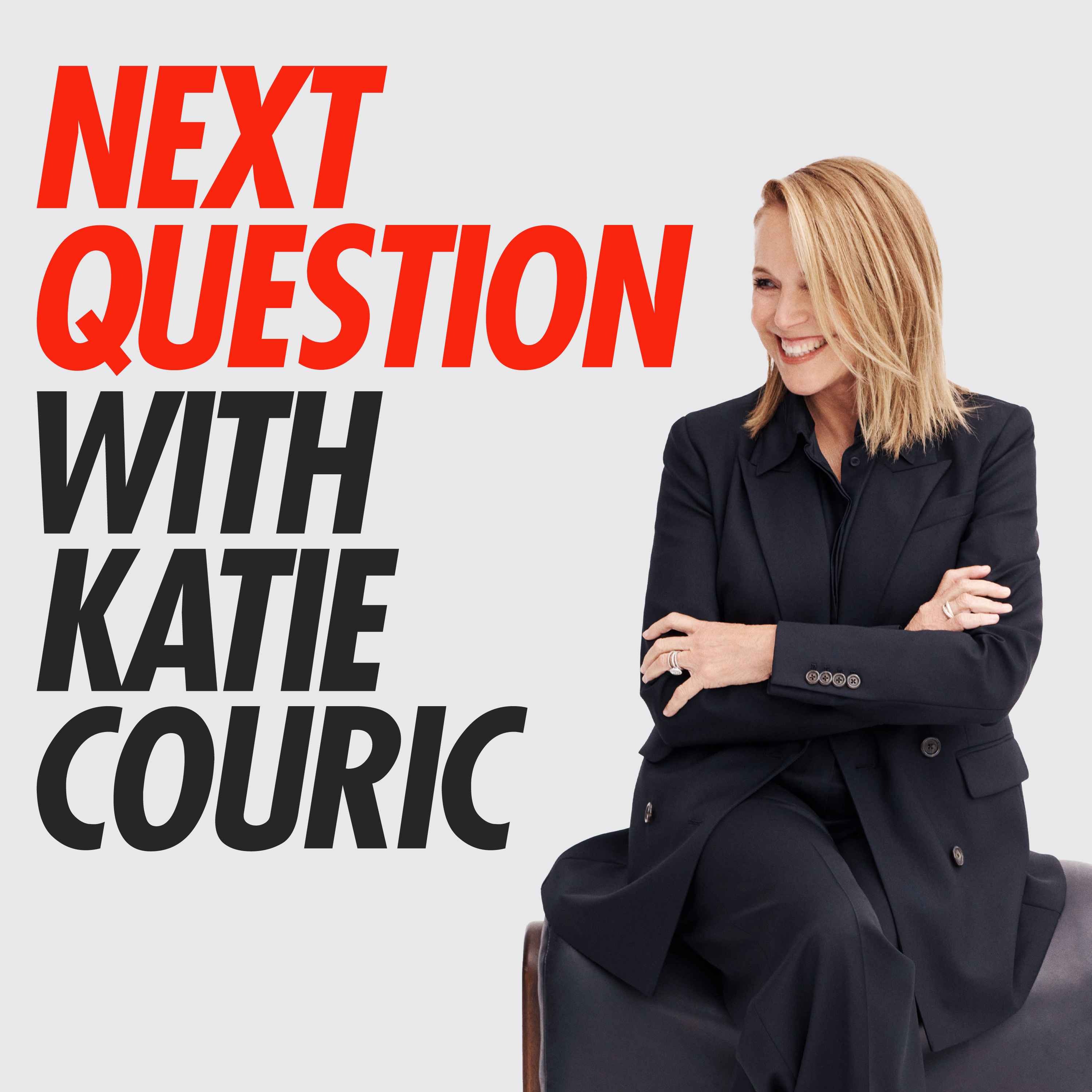
Elizabeth Banks and Phyllis Nagy on ‘Call Jane’ and the sisterhood of abortion activism
The new movie “Call Jane” is a period piece about abortion and reproductive activism in the years before Roe vs Wade was enacted. But given our post-Roe world and the very real consequences of abortion bans across the country, the plot — about a suburban housewife who desperately needs an abortion but can’t get one in her state — sounds like it could be ripped from our 2022 headlines. What can a story about our past struggles teach us about our present circumstances? Why is levity a convincing tool in the fight for bodily autonomy? Can a movie like “Call Jane” affect the fast-approaching midterms? On this episode of Next Question with Katie Couric, Katie talks with the movie’s director, Phyllis Nagy, and its star, Elizabeth Banks, about the movie’s poignancy, some of its blood-boiling scenes, and why the movie’s not just preaching to the choir. “Call Jane” is in select theaters starting Oct. 28.
For more information about abortion access in this country, check out Katie’s six-part podcast series on the subject, Abortion: The Body Politic. Some of the real life Janes are featured in Part Two. You can stream the documentary “The Janes” on HBO Max now.
Hosted on Acast. See acast.com/privacy for more information.
Available Results
Generated results are saved to the knowledge database for reuse and search.
Extract Knowledge
Pick what you want extracted first. Model, scope, and chapter options appear after a template is selected.
Transcript
00:00:00
Speaker 1: Hi everyone, I'm Katie Kuric, and this is next question. In a new movie, a woman finds herself in desperate need of an abortion. The problem is she can't get one. Her doctor isn't allowed to perform the procedure, the hospital won't even grant her a medical exemption, and if she can't find an alternative, she may very well die. You'd be forgiven for assuming this is a contemporary movie, ripped from our two headlines about the very real consequences of the tidal wave of abortion bands that went into effect after the Supreme Court reverse the Roe v. Wade decision back in June. This new movie is called called Jane, and it takes place in ninety five years before Rowe was enacted. The woman is Joy, played by Elizabeth Banks, a well to do suburban housewife who, in a moment of hopelessness, comes across the flyer that says pregnant anxious, called Jane, and that phone call propels the rest of the movie. So, um, which one of you is Jane? Nobody's Jane. We're all Jane. Virginia started it. Help yourself. I didn't mean to. A friend called I found her a safe doctor and then her friend called, and then her friend's friend, and here we are. The Jans were a real life group that emerged in the nineteen sixties to secretly help women around Chicago get safe abortions. Their clandestine work was the focus of a recent documentary called The Jains. You can and should stream it now on HBO. Max I interviewed the filmmakers and some of the Janes for my abortion podcast series, which you should also check out. Call Jane is a fictionalized telling of their story. It's funnier than you expect, but also incredibly thoughtful and intimate, and I got the chance to talk about all of it with the movies director Phillis naj and its star Elizabeth Banks. Here's our conversation. This film was so fun for me because well, fun is probably not the right word, but interesting because in nineteen sixty eight, I was eleven years old, and I remember I was old enough to remember a lot from that period of time. But it's still infuriated me film, or the time period of being or being eleven, the time period nineteen just I mean, just how limited the opportunities were for women and how backwards, uh the culture was. And I think This is going to be a good reminder for a lot of people who don't appreciate not that long ago that women were so so limited in terms of their opportunities. Was that shocking to you at all, Elizabeth, as probably the youngest person on this zoom, Um, it was not shocking to me. You know. I'm I'm I'm activists in this space. I work with the Center for Reproductive Rights, I have for quite some time, and um, I think I've been aware of the pre row situation. I also have a I have a mom who is very both my parents very politically active, so I grew up in a politically active home, and you know, women's rights have been something that for me as a sort of ambitious young woman, you know, you can't not think about those things. I mean, women couldn't. I don't think you could get divorced without cause, even if your husband beat you. You couldn't get a mortgage without somebody's signature. You know. There was the the idea that we're going backwards right now is very scary to me, for sure for my own kids, because now I'm now I now have kids. Yeah, you know, intellectually, of course, I realized what was happening then, but for some reason, to see it played out in a movie and to see all the nuanced and less than nuanced sexism that existed was still somewhat jolting to me. The film is so great. First of all, Phillis and Elizabeth, congratulations And and Elizabeth, I know that you were attached to the movie before Phillis got involved. Tell me why you were attracted to this movie in the first place, and to the role of Joy. Yeah, it was a great script from the from jump. You know, the the Jane Collective, which is a real group of women in Chicago in the late sixties, is the jumping off point, the inspiration for cal Jane. And I didn't know anything about them before I read the script. And I'm constantly fascinated by what I do learn from reading Hollywood scripts, and this is one of those eye opening experiences where I really thought, Uh, it just captured for me a character who was coming of age at forty years old, and I thought I had not read that in a really long time. Something like that. You know, that to me felt like the ark or the opportunity with this character, because the decision to have the abortion is very life affirming for her in many ways and positive in all ways for her. Right there, there's no doubt in her mind that she wants to live to parents the daughter she already has, and because she's still got a lot to do with her time, you know, it really wakes her up. We should just mention that she had a heart condition that was brought on by the pregnancy when there was a chance she might die if she carried the baby to term. Yeah, it's a good reminder that pregnan and see is fairly dangerous for a lot of women. Actually, of immortality rate in our country is not awesome. So um, just a good reminder there. But I just felt like it was a way to invite a lot of women into Joy's story and into the story of the Jains through this character, who I think um is very relatable to a lot of people. You know, I interviewed the women behind the documentary The Jains, so I feel like I had a good foundation to watch this film and Phillis, tell me how you were able to shape it, because I know my understanding is Joy is a compilation of characters sort of from that era, from sort of the world of the Jains. Why did you feel like Joy should be the conduit from which the story was told. I think Joy was always the central character of the narrative him, but it was I think it's fair to say, if I'm remembering this correctly, Elizabeth, it was more of a mosaic of character, organization, etcetera. And what I realized is that Joy Griffin is a very useful stand in for us. She's a very useful guide through this in a particular way. So when I was thinking about, well, what makes this so special and how is Joy's story so special? She discovers the power of collectivism. It's not that she was, you know, just sitting at home thinking about nothing. She helps her husband. Um, she's best editor. She's a smart woman. But I think she made a choice. Film is all about choice. She made a choice to devote herself to her family, which is a good choice. But now she has to make a different choice because her life due to the cardiomyopathy, which by the way, wasn't uncommon. It was uncommon in the first trimester maybe, which is when Joy has it. But it's something that friends of mine have today when they get pregnant. Some of them, we just can deal with it. Better than saying to a woman, hey, you've got a fifty chance of survival, and that's good enough, you know. Um. But Joy finds her rediscovers I'm going to say, her purpose through a collective. And isn't it great that this collective is a group of women who figure out how to solve a problem without fuss with some fraud tense moments. Because you put any group of women together and they're gonna they're gonna all have a say, right, And that's exactly what we wanted to show. And I think, you know, we pretty much we're able to do that. The power of being together rather than being alone is what sets Joy on her way and allows us to be her. I think too. This was your feature link directorial debut, Phyllis. And of course you wrote the critically acclaimed movie Carol that came out in another period drama. Why was called Jane a good fit for you? Why was this something you wanted to devote your time too? Well? I've always, i've always um been interested in addressing problems through period because I think we can talk about things that are important to us today in a way that's not encumbered by all the stuff and all the nonsense that we have to filter it through today. So Carol certainly was like that. It was addressing an issue through a period called Jane was like, uh, and really I saw the chance to make something entertaining with Paul Jane, which it is, I think, or at least we wanted to be entertained. I thought it was, yeah, great, we're glad, and um it's it's addressing it in a way that I don't think the issues have been addressed before on film. We have a huge number of very good films about abortion, about women's rights, combining the two. But my interest in a lightness of touch in comedy, in having actors who are able to walk that line as beautifully as they do. I'm going to talk about you now, Elizabeth. Elizabeth and Sigourney and Womy and everyone else who is in it. It gave us a chance to speak to people beyond the people we already knew agreed with us. And for me, that's what film and all art is about, reaching out two people other than your own. I wondered about that honestly when I watched it. Of course I loved it. I feel very strongly about reproductive rights. My mom volunteered at Planned Parenthood when I was a younger, and um, it's just certainly something that I have always cared deeply about. But I wondered if people who didn't agree, who don't feel strongly, who don't realize just what's at stake in our country, as Elizabeth you suggested we were going backwards, I wondered if they would watch this film. And I'm curious, Elizabeth, what you think, because I know you all try not to make it preachy, make it entertaining, have really strong characters. I mean, it's quite graphic and at times, and we'll talk about that in a moment, but do you think that it will appeal widely two people who don't feel passionately about this issue. My hope is that that the movie inspires lots of people, you know, lots of different types of audience members. I find, you know, when I don't want to just watch things that align with my value systems. You know, I don't even know what that means. I'm looking to be entertained and to relate to a story. And it's really why I felt like this for me, especially making it personal about Joy, her character, her journey. You know that that it felt um relatable to really anybody, and I think the circumstances that she finds herself in our first of all, very normal. They're not uncommon. And I also want to remind you and remind anybody who's listening, that you know, abortion in America is not particularly controversial. Um. I always feel like we feel like we have to defend our side, as if we're like on the back foot, when in fact, the majority of Americans think that abortion should be safe and legal, and so this film is not particularly um, you know, combative or uh controversial in any way, and that we are presenting a reality for women in nine Chicago, nine Chicago, um, before row happened, and I think presenting an actual picture of a way of life that many activists women right now in states around the country that don't have abortion access have been living for months and years. Now. You know, there are women helping other women in collectives in activist ways all over the country right now. Phyllis, how did you approach it in a way that it didn't seem to preachy, or that it was compelling and thought provoking and provocative, but in the best possible way. Well, I like to think that I understand the other side of the argument, which was always important to us. I don't come from a family of activists or people who particularly agree with the point of view that I think is strong in the film, but not Uh, it doesn't ask you to agree with it. So I understand. I think what the fears of people are, what they think about, what the misconceptions are. And I also know that humor is the thing. Humor and truth are an honesty and a simple approach to saying, Okay, let us show an entire abortion procedure. Before I started, I knew this was necessary, but I didn't know that. I've never seen a film in which the entire procedure was just laid out right there. And it's not as if we are, um, using a camera inside the woman or you know, seeing blood. We don't see any of that. And yet it is when I watch it with people still, the part where they will put their hand over their eyes. I did. I did because it's that intimate. It's intimate, and it's and it's honest in its portrayal. It's just this is the facts. This is not glossed, and yet it's not also, um, you know, a horror movie it's not it's not um focusing on the misery of the procedure, just the normal. It's a normal medical procedure. And so this is how I think it can relate to people on various sides, because I think it's more than just a black and white issue. I think there are people in the middle who, on one day I think it's fine, on the next day don't. And I hope this film speaks to that person most of all, because I think if you're going to not change hearts and minds, but affect a heart or mind, it's in that area that it will happen. Um, if we can get one person to say, you know, I never thought about it in that way, that's great. That's a victory. You mentioned humor, and Sigourney Weaver is really a character and a character in the film. And Elizabeth, I'm curious what it was like if you had worked with Sigourney before, if you knew her, and what you think she added to the film. I have never met Sigourney before before she showed up on set. Um. We we had a dinner at the first night together and just got on like a house on fire. And you know, she is first of all one of my idols. Um, not just as an actor, but as a as a woman, as a survivor in Hollywood. Um, I think you know, she's made some of my favorite movies. Working Girl top of the list probably, and then Ripley. Of course, she changed the face of action heroes. Um. I think that she she's a uh this is something I hope to be someday. And so take this with a compliment, sig if you hear this. But she's just abroad. She is a just down home broad who likes you know, gets to work, knows to the grindstone, goes about her daily business and just you know, is like full of just a sense of confidence. And I think that's what the character needed. I don't agree with what your day that girl? What about her? She's having sex without protection, She's sleeping with a married man paid for the procedure. She's so unconcerned. We help women, we don't ask questions. And if we judged everyone by how they present themselves, I might write you off as a lightweight housewife who bakes mediocre snickerdoodles and gets plastered on four o'clock martinis. Sigourney is Is plays Virginia who's really kind of the heart and soul, and I guess the organizer of the Jains who starts everything going and well. In the film, she's kind of abroad. She's tough, she's funny, but she's also tender, by the way, and there's a particular funny scene where she's asked you to explain basically the birds and the bees or sex to this young teenage girl who who needs an abortion, and you can't do it because you're repressed, like a lot of women from your from Joyce generation and Virginia and Virginia ak Scourny just grabs the pad and starts drawing the the labia and the uterus. Yeah that's right. Name is all nine yards. Yeah, that's right. You should see those drawings, by the way, they were hilarious. I hope you saved them. There's somewhere, Folsts, did you save those draws? I think I have a couple of them, and they actually did look like rabbits, some of them. Um. But but she she added a lot and as you said, she was a great foil for joy She really she's like myself. In the movie, she's a compilation of a bunch of characters. You know that Jane's had sort of many leaders. It really was a collective um. But you know, I think for the purposes of telling a story like this, you do want to just sort of, you know, make put all of that into a character like um, like Virginia. But she really represented activism generally at that time period to I, you know, Um Phillis. Phillis was alive then too and remembers those things and I and brought so much UM. I think Phillis, you can speak to this your own experiences like a young person in in that time period in America, which was civil rights and women's rights and it's you know, and and Vietnam. It was just roiling back then. Oh yeah, absolutely. I mean I was a young child, but I grew up in St. Mark's Place in the East Village, where my parents were the superintendence of an apartment building. And I remember, and this is where some things filter their way in through the film. I went to a Catholic school and we were uh at lesson Is the day after Nixon won the six d and election, and then None ran into the classroom and said Nixon one and all of us little kids we just started applauding because our parents have voted for him. And I'll never forget the lay teacher there looked at us and we were like, you know, seven eight years old. She said, you're all going to hell, and your parents too, and I guess she was right, you know what I mean. But but it's funny the experiences of seeing um, the yippies, I guess they were hippies, and yippies running barefoot through the streets. They have filtered somehow into call Jane in my tiny consciousness at the time. You know, the film is full of images that I remember from that period. When we come back, we'll die even to one scene that will get your blood boiling, which is exactly the point. There was one scene in particular that really made me mad, and that of course, was the hospital board meeting Joy and her husband to get permission for a medically necessary abortion. Dr Farh, Hi, are you good? I've baked cookies? Uh, gentlemen, you're all familiar with the details of this case. Mrs Griffin has petitioned the board to make an exception to hospital policy so that she might proceed to an emergency termination of her pregnancy. This was not an unusual occurrence. What was unusual isn't Probably Joy wouldn't have been there. This is a bit of dramatic license, but I knew how important that was and how important casting the two men who have actual lines were. I mean, we got real actors, great actors for that understands that this request is extraordinary. She does, yes, Is there a chance that she can survive the pregnancy? The chance, of course, percentage of patients who survived a pregnancy with this condition, that's difficult to say. Maybe is there a percentage that would say you this hospital has approved termination of pregnancy once in the past ten years. Was Mrs Griffin aware of that? No, she was not. I'm I'm here, I'm I'm right here, and and that I think I could see Elizabeth as we did take after take getting Madder and Madder, which was fantastic, and Christmasina, who plays Joy's husband, Um, being more and more bewildered by, you know, being torn, as I think men were at the time. I am comfortable with the data compiled in such cases, full term pregnancy resulting in the birth of a healthy child, well within reason for such a patience. Therefore, I vote no. The determination gentlemen. A healthy baby. That's it. No regard for her mother, no, no, no, no no. But it was necessary to have that scene play out with as little melodrama as possible so that people could get angry. You know, you can't have a bunch of people in the room getting heated and then you as an audience receiving it. You need to feel those emotions yourself. I think the scene on the page ins with them walking out, and I do like that she takes her cookies. That is that is the cookies for me really were about Joy's naivete in the moment. You know that she just thought, well, obviously, I mean, I want to live. My husband wants me to live. We we together as a family, have made a decision and we want this. And and by the way, we're kind of a privileged couple who's you know, my husband's a fancy lawyer. We're used to getting our way. And I just love that this was a woman who kind of was put in her place in a way, and that you know, if if this woman couldn't access this, well, nobody has hope, you know what I mean, Like this very privileged, white, rich lady can't get this and you know, we have to figure this out, and I like that. So the cookies for me were just her innocence just gone. You mentioned sort of privileged white couple, and I want to ask you a little bit about the role of race in this film because Gwen, who is played by Woomy Masaku, is the only black woman who's a member of the Jains, and I thought it was interesting for her to bring up the fact that when economics, economics always affect black women. I'm paraphrasing here. Talk about your decision to kind of bring that into the conversation and why it was so important to you. Phillis Well, I when in mind reading about the Jains, there's there were a couple of books and some newspaper articles about it. But even in the in those books, it was clear that, you know, the Jains were are largely a young group of college students and some slightly older um women with movement husbands, which was interested. I didn't use them in this, but you know, there were a couple lawyers who were helping out. And by the way, I just want to just interject one quick thing. Members of the Catholic Church, and I so appreciated you featuring a nun because I think there are many people who don't realize how instrumental members of the Catholic Church were in the effort to provide safe, somewhat safe abortions to women who were in this situation. So thank you for providing that context for people, because it's something I didn't know about until I saw the documentary. Yeah, they were there, and as I was reading about it, I knew that we needed to be UM scrupulously correct about certain things, and one of them was how the makeup of the group changed, how it evolved. So there was a core black member of the James And I think you know, if you've seen the documentary, you know how UM. You know the kinds of issues that she had to deal with just being someone who is advocating for free or lower cost abortions, who could afford that, certainly not poor black and brown women. So Gwen in our movie UM, while I think that she is absolutely a flesh and blood character, UM, also UM is representative of the kinds of problems that were inherent in groups like this and how to address those with Then the context of a narrative fiction feature film entertainment took a long time to sort out. It's interesting how economics always seems to mean that black women get screwed. We're screwing plenty of white women. If that makes you feel any better, please can we not make this about race? Look around the room, Virginia, we are a bunch of white ladies. Yes, you know, that's not the intent. I don't care about intent. I care about results. You did not try hard enough with the Panther Sisters, and then you insulted the Black Feminist Alliance. They were bat shit screaming at me about abortion and black They are not batshit. God, I knew you would do this. I just how can you still be so oblivious? As the Jains went on, so we covered the period of pretty much once they learned to do their own procedures, the group been up because of course they could afford to. We were giving abortions for free or for what you can pay. And that's when the complexion of the group literally changed some quite a lot. And we we only have a very brief moment of time with the changed complexion, but we do try to reflect that in the last scenes. Um like maybe one day will make a fifteen hour a change. T um but I think, um, given the period, given what we were trying to get, right, I I hope it addresses those things efficiently in the way that features can address them. And you know, to this day, these kinds of health disparities exist, Elizabeth, as you well know, in terms of women of color and having access to abortion. Uh, in terms of maternal mortality, black women or three to four times more likely to die as results of childbirth than than white women. So they still exist to this day. And I imagine that was an important aspect of this conversation for you too. Make sure was a part of this film for sure. I think the intersectionality of all of this is always important to to acknowledge. You know. I also think we can always do better at this moment in this film and this story is you know, the best we could do with this moment um. There's always more to be done, and I think that's true of you know, most of these issues. Um, but yes, it is very clear that whenever women are oppressed, black and brown women they take the brunt of it much worse. After the break, abortion and the mid terms can call Jane make an impact undecided voters, that's right after this I wanted to ask you all sort of as we begin to wrap up, about the impact of this film or just your thoughts on the upcoming midterm elections. I've been obsessively checking polls and looking at at sort of what is likely to happen, and who knows how accurate polls are. That's whole a whole other podcast. But it seems like abortion has already receded slightly in the public consciousness and has been overtaken by pocketbook issues like gas prices and inflation. And I hope people understand sort of what's at stake, but it's I'm worried they don't. I'm worried they don't. So I can't imagine a bigger pocketbook issue for people than raising kids. I mean, at least in my house, that's what we talk about. Um, you know, I abortion as an economic issue is not brought up very often enough for my taste, you know, to me, it's all economics. As a young person investing in myself in college and grad school and my early life. It's like, you know, unwanted pregnancy would have derailed all of that and made that investment insane and then puts a whole other economic burden on me. So I think talking about how the how also the abortion bands in these states are requiring travel and time off of work, and you know, all these economic burdens on on women. That's a very good point. Honestly, I don't think that's raised enough. I can't. I don't understand why we don't um conflate these two things that are inextricably linked, uh, you know, abortion and an economics so especially Yeah, so I I find a passating that somehow people are even able to um separate these two things. But we do, and I think it's a mistake. I also think, you know, to put much stock in polls after what happened in you know, I don't. I also don't think the polsters sometimes are going deep enough into the electorate, and perhaps so there's a big question about how forthcoming certain members of the electorate are in terms of trusting polsters. And also quite frankly, it's much more complicated to reach people when you know, the era of landlines um is pretty much gone. That's right. So perhaps it's naive, but I'm willing to place a small bit on on this issue. Being a very powerful driver of a certain population that is traditionally discounted by pollsters. That would be my hope too. I'm also very hopeful that young women, especially um, you know, really are taking to heart the just the notion that they have fewer rights, That my own kids have fewer rights to control their destinies in their lives, um than six months ago. Is just that it's so Unamerican to me, you know. My the panel I interviewed said the most vocal group. I was surprised at this, and I haven't been able to check the veracity of this claim, but that young men are the most adamant about reproductive rights. And I think the big question is will they turn out? Will they be motivated? I think it's a great point. I have two sons. People ask me, oh, blah blah blah, it's the women's issue, and I say, this is about my two sons. I don't want my boys to become parents before they're ready. Um And and you know, I I there there's a rise in vasectomys across America. I know, and for good reason. You know, who wants to put a woman in jail for having a great time? You know? I am. I'm pleased to hear um that trend for young men. I think it's right they don't want to be dad's before they're before they're ready. There's so many dramatic moments in this film, and sort of as we say goodbye to both of you, are there any favorite moments for each of you that you feel really encapsulate what you were trying to convey in this movie? Fill us, I'll start with you. Wow, Um, I think of um. The one scene that that I keep going back to is a scene towards the end of the movie with Elizabeth Joy, her husband, and the detective who come in and within the space of ten minutes, without giving too much away, entire world's unravel and rubs are pulled out from under the furniture and it just represents the complexity of what we've been dealing with for the previous hour and a bit. I think, pretty much as well as any any moments in the film for me, I would say, for me, I think the mythology around abortion is something super scary that women should be afraid of. UM. Dispelling that myths in the film really mattered to me, you know, making it something that is normal, easy, every day, not too stressful, that women right now more than half of all abortions are self managed at home with two pills. And I think that, you know, that's the progress that we've made, we've put we've literally it's not surprising to me that there is this backlash when we've given the power and control over abortion right into a woman's house, right when before it was like, well, you had to have a doctor and it was really scary, and you had to get a permission slip from your person. And you know, it's like, now, actually, we got it, We're good, we can do it. It's no problem. And um, and most women that that's how they prefer to do it privately and on their own. I think that's that's uh. That made me very happy to dispel that myth. We also did a six part series on abortion. Thank you for that, by the way, you're welcome. Thank Lauren who's on this zoom. Thank you her. She worked so hard on it. But I was also surprised that the majority of women who have abortions are mothers, mothers married with children. It's family planning, that's what you have we you know, I think that gets overlooked a lot, and it's about making sure that they have the resources. I know. I feel this way every day as a working mom. Do I have enough mental, emotional, physical resources for the children I have? And to feel like a whole person financial? You know? Yeah? And financial and to feel like the whole person as well. And so it is. It's about family planning and making sure that you have wanted children that you planned for well. Phyllis and Elizabeth, thank you so much for for joining us and and having this conversation. I hope a lot of people go and see the movie. I hope they go and see it before they vote. I hope they vote. Um, maybe they'll be motivated to vote after they see the film. But congratulations, I thought it was really really well done. Thank you. Thanks Katie for me Called Jane and for all your work on the reproductive justice. Thank you. Call Jane is in Select Theater starting this Friday. And for more context on abortion access in America, you can find my six part podcast series Abortion The Body Politic right here on my Next Question feed just scroll down a bit or by searching any of your podcast apps. Next Question with Katie Kurik is a production of I Heart Media and Katie Curic Media, the executive producers Army Katie Curic and Courtney Litz. The supervising producer is Lauren Hansen. Associate producers Derek Clements and Adriana Fasio. The show is edited and mixed by Derrick Clements. For more information about today's episode, or to sign up for my morning newsletter, wake Up Call, go to Katie Currek dot com. You can also find me at Katie Curic on Instagram and all my social media channels. For more podcasts from I Heart Radio, visit the I Heart Radio app, Apple Podcasts, or wherever you listen to your favorite shows. H