Paleobotany with Fabiany Herrera
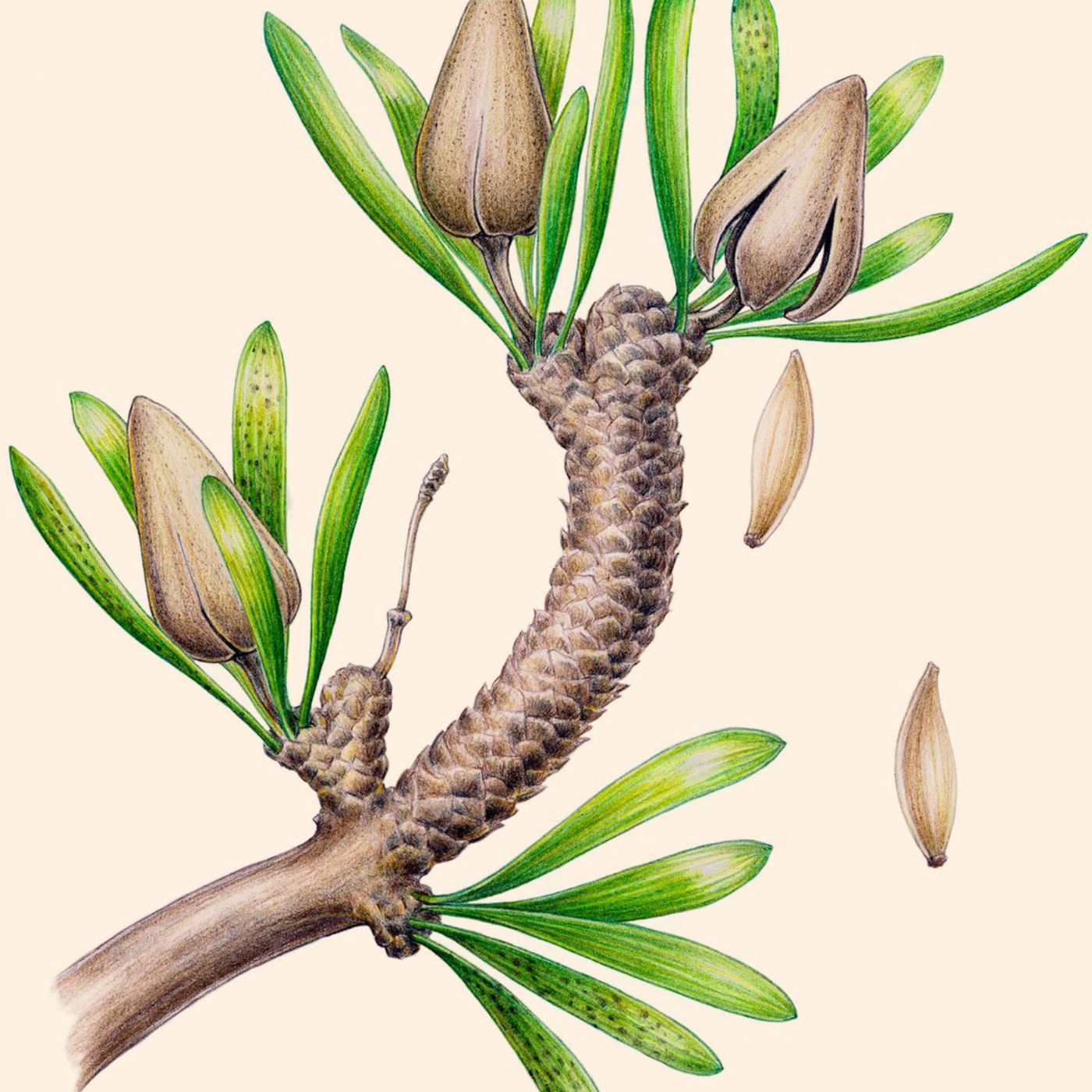
Fabiany Herrera is a paleobotanist specializing on a diverse array of time periods and paleofloras, including the Mazon Creek Flora from the Carboniferous when Lycopods were friggin' trees, as well as the utterly bizarre Jurassic and early Cretaceous Bennettitales & Corystospermaceae from the excellently preserved Mesozoic lignite of Mongolia.
Many of the plants we talk about in this episode HAVE NO LIVING OR EXTANT RELATIVES - they represent fantastical lineages of plants whose base branches that simply got clipped off the tree of life either during mass extinctions events or gradually during climatic changes. Umaltolepis - a ginkgo relative - is an exception to this, but still an equally bizarre plant.
This was a really fun conversation and it could've gone on much longer but we ran outta time. Hope you enjoy.
Many of the plants we talk about in this episode HAVE NO LIVING OR EXTANT RELATIVES - they represent fantastical lineages of plants whose base branches that simply got clipped off the tree of life either during mass extinctions events or gradually during climatic changes. Umaltolepis - a ginkgo relative - is an exception to this, but still an equally bizarre plant.
This was a really fun conversation and it could've gone on much longer but we ran outta time. Hope you enjoy.
2023-09-06
66 min
Transcript
Available Results
Generated results are saved to the knowledge database for reuse and search.
No generated results are available for this episode yet.
Extract Knowledge
Pick what you want extracted first. Model, scope, and chapter options appear after a template is selected.
Generated results for public episodes are saved to the knowledge database so they can be reused and searched later.
Transcript
Okay, welcome to the crime Pacer Boden. It doesn't podcast. I'm here
in the beautiful home of my new friend Fabiani Herrera, and uh he's a
paleobonnist that works with a field museum, and we're gonna talk about a multitude
of subjects. We were shooting the ship half an hour ago, or for
half an hour about six days ago, and it was one of the most
enthralling conversations I've had in the last few weeks. So here he is,
Fabiani. Hello, how you doing. Hey, Joey, fantastic, Thank
you for having me man, thank you, and uh, yeah, I
don't know you're I like that. Our dogs are hanging out out of sight
too, you know. It's two beautiful pit bulls. And Louise chilled out
while she's she looks a little neurotic anyway, Lucy and Nixy. Yeah,
okay, So I want to start off. So you've worked with you've worked
every where You've worked obviously in Mason Creek. So that he pronounced that the
correct way I think people did saw Illinois Mason Mason. Yeah, but it's
it's a it's a notorious fossil bed from the carboniferous, right, I mean
it's correctly Lager. That means it's one of the depulsions that are so remarkable
like the present in terms of preservation and diversity. And it's is the most
important fossil Florida from Illinois. And you know it's not only plants, includes
animals, early animals, tetrapods and insects and all kinds of is it what
is the what is the thing that no one knows? What it is?
The animal again Tully Munster, Yeah, the Tully Master. They got one
on the field museum. Yeah. Anyone who's pent spent any time looking at
fossils in Illinois knows about Yeah. Yeah, it's a very enigmatic organism.
It depends who you ask. People think some researchers thing that it's a vertebrate.
All they say, it's not a known vertebrate. So what is fascinating
is just all the how much we learn about that specific organism and all using
new technologies trying to figure it out the relationships and so so what because the
plant, the plants, you look at the plants, amazing creek always have
that nodule thing around and they always occur in a nodule. It's got to
do it some way. That the sediment there was iron rich, yes,
sediment. And where was Illinois at that time? It was near the equator
or what the whole North American right is correct? Yeah, so Chicago,
which we you know, we suffered here in the winters. If we could
go back to a hundred million years ago in time, we will be right
at equator where you know Columbia, Panama, it's located today. So it's
just a tropical setting coastal and that's the conditions in the coastal setting may created
these sort of nodules that trap bacteria and minerals, and that's what facilitated that
type of preservation. Basically, the fossils come from and are found in egg
shape, the structures called nodules. They are iron rich. There are also
lots of other minerals that infiltrated the rock and help preserve the specimens. And
then you just go in the rivers and the coal mines and you crack them
with a hammer and then they usually split. What are the fossil is and
why are the nodules shape? Which just because all that sentiment was kind of
nucleating around up around the plant or the animal or the insects. I started
creating this sort of tomb. And so what are what are the plants?
Are getting thought? See, there are ferns, but you also get a
lot of weird ship that has no living relatives today, right, like seed
ferns. Where there are sea ferns. Yea seed ferms, yeah, which
for people that don't know what the seed fern is, sounds weird because ferms
don't have seeds. They're reproduced by sports only. But they're follish. Their
leaves look like a farm, but they have seats. And these are actually
not the seeds that we see today, but early seeds. They don't have
all the leggers that we see in the seas today, for example, in
and this problems student for an extreme comparison, right, so like a really
primitive character social Yeah, but the plants have been collected for more than a
century. I have actually not really collected any myself. I'm just studying the
more than forty thousand spacimists that we have at the Field Museum, and many
of them have now been properly described or have been difficult to study because these
spacimists are trapping this really hard nodule rock and then it's hard to we haven't
really cut then or we don't want to like destroy it in But what I've
been doing now is using city scanning machines Jesus Christ ex basically that has city
scanning has changed paleontology. This is this is like PCR kind of in the
way that it like totally basically. Yeah, it's just a homeless technology,
yeah it I mean the applications just end this and and we can see things
that we were not able to see before. So with this knowledge, for
example, when I first try it started city scanning, then we couldn't get
enough power because the iron is so hard to penetrate the X ray. So
we took us several trials until we were finally able to go through this X
ray past the specimen the rock, and then we can reconstruct it. So
the rock and so thems that the waves can't get through. But now we
we have we now we know what sending is we can use and the maintainance.
Imagine this, You have a rock. What you see is on the
surface, but there is also another side underneath, right that we don't see.
So that's what we can use the CD scans is just basically we flipped
digitally the specimen and then we give us the other side that is now preserved.
And then we can also do any kind of such digital section, transport
longitude and a tangential. And then we can also use softwares what we call
a segmentation where we literally with almost like we can use an iPod for example,
and start selecting all the pieces. It's like a cross section, and
then stratch is actually distracted digitally, so you get you get a whole other
dimension of information. It's not just two D. It becomes three D.
Do you gotta worry it? Since X rays are ionizing radiation? Do you
have to be behind the Yeah, you know it's a it's an a special
contain or a special The one that we use, the Field miss unit,
is actually at the University of Chicago, so it's a it would be like
a hot dog stand like and keeping with the Chicago right, Yeah, no,
no, and then it closes, it's all it's all same, and
so is it is it the same? Is it like a medical grade or
is it no? The medical grades or can be good if you're scanning soft
material and more like archaeological pieces whereas fast as they need a lot of energy.
So these are just for scientific purposes. So what so what it is?
So what kind of information have you seen now since you've got this whole
other dimension. So looking this one of the first ploms that we started working.
And this is when my post Mike de Antonio at the museum as well.
So we we started like, okay, this plant is we don't know
what it is. It looks it looks like a sort of corne like a
structure, and we thought that it was associated to something that was named tetra
Philo struggles tetra, meaning that there were four a scale like a structures like
a microparous and this is carboniferous. Yes, this is carbon but that is
a very weird organization of plant parts for the carboniferous because everything is mostly you
know, sort of radio or so this is a new morphology. This is
like an updated model in terms of plans. So that's what it was.
So the only described but then now the cities can we realize that there is
no four is six and they are just all radiating from a single note.
So it was just basically because of there's some compression on the specimen when it
was fossilized. That created this false DECU said arrangement. So what actually saying
is no, that's just wrong. Is six. So that changes, it
changes the whole thing. So now we understand what part of a tree of
life be lawns. We think it's in the spinophilalies group, which is an
instinct group of plans. What were they? What were sphinophilis So they were
more like imagine like a sort of related The closest related thing would be a
licopot today something like that. But baby, we don't know how they fit.
So this is what I'm jealous of you because you get having this knowledge
and this experience with these fossils. There's all these When we look at a
tree of life, right of plant life that we have today, we got
this nice pyramid and we're you know, looking or whatever claytogram you know,
but we're looking at it and it's okay, everything kind of fits. You've
got all these but we have big holes and what we see huge gaps missing.
It's like reading a book with huge segments of pages ripped out. You
have a lot more of those pages in your internal knowledge from seeing this stuff.
I mean, you know of groups that that many people will never know
existed. I mean, and just to imagine what those fucking ecosystems look like,
and like how did those things get polin at? What eate them?
How did they relate to all the other weird organ other weird animals and insects
will have no idea, will never have any idea what they work because they
never got fossils. I mean, do you is that kind of what's happening?
I like hitting the mark here, Like in learning about this, you've
gotten a large slowly gotten a larger picture or what? Yeah? No,
I mean what you just said is basically my everyday life. We're trying to
figure it out. Okay, where does this fit? What is it?
You know it's and not just for paleo solic plants. This applies for you
know, maso solic plants, sano soic plants. Where I collect the plant,
I collect the fossil and I'm like, oh wow, this flower looks
amazing, this food or this whatever the seed or plant, and then it
what I'm really fascinated about fossils is one thing is that discoverty part. But
then it's also trying to figure out where they be, Like, what the
fuck am I looking at? You know, what is it? And I've
been I've been there. I mean mostly the stuff I've seen has only been
from EOCN or Myoscne. I was at like Chuck on Nut Drive in Washington.
There's a cool area and a bunch of cool stuff from like you know,
Maascene in Augustine and Nevada. I've seen, you know, like Sequoia
is growing east of Reno. It was just fucking nuts. You can't imagine
that now it's a really brutal desert. But I can't imagine like the stuff
you I mean, just you've you've seen stuff that is from three what a
three hundred and eighty million years ago that's in that dissipate. So basically we
don't have any analog for it. It might as well be another dimension.
That's before synapsidence evolved, that's before Yeah. So this uh in fact,
and the thing about this period is fascinated because it was It literally is the
first time we see rainforests or rainfall is like ecosystems. That's the time the
carbon in thus when we had the tallest trees for the first time. You
know, all kinds of plant and different layers that you will see today in
a tropical rainfall is in South America. That you had, you know,
the plants and the understory, and you got the ponies and climbers going.
You've got ecosystems forming Earth's first easy. But in terms of the plants,
it's just completely different. It's just a completely different world. It will be
like you know this movie Alata when you go to a different world. Yeah,
it's got really because none of that so little of that. Yeah,
most of most of those plants are gone and there are things and so few
of their living rights. So that would be ferns basically, and the descendants
of the giant lycopop trees that we have, but now they are just small
libaceous plants, which is you know they like coup of the as. Yeah,
what was lipido dendron? Was that one of the main philodendron all those
uh lepido den excuse me? Yeah, yeah, that's like the fasts they
have in film museum and that's like, yeah, all those they recreated,
they got the nice diorama. Yes, it's just like one of my favorite
scenes as a kid. Really did it actually is you know, it's it's
a little a little different, but it still was pretty cool. So what
so let's plan a picture of land plants involved what like four forty million years
ago? Is that give something like that? I mean land plants, right,
that would be yeah, the Silurian Debonian algae algae multicellular at one point
one billion years ago roughly, that goes several billions. Yeah, right,
but land plants. Yeah, it was something in the Silurian Debonian in that
time that we start seeing little pieces of plants preserved in the rocks, like
cuticles and sported, like things that look like the plants that you would be
reproducing on land. And then then we had a period where we see all
those little skinny, kind of spiny looking like plants Cooksonia for example, Yeah,
which is the first one of the first vascular plants, right, and
then it's in it it's during the carbony FiOS that we had this explosion of
like wow, it really took over the wall and the climate was you know,
very humid and wong and that's what we had that was really the first
trees, right, So like we were the front. We started to get
some heights, so between four forty and like three eighty three ninety. What
was going on? They were staying relatively small. You said they were spiky,
Yeah, yeah, there were. Yeah, a lot of them have
like the really spiny structures that probably you know that they were like at this
time in plants and insects evolved you know, together, and so they were
probably attacking them, and you know, they have to protect them, so
these were defenses. So that kind of really hints at what was going on
elogically, I think, so, yeah, I'm not really an expert on
that part of the time, but that's we see also all the plants that
are groups that are completely distinct that we don't know what really they are.
But but it's at that time the carbonificus and that's what created all this coal
that we have in Illinois and all the parts of the North America. But
then we have an extinction and then we go into the Permian and then completely
different walk again. But at that time then if we start seeing things that
look like more some of the plants that we still have today, which at
the corny first, like eric carriers and carbs that would be a little more
later like in the triassics, yes, maybe the Permian depending on what plant
from what you accept as a you know, like an group of the leaving
colony first that we have today, but we have also you know, the
volution of colony for the sus that after the carbony for us were we had
these really weird planets that and and poor later we had the group stuff that
we see today. So permians two hundred and fifty million years ago. Carbon
at first was roughly what like the group you're working we have about three hundred
and ten, but it's it's much or the Permian extinction was two fifty rather,
I mean, and so that's and so do you see a big changeup
after because that was the big one, right, Permian extinctions makes kat extinction
the dinsour stinctions looked like nothing. I mean, that's really that changed everything.
Yeah, that completely changed everything for plants and animals, for every organistion
on the north. Yeah, we see that in the on the plant we
see huge distinction of groups. All those carbon infidous plants that we see they
are completely going in most cases silent then survive but very few. And and
yeah, it completely created a whole new ecosistent, a whole new world.
So, buddy, you know, that's what's fascinating on our planet is that
you know, even when you have in a bank like that, if whatever
survived is sort of you know, renews and evolution, the diversity comes back.
Just how long does it take post permient, like five ten million years
or something thing something like that. Yeah, but but yeah, but after
the Permian you know, we see then triacid Jurassic again. It's at that
point is where we see all the conifer and coniferlis plants starting dominating the wall
again, and then all the groups that are not around today. So for
example, Benetitavi's the group that first it was associated to cycats. Yeah,
tell us about these. So these were weird looking things that they kind of
look like pycats. Yeah, there their foliash. Their leaves look like it's
pycat. So you've got like a big caught ax and then these big leaves
coming off, like a big, big mound in the middle of like root
and woody tissue or whatever, these leaves coming off. So they thought first
that they were sycats when people started discovering them, because they have this sort
of trunk like a structures that you will see in a sycat but instead of
its side just the trunk. Those are actually they the productive parts of the
psycat or they've been at taties, so they created they had these sort of
like flower flower like a structures. They are not really flowers, and they
have lots of bracts that were coverting the aubules and and that's what they s
were sort of like, oh, this was like a psycat trunk. But
then when they look at it the sulctures they were associated to all this was
more like a flower. So it changed relationships. But now we think and
then one of the probably the best hypotheses that we know of ben Entertainius is
most likely related to Nitalis and Nita, which yeah, something something like that,
like nion and all those other plants. So that's what we think they
are associated to the and they have very unique type of st matter that you
see on the leaves, and that's how we know that there are definitely no
sycats. So these micro characters charactors that we can see on the leaves and
and and all the things and all the parts. But yeah, it's a
fascinating group. And and and we act myself on college. We've we've been
collecting lots of Beneditalian like plants from from Mongolia, one of the places that
I've worked in the last ten years, and they're just beautifully preserved. In
fact, there is one fossil that I think is so hilarious. The name
is called problematos permon problem very problematic, Oh my god, because I just
couldn't figure out what the shadow was. So it's a seed, and some
people have characterized it like the tip, it's the micropole, and the base
is tell everybody what the micropile. So the micropolish the opening of the seed
was, you know, when when the pollen lands on this structure, then
it goes down and then that's how it's photilized. So it's it's an opening
on that yes, you know, yeah see. And so some people have
interpreted the micropole like the base, you know, like what the teacher the
seed was attached to or the micropole. Now we found fossils from Mongolia from
this incredible locality that it's about one hundred and twenty million years old, and
then it when you go to the museum one day, it blows your mind
because the fossils are lignified that means that they are literally sort of sort of
mummy five any way, so they're a little bits like so it's kind of
three D yes, so nearly three D preservation, but it's one hundred and
twenty million years old. That's pretty old. Together saying and this is this
is a yes, we have that. That's one of many of the groups
where we have literally billions of fossils in this locality. We will never know
why is that what was the setting a swamp or something or was it a
volcanic It was a swamp. So lignite is a type of low hull grade,
so that means that it was not heated or pressure enough. So basically
the plane material has just been sitting there for one hundred and twenty million years
old. So we bring samples to the museum we worked with with Mongolian collies
there and then we put the samples in hot water and soap, which you
will never think you can do that, and then it the bubbles all the
little stars like then the fossils start, the planets starts separating. So we
have, you know, a sample, but it's all still black, right,
it's so black. Yeah, it's something going to have color sectually is
they puts different and different things and then you know it, a kilogram of
example, becomes in volume, you know, like a big bossil fossils that
the whole thing is just expanded and everything is separated now, so it kind
of like reinflates because it was never because it's just like it was never pressurized
and compacted like coal, is right, God damn. And then what we
do is we let it drive for several days and then we start doing what
we call fossil picking, which it literally means we put a piece of the
sample underneath a stereoscope. And then with tweeters we started. Probably then we
got the problematic genius problematical sperma? Is this what you were talking about?
This specific got I got distracted, So yeah, because I want to ask
you about working mongolia too. So probably then it's so we didn't know what
was the base of the micropole, but then we he has always been also
a mystery of what what plant belongs to. But now what we found is
that these pool about to spermo like seeds are actually part of the beneditarian Uh
what were they assigned to? Before? No one knew? Yeah? Yeah,
Wow, but I think we might be solving the probably enough, probably
not to so now you can look at all these micro characters that, especially
with seeds scan that you couldn't look at it before. I mean, obviously
if you're looking at like leaf stomato on a fossil, that's crazy. A
lot of people don't realize you can do that with these, and of course
there's always you know, micro fossils pollen. But but I guess I'm moving
over to to your working mongolia, which that's a much different time period,
right What time period are you looking at now? And yeah, so that
is early Cretaceous. It's about one hundred and twenty million years old, so
the dinosaurs are still around. The big extinction hasn't happened yet. Flying time
of dinosaurs, in terms of plans, lots of things were happening, is
a very critical period of time for us and for the world how we see
it today, because this was the time where the andosperms started like diversifying and
evolving, so we you know, and sperms is what dominates pretty much a
big forest type of forest stepping you know, the north fall and things like
that. But everything at that moment in time is where they started. We
start seeing in the fossil record and many parts of the world, but they
were still not the dominant group. They were just starting to you know,
appear and and occupy some parts of the ecosystem. And the conifers were the
dominants at that point, and many all the genaspons like benetted aliens that are
this thing today and uh and so that is a very critical point to understand
what were the early groups of andre spurns, what they were related to,
and then how how they evolved. That's one of the biggest mysteries in planet
evolution. We don't know. We know that they started in the earlycutas and
then they started at very fine but we have never seen a Jurassic uh and
just burn. There are some reports of Jurassic and perms, but don't believe
those. There was one from China to me, but it was a little
They were kind of jumping the gun, right it is uh. They they
are not and this points they they just sort of fair. I don't want
to call it crazy research, but they're really pushing, you know, too
hard. It's just not enough. It could be anything, and they are
not really well preserved. And but they it's most likely that, yeah,
there are they could be in the Jurassic. What about fossil pound because that
normally pops up before macro. Yeah, we don't have to know nothing.
So that's what the early conditions that moment in time, because angiosprum pound is
very defferent morphological names from Yeah, and but these fossils don't have any of
those characters, so they don't really show that all the characters that you choose
expecting in the in the flowering plant. You know, it's the flower,
but it's the the car hold that closest example, the enters and the pollen
and uh and things like that. But this particular place in Mongolia is fascinating
because it's probably the last ecosystem or the last environment were the plants that were
dominated at that time. We're still we have no, we haven't found any
single angs point and that was the idea of that, but it's able to
be reliably dated to one. So they're just this is like you know,
on the timeline, Yeah, when they were just getting started. Yeah,
but we haven't found any just after ten years of world and so Mongolia is
kind of like a high step desert. Now, what was it like one
hundred and twenty million years ago, just swamps and rivers and things like that,
which is you know, completely different, and that is what we see.
You know, all those all those follies were just dominated by Cooper,
says Pinineers. It was the lower latitude as well. No, it's basically
about the same latitude, just different longitude. It hasn't moved much in that
part of the world, but in terms of elevation is much higher today.
And you know what everything is going, It got up lifted, that's what
I think. But yeah, back in diff the early Cutaceous, it was
just swamps and so even high latitude back then was still I mean it was
it was it was a planet. Yeah, Yeah, what we see in
the whole world is that it was a period of global warming, and the
environment that the geological environment created is unique opportunity to deposit all those you know,
layers and layers of plants that ultimately became you know, fossilized. I
get I get so curious about what was going on with the pollination method because
I mean there there surely was still insect pollination to an extent, right,
I mean, beetles et cetera. But nothing like we see today, nothing
with flowering plants. I mean, those were kind of the two key innovations
and SMS right, a seed protected by an ovary but also insect pollination to
this large of an extent, where like the large majority of this whole group,
which is the dominant plant group on Earth today, is pollinated by insects.
Yeah, yeah, man, Yeah, So we think that early aus
points were also animal pollinated, insect pollinating, and that's what created you know,
this huge opportunity. And you know, I'm very different actually from coli
foods that I mostly win pollinated, So that probably created a unique opportunity for
these plants to you know, all sort of advantage in a way. And
then also having the seas as you mentioned, covered by an ovary that becomes
when after fotilization it becomes the fruit and that you know, has these benefits
for also animals and birds and all the organisms that started this person of this
plant. So do the seeds probably have a longer life too? And andrews
worms generally, I mean not always, but I mean, is that do
you think that might have been an innovation back then? Maybe these were since
they were protected they were longer lived seeds, because most kind offer seeds I
think are generally they don't last that long. Do that? Yeah, yeah,
you know that's a good question. And I'm not so short about it.
I think school, yeah, they could. They could live long,
long time. The seeds can and uh. But in terms of the I
think what's important is more than the seed in the ands firms was the fruit.
I think that would really ultimately gave me in such a such an opportunity
and this, but the seeds would have and this is an interesting story that
we we also and then this is fossil comes from on from the other side
of the gods in China, in inner Mongolia, and we found these very
weird uh set like the structures or that that call also codistosperms, also an
extinct group corristals spell c O R y A S t O A s p
r M S Carristals okay Carristo. Yeah, And and what we thanks to
this fossil and this instead of being lignified, it's petrified, so that means
that it was in a volcanic setting very close so there was a lot of
silica that's sort of panic ra The uh the plant tissue and the fossils are
just in terms of anatomy, it's like the best thing to to the best
type of fossil. So these you can cut them and then you can literally
see every almost everything. So it is like a three D so Carristo sperm
acic that was these are conifers. Uh no, this is also some type
of a genus genus group a general spermup, not a conifer. But they
were large trees, some of they might have been. These were pol What
the fuck? So what did they? Oh? My god? That we
learned from these thanks to these fossil flow mongolia in the Mongolian China is that
we analyze many older groups because they go back to the most likely the Protomian
and the trance the Jurassic, and then they go extinct much later. When
did they go see with the kt or what some and that they study superior
in the quotations. But there is a fossil that apparently could could be much
into the sanosoid fill New Zealand or yet that we have to look at it
again. But the story about these planets that and many all the planets that
look like that that were sort of popular they had a copil. That means
that it would the seeds were trapped by the sort of tissue, but it
was not close like a nobody. Yeah, I see see you're kind of
like the almost I was gonna say, this kind of looks like almost a
podocarp. Yes, something that allocate. And there are things like kaytonia that
was also associated to on. It's like like the way a golf ball sits
in the tea, Yeah, something like something like it covers the seeds,
protecting any way, and then the seeds just sort of a shed and they
went after there for the las. How tiny were the seeds on these small
this is probably about yeah, it sentimeter or something, and these trees get
obviously very large. Some of these son of son of them might have.
But the ones that we found in the mongolia allow us to test a hypoth
seeds for the evolution of one of the andusperm characters, that which is the
second integument, and that means the seeds compared to for example, a seed
of a conifer, if you cut it, then you see two layers in
an integument out of the integument, and ausperms are the only group today that
had those two layers everything else, it's just the nit integument. So we
with this fossil because it's solar person we were able to test the hypothesis.
Then maybe the copy of tissue was the ancestor of that inni it integument for
and sperms and then later developed the second integuments. So that's plain is what
we have. So and you were and the what was the conclusion? Yes,
yes, it might be part of the stem group that gave rise to
angerspens because that's a piece of the past. That's the abominable. Where do
they come from? Where did these and we have no idea, but that's
just a piece of it because it's not just the integument of this eats.
But we also were about the enter for example, where's about the ovary?
Where does it come from? You know? And all the old things that
we see. So it's just a little tiny you know, but we might
have sold it a little piece of it there, but there are still many
other there's still such a huge gas what do you think I mean, because
that's one of the great mysteries, or where where the ship did these come
from? Because we don't have any fossils of there's just such huge gaps again.
It's like it's like opening a book that's four under pages long and you've
got twenty pages left and you're trying to put together the story, you know
it. I think so like perst of All, I think there are maybe
we haven't been lucky enough to work in an area that could give us that
gap, you know, to kill that gop in revolution, that and dispend
evolution. Maybe one day we will see it the Florida record that would be
you know, the fossil would be so well perservered and we're gonna be able
to answer that. So that's my hope, right, the fossil is so
well preserved that it sends aniable. It's like, Okay, this is probably
where it came from. There's the bread crumb trail of revolution. How these
things? I hope I can make that discovery. That's why dream come.
You know, we can only dream, but I maybe the dead out there
and we just need to go and find it. That's the perfect time period
you're working in Mongolia. I mean that's roughly the layers of strata you're saying.
Because you showed me some pictures, it looks epic, epic, epic.
You get but the answer that we need to look just like lay Jurassic
or something like that. So what, yeah, I was gonna say,
so what is the window of time you're working with like in those strata right
like that would be like one twenty to one's about one twenty twenty one twenty
six these two localities. But the only thing is that the reason that we
know how the answer they or you know, avanagement is because maybe it happens
so quickly that it just didn't had a chance to fossilize, right, It
was such a short window of time to a time that you know that we
just maybe never going to be able to result on. That's such a dirty
trick to play on us, you know, but that's what that's what it
looks like today. It maybe happens so quickly that you know, it's just
wow like. But either way, we do know when they started off,
they were small. When Andrews started off, they were likely probably really small.
And then an aquatic probably too, who knows, right well, there
is this argue fluctus fossil that they will stopped to be Jurassic and age and
you know it was the cover of science and then they realize, oh,
no, always they's early cutacious and we now we think that it is not
really you know, ancestor family evanage, but but most like just nested with
all the phases and all the groups like that. But that was an aquatic
plant, and there are many old aquatic liqutaceous planets, but they are also
olders that might have been you know, more like in the you know,
the ages of deliverers and and things like that. But but yet such a
fascinating top again. Yeah, hopefully when they will be able to resolve it.
Yeah, I want to ask you about the pet and the paleo Senius
seene thermal maximum, because that was when you had Meta Sequoia fossils up in
the Arctic, and I mean it was just so different alligators and wyoming And
I want to ask you about evolution of South American ecosystems too. But before
that, I want to ask are there any more groups like this, like
this carristal spermacy that we should all know about, that are just so fucking
cool and are little known? I mean, this diagram is amazing. Whoever
did this I don't know. I mean, it's they've really got They've got
the habit of the tree, the seed structure. It is just such a
bizarre I mean, I just love thinking about that, right, Like that's
what makes it stuf so fun is imagining, like God, what did it
want look like? And then seeing how it connects to stuff today, like
beneath the Tayley's they got that great model in the Field Museum. You know,
I want to let go just like bring a little table and chairs and
sit up there at show one day and until they throw me out. I
love hanging out on the Field Museum just for the hell. What's another group
that that's that that you think about and you're like, man, it'd be
cool if more people knew about this, like oh, fan, like just
a weird group of plants, evolutionary that it's extinct now no living members,
but well an older plant that I really like it would be you know,
early cornifers, which you know, although they had descendants, they're two so
bies are and so weird and and it would be just amazing seek ful you
know, maybe one day will still be out around to figure it out.
And one is one of these fossils that I told you earlier, it's called
Krassilovia crowd you spell it so k R A S S I L Oh,
yeah, Christ, what is the crass Elovia mongolica. Yeah? And this
is a what a tree? Or is it actually me a half? Oh
my god? Yeah, you show this to me? What the fuck?
Yeah? With these little spikes. Yeah, okay, now I remember this,
these little spiky things. So this one. You know, they said,
these early conifers or cony fifies or things that look like a conifers are
fascinating because the you know we conifers, if you've seen them today, they're
so diverse, even though they are the small, you know, a group
of plants compared to on this purse if you look at it, the productive
of suctures, you know, like something have only one seed at the end
of the stem and covered by it sort of like a fleshy tissue or more
like the corn like type like like the spruce for example, or our carrier
that you see is its call like a structure and how they those are structures
of all among conifers. It's also a big mystery. And we have some
pieces of the prossle that then we know, okay, maybe they were more
than some leafy part with see with leaves attached and then they all became into
more like a con like a structure. But then they started all was maybe
losing those things and became more and more dembers. But the one like this
crassy Loovia light thing is fascinating because it's also from Mongolia a reputation but somehow,
and it shows many characters with very ancient conifers like Permian and Triassic that
have all the spines. They were so spiny that you see these conifers and
it's just a spine. So these things were probably getting chewed on most likely,
but they were very their cones were very relaxed, very long elongated.
Yeah, kind of open. But this one is that has all these spiky
characters as well, but it sort of look was like shrunk. How big
is this because that looks like an anthro taxes count on my stuff? Oh
wow? Oh like golf ball size? Yeah, Jesus. And this this
is uh of chief what's the name of that one? Thank you? That
is one of these things. But this is incorporate to safety today and they
had all the spikes, so with saw some similarities, but they're definitely known
even closely related to the classic loggia fossil, but they come did something incredible.
It's sort of the spikes, used the spikes to lock itself and created
a cache of seats, so most likely discording for it would also being eaten
a lot that they created this, you know, cological pressure on this planet.
It's literally instead of being just elongated, it when the mutation popped up
that kept the protected those thrives. And then and then what is fascinating too
is that this is one of the plants that it took me several years to
figure out what it was with our collies, but we had thousands of time
house as a specimens of these spiky kings. Thanks we call it spiky thing.
Actually spiky thing. We don't even know how to call it spiking things
until we created a new genus and actually this group. The reason that we
have so many spiky things in the in Mongolia and this deposit is because the
cone disarticulated a maturity and it's sort of open up and so you were finding
the individual bracts and you never until until you finally found a complete one just
like it only found just like an Ericrria cone or an Aby's cone or something
like that day this articulate and then then they use their seats. And then
what is fascinating to is that we were able to found to associate the leaves
and and then we looked at this tomata. But these plants and it looks
more like this domata that you will see in any tails. Oh wow,
which is so we but we know need tails are nested within coni first today
if we so, this might be this might be a missing link between between
which and coni first. So that's what this fossil is. We that's what
we think. That's how our hypothesis. We need more data. This thing
looks like a ginko or something. It's so weird. So these are the
micro struggle I right, you know, so these are all the plants that
is the Coristos pom Okay, this is also another mystery here. This is
a gink coalien plant that's probably related to gekos with little related and these are
winged seeds wind seeds as well. Oh my god, what the hell is
this? What does this thing looks like a mushroom? Like? Yeah,
you should when when when you so you know the people that are going to
listen to you show you should put the linker. Oh right, yeah,
yeah, okay, right, Oak Spring Garden Foundation. What is this?
If you want to see this, what is the I'll send you the links
from from the from the papers there, because I just googled Krassolovia mongolic image
search and this came up, and it's like these three plants three yeah,
so these are three different plants. These are all miss or what yeah,
early cutaceous plants next to each other. I just did crash alba k R
A S S I L O v I A. But yeah, we'll share
the link later on in the podcast. So, yeah, this is the
one that umal leap is this gink Hoolian thing. This is old matto leapists.
How do you spell it? You m I L t ohto a e
B you am I or a you m you m a Okay, okay,
I sorry. The people that we name these falls in it old Matto leapist
like, yeah, I guess, yeah, yeah, old Matto leapis.
So this thing that looks like a gink go but it's actually a closely sly
closely related from looking at still model characters to n tales, Nopez is more.
This is this is an Italian This is the more closely related to ginko
geen course, and that is the most likely, you know, the crystal
sperma. Yeah, what do you think, what do you think is the
closest living relative to Cristo sperma. Nothing? Nothing, it's just that far
out. Everything that was related to is just gone completely. It's just a
genuspermm that's for sure. Crazy. But you could see the vnation on those
leaves and stuff of that parallel nation looks pretty quote unquote simple. This ginko
thing. I mean, I can see that what do you call those overlapping
bracks? So those just old buds, So those yeah, that's like that
would be the short shoot. Yeah, then we had loan shoots. It's
more like a gin coalien. But that overlapping, that imbricate, imbricate bract
is that just because those are the reproductive structures. So every cycle that you
see there is your a year to growth, like you see any ginko.
So every year they have this uh brack like a shoots on their tips,
the short shoots, and they that's where the the bot is and then in
the sprain they come out with the leaves and then the allbules and then at
the end of the season, they all this fall on the on the ground
and then you had the new bat for the next year. But as new
branch adding and added. But as these branches form, these bracks and will
actually fall off and you'll get this or what. No, they can change
from long shoes to short shootes. But these the show shoots will eventually keep
growing at some point and the short shoots kind of like does this mostly just
apply to ginkos, like it's just a geko morphology thing or what that we
that we see today? Yeah, that would be because you don't really see
this another plants himes. They have also some short short shoots as well.
Even in pinacy they have also some sort of largest maybe or something there.
Right, But but this plant is also you know, this is what preservation
the specimen is so important and these three dimensionally preserve fossils helped ups to sell
another mystery the uma to lead. This plant would first described from Russia and
and then the guy who who who the fact it was Krassylov. He was
a paletologians from Kraslovia, so that's what we named the new genius in his
own or yeah, he suggested that this plant was most likely again Koelian type
of plant, but the fossils that he described were very flat. He thought,
oh, it's just one brack, one seed, and it's one of
these fossils that you know, kind of gets lost in the books of history
and sees it again. There wasn't enough resolution. Yeah, kind of weird.
But then when they get the CT scanning, Yeah, and it's nearly
three dimensionally specimens, we were like, wait a minute, this looks like
this mount on lip stain. And then we started like looking at more detail.
But and we have hundreds of these mushroom like in structures and they looked
At first we thought it was a fruit, you know, because it's just
open like a capsule. But we couldn't find the seats anyway, no idea,
and it was I was frustrated. It was like two or three years
working on this. But then one day we found specimen that was close,
it was not open, and and then I put it in water. I
left it in water overnight to rehydrated and to make it a little softer so
I'll cool open it. And I used this needle sport and this is leg
night right. Yeah, they yeah, there's acupuncules. So it was like
a soldier, like a procedure, you know, like forensic investigas Jesus christis.
And you know, this is one of these moments that I was like,
I love what I do. Yeah, I opened it up and then
all the sudden, the seeds started floating on the No, one hundred and
twenty million year old seeds. Damn, how has ever seen this before?
And I just saw this little seasons. You had one hundred and twenty million
year old time cast and these seats are just ugly. Most of it is
just a restino's wing and a little tiny seed body on at the tip.
So these yeah, it looks like a pine seed, but the pine actual
pine seed, it would be a fraction. These are very small seeds with
a very long so they fall out of this mushroom structure. So it opens
up from the base like an umbrella. So they had a column in the
center and it opened up like an umbrella. And then the seeds was just
oh, metal leapers. And what's the species? Mongolians? Mongolians? And
now we know what we have a better understanding of what it is. But
do you think it probably is a gin ali? Most like a very basically
related group to gink This is this is like a doctor Seuss thing. This
is nice. I mean, this is really like some aliens. And when
we look at ginkos, you know during the nesto, so they were so
diverse, there were so many genera. There was a huge group. Yeah,
it was a huge group and you know today it's only one. But
yeah, fascinating, fascinating group. And you know what, also, if
you look at the leaves, you see all those black spots. I have
a student from Argentina and he's been he was here last year at the museum.
And so we can also use fluorescence micros microscopy and it's sort of like
the tissue. The plant tissue becomes almost translucent, and almost every plan that
we put on the MIC, on the fluorescen microscopy is just covered with fungi.
Okay, wow, the silent then we're actually most likely parasites to life.
So we see all them, all the reproductive stages. So there's a
there's a war. You can see any ancient war between plants. It's just
incredible and it's it's just amazing when you look at the furthest and it's like
wow, it's not just the plan, but it's the fungi that was living
in the plan, but there's not so and know there's story that we're trying
to solve from these fossils and mongolias. You know, there's ectomycroisi. You
know, this type of specific most in coniferences very important in pinacy. For
example, where the fungi helps the plan to take the nitrogen sign syn biotic
relationship. And there is a fossil from North America that shows that a fossil
but it's only Eocene, but we never seen it before, like so we
might be able to also solve them must be and showed that these coniference is
in the occupations it already they were already associating. I'm sure Michael Rising has
got to go back a while, right, yeah, that goes way back.
But the ecto microls with this particular group seems like a newer thing,
maybe newer in quotes, right yeah, right, so yeah, it's just
you know, the the possibilities to study these sponsages, it's just it's just
amazing. So the CT scanning this really is it is like you know,
the advent of PCR for taxonomy. It really changes the game. And then
fluorescence my crossby, what is that exactly? So basically what it does is
we have you know, like just like any other light microscope microscope, but
then we use led light that and and felt different types of filters. Then
you know, it's supposed to plant to two different light like blue or different
wavelengths the wavelength and then then allow the plants fluoress Today, if you put
a living living lee, a leaf or the flowers or something they have,
they will fluoresce. So these fossils are still fluorescent. Why is that?
Because they've still got that chemical in there that there's some pigments, is still
that wi that would react to it? And then in many cases basically what
it does is just the main tssue becomes almost to selucid anyway, and then
whatever's inside and help us to see all this kind of I wanted to ask
you about because fungi don't really get fossilized too much, right, we just
get kind of like the smoking gun that they were there. But I do
know of any good fossil funging. I mean, what is the what's the
fossil funging, what's the fossil history of fungi? Like like going back to
like almost the buyus missus zoegg and billion years, billion years that a fund.
Correct, that's the all this fungi that has been But I mean there's
the miss out there that there were the ones, right, is there that
that would be like tree like mushrooms? Is that really prototaxites? Yeah?
I think that it's very likely that it was really a mustion. That's also
a you know, on all the mystery. But in fact, I think
fungi have a pretty good fossil record. Actually they are very common. It's
just you know, one of those groups that now a lot of people study,
and in fact many paleobotanist actually the only ones studying the fassil fungi.
But we have good record and pet from petrifying materials and that we have sportes,
different types of structures, so they are common. They're actually pretty because
the two the two large groups of microphone and I ask on my seats and
city on my seats. I wonder which is older. I would assume I
ask on my seats. Maybe I don't know. Most likely there are pretty
old fossils that go from the rhiny shirt for example, there are fungi associated
with time period is rhiny shirt that's in Germany. The b I can't remember
so early land plans they were already as a sere. So when you were
getting started in pale baty, and you obviously had to have a good geologic
history too, and and understanding of rock and understanding of geologic time scale and
all that. I mean, how'd you get into this stuff? Yeah?
So I was a geology student. I went to geology school in Colombia,
and and I was fascinated by fossil stone. My first day of classes,
I kind of decided I want to be at palotologies. So you were finding
them in Columbia. Yeah, a lot of a lot of fossils. But
I grew up in in an area of the country and my home. My
hometown is called Bukta Manga, which is said, really weld awarden. What
elevation just so I can start the final picture in my head, so it
would be it's in the eastern Cordillera Eastern Andrew's no, eastern part of Colombia
in meters is about thirteen hundred meters elevation. Oh wow, So it's not
too high, but it's not like it was like a pleasant client. It
was back then like forty years ago global Yeah, but yeah, beautiful mountains
and the whole areas just with fossils, marine fossils or li putatious. Oh
wow. So I was fascinated by these ammunized and all the groups. But
then I kind of needed to pick up a group at the end, and
then I made this mental of mind. Carlos on a media he started Smixonian
in Panama, and he kind of like mentored me, and then you know,
I started by accident. He scovered this place in Colombia, coal Sara
Horn. It's a coal mine, and I started finding these fossil plants and
I was like, this is what I'm gonna do for my project, this
this project. And then twenty years later the year yeah because so so I
started with most of the geological background, but yeah, I had movement,
but then the just what was just envisioning these systems and learning about what life
might have been like, yeah, so what the first thing that I did
that's a paleobotanists early paleobotanist was tried to reconsult the paleoplant. So these fossils
set about this place is Sallajone has lob set out about sixty million years old.
So that's after the distinction of the dinosaurs, the earliest time of the
Sandalsoic. And what we wanted to do is use the size of the leaves
and the margin of the lease to the tournament in the climate. Okay,
so this is so this is the sixty six million years ago ends the mesa
Zoic, which is Triassic Jurassic Cretaceous. Comment hits the Yucatan because mass extinction
event, Dinosaurs go out, I am and ice go out, probably a
few plants go out, plant groups go out, and then you've got this
period where it's just kind of quiet, right for five million years afterwards,
biologically quiet, there's not much before the big recovery happens, right. So
yeah, that early, the earliest, the first million years of the Paleocene
were in some places just very you know, boring in a way, like
very quiet, like you said, low in diversity in terms of plants,
probably a lot of fern sports. Yeah, I mean that's just right after
distinction we had a fern spike. But then after that we see mostly i
just ferns. There were some conifers that were abundant in the Cretaceous, they
disappeared from the tropics of South America. But then we had a period about
six million years, but it's very low in plant diversity, and it's just
bizarre, like six million year period of its just like very low plant diversity.
Any place in Colombia or the Venezuela that we looked of Paleocene early Paleocene,
it's just low plant diversity and even low insect diversity. And we know
of a lead the herbivores, and we know that because they leave they chill
on the leaves, on the leaves and then they get preserved. So we
can also estimate how many herbibod insects were in that in that time as well,
and we don't that with with these stuff with our paleocin fossils in Columbia
said, we have low plant diversity, low herbivore insect diversity, and but
then in the in the paleos in the ptm is, we're like boom something
that diversity is floated. So one paleosiniu seene thermal maximum its we're probably headed
backdoorson right with climate changes, we're really testing the limits here based so explain
to people what this is, because when I first read about it, I
was like, oh, that sounds incredible. So this is some sort of
carbon dioxide dumping event, right causes maintain Yeah, yeah, and certainly not
as fast as we're doing it today. It happened a little bit slower,
but actually it might have that might be very SMA very quick. But either
way, there are more than one episode. Now used to think that it
was just the PTM, but it's also the older peaks a very short and
totally oh wow, okay, so the termo stat goes up though, ye
all over the world and and and very you know why short period of time
and the probably massive volcanic activity methane that that was trapped in, you know,
because there's a lot of methane on the floor and then it just came
out. So something happened and there was just this mass dump of methane and
c O two and all these many It costs a lot of you know,
cascade effects. For example, many marine organisms disappeared because you know, they
changed the composition of the oceans, like Foramini for example, of other groups
in on land. It also created, uh, one of the best places
to see the pt and effect. It isn't actually in Wyoming, in the
Paleocene of Wyoming. We're U Scott Winn, the paleobotanists. They got a
good they gotta good displaying the film museum. Right. Yeah we have sun
that lake. Yeah, but that is eoc that's that's a little bit sorry.
But the this place in this pet N in one only shows that the
forests change in terms of in terms of composition h and it became instead of
being over like a more like a humid tropical life forest and went into more
like a dry sort of open forest. And also the animals change. But
then after that period when the when the temperature pulled down, the forests return.
So we in many actually plants that were most likely in the south actually
migrated moved to the two Wyoming and then retreated back after the PTN in the
trophic is what we see in and this is word that don't bite, mostly
pelinologies. Because we had not been able to find the PTN layers in Colombia
or at least in northern South America. We might know what they are,
but we haven't been able to do the field work to locate that time to
find macrophilesters to see what happens. But again it's such a short period of
time that it's you know, it's occupying it. But in Colombia, the
Poland shows that plants just diversity by like crazy like that's when after that low
period, low diverse, low plant diversity gap, a period that we have
in the paducine. Just the PTM kind of helped recovery after the KTS things.
When we think about global warming, but this has to be very careful
when I said it, right, because you don't want any of these,
you know, you don't denyers using cy like it. Plants the forties cope
with the with the warming, it you know it diversity five. But you
know, we can't compare it because back you know, fifty six million years
ago, we didn't have you know, roads and eight billion crazy primates that
carbon to agriculture and platal pasture and strip malls and ship yeah, and stupid
politicians and uh so it's a very different time. But give us hope that
maybe the potus today my cope with this, but it's just very different conditions.
You know, when people say being someone that's I mean, looking at
mass extinctions a part of your career. Do you do you consider this the
sixth mass extinction? I mean, is that legitimate? Is it a little
hyperbolic? What do you think? I think we're hitting what we're doing.
I mean, we've lost so much. And think of all the ship we've
lost that will never know existed because there weren't people doing field work on a
pessimist that way, I wish we would all disappear. Also, plans would
just be happy and so much on arrivaled beauty getting destroyed for some of the
lowest common denominator dumb shit, for the fancy handbags and the muscle cars and
the fucking you know, the golf courses and anyway. But I think,
but we just got to get a ship together as a as a civilization.
I think we need to change our values because this goofy shit. It's just
that's what I think. When I think of like the value system we have,
I think of monkeys. I think of like chimps, just which is
what we are, right, that's our closest than real They're just like immediate
animal brain response. I want this stuff. It looks nice without any like
our enlightened self that we can make me I'm not trying to get a little
New Age woo here. I'm just being honest. But I think our enlightened
self, we can do better than that as a civilization. You know,
we can zoom out a little bit instead of just responding to that immediate dopamine
response of wanting all the fancy shit and the gold and whatever. We can
maybe have a larger context for what really makes for an enriched life. You
know, that's my hope. Maybe we'll get there one day, but I
don't think we're gonna get there without a giant catastrophe. So I agree.
I mean, the fossils actually teach us a lot about how they plan inh
have Somebobe massiest Asians, Global war man. It's cool Peters of Time as
well, you know, And I think if there's hope, you know,
it's but we just need to make big changes. But you've got that being
a paleo bonus. You've really got that zoomed out picture of what You've got
that origin story, and you've got that content that's well, yeah, that's
what we you know, that's what any painting told you most of us do,
you know, It's just like damn, well, I know, what
can we just learn from this? You know, look what happened to you
like this is yeah, man, you know that's why science education is so
important. You know, it's like we should be teaching geologic time scale on
first grade. I agree, I totally absolutely, and and you know it's
it's fascinating. You know, it's ours, it's so story. We're part
of it absolutely man. So okay, so I know you guys got to
get going here, But so where can people read your work? It's Fabiani
Herrera F A B I A N why Herrera? You got a shift ton
of papers out and yeah I'm just basic. My my website Paleo Labrera Paleo
lab dot org. Ye. And also you can find me in tweeter.
You know, I've seen that picture you and Lucas Majure, who I also
like, Yeah, we were in grad school together. He was actually on
the podcast a couple of years ago talking about you guys went to grad school
together. Yeah, we're at a university to Florida. Oh yeah nice cool.
So yeah, you know you can find me in tweeter. Feel me
see you And if anyone wants to basit one day, I highly recommended you
know, we had an incredible collection and they got a lot of stuff that's
not out right. Yeah. Yeah, we have thousands of thousands of from
many parts of the United States and so of the world. Yeah, man,
that sounds amazing. So and what was the plan that you were just
mentioned? The tetra philes trouble this right, It turns out is not alycopod
actually call it now hexaphilists. And so it was a seat ferner it was.
It was most likely was something like most the closest thing that would think
it was like a lycopod like thing. It was closest to a lycopoth,
but just a much different structure, different different group, stink group. Well,
man, thank you so much. I really appreciate this. Where I'm
gonna have you on again when we got more time, because I'm not done.
I'm not done with you, buddy. We got more to talk about.
I have so many questions, man, So thanks a lot. All
right, Well that's all I got ahead, Yeah, thank you man,
that's all. Like, I have a good rest the afternoon. Everybody can fick somepody
Chapters
No chapters available.