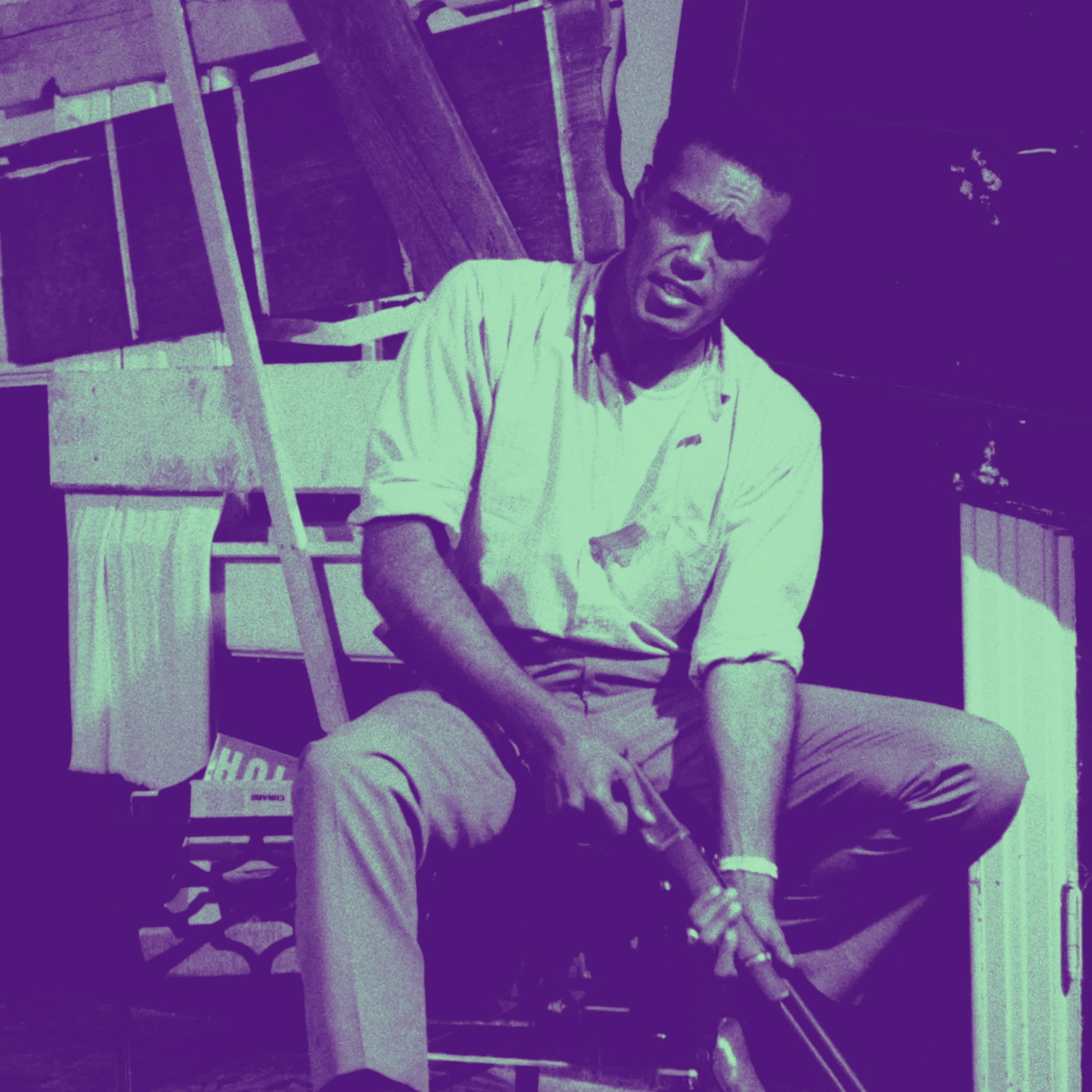
Night of the Living Dead (1968) Review (Archive)
Just in time for Halloween, this week's archive episode is Adam and Josh's 2017 Sacred Cow review of George A. Romero's NIGHT OF THE LIVING DEAD, a Top 10 Horror Movie of All Time for both.
Learn more about your ad choices. Visit megaphone.fm/adchoices
See omnystudio.com/listener for privacy information.
2025-10-22
38 min
Transcript
Available Results
Generated results are saved to the knowledge database for reuse and search.
No generated results are available for this episode yet.
Extract Knowledge
Pick what you want extracted first. Model, scope, and chapter options appear after a template is selected.
Generated results for public episodes are saved to the knowledge database so they can be reused and searched later.
Transcript
00:00:03
Speaker 1: What kind of a show you guys.

00:00:05
Speaker 2: Putting on here today?

00:00:06
Speaker 3: You're not interested in armed now?

00:00:08
Speaker 1: No, look, we're going to do this thing. We're going to have a conversation. Adam. I don't know if you've taken the time to do your top ten horror films of all time ranked list on Letterboxed. Be curious to see that if you get to it. But right now, still on my list, right there, holding strong at number nine is George A. Romero's Night of the Living Dead, a movie I love. It's spooky season, so a movie that perhaps some folks are revisiting or maybe watching for the first time. It's also a movie that we talked about in depth. We gave it a Sacred Cow review in twenty seventeen, and we're sharing it now. It's this week's from the archive selection, Night of the Living Dead.

00:00:55
Speaker 4: Yeah, did you say number nine? Number nine in your list? Okay?

00:00:59
Speaker 2: I would definitely be in my top ten, and quite frankly, it might be in my top five. It'd be in the running with the Exorcist, which is also in our archive episode four sixty five. It'd be in the running with The Shining I think I like it more than the Shining that was episode four nineteen. It'd be in the Conversation with Psycho that was episode nine oh seven. I'm rounding out a pretty great top five list here. I just can't go with the Silence of the Lambs as a horror movie. I don't know why we can debate. We're not going to debate. I'm not going to debate you, Jerry. Okay, we're not going to debate that here. But we talked about that movie on episode eight fourteen. Great movie, but it just doesn't fit with the way I view horror. I guess because I am such a horror expert. Of course, a movie that I know is in your top ten? In fact, is it your number one? A Nightmare on Elm Street?

00:01:57
Speaker 1: Number one? Yep?

00:01:59
Speaker 2: Wow, it's like number fifty one for me Episode six h nine, A Nightmare on Elm Street. So we have a lot of classic horror in our archive, and we are digging out for you now, the zombie classic Night of the Living Dead.

00:02:16
Speaker 1: The Film Spotting Archive has reviews, top fives and more going back to two thousand and five, and you can get access to it by becoming a member of the Film Spotting Family. It's just one of the benefits you get by being a member. You can learn more about that at film spottingfamily dot com. From October twenty seventeen, here is that Sacred Cow review of Night of the Living Dead.

00:02:40
Speaker 3: Night of the Living Dead. The dead live on, living flesh.

00:02:49
Speaker 2: Not dead.

00:02:49
Speaker 3: Who's haunted? Souls hunt the living? The living whose bodies are the only food, bodies godly creature.

00:03:04
Speaker 1: Often for these Sacred Cow reviews, Adam, we try to imagine what it might have been like to see the movie at hand upon its initial release, to experience it as first audiences did for nineteen sixty eight Night of the Living Dead, George Romero's low budget indie debut feature about a group of squabbling victims holed up in a Pennsylvania farmhouse trying to ward off a crowd of zombies. I want to tweak that thought experiment a bit. What would it have been like to watch Night of the Living Dead, not only before its reputation as a horror landmark was set, but without any sense of what a zombie was particularly at the movies. Keep in mind, during the film's opening scene, the brother and sister, who are visiting their father's grave are attacked by a single man, a lunatic it seems, who then pursues the sister played by Judith O'Day to the farmhouse. It struck me watching Night of the Living Dead this time that initial audiences might have just thought of him as a lone maniac. Sure, a stiff, slow moving one, but still a single threat. As I tried to forget what I knew about zombies while the story continued, it slowly dawned on me what an insidiously shocking, deeply horrifying experienced Night of the Living Dead must have been, and maybe still is. Does the movie still hold a certain power for you, Adam? Or is this simply considered a classic because it's set the zombie template? And regarding my thought experiment, what do you think it would have been like to first encounter a zombie through Night of the Living Dead?

00:04:30
Speaker 2: It definitely still holds a lot of power, And I love that thought experiment. I happened to actually just randomly see that challenge that you pose for yourself on letterboxed a couple hours before I sat down to watch the movie, so I gave myself that challenge too. I tried to watch it with that in mind, and I basically discovered that it's impossible to watch this film without the knowledge, without the perspective of having seen twenty to thirty years in our case of zombie movies, right, it's really difficult. You touched on it the moment Barbara and Johnny get attacked, and really kind of the second scene of the film, I'm thinking, instinctively, don't get bitten. Why aren't you protecting yourself better? Don't you know what's gonna happen to you. It's not just that they might be there to kill them. I'm thinking about how they should be protecting themselves very specifically and later in the film, and I'm sure we can get to a lot of these examples. The one that really hit home for me was a scene involving the daughter Karen, who we discover early in the film when our main character Ben discovers this group of people, this family and this other couple that are hold up in the basement. This daughter Karen has been injured. That's all we really know at first. We come to discover later, no, she's actually been bitten. I had to think about the fact that these people, certainly, these characters, wouldn't be aware but we in nineteen sixty eight wouldn't be aware ahead of the fact that she's definitely going to turn in to a flesh eating zombie as well.

00:06:01
Speaker 1: We'd have sympathy for her, yes, right.

00:06:04
Speaker 2: Right, So that was fascinating for me. We definitely wouldn't know, at least until the news brings it up. I think there's a point when the newscast the TV reporters and they have an expert on and they bring up the idea that if you've been infected, that might go badly. But until then, we just assume that she's injured, and so we have a completely different reaction when we see her finally transform and we have to forget all that accumulated knowledge. Now, as you pointed out earlier, this is a case where we have seen other zombies in movies before this time. And I'm not an expert on Hollywood sci fi movies, and there are elements of that at work here, or horror movies B grade or otherwise. But you don't have to be an expert to see the influence of a lot of different films at play here. There's one decidedly non Hollywood film that I'll probably get to at some point as well. But one of the main pleasures of watching this film is definitely seeing a genre, or I suppose, if you will, a subgenre being born right in front of our eyes. There is something mesmerizing about that. And my question for you, Josh, was going to be, really, why this movie still resonates with audiences? Why did a movie that at the time was made for according to the numbers, I saw one hundred and fourteen thousand dollars and then made something like twelve million domestically, And here we are, fifty years later, still talking about this movie. Why did it resonate then so strongly with people? And I know we'll get to that, but first I want to hear your answer to your own challenge.

00:07:34
Speaker 4: How did it go for you?

00:07:35
Speaker 1: Yeah? Well, they're related, actually, because I think that I thought about asking that too. You know, why does this thing last? Because it has a lot to overcome. It has some really bad performances. I think we'll get to one that I think is really strong. It has that threadbare budget, which you definitely sense in certain scenes as much as it's also effective in other scenes. So there were some hurdles to jump for this thing to land. So firmly in the movie going consciousness. I think it has to do a lot with the shattering nature of those first time shocks and the reverberations that they had in the culture that cemented the legend, and that way, even when we go back to see it, you're experiencing what you just discribed this birth, and that's what becomes exciting. So appropriately. It has a couple different lives that this movie has lived, and they all work in their own way. Yeah, for me, trying to put on this lens, I'll talk about what I guess I would call first time shocks, things that are different than the scares that I think have lasted across the years. A first time shock for me was when we suddenly see more than the first attacker, because again I was thinking, this is like a monster movie and there's one guy we got to worry about, and Romero plays it so subtly. Yeah, it's just a shot of the yard and there there's maybe four people.

00:09:01
Speaker 4: There's a few are kind.

00:09:02
Speaker 1: Of notably walking in the same way, and right there you're like, holy crap, what the care? Like, what there's more of them?

00:09:10
Speaker 5: Now?

00:09:10
Speaker 4: To go to this?

00:09:11
Speaker 1: What's the scope? Right? And I do like how the movie delicately balances over explaining with being overly naive. You know, there's a question there. I think Oday asks what is going on? And Dwayne Jones, who plays Ben becomes pretty much the main character, doesn't really offer any sort of explanation. He doesn't he doesn't know either, so we're confused along with them. So there's that moment, and then it's the use of the radio, as you discussed, and later there's a television I think it's very clever how the film does that. You could say, maybe this is a lazy device, but man, did it amp up the horror for me? Because we're so desperate for information, We're going to latch onto anything we get. And what do we get? Something we couldn't have even imagined. There's one word that's used on that radio broadcast, devolent.

00:09:58
Speaker 5: Consistent reports from whatinesses to the effect that people who acted as though they were kind of tranced were killing and eating they're victims prompted authorities to examine the bodies of some of the victims. Medical authorities in Cumberland have concluded that in all cases, the killers are eating the flesh of the people they murdered, repeating this latest bulletin just received moments ago from Cumberland. Maryland. Civil defense authorities have told newsmen that murder victims show evidence of having been partially devoured by their murderers. Medical examination of victims' bodies shows conclusively that the killers are eating the flesh of the people they kill.

00:10:36
Speaker 1: And when you here devoured, it's scarier than anything Romer could have shown, even though he goes on to show a lot more. I think this is related to that story than tells about his first encounter with zombies at the diner. His description is more terrifying than anything we could have seen. So there's a storytelling device in this film that's very effective where it lets our imaginations do a lot of the world for us. And I think there's another phrase that comes later, unburied dead. You know this, This is again the first time our minds are even opening up to this possibility.

00:11:09
Speaker 2: Yeah, I'm with you completely on the device I suppose of the radio and the TV. There's something about it here that does not feel lazy at all. It's always adding, it's always creating more dread in our minds and giving us new information. So it doesn't just feel like a lazy sort of exposition device at all. It's really crucial to everything that's happening here. I think it also, and I did not think this through, so I'm not going to go into a lot of detail about it. But there's something fundamental we will talk about that this movie is dealing with in terms of the sense of institutions and things that you just hold sacred and fundamental crumbling. And so I suppose, almost as a juxtaposition to that, there's something comforting about this institution of the media. Yeah, actually actually being there in this communication tool, whether it's the radio or TV, we're going to be on. We're going to stay on through this whole thing, or we're going to help.

00:11:56
Speaker 1: Into it like it's water right, like it's life giving.

00:11:58
Speaker 2: But watching it through that lens of someone who would be watching this for the first time in nineteen sixty eight, you think about the year and the timing of this movie one of the most vollable years in US history, and this is something this year in particular, Josh, is something I think about a lot whenever I talk to people now about our current political state and how fractured and divided we are in America today. We all talk about how this is all uncharted territory, and it probably is. They're probably justifiably a lot of reasons.

00:12:26
Speaker 1: Why we all say distinctions.

00:12:27
Speaker 2: There are distinctions, good word. But at the same time, I do genuinely wonder as I think back to nineteen sixty eight and I think about some of these events that occurred, how much different would it really feel? How much different does it feel to people who were our age roughly or teenagers? And going through the late nineteen sixties in America, you have obvious events that come to mind right away around this time, the Ted Defensive in sixty eight, Martin Luther King assassinated, RFK assassinated. There are civil rights and anti war protests breaking out all over the country, including the Democratic National Convention here in Chicago in that year. But you also have, and this is where the sci fi element is tapped into, you also have Apollo eight, the first manned spacecraft to orbit the Moon, the first time people traveled to the quote unquote dark side of the Moon, the first images of that side of the moon sent back to people on Earth. And then Man you talk about the relevancy and how this movie still resonates. The more things change, the more they stay the same. In January, I didn't have to do much Google searching at all on this Josh. In January of nineteen sixty eight, North Korea captured a US surveillance vessel and took the crew members hostage, eighty two of them. So there was this standoff, this diplomatic standoff with North Korea, and then John Carlos and Tommy Smith at the Mexico City Olympics raising their fists in the Black Power Salute, protesting segregation and racism in the United States and also in South Africa. So, as I touched on, there's this sense in nineteen sixty eight that I think had to be quite powerful and quite vivid for anyone going into the theater to watch this film that the fabric of American life had been turned completely upside down. The world as they thought they knew it no longer made any sense. And along comes Romero and his co writer here, John Russo. Not with traditional movie monsters at all, not monsters that you can write off is pure fantasy. They're just people. They are people like us. We could be them. And even that opening that we played at the beginning of the show that they're coming to get you. It's a nod to those old monster movies, being scared of that kind of fantastic monster, that ghoul chasing you. And he's saying, I think, in a kind of clever wink to us, I'm going to break that down and subvert that completely. But he does take something that should be inscrutable. You can't debate this. When we die, we die, whether you have notions of the afterlife or not. Your body is buried and that's it with your body. And then Romero asks, well, what if that's no longer true? And not only that they're feasting on the living. So humanity, humanity is now as inhuman as it can possibly be. And I think it was just tapping in to everything that was in the popular culture at the time.

00:15:09
Speaker 5: Since convening this conference of the Presidential Cabinet, the FBI, the Joint Geese of Staff, the CIA has not produced any public information. Why are space experts being consulted about an earth bound emergency?

00:15:23
Speaker 1: Yeah, So that plate of what people are dealing with in sixty eight is piled high, and here comes a movie that piles more on top of it. Relentlessly and then also pokes. This is where the film's subversive, like it's poking all of those fears. I always forget that there is that sci fi element where there's a news about is it a satellite or is it you know, and.

00:15:45
Speaker 4: Yeah, radiation from venery robe.

00:15:47
Speaker 1: Maybe this is why this is happening, and that slips my mind that that's thrown. I want to talk about it another way, that the movie is poking at the anxiety of the era and the racial dynamic. I mean talk about provoking right away. He traps this young, defenseless white woe in a home with a stronger black man, and I would say he doesn't insinuate in a way for me that's you know, racially insensitive, but he lets it sit there and stoke again as a rational as they might be fears that some people had at the time. Yeah, you mentioned the letterbox log that I did for this, and I got an interesting comment. This has to do with the very ending, So there'll be a spoiler here. You might want to skip ahead if you really want to experience this for the first time without knowing anything, but that ending where Ben played by Dwayne Jones, the lone survivor of this attack on the house, seems like he's going to make it. It's mourning. Here comes the militia that's going through the countryside, taking out all the zombies with shots to the head. They shoot and kill him before they take a chance to see. Really, they just see movement in the house and shoot them. So again, it's not specifically racially exploitative, sure, where these men make a conscious decision to shoot him because he's black. So I like the restraint, if you could call that, Romero has. But it says everything it needs to say. And this is what Robbie Newman commented on Letterrocks. Interestingly enough, while the whole group is doomed, it takes a supernatural force to kill the white characters. It only takes a group of white men with guns and permission to use them, however they see fit to kill Ben. And again, the more things change, right, And I'm watching this knowing that happened, but not remembering exactly how it.

00:17:43
Speaker 4: I didn't remember it minutes before.

00:17:45
Speaker 1: Really, yeah, I remember it ended that way, but oh is it a punch?

00:17:50
Speaker 4: And it was still a punch.

00:17:51
Speaker 1: And then the use of still framed photos for the fine credits. I guess it's just before the credits, but instead of we see his being carried out, I think, are there like meat hooks that they're using. Yes, and it's a series of still photos that kind of I haven't wrapped my mind exactly around what they do, except in a way reaffirm a sense of institution. Yeah, going back to what you were talking about, try to provide this clinical distance from it. That just makes it more horrifying, because here we know this was a live, heroic essentially guy who's been ironically murdered, being treated like one of these on debt and maybe even worse.

00:18:34
Speaker 2: Yeah, you talk about why this is a movie we still need to discuss and reckon with. I'm going a second everything you said. At one point in the movie, we get a field report from that TV newscast and the reporter asks the sheriff, if I were surrounded by eight or ten of these things, would I stand a chance with them? And the sheriff says, well, there's no problem. If you have a gun, shoot him in the head. That's a sure way to kill them. If you don't get yourself a club or a torch, beat them or burnham, they go up pretty easy, And there's something about that struck me where Romero doesn't go incredibly out of his way to make that sheriff seem like a huge redneck or anything.

00:19:07
Speaker 4: He's just being very matter of fact.

00:19:08
Speaker 2: And as it turns out, there's a part of us as viewers that have to be thankful that there's someone like the sheriff going around killing these zombies. But on another level, there is that almost glee.

00:19:18
Speaker 1: That's what it is, right, It's like, what a great excuse this is to get out here and have nothing restraining us, and we can shoot whatever we want.

00:19:28
Speaker 2: And you said, Romero doesn't necessarily explicitly tell us that it does have something to do with his skin color that causes that moment at the end, but it's enough to suggest that if they see something that doesn't look like us, whatever the other is, then they have the right to kill it. And those ends still photos are the most harrowing moments in the movie for me, even more than a young girl eating the flesh of her parents.

00:19:55
Speaker 4: If Romero did.

00:19:56
Speaker 2: Mean it is just some kind of ironic comment that the lone survivor gets mistaken for a zombie and a shot when he's actually being rescued, then why would he deliberate on those end shots and seeing those meat hooks go into his side. We don't actually see him enter, but we see that they're there. This posse is treating him like he's a piece of meat, literally, and they all strike a chord. We've seen photos like that from so many civil rights crimes in our country's past, and I think that Romero is definitely calling on our collective consciousness there, But it is so subtle up until that ending. And you touched on this as well. That racial angle really only comes directly to the four at the end. But you can ask the question, how much are we as viewers supposed to be recognizing fear in Barbara at being saved by a black man. Because I was thinking of a movie Detroit, and there are other references we could make here, but this is a movie from Catherine Bigelow we discussed earlier in the year. Remember the scene in that movie where I think it's Anthony Mackie is the military guy who in a room and one of the young women, maybe it's both of them, are in his room when the cops show up, these kind of college age, late teen girls and here we've got that blonde, blue eyed, typical quote unquote American girl and she's in the house with this black man. As I said, I don't know that it's suggested or not, because she's clearly descending into madness the way it is, but maybe it is even heightened more by her immediate reaction to seeing him as her rescuer and then that posse outside. How are they going to react to that? What if they came upon that house like in the movie Detroit and saw both of them in that house alive. It doesn't really matter who he is as a character, whether he's educated, how accomplished he is, he could be seen as potentially a threat to her by these people, by many people in our country at that time and even now. And you have to ask as well, is that why the Henry character, the father, who is constantly resisting him and at one point openly wants him dead. Is that why he opposes him so constantly?

00:22:00
Speaker 4: Oh, we don't know.

00:22:01
Speaker 2: Romero doesn't force us to put that moment to moment, but by the end of the film you have to think about all these things.

00:22:07
Speaker 1: And what I like about that dynamic with Henry the Father is there's actual physical segregation going on where he's claimed the basement, right and Ben is on the main floor. And also there's the joke of once it sinks in that Ben's the most competent and most powerful and smartest guy for the situation, right, then the segregation starts to crumble, right, because okay, we're going to put our lives ahead of our prejudices to a degree. And going back to the Ben and Barbara dynamic, how about that crazy moment I don't know what to make of where she's hysterical and slaps him and he punches her right unconscious. I mean, that's kind of just left there for us to take in. There isn't much commentary on that as the movie goes on. Before we get too far away from Ben, I want to return to that moment I talked about where Dwayne Jones is describing how he got to the house and how he fled from this diner where there was a gasoline truck explosion and he had to actually kill a number of the zombies. Why I think this is a really strong performance is mostly that moment, because not only again does it sell us as a spooky story, gets us creeped out. But what you sense there is this regret that he felt about killing people who he doesn't know what's going on. They were going to kill him, so he killed them. And this is like you talk about the birth of a genre. This is one of the crucial seeds, is that it gets exploited even further. There's a bit here with the daughter. But when our family turns on us, when loved one's turn and we have to make that decision, where's that early seed, right? Because Ben is expressing that sorrow over what he's had to do, and you feel it from that point on in every brutal blow of the tire iron that he gives to these zombies, which is its rough stuff. I mean Romero Again, I don't think it verges into exploitation, but he definitely shows us what it takes for this guy to take care of one of these zombies.

00:24:12
Speaker 4: Well, it's nasty.

00:24:13
Speaker 2: I hadn't thought of it until you said it, but that seems to me another potential Vietnam analogy for this movie as well. Think about how many of our soldiers, yeah, went over to Vietnam and had to kill people that, as the saying goes, didn't do anything to them, didn't do anything to harm them or their family, and yet they did have to kill them, and they did so, many of them with regret. I think we get other references there that are unmistakable. The shot of the posse at the end where we have the helicopter, there's a news helicopter something flying over and we see fields of what looked like soldiers walking with guns. And when they watched the TV and they're constantly listening to the radio for reports of casualties and all the latest developments, and the zombies. I think you can make the case as well, among other things that they might be or represent, they are, in a way the Viet Kong. They're this massive, mysterious, omnipresent threat to our soldiers, which is then mirrored here in the film. Another surprise for me with this film, I said, I didn't remember that it ended the way it did. I didn't remember that it had the sci fi element. I do want to talk about that a little bit more, but I forgot just how overly devoid of hope and cynical, oh it was. These characters never really develop a plan. I kept waiting for that to happen because we've seen it so many times for them to find a way to survive, at least a few of them. This is a case where the movie it just starts bad for all the survivors, all the victims, and then it just gets worse.

00:25:42
Speaker 1: And worst attempt they make is laughably Yeah.

00:25:47
Speaker 4: It's horrible.

00:25:48
Speaker 2: And you mentioned the segregation, and we do have to note that Henry is willing to have been the black man come with him to the basement. In fact, he wants him to. But how interesting is it? Gosh, in terms of Romero pulling out the rug from under us, we think we have sort of footing. We understand what's going on with this movie and who the good guys and the bad guys are. And you've said it. Ben is the most competent character in this movie. He's our hero. He's the one we side with. I don't know about you, but in that moment where they're debating whether they should be downstairs or be upstairs, there's a case on both sides. But I'm gonna do whatever Ben thinks. I'm gonna stick with Ben right well, But at the end of the film, what's born out Mister Cooper, the annoying, crazy guy.

00:26:31
Speaker 4: His plan really was vindicated.

00:26:33
Speaker 2: This isolationism, this notion that he just wants to be hidden away down to the basement, doors boarded up, that's what's gonna keep us safe. Let's get out of this main room where we have all these entry points. We think he's the unhinged one, and we're gonna follow Ben. Well, guess what, that's how Ben survives, Right, So mister Cooper actually is the same one. By the end of the movie, Romero has that little twist as well.

00:26:56
Speaker 1: So we've been talking a lot about the thematic underc saying the resonance and the echoes. Let me talk about just what's terrifying on a level that I think also helps this movie to last over the years. And I think it's just the relentlessness. That's the word that always comes to mind when I think of Night of the Living Dead, and it starts with that first guy who just won't stop. The moment where it clicked with me is when he picks up the it's not really a boulder, but it's pretty good sized rock and throws it at the car window that Barbara has hidden in. You know, you would think this is the moment where he's going to give up or she's going to get away, and he just continually pursues her, and of course that gets amplified as more people come, the hands through the windows. It just never stops. And I think that's part of the fatalism that you're talking about as well, which is absolutely key two zombie movies going forward, most of them anyways. The commitment to gore. And again, I don't know how unique this would have been in sixty eight. Maybe there are other little budget horror films that we're doing something similar. But once that young couple in that thwarted escape plan becomes dinner becomes a long dinner in close up where everyone takes their item of choice and shows it to the camera right before eating it, for some reason it does not devolve into camp for me and those moments, and I don't know why, because it should, right you have. It gets so ridiculous at that point that, just in terms of Insandy, where this movie has gone deranged, that you would almost think you'd laugh in defense, but instead it's horrible. And I think a lot of it is the detail to the gore, like the choice of actually showing you bones and gristle and it's awful. It's just awful. And then when the daughter does turn and is eating her father, and then the scene of her stabbing her mother, which is I've mentioned how some of the filmmaking is maybe a little creaky as a low budget debut.

00:29:02
Speaker 4: And this moment is, well, it's still harrowing, but I.

00:29:06
Speaker 1: See for me it became almost abstract where he decides to use a shadow, a triangular shadow instead of the knife, and there's an echoing effect going on with the screams. And as garish as some of those earlier attack moments were, they were still somewhat based in reality. I guess you could say, yeah, this scene again gets like absurdist in a way. That's that's just especially creepy.

00:29:33
Speaker 2: No, that's a great point in terms of the filmmaking. I think I can't really extricate it from everything about that character Helen, her demise at the end, in the staging of that and the blocking about sort of schlocky. We get that element. Certainly try to escape too hard.

00:29:48
Speaker 1: No, I'll say that.

00:29:50
Speaker 2: Doesn't just not try to escape to her. She basically is like, don't get these here while I throw myself at you. It's can I move my shoulder cliffs or to you. And then even when her daughter attacks her, she's completely helpless. And I know it's supposed to be a really jarring moment for that to be happening to her. But in general, I think we can say, you already touched on it that women are not treated great in this movie. They're not the best characters.

00:30:16
Speaker 1: Right.

00:30:16
Speaker 2: You have Barbara, who is in a stupor throughout the entire film. My favorite part might actually be when finally Ben gets through to her by saying something about we're gonna get out of here, and she.

00:30:25
Speaker 4: Goes, we're gonna get out of here. She's like, oho, I want to leave.

00:30:30
Speaker 2: She actually says that, like you, I want to leave, but she's otherwise, she's completely ineffectual. Then you have Helen, as I said, throwing herself at the zombies. And then there's like Judy before that point, no I did too compared to her husband. Yeah, like she pushes back on her husband.

00:30:45
Speaker 4: Yes, I'm with you there, that's true.

00:30:46
Speaker 2: And then you've got Judy the other couple, the girlfriend there who just smiles a lot as we hear, and worries a lot, yeah, and doesn't really add anything to the mix either, so maybe that is reflective more of the mindset of nineteen sixty eight. Unfortunately that does come through. But going back to the sci fi part of this film, that was another surprise for me. As I said, I did not remember that they actually explain the reanimation, or at least provide a possible explanation, and at first I thought, well, I'm kind of disappointed ya that they do. That was my initial response because I was thinking that it's just this isolated regional experience or sort of cut off from the rest of the world, and that makes it potentially even more terrifying, even though it makes it more contained at the same time. But I thought, why do we need the explanation, and wouldn't it actually add to the subversiveness that we've talked about if it was just another element of chaos of the unknown. We're living this horrific nightmare and we have no idea why. But I did come to realize that it's actually better. Someone could argue that just because we hear some officials, we see and hear some officials on TV talking about this probe and suggesting that might be the cause this radiation, that doesn't necessarily mean it's true, but I think Romero has it there for a reason. He wants us to consider that there is probably a somewhat scientific explanation for what's going on here. But I think that it's there to certainly reflect kind of the psyche of the times. I talked about the Apollo mission. The moon landing is coming a year after the Cold War. Space race with the Soviet Union is certainly going on here. And the more important part of it, Josh, is that it then means that this is all in a way self inflicted. It's actually more subversive, not less that potentially our own global ambitions and our own secrets led to this whole nightmare. And I think that Romero, in just suggesting that, as I said, adds to the overall subversiveness of the film and certainly adds to the sense of paranoia and distrust of the government that the viewers at the time would have happened.

00:32:44
Speaker 1: That's what I was thinking too. It also adds that element of conspiracy, right, which is in the air as well at this time. Yeah, And you know, it also nicely puts it in the horror tradition, because that is the fatal flaw is this human hubris or these so scientific overstepping of our bounds that does lead to horror catastrophe.

00:33:04
Speaker 4: So just a couple more quick thoughts.

00:33:06
Speaker 2: You mentioned the threadbare budget here and how that sometimes does come through. We also see the resourcefulness with the budget at times. I think, and I could be reaching here a little bit, but how about the opening dialogue of the movie being about daylight savings time. You just wonder if it's like, well, we really want to open on daytime and we need it to be daylight. Maybe we don't have any lights at this point, and notice that we want to transition into darkness. And then the fact that the movie focuses on, notice that it's not just the dead, it's not the dead rising, because the dead rising would just be bones. They couldn't reanimate in any way. It's the recently decently we hear in the newscast. Well, of course it is, because how else are they going to handle all the makeup in the production design to reanimate the long dead? They need people who look like people, Josh, And you know what, that's clever and it's a great use of the resources they did have.

00:33:59
Speaker 1: Also allows for that grisly segment where the martian is describing all of this and saying, what you need to do now in case someone dies in the next few hours. The era of funerals is over. People essentially said, so that's it. He's like, you just take that body in the street.

00:34:17
Speaker 4: And burn it. No, I love it.

00:34:18
Speaker 2: It's actually my favorite line in the film. As we talk about our institutions breaking down and values what we think are normal values being questioned here, that line is my favorite line in the movie. And I may be getting it slightly wrong, but the Sie just basically says something like the bereave will no longer be able to rely on the dubious comfort and that a funeral provides. The site is just openly mocking the notion of a funeral being this stupid procedure, this ritual that grants anyone comfort.

00:34:48
Speaker 4: I love You've.

00:34:49
Speaker 1: Got it right. I noticed that too.

00:34:50
Speaker 4: Yeah, oh well, it's my favorite line.

00:34:53
Speaker 1: Everyone's going through this and you have to throw that in there.

00:34:55
Speaker 2: But even if you think about it, you can find it in every part of the screenplay, this question of values. The opening dialogue, that opening scene where Johnny is bemoaning why they even have to go to the cemetery and drive so far to recognize their dead father, and their mother doesn't even come with him. And he talks about and I know that a lot of people talk about the theme of capitalism as it relates to zombies, certainly a huge part of Donna the Dead, That's what that film is all about. But he openly questions why we keep buying the same thing that then is just gone by the time we get here. We just keep buying the same thing over and over again. So he was already touching on that theme, whether explicitly consciously or not, at the very beginning of this film. I did want to also throw out another movie reference here that I do think is a great pairing with this movie, and I didn't know that going into this film, but I couldn't help but look at Judith O'Day and see Shades of Catherine Denove from Roman Planski's Repulsion looked it up nineteen sixty five, so I thought it was before Night of the Living Dead. Thought it might have been an influence, because that's definitely a film about a woman just like Barbara, losing her mind, going madder and madder by the minute, stuck in an apartment confined, just like Barbara is here, and just like Polanski, Romero makes use of canton angles and shadows. And I think of one shot in particular, when she first comes in the house, and something about the way it's framed and the depth. There are dead animals that surprise her, but there's actually just ones she doesn't see on the wall behind her that almost feel like they're on top of her, attacking her, and it kind of gives us the sense of her overall state of mind. And if you google Repulsion images, just google it, you'll see images that come up that look like they were taken straight out in the Night of the Living Dead. So I wondered if there was any connection. Search for Polanski Repulsion, Night of the Living Dead and found an article. The first link that came up, Romero said he considers Repulsion to be the greatest horror movie.

00:36:46
Speaker 4: Of all time. There you go, so I'm not totally nuts.

00:36:49
Speaker 2: A great film to check out if you haven't already, and certainly if you haven't seen Night of the Living Dead already or haven't seen it in about twenty years, which was the case for me over twenty years. What about you, Joshen was the last time you sat.

00:37:00
Speaker 1: It'd been more recently than that, and I have seen this a couple of times, but I bet it's maybe been ten years.

00:37:05
Speaker 2: Thanks Je, well, you might be due for revisit as well. Donn of the Dead touched on there briefly nineteen seventy eight. The sequel was the first movie in the Second Marathon that was ever done on this show, Sam and me. Two thousand and five, we had our awards called the hadden Fields after John Carpenter's Halloween, and we discussed don of the Dead. Now, I would never wish on anyone to go back to any of our shows, much less once from two thousand and five, But if you are curious what we said about that movie, then we'll link to it in the notes for the show at filmspotting dot net.

00:37:39
Speaker 3: Right, I'm a living dead lording than your Strangest Nightmare.

00:37:50
Speaker 2: That was our conversation about George Romero's Night of the Living Dead from twenty seventeen. If you'd like to hear more archive conversations like that, you can get access to the art by becoming a Film Spotting Family member. You get archive access and more. Like bonus shows, early access to events, and a whole lot more. Join at film spotting Family dot com.

00:38:11
Speaker 6: This conversation can serve no purpose anymore, but fine.

00:38:32
Speaker 2: Film spotting is listeners supported. Join the film Spotting Family at film spotting Family dot com and get access to ad free episodes, monthly bonus shows, our weekly newsletter, and, for the first time, all into one place, the entire film spotting archive going back to two thousand and five. That's a film spotting Family dot com panically
Chapters
No chapters available.