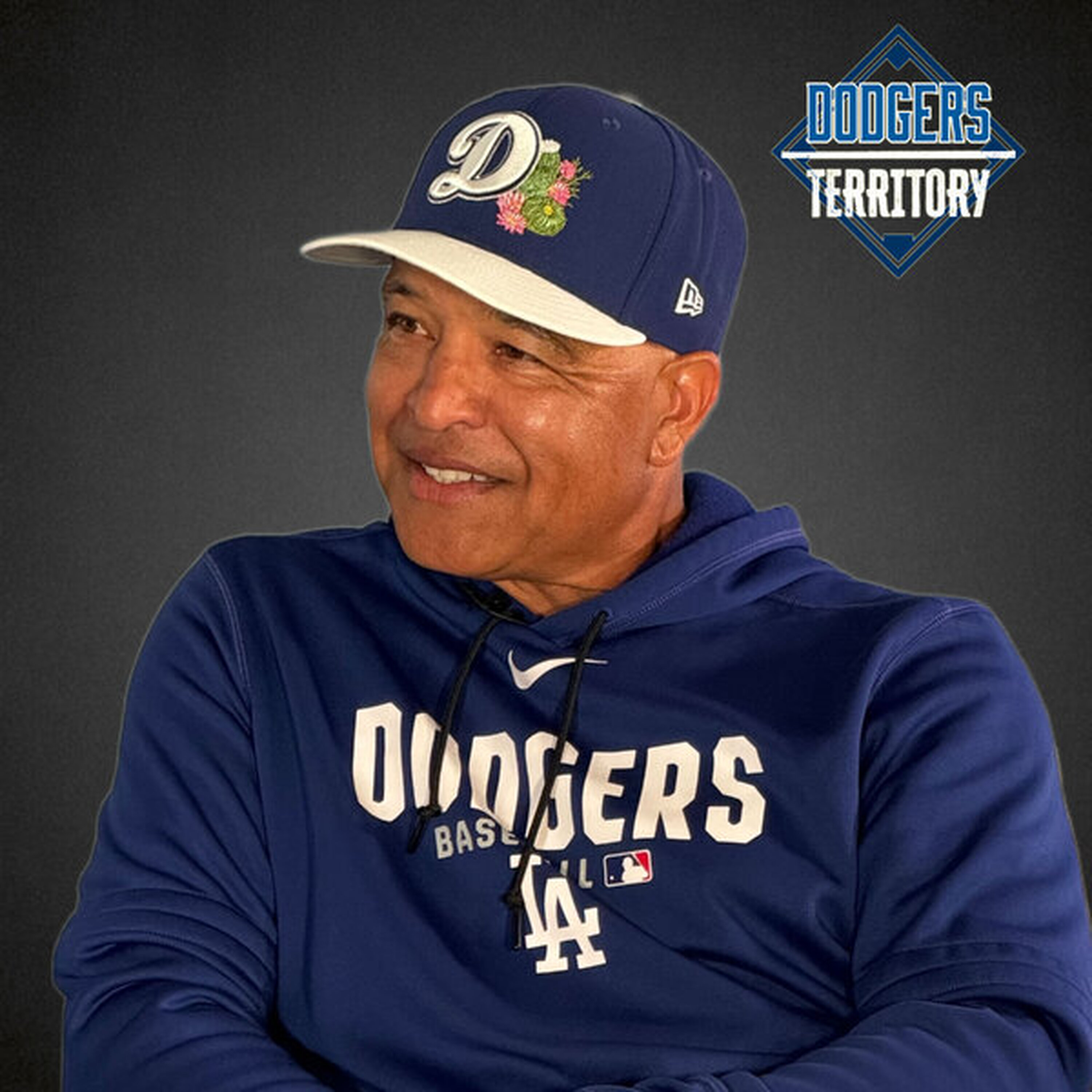
Special Dave Roberts sit-down conversation on Dodgers Territory
Dodgers Territory welcomes LA manager Dave Roberts live from Spring Training. The crew looks back at the 2025 World Series run, breaking down pivotal Game 6 and Game 7 decisions, Shohei Ohtani on three days rest, Yoshinobu Yamamoto’s availability, Miguel Rojas’ key moments and the tactical battle against the Toronto Blue Jays.
See omnystudio.com/listener for privacy information.
2026-03-01
36 min
Transcript
Available Results
Generated results are saved to the knowledge database for reuse and search.
No generated results are available for this episode yet.
Extract Knowledge
Pick what you want extracted first. Model, scope, and chapter options appear after a template is selected.
Generated results for public episodes are saved to the knowledge database so they can be reused and searched later.
Transcript
00:00:12
Speaker 1: Hello everybody, and welcome to a very special episode of Dodgers' Territory. We are live at Camelbacker Ranch, of course, the spring training home of the back to back World Series champion Los Angeles Dodgers. A man that needs no introduction, Dave Roberts, the manager of the team, joining us now.

00:00:28
Speaker 2: I'm Alana Rizzo. Alongside with Clint Psias and Katie wou we are the hosts of Dodgers' Territory for the upcoming season. Dave, thank you for doing this. Appreciate it very much. There's so much to talk about with the upcoming season. But we want to take you back to the World Series last year, which one of the best World Series that certainly I have ever seen. Of Course, it ended in the right way, right, so it's a good World Series for us. But I want to go back to Game one and just the mentality and the mind set of going up against naturally the best club in the American League in the Toronto Blue Jays. But what did you think going into that series of the way that we're going to win this is.

00:01:09
Speaker 3: How the way we're going to win this.

00:01:12
Speaker 4: I felt that the Blue Jays didn't get the didn't get enough credit kind of nationwide about how good they were of a ball club, very gritty, very tough team. I thought, I thought we would perform better offensively against their pitching staff, but I just felt that we were going to be in for a dogfight, and so you try to win those games at home. And like I said, I didn't expect us to not perform offensively, but we really played defense really well, we pitched really.

00:01:47
Speaker 3: Well, and.

00:01:49
Speaker 4: It was I'm looking forward to digging into this World Series because I haven't, truth be told, I haven't gone back and replayed Game one, three, five, seven, seven, all that stuff. So this would be good for my recall to having this conversation.

00:02:05
Speaker 5: I mean it worked for us last year too. You know, you win a World Series again. After we talk about twenty twenty four, this one it seemed, I don't want to say, easier in some ways, but also a lot more stressful in other ways. I mean, obviously getting to the World Series, I don't want it's not a cakewalk. Every team in baseball is very good, but you guys, maybe you mentioned there, kind of face a little bit of a sucker punch meeting those Toronto Blue Jays, a little bit better that splitter from everybody who was working very much. We talked last year about baseball's kind of funny because something that maybe would have gone against you guys six seven, eight years ago, it seemed like it fell your way. This last postseason. Baseball just weird. Is it something where maybe you're managing different with the gut, the heart, all that kind of stuff. What can you kind of say. I'm probably not articulating this well because I don't want to take up everybody's time, But you know what changes between a twenty seventeen, eighteen, twenties nineteen postseasons to being able to put it all together?

00:03:11
Speaker 4: And yeah, you know what? And I don't know that answer. I think that's kind of a great thing about baseball, where it is so unpredictable and there are a lot of different pressure points in series, and you can look back and we can do a show where you're talking about sixteen, seventeen, eighteen. Every single year there are pressure points that went our way, decisions that I made that went well, and decisions I made that didn't go well, and then they're looked at as good decisions or bad decisions. But yeah, in the past couple years. You need breaks too, So I don't think that I overhauled kind of the way I manage. But I do believe that I have really gone ahead and trusted players more than I have and that kind of comes with experience. But again, the ball gets stuck in the outfield wall a line drive right at Max Muncy. When Blake comes in and you know that ball is down the line. It's a different series, and so there's a lot of things that happened that have to happen for you to win a championship.

00:04:16
Speaker 6: So I'm my first game of the World Series is not Game one. I was still doing Cardinals, but knew I was coming to Dodgers, so I hopped in on Game three, which I may.

00:04:29
Speaker 3: Did you did you last eighteen innings?

00:04:32
Speaker 7: Yeah?

00:04:32
Speaker 6: I essentially had two games, of course, but to make up for the two games that I missed, they put two games into one. And as I'm watching Game three and we're there's in a different press box, we're up in like left field, and I think the story by the seventh inning is going to be of Tawny's two homers. And never did I think the story was going to be a marathon eighteen inning game. As you're watching this game transpire, especially when you get to like the thirteenth inning and you realize this, this is never going to end. We're going to be here for the rest of time. How do you I mean, I think Andrew Friedman even came out and that was the game where he actually threw a bar stool because he was convinced that, you know, it was just so frustrated or all the emotions of this game never ending.

00:05:14
Speaker 7: How do you manage that side of it?

00:05:15
Speaker 6: And did it get to a point where you were like, oh my gosh, this will never this will never end.

00:05:21
Speaker 4: I had thoughts that it was never going to end. I think you're managing the game first and foremost, But there was a point where I was really considering having I don't know if it was migey Ro or Kiki was still in the game and having them come out and pitch after Will Climb, because you're also trying to appreciate that you still got to win four games in this seven game series, albeit the World Series, and there was an attrition factor going on in that game, and certainly with the pitching and so knowing also Shohey had to pitch the next day or actually it was past midnight, so that same night, and Will Smith was going to catch the next night or that same night, and so I'm also thinking about attrition, and so that was kind of got me a little anxious. Very grateful that Freddie hit the homer in the eighteenth but Yamamoto, I mean, you wonder what would have changed if we didn't win it right there, and Yamamoto had to pitch that game. But yeah, there was it was up and down, and you want to win them all. But I think at a certain point I just wanted the game to end.

00:06:32
Speaker 2: I remember Ken Rosenthal, Dave was reporting during the game because obviously he's a sideline reporter for Fox, that you would consider using a position player to come in and pitch because you're trying, you're not just managing. Of course, for that one, you have to think about the rest of the series. Did you ever think there'd be a time in your life as a manager where a position player might be pitching for your club in the World Series and try to continue to force it?

00:06:54
Speaker 4: Absolutely not that one. I don't think that had been received well on social you know, but I think that if you look back, you know, and I'm managing the postseason where you know, certain times and people hate saying it, but you gotta punt, and you got to you gotta try to win a series, and so at that point in time, you're trying to net out positives and negatives. But I did get to the point after talking to Yamamoto that he was ready and he was I was willing to kind of fire that bullet if we needed to. But yeah, al I never thought even considering a position player in a World Series game.

00:07:28
Speaker 5: And I remember looking over the railing there in the auxiliary press box seeing I'm a Mota. I see the intent change in his throat. I'm like, oh shit, this could be real, this could be really Thank God for will Climb.

00:07:38
Speaker 3: What that kid did, it's amazing. And he blacked out.

00:07:42
Speaker 4: And so that's sometimes you know, you can't overthink things, and it was in the moment, and you know, but it is a testament to when you don't give yourself an out.

00:07:51
Speaker 3: And I've even talked to him this this spring.

00:07:54
Speaker 4: And had him talk to the team about you know, when you think, when you know you're the last guy available, then you've got to be more efficient. You can't look to the pen just for someone to save you. So this is situation he's never been in, might never be in again. And so the way he performed, we certainly don't win that game without him, and maybe not the World Series because obviously after that game we ended up dropping two more at home. So always be a Willklin fan.

00:08:26
Speaker 3: Yeah, absolutely, there you go.

00:08:29
Speaker 7: This is what I think everyone wants to know.

00:08:31
Speaker 6: If you had to choose between Migi Row and keyk who's taken the ball in that situation.

00:08:35
Speaker 3: You know what I would say.

00:08:37
Speaker 4: I know one guy was in the game, one goes out, But if I had to pick one, I got Migi Row right now. Key K is he's gone gone cold recently kitchen, so he's given up walks and some homers.

00:08:51
Speaker 3: So I'd go to togu ro.

00:08:52
Speaker 5: Started good, It started great, ye then yeah, a little too Froggy.

00:08:57
Speaker 3: That's right. That's right.

00:08:58
Speaker 2: Mindset after game five, you guys are going back to Toronto. You need to win both on the road.

00:09:03
Speaker 4: Mindset. After game five. Was the first thing I did after we lost that game was I texted Meggiro and said, you're starting game six. So that was the first thing I did. I just felt we needed some infusion of meg Euro in game six, and then I sent out a text letting the guys know that I want everyone to have we get to Toronto and then have an off day so there's no workout, no problem. But then shortly thereafter they reached back out to me saying the veteran guy is saying, appreciate it, but we want to go. We want to work out. We've come this far, we want to work out. And so at that point in time, I'm on the plane, I'm giddy excited that our guys want to work out and not take the option to not practice. And so everyone shows up, got their work in, and I felt better about that. And this group, a lot of this group has played an elimination game on the road, so we've been there. So I wasn't worried about the moment getting too big. I was happy that Yama was starting, and I just felt if we could just sort of hang in there, we're going to find a way to win. And again, going back to Miggy, I just felt he made some great plays defensively, got to hit that night, and I just felt having a guy like that inserted into the lineup he's gonna not literally, but he will die on the field to try to get us to win a game.

00:10:33
Speaker 3: And so I was excited about that.

00:10:36
Speaker 5: Absolutely need to expand more on you know NIGGI roeing in that lineup. But first that break between games five game six, the boys want to go to the ballpark, you're there. How much of the race between Hessong and I know you've talked a lot about this already a camp, It's been asked a lot, but the race between Dave Roberts, hes On Kim, how much of that was kind of spur of the moment, any of that kind of of premeditated a little bit here? Oh did you ever find the sniper that got you?

00:11:04
Speaker 3: That's another Yeah, that was a pretty good face plan.

00:11:08
Speaker 5: Banged up was a knee hamstring where it.

00:11:11
Speaker 4: Was hamstring, so I didn't find the sniper. So premeditator. I think it started where I was so excited about our guys want end up practice. So then I was excited, and then as I got out there, the mood was fine, and I just wanted to jazz it up a little bit, add a little levity, and so I felt that why not challenge our fastest runner to a foot race, and I didn't expect to win, but I didn't expect to do a face plant. But I think my purpose was served and everyone had fun. There was a little levity, and then we went back to work. So some of it was premeditated, but it just didn't The plan wasn't exactly, didn't plout exactly as I wanted.

00:11:56
Speaker 5: Well, that was that was twenty twenty five, it's not two thousand and fourty doc.

00:12:00
Speaker 3: That's right, that's right. The legs ain't doing what they do.

00:12:03
Speaker 4: But the thing is always clinton is that your brain, as I'm fifty three and now your brain still thinks that it's like twenty seven.

00:12:09
Speaker 3: Twenty eight, and you'll learn that when you get older. But then your body does it right, but you still earn that place.

00:12:15
Speaker 4: But let me tell you right now, I will never do a full sprint, a full speed sprint ever again, because my body is fifty three.

00:12:23
Speaker 3: Breaking news.

00:12:23
Speaker 6: You were fresh out of the gate, though, like you start out hot. I think the underrated part of this. As I saw you the next day, they're golf carting you around. You've still actually had dirt on your hat from the face plant, and I was like that's the gamer right there.

00:12:35
Speaker 3: That's right.

00:12:36
Speaker 4: And I did take a tourtoll shot too, so I was like, guys are doing tourtoo shots and do whatever they could to get through the series of like.

00:12:43
Speaker 5: Sign me up on then either way, Game six and seven was gonna feel good, dude.

00:12:47
Speaker 3: That's right, that's right. I felt great, man.

00:12:50
Speaker 6: So let's talk about a little bit about game six, specifically the ending because there and we've talked about this at camp already, just the different elements that could have Kno gone your way and it changes everything. But when the ball gets stuck under the wall, what is your initial reaction?

00:13:06
Speaker 7: What did you want to see from Justin Dean? And how does that play out in real time?

00:13:10
Speaker 6: Reacting to something that we would probably never see again in that situation.

00:13:14
Speaker 4: Yeah, I think that I was. I was very happy to see that he put his hands up. But I will say, as the rule plays, if the ball is lodged, they will look at it. But Kei, k and Justin put their hands up, and so it was a ground rule double. I felt good about that. I was so shocked. But I think for me is once that ball is hit, I'm thinking about the next move. So to be quite honest with you, I'm not really reacting to the play. I'm trying to figure out, Okay, do I need to have the infield in, do I need to get somebody else going, you know, who's coming up in the top half of the inning, So all those things, But it was it was just a really heavy play, And that's something that I take a lot of pride in and talking to our guys, not just about the talent, but being heady baseball players and knowing the rules, knowing you know, Miguel Rojas, we practice the infield in all the time, and so to make an accurate throw there. So yeah, Game six, you know all the pitchers that we used, the different situations. So but to look back at that, though, Katie, it was it was a heady play by Ki k a n justin talking about.

00:14:25
Speaker 2: The next move. How quickly do you have to make decisions.

00:14:30
Speaker 4: Very quickly because in the postseason, obviously everything happens faster, and you know, on the margins everything matters, and you know, not jumping ahead. But Game seven, when Miggi hit the homer, that was the only time that postseason where I really turned into a fan because as a manager, you've got to expect good things happen, bad things to kind of how do you react or respond right, And so that's something that I wasn't expecting. So once he hit that homer, I just turned into a fanboy. And so but you've got to be steps ahead of it, because you know, I think that's why people I probably get frustrated with me. You know that I don't show a lot of reactions because I'm always thinking about the next move, the next move, and then once you put your fan hat on, you're not prepared for what outcome has happening in real time.

00:15:26
Speaker 2: Migail Rojas was on the show the other day and he said when he was in the on deck circle, he looked back looking for Danny Lamb and the Dodgers' bench coach, and he had been pinch hit for in his career hundreds of times. He looked back to see if Danny was going to call him back for a pinch hitter. Danny wasn't there. He said, this at bat is mine and he couldn't It wasn't that he couldn't believe it, but you telling him that he was going to start six and then seven, of course, was such a huge moment for him and probably the most unsuspecting guy to hit a home run. He was not a home run hitter to hit it in that moment. What was bigger for you, the home run or the defensive play that he made.

00:16:02
Speaker 4: I think the home run because I think that we can all count on Miggy's defense, and that's why, honestly why he was inserted in the game, and I just felt that he was going to do something helped the Dodgers win the home run because I talk a lot about the game honorship and how or when I don't know, but Miggie, to his credit, all season long, was a mentor to guy as a cheerleader, played for us when we needed him, and then then you get to the postseason, and then he's not playing, not starting, and then when I called on him, he was ready. And so for him to get his flowers, his moment on a big on a on a big in a big spot I always had for him, That's something that's going to be talked about for years, and I think that him doing things the right way the game honored him in that moment. So yeah, that's something that I'm going to really be really proud of.

00:16:57
Speaker 5: The immediate impact he made. Obviously, Game seven makes an insane scoop from a heady play from key K double play. You're like, oh man, this could be real Homer defensive play in Game seven to keep things alive. What was kind of the gut the heart telling you that now is the time to pull the MIGGI lever.

00:17:19
Speaker 4: I think you know nothing against Andy at all. Andy was a big part of getting us there. I think for me it's you don't know until you know. And I say that and experience Andy next year, the year is following, and throughout his career he's going to know how fleeting or how important, how much he's going to care more about the postseason as you get more experienced. And so now when you're talking about Miguel Rojas, he's had a ten year career, he's talking about he's going to retire in twenty twenty six. Twenty twenty five could have been his last year with the Dodgers. So I wanted to bet on guys that it meant everything to them. And so again, nothing against Andy, but I just felt right there he was scuffling at the plate. Tommy at that point in time, we felt he could go back out there and play center field. And you know, like I said, Miggy was going to do anything he could help us on both sides of the baseball in Game six and seven. So when you're riding a lineup out, I said, there's nine guys that I felt were of that same mind, and I was going to bet on that when.

00:18:28
Speaker 6: You look at the pitching that you had to manage in six and seven, I mean, your Game seven starter is pitching the ninth inning all of a sudden and Tyler Glass.

00:18:35
Speaker 7: Now in Game six, you have.

00:18:37
Speaker 6: All hands on deck situation with your rotation as your bullpen. How do you looking at you know only guys only have a couple innings at this point, you also have Yamamoto and so aren't sure on what that looks like. How do you manage ahead while also having to react in real time to these guys where everything is on the line and you need all of them.

00:18:58
Speaker 4: I think for me, there was a certain amount of guys that I was going to use in Game seven and even in Game six, to be quite frank, because it was elimination. So I think that there's a certain amount of guys I was going to use. And then so now once you have a certain group of guys that you're going to use, then you've got to figure out how to stagger those innings out and way somebody not going being a sharp versus introducing somebody else that you don't envision being a part of that equation. So that's kind of where my head is at. And then you know, because even show Hey, for example, I knew that he didn't have his best stuff, but for me not to try to get him through three innings potential could have introduced somebody else that I didn't want to pitch for usage or for whatever reason. And so you still got to cover nine innings. And so I think for me, it's really just watching to see what the guy has, but it's betting on people. If I've learned anything about the post season, it's you got to bet on people. And you know, the season is a long season. There's ups and downs, it's a marathon, and you have a lot more latitude and leeway to kind of navigate it. But the postseason, for me, it's about betting on people. And my job, the coach's jobs are to get these guys prepared mentally and physically. You know for that for those big spots, because everything is certainly way more magnified.

00:20:26
Speaker 2: You bet on people. Kyk is easy to bet on. There's something intangible about that guy. I mean, there's no place in the world he needs to be except in a Dadger uniform, especially in October. But what was your reaction when he's running to the ball in the ninth inning, you kind of see his back. He didn't think he made the play. Andy Poe has comes up obviously with the ball. He's Michael, thank god. From your dugout perspective, what are you thinking when he's running that route.

00:20:50
Speaker 4: I was just praying that it stayed in the ballpark. That's another play that I thought the game was going to be over. And key K, you know, he scooped the ball, so key K sort of broke in on that getting trying to get a good jump on the ball, and fortunately Andy came out of nowhere. And you know, you're talking about the moment. It's one of Yeah, key K thought he lost the World Series. We lost the World Series, and you know, Andy makes this great play and key K's only concern is did you catch the baseball? And so but it's just it's one of those things that I think that's why everyone loved that World Series, because every it just seemed like every player sold out on both sides of the baseball and left it all out there.

00:21:34
Speaker 5: Some guy who really sold out left it all out there, Yoshioba Yamamoto turns out three twenty five, maybe a little light underpaid.

00:21:42
Speaker 3: It was a little light.

00:21:42
Speaker 5: Yeah, made your job a lot easier, made all of our you know, off season a lot happier. He I think he recently said he doesn't know, doesn't want to stat You just want to be thought of a legend.

00:21:53
Speaker 3: Or a hero. Guy is a hero.

00:21:55
Speaker 5: What what does it mean to somebody like you and to that clubhouse what Yama did to to put that team on his right shoulder.

00:22:03
Speaker 4: I just have the utmost respect for him, and you know, and also yeah, I mean he was pushed beyond limits. It just doesn't happen. And you see this, you know, you see the play, the Pie's play right there. But with Yamamoto, did I think that he said it early on, Losing is not an option, and we needed every single inning and performance that he gave us to get through. You know, you're talking about Milwaukee, Philly and then Obviously, the World Series what he did will be.

00:22:36
Speaker 3: Talked about for years.

00:22:38
Speaker 4: But what I will say is that I respect the way that he kind of wants to put that in the past to focus on this year. And you know, that's what the great ones do. You're always trying to push yourself and not you know, rest on your laurels.

00:22:52
Speaker 3: And so I respect that.

00:22:54
Speaker 4: And but yeah, we're going to be talking about his performance forever, and we're lucky it happened in that three twenty five.

00:23:00
Speaker 3: It seems like a bargain.

00:23:01
Speaker 5: Now, I don't want you guys to stop winning World Series, but if you do, we could have that. You know, we saw a lot of Kirk Gibson, Homer on the board there at Dodger Stadium. We could see some Yamamoto on there. App So you keep winning. I guess you guys can keep winning.

00:23:13
Speaker 3: That's right. That's right.

00:23:15
Speaker 7: Dade.

00:23:15
Speaker 6: When was when did you decide that Yamamoto was going to be available? And how much of that was Blake Snell really gutting it out before? Because I don't think, and I think Blake has talked about this like he really had to grind through that arm was that was all he had so when did you decide, Okay, y'all's coming in.

00:23:32
Speaker 4: Well, I knew that he was going to pitch that night. Yachta Sinsey told Mark Pryor that he was going to be available, and so that was news to me. I was I was like, Okay, so if he's available, then I'm going to find a way.

00:23:51
Speaker 3: Yeah, what a weapon.

00:23:52
Speaker 4: And I think for me is I was going to find a way to get him in the game. And then kind of my point earlier was I knew he only had so many bullets, so how can when can I deploy him? So with Glass and Robo and Blake, I just felt at that point in time, Blake gave us everything he had. He was on fumes and again you're talking about elimination game. I needed to get out of that inning, and I felt in that spot Yama was the best person to get us out of the inning, because I think in the postseason you kind of you can't look too far ahead because every moment could be the game. And so at that moment, I just felt that Yama was the guy, and then I was going to ride him for as long as I could. And I think after that first one in a third or something he said to me, daijo bu, like I'm good, I'm good. And then as a manager, I'm looking at my pictures in particular for them to look at me and to make eye contact, because I think that that's something that is telling for a manager when the pictures looking for eye contact versus not looking for eye contact, saying that they wanted to stay in the game. And so he was not looking my way, so I felt confident that he was.

00:25:10
Speaker 3: Still the right guy.

00:25:12
Speaker 2: Which parade was better.

00:25:16
Speaker 4: The second one because it was the most recent, I think, yeah, that's right. That was my next answer, you know what, I think the first one, the first one was awesome. I think, gosh, dang it, man, I just the first one was great. The second one was great. There was more people for the second one. I just you can really when you're in the bubble of playing or coaching, you can't really appreciate how many people are enjoying those moments with you. And then so to then be on the streets in Los Angeles and to see tears and cheers, then you can sort of appreciate, oh my god, these people were living and dying and how massive it is. So that's something that's really eye opening, the passion, the love for the Dodgers, and you know, the city's gone through a lot, the country's gone through a lot. But you know, I've heard from a lot of people that aren't even sports fans or dog fans like that World Series. I just could not. I was glued to the TV. And that's a credit to all of us.

00:26:25
Speaker 5: Best World series I've ever seen, and i'n't seen a lot of them, but I've seen a lot of them.

00:26:30
Speaker 3: Let's spin it forward.

00:26:32
Speaker 5: I watched your your speech here Day one Full Squad got me wanting to run through a wall.

00:26:38
Speaker 3: You sound like a.

00:26:39
Speaker 5: Guy that's been through quite f and literally everything, and you were able to pull receipts and tell guys, you know the keyk play a Miggey role play guys playing the game.

00:26:49
Speaker 3: The right way.

00:26:53
Speaker 5: Is that kind of what it is? Just you've been through it all now, like that was the most I'm trying to think the right word for this. You were locked in, you were laser focused in that messaging, and you're coming off of back to back World series. Maybe last year is a little bit of let's not have the World series hangover. Now you know how to deal with that. Is that a little bit of the messaging there you put in day one, We've seen it. This is what I'm telling you, this is real. Every guy in this clubhouse, you mean something to this team, speak a little bit about your message there.

00:27:24
Speaker 3: Yeah, you know what.

00:27:25
Speaker 4: I think, there's nothing more powerful than experience and having a lot of our guys go through and see it come to pass, you know, using you know, the fifty ninth person in the clubhouse, the sixty fifth person in the clubhouse to then pitch in a World Series games. We've seen that year and year, and so I think that me bringing that to light lands with everyone in the room, where obviously Miguel Rojas, a bench player, a veteran guy, has argued the biggest moment in Dodger history that happened. So I think that messaging, I think is easy to kind of make land or have land. I think for me is just trying to keep guys proactive and focused and hungry. I use that analogy about the greyhounds and how they kind of race chasing something and not worrying about what's around them. But also I kind of the thing I really wanted to get across in the meeting was you know, competition, real competition is in its truest form is when both parties are prepared. And if you're really really prepared, fear doesn't supersede overtake the confidence and the joy of competing. And so my challenge to the guys is really try to dig into your soul and poke holes in yourself and how can you get better? And so then when we're ready to compete in the biggest spots, we don't fail. Grounder to Mooky, Grounder to Miggy, a Liner soft Liner to Keith k in between hop to MIGGI to pick it. You know, Freddy had a big pick off of Tommy Edmund throw in Philly. You know, Tommy saves a play going to is left to keep the ball in the infield. Those things happened because we prepare, and so that's kind of the overarching message I try to give you guys. But the easy part for me is every single one of those guys believes it themselves, and so that's what's exciting for me as a manager.

00:29:34
Speaker 6: Well, as we look towards twenty twenty six, one advantage that this organization has for the first time is you can look to see a full season of two way show.

00:29:44
Speaker 7: Heyo Tani, and it's going to be a little different.

00:29:46
Speaker 6: We've talked about the WBC, the preparation starting pitching death and being conservative with all of your pitchers. What how can he as a full two way player really transform your season. What are some realistic ex dictations for him for a guy that defies all expectations.

00:30:03
Speaker 3: Yeah, you know, I think it's it's a good question. I don't.

00:30:08
Speaker 4: I know Shohey is trying to always, you know, strive to be better. I expect him to throw more innings than he did last year.

00:30:18
Speaker 3: I don't.

00:30:18
Speaker 4: I have a hard time kind of saying how many homers he could hit, or how many runs he can drive in, or if he's going to win the Cy Young. I know his goal is to win the World Series, to be the best player he can be, And when we're talking about his talent, that should be an MVP obviously in the conversation, that should be a Cy Young in the conversation. So, you know, he's the best player that ever played this game. So for him to be able to stay healthy, keep him on the field, we're better for it. The fans are certainly better for it. But I think with him, anything is possible. Katie, Anything's possible with that guy.

00:30:54
Speaker 2: You're trying to run it back with a good core group of guys. But two huge acquisitions in Kyle Tuck and Edwin Diaz. What's been the earliest impact.

00:31:03
Speaker 4: Earliest kind of impact and just seeing is both guys are comfortable in their own skin.

00:31:13
Speaker 3: I think. I think Kyle.

00:31:16
Speaker 4: Had offered opportunities to go elsewhere, wanted to be a Dodger and he's a quiet guy. He's not going to be a sound bite guy. He just wants to play baseball. He's a five tool player. He can do it all. He's going to impact games every night in a lot of different ways. But I think that he's not He doesn't need to try to fit in because it's just who he is who he is. I love that Edwin Diaz is a guy that's just a lovable type guy. He's very accountable, he loves baseball. He committed to coming on the other side of the country, being from Puerto Rico, to play for the Dodgers, to be a part of this. He wants to win a championship in the worst way. We now have a close who I feel that is going to free up other guys in our pen. But great competitor, great stuff. I can't wait to hear Timmy or Tommy trumpet when he comes out there. But again, he's like fun and lovable when he gets out there, he's a savage, and I love those type guys.

00:32:20
Speaker 5: I have a piggyback kind of in the same vein of my previous question. But we've heard a lot about the target on the Dodgers back. A lot of people like to say the Dodgers are ruining baseball when I can get into that BS because you're not. Does you feel the target anymore? Is it just you wake up, You're used to it, you seeing the red dot on your chest.

00:32:40
Speaker 4: I think I'm used to it. It's been that way. I feel it's been that way since we've been here, but certainly since I've been here. But certainly, you know, when you win a championship, then people want to take what's yours. And I just feel really good and confident that our guys have embraced that and we're not going to relinquish it. We're not going to give it away. Somebody's got to earn it and take it from us, but we also understand that there's a lot of work to be done. So you know, people love to hate the Dodgers and that means that we've done some good things.

00:33:14
Speaker 7: Yeah, absolutely, Davids. We look to wrap this up a little bit.

00:33:18
Speaker 6: When you think about twenty twenty five, is there a lasting image one that sticks out to you that kind of captures that whole season?

00:33:28
Speaker 4: What captures twenty twenty five? Yeah, there was a certainly a lot of moments, a lot of great moments, a lot.

00:33:36
Speaker 3: Of you know what, I think.

00:33:42
Speaker 4: We lost in Baltimore, We lost three in Pittsburgh, we lost two in Baltimore, and mean the second one was after Yamamoto was fantastic and left the game with a no hitter or gave up one hit late, and we ended up losing that game. The way the guys came back after that, that's Sunday in Baltimore. Show Hay led off with a homer and we just took off from there. So I think that for me, that was the point that our team decided to hit the go button, hit the gas and not make excuses. The Padres are at our heels. The Dimbacks might have been at our heels, and we were in it at that point in time, but we just took off and we stuck together. So I think that's one of the hallmarks for our club that it's not linear and you know, when it is hot, when things aren't good, we stay together and perform. So that was something that I really that really sticks sticks out. The Tao Homer in Philadelphia was a big one. You know, winning in Philly is tough. That team was really good. It's a hostile environment. How we beat those guys when everyone, I think all the pundits had those guys favored last year was a big one. But yeah, there were just so many moments and I think that you can look back at our season and it almost seems like there could have been a couple dozen players that had big moments for us last year and that that's a lot.

00:35:16
Speaker 2: There is no way in the world you thought Miguil Rojas was going to hit that Perge chance.

00:35:22
Speaker 3: Oh yeah, exactly.

00:35:23
Speaker 4: That's the thing is that all these people that think that analytics is everything, that's a point one chance for at Homer. You just got a bet on the person. And that's the great thing about our game. It's fun and you just never know and the game on our media and fortunately for the Dodgers, he's a Dodger.

00:35:42
Speaker 2: We didn't even talk about the wheel play.

00:35:44
Speaker 3: Dave.

00:35:44
Speaker 2: We appreciate you so very much. Thank you so much for taking the time and breaking it down. This is the stuff the fans love because everyone thinks that they can do your job, and it does the hardest job in the world. Best of luck on the three peat, Good luck all.

00:35:57
Speaker 3: Right, Thank you guys, thanks for having me appreciate you.

00:35:59
Speaker 2: Don't
Chapters
No chapters available.