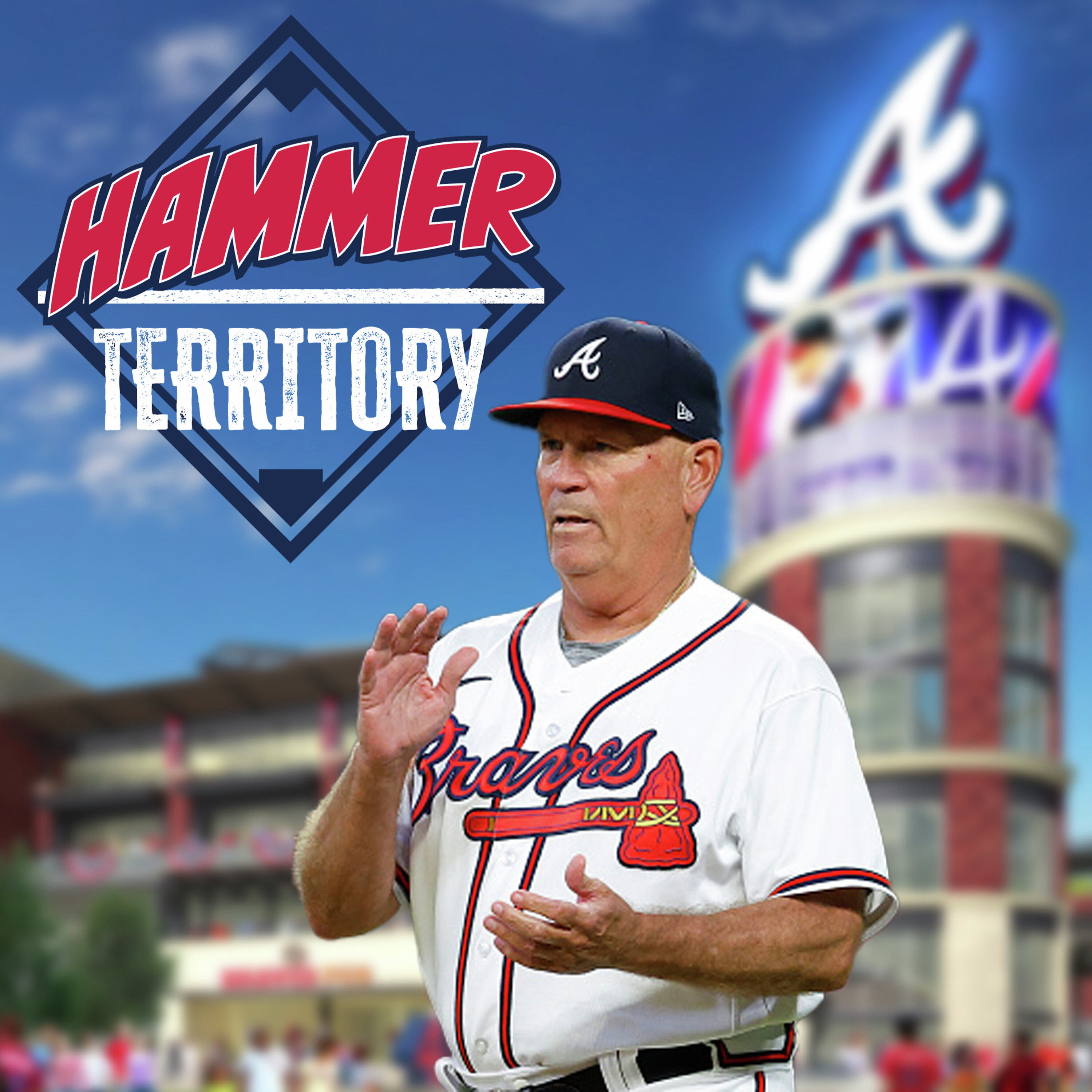
The State of the Braves with Kevin Pillar
Episode 274 of the Hammer Territory Podcast features a visit from former Atlanta Braves outfielder and Foul Territory analyst Kevin Pillar. Shawn Coleman and Pillar discuss the state of the Braves, Alex Anthopoulos, Brian Snitker, how the organization is perceived across baseball, and much more.
Go to https://OmahaSteaks.com to get 50% off sitewide during their Red-Hot Sale Event and use Promo Code FOUL at checkout for an extra $35 off.
For 20% off your first purchase, head to http://FairHarborClothing.com/FOUL20 and use code FOUL20.
See omnystudio.com/listener for privacy information.
Available Results
Generated results are saved to the knowledge database for reuse and search.
Extract Knowledge
Pick what you want extracted first. Model, scope, and chapter options appear after a template is selected.
Transcript
00:00:21
Speaker 1: Welcome one and all to the Hammer Territory Podcast. My name is Sean Coleman. Pleasure to be with you as always, Hope, wherever are you are, wherever you are listening, you're having a great week so far, final week of the season, and listen. You know, the Braves are playing good baseball and so we figured that we would get some first hand experience and analysis when it comes to praise baseball. And we are very thrilled to have former Brave and major league baseball player and join retirement now Kevin Pollar has been kind enough to join us. Kevin new member of the Foul Territory team. Thank you so much for your time. It's a pleasure to speak with you, sir.

00:00:56
Speaker 2: Yeah, it's nice to meet you. Yeah, it's retirement has been great.

00:00:59
Speaker 3: Faultriusry's been a great outlet and resource for me.

00:01:03
Speaker 2: So I'm happy to be helping you guys out.

00:01:07
Speaker 1: Yes, sir, yes, sir. Well, and like I say, we just we really wanted to get your perspective on several things. I know that you're you're a ten year plus major league veteran. You have had plenty of success. Congrats to you in a great career. Obviously you've had, you know more many hats throughout your career, so just really gonna value your opinion now. Obviously for those who follow Himer Territory, Kevin was of course a part of the twenty and twenty three Braves, also was drafted by alex Enthopolis back in twenty eleven and as a member of the Toronto Blue Jays, for whom he spent much of his career. And Kevin, let's go right into it. You know, I know that you know now being a member of foul Territory, you follow all the teams in Major League Baseball. You were there in twenty twenty three when the Braves had their historical offense, just an absolutely outstanding regular season, the playoffs did not work out, and then over the past two years it's been a bit of a struggle. When you were there with that team in twenty twenty three and you've kind of seen how things have developed over the past few years, what really has stood out to you is the biggest reason as to why the Braves have not been able to return to that level of success.

00:02:10
Speaker 2: Why they Yeah, I wish I had a crystal ball.

00:02:13
Speaker 3: I mean, I think the obvious you thing you could point to his injuries. Yeah, I mean, I know it's part of sports, but they've just been hammered by injuries, you know, not having Ronalds for a full season, you know, starting a year without Schreider. You know, the list goes on and on, Guys in the bullpen, others starting pitching. This is a star league, and the Braves when I was there, had stars and they.

00:02:36
Speaker 2: Were all healthy.

00:02:37
Speaker 3: And when you have them all in the field, it's a you see the result of it, you know, to be able to collectively have over three hundred home wins as a team, I always forget the number.

00:02:47
Speaker 2: Was it one hundred and five wins or one hundred and three wins?

00:02:50
Speaker 1: I think it was one hundred and three hundred and two.

00:02:53
Speaker 3: To over one hundred wins, which is like you don't see, you know, every year.

00:02:58
Speaker 2: You don't see teams win one hundred games every year.

00:03:00
Speaker 3: It was just a team full of not only really good baseball players, but really good people. And I know, potentially we'll go down that sort of rabbit hole with Alex over there in.

00:03:11
Speaker 2: My connection with him.

00:03:12
Speaker 3: But I think even though it hasn't worked over the last two years, I do believe that's his secret, sauce.

00:03:18
Speaker 2: I think that's his secret.

00:03:19
Speaker 3: You know, recipe is he values good people and he wants that clubhouse.

00:03:24
Speaker 2: He wants he wants everything to kind of fit.

00:03:27
Speaker 3: He wants to know that the best player in the team and the twenty sixth player are all pulling on the same rope, that they're going to get along, that the players that come from Latin America or other countries are going to get along with the American players. He believes in the sum of the hole is greater than the you know, it's part. So he does an amazing job of doing that. And it's kind of crazy to be sitting here two years later from when I played for the Braves and talking about the missing the playoffs two consecutive years. When I was there, you know, it felt like it was the beginning of a dynasty. And when I was here, it felt like it was kind of we just ran into a good team.

00:04:06
Speaker 2: We ran into a great team. You know, we ran into an.

00:04:09
Speaker 3: Unbelievable, unbelievably hot Phillies team that had a ton of momentum going to the playoffs, and you obviously want to win as many games as you can in baseball. You want to win a division, you want to be able to kind of set that rotation up give everyone rest.

00:04:26
Speaker 2: But what people forget we ran away with that division early.

00:04:31
Speaker 3: We pretty much had that thing clinched in the middle of August. You know, we weren't really playing meaningful baseball down the stretch. And did that kind of catch up to us a little bit?

00:04:41
Speaker 2: Maybe?

00:04:41
Speaker 3: Is it hard to kind of flip that switch and get back into you know, fight or flight mode, which we didn't really have to play with, you know, for the last two months of the season.

00:04:52
Speaker 2: You know, all that stuff kind of added.

00:04:54
Speaker 1: Up, and those things definitely do add up. But I think you hit the nail on the head.

00:04:58
Speaker 2: You know.

00:04:59
Speaker 1: The thing about it, Alex and Thopolis is that and you've been with, you know, two versions of Alex when you were in Toronto and also obviously when you were with Atlanta. One thing that you mentioned is that he values good people, and obviously that keeps that clubhouse dynamic so strong. You were there in twenty twenty three, I'm sure you stayed connected with several of the players that were there as well, you know, keeping that part of things going well, the clubhouse dynamic as strong as possible. I imagine that's still the case, and that's one reason to have faith that this team can get back on track to be in the contender. We all hope they could be in Braves Country.

00:05:33
Speaker 3: I'll tell you, I'll maybe aside from like what I would consider like my first born, my team's in Toronto, because there's there's nothing like your first firstborn, you know, my first team, my first experienced.

00:05:45
Speaker 2: Going to the playoffs.

00:05:46
Speaker 3: That team was super tight. The twenty fifteen Toronto Blue Jay team even more so, even more so than the team in twenty sixteen, which was really a lot of the same people, but just the way everything kind of fit. In twenty fifteen was the closest team I ever been a part of until I went to Atlanta, because I would say in Toronto it was it was probably about twenty of the twenty five guys or twenty six guys were super tight.

00:06:14
Speaker 2: You know.

00:06:14
Speaker 3: We obviously had some guys that you know, showed up to play. They kind of did their own thing, and that's not a problem. But when I tell you one through twenty six were in it tight, wanted to hang out, wanted to go play golf on off days, wanted to go to team dinners, you know, wanted to spend time with each other in their hotel rooms and hang out away from the field.

00:06:36
Speaker 2: I never been a part of anything like that.

00:06:39
Speaker 3: There were just so many good people, and you think about the kind of the leaders in that clubhouse. You know, from a Matt Olson, Austin Riley, and even Marcello Zuna is like just an amazing teammate. You know, he probably doesn't get the same sort of respect as some of these other guys, but Marcel was nothing but just a wonderful teammate to me and everyone else that was there.

00:07:04
Speaker 2: You know, when the.

00:07:05
Speaker 3: Pitching staff had all of those guys too. You know, I think losing Max Freed was a big thing, not just for his talent, but Max was.

00:07:11
Speaker 2: Kind of the the glue guy.

00:07:13
Speaker 3: For the pitchers, you know, and and and Darnault leaving, and you know, those are the tough business decisions that gms have to make. You know, Travis was beloved by his teammates, He was beloved by that city. He did a lot of great things for the Atlanta Braves. You probably wanted to be a Brave for the rest of his career. But when you have a guy like Dreg Baldwin waiting in the wing, and it's the reason you draft and develop guys. At some point you have to make tough decisions and you know what, you know, just missing that kind of leadership that Travis brought every day, that comfort to that pitching staff is also something that they're missing a lot too.

00:07:55
Speaker 4: Crats, Let's talk about Omaha Steaks, and it's not just steaks, it's chick and winnings, It's mash Burger's big deli style franks. There are a number of categories that you can hit all in one place. They've been doing it for a long time.

00:08:08
Speaker 2: They're the best of the biz. And if you got a good full a life's good, man.

00:08:13
Speaker 5: But you gotta finish every meal with some delectable desserts too. They have those too, to go along with these delicious steaks.

00:08:21
Speaker 1: Mm hmm.

00:08:21
Speaker 4: Apple caramel tarts on the list, among many other menu items to check out. Be the hero that orders Omaha Steaks and is the most popular person in your household, So get fired up for fall grilling with Omaha Steaks. Visit Omaha Steaks dot com for fifty percent off site wide during their red Hot sale event and for an extra thirty five dollars off. Yeah, thirty five bucks off. On top of that, use promo code foul at checkout. That's fifty percent off at Omaha Steaks dot com and an extra thirty five dollars off with promo code foul at checkout Sea Side for details.

00:08:56
Speaker 1: You've hit on a great point. You know that that we we there were the clubhouse dynamic has been so awesome. But over the years the Braves have lost a lot of those more long tenured, well known guys Freddie Dansby, Max Freed, Marcelo Zuna's time maybe coming to an end with him being a free agent, and now some of the longer tenured guides are Ozzy Alby's, Austin Riley, Sean Murphy. Each and every one of those guys are so talented, so important to our success, but they've had multiple years of injuries that they're working through just from personal experience or just being in clubhouses where guys have gone through that where years now have not gone as they have wanted to. What's the mindset to get back on track and you know, really be able to get back to what you once worries It going back to old ways. Is it changing things up? What helps you goes through those multiple years of injuries or years not working out as you had anticipated.

00:09:50
Speaker 3: Yeah, I mean from a personal standpoint, like from a player's perspective, you know, I felt like I did a really good job staying healthy.

00:09:59
Speaker 2: In my career.

00:10:00
Speaker 3: I obviously had some injuries related to like impact and you know, sliding.

00:10:05
Speaker 2: Things that you really couldn't you can't really avoid.

00:10:08
Speaker 3: But I would say one of my greatest strengths as an athlete a competitors, I always continue to explore. I always continue to try to grow in the off season. I always kind of changed up, you know. And a lot of people say, it's not broke, don't fix. But a lot of these guys are getting broken. And my body never really broke down. But I stopped running as fast, I stopped moving as well. You know, I never had injuries, I never pulled anything. But I always went back to the drawing board every off season. I always tweaked my off season workouts, my diet, you know, my workout routines. You know, some of these guys have to honestly look themselves in the mirrors, and it's hard when You've had a ton of success and what you've done has gotten you to this point. But sometimes you kind of have to turn over a new leaf in this game to kind of, you know, change the way your body kind of functions, the way it operates, the way your body trains in the off season, if you're you know, and some I'm thinking about mrph right now, and some of the stuff that's happened to him isn't necessarily his fault. You know, he's had you know, the impact injuries, you know, but he's also had the oblique injuries. So you know, you have to kind of, like you say, you got to kind of look yourself in the mirror.

00:11:24
Speaker 2: Ronald too.

00:11:25
Speaker 3: You know, Ronald's gonna have to And maybe some of that isn't the off season stuff. Maybe that's some kind of dialing back some of the things he does on the field, which he did a good job of this year.

00:11:36
Speaker 2: But I think as a player, you always have to be willing to make changes.

00:11:41
Speaker 3: You have to be willing to look yourself in the mirror and be like, Okay, it's worked, but I am getting older. You know, objectively, look at yourself, objectively, look at your numbers, your career. You know, the way your body feels after one hundred and sixty two games, you know what the data is telling you, and be willing to make some change. From an organizational standpoint, it would be very interesting because I know there's a lot of you know, uh, you know, rumored that Snip might be leaving after this year.

00:12:11
Speaker 2: You know what kind of direction they go is that?

00:12:13
Speaker 3: Is that an entire overhaul of the coaching staff as a guy like Walt Weiss, you know, maybe get a chance to, you know, step up and take a leadership role. You know, is is Cranny coming back? You know, I know he had missed some time, he had some family issues. You know, they the Braves obviously last year with the first year, the not having success in what like eight or nine straight years, you know, founder reason to move from their hitting coaches. You know after one year this is a second year. Are a lot of changes coming you know? Or are minimal changes coming? I don't know, you know.

00:12:53
Speaker 2: I don't have a crystal ball. I'm not Alex, but what I would.

00:12:57
Speaker 3: Tell you, and obviously this is a Brave show and your viewers are Braves fans.

00:13:06
Speaker 2: It's really hard to.

00:13:09
Speaker 3: Have the level of success that the Braves have had over the last ten years. I know it's only resulted in one World Series, but if you look at the history of the game, there hasn't been a back to back World Series winner since the Yankees did it in the late, you know, nineteen nineties. So it's really hard to win in the sport. What the Braves have been able to do and get to the postseason win division year after year after year has a lot to do with the person leading the charge in Alex and with whatever may happen this year, with whatever changes might happen. As a Braves fan, which I am, because I love the organization, I love the people there, I still root for them, I have the utmost trust in whatever decision and whatever route he decides to take with this organization because I know more than anything. Obviously, talent wins a lot of games, but building a culture and building an organization with the right people, I trust no one else more in this game than Alex.

00:14:15
Speaker 1: That's very reassuring to hear because it's a great segue into into my next question. You know, this is a pivotal off season, right It's the first off season, you know, in which Alex really is coming from not making the playoffs. What he had hoped would be the outcome that was not there. So do you you know one thing in Toronto that Alex was kind of known for. He would make those those gutsy trades. He would go out and get those big contracts or those big guys. But he's also a very loyal general manager. He loves his guys, you I know more than most probably know that first hand. Just do you think that some type of shakeup makes sense for this Braves team. I'm not looking to get anything, you know, just you know, you know, off the wall, just you know, say something that it's going to turn heads. But from your personal experience, do you think that it makes sense for him to do a move like that or to trust that internal development, slash players getting back to their old ways is going to be the best route for success.

00:15:13
Speaker 3: I think I think a combination of all of them is kind of the answer. But Alex is known to be kind of the person that hides back in the weeds and then makes these deals where.

00:15:26
Speaker 2: You know when sees him coming.

00:15:27
Speaker 3: I mean, you think about the Chris Sale deal he made two years ago. People don't even know Chris Dale was available.

00:15:34
Speaker 2: You know, that's just kind of Alex. How Alex works.

00:15:36
Speaker 3: He operates in the dark, so you know, as much as he operates in the dark in terms of stuff like that, when it comes to like trade dead trade deadline acquisitions, he does a really good job of And not to say that the player, like myself or any player in that clubhouse, has the ultimate say if you're bringing him or operinging him, but he does a really good job with his guy. You know, think Austin Riley, Ozzy Alby's Matt Olson. If he's thinking about acquiring someone that you know is rumored to be acquired, he's gonna do his homework himself.

00:16:13
Speaker 2: He's gonna make his phone calls.

00:16:14
Speaker 3: But he's also gonna ask the players, what do you know about this guy? I know you played with him somewhere in the minor leagues where you played with him in Oakland, Like, he really does trust the opinion of his players because he wants to protect the Braves Brands so much, and he wants to make sure that everyone fits when they come into that clubhouse, don't I don't know if he would care me sharing this story, but this is dating back to twenty sixteen when Alex got let go from the Toronto Blue Jays after having those kind of two magical runs, and you know, there is front office turnover, you know, you know, Rogers made some decisions to move on. But I'll never forget getting a phone call from Alex in the winter of twenty sixteen basically just thanking me. And it wasn't he didn't just call me. He called a lot of those core guys from those teams and just thanked them, you know, for the success that we had, but also the growth that he had as a general manager. And a big thing he talked about is I always used to get caught up on the back of the baseball card. It was all about numbers for me. What I learned through my experience with you guys through some trial and air was exactly what I was talking about. You obviously need talent, but you need the right talent. We need to bring the right people. So he learned that he had to make some tough decisions with some ten yured guys in Toronto sort kind of towards the beginning of my career when I wasn't even established, but guys that were you know, household names in Toronto he had to cut the cord with because he didn't feel like they were the right pieces, you know. So moving forward, they definitely have the right pieces in place, but I would expect them to continue.

00:17:58
Speaker 2: To build on what they have there. You know, there may.

00:18:01
Speaker 3: Be some shakeups, you know, anytime you go. And what I do know about Alex is there's not a lot of patients. There's patients for someone like Drake Baldwin who they're gonna allow to develop in the minor leagues, and when it's his time to come up, he's gonna allow him to come up. What he is not patient with is he's not going through a rebuild. He is going to He is going to do everything in his power this offseason to build a sustainable winner, not only for next year, but for the next couple of years.

00:18:32
Speaker 2: I would say at least through.

00:18:34
Speaker 3: You know Olsin and Riley's contract or, Michael Harris's contracts.

00:18:39
Speaker 2: You know a lot of people, I hear a lot of things talk.

00:18:43
Speaker 3: I hear a lot of rumors talking about maybe the complacency when you sign a bunch of these guys up and you have, you know, nine guys under contract, are they less hungry to go out there and perform every day. Coming from a player's perspective, someone who never got that payday, yes, I was always hungry to continue to go out and fight for my life every single day.

00:19:05
Speaker 2: But I can't speak on the other side of it.

00:19:07
Speaker 3: But I what I would tell you now that I'm retired, is if I was fortunate enough to have gotten that payday, I think I could have gone out there and played.

00:19:16
Speaker 2: A little bit more free.

00:19:19
Speaker 3: The struggles wouldn't have kind of affected, you know, my mindset as much anymore.

00:19:23
Speaker 2: There would have been a level of comfort.

00:19:25
Speaker 3: There would have been a little bit more comfort to go out there and not worry about my statistics, but doing whatever I had to do every.

00:19:33
Speaker 2: Single day to help that team win.

00:19:35
Speaker 3: And knowing the guys that they have signed up for those long term deals, they're exactly those type of guys. The struggles aren't gonna affect them as much because they know that their family is taken care of. Their individual numbers aren't gonna factor in as much what they're trying to do every single days. They're going to go out there and try to help their team win. You know, perfect example, as I know Olsen, you know, last year didn't have as great of a year as he did obviously coming up the historic year with the fifty plus home runs, the one hundred and thirty RBIs had a.

00:20:10
Speaker 2: Little bit of a down year.

00:20:12
Speaker 3: It's easy for him to go out there and be complacent after the bad year he had last year, and you see him going off this year, you know, being an All Star again, being a top five first baseman. That just speaks to the type of person Matt Olsen is. Because you know me or you were secure in the bag, it's easy to kind of just you know, downshift a little bit and just go into cruise control.

00:20:34
Speaker 2: Not those guys in the clubhouse.

00:20:35
Speaker 3: And you're speaking another one of those guys, Riley, you know, just the unfortunate injury plagued year. He's a guy you know that I'll personally reach out to and offer my kind of guidance and advice on. But he's another guy who just objectively has to kind of look in the mirror too and say, you know, getting hit by a pitch is kind of out of his control, right, But some of the other injuries that happen. It just evolving and changing and and and going out and you know, looking for the best people in those areas of training and medical and just tweaking your off season workout to to to to just try to be on the field every single day because he's so damn good when he's on the field. He's a top three third basement in the game. It's just about staying healthy. And you know, my relationship with him goes beyond you know, the year that we played with you know, we we formed a real friendship and brotherhood. And like I said, when the season's over, I'll pick up the phone and call him and just hear what he has to say, and then I'll just kind of encourage him to go out and explore those things because the game is not only the Braves, but the game of baseball is in a much better place when he's on the field. And I look forward to, you know, getting a text on my phone and the lineups posting and seeing his name in it, and and me being able to tune in and watch him play.

00:22:01
Speaker 4: Ftfam, it's still time for you to check out what bathing suit you're wearing and why it's not fair Harbor. Can we get a little show and tell from Eric Krats? Nice?

00:22:14
Speaker 5: I mean Unfortunately, you can't even see all the little intricacies. We got sharks, we got patterns, we got waves, we got sailboats. Oh, and they feel super buttery.

00:22:26
Speaker 1: On your skin.

00:22:28
Speaker 4: Can you show us the liner so people can understand how it's different, because I've actually been taking it up. I was different vacation.

00:22:35
Speaker 5: I got the unique liner too, I got the I got the baby Blue John something about it. I don't know it like it pops.

00:22:42
Speaker 4: Head to Fairharbor Clothing dot com slash foul twenty and use code foul twenty foul two zero for twenty percent off your order. Once again, that's Fair h A R B O R Clothing dot com backslash foul twenty for twenty percent off. Make sure you use that promo code foul twenty so they know FT sent yet.

00:23:03
Speaker 1: I know so many of us are looking forward to that as well. Kevin Pullar here with us. You know, former MLB player had an awesome career member of the twenty twenty three Braves. Who's been so kind to join us. Kevin, just a few more questions with you. One thing I've always wondered is the Braves have had good success yourself as well as many others who have joined the team for maybe a year or two, and when they come to the Braves they have success at the level that they did not maybe have in previous places.

00:23:31
Speaker 2: I know that you.

00:23:31
Speaker 1: Speak to the camaraderie and just the awesome people. They're the awesome people presence that sets the Braves team apart. Is there anything organizationally as far as their approach towards you as a player that stands out offensively defensively? Is there anything that separates them, especially you haven't been a part of so many organizations, Anything that really stands out about them that that's for the player on the field.

00:23:55
Speaker 3: Yeah, I don't think like in terms of the x's and o's, but I think the Braves do a really good job of when they approach you in the offseason, if you're a minor league free agent or a free agent trying to kind of bounce back, they like you who you are.

00:24:09
Speaker 2: They liked the type of player. They know exactly who they're getting.

00:24:12
Speaker 3: I mean, at least with me, they knew, and obviously my relationship with Alex had a lot to do with that. But it wasn't about me being anything that I wasn't or couldn't be you know, it was about just being me and being my authentic self. And the guys just make it so easy for you to come in and be your authentic self. And obviously, you know, when I went in there, you know, I had you know, I think I was on my eight I was in my eighth year or ninth year. You know, I was closing it on ten years. I already had a reputation in the game, and I learned that from going from team to team. Obviously, the first time getting traded it was really tough. You know, the second or third team was also a little bit more difficult.

00:24:51
Speaker 2: But when you kind of.

00:24:52
Speaker 3: Have a track record and you're an established person in this game, I found it really easy for me to just come and be myself. And I see, the Braves were very welcoming, inspiring, encouraging. It was just easy for me to be myself. And that came from not only Alex the players, but Snitt and the coaching staff all the way down. They're like, we know who you are, you know who you are as a player, Just be that guy and that's it, and that gives you comfort.

00:25:20
Speaker 2: And obviously, you know, in terms of the ex as the nose. It wasn't so.

00:25:25
Speaker 3: Much a really in my opinion, a really good organization isn't necessarily getting the x's and knows from the hitting guys.

00:25:32
Speaker 2: You're getting it from your peers.

00:25:33
Speaker 3: You know, the braves are really good at I could go in a cage with Austin Riley or Ozuna ended up being kind of my guy that I would spend a lot of time with in the cage because him being a DH maybing a part time player. You know, we found time during the game, you know, when he was getting ready and I would kind of mix in when I was pinch hitting. I could sit on the bench and kind of talk approach with him. But you know, your best hitting coaches are your peers, and I think that's why I think a lot of guys that maybe have underperformed, or guys like me kind of on their last leg and their career kind of go in and have good years. Is you're surrounded by great guys and you it's easy for hitting coach to kind of objectively give you kind of advice and analytically and motion capture, but being able to talk to a guy who's also standing in that box with you is so invaluable.

00:26:28
Speaker 2: Guys that have struggled, guys that have had success.

00:26:31
Speaker 3: You know, when you're a right handed pitcher and you're facing a lefty and you're talking to other right handed hitters in the lineup, there's no replacement for that. And you would hope that that's how it is across the board, but it's not everywhere I've been. And that's just another example of why the Braves are able to bring in guys like me and have success, and why collectively they're able to have success for such a long period of time.

00:26:54
Speaker 1: One last thing I would love to get your perspectable and is a big factor and why they've had so much success besides Alex and Thopless. Of course, that's manager Brian Snicker. You know, the future to be determined. You know, there could be a possibility that this may be, you know, the end of his career, and if it is, it's been a wonderful career with the Brakes. But also then bringing back Charlie Morton Kevin to know that you know Charlie from the game as well also being teammates in twenty three. Just any perspective that you can give on those two if this is to be it.

00:27:22
Speaker 2: For their careers.

00:27:23
Speaker 1: Any perspective, any fun stories is what could be their final weekend together. And maybe in baseball in general.

00:27:29
Speaker 3: Yeah, I think Snick just automatically, you know, when you're a baseball lifer, you spent your whole time an organization.

00:27:35
Speaker 2: You came up in a time when.

00:27:38
Speaker 3: Things were ugly, and he was kind of just able to kind of motivate that group. And you know, previous manager before him was kind of Delta, a little bit of a tough head. You know, the teams weren't really good, and Snick kind of came in at the right time when a lot of these young what are now superstars are kind.

00:27:56
Speaker 2: Of you know, getting to the big leagues.

00:27:58
Speaker 3: But yeah, you just automatically just have a respect for guy who's you know, put his life's work into not only baseball but the Braves organization.

00:28:09
Speaker 2: And I think he never.

00:28:11
Speaker 3: Took that position for granted, and I think the players understood that.

00:28:16
Speaker 2: I understood it.

00:28:17
Speaker 3: Even though when I got there he had won a World Series, he had a ton of success, you could still see the humility he had for the position, the appreciation he had for the position. Never took it for granted, never abused his power, understood his place. And that was another thing is when he spoke, you listened, But he didn't speak all that time all that much. He allowed the players to kind of dictate the direction of that ship.

00:28:44
Speaker 2: Was going to go in. And that's a.

00:28:47
Speaker 3: Not to say he couldn't do it, but that's just what a humble leader does is he understands that he could be a dictator in that sort of that role, but instead he wanted to delegate to his leaders on his team, his coaching staff. He allowed us coaches to coach, and that doesn't happen everywhere.

00:29:06
Speaker 2: He didn't.

00:29:08
Speaker 3: When you're a manager, you have the right to step put your foot in, you know, any meeting, any door that you want to step in, you could open your mouth and hitting meeting, you can overstep wherever you see fit. He allowed us coaches to coach, and I think that's why those coaches, whether it's the you know, the bullpen coach or the hitting guys, or the pitching coach or the bullpen coach or whatever coach, the bench coach, he allowed them to be them.

00:29:34
Speaker 2: He allowed them to thrive in their roles. And you know, it's powerful and if it is the last year. He had a heck of a ride.

00:29:43
Speaker 3: He deserves retirement much more than than most coaches in this game. Someone that, like I said, dedicated his life to one organization more beyond paid his dues to get his chance in the big leagues and to be able to go out as not necessarily go out this year, but to go out right off in the sunset as a World Series championship as well deserved. And you know, just to speak to the class of him too. He was someone that had reached out to me when I officially retired. Not a man of many words, but powerful a message he had sent me and just you know, basically respecting, you know, my career and what I had done and appreciate for it, and for me to you know, really understand where I come from, you know, being a late round draft pick and to survive ten years to really sit back and celebrate that and enjoy that, you know, pat myself on the back.

00:30:40
Speaker 2: It's time to do that when your career is over.

00:30:42
Speaker 3: And it just kind of speaks to who he is and kind of the relationship that we kind.

00:30:47
Speaker 2: Of formed just over a one short year there, and.

00:30:51
Speaker 3: Charlie just an amazing career, talk about you know, just the you know, I've spent a lot of time now that I'm done, you know, talking to you know a lot of youth, youthful players, you know, whether they're you know, my five years here where guys that are in high school, guys that are in college. But just reassuring him that everyone's path is not linear in this direction, and you know obviously mine, you know, going to a D two, getting drafted late late, making it is you know, one sort of un parallel, you know, skyrocket sort of.

00:31:26
Speaker 2: Journey to the big leagues.

00:31:27
Speaker 3: And then you think about a guy like Charlie Morton who maybe had that kind of quick rise to the big leagues but didn't have success right away and kind of had to reinvent himself two or three times over and really found his best success in his thirties. You talk about kind of an un parallel path to success and same and longevity in his career. Talk about a guy who had to look himself in the mirror objectively, make some changes, reinvent himself, and to be able to pitch, you know, in his late thirties, be the best version of himself kind of into his forties. Is uncharacteristic, but just kind of speaks to the work ethic, the humility, the ability to look at himself objectively in the mirror. And Charlie as a teammate was.

00:32:19
Speaker 2: Honestly like a father figure.

00:32:21
Speaker 3: And it's weird to think that we're really only like four six years apart, but in baseball years, that's light years, you know.

00:32:30
Speaker 2: You know, he had much older kids.

00:32:32
Speaker 3: I have kids like still that are like babies, and he has like kids that are going to high school. So he was always like a father figure to everyone behind the scenes. Very funny, goofy guy, almost awkward to some degree, but he's just you know, he was just awesome teammate, you know, super lovable, great, great competitor on every five days. And then you know, as a starting pitcher, obviously there's guys you want out.

00:33:04
Speaker 2: There you're taking the ball.

00:33:06
Speaker 3: Charlie, much like a lot of teammates, one of those guys that wanted it's what is that guy like the other four days? And Charlie was just a great teammate. You wanted to be around him. He loved talking the game, he loved helping the younger pictures. So if if hopefully this you know I can't speak portray, but hopefully this the end for him because he put a lot of years in the big leagues and he's got a beautiful family that it's probably ready for him to be home and he'll get a chance to enjoy that.

00:33:34
Speaker 1: Absolutely. Kevin, this has been a great interview. Thank you for the thoroughness and in the sincerity. Great to get you know, your perspective on things, and it's also just awesome. We all want for the success on the field, but it certainly means a lot to You're for an organization where there's just full of great people that have been there for a while and you gradt to you in a great career, one of the best fielders of this generation. You know, so many awards when it came to the outfield. But Kevin, please correct me if I'm wrong. I also want to put a little bit of spilight on that Division two career of yours, if I'm correct. A fifty four game hitting streak, which still remains the Division two record. That is awesome. When you were going through that hitting streak yourself, I mean, did you keep the same routine, What was your secret to success during that time in Division two?

00:34:16
Speaker 2: If I might ask, Yeah.

00:34:17
Speaker 3: I mean I think initially it was uh, you know, when you're even in the big leagues, but more so in college it's a little bit more realistic. But like, our goal every time we go to home plate is to have a successful bad and and in terms of you know, uh, you know, the simple way of putting it as success is getting hits.

00:34:37
Speaker 2: Right.

00:34:38
Speaker 3: I know, the game's changed a little bit in terms of expected and a lot.

00:34:42
Speaker 2: Of that stuff has some value and stuff.

00:34:43
Speaker 3: But when you were a kid playing D two baseball and it see either you get a hit or you don't get a hit. When you're playing backyard baseball, you get a hit or you don't get hit. There's no I hit the ball hard, you know, I win sort of mindset, you know, when I was in when I was playing, so that was kind of always my mindset was like I was trying to be successful ever at bad and I was able to stack a lot of those games on top of each other, and honestly, it didn't feel any different.

00:35:10
Speaker 2: Early on.

00:35:10
Speaker 3: I was just kind of playing and that was my idea of success was getting hits. And you know, when I started reaching kind of different milestones, whether it was the school record, whether it was my conference record, and then ultimately when I started getting upwards of Division two record and the national record, you know, you started feeling the pressure a little bit more. But really, honestly, I think I was a little naive and I think, you know, I just was a ballplayer and I just kind of kept that same routine, that same mindset. As Yes, I felt the pressure when I was kind of getting towards my last step bat and I didn't have a hit like it, maybe.

00:35:53
Speaker 2: It just helped me focus a little bit more.

00:35:54
Speaker 3: But regardless, if I wasn't chasing these these records, I was going to feel the same way. If I was over three and this is my last at bat, I'm like, damn, I want to go home with a hit. So, you know, I think that kind of just mindset kind of helped me kind of get through it. And when it was over, it was kind of sad. But I went back for my senior.

00:36:15
Speaker 2: Year and nothing really changed for me.

00:36:18
Speaker 3: It was like, my goal every day is to go get My goal every about is to get a hit.

00:36:22
Speaker 2: It's not going to.

00:36:23
Speaker 1: Change, Yeah, just keep it simple. Led to a hell of a major league career and so now a great addition to the foul Territory family. Kevin, if you'll stick with us for just a moment, but thank you so much for your time and best of luck to you and your family continued success.

00:36:37
Speaker 2: Well, thank you. Yeah, I mean I love it.

00:36:39
Speaker 3: I love the foul Territory brand. I love coming on helping you out. Obviously reach out during the off season when things start happening. I love talking Braves. Like I said, I'm gonna I got to reach out to some of my Braves buddies over there and kind of pick their brain a little bit and see what's going on and would love to share.

00:36:58
Speaker 1: Yes, yes, well, thank you so much. With the insight of course, Kevin Pilar, you will find him as a member of the foul Territory Network. Hammer Territory part of the foul Territory Network as well the rest of us.

00:37:08
Speaker 2: Excuse me.

00:37:08
Speaker 1: The weekend, the final weekend of the season is wrapping up. I know that Kevin's probably sad to see that for some of his friends in the game, and know we're sad to see that in Braves Country, but hey, the off season starts and then we'll all be back to that success for Kevin plar again. Thank you so much, Kevin. My name is Sean Colemans. Catch us next time. As a reminder, go braves, we'll talk to you again soon here on the Hammer Territory podcast