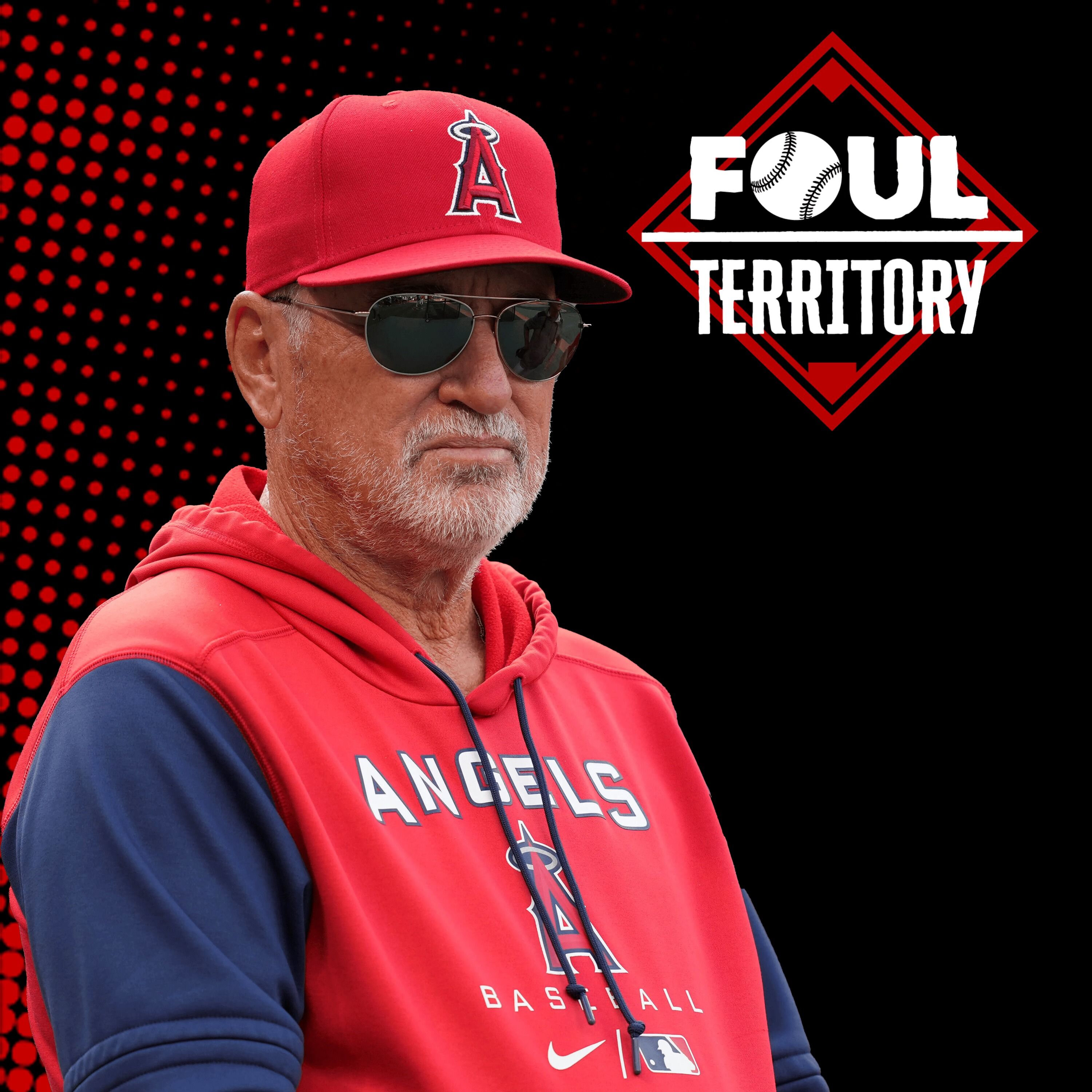
Joe Maddon Unfiltered on Ohtani’s workload, Intentional HBPs, Devers/Castellanos situations, Front office influence
3x Manager of the Year Joe Maddon hits the latest headlines from his view as a former skipper: Rafael Devers trade, Nick Castellanos punishment and how to handle a unicorn Shohei Ohtani workload.
Joe also shares his experience with hit by pitches and the changes in front-office involvement with teams.
Hosts: AJ Pierzynski, Erik Kratz, Scott Braun
Schedule your PXG golf club fitting today at PXG.com/foul to save up to 20% on your entire order. Restrictions apply, see site for details.
See omnystudio.com/listener for privacy information.
2025-06-19
24 min
Transcript
Available Results
Generated results are saved to the knowledge database for reuse and search.
No generated results are available for this episode yet.
Extract Knowledge
Pick what you want extracted first. Model, scope, and chapter options appear after a template is selected.
Generated results for public episodes are saved to the knowledge database so they can be reused and searched later.
Transcript
00:00:00
Speaker 1: My rule for the position players was to respect ninety feet and my rules for the pitchers were too. I wanted you to work on your defense on a daily basis. Whatever that meant, just please, I want good defensive pitchers. Other than that, man, you were on your own.

00:00:17
Speaker 2: Here we go.

00:00:18
Speaker 3: We got Joe Madden joining us right now, former longtime skipper, and many ways to check out what Joe's doing.

00:00:23
Speaker 2: We'll talk about the pod and all of that coming up in a moment. Joe.

00:00:26
Speaker 3: Great to have you on. I'm sure you've been listening to some of our banter here. AJ wants to know if you've ever code read him before to hit him, and what you thought about the recent back and forth with the Padres and Dodgers.

00:00:38
Speaker 1: How you doing good? Thanks for having me boys, and yeah, listen, we had a lot of reason to code red AJ, but never did. Right.

00:00:46
Speaker 4: That is a lie.

00:00:46
Speaker 5: That is a bull faced lie, Joe, because calviam Basketball hit me after we beat you oh five.

00:00:52
Speaker 4: The next year my first bat and you weren't the manager, but you were the bench coach.

00:00:56
Speaker 5: So I'm playing in Sosia and you and then and then there was.

00:01:01
Speaker 4: One in twenty twelve.

00:01:02
Speaker 5: You were still in you were still in Tampa and Alex cob hitting me after you guys thought I had a dirty slide on Zobras, and then Katana threw behind Ben Zobris.

00:01:12
Speaker 4: You guys all whined, and that was the famous hawk Harrelson.

00:01:14
Speaker 1: Wagner, what are you doing? See, when you have a really good veteran team, the manager never has to say anything, and you know that really should should never have to come from the manager. These are the kind of things you talk about in spring training. Uh, And it's always about defending your own brood. My experience has been most of the times when this has red, it's obviously obvious when it should happen. But what normally occurs is that a veteran pitcher will mosey up to somebody, whether it's somebody in a bullpen coming into the game, a guy in the pen, or somebody on the bench itself. But these are conversations we all have in spring training. I could honestly tell you I've never went up and told or asked anybody to hit a batter, but it's it's been done because of the unwritten rules. And you guys were talking about something previous to this about a pitcher's or pitch that cannot do it. I'll tell you why. I mean, I had a young pitcher with the Rays that one of the dudes asked him to hit somebody, and this guy was totally freaked out of it. He's a really good picture because he had never done it before and he didn't want to do it, and this is it puts the guy in a very difficult situation. So really, when you asked, when it's asked of a pitcher to do something like this, and I know, like Ozzie would get upset if somebody didn't drow somebody at the right time. I know that, but you have to ask the right guys. Chuck Philly one of the best. Chuck you would pick out a thigh. That was this big thing like I think Eric brought up about or somebody brought up about throwing behind the guy at his butt. Pick out a thigh is always the most effective way.

00:02:40
Speaker 6: Joe I one time got in trouble from a manager because I told one of our pitchers to hit somebody because they hit Yelly three times in a row and the Cardinals just nobody on our team, and I got aired out by Craig counsel. So have you seen it where managers only want to be the one that's ordering the code read.

00:03:05
Speaker 1: I can't. I can't say that specifically because I know so. She never wanted to throw at anybody. I'm going to tell you that right straight up. So she did not like that at all. And again, like I've started, I've not specifically seen that. No, But again back to my original point, conversation in spring training was always about protecting one another. You talk about the Cardinals. The time I was with the Cubs, the Cardinals as much as anybody would throw at somebody that was part of their culture there, and you knew that. And I remember specifically there's a situation in Wrigley where I felt that was happening against us. And my comment afterwards was that we don't start anything, but we're going to stop stuff. We'll stop something that occurs. So if you in fact believe you're being attacked, of course you have to retaliate. I don't care what anybody says. I don't care about the narrative that's been created in today's games. It's just the way things need to be done. I'll tell you the two thousand and eight Rays send it as quickly as we did because of the fight we had in spring training with the Yankees and then the fight we had with the Red Sox there season, because we had to take that division. Nobody was going to give it to us, and these guys were pushing the Devil Rays around for years. So I think the two of the biggest moments there seven of moments in the history of the Rays was the fight when Elliot Johnson pancaked Francisco Servelli at home plate in a spring training game, and the other one was when Shields got Cocoa Crispin the thigh to start the game after there was in issue of the night before these You know, some people could argue all they want, but these are the kind of things that may be necessary to galvanize a team, and all of a sudden, yeah, you start believing in yourself. He become a little bit tougher, quite frankly. And I don't I don't see anything wrong with it. I don't want anybody throw on anybody's head, Absolutely not. That's not the point. Picking out of thighs the pro way of doing it, all right.

00:04:44
Speaker 4: Two things, One, Ozzie, once you mentioned that he got mad.

00:04:47
Speaker 5: I was there for that. I was catching I got hit twice. He told somebody to throw it a guy. He missed, he got he didn't took him out. It's a whole song. It's still is raging today because the kid got sent down. He was getting sent down or regardless, but he missed. And then Azzie came out put on a show and it was a big and I had nothing to I didn't tell anybody to hit anybody. Somehow I get that I was told I didn't tell anybody hit anybody. I didn't know what was going on. I knew that he was getting sent down. After the game.

00:05:13
Speaker 4: It just sucked for the kid. Whatever, I apologize, I had none do with it.

00:05:16
Speaker 5: So but then my question is is I've also seen this one because Tom Okay, So I had Tom Kelly. Tom Kelly wouldn't put a young kid in to hit a guy. He would say, Rookie, no, I want a veteran because of what you said. Now, have you ever had a guy tell you no, Because I've seen that happen too, where a manager has gone to a player and said I want you to hit this guy, and this picture said no, I'm not doing it again.

00:05:38
Speaker 1: I've never said that directly to a picture. I have not. I know that you'll see that. Like I said, a vet might mosey up to somebody in between innings, or it could come from the bullpen, comes from all a bunch of different directions. I've seen guys attempt to hit somebody and miss, and at some point you got to stop trying. I mean, you just can't keep throwing at him like he's a dartboard. That's not the point. So I've seen that where it's failed, and then you've got to move on. At some point. You don't want to hurt anybody, even when it's when you throw at and sometimes miss intentionally, at least the message has been sent. Of course, the guy on your team that had been hit really would prefer a pound of flesh. I understand that, But there's these little the nuance of doing something like this. The hit needs to be below the waist, I believe, and sometimes it has to be done. The message has been sent, and I'll argue that with anybody today's world, especially let's just say the sports world in baseball, doesn't believe in this kind of stuff where where you get to the point where there's an instant replay going on things that are being reviewed, and you have guys from two different teams standing on second base, arm in arm practically looking at the scoreboard because score all this stuff really I think subtracts emotion from the game. The technology, more technology involved, the less emotion involved. So that part of it I don't like. So you're seeing that bore today. Nobody really wants to be that crew. But I didn't see the Padre Dodger exchange, by the way. I have to check that out. But in today I can see shilty shilty with the Padres. I get that day with the Dodgers, you know, and these are two of the better teams. You have to take your own turf man. Nobody's going to give it to you.

00:07:12
Speaker 4: Agreed. I agree.

00:07:14
Speaker 3: It is summertime. We are in the thick of golf season. It's always golf season down in Florida, but we're in the thick of golf season across the country and someone's looking to get a new club.

00:07:25
Speaker 2: That logo should say it all p XG. What do they do?

00:07:29
Speaker 5: Don't get fitted? Go get fitted by one of their master fitters, professional fitters. I've done it. It's helped shave many strokes off my handicap. It is worth it. It's educational. You learn about not only clubs, you learn about chefs, You learn about grips, you learn about angles. They have all the numbers, all the setups that you need to help improve your handicap.

00:07:47
Speaker 2: You feel like of VIP when you're there one hundred percent.

00:07:50
Speaker 4: They even help my putting which needed.

00:07:52
Speaker 2: Help there, They help your putting there there. That's how cool it is.

00:07:56
Speaker 3: So schedule you're fitting today and for a limited time you could save up to twenty percent on your entire order. Head over to PXG dot com slash foul. That's PXG dot com slash foul to save up to twenty percent on your entire order. P XG dot com slash foul. Restrictions apply se site for details.

00:08:14
Speaker 5: All right, let's go on to something a little bit just as crazy as throwing it. Guys Rafield Devers talking about emotion. Well, it's got emotional for the Red Sox and for him. How would you have handled this situation if you were the manager of the Red Sox. I mean, what's your thoughts on this? Because you've been through a lot.

00:08:32
Speaker 1: Yeah, it starts it starts in the beginning. I guess that's yogiism. You know, the moment that they knew they wanted to get Bregman and they had a chance to get Bregman. I think that's when the dialogue needed to be created. Now with Devers, I know that the concern there is that, well, what if we don't sign him and we've broke the subject and all of a sudden he's going to be upset. So I'm going to talk to Devers. We might get Bregman, all of a sudden, it doesn't happen. Are we going to inflict some kind of a mental injury on it? Because we've talked about it. There's a fairness about that point. However, if they knew they were really down the road to pregnant, this stuff was going to happen. I think at that point the conversation had to begin. So a that number two Bregman has to be the third basement, no question, there's no parceling around that. The point I think where they made the mistake is to tell them to put his glove down completely at that point there, I really I kind of believe I would have asked him to continue to take ground balls if both third and first base, and then beyond that, you try to get them a game maybe once a week on defense somewhere, either at third or first, or maybe one at each place. Give Bregmant a day off, give the first base in the day off, et cetera. And keep this guy solving and keep him on the field. Because when you get guys that young, you just want to turn them into dhs. It's not easy. I had was part of four outfielders with the Angels erstat Samon Edmunds and Ga Garrett Anderson in the nineties at some point there with oh, this is a great idea. One of them will DH per week. We'll give the other so they get one day off a week and we'll rotate it that way. It's be wonderful. They hated it. They absolutely hated it. When you're talking about young, younger players, the thought of kind of being castrated, I'm not a player anywhere I can't be on the field bothers them a lot, and you're you're you're really slicing an ego at that point too. So those are the points that need to be you have to be careful with in the conversation has to be Frank has to be honest, don't dissemble, none of the executive talk. Front office, stay out of this. Let Alex handle that. Too many chefs not good. So there's a lot of things that went wrong with this. But from the beginning, I call Jack Ryan as a protagonist and all the Clancy novels not mister President. He wasn't your friend. He wasn't just a friend of yours. He was your best friend. Go right to it. Run towards the issue, don't tap dance around it, because eventually it turns into devers playing in San Francisco.

00:10:50
Speaker 6: Does this feel like something that the front offices nowadays maybe overstep the manager And did you need to keep that did you need to keep that at length when you were a manager, like, Hey, I need you to stay up in your front office. I'll take care of what's going on in the field in the clubhouse. Or is that something that the game has changed since the years you've been you know how long you have been in it.

00:11:16
Speaker 1: The game hasn't changed. The administration of the game has changed. Yes, I mean everybody always talks about the game has changed, and I dispute that it's the same game. But how we're administrating it is different. And yes, when I was back in you know, the eighties and nineties whatever, when I was trying to get to the big leagues, gms were afraid to come in clubhouses. You never saw them. You never saw front office personnel in clubhouses there. You know, they did their job, which was to acquire players, keep everything rolling properly, put seats in this, fannies and butts in the seats, et cetera, et cetera. But they weren't necessarily they were never really involved in the coaching of you know, the distribution of information. Whatever. You had, You had advanced scouts, you had your your your coaches on the team, you had your manager who normally set the patterns for the whole organization. Now I'm not here to tell that that was all correct. I used to get upset with that because I thought, we we have a new manager with every two or three years. With the Angels back in the day, and you're constantly turning over your cutoffs and relays, your first and third place. You know, offensively, what was important is the bunt, could you know Buck Rogers like the stink play like stealing third base on a fake a butt with the say with the delay, steal a second. Every manager brought his own stuff into the mix. Today, That's not true, and I, like I said, I disputed that I wanted to see more of a homogenized method of the Angels play regardless of who the manager was. Now it's gone to the absolute opposite extreme where the homogenation comes from. Emogenization comes from the front office, and the manager pretty much is at the at the whim of all that, or at the edict of all that. We as managers today definitely is a middle manager. It's Jean Bak would would not get a job today. Early would not get a job today. White and Herzog would not get a job today. That kind of authoritarian authority figure. Uh, you know, somebody that really knew what he wanted and what he liked would have never been listened to. That guy would have never had this opportunity. You'd have never heard of these people if the game was administrated back then like it is now. So game is the same, the way it's being uh, like I said, processed on a daily basis is completely different. And so the other front office is way more involved in daily conversations analytical departments, way more involved in instruction, quite frankly, and they're they're down in the field before the game, they're in they're in bullpens, are in batty cages, or every place they should not be. So yes, that's what's different about the game, not the game itself.

00:13:54
Speaker 6: Have you ever needed to stand on business, as the kids say, when a player says something to you? Rob Thompson, Rob Thompson said, Nick Castianos after he got taken out of the game, went too far? What his comments went too far? And Rob Thompson was standing on business and said, you know what, you're not playing today.

00:14:19
Speaker 1: I don't think I've ever told somebody's not playing based on what he said to me, I'm pretty sure. Although I did have one situation though i'll go back. I'm not going to name names, but I had an issue with one player called him in, had a couple of the coaches with me so that everything I said was verified or validated, and told me he wasn't going to play until a certain thing occurred, and so I did that. But it wasn't something he had said. It's something that I did not like on the field. So that's what that was. From and then after a day or two, I thought to myself, you know what, I'm wrong. He was not wrong, he was wrong in a sense, but I was totally wrong the way I presented it to him. So I apologized to him and I put him back in the lineup after couple of dates, because after I evaluated what I had said and the process that I went through, I thought my process was wrong even more than his was. So that happened one time. Otherwise, you know, I've taken guys out of games for different reasons, but this always like a warning in advance if they're breaching some of the I have some really easier or no rules at all. My rule for the position players was to respect ninety feet, and my rules for the pictures were too. I wanted you to work on your defense on a daily basis. Whatever that meant, just please, I want good defensive pictures. Other than that, man, you were on your own. I'm not a big believer in rules. I think integrity has no need. There's no need of rules. If you have integrity, you answer these questions to yourself. And one of my opening dialogues to all my players always was, you know the difference between right or wrong. You don't have to wait for me to tell you that. You grew up with some great parents. I think we all are born with this inate ability to determine what is right and what is wrong. Choose right. That's exactly what I tell my guys, so excuse me. The situation with rob he had a choice there. He could have chosen not to say anything at all. He could have just taken what nick said after the game, called in the office, he yelled at one another and then figured it out after then. But he made up his mind to do what he did. But I do respect what he did Robbie. That is, he was honest with the press. He didn't have to tell him exactly what was said, but he told him why Nicky wasn't playing. He didn't dissemble, he didn't give it any execu you talk, and I love that about him.

00:16:39
Speaker 5: What would you tell Dave Roberts about handling Showhy now that he's back pitching and hitting.

00:16:44
Speaker 4: Is there anything?

00:16:45
Speaker 5: Is there a difference in handling him as just a hitter versus when he has to pitch and hit.

00:16:50
Speaker 1: The thing I did with him was we had a conversation every night before the next day so after the game's over, how you feeling? The big thing? He had told me early on a show. We first determined that we're going to do both things with him. In that spring training, he was only concerned about his legs and how his legs felt. So it was fair. It's a fair point, I said. Okay, So every night e pay is at that time as assistant, I would text Epay or talk to e Pay and he would go to show and we would say, okay, what do we got for tomorrow? How are we feeling for tomorrow? Is there anything you don't want to do tomorrow that kind of a thing. Are you good? And that would be the conversation. So the only thing I would do. See, there's the issue here. Don't think that you know. I mean, we don't know. We've never done what show does? I did it in little league maybe twice a week, right, never did it every day on a big league level, you know, played multiple positions, so nobody's ever done this. So to think that you know, or to think that there's some kind of algorithm that's going to determine what's going to prevent him from getting injured, not true. So I would just communicate with him nightly after the tonight's game we're playing tomorrow day or whatever. Show what he got? He said, let me, let me get to you in the morning, get back to you in the morning, and then that's it. I'm going to go off of his converse because you have to understand he is It's an overused term, but he is the unicorn. Nobody's done what he's done before, So you have to listen to him in this situation.

00:18:08
Speaker 6: What kind of answer would he give you? Would it just be like, yeah, yeah, I'm good to go, thumbs up? Or is it when he when he get into it, like, hey, my legs are really sore. I don't think I can give you. I don't think I can give you stolen bases, but I'd love to be in the lineup. You know how How in depth would he give you exactly?

00:18:25
Speaker 1: That's pretty much. That's pretty accurate right there. Normally he would always be good show likes to play. He likes to play. And if you remember, when we first did this, we didn't have the show hey rule, So when he pitched, we'd played with the regular National League lineup at that time, and then once we took him out of the game, I put him in right field, the dach would come out of the game and we would play that excuse we play the right We took him out of the game and had to move things round so it was a nationally game. And then once I took him out of the game, it's next to that bat. I'd have to put a right field there, but but the pitcher would be in the lineup. So that's how it began. So there was a little bit more involve I had to be aware of how he felt taking him out of the game, like six to in eighty five and two thirds, whatever it was. Harry comes, when we're at bat, you feel good enough to well out the right field right now play you know, play an out or two and then come back and get your bat and then be done. That was like the most difficult decision at that particular point was how to utilize that. Otherwise, gosh, he he would he would. I think he pitched the first game of a double hitter and then played a d h in the second game, and no problem. He's just an incredible his whatever he does in his workout routine, which is pretty private because you know, you don't see a lot of him before the game. He's always doing something, but he's incredibly strong, so I never I can't remember me once or twice I might have like asked him like strongly, because I really, come on, you got to take a break at some point, and I think he did and I can't remember specifically went, but it was an easy conversation. He wants to play, You got to watch him, but you gotta trust.

00:19:57
Speaker 3: Him, Joe, So what would you do now? I mean, he's almost thirty one, and there's been some surgeries right the elbow again, shoulder, all of that. Of course, for most baseball fans, we want to see him do this hitch and hit for as long as possible because this might be the only time we get to see it for most of us in our lifetime. Would you try to see if you can talk him into an extra off day here and there, even from hitting, especially once he's built up to five or six innings, or is it still just all hey, you tell me how you're feeling and what you want to do, Because I mean the topic that our guys have brought up obviously they haven't done both, but they're like, can it affect is hitting in any way? It didn't in the past, but ken it now surgeries and years later in his life.

00:20:44
Speaker 1: Well, I think you could talk about it. I think again, I always like to be proactive in front of the situations like this, and so you would probably try to create different potential scenarios that we might want to adjust to as this thing is in progress. I mean, right now, that was one ending the other day. He probably handled that very very well. I think once we get to the All Star break, I think they're going to rap him up to about four or five innings by the time he gets to the break in an effort to get him to become more of a normal member of the rotation. After that, I think when you get post All Star break, that's when you may want to really start checking in on things like this. But again, he will tell you there's one thing about him, and that's what you got to do. You just establish the trust through conversation and the fact that he gets to know you and and you know that you're being honest and upfront with him. I think that's not.

00:21:38
Speaker 2: Called for.

00:21:39
Speaker 1: Unlikely that maybe he may require a day off after he pitches, and then who knows, they could even line it up to the point where maybe there's a day off after the day pitches. They can be very creative with this in an effort to not miss any time on the field. So there's you can look at this so many different ways in regards to how you want to get this done. And maybe the schedule just runs for like two or three and then we might say, show, we just need you to take a day here somewhere, because there's no real built in break in the schedule, So just just look at it. You always got to have to get in advance of this kind of stuff, And I've talked about this before. They're probably going to look at the World Series postseason and work it backward when we get right after the All Star break, and then determine how many innings potentially he's going to pitch and how comfortable they are with that. But knowing that they have to be keep in mind next year, they're going to want to have them scratched out to a certain number so that we don't go through this same routine next year of trying to figure out how many innings we can pitch him.

00:22:35
Speaker 5: So last one, before we let you go, you mentioned communications and talks, and someone in the chat had a great I think it was Mike g He had a great He's a Cubs fan, so he wants to know if you had such great communication, how come you couldn't get John Lester to throw over to first base.

00:22:51
Speaker 1: Dude, we've tried. That was a big part of it. We h we did. We went, We had a special sessions out on the half field that's low Park. Here's what we did. Eventually, Okay, would bother John more than anything throwing over to first space. Well, my final determination was John, You're never gonna have to throw over to the first space. This is what we're gonna do instead. What we did instead was John, you have a couple of different things you can do. You could hold the ball a little bit longer at that time, you can step off John. You could quick pitch, or we could pitch out. Furthermore, riz I wanted Rizz to dance back and forth off the bag and back to try to create doubt in the in the base runner's mind and from home play, whether it was rossy or contrast. We had really good throwers. I wanted a lot of back pitch at first base because if they're in their first base in any way shape or formed decides so maybe I'm gonna go there and says no, and he gets in that nowhere's land. He knows we have really good throwing catchers. Furthermore, when these runners used to get so far off because they thought they could and they could, they became uncomfortable. There have never been that far off the bag and they were always regardless of they they in the back of their mind they knew Johnny would do it, But what if we just did a quick step pitch up, He's going to be out also. So I wanted to focus on the things that he can do and felt comfortable with, as opposed to the one thing he could not do it was uncomfortable with.

00:24:12
Speaker 2: That's good stuff, Joe. This was great.

00:24:13
Speaker 3: We always really enjoy it booking Joe the Pod with Joe and Tom Berducci, who we love having on here as well.

00:24:19
Speaker 2: It's really good stuff.

00:24:20
Speaker 1: Joe.

00:24:20
Speaker 2: Thanks, good to see it.

00:24:22
Speaker 1: I appreciate it, gentlemen anytime. And I'm just playing a lot of golf and growing my tomatoes. It's kind of fun.

00:24:28
Speaker 2: We love that. We love that.

00:24:29
Speaker 3: That's what happens. You age, when you manage, and then you go backwards. Actually, now, now Joe's getting young.

00:24:33
Speaker 1: I'm a teenagers dude. I'm I'm back to seventeen, eighteen years old. It's awesome.

00:24:38
Speaker 2: I wear the shirt for you too today. Well you know what this is.

00:24:41
Speaker 1: Yeah, I can see it now.

00:24:43
Speaker 2: Grateful that Expo shirt for you.

00:24:45
Speaker 1: Love it, brother, love it.

00:24:46
Speaker 2: Yeah, thank you, got you, Joe.

00:24:48
Speaker 1: You guys keep it going, keep it going. Appreciate it.
Chapters
No chapters available.