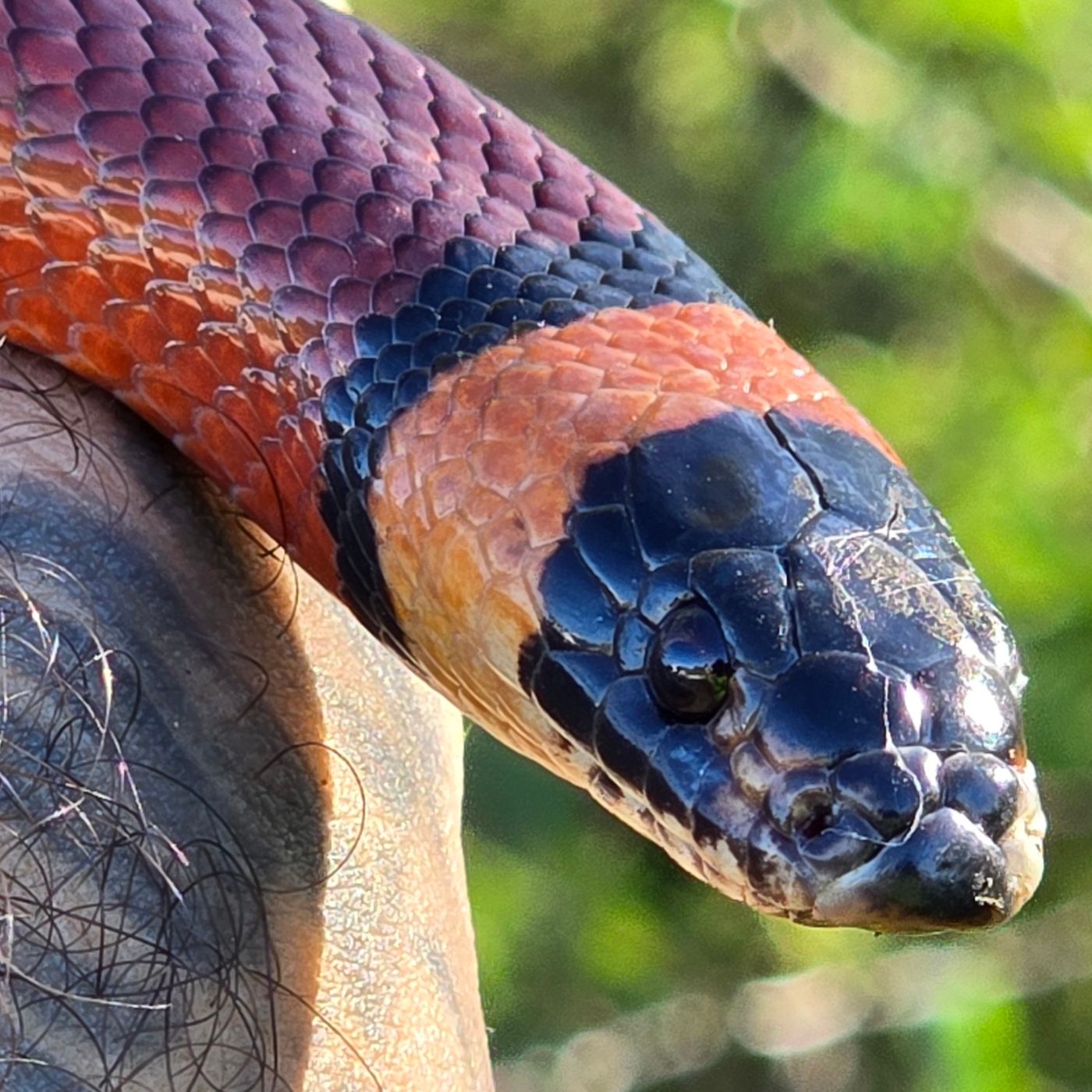
Better Living Through Reptiles
In this episode we sit down with Kyle Elmore of the youtube channel @popmilk for a two hour talk about herping (lurking for reptiles and amphibians), creating habitat, passionately obsessing over milksnakes, why Indigo Snakes are so chill, self-education, embracing the living world as a side-hobby, coping with habitat loss, naming milk snakes,, the glory of tin, getting bit by copperheads, being attacked by africanized bees, teaching organic chemistry, and more.
Check out Kyle's stuff at @popmilk_herping (instagram) and @popmilk (youtube).
Reminder that if the ads bum you out (and they should, because they're mostly for garbage and adjusted to targeted demographics), for a measly five bucks a month you'll have access to all the Crime Pays podcast episodes on the Crime Pays Patreon at www.patreon.com/crimepaysbutbotanydoesnt
Check out Kyle's stuff at @popmilk_herping (instagram) and @popmilk (youtube).
Reminder that if the ads bum you out (and they should, because they're mostly for garbage and adjusted to targeted demographics), for a measly five bucks a month you'll have access to all the Crime Pays podcast episodes on the Crime Pays Patreon at www.patreon.com/crimepaysbutbotanydoesnt
2025-01-02
139 min
Transcript
Available Results
Generated results are saved to the knowledge database for reuse and search.
No generated results are available for this episode yet.
Extract Knowledge
Pick what you want extracted first. Model, scope, and chapter options appear after a template is selected.
Generated results for public episodes are saved to the knowledge database so they can be reused and searched later.
Transcript
<v Speaker 1>Okay, the first the first episode of crime pays, but
<v Speaker 1>herpetology doesn't. I guess it depends. I don't know. This
<v Speaker 1>is this is my only fourth or fifth time I
<v Speaker 1>dip my toes in herpetology once in a while. Anyway,
<v Speaker 1>I'm here with Kyle Elmore. How did did you consider itself?
<v Speaker 1>I hate that word amateur at this point.
<v Speaker 2>No, probably not amateur because it's been it's been twelve
<v Speaker 2>to thirteen years of doing this constantly for my enjoyment.
<v Speaker 2>So there's definitely that amateur phases into it. But basically
<v Speaker 2>I wouldn't know. But I'm not educated in herpetology other.
<v Speaker 1>Than I'm self educated and Bonnie, I don't have any
<v Speaker 1>fucking degrees. I will probably tell people, you know what
<v Speaker 1>it was that Patrick asked me that, He's like, are
<v Speaker 1>you do you have any degrees? I was like, I'm
<v Speaker 1>fully unaccredited. Y. You know, I've made everything I can
<v Speaker 1>do to stay out of that academic world. Yeah, I've
<v Speaker 1>done everything I can, you know, But Clint is an
<v Speaker 1>actual herptology He's a biologist.
<v Speaker 2>I think he has biology background, but you know, he's,
<v Speaker 2>you know, I think a curator. He works with the
<v Speaker 2>herpetology department at the zoo and background and they got.
<v Speaker 1>A handler's license. Sure. But anyway, so here we are,
<v Speaker 1>so we're talking about we're talking about herping. And for
<v Speaker 1>those of you who who don't know, it's not in
<v Speaker 1>reference to cold source. It's in reference to reptiles and
<v Speaker 1>basically doing what I do with plants, going out and
<v Speaker 1>surveying and collecting data and photographs and studying the living world.
<v Speaker 1>It's an element of the living world, and I think
<v Speaker 1>for a lot of people that do it, it's probably
<v Speaker 1>an antidote to the poison of the modern consumer death cult,
<v Speaker 1>which I'm always ranting about sometimes too long. So anyway, Kyle,
<v Speaker 1>how are you doing it? Thank you for coming on
<v Speaker 1>to talk about all this though.
<v Speaker 2>I'm doing great, you know. As you know, we had
<v Speaker 2>a great day out in the field the other day
<v Speaker 2>and we got to see a lot of cool.
<v Speaker 1>Stuff and twelve mili yeah, well Lam propeled this and
<v Speaker 1>fucking how many indigos it was.
<v Speaker 2>Eight or nine? Yeah, we kind of lost lost track
<v Speaker 2>of that, and it was a pretty epic day in
<v Speaker 2>the field. If you know anything about looking for milk
<v Speaker 2>snakes down here, if you're a person who comes out
<v Speaker 2>of town, you might you might find one if you're lucky.
<v Speaker 2>But you know, if you know what you're doing, you
<v Speaker 2>can set yourself up for the success that we had.
<v Speaker 1>Well blew my mind was that it was it was
<v Speaker 1>habitat that like I wouldn't be looking for for plants,
<v Speaker 1>you know, yeah, like like I I mean, I found
<v Speaker 1>interesting shit there, you know, I found some brilliant I
<v Speaker 1>found like three plants I'd never seen before in situ,
<v Speaker 1>which was really cool. Actually four including Heimia, that one
<v Speaker 1>that all the drug bros Are always mentioning because it's
<v Speaker 1>psychoactive lith racy. But uh, but there was so much,
<v Speaker 1>you know, there was so much going on there in
<v Speaker 1>terms of reptiles and amphibians. It was crazy, man, it
<v Speaker 1>was really cool to see.
<v Speaker 2>Yeah, you know, it's it's surprising the marginal habitat and
<v Speaker 2>how many animals can be in that. You know, you
<v Speaker 2>don't really know, you know, just looking at it on
<v Speaker 2>the surface, like what really lives in there, until you,
<v Speaker 2>you know, attack it with the right materials and set it,
<v Speaker 2>set it up so that you can actually discover what's
<v Speaker 2>living there.
<v Speaker 1>So where are you? How did you get into this?
<v Speaker 1>Where are you from?
<v Speaker 2>So I'm from Houston and born and raised there and
<v Speaker 2>still live there. And the way I got into this
<v Speaker 2>is as a kid. You know, my father would always
<v Speaker 2>encourage me to go spend time outside. Now I don't now,
<v Speaker 2>I kind of wonder if that's just to get me
<v Speaker 2>out of the house as a as a kid, but
<v Speaker 2>you know, I would go and walk along this drainage
<v Speaker 2>ditch in our neighborhood, and all along there were you know,
<v Speaker 2>turtles and frogs and water snakes. And I'd been given
<v Speaker 2>these field guides and I'd look in those field guides
<v Speaker 2>and I'd see what kind of animals are living out there,
<v Speaker 2>and I'd want to go encounter them, you know. And
<v Speaker 2>of course, in our in our drainage ditch in the neighborhood,
<v Speaker 2>it was really limited in the species that were there,
<v Speaker 2>but it was still fun to go out and catch them.
<v Speaker 2>And I'd always hope for something different. But then, you know,
<v Speaker 2>you're doing that as a kid, right, you know that
<v Speaker 2>high school comes along and your priorities and thoughts change.
<v Speaker 2>And I stopped doing it for a while, stopped going
<v Speaker 2>outside and like finding finding snakes until I was probably
<v Speaker 2>I want to say, twenty four or so, twenty four
<v Speaker 2>to twenty five and I was on a trip with
<v Speaker 2>my dad and I found a coach with was a
<v Speaker 2>snake that I'd never seen before, and it rekindled this
<v Speaker 2>big passion in me to go out and see more
<v Speaker 2>stuff that I'd never seen and I've only seen in books,
<v Speaker 2>and that basically started me on this path that's really snowballed,
<v Speaker 2>kind of out of control. Coach with maskakofu, Yeah, master cofus.
<v Speaker 2>This was Flagellum tastasius subspecies. Actually I think they're a
<v Speaker 2>culiber now so formerly masterkophus. Some people argue it's still
<v Speaker 2>mass to coo, but yeah, it's a caliber Flagellum tastasius.
<v Speaker 2>The Western coach whip is kind of what sparked me
<v Speaker 2>getting back into it. Finding that and then being like, Wow,
<v Speaker 2>I wonder what else I can find if I spend
<v Speaker 2>my time at it. And then you know, finding this
<v Speaker 2>kind of subculture of herpers and people who are also
<v Speaker 2>interested in it really kind of enlightened me as to
<v Speaker 2>what methods there were to go out and actually discover
<v Speaker 2>some of these animals and then started my journey, you know,
<v Speaker 2>hanging out with other people that did this and then put.
<v Speaker 1>It in my own niche there's been a crossover throughout
<v Speaker 1>my life with herpers and with reptile people, and shed
<v Speaker 1>a lot of plant people I know here in South
<v Speaker 1>Texas are in the reptiles too. Like I was telling
<v Speaker 1>Ken King about some of the stuff we saw and
<v Speaker 1>he was like, oh, yeah, that's great, black spotted newtes.
<v Speaker 1>I've seen those, yeah, there, you know, and he knows
<v Speaker 1>all about them. And it's it's like, you know, with
<v Speaker 1>my friends that are in the mushrooms of my cology,
<v Speaker 1>Like I love going out with them and I'll be
<v Speaker 1>looking at plants and I'll learn a little bit about
<v Speaker 1>what they're into and then but it's all it's all
<v Speaker 1>like embracing this living world. It's all about going outside
<v Speaker 1>and actually learning, exercising your mind and studying the diversity
<v Speaker 1>of life and then thinking about you know, natural selection.
<v Speaker 1>How these different forms have you know, evolved off the
<v Speaker 1>same common ancestor and in response to certain different different
<v Speaker 1>conditions environmental conditions, climatic conditions, whatever. It's really cool to see.
<v Speaker 1>But so during high school you kind of weren't into this.
<v Speaker 1>It tapered off during high school.
<v Speaker 2>Definitely, you know, So I moved when I was in
<v Speaker 2>middle school and moved to a new area and and
<v Speaker 2>I distinctly remember, you know, it was late middle school,
<v Speaker 2>and I had been spending time outside, you know, and
<v Speaker 2>I would get made fun of because it's like, well,
<v Speaker 2>why do you why do you have all these scratches
<v Speaker 2>all over your legs and arms? It's because I was
<v Speaker 2>spending all my time outside in the woods's fucking looking
<v Speaker 2>for you know, looking.
<v Speaker 1>Why you sitting in a basement playing video games?
<v Speaker 2>Yeah, you know. So, you know, and as a young kid,
<v Speaker 2>you're you're very easily influenced, you know. You know, nobody
<v Speaker 2>likes getting made fun of. So yeah, so I start
<v Speaker 2>doing that, you know, trying to fit in, and obviously
<v Speaker 2>that's not where I fit in, you know, And I
<v Speaker 2>feel like I definitely with this this group of people,
<v Speaker 2>you know, going out and finding stuff, I fit in
<v Speaker 2>a lot better.
<v Speaker 1>How'd you find how'd you find your crew? When you
<v Speaker 1>were twenty four? Like? How did you find other people
<v Speaker 1>that were in.
<v Speaker 2>The So the first thing I did. So there was
<v Speaker 2>an old forum, you know, forums were kind of the
<v Speaker 2>thing before Facebook and Instagram, and it's called field Herb
<v Speaker 2>Forum and they used to have these different chapters you
<v Speaker 2>know throughout the US, and the Southwestern or South Central
<v Speaker 2>chapter had a meet up and I went to go
<v Speaker 2>meet up with some of these other dudes, you know,
<v Speaker 2>I didn't not even them, I knew online. So it's like, okay, well,
<v Speaker 2>let's go over here. And I went to Louisiana and
<v Speaker 2>they were starting out they were going to go to
<v Speaker 2>a zoo and go see Louisiana pine snakes in a zoo.
<v Speaker 2>And I'm like, I'm not interested in seeing this shit
<v Speaker 2>in a zoo. I want to go like, you know,
<v Speaker 2>seeing this stuff out in the wild. So I you know,
<v Speaker 2>did some herpin on the way and I got there
<v Speaker 2>a little bit later, and I met up with this guy, Arman,
<v Speaker 2>and Arman and I are still fast friends, you know,
<v Speaker 2>years later, but we basically met up and we were
<v Speaker 2>waiting on the rest of the people and we started
<v Speaker 2>talking and started talking about canebrake, rattlesnakes and kind of
<v Speaker 2>our passion for finding those, and really shortly after that
<v Speaker 2>we'd organized you know, a trip together, you know, and
<v Speaker 2>I think it was the next year we actually first
<v Speaker 2>came down to South Texas and we had what we
<v Speaker 2>thought at the time was an outstanding time. You know,
<v Speaker 2>I think we probably got maybe twelve snakes over two
<v Speaker 2>or three days, which, as you can see, is far
<v Speaker 2>cry from where we're currently at. But yeah, you know,
<v Speaker 2>I found him and then we've basically been doing stuff
<v Speaker 2>together and we kind of added several people into the
<v Speaker 2>fold that have a like minded passion for similar animals.
<v Speaker 1>That's fucking that's pretty cool, the dopamine response. But also
<v Speaker 1>before social media, that's one of the best things about
<v Speaker 1>social media. I mean there's a lot of negative too,
<v Speaker 1>you know, like the echo chamber and the shit talking,
<v Speaker 1>and the opportunities for depression, anxiety, and self hate, you know,
<v Speaker 1>through comparing yourself to other people are extensive with social media.
<v Speaker 1>But you can also find your people.
<v Speaker 2>You can find your people very easily.
<v Speaker 1>Now, would you what did you study when you went
<v Speaker 1>to college? Would you do so for high school? So?
<v Speaker 2>I studied biochemistry. It's my undergraduate degree. And in that process,
<v Speaker 2>you know, you have to take organic chemistry, and I
<v Speaker 2>think that was probably a junior year or so I
<v Speaker 2>was taken organic chemistry and I absolutely loved it. You know,
<v Speaker 2>something that for me was very intuitive. I felt like
<v Speaker 2>it just made a lot of sense, and it made
<v Speaker 2>a lot of sense as to how things in the
<v Speaker 2>natural world happen, you know, forming chemical bonds, and just
<v Speaker 2>like how these different compounds came to being and how
<v Speaker 2>you can manipulate that yourself. So I then decided to
<v Speaker 2>pursue organic chemistry and graduate school.
<v Speaker 1>God damn it, and jealous, fucking wish that she came
<v Speaker 1>second nature to me. I'm so interested in plant I mean,
<v Speaker 1>I know a little bit plant chem but it's one
<v Speaker 1>of like nine different things I want to do on
<v Speaker 1>any given days, like teach myself working a chemistry.
<v Speaker 2>Yeah, and that's it. It's something you really can and
<v Speaker 2>you have to have somebody who knows it and is
<v Speaker 2>passionate about it and can you know, confer that information
<v Speaker 2>in a way that is easy for you to grasp,
<v Speaker 2>you know, because it is a complicated subject. And I
<v Speaker 2>think I was blessed to have a good teacher that
<v Speaker 2>really roped me into it.
<v Speaker 1>Whenever I've looked at it, I always look at I'm
<v Speaker 1>always I always have questions. I can't just read out
<v Speaker 1>of a book and be like okay, and then I
<v Speaker 1>always want to ask, quite like why is it like this?
<v Speaker 1>Why is this? And then it gets me thinking about
<v Speaker 1>other things. For me, that's the most important part to
<v Speaker 1>learning and when people ask me, because people will write
<v Speaker 1>me and they'll be like, how do I learn botany?
<v Speaker 1>Like what books do you recommend? Field guides? I'm like,
<v Speaker 1>I don't fucking recommend field guides. Go the fuck outside
<v Speaker 1>and ask questions, think about this shit like you need
<v Speaker 1>I need to see the gears in your head journey
<v Speaker 1>like you can't. And I think that's what school fucks
<v Speaker 1>us up at, at least in this.
<v Speaker 2>Country, is just memorize shit, Yes.
<v Speaker 1>Memorized, don't fucking think about it. Memorize so that you
<v Speaker 1>can get a good job and you'll be able to
<v Speaker 1>you know, you'll be able to grind hard and have
<v Speaker 1>a fucking McMansion or whatever. Stupid shit where it's like
<v Speaker 1>that takes all the joy out of it, Like that
<v Speaker 1>takes the passion out, Like I want to think, I
<v Speaker 1>want to fucking create. I want to think about that.
<v Speaker 1>You know. That's and when I started approaching learning BONDI
<v Speaker 1>that way, it changed everything. Like you're out on an
<v Speaker 1>ecosystem or a landscape, like what does it why does
<v Speaker 1>it look like this what it looked like two hundred
<v Speaker 1>years ago? Why is this growing? Here. Why is this
<v Speaker 1>growing here? Why do these things like to live under this?
<v Speaker 1>What is I mean? I think that's and that's when,
<v Speaker 1>especially with something like chemistry, you need like a tutors.
<v Speaker 1>They are someone get this bond with this, yeah, yeah,
<v Speaker 1>and that at least gets the ball rolling.
<v Speaker 2>And you know, organic was one of those you know
<v Speaker 2>you mentioned like you know, it's you got to go
<v Speaker 2>memorize all this stuff. And that's most of the classes
<v Speaker 2>that you'll ever take. It's go. And I think that's
<v Speaker 2>why doctors are people who are like trying to go
<v Speaker 2>into the medical field, you know, if you're on the
<v Speaker 2>track in college. That's why organic chemistry is such a
<v Speaker 2>hard subject because you cannot memorize everything. You have to
<v Speaker 2>develop this intuitive understanding of you know, electron flow and
<v Speaker 2>chemical bonding that allows you to then make inferences, you know,
<v Speaker 2>about what certain things will happen because you cannot memorize
<v Speaker 2>everything there, and you know it definitely it takes you know,
<v Speaker 2>somebody to guide you through that and get you kind
<v Speaker 2>of over the hump to having developed that intuitive understanding.
<v Speaker 1>But I think it's also easier, like memorization is easy
<v Speaker 1>when you're actually interested. Yeah, but to be interested. You
<v Speaker 1>have to understand why it's interesting because you're talking about
<v Speaker 1>the building blocks of life, or because like with plants,
<v Speaker 1>they're connected to everything else. They're what channel energy from
<v Speaker 1>the sun to us in every other life form, and
<v Speaker 1>there you learn about their evolution, the context in which
<v Speaker 1>they evolved. No plants an isolated entity. It's tied to
<v Speaker 1>a habitat and ecosystem, other pollonais, et cetera. And I
<v Speaker 1>think that that's what American education misses out on. Yeah,
<v Speaker 1>you know, the memorized shit. I was the one I
<v Speaker 1>was teaching last semester. I was telling my students. I'm like,
<v Speaker 1>don't do this. I don't want you to fucking memories.
<v Speaker 1>I want you to think about this stuff. If you're
<v Speaker 1>not asking me questions, I'm going to get mad at you.
<v Speaker 1>You know, like you got to be thinking if you think,
<v Speaker 1>if you're asking questions, that tells me you're thinking about it,
<v Speaker 1>you know.
<v Speaker 2>Yeah.
<v Speaker 1>But so then so you got into chemistry and it
<v Speaker 1>was just your jam. It was like it was obviously
<v Speaker 1>giving you a little dopamine shot.
<v Speaker 2>Or oh for sure, yeah you were. It was very satisfying. Yeah,
<v Speaker 2>and uh yeah, I went to graduate school for that
<v Speaker 2>ended up with the Masters in organic chemistry. Like I
<v Speaker 2>was telling you earlier, I was going for a PhD.
<v Speaker 2>And my advisor resigned, you know, which, you know, especially
<v Speaker 2>if anybody knows about graduate programs, kind of can put
<v Speaker 2>you in a hard place because if you go to
<v Speaker 2>another group, you know, to do research there, you may
<v Speaker 2>be forced to spend more time in order to you know,
<v Speaker 2>fully uh finish researching a project or an idea. Uh.
<v Speaker 2>And then that you know, can impact your ability to
<v Speaker 2>be funded. And you know you can because after a
<v Speaker 2>certain amount of time, they don't pay for you to
<v Speaker 2>be there anymore, right, Yeah, yeah, So it's basically yeah,
<v Speaker 2>so I left with the masters and uh and yeah
<v Speaker 2>I went uh and I taught chemistry in high school
<v Speaker 2>for a couple of years after that.
<v Speaker 1>What were your experiences with that was? Because that's like
<v Speaker 1>that seems like a nightmare class when you're in high school.
<v Speaker 1>For most people, we're most a little bit.
<v Speaker 2>Of a nightmare to teach too, you know, because the
<v Speaker 2>thing is like, you you can have that passion and
<v Speaker 2>you can be excited to teach it and talk about
<v Speaker 2>the subject, but the reality is like in high school,
<v Speaker 2>if you've got like, let's say you've got fifty students, Uh,
<v Speaker 2>there's probably three to five of those that actually one
<v Speaker 2>you know, they they'll have an interest because it's exciting
<v Speaker 2>to them maybe, but then maybe they also just have
<v Speaker 2>the interest because they want to get good grades. But
<v Speaker 2>that's it's a very small amount of them. The rest
<v Speaker 2>of them are in you know, whatever, you know, and
<v Speaker 2>I can't I can't blame them for because it's the
<v Speaker 2>environment that we've created for them, right you know. Uh,
<v Speaker 2>it's this memorize everything environment that doesn't spark interest, and
<v Speaker 2>you've got to try to you got to try to
<v Speaker 2>light that fire in them, and some of them you
<v Speaker 2>just can't. So it makes it a little bit.
<v Speaker 1>I just want to shake And what's wrong with you?
<v Speaker 2>Yeah?
<v Speaker 1>Yeah, it is just a good consumer. You want some
<v Speaker 1>nice shoes and like a shiny truck.
<v Speaker 2>Yeah that was Ah, that's the thing is that's that's
<v Speaker 2>that that was the stuff they wanted, you know, they
<v Speaker 2>wanted those things. And I'm like, okay, them, that's your
<v Speaker 2>If that's your goal, then at least like learn stuff
<v Speaker 2>well enough that you can go to afford it, you know,
<v Speaker 2>like try to you know, and and hope that maybe
<v Speaker 2>something of interest could sparked meme.
<v Speaker 1>I wonder, I don't this is like a this is
<v Speaker 1>not it has no relations perhaps obviously, But I wonder
<v Speaker 1>for people that want all the shiny shit in the
<v Speaker 1>mc mansions and are good like that do things that
<v Speaker 1>just they have careers that to me just seem so
<v Speaker 1>incredibly boring. Do most of them have passion for it
<v Speaker 1>or do you think they're just happen to be good
<v Speaker 1>at it because the way their mind works and they
<v Speaker 1>can use it to get money, But it's like killing
<v Speaker 1>their soul. I don't know. Like law, like some forms
<v Speaker 1>of like family law, seems like it would like if
<v Speaker 1>you don't offense to any family law attorneys by the way,
<v Speaker 1>I'm sure there's some cool ones, but if you could
<v Speaker 1>do that, that seems like such a fucking draining, soul
<v Speaker 1>liess job. But there's got to be some people that
<v Speaker 1>enjoy it, but I think there's probably a lot that don't,
<v Speaker 1>and it's just as just a ticket.
<v Speaker 2>Yeah, you know, well, I think that's like anything, right,
<v Speaker 2>anything that anybody is doing, you can you are going
<v Speaker 2>to find some individuals who are really passionate about it,
<v Speaker 2>and then you have the rest of them, who are
<v Speaker 2>you know, it's just like that's their paycheck, right, you know,
<v Speaker 2>they get through it and maybe they had a proclivity
<v Speaker 2>to some aspect of it or you know, you have
<v Speaker 2>a lot of a lot of people who for better
<v Speaker 2>or worse, uh, you know, had these big dreams and
<v Speaker 2>aspirations in a field, but maybe they weren't actually, you know,
<v Speaker 2>they just didn't have the machinations in their head to
<v Speaker 2>really excel or of.
<v Speaker 1>Inschasers personal injury. Do you think there's people are like
<v Speaker 1>I love going into work every day working on behalf
<v Speaker 1>of my clients with the network of corrupt and shady
<v Speaker 1>MRI for you know, pain clinics MRI blah blah. Who
<v Speaker 1>can give me a bill that I can present to
<v Speaker 1>the insurance company that just goes right up to their limit,
<v Speaker 1>you know, of what they'll pay, And that's just that
<v Speaker 1>gives me dopamine.
<v Speaker 2>It feels great, sure there is, right, you know that's
<v Speaker 2>and I think that's probably it, right, is a big
<v Speaker 2>dopamine hit of like having that win, you know where
<v Speaker 2>they come out with a lot of money and you know.
<v Speaker 1>That's when they get the stiffy it's the after right,
<v Speaker 1>So it's just a ticket. Yeah, like the career is
<v Speaker 1>just a ticket. Some of the fucking ambulance chasers down
<v Speaker 1>here are like straight up Saul Goodman. It's amazing, like
<v Speaker 1>gold everything. They've got these you know where their offices are,
<v Speaker 1>you'll pass their office. They got the led billboards, like
<v Speaker 1>pictures of their face.
<v Speaker 2>You know, there's not a single billboard that doesn't have
<v Speaker 2>their face. Yeah, a lot of it. It's about that.
<v Speaker 1>I love the one. It's just one lady and she
<v Speaker 1>must have a boob job, but it's like for head
<v Speaker 1>and then like her boobs are like right and like
<v Speaker 1>it cuts off just above or just below the where
<v Speaker 1>the cleavage starts. And it's like that is like such
<v Speaker 1>a you're like putting porn on the billboard like that
<v Speaker 1>is you you know that it's like gonna attract you know,
<v Speaker 1>and it's.
<v Speaker 2>Like millions millions, Oh wow, Yeah, I better call her
<v Speaker 2>when I need I have an injury and just the person.
<v Speaker 1>I want to interact with, right, but uh anyway, yeah,
<v Speaker 1>and I just think about that all the time. I'm
<v Speaker 1>like God, because I can't do shit if I'm not
<v Speaker 1>if my head's not in it, I can't. It's just
<v Speaker 1>like fucking tedious to me. It's tedium and I can't
<v Speaker 1>do it where it's like I'm doing this so that
<v Speaker 1>I can have this. It's a ticket, you know, I can't.
<v Speaker 1>Mentality doesn't work with me.
<v Speaker 2>It's it's I don't think it's natural, right, I don't
<v Speaker 2>think that's natural. I think if you have like that
<v Speaker 2>organic uh, it developed, you know, you go back to
<v Speaker 2>something a couple of centuries ago and you you have
<v Speaker 2>this more organic passion that that maybe is struck in people.
<v Speaker 2>You see a need in your community and you want
<v Speaker 2>to go fill that, right, I think that's a lot
<v Speaker 2>more natural process, like well, how can I contribute to
<v Speaker 2>this community? Yeah?
<v Speaker 1>Yeah, that's why back in the days when we were
<v Speaker 1>banging the androthals, that's why it was. That's why we were,
<v Speaker 1>you know, able to fucking dig in the ground, foraging
<v Speaker 1>for fucking bulbs for hours, or chasing chasing analope has
<v Speaker 1>to suck like that's got a hunting analope on foot
<v Speaker 1>with a spear. That has to suck ass. There's got
<v Speaker 1>to be a dopamine response to keep you doing it, right, Yeah.
<v Speaker 2>For sure.
<v Speaker 1>Or like taking kids. My mothers take care of their
<v Speaker 1>children because it's it's love and nurture you get you know,
<v Speaker 1>octually posting. Anyways, Sorry, we're going off for rails here,
<v Speaker 1>which I tend to do. But so anyway, so you
<v Speaker 1>taught high school and then what do you end up
<v Speaker 1>doing after that?
<v Speaker 2>So after that, I ended up getting a job at
<v Speaker 2>Exxon and I work in the NMAR lab basically do
<v Speaker 2>analyze polymer spectra for basically, you know, we're getting comonomer
<v Speaker 2>content branching, basically just looking at that for for the
<v Speaker 2>research department.
<v Speaker 1>I'm knocking. He lives in Houston, Okay.
<v Speaker 2>Ye, he's got a lot of choices.
<v Speaker 1>I worked for a horrible company too. I worked for
<v Speaker 1>Union Pacific and I fucking hated them the whole time.
<v Speaker 1>And it was but it was a fun job and
<v Speaker 1>I loved it. And you know, I was never a
<v Speaker 1>company man. I was like with the fucking workers all
<v Speaker 1>the time. Like that was you know, it was like solidarity.
<v Speaker 1>There was good solidity. Do you have a company that
<v Speaker 1>I don't know what X sounds like. They probably treat
<v Speaker 1>you guys good, but but you pete treated as shitty.
<v Speaker 1>And that was great for solidarity among all different political sides.
<v Speaker 1>I mean, railroaders like to complain and fight, but but
<v Speaker 1>so people still found shit to fight about. But you know, yeah,
<v Speaker 1>I would get these kids lecturing me. They'd be like,
<v Speaker 1>you work for an evil company, And I was like, man, what,
<v Speaker 1>like I'm not, like I'm not towing the line, like
<v Speaker 1>I'm also stealing over time for them and fucking not
<v Speaker 1>saying anybody should do that for their employer. But you know,
<v Speaker 1>it was a Yeah, it was just crazy. Was like,
<v Speaker 1>tell me you've never worked or like interacted with real people,
<v Speaker 1>like you're demonizing God, what was it? There was some
<v Speaker 1>fucking strike that just happened a month ago for some
<v Speaker 1>company for Boeing I think it was Boeing workers, And
<v Speaker 1>there were all these people being like, you work for
<v Speaker 1>a horrible companies, Like, man, they're the fucking working class,
<v Speaker 1>Like what do you want them to do?
<v Speaker 2>Like some people, you know, for better or worse, we've
<v Speaker 2>set set our society up like that.
<v Speaker 1>Yeah, we're all playing into the poison. That's like, it's
<v Speaker 1>come on, man, like it's pissing in the ocean. When
<v Speaker 1>it comes down to it, it's just, you know, I
<v Speaker 1>hate thats nothing like getting lectured by some fucking twenty
<v Speaker 1>three year old with the life experience of a fart,
<v Speaker 1>you know, like shitting.
<v Speaker 2>Yeah, you got to you got to get out there
<v Speaker 2>and be on your own trying to take care of yourself,
<v Speaker 2>you know. And and you know, you and a lot
<v Speaker 2>of people can make it work by you know, giving
<v Speaker 2>their middle finger to the man and you know, doing
<v Speaker 2>their own thing. But for the most part, it's it's hard.
<v Speaker 1>You can't be playing about You've got to be tasked,
<v Speaker 1>you know, you got to be tactful about it, yeah,
<v Speaker 1>which is one.
<v Speaker 2>But also you get in those systems and you can
<v Speaker 2>also be the person for change too, right, Yeah, that's
<v Speaker 2>you know, you know, the the the organization of you know,
<v Speaker 2>these companies is it's all you know, complicit individuals, right,
<v Speaker 2>So you know, you go in there as an individual,
<v Speaker 2>you can make some of those changes that you want,
<v Speaker 2>you know, and put your influence out there.
<v Speaker 1>Yeah. I'm so glad I didn't go into academia. I
<v Speaker 1>would have been picked out.
<v Speaker 2>So it's so far removed too from reality.
<v Speaker 1>It's a complete bubble. It's a complete bubble. And especially
<v Speaker 1>in a place like the United States, it's all rich kids.
<v Speaker 1>It's like it's predominantly wealthy people. I mean, there's a
<v Speaker 1>lot of scholarships and shit too, but or people who
<v Speaker 1>are going to be in debt for the next forty
<v Speaker 1>years of their lives. Like the system to me is
<v Speaker 1>so broken here. I'm so glad I didn't. I was
<v Speaker 1>in academia for like a year and a half and
<v Speaker 1>I was like fuck this. And then I went to
<v Speaker 1>community college. I was like, wait, it's the same class,
<v Speaker 1>but it's like fifty bucks, Like what the fuck? Like
<v Speaker 1>why am I doing this, like for the name for
<v Speaker 1>a piece of paper that like the you know, the
<v Speaker 1>economy doesn't value any of the things I'm into anyway.
<v Speaker 1>So yeah, I'm so glad I didn't do it. I
<v Speaker 1>just went and I had people tell me that, like
<v Speaker 1>other botanists that mentored me in schooled me, who are
<v Speaker 1>like seventy now being like, you did the right thing
<v Speaker 1>by you know, we're getting a decent one of the few,
<v Speaker 1>like decent blue collar jobs and teaching yourself this shit
<v Speaker 1>on the side, yeah, which I did. I just was
<v Speaker 1>obsessed with that. I couldn't stop, which is like you're
<v Speaker 1>obsessed with.
<v Speaker 2>Yeah, absolutely obsessed with herbs. Yeah.
<v Speaker 1>So when did you So when did you really like
<v Speaker 1>when it picked up, Like when did you start because
<v Speaker 1>now you're basically out there creating habitat.
<v Speaker 2>You've been all over the south, Yeah.
<v Speaker 1>I mean where have you Where have you hurt Like
<v Speaker 1>what what region? Like the farthest east you've gone, the
<v Speaker 1>farthest west you've gone.
<v Speaker 2>So the furthest east that I've gone is probably Georgia
<v Speaker 2>Coastal Plain and I did that last year or what,
<v Speaker 2>well it's still this year. Yeah, so earlier this year.
<v Speaker 2>Furthest north I've gone is Montana, and I've hurped a
<v Speaker 2>little bit of Utah and Colorado, some in New Mexico,
<v Speaker 2>but I well, I've actually done a little bit in California, Washington,
<v Speaker 2>Oregon too. I forget about that. I did did one
<v Speaker 2>trip there and I think twenty eighteen, so I've actually
<v Speaker 2>I've really herped all over again. Know, there's a few
<v Speaker 2>regions that I've missed, like much of the Midwest. We've
<v Speaker 2>got a plan for that next year, are going to
<v Speaker 2>go out there and East coast. East Coast doesn't have
<v Speaker 2>a whole lot of draw for me, but I definitely
<v Speaker 2>will at some Pointy is it because.
<v Speaker 1>The habitats has been so destroyed or what?
<v Speaker 2>No, I think it's the most of the species that
<v Speaker 2>are there are other places, you know, there's a few
<v Speaker 2>endemics that I think are neat that you know, would
<v Speaker 2>be nice to see, but it's really you know, I
<v Speaker 2>think the species in the southern US and western US
<v Speaker 2>generally are more exciting.
<v Speaker 1>Yeah, yeah, yeah, So when you're so explain to everybody,
<v Speaker 1>when you're herping wood, it consist of because there's flipping.
<v Speaker 1>And then there's also just road cruising, which is how
<v Speaker 1>I first started coming up on reptiles. I'd be driving
<v Speaker 1>out on like the fucking vis kind of peninsula in Bajad,
<v Speaker 1>eleven o'clock at night and it's still hot in the
<v Speaker 1>pavements on I'd see a cool rattlesnake or something.
<v Speaker 2>So there's road cruising and yes, so and I think
<v Speaker 2>I think the way it starts with a lot of
<v Speaker 2>people who are interested in is you start by hiking
<v Speaker 2>through habitat. You know, you're you're going outside your walking trails,
<v Speaker 2>you're spending time outdoors, and you happen to come across
<v Speaker 2>a snake, right, And I'd say that that's the lowest
<v Speaker 2>output type of harping. Right, You're gonna go out, You're
<v Speaker 2>gonna spend a lot of time with very few results
<v Speaker 2>because these are very secretive animals. You know, they don't
<v Speaker 2>want to be found, and it's you know, it's a
<v Speaker 2>very short window where they're actually surface active in a
<v Speaker 2>way that you can just come across some well hiking,
<v Speaker 2>So there's that, and then there's road cruising as you said,
<v Speaker 2>which actually it's funny, you know, you mentioned that's your
<v Speaker 2>first way of finding you know, really like finding herbs.
<v Speaker 2>It wasn't until I got you know, hanging out with
<v Speaker 2>other people and was like on those forums that I
<v Speaker 2>just discovered that was even a method to find you know,
<v Speaker 2>which that is the next easiest thing to do is
<v Speaker 2>go drive roads and wait for stuffs across the roads,
<v Speaker 2>which has variable levels of productivity you know, some places
<v Speaker 2>and some conditions. It can be really incredible how many
<v Speaker 2>numbers of snakes and lizards and different things you can
<v Speaker 2>find out on the road. But you know, as you mentioned, flipping.
<v Speaker 2>Flipping is my absolute favorite way of finding snakes because
<v Speaker 2>you can go and find some of the most secretive
<v Speaker 2>animals by simply laying out cover in a way that
<v Speaker 2>attracts them, and you'll find them using that.
<v Speaker 1>What do you think I mean? Because you the thing
<v Speaker 1>that strikes me here too, is like the further east
<v Speaker 1>you go in North America, the more the duns or
<v Speaker 1>the human population is, and the less habitat there seemingly is. Well,
<v Speaker 1>I guess it's different for Herbers because you're looking at
<v Speaker 1>you know, a lot of these places are disturbed habitats
<v Speaker 1>to begin with, Like there's no like to find a
<v Speaker 1>lot of plants. You need intact habitat to find the
<v Speaker 1>good ship, like ship that hasn't been scraped clean. But
<v Speaker 1>like reptiles, animals really can move when the bulldozers come
<v Speaker 1>in scrape a place to put up a cotton field
<v Speaker 1>or a fucking farm or yeah, you know.
<v Speaker 2>To an extent they can. Unfortunately, the reality is like
<v Speaker 2>once you bring those bulldozers in, a lot of these
<v Speaker 2>animals are fossorial and they live underground, and you know,
<v Speaker 2>you bring those bulldozers in and you flatten a place,
<v Speaker 2>get they're basically just going to suffocate and starve underground.
<v Speaker 2>And that's the sad reality of you know, clear cutting
<v Speaker 2>someplace and bringing bulldozers over the top of everything. Is
<v Speaker 2>a lot of those animals aren't going to escape. But
<v Speaker 2>what you do have is these margins and I think,
<v Speaker 2>you know, as Jeff goldblue, life finds a way, right,
<v Speaker 2>you know, so you know, you know, these things want
<v Speaker 2>to survive and they will do so in marginal habitat.
<v Speaker 2>And then you know, okay, so let's say you've you've
<v Speaker 2>cleared out some space to put crops, right, you have
<v Speaker 2>cotton field or whatever kind of field you have. It
<v Speaker 2>actually kind of creates this artificial you know, artificial densities
<v Speaker 2>of certain animals. Right, so you know, the crops will
<v Speaker 2>attract rodents because rodents want to come in and eat
<v Speaker 2>whatever seeds or you know, stuff there. And then that
<v Speaker 2>whatever praise on those rodents can have artificial densities kind
<v Speaker 2>of on those margins of habitat because there's more rodents
<v Speaker 2>there because there's this this monoculture of whatever they're at.
<v Speaker 1>They're benefiting from what's initially human impact.
<v Speaker 2>Yeah. So yeah, that that space is cleared out, and
<v Speaker 2>of course that's a big dead zone, but the margins
<v Speaker 2>of that actually can have higher densities of animals.
<v Speaker 1>Like the spot where you were first looking for amphibians
<v Speaker 1>and reptiles when you were a kid, that canals it's
<v Speaker 1>still there, is it's still life and still there.
<v Speaker 2>I haven't been back there in many years, grown a
<v Speaker 2>little bit out of that, but I imagine it's it's probably
<v Speaker 2>the same thing. You know, it's going to have a
<v Speaker 2>lot of water snakes, red sliders, a lot of you know,
<v Speaker 2>some soft shell turtles.
<v Speaker 1>Because that was already the whole area was already pretty
<v Speaker 1>the best.
<v Speaker 2>Yeah, you know, so that's like that margin I had.
<v Speaker 1>So it's been kind of a static condition since you
<v Speaker 1>were a kid, I would imagine.
<v Speaker 2>So, you know, I think the only thing that could
<v Speaker 2>maybe change that is the quality of water that's getting
<v Speaker 2>dumped through that canal. So if you have a lot
<v Speaker 2>of pesticides run run off, you know, So I don't
<v Speaker 2>know what the end result of that is going to
<v Speaker 2>be on that kind of habitat.
<v Speaker 1>What drives men says that this is the first time
<v Speaker 1>I saw this, But I mean in Texas, they just
<v Speaker 1>mow the road margins, you know, which is where you
<v Speaker 1>end up looking for plant slot because it's all private land.
<v Speaker 1>But I was in fucking Missouri and they were spraying.
<v Speaker 1>I was just talk about a fucking death called. I
<v Speaker 1>was like, this is insane. I can't believe, like why
<v Speaker 1>you're spraying orbicide because you're too lazy to bring the
<v Speaker 1>mower out, like you're just poisoning everything, like what it like,
<v Speaker 1>that's it's.
<v Speaker 2>One of the most shit for brained, you know things
<v Speaker 2>you can do it just go indiscriminately kill stuff because
<v Speaker 2>you're you know, and that's it's basically like this cost
<v Speaker 2>benefit on als. Somebody's done. He says, Oh, well, it's
<v Speaker 2>cheaper for us to go spray this once and kill
<v Speaker 2>everything than it is to like hire somebody to mow.
<v Speaker 2>And what's the fucking point of moment in the first place,
<v Speaker 2>Like why why do you have to mow that and
<v Speaker 2>not lit it for a wild you know.
<v Speaker 1>I think in some areas probably just so people can
<v Speaker 1>pull off I guess, or for fire, but a lot
<v Speaker 1>of it, I mean, Texas just loves the fucking moment.
<v Speaker 1>They'll go away beyond what's necessary. And I think it's
<v Speaker 1>again this archaic European rooted fear, you know, not modern Europe.
<v Speaker 1>I'm talking about, you know, good europe fucking what three
<v Speaker 1>hundred forty years ago, This idea like the woods in
<v Speaker 1>nature are scary, We've got to control it. It's I
<v Speaker 1>don't know, this archaic shit. Maybe that's entertained the wild
<v Speaker 1>because I know, I look at the way people look
<v Speaker 1>at like nature here and it's just brush. It's just
<v Speaker 1>all the habitats just brush. Get rid of it. It's
<v Speaker 1>just brush. It's like now, actually, it's a fucking dynamic
<v Speaker 1>ecosystem that's unique to this region that's composed of you know,
<v Speaker 1>probably forty plants that only grow in this part of
<v Speaker 1>Texas and are supporting every although the entire you know,
<v Speaker 1>biosphere around it. You fucking moron, Like it's I try
<v Speaker 1>not to be that meaning I wouldn't want to just educate,
<v Speaker 1>but god damn, it just continuously blows up. But it's
<v Speaker 1>seeing that in Missouri, I was, it was so obvious
<v Speaker 1>they sprayed everything. I mean, you can tell herbicide versus
<v Speaker 1>drought or insect damage. These things were just it was
<v Speaker 1>fucking crazy. And it was like near a wetland too,
<v Speaker 1>just like poisoning the whole wetland, Like great, that's great.
<v Speaker 1>You know either someone's and why is that not measured
<v Speaker 1>in like why is the that would be a con
<v Speaker 1>That would be like a negative. You know, when you're
<v Speaker 1>looking at your stacking up everything before you make this choice,
<v Speaker 1>it's like, oh yeah, well we're gonna kill everything it's nearby,
<v Speaker 1>we're poisoning probably poisoning the water could lead the cancer
<v Speaker 1>rates for the you know, people that are draining that.
<v Speaker 2>It's it's it's so short sighted, right, It's it's the
<v Speaker 2>you know, you have whatever municipality is in charge of
<v Speaker 2>maintenance of that roadside, you know. I think it's like
<v Speaker 2>I say, it's a cost benefit analysis where they're like, Okay,
<v Speaker 2>we can spray all this stuff and it's cheaper to
<v Speaker 2>do this, but it's short sighted. It's it's that immediate
<v Speaker 2>cost that they're worried about as opposed to your long
<v Speaker 2>term cost where you're.
<v Speaker 1>Short term gain, long term loss, which yeah, and hurting
<v Speaker 1>society on so many levels.
<v Speaker 2>And I think one of the because you're never really
<v Speaker 2>going to change humanity in that way unless you introduce
<v Speaker 2>like an ecological value, you know, where you put a
<v Speaker 2>dollar sign really and increase uh, your awareness of like
<v Speaker 2>this has a actual value, you know, whether that's a
<v Speaker 2>dollar amount or you know, some way of thinking about it,
<v Speaker 2>and that Okay, well if we poison this, then we
<v Speaker 2>are diminishing that value and incorporating that into your plan
<v Speaker 2>for how you're.
<v Speaker 1>But I've been to other places though too, like either
<v Speaker 1>like just like first world countries where it's still fucked
<v Speaker 1>in many ways, but there's more of an awareness. There's
<v Speaker 1>like a yeah, we don't want to poison the aqua
<v Speaker 1>for and like this isn't harmless like spraying these chemicals
<v Speaker 1>that you know. I wonder too if like someone's like
<v Speaker 1>cousin is like in charge of the company that's selling
<v Speaker 1>this shit or what. But I've been to places where
<v Speaker 1>it's like, yeah, the world's not perfect, but at least
<v Speaker 1>they know not the not the shit where they eat,
<v Speaker 1>you know, like not the poison their land, their own land,
<v Speaker 1>you know, like we're all part of this living fabric.
<v Speaker 1>I don't know, man, I don't know, but this is
<v Speaker 1>I've seen some crazy shit in the Southeast quadrant of
<v Speaker 1>the United States. I mean it's everywhere, but especially this
<v Speaker 1>tone def in terms of the quote unquote environment, I
<v Speaker 1>don't even like that word. But just like the living world,
<v Speaker 1>you know, but I think if you, if you teach
<v Speaker 1>people to approach it, all is literally it's a living
<v Speaker 1>machine that's like performs myriad services that benefit us by
<v Speaker 1>being intact and having more species diversity, and that like
<v Speaker 1>it's literally living machine. Like you want a solid quant
<v Speaker 1>like you want a solid quantification of what exactly this
<v Speaker 1>is doing. Like that that takes a little bit more
<v Speaker 1>education to explain that to you. But just think of
<v Speaker 1>it like a living machine. We want it like you
<v Speaker 1>want all the fucking pieces for the car to run,
<v Speaker 1>you know.
<v Speaker 2>Yeah, and uh, and I think that takes a direct
<v Speaker 2>focus in education. That has to start when you're younger
<v Speaker 2>to like bring that awareness because you know our current system.
<v Speaker 2>You know, you might have one or two classes in
<v Speaker 2>high school, like on general ecology and natural you know
<v Speaker 2>the environment, right, and that's it, right, and that unless
<v Speaker 2>that's really strikes your interest. You know, that's easy to
<v Speaker 2>forget because the rest of the world's not thinking about
<v Speaker 2>it most time.
<v Speaker 1>And it takes exposure to it too, which means leaving
<v Speaker 1>portions of it in tact so people can go experience
<v Speaker 1>it and et cetera. And I don't see society moving
<v Speaker 1>that way. It also takes funding education, which I don't
<v Speaker 1>see society moving that way. But anyway, okay, So, but
<v Speaker 1>keeping so, keeping back into bunch. So there's road cruising,
<v Speaker 1>which is just driving along looking for whatever is hanging,
<v Speaker 1>and that requires warmth generally do it in summer, it does.
<v Speaker 2>Yeah, you generally want warmer conditions, you know, and it
<v Speaker 2>I find I used to do a lot of road cruising,
<v Speaker 2>but at this point I find it very tedious. You know,
<v Speaker 2>you're trying to drive late at night, you know, waiting
<v Speaker 2>for something.
<v Speaker 1>To cross the road.
<v Speaker 2>Yeah, yeah, it's it's a well, it's a slow dopamine drip, right,
<v Speaker 2>you know, you get that hit, you find something, you know,
<v Speaker 2>maybe it's what you're looking for, maybe it's not, but
<v Speaker 2>it's a very you know, but it works. Right. So,
<v Speaker 2>if you don't have access to habitat, or you're not
<v Speaker 2>willing to, you know, give yourself access to some of
<v Speaker 2>that habitat, then that's kind of one of the easiest
<v Speaker 2>ways to encounter some of these animals.
<v Speaker 1>So what do you guys do now?
<v Speaker 2>So what we do now, and this is really an
<v Speaker 2>evolution that's happened over the last I want to say,
<v Speaker 2>six or seven years, is we set out stacks of
<v Speaker 2>tint and we have very specific way of setting this out,
<v Speaker 2>and we look for the particular habitat and we're usually
<v Speaker 2>you know, after milk snakes hints milk right where we're
<v Speaker 2>looking for these places that those animals live and setting
<v Speaker 2>up a stack of tin that we know that they're
<v Speaker 2>going to want to use.
<v Speaker 1>So by ten, if people are listening to this, how
<v Speaker 1>would you explain what the ten is? Correated?
<v Speaker 2>Yeah, corrugated roofing material. And there's different types of ten. See,
<v Speaker 2>if you're R panel, you have corrugated materials, you have
<v Speaker 2>like the corrugated it's got little ripples and each type
<v Speaker 2>actually has different levels of success. And we really like
<v Speaker 2>just the corrugated, whether that's big ripples or little ripples,
<v Speaker 2>it seems to offer the right kind of space for
<v Speaker 2>animals to get into and lays in a way that
<v Speaker 2>is attractive for them.
<v Speaker 1>So how did you guys figure this out? I mean
<v Speaker 1>to getting to the point where you're looking at the
<v Speaker 1>shape of the corrugation.
<v Speaker 2>You know it's from experience, right, Yeah, you go through
<v Speaker 2>and you're like, why was this animal using this and
<v Speaker 2>not this? Right? And okay, Well, I go and I
<v Speaker 2>if I have a limbit material and I find some
<v Speaker 2>R panel and I go set that out, and I'm like,
<v Speaker 2>why the fuck are these animals not using the panel?
<v Speaker 2>So it's the it's uh, basically kind of it's got
<v Speaker 2>a flat section and then a U shaped bend, and
<v Speaker 2>then another flat section probably six inches another U shaped bind,
<v Speaker 2>So it doesn't really you can stack it flat on itself,
<v Speaker 2>but it doesn't really stack in a way that offers
<v Speaker 2>a small enough like if you offset it. It doesn't
<v Speaker 2>offer a small enough layer for most fossorial snakes, like
<v Speaker 2>it's too big on the inside. Yeah, it'll be. It'll
<v Speaker 2>be too big of a gap. And you can get
<v Speaker 2>stuff like rattlesnakes or pine snakes, you know, gop for snakes,
<v Speaker 2>stuff like that will use it. But again it's not
<v Speaker 2>uh it's it's still not as good as the regular
<v Speaker 2>corrugated stuff in general, you know.
<v Speaker 1>But when the whole thing with using tin though, like
<v Speaker 1>you were, you were just out in spots and you
<v Speaker 1>would see somebody dumped. Yeah, that would take a lot
<v Speaker 1>of caught on or what well.
<v Speaker 2>I think it wasn't unknown. You know, you go flip
<v Speaker 2>ten boards.
<v Speaker 1>You know, we.
<v Speaker 2>Started setting stuff out ourselves. But you know, you go
<v Speaker 2>to a lot of places where they've got like an
<v Speaker 2>old barn that the roof's blown down and these sheets
<v Speaker 2>of ten are laying around that, you know, as it's
<v Speaker 2>all you know, growing back up and kind of rewilding,
<v Speaker 2>and those would always be the most attractive places. You know,
<v Speaker 2>you get this stuff. The grass is growing over the
<v Speaker 2>edges of the ten. You know, it's not been peeled
<v Speaker 2>up by anybody, you know, in the in the last
<v Speaker 2>ten years. And you go and you turn that over.
<v Speaker 2>That was always the best place to find a snake.
<v Speaker 2>And you know, So the way this evolved in what
<v Speaker 2>we currently do now with our current level of attunement
<v Speaker 2>to the ten is you know, we were going around
<v Speaker 2>and we had this trip in twenty seventeen where we
<v Speaker 2>were looking for milk snakes. I'd found an area that
<v Speaker 2>I could road cruise them fairly easily. So this started
<v Speaker 2>off as kind of a road cruising trip. So we
<v Speaker 2>had a week in South Texas. We're going to go
<v Speaker 2>and road cruise for milk snakes. So at night, that's
<v Speaker 2>what we did. You know, our first night, we got
<v Speaker 2>two of them, you know, but then during the day
<v Speaker 2>we're going around flipping and it was kind of uh
<v Speaker 2>considered that you couldn't flip milk snakes. It got too
<v Speaker 2>hot in South Texas, so we weren't expecting to flip
<v Speaker 2>any of them. But you know, because we're trying to
<v Speaker 2>spend some time during the day actually doing something as
<v Speaker 2>was just waiting for night time to come. We would
<v Speaker 2>go visit these junk sides, the abandoned barns or you know,
<v Speaker 2>places where people are dumping materials, and go flip for
<v Speaker 2>snakes and we'd find you know, patch nose and whip snakes,
<v Speaker 2>you know, coach whips, all the all the different common
<v Speaker 2>terrestrial stuff, you know, emory I, the orange gub rat
<v Speaker 2>snakes that are down here. And then we happened upon
<v Speaker 2>you know, this uh, this place we we we call
<v Speaker 2>it now the super Bowl, but it was basically this
<v Speaker 2>this bowl that was dugout. So they had this cliche
<v Speaker 2>pit and surrounding that is all deep sandy soil, but
<v Speaker 2>here was the harder cliche and they dug this out
<v Speaker 2>and I guess they extract that to make concrete. And
<v Speaker 2>for whatever reason, most of the people down here seemed
<v Speaker 2>to go and throw junk in these cliche pits after
<v Speaker 2>they're done mining the cliche out of it. So this
<v Speaker 2>particular place had a whole bunch of tin and we
<v Speaker 2>went in there and we're you know, I mean, you know,
<v Speaker 2>it's so much it was very exciting to look at this,
<v Speaker 2>and we go down in there and we start flipping
<v Speaker 2>through stuff and there I will never forget this. I remember.
<v Speaker 2>It was a beautiful acacia tree in the middle of it.
<v Speaker 2>There's a lot of grass growing down here at the bottom,
<v Speaker 2>and there was this white sheet of corrugated tin, you know,
<v Speaker 2>under halfway under this acacia tree, and I flip it
<v Speaker 2>over and there was a perfectly coiled milk snake, you know,
<v Speaker 2>just along one of those corrugations. I think we see
<v Speaker 2>it was one of the first ones. I think we'd
<v Speaker 2>seen one of the slanting but this was. Yeah, so this,
<v Speaker 2>well it started with that one, and we were so excited,
<v Speaker 2>you know, and then it's like this, you know, excited
<v Speaker 2>ape like fervor going through the rest of the materials
<v Speaker 2>there because it was just like yeah, you know, like
<v Speaker 2>oh man, they're here, you know, we can we can
<v Speaker 2>get them under this. And just probably a few feet
<v Speaker 2>away was this big pile of brush and you know,
<v Speaker 2>like old like mesquite trees and stuff that had been
<v Speaker 2>piled up, and it was piled up on top of
<v Speaker 2>a stack of tin that was extending out from it.
<v Speaker 2>So you had probably twenty or thirty sheets of ten
<v Speaker 2>stacked up sticking out of this brush pile. And my
<v Speaker 2>buddy Arman and my friend John that were you know,
<v Speaker 2>went over to this while I was flipping some other stuff.
<v Speaker 2>And they're going through there and they're pulling out rat snakes.
<v Speaker 2>There's like four or five rat snakes in there, and
<v Speaker 2>all of a sudden, I hear milk, you know, and
<v Speaker 2>John you know, goes diving into the stack of tin
<v Speaker 2>and comes rolling out with this huge milk snake and that, yes,
<v Speaker 2>Tom a leap in milk snake, and that just like it.
<v Speaker 2>It sparked this idea of well, you know, all these layers, right,
<v Speaker 2>you know here it is.
<v Speaker 1>It's not just having one.
<v Speaker 2>It's not just having this one sheet that that has
<v Speaker 2>this small window. It like opened our mind to well,
<v Speaker 2>maybe they really like stuff like this, you know, maybe
<v Speaker 2>we need to if we want to find them, maybe
<v Speaker 2>we need to not just you know, have single sheets
<v Speaker 2>of ten out. Maybe it's like this big stack of
<v Speaker 2>stuff because there's so many snakes in it, right.
<v Speaker 1>Maybe it's more insulated for sure. Yeah.
<v Speaker 2>Well it's like, you know, I made this reference the
<v Speaker 2>other day. It's like a sleep number bed, right, you know,
<v Speaker 2>it's like, what's your flip.
<v Speaker 1>Number, you know.
<v Speaker 2>You know, you have this snake and each of them
<v Speaker 2>is in a different layer, you know, so each layer
<v Speaker 2>has its own microclimate of temperature and humidity, and that
<v Speaker 2>snake can move up and down in those layers and
<v Speaker 2>find the right spot.
<v Speaker 1>See right. So like you're normally are you normally finding
<v Speaker 1>them at the bottom, Like you'll have eight sheets of
<v Speaker 1>this long ass corrugated tin and you're normally finding them at.
<v Speaker 2>The So we almost never find them at the bottom.
<v Speaker 1>No shit, really, so it's very rare to.
<v Speaker 2>Actually find them at the bottom of the stack because
<v Speaker 2>I think, you know, sometimes maybe the ground's a little
<v Speaker 2>bit too wet, you know, So we really only find
<v Speaker 2>them at the bottom when it's really dry, and that's
<v Speaker 2>like the last more fastion of moisture at the very bottom,
<v Speaker 2>where that's where they want to be for whether they're
<v Speaker 2>shedding or just like you know, milksnake is a very
<v Speaker 2>moisture sensitive animal. You know, it wants a very particular
<v Speaker 2>level of moisture and it seeks that out. That's, in
<v Speaker 2>my opinion, one of its primary drivers for where it's
<v Speaker 2>going to be.
<v Speaker 1>So you're creating like a multi story hotel and they
<v Speaker 1>can decide, you know, at any time of year, what story,
<v Speaker 1>what level they're gonna.
<v Speaker 2>Live, And that takes that window of opportunity where if
<v Speaker 2>you've got one sheet, you have a few hours maybe
<v Speaker 2>in particular days, in which that snake is going to
<v Speaker 2>be there, right because at some point it's gonna get
<v Speaker 2>too hot in the day and it's going to go underground,
<v Speaker 2>or if it's you know, a dry period, it may
<v Speaker 2>it's probably not gonna be using that tin at all.
<v Speaker 1>So what explain to people what a milk snake is
<v Speaker 1>and what these things look like, because they're really easy
<v Speaker 1>to confuse with coral snakes. The genus is lampropelt, this
<v Speaker 1>same genus as kink snakes. What do they look like?
<v Speaker 1>And what gets you going so much about this? Fucking
<v Speaker 1>I think the milks.
<v Speaker 2>What gets me going about it is the challenge of
<v Speaker 2>finding him in the first place, because if you didn't
<v Speaker 2>do what we do, you don't get to find them.
<v Speaker 2>You can maybe find them crossing roads, but you can
<v Speaker 2>almost never just go into habitat and expect to find
<v Speaker 2>When we could go spend weeks walking through that thorn
<v Speaker 2>scrub and the habitats that we went in, and you
<v Speaker 2>would never see one else boring.
<v Speaker 1>It's like, you know, the the misquite and the vicelia
<v Speaker 1>that we're formerly acacia that we sacha that have they've
<v Speaker 1>been able to come back. They're like ruteral, really aggressive
<v Speaker 1>native like weedy trees, and then a complete thick understory
<v Speaker 1>of guinea grass. Yeah, and I think that's what really
<v Speaker 1>cool what you're doing too. It's because that grass fucking
<v Speaker 1>smothers all the cool plants, monocultures, the habitat, homogenizes the habitat.
<v Speaker 1>But when you lay this tin out, it's a flat space.
<v Speaker 1>It's like, I don't think snakes would want to just
<v Speaker 1>hang out undergrass. They're going to be looking for some
<v Speaker 1>sort of structure or something, and you're basically building habitats
<v Speaker 1>for them. It's like what people do in their fucking
<v Speaker 1>backyards with like a bee house or something. Yeah, you know,
<v Speaker 1>like for the solitary the native solitary bees. It's really cool.
<v Speaker 1>But what about I mean the milk snakes especially, they're
<v Speaker 1>beautiful snakes.
<v Speaker 2>They're really gorgeous, gorgeous. I mean, so you have a
<v Speaker 2>variety of shades of red. You know, you can get
<v Speaker 2>some brick red ones that maybe have a little bit
<v Speaker 2>of a less pop and then you have some just
<v Speaker 2>this glowing orange red bands on them that it's really
<v Speaker 2>you know, it's such a sharp thing and you you
<v Speaker 2>un you know, unfurl this stack of tin and you're
<v Speaker 2>going through it, and all of a sudden there's just
<v Speaker 2>this bright red.
<v Speaker 1>And I hear the excitement. Whoa, Yeah, it's fucking great, man.
<v Speaker 1>It's like that little kid comes out again. Yeah, a
<v Speaker 1>little kid that's like been you know, wiped out from
<v Speaker 1>most people's inner psyche. You know, they're just like dead
<v Speaker 1>on the inside. But it's like when when you guys
<v Speaker 1>are out there, I'm like, man, here's a grown ass man.
<v Speaker 1>It's like with the excitement of a little boy, it's
<v Speaker 1>fucking great. Oh yeah.
<v Speaker 2>We really like to compare it to Christmas. You're opening
<v Speaker 2>your Christmas presence or flip miss presence. You know, you've
<v Speaker 2>gone through here and you yeah, you finally get to
<v Speaker 2>be in touch with that excitement. That's really I think
<v Speaker 2>most people don't get to have anymore in their everyday lives.
<v Speaker 1>You know, no, it's no, they don't.
<v Speaker 2>I can't. I can't find anything in regular life quote
<v Speaker 2>unquote that really drives that level of excitement, and for
<v Speaker 2>most people life.
<v Speaker 1>Is a grind, at least in the US, I think
<v Speaker 1>in the economy and like the society we've set up,
<v Speaker 1>it's a fucking joyless grind. It is, and you can
<v Speaker 1>see it. They're angry, they're pissed off. They're sitting alone
<v Speaker 1>in their car, just fucking unhappy, unfulfilled, you know, bling porn,
<v Speaker 1>fucking booze, whatever the fuck.
<v Speaker 2>It's doing something to try to feel something.
<v Speaker 1>Yeah, they're like like the rats in the rat Park experiment,
<v Speaker 1>you know, like when they like when they gave the
<v Speaker 1>rats and the cage's toys, they stopped hitting the morphine
<v Speaker 1>drips so much. It's like that's what people need to find,
<v Speaker 1>you know, that passion. But okay, so how do milk
<v Speaker 1>snack because it's the same genus, it's lamparropeltis. Yeah, I
<v Speaker 1>also want to talk about how to knock confuse them
<v Speaker 1>with coral snakes, which of course, like for novice you know,
<v Speaker 1>is important. But how do they You've got king snakes
<v Speaker 1>which are also lamp propeltics and milk snakes. How are
<v Speaker 1>those different evolutionary? Are they different evolutionary groups, different clades
<v Speaker 1>or what is so?
<v Speaker 2>Uh? This is where I have more limited knowledge because
<v Speaker 2>I don't read a whole lot of evolutionary papers to
<v Speaker 2>with taxonomy, because I find taxonomy sucks the joy out
<v Speaker 2>of out of snake hunting, right yeah, and you have
<v Speaker 2>these people online that want to argue over, oh well
<v Speaker 2>this is actually it's just it just bullshits the real
<v Speaker 2>joy of the experience, right with.
<v Speaker 1>The DNA when people look at the DNA, you know,
<v Speaker 1>if there's like.
<v Speaker 2>So these yeah, you know, right, it's the same genus Lampropeltis.
<v Speaker 2>So they are related as far as you know how
<v Speaker 2>they split.
<v Speaker 1>I'm not sure there are color you know, like all
<v Speaker 1>the red and red and black and yellow ones are
<v Speaker 1>more closely related and the more black and white ones
<v Speaker 1>are not or does it not matter, Like that's just
<v Speaker 1>kind of I'm really not sure I have to. I'm
<v Speaker 1>just sure my limited knowledge here as far as like
<v Speaker 1>their evolutionary history. But in terms of practicality and choice
<v Speaker 1>of habitats generally, you know, your milk snakes are more
<v Speaker 1>water associated, you know, they have this kind of association
<v Speaker 1>between this seam of habitat next to moisture but not
<v Speaker 1>quite where it's drying out. So it's like you know,
<v Speaker 1>you want that sandy soil nearby, but you want to
<v Speaker 1>be close enough to a permanent body of water.
<v Speaker 2>Right, So in general, you know, they're associated with river
<v Speaker 2>systems and they're tributary to watersheds. So you can find
<v Speaker 2>populations by saying like, okay, well, like in East Texas
<v Speaker 2>you have the Trinity River and they're all down in
<v Speaker 2>the bottom lands of the Trinity, but you can follow
<v Speaker 2>all the watersheds of the Trinity up and follow those populations.
<v Speaker 2>You know, you can find them all along there, and
<v Speaker 2>they kind of operate in those those margins between where
<v Speaker 2>you know you have the watershed and kind of drier,
<v Speaker 2>maybe sandier habitat.
<v Speaker 1>Do you get kingsnakes in South tex It's not really right.
<v Speaker 2>Not a liar, Yeah, so, well you get them down
<v Speaker 2>here in the sand sheet. To an extent, they do
<v Speaker 2>like more moist areas, but they can associate in drier places.
<v Speaker 2>I think, and this is just personal opinion and supposition
<v Speaker 2>based on on the evidence of the animals that I've seen,
<v Speaker 2>I think that the size of the milk snakes when
<v Speaker 2>they're born, I think that they are able to out compete,
<v Speaker 2>at least down here. The I think Anulata babies can
<v Speaker 2>out compete getula, which is the king snake species, early on.
<v Speaker 2>So I think that gula have a harder time taking
<v Speaker 2>a stronghold here. And I think that's because they would
<v Speaker 2>have similar prey items when they're when they're little, you know, juveniles,
<v Speaker 2>And I think that the milk snake is bigger and
<v Speaker 2>more capable of eating those prey items when it's younger.
<v Speaker 1>The spot where we saw those newts, that stack of ten,
<v Speaker 1>what there was a there was two milk snakes and
<v Speaker 1>there was three three. Yeah, and so they don't eat
<v Speaker 1>the nuts. The nuts are probably toxic. Most neuts have
<v Speaker 1>evolved like toxic, you know, I know the one in California.
<v Speaker 1>A lot of them are really toxic, like deadly if
<v Speaker 1>you eat one. But that was a fucking cool thing too, man,
<v Speaker 1>seeing those things and then like just learning they're so
<v Speaker 1>rare and you see them.
<v Speaker 2>Yeah, it's essentially a new population discovered, right, you know,
<v Speaker 2>so we had no idea. I mean you can look
<v Speaker 2>and say I would expect them in this kind of
<v Speaker 2>ephemeral water body, yeah, but you don't know until you
<v Speaker 2>actually can discover them. And you know, it's like the
<v Speaker 2>mooks that you need some sort of cover there.
<v Speaker 1>They haven't been found direct region.
<v Speaker 2>Or in that direct spot in that water body, right, Yeah,
<v Speaker 2>it's they're not known from there.
<v Speaker 1>God, it's fucking cool. It's crazy, man, just like you
<v Speaker 1>never think. You never think. So okay with so you
<v Speaker 1>get coral snakes down here too, and what are those like?
<v Speaker 1>Because those are of course a member of the cobra family,
<v Speaker 1>they're deadly, very toxic. You don't want to confuse those.
<v Speaker 1>There's always that rhyme red what is it? Red and yellow?
<v Speaker 1>But that doesn't and that doesn't matter any more. I've
<v Speaker 1>seen I've seen coral snakes that from a distance before
<v Speaker 1>you look at the face scales, they look like they
<v Speaker 1>look safe. They look like milk.
<v Speaker 2>I think when once you've seen enough, you know, it's
<v Speaker 2>it's harder to confuse them because it's the shape of
<v Speaker 2>the head and just general look. I don't know, you know,
<v Speaker 2>it's gets salt appearance. You know, it's like, okay, there's
<v Speaker 2>something about this. It's different. Sometimes it's hard to put
<v Speaker 2>your finger on it. But yeah, so that rhyme doesn't
<v Speaker 2>work everywhere, and there's always abronsies, right, you know, you
<v Speaker 2>have especially kind of like the genetic bottlenecks and edges
<v Speaker 2>of the range. Some of these animals, you get a
<v Speaker 2>lot of kind of weird abronsies, and I think that's
<v Speaker 2>just because you have that genetic bottlenecks, you get some
<v Speaker 2>weird phenotypes and morphs that come up. And especially Central Texas,
<v Speaker 2>once you hit the Edwards plateau, coral snakes are really
<v Speaker 2>restricted to riparian corridors. Kind of no, no, they really
<v Speaker 2>need like milk snakes, they need moisture, but they can
<v Speaker 2>do dryer habitats than milksnakes do. But yeah, so basically,
<v Speaker 2>you know, you get a lot of weird looking ones,
<v Speaker 2>and it's generally discouraged to use the rhyme as a
<v Speaker 2>method to.
<v Speaker 1>I imagine if you're like an actual herper too, it's like, yeah,
<v Speaker 1>you you you know.
<v Speaker 2>When you see it, you know, you know, it's kind
<v Speaker 2>of it's it's very obvious to a herper the difference
<v Speaker 2>between them and a milk snake will almost never have
<v Speaker 2>an aproncy that makes it look like a coral snake.
<v Speaker 2>A coral snake can have an abroncy that maybe look,
<v Speaker 2>I don't know, it'll never to me look like a milksnake.
<v Speaker 2>But really, your lay person, I think it can be tough,
<v Speaker 2>right because they look at it and then just they
<v Speaker 2>don't have enough experience of seeing the animals to actually know.
<v Speaker 1>Have you seen a lot of I mean, do you
<v Speaker 1>see it? And I mean you see all kinds of
<v Speaker 1>stupid shit on the internet and social media, but do
<v Speaker 1>you see it where people can like will kill indigos
<v Speaker 1>thinking they're fucking cotton miles or like just dumbasses.
<v Speaker 2>No in it gooes. They're actually usually pretty easily identified,
<v Speaker 2>and you know, because it's like it's like a cultural
<v Speaker 2>thing almost right, Yeah, because they like them and they
<v Speaker 2>you know, oh, the blue indigo, they they love it
<v Speaker 2>because they have this idea in their head that it's
<v Speaker 2>protecting them from rattlesnakes everyone. I mean, they will definitely
<v Speaker 2>opportunistically eat a rattlesnake, but they also would probably get
<v Speaker 2>a hot dog if you.
<v Speaker 1>Try. Yeah, how often are these things? Like an indigo?
<v Speaker 1>Ho often? Does it need to eat every six months
<v Speaker 1>or something every two months?
<v Speaker 2>They can go a long time, but they're very active foragers.
<v Speaker 2>So usually you know, as long as it's warm enough
<v Speaker 2>and in the evening, you can usually come across them,
<v Speaker 2>you know, while hiking. Yeah, through their habitat, as long
<v Speaker 2>as it's not too dry. There's something. I think they
<v Speaker 2>eat a lot, and they're they're a high. They have
<v Speaker 2>a lot of activity, you know, So I don't know
<v Speaker 2>how often they eat naturally in the world wild, you know,
<v Speaker 2>I think they can go a long time without food.
<v Speaker 2>But I think because of their metabolism that keeps them
<v Speaker 2>very active. I think that they probably do eat a
<v Speaker 2>lot they get to the size they do. As far
<v Speaker 2>as why they're so chill, you know, it's a it's
<v Speaker 2>very I think it's a very confident snake. I think
<v Speaker 2>it doesn't have a lot of things in uh once
<v Speaker 2>it gets to a big enough size, I don't think
<v Speaker 2>there's a lot of things in the habitat that in
<v Speaker 2>the environment that can actually kill it. Which is the
<v Speaker 2>biggest one you've seen, So the biggest one I've seen
<v Speaker 2>is probably about six and a half feet six and
<v Speaker 2>a half to seven feet, and they get thick. You know.
<v Speaker 2>One of the things when you get a snake that
<v Speaker 2>size is it's not just the link, it's the girth.
<v Speaker 2>When they're that big, they're just it's really it's a
<v Speaker 2>different animal The last one that we got was so
<v Speaker 2>big I could almost not fit my hand around it.
<v Speaker 2>And I've got pretty big home got what I you know,
<v Speaker 2>yeah almost maybe not quite greatful, but baseball baseball size. Yeah, definitely.
<v Speaker 2>You know you got a meati scen rats frogs, Yeah,
<v Speaker 2>I think they spin a lot. I think they are
<v Speaker 2>death to a lot of pack rats. You know, I've
<v Speaker 2>seen them coming in and out of packrat bittens.
<v Speaker 1>Uh.
<v Speaker 2>I think that's a terror. If you're a pat.
<v Speaker 1>That's like, that's what barnes need instead of barn cats.
<v Speaker 1>Those fucking barn cat programs need. The cat ladies are
<v Speaker 1>just like, oh, we've gotta save all these feral cats
<v Speaker 1>that are you know, have roundworm and fucking toxo and
<v Speaker 1>hate people, and we've got to save them, put them
<v Speaker 1>off at the barn and then they kill everything, you know,
<v Speaker 1>like everything you might as well organism fucking you know,
<v Speaker 1>spray poison. But they I've never seen it. Have you
<v Speaker 1>been bitten by an indego? They don't bite? Yeah?
<v Speaker 2>Yesterday, really it was a yeah, because I was surprised.
<v Speaker 1>They will buy it.
<v Speaker 2>They will, they will bite, but it's rare.
<v Speaker 1>It's fun, it's funny. Seeing that milk snake like just
<v Speaker 1>chomp on that six year old on a on wally. Yeah,
<v Speaker 1>the poor kid. Well, I think he was freaked out
<v Speaker 1>at first because you're like, why this animal wants to
<v Speaker 1>hurt me? But then like you know, playing with millipiece.
<v Speaker 1>That was a grumpy, fucking milk snake. It was, and
<v Speaker 1>it had a big scar on it from god knows
<v Speaker 1>what fighting another.
<v Speaker 2>Snake or something, and I don't know, you know, sometimes
<v Speaker 2>they don't get to be big adult animals without you know,
<v Speaker 2>being a little bit of an asshole.
<v Speaker 1>Some Yeah, I think, yeah, he was bummed. He did
<v Speaker 1>not want to be come out and I don't know.
<v Speaker 1>But but so you.
<v Speaker 2>Got bit by an inego yesterday, Yeah I did. Yeah,
<v Speaker 2>it was. It was actually a pretty big animal. And
<v Speaker 2>I was really surprised because you just pick him up
<v Speaker 2>and you don't expect to get bit And then this
<v Speaker 2>one came and he got me on the arm. Here
<v Speaker 2>you can see some of the teeth marks all through there,
<v Speaker 2>and uh, yeah, I was.
<v Speaker 1>Worse scrapes from just walking through Thornton.
<v Speaker 2>Yeah. It's never really that bad, you know, It's just
<v Speaker 2>it hurts for a brief moment in the moment and
<v Speaker 2>then you forget about it.
<v Speaker 1>Yeah. Yeah, man, my son got bit by a whip snake,
<v Speaker 1>a striped whip snake in Utah, and his mom fucking
<v Speaker 1>lost it. And like by the time he was back
<v Speaker 1>in Chicago, she was because we were we were out
<v Speaker 1>looking at Bristol Coms or whatever, and by the time
<v Speaker 1>he was back in Chicago was healed. She only found
<v Speaker 1>it because she was just interrogating the shit out of him,
<v Speaker 1>and it ended up being like a really big deal.
<v Speaker 1>She like tried to get all this she was she
<v Speaker 1>went nuts. Man, it was I mean, this lady, like
<v Speaker 1>doesn't she lives on like a North Short condo, you know,
<v Speaker 1>it's whatever. Yeah, but uh but it's and I think
<v Speaker 1>a lot of people in Chicago too, because it's so
<v Speaker 1>disconnected there. There's you can't first off, it's so cold
<v Speaker 1>most of year, you don't actually get snakes. Second, it's
<v Speaker 1>there's no habitat. It's so disconnected that I think people
<v Speaker 1>don't know, you know, I mean, especially in that habitat,
<v Speaker 1>the only real dangerous snakes are have rattles on them.
<v Speaker 1>There's I don't even think there's corals.
<v Speaker 2>No, there's no corals. Corals basically don't go north of Oklahoma.
<v Speaker 1>Yeah, we were in the house range of Utah, like
<v Speaker 1>very dry habitat, and it was a fucking hilarious thing
<v Speaker 1>and it didn't cause him to bleed or anything like.
<v Speaker 1>It was a little it looked like half of what
<v Speaker 1>you just showed me, and it bit me, and yeah,
<v Speaker 1>I don't know, it was.
<v Speaker 2>Nuts, But well, I think a lot of people will,
<v Speaker 2>even for whatever reason, seem to think that you can
<v Speaker 2>get some sort of infectious disease from getting bit even
<v Speaker 2>though it's a non venomous snake. I'll tell you what.
<v Speaker 2>I've been bit by tons of snakes over the last
<v Speaker 2>twelve years, and I've never once like put anything on it.
<v Speaker 2>You know, I just keep upping your rubb a little
<v Speaker 2>dirt into it, and you just keep going. And that
<v Speaker 2>I've never had anything significant happened other than maybe like
<v Speaker 2>some teeth get dislodged there and you gotta oh really, yeah, yeah,
<v Speaker 2>got away for me to come out. I got bit
<v Speaker 2>by a diamondback water snake at one point, and they've
<v Speaker 2>got you know, pretty strong recurved teeth, and when it
<v Speaker 2>pulled back, you know, it left one of the teeth. Yeah,
<v Speaker 2>it's a. Well, it's a nature scene actually, so enough.
<v Speaker 1>Yeah, I shouldn't even dabble. I don't have to talk
<v Speaker 1>to a lot so yeah, but christ, that's hilarious. Man.
<v Speaker 1>It must have been big, though I can't.
<v Speaker 2>I can't remember at this point how biget what? You know,
<v Speaker 2>the average you know, probably about four feet, you know,
<v Speaker 2>but it's probably not even that big of a snake.
<v Speaker 2>But one of the pieces of the tooth got left
<v Speaker 2>in my finger, and you know, I was poking at
<v Speaker 2>it for a couple of weeks before it finally came out.
<v Speaker 1>Wow, that's hilarious. The scariest thing about any of them
<v Speaker 1>to me is the musk is just the fucking sense
<v Speaker 1>like you're going to guard especially cheese.
<v Speaker 2>Yeah, horrible, brutal, Yeah, damn Nopus especially is a pretty
<v Speaker 2>rough genus because and one of the reasons I don't
<v Speaker 2>really pick up a lot of water snakes either is
<v Speaker 2>because it has one of the most foul musks. And
<v Speaker 2>you know, you can appreciate the snake from a distance,
<v Speaker 2>but once you put your hands on it, you and
<v Speaker 2>anybody around you is going to smell that.
<v Speaker 1>You just can't get it off.
<v Speaker 2>Yeah, until you go take a shower. You know, go
<v Speaker 2>really really wash yourself.
<v Speaker 1>You get you get cotton miles in eastern Texas, right, Yeah, Yeah,
<v Speaker 1>they're beautiful. I've never some of them. I've just seen it.
<v Speaker 2>They kind of brown out when they're adults, you know,
<v Speaker 2>but the young ones can be very sharp, look and
<v Speaker 2>I wish they retained that coloration.
<v Speaker 1>You've never been bit by anything venomous?
<v Speaker 2>I have one? Really, I did get bit by a
<v Speaker 2>copper head.
<v Speaker 1>No shit, what happened?
<v Speaker 2>Okay, So, so we were doing this this trip, I
<v Speaker 2>think it was twenty eighteen or nineteen, and we'd done
<v Speaker 2>some stuff in Louisiana and we were basically traveling for
<v Speaker 2>the night, and we had finished our banks. So I
<v Speaker 2>was in my tennis shoes. I'd taken my boots off
<v Speaker 2>because you know, after you've been out for a day
<v Speaker 2>and them it's they're not comfortable anymore.
<v Speaker 1>Hold on, I got a pee, I gotta I want
<v Speaker 1>to this is going to be good. I wanted to actually, Okay,
<v Speaker 1>here we go. All right, we're about okay, So where.
<v Speaker 2>Were we We're talking about the bite? Yeah, So I'd
<v Speaker 2>done this trip to Louisiana and we were basically heading
<v Speaker 2>up to Arkansas and we were basically again search of milksnakes,
<v Speaker 2>and we wanted to go see some up the Mississippi
<v Speaker 2>River Valley or Delta further north. And you know, so
<v Speaker 2>we we had finished the day, I'd taken off my
<v Speaker 2>boots and I put on tennis shoes, and you know,
<v Speaker 2>here it is near twilight, you know, it's it's getting
<v Speaker 2>dark and armand and I passed by this tiny patch
<v Speaker 2>of woods. You know, it's really it really wasn't much
<v Speaker 2>of anything. But we saw the glimmer of a stack
<v Speaker 2>of tin in there, and we of course like, hey man,
<v Speaker 2>turn around, let's go look at that and put it there. No,
<v Speaker 2>this is just yeah, some stuff stacked up.
<v Speaker 1>You know you really you gotta put You got to
<v Speaker 1>like make an offering to the industrial roofing manufacturers of
<v Speaker 1>like the mid twentieth century for making this such a phenomenon.
<v Speaker 2>Oh, I know, it's really yeah, they've really made me
<v Speaker 2>and my hobby what it is. If it wasn't for them,
<v Speaker 2>that wouldn't be half as half as excited about this stuff.
<v Speaker 2>But yeah, so I see the glimmer of tin, They're like,
<v Speaker 2>oh man, we got to turn around, let's go go
<v Speaker 2>check that out. So we park, we run over there
<v Speaker 2>and we flipped through it, and of course there's a
<v Speaker 2>milk snake, you know, in the couple of layers down
<v Speaker 2>and then we see a copper head. So there's a
<v Speaker 2>copper head down there, and we're kind of leaning the
<v Speaker 2>tin up against some trees and brush that was behind
<v Speaker 2>and right as we get near the bottom, we hear
<v Speaker 2>this dude yelling at us. And of course the guy
<v Speaker 2>who owns the property lives across the street and saw
<v Speaker 2>us there, and it's like, what the fuck are y'all doing,
<v Speaker 2>you know, and you know, we so of course we
<v Speaker 2>go talk to him. And this almost always happens that
<v Speaker 2>you go talk to him and as soon as you
<v Speaker 2>tell them that you're snake hunting, they it's like it's
<v Speaker 2>like you've hit this reset switch on their brain and they're.
<v Speaker 1>Like, suddenly they're a nine year old boy.
<v Speaker 2>Yeah, you know, they're like, and this guy's it's snake
<v Speaker 2>hut night. Never heard nobody looking for those snakes. And yeah,
<v Speaker 2>so we we kind of, you know, tell him a
<v Speaker 2>little bit about it, and he's looking over there at
<v Speaker 2>his pile of tin and he says, well, you're not
<v Speaker 2>gonna leave it, like that are you. And I'm like no, no, no, no,
<v Speaker 2>you know, so we go and because it was he
<v Speaker 2>was still still leaned up right because he kind of
<v Speaker 2>got us in the middle of it. So we go
<v Speaker 2>walking back over there and I've got the milk snake
<v Speaker 2>in my hand, but the copper head, you know, of course,
<v Speaker 2>we've lost track of. So We're in the middle of
<v Speaker 2>talking to this dude and explaining snake hunting to him
<v Speaker 2>and trying to go set his tin back down, and
<v Speaker 2>I felt what felt like a wasp sting my foot,
<v Speaker 2>like ah, fuck, you know, through your shoe. So I
<v Speaker 2>you know, the funny thing is these are old tennis
<v Speaker 2>shoes and I had worn away the where the pinky
<v Speaker 2>toe is. So there's a hole there right where my
<v Speaker 2>pinky toe is. And he bit right there on that
<v Speaker 2>hole and got me on my pinky toe and uh.
<v Speaker 2>And I look up at Armin and because I still
<v Speaker 2>can't see the copper head, and I'm like arm and
<v Speaker 2>I think because they blend in, yeah, and it was well,
<v Speaker 2>it was almost dark, and you know, he's like on
<v Speaker 2>top of leaves, and uh, you know, I just couldn't
<v Speaker 2>see it very well. So I look up at arm
<v Speaker 2>and I'm like, I think that copperhead just bit me.
<v Speaker 2>And we all kind of had this, you know, ten
<v Speaker 2>seconds of just like you know, staring at each other
<v Speaker 2>like oh shit, what do we do? And meanwhile, you know,
<v Speaker 2>the guy that got caught us on his property is
<v Speaker 2>kind of freaking out a little bit, and you know,
<v Speaker 2>I looked down and eventually I laid my eyes on it,
<v Speaker 2>and I'm like, yeah, sure enough the thing did like me.
<v Speaker 2>So so we're kind of like, okay, well, let's put the
<v Speaker 2>tin back down. And there was actually another stack of ten.
<v Speaker 1>What's the paint add Now?
<v Speaker 2>It was pretty it was pretty significant. You know, it
<v Speaker 2>was like was the initial impression was wasp, but then
<v Speaker 2>it's kind of throbbing and getting a little bit worse,
<v Speaker 2>and you know, so but there was still another stack
<v Speaker 2>of tin there that we hadn't got to, so it
<v Speaker 2>was like check this out real quick. Yeah, so so
<v Speaker 2>so we we went and thumbs through that real quick.
<v Speaker 2>We didn't get any more snakes, and uh, you know, meanwhile,
<v Speaker 2>this dude's kind of caught us. There's freaking out a
<v Speaker 2>little bit, and we're like, no, no, no, yeah he knew,
<v Speaker 2>well you're telling yeah, it's Okay, you know, we'll figure
<v Speaker 2>it out, you know what I mean, while he thinks I'm
<v Speaker 2>probably gonna go off and die somewhere. But we get
<v Speaker 2>back in the truck and we start driving away, and
<v Speaker 2>Urmand's worried a little bit too, you know, and uh,
<v Speaker 2>I'm like, you know, it doesn't feel that bad. You know,
<v Speaker 2>it hurt, but it didn't really seem that bad. And
<v Speaker 2>we get up probably a mile down the road, there's
<v Speaker 2>an intersection. It literally said like had the little hospital
<v Speaker 2>signed to the left, and our GPS was, you know,
<v Speaker 2>taking us to the right to where we were going
<v Speaker 2>to go stay for the night. And I'm like, oh, man,
<v Speaker 2>just let's just keep going, you know, don't worry about it,
<v Speaker 2>don't worry about the hospital. So I call. I called
<v Speaker 2>some friends and that I knew had gotten bit by
<v Speaker 2>comprehends before, and basically it's like, how what was your experience?
<v Speaker 2>What was this like, you know, and how are you
<v Speaker 2>feeling around this time? And after talking to them about it,
<v Speaker 2>I was like, Okay, it sounds like my experience is
<v Speaker 2>so far a lot less than what you guys had
<v Speaker 2>to deal with, And uh.
<v Speaker 1>I just got your pin.
<v Speaker 2>Yeah, I mean it barely got me. And I want
<v Speaker 2>to say that, you know it, it stung and it hurt,
<v Speaker 2>but it wasn't as painful as it sounded like. You know,
<v Speaker 2>my friend's bites were which they didn't even need anti
<v Speaker 2>venom for. So I was kind of feeling confident at
<v Speaker 2>that point, all right, as long as it's doesn't get worse,
<v Speaker 2>I think I'll be okay. And uh, within thirty minutes,
<v Speaker 2>I'd say that was the peak of the pain for it.
<v Speaker 2>And then you know, by I basically we went to
<v Speaker 2>the hotel that night. I didn't go to the hospital. Yeah, wow,
<v Speaker 2>went to the hotel and you know, Armand's kind of
<v Speaker 2>regularly asked me, okay, how's it feel now? How are
<v Speaker 2>you doing? And I didn't have any systemic effects. My
<v Speaker 2>foot got a little puffy, and then basically the next day,
<v Speaker 2>you know, we went herping and I was a little
<v Speaker 2>tender on that foot for probably two weeks after that.
<v Speaker 2>You know, I could tell something had happened there. Yeah,
<v Speaker 2>But other than that, that was basically the extent of it.
<v Speaker 2>So I feel like I got really lucky in terms
<v Speaker 2>of how bad the five comes. In general, they're not I'm.
<v Speaker 1>Sure if one gets you like, it really gets you,
<v Speaker 1>you know.
<v Speaker 2>You know, after talking to armand a little bit more recently,
<v Speaker 2>because there was a kid who got bit by an
<v Speaker 2>Eastern diamondback and we were talking a little bit about
<v Speaker 2>you know, bites, and he said that actually, some of
<v Speaker 2>the people that have gotten bit by copperheads have a
<v Speaker 2>pretty bad time of it. But I think it just
<v Speaker 2>kind of depends on how much venom you get, what population, so.
<v Speaker 1>They can be but they're not They also be bad.
<v Speaker 2>It can be bad. Yeah, So you know, I think
<v Speaker 2>I would never recommend somebody just don't get treatment. You know.
<v Speaker 2>I did that based on my own judgment and based
<v Speaker 2>on talking to people, and it sounded like I really
<v Speaker 2>didn't have anything to worry about at the time because
<v Speaker 2>I knew people that have got bit and whatever I
<v Speaker 2>was experiencing was far less pain than they had and
<v Speaker 2>they never even needed treatment.
<v Speaker 1>Really, So who got bit by an easter? Not who?
<v Speaker 1>But what happened when this kid got bit by an easter? Donald?
<v Speaker 2>Well, you know, of course everybody's talking about it right now,
<v Speaker 2>but the story that he's given, and some people will
<v Speaker 2>dispute it, but I think he's been honest about it.
<v Speaker 2>It's Basically he had seen a tree stump on the
<v Speaker 2>side of the road and went to go peel it
<v Speaker 2>looking for scarlet kingsnakes. And I guess as he was
<v Speaker 2>going around that tree stump, and you know, you get
<v Speaker 2>tunnel vision as a herber. You know, you're looking specifically
<v Speaker 2>at you know, maybe a stack of tin in a
<v Speaker 2>tree stump or some particular thing that you're looking at,
<v Speaker 2>and you may not pay attention to everything around you.
<v Speaker 2>And I think what he did is just had tunnel
<v Speaker 2>vision for that tree stump and stepped right next to,
<v Speaker 2>or maybe even right on top of the Eastern diamondback
<v Speaker 2>and it got him on the shin. And he's still
<v Speaker 2>in the hospital right now. I think we're thirteen days
<v Speaker 2>past Wow where he was in Florida.
<v Speaker 1>God damn man. Yeah, that's a that is an undesirable
<v Speaker 1>snake to get bitten by. Yeah, and they're huge and
<v Speaker 1>they just dump and.
<v Speaker 2>It's a it's a nasty venom. Yeah.
<v Speaker 1>What it's like hemo toxin and neurotoxin or what like
<v Speaker 1>latest or what super familiar on what is that Crodalus
<v Speaker 1>horridust horridis has some neurotoxin in it? What's eastern diamond
<v Speaker 1>back adam Antius eighty eight vials of anti venom. Yeah,
<v Speaker 1>is he gonna be okay? You know, he's not gonna
<v Speaker 1>think I think I think he'll probably be fine. Yeah,
<v Speaker 1>you know, he'll have a significant medical bill to deal with.
<v Speaker 1>And don't pay your medical bills. And the moral of
<v Speaker 1>the story here on crime pay is always don't pay
<v Speaker 1>your medical bills. It might ruin your credit. That's okay, right,
<v Speaker 1>You're better off if they come after you and a loss.
<v Speaker 1>You're better off paying a lawyer to knock it down
<v Speaker 1>than paying these shitty medical bills. You're incentivizing a broken system.
<v Speaker 1>So you're worried about your credit, just take out a
<v Speaker 1>fucking credit card and you know, put it on auto pay.
<v Speaker 1>Don't buy anything you don't have money to immediately pay off.
<v Speaker 1>Damn though. Yeah, Jesus Christ, that's gotta suck. I wonder man,
<v Speaker 1>that's going to be a story to tell, like the
<v Speaker 1>pain of you know, you.
<v Speaker 2>Have the out of the field for a while, I'm sure.
<v Speaker 1>Yeah, the hospital food. Yeah, Jesus glad he's okay, though, Christ,
<v Speaker 1>that's so okay. Another thing I want to ask you too,
<v Speaker 1>because being that this is Texas, and there's basically no
<v Speaker 1>public land. Like whenever I say this, the Texans always wow,
<v Speaker 1>we got state parks and blah blah. I'm like, that's nothing.
<v Speaker 1>That's it's fucking crumbs, there's nothing. What do you do,
<v Speaker 1>I mean, how do you navigate that?
<v Speaker 2>So we we we look for what I like to
<v Speaker 2>think of as the liminal spaces, these kind of forgotten
<v Speaker 2>pieces of land that yeah, it's it's private property, but
<v Speaker 2>it's stuff that's unfenced.
<v Speaker 1>It's tennally private property. It's not like you're hopping a
<v Speaker 1>massive fence and going past nine to no trespassing signs
<v Speaker 1>and it's or it's next to someone's house or some shit.
<v Speaker 2>Yeah, you're you're looking at this piece of land that
<v Speaker 2>clearly has been forgotten. You know, somebody owns it, but
<v Speaker 2>nobody cares about it. Nobody's doing anything out there, and
<v Speaker 2>you know it's it's ripe with opportunity, you know. So
<v Speaker 2>we like to identify those places that like, yeah, and
<v Speaker 2>sometimes we do get you know, caught out there because
<v Speaker 2>like I said, it is trespassing, but it's also it's
<v Speaker 2>not like you're in somebody's backyard, right, you know. You
<v Speaker 2>But for the most part. Even even after getting it's
<v Speaker 2>usually okay because once you tell people that you're snake hunting,
<v Speaker 2>then it sparks this kind of interest and they never
<v Speaker 2>would have expected it. So we have permission at a
<v Speaker 2>lot of places now.
<v Speaker 1>End up getting permission. Yeah, the landowner finds you when
<v Speaker 1>you talk to them and you're.
<v Speaker 2>Cool and yeah yeah, and they're usually okay, well, I
<v Speaker 2>understand what you're doing out here, and you know, we
<v Speaker 2>kind of work our way into well, hey can we
<v Speaker 2>set out stacks attend here? You know, like hey, you know,
<v Speaker 2>oh your barn, you know, all this stuff is falling
<v Speaker 2>off of it. You know, we can kind of move
<v Speaker 2>it into the into the woods or over here, kind
<v Speaker 2>of out of your way in a way that we
<v Speaker 2>can enjoy the snakes and then you don't have to
<v Speaker 2>have maybe an I soore. So we work in those
<v Speaker 2>spaces because the reality is like, okay, and I respect
<v Speaker 2>state parks and refuges and wild land right, so these
<v Speaker 2>are places where if you go touch herps, you're you're
<v Speaker 2>really kind of doing stuff against the law. You know,
<v Speaker 2>I want you to go into a state park and
<v Speaker 2>pick up a snake.
<v Speaker 1>It seemed like you wouldn't want it to serve a
<v Speaker 1>state parks because those are what's actually been left instead
<v Speaker 1>aside and conserved.
<v Speaker 2>Yeah, yeah, exactly. You know, it's intact habitat, and you
<v Speaker 2>want to leave it as undisturbed as you can, you know,
<v Speaker 2>while still enjoying it.
<v Speaker 1>Yeah.
<v Speaker 2>So I don't want to go set up ten stacks
<v Speaker 2>in state parks or refuges. I want to I want
<v Speaker 2>to do it in these liminal spaces where it's forgotten,
<v Speaker 2>forgotten land, and I can go see some forgotten animals.
<v Speaker 1>And so most of the time, when someone approaches you,
<v Speaker 1>what do you do? I mean, you just try to
<v Speaker 1>be as kind and chill as possible, apologize, and then
<v Speaker 1>explain what you're doing or what.
<v Speaker 2>Yeah, I mean, the first thing I tell them usually
<v Speaker 2>is oh, we're just looking for snakes, right. I got
<v Speaker 2>to throw it out there as soon as possible, because
<v Speaker 2>I want to. I want to hit the reset button,
<v Speaker 2>because you know, they come at you with their like,
<v Speaker 2>why are these people on my land? You know, are
<v Speaker 2>they stealing stuff? Are they? They don't want poachers, right,
<v Speaker 2>you know, I don't want people poaching deer, right, So
<v Speaker 2>you throw out the snakes thing as soon as possible,
<v Speaker 2>and then that really opens up this opportunity to actually
<v Speaker 2>explain more of what you're doing, and usually people are
<v Speaker 2>very receptive to it. You know, you could apologize to
<v Speaker 2>them and armand and I like to joke about making
<v Speaker 2>them apologize because that's actually happened a.
<v Speaker 1>Few times before where it came off so hot.
<v Speaker 2>Yeah, and that well that that happens, right, you know,
<v Speaker 2>you they come off real hot and then you you
<v Speaker 2>walk them down from that and you kind of make
<v Speaker 2>friends with them because I think you can connect with
<v Speaker 2>them in a way of like, Okay, well this is
<v Speaker 2>actually kind of interesting. These guys are really just nerds.
<v Speaker 2>They just want to go see some cool animals and
<v Speaker 2>they happen to be doing it, you know, because I've
<v Speaker 2>got you know, this old barn or whatever on my
<v Speaker 2>property that brought them there, and you know that has
<v Speaker 2>given us a lot of permission at places, and you know,
<v Speaker 2>really opened up that access to us.
<v Speaker 1>Yeah. I think that's the thing that always strikes me
<v Speaker 1>in Texas when because I've had a couple of run
<v Speaker 1>ins with landowners even just being close to their property,
<v Speaker 1>and a guy who was telling me, like anytime I
<v Speaker 1>see a car even parked on the side of the road.
<v Speaker 1>I don't assume they're changing a tire. I just call
<v Speaker 1>the call the you know with the DHS, what is it? No,
<v Speaker 1>not DHS, what's the fucking dps? Dps? Yeah, safe. Yeah,
<v Speaker 1>it's like Jesus Christ Man, Like, have you ever thought
<v Speaker 1>like people just like to look at stuff, Like you've
<v Speaker 1>severed the connection that people have to the outdoors into land.
<v Speaker 1>It's crazy, Like, yeah, there's probably there's nefarious people out there,
<v Speaker 1>of course, but there's also a lot of people that
<v Speaker 1>just want to.
<v Speaker 2>Look at the number of nefarious people out there is
<v Speaker 2>very low, it really, you know, because because the thing is,
<v Speaker 2>you get exposed to all the stuff in the news
<v Speaker 2>and the media, it makes you think that everybody out
<v Speaker 2>there is like this bad guy that's trying to come
<v Speaker 2>and do something to you, right, And.
<v Speaker 1>It's been a political tool for decades now that.
<v Speaker 2>Just in the reality is like, because people are really uncommon,
<v Speaker 2>like not to say that they don't exist, obviously they do,
<v Speaker 2>but you know, for the most part, yeah, you most
<v Speaker 2>people are fine, right, So I think unfortunately you have
<v Speaker 2>to convince that landowner that you're you're not one of
<v Speaker 2>those usually yeah, and I think you know, throwing the
<v Speaker 2>snakes thing out there is so far outside the realm,
<v Speaker 2>Like there's no excuse that any normal person would think
<v Speaker 2>of if they were nefarious, that would be I'm looking
<v Speaker 2>for snake, right, you know, like, you know, you get
<v Speaker 2>some nefarious person, maybe they're you know, well, also you guys.
<v Speaker 1>Are wearing like snake shirts and shiit. Yeah, you know,
<v Speaker 1>I try to really sell obvious. I'll tell people sometimes
<v Speaker 1>you're like, you can look at my ID man, I
<v Speaker 1>don't care. I got nothing to hide, you know, Yeah,
<v Speaker 1>like take my name down if you're if you're worried,
<v Speaker 1>if you're like, you're worried, So I'm gonna go missing.
<v Speaker 1>Here's my goddamn I d you know. Yeah, but uh,
<v Speaker 1>have you met people that have really like that aren't cool?
<v Speaker 1>There's just there's no fucking way around it. This guy's
<v Speaker 1>a dick, and he's really pissed off. Who knows, Maybe
<v Speaker 1>he's got something going on in his life. Maybe he's
<v Speaker 1>just had, you know, a harsh thirty years of untreated
<v Speaker 1>emotional trauma and anger. Who knows, you know.
<v Speaker 2>Yeah, we definitely have come across those, but they are
<v Speaker 2>again not the majority really.
<v Speaker 1>Yeah. Most people probably chill out.
<v Speaker 2>Yeah, yeah, and it's also regional too, you know. So
<v Speaker 2>I've found that off and down here in South Texas,
<v Speaker 2>most people are actually pretty chill, pretty cool, And it
<v Speaker 2>can be a little bit of a demographic thing too,
<v Speaker 2>you know, you have certain people. You know, it's like
<v Speaker 2>South Texas is pretty chill with that anglow. People can
<v Speaker 2>be a little bit more harsh about it than others.
<v Speaker 2>But I'd say, you know what, one of the most
<v Speaker 2>more interesting places for this actually is like just a
<v Speaker 2>kind of west of Austin and some of that hill
<v Speaker 2>country where you get a lot of like cattle ranchers
<v Speaker 2>and stuff there. I want to say, maybe closer to
<v Speaker 2>like Bernie, you know, some of that area. The people
<v Speaker 2>that I've interacted with there are very you know, like
<v Speaker 2>you know, I had this one interaction many years ago.
<v Speaker 2>They can a lot nastier, you know, like it's got there.
<v Speaker 2>They're more of that stereo typical like Texan that you
<v Speaker 2>think about that wants to have the bravado And.
<v Speaker 1>It might be related to the pastiness and the culture
<v Speaker 1>that goes with it that I don't know, but I've
<v Speaker 1>certainly experienced that too.
<v Speaker 2>Yeah, I had this this one time I went down
<v Speaker 2>I had to pass a cattle guard and I went
<v Speaker 2>down this dirt road and I saw this big rock
<v Speaker 2>out crop. And this was many years ago before i'd
<v Speaker 2>even seen my first rattlesnake. And I was around there
<v Speaker 2>and I want to just go walk around it and see,
<v Speaker 2>you know, maybe there's rattlesnakes hanging around here. I don't know.
<v Speaker 2>And the rancher that actually owned the property came up
<v Speaker 2>and it's like, hey, what are you doing, And you know,
<v Speaker 2>they gave me this, well, there's no snakes around here.
<v Speaker 2>You know, we killed them all, and you know this
<v Speaker 2>is private, this is a private road and you need
<v Speaker 2>to get out of here. And they really, you know,
<v Speaker 2>try to do the bocho thing, like okay, you know, yeah.
<v Speaker 2>I had another one actually was on a public road
<v Speaker 2>up near up near Freer, and I was road cruising
<v Speaker 2>at night and I go drive down this road and
<v Speaker 2>I actually drove by their house several times. It would
<v Speaker 2>go turn around at the cattle guard before you got
<v Speaker 2>onto the private property, and they came up behind me
<v Speaker 2>in like you know, a gas powered golf cart kind
<v Speaker 2>of like a mule kind of thing, and came up
<v Speaker 2>and blocked me from turning around. And then came out.
<v Speaker 2>You know, dude's got a gun, and you know they're
<v Speaker 2>trying to, you know, really say, try to try to
<v Speaker 2>bluff me into not doing what I'm doing, you know,
<v Speaker 2>and they ask them, I'm just looking for snakes.
<v Speaker 1>You know. You know you're on a public road.
<v Speaker 2>Yeah, and I know I'm on a public room. Like here,
<v Speaker 2>I've got you know, hunting license.
<v Speaker 1>I haven't heard permit. Go join a motherfucker. Go move
<v Speaker 1>to where there's an hway if you want to act
<v Speaker 1>like that, you know.
<v Speaker 2>Yeah, you know, they tried to threaten me and say, oh, well,
<v Speaker 2>you know, if you go past that cattle guard, you
<v Speaker 2>know there's people out there hunting. You know, I can't
<v Speaker 2>can't promise that they're not going to do something. Blah blah.
<v Speaker 2>I'm like, I'm not going there, dude. You know, I'm
<v Speaker 2>just on this public road. And uh, you know, they
<v Speaker 2>tried to call my bluff and I basically was like, no,
<v Speaker 2>I can do this.
<v Speaker 1>You know this is legal.
<v Speaker 2>This is a public road, and you know, do it.
<v Speaker 2>And they eventually left me alone.
<v Speaker 1>Do you have any kind of app that will tell
<v Speaker 1>you like what's public private property? Lines?
<v Speaker 2>Or no?
<v Speaker 1>Somebody hooked me up with an app that does that
<v Speaker 1>because they used to work for the company, which I'm
<v Speaker 1>so grateful for whoever did that. If you're listening, I
<v Speaker 1>owe you one. And uh, it's really helpful too, because
<v Speaker 1>like when this dude was calling the cops me for
<v Speaker 1>planting trees, you know, I was like, man, you don't
<v Speaker 1>own this, Like I can see I'm not a fucking idiot.
<v Speaker 1>Like it's also County record, Like you don't own this.
<v Speaker 1>You just don't want to treat there for whatever fucking reason.
<v Speaker 1>You know, also like go hit the fucking exercise bike
<v Speaker 1>for Jesus Christ. Say, you know, like it's like worried
<v Speaker 1>about you. You look pre diabetic, buddy. Yeah, it's it's crazy though,
<v Speaker 1>because there's so much good habitat and in geology and
<v Speaker 1>so much that needs documenting here in this state, and
<v Speaker 1>it's there's a real impediment to it. You know. Yeah,
<v Speaker 1>it's a drag, but it's cool to see the way
<v Speaker 1>you guys do it though. We'll see We'll say that.
<v Speaker 1>So where do you get the tin? Like if you can't,
<v Speaker 1>if there's not some there, where do you get the
<v Speaker 1>ten to build these snake hotels?
<v Speaker 2>So Clint has really been invaluable in this and that
<v Speaker 2>he's had some good connections, you know, where we've been
<v Speaker 2>able to have people essentially donate it to us, you know,
<v Speaker 2>so excuse me, he uh so, he works at the
<v Speaker 2>zoo here in Brownsville, and I guess across from the
<v Speaker 2>zoo was a big tin building that they were going
<v Speaker 2>to demolish, but they're basically taking it apart. And he
<v Speaker 2>went up to him and asked like, Hey, can I
<v Speaker 2>have all this tin? You know, you guys are taking
<v Speaker 2>taking this building down? Kind of have it when y'all
<v Speaker 2>deconstruct it. And they gave it to him and it
<v Speaker 2>was well over a thousand sheets. And where do you
<v Speaker 2>store it? It's in Clint's backyard. Yeah, a massive bastion
<v Speaker 2>of tin right now. And we've been slowly making a
<v Speaker 2>dent into it because he's had it a few years.
<v Speaker 2>And then you know, of course, just we can we
<v Speaker 2>end up getting three of those piles out, you know,
<v Speaker 2>about one hundred and fifty sheets of ten getting those
<v Speaker 2>set out right now?
<v Speaker 1>Wow, how will you guys transport it?
<v Speaker 2>So we just yeah, throw it in the back of
<v Speaker 2>back of his truck. Can we go drive down to
<v Speaker 2>our you know, liminal spaces and go.
<v Speaker 1>And normally set up with like ten sheets.
<v Speaker 2>So we do five layer stacks. So basically what we
<v Speaker 2>do is we'll clear out the the grass or whatever
<v Speaker 2>groundcover is there and create a footprint for it. And
<v Speaker 2>what we do is we lay.
<v Speaker 1>Use shovels or like maddex or something or what.
<v Speaker 2>Yeah, I've got a Mattic and we've got you know,
<v Speaker 2>basically garden hoe. I really like pro hos. They're very
<v Speaker 2>it's like it's got a a pro Yeah, Brennan likes
<v Speaker 2>to just call them pros, but uh yeah. So so
<v Speaker 2>we get get these, uh and basically clear out the ground,
<v Speaker 2>and we get two sheets of ten that basically overlap
<v Speaker 2>about halfway on onto each other for the bottom right,
<v Speaker 2>and then we just kind of layer the like that.
<v Speaker 2>So they've got this small overlap of about you know,
<v Speaker 2>about a foot in the middle right. So it's like
<v Speaker 2>if you took a deck of cards and you're shuffling
<v Speaker 2>that deck of cards, how they overlap one right after
<v Speaker 2>the other.
<v Speaker 1>And they're not directly on top of each other, right,
<v Speaker 1>it's literally like the deck of card.
<v Speaker 2>Yeah, exactly, So it's offset. So you have about a
<v Speaker 2>foot overlap and then that's your footprint, so you and
<v Speaker 2>then we layer about five at a time. I don't
<v Speaker 2>actually know what the five on each side or five total,
<v Speaker 2>five totals, so I don't know what the actual ideal
<v Speaker 2>number is. But that's really worked for us. And as
<v Speaker 2>you can see, we got a whole bunch of fucking
<v Speaker 2>snakes with that.
<v Speaker 1>Yeah, and the news we're loving it too, like everything
<v Speaker 1>loves it. And that's what I think too, is I
<v Speaker 1>think about that, like, where would this stuff be. It's
<v Speaker 1>so obviously attracted to this habitat that you're building for it.
<v Speaker 1>Where would it be otherwise? And would there be as
<v Speaker 1>many you know, I think.
<v Speaker 2>That they you know, they're they're going to use either
<v Speaker 2>underground refuge that maybe allows them to be close to this,
<v Speaker 2>you know, where the surface can be a little bit
<v Speaker 2>warmer there. But it's obviously that kind of stuff's not ideal, right,
<v Speaker 2>or maybe they're in a rotting log, right, but it's
<v Speaker 2>limited in the ideal conditions for them, right. So then
<v Speaker 2>once you've set this tin out in their habitat, it's
<v Speaker 2>like a magnet, you know, and they're just drawn to it.
<v Speaker 2>And one of the most remarkable things that I've seen
<v Speaker 2>and witness and it has really been this year, is
<v Speaker 2>seeing how they know about multiple tin stacks. You know,
<v Speaker 2>it's not like you just see the same animal goes
<v Speaker 2>and finds that one. It's gone through this habitat in
<v Speaker 2>a significant range and found all these tin stacks.
<v Speaker 1>So you see, you keep track of like individuals, yea,
<v Speaker 1>of the individual animals doing everything short of naming them,
<v Speaker 1>we do.
<v Speaker 2>We do give them names, you know, once we've seen
<v Speaker 2>them twice. You know, we usually are like, okay, you know,
<v Speaker 2>what's a good name for this, come up with We've
<v Speaker 2>got this one. Clint came up with this, but it's
<v Speaker 2>a it's a really it's one of the most stunning
<v Speaker 2>milk snakes that we've scene. And a buddy said, it's
<v Speaker 2>like the Ferrari of milksnakes. So the guy who created
<v Speaker 2>Ferrari is named Enzo Ferrari. So we like to make
<v Speaker 2>a little puns, you know, based off ten So this
<v Speaker 2>is Tenzo Ferrari.
<v Speaker 1>Nice to ital your name.
<v Speaker 2>Yeah, so you know we've got milk clearing, you know,
<v Speaker 2>like you know, so just silly things like that. Yeah,
<v Speaker 2>we can kind of keep up with them, you know.
<v Speaker 2>So you know, you see them multiple times. You get
<v Speaker 2>to know these animals and it's really cool seeing them
<v Speaker 2>using either the same stack atin or you're going, you know,
<v Speaker 2>and maybe this week it's in this stack of tin,
<v Speaker 2>and then a couple of months later you find it
<v Speaker 2>one hundred yards away or half a mile away in
<v Speaker 2>another stack of tin. And it's kind of remarkable the
<v Speaker 2>range that that animal has and how much it's moved.
<v Speaker 2>But regardless of wherever it is, it's picking that stack
<v Speaker 2>of tin in the habitat to stay in.
<v Speaker 1>Yeah, right, It's not like staying in ten once then
<v Speaker 1>going to a log and you never see it again.
<v Speaker 1>It's like they're attracted to the tin.
<v Speaker 2>They love it so much that that's like where they
<v Speaker 2>want to be.
<v Speaker 1>Do you have indigos you see like the same individual
<v Speaker 1>indegoes or is it a little harder with them because
<v Speaker 1>the power is not there.
<v Speaker 2>I think you have a more limited time with the
<v Speaker 2>indigo where you know, like you saw, most of what
<v Speaker 2>we flipped on our outing were juveniles that were either
<v Speaker 2>young of this year or younger last year, and they
<v Speaker 2>can fit under the tin at that time, but at
<v Speaker 2>a certain point they grow out of it. Right, they're going
<v Speaker 2>to be too big. So you know, some of the
<v Speaker 2>ten that we have gets cleared out on the bottom
<v Speaker 2>by pack rats and you can get big indigos under that.
<v Speaker 2>But at a certain point it's like, yeah, you get
<v Speaker 2>to see the same individual because it's we usually assume
<v Speaker 2>that it's the same one because they're harder to tell
<v Speaker 2>the difference in. But they'll be hanging out maybe in
<v Speaker 2>that tin for a while using it.
<v Speaker 1>I wonder, what the is it a native pack rat,
<v Speaker 1>you know, or is it they just look like roof
<v Speaker 1>rats or what?
<v Speaker 2>Think that they are native?
<v Speaker 1>But they still have that big do they have the
<v Speaker 1>tail like the roof rats kind of like fleshy possum
<v Speaker 1>like tail, or what.
<v Speaker 2>The big neotomas do. Yeah, I'm not that familiar with the.
<v Speaker 1>Different species going on. I'm just curious and.
<v Speaker 2>You know, like, oh, that's just full of rats.
<v Speaker 1>I'm curious what's been able to because all the landers
<v Speaker 1>has been scraped clean, you know, one hundred years ago whenever,
<v Speaker 1>it's all like there's so little habitat left. I'm just
<v Speaker 1>curious what's been able to survive that initial scraping, Like
<v Speaker 1>what natives are? That's cool though, so the pack rats
<v Speaker 1>end up Yeah, using it too, like everything is.
<v Speaker 2>Using Yeah, so rodents use it.
<v Speaker 1>You know.
<v Speaker 2>Sometimes we'll flip through it and there's like, you know,
<v Speaker 2>a whole family of rodents in there, you know, fifteen
<v Speaker 2>or twenty mice you know, just all come scurrying out
<v Speaker 2>when we go flip it and kind of ruin their house.
<v Speaker 1>You know. Do you guys keep data on this? I
<v Speaker 1>mean beyond photos.
<v Speaker 2>Not a lot, but you know, as we are encountering
<v Speaker 2>the same individuals over and over, you know, I think
<v Speaker 2>that's kind of drawn a little bit of interest in
<v Speaker 2>maybe keeping some more data about it.
<v Speaker 1>You know.
<v Speaker 2>One thing that's been interesting is seeing a snake, and
<v Speaker 2>it seems like the milk snakes at a certain point
<v Speaker 2>have this huge growth spurt. And we found this one.
<v Speaker 2>We named him Dirk the Dangler because the first time
<v Speaker 2>that we saw him, we flipped over this big, you know,
<v Speaker 2>four x eight board and he was dangling from underneath
<v Speaker 2>it because there's a little bit of a cavity. And
<v Speaker 2>he was maybe a young adult snake, you know, probably
<v Speaker 2>twenty twenty five inches or so. And I want to
<v Speaker 2>say it was about a year later we found him,
<v Speaker 2>and he was just enormous. It's like he went through
<v Speaker 2>this huge growth. When you saw him the time, he
<v Speaker 2>was almost three feet you know, he was a big yes, Yeah,
<v Speaker 2>that's cool Jesus. So we got to see him a
<v Speaker 2>second time. He was very obvious because he's got these
<v Speaker 2>like white flares on his nostrils and kind of like
<v Speaker 2>one of his bands has a little bit of a
<v Speaker 2>different So.
<v Speaker 1>It's easy to tell him apart when you've got the
<v Speaker 1>milksnakes are very easy to tell. There's so much I mean,
<v Speaker 1>especially since you know that cell phone photos with metadata,
<v Speaker 1>there's so much data there already. I mean, you've got
<v Speaker 1>a record of these things that probably I would imagine
<v Speaker 1>there's no one really paying attention. Maybe there's some agencies.
<v Speaker 1>I don't think that anybody, But it's South Texas now,
<v Speaker 1>no one's doing this.
<v Speaker 2>We're the first people to do stuff like this.
<v Speaker 1>And if someone's doing this for a job, like doing
<v Speaker 1>a survey for reptiles, they're not going out. They can't
<v Speaker 1>go to private land, they can't go to the margins of.
<v Speaker 2>A public land and or you know, like some kind
<v Speaker 2>of refuge or something like that. And to be honest,
<v Speaker 2>they're not very good at it either. You know, they're
<v Speaker 2>not they're not very good at targeting them because you
<v Speaker 2>have to you have to know the animal. And this
<v Speaker 2>is something that we've learned of the last decade is
<v Speaker 2>what exactly that animal wants is you can see, we
<v Speaker 2>can give it to them.
<v Speaker 1>Right.
<v Speaker 2>So, you know what a herpetologist is going to do
<v Speaker 2>is they're going to go set up a grid. You know,
<v Speaker 2>it'll be like a board and then maybe a sheet
<v Speaker 2>of ten and maybe a board. They're all going to
<v Speaker 2>be cut to an exact size, so it'll be like
<v Speaker 2>a two foot by two foot board, a two foot
<v Speaker 2>by two foot piece of ten, and they're gonna go
<v Speaker 2>set them, you know, specified number of feet apart over
<v Speaker 2>this little grid that they've made, and they're gonna have
<v Speaker 2>a relatively low number of incidental encounters, right, And they'll
<v Speaker 2>be like, okay, well, I'm gonna go survey it, you
<v Speaker 2>know these times once a month and go check what's
<v Speaker 2>using it. And I don't think it gives you a
<v Speaker 2>real understanding of the populations that are there because you
<v Speaker 2>have incidental you know, you have such a small window
<v Speaker 2>to actually encounter the animal.
<v Speaker 1>Also, you're working for a fucking agency too, which has
<v Speaker 1>read you have to you're stuck and there's things you
<v Speaker 1>can't do, you know, yeah, that you guys can't because
<v Speaker 1>you're doing it for free for yourselves because it just
<v Speaker 1>gives you dopamine and it's fun, and it's like, it's
<v Speaker 1>I see that so much with I'll have kids write
<v Speaker 1>me and they're like, what should I do to get
<v Speaker 1>a job in botany. I'm like, don't, man, Just nerd
<v Speaker 1>the fuck out and immerse yourself in this and use
<v Speaker 1>it as the medicine that keeps you alive when you're
<v Speaker 1>dealing with how much you know, life sucks, which I
<v Speaker 1>don't think I love life. I'm just saying, you know,
<v Speaker 1>I think it's there's a lot of bullshit a lot
<v Speaker 1>of people have to deal with, and this is like
<v Speaker 1>a nice medicine for it when you're doing it for
<v Speaker 1>that and you're not trapped in some agency or department
<v Speaker 1>or you don't worry about your reputation or whatever. You know.
<v Speaker 2>I think it kills the joy and a lot of
<v Speaker 2>the people that went to academia because they loved animals
<v Speaker 2>or some kind of science, you know, they're studying mammals, megafauna, herbs, whatever.
<v Speaker 2>I think the way academia is just kills that joy
<v Speaker 2>because you're so stifled and how you can go about studying.
<v Speaker 1>I think it's good to go to academia, but only
<v Speaker 1>for if your go if you're doing go for the knowledge. Yeah,
<v Speaker 1>don't be like I'm doing this so I can get
<v Speaker 1>a piece of paper and a degree. It's no go
<v Speaker 1>for the knowledge.
<v Speaker 2>It's stuck trying to get funding and they have to
<v Speaker 2>come up with these bullshit projects to get to continue
<v Speaker 2>to get funding. And I think.
<v Speaker 1>That's in a society that's acomy because of that, in
<v Speaker 1>a society that doesn't want to fund science. Yeah, you know,
<v Speaker 1>where everything is just business, business, business. The best thing
<v Speaker 1>you can do is I'm a businessman. I'm a bit
<v Speaker 1>you know, I'm an entrepreneur. There's no funding for especially
<v Speaker 1>for natural sciences, because there's no there's people don't see
<v Speaker 1>innate benefit in this, Like what is the innate benefit
<v Speaker 1>in studying reptiles. It's going to benefit humanity, you know
<v Speaker 1>as well. It's part of the living skin. It's a
<v Speaker 1>cog in this living machine. It's important. These things we
<v Speaker 1>want to prevent from going extinct. We want to nurture,
<v Speaker 1>you know. But that doesn't worry. It's kind of how
<v Speaker 1>does it benefits or we could use it for pharmaceuticals
<v Speaker 1>or something. Is it how about a.
<v Speaker 2>Zoom benefits this because it's part of the living you know,
<v Speaker 2>gears that make the world.
<v Speaker 1>Work right exactly.
<v Speaker 2>And that's it's hard to like get somebody to really
<v Speaker 2>believe the value in that.
<v Speaker 1>That's with my friend Alan who studies mushrooms and it's
<v Speaker 1>just so fucking immersed in it and in love with it.
<v Speaker 1>And it's like he's discovering their species all the time,
<v Speaker 1>and you know, he does DNA sequence thing and you know,
<v Speaker 1>I'm like, why has no one this has been here,
<v Speaker 1>This species has been here forever. You know, if last
<v Speaker 1>one hundred years people have been studying mycology for a while,
<v Speaker 1>why has no one done this taxonomic work on it?
<v Speaker 1>Is because there's no money in it. There's no benefit
<v Speaker 1>from it. It's like Jesus man and you're you're learning
<v Speaker 1>so much and you're you're acquiring so much data and
<v Speaker 1>insight into how the living world works, and our society
<v Speaker 1>doesn't value it monetize, you know, our only values that
<v Speaker 1>if it's a certain way. So that I think the
<v Speaker 1>moral of the story is we need more people doing
<v Speaker 1>this and keeping track of this, and of all these things,
<v Speaker 1>we need more herp nerds, we need more her words,
<v Speaker 1>and the more people that are out there keeping track
<v Speaker 1>of it, the easier it will be to protect.
<v Speaker 2>You know, I think so because I think if you
<v Speaker 2>can go and you can operating these spaces where you can,
<v Speaker 2>you know, you go find that that plot of land
<v Speaker 2>that nobody's using, nobody's doing anything with right now, right
<v Speaker 2>at some point, unless you know, you've developed a community
<v Speaker 2>that loves that for maybe the opportunity to go see
<v Speaker 2>certain animals. They're going to build a fucking parking lot
<v Speaker 2>on it or put those people general.
<v Speaker 1>Yeah, my friend Arnesta was talking about that they turned
<v Speaker 1>there was a patch of it was all second growth.
<v Speaker 1>It was Paulo Verde and you know vicelia and other stuff.
<v Speaker 1>You know, there's those weedy native legumes. It was a
<v Speaker 1>patch of growth and they just bulldozed it to put
<v Speaker 1>up some fucking hideous make mansions. The ship they built
<v Speaker 1>it so ugly. But uh, and he was, you know,
<v Speaker 1>he was talking about and I saw coyotes running out
<v Speaker 1>of it and all this other stuff. I'm like, man,
<v Speaker 1>imagine what can only imagine what reptiles might have been
<v Speaker 1>in there and now it's all gone, and no, it's
<v Speaker 1>nobody pays attention, No one cares. Everyone's oblivious except for
<v Speaker 1>one or two people that maybe Yeah.
<v Speaker 2>And I think one of the great benefits to getting
<v Speaker 2>more herpers which is it's it's a hard thing, right,
<v Speaker 2>because sometimes you don't want more people coming in and like,
<v Speaker 2>we have to be very secretive about everything, right, you
<v Speaker 2>don't want those people to find your stuff. Let's yeah,
<v Speaker 2>talk more about that. But like, the more people who
<v Speaker 2>are interested in it, they can go and know, Okay,
<v Speaker 2>this space has these living organisms, right, and the more
<v Speaker 2>public knowledge that is, I think you have a growing
<v Speaker 2>population of youth, you know, gen Z and the next
<v Speaker 2>generation that care about that stuff. But they just have
<v Speaker 2>to know, right and then go and basically okay, well
<v Speaker 2>you know they they want to develop this ship here
<v Speaker 2>and do this to it. Well, we actually know what
<v Speaker 2>lives there and care about it. It's able to go.
<v Speaker 2>It's just some patch of grass, right. You have multiple
<v Speaker 2>plant species, You have all these different animals that are
<v Speaker 2>secretive that you can't find unless you go lay out boards.
<v Speaker 1>You some of them are very rare, and there's things
<v Speaker 1>that live there and they have a fucking right to exist,
<v Speaker 1>and you don't get to just put up your sleazy,
<v Speaker 1>get rich quick scheme of these houses that are going
<v Speaker 1>to be obsolete in forty years because they were built
<v Speaker 1>with fucking you know pine.
<v Speaker 2>The reality is, we can take the spaces that we
<v Speaker 2>have and make better use of it. Yeah right, you know,
<v Speaker 2>we can develop urbanized areas better than just a fucking
<v Speaker 2>parking lot everywhere.
<v Speaker 1>And leave patches intact too. Like that's the thing that
<v Speaker 1>drives me nuts. Like when the way it's set up,
<v Speaker 1>especially in this state, is like they come in, they
<v Speaker 1>take everything, like they don't build any reason of even
<v Speaker 1>keeping the fucking trees in a certain neighborhood. Like don't
<v Speaker 1>you want trees around? You're gonna scrape everything clean, leave.
<v Speaker 2>The latin and plant a token live oak or something.
<v Speaker 1>Yeah yeah, yeah, that was that's from the Florida populations.
<v Speaker 1>So it's not even adjusted to the dryer Texas heat,
<v Speaker 1>you know, where it's like, yeah, you build your fucking
<v Speaker 1>stupid housing tract of these you know, car dependent you know,
<v Speaker 1>slums with the fucking retail plaza or whatever, but like
<v Speaker 1>leave a patch of habitat somewhere in the midst of
<v Speaker 1>all that. Intact, it's not idea. It may not be
<v Speaker 1>enough for some things, but there's a point in leaving
<v Speaker 1>that there. It's cooling the landscape, holding the soil together,
<v Speaker 1>acting as a bank for seeds and the organisms that
<v Speaker 1>live there, the insects, the birds, like you need to
<v Speaker 1>do bet our society doesn't even do that. Like again,
<v Speaker 1>it's this living machine thing is so fucking irrelevant, Like,
<v Speaker 1>leave it there. It's a fucking machine. Leave it. It's
<v Speaker 1>serving a purpose, you fucking idiot. You know. See, I
<v Speaker 1>get really worked up, which it's not. I should not
<v Speaker 1>be the one to I should not be the the
<v Speaker 1>I'm not a diplomat, but still it just you look
<v Speaker 1>at places like Fort Worth in Dallas and they're just
<v Speaker 1>these sprawling shittles where everything's been taken, and I have
<v Speaker 1>friends there who are bodanists and they're just man, it's
<v Speaker 1>got to hurt so much that fucking Now the Leopold
<v Speaker 1>quote about the more awareness you have, you're just like
<v Speaker 1>living on a world of wounds, you know, because you
<v Speaker 1>know what's been lost, And then they're shifting baselines and
<v Speaker 1>people don't know what's been lost because they were never
<v Speaker 1>paying attention in the first place. The parents weren't and
<v Speaker 1>it's crazy, but I mean, huge swaths of things are
<v Speaker 1>just not here anymore. Yeah, of living things are just gone,
<v Speaker 1>just wiped out. You know, they might be still extants,
<v Speaker 1>still living somewhere else, but they're extirpated from the region. Okay,
<v Speaker 1>Well I want to talk about Yeah, you guys are
<v Speaker 1>understandably very secretive about certain things because spots can get
<v Speaker 1>blown up. And I've noticed this in all Herpers I've
<v Speaker 1>met and that I've made friends with, you know, California, Arizona, wherever.
<v Speaker 1>What's up with that? Like, what can to someone listening
<v Speaker 1>who may not understand it? How would you put it?
<v Speaker 2>Well, there's two aspects to it. One, it's like, you
<v Speaker 2>don't want people to come there and collect animals, right,
<v Speaker 2>because that's going to directly impact your ability to observe
<v Speaker 2>them if you start taking individuals out of the population,
<v Speaker 2>right you know. So I think there's that's the initial fear,
<v Speaker 2>and that comes from that mentality that at the old
<v Speaker 2>guard the old older herpers used to go and collect stuff, right,
<v Speaker 2>you know, that was part of their hobbies.
<v Speaker 1>This is fighting fifties forties, like twentieth century, mid twentieth century.
<v Speaker 2>Yeah, anywhere from the forties, probably the seventies, you know,
<v Speaker 2>and I think it's kind of dwindled since then. Right,
<v Speaker 2>you go out and part of your herping is collecting stuff.
<v Speaker 1>What would they do? We keep them in tanks and
<v Speaker 1>breed them or something, or.
<v Speaker 2>Go sell them, you know, to people who are interested
<v Speaker 2>in finding them, you know. So that was a lot
<v Speaker 2>of the fervor. It's like, oh, let's go out and
<v Speaker 2>find these animals and then we're going to go sell
<v Speaker 2>them and they breed them or whatever. Right, But you know,
<v Speaker 2>now there's there's so many less animals. You don't have
<v Speaker 2>these speak strongholds of animals anywhere. There's obviously exceptions to that, right,
<v Speaker 2>but you know, if we went and collected every milk
<v Speaker 2>snake that we found, you know, we wouldn't We wouldn't
<v Speaker 2>have any more milk snakes, right, you know, these are
<v Speaker 2>small patches of habitat that supports a population. But the
<v Speaker 2>more I've spent time at this, the more the less
<v Speaker 2>animals I think are there, because we keep seeing the
<v Speaker 2>same individuals over and over, so it's like, well, how
<v Speaker 2>many of them are really here?
<v Speaker 1>So you think populations are still declining.
<v Speaker 2>Yeah, as long as, like, if you have good habitat,
<v Speaker 2>I think that population can be stable. But if you
<v Speaker 2>go pull individuals out, I think then you are directly
<v Speaker 2>impacting that And if you do it at a rate
<v Speaker 2>faster than they can replenish, then you're going to lose
<v Speaker 2>that population.
<v Speaker 1>For species that don't benefit from humans being there, like
<v Speaker 1>you know, coyotes or ravens or whatever, magpies and fucking
<v Speaker 1>grackles whatever. I think. Yeah, like it can only gets
<v Speaker 1>so big when all the habitat's gone.
<v Speaker 2>Yeah, yeah, there is a limit to that space, right,
<v Speaker 2>And you can have artificial densities like we talked about,
<v Speaker 2>because you've got maybe a monoculture that supports more rodents
<v Speaker 2>and then you know, you can get this kind of
<v Speaker 2>artificial increased number of certain animals based on the change
<v Speaker 2>in the habitat. But there's still a limit to that, right.
<v Speaker 2>So that's one aspect, you know, is you don't want
<v Speaker 2>people to go through and collect. But also you know
<v Speaker 2>there's the social media aspect to herping, right because you
<v Speaker 2>go and you know, I like posting and sharing the
<v Speaker 2>stuff because I'm excited about the animals that I've found,
<v Speaker 2>and I want people to be more interested in the
<v Speaker 2>natural world. But you have people that follow and want
<v Speaker 2>to go find where you found those animals? Right, They
<v Speaker 2>want to go to that spot because they either need
<v Speaker 2>to check it off on a life list or they
<v Speaker 2>just want the.
<v Speaker 1>Social validation a social social validation.
<v Speaker 2>Want to they want the likes, they want all the
<v Speaker 2>comments that say, oh wow, that's awesome that you found that.
<v Speaker 2>You know, and I get that to a certain extent,
<v Speaker 2>but then when you know, when they're their whole goal
<v Speaker 2>then becomes to get that. So the methods that they
<v Speaker 2>use is they they go look through people's videos and
<v Speaker 2>pictures and they try to piece together all these different
<v Speaker 2>clues from the background to go find exactly where they went, right,
<v Speaker 2>you know, So they do they become this internet sleuth
<v Speaker 2>for the wrong reason where they go find this spot
<v Speaker 2>to go see my animals, well my quote unquote right
<v Speaker 2>that I've seen, and that can ruin a spot, right
<v Speaker 2>because then okay, this person found it and they go
<v Speaker 2>tell their.
<v Speaker 1>More draftic it's blowing. Suddenly you get someone in there,
<v Speaker 1>he's either gonna make a mistake, fuck up the habitat,
<v Speaker 1>take something whatever. And also I think the goal is
<v Speaker 1>when you're doing it for that and it's you see
<v Speaker 1>this with everything and related to social media, it becomes
<v Speaker 1>less about education and educating others and inspiring others and
<v Speaker 1>being like, yeah, this is medicine from the fucking garbage
<v Speaker 1>out in the world that we've created, this consumer dystopia,
<v Speaker 1>and it becomes more about social I need social validation.
<v Speaker 1>They may not be aware of it, you know.
<v Speaker 2>Like, yeah, it's I think it's their natural tendency.
<v Speaker 1>People want to watch sad twenties. Man. Like when I
<v Speaker 1>was twenty, I was doing all kinds of dumb shit
<v Speaker 1>that I wasn't aware of. I had no self awareness,
<v Speaker 1>no self insight, you know, I hadn't really experimented with
<v Speaker 1>psychedelics enough yet too, so there was yeah, man, I
<v Speaker 1>it's so. I'm not shitting on anybody, but I definitely
<v Speaker 1>think it's. Yeah, there's something to be said for blowing
<v Speaker 1>up a spot.
<v Speaker 2>Yeah, and you get that increased traffic. You know, I
<v Speaker 2>don't want to go to a spot and know, oh,
<v Speaker 2>well these kids from Florida were just here last week
<v Speaker 2>and they just flipped this stuff. And eventually also the animals,
<v Speaker 2>you know, I think they can only take so much
<v Speaker 2>interaction now.
<v Speaker 1>Man exist for our amusement.
<v Speaker 2>Yeah, you know, they I think milk snakes, you know,
<v Speaker 2>as much as all of them. I think they're kind
<v Speaker 2>of dumb, you know, and I think they can they
<v Speaker 2>can take a little bit of abuse in terms of that,
<v Speaker 2>because we do see them come back, you know, they
<v Speaker 2>stay in those ten stacks. We see the same animals, right,
<v Speaker 2>but I would say the higher intelligence snakes don't come
<v Speaker 2>back sometimes, right, you know, like coach whips for example,
<v Speaker 2>are very they'll have site fidelity for for a little while,
<v Speaker 2>but if you start messing with them, you pick them up,
<v Speaker 2>you pull them for photos, you know, maybe you get
<v Speaker 2>to see them one more time.
<v Speaker 1>The the same genus as whip snakes or related.
<v Speaker 2>They're related. Yeah, so they used to they're supposed to
<v Speaker 2>be really smart too. Yeah, they used to be the
<v Speaker 2>same genus. Uh, they got divided whether or not, you know,
<v Speaker 2>but the same thing. It's that it's a terrestrial snake
<v Speaker 2>that's fast moving, it hunts down its prey and it's
<v Speaker 2>very Uh they have good eyes sight, you know, they're
<v Speaker 2>very strongly aware.
<v Speaker 1>To them is like the velociraptors of like very smart.
<v Speaker 2>Yeah, yeah, they are very smart. And like chasing other
<v Speaker 2>prerie and also evading predators.
<v Speaker 1>Right.
<v Speaker 2>You know, they're very good at, you know, shooting up
<v Speaker 2>a tree or something. You know, while you're standing around
<v Speaker 2>looking at the ground, it's already it's already twenty feet
<v Speaker 2>up a tree.
<v Speaker 1>You know.
<v Speaker 2>So they don't respond well to being flipped a lot,
<v Speaker 2>you know. Now there is exceptions to that, because I
<v Speaker 2>know of a guy who had some coach whips in
<v Speaker 2>Arizona that lived on his property and he would actually
<v Speaker 2>feed them, right, so he'd get like frozen throwd mice
<v Speaker 2>and leave them out for this. So they actually started
<v Speaker 2>to come up and expect that, you know. So it's like,
<v Speaker 2>you know, you can have the opposite effect too.
<v Speaker 1>But for a snake to be able to do that, though,
<v Speaker 1>it seems to me, I mean I don't know anything
<v Speaker 1>about snakes or much about them, but that seems like
<v Speaker 1>a sign of intelligence.
<v Speaker 2>You know, you have that is a sign of intelligence.
<v Speaker 2>And there's also a there was a study of a
<v Speaker 2>black tail rattle. So I can't remember if it was
<v Speaker 2>New Mexico or Arizona, but they were watching these black
<v Speaker 2>tails and they had to add them tracked or whatever,
<v Speaker 2>and they're watching them from binoculars, and this one's in
<v Speaker 2>ambush and you know, waiting for rodent to come by.
<v Speaker 2>But there's like a piece of grass, you know, that
<v Speaker 2>was in front of it, and it actually like moves
<v Speaker 2>its body like push that piece of grass down, so
<v Speaker 2>it can actually have you know, full strike range.
<v Speaker 1>So that's you know, the recognition whereas habitat environment, yeah.
<v Speaker 2>Yeah, and how it can modify that environment to better succeed.
<v Speaker 2>Elaboratory is supposed to be really smart, huh. I think
<v Speaker 2>some of like king king cobras are very smart, but
<v Speaker 2>it's actually a totally different I guess despite being called cobra,
<v Speaker 2>they're not considered true cobras. And from the discussions I've
<v Speaker 2>had recently, like stuff like monocle cobras, like actual Naja
<v Speaker 2>genus is kind of dumb too, really were And I
<v Speaker 2>think that's why you know that you have those people
<v Speaker 2>that can handle them in a way for show, because
<v Speaker 2>you know, the cover will focus on whatever is in
<v Speaker 2>front of it and not realize that the person holding
<v Speaker 2>it is really what it needs to turn around by.
<v Speaker 1>It's just one guy that oh my god, man, he's
<v Speaker 1>so fucking annoying. He's like a million followers and he's
<v Speaker 1>always doing whoa look at this bro, he's old, like
<v Speaker 1>these giant cobras and all this ship that. Yeah, man,
<v Speaker 1>come on, like this is you know, like you're educating.
<v Speaker 1>Yeah yeah, But do you have a would you go to?
<v Speaker 1>Do you have any interest in, like any other really
<v Speaker 1>dangerous lapids, Like would you like in Australia or you Asia?
<v Speaker 1>Would you like if you're over there, if someone was like,
<v Speaker 1>you can take two weeks off, I'll pay for it,
<v Speaker 1>send your ass over there.
<v Speaker 2>Oh for sure, you know, I'd like to see this stuff,
<v Speaker 2>you know. But yeah, part of the part of the
<v Speaker 2>joy for me is the setting out cover and discovering
<v Speaker 2>a new population, getting to know you know. So there's
<v Speaker 2>but there's definitely a lot of fun to be had
<v Speaker 2>and just going to a new place and seeing new
<v Speaker 2>things and kind of getting that tour you know.
<v Speaker 1>Just what in other words, like the danger wouldn't the
<v Speaker 1>increased risks wouldn't.
<v Speaker 2>That doesn't appeal to me, you know, like just because
<v Speaker 2>it's dangerous doesn't make it fun.
<v Speaker 1>What I'm saying, well, what would discourage you? Proud?
<v Speaker 2>Definitely like the putting my hands on it, it's higher stakes. Yeah, yeah,
<v Speaker 2>for sure, you know, and like getting pictures of them. Yeah,
<v Speaker 2>I definitely want to. Yeah, yeah, that definitely doesn't feel
<v Speaker 2>as uh is up to what I like, how I
<v Speaker 2>like to enjoy things.
<v Speaker 1>I saw a fucking tiger snake in alpine Tasmania, like
<v Speaker 1>what happen to be forty five fifty degrees fahrenheit but
<v Speaker 1>is that like twelve celsius maybe less? And I shrieked
<v Speaker 1>like a little girl. I was like, fuck this. It
<v Speaker 1>was in the middle of the fucking trail too, you know.
<v Speaker 1>And I'm looking at athro Taxis, all these cool conifers
<v Speaker 1>and ship that I'm just obsessed with and have been
<v Speaker 1>for years, and there's a giant black and they're more
<v Speaker 1>melanistic at higher elevation because it's been selected for they
<v Speaker 1>hold up there they get more heat from the sun.
<v Speaker 1>And this thing hurt me. It was just like just
<v Speaker 1>like took off. It was no threat at all, but
<v Speaker 1>it just didn't Just seeing it and knowing how dangerous
<v Speaker 1>they can be, it was like fuck that. Yeah, way, yeah,
<v Speaker 1>for sure. It's like I'm not trying to do it,
<v Speaker 1>and I.
<v Speaker 2>Think it takes knowing the animals too, and especially you know,
<v Speaker 2>you grew up in a place that has them, and
<v Speaker 2>you interact with them, and you kind of get those
<v Speaker 2>slow baby steps to interacting with them. I think you
<v Speaker 2>can understand how they're gonna act more, right, you know.
<v Speaker 2>So like we can catch coral snakes here and you
<v Speaker 2>can grab them by the tail and you give them
<v Speaker 2>a little shake so they don't have strong muscle tone
<v Speaker 2>like a viper does. So it's really hard for them
<v Speaker 2>to come back up and bite you if you're grabbing
<v Speaker 2>the tail and you know, shaking it so that it
<v Speaker 2>can't actually like can't actually do anything, yeah, just kind
<v Speaker 2>of flopping there.
<v Speaker 1>Right.
<v Speaker 2>So I think knowing how to handle those animals makes
<v Speaker 2>that experience better. But if you know, I'm here, I'm
<v Speaker 2>a foreigner going to some place like that, I can't
<v Speaker 2>treat it like anything. I know.
<v Speaker 1>No, No, There's a dude I follow in Australia who's
<v Speaker 1>always posting himself handling tiger snakes and he does it total,
<v Speaker 1>you know, professional, on top of his game. You can
<v Speaker 1>tell you is what he's doing. But I'm still just
<v Speaker 1>like Jesus christ Man. Yeah, wow, those I mean that,
<v Speaker 1>you know, I always say they supposedly come at you whatever,
<v Speaker 1>I'm always skeptical of that because that's in any ways,
<v Speaker 1>aggression can be a defense mechanism, you know. Yeah, I
<v Speaker 1>know from personal experience, you know, tend to be a
<v Speaker 1>little spiny. But but still I just yeah, they just
<v Speaker 1>seem a little bit smarter and a little more yeah,
<v Speaker 1>a little more agro.
<v Speaker 2>The lepids, I mean a lot of them over there,
<v Speaker 2>like are described as like a venomous coach whip. Right,
<v Speaker 2>you know, we've got our coach here. That's terrifying because
<v Speaker 2>they're so fast.
<v Speaker 1>Man. Yeah, yeah, do uh but you never do you ever?
<v Speaker 1>Are you ever using hooks or anything?
<v Speaker 2>For I do occasionally because I don't really mess with
<v Speaker 2>high It's a whole lot you know, a lot of hots.
<v Speaker 2>Yeah they are hot, you know, so I think that
<v Speaker 2>the most interaction I have. You know, we go see
<v Speaker 2>a lot of cane brakes in Louisiana when we go out,
<v Speaker 2>and I try not to mess with them one because
<v Speaker 2>that's another animal that is more sensitive to interactions. Right,
<v Speaker 2>So if you if you keep disturbing it, they're not
<v Speaker 2>going to be there.
<v Speaker 1>Right.
<v Speaker 2>We want to keep seeing them, so we try to
<v Speaker 2>photograph them in sit you we don't pick them up
<v Speaker 2>and you know, mess with hooks or tongs or anything
<v Speaker 2>like that to grab them for pictures. If we can
<v Speaker 2>we photograph emend sit you or if they're already moving
<v Speaker 2>when we flip them, then we just put this stuff
<v Speaker 2>back down and just kind of let them be right now.
<v Speaker 2>Rock rattlesnakes, you know, it's a small rattlesnake. They're you know,
<v Speaker 2>highly variable and how they look. And I like to
<v Speaker 2>see those and get pictures of them. And you're usually
<v Speaker 2>finding them at least like in Texas right You're you're
<v Speaker 2>finding them moving out in habitat on a rock cut
<v Speaker 2>or whatever at night. You know. So I've got some
<v Speaker 2>big tweezers that I might use for those we welding
<v Speaker 2>gloves that you can actually grab the snake with.
<v Speaker 1>They can't pierce welding gloves.
<v Speaker 2>A lot of snacks came the one might be able
<v Speaker 2>to but little yeah, for the black credit, it's considered safe.
<v Speaker 1>You're not going to use it for like an Eastern
<v Speaker 1>diamondback little stuff.
<v Speaker 2>Yeah, for little stuff, it's fine, so you can you know,
<v Speaker 2>you can handle those a little bit more. But it's
<v Speaker 2>also something that you're gonna get in habitat you're gonna
<v Speaker 2>it's already moving. You're gonna see it for the night,
<v Speaker 2>and then you're probably never gonna see that snake again.
<v Speaker 2>You know, you're not disturbing its home. In the same way,
<v Speaker 2>there was a there's a rattlesnake.
<v Speaker 1>It's what is it? MITCHELLI? I think the speckled Is
<v Speaker 1>that what it is?
<v Speaker 2>Mitchell?
<v Speaker 1>Yeah? Yeah, that I would always see in the Mojave.
<v Speaker 1>And each population was different depending on what the geology was. Yeah,
<v Speaker 1>and they were beautifully, incredibly gorgeous snakes. I was on
<v Speaker 1>mushrooms once hiking in the Turtle Mountains in the Mojave
<v Speaker 1>and stopped right the fuck over one. And it was
<v Speaker 1>this beautiful purple and pink color because all the rock
<v Speaker 1>there was rhyolite, which is volcanic like purple rhyolite gravels.
<v Speaker 1>And it was kind of chilly too. I'm so glad
<v Speaker 1>the thing didn't bite me because we were fucking miles in.
<v Speaker 1>That would have sucked. That would have fucking sucked. And yeah,
<v Speaker 1>we were there after a rain two ecis. It had
<v Speaker 1>just come out of its little hole. But it was
<v Speaker 1>just an incredibly gorgeous snake. And then you'll see them
<v Speaker 1>where they're pink, if it's on pink granite, or orange
<v Speaker 1>if it's on orange sandstone.
<v Speaker 2>Just yeah, there's some blue ones, there's white ones.
<v Speaker 1>There's a Have you seen th before? Have you ever?
<v Speaker 2>I've never. I've never heurped Arizona. It's one of my
<v Speaker 2>one of my goals to eventually do that.
<v Speaker 1>Like southeastern California. Yeah, but I mean I had herper
<v Speaker 1>friends out there where they would get they would get
<v Speaker 1>hell or even just having a snake hook like in
<v Speaker 1>the truck if they drove through a National park or
<v Speaker 1>something really strict.
<v Speaker 2>Yeah, some places are really strict about that. And I
<v Speaker 2>think we talked a little bit about this earlier. It
<v Speaker 2>is like like in Washington, you can't even like be
<v Speaker 2>directly looking for herbs, right, They don't want you touching
<v Speaker 2>any of them. I don't want And I think that
<v Speaker 2>really takes away from you the naturally. It's crazy. That's
<v Speaker 2>one of the great things about herps is there. It's
<v Speaker 2>a it's really hands on experience with wildlife. You can't
<v Speaker 2>go catch a dear.
<v Speaker 1>No reptiles, amphibians you're allowed to touch.
<v Speaker 2>Yeah, wow, why is it like that?
<v Speaker 1>You know?
<v Speaker 2>I mean, you know why is Portland the way you know, So.
<v Speaker 1>That's another version of help for me. I like thinking
<v Speaker 1>of like terrible experiences I could have because I'm like that,
<v Speaker 1>you know, I got my childhood. But I think of
<v Speaker 1>like if I was like if I got the hell
<v Speaker 1>and they're like you have to live in Portland and
<v Speaker 1>like a communal house in Portland for eternity, that would
<v Speaker 1>be I would be.
<v Speaker 3>So fucking bombed and polyle Yeah, it's just like it's
<v Speaker 3>going to be being shamed and talked down to for
<v Speaker 3>the rest of my life by some of the most
<v Speaker 3>insufferable people in the world.
<v Speaker 1>But anyway, so what are some of the what are
<v Speaker 1>some of the things? Because I know you have a
<v Speaker 1>dreaded fear of bees, as do I. Of the feral bees,
<v Speaker 1>they're fucking and they're all Africanized on there. I have
<v Speaker 1>a friend who's a beekeeper, Like how often you get
<v Speaker 1>Africanized bees. She's like, they're all Africanized down there, every
<v Speaker 1>single one of them. Yeah, there's none that are just
<v Speaker 1>like the docile Northern They're all that fucking hybrid that
<v Speaker 1>was made.
<v Speaker 2>Yeah, and it's if it's even remotely hot out they
<v Speaker 2>come and find you from a.
<v Speaker 1>They're in West Texas too.
<v Speaker 2>Man.
<v Speaker 1>It's crazy. You'll be sixty feet from a fucking hole
<v Speaker 1>in a cliff where these things are. You know, you
<v Speaker 1>won't even be able to hear the buzzing yet, and
<v Speaker 1>all of a sudden you're getting attacked and then they
<v Speaker 1>mark you with the pheromone and then you're, yeah, what
<v Speaker 1>experiences have you had with those?
<v Speaker 2>So I had my first experience with this is actually
<v Speaker 2>just south of Houston, near Freeport on one of the islands.
<v Speaker 2>And I hadn't been hurting a whole lot a lot
<v Speaker 2>of time at that point, but I was going and
<v Speaker 2>looking for rattlesnakes and king snakes under hurricane debris and
<v Speaker 2>I came across this. It's like corner to a roof
<v Speaker 2>of a house, laying in the scrub there. So I
<v Speaker 2>flipped it over, so it was just pieces of it,
<v Speaker 2>you know, So I don't know where it came from,
<v Speaker 2>but it's just like I knew it was like these shingles.
<v Speaker 2>It was the corner to a roof bread. So I
<v Speaker 2>flip it over and I see this writhing mass under it.
<v Speaker 2>I'm like, oh shit, beat, So I put it back down,
<v Speaker 2>and you know, I had flipped wasps at this point,
<v Speaker 2>and I ran off probably fifteen yards or so, you know,
<v Speaker 2>maybe maybe fifteen feet, and I thought, okay, let me
<v Speaker 2>look for other stuff because I'd flipped wasps. And I
<v Speaker 2>put this stuff back down and I just never get
<v Speaker 2>bothered by yeah, And I stopped, and I'm looking around
<v Speaker 2>for the next piece of cover to flip. And it
<v Speaker 2>felt like all of a sudden, like I got lit
<v Speaker 2>on fire, and I had bees swarming all over me.
<v Speaker 2>And here I am one hundred yards away from my
<v Speaker 2>car in this tall scrub with kyotie bush and all
<v Speaker 2>this stuff around me, and I have to run all
<v Speaker 2>the way back to my car.
<v Speaker 1>And they're stinging, and they're stinging the.
<v Speaker 2>Fuck out of me, and you know, so here I am,
<v Speaker 2>you know, waving my arms. I ended up knocking my
<v Speaker 2>glasses off. I lose my snake hook that I had,
<v Speaker 2>and I fell two times running through there, tripping over
<v Speaker 2>stuff trying to get away. And eventually, you know, I
<v Speaker 2>got fairly close to the road and it's really thick,
<v Speaker 2>and I had to basically walk, you know, while I'm
<v Speaker 2>getting stunk, and eventually get in the car and I've
<v Speaker 2>got probably twenty bees in there in the car with
<v Speaker 2>me smacking them against the windows and stuff. It was
<v Speaker 2>it was one of it was the first time in
<v Speaker 2>my life that I actually thought I might die from this,
<v Speaker 2>you know, I really thought that that might be it
<v Speaker 2>and ended up getting away and uh, and of course,
<v Speaker 2>you know, being me, I kept.
<v Speaker 1>Trying, did you get the bees that world? Just drive
<v Speaker 1>fast with the windows down?
<v Speaker 2>No, I mean I had the bees in there, and
<v Speaker 2>I basically smacked him, you know, because I was too
<v Speaker 2>exhausted at that point, basically smacked him in the car
<v Speaker 2>was fucking hot and just yeah, and uh, I ended
<v Speaker 2>up trying to herp after that, and with such a
<v Speaker 2>bad headache and just feeling bad overall that I didn't
<v Speaker 2>last very long.
<v Speaker 1>How many drugs?
<v Speaker 2>So we counted them when I got home, and it
<v Speaker 2>was over one hundred and twenty stings that we could find.
<v Speaker 2>And that's like not because you can't really see them
<v Speaker 2>on your head, but I had them all over in
<v Speaker 2>my hair and my head. I mean they were lighting.
<v Speaker 1>They could they sting you through your shirt too? Yeah. Yeah,
<v Speaker 1>So there's nothing I mean, unless you have like a
<v Speaker 1>sweatshirt in your place.
<v Speaker 2>The only thing that you can do is go get
<v Speaker 2>into like a building, a car somewhere that they can't
<v Speaker 2>get to you.
<v Speaker 1>How far when you got to your car? How far
<v Speaker 1>was that from where?
<v Speaker 2>So it was probably about one hundred, one hundred and
<v Speaker 2>fifty yards that I had to run through, Jesus, And
<v Speaker 2>that was so that was my first experience with them,
<v Speaker 2>and ever since then, I've been you know, high alert.
<v Speaker 1>But you were fine.
<v Speaker 2>You didn't go to the hospital. I didn't go to
<v Speaker 2>the hospital. I had a fever that night. I didn't
<v Speaker 2>sleep very well. I was really sore the next day.
<v Speaker 1>Yeah, of what one hundred low grade high grade.
<v Speaker 2>It's probably about ninety nine, you know point but there
<v Speaker 2>it was just serious inflammation though, yes, yeah, I mean
<v Speaker 2>I was red all over. I was hot. I didn't
<v Speaker 2>you know, I uh, basically into the next day, you know,
<v Speaker 2>and then uh slowly you know, dissipated, and I was
<v Speaker 2>pretty sore for a couple of days after that.
<v Speaker 1>Things, man, Jesus, it.
<v Speaker 2>Was it was pretty rough.
<v Speaker 1>Yeah. I had I had a friend get attacked and
<v Speaker 1>he just laid down, I think because he couldn't. He
<v Speaker 1>just gave up. He's like, this is it, I'm gonna die.
<v Speaker 1>But and he came out of it. I forget what happened.
<v Speaker 1>I think he maybe eventually walked out, he walked aways
<v Speaker 1>away from the nest, but he walked up the same thing.
<v Speaker 1>There was like a down tree. Yeah, and just yeah,
<v Speaker 1>if you got to like start running the minute then
<v Speaker 1>you see him and fucking just get away, that's that
<v Speaker 1>would be a horrible way to go to water.
<v Speaker 2>Maybe would work, I guess, but I've heard that they'll
<v Speaker 2>basically stay and wait for you to come.
<v Speaker 1>Out of the water. Jesus Christ fucking sat I've never
<v Speaker 1>tried it myself.
<v Speaker 2>I'm pretty be aware at this point. You know. So
<v Speaker 2>whenever we we don't do this as much, but right,
<v Speaker 2>you know, part of what we used to do is
<v Speaker 2>look on Google Maps for you know, old barns and
<v Speaker 2>stuff that this clear tint missing and go try to
<v Speaker 2>find herbs around there. Right, So you go, and a
<v Speaker 2>lot of these abandoned buildings will have bees in them.
<v Speaker 2>You know, there's almost it's almost a surety that if
<v Speaker 2>you've got to abandoned, falling apart building that there's bees
<v Speaker 2>somewhere in it down here at least. And you know,
<v Speaker 2>so we have to just kind of be conscientious of
<v Speaker 2>that and look for it. Basically everywhere we can.
<v Speaker 1>Can you normally hear the buzzing.
<v Speaker 2>If you get close. Yeah, But basically what we're doing
<v Speaker 2>is looking. You know, you get like a big three
<v Speaker 2>D pile of junk, you know, and we're looking to
<v Speaker 2>see the bees kind of popping out. You know, you'll
<v Speaker 2>see the few of them buzzing, kind of coming in
<v Speaker 2>and out, you know. Looking you know, you see like
<v Speaker 2>a hole in the side of a building, you know,
<v Speaker 2>you obviously don't want to walk right next to it
<v Speaker 2>because they're going to be coming out.
<v Speaker 1>They're in the desert too, was in a cliff. I
<v Speaker 1>was near like a rock outcropping in West Texas, and
<v Speaker 1>they were there and they were just they started thing
<v Speaker 1>in us. And when lewis alone, yeah, I think I
<v Speaker 1>got like five stings. It wasn't that bad, but it
<v Speaker 1>sucked and we had to leave. We're like one hundred
<v Speaker 1>feet from the nest. Yeah, it's just, yeah, it sucks.
<v Speaker 1>And we had a friend who's pretty old and couldn't
<v Speaker 1>walk that well, and so we're having to like help
<v Speaker 1>him get down and it's all this crumbling talus and shit.
<v Speaker 1>It was so dangerous. It sucks. And I've seen him
<v Speaker 1>in the Mohave Desert too, but they weren't that aggressive.
<v Speaker 1>There was actually like honey leaking out of the rock
<v Speaker 1>shealting they were in there. But yeah, how many times
<v Speaker 1>do you encounter them and they'll come at you if
<v Speaker 1>you don't even disturb the.
<v Speaker 2>Nest, right, yeah, if you're exactly so obviously you don't
<v Speaker 2>want to flip a nest. But yeah, being just too
<v Speaker 2>close to them can can set them off. And it
<v Speaker 2>feels like, you know that I've got some kind of permanent,
<v Speaker 2>you know, marker on me, because if I'm out with
<v Speaker 2>a group of people, I'm almost the first and sometimes
<v Speaker 2>the only person stung by them.
<v Speaker 1>Es.
<v Speaker 2>So I've had several experiences now, so I've had a
<v Speaker 2>couple of Mustang Island. One of them, I was there
<v Speaker 2>with a friend and I was the only person stung.
<v Speaker 2>You know, we were flipping through some boards and stuff
<v Speaker 2>and didn't see them, and I go running off because
<v Speaker 2>I got the first few stings, and she's standing there
<v Speaker 2>like what are you running for? You know, And I
<v Speaker 2>get back to the car and I got probably maybe
<v Speaker 2>ten stings from that, and then yeah, so evil, Yeah,
<v Speaker 2>getting the whole high back to you if you let him.
<v Speaker 2>Another time also, I mustang. I was with a group
<v Speaker 2>of friends and we'd gone we basically exhausted all of
<v Speaker 2>our flip there, and we went over that. I said, well,
<v Speaker 2>I got this other place I've never been to. It's
<v Speaker 2>RB Park. There's some junk in the dunes. Maybe there's
<v Speaker 2>something there worth flipping, but it just gives me the
<v Speaker 2>impression that there's probably bees. We get over there, we
<v Speaker 2>look around at night. I noticed my buddy hadn't flipped
<v Speaker 2>this big black like one of those it's like a
<v Speaker 2>big black tube right two feet across. I guess they
<v Speaker 2>put him. It's like a culvert kind of thing. And
<v Speaker 2>I noticed he didn't pick that up. And I go
<v Speaker 2>and I lift it and and I get buzzed, and
<v Speaker 2>I'm like, oh fuck, you know, so I go galloping
<v Speaker 2>from you see where was I didn't even see the nest,
<v Speaker 2>but I got buzzed. So at that point I'm like
<v Speaker 2>skittish of them, So I go zipping across. Yeah you
<v Speaker 2>hear it yet, And the guy that was next to
<v Speaker 2>me ended up getting attacked by a lot of them,
<v Speaker 2>and they came after him, and we basically were running
<v Speaker 2>around the car because he was trying to fumbling for
<v Speaker 2>his keys and we're trying to get in the car,
<v Speaker 2>and our other friend went running through the RV park
<v Speaker 2>and we're basically I'm smacking them off of Matt's back
<v Speaker 2>and he's fumbling for the keys, trying to get in
<v Speaker 2>the car, and eventually we got in and probably had
<v Speaker 2>fifteen stings each.
<v Speaker 1>You know.
<v Speaker 2>It wasn't terrible, but one of the things that they
<v Speaker 2>just come after you and they don't stop. So that's
<v Speaker 2>those times, and most of the time since then, I've
<v Speaker 2>found the bees before they found me. But we were
<v Speaker 2>actually flipping a few weeks ago and it seems like
<v Speaker 2>they've kind of moved back into some places and I
<v Speaker 2>got lit up after we'd finished flipping a stack.
<v Speaker 1>Places that you were familiar with.
<v Speaker 2>Yeah, and then they've kind of started to move in
<v Speaker 2>and I got I think three stings from this latest one,
<v Speaker 2>you know, but I got hit with the first one.
<v Speaker 2>I'm like, I'm out here.
<v Speaker 1>Yeah, yeah, I remember with you once you want a
<v Speaker 1>year or two ago and I bees and I'm like, what, yeah, God,
<v Speaker 1>they're just yeah, what what about ticks? How often you
<v Speaker 1>get tics?
<v Speaker 2>What other like hazards that the Tic series that's just
<v Speaker 2>part of the That's what I was run of the mill, right,
<v Speaker 2>you know, you watch them. I mean, I haven't got
<v Speaker 2>any tick boorn illnesses yet, luckily knock on wood like
<v Speaker 2>the Alpha girl or yeah, that I'd be really worried about,
<v Speaker 2>you know, because I you know, I know, we've talked
<v Speaker 2>a little bit about the red meat, you know, and
<v Speaker 2>I would obviously probably should cut it out a little bit,
<v Speaker 2>but I don't want to be forced to, you know,
<v Speaker 2>it's just for me.
<v Speaker 1>It's just like you know, the Italians and colon cancer
<v Speaker 1>to ask.
<v Speaker 2>You know.
<v Speaker 1>But uh but yeah, man, that's uh yeah. My friend
<v Speaker 1>got that. He can't he can't. He get like severe
<v Speaker 1>allergic reactions and his stomach as all of said. You
<v Speaker 1>didn't even know he had it. He got tested. He
<v Speaker 1>was like, why am I having these reactions? Yeah, man,
<v Speaker 1>I don't. I guess. I think the other thing to
<v Speaker 1>think about, too, is do you feel like the habitat
<v Speaker 1>being gone one day, like his land use changes, because
<v Speaker 1>I it doesn't seem like the sprawl's ever gonna stop,
<v Speaker 1>you know.
<v Speaker 2>I think it depends on where you are, you know,
<v Speaker 2>And one of the benefits to where we've set up
<v Speaker 2>a lot of this stuff where we have. I don't
<v Speaker 2>think that these places in particular are going to get developed.
<v Speaker 2>They're too far, it's too far out. It's also not
<v Speaker 2>good for farming, you know. You see it's got a
<v Speaker 2>lot of agriculture land around it. But they haven't, you know,
<v Speaker 2>messed with this habitat. So you know, in places around
<v Speaker 2>Houston though that I used to go to, I can't
<v Speaker 2>go there, go there anymore one because it's just been bulldozed.
<v Speaker 2>It's been absolutely completely just. But that's the urban sprawl
<v Speaker 2>that is coming out, and it's the constant new developments.
<v Speaker 2>We got to build more tract houses, we got to
<v Speaker 2>build more apartments. We got to do this. You know,
<v Speaker 2>I had this great place, and I guess I can
<v Speaker 2>tell exactly where it was. It was off a highway
<v Speaker 2>to eighty eight and Airport roads south of Houston, and
<v Speaker 2>it was this patch of prairie. It's a wonderful little
<v Speaker 2>patch of prairie. And I could go there and there
<v Speaker 2>was they used to have cattle out there and some
<v Speaker 2>kind of barn, so there was some tin, there were
<v Speaker 2>some boards out there, and it's kind of a ghetto area.
<v Speaker 2>But I used to go find caligaster, so prairie king snakes,
<v Speaker 2>so Lamberpeltus caligaster was very numerous there. I was real
<v Speaker 2>close to where I lived. I could go there. It
<v Speaker 2>was basically a ten minute drive. I could pop over
<v Speaker 2>there in the spring and see prairie king snakes and
<v Speaker 2>I loved it. And eventually they bulldozed, you know. I
<v Speaker 2>went by there one day in the spring and I
<v Speaker 2>was ready to go flip and they had bulldozers out
<v Speaker 2>there and they were flattening everything. You know. I guess
<v Speaker 2>the person who owned it ended up selling it and
<v Speaker 2>selling it to land developers, and now there's apartments on
<v Speaker 2>top of it, you know. And it's just like that's
<v Speaker 2>the reality of her being anywhere close to a city.
<v Speaker 1>You know, like a sinking feeling.
<v Speaker 2>It was, you know, a sense of loss, you know,
<v Speaker 2>because I had a lot of great times seeing animals there.
<v Speaker 2>But it's like I know that whatever animals were there
<v Speaker 2>were bulldozed over, you know, that was flattened. They suffocated
<v Speaker 2>and died underground, or you know, got got turned up
<v Speaker 2>by the bulldozers right and crushed and torn to shreds.
<v Speaker 2>You know. So it sucks, you know, but it's also
<v Speaker 2>it's it feels inevitable, it feels unstoppable, especially in those places,
<v Speaker 2>because you can have that pocket of habitat and somebody
<v Speaker 2>that's got more money and less morals is going to
<v Speaker 2>take that and use it. They see dollar signs. They
<v Speaker 2>see that as well, we have this population growing and
<v Speaker 2>here I can put cheap homes or apartments and I
<v Speaker 2>can make money off of this, you know, And they don't.
<v Speaker 2>They never look at the ecological benefit of that. Because
<v Speaker 2>the joy that it brought me is priceless. But that's
<v Speaker 2>not something that everybody shared.
<v Speaker 1>It sales me with the hate. I think it's safe
<v Speaker 1>to say it's a hate. It's not just like, oh well,
<v Speaker 1>I just stopped that mobile. It's like, no, I fucking
<v Speaker 1>hate I hate it. I hate you. I hate not
<v Speaker 1>you personally. Maybe people can change, but like your values
<v Speaker 1>are poisoned their garbage. It's not just we're different, it's
<v Speaker 1>your values, our garbage. You don't value the living world
<v Speaker 1>that we came from. Like you know, it's I hate it.
<v Speaker 1>I fucking hate that. I would hate a lot of
<v Speaker 1>that shit even if it wasn't destroying things I love.
<v Speaker 1>But I just don't. But I also know it's not
<v Speaker 1>gonna last. It's so ephemeral. It can't last. There's no way, man,
<v Speaker 1>you know, you can't. Just tumors don't last. They kill
<v Speaker 1>their holes eventually. Yeah, it just sucks all the everything
<v Speaker 1>that happens, all the byproducts, you know, like the people
<v Speaker 1>who don't do that, who are going to suffer, and
<v Speaker 1>all the life forms that are going to be extirpated.
<v Speaker 1>And do you what do you think is probably the
<v Speaker 1>rarest one of the rarest herbs in Texas?
<v Speaker 2>I think if they still exist, it would be the
<v Speaker 2>Louisiana pine snake. They have a couple of strongholds in
<v Speaker 2>Louisiana and they've done really a great reintroduction program in
<v Speaker 2>a particular area I won't mention, but they have introduced
<v Speaker 2>them and there is now a breeding population there, so
<v Speaker 2>they've found they've gotten they Basically what they do is
<v Speaker 2>they have like a camera trap. Basically it's kind of
<v Speaker 2>like a drift fence that forces animals to go a
<v Speaker 2>certain way past a camera and they photographed to new
<v Speaker 2>individuals so they know that it's a breeding population now.
<v Speaker 2>So in in Louisiana they definitely have some still and
<v Speaker 2>hopefully well well maintain, but in Texas with the land
<v Speaker 2>does not managed properly for them, and they haven't been
<v Speaker 2>seen in many years Jesus even you know. So, And
<v Speaker 2>I don't know if it's a detection problem or if
<v Speaker 2>it's you know, really the population's just not there. But
<v Speaker 2>they stopped getting him in traps, I want to say,
<v Speaker 2>in the like, uh like two thousands or maybe early
<v Speaker 2>twenty tens.
<v Speaker 1>Oh wow, So that's it's.
<v Speaker 2>Been a while, probably extricated, probably probably probably are I
<v Speaker 2>remain hopeful that want to show up, But I mean,
<v Speaker 2>nobody's seen one.
<v Speaker 1>Like so many things, man. Yeah. And then the yeah,
<v Speaker 1>the shifting baselines thing of just kids growing up and
<v Speaker 1>not being able to see this stuff. Yeah, and just
<v Speaker 1>being stuck on video games and TikTok and shit, that's
<v Speaker 1>so sad.
<v Speaker 2>Well, that's why we want more people to go hurt, right.
<v Speaker 1>Yeah, And how I was gonna say, that's why you
<v Speaker 1>the best thing you can do is create a culture.
<v Speaker 1>It revolves around this stuff, you know that holds it.
<v Speaker 1>It holds like a reverence and a respect for it.
<v Speaker 1>And yeah, it's fun as hell, you know, and it
<v Speaker 1>is an antidote. But I wanted to ask to lastly,
<v Speaker 1>like mass of Saga. There's a couple like Mass of Sagas.
<v Speaker 1>I've never seen those. I'd love to do you get those.
<v Speaker 2>We do get them down here.
<v Speaker 1>I know.
<v Speaker 2>One of the places that we drove to when you
<v Speaker 2>when you're dropping off CC, we went through a Paturbally
<v Speaker 2>Sandy habitat that does have them. I've not seen when
<v Speaker 2>they're saur shed skin under some of the tin that
<v Speaker 2>I've got out there.
<v Speaker 1>Mass Saga ship.
<v Speaker 2>Yeah, based on the patterning on the head, because they
<v Speaker 2>have a very distinct pattern on the head. We have
<v Speaker 2>seen them out out for the West in jim Hogg County,
<v Speaker 2>you know where it's real sandy. Yeah. But you know
<v Speaker 2>they seem you know, sisters in general, seems like a
<v Speaker 2>very sensitive genus and even like pigmies in Texas, I
<v Speaker 2>feel like, you know, they used to I know, they
<v Speaker 2>used to have a lot beer range and occupied a
<v Speaker 2>lot of areas that they don't anymore. And one of
<v Speaker 2>the things that I've always thought that has imperiled them
<v Speaker 2>is wild hogs because it's a it's a very terrestrial
<v Speaker 2>animal that doesn't if you're like a wild boar or
<v Speaker 2>invasive bore, it doesn't have a bad bite, right, and
<v Speaker 2>bores come through and root up habitat and basically eat
<v Speaker 2>everything that's on the surface. So, you know, I had
<v Speaker 2>a place in northeast Texas that I could go and
<v Speaker 2>not easily find pigmy rattlesnakes, but I would encounter them occasionally,
<v Speaker 2>and after seeing some wild hog come through, and you know,
<v Speaker 2>you know, it's the evidence that their destruction is pretty obvious.
<v Speaker 2>I haven't seen a pigmy there since, so I feel
<v Speaker 2>like it's a it's something that's implicated in their decline,
<v Speaker 2>and it's just it's a species that really I think
<v Speaker 2>is very sensitive, but they're definitely and you know, places
<v Speaker 2>at the King Ranch, you know in Kennedy County has
<v Speaker 2>a lot of has a lot of habitat, and I
<v Speaker 2>know from secondhand accounts of people that work on like
<v Speaker 2>the wind turbines and stuff out there, they'll actually see
<v Speaker 2>them crossing the road. So it's like it's not that
<v Speaker 2>there's not populations that are still doing well, it's just
<v Speaker 2>the access to those populations.
<v Speaker 1>Sterial hogs are so bad. We just got some a
<v Speaker 1>thorn scrub and and in six months they've fucked up
<v Speaker 1>so much, Like on on one end of the property.
<v Speaker 1>It's crazy.
<v Speaker 2>I was.
<v Speaker 1>I was reached out to a friend. He's like, oh, yeah,
<v Speaker 1>we'll go out there with air fifteens and just let
<v Speaker 1>them up. I was like, man, you can't know, like
<v Speaker 1>we got like there's neighbors to one of them is
<v Speaker 1>a fucking nut job. Like I don't want to, you know,
<v Speaker 1>we have to be more like as much as I
<v Speaker 1>would love that, we got to be more targeted. If
<v Speaker 1>you're gonna use rifles, get a suppressor, you'll need night vision.
<v Speaker 1>You have to hang you know. I've heard too with
<v Speaker 1>like suppressors too. When you start dropping them, they don't
<v Speaker 1>It takes a while for them to even figure out
<v Speaker 1>what's going on. You know, you can't they don't hear
<v Speaker 1>anything but or corral traps. There was one I was
<v Speaker 1>looking at that seem really but they're expensive. Yeah, they can.
<v Speaker 2>It's such a temporary solution for something that breeds fast.
<v Speaker 1>Yeah, and you'll have to keep it out there and
<v Speaker 1>just it's like constantly.
<v Speaker 2>Yeah, you know, I think you know something that I've
<v Speaker 2>thought it's just kind of a theoretical idea, is that
<v Speaker 2>if you could breed some that have like some sort
<v Speaker 2>of genetics that uh, you know, compounds over generations that
<v Speaker 2>eventually produces you know, ani that are that are infertile
<v Speaker 2>or the only males or you know. It just they
<v Speaker 2>never and it eventually never allows them to reach breeding age.
<v Speaker 2>Then you could introduce those to the wild population and
<v Speaker 2>be like, okay, go spread these. Yeah, eventually you get
<v Speaker 2>something that kills them out.
<v Speaker 1>I think they were doing that with frail cats in
<v Speaker 1>Australia too or something. I mean, it's not it's not immediate,
<v Speaker 1>but it's certainly worse.
<v Speaker 2>You got to have some kind of long term solution
<v Speaker 2>because they are so destructive to happitat.
<v Speaker 1>God, they just yeah, they're really they're like vacuum cleaners then, yeah,
<v Speaker 1>they just like wrote a tiller mixed with a vacuum cleaner. Yeah,
<v Speaker 1>and their dicks too. I have one a friend get attacked.
<v Speaker 1>He carries a gun now because he was He was
<v Speaker 1>attacked at is a nursery. He's got like a native
<v Speaker 1>plant nursery and he'd bunch him come through and one
<v Speaker 1>of them just went for him. He had the chin
<v Speaker 1>up a tree, fucked up his dog. You know, yeah, brutal,
<v Speaker 1>but anyway, man, I think that's it. I don't know,
<v Speaker 1>what do you? How can people find it? You got
<v Speaker 1>a YouTube channel, you got an Instagram?
<v Speaker 2>Yeah, so Instagram is pop Milk underscore herping pop Milk
<v Speaker 2>itself was taken already, so but YouTube you can find
<v Speaker 2>me at pop Milk and yeah you can, you know,
<v Speaker 2>watch me. Basically what I do is I wear a
<v Speaker 2>GoPro and we get the live flip clips of finding
<v Speaker 2>snakes as we find him, so all the there's nothing stage,
<v Speaker 2>you know that. The whole idea with it is that
<v Speaker 2>you get to have that ride along experience of watching
<v Speaker 2>you know, us find animals in the habitats that we've
<v Speaker 2>created for them and get that really raw excited emotion.
<v Speaker 2>You know, that helps us connect with being that kid again.
<v Speaker 2>And uh, you know, if you're if you like to
<v Speaker 2>watch that, then I hopefully it can kind of give
<v Speaker 2>you that same, that same feeling.
<v Speaker 1>Are you still using drones? Some of your earlier videos
<v Speaker 1>had drones. I see, I have pain in the ass though.
<v Speaker 2>I have a back and forth with that whereas I
<v Speaker 2>want to use the drone to get some aerial footage,
<v Speaker 2>but I also don't want to show too much. But
<v Speaker 2>right now, so I have a newer iPhone and I
<v Speaker 2>can't connect my drone controller to the phone. I didn't need.
<v Speaker 2>I need, like, you know, some kind of little connector
<v Speaker 2>cable that can make that make that happen, or just
<v Speaker 2>get a new drone that works off its own little remote. Yeah,
<v Speaker 2>because it's definitely something I want to do more of
<v Speaker 2>because I like that that aspect, right and seeing that
<v Speaker 2>kind of footage.
<v Speaker 1>Yeah, it really helps understand the habitat and and see
<v Speaker 1>I don't know I have I'm just have such a
<v Speaker 1>like for me, Like the other day going out was
<v Speaker 1>so what was so cool to see was not just
<v Speaker 1>the reptiles, but like the plants that are able to
<v Speaker 1>survive in this habitat that's fully synthetic. It's created, it's
<v Speaker 1>like inadvertently created, but it's still you know, it's really
<v Speaker 1>attractive play like that. Like when I was doing videos
<v Speaker 1>on like rust Belt Botany and just walking the train
<v Speaker 1>tracks in Oakland, you know, past fucking homeless camps or whatever,
<v Speaker 1>seeing what's growing on the side of these marginal areas
<v Speaker 1>and nobody pays attention to or power lineisements or whatever.
<v Speaker 1>It's it's so cool. What would you suggest for like
<v Speaker 1>kids that are interested in this and don't know where
<v Speaker 1>to start, and especially like in other places like California, Arizona,
<v Speaker 1>fucking Nebraska, wherever Midwest colder climate. It's like what would
<v Speaker 1>you what would you suggest if someone rote you was like,
<v Speaker 1>how do I get started into this sound school?
<v Speaker 2>Go spend time outside, you know, go spend that time
<v Speaker 2>getting one, get to know the habitat, you know, and
<v Speaker 2>just enjoy it for the whole ecosystem that it is.
<v Speaker 2>But also in order to like find the snakes, you know,
<v Speaker 2>if you've got you know, if it's a habitat that
<v Speaker 2>has rocks in it, you know, and if it's too
<v Speaker 2>many rocks, sometimes it can be just too much to
<v Speaker 2>actually find something. But you know, in places like Nebraska,
<v Speaker 2>Kansas or whatever, you can go flip rocks and find snakes,
<v Speaker 2>ring necks and stuff real easy. But also, you know,
<v Speaker 2>get some plywood boards, get some junk, you know, like that,
<v Speaker 2>you know, go find dumpsters or whatever kind of junk
<v Speaker 2>is being discarded, you know, plywood boards and ten and
<v Speaker 2>go set it out and see see what ends up
<v Speaker 2>living under it. You know, find find a place that
<v Speaker 2>can be your space, you know, and then go go
<v Speaker 2>set that out and see see who's ends up using it,
<v Speaker 2>and you know, follow whatever interests you you know, I
<v Speaker 2>like milk snakes and king snakes, but that's not that's
<v Speaker 2>not everybody's interest. You know. Some people like the racers,
<v Speaker 2>they like the coach whips, they like rattlesnakes. You know,
<v Speaker 2>it could be ring necks. You know, whatever sparks your interest.
<v Speaker 2>I think you should follow that and and and chase
<v Speaker 2>it and get to know those animals. And I think
<v Speaker 2>that I think we need more people who are interested
<v Speaker 2>in them because that's ultimately the people who can vow
<v Speaker 2>for them and vote for them.
<v Speaker 1>You create a culture around any of these elements of
<v Speaker 1>the living world, and it's like it's fucking so healthy
<v Speaker 1>for the people that do it, and it's also really
<v Speaker 1>healthy for the land and the organisms that they revolve around,
<v Speaker 1>you know. I mean, if you really want to know
<v Speaker 1>what you can do, the best thing you can do
<v Speaker 1>is study something and learn about it and observe about it.
<v Speaker 1>Like that takes respect for it, you know, like you're
<v Speaker 1>respecting it by learning it and studying it. I think
<v Speaker 1>it's so important and it's so fulfilling. Like what the
<v Speaker 1>fuck else are you gonna do? Man? Well, you can
<v Speaker 1>try to like save up money for fucking shiny shit
<v Speaker 1>to oppress people.
<v Speaker 2>The shiny shit's not gonna stay for very long, you know.
<v Speaker 1>That, man, And it's it could be such a ruge too,
<v Speaker 1>Like it doesn't. I'm not happy unless I'm creating or
<v Speaker 1>learning something like. That's what I'm like. Okay, I'm actually
<v Speaker 1>like doing something with my ship now.
<v Speaker 2>You know.
<v Speaker 1>If I'm just fucking sash around in like a nice
<v Speaker 1>truck or some shit, I'm like, it's not it's ephemeral.
<v Speaker 1>It's fleeting garbage. Yeah, but I could talk to you forever, man,
<v Speaker 1>But thanks a lot. I really appreciate, appreciate you being
<v Speaker 1>down to come on this and thank you for dragging
<v Speaker 1>my ass out with you and Kyle littlemore everybody. So, uh,
<v Speaker 1>all right, I guess that's it. So you got to
<v Speaker 1>drive to Houston now, yeah, along, drive all right, man,
<v Speaker 1>take you everybody else have a go ress to digg
<v Speaker 1>fu yourself back
Chapters
No chapters available.