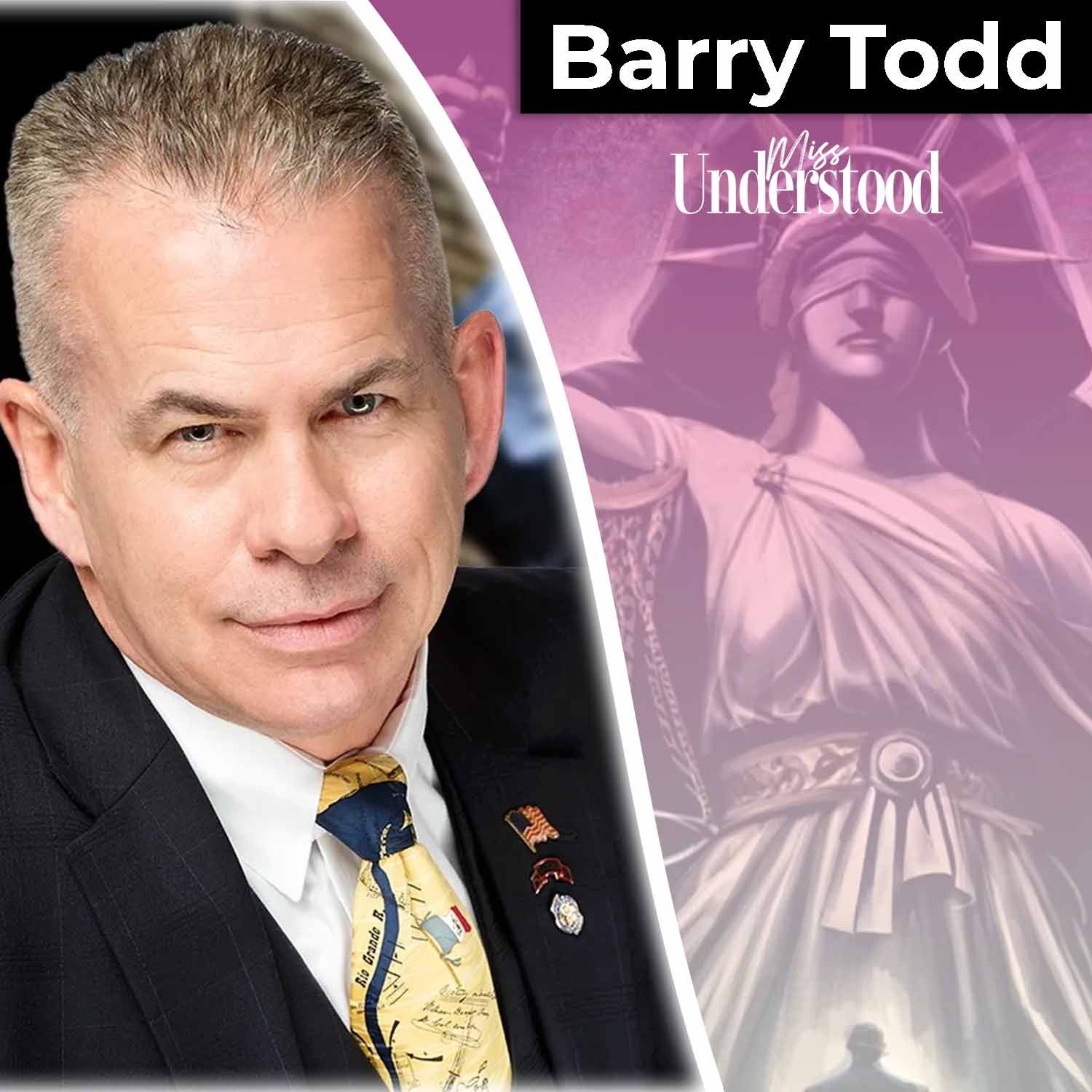
When Self-Defense Becomes a Crime: Barry D. Todd’s Stand Your Ground Nightmare
He defended himself—and ended up facing attempted murder charges.
Barry D. Todd was a decorated Army veteran, a business owner, and a law-abiding citizen. But in 2014, one violent encounter outside a restaurant turned his life upside down. Though he acted in self-defense, Barry was arrested, charged with attempted murder, and thrown into a justice system that seemed determined to break him.
In this gripping episode, Barry shares how one split-second decision became a years-long nightmare—and how he fought to reclaim his freedom, his reputation, and his voice.
🔊 In this episode, you’ll learn:
• What really happened the night of the attack
• How “stand your ground” laws fail the very people they claim to protect
• The emotional and legal toll of being falsely accused
• Why Barry believes his story could happen to anyone—and already has
We also discuss:
• Barry’s military career and how it shaped his mindset
• The flawed assumptions behind “guilty until proven innocent”
• Race, perception, and the quiet bias within the legal system
• Why he wrote Stand Your Ground: One Man’s Self-Defense Nightmare
• His advice to anyone facing public judgment or legal injustice
📚 More about Barry D. Todd:
Barry is the author of Stand Your Ground, a raw and powerful memoir that exposes how quickly the justice system can turn on you. He is a U.S. Army veteran, entrepreneur, and advocate for justice reform.
-- --- --
PLEASE LIKE, SHARE, SUBSCRIBE, AND GIVE US A 5-STAR REVIEW!: ratethispodcast.com/missunderstood
Become a Patreon Member: https://www.patreon.com/c/MissUnderstoodwithRachelUchitel
Shop Miss Understood Merch https://mumerch.com/
Follow Rachel on Instagram! https://www.instagram.com/racheluchitelnyc/?hl=en
Follow Rachel on TikTok! https://www.tiktok.com/@itsracheluchitel
Executive Producer: George Carmona
Do you have show ideas, media requests or sponsorship opportunities? Email the show at: ru@missumedia.com
Listen on Apple, Spotify or wherever you get your podcasts.
YouTube: https://www.youtube.com/channel/UCw13NrSKD-nD_8E0vBHt5hA
Rumble: https://rumble.com/c/RachelUchitel
Website: https://missunderstoodpodcast.com/
Hosted by Simplecast, an AdsWizz company. See pcm.adswizz.com for information about our collection and use of personal data for advertising.
Available Results
Generated results are saved to the knowledge database for reuse and search.
Extract Knowledge
Pick what you want extracted first. Model, scope, and chapter options appear after a template is selected.
Transcript
[SPEAKER_03]: Joining the push for more conversation about so-called stand-year ground law.
[SPEAKER_01]: Those laws and effects and dozens of states, including ours.
[SPEAKER_01]: Let's talk about that night outside the Arizona restaurant in two thousand fourteen.
[SPEAKER_00]: My wife and I were out with some other retired friends.
[SPEAKER_00]: Then I was viciously attacked by two twice, one of them wielding a knife.
[SPEAKER_00]: My last work string before this charge, I said this
[SPEAKER_00]: You served two decades in the military.
[SPEAKER_00]: How did that shape your view of justice?
[SPEAKER_00]: You were now presumed guilty until proven innocent.
[SPEAKER_00]: Let's go back to your book first.
[SPEAKER_00]: I can what do you hope that readers take away from your story?
[SPEAKER_00]: Let's start waking America up to what's going on in the United States.
[SPEAKER_01]: What happens when you do exactly what the law says you're allowed to do?
[SPEAKER_01]: Defend yourself, and the system turns on you anyway.
[SPEAKER_01]: Today's guest is Barry Todd, a decorated Army veteran, a successful businessman, and the author of Stand Your Ground, one man's self defense nightmare.
[SPEAKER_01]: In twenty fourteen, Barry was attacked outside a restaurant.
[SPEAKER_01]: He defended himself just like he had been trained to do his entire life.
[SPEAKER_01]: But instead of being treated like a victim or even a survivor, he was arrested, charged with attempted murder and thrown into a justice system that seemed more interested in making an example of him, rather than uncovering the truth.
[SPEAKER_01]: This is a story about power.
[SPEAKER_01]: It's a story about what happens when public perception and prosecutorial pressure collide, and you find yourself fighting for your life all over again.
[SPEAKER_01]: This time in a courtroom.
[SPEAKER_01]: Barry's case forces us to ask hard questions about how standard ground laws are actually applied.
[SPEAKER_01]: Why do some people walk free while others get locked away for doing the exact same thing?
[SPEAKER_01]: Why is the burden of proof so often placed on the person just trying to survive?
[SPEAKER_01]: In his episode, Barry opens about his military background, the night that changed everything, and what it felt like to be labelled a criminal by the very system he once served.
[SPEAKER_01]: But more than that, he tells us how he fought back with his voice, his story, and his truth.
[SPEAKER_01]: Because sometimes being misunderstood isn't just painful, it's life threatening, and today we're setting the record straight.
[SPEAKER_01]: Enjoy my conversation with Barry Todd.
[SPEAKER_01]: Barry, thank you so much for joining me today and misunderstood how are you?
[SPEAKER_00]: I'm doing great.
[SPEAKER_00]: Thank you for having me.
[SPEAKER_01]: Well, first of all, where are you?
[SPEAKER_01]: I love your, I love your hat.
[SPEAKER_00]: I live in New Arizona.
[SPEAKER_01]: Wow.
[SPEAKER_01]: Okay.
[SPEAKER_01]: Amazing.
[SPEAKER_01]: So all right.
[SPEAKER_01]: Well, all the way from Arizona.
[SPEAKER_01]: I really appreciate it.
[SPEAKER_01]: I'm I'm in Palm Beach today and I'm really thrilled to have you on the show.
[SPEAKER_01]: I was saying before we started.
[SPEAKER_01]: I got the bio, you know, your bio and obviously saw the the book that you have that's recently come out and I'm just really excited for people to hear about you and your story and get your book.
[SPEAKER_01]: So I want to get right into it before
[SPEAKER_01]: We came on here.
[SPEAKER_01]: I told a little people a little bit about who you are and what your story is, but I want to hear from you.
[SPEAKER_01]: So before, in fourteen, who was Barry Todd?
[SPEAKER_01]: Can you give us a little bit about, you know, your life and who you were up until this moment where your life changed?
[SPEAKER_00]: Well, I'm, yes, I'm a retired, twenty-one year Army Ranger.
[SPEAKER_00]: And it was a blessing serving my country.
[SPEAKER_00]: I've been married for forty years this time.
[SPEAKER_00]: And I have together we have three children and four grandchildren.
[SPEAKER_00]: And we are actually pretty exciting stuff.
[SPEAKER_00]: I just found out that I had a
[SPEAKER_00]: a child back in nineteen eighty three before I ever met my wife.
[SPEAKER_00]: And she's actually coming over to visit and meet the whole family had no clue.
[SPEAKER_00]: It's not a beautiful thing.
[SPEAKER_01]: Well, wait, sidebar, how did you find out about this?
[SPEAKER_00]: She connected with my cousin on DNA ancestry DNA.
[SPEAKER_01]: no way like a twenty three in me type of exactly.
[SPEAKER_01]: Okay, wait, we could do a whole show on this.
[SPEAKER_01]: So when did that, when did that happen?
[SPEAKER_00]: March of this year.
[SPEAKER_01]: And she just wrote a note and said, I think I'm related to you guys.
[SPEAKER_00]: Well, the DNA came up and then she connected with my cousin.
[SPEAKER_00]: My cousin called me the first week of March and said, are you sitting down?
[SPEAKER_00]: And I said, why?
[SPEAKER_00]: I said, I said, I said, I'm a retired decorator.
[SPEAKER_00]: I've been charged with felonies before.
[SPEAKER_00]: I lived through that.
[SPEAKER_00]: I said, what else could come up with that?
[SPEAKER_00]: It seems to me she goes, well, I think you have a child from when you were stationed overseas in the early eighties when you're Ranger yet.
[SPEAKER_00]: And I said, how do you know this?
[SPEAKER_00]: And she said, well, it's a DNA match.
[SPEAKER_00]: And she started telling me about it.
[SPEAKER_00]: And I said, well, stop.
[SPEAKER_00]: It's her mother's name, Hike Annemoree.
[SPEAKER_00]: Because that's the woman I dated back then.
[SPEAKER_00]: And she goes, yes, it is.
[SPEAKER_00]: I'm like, then it's my child.
[SPEAKER_01]: So why do you think this woman never tells you about this child?
[SPEAKER_00]: Uh, I'm not sure why I found out later that she put my daughter.
[SPEAKER_00]: She sold her to a foster home in nineteen eighty three in Germany.
[SPEAKER_00]: She's a German national.
[SPEAKER_01]: Oh, I see.
[SPEAKER_01]: Okay.
[SPEAKER_01]: And is she still alive?
[SPEAKER_00]: Uh, the mother.
[SPEAKER_00]: I'm not sure.
[SPEAKER_00]: I know that they connected her and my daughter.
[SPEAKER_00]: Uh, but my whole family is just static about it.
[SPEAKER_00]: Uh, it's a, it's a, it's a beautiful thing.
[SPEAKER_00]: This is a god of there.
[SPEAKER_01]: Oh my god.
[SPEAKER_01]: That is amazing.
[SPEAKER_01]: Okay.
[SPEAKER_01]: So where does your daughter live now?
[SPEAKER_00]: Kaiser slur.
[SPEAKER_00]: Where's that?
[SPEAKER_00]: And that's in Germany.
[SPEAKER_01]: Okay.
[SPEAKER_01]: So she's still okay.
[SPEAKER_01]: Wow.
[SPEAKER_01]: So she's in Germany.
[SPEAKER_01]: And she was, she lived with foster parents or adopted parents or whole life.
[SPEAKER_00]: It was, it was actually a foster home, uh, because over there, they do a little bit differently.
[SPEAKER_00]: It's like a door.
[SPEAKER_01]: Okay.
[SPEAKER_00]: And she's been married for fifteen years and I have a grandson who's thirteen and a granddaughter who is ten.
[SPEAKER_01]: Oh my god.
[SPEAKER_01]: So are they going to come to the United States?
[SPEAKER_00]: They actually land this Friday.
[SPEAKER_01]: Stop it.
[SPEAKER_01]: All of them.
[SPEAKER_01]: The three of them.
[SPEAKER_00]: I'm bringing them over.
[SPEAKER_00]: I'm trying to bring a morning crystal.
[SPEAKER_00]: My daughter her name is Jasmine and her husband to come.
[SPEAKER_00]: But he has to work.
[SPEAKER_00]: But it's been great.
[SPEAKER_00]: They seem to be really loving and just a really, really great family.
[SPEAKER_00]: And we're just so blessed.
[SPEAKER_00]: This is beyond comprehension.
[SPEAKER_00]: So that's the big news.
[SPEAKER_01]: That is huge news.
[SPEAKER_01]: Well, that's super excited.
[SPEAKER_01]: We'd have you face times like these.
[SPEAKER_01]: Yeah, yeah.
[SPEAKER_00]: We've been doing it every other weeks.
[SPEAKER_01]: Oh my god.
[SPEAKER_01]: I'm so happy for you.
[SPEAKER_01]: So they are they coming and staying with your whole family or you'll do a bunch of stuff or whatever.
[SPEAKER_00]: Yeah, we're going to go to our home in East Tennessee and I'm going to take him up to meet their grandfather and great grandfather.
[SPEAKER_00]: He turned ninety this year.
[SPEAKER_03]: Oh my God.
[SPEAKER_00]: So he's all excited to meet him.
[SPEAKER_00]: And so the whole family's coming in to meet him and everything.
[SPEAKER_01]: Well, it'll be interesting to see if she's ever reconnected with her real mom and whatever happened to your ex girlfriend or whatever.
[SPEAKER_01]: I mean, it would be so interesting that wow, you'll have to come on and tell me that whole story after.
[SPEAKER_00]: Well, I'm glad to.
[SPEAKER_00]: And then I go back to my your question.
[SPEAKER_00]: Yeah, I decided to go to financial services industry.
[SPEAKER_00]: I did about five and a half six years with a company called First Command.
[SPEAKER_00]: They focused more on the military.
[SPEAKER_00]: And I realized that most at Bives are a lot of companies out there.
[SPEAKER_00]: They're dysfunctional business models.
[SPEAKER_00]: They're just glorified salesman.
[SPEAKER_00]: I started my own company in the wait.
[SPEAKER_00]: It's a fee only firm.
[SPEAKER_00]: It's been very successful.
[SPEAKER_00]: And then this thing in two thousand and fourteen happened that through my entire life, my family's life into a whirlwind haze.
[SPEAKER_01]: Right.
[SPEAKER_01]: So up until that moment, because you, you know, you serve two decades in the military.
[SPEAKER_01]: How did that shape your view of justice, discipline, and protecting others?
[SPEAKER_00]: I totally believed our system was the best system in the world.
[SPEAKER_00]: And I still do, but I realize that underneath there's some serious problems that have come up.
[SPEAKER_00]: And you were now presumed guilty until proven innocent.
[SPEAKER_03]: Yeah.
[SPEAKER_00]: And it's horrible how they they, you know, law fair, even though that's the new term, it's actually been going on for decades now.
[SPEAKER_00]: And it's crazy.
[SPEAKER_01]: Right.
[SPEAKER_01]: So let's talk about that night outside the Arizona restaurant in two thousand fourteen.
[SPEAKER_01]: Can you talk us to exactly what happened?
[SPEAKER_00]: Well, in a brief sense, my wife and I were out with some other retired friends, her and I were threatened, then I was viciously attacked not by one person, Rachel, but by two twice, one of them wielding a knife.
[SPEAKER_00]: And the entire thing was on video, it was self defense, but when the police showed up without any investigation or new process, they're the ones that arrested me and charged me with a tempered murder and two counts of aggravated assault within five hours.
[SPEAKER_01]: Right.
[SPEAKER_01]: So got it.
[SPEAKER_01]: But like, tell me, like, were you guys there for dinner?
[SPEAKER_01]: Were you?
[SPEAKER_00]: Yes.
[SPEAKER_01]: Okay.
[SPEAKER_01]: So tell me, like, what was going on that night?
[SPEAKER_01]: You're just having a night dinner.
[SPEAKER_01]: Did people get drunk?
[SPEAKER_01]: Like, what happened?
[SPEAKER_00]: All right, so there were five couples total, one of them had left just a little bit earlier.
[SPEAKER_00]: We met there for dinner, drinks and dancing, and it was about ten, thirty.
[SPEAKER_00]: I told my wife, I said, hey, I'm gonna go out to the car and get a fresh can of Copenhagen.
[SPEAKER_00]: This guy that had become very fresh with our women, all of the women in our group earlier in the evening, trying to pick a fight with me.
[SPEAKER_01]: And I said, I'm inside the restaurant.
[SPEAKER_00]: Great.
[SPEAKER_00]: I said, I'm so fighting you.
[SPEAKER_00]: I said, I'm too damn old to get in the bar room.
[SPEAKER_00]: I'm not doing it.
[SPEAKER_00]: And I walked away, not once, but twice.
[SPEAKER_00]: Well, apparently he didn't like that.
[SPEAKER_00]: And he followed me outside.
[SPEAKER_00]: And then he, uh, I tried to go back in and, you know, that bully yard stuff that they try to do, you know, put your hands in your pockets and push it on the shoulder.
[SPEAKER_01]: Yeah.
[SPEAKER_00]: He was doing that to me.
[SPEAKER_00]: I got around him, but then he got hold of my belt loop.
[SPEAKER_00]: He was out waiting by a hundred pounds.
[SPEAKER_00]: Pick me up.
[SPEAKER_00]: Through me, head first into a Sunday block wall, uh, a hundred and eighty degrees, uh, gave me a concussion.
[SPEAKER_00]: broke a rib.
[SPEAKER_00]: And then then I said, I'm going back inside and getting my wife from my belongings, the bouncer come out.
[SPEAKER_00]: That's when he said, the bouncer wasn't throwing him out in accordance with Arizona law or the security.
[SPEAKER_00]: And he threatened my wife and he said, you're not going back in there.
[SPEAKER_00]: That be his mind.
[SPEAKER_00]: And that's when I said, understand, I'm armed.
[SPEAKER_00]: and then he attacked me again holding a weapon.
[SPEAKER_01]: Got it.
[SPEAKER_01]: So, and what, how did he attack you again?
[SPEAKER_00]: I, I, I ran this my firearm in accordance with Arizona law and I handed down my side and I said I'm going back in the building.
[SPEAKER_00]: He was locking the door.
[SPEAKER_00]: And before I could even get my arm down when I was pointing that he attacked me again going for the gun.
[SPEAKER_00]: And that's when his buddy who pulled a knife attacked me from behind.
[SPEAKER_01]: Oh, wow.
[SPEAKER_01]: Okay.
[SPEAKER_01]: So were there and how many witnesses were there?
[SPEAKER_01]: Were there people outside?
[SPEAKER_00]: Yes, there were several witnesses outside of these specific four or five that there was five.
[SPEAKER_00]: All of them.
[SPEAKER_00]: We're, we're his friends.
[SPEAKER_01]: Oh, God.
[SPEAKER_01]: Okay.
[SPEAKER_01]: So there was no security outside.
[SPEAKER_01]: Your wife wasn't outside.
[SPEAKER_01]: There was nobody.
[SPEAKER_00]: None of my friends that were all retired military special forces guys are special operators just like me.
[SPEAKER_00]: They were everybody was inside.
[SPEAKER_01]: Got it.
[SPEAKER_01]: Okay.
[SPEAKER_01]: So they both come at you, you fire, and what happens?
[SPEAKER_00]: Well, they tackled it.
[SPEAKER_00]: I was doing everything I could not to fire the weapon, but then they got me down to ground.
[SPEAKER_00]: One of them had me in a bare hug.
[SPEAKER_00]: The other one was breaking my arm, trying to get the weapon out of my hand, and then the weapon discharged.
[SPEAKER_00]: My last words during before discharge, I said, this is going to suck for both of us.
[SPEAKER_01]: Right.
[SPEAKER_00]: And that
[SPEAKER_00]: when he fell off, that's when my friends came out, they started helping me, I sat off to the side and then the police showed up.
[SPEAKER_01]: Got it.
[SPEAKER_01]: And so what ultimately happened to the two people, so it was two people that were basically on top of you, right?
[SPEAKER_01]: What happened ultimately to those two?
[SPEAKER_00]: The one was wounded, he's, you know, I heard that he's wearing a cloth to me back in the rest of his life.
[SPEAKER_00]: Okay.
[SPEAKER_00]: The other man, nothing.
[SPEAKER_00]: They weren't charged with anything.
[SPEAKER_01]: Okay, got it.
[SPEAKER_01]: So at what point did you realize that this was not necessarily just an unfortunate incident a bar fight and that this was going to be a much bigger deal?
[SPEAKER_00]: Once I started talking to the detect.
[SPEAKER_00]: Okay.
[SPEAKER_00]: He came in because I wasn't trying to hide anything.
[SPEAKER_00]: I said, okay, this was strictly self-defense.
[SPEAKER_00]: So I told him what happened.
[SPEAKER_00]: He comes back in about thirty minutes later, hands made a sheet tells me to read it inside.
[SPEAKER_00]: I asked him what it was.
[SPEAKER_00]: He said it's a church.
[SPEAKER_00]: He said it's a church sheet for what?
[SPEAKER_00]: He goes a tentative murder in two counts of aggravated assault.
[SPEAKER_00]: And I said, I told you it was strictly self-defense and his exact works.
[SPEAKER_00]: I mean, all this is on recording and transcribed.
[SPEAKER_00]: He said, well, we have the whole thing on video.
[SPEAKER_00]: I said, great.
[SPEAKER_00]: Have you looked at the video?
[SPEAKER_00]: His exact works to me, Rachel, not yet.
[SPEAKER_00]: I looked at him.
[SPEAKER_00]: I said, oh, you're a real intelligent life form.
[SPEAKER_00]: The oxygen is just flowing to your brain.
[SPEAKER_00]: So that didn't go over too well with him.
[SPEAKER_01]: I was going to say that probably didn't work in your face.
[SPEAKER_01]: Okay.
[SPEAKER_00]: Yeah, but I mean, you can't make up stupid.
[SPEAKER_01]: I get it.
[SPEAKER_01]: I get it.
[SPEAKER_01]: So did you sign it or did you say I'm not going to use to sign it?
[SPEAKER_01]: Okay.
[SPEAKER_01]: And next move they said, well, we're taking you down to the station or what happened.
[SPEAKER_00]: Well, they already have the station.
[SPEAKER_00]: That was going to be interview rooms.
[SPEAKER_00]: They were recording the entire thing.
[SPEAKER_00]: They didn't say, okay, we're taking you down and we're going to go ahead and book you.
[SPEAKER_00]: They booked me.
[SPEAKER_00]: They threw me in jail with no medical for five days.
[SPEAKER_00]: I had a concussion, broken rib, broken arm, and continues left shoulder.
[SPEAKER_01]: So meanwhile, what's going through your mind as you were being arrested?
[SPEAKER_00]: I'm thinking this is crazy.
[SPEAKER_00]: When I first got in the interview room, the first thing I did when I got in there was I prayed.
[SPEAKER_00]: I prayed for about two or three minutes and I was more focused on the young man that had been shot because it makes it.
[SPEAKER_00]: Seeing some of the things that I've seen in my military career, you never want to hurt somebody.
[SPEAKER_00]: All right, and you want, you know, the alcohol that's got to him, and he was extremely intoxicated.
[SPEAKER_00]: And to this day, I don't know why he wanted to take me out, but he did.
[SPEAKER_00]: for whatever reason.
[SPEAKER_00]: But that was what I focused on.
[SPEAKER_00]: But as I started getting into it, I'm like, you got to be kidding me.
[SPEAKER_00]: This is absurd.
[SPEAKER_02]: Right.
[SPEAKER_00]: And so when I was in the cell, I got my Bible and I started reading.
[SPEAKER_00]: I got a Bible from the cart that they carry around and started reading.
[SPEAKER_01]: Right.
[SPEAKER_01]: And at this point, had you been somebody that was very religious or read the Bible before?
[SPEAKER_00]: Yes, man.
[SPEAKER_00]: I've been strolling my faith for about at that point about fifteen years and this just made me even stronger.
[SPEAKER_00]: I did a lot of wailing it at a god throughout this terminal to say to least.
[SPEAKER_01]: I'm sure.
[SPEAKER_01]: I'm sure.
[SPEAKER_01]: But I mean, I'm curious, was it going to your head like, okay, well, they're eventually going to watch this video tape.
[SPEAKER_01]: This is all going to end by the end of the week.
[SPEAKER_01]: Someone's going to come get me where you worry about your wife, like what, how are you dealing with this?
[SPEAKER_00]: Well, that's exactly what it was.
[SPEAKER_00]: Well, first off, I had to get out of check.
[SPEAKER_00]: It was a five hundred thousand dollar cash only bond over a weekend.
[SPEAKER_00]: It wasn't even an assurity bond where you pay an insurance company.
[SPEAKER_03]: Yeah.
[SPEAKER_00]: They five hundred thousand cash only.
[SPEAKER_00]: So it took me two business days to get that capital out of our investments and stuff and go ahead and post that bond.
[SPEAKER_00]: And then when we got out, I had to get an attorney
[SPEAKER_00]: Because the attorney that we knew that got me out of jail, he looked at me.
[SPEAKER_00]: He was married.
[SPEAKER_00]: This is way above my, my level.
[SPEAKER_00]: I can't handle this.
[SPEAKER_00]: He goes, these are the attorneys I recommend for you.
[SPEAKER_00]: And he gave me the, the name at the top of the list was a guy by the name of Michael Kimmer.
[SPEAKER_00]: And he was the number one or number two attorney on the Miranda ranks case in nineteen sixty nine.
[SPEAKER_00]: So he's in the seventies now.
[SPEAKER_00]: brilliant, brilliant, legal line.
[SPEAKER_00]: And he took my cakes and he got the video.
[SPEAKER_00]: This is what the sad thing was.
[SPEAKER_00]: They took it to the grand jury.
[SPEAKER_00]: They didn't even use the video.
[SPEAKER_01]: But how is that even possible?
[SPEAKER_01]: I mean, it just seemed so crazy that that that it wouldn't be used.
[SPEAKER_00]: Well, this is how crazy it is.
[SPEAKER_00]: My case will sit back to the grand jury, Rachel, not once, not twice, not three times, but four times.
[SPEAKER_00]: And not one time did that prosecutor follow the judge's orders and present the videos.
[SPEAKER_01]: Why do you think that was?
[SPEAKER_00]: Because he had a nerve, he wanted to do it.
[SPEAKER_00]: If you ever heard the term, Rachel, you can die to him, sandwich in the grand jury.
[SPEAKER_01]: No, but it's a great.
[SPEAKER_00]: It is.
[SPEAKER_00]: The American public is so uninformed about the judicial system underneath.
[SPEAKER_00]: The court saved me, but the system underneath is broken.
[SPEAKER_00]: There is no judge and no defense in a grand jury by prosecutors supposed to be a minister of justice and present all the facts.
[SPEAKER_00]: And then let the chips fall where they may.
[SPEAKER_01]: Yeah.
[SPEAKER_01]: Well, it's interesting that you say that I've been on a grand jury.
[SPEAKER_01]: So I served in Manhattan on a on a grand jury for thirty days, which is what you're supposed to do.
[SPEAKER_01]: And first of all, I found it fascinating.
[SPEAKER_01]: I was obsessed.
[SPEAKER_01]: I was that girl on there taking notes, asking all sorts of questions.
[SPEAKER_01]: But I can tell you the other, I forget if it's twenty three, twenty one, whatever it is, people in the room.
[SPEAKER_01]: They say it to jury of your peers.
[SPEAKER_01]: No, it is not.
[SPEAKER_01]: These are people that could care less about what they're listening to.
[SPEAKER_01]: They can't wait for the clock to strike five.
[SPEAKER_01]: There are some of them ran it for the forty three dollars that they get.
[SPEAKER_01]: No one cares and I cared and there were so many times where I felt like I was in the movie.
[SPEAKER_01]: Twelve angry men or whatever it was.
[SPEAKER_01]: where people are just breathing their hand like, yes, send them to, you know, let's move on.
[SPEAKER_01]: He's guilty.
[SPEAKER_01]: And I was like, how do you, how did you get that from that?
[SPEAKER_01]: You didn't even ask these questions.
[SPEAKER_01]: They didn't supply this.
[SPEAKER_01]: So like, I can understand how people are just listening to the evidence and no one has the IQ or the curiosity to say, well, that's how that really makes sense.
[SPEAKER_01]: Like, let's hear more.
[SPEAKER_01]: So I get it.
[SPEAKER_01]: But what I don't understand is it what you say was brought back a couple times.
[SPEAKER_01]: How does that work?
[SPEAKER_01]: Because I thought once the grand jury says you're indicted, that it moves forward.
[SPEAKER_01]: So how did it?
[SPEAKER_01]: How did that go backwards?
[SPEAKER_00]: All right, great question.
[SPEAKER_00]: The first step, and I didn't know this either until my attorney taught me.
[SPEAKER_00]: This was, this was how brilliant I'm an attorney was.
[SPEAKER_00]: He goes, well, the first goal is let's not get it to try.
[SPEAKER_00]: Let's get a kick out of the grand jury.
[SPEAKER_00]: He goes, you can do that.
[SPEAKER_00]: He goes, yes, we're going to file a motion to remand it back because he failed to present exculpatory evidence.
[SPEAKER_00]: So every time we would get the transcripts from the grand jury with the jurors' names redacted and we would go through it and he
[SPEAKER_00]: He would never present the correct self-defense laws for the state of Arizona, and he would never present the video evidence.
[SPEAKER_00]: So the judge, every time would send it back, it got so bad between him and the judge that the judge actually made a finding of fact from the video, which is never done before a case goes to trial.
[SPEAKER_00]: based on the video that I followed Arizona self-defense law and then told him and then he still wouldn't dismiss it.
[SPEAKER_00]: The judge told him to take it back to the grand jury again and present this and that's when he demanded a preliminary hearing.
[SPEAKER_01]: Got it.
[SPEAKER_01]: So that's interesting.
[SPEAKER_01]: So the judge obviously saw this evidence saw that there was a possibility that it was self-defense or knew it was but because these are going to trial he can't actually make that decision to throw it out himself correct.
[SPEAKER_00]: Not at that point, correct?
[SPEAKER_00]: Got it.
[SPEAKER_00]: Got it.
[SPEAKER_00]: Okay.
[SPEAKER_00]: It's followed the same rules as twenty eight other states have done.
[SPEAKER_03]: Right.
[SPEAKER_00]: We're no longer in affirmative defense state.
[SPEAKER_00]: We're a justification defense state.
[SPEAKER_00]: What does that mean?
[SPEAKER_00]: California, New York, they're affirmative defense states.
[SPEAKER_00]: The moment you say that it's self defense in those states, you have to prove it with self defense.
[SPEAKER_01]: Okay.
[SPEAKER_00]: In Arizona, Texas, Florida, several other states, they have justification laws now.
[SPEAKER_00]: that when you say it with self-defense, you're saying that you were justified in your actions because you failed for your, you felt that physical force was going to, and physical harm was going to come to you are physical deadly force.
[SPEAKER_01]: Right.
[SPEAKER_01]: Yeah, go ahead.
[SPEAKER_00]: So that's that's how I wrote down.
[SPEAKER_00]: And when I said it with self defense, they ignored the Arizona laws that actually put the burden of proving that it wasn't self defense back on me instead of on that.
[SPEAKER_01]: Right.
[SPEAKER_01]: You know, it's so interesting because I feel like Americans as a whole really respect veterans.
[SPEAKER_01]: I mean, I don't know if you see it that way and I'd love to hear your opinion, but as someone who's not a veteran and always listens to, you know, how people treat veterans in a lot of situations, even down to something as small as getting on the airplane first, people are like, thank you for your service, you know what I mean?
[SPEAKER_01]: I would have thought that when you announced, by the way, I'm a veteran and I'm carrying a gun, you know, I've had all this training, like I know what I'm doing, I know the law that people would have given you a little more respect.
[SPEAKER_01]: Did you find that to be the case?
[SPEAKER_00]: No, not at all.
[SPEAKER_00]: I have in my life in the way I'm treated when I go out, but definitely not in this case.
[SPEAKER_00]: What I found out, and this is gonna shock you, is, and I was able to narrow it down to one word, honor.
[SPEAKER_00]: Most of society today thinks honor is integrity, doing the right thing when no one's looking.
[SPEAKER_00]: Honor though is doing the right thing, no matter the calls.
[SPEAKER_00]: in the military, you're trained to do the right thing no matter the cost.
[SPEAKER_00]: And police forces, at least in Yuma, and I'm seeing a lot of other places as well, just on the news like Daniel Penny in New York.
[SPEAKER_01]: Right.
[SPEAKER_01]: I was going to bring that up.
[SPEAKER_00]: Yeah.
[SPEAKER_00]: They know that they have no case, right?
[SPEAKER_00]: But instead of doing the right thing, the hard thing,
[SPEAKER_00]: They want to make it, they don't want to put the burden on them that they have to justify their actions, so they ignore it.
[SPEAKER_00]: An example, I knew four of the police officers on this police force that arrested me.
[SPEAKER_00]: I went to all of my leading investigator and my attorney went to them.
[SPEAKER_00]: They came in and watched the video after we had it forensically enhanced by the FBI's lead forensic expert, video forensic expert.
[SPEAKER_00]: They all said, oh, yeah, you got a great case.
[SPEAKER_00]: You're going to win.
[SPEAKER_00]: But every single one of them said, I can't put my name on that.
[SPEAKER_00]: I can't go against my brothers in blue.
[SPEAKER_00]: Every single one of them loyalty to them is higher from what I've seen than honor.
[SPEAKER_00]: Now that's not that way across the board.
[SPEAKER_00]: I know there were several federal officers.
[SPEAKER_00]: that stepped up that knew me from my business and were friends that signed on the line and stood in front of the judge.
[SPEAKER_01]: Right.
[SPEAKER_01]: Right.
[SPEAKER_01]: So in doing some research about you in your case, I didn't know that there was standard ground laws or otherwise known as no duty to retreat laws.
[SPEAKER_01]: For people that are listening and we've talked about this a little already about self-defense.
[SPEAKER_01]: But can you talk about it?
[SPEAKER_01]: I mean, it essentially allows people to use deadly force to defend yourself.
[SPEAKER_01]: I mean, you hear about it all the time, like you said, with the, with the Perry case, you know, people can't like it, it seems really hard to prove.
[SPEAKER_01]: And so, you know, and there are movies made about it.
[SPEAKER_01]: Like if you have an intruder and they're in your house, you're more likely to be seen as using deadly force to protect yourself.
[SPEAKER_01]: The second they step out of the house and you still kill them, you could go to prison for it.
[SPEAKER_01]: So like they're so, they're all these crazy laws.
[SPEAKER_01]: Like what, what did you come to understand about this now that you had to go through it?
[SPEAKER_00]: I understand that over the past fifty years or so, our laws have been turned upside down.
[SPEAKER_00]: To understand this, I'm going to go ahead and give you an example of my brother.
[SPEAKER_00]: In nineteen sixty six, his father, walking up at two a.m.
[SPEAKER_00]: said, come out here on the porch and wash this blood off the porch.
[SPEAKER_00]: They lived outside Fayetteville North Carolina.
[SPEAKER_00]: There was a dead man on the porch.
[SPEAKER_00]: Ten minutes later, a sheriff comes driving up and walks up on the porch and goes, what happens?
[SPEAKER_00]: My brother's father said, and pointed to the dead man and said, ask him, he goes, I can't, he's dead.
[SPEAKER_00]: He goes exactly.
[SPEAKER_00]: So don't try to add anything to what I'm getting ready to tell you.
[SPEAKER_00]: He was coming through that window right there, breaking into my house, having my wife and seven kids, I put two bullets in his chest.
[SPEAKER_00]: Any questions?
[SPEAKER_00]: It went to the grand jury and there were no charges.
[SPEAKER_00]: because he was defending his household.
[SPEAKER_00]: Now today, though, prosecutors are elected and they're elected by the population there.
[SPEAKER_00]: So let's use Daniel Penny, for example.
[SPEAKER_00]: Daniel Penny's white Marine, the guy that he restrained, he didn't kill him.
[SPEAKER_00]: He restrained him because he was on drugs threatening everybody in the car.
[SPEAKER_00]: He restrained until the cops came.
[SPEAKER_00]: He didn't die until five, ten minutes later.
[SPEAKER_00]: And if the prosecutor had done his job and been a minister of justice, that being out of the brag in this case, if he had presented all the evidence, all the witnesses that were there in the video from the phones to the grand jury, it would have never gone to trial.
[SPEAKER_00]: But he would have been, uh, his constituents would have said, oh, he's soft on crime.
[SPEAKER_00]: You let a white man kill a black man.
[SPEAKER_00]: Right.
[SPEAKER_00]: Through race and to it, when it has nothing to do with race.
[SPEAKER_01]: Right.
[SPEAKER_00]: And, and so that's why they, that's why these prosecutors do that.
[SPEAKER_00]: They're elected.
[SPEAKER_00]: And they're afraid of their constituents to do the right thing.
[SPEAKER_01]: Right.
[SPEAKER_01]: I hear you.
[SPEAKER_01]: Okay, so now tell me what happened.
[SPEAKER_01]: So it went back to the grand jury.
[SPEAKER_01]: What was the ultimate outcome of that situation?
[SPEAKER_00]: On the, on the, well, after the third grand jury, when it was getting set back the fourth time, the prosecutor got so mad, he, he demanded a preliminary hearing.
[SPEAKER_00]: Okay.
[SPEAKER_00]: Now I love Connecticut and Pennsylvania, that for felony charges, that's all they do now.
[SPEAKER_00]: They got really grand jerks.
[SPEAKER_03]: Okay.
[SPEAKER_00]: All right.
[SPEAKER_00]: A preliminary hearing is like a mini trial ritual.
[SPEAKER_00]: You have a judge.
[SPEAKER_00]: Prosecution presents his case in the defense is able to present their case and both are able to cross exam.
[SPEAKER_01]: So and no and no jury or just no jury.
[SPEAKER_01]: Okay.
[SPEAKER_01]: So just the judge.
[SPEAKER_00]: Just the judge.
[SPEAKER_00]: He's determining is there a possible cause for the case to go to trial.
[SPEAKER_01]: Okay.
[SPEAKER_01]: Got it.
[SPEAKER_00]: He's scheduled three days.
[SPEAKER_00]: The prosecutor was done after six hours.
[SPEAKER_00]: He didn't use any of the videos.
[SPEAKER_00]: He brought up the witnesses that were friends of the guys that attacked him.
[SPEAKER_00]: And then the lead detected.
[SPEAKER_00]: And my attorney used the video.
[SPEAKER_00]: Everyone of recanted their testimony on the stand.
[SPEAKER_00]: The police officer, the police detective, my attorney
[SPEAKER_00]: was we got very frustrated with him throughout the entire thing.
[SPEAKER_00]: He said it wasn't his job and no the law.
[SPEAKER_00]: It was the job of the prosecutor and the judge.
[SPEAKER_00]: And because he didn't know the new self defense laws and Arizona that had been out about five to fifteen years.
[SPEAKER_00]: At the end of it, we didn't even have to put on the case.
[SPEAKER_00]: The judge dismissed the entire case.
[SPEAKER_00]: He looked right at the prosecutor and goes, you know, proper because is a little barred up to any United States.
[SPEAKER_00]: And I could argue in court that it's even lower in the state of Arizona, and you haven't even come close.
[SPEAKER_01]: Wow.
[SPEAKER_00]: Mr. Todd was justified in his actions defending himself and his wife, all charges are dismissed.
[SPEAKER_01]: And I was it, you could walk out of court and you were good together.
[SPEAKER_00]: I walk out of court.
[SPEAKER_01]: And there was no chance that they could try you again somehow.
[SPEAKER_00]: Well, he did dismiss it four months later with prejudice.
[SPEAKER_00]: So they could never come back because initially he didn't without prejudice.
[SPEAKER_00]: And then we followed a motion to make it with prejudice.
[SPEAKER_00]: But still, this is a rough thing.
[SPEAKER_00]: Rachel, it took me another five and a half years to clear my record in my business.
[SPEAKER_01]: Meaning what?
[SPEAKER_00]: I want a national financial advisory firm.
[SPEAKER_00]: We're registered with the Securities and Exchange Commission.
[SPEAKER_00]: The moment your charge with the felony, you have to disclose it to every single client, new client within your firm.
[SPEAKER_00]: It's doing any business with you.
[SPEAKER_00]: And to get that off, it has to be expunged or sealed.
[SPEAKER_00]: And then you got all the regulators with all the states.
[SPEAKER_00]: It costs my company over a quarter of a million dollars.
[SPEAKER_00]: just to clear that stuff off the record.
[SPEAKER_01]: Right.
[SPEAKER_01]: And it's one thing to clear it off the record, but anyone that knows the story still was out there that you, you know, you were accused of attempted murder and, you know, once, once it's out there, it's out there, no matter what the result was.
[SPEAKER_00]: Correct.
[SPEAKER_00]: Oh, yeah.
[SPEAKER_00]: And in some of the states were just horrendous.
[SPEAKER_00]: Oklahoma put me all over their website.
[SPEAKER_03]: Hmm.
[SPEAKER_00]: Right.
[SPEAKER_00]: And I'm an Arizona, and I have a, I only have one client there, but I, you know, it's good to let a state know when you're doing business in their state.
[SPEAKER_00]: Right.
[SPEAKER_00]: They put me all over their website, like I'm some kind of craze murder stuff.
[SPEAKER_01]: So did it affect your clientele?
[SPEAKER_01]: Did a lot of people walk?
[SPEAKER_00]: Fortunately not, they knew me.
[SPEAKER_00]: We did not lose one client.
[SPEAKER_00]: And one that did leave for a very brief amount of time, found out they go, well,
[SPEAKER_00]: they don't do what you all do very so we're coming back.
[SPEAKER_01]: So so let me ask question ultimately how many days did you spend in jail five days in jail okay and then after that it was just waiting to see what was going to happen but you you could have gone away first
[SPEAKER_00]: of legal maneuver.
[SPEAKER_01]: Right.
[SPEAKER_01]: And you were, had you been found guilty?
[SPEAKER_01]: I mean, you're looking at twenty plus years.
[SPEAKER_01]: What were you looking at?
[SPEAKER_00]: Twenty to twenty five years in prison.
[SPEAKER_01]: Right.
[SPEAKER_01]: Right.
[SPEAKER_01]: So I'm assuming there was a huge amount of fear, not just with you, with your company, with your wife, with your friends, and what that, and absolutely what that must have put you guys through.
[SPEAKER_00]: Oh, it was horrible.
[SPEAKER_00]: It was horrible.
[SPEAKER_00]: It was an absolute nightmare.
[SPEAKER_00]: The thing that got me through it was number one, my faith in God.
[SPEAKER_00]: Number two was the support of my family friends and my clients.
[SPEAKER_00]: Number three was the Ranger training that taught me the mental discipline and forward to that I received in the military.
[SPEAKER_00]: I wouldn't have made it if I hadn't been through that.
[SPEAKER_01]: Right.
[SPEAKER_01]: So you wrote a book, it's called Stand Your Ground.
[SPEAKER_01]: First of all, writing it, was it cathartic?
[SPEAKER_01]: How did it make you feel?
[SPEAKER_00]: Uh, in times sat in in other times inferior.
[SPEAKER_00]: Yeah.
[SPEAKER_00]: I would just walk around and record myself as I was.
[SPEAKER_00]: So I could try to get the feeling into the book.
[SPEAKER_01]: Yeah.
[SPEAKER_01]: I totally understand that.
[SPEAKER_01]: How long did it take you to write it?
[SPEAKER_00]: Two years.
[SPEAKER_01]: Two years.
[SPEAKER_01]: Um, okay.
[SPEAKER_01]: What?
[SPEAKER_01]: Okay.
[SPEAKER_01]: So in writing it and also in what you've been, what do you think most people misunderstand about self defense cases?
[SPEAKER_00]: What do I think?
[SPEAKER_00]: Well, that's a tough question.
[SPEAKER_00]: What do I think they misunderstand?
[SPEAKER_00]: It's not black and white when it comes to the legal system.
[SPEAKER_00]: All right, the make sure that you know the laws.
[SPEAKER_00]: My wife and I are licensed to carry it back time and forty one states were still licensed to carry it forty one states.
[SPEAKER_00]: We know the law.
[SPEAKER_00]: We actually have an app on our phone that we pay to keep updated.
[SPEAKER_00]: So when we cross in another border,
[SPEAKER_00]: of another state where we're looking at the laws for that state.
[SPEAKER_00]: It's so important to know the laws in that state because some of them were so different.
[SPEAKER_00]: I personally think there needs to be a just like you get a driver's license.
[SPEAKER_00]: I think there should be a reciprocity license for all states for us to carry.
[SPEAKER_00]: There's some federal training and allow us to be able to do that because, you know,
[SPEAKER_00]: You don't know what's going to happen when Rachel and you have to be prepared for the unexpected.
[SPEAKER_00]: It's not the job of the police to protect you.
[SPEAKER_00]: Yes, they put that on the side of their car, but it's been held up in Supreme Court cases that it's not their job to jump in front of a bullet for you.
[SPEAKER_01]: Right.
[SPEAKER_00]: Now, their job is to investigate crime and to arrest people for crime.
[SPEAKER_00]: Yeah.
[SPEAKER_00]: But that's always after the facts.
[SPEAKER_00]: And it's not because they're bad people, they're good people.
[SPEAKER_00]: They're trying to do their job to the best of their ability and a lot of will jump in front of that boat.
[SPEAKER_00]: But the reality is you're responsible for your family.
[SPEAKER_01]: Right.
[SPEAKER_01]: I'm actually curious because I have a guest coming up in the next couple of weeks.
[SPEAKER_01]: Do you ever follow the Kyle Rittenhouse story?
[SPEAKER_00]: Very much so, yes.
[SPEAKER_01]: And so Kyle's going to come on and a lot of people don't know if he's a criminal or if he was, you know, a victim.
[SPEAKER_01]: And listen, the situation was much different.
[SPEAKER_01]: He went out one night, itching for a fight, kind of, and it ended up terribly for not only him, but obviously the people that died.
[SPEAKER_01]: And he ultimately was, you know, found not guilty.
[SPEAKER_01]: What did you think of his situation?
[SPEAKER_00]: I think he was trying to do the right thing, being a young, seventeen year old at the time, in help his community.
[SPEAKER_00]: I don't think he was necessarily looking for trouble, but if you go back in our history, it's only been in the last fifty to seventy-five years that we've put all these age requirements on things.
[SPEAKER_00]: You know, twenty-one to smoke at our eighteen, twenty-one to get alcohol.
[SPEAKER_00]: Back when our grandparents were growing up, they had licensees when they were twelve years old.
[SPEAKER_00]: They were all in their own, having kids.
[SPEAKER_00]: By the time they were thirteen or fourteen, he was trying to do the manly thing and step up for his community.
[SPEAKER_00]: And he got caught in a bad situation.
[SPEAKER_00]: He put himself in a bad situation.
[SPEAKER_00]: But at the same time,
[SPEAKER_00]: You know, listening to some of the police and the officers that were there, they appreciated you and be there because the same was out of control.
[SPEAKER_00]: We were having rioters, people burning things.
[SPEAKER_00]: It's been absurd.
[SPEAKER_00]: What a lot of the political community over the past several years has allowed to happen throughout the country and justify.
[SPEAKER_00]: Well, they're just upset.
[SPEAKER_00]: They're tearing things down.
[SPEAKER_00]: No, they're looting stores and burning cars.
[UNKNOWN]: Yeah.
[SPEAKER_01]: Another thing that I wanted to ask you is about, I mean, listen, it's such a touchy thing to talk about gun laws, right?
[SPEAKER_01]: There are so many people that believe in carrying guns, there are so many people that want it completely taken away as someone who obviously has a license to carry a gun, you and your wife.
[SPEAKER_01]: What are your thoughts?
[SPEAKER_01]: Because obviously you listen to the news and see how out of hand it gets when all of a sudden you see school shootings and all these crazy things that happens.
[SPEAKER_01]: What is your opinion on what's going on with these people and if they should be allowed to get guns this easily?
[SPEAKER_00]: Well, I don't think it's that easy.
[SPEAKER_00]: Usually these people that get guns, they're getting them from their parents.
[SPEAKER_00]: Right.
[SPEAKER_00]: Stuff like that, they're not securing them.
[SPEAKER_00]: That's just
[SPEAKER_00]: lack of supervision.
[SPEAKER_01]: Okay.
[SPEAKER_01]: You're right because that is correct, but you know, as an outsider, listen, I'm not someone that carries a gun.
[SPEAKER_01]: I don't really know anything about it.
[SPEAKER_01]: I got my master's in forensic investigation.
[SPEAKER_01]: We had to learn how to shoot.
[SPEAKER_01]: I was able to get a license to carry in the state of California if I wanted to because of what I, you know, the degree that I had, but I was like, this is going to turn out terribly because I don't want to have a gun even near me.
[SPEAKER_01]: God forbid something happened and someone shoots me with my own gun, right?
[SPEAKER_01]: So, but as at a total outsider, it seems like you hear from the media that it's easy enough to walk into a Walmart Walgreens, whatever it is that people are getting guns from, which I don't even know if that's true or not.
[SPEAKER_01]: But it seems like it's an easy thing.
[SPEAKER_01]: You fill something out.
[SPEAKER_01]: No one cares if you're crazy or not.
[SPEAKER_01]: Tell me, is that not true?
[SPEAKER_01]: That's not true.
[SPEAKER_01]: Okay.
[SPEAKER_01]: It's not true, but it's not true.
[SPEAKER_01]: It's not true.
[SPEAKER_01]: It's not true.
[SPEAKER_01]: It's not true.
[SPEAKER_01]: It's not true.
[SPEAKER_01]: It's not true.
[SPEAKER_01]: It's not true.
[SPEAKER_01]: It's not true.
[SPEAKER_01]: It's not true.
[SPEAKER_00]: It's not true.
[SPEAKER_00]: It's not true.
[SPEAKER_00]: It's not true.
[SPEAKER_00]: It's not true.
[SPEAKER_01]: It's not true.
[SPEAKER_01]: It's not true.
[SPEAKER_01]: It's not true.
[SPEAKER_00]: It's not true.
[SPEAKER_00]: It's not true.
[SPEAKER_00]: It's not true.
[SPEAKER_00]: It's not true.
[SPEAKER_00]: It's not true.
[SPEAKER_00]: It's not true.
[SPEAKER_00]: It's not true.
[SPEAKER_01]: It's not true.
[UNKNOWN]: It's not true
[SPEAKER_00]: You didn't used to have these problems.
[SPEAKER_00]: It's when they started putting all these laws in place to do that.
[SPEAKER_00]: When I went to high school, we carried guns.
[SPEAKER_00]: We kept them in the back of our car.
[SPEAKER_00]: They were in the back of my truck and my car.
[SPEAKER_00]: We had guns.
[SPEAKER_00]: You did not put up with this craziness.
[SPEAKER_00]: And people were able to defend themselves.
[SPEAKER_00]: My teacher's carried guns.
[SPEAKER_00]: And they actually have elected classes where you could go and get young training.
[SPEAKER_00]: And it was a qualified course, just like when I took drivers at, it was in high school.
[SPEAKER_00]: Right.
[SPEAKER_00]: So the more we limit the only people you're limiting right.
[SPEAKER_00]: by putting these laws in place are the law-abiding citizens, because they're the only ones who are going to put an apple in their phone to check out the laws for that state.
[SPEAKER_01]: I see.
[SPEAKER_00]: Then the crooks are going to do that.
[SPEAKER_00]: The crazy people don't care.
[SPEAKER_01]: Right.
[SPEAKER_01]: You're right.
[SPEAKER_01]: I mean, I didn't think of it that way.
[SPEAKER_01]: All right.
[SPEAKER_01]: So let's go back to your book for a second.
[SPEAKER_01]: What do you hope that readers take away from your story?
[SPEAKER_00]: That there needs to start being action all proceeds from the book.
[SPEAKER_00]: are going to a foundation, my wife and my legal team started called Defense Resources Foundation and you can go to that website at dot org defense resources foundation dot org.
[SPEAKER_00]: All right, and start looking at the laws within their state.
[SPEAKER_00]: Let's get them changed.
[SPEAKER_00]: Let's stop prosecutors.
[SPEAKER_00]: If you can't get them from being elected, then
[SPEAKER_00]: Figure out some other ways to hold them accountable because of the bars.
[SPEAKER_00]: That's really the only way you can hold a prosecutor accountable because of the fact that of the nineteen eighty three Supreme Court ruling they have absolutely muted.
[SPEAKER_00]: Most people don't know that.
[SPEAKER_00]: You can't sue a prosecutor.
[SPEAKER_00]: You can sue the county or city they live in, but you can't sue the prosecutor.
[SPEAKER_01]: I see.
[SPEAKER_00]: All right.
[SPEAKER_00]: And that's a horrible thing.
[SPEAKER_00]: So they can't be held accountable.
[SPEAKER_00]: When you send it to the bar, well, it's a bunch of lawyers trying to hold another lawyer's account.
[SPEAKER_01]: Right.
[SPEAKER_00]: It doesn't work.
[SPEAKER_00]: So start getting involved, learn from it.
[SPEAKER_00]: And then the proceeds from the book are going to help change the laws in those states and help people like Kyle written house like Daniel Penny that are won't fully indict it.
[SPEAKER_00]: That should have never been indicted in the first place to have the resources available to defend themselves.
[SPEAKER_00]: Because one of the things I'll tell you is this calls me a lot of money.
[SPEAKER_01]: Yeah.
[SPEAKER_00]: And if they did not have the company I had, I would have
[SPEAKER_00]: And there's no telling how long this would have taken.
[SPEAKER_01]: Right.
[SPEAKER_01]: I mean, do you think if you didn't have the resources that you could have ended up in jail?
[SPEAKER_00]: Oh, yes.
[SPEAKER_00]: No doubt in my mind.
[SPEAKER_01]: Yeah.
[SPEAKER_00]: No doubt in my mind.
[SPEAKER_00]: I think that's why so many people take a lesser charge.
[SPEAKER_01]: Right.
[SPEAKER_00]: Because they don't have the resources and the public defenders, their books are so full because most people don't have the resources to hire a private attorney.
[SPEAKER_00]: They can't keep up with their own workload.
[SPEAKER_01]: Right, right, I get it.
[SPEAKER_01]: You were talking about narrative earlier and that the police change the narrative, you know, everyone against you change the narrative.
[SPEAKER_01]: Do you feel you've been able to reclaim reclaim your own narrative or do you think you're still and always will be in the process of it?
[SPEAKER_00]: No, I took every claim that once the record was sealed in twenty twenty one.
[SPEAKER_00]: by the severe court of Arizona.
[SPEAKER_00]: They sealed the record, so it's been stripped from the FBI and everybody else.
[SPEAKER_00]: And now I'm able to tell the story.
[SPEAKER_00]: Put everything out there, reclaim the narrative, and let's start.
[SPEAKER_00]: Let's start waking America up to what's going on in the United States.
[SPEAKER_00]: And this is not a Republican Democrat-led, blue thing.
[SPEAKER_00]: This is an American issue.
[SPEAKER_00]: We need to be able to defend our families, our livelihoods, our property ourselves.
[SPEAKER_00]: And we need the courts to be in line with what the Constitution reads and stop letting people interpret it the way they want to.
[SPEAKER_01]: Right.
[SPEAKER_01]: What does life look like for you today?
[SPEAKER_00]: For God much better.
[SPEAKER_00]: I'm new cartwheels.
[SPEAKER_00]: I know, you know, you find out you have three kids instead of two.
[SPEAKER_00]: and four grandkids instead of two.
[SPEAKER_00]: That's a beautiful thing right there alone.
[SPEAKER_00]: Right, I agree.
[SPEAKER_00]: And then a company that's growing exponentially, we broke out on our own completely in two thousand and nineteen.
[SPEAKER_00]: We've grown five hundred percent in that time period.
[SPEAKER_00]: I'm living the American dream.
[SPEAKER_00]: And I'm able to help out in other areas of my wife and I were very active in our church as well as I'm the president of the National Ranger Memorial Foundation.
[SPEAKER_00]: for Army Rangers.
[SPEAKER_00]: And so it's a beautiful thing.
[SPEAKER_00]: It's good.
[SPEAKER_01]: It sounds very good.
[SPEAKER_00]: But go to the website, get the book, standard groundbook.com and remember all the proceeds are going to defense resources foundation.org.
[SPEAKER_00]: And if you want to donate, just go there.
[SPEAKER_00]: You can do monthly or whatever.
[SPEAKER_01]: Amazing.
[SPEAKER_01]: Last question for you.
[SPEAKER_01]: If somebody listening finds themselves facing a legal nightmare or public shame, what advice would you give to them?
[SPEAKER_00]: be your own advocate.
[SPEAKER_00]: Take charge of your case.
[SPEAKER_00]: Don't depend on the lawyers.
[SPEAKER_00]: If you read my book, you're going to find out my lawyers made some mistakes.
[SPEAKER_00]: But because I knew the law so well, and I was the one right in the checks, they got to see things my way and it really moved a lot faster after that.
[SPEAKER_01]: Amazing.
[SPEAKER_01]: Barry, thank you so much.
[SPEAKER_01]: Stand your ground is out now.
[SPEAKER_01]: Tell people one more time where they can get your book or find out more about your foundation.
[SPEAKER_00]: Please go to standardgroundbook.com.
[SPEAKER_00]: You can also order it on Amazon, Barnes and Noble or Dorns Publishing and the Foundation is Defense Resources Foundation.
[SPEAKER_00]: If you find yourself in trouble, go there and donate for those out there that have the resources to do that.
[SPEAKER_00]: But if you find yourself in trouble, have your attorney go on there and apply for assistance.
[SPEAKER_00]: Amazing.
[SPEAKER_00]: We'll be there to help you.
[SPEAKER_01]: Awesome.
[SPEAKER_01]: I'm going to support you.
[SPEAKER_01]: I'm going to go get the book today.
[SPEAKER_01]: Thank you so much.
[SPEAKER_01]: Very good luck with everything.
[SPEAKER_01]: And I really wish you the best.
[SPEAKER_01]: I cannot wait to hear what happens when you meet your daughter for the first time.
[SPEAKER_00]: Well, thank you.
[SPEAKER_00]: Thank you.
[SPEAKER_00]: God bless you.
[SPEAKER_00]: And thank you for having me on
[SPEAKER_01]: Thank you so much for listening to Ms.
[SPEAKER_01]: Understood.
[SPEAKER_01]: I'm your host Rachel, you could tell.
[SPEAKER_01]: Please be sure to subscribe to the show and give us a five-star rating and review.
[SPEAKER_01]: You can support the show by joining our Patreon at patreon.com slash Ms.
[SPEAKER_01]: Understood with Rachel, you could tell.
[SPEAKER_01]: Do you have ideas for the show or want to reach out email us at info, Ms.
[SPEAKER_01]: Understood podcast at gmail.com that's spelled MISS.
[SPEAKER_01]: Understood.
[SPEAKER_01]: Thank you so much and I'll see you next time.