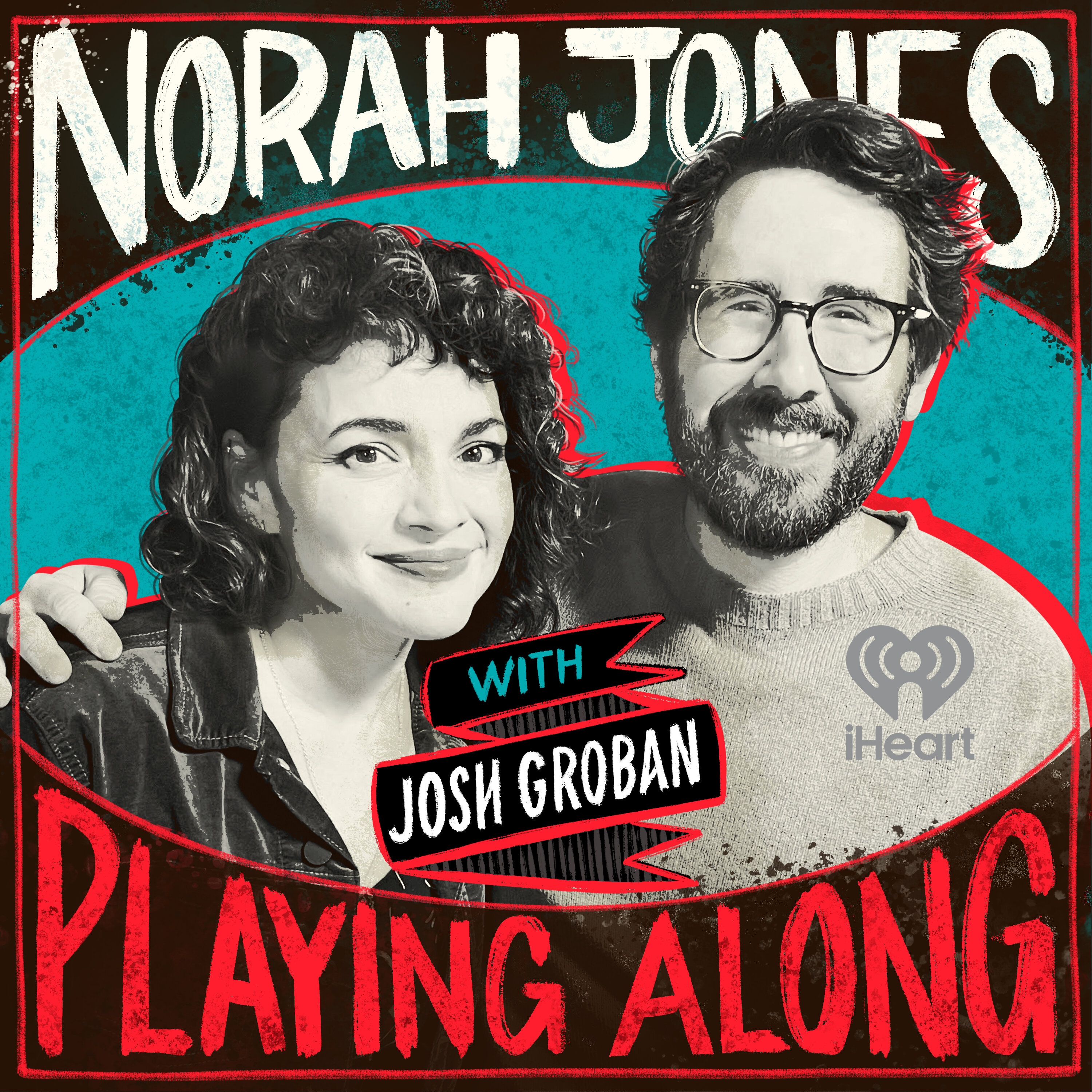
Josh Groban
Tony and GRAMMY nominee Josh Groban chats with Norah about being a "late bloomer" in finding his voice, life on and off the stage, and their shared love of musical theater. The episode features candid renditions of familiar favorites reimagined and a timeless Broadway classic. Recorded 11/25/25.
See omnystudio.com/listener for privacy information.
2026-04-07
58 min
Transcript
Available Results
Generated results are saved to the knowledge database for reuse and search.
No generated results are available for this episode yet.
Extract Knowledge
Pick what you want extracted first. Model, scope, and chapter options appear after a template is selected.
Generated results for public episodes are saved to the knowledge database so they can be reused and searched later.
Transcript
00:00:00
Speaker 1: This episode is also available as video on YouTube. You can visit Nora Jones channel and be sure to.

00:00:06
Speaker 2: Subscribe while you're there.

00:00:07
Speaker 1: Hey, I'm Nora Jones and today I'm playing along with Josh Grobin.

00:00:11
Speaker 2: I'm just playing lo Wey.

00:00:17
Speaker 1: I'm just playing in lone Wey. Hey, I'm Norah Jones and welcome to the show. Here we are me and Myoda, Sarah Oda.

00:00:30
Speaker 3: Welcome to the show.

00:00:31
Speaker 2: Hey, co pilot.

00:00:32
Speaker 4: We have an amazing episode today with Grammy nominated singer, songwriter, actor, musical theater performer Josh Grobin. He's fans across generations and genres. With his very warm, rich baritone voice, It's unforgettable and he moves seamlessly from classical music to Broadway. His voice is just so good you can do anything.

00:00:55
Speaker 1: He's incredible. Actually, hearing his voice in the room was very special.

00:00:58
Speaker 3: Powerful.

00:01:01
Speaker 2: Yeah, we had a lot of fun.

00:01:02
Speaker 1: He's also just a very fun person and sweetheart and just all around great guy.

00:01:08
Speaker 3: Yeah.

00:01:09
Speaker 2: Yeah.

00:01:09
Speaker 1: Josh Wall release his new album Cinematic in early May, and it's a collection of some of the most iconic songs featured in film.

00:01:17
Speaker 2: The album SPAN's favorites like can.

00:01:18
Speaker 1: You Feel The Love Tonight from The Lion King and sky Fall, the James Bond theme, to timeless classics including moon River from Breakfast to Tiffany's As Time Goes By from Casablanca.

00:01:29
Speaker 2: And When You Wish Upon a Star from Pinocchio, along with a stirring newer edition of stand By Me.

00:01:37
Speaker 4: In this episode, you're going to hear about how he sort of found his voice and how he kind of had to learn how to become a front man, some of the differences between the acting world versus the singing world, and also your shared love of musical theater, which specifically Andrew Lloyd Webber specifically, and culminating into these powerful including a Broadway classic.

00:02:02
Speaker 1: Oh my God, I got to live my dream. So please enjoy the episode with Josh Grogan. Well, thanks for coming today.

00:02:11
Speaker 3: I am so happy to finally be in this wonderful room with you.

00:02:14
Speaker 2: Yeah, I'm so happy it worked out.

00:02:15
Speaker 1: And last time I saw you, we were doing that beautiful.

00:02:19
Speaker 3: Benefit which thank you for joining us.

00:02:22
Speaker 5: Yeah.

00:02:22
Speaker 2: Is this your your organization?

00:02:24
Speaker 3: Yeah?

00:02:24
Speaker 6: So this was our second year at Jazz Lincoln Center. You know, I know we're both products of you know, arts education. You posted that picture on Instagram you and band which was marching fans.

00:02:35
Speaker 3: Which was like so cool that you did that, and yeah.

00:02:38
Speaker 6: So I I am so grateful for the arts teachers that I had, the music teachers that opened up my world when I was younger. And so you know, my fans, like from from early on, showed a real interest in giving back in more ways than just buying the music and stuff they were They would always ask me on birthdays and stuff, where can we give That's really sweet and yeah, and at some point they actually like they gave me a huge donation at a concert. I was playing the Greek in La and they stopped the show and they gave me like this jumbo check and they'd auctioned off like all kinds of stuff and they gave me a check for like twenty five thousand dollars and they said, one day, if you start a foundation, we want this to be your first donation.

00:03:16
Speaker 3: Who's they It was like a group of ten can we get back? It was about ten fans.

00:03:24
Speaker 2: Like a fan club kind of thing.

00:03:25
Speaker 6: Yeah, exactly, gotch and they kind of galvanized other fans and they raised money.

00:03:30
Speaker 3: And to do something good, just to do something.

00:03:32
Speaker 6: Good, and they said you know, we really want to and you know, as you know, when fans kind of stopped the show in the front row like I go, it's okay, what's this going to be now?

00:03:41
Speaker 3: But it was me it was lovely.

00:03:44
Speaker 6: Well, it rarely happens to me too, it's a fairly you know, usually they're they're pretty calm. But they wanted to stop, and they said no, no, no, give us the mic and went okay. And it started as just the Josh Grobin Foundation because I didn't know what I wanted to make my call yet. We just wanted to We wanted an umbrella that we could take in money and give it to whoever. That wound up just being a little too broad because you know, you can give a little bit to a lot of organizations, but those organizations generally.

00:04:15
Speaker 3: Have a lot of money coming their way way. Anyway.

00:04:17
Speaker 6: Yeah, and then I got have you ever done Arts on the Hill Day in DC? You'd you'd be amazing doing this where it's basically, you know, Congress gives has one day a year where they allow of a lot of conversations to take place about funding the arts in the country. And so the year that I did it, it was me went and Marsalis and Linda Ronstadt.

00:04:38
Speaker 2: Oh got amazing.

00:04:39
Speaker 3: Sandwich between these geniuses.

00:04:41
Speaker 2: Wasn't a long time ago she was singing.

00:04:43
Speaker 6: It was a long time ago she was. She didn't sing that day, She just spoke about her experiences. But it was it was a chance. As I was talking about it, and as I was listening to them talk about it, I realized that it was something that was so deep in me, that this was a cause that I felt very, very passion about. I also hadn't died yet, so I didn't want to call it the Josh grobin In Foundation.

00:05:04
Speaker 2: Yeah, there's something like posthumous.

00:05:06
Speaker 3: About a couple of things. Yeah, totally. Yeah, I hadn't died.

00:05:10
Speaker 6: And also I just I didn't want like the stock market EBB and flow of how I was doing in the industry to affect like the popularity of whether or not the work of the foundation was doing spectacularly, And so I didn't necessarily want to like make it about me.

00:05:31
Speaker 2: So we changed the Is that a thing that happens. I don't really well.

00:05:34
Speaker 3: You know, when you name a foundation after a person.

00:05:36
Speaker 2: Oh, you don't want the growth.

00:05:38
Speaker 7: I just don't want.

00:05:39
Speaker 6: Me as Josh grobin to like have like to be the the the whole part of it again. You know what if I decided to just like live on a ranch and take care of old dogs.

00:05:49
Speaker 1: You know, I can also imagine it's hard to get money for a foundation without a clear.

00:05:57
Speaker 2: What you're doing.

00:05:57
Speaker 6: You have to have a tell the story, and especially with something like arts and art said, where there's already kind of a stigma around it of like, well, why why my hard earned money for what are they doing? Drum circles, like what's going on? Yeah, And so a lot of our mission is to is to really kind of convince the non believers why the science behind it is so important, that this is not a talent search, This is not just.

00:06:22
Speaker 3: A feel good.

00:06:22
Speaker 6: It's great that it's a feel good, but that it really is about, you know, what it's doing to a young student's brain, how it's allowing them to express themselves in communities where we have you know what we call like these arts deserts where there really is not a lot of arts said, you know, giving them the opportunity to express themselves is the first time in their whole lives where they've had the chance to do that, even at home, and so we've had the most fun. It's fun to preach to the choir, but the most fun is when you get like the government person or the businessye person and they walk out of there like with tears in their eyes and they're just like, you know, actually, now that I think about it, it was that it was that saxophone teacher when I was a young youth in Connecticut. And you know, so it does, it does eventually melt the coldest of hearts. And and yeah, so we've we've the find it's now to find your LFE foundations, not the JG Foundation, Spider Light and uh. And you were awesome and and I know it means a lot to you too, so thank you so much.

00:07:19
Speaker 2: Yeah, it doesn't mean a lot to me.

00:07:21
Speaker 1: And I it was really beautiful night, and you worked it.

00:07:26
Speaker 2: You worked it.

00:07:27
Speaker 3: So hard I put myself to work.

00:07:30
Speaker 1: You were really you were the MC and you were like auctioning stuff off.

00:07:34
Speaker 2: You were working hard.

00:07:35
Speaker 1: And every time I saw you backstage, you were so nice and you were trying to talk to me, and I was like, I don't want to take your energy right now, because I.

00:07:42
Speaker 7: Knew you were.

00:07:42
Speaker 3: You were saying to me like they really putting you to work. Yeah, this is my one night.

00:07:45
Speaker 2: A year where I was like, we'll talk later.

00:07:48
Speaker 6: Well, I mean within a foundation, within within foundation work, Like, there are so many it takes a village.

00:07:53
Speaker 3: There's so many.

00:07:53
Speaker 6: There's so many people that are doing the nuts and bolts, sleeves rolled up work every day to reach out to the programs, to do the funding and the grant reviewing and things like that.

00:08:04
Speaker 3: You know that part is, you know, harder for me.

00:08:07
Speaker 6: So the one thing I can do is, you know, go out there and be missed, a missed.

00:08:11
Speaker 3: A host guy. You know, it's my time to shine. It was great, but I did my best.

00:08:17
Speaker 6: I was way less smooth with it when we did it the first time at the City Winery here in New York, and all my friends that were there were just like, dude, breathe, just breathe.

00:08:24
Speaker 3: Are you nervous?

00:08:26
Speaker 7: Good? It's going great?

00:08:27
Speaker 8: Right?

00:08:27
Speaker 3: Like yeah, man, look everybody's here for you. It's it's all okay.

00:08:32
Speaker 1: Well, I was wondering, if you wanted to put our arts education to the tests.

00:08:35
Speaker 3: We should put a song. Yes we should that.

00:08:38
Speaker 2: Neither of us have done before.

00:08:39
Speaker 3: Are going to start with one. We haven't done it for Yeah, let's do that.

00:08:42
Speaker 2: You want to try?

00:08:43
Speaker 9: Yes?

00:08:43
Speaker 10: Why not?

00:08:44
Speaker 3: We both love the Everly Brothers.

00:08:45
Speaker 6: Yes, And I think it's actually a good theme of a song for the kind of the message too, of what we were were.

00:08:51
Speaker 2: Oh my gosh, you're definitely right about.

00:08:53
Speaker 3: That helping young students achieve their dream dream dreams.

00:08:58
Speaker 2: Yeah. Have you really never sung this?

00:08:59
Speaker 6: I've never sung. I haven't even like whispered it to myself. I thought to myself, well, if we do this, we'll just kind of like figure it out in the room. And so this is my first time even trying it.

00:09:10
Speaker 2: I just believe what happens.

00:09:11
Speaker 3: Okay, all right, all right, give it a whirl.

00:09:28
Speaker 8: Dream dream, Dream, Dream, Dream, dream dreamrem.

00:09:39
Speaker 7: When want you in my arms? When want you?

00:09:48
Speaker 11: Helloy jobs, whenever want you.

00:09:53
Speaker 7: All I have to do is.

00:09:56
Speaker 8: Dream, dream, dream, dream where I feel blue and the night and need you.

00:10:10
Speaker 7: Too, ho me times. Whenever I want you.

00:10:16
Speaker 8: All I have to do is dream. I can make you mind taste your lips of wine.

00:10:30
Speaker 7: Any time, night or day.

00:10:35
Speaker 11: Holy trouble, gee wish I'm dreaming my life Fooway.

00:10:46
Speaker 7: I need you, sow good die you soul. And that is why Whenever I want you, all I have to do.

00:11:03
Speaker 8: Is dream dream dream dream treat. I can make you mind, taste your lips of wide any time.

00:11:23
Speaker 7: Nine a day only trouble jesuis.

00:11:32
Speaker 8: I'm dreaming my life way.

00:11:37
Speaker 7: I need you so that I can die. I love you so and that is why. Whenever I want you, all I have to do is.

00:11:55
Speaker 8: Dream dream dream tree dream.

00:12:03
Speaker 7: Dream Dream Dream.

00:12:10
Speaker 8: Dream dream dream.

00:12:21
Speaker 7: Oh that's so cute.

00:12:23
Speaker 3: I love that song. Yeah, that was pretty. That was pretty.

00:12:27
Speaker 2: Oh goody good, Thanks, that was really thank you. I'm glad you suggested that song.

00:12:32
Speaker 3: I love I just at first. I love the Everly Brothers.

00:12:35
Speaker 2: Yeah.

00:12:35
Speaker 6: I saw Simon and Garfunkling concert once. They did their Old Friends tour and they brought out the Everlaid Brothers. Oh have fun like because they were so influenced by them. I'm sure they brought them out and it was just like it was so great to see them on stage. And yeah, those harmonies and those those melodies just never get old.

00:12:52
Speaker 2: They're just really really classic.

00:12:54
Speaker 3: And they're sweet.

00:12:56
Speaker 6: It represents just like a there was no cynicism, you know, it was just it's just there's something about them that just makes me smile.

00:13:04
Speaker 2: I know it's beautiful. Do you gravitate?

00:13:07
Speaker 1: You seem like someone from doing that show with you, and then just the few minutes we were on stage working out that other song, you seem like you're really into harmonies and you're good at them.

00:13:19
Speaker 3: I love is that your thing?

00:13:21
Speaker 6: Yeah, when I'm in the studio, I'm I kind of have to stop myself sometimes from like over harmonizing or finding a harmony for everything. I know what you mean, because I it's always so tempting to just find that line that's just like and then I'll always say like, oh, there's there's definitely a harmony.

00:13:37
Speaker 3: I could definitely go in. Sometimes it's nothing.

00:13:39
Speaker 1: Becomes like a prog rock songs harmonized.

00:13:44
Speaker 6: Why wouldn't you if you can harmonize on something to do it? But yeah, sometimes more is not more, And but yeah, no, I do. I love a good harmony.

00:13:52
Speaker 2: Yeah, I'm with you, And.

00:13:53
Speaker 6: I've noticed you do a lot of harmonies on this podcast. You're you're so amazing at adapting when you have an artist come in here and finding that and so gracious you always take Like when we were out there, it's like, yeah, no, I'll take the I'll take the other part. I always find, and I like doing that with artists as well. I find there's something like I think, being like the soloist for so long, I really I love I missed my choir days, like I miss I miss the blend, you know, and I really like, I really like kind of finding that other the other part.

00:14:25
Speaker 1: Yeah, it's fun to be in a in a group vocally that the energy of the voices also, and it's like this natural body, it's a bodily function or I don't.

00:14:36
Speaker 6: Know what you would do it is you become like one living, breathing being, and you know, as somebody who kind of got thrown into a very extroverted business but is very much an introvert myself. There was something very comforting about being in the blend. And I came from a blending world, like that teacher that I was talking about that was like a jazz vocal ensemble. I was in like a contemporary jazz vocal ensemble in junior high and I and then all of a sudden, I was like plus to the solo land and I was just like, ah, this light is so right. Why And so whenever I get a chance to work with you know, a group of singers.

00:15:10
Speaker 3: It's just the best.

00:15:13
Speaker 1: So the jazz vocal choir in junior higher that couldn't have been your first singing for a was it.

00:15:20
Speaker 6: It was in front of any kind of audience. I mean there was the bedroom singing, there.

00:15:24
Speaker 1: Was was that plentiful, Like did you do a lot of that growing up?

00:15:27
Speaker 6: I did, you know, sing along to just all kinds of albums and cast recordings and singers that I grew up loving, and you know, just kind of I loved singing along with people like Melt or mat and just kind of you know, other kind of more baritone kind of voices. I just I loved singing along with But you know, I was like I was a late bloomer as far as finding my voice, and and my voice didn't even change until I was like middle of eighth grade, so I was I was really, you know, kind of struggling to find any kind of musical vocal identity. And it was that music teacher who was like, hey, there's a quality here. I think there's something there. I'm going to pull you out to the front because nobody else is gonna, you know, have you do that? And I can he could tell that I wasn't going to do that for myself.

00:16:15
Speaker 1: I was not a raise your hand type.

00:16:19
Speaker 6: I'll get this one guy. No, I was not to raise my hand type. I was a very shy kid just in general, even academically, and there was all kinds of stuff going on at that time in my life, like I didn't know that I had add like, there was all this stuff where I was just I was a back of the class kid because I felt just so much more comfortable just being in my own little world. So that aha moment of a teacher saying I'm going to give you a solo, and it's an assignment.

00:16:43
Speaker 3: You have to do it.

00:16:44
Speaker 2: It's a test for yourself.

00:16:46
Speaker 6: It was, And it could have been I would not you know, it could have been absolutely dreadful, embarrassing. It could have been one of those moments where, you know, worst nightmare scenario where I let the nerves get to me and the class was mean, and I would have gone into that. I would be on the farm with the old dogs now, you know. But it was the opposite of that. Like any great teacher, he saw potential and he knew that I wouldn't fall so strange side note, Jason Schwartzman, the actor, played drums behind me. We was in the same high school and we did George Gershwin's Wonderful and with Scatt solo and well, it's so the first and last time I ever attempted to.

00:17:30
Speaker 3: Plan it out, like no, he just gave me defin there. Yeah I did. I improvised it.

00:17:37
Speaker 6: I fully improvised it because my dad is a big jazz person. He played jazz trumpet all through college and high school and came from a very conservative family and they were like, that's no way to make a living.

00:17:46
Speaker 3: You got to go into business, and so we did.

00:17:47
Speaker 6: But he was always like Scott singing and whistling throughout the house, and so I kind of said, yeah, I think I've.

00:17:52
Speaker 3: Done this before.

00:17:53
Speaker 6: So yeah, so s wonderful jazz vocal ensemble. The kids were great. I got like a standing o wow. And the bullies came up over to me the next day and we're.

00:18:01
Speaker 3: Just like, yeah, bro, that was great.

00:18:02
Speaker 2: Are you serious?

00:18:03
Speaker 6: Keep doing your thing man, very voice of an angel, bro, you know, yeah, I'm like wow, thanks, Biff.

00:18:08
Speaker 3: Wow. And if I was like, if I can get that guy, yeah, all right, maybe I'm onto.

00:18:12
Speaker 2: Something and this is like eighth grade.

00:18:14
Speaker 3: This was at yeah, seventh eighth grade.

00:18:16
Speaker 6: Yeah, and then I was signed, you know, right after eleventh grade. Yeah, So the time period between not raising my hand and all of a sudden having to be as you know, that light is bright and it's sudden, and like that was I didn't start to like really enjoy it in my own skin until like ten years into the business. Like because I was always playing ketchup, I felt like I was always dominant, like chasing the domino.

00:18:44
Speaker 2: Yeah, I can relate a little bit.

00:18:46
Speaker 3: Well, yeah, I mean, just but you you I was older.

00:18:49
Speaker 2: I was a little older you. Yeah. I was twenty two when my first album came out.

00:18:53
Speaker 6: I was signed at that age. But I was about that age too when when my first album came out, took it took a minute.

00:18:59
Speaker 1: That was back when they to sign artists and actually help them develop their sounds.

00:19:03
Speaker 3: That's right. We actually we had that benefit.

00:19:05
Speaker 6: They do that as producers that were like, let's just like we're going to close the door to the world and we're going to come up with something that is ours and we'll let everybody know when we've found it.

00:19:14
Speaker 2: They see potential in you and they help.

00:19:16
Speaker 1: You figure it out totally, and you felt like that was the case, that was the case.

00:19:21
Speaker 3: David Foster was one of those guys. It was it was David, so he you.

00:19:26
Speaker 6: Know, we both benefited from having mentors at that age that had seen it all, had been through it, and you know, had David had a very clear idea and he's very type a as a producer. But you know, but there were there were growing pains there for the two of us that were really really important. If I had just gone along entirely with what he wanted to do, I wouldn't still be here.

00:19:52
Speaker 1: But you didn't know, you felt strong enough at that age.

00:19:56
Speaker 6: I was such a people pleaser at first, so the fact that, like some he wanted to hear me sing, and he was really very assertive about what he wanted me to sing, and I just wanted to make everybody happy. And it started that way. And I was singing, you know, just all kinds of things, trying to find and find it Italian art songs and jazz songs, and and he never thought he never thought I'd ever sing in English. So at the time that he signed me, it was like, you know, this kind of crossovery classical. World was like so big, and so he's thinking, we're going to take We're going to take this kid, and we're just gonna it's just going to be Italian and French and just it's going to be that only over my dead body will to be any English?

00:20:37
Speaker 2: Is that what you had been doing? Between jazz choir.

00:20:39
Speaker 3: And eighth grade?

00:20:40
Speaker 6: I was learning those languages and my voice lessons, I was singing. I was doing those things. I was singing those songs, and I was really enjoying how those vowels felt vocally, and I was enjoying singing them. But I never thought that that was something anybody would want to hear. I had never thought that that's something. I was a musical theater kid, So for me, I did not have dreams of singinging Nessundorma or doing doing I love.

00:21:02
Speaker 3: Opera, huge fan of opera.

00:21:04
Speaker 6: But I was also self aware enough that my voice wasn't exactly right for that. It always kind of fell somewhere in the middle. And I loved you know Sondheim, and I loved you know those those songs, and so there's.

00:21:17
Speaker 3: No shortage of that, there's no shortage of him. But I had to convince David.

00:21:20
Speaker 6: Yeah, I remember specifically there was like a song where I went off. He's like, well, if you want to sing in English, go work with this person, and like, you know, bring it back.

00:21:27
Speaker 3: And then I played it for him. He's like, oh wow, English, that could be it.

00:21:29
Speaker 6: You know, I never would have expected that would then turn into you know, just kind of it evolved throughout the course of my career, which.

00:21:37
Speaker 10: Is very lucky.

00:21:38
Speaker 2: And how old were you when the first album finally came out.

00:21:42
Speaker 3: I think I was around twenty one, twenty two, okay, yeah, And because.

00:21:45
Speaker 1: It was that two thousand and one okay, so that yeah.

00:21:49
Speaker 6: It was you know, it was a crazy time for the country. It was a crazy time.

00:21:53
Speaker 7: For the world.

00:21:54
Speaker 6: It was yeh, everybody's hearts were on their sleeve, and I think everybody was turning to music to feel connected and to heal. And you know, when you release music during a time when the world is just upside down, it's an interesting thing because you know, you very much feel like it's become a little bit bigger than just the thing that would happened to you know, under the three thousand and give that great speech about great things happened in small rooms, you know. And we were in this tiny room for two years, this little studio in Malibu that he had where it was just me and him and an engineer, just in our own tiny little bubble. And then all of a sudden, you know, I'm singing and we're part of something bigger, that music is being listened to, not just for just ordinary everyday pleasure, but people are healing through music, and so it became very like of service and that that made me feel the ex introvert in me felt better about it in that regard. But yeah, it was a crazy time.

00:22:54
Speaker 2: Yeah.

00:22:55
Speaker 1: I mean my album came on February two thousand and two, right, and I think a lot of people were, you know, they would scratch their heads like why is this so popular?

00:23:03
Speaker 11: Really?

00:23:03
Speaker 2: Yeah, there was a lot of analyzing of why it became popular because it wasn't it didn't fit into any body.

00:23:08
Speaker 6: Well that's true, but that could also be the answer why it became so popular.

00:23:12
Speaker 7: Maybe.

00:23:12
Speaker 6: See to me, like, as a fan, I always said to myself, well, yeah, it's so easy to understand why this is so popular because it's zigging when everything else is zagging.

00:23:21
Speaker 2: Maybe, but I think people.

00:23:23
Speaker 1: A lot of people said that it was a comfort to people in a hard time in the country, and and they wanted to use that as the reason. And I always thought, yeah, I'm sure that was a big part of it.

00:23:34
Speaker 6: There's but there's there is, you know, it's it's everything you know wrapped into it.

00:23:39
Speaker 3: It also and you never really know it. Also, though, it was a.

00:23:42
Speaker 6: Time period also in music where there were lots of fads happening at one at the same time. I would walk into the record label or I would walk into Billboard or wherever it was, and I would see, you know, in the lobbies, they'd have the TV screens right and I'd be sitting there with my diet coke, like waiting to go take a meeting, and I would see just endless boy bands, spiky leach, blonde hair, you know, rap rock, like everything was there were there were big, big fads going on at that time, and I was not.

00:24:13
Speaker 3: I felt like an outsider.

00:24:15
Speaker 6: Yeah, for so much of that, Like I didn't feel in the club for any of the things where there was a party happening.

00:24:20
Speaker 3: I was not in that party.

00:24:22
Speaker 1: And so you were also really young. But I guess a lot of those people were very young as well.

00:24:26
Speaker 3: Yeah, we were all young. It wasn't your age, no, it was it wasn't my age.

00:24:30
Speaker 6: It was it was the fact that the music I was singing was like so mature, yeah, and so it was being my age, but then also singing stuff that was more mature for a more mature audience. That made me feel like a little bit like an alien in my own universe there. But I think that to that point though, at the end of the day, and it's a lesson that I've tried to keep with me for now twenty five years doing this, which is that it's always easy to look at the noise. It's always looking easy to look at what's, you know, the big popular.

00:24:58
Speaker 3: Thing, what's the bandwagon?

00:25:00
Speaker 6: And at the end of the day, whether it's a moment in history that everybody needs to connect or whatever it is, it doesn't even have to be that. People just want to feel authenticity. They want to feel like the human voice has the opportunity to reach people just simply, and I think people lose track of that.

00:25:15
Speaker 2: I think people.

00:25:16
Speaker 1: Don't give audience members enough credit, right they don't. They can't put it into words always, but they only are going to respond to something authentic.

00:25:25
Speaker 6: That's total, that's totally right. And I think that is why the Magnificent Nora Jones became so popular because it hit a pathos. It did.

00:25:34
Speaker 3: Your voice is unlike anything else.

00:25:36
Speaker 6: And David Foster always used to say to me, you know, don't be a perfect singer. Be a singer that in a crowded restaurant, somebody could recognize that in five seconds.

00:25:46
Speaker 3: And I always thought like, oh, that's really good advice.

00:25:48
Speaker 6: It is really good because I meet singers all the time that I'm jealous of their range, I'm jealous of their voice, and yet I could stack it up with ten other singers back to back and I would say, oh, they're all way better singers than me, and I can't tell them apart. And so I think that was that was valuable.

00:26:08
Speaker 1: Well, it's important to have find your own voice. And also I heard you say something. I listened to your Blocks podcast with Neil Brend.

00:26:17
Speaker 2: Yeah, I loved it. It was so great.

00:26:19
Speaker 1: I know you got somebody. It was like a therapy session. But you said a few things that I really loved. And you mentioned having stage fried or or sometimes going on stage and just not being in it yet and having to focus on certain things to just open yourself to the energy and not worry about your voice hitting the notes or not. Just focus on the lyrics. And that is really what it's all about. If you're singing to an audience, you have to be genuine about what you're saying.

00:26:50
Speaker 3: Tell the story, even if it's not your song. Right.

00:26:52
Speaker 1: Oh, absolutely, yeah, So I think that was a really beautiful thing.

00:26:56
Speaker 6: It was a great advice that I got from a voice coach that I think just helped. It was a way of unwinding my own brain, because you know, when success happens, perfectionism happens. And as a singer, you know, I'm always jealous that I can't pack it up and go do whatever. I can't put it in the case and then have a night.

00:27:14
Speaker 7: It's in you.

00:27:15
Speaker 3: It's in you. You're feeling all kinds of things buzzing around you.

00:27:18
Speaker 7: Wake up.

00:27:19
Speaker 2: Who forth is like raped.

00:27:21
Speaker 3: Up in this thing that is biology.

00:27:24
Speaker 2: That you can't put away.

00:27:25
Speaker 3: You can't put it away.

00:27:26
Speaker 6: It's attached by the way to your brain, and which is never our friend, you know, Unlike you know, eight days a year, I feel like my brain is doing exactly what it needs to do for my voice. The rest of the time you are you have it on a leash and you're saying, here's where we're going today. And you know, so the fact that that teacher said to me, just focus on the words, just tell the story.

00:27:53
Speaker 2: Which teacher was this the.

00:27:54
Speaker 3: Same team I still work with. Her name is Kristin Blodgett.

00:27:56
Speaker 6: No, she's she's a voice coach, and she's a music director, and she works in theater a lot.

00:27:59
Speaker 3: That's and she's and her.

00:28:02
Speaker 6: Daughter is my dresser on Broadway, Like it's this wonderful family. And so I think that that was I had gone through many, many years of voice training, not this teacher in junior high school, but just kind of feeling a little a little tight, like here are all the little things you have to think of, and if you go just a little bit this way, it's going to blow apart. And I was already an anxious, neurotic kid, and I think I was made more neurotic about singing through that kind of training. And it was just nice to hear someone say, just throw it off the balcony, just tell the story. Connect that's your salvation, and it was so true. And then I would sing better than ever.

00:28:40
Speaker 1: Well, the first type of training is athletic, right, right, And that's maybe important for the way you sing and the kinds of songs you're singing, but the real truth of singing is it's about your soul and.

00:28:54
Speaker 6: Yeah, and reminding myself of that when it can be so athletic is always my biggest challenge before a show. I can get my voice to where it needs to be to be like impressive in a show. I can do the warm up so I can get myself a couple songs and I'm going, Okay, I'm in the zone. What I'm always needing to bring myself back into myself is that is okay, Yeah, this is the seventy fifth show of a tour or two hundredth show on Broadway or whatever it is. And it's reminding your soul where it needs to be, not necessarily where your voice needs to be.

00:29:25
Speaker 1: It's also it's a lot about presence. I play with this drummer, Brian Blade, and he's the most present musician I've ever played with. And I don't know how he got there, but I think he's probably just always been that way. But it's been a real lesson in presence on stage and you're reacting in the moment.

00:29:44
Speaker 2: No matter how.

00:29:44
Speaker 1: Rehearsed something is, it's still in the moment and that's the beauty of it for the audience totally.

00:29:51
Speaker 3: And they know what they can feel.

00:29:52
Speaker 1: They can tell if you've checked out and you started thinking about what you're going to have after the show to eat, like I've done that.

00:29:59
Speaker 6: And by the way, I want to say though, in defense of thinking about what you're going to eat on stage, sometimes that is a great motivator to get to the last five songs, but then bring yourself back in.

00:30:10
Speaker 2: Yeah, because they can tell your space now.

00:30:14
Speaker 6: An ady D boy over here, like you know, sometimes I just like I'll say, oh, oh you hang on, you have.

00:30:20
Speaker 3: Spent a whole verse on another planet. Yeah, come back in.

00:30:23
Speaker 9: Uh.

00:30:23
Speaker 6: They you know, the audience sometimes won't know why they know, but they know that presence. You have to constantly find yourself, you know, being being back with them.

00:30:33
Speaker 3: Yes, that's why I like smaller.

00:30:34
Speaker 1: Venues, yeah, or being like I like to focus sometimes on my drummer too, and so we were kind of like, aren't focused on the band and playing music together and it helps me just sort of stay in the moment totally.

00:30:46
Speaker 6: The band is important. My music director, Tart's been with me for my whole all twenty five years.

00:30:51
Speaker 2: Oh wow.

00:30:51
Speaker 6: Really yeah, And he is he's that He's that connector for me because he is like your drummer, so present he is, there's joy that comes from him every note that he's playing, and you can tell he's so in it that sometimes you know, as the lead singer, you know everybody's behind you. You know you're you're always at the front, you're facing out, and you know, I sometimes just need to like turn around and just check in and just kind of hang back and just be be there for a bit before I can go back out.

00:31:21
Speaker 2: That's that's an interesting place to be. I don't completely relate because I'm.

00:31:25
Speaker 3: Always behind a piane, yeah right, which is yeah.

00:31:27
Speaker 1: I've tried to go out front and not play at all, but I just feel a little more connected when I have it.

00:31:33
Speaker 3: I love sitting in it, you know what I mean?

00:31:35
Speaker 2: Yes, Yeah, so you play piano?

00:31:37
Speaker 3: I do?

00:31:37
Speaker 2: And I did you start with another instrument?

00:31:40
Speaker 11: Now?

00:31:40
Speaker 6: Piano was well, piano is what I started with before before voice. Before you say, yeah, I was always just teaching myself, I didn't take very many lessons. I found them to be really frustrating, and I can't read music, so I always just found that by ear. It was always the quickest, easiest, most in two way for me to learn something was that I'd listened to it, I'd sit down and I'd figure it out, and that was faster for me and more soulful for me than anything that was on the page. Now, of course, now as an adult, I wish to God that I'd learned to site read and learn.

00:32:14
Speaker 3: My kids.

00:32:15
Speaker 6: Well, yeah, you'll be happy you did it. Yeah, I I you know, I sit in an orchestra session. We were just in London doing some orchestra sessions, and I'm just looking at the score and I'm hearing them play, and I'm having to like explain through weird gibberish, like what it is that I that the English horn used to do differently When I could have just gone like, yeah, we need to test it on here and then that used to be enough.

00:32:37
Speaker 3: Sharpening.

00:32:38
Speaker 6: That's a language that I think in my second life I would love to to learn more.

00:32:45
Speaker 1: Well, you find your strengths with your limitations, I think you do.

00:32:48
Speaker 2: That's the best part.

00:32:49
Speaker 6: But the piano for me was my you know, exorcism. Every day, after after school, after a hard gat scool your own joy, I'd sit and play, and my parents, to their credit, left me alone to do it.

00:32:59
Speaker 3: They weren't like hover beautiful. They didn't make it.

00:33:02
Speaker 2: Annoying annoying as my kids being annoying.

00:33:06
Speaker 3: They weren't helicopter parents about the piano.

00:33:07
Speaker 6: They were just they knew and they could hear it, of course, but they knew that I was just in the zone and they'd let me get that out. And so the singing was something that happened totally different. And then the idea of singing and playing the piano was something that David Foster never thought what happened. I never thought what happened. I thought they were just total two totally separate worlds. And then as I started writing more and playing more, I thought, oh, this is this is actually kind of an extension of me, and that's very comforting. There's something I like about being I guess it like triggered the choir thing in me where I'm collaborating now with this voice yea, and and it's not all about me out there. I can sit here and I can be part of the sound.

00:33:45
Speaker 1: I think playing and accompanying yourself as well while you're singing is just another way to be present and focus in on the important parts of the song.

00:33:55
Speaker 10: Yep.

00:33:55
Speaker 1: I feel like I feel like I always sing better when I'm playing yeah, because I'm not overthinking. I'm not overthinking at all. And I'm also I'm just sort of you know, getting through the emotion of what I'm saying.

00:34:10
Speaker 3: I'm also just like not naturally.

00:34:15
Speaker 6: A like solo front man, comfortable in my own body, Like yeah, you know, like work the stage.

00:34:20
Speaker 3: I've had the whole thing. I didn't start that way. Now I can work it, but like, well, you definitely can work a gallon.

00:34:26
Speaker 2: Can I just say?

00:34:27
Speaker 3: I got I'm like intro that exactly totally.

00:34:30
Speaker 6: That was the part that I had to like be like put on a new hat I had. That took so many years of figuring out, like what are my movements, Like, how do I work a stage that feels natural and doesn't feel stupid? What is that being on that horse feel like?

00:34:43
Speaker 3: For me?

00:34:44
Speaker 6: Two tours had to go by before I fully understood what that felt like, and so that that was never a natural thing for me, and.

00:34:49
Speaker 2: That's that's hard to be pushed out there if you're feeling.

00:34:53
Speaker 6: Yeah's your own body, it's it's yeah, it's always just it's so much easier to have an instrument Yeah, it's just so much easier.

00:34:59
Speaker 2: It's easy your end.

00:35:01
Speaker 1: What do you do when there's an instrumental section and you're just standing there?

00:35:05
Speaker 3: What are you doing? You know what I asked.

00:35:07
Speaker 6: I used to ask that question, and then I saw Leonard Cohen performed and it suddenly like clicked with me. He every time there was there was an instrumental break, he took off his fedora and he would just stand to the side and put it to his heart. I put it to his heart, watch and watch the band. Oh my god, put the hat back on, and he'd go back to the microphone. And I was just going, oh my god, the reverence and the the energy shift. Yeah, and I was like, that's all, that's all. That's just that's beauty. I thought it was so beautiful.

00:35:37
Speaker 3: So yeah, it was. That was really lovely to see.

00:35:39
Speaker 1: That's great. Well, would you mind playing piano forms?

00:35:43
Speaker 3: Oh?

00:35:43
Speaker 6: I could play some piano, play some piano, absolutely, do you just follow me?

00:35:48
Speaker 1: I was just going to sing harmonies on, like maybe maybe after you do the first chorus, I'll come in on some harmonies.

00:35:54
Speaker 3: Sure, yeah, yeah, absolutely, that sounds absolutely what a pretty song.

00:35:57
Speaker 6: This is that Diamond, This is Neil Diamond, And so I start. I didn't grow up admittedly a Neil Diamond fan. I always knew he was brilliant, and I always knew that he was huge and had so many hits, but he wasn't one of those artists that I was like wearing out the records as a kid. And I was working on an album with Rick Rubin and he had me write with an amazing writer named Dan Wilson, and I was going to flying to Minneapolis like every month to work with Dan Wilson. And as lyrics are always the hardest part for me, and especially with a voice like mine, Rick's thing with me was like, your voice should don't try to be casual. Sometimes I agreeted with it more than other times, but Rick really wanted like my voice to feel like poetic. And so when I was working with Dan Wilson, we would always kind of say to ourselves, like, well, who's an artist that isn't afraid to kind of be unabashedly poetic and romantic in their pop music. And we kind of kept going back to Neil Yeah, kind of kind of said, yeah.

00:37:00
Speaker 3: He's, he's.

00:37:01
Speaker 6: He has always put his lyrics on that pedestal of just like I'm gonna I'm gonna take it there, you know. And then music heres was honoring him and I got asked to sing this song for him there, and I was just like, oh, I just this is just such a beautiful way of saying all the things that it says.

00:37:17
Speaker 10: All right, she was mourning and dies night.

00:37:34
Speaker 7: One day woke up to find life to said my pen softly said, come take me for and lonely need someone story.

00:37:55
Speaker 5: I've done someone around somewhere, but I don't.

00:37:59
Speaker 7: Know adown away completely.

00:38:09
Speaker 5: You are the sun I am, you are the words, I am tune blame me.

00:38:20
Speaker 11: Song, she sang to me.

00:38:23
Speaker 2: Song.

00:38:24
Speaker 11: She spread to me words that rang me me rhyme.

00:38:29
Speaker 7: Spread from me wong night, and what was right became me. You are the sun, n am the moon. You are the words and tune blame me.

00:39:12
Speaker 11: And sol was that I came travel upon the road.

00:39:20
Speaker 7: There was the long road another place, and are the graves? This would save me you are the sun. I am the moon. You are the word tune blaming. You are the sun. I am the moon. You are the words and tune place.

00:39:59
Speaker 6: Me.

00:40:12
Speaker 3: That's so pretty. Yay, that was beautiful.

00:40:16
Speaker 2: That's fine.

00:40:17
Speaker 3: Great harmonies. Could you hear me harmonized?

00:40:21
Speaker 7: Could you hear me? Okay?

00:40:22
Speaker 3: I could hear you?

00:40:23
Speaker 6: Great?

00:40:23
Speaker 1: I think that was beautiful and beautiful.

00:40:27
Speaker 2: Also, you guys, you got a few little New Orleans likes in there. I loved it.

00:40:33
Speaker 6: I grew up, you know, because I taught myself piano. Is interesting that I was like taking these classical voice lessons, but I was, I was like raised on the church of Hornsby, like I was. I was writing in France once with this writer and he's like, you have a very California style of playing piano.

00:40:47
Speaker 1: Like that's just like, Yeah, Bruce Hornsby has come up so many times in this podcast already. It doesn't only should should try to get him to come on and show.

00:40:58
Speaker 3: Me, show me the horn and Bruce together.

00:41:02
Speaker 2: Have you hung out with him?

00:41:03
Speaker 3: No, I've never met him.

00:41:04
Speaker 6: I've never met him, but I think that he is one of just I mean, he is I think he's just brilliant. But I think he's I think he's also a little unsung as far as his genius. He's influenced so many musicians.

00:41:18
Speaker 3: Why, whether they know it or not.

00:41:20
Speaker 2: Yes and.

00:41:22
Speaker 6: So and I just I just love this exploration and and him and the noisemakers. That band is like talking about connection with the band. Yeah, really, really great.

00:41:30
Speaker 2: That's amazing.

00:41:31
Speaker 1: Do you want to change? Well, I was telling you about my piano bench. When I first started doing gigs in in the late nineties, I had to ask for a phone book everywhere I went to sit on because I was too low.

00:41:47
Speaker 3: And did the gigs have a phone book?

00:41:49
Speaker 7: Yeah?

00:41:49
Speaker 6: Readily they're just like, oh, ye, go into the production room and get us.

00:41:52
Speaker 2: That phone we're talking about restaurants.

00:41:56
Speaker 1: I'm in restaurants, you know, playing for people who are most not listening. But yeah, they always had a phone book. But there's got to be a picture somewhere on me sitting on a.

00:42:05
Speaker 6: You have to find it. You should make that an album cover at some point. It's me on the first something you on the phone book.

00:42:11
Speaker 3: Yeah.

00:42:11
Speaker 6: Norah Jones sings the phone book. Yeah, yeah, that's that's adorable. And you know, boy that those are the days, right, when you can just ask for a phone book and it was right there.

00:42:20
Speaker 7: Yeah.

00:42:21
Speaker 3: And by a while you're at it, will you check that payphone for a quarter? Yeah?

00:42:25
Speaker 1: Or they try to offer me like a digital phone book. I'm like, no, no, no, no, I need to do it.

00:42:29
Speaker 7: I don't know.

00:42:30
Speaker 2: They're like, well, I can google whatever number you need.

00:42:32
Speaker 6: I was like, oh, they didn't know you needed it for your but right, Yeah.

00:42:37
Speaker 1: Did you have early gigs before your first album came out where you were performing live?

00:42:42
Speaker 3: See that's the thing that I always feel.

00:42:44
Speaker 6: I feel so guilty about this because I never I didn't get to like cut my teeth doing the restaurant gigs.

00:42:50
Speaker 2: You know, you have to feel guilty.

00:42:52
Speaker 3: I do. I feel guilty because I never. I never.

00:42:55
Speaker 6: Yeah, but that's why I feel like every artist needs to feel that. But it was it was kind of a The reason for that partially was just the genre that I was Now.

00:43:03
Speaker 3: I played lots of small things.

00:43:04
Speaker 6: I mean, David would, I mean I spent a good two years just singing it. Every event, every charity, every backyard, every it was just like private stuff.

00:43:16
Speaker 2: It was just were they mostly people who were listening?

00:43:18
Speaker 6: Oh no, not always some lot of so I guess I had kind of my restaurant experience.

00:43:24
Speaker 3: Oh yeah, who is this kid?

00:43:25
Speaker 6: You know? I was always singing during the dessert course of whatever event was going on, and you know that was the challenge was always how do I How do I get them to put their spoons down? Like that was if I can, if I can get the pin drop in here, then that's a good night.

00:43:39
Speaker 3: But you can't win them all.

00:43:40
Speaker 2: No.

00:43:40
Speaker 6: You know, my biggest nightmare is if I'm singing somewhere and they don't want me there or they don't care.

00:43:46
Speaker 3: You know, I have to be dressed.

00:43:47
Speaker 2: My biggest nightmare in life.

00:43:50
Speaker 3: It's just like I'm good. Look, I don't need to be here like I were good. If you would much rather just talk amongst yourselves. I got a really cozy dressing room.

00:43:58
Speaker 6: I'm okay, just got to make it then around you and your band ye, and do your thing as if we were in a room like this. Yeah, And I found that more times than not, I will walk off stage and go, well that sucked, and you know somebody will say to me, like god, that was just awesome. Oh the audience was so we were Perception. The perception too, is oftentimes really wacky. I've learned enough that I gaslight myself up there to the point where if I don't get that feedback, I will have left with an entirely different view how it went than they did. Yeah, and I have to accept when I'm wrong about those things too. And then there are other times where I'm like crushed it. And then I'll see a review I was.

00:44:41
Speaker 2: Like, what, Oh, don't read reviews?

00:44:43
Speaker 3: Well, you know, even worse, I'll read the comments comments.

00:44:49
Speaker 1: I Sometimes I'll see somebody in the front row like checking their phone or yawning, and I'll just I used to get so focused on it and annoyed, and then now I just tell myself, Oh, that person's on call, they're a doctor.

00:45:06
Speaker 2: Oh that person is has.

00:45:08
Speaker 1: A babysitter at home who's asking, you know, where the medicine is for the kid. And I just like, then I try to let it go and I just tell myself a story, like.

00:45:16
Speaker 6: By the way, right, because who who among us would be on their phone while you're singing?

00:45:22
Speaker 2: I feel like people are often it has.

00:45:25
Speaker 3: To be it has to be an emergency. Yeah, And and or like a.

00:45:29
Speaker 1: Husband that's been drugged by his wife and doesn't want to be there or it is more likely.

00:45:33
Speaker 2: Yeah, exactly.

00:45:33
Speaker 6: And I know there's always you know, I always have to remember too, like everybody else has things going.

00:45:39
Speaker 2: On, Yes exactly.

00:45:40
Speaker 1: I always have to remind myself that, like there's there's probably a good reason for that.

00:45:44
Speaker 6: This business turns all of us, even the sensitive introverts, into narcissists at some point. Just now that it's there's a there's a whole lot of narratives going on out there. There's not it's not they're not all focused on whether or not you're singing the note right or.

00:45:57
Speaker 3: Not, believe it or not. It ain't that important.

00:46:01
Speaker 1: But the feeling is important. It is, and it's it's important, you know. I just want to tell you that I think you're so cool.

00:46:10
Speaker 3: Oh man, yeah, so much to me, well vice versa.

00:46:12
Speaker 1: And I just I feel, like, you know, it's from from talking to you and from listening to the Blacks Podcast especially, I get the feeling that you didn't always feel that way.

00:46:24
Speaker 6: Still don't feel that way, Yeah, And I just want I don't feel it until Nora Jones told me you really are. Now I'm going to be intolerable. I just want you to know you've started.

00:46:32
Speaker 2: A real mo you do you have?

00:46:33
Speaker 1: You have like this magical gift your voices is it's it's just so beautiful and like I feel the soulfulness and it, you know, I feel the warmth and all the things. But I think when you become successful at a young age, you get really I know I had a lot of insecurities coming out as well, because I didn't know which room I fit into right, and I felt really insecure about being called a jazz artist when I felt like I was kind of singing just songwriter songs at that time, even though I come from that genre, and I just felt like I was just like hitting you know, like punting balls from all angles.

00:47:15
Speaker 6: That that sounds weird, right, Oh, I got I didn't even know there with I was like, yeah, I totally understand.

00:47:21
Speaker 1: Totaling myself now onto you a little bit, but.

00:47:24
Speaker 6: Like, which is fascinating for me having been a fan for so many years and thinking you're the coolest for the entirety of my career to also know that a fellow artist that I've looked up to has felt that way. You were the person that for those of us that felt like we were writing our own playbook vocally or musically, and felt like we didn't quite fit into one of the bins. You've You've truly been such a huge inspiration for sticking to your own path and letting letting the audience come to your soul rather than trying to. You know, you've never pandered. You've never been anything other than Nora, and that is a reminder for any artist, veteran or young. And so those really like they really mean a lot to me, truly.

00:48:11
Speaker 1: You Yeah, I just I really respect you, and I think you're so funny.

00:48:17
Speaker 2: You're very funny.

00:48:18
Speaker 3: The demons are you?

00:48:19
Speaker 1: Do you have any acting stuff coming up, because you're really good at I'd.

00:48:23
Speaker 3: Love to do that, Thank you well.

00:48:25
Speaker 6: I would love to do more theater. I get asked sometimes to do plays and musicals and stuff, and I just there is something about the live energy of theater that is an instinct for me that I really I like better than camera in your face and having to feel natural when you've got a crew of ten people around you and stuff. There's that's a little bit less of a that's always harder for me when you're left alone on a stage and it's just you and the energy, there's something that feels right.

00:48:50
Speaker 1: But also I feel like I never realized this until I moved to New York and I went to see shows on Broadway.

00:48:58
Speaker 6: It's tiny, Yeah, it's so in it truly, you see stuff really special. Watch you watch pro shots of shows. It feels like this big event and then you're in there and you're going, oh, we're all going to share something very special for me, no matter what, no matter what exactly, and even sometimes especially when things go a little haywire, it feels like you you had something that nobody else gets. That's what I love about theater because there are some bad nights, but then you get to do it again the next day or even sometimes that same night.

00:49:24
Speaker 3: Yeah, so much. It's a lot. It is a lot. But you've done some acting as well, haven't you.

00:49:29
Speaker 12: Well.

00:49:30
Speaker 1: I was just going to say, actually, I did a movie, a one car y movie, and it was one of the most special experiences of my life. But it made me realize how lucky I am because none of my time was mine. Right right, You're doing like fourteen hour shoots and night shoots and you're you're theirs for a couple of months.

00:49:49
Speaker 3: That's right.

00:49:50
Speaker 2: It was amazing and I loved it. I loved every.

00:49:52
Speaker 3: Second of it. But it's true that would.

00:49:55
Speaker 2: Be a hard lifestyle to maintain. I think constantly. For me totally, I'm so used to having my schedule right.

00:50:01
Speaker 6: Well, and sometimes it's nice to have the structure of tell me where to go, tell me what to do. But every time I've then had the privilege of being in one of those scenarios, I do the same thing. I'm always so happy that I get to go back to I'm gonna write because I.

00:50:14
Speaker 3: Feel like it today. Right. You know, when you when you it's up to you.

00:50:17
Speaker 6: When you slide your art under the door, you know it's it's it is. We are very very lucky.

00:50:22
Speaker 1: But at the same time, when you have time off, do you get antsy?

00:50:27
Speaker 6: There's a honeymoon period of time off that I feel so happy for the time off and I'm just like, oh my god, just sweats again today, like this is the best. There is something about just like the period of that one week at first week where you do absolutely all and then and then oh I get Then I get really and and not only do I get antsy, but I start to get like a little dpresso too. Yeah, and and that's when I start to realize, Okay, yeah, now it's time to do. Now, it's time to go, you know, put I guess, put your clothes back on and go go go be a personal song.

00:51:01
Speaker 2: Yeah, but thanks for doing this. Do you want to do another song?

00:51:04
Speaker 3: Let's do another song? Sure? And do you want to do two challenges? Have we started with? We started with fairly mellow?

00:51:12
Speaker 2: You know, hey, we started with a song we'd never that's true.

00:51:15
Speaker 3: We jumped right in.

00:51:16
Speaker 2: I selfishly want to do let's do all?

00:51:18
Speaker 3: I ask? Yes?

00:51:19
Speaker 6: Yeah, Because we've talked a lot about theater and the secret theater kid, and you're maybe not so secret.

00:51:24
Speaker 3: Have you talked a lot about.

00:51:25
Speaker 2: Being I haven't talked about theater.

00:51:27
Speaker 7: I wasn't.

00:51:29
Speaker 1: The funny thing is I was really into musical theater for like a year maybe or two, and my mom had season tickets to the Dallas Musical Theater.

00:51:38
Speaker 2: Oh wow, season I think for two years.

00:51:41
Speaker 3: A lot of great shows tour through there.

00:51:42
Speaker 2: Oh my god, it was amazing.

00:51:44
Speaker 1: And I I had the soundtrack to Cats.

00:51:47
Speaker 2: I've seen Cats three times.

00:51:48
Speaker 3: You Got to Be Cats is my first musical mine too. I was seven I was seven. What you've got to be kidding me?

00:51:54
Speaker 1: Well, my mom took me to New York and we had like a distant relative playing in the pit tickets to Cat.

00:52:00
Speaker 6: Yeah, I was seven, and it was at the Amens and Aminson and Pantagious in LA and they had the tunnels and the cats were like going through the tunnels they were coming into the audience.

00:52:11
Speaker 2: And I was I remember that.

00:52:13
Speaker 6: I'm a Cat's defender because I understand. Look, I get it, I get it. You can't listen to memory and not cry a little bit.

00:52:20
Speaker 1: It's the most beautiful song. It's the first song I learned on the.

00:52:23
Speaker 3: Piano and we both as eight.

00:52:25
Speaker 1: Yeah, I was seven and it was the first song I learned to like fully play.

00:52:29
Speaker 3: That's amazing.

00:52:30
Speaker 1: I mean, I gotta say I got to give it up. Andrew Lloyd Webber. Yeah, the music is special.

00:52:34
Speaker 3: He's like a Puccini, Like he's so beautiful.

00:52:36
Speaker 6: It comes up with these melodies that that are just you know, people sometimes you know, will say like it's anything that's that popular. Sometimes we'll get a little bit of heat and it's like, well you write that melody, like you put those chords to like that's These are some of the greatest chords, greatest melodies, songs that have ever been written, and also the breadth of his work, from like Jesus Christ, Superstar all the way to Phantom to everything else, School of Rock like He's still doing it.

00:53:03
Speaker 1: He's so cool, Man, Andrew Lloyd Webber. I give it up to you.

00:53:26
Speaker 13: No more talk of darkness, forget these wide eyed fees.

00:53:33
Speaker 3: I'm here, nothing can harm you.

00:53:37
Speaker 7: My wounds will warm and calm you. Let me be your freedom. Let daylight dry your tea.

00:53:49
Speaker 5: I'm with you, beside you, to cord you and to guide you.

00:54:01
Speaker 7: Love me with each waying moment, time my head, with talk of summer time.

00:54:16
Speaker 1: Save me with you now, and always.

00:54:23
Speaker 7: Promise me that all you say is true.

00:54:32
Speaker 2: That's all.

00:54:35
Speaker 7: Cold.

00:54:37
Speaker 13: Let me be you shelter. Let me be your lie. You're safe. No one will find you. Your fears are far behind you.

00:54:52
Speaker 1: All our want is freedom, a world with no more night, and you with me, beside.

00:55:01
Speaker 7: Me, to hold me in, to hide me. Then say your sheaf.

00:55:11
Speaker 11: One love, one life, time left me, leaved you from your solitude.

00:55:24
Speaker 7: Say you need me with you, he beside you anywhere you go.

00:55:34
Speaker 3: Let me go to.

00:55:39
Speaker 7: Norah. That's all.

00:55:45
Speaker 9: Scoff say save me one lave, one laugh time, say the word and I will follow.

00:55:57
Speaker 7: You shall stay with me night each morning. Say you love me? You know how you do.

00:56:19
Speaker 11: Love me?

00:56:21
Speaker 7: That's all.

00:56:25
Speaker 11: Scoll honywhere you call lad be cold to.

00:56:46
Speaker 9: Love me?

00:56:49
Speaker 7: That's all.

00:56:55
Speaker 12: Oh yeah, yeah, nice one.

00:57:10
Speaker 3: Yay, Oh my gosh, so much fun you know that out of the part.

00:57:13
Speaker 2: Once in a lifetime, that was the time to sing so fun.

00:57:16
Speaker 6: I love singing everything with you. This one I think will always have a special place in my heart truly. Thank you for opening yourself up to this.

00:57:24
Speaker 2: Thank you, and thanks for joining me.

00:57:26
Speaker 3: And yes, it's been an absolute pleasure here.

00:57:28
Speaker 2: Incredible as well, Thank you, thank you. That was fun.

00:57:32
Speaker 4: Oh that was amazing. Yeah, gosh in this room, just like booming resonant voice.

00:57:38
Speaker 2: Yeah yeah, he's great. What a fun person.

00:57:41
Speaker 1: If you want to know which songs we played in this episode, the first one was all I Have to Do Is Dream. This song was written by Felice and Budlow Bryant and it was made famous by the Everly Brothers in nineteen fifty eight. The second song was play Me by Neil Diamond from the album Moods in nineteen seventy two. Josh had it on his album in twenty thirteen is a bonus track. It was a deluxe version of the album All That Echoes. The third song we did was a classic by Andrew Lloyd Webber. The lyrics were by Charles Hart and additional lyrics by Richard Stilgo from Phantom of the Opera, of course. Special thanks to Josh Grobin for joining us today, and we'll be back next week with Jason Moran.

00:58:21
Speaker 2: Norah Jones is playing along as a production of iHeart Podcasts.

00:58:25
Speaker 1: Visit Nora Jones channel and be sure to subscribe while you're there.

00:58:28
Speaker 2: I'm your host, Nora Jones.

00:58:30
Speaker 1: Recorded by Matt Marinelli, mixed by Jamie Landry. Audio post production and mastering by Greg Tobler, artwork by Eliza Frye. Photography by Shervin Linez. Produced by Nora Jones and Sarah Oda. Executive producers Aaron Wan Kaufman and Jordan runtalg Marketing lead Queen A.

00:58:47
Speaker 2: Nake. Thanks for joining us and thanks for listening.

00:58:50
Speaker 3: We appreciate you.
Chapters
No chapters available.