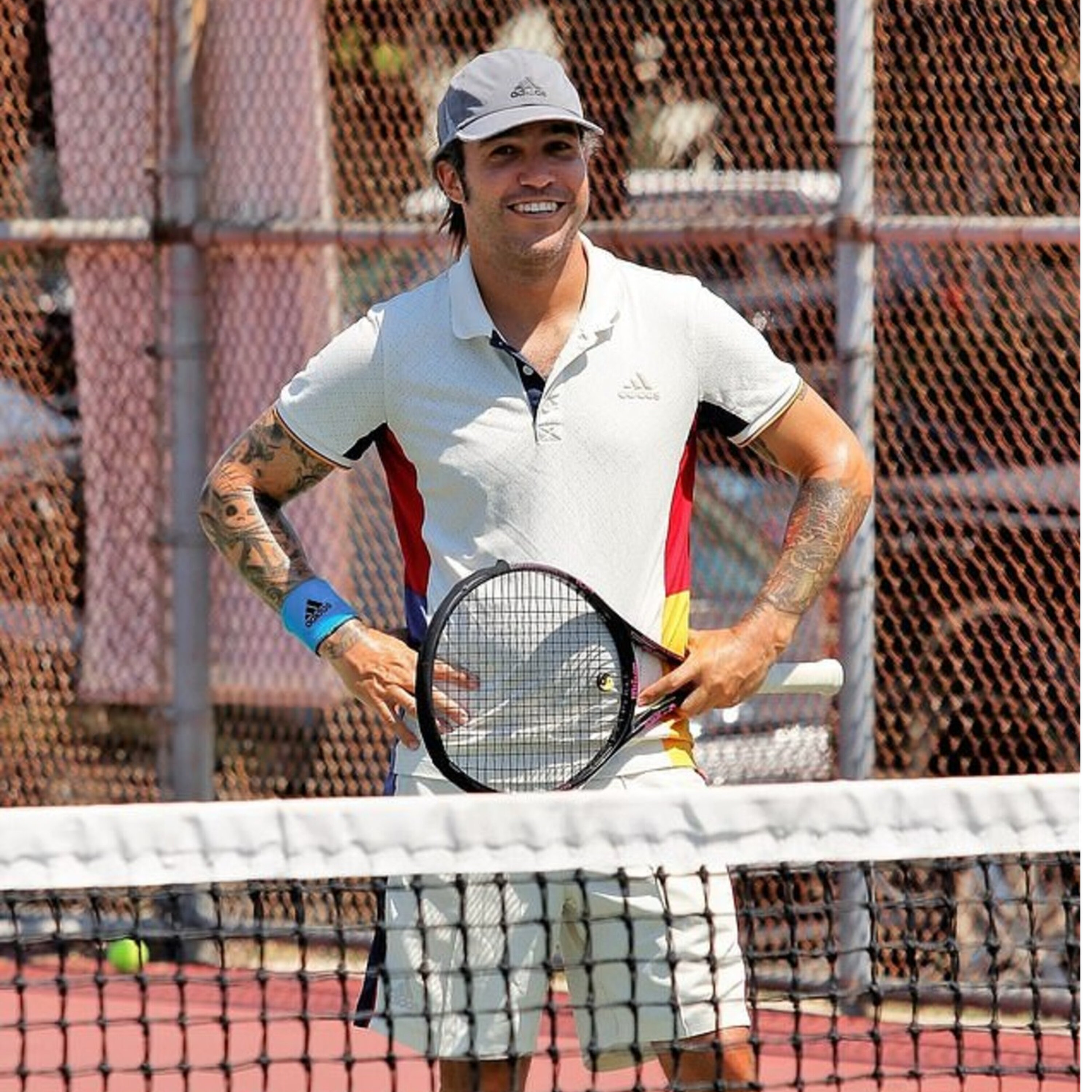
Pete Wentz
The rock star and king of LA tennis joins Rennae to talk about which celebrity friends are actually good tennis players, his love for Australia and how we can make tennis cool (hint: it involves letting Denis Shapovalov rap).
Hosted on Acast. See acast.com/privacy for more information.
See omnystudio.com/listener for privacy information.
2021-04-26
54 min
Transcript
Available Results
Generated results are saved to the knowledge database for reuse and search.
No generated results are available for this episode yet.
Extract Knowledge
Pick what you want extracted first. Model, scope, and chapter options appear after a template is selected.
Generated results for public episodes are saved to the knowledge database so they can be reused and searched later.
Transcript
00:00:01
Speaker 1: I have a coach and I tell him all the time. I'm like, I'm gonna go to the one hand, and he's like, no, you're not.

00:00:15
Speaker 2: Hello, Renee, Hey, Caitlyn, how are you.

00:00:19
Speaker 1: I'm great.

00:00:19
Speaker 2: You couldn't be bothered to walk up in my apartment. So we're once again doing this song zoom. But that's okay.

00:00:24
Speaker 3: I mean, I'm in between cooking dinner for my family and giving somebody a bubble bath. So unless you want to get involved in neither of those activities, stop complaining. Okay, Something very big has happened since the last time we checked in with an incredible, I must say, interview with Venus Williams. Everybody's been talking my ear off about how much they enjoyed your chat with her, So kudos.

00:00:47
Speaker 2: Thank you. Well, I mean, I mean, it's a pretty good subject that I got to talk to. So I'm glad everybody got to enjoy it. And if you haven't, well then hurry up.

00:00:56
Speaker 3: Yeah, no time like the present. What I am referring to, of course, is the arrival finally of issue number sixteen, Racket issue number sixteen, and I just want to spend a minute talking about what's in it, because I think, frankly, it's probably our best issue ever and we got your boy, your fellow Australian, Nick Curious on the cover, shot by the illustrious Abigail Varney in his home in Canberra. For the cover shoot. It was really really fun to pull together. I know you've had a chance to check it out. Anything standing out.

00:01:28
Speaker 2: To you, well, the fact that I think it's a classic that on the cover of Racket magazine we've got the great Nick Carrios, the basketballer. But you know, I mean it just shows you look next out of the year great at the Strain Open, I think he pulled off some amazing matches there. He also showed that when we had fans hell, he was the fan favorite at the Strain Open. I mean, you couldn't get enough of Nick. We couldn't get enough of Nick. And the one of the things that was so disappointing when we had the lockdown for those five days is that wasn't going to be able to play in front of people. So, you know, Nick transcends the sport, There's no doubt about it. He brings in a demographic of kids that maybe felt left out. I practiced on a court next to him. For example, in Melbourne when I was with Sam down there and there was about fifteen kids from the school that we were hitting at that turned up to watch him practice Okay, and every time he won a point, I mean they were cheering and screaming and channing his name, and I was like, I just looked at Sam, who's like the ultramate al, ultimate professional, and everyone there ash party and every and it's like all these kids cared about was watching and cheering for Nick Curios. So there's something about him that really transcends the sport and it goes to a place that you know, he's bringing young kids into the sport, and that's what we as tennis meets.

00:02:46
Speaker 3: You know, It's interesting because when I talk to people who like him, and it's many, many people, they're not necessarily tennis fans. They're fans of other sports. They're basketball fans, they're fans of culture and music and hip hop and sneakers and a lot of the things that Nick himself is into. And I think what's really a missed opportunity for tennis and something that we're very interested in changing is you know, sometimes he doesn't behave well. Sometimes he's he is off and being a waker, and sometimes he's you know, playing the most brilliant tennis you've ever seen. What I think is so transcendent about him is you can't help but look at him and understand what he's going through, feel connected to the emotional displays, whether they're good or bad. And really, he to me is a lot more like a basketball player or a professional football player in both British and American ways of using that term. He really makes sense more as an athlete and another sport. And I don't think that that's a critique of tennis, but I do think it's an opportunity for tennis to widen the tent a little bit.

00:03:43
Speaker 2: Yeah for sure. Look, I mean nobody wants Nick to like get a shit together and play you know, great tennis more than us because because of the fact that if he were to start like winning tournaments and really shining as a tennis player, you know that all the other stuff can kind of be left behind because he's he's an incredible tennis player. But you've got to put the work in and you've you've got to do that, and so the next couple of years are really pivotal for him, and you know, you can get an injury and you can be out. Here's a pandemic. He's lost an entire year. So look, I'll be looking forward to him getting back on tour. But the article and the photos and of course the magazine this month are just as per usual amazing.

00:04:26
Speaker 3: But we have some podcasts familiars in here. Anne White writes about her incredible story in that all white body suit, her journey from West Virginia to Wimbland. Your Friend and Mine, Kat Adams has a new memoir out. The excerpt Dave, the editor of the magazine, chose to include was involved Xena Garrison and Bootsy Collins. And also I think there's a bit of prints in there. So it's, you know, per usual, our nice mix of you know, culture and whatever. Ben Rothenberg plays with barbies. These barbies, the photos of Barbie's. We had some miniatures. It was the only time I've ever seen Billy ge King repost one of our pieces of content in the same day that Tyler the creator had something to say about Racket magazine content. And both of them, of course had to do with the fact that they were recreated in barbie form by by with the in this issues, and I'm pretty proud of it. To be honest, I didn't. I didn't anticipate that kind of a day happening for Raget magazine. So not bad, No tudos, It's Great's fantastic. Your photos are awesome.

00:05:25
Speaker 2: I loved when Billy Rates waited the you know, the Bobby picture of her. It was awesome. Well, of course she has her own Barbie.

00:05:31
Speaker 3: Anyway, for anybody who is getting tired of hearing us talk about this and wants a copy in their very own hands, racketmag dot com, hit subscribe for a whole year's worth, or you can just buy issue sixteen at your favorite newstand. While we're on the subject of Nikurious, he came up in your very very great, entertaining and wide ranging chat with of course rock and roll pop legend, musician and now tennis player Pete Wentz. What a fun interview this was.

00:06:00
Speaker 2: Yeah, I mean, look, you know, the one thing about when you and I talked about doing this pod in the beginning was like, wouldn't it be fun to interview people that just also loved tennis, that you know, well known for doing something other than tennis, And so Pete wentz, you know, put his hand up to do the pod and we were like sure. I flew back from Australia. I literally landed in LA and I interviewed him the following day and he can I just tell you something for a guy that's internationally well known. Of course, as in the band fall Out Boy, I won't sing any of the songs, so I'm embarrassed myself or him. But but you know, he was absolutely delightful. He was so nice, he was so welcoming. And the first thing I noticed when I walked in the door, Caitline, was he had a kind of like zinc on his face, right like sunscreen. So I didn't ask anything about it, and I was like, okay, he's been out doing something and protecting, you know, his youthful looks. And after the interview, I said, I have a question for you, like the zinc is that what were you playing golf for tennis? He's like, I was playing tennis and I was like, oh my god, Like this is how into tennis this guy is. And I loved interviewing him. He had all different ideas about how to the thing that I wanted to get out of him is Pete, how do we make tennis cool again? And you know, one of the things that he does say is that certain people don't want to be known as tennis players. And I thought that was so interesting because I'm like, this is the problem. Tennis is seen as a country club, rich, white sport, and how do we change that conversation around getting tennis to be cool and taking it to the masters? And Pete Wentz, you know, he gives these ideas and his thoughts, and I thought it was really interesting. But he's great and what a nice guy.

00:07:39
Speaker 3: He had a lot of tennis knowledge in a way that was indicative of not only being a player for a long long time, but also somebody who was just legit into it. Like his favorite players are obviously like Curious and chapavoove with hearing you guys work through that pronunciation was pretty hilarious in particular. But like Sabalnca like he's got some deep cuts, you know.

00:07:59
Speaker 2: He was like he likes the kind of like people that he said, Yeah, the rock and roll types.

00:08:03
Speaker 1: I get it.

00:08:04
Speaker 3: I love Sablanca for that reason. She was fearless today even though she lost in the final to Party, which I made me kind of sad because I love Sablanca. You know, she's always like redlining the She's always redlining, you know, and it either goes really well or really bad. But anyway, this was just a really fun interview to listen to. I think it's gonna be really fun interview for a lot of people to hear and listen to anybody in LA. When Pete is not playing in his coaches private tennis court, he sounds like he's on the public LA tennis courts, waiting in line at the rescue jumps. So say, hi, give him a high five, help him work on his one hand and backhand so he could portray Roger Fetter in a biopic one day, and you know, welcome him to the club and spread the word because I think, you know, just like Pete says, tennis is actually legit cool and you know, let's keep it.

00:08:48
Speaker 2: Let's keep it, keep it going. Yeah, We're going downtown. No that's not that's not the song. This is embarrassing.

00:08:55
Speaker 1: I should edit that out.

00:08:55
Speaker 3: I mean, this is I shouldn't even.

00:08:57
Speaker 2: It is the song, but I don't want to sing it. Let's We're going down, We're going down.

00:09:02
Speaker 3: No, no, no, no, Okay, here's the interview.

00:09:04
Speaker 2: Here's the interview.

00:09:05
Speaker 3: Just a saparade from singing enjoy.

00:09:06
Speaker 2: It by everybody. Thanks well, thanks for joining me for the Racket magazine. Yeah, I didn't know that you were even a tennis players.

00:09:20
Speaker 1: Yeah. I want an issue of Racket Magazine.

00:09:23
Speaker 2: That's so cool.

00:09:24
Speaker 1: Yeah.

00:09:24
Speaker 2: Yeah, I was just talking to my I usually do it my buddy Caitlin, but she's, you know, in New York, and I'm here, I just come back from Australia. Yeah. She she just makes me do everything I'm wearing.

00:09:35
Speaker 1: Yeah.

00:09:36
Speaker 2: But yeah, it's a great magazine. And it's kind of interesting that you like it because it's kind of the it's the thought process behind Racket in general is to make it cool, right, Tennis cool. And there's a lot of people that wouldn't even know that you played tennis or you know that all these other people that are sort of doing other things love tennis. So it's cool. I want to know why why tennis? Like what got you in do it?

00:10:00
Speaker 1: Well? So I I grew up in suburbs of Chicago and I played like, you know, at the Centennial Pool where they had like a tennis you know, indoor tennis courts. I can still, like I have really visceral memories of like they had these like nutty bars that you could get from the snack machine there. I remember those, and I remember like the sound because it was like curtains, giant curtains between the courts. I remember the sound if you smashed your racket on the curtain, it would just like echo through the whole thing and smelled a certain way.

00:10:29
Speaker 2: Wait a second, did you were you the ones throwing your racket? Oh?

00:10:31
Speaker 1: Yeah, I mean I think so, but like more in the like little kid like I wasn't even frustrated at the point because I was like definitely not on a path to like any tennis career. So it was just more like let's see how loud this is gonna be, you know, And it was like super like you know, like pancake volleys or frying pant volleys, you know, like just stuff like we're not serious, you know what I mean, Like not serious at all. And that was kind of that. And then I would play like vacation tennis, you know, which everybody kind of knows is just like again not serious, Like now I see it a lot, and I'm like that's cool, it's fun. Like I think that with anything that you do, like like from a hobby to like a real passion, it has to start with like fun, you know what I mean, or like something that like kind of like tickles your you know, like it has to get like something going. And then maybe seven years ago something like that, I was playing. I was taking my twelve year old and he was, you know, I'm not gonna do the math but five I guess at the time. And it was this coach that I'd played with, like you know, like I was like it was like an on and off thing. You know, I'd start and a stop and it would like never get past anything, you know. And I've started playing with my kid, and then he noticed that I like wanted to play more, and I wanted to play at other people's lessons, and all of a sudden, like I had the summer where I like obsessed, Yeah, and well like the summer where I was like fuck it, I'm just going into Continental grip. I mean, I'm gonna double fault the entire I played with my brother. Me and my brother played doubles, and he was like it was just like when I served, I double faulted you know what I mean, because I was trying to hit two second serves and I couldn't do I just I couldn't hit one second serve, you know what I mean. So like, but I was like it was there where I was like I wanted to get to the point like I'm like, I was like, you're never gonna be a professional tennis player anywhere near it those like tennis has like an odd thing where when you watch it on TV, there's like moments where you're like, I don't know, like could I But then when you get there up close, you're like, oh my god, it's going so fast, like it just the TV doesn't The TV hides that in a way, you know what I mean?

00:12:32
Speaker 2: Yeah, I agree. I always tell people if there's a few sports that absolutely don't do justice to the sport, and tennis is one that sport.

00:12:42
Speaker 1: To my opinion, I think when people are watching Federer on tennis or Federal on TV, they're like, there's like a ballet like thing too, which I do think exists, but you're also not like noticing that. You're like, oh, he's taking his backhand like you know, like four four and a half feet in the air and he's it's screaming back and forth. You don't really because he makes it look so easy that you don't even pick up on like you're like, no, you couldn't do that, like at all. And I've had many moments we can get it into it even in Australia like where I'm like, no, you couldn't do this, but like I guess I decided that I wanted to do it. I wanted I felt like the best I could get to. And this is what like like my so I like work out with a trainer besides tennis, and he's like, he's like, I just want you to look cool naked. He's like if you're strong too, that's great, but like that's just what I like, what I want, you know. I was like, this is perfect for me, and so like with tennis, I would love it that if like if they were like making a movie like I was playing a character, I was playing somebody who played professional tennis, college tennis. Yeah, they wouldn't have to always cut to a double cut to a body double every single time, like every once. You know, like this is what you're telling me.

00:13:53
Speaker 2: What you're telling me that when they make a feder up like maybe.

00:13:57
Speaker 1: Put me in. Oh my god, I really have to work on the one handed backhand, So you go to one hand? No, I don't, Oh, you don't know. I don't know. I wish.

00:14:05
Speaker 2: Oh it's a dream.

00:14:06
Speaker 1: It's a dream. And I tell my like, I have a coach and I tell him all the time. I'm like, I'm going to go to the one hand and he's like, no, you're not. He's like, that's just not the route for you.

00:14:14
Speaker 2: All right, Well when we play, because I had a one handed backhand, okay, so yeah, that's that was probably my best shot. Really, my four hands was most people would say it was pretty ordinary on its good day, and I had like, you know, pretty continental, sort of semi western four hand. It was just like what the fuck is going on with that? But I had a beautiful one.

00:14:35
Speaker 1: Hand, and so what was it? Did you come over? It was it?

00:14:39
Speaker 2: I had slice and I had a topee.

00:14:40
Speaker 1: So I would assume that also then you would be good volleys, right, because that's that lends itself because my volleys I feel like, I'm like, you're kind of like a baseline guy, so like your valley's kind of suck.

00:14:51
Speaker 2: So basically, what you're saying is that I'm your ideal coach exactly.

00:14:54
Speaker 1: Not only am I going to get.

00:14:55
Speaker 2: You a one handed backhand, but the best part of my game is won my volleys.

00:14:59
Speaker 1: So there you go.

00:15:00
Speaker 2: And it's a lot of part of sort of being a lesbian is that you're a servant vollier. So that was sort of my thing, and everyone you at my best, Like my match point of this strain open. When I won my first Grand Slam, the only thing I kept telling myself was Renee, no matter what happens, to get to the fucking net, because if you get to the net, you can make the volley, but you cannot be guaranteed of making grands. Not against Mary Piers, I was like, I had no chance. So it's interesting because you said you grew up in the outskirts of Chicago in will matt which is funny because I actually spent two years in Chicago and I had a former girlfriend who I grew up in Wilmette.

00:15:37
Speaker 1: Oh cool.

00:15:38
Speaker 2: You probably bumped in not on the tennis school because she was like that is the last place that she would have ever been. But it's so interesting to me, like would you do you think like going back to childhood, because you play soccer as well, but you all athletic stuff, you know, and you have like such an interesting background because I looked into a few things. Dad was like this white guy lawyer. My mom was definitely not like that.

00:16:02
Speaker 1: Yeah.

00:16:03
Speaker 2: So you grew up in a biracial family, yeah, and you grew up in the suburbs of Chicago. Would you do you think if someone had said to you, okay, put your focus into tennis, do you think you could have like or is the creative side that took over to go into music.

00:16:20
Speaker 1: I would say that, like if you.

00:16:22
Speaker 2: Went back now, yes, as you now.

00:16:25
Speaker 1: Yeah, I don't think that I could have made it in tennis or probably just about any other sport because I didn't have that complete magical connection or that complete like the thing that like where you're like, there's the raw talent is there and if I just like carve away at the rest of it. I just didn't have that though, like from reading you know, Agasy's book or reading anybody's like maybe if I had a parent that was just like, this is what we're gonna do, and I'm just gonna like fire tennis balls that you all day like I don't know, maybe like ten thousand hours and that, like maybe, but I don't know. It's just like I don't think so you know what I mean. And if I if you know, like I couldn't do any of it, but it would be like journeymen at best, because I don't think there would be anything special about my I don't know. That's just like the raw talent wasn't there, unfortunately, Like you know.

00:17:22
Speaker 2: I just I always think that's so interesting because like tattoo on my armas is passion, because I just think that whatever you're going to do, you have to have passion for it. So if you look back on it now, because you have passion for tennis, right, like yes, you want to get ye perfect backhand or that whatever. If you'd had that passion back then, do you think it could have been I mean, as you said, you might not have been like top ten in the world, but you obviously had a drive for something.

00:17:49
Speaker 1: Right I yeah, maybe, I.

00:17:52
Speaker 2: I mean, I don't want to depress you that you could have.

00:17:54
Speaker 1: Been totally I'm thinking about it, and I'm just like, well, the other thing is, so I'll talk to like my tennis my coach, you know, and and he'll say, oh, I gotta say his name, Chris Krab because he's like, you never talked about me ever, so you're talking is awesome. But I feel like when you do a thing and it's like you eat, sleep and breathe it, sometimes it loses a little bit of like the I don't know joy de v or what you know, like you don't like like if you were on vacation, would you want to go out and like hit balls or whatever? Like sometimes like I may know, yes, yeah, no, no, but you know what I mean. But like because but you you lived, you know what I mean. And it's like I like kind of like if the last thing I really want to do is like a jam, you know what I mean. I would do it if somebody like was like, let's really do you know a friend of mine or like like my my son really wants you know, or whatever, like I would definitely do it. But it's not something I feel like I really like want to do. And it's like when I talk to like like my tennis coach, I'm like, like, there's this guy watch any of the tennis probably not like I don't know, like and he was telling me that like one of the things that was hard about watching some tennis after his after playing and playing professionally was that watching the anxiety and the pressure that people were putting on themselves. In singles, he was like, it's really hard to watch because it like takes me back to like how it felt.

00:19:20
Speaker 2: Yeah, yeah, yeah, yeah. I think. Actually it's funny that you say that, because it was one of the things that sort of when I stopped playing, it was because I couldn't the fucking stress of like waking up in the morning, not being able to eat, and you know, just dreading it. I mean, and obviously the great It's like I always say, playing professional sports is like legal addiction, right, because you get that high that you don't get doing anything else, and then all of a sudden, it's like when you lose, it's it's like you want to just kill yourself, you know what I mean, you go into those depressions.

00:19:51
Speaker 1: It's an interesting thing because it's like a thing that doesn't really because you know, I have some friends that are athletes and tennis some I think probably more so like team sports, but like it's an interesting kind of fame where like it's very like I don't ever landed in airport, people are like you suck, you know what I mean, Like it's not a thing really Like I mean there's people in like comment sections on the internet, you know, but like fans of my band don't generally think that. And I feel like so much of like professional athletes, it's like you're as good as like your last thing, you know, and then it's like, you know, it was so interesting. We went me and my my twelve year old went to Indian Wells and we like somehow got in and watched a Federer match and I don't remember who he's playing, but it was like hearing the emotion when people like are for him fed uh, you know, like it's like every moment and I'm like, oh my god, this is so much like it's like these people are like losing a part of themselves and gaining a part of themselves.

00:20:51
Speaker 2: It was just.

00:20:53
Speaker 1: It's not yet. It was something that I'm like, I'm not really wired for that, you know what I mean, Like I don't really I don't know.

00:20:58
Speaker 2: I guess that any way to acquate it to your life would have been if you'd gone into like some small pub or a small club in you know, Chicago when you were growing up, and Arro's like, well, where's the other band?

00:21:09
Speaker 1: Yeah, and the interesting thing for me, but that didn't no no, But it was also like it's just not even it's more like this. It's like the equivalent of like you're just on court like twenty four so there's just nobody watching you.

00:21:22
Speaker 2: You know.

00:21:22
Speaker 1: You're like, that's what, yeah, you know what I mean, know, like that's what, Like there's just nobody there. There's no one there to boo you. There's just no you just can't like no one's interested.

00:21:30
Speaker 4: You know.

00:21:31
Speaker 2: Yeah, I was on many times. So so I'm judging by your fact that you've mentioned Roger like three times he was he's your favorite player.

00:21:42
Speaker 1: Or I'm all over the place, So I like, I mean, I think that it's hard not to in the era we're in be like they're like some like to me like three or four maybe the greatest ever, you know, Serena, Roger Nadal. So but I think that I have like a strange So I also like Dennis che Brad Gilbert, I got I can't I can't say any of the names that people that I like. I like him, I like Crios, I don't know if there's a controversial thing to say. You know, I like the spirit and then I like Sablena. Yeah, I just like the fire and I liked how she's like hitting the winners woman. Yeah totally. It was very cool. But to me, you need like or how I think about things is like so when I got really into tennis, then I was like, what is the like cultural version of tennis that I'm really into and that was like Agasy and throwback Agasy and I remember Agasy back then, but like like I loved it, and I can I can get a little too like like where people are like, well, why do you just like look just like well, like we're in the you know.

00:23:03
Speaker 2: The beauty of a podcast is that we can dress how we want. We can look like right, so I just want to let everybody know you do your hair is a little doe, a little you know, agacy like and so I'm thinking that you're bringing back.

00:23:15
Speaker 1: The Yeah, yeah definitely. I mean I had I have like the gear that I would wear. So so so how I like, I've approached so many things like and I've noticed that like you were in the Red Wine, I'm in like different wine than you were into. I I did a little research as well, But so how I.

00:23:37
Speaker 2: Get it tequila? Like today I'm a hungover my friend whatever, she didn't make me drink way too much red wine, so like tequila.

00:23:47
Speaker 1: So okay, got it. It's just in case it's updated. Got it, I'm updating the info. Uh No, So how I get into things, I think, and it's probably like not the way you're really supposed to do is like I get into something and then I find like what my access point is to it, you know, and get really into it. But at the same time, then there's like this next level that I have, where like which I have I think with golf a little bit like where I buy like a thing or an outfit, but I haven't earned it yet so I can't so it hangs in the closet or the club, like I you're not there, You're not good enough, Like if you go out there and do this thing, you're actually not good enough, so you can't have it yet and you'll earn that so you're oh, yeah, totally. But but with tennis, I feel like I've come to another point where I'm kind of like, I think it's much cooler to just show up with like two rackets and that's it, Like that's got The guy is scary to me, Like the guy that has the full bag and all that. I'm like, yeah, you're probably good and whatever. But the guy that like kind of doesn't care and shows up at the park with like just two rackets, like not you know, I'm like, this might be like a little terrifying.

00:24:57
Speaker 2: So in other words, as an Australian, we would say that you would be the least wanker.

00:25:02
Speaker 1: Least winker. Okay, maybe the first time I've been described You're.

00:25:06
Speaker 2: Not the guy that turns up with the like perfect looking bag, clothes and the shoes that match. Who's not very good? He's the wanker.

00:25:16
Speaker 1: I've spent a lot of time. I spent a lot of time in Australian Oh no, no, yeah, I'm sure that as well. Honestly, this is probably the first time I've been described as the least wanker in the group, which is good. I spent a lot of time in Australia. I really really enjoy Australia.

00:25:30
Speaker 2: Yeah, well I just got back from there and it's pretty much COVID free and you and I are sitting outside doing the podcast.

00:25:35
Speaker 1: Right, but would probably be fine too. But it's just like I don't know. Then I'd have to go get tested. You'd have to go get test.

00:25:42
Speaker 2: Well, I got I've been tested twice in the last five days, just so you know I'm negative. So if I've turned positive, it's.

00:25:48
Speaker 1: Negative as well. So like we turn positive, it's like in the couch couse we.

00:25:51
Speaker 2: Can make out. So I read the weirdest thing today about you is that your parents worked for Biden and that's how they met. Yes, and that is the craziest thing. So you know, there's a tennis court in the White House, so.

00:26:05
Speaker 1: Oh yeah, actually that would be so sick. Yeah, my my my bandmates and whatever, like they're like when you when are we gonna go to the White I'm like, dude, we're like in a pandemic, you know. I mean like this is like I don't I think we're like very low on the list right now.

00:26:21
Speaker 2: Okay, but you know there's a tennis court.

00:26:23
Speaker 1: I would love to play. That would be I have a little bit of a thing where I love to find like odd tennis courts and whatever, like I know there's one, is there one in.

00:26:33
Speaker 2: There's one I don't know if I should really tell you this. And it's one in the Senate Building in d C.

00:26:38
Speaker 1: Oh really so yeah wow, No, I was gonna say, there's one in what train station in New York? Oh oh yeah yeah, yeah, yeah yeah, So like finding and there's this one.

00:26:50
Speaker 2: There's one in the U N Plaza hotel as well, on the top floor because when we finals in New York, that's what we used to practice. We don't stay in that same hotel. There are what do you here? I mean, maybe I shouldn't.

00:27:02
Speaker 1: No, that's okay, Like the guys that already know, like they already take pictures at the park that I go to, which I play there most of the time. But Covid has made it a little crazy in a good way, probably for people who are for Racket magazine and for people who sell tennis rackets. Because everybody wants to play Everyone wants to play tennis, everyone wants to play golf, which is pretty cool. You just got to find the way to keep them going past that. So that's busy a lot. So I yeah, I play in the valley kind of everywhere. I play at people's houses, I play, you know, I'm like a kind of a bit of it, like tennis rat I'll just you know, if someone says, like we need a fourth, I'm like great, I'm like I'm in my head. I'm always in the car all the way there. I'm like, I hope they're not like way better or way worse than me. That's like my ladder is like I'm like, let's keep my ladder is very small.

00:27:52
Speaker 2: I'm like, you do always like totally like say, because I always tell this to people, if you ever go and play a sport or do anything like say, oh, I'm I'm about this, but you're actually a little bit better, but you always go low or do you like what would you say, like four five five?

00:28:06
Speaker 1: What do you know? I'm not any no, no, no, no, I would think that I'm a three five. I think probably I don't. Actually, yeah, I do think that you got to undersell over deliver whatever that saying is. And I also think that like I play with like a lot of people that I'm like this guy, if I saw this guy just walking around, I'd be like, this guy is slovy, he is not good and he's and I'm like this guy's actually like a trained assassin, Like he's like Yeah, he's in like Continental the whole time. But like good luck, you know what I mean, Like good luck like getting to be like not hit something back.

00:28:42
Speaker 2: He's the best. Who's the best slib player that you play with?

00:28:46
Speaker 1: I've played with a lot of people that people probably don't know play tennis, and some of them are probably not. Don't really want people to know why. I don't know if everybody does. You know who's really good?

00:28:58
Speaker 2: Plan?

00:28:58
Speaker 4: Right?

00:28:58
Speaker 2: This is our plan?

00:28:59
Speaker 1: What is the plan?

00:29:00
Speaker 2: Our plant? Well, not only play at the White House, but our plan is to make tennis cool? Like how do we make tennis cool? Right? I mean I mean, you gotta let I don't want to blow your tires up, but it's pretty freaking cool that you love tennis. Who would have thought some guy who's in a freaking huge, freaking band is like obsessed with tennis. So like how do we make it?

00:29:20
Speaker 1: Yeah, I mean we gotta let we gotta let curios out a little bit, you know what I mean? I think that they and he's gotta and he's gotta win. We gotta have him win something, you know what I mean? Because I think kids would think he's really cool.

00:29:31
Speaker 2: They already think he's really totally it's sane. What in Australia I was practicing. I was coaching Sam Stoza at this tiny little college in Melbourne because we had to separate it from the international years COVID, and there was about twenty five boys, probably around fifteen sixteen that turned up. They must have been at the school. They came and they started chanting his name on the side of the court and every time we want a point, they would go bonkers. And I thought to myself, this is what people don't to stand. As much as he can be a disaster at times, and there is he will agree his attitude is not good sometimes on the tennis court, but this guy brings the young.

00:30:10
Speaker 1: Yeah, like the hutzbur How do we make tennis cool? Yeah? I mean I think that that helps. I remember I watched this video that's similar of it's it's Agacy playing in the nineties on a practice court and there's a bunch of kids watching him and it was cool because he was so real with the kids. The kids were like the kids. One of the kids is like, whoa you killed that serve or like that's He's like yeah in practice, And I was like that's pretty cool, you know what I mean, because that's probably like a little real you know what I mean or whatever. So who do I think that that I play with that is a celebrity that Jeff Probes, who Survivor is very good.

00:30:51
Speaker 2: Wow, Yeah, he's very good. Yeah.

00:30:52
Speaker 1: Yeah. We play doubles sometimes and he's very good. He's also very competitive. Trying to think of who else.

00:31:01
Speaker 2: Is, Well, there's a couple of people here in LA that Kevin McKidd. I don't know if Kevin from Gray's Anatomy. He loves to play. He plays in Crisi's event. I get to meet a lot of celebs during Chris Everton. So there's a few that come out there that love it. They love it and they live in LA. And so we've got that's the strategy of how do we grow tennis. And I think during the pandemic it certainly helped because, as you said, golf and tennis was sort of.

00:31:29
Speaker 1: Like yeah, and I think getting people like like I think people get freaked out by things that they sports that they envision being something that they're not or envisioned being like this country club thing, and like making it more like the everyman and I think that like letting people dress cool, making more cool clothes. I thought it was really cool when Pharrell did the US Open gear and some of the Prince New Prince collabs have been really cool. Like I think like being open to that, you know, like let's let Dennis Sheper let him rap, you know what I mean, Like, if he's gonna rap, let him rap. I think that. But I think that like letting people know that like whatever your entry level is is cool, Like you should come out and have fun. You should play vacation tennis. You should you know, like see, but I don't think like like my girlfriend plays tennisse and she didn't grow up playing competitive sports really and she there was something about like after she got into it and watched it and played it and then like she then the bug got in her. And you gotta like let that happen to people. And I think too often people are like, oh, I can't do it, or I'm gonna be made fun of, or like I can't like there's no entry level for me into it, and and and there really should be, you know what I mean. Like I think that like I get it because like not everyone has a tennis court. I don't have a tennis court, like, but like you could go to the park can play, And.

00:33:00
Speaker 2: I mean that should be the next move.

00:33:02
Speaker 1: I know. It's like I've actually done the math. It's not possible mhm. Letting people experiment and and and I think that like having these young rad players like you know, like I guess Sarene is not you know, young in the sports world anymore. But I think she's rad, you know what I mean. I think she's like really cool. And I think it empowered a bunch of people who didn't think that they maybe who hadn't thought about tennis to like play tennis, which is awesome. And I think like embracing more of that, you know.

00:33:40
Speaker 2: In embracing what we don't figure and see as like the normal tennis.

00:33:45
Speaker 1: Totally or like the past tennis player, you know. I think that it's I think that that's cool.

00:33:50
Speaker 2: Well, I have to tell you that I know Venus is a huge.

00:33:53
Speaker 1: Fan of full that boy, so that's cool. I did.

00:33:58
Speaker 2: I did text Serena before this, and I was like, is it you as a Bee that's a big fan, because it's it's I like him that she is b that's really cool. But I think that that's something that we should look into as a tennis environment.

00:34:09
Speaker 1: So Serena said, like, I knew that this podcast interview is hot. I told her that because.

00:34:14
Speaker 2: I wanted to know.

00:34:15
Speaker 1: So I wanted her.

00:34:18
Speaker 2: Because I knew I was like that.

00:34:19
Speaker 1: So maybe so like maybe she had a thought about that today for the second, that's cool, she thought about that's cool for one second.

00:34:26
Speaker 2: Yeah, okay, you're you're not alone in your love and totally you know, but it's funny because tennis players or athletes always want to be like entertainers and singers and singers and actors always want to be athletes. It's just this random thing totally. That's why I asked you, like as a kid, like if you could go back and you know, change something.

00:34:46
Speaker 1: I'd loved you if I could, you know what I mean, like maybe this is my own, this is my okay, so here's how we do it, right. I didn't really think about it, but we could do it. This is how we can all right, we're gonna do if we're taking the time machine, if we're taking the time machine back, I think we got to put the racket in my left hand. We've got to be in the dolls. Uncle, you know what I mean, we got to go and that's what we gotta do, and we gotta just like ruin my life for like five years. But like maybe, I'm like, maybe I'm a lefty top spin grinder and I didn't know it. And I didn't know I had that in my life. You know, you didn't have the high right Okay, yeah, yeah, I got that, so we don't. Yeah, don't have that, don't have the the the left hand skills. It's like five three, he's big, he's big, and do it. Huh.

00:35:29
Speaker 2: I didn't know the tennis play.

00:35:30
Speaker 1: Oh okay.

00:35:31
Speaker 2: I was like saying, he's like yeah, yeah, yeah, no, no, no, there's a lot of tennis places. One guy towards me, he's like literally like five three.

00:35:42
Speaker 1: I think there's maybe so, But where where it really has to hurt you is the serve right, that's end of and if you have to take a high back end return.

00:35:49
Speaker 2: Yeah, well, if you have a one hand out, you're in trouble. But there's a lot of players that have one hands that are not that tall. But you know whatever. One thing I also read about you, and I find it so in because when I played, I was a maniac, like I had some temper issues and yell at the umpire every thing. Right, So I got into like meditation over the last few years, and I read that you sort of you meditate as well, just to deal with like the craziness in you. And I think that that's an untapped market in every.

00:36:18
Speaker 1: Aspect of oh yeah, whether it.

00:36:20
Speaker 2: Be entertainment or athletics or you know, especially high performance stuff and being in the moment, Like, how much did that help you going through some lifetime?

00:36:30
Speaker 1: Oh, I think it's been really really helpful, And I do think I agree with you. I think it's very untapped, and I think that it's like could be for almost every person. Like if you just did like five or ten minutes a day, it would probably change your life in some way. I would guess. Yeah, it's super helpful. And it's interesting because some muscle memory is such an interesting thing. So because when I'm on stage with the band, I can be I can like kind of go into another thought and be pretty great. Yeah, not full on grade, full on grade. I have to be like locked in you, like I mean the moment and tennis, I can't even be pretty great if I go somewhere else in my brain, I lose it, you know what I mean, all of a sudden, it's like, oh my god, what am I do? Like I'm I don't have enough muscle memory. I don't have enough of the hours like where I can't I can't do it, you know what I mean.

00:37:24
Speaker 2: But like you know, if you're on stage and something happens where I don't know, cord doesn't work or your guitar breaks or somebody.

00:37:33
Speaker 1: It's all good, you know, you just you just it's all good. I can like it's not a yeah, it's all good. But like yeah, tennis like ooh, or like tennis playing in front of people, I'm like, oh, I have no interest in that.

00:37:43
Speaker 2: Really Yeah, yeah, it's it's stressful. No, But that's the same thing, right, it's muscle memory. It's doing something for so long. It's the same with me, like going out and playing And when I was playing professionally, i'd go out in front of it. It would be it wasn't a packstadium. Sometimes it was quarta three people. But there were times that I did go out in front of a pack stadium and I was like, I'm prepared. I didn't stress about it. But then if I'm not prepared, like now, if I go and play like exhibitions or charity events, I'm like shitting myself and I'm like, what the hell is my problem? No one expects me to be good? Right, Like do you feel like that's the same way in preparing to go on stage. I mean it's been a while. Oh it's I mean the pandemic. How's that affected?

00:38:22
Speaker 1: So our tour in Australia got canceled? Yeah, and the rest of it. I mean it's just like hangs in the balance kind of as far as we haven't made any music really, which I kind of like, I think during the pandemic, I just like was like I'm gonna dive like head on into things that I'm like kind of was interested in. But like let's just like see if you really like it. Like got deeper into playing piano, way more into golf, kept like my tennis going. You know, like just like try to like dive into things that I thought would like help my mind and help my spirit and like yeah, but as far as like the band, there's enough muscle memory there that I think we can always play a show. But like the first one, sometimes there's sometimes when we were in the middle of a song we have rehearsed in forever and we're like, whoa, this is getting weird, Like where are we at? You know what I mean? But it's okay because you can like and I'm sure because yeah, and but I'm also sure that you can do like this on that like what we were just talking about, like how you would be on the tennis court. It's like I can like fux it, like I can figure it out enough, you know what I mean, Like it's not gonna feel that weird, you know what I mean. And I feel like it would be cool if my tennis was like that, like if like it starts to go sideways and I'm just like, nah, I can just like like I remember watching this with the Federer match that we were at in Indian Well, so it's really windy. He's playing a kid. I can't remember who he's playing. We could look it up or whatever, but he's playing a kid. The kid is like kind of like beating him up a little bit, and then all of a sudden you just saw like it changed. It was like Federer starts hitting like only neutral balls like in the wind, playing like he stops hit trying to hit winners that oh I took I took as much off as I could. I think that I must have heard a postgame interview, you know or whatever. But like but all of a sudden, it was like, oh my god, am I going to beat Federer? You know what I mean? And like that when you could see that in the guy's mind, like you can't, like this guy's probably like a hero or probably you know whatever, he's like Federer and like he's done and Veederer on the other side has done this like whatever ten thousand times. N fell apart, he like got tight and it got weird, and Federer just kind of played easy breezy.

00:40:39
Speaker 2: Yeah, that's that. That is the one thing about what being great is about is that you don't panic in those moments and you get to a point where you're like, Okay, I know this kid thinks that he could possibly win there, so right there and there I have him right because and then he's such a great I mean loser because if he gets beaten, it's usually because the guys just played better than him, you know, and things like that. So there's there's no apprehension like for you, like getting back on stage and being together again as a group, and if it happens godding like with the pandemic being over. I mean, you guys just like riding a bike.

00:41:15
Speaker 1: Yeah, there's a little bit Like every show, right before we go on stage, I'm always like, I think this might be the one where nobody cares. I don't know why, but like that's the moment. That's what I feel kind of like, right before we go on I'm like, maybe this is the one where they just like And that must be like some psychological thing in my head or whatever, but yeah, I think it's like riding a bike a little bit. And we've been doing it, the four of us for so long that it's like in that way.

00:41:43
Speaker 2: Don't worry, he's not coughing at my direction.

00:41:45
Speaker 1: I turned away. I turned I turned to my side.

00:41:48
Speaker 2: No, I just I find it so fascinating because I love to hear why and what gets people like into their lives, and I just think you you find a passion like with me with Tennis, it was I felt and it's funny that you say about you just have that moment of that magic. And for me, I remember practicing my serve as a kid, right, And I remember the coach put down like a you know, like a tennis ball cover and said, okay, you got to hit those rockers, right, And I remember thinking to myself, well that's really easy. I can do that. And I think that's the moment that yeah, totally where you're like, oh I've I've got something, Yeah, like I have a connection here.

00:42:29
Speaker 1: Yeah yeah.

00:42:29
Speaker 2: And so like with music for you, was it just like, yeah, this is my thing.

00:42:35
Speaker 1: I don't think it ever. I think that it was like a really slow build, like I just did it, and we did it because we loved it, and then like it started building, yeah, and it started building, but like we didn't like. The interesting thing about I guess art that's different than sports is like there's not really like the tennis ball cover, you know, like you there's less of like these targets of like if you win this, you've you know, like so like or like you're not really like you're ranked, but you're not really ranked, you know what I mean. So it's like it's interesting because it's like less competitive but somehow like more competitive at times, you know or whatever.

00:43:16
Speaker 2: Well it's subjective.

00:43:17
Speaker 1: Yeah, it's like it's weird. Think Yeah, totally. So someone could be like, like, it's interesting because like you could we could really really debate greatest players, especially if we have certain markers of like what like this is what makes you the greatest player? Like if it's just like grand slam wins in like open era or whatever, like there's you could just be like this person is has the most of those. So it's harder to do that with art, like like this guy's painting soul for the most I don't know, like or like this person has the most Grammy's like I don't like, you know, like harder to harder to say.

00:43:50
Speaker 2: Have you ever come across like bands or an individual scene whe're like a man, why why isn't this person huge?

00:43:57
Speaker 1: Yes, totally, And usually they're not no longer a singer. Usually now they're producing, an engineer, a producer, they are a roadie for a band. And it's kind of sad to me, but I think that like, for the most part, we find the universe is open to the things that we want to do, and they've found something else. And yeah, because like so much of doing anything that's difficult is like it's really difficult. You got to make it look easy. Even though it's difficult, like you know what I mean, Like like Michael Jordan being Michael Jordan was like super like difficult, you know what I mean. But like, yeah, I just don't think and like I think that like, like to me, Nadal is a great version of this because because he is a grinder, I'm like, like, every point is not easy, you know what I mean.

00:44:49
Speaker 2: And have you ever seen in practice?

00:44:51
Speaker 4: No?

00:44:51
Speaker 1: Yeah, well on video on YouTube, but not really yeah, yeah, you.

00:44:54
Speaker 2: Know, you go and watch him practice. But the thing that's I think would be tough for me in your industry is that if I have a talent and I work really hard, like I do three four hours a day on the court, and I get in the gym and I do everything right and mentally I'm there and I do the work for that, I'm going to be good.

00:45:12
Speaker 3: Right.

00:45:13
Speaker 2: You just know you're going to be good if you have the talent, you have the resources, and you get the brakes right, you are going to be good. But in your industry you could because I've got a couple of friends in the industry and I'm thinking, why the fuck is this person not selling five Grammys? Right? You know, getting five Grammars or something. But you got to get the brakes. You got to meet the right people. You've got to find the right agent or manager or you know.

00:45:38
Speaker 1: But I think that the interesting thing, and this is what's similar to this is what's similar to tennis to me, honestly, is that and a similar to any sport to me is that when it's your time at the plate, you have to be ready to hit the home run. So like, what the top hundred could beat the top ten any given day, maybe, yeah, maybe, but like when you play, you have to be ready, Like you have to be like I can beat like I like, this is the day where I could win this, you know what I mean? And like that's hard. It's hard to like when it's your time or like when you have that moment, it's hard to not like fumble the ball, you know what I mean. And I think about that like in like in life in general, like in your friendships and your whatever. It is like when you have the when you have the chance, you still have to deliver, you know what I mean?

00:46:26
Speaker 2: So was there well, so then backing up to you guys, when you had your success, was there a time where that happened where you were like, all right, here's the ball.

00:46:38
Speaker 1: Sure, And there was like moments. But more than that, there were moments for us where we had like probably like a bit of like a curios like agacy, like someone is telling you that you need to be like on this path and you don't think you need to be on this path, but you still need to be on the path to victory. You need to be on a path, you know, I mean, And or you can choose to go on their path, and we always chose to go on our own path. But like I think when you do choose to do that, or you you have the the blonde wig or hair or whatever, it is, like you you had to have the winds to back it, like at a certain point you have to be able to you know, put up or shut up or whatever, you know what I mean. And and so I think we had moments kind of like that. Definitely.

00:47:28
Speaker 2: Yeah, Yeah, I just find that so fascinating. I think that's what would be hard in your industry, is that oh my god, you've just got it.

00:47:37
Speaker 1: And there's so many like bands and there's so many actors where I'm like, I don't know why this person's not bigger, but then like lots of times people end up bigger or people end up being big songwriters or you know what I mean. And I'm like, oh, that makes sense.

00:47:49
Speaker 2: So going forward, Tennis is would you say it's the most like outside of obviously your band and your music and all that, like you biggest passion, it's golf a little bit. I actually see a little sunscreen I did.

00:48:06
Speaker 1: This is actually from tennis. This sunscreen is from tennis, not from golf. Golf is an interesting thing. So I have three kids, so golf is a like you play golf, I guess right. Read that is that it takes so fuck Like talk about a thing that like needs to update some of their stuff is like it takes so fucking long. Like my kids are like, wait, where are you still my dad? You know, I'm like so and and the thing that about golf that's maddening is like it takes that long. And sometimes you're like not any better at all, And I'm like, you know, with tennis, there's like these real results to me or like with tennis, at least now I can be like I know why that happened. With golf sometimes like the right thing happens is the wrong thing happen. I have no idea. I'm like why, And then like that, you get that one shot like where the ball compresses perfectly and it goes dead straight and far, and you're like, you know, I love this sport, like this is my favorite sport and you're like the second Ago. I wanted to kill myself, Like it doesn't like a second ago.

00:48:59
Speaker 2: I wanted to driving to be in the right.

00:49:01
Speaker 1: It's like maddening, that is true. I actually played a lot of tennis in Australia.

00:49:06
Speaker 2: Where was your favorite place to play?

00:49:08
Speaker 1: So when I went we were on tour in Australia. Maybe what you want to play?

00:49:13
Speaker 2: The Red Arena?

00:49:14
Speaker 1: Yes? Yeah, oh it's cool, super cool. I actually think we might have played like the thing next. I don't remember, no, maybe, yeah, I can't remember.

00:49:24
Speaker 2: But was it like high Sense? There was I don't remember at the tennis center.

00:49:29
Speaker 1: I think it was in the Tennis Center with the Rod Labors in Melbourne, right, yeah, yeah, so we were outdoor. We've done both, honestly done. Like but someone on the someone who was on the the Aussie side of the touring production knew somebody in the Australian Open or something. They connected me and so I like played on the court where where Federal warmed up and I played with a couple of like pro women, and it was really interesting for me, Like this was like this was like my my real like so like I work with the coach and I watched on TV and I gone to anyone else, but this was like the real moments where I was like, hmm, Like first of all, like everyone was like or not everyone. A bunch of people have told me like like women don't hit as much top, like women don't you know, well what the fuck? Like this was like like that was not the case, you know what I mean, or like maybe they're like top is being compared to somebody like Liken a doll or something. But I was like and it was like and it was also the moment because it was my first time playing stadium like, so I was like, I'll just be able to run shit down. The ball is has so much more top than anybody I play, and it's going so much faster. I can't run it down. Like there's all this space, but I still can't run it down. Yeah, and then I took I can't, So this is so fucked up because I can't remember who I played with, but I I was. She was like, I'll hit you one real serve, so even like some crazy like body serve on the tea or whatever. And I was just trying to get out of the way, like I like literally like no ship, like you know what I mean, Like it was like no chance of returning it. And I was like, I just hope I don't get hit by this.

00:51:08
Speaker 2: And I wish I knew who it was now. I mean, you might might remembered I work with Sam Stoza now and she like literally is probably the one player that has more top spin on her forehand and has the best was this was.

00:51:20
Speaker 1: This was like a this was a moment where I was like, we need to like readdress this, like whoever mentioned this to me? Because that was definitely not the case.

00:51:27
Speaker 2: I would say across the board, it is true that women don't hit the ball with as much top spin as the man because you know, as a kid, women aren't quite as strong in the forearm, so they develop a little bit flatter the ball than guys do, particularly on the backhands, but well more so on the forehand. But but guys are just that a little bit stronger but if you hit I.

00:51:48
Speaker 1: Would get it.

00:51:49
Speaker 2: Yeah.

00:51:49
Speaker 1: Yeah, this was not I was like, I don't know, we gotta like, we gotta have this conversation again, but it was. It was It was super cool. And then I played. We went on tour. We were in Germany and I played on some red clay, which was nice, probably like the coolest to me because I'm already trying to like slide into ship and my coach is like, stop fucking sliding in. You're not a kid. This is like you know what I mean, And like there it was really cool.

00:52:14
Speaker 2: It was clay.

00:52:16
Speaker 1: It was so cool and I like love spin and I love so like it was really fun.

00:52:20
Speaker 2: Well, well, if you ever get a chance to play in Paris, you haven't played on clay like perfect clay until you've hit the courts there, because it's just totally just heaven. But I I anyway, we're kind of getting to there and everything, but it's so fun because this is tennis needs to look at people like you and the sport in general, and we got to get it to the masses more of cool people, you know, and like stop ignoring the the the outskirts of you know, the country club lifestyle. Totally, you know, and go and find the kids that have the fucked up nick curios attitudes.

00:52:57
Speaker 1: And make it cool, interesting fun.

00:53:00
Speaker 2: Maybe we can have like a you know, it's the one thing that Tennis Australia does. At the Australian Open, they're constantly having music every day they're playing. They have people there and then people go to tennis and then they go to music. And I think we can work Tennis can work with you know, music in a better way to make it.

00:53:19
Speaker 1: I feel like I've seen the US Open where it's like the before the US Open they do like some music and then like and I remember seeing like Federal out and like Jordan's playing, and I'm like, but why don't we do this like dring it because it would be so cool.

00:53:31
Speaker 2: Your agent right now, like, let's let's get you to the US.

00:53:34
Speaker 1: After you give me my one handed backhand, we're gonna go.

00:53:37
Speaker 2: I'll play on it after after stadium. It's a deal. We'll get it done. I think that's about all we got. I'm so happy that you like love tennis so much. Yeah, we're gonna keep going. I'm gonna get you that one you tell your coach slice sliding get the kicks, and when I turn this machine up, I'm going to find out who really too the best.

00:54:00
Speaker 1: To the player that you.

00:54:03
Speaker 3: Thanks Matt, and that's it for this episode of the Racket Magazine podcast.

00:54:07
Speaker 2: Thanks for listening. Our host is Renee Stubbs.

00:54:10
Speaker 4: Our co host and producer is me Kaitlin Thompson. Music by internationally renowned DJ Stretch Armstrong. Thanks to Tim or Jerry then the team at ACAST. Find us at racketmag dot com, slash podcast, and subscribe to us at any of your favorite podcasters
Chapters
No chapters available.