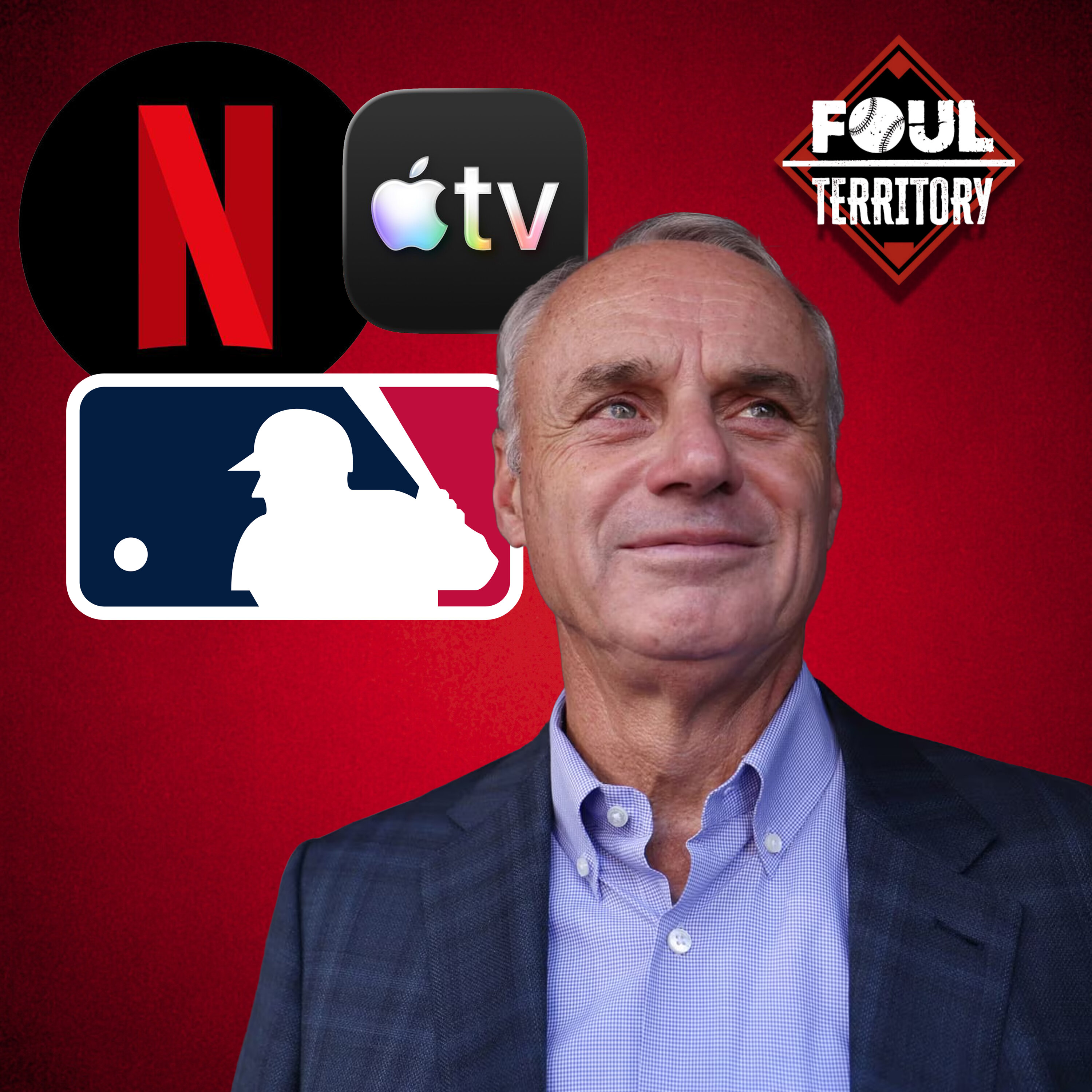
Andrew Marchand grades MLB’s new media rights deals, Opt-out recovery
MLB has a new deal for TV and streaming platforms. What does it all mean and did the commish recover from a key opt-out money miss last time? The Athletic Senior Sports Media Writer Andrew Marchand compares the deal to other sports. Other q's that come up: Are there too many platforms involved? What happens to the deal if there’s a lockout?
Hosts: Todd Frazier, Erik Kratz, Scott Braun
Baseball the way it should be covered
See omnystudio.com/listener for privacy information.
2025-11-23
20 min
Transcript
Available Results
Generated results are saved to the knowledge database for reuse and search.
No generated results are available for this episode yet.
Extract Knowledge
Pick what you want extracted first. Model, scope, and chapter options appear after a template is selected.
Generated results for public episodes are saved to the knowledge database so they can be reused and searched later.
Transcript
00:00:04
Speaker 1: All right, here we go. We're back.

00:00:05
Speaker 2: Let's finally dig into this MLB deal. We wanted to wait for the specialist in this category, Andrew Marshan, joining us right now on FT senior sports media columnists for The Athletic twice a week. You can listen to his pod. Just go to Andrew Marshan and mr cha n D dot com. Andrew, Great to have you on, and I wanted to just start with a little bit on your column regarding this deal for MLB. We've known about the teams involved, You've talked about him too, for months. How do you grade this deal? I think most fans look at the money, but they don't realize some of what MLB had to sell away to make up for the money that they gave up with this opt out that you can help describe.

00:00:41
Speaker 1: Yeah, if you look overall, I probably give them C plus maybe B minus. I think they netted out. Okay, I mean you have to really go back to when they first did the ESPN deal. Jimmy Pittarro, chairman of ESPN and Rob Manford, commissioner the Baseball wanted opt out in that deal, and that deal they were set to pay for the final three seasons of a seven year deal one point six five billion dollars. MLB said we would like an opt out for after four years to the final three years, and then ESPN said, well, if you want to opt out, we want to opt out. Then this past February, ESPN used it. So when you look at what that deal was for, it was for home run derby, the playoffs, eight to twelve playoff games, first round, and then Sunday Night Baseball. So they were going to pay one point sixty five billion. Those assets now are going to be with NBC, Slash, Peacock and Netflix and will be for a round nine hundred million dollars no excuse me, seven hundred and fifty million dollars for the next three seasons. That's a nine hundred million dollar difference. So what they did was they said, we want to make up that money, so they sold MLB dot tv or license it for the next three years. That will be ESPN. They got that one point sixty five billion dollars back, and so that is similar money when you look at where they ended up, but they had to sell their prize jewel for the next three years in MOLB dot TV.

00:02:11
Speaker 3: I got it there's so many things that I want to unpack here, and it's probably a way above my intelligence grade. So if I say something dumb, just tell me. But you said Manfred wanted to put in that opt out. Had he never put in that opt out, it would have been status quo and they would have stayed on path. Am am, I correct, And this would have been they would have finished out the three year deal and ended up kicking him in the face, and they lost a ton of money. Like owners need to realize that he for this move, he lost a ton of money. And the players, Am I right.

00:02:44
Speaker 1: You are correct? You know they'll argue that they made up the money and that they would to have had these discussions if there wasn't that opt out. Here's the thing when you cover media and just to understand the deal and why that opt out did not make any sense. Media companies do not want three year deals. They want If you look at the NFL deals, the recent ones are for eleven years, as are the NBA ones. NFL has an opt out, but eleven year deals. This deal, after why did Major League Baseball and go back to that seven year deal? The reason they had to take less money a little bit less money for that deal. Why was that they didn't have other bidders. It wasn't like they were doing ESPN a favor if they had other bidders. So going on, that's the case for what the Sunday Night Baseball home run derby ate the twelve playoff games, and that original deal didn't have the eight to twelve that was added a little bit later. But you don't have other bidders. Now you could say, well, there's a lot of there's the netflixes and all these other digital players coming in, so maybe in four years will be better, but you have to know that nobody really wants three year contracts, so you go back into the market and that's where they really made the mistake, and then ESPN used the opt out. He has been ended up being right because they're saying, no, this, these games aren't worth one point sixty five billion dollars over three years, and the market said, yeah, that's correct, they're way they're worth way less than they are. And another point I'd make is that they got a premium on Sunday excuse me, on MLB dot tv uh and you know there's estimates, maybe it's two hundred million dollars extra a year, which is great, but MLB dot TV they've been they haven't want to they haven't wanted to license that ever. And now they put a number on it that yes, in a couple of years when they when it goes to market, maybe again maybe they can increase that a lot. But it just happened to be the same one point six y five billion dollars at ESPN instead of if they put maybe this is what this is worth, this is a maybe it's worth three billion. Again, you can only get what the market will say. But they just got the money back and it felt like a little bit like a band aid that said, let me be a little positive. The partners that they have ESPN continues Netflix you get involved, which was a good money deal on the Netflix deal, uh, and then the NBC and Peacock. That's good when you go into after twenty eight when all their deals are up. To put some ducks on the pod for Manford Company.

00:05:06
Speaker 3: My question, the question that most fans have to me is with them, are they going Is this going to fix the blackouts? No, so nothing will be fixed on that. So fans really could care less about any of this except for the fact that they have to get four new subscriptions to be able to see some of their teams.

00:05:29
Speaker 1: Now, I'm going to defend the MLB on this. The thing about the blackouts, it's not that MLB doesn't want to get rid of blackouts. I think they would do it tomorrow, and I think Manford and company are trying to do that for twenty eight when all their national deals are up, and they want to make it so they can have a thirty team local package that you can buy digitally and get a large percentage of your games, of your team's games. But those rules are into cable contracts and they're legal, and they're arcane, yes, but it's not like you can just snap your fingers and say nope, you can't. Because these regional sports networks, which are diminishing, they have their rights to certain territories. Some I think everyone would agree, don't make any sense because of how far they go and how you're not really close to this team and you can't see their games. So yeah, there are problems with that, but I don't really think that's me. They know the issue, they would solve it today if they could. It's just not they can't just snap their fingers and say we're gonna do things differently, you know, as these regional sports networks, and we've seen with six teams who are now part of this ESPN deal, but you'll be able to buy their in market games. That's kind of where the future is going. Not necessarily will be with ESPN, but Amazon could be players for this, you know, a couple of years. Apple could be players. You know, there's a number of other places that maybe get involved, and so that's what they're trying to point towards.

00:06:55
Speaker 4: I've done I broadcast in an Apple game. I've done a couple of games on these app apps and stuff like that. How do you think the audience is gonna take this? And knowing that you know, you're eventually gonna have to buy you know, Peacock and Netflix and all this, do you see the audience numbers going down on these or do you see this being okay? Stabilize that this is like the new norm. I know NBC is in the picture, that's you know, that's a regular viewing broadcast and network. But how do you see you know, the regular fan going to these apps all the time and trying to get in there.

00:07:27
Speaker 1: I would say that Baseball did better with their partners. You know, most of us have Netflix, not everybody. They're gonna be baseball fans, probably older who don't have Netflix, who might want to watch Opening Day and maybe they get it for the one game. Do they needn't? You know you can turn it off after But a couple of things that they still have very wrong. There's too many partners. And the Apple deal never made much sense to me, still doesn't because you're only putting four regular season games for your team on Apple. So that's just an inconvenience for people and noise. People. All due respect Todd for doing those games, but when you're but yeah, you need another service. Uh, and it's only four games, and so there's as you know, one hundred and sixty two so you can miss four. And I think the issue is if you if you look at the Yankees, for example, you have to have Yes, Amazon, Prime Video, Netflix. I mean, I might stop now because I don't know how long your show goes for, but you may not. You may have to extend keep going to see all the games. Now, it's not a birth right they have to see every game, but people have become accustomed to being able to see it. And this is something I would say, and Baseball is aware of this. Manford's even said it publicly, is that he has said this way. Is how I say it is that if you make it hard for people to watch games, they'll listen to you and not watch, you know, eventually, not not all of them. But if you those diard fans, you know, they they they're gonna follow as much as they can. But you're saying Apple game here and then you know, Roku now they're out. But you know, Roku didn't make much sense to me. For ten million dollars a year, that deal is crazy to me. I mean, Roku's free to watch, but most people don't think of Roku, don't aren't watching things on Roku, especially your older fans, So that deal made no sense. But yeah, too many partners right now and too expensive, so they have to dwindle that down in a couple of years.

00:09:25
Speaker 3: Is there a streaming group that steps up at the end of this, at the end of twenty eight or is this or all these groups that are taking these games on saying you know, what do we need to say? What do are what are they looking for in this next three years? That'll make them say, yeah, we want to take it. We want to be the place for major League Baseball. Or is that not? Is that not Manfred's Manfred's full plan here. His full plan is just get as much money as you possibly can, no matter who that group is.

00:09:56
Speaker 1: I think it's a combination. They have to get it right this next time around. And by getting it right, it means two things. Number One, you have to get the money to pay the players, as you know, and to to get your for the owners, for everybody involved in baseball. They want as much money as possible. Number two is you have to limit the amount of partners that you have, make it easier to digest. They were to column a couple of months ago. For the athletic what I would do is Monday through Friday, it's all. You can eat your digital package or your RSN every game Monday through Fridays on that service. Saturday and Sunday, you'd have some special games that you have, some exclusive windows and then you know, you feel the dreams Ruman Derby, you try to auction those off as well, and if your team wasn't in that exclusive weekend game, you get it on your digital package. So then people don't have to think that much. It's very simple and I think it could be successful, but they have to simplify what what the doing here because a couple things. One hundred and sixty two games is a lot. I think baseball gets a bad rap in terms of their viewing. I've said this forever. They should be saying. When somebody wants to compare baseball to football, I would say, how many billions of minutes have people? Do? People watch baseball during the season as compared to football, And people who are gonna support they'll say, well, there's only seventeen games that under sixty two. Yeah, that's the point. If there are only seventeen Yankee games, what would the ratings be. Now, they might not be NFL ratings, but they'd be much higher per game for those seventeen games. So baseball has tonnage. They should use that to their advantage. But they also have to create scarcity because that's the NFL's big advantage. It's a great TV score and this fantasy there's betting and it works, but it has scarcity. Even though they keep putting games all over the place, it's still only seventeen regular season games that makes every game important. When you play one hundred and sixty two, you guys don't bear any for the players. Every game is important. You're trying to build to make playoffs. But in June June seventeenth, if you're a fan, that game doesn't mean as much as you know, late October of course, or even you know, mid September.

00:12:12
Speaker 2: Thank you, Yes, I make that point all the time. I also think, Andrew, the NBA is a good comp at times. Right there's at least more inventory. It's not nearly as much, it's about half the games, but it's a good comp because you also look at two leagues that have had somewhat similar revenue numbers that they report.

00:12:29
Speaker 1: So that that leads me into my question.

00:12:30
Speaker 2: The line that you said in your column The Athletic was that MLB might need some better advanced scouts looking into the next deal. How do you compare the way that they've looked at media in general versus a spot like the NBA. I mean, I worked for MLB for a time period, and I know now as someone who's on YouTube every day among other platforms, like it's very restrictive with highlights. We don't have to necessarily go there. But just in general, what do you see since you cover all of the sports, and the NBA's deal is way bigger and their younger audience is way larger. I think because of the way that they allow creators like us to use their highlights.

00:13:08
Speaker 1: Yeah, I mean the the idea in terms of their attitude of you know, kind of keeping their content for themselves. I can understand it in some regards to monetize it, and not that other people monetize all of their things, but you could do licensing deals, which a lot of other leagues have done with you know, a million entities. NFL has a lot of deals, and so does the NBA and SODA's hockey with a lot of places where they can show highlights, you know, and they have to obviously there's a fee involved. I would say this, they have not anticipated this moment. Well, now you can. It is complicated, you know, the regional sports networks diminishing, I do think was pretty predictable. Where we're going to a digital world where a show like yours can reach basically the whole globe, and so that's your audience. And you know it used to be you know, all these things are all about distribution. If you look at the history of media, and this gets into sports, you know, go way back when the old adage was never get in a fight with someone who sells ink by the barrel. Why was that because the owner of the newspaper back before I'm talking nineteen hundred, he could have He could say whatever you wanted in the newspaper and hopefully you was I'm not getting into mainstream media sometimes not perfect but gets a bad rap. But let's just go with my analogy here. He could say whatever he wanted, you couldn't respond. Now, I could go through the whole history of it, but distribution is the most important thing, and distributions not zero. Doesn't cause zero to distribute, but it's pretty close to zero for you to reach your audience. That you could be one day bigger than MLB network is not something that's unfathomable. It's something that very well could happen because you can reach people just as easily as a can in some respects on YouTube, it's even simpler for people. There's no fee for them to log on and watch your show, and so I don't think they anticipated the moment well. I think if you look at what the NBA did. I thought they really did well in terms of the partners they ended up with, and this is the model that, you know, I think it's different. I think MLB is looking at the NBA is like, we'll just do what they did and more national games. I think it's a little different personally. But they did a great job. The NBA. They got seventy six billion dollars for eleven years. They have three national partners ESPN, Nbcpcock, and Amazon Prime Video. And I know some people said it's kind, it's not. I don't think. I think it's going to become second nature by next year. That you know. The games are a Monday and Tuesday, Peacock and NBC Wednesday, ESPN. I could go on, but I think it'll become second nature in terms of the national games. And I think there is something there that they should follow baseball, but it's not exactly the same. I think a NASH regular season basketball game going on the assumption the stars are playing is a little bit more of a draw than most games, not you know, featuring. You know, I think there's two stars who stand out or must watch TV and no Tani and Judge right now, maybe others will develop, but and they're also on the two teams that are the biggest draws, and so you can't show them every time on national TV. But you know, I think, like you look at the Netflix the other Field of Dreams game. I again, I'm sure there's a reasoning for it. I don't know it. But how again, all due respect to the Twins, how are the Twins in that Netflix game for Field of Dreams versus the Phillies. I mean, the Phillies are fine, but if you're trying to get Netflix involved, I mean, how many people are gonna watch it? Yes, Field Dreams is cool, but they already did it, and I just don't see how the Twins, who may not even be very good by then. It could be August and they're already out of it. Just that's that's a weird decision to me.

00:17:00
Speaker 3: But you would have you would have the Vikings and the Eagles if there was a Field of Dreams football game, So.

00:17:05
Speaker 1: Yes, to me, I think that's a difference though, because the Twins and the Vikings are totally you know, different animals. The Vikings, you know, they're not having their you know, their quarterbacks not good whatever. They but it's a different so I think when you look at the sport again, this is just the reality of it. There's about six teams that can play nationally. The other teams that again, players and on those teams may not want to hear it may not be fair, but they are about six teams that should probably be on almost every time nationally. The reason the Yankees and Red Sox are on Sunday night so much they get a half a million more people. I mean that people watch. People may say they don't like it, they might not fair, YadA YadA. People watch.

00:17:48
Speaker 3: That's why we need to promote shows that talk nationally about baseball and hit all the teams and don't care which team wins. But anyway, there was only a show that was like rated and like you know, in the foul territory region of the field and stuff like that. We had a handsome guy named Todd Frazier that came on. My question is actually a fan question for you, all right, armand is amazing asked. Can we ask Andrew what happens to the deal when the lockout happens next year? And I want to add on to that, what happens to the deal if there is a lockout for the next deal, does that affect the TV ratings? So kind of a two part there.

00:18:30
Speaker 1: I mean, you guys, I'm sure covering this every day in terms of labor and where we're going, But you don't want to go in if they miss games, god forbid, miss the season. I mean, that's going to hurt their negotiating where they are. And the other thing is about the Nationals just came back to like just another point and I can get further into the question, but is that it is better again? Do you want to talk about all the teams, But at the moment, if a Yankees died, that's better for baseball in terms of their next deal because the ratings will be higher now. They did well because the Blue Jays and Dodgers had a great series, And the most important thing is going seven games. They can get six or seven games, that's what the networks really want. But the lockout potential is something that is awful. Again, I don't know the language of these deals. I presume they don't get paid if there's a lockout. I don't think baseball is in position to say, you know, sometimes the NFL has been able to say that we still get paid even if the games still get played. Obviously they get the games back when they're you know, they extend the deal they get they get those games, but they still pay them throughout. I'm pretty sure baseball did not have that luxury in these deals to get paid if there's no games, So yes, that would impact.

00:19:49
Speaker 3: Now.

00:19:49
Speaker 1: The other thing is about these deals that were just consummated. People have to understand when they compare it to the NBA recent deal or the NFL's recent deals. They were selling their top shelf stuff the NBA finals, the Super Bowl, Baseball was not. They were selling their second tier games that are eight to twelve playoff games, which are big, but not an LCS. You know, there's two LCS, is not a World Series, and so it's not apples to apples when you compare exactly where the NBA just landed and then where the NFL got two one hundred and ten billion plus a couple of years ago for eleven years.

00:20:24
Speaker 2: Andrew good stuff. Really appreciate it. Like Kratz said, we had to bring on someone smarter than him to be able to explain all of this. You are definitely that guy, Andrew Marsham dot com. He covers this on.

00:20:34
Speaker 1: His podcast twice fel.

00:20:36
Speaker 2: You can listen to that covering all sports, and then there's more on this in the Athletic as well.

00:20:40
Speaker 1: Andrew, good to see you.

00:20:41
Speaker 2: Thanks for the time man, Yeah, thanks guys,
Chapters
No chapters available.