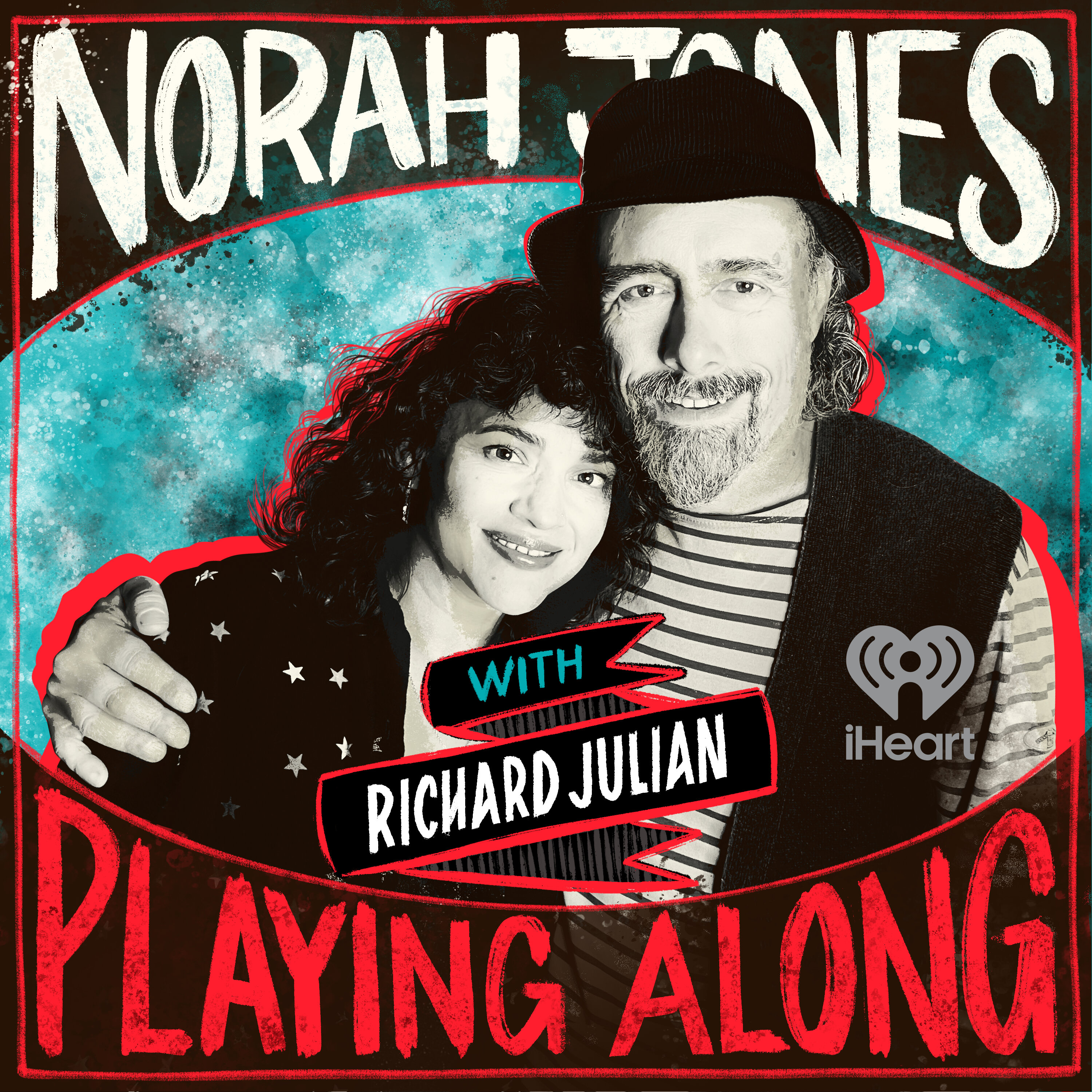
Richard Julian
Singer-songwriter Richard Julian joins Norah for a chat between longtime friends and bandmates in The Little Willies. They revisit their fateful first meeting and their early New York days, leading to the collaborations that have kept them making music together. It’s a trip down memory lane, filled with stories and music from the start. Recorded 1/21/2024.
See omnystudio.com/listener for privacy information.
2026-02-24
69 min
Transcript
Available Results
Generated results are saved to the knowledge database for reuse and search.
No generated results are available for this episode yet.
Extract Knowledge
Pick what you want extracted first. Model, scope, and chapter options appear after a template is selected.
Generated results for public episodes are saved to the knowledge database so they can be reused and searched later.
Transcript
00:00:00
Speaker 1: Hey, I'm Nora Jones and today I'm playing along with my old pal Richard Julian.

00:00:04
Speaker 2: I'm just playing.

00:00:07
Speaker 1: Weezy. I'm just playing Lone Weezy. Richard Julian, Richard Julian, Richard Julian. Hi, I'm Nora Jones, and with me today is Sarah Oda Ha.

00:00:27
Speaker 2: Hello.

00:00:28
Speaker 1: Today we have Richard Julian on the show, who is one of my oldest friends in the world.

00:00:33
Speaker 3: Yes, if you don't know him, he's a singer, songwriter, multi instrumentalist, wordsmith.

00:00:38
Speaker 1: He's a great songwriter. Yeah, he is.

00:00:41
Speaker 3: He's been putting out music for decades. He always has really memorable lyrics and he has this really distinct style that draws you in. He just put out his new album last year in twenty twenty five, called Hit and Run, where he leans more into keyboard and piano and it features several great musicians. You can find out more on his website Richard julianmusic dot net. And he's also in a band with you, Yes, the Little Willies. We started this band in the early two thousands where we did cover songs by Willie Nelson and others. And when he's not performing, he also owns a very popular music venue in Brooklyn called Bar Lunatico.

00:01:19
Speaker 1: You got to check it out. Yeah, if you're in the city looking for something cool to do. They have great food, great cocktails, and also incredible music. Every musician in the city loves playing there.

00:01:31
Speaker 3: Yeah, and Richard sort of curates that super eclectic roster of people from all over the place. So yeah, very popular and we love him.

00:01:39
Speaker 1: Please enjoy our show. I hope you like it. We had a great time playing music together. It's actually been a really long time since we've gotten to do that, so it was really special. Have fun listening to Richard, Julia.

00:02:06
Speaker 4: I'm so weird about people reading stuff that I haven't like edited down.

00:02:11
Speaker 2: Yeah, And but.

00:02:15
Speaker 4: A long time ago, I was when Leonard Cohen had released The Future, that record The Future, he did a thing there was a thing in Vanity Fair, and there was a song of his on that record called Democracy, which I thought was pretty amazing. And and he shared his lyrics like his his sheets, you know, because he used to keep a lot, used to write versus over and over again.

00:02:41
Speaker 2: And I was amazed, how.

00:02:44
Speaker 4: You know, like some of the stuff just wasn't good, like because he was like a hero stuff, and he was generous enough to share it, and it made me feel good, Like I was like, oh cool, I'm not the only one that writes this.

00:02:55
Speaker 1: I want to read that this stuff.

00:02:58
Speaker 2: But yeah, I saved it.

00:03:01
Speaker 4: I actually have the original thing of it because I saved it and stuck it inside my Lenard cone.

00:03:07
Speaker 1: You think that he's everything just came out golden eggs with him or something, Well.

00:03:11
Speaker 4: It all turned out like that, but he really worked it from almost nothing. I mean, the original ideas. You can only imagine that only he saw where they were going, like how good they could be.

00:03:23
Speaker 1: Yeah, you know that's cool, that's cool to see. Yeah, you want to play the song.

00:03:28
Speaker 2: Yeah, let's do it. I thought we weren't going to rehearse though, We're just going to try to dive in.

00:03:32
Speaker 1: Let's just try it. Yeah, okay, let's see what happens.

00:03:35
Speaker 2: All right?

00:03:37
Speaker 1: Wait, wait, start over?

00:03:39
Speaker 4: Ready?

00:03:40
Speaker 5: Whoa mama?

00:04:01
Speaker 6: Don told me whin I was just a pup.

00:04:07
Speaker 7: Boy.

00:04:07
Speaker 6: Get back inside that house and bumble up A cover up your.

00:04:11
Speaker 8: Neck, a cover up your big head too, and bring an extra layer rather dun Tom bringing extra layers, bring an extra layer.

00:04:24
Speaker 6: You don't know what the weather's gonna do.

00:04:32
Speaker 9: A Papa Don told me.

00:04:35
Speaker 5: Laid her in a.

00:04:36
Speaker 10: Prime as he was looking up and down my phone in Valentine to give it.

00:04:42
Speaker 6: To the count off one fushy and kill you.

00:04:44
Speaker 5: Dad a better.

00:04:47
Speaker 2: Bring an extra layer.

00:04:49
Speaker 8: Papa Don, Tom, bring an extra layer.

00:04:54
Speaker 6: Bring an extra layer. Don't forget the thing.

00:04:57
Speaker 11: Mamaself, bring lare, bring the Elaire, the layer, the layre bring the extra layer.

00:05:31
Speaker 9: We're living in a movie.

00:05:34
Speaker 6: Had y'all seen before and here come the scene with a body on the floor.

00:05:41
Speaker 12: Son, you never listen. It's just the way you be. Did you bring the extra layer? Did you bring the extra layer?

00:05:53
Speaker 13: No?

00:05:54
Speaker 2: No, you do.

00:05:55
Speaker 6: I spoke with call Offe.

00:05:59
Speaker 9: I can please.

00:06:03
Speaker 13: Bring the ex lab.

00:06:05
Speaker 14: Bring the ex lab, the lab, the layer, Bring the extra layer, Bring the extra layer, Bring the extra layer, the layer, the layer.

00:06:38
Speaker 6: Bring the extra layer. Mama done told you to bring the ex layer.

00:06:52
Speaker 3: Breath She had a.

00:07:06
Speaker 7: Yeah, that.

00:07:10
Speaker 2: Was fun a lot of fun.

00:07:12
Speaker 1: When did you turn in New Orleans piano player?

00:07:16
Speaker 2: When I moved to New Orleans?

00:07:17
Speaker 1: Yeah, that's so fun.

00:07:19
Speaker 2: You know down there?

00:07:20
Speaker 4: When I was living in the Bywater, one thing really captivated me was I heard piano everywhere there's a lot of piano players. Yeah, and you just hear piano everywhere, you know, you walk down the street somewhere and someone's playing a piano.

00:07:35
Speaker 2: Yeah, and I was one of those people playing the piano.

00:07:37
Speaker 1: Did you guys have a piano down there?

00:07:39
Speaker 2: Same one I have in my apartment in Brooklyn. I brought it back up. It's just a crappy piano. I actually have to get rid of it. It's really it takes a lot of work to keep it together.

00:07:49
Speaker 1: But got some songs out of it though.

00:07:50
Speaker 2: Yeah.

00:07:51
Speaker 4: We had a U haul and we went out to Metori, and while we still had the U haul, I said, let's get on Craigslist and find a piano today. Out the first one we saw, this guy said, yeah, it's right in my garage. You can put it right in the U haul.

00:08:04
Speaker 1: Perfect.

00:08:05
Speaker 2: I figured he would help me out. I went out there.

00:08:06
Speaker 4: He was in a wheelchair and like about seventy five eighty years old, and uh, we found all these photographs of him inside the piano bench when we got it home. Old photos of him in the fifties at like sock hops and stuff like dancing. Yeah, some of them are hanging in Lunatico that didn't get follo.

00:08:25
Speaker 2: No, we didn't.

00:08:27
Speaker 4: We didn't find them until way later, you know, So that was one of those things. Sorry now I feel bad. It was a kind of a fun story.

00:08:36
Speaker 1: Sorry, I made it weird. That's my job, Richard, that's our relationship.

00:08:41
Speaker 2: But uh, yeah, you know, and I got into playing piano there.

00:08:46
Speaker 1: That's cool. I love it. You're just so good at it. Also, did you get really when Henry Butler was around the club, were you.

00:08:55
Speaker 2: Into you know, Henry didn't show me.

00:08:58
Speaker 1: Any but did he just inspire you a little?

00:09:01
Speaker 2: He?

00:09:01
Speaker 4: I mean he did in the other ways, not in piano ways. If anything, Henry would make me want to not ever play piano. He's I mean, he was just so incredible, But he was. He was such an incredible artist, you know, on every level. He was really he had taken that New Orleans thing and had really taken it really far out. You know, it was like it had he had some of that gut bucket in his plane. But it was almost I thought of him more as a classical musician. Yeah, it was like really austere and you know, so, yeah, is this.

00:09:38
Speaker 1: Weird sitting here being interviewed by.

00:09:41
Speaker 4: I thought it would I thought it would be I've known you for so long and thought, how are you going to interview me?

00:09:46
Speaker 2: Like you know, you already know everything?

00:09:48
Speaker 1: I literally know everything about questions? How long have we known each other? Twenty four twenty five years?

00:09:54
Speaker 2: On my nineteen eight what? Yeah, that's insane.

00:09:59
Speaker 1: I was eight. Yeah, that's crazy. You were, Yeah, And I had my big old Cadillac, the big Cadillac.

00:10:07
Speaker 2: Yeah, the car was incredible.

00:10:09
Speaker 1: Well, so do you know that whenever you and Jesse Harris came down to Texas? I was in college and you guys came down with your friends who were doing a clinic at my college.

00:10:17
Speaker 2: Yep, and not just friends. Yeah, Kurt Rose and they were Yeah, and Steve Carr, who was my roommate at the time.

00:10:27
Speaker 9: Yeah.

00:10:27
Speaker 1: So you guys were just driving cross country, right, We.

00:10:30
Speaker 2: Were driving across the country.

00:10:31
Speaker 4: I remember being in Virginia at a gas station and Jesse going to a payphone. Remember payphones? Oh I do, and him this is how we found out that those guys were going to be down there. He was mixing a record and he had to call Jesse Murphy for something, and Jesse Murphy said, oh, are you guys passing through Texas because those guys are down there.

00:10:51
Speaker 2: And we said, oh, we are passing through Texas. My chance we went through.

00:10:56
Speaker 4: Well, we were just on a on a crazy trip, you know, we were, and we went through New Orleans and we went to Houston the night before and then we drove up there and that's when we met you.

00:11:08
Speaker 1: That's crazy. So I was told by the the head of the department. Because I had the Cadillac, that's the whole reason I met you, I know, yeah, because I had room in my trunk for all the gear, and so they said, go pick up these musicians. You have room for all the stuff at the hotel. So I went and picked them up, and I met you guys too, and we had just such a magical twenty four hours of like we really do, hanging out. But I remember sitting in the audience when.

00:11:33
Speaker 2: They were doing all fell in love.

00:11:35
Speaker 1: Yeah, we did, we fell in love with each other. I was sitting in the audience they were about to start the sort of performance clinic, and you guys were sitting next to me. I said, so, what do you guys do? And you guys looked at me and you said, oh, we're songwriters, and it was the first time I'd ever even thought about that. Yeah, being a thing, right, Isn't that funny?

00:11:58
Speaker 2: It is? Yeah, I know that's funny how these things at some point.

00:12:02
Speaker 1: Yeah, you know you didn't say we're musicians, Oh, we're singer songwriter. You just said songwriters here, which I thought was also really ballsy, a great way to like just be like, we're songwriters, bitch.

00:12:12
Speaker 2: Yeah. Oh no, we thought like that.

00:12:15
Speaker 4: But I remember we went to a record store and I asked you. I said, well, what are you doing here in this college. You said, oh, I'm studying voice and piano. Yeah, And then I saw a record. We were at a vintage record shop or use record shop that you took us to.

00:12:32
Speaker 1: Yeah, because I was cool and they had trying to make you think it was cool.

00:12:37
Speaker 2: They had the Tony Bennett Bill Evans record. Yep, you bought it for me and yeah, but you knew it already. Yeah.

00:12:44
Speaker 4: I said, you know this record. You're studying voice and piano, you should know this record. And you said oh yeah, and then you sang a small line of touch of your lips.

00:12:55
Speaker 2: Like you said oh yeah, And I was like, oh, she's got a good voice.

00:13:00
Speaker 1: Really, you heard me singing the records store. I knew right then that you could really sing Kurt Rosenwikel. Also, he bought me Shirley Horn You won't Forget Me at that store, which is an incredible record, which I didn't know.

00:13:15
Speaker 2: And you didn't forget him or it.

00:13:17
Speaker 1: I did not forget it for him. It was really cool though, you guys. It was all very like sweet and it was amazing mentory and not creepy at all. We went on the golf course that night, the golf course, yeah, and we jammed, we like yep, yeah. And then I told my mom the next.

00:13:37
Speaker 4: You didn't jam, I say, we know. We had to ask you to sing. Really, yeah, you were really just like you were just vibing and hanging out. We played a long time. I remember before I said, hey, you sing, Why don't you sing a song? Now?

00:13:51
Speaker 2: You sang? You sounded so good.

00:13:52
Speaker 1: I sang Comrader come Shine, Yes you did, that's the one. Yeah, And I kept calling the chord changes out to Steve.

00:14:01
Speaker 2: He didn't know it, no, he did.

00:14:02
Speaker 1: I just was a word, I think because I was doing it in a different key.

00:14:07
Speaker 2: You're like four four.

00:14:11
Speaker 14: And I know.

00:14:13
Speaker 1: I told my mom. The next day I called her. I was like, oh my god, this amazing thing happened. These guys from New York came there, these musicians, and we all hung out on the golf course. Online she was like, what, that's horrible that she just thought it sounded creepy. You know, it was funny.

00:14:27
Speaker 2: Well, everybody was in love with you. She was probably right.

00:14:30
Speaker 1: It felt very innocent to me, and it was.

00:14:34
Speaker 2: Yeah, it was amazing. We had such a great time.

00:14:37
Speaker 1: It was so sweet, all right.

00:14:39
Speaker 2: We used to talk about it even before you moved to New York. You're like, remember that night in Texas with that girl Nora. That was so much fun. Two three and.

00:15:06
Speaker 9: We did it dirty, we did it sweet, and in the morning.

00:15:17
Speaker 6: Found somewhere to eat.

00:15:21
Speaker 15: Over pancakes, scrambled eggs. You draped your feet across my legs.

00:15:33
Speaker 16: I draped my feet across your legs, and it was so nice to feel your touch.

00:15:52
Speaker 9: I didn't know you.

00:15:55
Speaker 1: Very well.

00:15:59
Speaker 9: I did know you for anyone could tell.

00:16:06
Speaker 2: You had some secrets.

00:16:10
Speaker 9: To protect and some hang ups to project. We all have hang ups to project. It was so nice.

00:16:29
Speaker 17: To feel your touch, and so we tried to make the conversation last.

00:16:46
Speaker 6: Politics, movies and jazz.

00:16:52
Speaker 9: I got lost up in my head the way I do.

00:17:00
Speaker 6: Where it occurred to me either.

00:17:03
Speaker 9: Maybe I was through.

00:17:07
Speaker 1: And maybe I was too, so I didn't know Jimmy Geoffrey was.

00:17:20
Speaker 9: That's all right, no one ever does.

00:17:27
Speaker 6: It would be false of us to blame it all all that.

00:17:35
Speaker 9: The heart is fickled like a cat.

00:17:42
Speaker 10: Oh it was so nice.

00:17:49
Speaker 1: Uh huh.

00:17:53
Speaker 6: Shows NICELLOI show was.

00:18:01
Speaker 2: Nice to feel. That was so pretty. I think I need a cigarette. So anyway, anyway, I lived in Cleveland for a while.

00:18:38
Speaker 1: That was nice. I like your songs. They get in there, They really get in there to that thing you always have had that you get it, you get inside the dirty, the dirty stuff. Both both both meetings implied you.

00:18:59
Speaker 4: Know, I really I always love Prince a lot, and Prince's music can get really dirty. And I like the way he writes about it, like that song if I was your girlfriend, you know that song.

00:19:15
Speaker 2: So it's like it's that psychological.

00:19:18
Speaker 4: It's the it's the weird stuff you know that he gets into and he writes about it really well and very it's like very psychological.

00:19:24
Speaker 2: Yeah, And I mean I'm not prince.

00:19:27
Speaker 4: I'm not funky like that, and so it's it's weird to take stuff like that and put it into a into like a softer, you know, kind of setting. Yeah, it requires a different set of rules, I think. But yeah, I thought this tune kind of hit some stuff.

00:19:45
Speaker 2: I thought it was.

00:19:46
Speaker 1: Yeah, it could be a Willie's tune for sure.

00:19:48
Speaker 2: Yeah.

00:19:48
Speaker 1: Yeah. Also the changes kind of get into that kind of reminded me of that Christofferson tune and like.

00:19:55
Speaker 2: All right on. Yeah, he has a little bit of that movement. It's like a long.

00:20:00
Speaker 1: Yeah, I'm so glad you're writing songs and you made this new album because there was kind of a spell where you weren't no, because I mean you opened a bar, Yeah, opened a venue. How old is Lunatico Now?

00:20:17
Speaker 2: It's nine years old this month.

00:20:19
Speaker 1: That's a lot of work small business and the pandemic small business.

00:20:23
Speaker 2: Pandemic small business. And also, can't emphasize enough having a kid.

00:20:27
Speaker 1: Yeah I think that was eleven.

00:20:30
Speaker 2: He's eleven.

00:20:31
Speaker 1: Now.

00:20:31
Speaker 2: That was more interrupting of my creative flow than the bar, because.

00:20:36
Speaker 1: The space your brain needs to be creative isn't there.

00:20:39
Speaker 2: Kids need the space in your brain, they need it.

00:20:41
Speaker 1: They require it's constant brain interruption, right.

00:20:46
Speaker 2: Yes, yeah.

00:20:48
Speaker 4: I had a period of time when I opened the bar. You know, Lunatico is a very creative place, and just even.

00:20:55
Speaker 2: Designing it, or you know, even thinking of cocktails, like well, let's design a new cocktail. For a while, I fooled myself into thinking that it was on par with music.

00:21:07
Speaker 4: Like I thought, well, you know what, I just need a creative outlet, and this is creative, so who cares if I'm writing songs.

00:21:12
Speaker 2: Plus I wrote so many songs. I thought, I do my old songs, a lot of songs. I don't need any new songs.

00:21:19
Speaker 4: And then I fooled myself with that for about two years, and then I had a string of dates.

00:21:25
Speaker 2: I think it was in Japan.

00:21:27
Speaker 4: I got like a little offer to go over there and do some stuff, and I was performing every night, and I thought, oh no, no, this is.

00:21:34
Speaker 7: What this is.

00:21:35
Speaker 2: Next level.

00:21:35
Speaker 4: You know, I forgot how powerful it feels to get all that stuff out and do it in a room full of people.

00:21:42
Speaker 2: But I couldn't get the writing thing back. I just couldn't do it. And finally I was playing a show at Lunatico one night and I was doing that song. You might remember that song your friend John I used to do.

00:21:55
Speaker 1: Yeah, I know all your songs.

00:21:56
Speaker 2: Yeah, I was doing that song and it's kind of it's it's a little bit of a mean song, you know. And I was up there playing it.

00:22:06
Speaker 4: And I realized that I didn't want to sing it anymore, and that I didn't like the person in the song. Yeah, And I was, Yeah, I was having the way so I didn't like myself and I was having a sort of emotional crisis while I was performing during the set crazy and I revealed it to Chris Marcy after the after we were done performing.

00:22:29
Speaker 2: The set went well, we had a good audience. People would liked it. It wasn't it wasn't that the gig was bad.

00:22:35
Speaker 1: It's a funny song. I feel like it's the kind of song and the crowd will respond to.

00:22:39
Speaker 2: Yeah. Yeah, And Chris said, and I told him. I said, Man, I'm feeling really weird singing these songs. I'm just not I don't let I don't want to sing my songs anymore, them pretty much all of them. Now I'm learning which ones I still want to sing. But Chris said, he said, yeah, you're not really that guy anymore.

00:22:55
Speaker 3: You know.

00:22:56
Speaker 2: Funny he got he got right.

00:22:58
Speaker 4: He just said it like instantly while was telling him, and I thought, wow, I have to write new songs.

00:23:02
Speaker 1: I think that is a very true thing though that happens. I have songs like that where I just don't really like, Yeah, I don't. I can't embody them anymore because I don't feel the same way.

00:23:13
Speaker 4: Yeah, you know, there was somebody I'm not going to say a name, but there's a person who I think is really incredibly talented, very famous person writes songs, but I don't. I don't like his persona in the songs. You know, songs can be different too, that can come from a different party of personnelity.

00:23:31
Speaker 2: Maybe he's maybe he's not. Maybe that's just a side, you know, way that he thinks.

00:23:36
Speaker 4: But it's funny as some of his most beautiful songs, even when you get down to the lyrical content and what they're actually saying, they're like.

00:23:43
Speaker 2: It's like, whoa dude, don't say that? Yeah, Like, why are you saying that?

00:23:47
Speaker 1: I could see I could see that about your friend John.

00:23:49
Speaker 2: Maybe that's the way I felt about It's.

00:23:52
Speaker 1: Just snarky it's like a snarky it's too snuky, and.

00:23:55
Speaker 2: I just didn't feel like doing it anymore. So I started.

00:23:58
Speaker 4: I knew I couldn't just start writing writing songs again like that because my songwriting process is so long.

00:24:04
Speaker 2: It takes me so long to finish a song. So I.

00:24:09
Speaker 4: Set my alarm at seven am every single day after that through twenty twenty two, and I woke up and worked for three hours and it was amazing and it made me feel like not only I was getting productive work done some days better than others, obviously, but when I could get a song going and have it in my head even when I was working throughout the rest of the day and not songwriting, I felt like a more enjoyable person to be around because you felt like you.

00:24:38
Speaker 1: Got your It's like exercising or something. You got your thing done.

00:24:41
Speaker 2: Yeah, it really was a big sea change.

00:24:44
Speaker 1: That's cool. And I think also writing on a different instrument is a really good way to get yourself back into the game.

00:24:51
Speaker 2: Yes, yeah, you know something something different.

00:24:55
Speaker 1: It's coming from a totally different place and you're going towards different chord changes.

00:24:59
Speaker 2: And yeah, yep, I think that's helpful big time.

00:25:03
Speaker 1: Was that the first time you've ever had a long sort of period where you didn't write really well that long?

00:25:09
Speaker 2: Yeah.

00:25:10
Speaker 4: Yeah, I mean it was years I didn't write songs for because I did Flirt to lead the record I did in New Orleans.

00:25:17
Speaker 2: That was the last time I was writing songs was when I was in New Orleans.

00:25:20
Speaker 4: I was like twenty eleven, and I didn't start these until twenty twenty one ish, twenty two ish.

00:25:26
Speaker 2: I guess. Yeah, so yeah, ten years, that's insane. Yeah, a whole decade.

00:25:31
Speaker 1: That's crazy. But you got a lot done during that decade as well.

00:25:34
Speaker 2: Yeah, yeah, yeah, it doesn't matter. It really doesn't matter.

00:25:37
Speaker 1: Small business with the coolest collection of music.

00:25:40
Speaker 2: You know.

00:25:40
Speaker 4: That's another thing you were talking about writing on a different instrument.

00:25:43
Speaker 2: But another thing was watching the music scene come through my house every single day.

00:25:49
Speaker 5: Yeah.

00:25:49
Speaker 2: And the humble, the humbling aspect of that.

00:25:52
Speaker 4: And I mean that in a positive way, just that the music scene here is is just incredible, and you you can put your own own talents and to a context that I think is is Uh, it's humbling in a beneficial way.

00:26:07
Speaker 2: You know. It reminds you to just keep things straight.

00:26:11
Speaker 1: Yeah, don't try to.

00:26:13
Speaker 2: Yeah, don't don't. Don't chat to you hard do try to exactly know your limitations. Stay stay in there and be your best, you know.

00:26:20
Speaker 1: Yeah, but let it trickle it in sort of color things, yes as well.

00:26:24
Speaker 2: Oh yeah, definitely, you've got to be open.

00:26:27
Speaker 1: You have the coolest collect like curated. I mean, I'm sure it's curated. How much of the bands that come through Lunatico is just by chance? I mean, is it all completely curated?

00:26:39
Speaker 2: You can at this point it's pretty curated.

00:26:41
Speaker 1: Yeah, but it's totally all over the place.

00:26:44
Speaker 2: It's everywhere.

00:26:45
Speaker 5: Yeah.

00:26:45
Speaker 4: Well, you know it's some of that's a business move too, because we you know, are if you stand outside the club, you'll notice all the storefronts are shuttered, you know, to the right. We're not near a subway station. It's all destination traffic. There's no wall by traffic. When the place is packed, which it is fortunately very often, it's all people that have come from somewhere, even if it's from blocks away, and they've decided that that is their destination.

00:27:11
Speaker 1: Interesting.

00:27:11
Speaker 4: Yeah, so I don't have enough, you know, the club doesn't have enough fan base to just be like a stylistic like I can't put on the same thing every night.

00:27:22
Speaker 1: Yeah, so it's completely different. You have Brazilian bands.

00:27:26
Speaker 2: We subdivide.

00:27:27
Speaker 4: Ore are following into various demographics, of which I've identified seven. Really yeah, and and ideally I'm hitting all seven of those weekly. Ideally, Like if you want to, like some people came to hear me the other night because I played, I only played there twice a year because I've determined that that's all I'm good for.

00:27:49
Speaker 2: Yeah, I could draw twice, So I play there twice a year.

00:27:52
Speaker 4: And like the people that came, you know, to my show, they're not going to be at Amar Marshall's show the night before.

00:27:59
Speaker 2: I think is amazing.

00:28:00
Speaker 4: Am War is a drummer African American drummer who always brings an incredible group. He has a he's a great jazz drummer. He plays with Marcus Miller and he gets that kind of work, but he he has more of like a hip hop kind of vibe in his playing. And he has a number of bands. One that has Robbie Coltrane, one that has Jalil Shaw. But he had this one band he has comes up from Philadelphia. It's all Philly guys who I've never heard of this bass player John Smith, and guitar player who plays guitar. It doesn't even sound like guitar Sebastian or I can't remember his name, but it's it's just really like hip hoppy and like, you know, groovy and stuff like I don't I don't picture that audience coming out to hear me, you know, And I don't picture my audience going out to hear that, although I love it when people do do that.

00:28:48
Speaker 1: We first open there, so what else do you have coming through there?

00:28:54
Speaker 4: We have the Brazilian stuff, you know, samba samba jazz, and we'll have like, you know, singer songwriter. We've got you know, freaky avant garde jazz what my staff refers to as nightmare jazz.

00:29:11
Speaker 2: You know, and uh yeah, you know all of that stuff singers.

00:29:15
Speaker 14: You know.

00:29:15
Speaker 2: We had the gospel brunch for a while with the gospel scene.

00:29:18
Speaker 1: That's cool. Yeah, and you have food and food, yeah, that's a whole other layer.

00:29:24
Speaker 2: Well that was the whole the whole reason for opening. The whole reason for opening the club was to have a good food and drink menu. Adam Music Club. We thought that was sorely lacking, and I think we were definitely right about that.

00:29:36
Speaker 1: You're right, it's just a lot of things to be good at at once.

00:29:41
Speaker 2: Yeah, it seems hard. Yeah, it's weird.

00:29:43
Speaker 4: It's weird, weird general managing all that stuff because you've known me for so long, Like, I know you like that stuff. I like it, but putting it out every day is a whole next level at this point is it's kind of it's running well right now.

00:29:56
Speaker 2: The last coming back from the pandemic was so hard.

00:30:00
Speaker 4: It was so difficult to get a team back, reassemble a team, and I've only felt really great about it for about the last six months.

00:30:09
Speaker 2: The last six months things have been I still work really hard, but I don't rack my brain.

00:30:14
Speaker 4: I don't go to bed feeling demoralized about some issue. You have enough people to kind of people know what they're doing, they know what the vibe is cool.

00:30:22
Speaker 2: There's not a lot of handwringing. You just get it done, you know. Yeah.

00:30:27
Speaker 1: I mean I was there the other night and I had the perfect margarita.

00:30:31
Speaker 2: Yeah, right on? Was it good?

00:30:33
Speaker 1: I had three more? Too many?

00:30:35
Speaker 2: Oh? Okay, yeah, that's about as many as I had to.

00:30:38
Speaker 1: It's not like the old days drinking margarita.

00:30:40
Speaker 2: No, I used to drink a lot margarite.

00:30:42
Speaker 1: Sure, it is not the same anyone. I not do it like I used to.

00:30:48
Speaker 2: Definitely not. I don't want to do it like I used to.

00:30:51
Speaker 1: Know. It's painful.

00:30:52
Speaker 2: Opening a bar made me drink less I have. It's funny, you know, I work. I don't drink while I'm working. At the end of the night, I do you know the chalkboards that we do.

00:31:00
Speaker 1: I do at the end of the night.

00:31:01
Speaker 2: End of the night, I have a marg I do my chalkboard.

00:31:04
Speaker 1: I go to bed, and the chalkboards are very artsy. So yeah, that's like your zen moment.

00:31:09
Speaker 2: It's a way to roll down the energy so I can go to sleep, you know.

00:31:15
Speaker 1: So funny. Yeah, can we do an old song of yours?

00:31:18
Speaker 2: Sure?

00:31:19
Speaker 1: Can we do Stained Glass? Because that's an old song it is, but I re recorded in it's on the new album, but and it's totally different.

00:31:27
Speaker 2: Yeah.

00:31:27
Speaker 1: Yeah, it's cool.

00:31:28
Speaker 4: I always had You're touching on something else actually that I'll share, which is just that this new record has singers.

00:31:37
Speaker 1: You know, and they're so incredible. Right on when I came to see you the other day, well, they sound great on the record, and they sounded the same when I saw you. It was so like, the parts are so incredible.

00:31:50
Speaker 2: Well they you know, they work hard.

00:31:53
Speaker 4: The one girl, Katie, Katie Martucci, she has a group called Tucci Swing and they do all Boswell Sisters stuff that's so cool. So I had tried the record with some other singers, some gospel singers, and it didn't work as well, and so I called Katie and Sammy, and then they came in with this other singer who wasn't there the other night, Venetia Gould, who's who's incredible?

00:32:13
Speaker 1: And Sammy Stevens.

00:32:15
Speaker 2: Sammy Stevens, Sammy Stevens. Sorry.

00:32:16
Speaker 4: Yeah, I should be given props to everybody because they're all artists who in their own in their own right there I will make their own records. And but I've had this music, in this style of doing my music for as long as I can remember, I mean for decades, but I never knew who to call to do the singing or who to and have the horn sections. And now that was one of the things that Lunatico opened up, was I know all these horn players and all these singers, and I can see a band like that Boswell sister's band and go, oh wow, I could just call the they know how to sing together, they'll know what to do exactly, you know. And I never had that and that and also just financially just being able to pull out of a record with ten piece band.

00:33:03
Speaker 2: Yeah, So finally with all those resources, I was like, cool, I'm going in. I'm going to do this.

00:33:08
Speaker 4: And Stained Glass was a tune that I always had hoped I could get in that environment. So I was like, I'm gonna drag that one back out.

00:33:15
Speaker 9: Yeah, like you do it?

00:33:17
Speaker 1: Were you not happy with the old version or you just always heard it in a way that never.

00:33:20
Speaker 2: I didn't like my voice on it. I don't like my voice on that whole record. Which record is that girls need attention?

00:33:26
Speaker 1: It's just direct one to it, yeah, exactly.

00:33:29
Speaker 2: It.

00:33:30
Speaker 4: It has some cool songs on it. I like the songs I was, you know, it's weird. I don't feel like I was in a good emotional place. And I think you hear it in the voice or I hear it anyway, so it bothers me. You never know how other people hear stuff, So you just have to put things out. And I hope it goes well.

00:33:47
Speaker 1: That's interesting though, because I mean I have that too, where you go back and there's certain things I'm like, I cringe a little because of one small thing that might yeah, nobody might notice.

00:33:57
Speaker 2: But I'm doing that right now.

00:33:59
Speaker 4: Even with the new I want to go redo like ten things, I want to remix it and everything.

00:34:04
Speaker 2: I'm just like, I can't stop.

00:34:07
Speaker 1: I think that's working on I think most artists are like that.

00:34:09
Speaker 2: Yeah, probably so right. Yeah, I hate it.

00:34:12
Speaker 4: I mean I really it really makes me neurotic and nuts. I wonder if it if it makes everyone as neurotic and nuts. I guess it probably does well.

00:34:21
Speaker 1: I think people have different levels of neurosis.

00:34:25
Speaker 2: And thanks, you know you're like I know you and your next level.

00:34:33
Speaker 1: I mean, I guess it depends on everyone's level, but I think I do think everybody does it to a certain aspect.

00:34:40
Speaker 2: I drove a few people crazy on this record, for sure.

00:34:43
Speaker 18: Really, Yes, I was told in fact, it's not just my imagination, all right, you know that show bisbebe anyway.

00:34:55
Speaker 2: I've been in a band with you.

00:34:57
Speaker 1: I've been in a band with you, and I'm sure I've driven you nuts doing stuff too.

00:35:01
Speaker 2: So you know you never really have. Actually, that's not true. I don't think so.

00:35:05
Speaker 4: I can't think of anything now. You got mad at me for getting coffee one day. That's the only thing I remember that. Wow, she's kind of hard to Yeah, no, because I can't because I was late. You said I had to be on time.

00:35:17
Speaker 2: You had somewhere to be and we had rehearse and I was late.

00:35:20
Speaker 4: And then I walked up to your house and I had a mud cup coffee, so you knew i'd stop late downstairs even though I was.

00:35:27
Speaker 2: You said, did you stop for coffee? And I'm standing there with this orange like, oh my god, the cups that they used.

00:35:33
Speaker 4: I was like, yeah, I was trying to think of a lie, but I couldn't think of them while I was holding the orange cup.

00:35:40
Speaker 1: This is like therapy. This is like friend therapy. Boy, Man, I could be uptight. I don't think I'm as uptight as I used to be. I think I used to be much more uptight.

00:35:50
Speaker 9: Sometimes.

00:35:51
Speaker 4: It's funny we've gone opposite directions, I think, And I think probably because maybe you were more uptight than because you just had so much much stuff coming at you at once.

00:36:01
Speaker 2: You were figuring out your career and your role in all of that or something.

00:36:06
Speaker 1: I think I was just a little uptight and very young and very on time.

00:36:11
Speaker 2: Oh right on, Well I'm like that now running the club.

00:36:15
Speaker 1: Now, I'm like fifteen minutes late always.

00:36:17
Speaker 4: So yeah, what's funny is musicians come by the club and I go, please don't leave your cases there on the table. We're sitting people, can you please put those out there? And I'm like over there policing it. And then I did a gig at Dizzy's with the with the band I had with John Chun and we're sound checking and then I see them setting up the dining room and I look out.

00:36:36
Speaker 2: I mean, my stuff is spread across the five tables. Yeah, I've got a case over here, my jacket's over here, my scarf is hanging somewhere else.

00:36:44
Speaker 1: That's a different brain.

00:36:46
Speaker 19: Yeah.

00:36:56
Speaker 4: I didn't know this, but I started noticing when I would eat there that their playlist was our playlist, and some really deep cuts, like stuff that I've even taken off of records, you know, like you know, old this Louisiana band that I learned about from reading a doctor John Downbeat interview in nineteen.

00:37:17
Speaker 2: Seventy five, you know, yeah, and it would end up. And I thought it was great.

00:37:22
Speaker 4: They were playing really great music in there, but I wasn't sure if they were ripping us. But I had one day I was thinking, there's not a lot of famous people named Floyd is there? And then I thought, well, there's Floyd Kramer, the piano player who I know is probably probably influenced you a little bit, right maybe. So I was like, oh, I should put some Floyd Kramer on the on the Lunatico playlist. Didn't he have a hit called Last Date or something? And I look up Floyd Kramer and I see under Floyd Kramer this other record that he did is like super obscure record. It has a tune called fancy Pants, which reminded me of that story of Mickey brimm and the thing. I was like, wow, I got to check that out. And I turn it on and it's really silly tune and it's so silly I had to put it on the playlist.

00:38:08
Speaker 2: Just this really silly little piece that he does. You have to check it out. And then about five weeks later I heard fancy Pants at at Habino. I was like, there's no way they didn't get it from us.

00:38:22
Speaker 1: But wait, do you how do you do your playlist?

00:38:26
Speaker 2: I make the playlist?

00:38:27
Speaker 4: What though, oh on an Apple tunes, So I think, yeah, Apple, So I think they just they're just making their own.

00:38:35
Speaker 1: Playlist, you know, Oh they should You think they shazam?

00:38:38
Speaker 2: I think solly yeah, and nobody would be able to find that. It's just like, that's such a random one.

00:38:43
Speaker 1: Here's what I noticed on Spotify. You know, for so long you could find all these cool obscure songs, and then I start hearing them at every coffee shop and in every end of some TV show as the music, and they're like amazing old obscure songs. But I think through the playlisting and weekly discovery for you, it seems like they give everybody, they feed everybody a lot of the same stuff. And then I've heard that like I don't know how Apple Apple Tunes works, but I know that on some of these platforms, like if you link up with someone on a couple tunes across the world, they'll feed you their stuff and they'll feed them your stuff because you seem to have similar tastes like this weird thing. Wow, isn't that crazy?

00:39:30
Speaker 4: It's like they really have thes like is here and has been here for a while.

00:39:36
Speaker 1: Yeah, it's interesting, but I've discovered so much cool music that way. But I just I feel like people maybe if you're connected in any way somehow, it feeds you the same stuff. I don't know.

00:39:48
Speaker 2: No, it's weird.

00:39:48
Speaker 4: I mean just the algorithms of stuff that they want you to see online too, you know, like if you just linger over something long enough, you know, like I go on Facebook or on Instagram and they have me pegged because I'm fifty six, I'm white, you know, and they're like, you want to know what Keith Richards is saying about Mick Jagger. I'm like, I don't give a shit what Keith Richards is saying about Mick Jagger anymore.

00:40:19
Speaker 2: You know.

00:40:19
Speaker 4: I love the Stones, but like, but I have gone I love the stones, and I've gone on little you know, you know, rabbit holes of looking at old stones videos. But then they think, you know, so then my newsfeed on Google. It's like, you know, Bob Dylan said something about Mick Jagger.

00:40:35
Speaker 2: Well, who cares, I'm not picking on that.

00:40:37
Speaker 4: Yeah, they try to do that very much, or they try to sell me boner pills or they the other day they wanted me to watch a guy getting bitten by a horse.

00:40:47
Speaker 1: There.

00:40:48
Speaker 2: You know, it's just like, why do I want to see that?

00:40:50
Speaker 4: And I think I must have clicked one time on a dash cam accident, like a car accident, because they constantly they want to show me that car accidents are happening.

00:41:02
Speaker 2: I don't click on them, but they're like, I'm watching something about to happen. You're supposed to click on it to actually watch.

00:41:07
Speaker 1: You want to finish it.

00:41:08
Speaker 2: It's like stag. I mean, it's weird. It's really weird.

00:41:12
Speaker 1: It's very weird.

00:41:14
Speaker 2: But I must have done it once, you know, I must have gone, oh wow. You know, you know, you can do a lot of things when you're bored.

00:41:20
Speaker 1: That's the least of it.

00:41:22
Speaker 2: Yeah, exactly. Maybe maybe you fine yourself. What is it?

00:41:33
Speaker 5: Uh?

00:41:35
Speaker 2: You mean the bridge?

00:41:37
Speaker 1: Maybe maybe you find yourself what's the key?

00:41:40
Speaker 2: It's it should be sea shop, right, I.

00:41:43
Speaker 1: Don't know, that's what I'm asking.

00:41:44
Speaker 2: Yeah, No, I mean I thought you had a chart there.

00:41:48
Speaker 1: Oh yeah, no, the chart is not with the lyrics, so I'm trying to Oh I see so yeah.

00:41:52
Speaker 2: C sharp minor. Maybe you fine yourself and that would be like a D nine. Okay, somebody else e flat. That sounds cool. Oh I like that with that, yeah, that with that note on top, mm hmmm. And then ok yeah, I know it's weird. My songs are weird.

00:42:24
Speaker 1: I know they're weird. All right, let's try this whacked out chart.

00:42:29
Speaker 2: You you said it.

00:42:33
Speaker 1: That's pretty hot.

00:42:34
Speaker 2: Jaws well you know you could go that angle too, yeah, m hm.

00:42:54
Speaker 9: H lie too. Stained glass.

00:43:04
Speaker 2: Cast will be read.

00:43:09
Speaker 9: Across the sheets.

00:43:11
Speaker 5: Of the.

00:43:14
Speaker 9: Poster bed and is shown on me, and it's shone on you time pass by and the memory group.

00:43:37
Speaker 6: I hope we get to do it again.

00:43:41
Speaker 9: Do it, do it, do it again. I hope we get to do it again. Lie through Stained glass.

00:43:59
Speaker 20: Cast us sapphire blue, you mean threats and then you.

00:44:09
Speaker 2: Followed through.

00:44:11
Speaker 6: We can't.

00:44:14
Speaker 2: We conquered, yes Am with song.

00:44:22
Speaker 6: You're so corrupt.

00:44:25
Speaker 5: The law.

00:44:32
Speaker 9: I hope we get to it again, do it.

00:44:39
Speaker 6: Again.

00:44:41
Speaker 9: I hope we get to do it again again. I hope we get to do it again. Maybe you find yourself feeling the same the same about me, get.

00:45:10
Speaker 5: Dude doing it.

00:45:17
Speaker 9: Maybe you found somebody.

00:45:21
Speaker 6: Somebody else, someone.

00:45:26
Speaker 9: Who knows how you take your tea. Tell me, baby, how do you take your tea? I hope get to do it again. Tell me how do you take beautye? I hope we get to do it again.

00:45:48
Speaker 6: Tell me how do you take your team?

00:45:54
Speaker 9: Hope we get to do it again with honey.

00:46:00
Speaker 19: Shut up, baby, you colorized my mind. Honey, don't wake it to do it?

00:46:13
Speaker 5: Just up.

00:46:21
Speaker 9: I hope we got to do it again.

00:46:36
Speaker 1: That was fun. Yes, I want to do something old of yours, not too old. Maybe. I guess. I saw you do this song at the gig the other night, so I know it's one you still feel. I guess. Okay, Yeah, don't wait. I really love that song. As soon as you started playing it the other night. He's just transported back to those days and the memories and the god we used to hang out all the time.

00:47:01
Speaker 2: Yeah we really did.

00:47:02
Speaker 1: Yeah.

00:47:02
Speaker 2: Yeah, that tune was right in the heart of when we were really hanging all the time. Yeah, Yeah, it really was.

00:47:10
Speaker 1: It's an emotional song. Can we do it?

00:47:13
Speaker 2: Yeah? One cool thing about running a club, too, is that.

00:47:20
Speaker 4: When you were just mentioning about those days of us doing these songs, we did them mostly at.

00:47:25
Speaker 2: The living room. Yeah, and the living room has been closed a while.

00:47:31
Speaker 4: I don't even think the living room lasted as long as Lunatico has.

00:47:36
Speaker 1: Yeah, like it was just a short period.

00:47:38
Speaker 4: Yeah maybe, but it seems gigantic in my mind. It just seems like this irreplaceable part of our history. And I think that's a cool thing about a club. It's like it's it's this entity that you know, it's like a philosophy that whoever connects to it.

00:47:53
Speaker 14: You know.

00:47:54
Speaker 4: The musicians that are playing in our spot now, they're'll that's going to be their living room.

00:48:00
Speaker 1: Yeah, and people come to see each other, and yeah, it becomes a thing. Those were the days.

00:48:07
Speaker 2: We had a lot of tequila.

00:48:12
Speaker 6: Vodka.

00:48:14
Speaker 2: That's right, that's right.

00:48:15
Speaker 1: That was my drink for a while.

00:48:16
Speaker 2: It was, Yeah, vodka is like vodka's mainlining.

00:48:22
Speaker 1: It was too much drinking.

00:48:32
Speaker 2: You think about that sometimes, don't you. The drinking that we used to do.

00:48:37
Speaker 7: I do.

00:48:38
Speaker 1: I think it was a lot more than I realized at the time.

00:48:41
Speaker 2: Me too.

00:48:42
Speaker 1: We had fun, though I don't feel like it was dark drinking. It was probably maybe not for you, maybe not for you. It was probably destructive drinking in many ways without us knowing it. But it was not. We were happy is drunks.

00:49:00
Speaker 2: We really like to get drunk, though it really was. It was too bad to do it pretty frequently.

00:49:05
Speaker 1: I mean it was too much.

00:49:06
Speaker 2: Yeah yeah, like every night, like every night, it really was at home. I can't believe it, I mean, do it. Yeah, No, we don't. I'm not promoting it. I was just reminiscent.

00:49:18
Speaker 1: I have been thinking about it a lot lately though, because when I go back and think about all that stuff, I'm like, oh, yeah, I was probably really drunk.

00:49:25
Speaker 4: Yeah, or you think about because you have kids now too, Like I think, you know Floyd, you know, if he ever gets into.

00:49:32
Speaker 2: That or something like, I think I would be really horrified for him.

00:49:35
Speaker 1: Me too, even though even though we survived it, but I feel I do feel like we were on the edge of we were like weirdly responsible drunks.

00:49:47
Speaker 2: Yeah, I know what you mean.

00:49:49
Speaker 1: Yeah, I don't know, not all of us. But well, anyway, the thing is is.

00:49:56
Speaker 4: When you're when you're hitting anything that hard, there's always somebody who was hitting it harder than you and makes you feel.

00:50:02
Speaker 2: Like you're exactly in check.

00:50:03
Speaker 1: Well that's the thing. I feel like we always we always had people with us who were wave so were we.

00:50:09
Speaker 2: Were lightweight comparatively, but we were actually.

00:50:12
Speaker 1: We kind of were.

00:50:13
Speaker 2: Yeah, you know, I mean.

00:50:16
Speaker 1: It's crazy to think about it. Also, living in New York City, you know, you don't really have to drive home, and it's definitely easier to get wasted here because it is out to morning. The bars closed at for.

00:50:29
Speaker 2: New York City is not for adults. It's not an adult It was crazy. Yeah, well it was bonding though. I mean we we have lifelong bonds out of those days and we don't remember most of it was part of it. Yeah, no, definitely there's a lot of.

00:50:46
Speaker 1: Yeah, Yeah, it was crazy though.

00:50:49
Speaker 2: Yeah.

00:50:50
Speaker 4: You know what I was thinking about though, was how how this song and and really like all those songs from back then, they were so many of them were written in bed in the morning.

00:51:03
Speaker 1: Really, this is such a morning vibe. Yeah, I'm not getting gett of bed because we drank too much the night before.

00:51:08
Speaker 4: They're hungover songs and their sung from that kind of sort of melancholic you know, you know that thing that can kind of happen when you have a headache and you're trying to get out of bed.

00:51:21
Speaker 1: Well, it's interesting, we're not. We're certainly not the only people to have that lifestyle, but I feel like there was something unique about us all being musicians but not having day jobs. You had a day job for a while.

00:51:33
Speaker 2: But not at that time, not when I wrote this song.

00:51:36
Speaker 1: Yeah, and I had already started making money. So when I was home, we would do gigs sometimes, but you would also just hang out.

00:51:45
Speaker 2: It was a hanging live style because I was you had the pool table.

00:51:49
Speaker 1: Yeah, I was tours, and then you didn't have to get up in the morning. And our whole crew was like that. None of us, all of us were musicians with no morning day job obligations.

00:52:03
Speaker 2: But I was doing that even with the day job. You were yeah, wow, Yeah, I was going into I mean, you know, I was younger. I could never do that. Now, I'd die, I know.

00:52:13
Speaker 1: I mean that night I came to your bar last week and I died the next Yeah.

00:52:18
Speaker 2: Yeah, I hit it kind of hard the other night too, but I was just having a good time. I never hit it like that.

00:52:24
Speaker 4: I do it on Marti Gras and sometimes on New Year's Eve, though I didn't even do that this New Year's Eve or on a gig night on a gig night. If it's going well and i'm communing, I'll have a few cocktails at the end.

00:52:36
Speaker 1: But you don't really, you don't do too much because you're trying to play.

00:52:39
Speaker 2: Yeah, yeah no.

00:52:41
Speaker 1: And we used to do those WILLI gigs and just get plastered.

00:52:44
Speaker 2: Even before we'd show up like that.

00:52:47
Speaker 1: That's when I learned that I don't sing in tune drunk. I don't sing very good drunk.

00:52:53
Speaker 2: I don't sing in tune sober either. I mean, I mean, for me, it's just kind of random whether I whether I have that musicality. I don't warm up though, that's the thing.

00:53:02
Speaker 1: Oh yeah, I always want.

00:53:03
Speaker 2: You do all those warm ups you chose to learn.

00:53:06
Speaker 1: Well, I learned that I have more control if I do.

00:53:08
Speaker 2: Yeah, I don't. I want to learn them. I actually want to. There's two things that I want to do musically right now.

00:53:14
Speaker 4: One is I'm getting older and I'm losing that part between my falsetto and regular voice. Yeah, I can't hit those f's and g's, and they were bugging me the other night. I don't know if you noticed, but I made a lot of adjustments and went down because I was trying to hit it.

00:53:29
Speaker 2: And I couldn't find it, so I was like, I had to move down.

00:53:31
Speaker 1: I was drinking.

00:53:35
Speaker 2: But I want to start doing some lessons.

00:53:37
Speaker 4: But for the last for the last several years, when I do gigs, the only warm up I do is I sing the verses to Let's Stay Together over and over again because.

00:53:47
Speaker 2: They have all those weird intervals.

00:53:50
Speaker 1: So funny.

00:53:51
Speaker 2: Yeah, it'll help me with the falsetto getting back and forth. But I need more than that. Now, I need to actually like work out, you know, part of my throat.

00:54:00
Speaker 1: I can't just rely on that important.

00:54:04
Speaker 4: And then today I was on Instagram just this morning and I saw Larry Golding's with a aerial shot of his organ. He does it has like a Patreon page and he shows an aerial shot and he was playing all this really badass gospel inversions cool, and I thought, you know what, I'm going to become part of his Patreon page. I'm going to learn these changes pare. I think it's a thing where you give lessons. You know, someone belongs to the page, so you subscribe.

00:54:35
Speaker 1: But he gives general lessons and subscribe you.

00:54:39
Speaker 2: I can see the lessons and it's like an aerial shot. I want to do it.

00:54:44
Speaker 4: He was playing some stuff I've been wanting to get to and I don't know where that stuff is.

00:54:49
Speaker 2: So I thought, I'm going to do that and start.

00:54:51
Speaker 4: Working out my voice because I want to get out this record and I want to go on to her.

00:54:55
Speaker 2: I want to do some stuff. Yeah, I want to.

00:54:57
Speaker 4: I don't know who's going to pay for this, but I'm determ mean to take a seven piece band at least to a few markets.

00:55:02
Speaker 1: I think you're going to pay for it.

00:55:03
Speaker 2: Yeah, I think you're right.

00:55:07
Speaker 9: What are you talking about?

00:55:08
Speaker 4: Well, I'm just putting it out there in case the promoters are listening.

00:55:16
Speaker 2: Oh man, Yeah, all right.

00:55:18
Speaker 1: Let's try to.

00:55:41
Speaker 10: Fine half masked, overcast with a gunship gray.

00:55:50
Speaker 9: You ever hear of such a thing? A spring with no me?

00:56:04
Speaker 6: This frost on Memorial Day?

00:56:09
Speaker 9: Love, I'm half blind? Could you help me find my way? I chewed all the fun from my gun wad in fore chain.

00:56:29
Speaker 10: I felt pray to those thoughts that come when you're caught in the rain.

00:56:43
Speaker 9: I'm on the edge. I'm in a yellow paint. Love, I'm half med.

00:56:51
Speaker 20: Let's hold that means I'm half Save the touch of your lips the loom clips so soft m and yet this river of down the spouse that never turns off. I want your flu man, and I'm just your cough.

00:57:44
Speaker 9: Please make me a man, not this sham.

00:57:49
Speaker 21: Love leaves long, staring out at.

00:58:20
Speaker 10: The church, the pigeons purged in the ease, wondering what might have been had I not fallen in with thieves?

00:58:41
Speaker 9: Could you make that double?

00:58:44
Speaker 5: Please?

00:58:46
Speaker 6: So loves slave, don't wait up for me?

00:58:53
Speaker 9: Love is slave. Don't wait up for me, don't wait.

00:59:19
Speaker 1: God, it still makes me motion all even I made.

00:59:23
Speaker 2: A lot of mistakes, but I liked it. Yeah, I liked it a lot. Like the track, they were just little chordal things. I don't think they.

00:59:29
Speaker 1: Really matter, even some of the lyrics. Could you make that a double? Please? Don't wait up for me?

00:59:34
Speaker 2: Yeah?

00:59:36
Speaker 1: That's crazy.

00:59:38
Speaker 2: Wow.

00:59:39
Speaker 1: Well, now that.

00:59:42
Speaker 2: They were really getting we're getting to Yeah this morning.

00:59:46
Speaker 1: It's really it, truly is though. It's a truth that I've thought about in the last five years a lot that I didn't I didn't really realize it.

00:59:55
Speaker 2: Well, we have time to reflect, you know. Yeah, Luckily we're still here to do it.

01:00:02
Speaker 1: But we had a lot of fun we did. I thought maybe we could end our little session with love Sick Blues from the Willies album all right, what do you.

01:00:12
Speaker 2: Think sounds good?

01:00:14
Speaker 1: Yeah?

01:00:15
Speaker 2: Twenty twenty four. How old do you think this song is?

01:00:19
Speaker 1: Wait, it's twenty twenty four, it is, So when was this twenty twenty three?

01:00:26
Speaker 2: So this song is written? Yeah?

01:00:27
Speaker 1: When was the song written?

01:00:30
Speaker 2: Hank? Well, isn't there a whole thing where like Hank didn't really write it.

01:00:34
Speaker 1: I think the legend is he kind of stole it from a streetreet singer, like a blues street guy.

01:00:40
Speaker 2: It sounds like it. It doesn't actually sound like one of his songs.

01:00:42
Speaker 1: No, it doesn't.

01:00:43
Speaker 2: Yeah, so it probably it is true.

01:00:46
Speaker 1: Yeah, I wonder, I wonder where it really came from.

01:00:48
Speaker 2: Yeah, he wrote so many good songs.

01:00:52
Speaker 4: One day I want to do with the new arrangement with all the horns, and like I want to do a version of Lonesome Whistle.

01:01:02
Speaker 2: He wrote so many good ones, and he was so young when he died. It's amazing how much he left.

01:01:07
Speaker 22: I know it's crazy, all right, but this one, let's give it a try. Oh right, you don't usually play this, Yeah, you're right, I usually just saying it.

01:01:29
Speaker 1: Yeah, I always stood up and saying this one.

01:01:31
Speaker 2: That's cool, Let's do Yeah, definitely.

01:01:35
Speaker 4: Mm.

01:01:38
Speaker 2: I gotta feeling called.

01:01:44
Speaker 7: Lord.

01:01:44
Speaker 21: Since my baby say goodbye, Lord, don't know what I'll do.

01:01:56
Speaker 9: All I do is sit and suh, oh Lord.

01:02:02
Speaker 17: The last long day she said goodbye, Oh long.

01:02:11
Speaker 9: I thought I would die. She'll do me, She'll do you. She's got that kind of loving, the lovely here where she calls me sweet dad. He said your beautiful.

01:02:35
Speaker 6: I hate the bige on love love.

01:02:41
Speaker 9: I've lost her heart. It seems I'm so used to use.

01:02:51
Speaker 2: Some hell.

01:02:54
Speaker 13: Hall nobody sul good Dad out and I'm lone.

01:03:03
Speaker 9: Also, I've got the love sick both. I'm love. I'm in love with the beautiful girl.

01:03:19
Speaker 2: That's what's the.

01:03:21
Speaker 9: Matter with me.

01:03:24
Speaker 5: I'm in love.

01:03:26
Speaker 2: I'm in love with the beautiful girl.

01:03:31
Speaker 9: She don't care about me. Lord. I've tried, and I've tried to keep her satisfied.

01:03:42
Speaker 5: She just couldn't see. Now that she is the lead.

01:03:53
Speaker 7: Even this is all I can say. I've got a feeling cold blue.

01:04:07
Speaker 2: Whose all Lord?

01:04:09
Speaker 6: Since my baby said.

01:04:11
Speaker 9: Look by.

01:04:15
Speaker 13: Lord, I don't know what I do. All the dude is sen said, oh Lord. Last long day she.

01:04:31
Speaker 9: Said goodbye, Lord, thought I would die. She'll do me, She'll do you. She's got that kind of loving lorda lovely.

01:04:49
Speaker 1: You where she calls me sweet dad.

01:04:55
Speaker 6: Is such a beautiful.

01:05:01
Speaker 9: I hate to think it's all long. I've lost my heart and seems.

01:05:14
Speaker 13: I've grown so used to use so.

01:05:21
Speaker 5: And I've.

01:05:23
Speaker 9: Body show that now. And I'm a lone lonesome. I got the last sig glues.

01:05:39
Speaker 6: I am lone onesome.

01:05:43
Speaker 2: I've got the lost blue.

01:06:03
Speaker 1: Yeah. I played a lot al on the wrong courd.

01:06:05
Speaker 2: That's a Sunday morning.

01:06:07
Speaker 1: That's either a late night or an early morning.

01:06:10
Speaker 2: Yeah, yeah, I did.

01:06:12
Speaker 1: Was it to do the Little Willies because I don't remember.

01:06:15
Speaker 2: It was Jim's idea, But you guys invited. You guys did a gig without me at the living room.

01:06:21
Speaker 1: Oh and you and I had sang because you're from Delaware. We didn't think you were.

01:06:26
Speaker 2: Right, but then you asked me to do that song, the World a Surprize.

01:06:30
Speaker 1: Oh that's right.

01:06:31
Speaker 4: They sang it the day you were doing that gig and you said, oh, we're going to do this thing.

01:06:35
Speaker 1: Okay.

01:06:35
Speaker 2: So I showed up and you said, why don't you do that song? And then I did the song. And then I joined the I didn't leave.

01:06:41
Speaker 1: I forgot that history.

01:06:42
Speaker 2: That's what happened. Yeah, okay, yeah, you guys were a quartet. I thought you sounded.

01:06:46
Speaker 1: We had only done like one gig. It's not like we'd have done much.

01:06:50
Speaker 2: Yeah.

01:06:51
Speaker 1: Yeah, well that's cool.

01:06:53
Speaker 2: Yeah that was fun, super fun.

01:06:55
Speaker 1: Thanks for coming so early, bar owner, Yeah, early in the morning. Oh, thanks for listening. That was our show with Richard Julian. That's so great.

01:07:14
Speaker 3: To know him is to know his music, is to know him as a person, because I feel like his lyrics are like having a conversation with YEAHO, your quirky friend Richard.

01:07:23
Speaker 1: They're very quirky Richard. Yeah. Yeah, I mean I owe a lot to Richard from my early songwriting, on my early musical life. He really was a good friend and sort of showed me stuff and helped shape me. So it was really nice to just have him on the show. If you want to know what songs we played today on the show, the first one was the Extra Layer from his album out now called Hit and Run twenty twenty five. Second song is called Jimmy giuffree Wez from Hit and Run. Also, the third song is called Stained Glass is also from his new album Hit and Run from twenty twenty five. It was also recorded on his twenty ten album Girls Need Attention, Yes We Do. The fourth song, one of my favorites from the old days, is called Don't Wait Up from Slow New York back in two thousand and five. The last song we played was Love Sick Blues. It's a classic ten pan alley song from the twenties composed by Cliff Friend with lyrics by Irvin Mills, but my favorite version, of course by Hank Williams from his nineteen fifty two album Moan in the Blues, and we also do it on the Little Willies album Special. Thanks to Richard Julian for joining us today. Next week we'll be back with Luis Elena Mendoza Ramos of E La Bamba. Norah Jones is Playing Along. Is a production of iHeart Podcasts. I'm your Host Nora Jones. Today's episode was recorded by Matt Marinelli, mixed by Jamie Landry, edited by Sarah Oda. Audio post production and masternk by Greg Tobler. Artwork by Eliza Frye. Photography by Shervin Linez. Produced by Me and Sarah Oda. Executive producer Aaron wan Kaufman and Jordan Brundag marketing lead. Queen and a key
Chapters
No chapters available.